

Are physical activity interventions for healthy inactive adults effective in promoting behavior change and maintenance, and which behavior change techniques are effective? A systematic review and meta-analysis
Open accessThe DOI matches its Crossref record; 79 of the 79 references it cites were found in a registry or an index.
Abstract
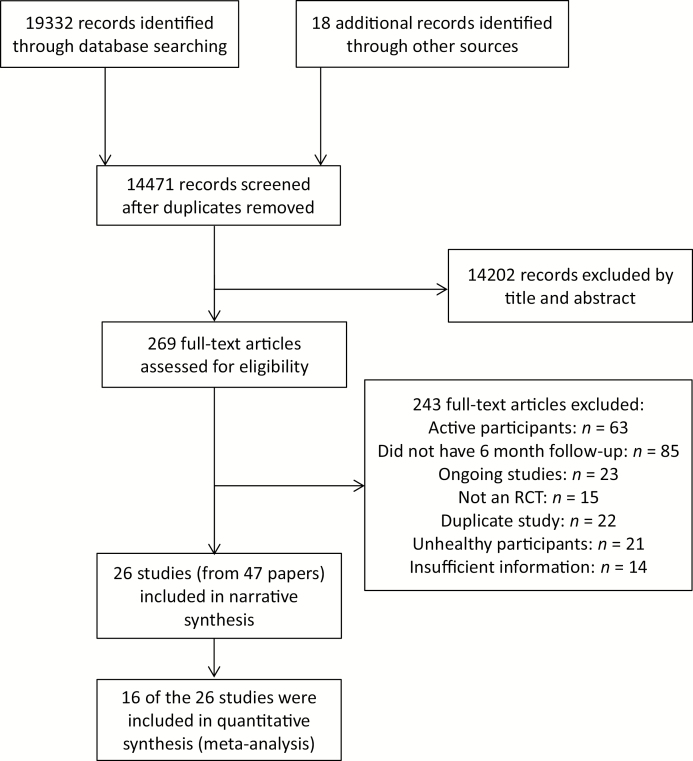
Physical inactivity and sedentary behavior relate to poor health outcomes independently. Healthy inactive adults are a key target population for prevention. This systematic review and meta-analysis aimed to evaluate the effectiveness of physical activity and/or sedentary behavior interventions, measured postintervention (behavior change) and at follow-up (behavior change maintenance), to identify behavior change techniques (BCT) within, and report on fidelity. Included studies were randomized controlled trials, targeting healthy inactive adults, aiming to change physical activity and/or sedentary behavior, with a minimum postintervention follow-up of 6 months, using 16 databases from 1990. Two reviewers independently coded risk of bias, the "Template for Intervention Description and Replication" (TIDieR) checklist, and BCTs. Twenty-six studies were included; 16 pooled for meta-analysis. Physical activity interventions were effective at changing behavior (d = 0.32, 95% confidence intervals = 0.16-0.48, n = 2,346) and maintaining behavior change after 6 months or more (d = 0.21, 95% confidence intervals = 0.12-0.30, n = 2,190). Sedentary behavior interventions (n = 2) were not effective. At postintervention, physical activity intervention effectiveness was associated with the BCTs "Biofeedback," "Demonstration of the behavior," "Behavior practice/rehearsal," and "Graded tasks." At follow-up, effectiveness was associated with using "Action planning," "Instruction on how to perform the behavior," "Prompts/cues," "Behavior practice/rehearsal," "Graded tasks," and "Self-reward." Fidelity was only documented in one study. Good evidence was found for behavior change maintenance effects in healthy inactive adults, and underlying BCTs. This review provides translational evidence to improve research, intervention design, and service delivery in physical activity interventions, while highlighting the lack of fidelity measurement.
Overview
The claims and statistics of this paper haven’t been checked yet.
Free: it reads the open-access text and checks the first 5 claims that cite a source we can check. Create a free account to check every claim.
Integrity signals
Registry
Cites
Statistics
Figures
Verification
Claims the paper makes
The claims and statistics of this paper haven’t been checked yet.
Free: it reads the open-access text and checks the first 5 claims that cite a source we can check. Create a free account to check every claim.
Claims other papers make about this one
Each is checked against this paper’s own text: does it say what the citing paper says it does?
The cited source doesn’t support the claim as written.
In the citing paper
“In addition, lifestyle interventions have shown to be effective in reducing sedentary behavior [13].”
From Consumer-based wearable activity trackers increase physical activity participation: systematic review and meta-analysis (2019) · cites this paper as [13]
Checked by a reasoning model — may be wrong.
Experimental — accuracy not yet measuredThe source backs part of the claim, not all of it — or backs it for a different population, condition or comparison.
In the citing paper
“Interventions shown to increase PA level or reduce sedentary behaviour include behaviour theory-based interventions, such as goal-setting, re-evaluation of goals, self-monitoring, and feedback.112,113”
From 2023 ESC guidelines for the management of cardiovascular disease in patients with diabetes. (2023) · cites this paper as [113]
Experimental — accuracy not yet measured
Self-check
Percentages, sums and reported differences re-computed from the paper’s own numbers.
The self-check needs the paper’s full text.
Citations
Cites
The Cochrane Collaboration's tool for assessing risk of bias in randomised trials
Higgins, J. P. T., Altman, D. G., Gotzsche, P. C., Juni, P., Moher, D., Oxman, A. D., Savovic, J., Schulz, K. F., Weeks, L., Sterne, J. A. C., et al. (2011) · BMJ · doi:10.1136/bmj.d5928 · Cited by 33,817
Dermyshi, E., Wang, Y., Yan, C., Hong, W., Qiu, G., Gong, X., & Zhang, T. (2017) · Neonatology · doi:10.1159/000454668 · Cited by 24,451
GRADE guidelines: 1. Introduction—GRADE evidence profiles and summary of findings tables
Guyatt, G., Oxman, A. D., Akl, E. A., Kunz, R., Vist, G., Brozek, J., Norris, S., Falck-Ytter, Y., Glasziou, P., & deBeer, H. (2011) · Journal of Clinical Epidemiology · doi:10.1016/j.jclinepi.2010.04.026 · Cited by 10,681 · cited 3×
“Using the GRADE criteria [41-42] the post-intervention physical activity outcome was downgraded two levels to low quality, because there was a high level of heterogeneity”
BackgroundMethodHoffmann, T. C., Glasziou, P. P., Boutron, I., Milne, R., Perera, R., Moher, D., Altman, D. G., Barbour, V., Macdonald, H., Johnston, M., et al. (2014) · BMJ · doi:10.1136/bmj.g1687 · Cited by 10,548 · cited 1×
“The ‘Template for Intervention Description and Replication’ (TIDieR; [24]) allows”
Background‘Small Changes' to Diet and Physical Activity Behaviors for Weight Management
Hills, A. P., Byrne, N. M., Lindstrom, R., & Hill, J. O. (2013) · Obesity Facts · doi:10.1159/000345030 · Cited by 9,493
GRADE guidelines: 3. Rating the quality of evidence
Balshem, H., Helfand, M., Schünemann, H. J., Oxman, A. D., Kunz, R., Brozek, J., Vist, G. E., Falck-Ytter, Y., Meerpohl, J., & Norris, S. (2011) · Journal of Clinical Epidemiology · doi:10.1016/j.jclinepi.2010.07.015 · Cited by 8,285 · cited 2×
“Using the GRADE criteria [41-42] the post-intervention physical activity outcome was downgraded two levels to low quality, because there was a high level of heterogeneity”
MethodMichie, S., Richardson, M., Johnston, M., Abraham, C., Francis, J., Hardeman, W., Eccles, M. P., Cane, J., & Wood, C. E. (2013) · Annals of Behavioral Medicine · doi:10.1007/s12160-013-9486-6 · Cited by 7,629 · cited 3×
“is essential for implementing, replicating, and synthesising successful approaches [19].”
BackgroundMethodInfluentialEvaluating the public health impact of health promotion interventions: the RE-AIM framework.
Glasgow, R. E., Vogt, T. M., & Boles, S. M. (1999) · American Journal of Public Health · doi:10.2105/ajph.89.9.1322 · Cited by 7,217 · cited 1×
“investigate whether positive behavioral changes can be sustained [74].”
BackgroundHistorical Origins of the Health Belief Model
Rosenstock, I. M. (1974) · Health Education Monographs · doi:10.1177/109019817400200403 · Cited by 6,116
Answering the Call for a Standard Reliability Measure for Coding Data
Hayes, A. F., & Krippendorff, K. (2007) · Communication Methods and Measures · doi:10.1080/19312450709336664 · Cited by 4,225 · cited 1×
“Inter-rater reliability throughout this review was assessed using Krippendorf’s α, a reliability coefficient that compares favourably to alternatives [39].”
Method
Research works printed but not linked: 1
- Higgins, 2011, Chapter 16: special topics in statistics
Cited by
Items 101–200 of 447
Rondina, R., Pearson, E., Harry Prapavessis, A., White, L., Richard, S., & Mitchell, M. (2019) · British Journal of Sports Medicine · doi:10.1136/bjsports-2019-100969 · Cited by 19
Tyson, L., Hardeman, W., Marquette, M., Semlyen, J. K., Stratton, G., & Wilson, A. M. (2021) · Journal of Health Psychology · doi:10.1177/13591053211059386 · Cited by 22
Chakraborty, D., Bailey, B. A., Seidler, A. L., Yoong, S. L., Hunter, K. E., Hodder, R. K., Webster, A. C., & Johnson, B. J. (2022) · Preventive Medicine Reports · doi:10.1016/j.pmedr.2022.101928 · Cited by 22
Burns, J., Carter, A., Draper, S., & Foad, A. (2022) · International Journal of Developmental Disabilities · doi:10.1080/20473869.2022.2149096 · Cited by 25
“Within the mainstream literature a recent systematic review and meta-analysis of intervention efficacy found ‘ good evidence ’ for ‘ behaviour change maintenance effects in healthy inactive adults ’ (Howlett et al. 2019, p. 147).”
BackgroundLinking Gait Biomechanics and Daily Steps After ACL Reconstruction
Lisee, C. M., Davis-Wilson, H. C., EVANS-PICKETT, A., HORTON, W. Z., BLACKBURN, J. T., Franz, J. R., Thoma, L. M., Spang, J. T., & PIETROSIMONE, B. G. (2022) · Medicine & Science in Sports & Exercise · doi:10.1249/mss.0000000000002860 · Cited by 26
Brennan, C., O’Donoghue, G., Hall, A. M., Keogh, A., & Matthews, J. J. (2021) · Preventive Medicine · doi:10.1016/j.ypmed.2021.106764 · Cited by 16
Mitchell, A. D., Martin, L. E., Baldwin, A. S., & Levens, S. M. (2021) · Frontiers in Psychology · doi:10.3389/fpsyg.2021.742989 · Cited by 20
Social mobilization, education, and prevention of the Ebola virus disease: A scoping review
Cénat, J. M., Broussard, C., Darius, W. P., Onesi, O., Auguste, E., Aouame, A. M. E., Ukwu, G., Khodabocus, S. N., Labelle, P., & Dalexis, R. D. (2022) · Preventive Medicine · doi:10.1016/j.ypmed.2022.107328 · Cited by 16
Cooper, K. B., Lapierre, S., Seoane, M. C., Lindstrom, K., Pritschmann, R. K., Donahue, M. L., Christou, D. D., McVay, M. A., & Jake‐Schoffman, D. E. (2023) · Translational Behavioral Medicine · doi:10.1093/tbm/ibac111 · Cited by 19
Golsteijn, R. H. J., Bolman, C. A. W., Peels, D. A., Volders, E., de Vries, H., & Lechner, L. (2023) · Journal of sport and health science/Journal of Sport and Health Science · doi:10.1016/j.jshs.2023.08.002 · Cited by 17
“28 (cid:1) 31 This suggests a need for studies with longer follow-up periods without intervention contact or intervention content being shared with participants, and studies that use objective PA measures.”
BackgroundLifestyle Behaviors and Health-Related Quality of Life in Cancer Survivors: A Latent Class Analysis
Olson, J. L., Conroy, D. E., Mama, S. K., & Schmitz, K. H. (2023) · Health Education & Behavior · doi:10.1177/10901981231203978 · Cited by 21
“…should include behavior-change techniques that are known to promote behavior change and maintenance in older adults, such as biofeedback, behavioral demonstration, practice/rehearsal, graded tasks, action planning, and prompts/cues for increasing physical activity (Howlett et al., 2018).”
BackgroundMonroe, C. M., Cai, B., Edney, S. M., Jake‐Schoffman, D. E., Brazendale, K., Bucko, A., Armstrong, B., Yang, C., & Turner‐McGrievy, G. M. (2023) · International Journal of Behavioral Nutrition and Physical Activity · doi:10.1186/s12966-023-01530-1 · Cited by 24
Coronado, R. A., Devin, C. J., Pennings, J. S., Aaronson, O. S., Haug, C. M., Hoy, E., Vanston, S. W., & Archer, K. R. (2019) · Physiotherapy Theory and Practice · doi:10.1080/09593985.2019.1683921 · Cited by 16
Loughran, M. T., Lyons, S., Plack, C. J., & Armitage, C. J. (2020) · BMC Public Health · doi:10.1186/s12889-020-09414-w · Cited by 16
García-Pérez-de-Sevilla, G., Guido, O. B., la Cruz, M. D. L. P. D., Fernández, A. B., Alejo, L. B., Martínez, M. M., & Pérez, M. (2021) · International Journal of Environmental Research and Public Health · doi:10.3390/ijerph18147510 · Cited by 25
“The TMBC has turned out to be an effective strategy for promoting lifestyle habit changes [74].”
BackgroundWhat makes implementation intentions (in)effective for physical activity among older adults?
Warner, L. M., Fleig, L., Wolff, J. K., Keller, J., Schwarzer, R., Nyman, S. R., & Wurm, S. (2021) · British Journal of Health Psychology · doi:10.1111/bjhp.12563 · Cited by 19
Reale, S., Turner, R. R., Sutton, E., Taylor, S. J., Bourke, L., Morrissey, D., Brown, J. E., Rosario, D. J., Steed, L., & on behalf of the STAMINA co-investigators NA (2021) · BMC Health Services Research · doi:10.1186/s12913-021-06275-w · Cited by 15
de Boer, J. J., Feleus, A., Hesselink, A. E., Siemonsma, P. C., Verhoef, J., & Schmitt, M. A. (2022) · BMJ Open · doi:10.1136/bmjopen-2021-057236 · Cited by 15
Cody, R., Christensen, M., Kreppke, J.-N., Faude, O., Gerber, M., & Nicca, D. (2022) · Mental health and physical activity · doi:10.1016/j.mhpa.2022.100464 · Cited by 24
Lynch, A. M., Kilroy, S., McKee, H. C., Sheerin, F. K., Epstein, M., Girault, A., Gillois, P., Bosson, J., Rolland, C., Harkin, M., et al. (2022) · Preventive Medicine Reports · doi:10.1016/j.pmedr.2022.102084 · Cited by 15
Hietbrink, E. A. G., Middelweerd, A., van Empelen, P., Preuhs, K., Konijnendijk, A., Nijeweme-d’Hollosy, W. O., Schrijver, L. K., Laverman, G. D., & Vollenbroek-Hutten, M. M. R. (2023) · JMIR Human Factors · doi:10.2196/40017 · Cited by 17
Brett, B. L., Aggarwal, N. T., Chandran, A. S., Kerr, Z. Y., Walton, S. R., DeFreese, J. D., Guskiewicz, K. M., Echemendía, R. J., Meehan, W. P., III, McCrea, M., et al. (2023) · Alzheimer s & Dementia · doi:10.1002/alz.12929 · Cited by 15
Alshagrawi, S. S., & Abidi, S. T. (2023) · Journal of Medical Internet Research · doi:10.2196/44108 · Cited by 20
“Most of the previous RCT studies on promoting PA using mHealth focused on the general population [38], patients with chronic diseases [41], females [42], or the elderly [43].”
Solk, P., Auster‐Gussman, L. A., Torre, E., Welch, W. A., Murphy, K. M., Starikovsky, J., Reading, J. M., Victorson, D. E., & Phillips, S. M. (2023) · Frontiers in Psychology · doi:10.3389/fpsyg.2023.1285315 · Cited by 17
Waters, E. A., & Hawkins, E. (2018) · Journal of Health Communication · doi:10.1080/10810730.2018.1500658 · Cited by 15
“…systematic review, see (Howlett, Trivedi, Troop, & Chater, 2018); see also (Casey, Coote, & Byrne, 2018; Faulkner, Yun, Tremblay, & Spence, 2018; Howlett et al., 2018; Koutoukidis et al., 2018; Sylvester, Zammit, Fong, & Sabiston, 2017; U.S. Department of Health and Human Services, U.S.…”
Patterns of Cyclist and Pedestrian Street Crossing Behavior and Safety on an Urban Greenway
Anderson, C. E., Zimmerman, A., Lewis, S., Marmion, J., & Gustat, J. (2019) · International Journal of Environmental Research and Public Health · doi:10.3390/ijerph16020201 · Cited by 15
“Efforts at promoting physical activity have produced only marginal improvements in population level activity [6], which has led to the development of theories of physical activity behavior to inform future promotion activities [7,8].”
BackgroundMcCormack, G. R., Petersen, J. A., Ghoneim, D., Blackstaffe, A., Naish, C., & Doyle–Baker, P. K. (2022) · JMIR Formative Research · doi:10.2196/37348 · Cited by 15
“However, physical activity interventions offer individuals opportunities to initiate, maintain, and modify their physical activity routines [6,7].”
BackgroundFatigue and Physical Activity: Potential Modifiable Contributors to Parenting Sense of Competence
Studts, C. R., Pilar, M. R., Jacobs, J. A., & Fitzgerald, B. K. (2019) · Journal of Child and Family Studies · doi:10.1007/s10826-019-01470-0 · Cited by 16
Mobile health apps to reduce sedentary behavior: a scoping review
Ueno, D. T., Guerra, P. H., Christofoletti, A. E. M., Bonolo, A., Nakamura, P. M., & Kokubun, E. (2021) · Health Promotion International · doi:10.1093/heapro/daab124 · Cited by 16
mHealth prompts within diabetes prevention programs: a scoping review
MacPherson, M., Merry, K. J., Locke, S., & Jung, M. E. (2022) · mHealth · doi:10.21037/mhealth-21-22 · Cited by 13
“Prompts are one of the most frequently cited BCTs within mHealth PA, weight loss, and DPP reviews (25,32-35) and mHealth prompts (e.”
BackgroundMethodCurran, E. M., Palmer, V. J., Ellis, K. A., Chong, T. W. H., Rego, T. W. H., Cox, K. L., Anstey, K. J., Westphal, A., Moorhead, R. A., Southam, J., et al. (2023) · Journal of Alzheimer s Disease · doi:10.3233/jad-221216 · Cited by 14
“…efficacyandsmalltomediumeffectsizesforbothPA adoptionandmaintenance(e.g.,arecentlargemeta-analysisincluding26randomizedcontrolledtrials calculated effect sizes of d = 0.32, 95% CI 016–0.48 for adoption and d = 0.21, 95% CI 0.12–0.30 for maintenance for more than six months [26]).”
InfluentialAl-walah, M. A., Donnelly, M., Cunningham, C., & Heron, N. (2023) · BMC Public Health · doi:10.1186/s12889-023-16885-0 · Cited by 19
Arigo, D., Lassiter, J. M., Baga, K., Jackson, D. A., Lobo, A. F., & Guetterman, T. C. (2023) · Digital Health · doi:10.1177/20552076231210654 · Cited by 17
Whiston, A., Kidwell, K., O’Reilly, S., Walsh, C., Walsh, J. C., Glynn, L. G., Robinson, K., & Hayes, S. (2024) · BMC Medical Research Methodology · doi:10.1186/s12874-024-02439-4 · Cited by 13
Dijkers, M. P. J. M., & Millis, S. R. (2020) · Archives of Rehabilitation Research and Clinical Translation · doi:10.1016/j.arrct.2020.100055 · Cited by 21
Exercise Prescription in Cardiac Rehabilitation
(2019) · Case Medical Research · doi:10.31525/ct1-nct03925493 · Cited by 12
A complex systems view on physical activity with actionable insights for behaviour change
Schüler, J., Heino, M. T. J., Balagué, N., Chater, A., Grüber, M., Kanning, M. K., Keim, D. A., Mier, D. U., Moreno‐Villanueva, M., Nußbeck, F. W., et al. (2025) · Nature Human Behaviour · doi:10.1038/s41562-025-02279-2 · Cited by 14
Self-citationKilleen, O. J., Niziol, L. M., Cho, J., Heisler, M., Resnicow, K., Darnley-Fisch, D. A., Musch, D. C., Lee, P. P., & Newman-Casey, P. A. (2022) · Ophthalmology Glaucoma · doi:10.1016/j.ogla.2022.08.001 · Cited by 12
Booth, J. E., Benham, J. L., Schinbein, L. E., McGinley, S. K., Rabi, D. M., & Sigal, R. J. (2020) · Canadian Journal of Diabetes · doi:10.1016/j.jcjd.2020.03.012 · Cited by 15
Swann, C., Schweickle, M. J., Peoples, G. E., Goddard, S. G., Stevens, C. J., & Vella, S. A. (2020) · Journal of Applied Sport Psychology · doi:10.1080/10413200.2020.1815100 · Cited by 22
“ARTICLE HISTORY Received 10 May 2020 Revised 20 August 2020 Accepted 22 August 2020 Goal-setting is one of the most commonly used strategies in physical activity promotion (e.g. Howlett et al., 2019).”
MethodHaverinen, E., Elonheimo, H., Tolonen, H. K., Jousilahti, P., & Wennman, H. (2021) · Scandinavian Journal of Public Health · doi:10.1177/14034948211020599 · Cited by 16
Ester, M., Wagoner, C. W., Dreger, J., Chen, G., McDonough, M. H., McNeely, M. L., & Culos-Reed, S. N. (2023) · JMIR Cancer · doi:10.2196/47187 · Cited by 15
“Tailoring technology to participant needs and integrating evidence-based behavior change techniques are valuable steps to enhance engagement and potential effectiveness in eHealth interventions [61-63].”
BackgroundAlòs, F., Colomer, M. À., Bort-Roig, J., Martin-Cantera, C., Minaya, A., Saigí, I., Sitjar-Suñer, M., & Puig-Ribera, A. (2025) · Primary Care Diabetes · doi:10.1016/j.pcd.2025.05.010 · Cited by 15
Interventions to Improve Long-Term Adherence to Physical Rehabilitation: A Systematic Review
Burke, C. A., Seidler, K. J., Rethorn, Z. D., Hoenig, H., Allen, K. D., Tabriz, A. A., Norman, K. S., Murphy-McMillan, L. K., Sharpe, J. A., Joseph, L. M., et al. (2024) · Journal of Geriatric Physical Therapy · doi:10.1519/jpt.0000000000000402 · Cited by 18
“32-36 We found that comparator interventions generally used BCTs in similar amounts and clusters across studies, which is reflective of typical practice in rehabilitation settings during the initiation of a new home rehabilitation program.”
BackgroundAllcott-Watson, H., Chater, A., Troop, N., & Howlett, N. (2023) · Health Psychology Review · doi:10.1080/17437199.2023.2173631 · Cited by 20
Self-citationConroy, D. E., Wu, J.-C., Lee, A. M., Brunke-Reese, D., & Lagoa, C. M. (2023) · Health Psychology · doi:10.1037/hea0001271 · Cited by 16
Daryabeygi‐Khotbehsara, R., Dunstan, D. W., Islam, S. M. S., Rhodes, R. E., Hojjatinia, S., Abdelrazek, M., Hekler, E. B., Markides, B. R., & Maddison, R. (2024) · Digital Health · doi:10.1177/20552076241255658 · Cited by 12
“…variables are presented in the fl uid analogy and used to test a few related BCTs. Selected BCTs have been found to be effective for reducing SB and increasing PA 26 – 28 including self-monitoring, goal setting (behaviour), problem-solving, prompts and social support, are used to present the model.”
MethodBrennan, C., Streight, E., Cheng, S., & Rhodes, R. E. (2025) · International Journal of Behavioral Nutrition and Physical Activity · doi:10.1186/s12966-025-01778-9 · Cited by 26
“…to its potential effectiveness [24, 87], goal setting is one of the most frequently used behavior change techniques in interventions promoting PA [88, 89], especially for dyads with strong relationship bonds and where members have the same goal for themselves and other person (e.g.,…”
Carr, S., Burke, A., Chater, A., Howlett, N., & Jones, A. (2021) · Journal of Physical Activity and Health · doi:10.1123/jpah.2021-0078 · Cited by 14
Self-citationRanasinha, S., Hill, B., Teede, H. J., Enticott, J., Wang, R., & Harrison, C. L. (2021) · Obesity Reviews · doi:10.1111/obr.13406 · Cited by 14
“However, the CALO-RE scale includes composites of behavior compared with the 93-item BCT taxonomy framework and is therefore not further irreducible, limiting identification of specific effective components needed for clinical implementation.(50) In 2016, Soltani and colleagues(6) built on the work of Hill et al.”
MethodmHealth interventions targeting movement behaviors in Asia: A scoping review
Edney, S. M., Chua, X. H., Müller, A. M., Kui, K. Y., & Müller‐Riemenschneider, F. (2021) · Obesity Reviews · doi:10.1111/obr.13396 · Cited by 11
Bentlage, E., Nyamadi, J. J., & Dubbeldam, R. (2023) · JMIR mhealth and uhealth · doi:10.2196/42968 · Cited by 10
“In other studies, habit reversal [51,52] and graded tasks [50] were shown to be effective in reducing sedentary behavior and improving physical activity.”
BackgroundMethodAlsayed, A. O., Ismail, N. A., Hasan, L., Syed, A. H., Embarak, F. M., & Da’u, A. (2023) · Alexandria Engineering Journal · doi:10.1016/j.aej.2023.08.026 · Cited by 22
Barber, B. V., Kephart, G. C., Martin‐Misener, R., Vallis, M., Matthews, S. A., Atkins, L., Cassidy, C. E., Curran, J., & Rainham, D. G. C. (2023) · Translational Behavioral Medicine · doi:10.1093/tbm/ibad065 · Cited by 13
“For example, behavior change interventions are commonly aimed at preventing and reducing a range of harmful and risky health-related behaviors including smoking [8], physical inactivity [9, 10], excess alcohol consumption [11, 12], and excess weight [13].”
Exercise training for patients with peripheral arterial occlusive disease
Ingwersen, M., Kunstmann, I., Oswald, C., Best, N., Weisser, B., & Teichgräber, U. K.-M. (2023) · Deutsches Ärzteblatt international · doi:10.3238/arztebl.m2023.0231 · Cited by 18
Kreppke, J.-N., Cody, R., Beck, J., Brand, S., Donath, L., Eckert, A., Faude, O., Hatzinger, M., Imboden, C., Lang, U. E., et al. (2024) · Translational Psychiatry · doi:10.1038/s41398-024-02885-0 · Cited by 12
“We also acknowledge that participants were not only heterogeneous with regard to the experience and responses to the intervention, they also varied with regard to medical and psychotherapeutic treatments provided by the clinics and had varying durations of in-patient treatment.”
ResultLally, P. J., Miller, N. E., Roberts, A., Beeken, R. J., Greenfield, D., POTTS, H. W. W., Counsell, N., Latimer, N. R., Thomas, C., Smith, L., et al. (2022) · Pilot and Feasibility Studies · doi:10.1186/s40814-022-01028-w · Cited by 9
Daryabeygi‐Khotbehsara, R., Dunstan, D. W., Islam, S. M. S., Zhang, Y., Abdelrazek, M., & Maddison, R. (2023) · JMIR Research Protocols · doi:10.2196/41502 · Cited by 11
“…on how to perform the behavior [22,24], providing information on the consequences of PA specific to the individual [23], prompts or cues [24], prompting generalization of a target behavior [23], goal setting [23], self-monitoring [22], and feedback on behavior [22] were used to create…”
BackgroundTakano, K., Oba, T., Katahira, K., & Kimura, K. (2024) · JMIR mhealth and uhealth · doi:10.2196/51216 · Cited by 12
Arigo, D., Schumacher, L. M., Baga, K., & Mogle, J. A. (2024) · Annals of Behavioral Medicine · doi:10.1093/abm/kaae058 · Cited by 13
“As a result, many behavioral PA interventions purport to activate these social processes (e.g., through PA leaderboards or community message forums) [12, 23], though often do not leverage these processes effectively.”
MacPherson, M., Cranston, K. D., Johnston, C., Locke, S., & Jung, M. E. (2021) · JMIR Formative Research · doi:10.2196/28163 · Cited by 12
“For example, Howlett et al [58] recently conducted a systematic review assessing BCTs within physical activity randomized controlled trials and found that studies including biofeedback, demonstration of behavior, graded tasks, action planning, instruction on how to perform the behavior, prompts/cues, behavior practice…”
BackgroundInfluentialSui, W., Morava, A., Tsang, J. M. F., Sui, A., & Rhodes, R. E. (2022) · Journal of Health Psychology · doi:10.1177/13591053221074584 · Cited by 11
Alothman, S., Alshehri, M. M., Al-Masud, A. A., Aljubairi, M. S., Alrashed, I., Shaphe, M. A., & Alghannam, A. F. (2022) · Healthcare · doi:10.3390/healthcare11010091 · Cited by 12
“Further, our findings were consistent with studies that targeted physical activity behavioral changes through behavioral change models via telephone/internet interventions in different geographic regions [49,50].”
ResultA Systematic Review of Workplace Physical Activity Coaching
Gawlik, A., Lüdemann, J., Neuhausen, A., Zepp, C., Vitinius, F., & Kleinert, J. (2023) · Journal of Occupational Rehabilitation · doi:10.1007/s10926-023-10093-8 · Cited by 16
“In addition to these primary studies, recent reviews also summarized the effects of PA coaching, showing positive effects on the PA behavior in different target groups, for example, inactive adults [39], patients with chronic diseases [40], and the elderly [41, 42].”
BackgroundConsiderations on How to Prevent Parkinson’s Disease Through Exercise
Oosterhof, T. H., Darweesh, S. K. L., Bloem, B. R., & de Vries, N. M. (2024) · Journal of Parkinson s Disease · doi:10.3233/jpd-240091 · Cited by 15
“To mitigate this, we anticipate that the use of a range of motivational strategies might be helpful to promote adherence, for example by [13] orincluding‘biofeedback’feedbackinginformation aboutthebody(e.g.,physiologicalparameters)tothe participantusinganexternalmonitoringdevice[50].”
BackgroundHalloway, S., Wilbur, J., Schoeny, M. E., Braun, L. T., Aggarwal, N. T., Miller, A. M., Crane, M. M., & Volgman, A. S. (2019) · Canadian Journal of Nursing Research · doi:10.1177/0844562119856233 · Cited by 10
Fazekas, C., Linder, D., Matzer, F., Jenewein, J., & Hanfstingl, B. (2021) · Wiener klinische Wochenschrift · doi:10.1007/s00508-021-01988-8 · Cited by 15
Hesketh, K., Low, J., Andrews, R., Blitz, S., Buckley, B., Falkenhain, K., Job, J., Jones, C. A., Jones, H., Jung, M. E., et al. (2025) · BMJ Open · doi:10.1136/bmjopen-2024-092260 · Cited by 13
Changes in physical activity after joining a bikeshare program: a cohort of new bikeshare users
Auchincloss, A. H., Michael, Y. L., Niamatullah, S., Li, S., Melly, S. J., Pharis, M., & Fuller, D. (2022) · International Journal of Behavioral Nutrition and Physical Activity · doi:10.1186/s12966-022-01353-6 · Cited by 12
“Adults who are still relatively healthy, but are inactive, are a key target population for public health interventions [52].”
BackgroundMcCormack, C. M., Kehoe, B., Cullivan, S., McCaffrey, N., Gaine, S., McCullagh, B. N., McCarren, A. L., Hardcastle, S. J., & Moyna, N. M. (2023) · ERJ Open Research · doi:10.1183/23120541.00608-2023 · Cited by 12
“…was underpinned by social cognitive theory [20] and associated behavioural change techniques found to be effective for increasing physical activity including instruction on how to perform behaviour, setting graded tasks, goal-setting, self-monitoring and adding objects to the environment [21, 22].”
BackgroundKönig, L. M., Kanning, M. K., Hauptmann, H., Feuchtner, T., & Arigo, D. (2025) · Computers in Human Behavior · doi:10.1016/j.chb.2025.108562 · Cited by 12
Duncan, M. J., Caperchione, C. M., Corry, K., Itallie, A. K. V., & Vandelanotte, C. (2019) · Journal of Occupational and Environmental Medicine · doi:10.1097/jom.0000000000001653 · Cited by 9
“Physical activity did decline from 6 to 18 weeks, which is not uncommon, and highlights the importance of maintaining the initial intervention efforts.(29) The behavior change strategies used in the challenge focus on initiation of behavior.”
BackgroundEvaluation of Walk Across Texas! – a web-based community physical activity program
Faries, M. D., López, M., Faries, E., Keenan, K., & Green, S. D. (2019) · BMC Public Health · doi:10.1186/s12889-019-7918-3 · Cited by 10
Wibowo, R. A., Kelly, P., & Baker, G. (2020) · Physical Therapy Reviews · doi:10.1080/10833196.2020.1756125 · Cited by 15
Modelling the impact of physical activity on public health: A review and critique
Candio, P., Meads, D. M., Hill, A. J., & Bojke, L. (2020) · Health Policy · doi:10.1016/j.healthpol.2020.07.015 · Cited by 11
Social support, relationships, and physical activity
WILSON, K. S. (2021) · Society for Transparency, Openness, and Replication in Kinesiology eBooks · doi:10.51224/b1010 · Cited by 12
“In a review of 26 randomized control trials, 22 of those studies included some aspect of social support as part of the intervention (Howlett et al., 2019).”
BackgroundDelivery Approaches Within Exercise Referral Schemes: A Survey of Current Practice in England
Rowley, N., Steele, J., Mann, S., Jiménez, A., & Horton, E. (2021) · Journal of Physical Activity and Health · doi:10.1123/jpah.2020-0388 · Cited by 15
Squires, H., Kelly, M. P., Gilbert, N., Sniehotta, F. F., Purshouse, R. C., García, L., Breeze, P. R., Brennan, A., Gardner, B., Bright, S., et al. (2024) · BMC Public Health · doi:10.1186/s12889-024-20225-1 · Cited by 8
Self-citationSwann, C., Buchan, J., Calleja, E., Goddard, S. G., Clarke, M. M., Hawkins, R. M., Jackman, P. C., Schweickle, M. J., Vella, S. A., & Rosenbaum, S. (2026) · Sports Medicine · doi:10.1007/s40279-025-02373-5 · Cited by 14
Alòs, F., & Puig-Ribera, A. M. (2021) · Atención Primaria Práctica · doi:10.1016/j.appr.2021.100122 · Cited by 21
Sun, Y., Gao, Y., Yu, S., Wang, A., Ou, X., Tao, D., & Baker, J. S. (2022) · International Journal of Environmental Research and Public Health · doi:10.3390/ijerph192013594 · Cited by 15
“, 6 months or more) targeting healthy but physically inactive adults [69].”
BackgroundBrunet, J., Wurz, A. J., Nader, P. A., & Bélanger, M. F. (2020) · Patient Education and Counseling · doi:10.1016/j.pec.2020.02.002 · Cited by 15
Seaton, C. L., Bottorff, J. L., Soprovich, A., Johnson, S. T., Duncan, M. J., Caperchione, C. M., Oliffe, J. L., Rice, S., James, C. L., & Eurich, D. T. (2021) · American Journal of Men s Health · doi:10.1177/1557988320988472 · Cited by 8
“These intervention components align with some of the most effective behavior change techniques identified within the research literature, including information about health and health consequences, prompts/cues, social support, and self-monitoring (Carey et al., 2019; Howlett et al., 2019; Michie et al., 2013).”
BackgroundFacilitators and barriers to fitness bootcamp participation using the Behaviour Change Wheel
Winter, L. D., & Gutman, L. M. (2021) · Health Education Journal · doi:10.1177/00178969211044180 · Cited by 10
Ku, B., & Haegele, J. A. (2022) · Journal of Intellectual & Developmental Disability · doi:10.3109/13668250.2022.2104448 · Cited by 9
Sedhed, J., Johansson, H., Andersson, N., Åkesson, E., Kalbe, E., Franzén, E., & Leavy, B. (2024) · BMC Neurology · doi:10.1186/s12883-024-03614-2 · Cited by 11
“Physical activity levels in healthy populations can be positively impacted, with techniques such as goal setting and self-reporting of physical activity being frequently used [30, 31].”
BackgroundLithopoulos, A., Kaushal, N., Beauchamp, M. R., Conner, M. T., de Bruijn, G., Latimer‐Cheung, A. E., & Rhodes, R. E. (2020) · Applied Psychology Health and Well-Being · doi:10.1111/aphw.12202 · Cited by 9
Arigo, D., Lobo, A. F., Ainsworth, M. C., Baga, K., & Pasko, K. (2022) · JMIR Formative Research · doi:10.2196/36280 · Cited by 9
“Individual or group-based coaching, which often occurs via live interaction (in person or through phone calls or video calls), can provide a range of psychological and behavioral skills for adopting or maintaining regular PA routines (eg, intention formation and planning [68]).”
BackgroundMoving Matters - Interventions to increase physical activity
Fortescue-Webb, D., Evans, T., Hanss, K., Lamont, T., Behrendt, H., Brannan, M., Chater, A., Coles, A., Cope, A., Dooley, M., et al. (2019) · doi:10.3310/themedreview-03898 · Cited by 10
Self-citationBarrett, S., Begg, S. J., Lawrence, J., Barrett, G., Nitschke, J., O’Halloran, P., Breckon, J. D., Pinheiro, M. B., Sherrington, C., Doran, C. M., et al. (2024) · International Journal of Behavioral Nutrition and Physical Activity · doi:10.1186/s12966-024-01614-6 · Cited by 9
“Without a clear measurement of fidelity, reports of the effectiveness of interventions need to be interpreted cautiously, due to the possibility that the intervention was not delivered as intended [49].”
BackgroundEbert, J. E. J., & Lin, X. Y. (2024) · Annals of Behavioral Medicine · doi:10.1093/abm/kaae045 · Cited by 8
Lu, Y., Karanikas, N., & Carroll, J. (2024) · Journal of Human Environment and Health Promotion · doi:10.61186/jhehp.10.4.179 · Cited by 7
Brennan, C., O’Donoghue, G., Keogh, A., Rhodes, R. E., & Matthews, J. J. (2025) · JMIR Pediatrics and Parenting · doi:10.2196/62795 · Cited by 8
Suresh, S., Bhardwaj, S., Rodrigues, H. C., Charly, D., Shekha, T. A. M., Jessy, A., Anirudhan, A., Abhishek, M. L., & Issac, T. G. (2025) · Journal of Medical Systems · doi:10.1007/s10916-025-02236-6 · Cited by 9
Smart, M. H., Nabulsi, N. A., Gerber, B. S., Gupta, I., Eugenio, B. D., Ziebart, B. D., & Sharp, L. K. (2022) · JMIR Formative Research · doi:10.2196/31989 · Cited by 7
“The walking program used 3 behavior change strategies found to be effective in increasing physical activity, including goal-setting, biofeedback, and prompts or cues to action [24].”
MethodOwen, G. E., Fahy, K., & Barr, B. (2023) · Journal of Epidemiology & Community Health · doi:10.1136/jech-2023-220891 · Cited by 9
Ha, L., Nevin, S. M., Wakefield, C. E., Jacovou, J., Mizrahi, D., & Signorelli, C. (2024) · Journal of Cancer Survivorship · doi:10.1007/s11764-024-01560-z · Cited by 8
“Among the general population, goalsetting is a commonly used behaviour change technique aimed to increase physical activity [52, 53].”
Kennedy, F., Smith, S., Beeken, R. J., Buck, C., Williams, S. S., Martin, C., Lally, P. J., & Fisher, A. (2025) · JMIR Cancer · doi:10.2196/64747 · Cited by 9
Promotion of physical activities and healthy eating habits in Primary Care: maintenance of benefits
Meurer, S. T., Borges, L. J., Gerage, A. M., Lopes, A. C. S., & Benedetti, T. R. B. (2020) · Revista de Nutrição · doi:10.1590/1678-9865202033e190120 · Cited by 8
“In addition, the studies included in the systematic reviews were conducted in developed countries that have socioeconomic and environmental conditions that favor the maintenance of healthier lifestyles [16,20].”
BackgroundBates, G. (2022) · International Review of Sport and Exercise Psychology · doi:10.1080/1750984x.2021.2001838 · Cited by 12
Metadata
- Authors
- Howlett, N., Trivedi, D., Troop, N. A., & Chater, A. M.
- Affiliations
- University of Hertfordshire (GB)
- Corresponding author
- Howlett, Neil
- Venue
- Translational Behavioral Medicine
- Publisher
- Oxford University Press (OUP)
- Published
- 2018-02-28
- Volume
- 9
- Issue
- 1
- Pages
- 147-157
- ISSN
- 1613-9860 (ISSN-L)
- 1869-6716
- PMC
- PMC6305562
- OpenAlex
- W2788581315
- Cited by
- 448
- References
- 78
- Citations by year
- 2026: 38 · 2025: 59 · 2024: 73 · 2023: 64 · 2022: 76 · 2021: 62 · 2020: 43 · 2019: 27 · 2018: 5
- FWCI
- 4.49
- Type
- journal article
- Language
- en
- Open access
- hybrid
- doi.org
- Licence
- Locations
- Translational Behavioral Medicine (publishedVersion, cc-by-nc)
- Europe PMC (PubMed Central) (publishedVersion, cc-by-nc)
- PubMed Central (publishedVersion, cc-by-nc)
- PubMed (publishedVersion)
- University of Hertfordshire Research Archive (University of Hertfordshire) (acceptedVersion)
- University of Hertfordshire Research Archive (University of Hertfordshire) (submittedVersion, cc-by-nc)
- UCL Discovery (University College London) (submittedVersion)
- University of Bedfordshire Repository (University of Bedfordshire) (submittedVersion)
- University of Bedfordshire Repository (University of Bedfordshire) (submittedVersion, cc-by-nc-nd)
- Funders
- University of Hertfordshire
- Topics
- Health Sciences › Medicine › Public Health, Environmental and Occupational Health › Physical Activity and Health
- Social Sciences › Psychology › Applied Psychology › Behavioral Health and Interventions
- Social Sciences › Psychology › Developmental and Educational Psychology › Behavioral and Psychological Studies
- Keywords
- physical activity interventions, sedentary behavior, behaviour change techniques, behavior maintenance, intervention fidelity, biofeedback, action planning, prompts and cues, self-reward
- MeSH terms
- Behavior Therapy, Health Promotion, Humans, Health Behavior, Exercise, Sedentary Behavior
About these checks
Registry, retraction, Cites and statistics results are computed, not judged, with one exception: a printed reference that no index lists is read once by a model before it counts as a citation error. Claims are extracted by a model and kept only when their quote appears verbatim in the text; each cited source is then checked, with a model’s help, for whether it says what the claim relies on. Those verdicts can be wrong — read the claim’s quote and the cited source before relying on one.
Statistics and arithmetic are recomputed, not judged.
Confidence bands are shown only for fields calibrated on our annotated test set. None is calibrated yet, so no band is shown.
What counts as a claim ›How we measure confidence ›How we check this ›
Are you an author, or do you see a problem with this page? Request a review
Data sources
Bibliographic data: Semantic Scholar, OpenAlex, Crossref.
Contains information from the Semantic Scholar Academic Graph Datasets, made available under the ODC Attribution License (ODC-BY 1.0).
Semantic Scholar’s data is described in: Kinney, R., et al. (2023). The Semantic Scholar Open Data Platform. arXiv:2301.10140.
