

The DOI matches its Crossref record; 233 of the 234 references it cites were found in a registry or an index.
Fusion and beyond: Satellite cell contributions to loading-induced skeletal muscle adaptation
Open accessAbstract
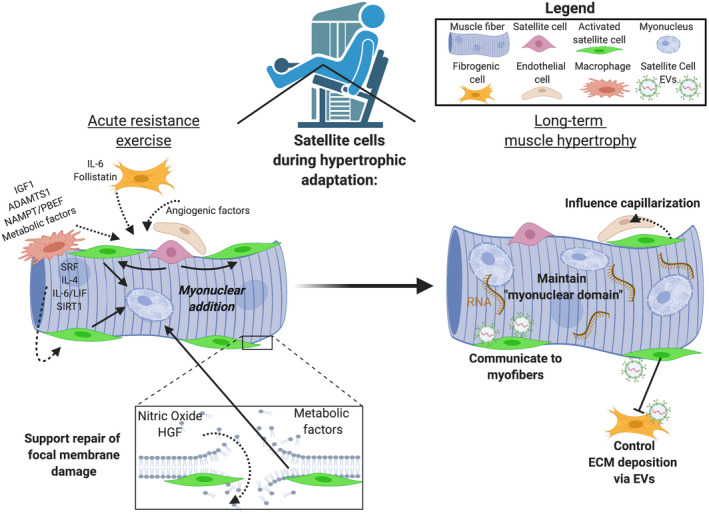
Satellite cells support adult skeletal muscle fiber adaptations to loading in numerous ways. The fusion of satellite cells, driven by cell-autonomous and/or extrinsic factors, contributes new myonuclei to muscle fibers, associates with load-induced hypertrophy, and may support focal membrane damage repair and long-term myonuclear transcriptional output. Recent studies have also revealed that satellite cells communicate within their niche to mediate muscle remodeling in response to resistance exercise, regulating the activity of numerous cell types through various mechanisms such as secretory signaling and cell-cell contact. Muscular adaptation to resistance and endurance activity can be initiated and sustained for a period of time in the absence of satellite cells, but satellite cell participation is ultimately required to achieve full adaptive potential, be it growth, function, or proprioceptive coordination. While significant progress has been made in understanding the roles of satellite cells in adult muscle over the last few decades, many conclusions have been extrapolated from regeneration studies. This review highlights our current understanding of satellite cell behavior and contributions to adaptation outside of regeneration in adult muscle, as well as the roles of satellite cells beyond fusion and myonuclear accretion, which are gaining broader recognition.
Overview
The claims and statistics of this paper haven’t been checked yet.
Run the check — free, no account needed. It reads the open-access text and checks the sources it cites.
Integrity signals
Registry
Cites
Statistics
Figures
Verification
Claims the paper makes
The claims and statistics of this paper haven’t been checked yet.
Run the check — free, no account needed. It reads the open-access text and checks the sources it cites.
Claims other papers make about this one
Each is checked against this paper’s own text: does it say what the citing paper says it does?
The source backs part of the claim, not all of it — or backs it for a different population, condition or comparison.
In the citing paper
“Rather than acting as an obligatory requirement at all stages of hypertrophy, satellite cell fusion is better interpreted as a mechanism that becomes increasingly relevant when sustained loading pushes existing myonuclei toward their functional limits [22,68].”
From Ribosome Biogenesis as a Putative Bottleneck to Skeletal Muscle Hypertrophy: Mechanisms, Human Evidence, and Practical Modulators (2026) · cites this paper as [68]
Experimental — accuracy not yet measuredThe source backs part of the claim, not all of it — or backs it for a different population, condition or comparison.
In the citing paper
“Once the initial gains supported by existing myonuclei have been largely realized, further adaptation may require a slower phase of structural remodeling involving satellite cell participation and myonuclear expansion [66,68].”
From Ribosome Biogenesis as a Putative Bottleneck to Skeletal Muscle Hypertrophy: Mechanisms, Human Evidence, and Practical Modulators (2026) · cites this paper as [68]
Experimental — accuracy not yet measuredThe check wasn’t confident either way, so it gives no verdict — never disputed.
In the citing paper
“Alternatively, emerging isolated single-fiber transcriptomics, which report absolute RNA content per isolated myofiber segment, entirely bypasses the tissue-denominator problem [68].”
From Ribosome Biogenesis as a Putative Bottleneck to Skeletal Muscle Hypertrophy: Mechanisms, Human Evidence, and Practical Modulators (2026) · cites this paper as [68]
Experimental — accuracy not yet measuredThe check wasn’t confident either way, so it gives no verdict — never disputed.
In the citing paper
“RNA:DNA is therefore not a universally superior method but a useful adjunct whose interpretation depends on the experimental question and timeframe [37,68].”
From Ribosome Biogenesis as a Putative Bottleneck to Skeletal Muscle Hypertrophy: Mechanisms, Human Evidence, and Practical Modulators (2026) · cites this paper as [68]
Experimental — accuracy not yet measured
Self-check
Percentages, sums and reported differences re-computed from the paper’s own numbers.
The self-check needs the paper’s full text.
Citations
Cites
1 retracted
Pisconti, A., Brunelli, S., Padova, M. D., Palma, C. D., Deponti, D., Baesso, S., Sartorelli, V., Cossu, G., & Clementi, E. (2006) · The Journal of Cell Biology · doi:10.1083/jcb.200507083 · Cited by 107
RetractedSATELLITE CELL OF SKELETAL MUSCLE FIBERS
Mauro, A. (1961) · The Journal of Cell Biology · doi:10.1083/jcb.9.2.493 · Cited by 3,683
Pax7 Is Required for the Specification of Myogenic Satellite Cells
Seale, P., Sabourin, L. A., Girgis-Gabardo, A., Mansouri, A., Gruß, P., & Rudnicki, M. A. (2000) · Cell · doi:10.1016/s0092-8674(00)00066-0 · Cited by 2,345
Muscle injury activates resident fibro/adipogenic progenitors that facilitate myogenesis
Joe, A. W. B., Yi, L., Natarajan, A., Le Grand, F., So, L., Wang, J., Rudnicki, M. A., & Rossi, F. M. V. (2010) · Nature Cell Biology · doi:10.1038/ncb2015 · Cited by 1,690
Uezumi, A., Fukada, S., Yamamoto, N., Takeda, S., & Tsuchida, K. (2010) · Nature Cell Biology · doi:10.1038/ncb2014 · Cited by 1,315
Murphy, M. M., Lawson, J. A., Mathew, S. J., Hutcheson, D. A., & Kardon, G. (2011) · Development · doi:10.1242/dev.064162 · Cited by 1,249
A Pax3/Pax7-dependent population of skeletal muscle progenitor cells
Relaix, F., Rocancourt, D., Mansouri, A., & BUCKINGHAM, M. E. (2005) · Nature · doi:10.1038/nature03594 · Cited by 1,167
Lepper, C., Partridge, T. A., & Fan, C.-M. (2011) · Development · doi:10.1242/dev.067595 · Cited by 1,105
Satellite cells as the source of nuclei in muscles of growing rats
Moss, F. P., & Leblond, C. P. (1971) · The Anatomical Record · doi:10.1002/ar.1091700405 · Cited by 1,025
Defective membrane repair in dysferlin-deficient muscular dystrophy
Bansal, D., Miyake, K., Vogel, S. S., Groh, S., Chen, C.-C., Williamson, R., McNeil, P. L., & Campbell, K. P. (2003) · Nature · doi:10.1038/nature01573 · Cited by 1,022
Research works printed but not linked: 1
- 10.1152/japplphysiol.00466.2007 · DOI
Cited by
Sorted by citations
Egan, B., & Sharples, A. P. (2023) · Physiological Reviews · doi:10.1152/physrev.00054.2021 · Cited by 278
Roberts, M. D., McCarthy, J. J., Hornberger, T. A., Phillips, S. M., Mackey, A. L., Nader, G. A., Boppart, M. D., Kavazis, A. N., Reidy, P. T., Ogasawara, R., et al. (2023) · Physiological Reviews · doi:10.1152/physrev.00039.2022 · Cited by 214
Self-citationMolecular mechanisms of exercise contributing to tissue regeneration
Chen, J., Zhou, R. J., Ye, F., & Cheng, L. (2022) · Signal Transduction and Targeted Therapy · doi:10.1038/s41392-022-01233-2 · Cited by 185
Hamstring Strain Injury in Athletes
Martin, R. L., Cibulka, M. T., Bolgla, L. A., Koc, T. A., Jr., Loudon, J. K., Manske, R. C., Weiss, L., Christoforetti, J. J., & Heiderscheit, B. C. (2022) · Journal of Orthopaedic and Sports Physical Therapy · doi:10.2519/jospt.2022.0301 · Cited by 87
The myonuclear domain in adult skeletal muscle fibres: past, present and future
Bagley, J. R., Denes, L. T., McCarthy, J. J., Wang, E. T., & Murach, K. A. (2023) · The Journal of Physiology · doi:10.1113/jp283658 · Cited by 61
Self-citationMolecular aspects of the exercise response and training adaptation in skeletal muscle
Furrer, R., & Handschin, C. (2024) · Free Radical Biology and Medicine · doi:10.1016/j.freeradbiomed.2024.07.026 · Cited by 68
Muscle-Specific Cellular and Molecular Adaptations to Late-Life Voluntary Concurrent Exercise
Dungan, C. M., Brightwell, C. R., Wen, Y., Zdunek, C. J., Latham, C. M., Thomas, N. T., Zagzoog, A. M., Brightwell, B. D., Nolt, G. L., Keeble, A. R., et al. (2022) · Function · doi:10.1093/function/zqac027 · Cited by 44
Self-citationHorwath, O., Moberg, M., Edman, S., Philp, A., & Apró, W. (2024) · Experimental Physiology · doi:10.1113/ep092222 · Cited by 41
Murach, K. A., Dungan, C. M., von Walden, F., & Wen, Y. (2021) · American Journal of Physiology-Cell Physiology · doi:10.1152/ajpcell.00358.2021 · Cited by 39
Self-citationLecce, E., Amoruso, P., Felici, F., & Bazzucchi, I. (2025) · The Journal of Physiology · doi:10.1113/jp289716 · Cited by 56
Soendenbroe, C., Dahl, C. L., Meulengracht, C., Tamáš, M., Svensson, R. B., Schjerling, P., Kjaer, M., Andersen, J. L., & Mackey, A. L. (2022) · The Journal of Physiology · doi:10.1113/jp282677 · Cited by 36
Exercise Counteracts the Deleterious Effects of Cancer Cachexia
Tsitkanou, S., Murach, K. A., Washington, T. A., & Greene, N. P. (2022) · Cancers · doi:10.3390/cancers14102512 · Cited by 38
Self-citationHanssen, B., Peeters, N., Beukelaer, N. D., Vannerom, A., Peeters, L., Molenaers, G., Campenhout, A. V., Deschepper, E., den Broeck, C. V., & Desloovere, K. (2022) · Frontiers in Physiology · doi:10.3389/fphys.2022.911162 · Cited by 44
Kim, K. M., Yoo, G. D., Heo, W., Oh, H. T., Park, J., Shin, S., Do, Y., Jeong, M. G., Hwang, E. S., & Hong, J. (2023) · Journal of Cachexia Sarcopenia and Muscle · doi:10.1002/jcsm.13348 · Cited by 36
RhoA within myofibers controls satellite cell microenvironment to allow hypertrophic growth
Noviello, C., Kobon, K., Delivry, L., Guilbert, T., Britto, F. A., Julienne, F., Maire, P., Randrianarison-Huetz, V., & Sotiropoulos, A. (2021) · iScience · doi:10.1016/j.isci.2021.103616 · Cited by 29
Long, D. E., Peck, B. D., Lavin, K. M., Dungan, C. M., Kosmac, K., Tuggle, S. C., Bamman, M. M., Kern, P. A., & Peterson, C. A. (2022) · Journal of Applied Physiology · doi:10.1152/japplphysiol.00025.2022 · Cited by 25
Self-citationMäntyselkä, S., Kolari, K., Baumert, P., Ylä-Outinen, L., Kuikka, L., Lahtonen, S., Permi, P., Wackerhage, H., Kalenius, E., Kivelä, R., et al. (2024) · American Journal of Physiology-Endocrinology and Metabolism · doi:10.1152/ajpendo.00151.2023 · Cited by 25
Muscle is a stage, and cells and factors are merely players
Roman, W., & Muñoz‐Cánoves, P. (2022) · Trends in Cell Biology · doi:10.1016/j.tcb.2022.03.001 · Cited by 25
Skeletal muscle and metabolic flexibility in response to changing energy demands in wild birds
Swanson, D. L., Zhang, Y., & Jiménez, A. G. (2022) · Frontiers in Physiology · doi:10.3389/fphys.2022.961392 · Cited by 28
YAP/TAZ as Molecular Targets in Skeletal Muscle Atrophy and Osteoporosis
Kwon, Y. (2024) · Aging and Disease · doi:10.14336/ad.2024.0306 · Cited by 23
Jacques, E., Kuang, Y., Kann, A. P., Grand, F. L., Krauss, R. S., & Gilbert, P. M. (2022) · eLife · doi:10.7554/elife.81738 · Cited by 22
Flewwelling, L. D., Hannaian, S. J., Cao, V., Chaillou, T., Churchward‐Venne, T. A., & Cheng, A. J. (2024) · American Journal of Physiology-Cell Physiology · doi:10.1152/ajpcell.00266.2024 · Cited by 21
A primer on global molecular responses to exercise in skeletal muscle: Omics in focus
Murach, K. A., & Bagley, J. R. (2025) · Journal of sport and health science/Journal of Sport and Health Science · doi:10.1016/j.jshs.2025.101029 · Cited by 22
Self-citationGold nanoparticles modulate macrophage polarization to promote skeletal muscle regeneration
Xu, L., Qiu, J., Ren, Q., Wang, D., Guo, A., Wang, L., Hou, K., Wang, R., & Liu, Y. (2025) · Materials Today Bio · doi:10.1016/j.mtbio.2025.101653 · Cited by 21
The roles of miRNAs in adult skeletal muscle satellite cells
Koopmans, P. J., Ismaeel, A., Goljanek‐Whysall, K., & Murach, K. A. (2023) · Free Radical Biology and Medicine · doi:10.1016/j.freeradbiomed.2023.10.403 · Cited by 22
Self-citationBersiner, K., Park, S., Schaaf, K., Yang, W., Theis, C., Jacko, D., & Gehlert, S. (2023) · Physical Activity and Nutrition · doi:10.20463/pan.2023.0021 · Cited by 20
GLUD1 determines murine muscle stem cell fate by controlling mitochondrial glutamate levels
Soro-Arnáiz, I., Fitzgerald, G., Cherkaoui, S., Zhang, J., Gilardoni, P. A., Ghosh, A., Bar‐Nur, O., Masschelein, E., Maechler, P., Zamboni, N., et al. (2024) · Developmental Cell · doi:10.1016/j.devcel.2024.07.015 · Cited by 20
Protein Turnover in Skeletal Muscle: Looking at Molecular Regulation towards an Active Lifestyle
Ferreira, R. P., & Duarte, J. A. (2023) · International Journal of Sports Medicine · doi:10.1055/a-2044-8277 · Cited by 23
Mesquita, P. H. C., Godwin, J. S., Ruple, B. A., Sexton, C. L., McIntosh, M. C., Mueller, B. J., Osburn, S. C., Mobley, C. B., Libardi, C. A., Young, K. C., et al. (2023) · The Journal of Physiology · doi:10.1113/jp284822 · Cited by 17
Dowling, P., Swandulla, D., & Ohlendieck, K. (2023) · European Journal of Translational Myology · doi:10.4081/ejtm.2023.11856 · Cited by 18
Beaudry, K. M., Binet, E. R., Collao, N., & Lisio, M. D. (2022) · Frontiers in Physiology · doi:10.3389/fphys.2022.915390 · Cited by 16
Brook, M. S., Wilkinson, D. J., Tarum, J., Mitchell, K. W., Lund, J. L., Phillips, B. E., Szewczyk, N. J., Kadi, F., Greenhaff, P. L., Smith, K., et al. (2022) · GeroScience · doi:10.1007/s11357-022-00651-y · Cited by 17
Conkright, W. R., Kargl, C. K., Hubal, M. J., Tiede, D., Beckner, M. E., Sterczala, A. J., Krajewski, K. T., Martin, B. J., Flanagan, S. D., Greeves, J. P., et al. (2024) · Medicine & Science in Sports & Exercise · doi:10.1249/mss.0000000000003408 · Cited by 16
Positional Context of Myonuclear Transcription During Injury-Induced Muscle Regeneration
Buckley, K. H., Nestor‐Kalinoski, A. L., & Pizza, F. X. (2022) · Frontiers in Physiology · doi:10.3389/fphys.2022.845504 · Cited by 16
MicroRNAs as the Sentinels of Redox and Hypertrophic Signalling
Kolodziej, F., McDonagh, B., Burns, N. C., & Goljanek‐Whysall, K. (2022) · International Journal of Molecular Sciences · doi:10.3390/ijms232314716 · Cited by 15
Feng, X., Wang, A. H., Juan, A. H., Ko, K. D., Jiang, K., Riparini, G., Ciuffoli, V., Kaba, A., Lopez, C., Naz, F., et al. (2023) · Developmental Cell · doi:10.1016/j.devcel.2023.04.005 · Cited by 16
Burke, B. I., Ismaeel, A., & McCarthy, J. J. (2024) · American Journal of Physiology-Cell Physiology · doi:10.1152/ajpcell.00362.2024 · Cited by 17
Self-citationExercise, exerkines and exercise mimetic drugs: Molecular mechanisms and therapeutics
Samant, V., & Prabhu, A. (2024) · Life Sciences · doi:10.1016/j.lfs.2024.123225 · Cited by 15
Going nuclear: Molecular adaptations to exercise mediated by myonuclei
Koopmans, P. J., Zwetsloot, K. A., & Murach, K. A. (2022) · Sports Medicine and Health Science · doi:10.1016/j.smhs.2022.11.005 · Cited by 16
Self-citationNew insights into lactate in exercise adaptations: does protein lactylation play a role?
Wang, Z., & Zhu, L. (2025) · American Journal of Physiology-Endocrinology and Metabolism · doi:10.1152/ajpendo.00225.2025 · Cited by 17
Post-natal muscle growth and protein turnover: a narrative review of current understanding
Millward, D. J. (2023) · Nutrition Research Reviews · doi:10.1017/s0954422423000124 · Cited by 15
Muscle fibroblasts and stem cells stimulate motor neurons in an age and exercise‐dependent manner
Soendenbroe, C., Schjerling, P., Bechshøft, C. J. L., Svensson, R. B., Schaeffer, L., Kjær, M., Chazaud, B., Jacquier, A., & Mackey, A. L. (2024) · Aging Cell · doi:10.1111/acel.14413 · Cited by 13
Chambers, T. L., Wells, J. M., Koopmans, P. J., da Silva, F. M., Malik, Z. B., Greene, N. P., Filareto, A., Franti, M., Sini, P., Weinstabl, H., et al. (2025) · Aging Cell · doi:10.1111/acel.70068 · Cited by 14
Self-citationCollagen-Based Scaffolds for Volumetric Muscle Loss Regeneration
Luss, A. L., Bobrova, M. M., Kulikov, P. P., & Keskinov, A. A. (2024) · Polymers · doi:10.3390/polym16233429 · Cited by 13
The pathogenesis of anti-signal recognition particle necrotizing myopathy: A Review
Qiu, R., Wang, Z., Wei, X., Sui, H., Jiang, Z., & Yu, X. (2022) · Biomedicine & Pharmacotherapy · doi:10.1016/j.biopha.2022.113936 · Cited by 12
AMPKα2 is a skeletal muscle stem cell intrinsic regulator of myonuclear accretion
Kneppers, A. E. M., Larbi, S. B., Théret, M., Saugues, A., Dabadie, C., Gsaier, L., Ferry, A., Rhein, P., Gondin, J., Sakamoto, K., et al. (2023) · iScience · doi:10.1016/j.isci.2023.108343 · Cited by 13
Thomas, N. T., Brightwell, C. R., Owen, A. M., Keeble, A. R., Khadgi, S., Wen, Y., Fry, C. S., & Murach, K. A. (2025) · PNAS Nexus · doi:10.1093/pnasnexus/pgaf236 · Cited by 11
Self-citationLin, C.-W., Chen, S.-H., Cheng, S. M., Chung, T.-C., Liu, W., Hwang, D., Li, S., Lin, S.-C., & Hsueh, Y. (2025) · Stem Cell Research & Therapy · doi:10.1186/s13287-025-04459-3 · Cited by 10
Effect of Ginseng Intake on Muscle Damage Induced by Exercise in Healthy Adults
Muñoz-Castellanos, B., Martínez-López, P., Bailón‐Moreno, R., & Esquius, L. (2023) · Nutrients · doi:10.3390/nu16010090 · Cited by 8
Tensile Loaded Tissue-Engineered Human Tendon Constructs Stimulate Myotube Formation
Tsuchiya, Y., Svensson, R. B., Yeung, C. C., Schjerling, P., & Kjær, M. (2023) · Tissue Engineering Part A · doi:10.1089/ten.tea.2022.0173 · Cited by 8
MicroRNA control of the myogenic cell transcriptome and proteome: the role of miR-16
Lim, S., Lee, D. E., da Silva, F. M., Koopmans, P. J., Vechetti, I. J., von Walden, F., Greene, N. P., & Murach, K. A. (2023) · American Journal of Physiology-Cell Physiology · doi:10.1152/ajpcell.00071.2023 · Cited by 8
Self-citationEhrlich, M., Ehrlich, K. C., Lacey, M. R., Baribault, C., Sen, S., Estève, P., & Pradhan, S. (2024) · Epigenomes · doi:10.3390/epigenomes8010004 · Cited by 7
The expanding roles of myonuclei in adult skeletal muscle health and function
Borowik, A., Murach, K. A., & Miller, B. F. (2024) · Biochemical Society Transactions · doi:10.1042/bst20241637 · Cited by 8
Self-citationFessard, A., Zavoriti, A., Boyer, N., Guillemaud, J., Rahmati, M., del Carmine, P., Gobet, C., Chazaud, B., & Gondin, J. (2025) · Skeletal Muscle · doi:10.1186/s13395-024-00372-0 · Cited by 10
Satellite cell-derived TRIM28 is pivotal for mechanical load- and injury-induced myogenesis
Lin, K., Hibbert, J. E., Flynn, C. G. K., Lemens, J. L., Torbey, M. M., Steinert, N. D., Flejsierowicz, P. M., Melka, K. M., Lindley, G. T., Lares, M., et al. (2024) · EMBO Reports · doi:10.1038/s44319-024-00227-1 · Cited by 6
Skeletal muscle memory: implications for sports, aging and nutrition
Pérez-Castillo, Í. M., Ruiz-Caride, S. R., Rueda, R., Chicharro, J. L., Segura-Ortiz, F., & Bouzamondo, H. (2025) · Frontiers in Nutrition · doi:10.3389/fnut.2025.1701520 · Cited by 7
Horwath, O., Rojas, D. M., Ponsot, E., Féasson, L., & Kadi, F. (2025) · The Journal of Physiology · doi:10.1113/jp287033 · Cited by 5
Zavoriti, A., Fessard, A., Rahmati, M., del Carmine, P., Chazaud, B., & Gondin, J. (2021) · bioRxiv (Cold Spring Harbor Laboratory) · doi:10.1101/2021.12.14.472254 · Cited by 7
MuSK-BMP signaling in adult muscle stem cells maintains quiescence and regulates myofiber sizePreprint
Madigan, L. A., Jaime, D., Chen, I., & Fallon, J. R. (2023) · bioRxiv (Cold Spring Harbor Laboratory) · doi:10.1101/2023.05.17.541238 · Cited by 5
Khan, S. A., Jose, J., Ramachandran, G., Rawas-Qalaji, M., Ranade, A. V., Karim, A., Ahmad, F., & Qaisar, R. (2025) · Acta Astronautica · doi:10.1016/j.actaastro.2025.04.010 · Cited by 4
Skiles, C. M., Boyd, G., Gouw, A., Robbins, E., Minchev, K., Ryder, J. W., Ploutz‐Snyder, L. L., Trappe, T. A., & Trappe, S. W. (2024) · Journal of Applied Physiology · doi:10.1152/japplphysiol.00468.2024 · Cited by 4
Making sense of MYC in skeletal muscle: location, duration, and magnitude
Jones, R. G., Edman, S., Serrano, N., Wen, Y., McCarthy, J. J., Fry, C. S., von Walden, F., & Murach, K. A. (2025) · American Journal of Physiology-Cell Physiology · doi:10.1152/ajpcell.00528.2025 · Cited by 4
Self-citationNEDD4-1 deficiency impairs satellite cell function during skeletal muscle regeneration
Cabezas, F., Cabello‐Verrugio, C., González, N., Salas, J., Ramírez, M. J., de la Vega, E., & Olguín, H. C. (2023) · Biological Research · doi:10.1186/s40659-023-00432-7 · Cited by 4
Macrophages and stem/progenitor cells interplay in adipose tissue and skeletal muscle: a review
Kloc, M., Uosef, A., Ubelaker, H. V., Kubiak, J. Z., & Ghobrial, R. M. (2023) · Stem Cell Investigation · doi:10.21037/sci-2023-009 · Cited by 4
Yan, X., Hou, Z., Li, W., Miao, S., Zhang, Z., Luo, J., Tao, Y., Li, Q., Zhao, J., & Xu, Z. (2025) · Molecular Immunology · doi:10.1016/j.molimm.2025.11.011 · Cited by 3
ApoE isoform does not influence skeletal muscle regeneration in adult mice
Burke, B. I., Goh, J. Z., Albathi, F. A., Valentino, T. R., Nolt, G. L., Joshi, J. K., Dungan, C. M., Johnson, L. A., Wen, Y., Ismaeel, A., et al. (2023) · Frontiers in Physiology · doi:10.3389/fphys.2023.1302695 · Cited by 4
Self-citationGallyamutdinov, R. V., Головнева, Е. С., Александрович, Р.-М. Ж., & Elovsky, I. V. (2022) · Laser Medicine · doi:10.37895/2071-8004-2021-25-3-40-46 · Cited by 3
Montenegro, C. F., Skiles, C. M., Kuszmaul, D. J., Gouw, A., Minchev, K., Chambers, T. L., Raue, U., Trappe, T. A., & Trappe, S. W. (2024) · Physiological Reports · doi:10.14814/phy2.16052 · Cited by 3
Resistance Training Diminishes Mitochondrial Adaptations to Subsequent Endurance TrainingPreprint
Mesquita, P. H. C., Godwin, J. S., Ruple, B. A., Sexton, C. L., McIntosh, M. C., Mueller, B. J., Osburn, S. C., Mobley, C. B., Libardi, C. A., Young, K. C., et al. (2023) · bioRxiv (Cold Spring Harbor Laboratory) · doi:10.1101/2023.04.06.535919 · Cited by 3
Mo, Z., Zhang, W., Xie, X., Sun, N., Tian, J., Li, M., & Song, H. (2025) · PLoS ONE · doi:10.1371/journal.pone.0330666 · Cited by 2
Regenerate to “Rejuvenate”: Insights From Adult Resident Stem Cells of Aged Flatworms and Mice
Murach, K. A., Dungan, C. M., Chambers, T. L., Horvath, S., Nandakumar, J., Gladyshev, V. N., Pletcher, S. D., Dai, X., & Guo, L. (2025) · Aging Cell · doi:10.1111/acel.70236 · Cited by 2
Self-citationSerrano, N., Koopmans, P. J., & Murach, K. A. (2025) · Skeletal Muscle · doi:10.1186/s13395-025-00407-0 · Cited by 5
Self-citationHøjfeldt, G. W., Michaud, J., Damgaard, A., Karlog, K., Migliavacca, E., Karaz, S., Pazirandeh-Micol, E., Johansen, O. E., Karagounis, L. G., Helge, B. W., et al. (2026) · Advanced Science · doi:10.1002/advs.202518471 · Cited by 5
Roberts, M. D., Bamman, M. M., Hornberger, T. A., Mackey, A. L., Derave, W., Atherton, P. J., Phillips, S. M., Schoenfeld, B. J., Nader, G. A., Hecksteden, A., et al. (2026) · Journal of Applied Physiology · doi:10.1152/japplphysiol.00289.2026 · Cited by 2
The role of MEGF10 in myoblast fusion and hypertrophic response to overload of skeletal muscle
Richardson, L., Hughes, R., Johnson, C. A., Egginton, S., & Peckham, M. (2025) · Journal of Muscle Research and Cell Motility · doi:10.1007/s10974-024-09686-4 · Cited by 2
Januel, L., Merlet, A. N., Hé, Z., Hourdé, C., Bartolucci, P., Gellen, B., Galactéros, F., Messonnier, L. A., & Féasson, L. (2022) · Journal of Histochemistry & Cytochemistry · doi:10.1369/00221554221103905 · Cited by 2
Muñoz López, M., López-Gil, J. F., Ramírez de la piscina Viúdez, X., Baz-Valle, E., & Tornero Aguilera, J. F. (2026) · Cells · doi:10.3390/cells15111041 · Cited by 1
“Rather than acting as an obligatory requirement at all stages of hypertrophy, satellite cell fusion is better interpreted as a mechanism that becomes increasingly relevant when sustained loading pushes existing myonuclei toward their functional limits [22,68].”
InfluentialADAPTIVE CHANGES OF THE CIRCULATORY SYSTEM IN STRENGTH SPORTS ATHLETES
Lyzohub, V., Rozova, K. V., Bakunovsky, O. M., Oliinyk, T. M., & Dubynska, S. M. (2023) · Bulletin of Problems Biology and Medicine · doi:10.29254/2077-4214-2023-3-170-56-64 · Cited by 1
Kim, B., Kim, D., Choi, Y., Kim, J., Heo, S.-H., & Park, S. (2024) · Food Science of Animal Resources · doi:10.5851/kosfa.2024.e82 · Cited by 1
Seldeen, K., Wang, N., Muthaiah, R., Treanor, O. P., Davis, A. L., Chaves, L., Thiyagarajan, R., Marzullo, B. J., Yergeau, D., & Troen, B. (2025) · Nutrients · doi:10.3390/nu17233733 · Cited by 1
GABA promotes myoblast fusion and prevents TNF-α-induced muscle protein degradation in C2C12 cells
Kusano, Y., Bando, H., Uyama, M., Miyamura, K., Miyake, T., & Shibata, T. (2025) · Food Science and Technology Research · doi:10.3136/fstr.fstr-d-25-00063 · Cited by 1
Tsai, C.-T., Hsu, C.-F., Murakami, R., Takagaki, Y., Uchibori, H., Kaneko, M., Hata, K., Kano, Y., & Osana, S. (2026) · Experimental Cell Research · doi:10.1016/j.yexcr.2026.115005 · Cited by 1
Jing, R., Pang, X., Zhu, X., Huang, S., & Gao, X. (2026) · Frontiers in Cardiovascular Medicine · doi:10.3389/fcvm.2026.1863985 · Cited by 1
The Health Benefits of Exercise: Molecular and Cellular Mechanisms
Ying, P., Wang, H., Lu, X., Zhang, W., Lin, Z., Wang, K., Li, S., Chen, L., Jiang, M., Hamad, S., et al. (2026) · MedComm · doi:10.1002/mco2.70926 · Cited by 1
Scientific meeting report: International Biochemistry of Exercise 2022
Vainshtein, A., Slavin, M. B., Cheng, A. J., Memme, J. M., Oliveira, A. N., Perry, C. G. R., Sater, A. A. A., BELCASTRO, A. N., Riddell, M. C., Triolo, M., et al. (2022) · Journal of Applied Physiology · doi:10.1152/japplphysiol.00475.2022 · Cited by 3
Bolado‐Carrancio, A., Tapia, O., & Rodríguez-Rey, J. C. (2024) · International Journal of Molecular Sciences · doi:10.3390/ijms25168800 · Cited by 2
Saugues, A., Kneppers, A. E. M., & Mounier, R. (2024) · médecine/sciences · doi:10.1051/medsci/2024133 · Cited by 1
Cumming, K. T., Elvatun, I. C., Kalenius, R., Divljak, G., Raastad, T., Psilander, N., & Horwath, O. (2025) · Journal of Applied Physiology · doi:10.1152/japplphysiol.00353.2025 · Cited by 1
Transient MYC Mimicking the Exercise Response Orchestrates Multifaceted Skeletal Muscle AdaptationsPreprint
Jones, R. G., Koopmans, P. J., Serrano, N., Cabrera, A. R., Morena, F., Chambers, T. L., Walters, R., Borowik, A., Taylor, M. E., Wohlgemuth, R. P., et al. (2026) · bioRxiv (Cold Spring Harbor Laboratory) · doi:10.64898/2026.06.29.735332 · Cited by 1
Self-citationGLUD1 dictates muscle stem cell differentiation by controlling mitochondrial glutamate levelsPreprint
Soro-Arnáiz, I., Cherkaoui, S., Fitzgerald, G., Zhang, J., Gilardoni, P. A., Ghosh, A., Bar‐Nur, O., Masschelein, E., Maechler, P., Zamboni, N., et al. (2023) · bioRxiv (Cold Spring Harbor Laboratory) · doi:10.1101/2023.10.04.560525
Kim, B., Kim, D., Jo, Y., Choi, Y., Kim, J., Heo, S., & Park, S. (2023) · SSRN Electronic Journal · doi:10.2139/ssrn.4669567
Alterations in Satellite Cell Differentiation from Young Patients with Cerebral Palsy
Stem Cell and Developmental Biology, D. O. D. A. R., Corvelyn, M., Costamagna, D., Stem Cell and Developmental Biology, D. O. D. A. R., Meirlevede, J., Stem Cell and Developmental Biology, D. O. D. A. R., Duelen, R., Stem Cell and Developmental Biology, D. O. D. A. R., Deschrevel, J., Gayan‐Ramirez, G., et al. (2023) · Physical Medicine and Rehabilitation - International · doi:10.26420/physmedrehabilint.2023.1217
The role of satellite cell-derived TRIM28 in mechanical load- and injury-induced myogenesisPreprint
Lin, K., Hibbert, J. E., Lemens, J. L., Torbey, M. M., Steinert, N. D., Flejsierowicz, P. M., Melka, K. M., Lares, M., Setaluri, V., & Hornberger, T. A. (2023) · bioRxiv (Cold Spring Harbor Laboratory) · doi:10.1101/2023.12.20.572566
MuSK-BMP signaling in adult muscle stem cells maintains quiescence and regulates myofiber sizePreprint
Madigan, L. A., Jaime, D., Chen, I., & Fallon, J. R. (2024) · eLife · doi:10.7554/elife.101078.1
MuSK-BMP signaling in adult muscle stem cells maintains quiescence and regulates myofiber sizePreprint
Madigan, L. A., Jaime, D., Chen, I., & Fallon, J. R. (2024) · eLife · doi:10.7554/elife.101078
Cumming, K. T., Elvatun, I. C., Kalenius, R., Divljak, G., Raastad, T., Psilander, N., & Horwath, O. (2025) · bioRxiv (Cold Spring Harbor Laboratory) · doi:10.1101/2025.04.28.650925
Park, J., Shim, S., & Hwang, N. (2025) · Gerodontology · doi:10.1111/ger.70024
Cabezas, F., Cabello‐Verrugio, C., González, N., Salas, J., Ramírez, M. J., de la Vega, E., & Olguín, H. C. (2024) · Figshare · doi:10.6084/m9.figshare.26587236
Cabezas, F., Cabello‐Verrugio, C., González, N., Salas, J., Ramírez, M. J., de la Vega, E., & Olguín, H. C. (2024) · Figshare · doi:10.6084/m9.figshare.26587227
Cabezas, F., Cabello‐Verrugio, C., González, N., Salas, J., Ramírez, M. J., de la Vega, E., & Olguín, H. C. (2024) · Figshare · doi:10.6084/m9.figshare.26587233
Metadata
- Authors
- Murach, K. A., Fry, C. S., Dupont‐Versteegden, E. E., McCarthy, J. J., & Peterson, C. A.
- Affiliations
- University of Kentucky (US)
- Corresponding author
- Murach, Kevin A.
- Peterson, Charlotte A.
- ORCID
- Venue
- The FASEB Journal
- Publisher
- Wiley
- Published
- 2021-09-04
- Volume
- 35
- Issue
- 10
- Pages
- e21893-e21893
- ISSN
- 0892-6638 (ISSN-L)
- 1530-6860
- PMC
- PMC9293230
- OpenAlex
- W3197320781
- Cited by
- 120
- References
- 234
- Citations by year
- 2026: 22 · 2025: 22 · 2024: 25 · 2023: 26 · 2022: 21 · 2021: 4
- FWCI
- 1.99
- Type
- journal article
- Language
- en
- Open access
- hybrid
- doi.org
- Licence
- Locations
- The FASEB Journal (publishedVersion, cc-by-nc)
- PubMed Central (publishedVersion, cc-by-nc)
- PubMed (publishedVersion)
- Journal of the Arkansas Academy of Science (submittedVersion, cc-by-nc)
- UKnowledge (University of Kentucky) (submittedVersion, cc-by-nc)
- Funders
- National Institutes of Health
- National Institute on Aging (AG049086, AG063994)
- Topics
- Life Sciences › Biochemistry, Genetics and Molecular Biology › Molecular Biology › Muscle Physiology and Disorders
- Health Sciences › Nursing › Nutrition and Dietetics › Muscle metabolism and nutrition
- Health Sciences › Medicine › Physiology (medical) › Exercise and Physiological Responses
- Keywords
- satellite cells, skeletal muscle adaptation, myonuclear accretion, muscle hypertrophy, resistance training, endurance exercise, muscle remodeling, extrinsic signaling, cell-cell contact, proprioception, muscle regeneration
- MeSH terms
- Adaptation, Physiological, Animals, Humans, Signal Transduction, Muscle Fibers, Skeletal, Satellite Cells, Skeletal Muscle
About these checks
Registry, retraction, Cites and statistics results are computed, not judged, with one exception: a printed reference that no index lists is read once by a model before it counts as a citation error. Claims are extracted by a model and kept only when their quote appears verbatim in the text; each cited source is then checked, with a model’s help, for whether it says what the claim relies on. Those verdicts can be wrong — read the claim’s quote and the cited source before relying on one.
Statistics and arithmetic are recomputed, not judged.
Confidence bands are shown only for fields calibrated on our annotated test set. None is calibrated yet, so no band is shown.
What counts as a claim ›How we measure confidence ›How we check this ›
Are you an author, or do you see a problem with this page? Request a review
