

Boarding of critically ill patients in the emergency department.
Open accessThe DOI matches its Crossref record; 57 of the 57 references it cites were found in a registry or an index.
Abstract
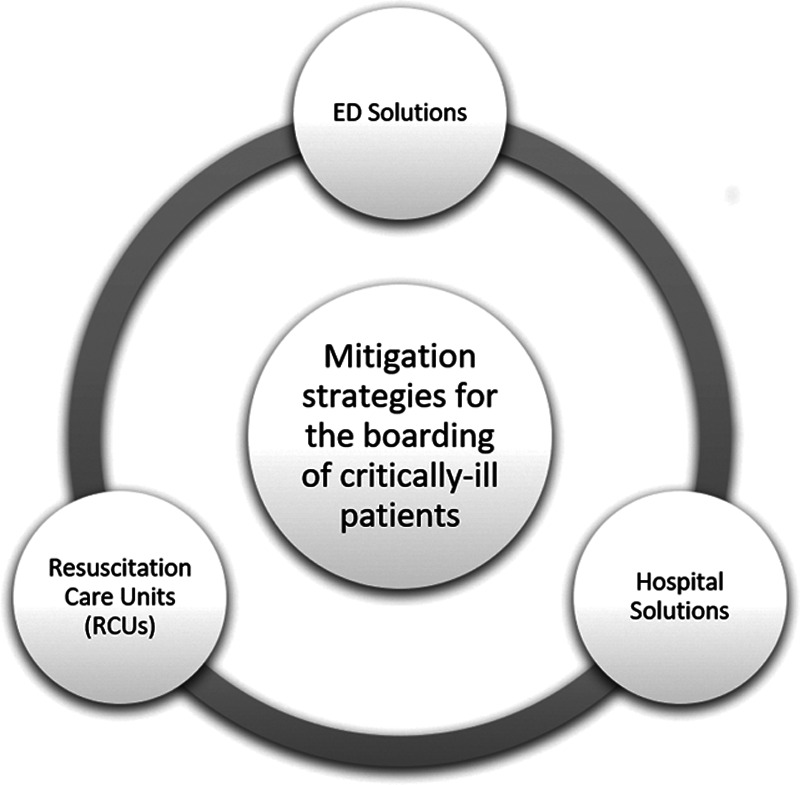
Objectives: Emergency department boarding is the practice of caring for admitted patients in the emergency department after hospital admission, and boarding has been a growing problem in the United States. Boarding of the critically ill has achieved specific attention because of its association with poor clinical outcomes. Accordingly, the Society of Critical Care Medicine and the American College of Emergency Physicians convened a Task Force to understand the implications of emergency department boarding of the critically ill. The objective of this article is to review the U.S. literature on (1) the frequency of emergency department boarding among the critically ill, (2) the outcomes associated with critical care patient boarding, and (3) local strategies developed to mitigate the impact of emergency department critical care boarding on patient outcomes. Data Sources and Study Selection: Review article. Data Extraction and Data Synthesis: Emergency department–based boarding of the critically ill patient is common, but no nationally representative frequency estimates has been reported. Boarding literature is limited by variation in the definitions used for boarding and variation in the facilities studied (boarding ranges from 2% to 88% of ICU admissions). Prolonged boarding in the emergency department has been associated with longer duration of mechanical ventilation, longer ICU and hospital length of stay, and higher mortality. Health systems have developed multiple mitigation strategies to address emergency department boarding of critically ill patients, including emergency department-based interventions, hospital-based interventions, and emergency department–based resuscitation care units. Conclusions: Emergency department boarding of critically ill patients was common and was associated with worse clinical outcomes. Health systems have generated a number of strategies to mitigate these effects. A definition for emergency department boarding is proposed. Future work should establish formal criteria for analysis and benchmarking of emergency department–based boarding overall, with subsequent efforts focused on developing and reporting innovative strategies that improve clinical outcomes of critically ill patients boarded in the emergency department.
Overview
The claims and statistics of this paper haven’t been checked yet.
Free: it reads the open-access text and checks the first 5 claims that cite a source we can check. Create a free account to check every claim.
Integrity signals
Registry
Cites
Statistics
Figures
Verification
Claims the paper makes
The claims and statistics of this paper haven’t been checked yet.
Free: it reads the open-access text and checks the first 5 claims that cite a source we can check. Create a free account to check every claim.
Claims other papers make about this one
Each is checked against this paper’s own text: does it say what the citing paper says it does?
In the citing paper
“Delayed admissions of critically ill patients from ED are associated with decreased sepsis bundle compliance and increased mortality, ventilator duration, and ICU and hospital length of stay [84].”
From Surviving sepsis campaign: international guidelines for management of sepsis and septic shock 2021 (2021) · cites this paper as [84]
Self-check
Percentages, sums and reported differences re-computed from the paper’s own numbers.
The self-check needs the paper’s full text.
Citations
Cites
The epidemiology of sepsis in the United States from 1979 through 2000
Martin, G. S., Mannino, D. M., Eaton, S., & Moss, M. (2003) · New England Journal of Medicine · doi:10.1056/nejmoa022139 · Cited by 5,841
Incidence and trends of sepsis in US hospitals using clinical vs claims data, 2009-2014.
Rhee, C., Dantes, R., Epstein, L., Murphy, D. J., Seymour, C. W., Iwashyna, T. J., Kadri, S. S., Angus, D. C., Danner, R. L., Fiore, A. E., et al. (2017) · JAMA · doi:10.1001/jama.2017.13836 · Cited by 1,884 · cited 1×
“hospitals each year, and more than half of those are admitted from the ED (15).”
BackgroundStatistical process control as a tool for research and healthcare improvement
Benneyan, J. C. (2003) · Quality and Safety in Health Care · doi:10.1136/qhc.12.6.458 · Cited by 1,045 · cited 1×
“Within the quality improvement literature, the method of statistical process control distinguishes between routine operational variation and crisis or special cause variation (52).”
MethodChalfin, D. B., Trzeciak, S., Likourezos, A., Baumann, B. M., & Dellinger, R. P. (2007) · Critical Care Medicine · doi:10.1097/01.ccm.0000266585.74905.5a · Cited by 1,022
A conceptual model of emergency department crowding
Asplin, B. R., Magid, D. J., Rhodes, K. V., Solberg, L. I., Lurie, N., & Camargo, C. A. (2003) · Annals of Emergency Medicine · doi:10.1067/mem.2003.302 · Cited by 972 · cited 6×
“The Task Force additionally resolved to (1) avoid financial, satisfaction, or administrative metrics, (2) focus on data primarily from adult studies, and (3) recognize that health system variation could be substantial and that available literature may be biased in reporting the experience of academic medical centers,…”
BackgroundMethodInfluentialIncrease in patient mortality at 10 days associated with emergency department overcrowding
Richardson, D. B. (2006) · Medical Journal of Australia · doi:10.5694/j.1326-5377.2006.tb00204.x · Cited by 826
Halpern, N. A., & Pastores, S. M. (2010) · Critical Care Medicine · doi:10.1097/ccm.0b013e3181b090d0 · Cited by 817 · cited 1×
“Inpatient critical care occupancy has also been increasing (5).”
BackgroundSprivulis, P. C., Da Silva, J., Jacobs, I. G., Jelinek, G. A., & Frazer, A. R. L. (2006) · Medical Journal of Australia · doi:10.5694/j.1326-5377.2006.tb00203.x · Cited by 759 · cited 1×
“For hospital survivors, extended ED boarding times are associated with a longer hospital length of stay (40).”
BackgroundSprivulis, P. C., Da Silva, J., Jacobs, I. G., Frazer, A. R. L., & Jelinek, G. A. (2006) · Medical Journal of Australia · doi:10.5694/j.1326-5377.2006.tb00416.x · Cited by 757
The Association Between Length of Emergency Department Boarding and Mortality
Singer, A. J., Thode Jr, H. C., Viccellio, P., & Pines, J. M. (2011) · Academic Emergency Medicine · doi:10.1111/j.1553-2712.2011.01236.x · Cited by 664 · cited 1×
“6%, suggesting that this estimate was sensitive to both setting and boarding definition (16, 31).”
Background
Research works printed but not linked: 3
- American Hospital Association (AHA): Annual Survey of Hospitals, Hospital Statistics: 1981, 1991, 1992, 2002, 2006, 2015, 2016, 2017 editions. Chicago, IL, American Hospital Association
- Rutherford PA Provost LP Kotagal UR Achieving Hospital-wide Patient Flow. 2017 Cambridge, MA, Institute for Healthcare Improvement.
- Howitt AM Leonard HB Managing Crises: Responses to Large-Scale Emergencies. 2009 Washington, DC, CQ Press.
Cited by
Items 101–172 of 172
Tuttle, E., Wang, X., & Modrykamien, A. M. (2022) · Hospital Practice · doi:10.1080/21548331.2022.2126255 · Cited by 1
“Based on the aforementioned background, some organizations implemented different models to expedite and optimize delivery of care of ICU patients boarding in ED [7].”
Diabulimia – a diagnostic and therapeutic challenge in the emergency department
Atriham, A. R., Kleszczyński, J., Sierakowska, A., & Springer, J. (2024) · European Journal of Translational and Clinical Medicine · doi:10.31373/ejtcm/183021 · Cited by 2
“However, the lack of ICU beds is not an uncommon situation in many hospitals, thus we manage patients in the ED longer and longer [26-27].”
BackgroundInpatient boarding in the emergency departments and clinical outcomes: A propensity-matched study
Yousufuddin, M., Leopold, K., Napoli, A. M., Ma, Z., Barkoudah, E., Wang, Z., Khandelwal, K., Pagali, S. R., Issa, M., Tahir, M. W., et al. (2025) · The American Journal of Emergency Medicine · doi:10.1016/j.ajem.2025.09.043 · Cited by 3
Davis, C. A., Supples, M., Anderson, M. B., Ashburn, N. P., Snavely, A. C., Winslow, J. E., & Mahler, S. A. (2026) · Prehospital Emergency Care · doi:10.1080/10903127.2025.2611050 · Cited by 1
Boarding and Crowding Are Facts of Life. It’s Time We Adapt Resident Education to Them
Schor, S., Baez, J., & Hill, J. (2026) · Annals of Emergency Medicine · doi:10.1016/j.annemergmed.2025.12.011 · Cited by 1
Post-intubation Sedation and Analgesia in the Emergency Department: The Basics and Beyond
Baumgartner, K. T., & Fuller, B. M. (2026) · Emergency Medicine Clinics of North America · doi:10.1016/j.emc.2026.02.004 · Cited by 1
Whitis, J. M., Dillman, S., & Davis, J. (2026) · Journal of Emergency Nursing · doi:10.1016/j.jen.2026.03.012 · Cited by 1
Critical Care Consultations for Patients Boarding in the Emergency Department
Haley, W., Smith, R., & Mitchell, D. (2026) · AACN Advanced Critical Care · doi:10.4037/aacnacc2026243 · Cited by 1
Noitz, M., Ilko, S. A., Dünser, M. W., Behringer, W., Wildner, B., & Herkner, H. (2026) · Scandinavian Journal of Trauma Resuscitation and Emergency Medicine · doi:10.1186/s13049-026-01647-9 · Cited by 2
“Large studies demonstrated that prolonged time spent in the ED prior to intensive care unit (ICU) admission was associated with higher mortality and longer ICU as well as hospital length of stays (LOS) in critically ill patients [3–7].”
OPTIMIZING CRITICAL CARE IN EMERGENCY DEPARTMENTS: A MULTIDISCIPLINARY APPROACH
Özdemir, S. (2024) · Hastane Öncesi Dergisi · doi:10.54409/hod.1395556 · Cited by 1
Wörnle, M. (2024) · Discover Health Systems · doi:10.1007/s44250-024-00097-3 · Cited by 1
Johnson, M. C., Segev, E., Bracey, A., Geary, S. P., Duncan, L. J., Hanowitz, C., Pauze, D. R., & Wu, G. P. (2024) · Academic Emergency Medicine · doi:10.1111/acem.15077 · Cited by 2
Ding, H., Feng, X., Yang, Q., Yang, Y., Zhu, S., Ji, X., Kang, Y., Shen, J., Zhao, M., Xu, S., et al. (2023) · Research Square · doi:10.21203/rs.3.rs-3327850/v1 · Cited by 1
Al-Shareef, A. S., Darweish, A., & Shirah, B. H. (2021) · Cureus · doi:10.7759/cureus.17757
“She remained in the ICU intubated and mechanically ventilated until her demise.”
BackgroundInfluentialMeloy, P. G., Howell, L., Armstrong, E., & Bromberek, E. (2022) · Cureus · doi:10.7759/cureus.23874
“This further divides attention and prohibits the treating physician from lengthy, in-depth case review with undivided attention [8].”
BackgroundBasis, F., Tur‐Sinai, A., & Haklai, Z. (2022) · Healthcare · doi:10.3390/healthcare10050915
“Some studies set the optimal LOS at four hours and define the maximum at six hours [26].”
BackgroundWinkle, J. M., & Sevransky, J. (2022) · Critical Care Medicine · doi:10.1097/ccm.0000000000005566
Bailey, H. (2023) · Annual update in intensive care and emergency medicine · doi:10.1007/978-3-031-23005-9_38 · Cited by 1
Right Care, Right Now: Bringing More Critical Care to Boarding Patients in the Emergency Department*
Wessman, B. T., & Mohr, N. M. (2023) · Critical Care Medicine · doi:10.1097/ccm.0000000000005859
Self-citationJabir, W. A., Al-alfard, B. A., Muhaya, A. A., & Farhan, A. A. (2023) · World Family Medicine Journal/Middle East Journal of Family Medicine · doi:10.5742/mewfm.2023.95256183
Atalan, A. (2023) · International Conference on Contemporary Academic Research · doi:10.59287/as-proceedings.140
Patient's Perspective for their Non-Urgent Presentations to the Emergency Department in Najran City
Alkhaywani, F. H., Alsalah, A. Y. A., Alsalah, H. Y. A., Al-Khaiwani, A. M. Y., Alqanas, T. H., Almurdef, A. N., daghman, S. D. H. A., Zaman, H. M. A. A., & Alqarni, A. A. (2023) · World Family Medicine Journal/Middle East Journal of Family Medicine · doi:10.5742/mewfm.2023.95256218
Safety, Surge, and Strain: Where and When Does Risk Occur in Critical Care?*
Hick, J. L., & Kadri, S. S. (2024) · Critical Care Medicine · doi:10.1097/ccm.0000000000006177
Malacas, M. S., Martins, D. P. M. O., & Santiago, M. D. S. (2024) · Revista Ibero-Americana de Humanidades, Ciências e Educação · doi:10.51891/rease.v10i3.13390
Sepsis and Septic Shock in the Peripartum Period
Saadeddin, A. A., Amara, U. E., Nashrah, U., AlMulla, B. A., Ummunnisa, F., & Shaikh, N. (2024) · Springer eBooks · doi:10.1007/978-981-99-9577-6_3
Liu, F., Zhang, L., Gao, N., Qiao, Z., & Yao, J. (2024) · Journal of Modern Pharmacology and Pathology · doi:10.53964/jmpp.2024004
Ist der Schockraum noch zeitgemäß?
Dünser, M. W., Noitz, M., Eisenburger, P., Klinglmair, M., Meier, J. M., & Behringer, W. (2024) · Anästhesie Nachrichten · doi:10.1007/s44179-024-00249-z
ED-ICU Time: The EF of the ED?*
Hockstein, M. A., & Tonna, J. E. (2024) · Critical Care Medicine · doi:10.1097/ccm.0000000000006425
Qiu-xia, Z., Lee, K., Qian, P., Mansor, Z., Ismail, I., Guo, Y. C., & Lim, P. Y. (2024) · Journal of Advanced Nursing · doi:10.1111/jan.16541
ED observation unit-based delayed comfort care pathway for ED patients on life support
Sun, J., D'Souza, M., Losak, M., Htet, N. N., Miles-Threatt, C., & Mitarai, T. (2025) · The American Journal of Emergency Medicine · doi:10.1016/j.ajem.2025.01.031
Valenzi, N. (2025) · Western Journal of Emergency Medicine · doi:10.5811/westjem.41961
Skitch, S., Ajzenberg, H., & Rochwerg, B. N. (2025) · Canadian Journal of Emergency Medicine · doi:10.1007/s43678-025-00863-z
Lee, J., Lee, H. S., Choi, J. Y., Chung, H. S., Sang, S., & Yoo, J. (2025) · Journal of Emergency Nursing · doi:10.1016/j.jen.2025.02.008
Hoffmann, K., Hohenstein, S., Brederlau, J., Hirsch, J., Groesdonk, H. V., Bollmann, A., & Kuhlen, R. (2025) · Journal of Clinical Medicine · doi:10.3390/jcm14072332 · Cited by 2
“…demand, further factors such as limited workforce [37–41], workforce absenteeism and ICU bed allocation systematics [42–45], admission behavior as healthcare utilization and generally comparable ICU data [20,46,47], a fragmented and unstandardized data landscape [48–50] needs to be considered.”
Oud, L., & Garza, J. (2025) · Journal of Clinical Medicine Research · doi:10.14740/jocmr6189
“At the hospital level, pandemic-related strains, including those on critical care services [67], have been associated with delays in intensive care unit (ICU) admission [68] and have likely affected adversely time-sensitive and other processes of care.”
Oud, L., & Garza, J. (2025) · Medicine · doi:10.1097/md.0000000000042219
“[48] At the hospital level, broad pandemic-induced strains took place, including those on critical care services, [49] often with associated delays in admission to ICU, [50,51] and with a reported decrease in neurological services support.”
Jeon, K., Kim, J. H., Kim, K. C., Lee, H., Lee, S., Lee, S., Huh, J. W., Kwack, W. G., Kang, Y.-S., Kang, Y.-S., et al. (2025) · Acute and Critical Care · doi:10.4266/acc.004128 · Cited by 2
Mendonça, F. M. B., & Viana, S. M. (2025) · Revista Foco · doi:10.54751/revistafoco.v18n7-036
Lee, K.-S., Min, H. S., Moon, J. Y., Lim, D., Kim, Y., Ko, E., Kim, Y. S., Kim, J., Lee, J., & Sung, H. K. (2022) · Figshare · doi:10.6084/m9.figshare.21592484
Dziegielewski, J., Schulte, F. C., Jung, C., Wolff, G., Hannappel, O., Kümpers, P., Bernhard, M., & Michael, M. (2023) · Figshare · doi:10.6084/m9.figshare.22649270
Ahn, Y. H., Lee, J., Oh, D. K., Lee, S. Y., Park, M. H., Lee, H., 임채만, Lee, S.-M., & Lee, H. Y. (2023) · Figshare · doi:10.6084/m9.figshare.22678190
Suttapanit, K., Dangprasert, K., Sanguanwit, P., & Supatanakij, P. (2022) · Figshare · doi:10.6084/m9.figshare.19745465
Emergency Department Boarding: An Inevitable Phenomenon or Crucial Quality Indicator?
Cannizzaro, G., Spina, N., & Iozzo, P. (2025) · Interdisciplinary Journal of Nursing and Health · doi:10.82051/ijnh-2025-232
Saoraya, J., Amaral, A. C. K.-B., Tillmann, B. W., & Angriman, F. (2026) · Critical Care Medicine · doi:10.1097/ccm.0000000000007028
Implementing an Electrocardiogram Suite in the Emergency Department to Decrease Door-to-EKG Time
Ortuno, K. E. (2026) · Open Journal of Nursing · doi:10.4236/ojn.2026.161003
Kochanek, M., & Bennett, F. (2026) · Medizinische Klinik - Intensivmedizin und Notfallmedizin · doi:10.1007/s00063-025-01390-6
Bracey, A., & Chukwuanu, K. A. (2026) · Annals of Emergency Medicine · doi:10.1016/j.annemergmed.2025.10.018
Meka, P., & Stiller, E. (2026) · Next research. · doi:10.1016/j.nexres.2026.101654
Best practices for critically ill patients boarding in the emergency department: A Delphi study
Garcia, S. I., Finch, A. S., Smith, L. M., Mullan, A. F., & Litell, J. M. (2026) · The American Journal of Emergency Medicine · doi:10.1016/j.ajem.2026.03.028
Samadian, K. D., Croteau, C. W., Meeker, M., & Baugh, J. J. (2026) · Journal of the American College of Emergency Physicians Open · doi:10.1016/j.acepjo.2026.100363
Noitz, M., Jenny, D., Steininger, F., Tschoellitsch, T., Erblich, R., Knöll, M., Meier, J., & Dünser, M. W. (2026) · Emergency Medicine Journal · doi:10.1136/emermed-2025-215099
Drivers of Increased Hospital Mortality for Non-COVID-19 Conditions During COVID-19 Surges in 2020
Rai, K., Douglas, I. S., Turner, A. R., & Mehta, A. (2026) · Journal of Patient Safety · doi:10.1097/pts.0000000000001514
Feleke, N. B., Mengistie, C. T., Mengistie, B. T., Teferi, M. G., Biza, M. H., Shewangizaw, H., Asnake, Y., Hassen, G. W., & Beza, L. (2026) · African Journal of Emergency Medicine · doi:10.1016/j.afjem.2026.100979
“At the same time, system constraints such as limited ICU capacity and delays in transfer may prolong boarding and restrict access to continuous monitoring and definitive critical care [3,6,21].”
InfluentialResource allocation optimization for disaster medical systems based on open BCMP queueing networks
Mizuno, S., & Ohba, H. (2026) · Operations Research Data Analytics and Logistics · doi:10.1016/j.ordal.2026.200505
Gilbert, B. W., Zimmerman, D. E., Robertson, A., Jones, G. D., Gendron, B. J., Corio, J. L., Harlan, S. S., Engstrom, K., Maisenbach, A., Rambaran, K. A., et al. (2026) · JACCP JOURNAL OF THE AMERICAN COLLEGE OF CLINICAL PHARMACY · doi:10.1002/jac5.70227
Okello, A., Olinga, D., Odakha, J. A., Kaija, M. B., Byasi, J., Musau, E. M., Kizito, P. M., Lubikire, A., & Bagonza, K. (2026) · African Journal of Emergency Medicine · doi:10.1016/j.afjem.2026.100977
“These findings are consistent with the existing literature on the harms of prolonged ED stay [28].”
Creation of a novel simulation based palliative care curriculum for the emergency medicine resident
Moss, H. C., Gutierrez, B. R., Manzur, M. K., Rashed, A. L., Thomas, J. J., Trump, N. P., Turrin, D. K., Lehman, V. C., Cassara, M., & Lutz, C. L. (2026) · BMC Medical Education · doi:10.1186/s12909-026-09503-1
“The combination of the COVID-19 pandemic, prolonged ED boarding times, and the overall aging of the American population has led to an influx of medically complex patients with diverse healthcare needs [4, 5].”
Gupta, P. B., Levin, N. M., Gordon, A. J., Htet, N. N., Lee, J. E., Wilson, J. G., & Mitarai, T. (2026) · The American Journal of Emergency Medicine · doi:10.1016/j.ajem.2026.05.043
Baumgartner, K. T., Denny, K., Montgomery, E., Patton, C., Shedd, M., Yeary, J. C., Yaeger, L. H., Griffey, R. T., & Fuller, B. M. (2026) · American Journal of Health-System Pharmacy · doi:10.1093/ajhp/zxag173
Boarding as Failed Flow: Patient Safety Cannot Adapt to Stagnation
Zoli, A., Madeo, M., Pignataro, F. S., Caroleo, Z., Garofalo, E., & Bruni, A. (2026) · Annals of Emergency Medicine · doi:10.1016/j.annemergmed.2026.01.028
Patel, D. M., Strickler, S. S., Moran, T. P., Madden, L., Hockstein, M., Maberry, D. R., Rasheed, M., Nugent, K. L., Tekwani, S. S., Ratcliff, J. J., et al. (2026) · Journal of the American College of Emergency Physicians Open · doi:10.1016/j.acepjo.2026.100444
Brandt-Mayo, K. R., Malagon‐Maldonado, G., & Graham, J. (2026) · Advanced Emergency Nursing Journal · doi:10.1097/tme.0000000000000639
Ahmed, A. A., Abdirahman, A. M., Jama, S. M. A., Abdullahi, I. M., Hassan, M. A., & Yusuf, S. A. (2026) · Critical Care Sepsis and Severe Infection · doi:10.1186/s44541-026-00014-6
Seak, C., Goh, Z. N. L., & Cheng, H.-T. (2026) · The American Journal of Emergency Medicine · doi:10.1016/j.ajem.2026.08.027
Duziyelebai, D., Mao, T., Dong, S., Zheng, Y., Zhang, M., Lv, Y., Huang, D., Huang, X., & Zhuang, Y. (2026) · ASAIO Journal · doi:10.1097/mat.0000000000002825
Kabahasanoğlu, K., BEKTAŞ, M. H., Örmeci, G. Ö., & Beyoğlu, R. (2026) · Journal of Emergency Medicine · doi:10.1016/j.jemermed.2026.08.013
Boarding times of patients admitted to the Emergency Department of an Ethiopian hospital
Gadisa, M., Amme, S., Workina, A., Seid, S. S., Habtamu, A., Adem, M., & Solomon, C. (2026) · African Journal of Emergency Medicine · doi:10.1016/j.afjem.2026.100982
“Critically ill patients are particularly vulnerable, experiencing higher mortality rates when boarded for extended periods [18].”
Shankar, T., Sasidharan, P., Kaeley, N., Singh, R. K., Sharma, A., Amrutha Priya, C. P., Yadav, J. K., Lalotra, D. K., & Balagopal, A. (2026) · Cureus · doi:10.7759/cureus.115468
“Conversely, critical care frameworks are primarily designed for patients with established diagnoses being managed within the relatively controlled environment of the ICU [5,15,32].”
Finiguerra, I., Gianino, M. M., Vacchelli, R., Demasi, M., Pappalardo, L., Albanese, C., Binello, E., Borghin, G., Cappello, S., Cavagnini, N., et al. (2026) · Nursing Reports · doi:10.3390/nursrep16090338
“In particular, time spent in the emergency department has been linked to delays in initiating preventive nursing interventions and to an increased incidence of in-hospital complications [31].”
Population ageing and divergent trends in intensive care utilisation
Rajšić, S., Vergano, M., Sinner, B., Breitkopf, R., & Friesenecker, B. E. (2026) · British Journal of Anaesthesia · doi:10.1016/j.bja.2026.09.007
Tovo, V., Chilleri, E., Isemann, C. R., & Righi, L. (2026) · Dimensions of Critical Care Nursing · doi:10.1097/dcc.0000000000000795
Walsh, L. V., Borgida, J. S. W., Gregg, A. T., Craveiro, V. L., Zhao, L., Brown, S., Cote, M. P., Wagner, R. K., Raja, A., & Ly, T. V. (2026) · Journal of Clinical Medicine · doi:10.3390/jcm15208071
“Patient volume and boarding, subspecialty consultations, and insufficient staffing are major contributors to overcrowding [6,7].”
Metadata
- Authors
- Mohr, N. M., Wessman, B. T., Bassin, B., Elie-Turenne, M.-C., Ellender, T., Emlet, L. L., Ginsberg, Z., Gunnerson, K., Jones, K. M., Kram, B., Marcolini, E., & Rudy, S.
- Affiliations
- University of Iowa (US)
- Washington University in St. Louis (US)
- University of Michigan (US)
- University of Florida Health (US)
- Indiana University School of Medicine (US)
- University of Pittsburgh (US)
- Department of Emergency & Critical Care Medicine, Kettering Health System, Dayton, OH.
- University of Maryland, Baltimore (US)
- Duke University Hospital (US)
- Dartmouth College (US)
- Corresponding author
- Mohr, Nicholas M.
- ORCID
- Venue
- Critical Care Medicine
- Published
- 2020-07-17
- Volume
- 48
- Issue
- 8
- Pages
- 1180-1187
- ISSN
- 0090-3493 (ISSN-L)
- PMC
- PMC7365671
- OpenAlex
- W3043305555
- Semantic Scholar
- 91afe0270576aa2718b92822304e778d600ac4a4
- Cited by
- 172
- References
- 57
- Citations by year
- 2026: 40 · 2025: 26 · 2024: 38 · 2023: 30 · 2022: 24 · 2021: 11 · 2020: 3
- FWCI
- 4.04
- Type
- journal article
- Language
- en
- Open access
- hybrid
- doi.org
- Licence
- Locations
- Critical Care Medicine (publishedVersion, cc-by-nc-nd)
- PubMed Central (publishedVersion, cc-by-nc-nd)
- PubMed (publishedVersion)
- Digital Commons@Becker (Washington University School of Medicine) (submittedVersion, cc-by-nc-nd)
- IUScholarWorks (Indiana University) (submittedVersion, cc-by-nc-nd)
- Purdue University Indianapolis (Indiana University) (submittedVersion, cc-by-nc-nd)
- Topics
- Health Sciences › Medicine › Emergency Medicine › Emergency and Acute Care Studies
- Health Sciences › Medicine › Emergency Medicine › Trauma and Emergency Care Studies
- Health Sciences › Nursing › Leadership and Management › Hospital Admissions and Outcomes
- Keywords
- emergency department boarding, critically ill patients, length of hospital stay, mechanical ventilation duration, mortality, hospitalization
- MeSH terms
- Emergency Service, Hospital, Humans, Intensive Care Units, Length of Stay, Patient Admission, Patient Transfer, United States, Critical Illness, Treatment Outcome
About these checks
Registry, retraction, Cites and statistics results are computed, not judged, with one exception: a printed reference that no index lists is read once by a model before it counts as a citation error. Claims are extracted by a model and kept only when their quote appears verbatim in the text; each cited source is then checked, with a model’s help, for whether it says what the claim relies on. Those verdicts can be wrong — read the claim’s quote and the cited source before relying on one.
Statistics and arithmetic are recomputed, not judged.
Confidence bands are shown only for fields calibrated on our annotated test set. None is calibrated yet, so no band is shown.
What counts as a claim ›How we measure confidence ›How we check this ›
Are you an author, or do you see a problem with this page? Request a review
Data sources
Bibliographic data: Semantic Scholar, OpenAlex, Crossref.
Contains information from the Semantic Scholar Academic Graph Datasets, made available under the ODC Attribution License (ODC-BY 1.0).
Semantic Scholar’s data is described in: Kinney, R., et al. (2023). The Semantic Scholar Open Data Platform. arXiv:2301.10140.
