

Boarding of critically ill patients in the emergency department.
Open accessThe DOI matches its Crossref record; 57 of the 57 references it cites were found in a registry or an index.
Abstract
Objectives: Emergency department boarding is the practice of caring for admitted patients in the emergency department after hospital admission, and boarding has been a growing problem in the United States. Boarding of the critically ill has achieved specific attention because of its association with poor clinical outcomes. Accordingly, the Society of Critical Care Medicine and the American College of Emergency Physicians convened a Task Force to understand the implications of emergency department boarding of the critically ill. The objective of this article is to review the U.S. literature on (1) the frequency of emergency department boarding among the critically ill, (2) the outcomes associated with critical care patient boarding, and (3) local strategies developed to mitigate the impact of emergency department critical care boarding on patient outcomes. Data Sources and Study Selection: Review article. Data Extraction and Data Synthesis: Emergency department–based boarding of the critically ill patient is common, but no nationally representative frequency estimates has been reported. Boarding literature is limited by variation in the definitions used for boarding and variation in the facilities studied (boarding ranges from 2% to 88% of ICU admissions). Prolonged boarding in the emergency department has been associated with longer duration of mechanical ventilation, longer ICU and hospital length of stay, and higher mortality. Health systems have developed multiple mitigation strategies to address emergency department boarding of critically ill patients, including emergency department-based interventions, hospital-based interventions, and emergency department–based resuscitation care units. Conclusions: Emergency department boarding of critically ill patients was common and was associated with worse clinical outcomes. Health systems have generated a number of strategies to mitigate these effects. A definition for emergency department boarding is proposed. Future work should establish formal criteria for analysis and benchmarking of emergency department–based boarding overall, with subsequent efforts focused on developing and reporting innovative strategies that improve clinical outcomes of critically ill patients boarded in the emergency department.
Overview
The claims and statistics of this paper haven’t been checked yet.
Free: it reads the open-access text and checks the first 5 claims that cite a source we can check. Create a free account to check every claim.
Integrity signals
Registry
Cites
Statistics
Figures
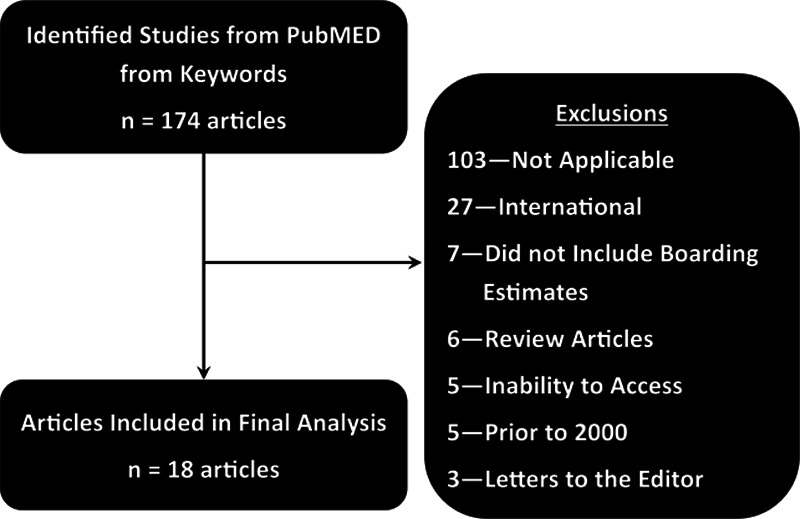
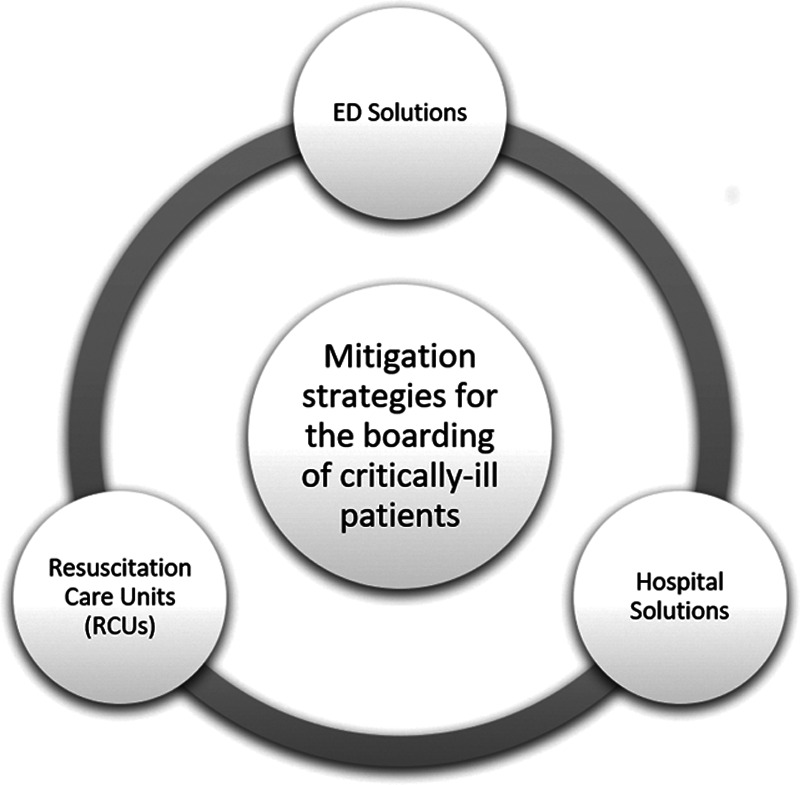
Verification
Claims the paper makes
The claims and statistics of this paper haven’t been checked yet.
Free: it reads the open-access text and checks the first 5 claims that cite a source we can check. Create a free account to check every claim.
Claims other papers make about this one
Each is checked against this paper’s own text: does it say what the citing paper says it does?
In the citing paper
“Delayed admissions of critically ill patients from ED are associated with decreased sepsis bundle compliance and increased mortality, ventilator duration, and ICU and hospital length of stay [84].”
From Surviving sepsis campaign: international guidelines for management of sepsis and septic shock 2021 (2021) · cites this paper as [84]
Self-check
Percentages, sums and reported differences re-computed from the paper’s own numbers.
The self-check needs the paper’s full text.
Citations
Cites
The epidemiology of sepsis in the United States from 1979 through 2000
Martin, G. S., Mannino, D. M., Eaton, S., & Moss, M. (2003) · New England Journal of Medicine · doi:10.1056/nejmoa022139 · Cited by 5,841
Incidence and trends of sepsis in US hospitals using clinical vs claims data, 2009-2014.
Rhee, C., Dantes, R., Epstein, L., Murphy, D. J., Seymour, C. W., Iwashyna, T. J., Kadri, S. S., Angus, D. C., Danner, R. L., Fiore, A. E., et al. (2017) · JAMA · doi:10.1001/jama.2017.13836 · Cited by 1,884 · cited 1×
“hospitals each year, and more than half of those are admitted from the ED (15).”
BackgroundStatistical process control as a tool for research and healthcare improvement
Benneyan, J. C. (2003) · Quality and Safety in Health Care · doi:10.1136/qhc.12.6.458 · Cited by 1,045 · cited 1×
“Within the quality improvement literature, the method of statistical process control distinguishes between routine operational variation and crisis or special cause variation (52).”
MethodChalfin, D. B., Trzeciak, S., Likourezos, A., Baumann, B. M., & Dellinger, R. P. (2007) · Critical Care Medicine · doi:10.1097/01.ccm.0000266585.74905.5a · Cited by 1,022
A conceptual model of emergency department crowding
Asplin, B. R., Magid, D. J., Rhodes, K. V., Solberg, L. I., Lurie, N., & Camargo, C. A. (2003) · Annals of Emergency Medicine · doi:10.1067/mem.2003.302 · Cited by 972 · cited 6×
“The Task Force additionally resolved to (1) avoid financial, satisfaction, or administrative metrics, (2) focus on data primarily from adult studies, and (3) recognize that health system variation could be substantial and that available literature may be biased in reporting the experience of academic medical centers,…”
BackgroundMethodInfluentialIncrease in patient mortality at 10 days associated with emergency department overcrowding
Richardson, D. B. (2006) · Medical Journal of Australia · doi:10.5694/j.1326-5377.2006.tb00204.x · Cited by 826
Halpern, N. A., & Pastores, S. M. (2010) · Critical Care Medicine · doi:10.1097/ccm.0b013e3181b090d0 · Cited by 817 · cited 1×
“Inpatient critical care occupancy has also been increasing (5).”
BackgroundSprivulis, P. C., Da Silva, J., Jacobs, I. G., Jelinek, G. A., & Frazer, A. R. L. (2006) · Medical Journal of Australia · doi:10.5694/j.1326-5377.2006.tb00203.x · Cited by 759 · cited 1×
“For hospital survivors, extended ED boarding times are associated with a longer hospital length of stay (40).”
BackgroundSprivulis, P. C., Da Silva, J., Jacobs, I. G., Frazer, A. R. L., & Jelinek, G. A. (2006) · Medical Journal of Australia · doi:10.5694/j.1326-5377.2006.tb00416.x · Cited by 757
The Association Between Length of Emergency Department Boarding and Mortality
Singer, A. J., Thode Jr, H. C., Viccellio, P., & Pines, J. M. (2011) · Academic Emergency Medicine · doi:10.1111/j.1553-2712.2011.01236.x · Cited by 664 · cited 1×
“6%, suggesting that this estimate was sensitive to both setting and boarding definition (16, 31).”
BackgroundDiabetes 2030: Insights from Yesterday, Today, and Future Trends
Rowley, W. R., Bezold, C., Arikan, Y., Byrne, E., & Krohe, S. (2017) · Population Health Management · doi:10.1089/pop.2015.0181 · Cited by 655
Job satisfaction among hospital nurses revisited: A systematic review
Lu, H., Barriball, K. L., Zhang, X., & While, A. E. (2012) · International Journal of Nursing Studies · doi:10.1016/j.ijnurstu.2011.11.009 · Cited by 562 · cited 1×
“ED-CCM boarding impacts nursing, respiratory therapy, pharmacy, radiology, and laboratory services, and it contributes to poor staff satisfaction (49, 50).”
BackgroundCardoso, L. T., Grion, C. M., Matsuo, T., Anami, E. H., Kauss, I. A., Seko, L., & Bonametti, A. M. (2011) · Critical Care · doi:10.1186/cc9975 · Cited by 461 · cited 2×
“Cardoso et al (39) observed that ICU mortality increased with duration of ED boarding (37.6% [immediate admission] vs 43.4% [2–12 hr] vs 46.2% [12–18 hr] vs 52% [18–24 hr] vs 57.1% [>24 hr]; p = 0.002).”
BackgroundInfluentialPines, J. M., Pollack, C. V., Diercks, D. B., Chang, A. M., Shofer, F. S., & Hollander, J. E. (2009) · Academic Emergency Medicine · doi:10.1111/j.1553-2712.2009.00456.x · Cited by 292
Hospital Workload and Adverse Events
Weissman, J. S., Rothschild, J. M., Bendavid, E., Sprivulis, P., Cook, E. F., Evans, R. S., Kaganova, Y., Bender, M., David-Kasdan, J., Haug, P., et al. (2007) · Medical Care · doi:10.1097/01.mlr.0000257231.86368.09 · Cited by 266
Emergency department length of stay independently predicts excess inpatient length of stay
Liew, D., Liew, D., & Kennedy, M. P. (2003) · Medical Journal of Australia · doi:10.5694/j.1326-5377.2003.tb05676.x · Cited by 261
Refining Surge Capacity: Conventional, Contingency, and Crisis Capacity
Hick, J. L., Barbera, J. A., & Kelen, G. D. (2009) · Disaster Medicine and Public Health Preparedness · doi:10.1097/dmp.0b013e31819f1ae2 · Cited by 241 · cited 1×
“Surge conditions occur when needed resources are outstripped by what is available, and harm can occur when staff are overwhelmed by competing demands on time and resources (51).”
BackgroundEmergency department and hospital crowding: causes, consequences, and cures
McKenna, P., Heslin, S. M., Viccellio, P., Mallon, W. K., Hernandez, C., & Morley, E. J. (2019) · Clinical and Experimental Emergency Medicine · doi:10.15441/ceem.18.022 · Cited by 225 · cited 1×
“This lack of inpatient capacity is the primary driver of ED boarding, and this is true even for the critically ill (6).”
BackgroundRichardson, D. B. (2002) · Medical Journal of Australia · doi:10.5694/j.1326-5377.2002.tb04917.x · Cited by 194 · cited 4×
“The Task Force additionally resolved to (1) avoid financial, satisfaction, or administrative metrics, (2) focus on data primarily from adult studies, and (3) recognize that health system variation could be substantial and that available literature may be biased in reporting the experience of academic medical centers,…”
BackgroundMethodInfluentialIncreased health care costs associated with ED overcrowding
Krochmal, P., & Riley, T. A. (1994) · The American Journal of Emergency Medicine · doi:10.1016/0735-6757(94)90135-x · Cited by 160
The impact of ED crowding on early interventions and mortality in patients with severe sepsis
Gaieski, D. F., Agarwal, A. K., Mikkelsen, M. E., Drumheller, B. C., Sante, S. C., Shofer, F. S., Goyal, M. K., & Pines, J. M. (2017) · The American Journal of Emergency Medicine · doi:10.1016/j.ajem.2017.01.061 · Cited by 160
Rincón, F., Mayer, S. A., Rivolta, J., Stillman, J. I., Boden-Albala, B. M., Elkind, M. S. V., Marshall, R. S., & Chong, J. Y. (2010) · Neurocritical Care · doi:10.1007/s12028-010-9347-0 · Cited by 145 · cited 1×
“Increased ED boarding times are associated with worsening organ dysfunction and a four-fold increase in the probability of poor neurologic recovery in patients presenting with stroke (38).”
BackgroundGunnerson, K. J., Bassin, B. S., Havey, R. A., Haas, N. L., Sozener, C. B., Medlin, R. P., Gegenheimer-Holmes, J., Laurinec, S., Boyd, C., Cranford, J. A., et al. (2019) · JAMA Network Open · doi:10.1001/jamanetworkopen.2019.7584 · Cited by 134
Self-citationEffect of Increased ICU Capacity on Emergency Department Length of Stay and Ambulance Diversion
McConnell, K. J., Richards, C. F., Daya, M. R., Bernell, S. L., Weathers, C. C., & Lowe, R. A. (2005) · Annals of Emergency Medicine · doi:10.1016/j.annemergmed.2004.10.032 · Cited by 130 · cited 1×
“One study required that ICU beds be unavailable for ED boarding to occur (27), whereas another used the distribution of ED wait times to define outliers (28).”
MethodMathews, K. S., Durst, M. S., Vargas-Torres, C., Olson, A. D., Mazumdar, M., & Richardson, L. D. (2018) · Critical Care Medicine · doi:10.1097/ccm.0000000000002993 · Cited by 126 · cited 3×
“Some studies describe boarding as total time spent in the ED (18, 20–26), with some defining that time only after the decision to admit (18, 20, 26).”
BackgroundResultAl-Qahtani, S., Alsultan, A., Haddad, S., Alsaawi, A., Alshehri, M., Alsolamy, S., Felebaman, A., Tamim, H. M., Aljerian, N., Al-Dawood, A., et al. (2017) · BMC Emergency Medicine · doi:10.1186/s12873-017-0143-4 · Cited by 101
The Opportunity Cost of Futile Treatment in the ICU*
Huynh, T. N., Kleerup, E. C., Raj, P. P., & Wenger, N. S. (2014) · Critical Care Medicine · doi:10.1097/ccm.0000000000000402 · Cited by 97
A Conceptual Framework for Improving Critical Care Patient Flow and Bed Use
Mathews, K. S., & Long, E. F. (2015) · Annals of the American Thoracic Society · doi:10.1513/annalsats.201409-419oc · Cited by 86 · cited 1×
“Some studies describe boarding as total time spent in the ED (18, 20–26), with some defining that time only after the decision to admit (18, 20, 26).”
BackgroundA qualitative meta‐synthesis of patients' experiences of intra‐ and inter‐hospital transitions
Uhrenfeldt, L., Aagaard, H., Hall, E. O. C., Fegran, L., Ludvigsen, M. S., & Meyer, G. (2013) · Journal of Advanced Nursing · doi:10.1111/jan.12134 · Cited by 79 · cited 1×
“It is recommended that boarding time frames not exceed 4 hours in the interest of patient safety and quality of care” (33).”
BackgroundHowell, E. E., Bessman, E. S., Marshall, R., & Wright, S. M. (2009) · Journal of Critical Care · doi:10.1016/j.jcrc.2009.08.004 · Cited by 77 · cited 1×
“In a similar approach, Howell et al (55) studied the impact of an active bed management system controlled at the physician level (hospitalists) at a large academic medical center.”
BackgroundKelen, G. D., McCarthy, M. L., Kraus, C. K., Ding, R., Hsu, E. B., Li, G., Shahan, J. B., Scheulen, J. J., & Green, G. B. (2009) · Disaster Medicine and Public Health Preparedness · doi:10.1097/dmp.0b013e3181a5e7cd · Cited by 74 · cited 1×
“awaiting a final laboratory check or medication dose) can open up capacity quickly as well (60, 61).”
BackgroundCritical care medicine-quo vadis?
Safar, P. J. (1974) · Critical Care Medicine · doi:10.1097/00003246-197401000-00001 · Cited by 70 · cited 6×
“The Task Force additionally resolved to (1) avoid financial, satisfaction, or administrative metrics, (2) focus on data primarily from adult studies, and (3) recognize that health system variation could be substantial and that available literature may be biased in reporting the experience of academic medical centers,…”
BackgroundMethodInfluentialSri‐on, J., Chang, Y., Curley, D. P., Camargo, C. A., Weissman, J. S., Singer, S. J., & Liu, S. W. (2014) · The American Journal of Emergency Medicine · doi:10.1016/j.ajem.2014.06.001 · Cited by 63
A Cross-sectional Study of Emergency Department Boarding Practices in the United States
Pitts, S. R., Vaughns, F. L., Gautreau, M., Cogdell, M. W., & Meisel, Z. F. (2014) · Academic Emergency Medicine · doi:10.1111/acem.12375 · Cited by 61
Liu, S. W., Chang, Y., Weissman, J. S., Griffey, R. T., Thomas, J., Nergui, S., Hamedani, A. G., Camargo, C. A., & Singer, S. (2011) · Academic Emergency Medicine · doi:10.1111/j.1553-2712.2011.01082.x · Cited by 56
Doucet, M., Rochette, L., & Hamel, D. (2016) · Canadian Respiratory Journal · doi:10.1155/2016/7518287 · Cited by 54
The use of mechanical ventilation in the ED
Easter, B. D., Fischer, C., & Fisher, J. (2011) · The American Journal of Emergency Medicine · doi:10.1016/j.ajem.2011.09.008 · Cited by 51 · cited 1×
“EDs, with a reported median ED length of stay of greater than 3 hours (14).”
BackgroundDuration of Mechanical Ventilation in the Emergency Department
Angotti, L., Richards, J. B., Fisher, D. F., Sankoff, J. D., Seigel, T. A., Ashry, H. S. A., & Wilcox, S. R. (2017) · Western Journal of Emergency Medicine · doi:10.5811/westjem.2017.5.34099 · Cited by 47 · cited 2×
“Mechanically ventilated patients rarely have six postintubation care elements performed while boarding in the ED (19) and boarding for more than 7 hours increases duration of mechanical ventilation and hospital mortality (32).”
BackgroundReznek, M. A., Upatising, B., Kennedy, S. J., Durham, N. T., Forster, R. M., & Michael, S. S. (2018) · Medical Care · doi:10.1097/mlr.0000000000000902 · Cited by 43 · cited 1×
“Some studies describe boarding as total time spent in the ED (18, 20–26), with some defining that time only after the decision to admit (18, 20, 26).”
BackgroundAnatomy of resuscitative care unit: expanding the borders of traditional intensive care units
Leibner, E. S., Spiegel, R. J., Hsu, C. H., Wright, B. J., Bassin, B. S., Gunnerson, K. J., O’Connor, J. V., Stein, D. M., Weingart, S. D., Greenwood, J. C., et al. (2019) · Emergency Medicine Journal · doi:10.1136/emermed-2019-208455 · Cited by 42 · cited 2×
“Each is designed to meet the needs of the institutions in which they were developed (62).”
BackgroundMethodSelf-citationBhat, R. G., Goyal, M. K., Graf, S. K., Bhooshan, A., Teferra, E., Dubin, J. S., & Frohna, B. (2014) · Western Journal of Emergency Medicine · doi:10.5811/westjem.2014.7.22292 · Cited by 35 · cited 2×
“Mechanically ventilated patients rarely have six postintubation care elements performed while boarding in the ED (19) and boarding for more than 7 hours increases duration of mechanical ventilation and hospital mortality (32).”
BackgroundL., J. L. P., Blank, N., Holena, D. N., Robertson, M. P., Diop, M., Allen, S. R., Martin, N. D., Kohl, B., Sims, C. A., Schwab, C. W., et al. (2014) · The Journal of Trauma: Injury, Infection, and Critical Care · doi:10.1097/ta.0000000000000180 · Cited by 30 · cited 1×
“, surgical patients admitted to medical units), although this has not always improved outcomes (57, 58).”
Background(2011) · Annals of Emergency Medicine · doi:10.1016/j.annemergmed.2011.01.022 · Cited by 30
Sustaining critical care: using evidence-based simulation to evaluate ICU management policies
Mahmoudian-Dehkordi, A., & Sadat, S. (2016) · Health Care Management Science · doi:10.1007/s10729-016-9369-z · Cited by 26 · cited 1×
“MahmoudianDehkordi et al (56) evaluated a crisis surge process of prioritizing ICU patients awaiting ward transfer over ED ward admissions with the goal of opening ICU beds for critically ill ED admissions.”
BackgroundEffect of Boarding on Mortality in ICUs
Stretch, R., Penna, N. D., Celi, L. A., & Landon, B. E. (2017) · Critical Care Medicine · doi:10.1097/ccm.0000000000002905 · Cited by 26 · cited 1×
“, surgical patients admitted to medical units), although this has not always improved outcomes (57, 58).”
BackgroundBhakta, A., Bloom, M. B., Warren, H., Shah, N., Casas, T., Ewing, T., Bukur, M., Chung, R., Ley, E. J., Margulies, D. R., et al. (2013) · The Journal of Trauma: Injury, Infection, and Critical Care · doi:10.1097/ta.0b013e31829849e5 · Cited by 25 · cited 1×
“Bhakta et al (22) reported a 1-hour decrease in ED length of stay for critically ill trauma patients at their level 1 trauma center with a reserved open trauma bed.”
BackgroundMorton, M. J., Deaugustinis, M., Velasquez, C. A., Singh, S., & Kelen, G. D. (2015) · Academic Emergency Medicine · doi:10.1111/acem.12815 · Cited by 24 · cited 1×
“awaiting a final laboratory check or medication dose) can open up capacity quickly as well (60, 61).”
BackgroundElliott, D. J., Williams, K. D., Wu, P., Kher, H. V., Michalec, B., Reinbold, N., Coletti, C., Patel, B., & Dressler, R. M. (2015) · The Joint Commission Journal on Quality and Patient Safety · doi:10.1016/s1553-7250(15)41071-2 · Cited by 24 · cited 2×
“Elliott et al (27) evaluated a medical ICU alert team (nurse and physician assistant) assigned to the ED to manage boarding critically ill medical admissions.”
BackgroundMethodBornemann-Shepherd, M., Le-Lazar, J. T. T., Makic, M. B. F., DeVine, D., McDevitt, K., & Paul, M. (2014) · Journal of Emergency Nursing · doi:10.1016/j.jen.2014.04.012 · Cited by 23 · cited 1×
“ED-CCM boarding impacts nursing, respiratory therapy, pharmacy, radiology, and laboratory services, and it contributes to poor staff satisfaction (49, 50).”
BackgroundRight Care, Right Now™—You can make a difference
Angood, P. B. (2005) · Critical Care Medicine · doi:10.1097/01.ccm.0000194537.13327.4b · Cited by 18 · cited 1×
“This flexibility in delivering early care embodies the ultimate goal of providing critically ill patients appropriate care as soon as possible (63).”
BackgroundPatient Flow in the Emergency Department
Clark, K., & Normile, L. B. (2007) · Journal of Nursing Care Quality · doi:10.1097/00001786-200701000-00016 · Cited by 17
Fuentes, E., Shields, J.-F., Chirumamilla, N., Martinez, M., Kaafarani, H. M. A., Yeh, D. D., White, B. A., Filbin, M. R., DePesa, C. D., Velmahos, G. C., et al. (2016) · Internal and Emergency Medicine · doi:10.1007/s11739-016-1511-x · Cited by 16
McCoy, J. V., Gale, A. R., Sunderram, J., Ohman‐Strickland, P., & Eisenstein, R. M. (2015) · Journal of Emergency Medicine · doi:10.1016/j.jemermed.2015.06.067 · Cited by 13
Is "boarding" appropriate to help reduce crowding in emergency departments?
Boyle, A. A., Viccellio, P., & Whale, C. (2015) · BMJ · doi:10.1136/bmj.h2249 · Cited by 13 · cited 1×
“Some have proposed boarding ED patients on hospital wards (59).”
BackgroundDecreased transport time to the surgical intensive care unit
Ko, A., Harada, M. Y., Dhillon, N. K., Patel, K., Kirillova, L. R., Kolus, R. C., Torbati, S. S., & Ley, E. J. (2017) · International Journal of Surgery · doi:10.1016/j.ijsu.2017.04.030 · Cited by 11
Smoothing OR schedule can ease capacity crunches, researchers say.
(2003) · PubMed · Cited by 3
Wessman, B. T., & Griffey, R. T. (2015) · Critical Care Medicine · doi:10.1097/01.ccm.0000475126.62367.ef · Cited by 2
Self-citation
Research works printed but not linked: 3
- American Hospital Association (AHA): Annual Survey of Hospitals, Hospital Statistics: 1981, 1991, 1992, 2002, 2006, 2015, 2016, 2017 editions. Chicago, IL, American Hospital Association
- Rutherford PA Provost LP Kotagal UR Achieving Hospital-wide Patient Flow. 2017 Cambridge, MA, Institute for Healthcare Improvement.
- Howitt AM Leonard HB Managing Crises: Responses to Large-Scale Emergencies. 2009 Washington, DC, CQ Press.
Cited by
Surviving sepsis campaign: international guidelines for management of sepsis and septic shock 2021
Evans, L., Rhodes, A., Alhazzani, W., Antonelli, M., Coopersmith, C. M., French, C., Machado, F. R., Mcintyre, L., Ostermann, M., Prescott, H. C., et al. (2021) · Intensive Care Medicine · doi:10.1007/s00134-021-06506-y · Cited by 5,082
Surviving Sepsis Campaign: International Guidelines for Management of Sepsis and Septic Shock 2021.
Evans, L., Rhodes, A., Alhazzani, W., Antonelli, M., Coopersmith, C. M., French, C., Machado, F. R., Mcintyre, L., Ostermann, M., Prescott, H. C., et al. (2021) · Critical Care Medicine · doi:10.1097/ccm.0000000000005337 · Cited by 2,935
Yealy, D. M., Mohr, N. M., Shapiro, N. I., Venkatesh, A. K., Jones, A. E., & Self, W. H. (2021) · Annals of Emergency Medicine · doi:10.1016/j.annemergmed.2021.02.006 · Cited by 136
“161 During periods of boarding, some facilities incorporate procedures whereby inpatient physician or nurse teams assume care of admitted patients in the ED.”
BackgroundMethodSelf-citationChoosing Wisely For Critical Care: The Next Five
Zimmerman, J. J., Harmon, L. A., Smithburger, P. L., Chaykosky, D., Heffner, A. C., Hravnak, M., Kane, J. M., Kayser, J. B., Lane-Fall, M. B., Matos, R. I., et al. (2021) · Critical Care Medicine · doi:10.1097/ccm.0000000000004876 · Cited by 60
“Prolongation of unnecessary MV sequentially increases ICU duration of stay, leading to unnecessary ICU bed occupancy, which in turn exacerbates emergency department overcrowding and boarding practices, all of which impede safe, timely, and high-quality critical care (25).”
BackgroundKiekkas, P., Tzenalis, A., Gklava, V., Stefanopoulos, N., Voyagis, G., & Aretha, D. (2022) · BioMed Research International · doi:10.1155/2022/4083494 · Cited by 59
Metadata
- Authors
- Mohr, N. M., Wessman, B. T., Bassin, B., Elie-Turenne, M.-C., Ellender, T., Emlet, L. L., Ginsberg, Z., Gunnerson, K., Jones, K. M., Kram, B., Marcolini, E., & Rudy, S.
- Affiliations
- University of Iowa (US)
- Washington University in St. Louis (US)
- University of Michigan (US)
- University of Florida Health (US)
- Indiana University School of Medicine (US)
- University of Pittsburgh (US)
- Department of Emergency & Critical Care Medicine, Kettering Health System, Dayton, OH.
- University of Maryland, Baltimore (US)
- Duke University Hospital (US)
- Dartmouth College (US)
- Corresponding author
- Mohr, Nicholas M.
- ORCID
- Venue
- Critical Care Medicine
- Published
- 2020-07-17
- Volume
- 48
- Issue
- 8
- Pages
- 1180-1187
- ISSN
- 0090-3493 (ISSN-L)
- PMC
- PMC7365671
- OpenAlex
- W3043305555
- Semantic Scholar
- 91afe0270576aa2718b92822304e778d600ac4a4
- Cited by
- 172
- References
- 57
- Citations by year
- 2026: 40 · 2025: 26 · 2024: 38 · 2023: 30 · 2022: 24 · 2021: 11 · 2020: 3
- FWCI
- 4.04
- Type
- journal article
- Language
- en
- Open access
- hybrid
- doi.org
- Licence
- Locations
- Critical Care Medicine (publishedVersion, cc-by-nc-nd)
- PubMed Central (publishedVersion, cc-by-nc-nd)
- PubMed (publishedVersion)
- Digital Commons@Becker (Washington University School of Medicine) (submittedVersion, cc-by-nc-nd)
- IUScholarWorks (Indiana University) (submittedVersion, cc-by-nc-nd)
- Purdue University Indianapolis (Indiana University) (submittedVersion, cc-by-nc-nd)
- Topics
- Health Sciences › Medicine › Emergency Medicine › Emergency and Acute Care Studies
- Health Sciences › Medicine › Emergency Medicine › Trauma and Emergency Care Studies
- Health Sciences › Nursing › Leadership and Management › Hospital Admissions and Outcomes
- Keywords
- emergency department boarding, critically ill patients, length of hospital stay, mechanical ventilation duration, mortality, hospitalization
- MeSH terms
- Emergency Service, Hospital, Humans, Intensive Care Units, Length of Stay, Patient Admission, Patient Transfer, United States, Critical Illness, Treatment Outcome
About these checks
Registry, retraction, Cites and statistics results are computed, not judged, with one exception: a printed reference that no index lists is read once by a model before it counts as a citation error. Claims are extracted by a model and kept only when their quote appears verbatim in the text; each cited source is then checked, with a model’s help, for whether it says what the claim relies on. Those verdicts can be wrong — read the claim’s quote and the cited source before relying on one.
Statistics and arithmetic are recomputed, not judged.
Confidence bands are shown only for fields calibrated on our annotated test set. None is calibrated yet, so no band is shown.
What counts as a claim ›How we measure confidence ›How we check this ›
Are you an author, or do you see a problem with this page? Request a review
Data sources
Bibliographic data: Semantic Scholar, OpenAlex, Crossref.
Contains information from the Semantic Scholar Academic Graph Datasets, made available under the ODC Attribution License (ODC-BY 1.0).
Semantic Scholar’s data is described in: Kinney, R., et al. (2023). The Semantic Scholar Open Data Platform. arXiv:2301.10140.
