

Boarding of critically ill patients in the emergency department.
Open accessThe DOI matches its Crossref record; 57 of the 57 references it cites were found in a registry or an index.
Abstract
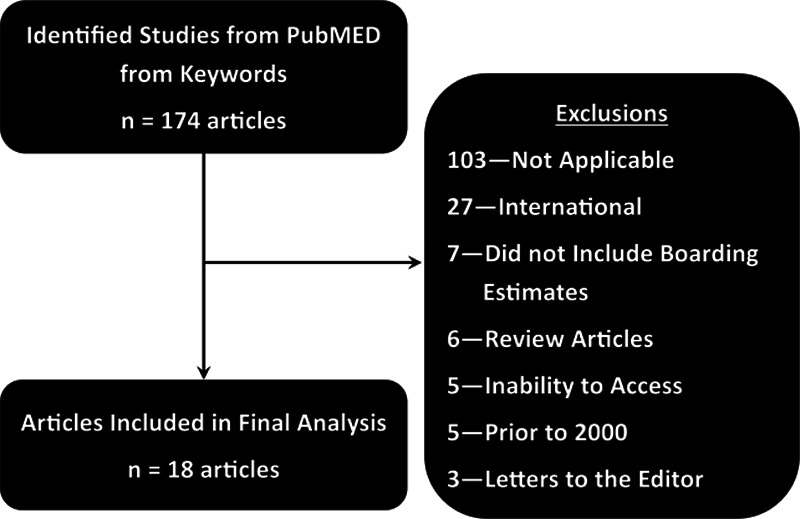
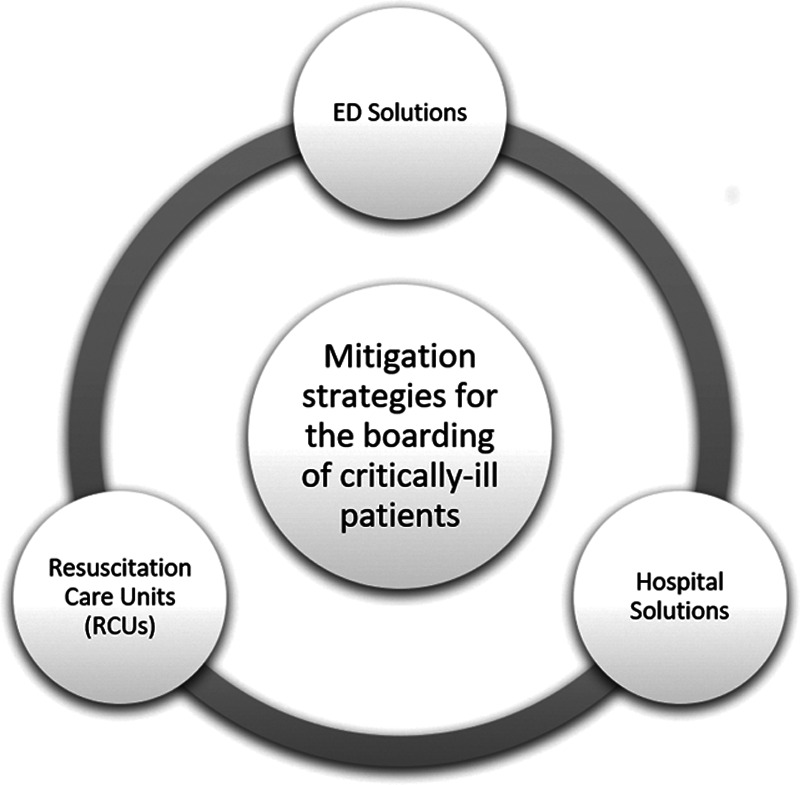
Objectives: Emergency department boarding is the practice of caring for admitted patients in the emergency department after hospital admission, and boarding has been a growing problem in the United States. Boarding of the critically ill has achieved specific attention because of its association with poor clinical outcomes. Accordingly, the Society of Critical Care Medicine and the American College of Emergency Physicians convened a Task Force to understand the implications of emergency department boarding of the critically ill. The objective of this article is to review the U.S. literature on (1) the frequency of emergency department boarding among the critically ill, (2) the outcomes associated with critical care patient boarding, and (3) local strategies developed to mitigate the impact of emergency department critical care boarding on patient outcomes. Data Sources and Study Selection: Review article. Data Extraction and Data Synthesis: Emergency department–based boarding of the critically ill patient is common, but no nationally representative frequency estimates has been reported. Boarding literature is limited by variation in the definitions used for boarding and variation in the facilities studied (boarding ranges from 2% to 88% of ICU admissions). Prolonged boarding in the emergency department has been associated with longer duration of mechanical ventilation, longer ICU and hospital length of stay, and higher mortality. Health systems have developed multiple mitigation strategies to address emergency department boarding of critically ill patients, including emergency department-based interventions, hospital-based interventions, and emergency department–based resuscitation care units. Conclusions: Emergency department boarding of critically ill patients was common and was associated with worse clinical outcomes. Health systems have generated a number of strategies to mitigate these effects. A definition for emergency department boarding is proposed. Future work should establish formal criteria for analysis and benchmarking of emergency department–based boarding overall, with subsequent efforts focused on developing and reporting innovative strategies that improve clinical outcomes of critically ill patients boarded in the emergency department.
Overview
The claims and statistics of this paper haven’t been checked yet.
Free: it reads the open-access text and checks the first 5 claims that cite a source we can check. Create a free account to check every claim.
Integrity signals
Registry
Cites
Statistics
Figures
Verification
Claims the paper makes
The claims and statistics of this paper haven’t been checked yet.
Free: it reads the open-access text and checks the first 5 claims that cite a source we can check. Create a free account to check every claim.
Claims other papers make about this one
Each is checked against this paper’s own text: does it say what the citing paper says it does?
In the citing paper
“Delayed admissions of critically ill patients from ED are associated with decreased sepsis bundle compliance and increased mortality, ventilator duration, and ICU and hospital length of stay [84].”
From Surviving sepsis campaign: international guidelines for management of sepsis and septic shock 2021 (2021) · cites this paper as [84]
Self-check
Percentages, sums and reported differences re-computed from the paper’s own numbers.
The self-check needs the paper’s full text.
Citations
Cites
The epidemiology of sepsis in the United States from 1979 through 2000
Martin, G. S., Mannino, D. M., Eaton, S., & Moss, M. (2003) · New England Journal of Medicine · doi:10.1056/nejmoa022139 · Cited by 5,841
Incidence and trends of sepsis in US hospitals using clinical vs claims data, 2009-2014.
Rhee, C., Dantes, R., Epstein, L., Murphy, D. J., Seymour, C. W., Iwashyna, T. J., Kadri, S. S., Angus, D. C., Danner, R. L., Fiore, A. E., et al. (2017) · JAMA · doi:10.1001/jama.2017.13836 · Cited by 1,884 · cited 1×
“hospitals each year, and more than half of those are admitted from the ED (15).”
BackgroundStatistical process control as a tool for research and healthcare improvement
Benneyan, J. C. (2003) · Quality and Safety in Health Care · doi:10.1136/qhc.12.6.458 · Cited by 1,045 · cited 1×
“Within the quality improvement literature, the method of statistical process control distinguishes between routine operational variation and crisis or special cause variation (52).”
MethodChalfin, D. B., Trzeciak, S., Likourezos, A., Baumann, B. M., & Dellinger, R. P. (2007) · Critical Care Medicine · doi:10.1097/01.ccm.0000266585.74905.5a · Cited by 1,022
A conceptual model of emergency department crowding
Asplin, B. R., Magid, D. J., Rhodes, K. V., Solberg, L. I., Lurie, N., & Camargo, C. A. (2003) · Annals of Emergency Medicine · doi:10.1067/mem.2003.302 · Cited by 972 · cited 6×
“The Task Force additionally resolved to (1) avoid financial, satisfaction, or administrative metrics, (2) focus on data primarily from adult studies, and (3) recognize that health system variation could be substantial and that available literature may be biased in reporting the experience of academic medical centers,…”
BackgroundMethodInfluentialIncrease in patient mortality at 10 days associated with emergency department overcrowding
Richardson, D. B. (2006) · Medical Journal of Australia · doi:10.5694/j.1326-5377.2006.tb00204.x · Cited by 826
Halpern, N. A., & Pastores, S. M. (2010) · Critical Care Medicine · doi:10.1097/ccm.0b013e3181b090d0 · Cited by 817 · cited 1×
“Inpatient critical care occupancy has also been increasing (5).”
BackgroundSprivulis, P. C., Da Silva, J., Jacobs, I. G., Jelinek, G. A., & Frazer, A. R. L. (2006) · Medical Journal of Australia · doi:10.5694/j.1326-5377.2006.tb00203.x · Cited by 759 · cited 1×
“For hospital survivors, extended ED boarding times are associated with a longer hospital length of stay (40).”
BackgroundSprivulis, P. C., Da Silva, J., Jacobs, I. G., Frazer, A. R. L., & Jelinek, G. A. (2006) · Medical Journal of Australia · doi:10.5694/j.1326-5377.2006.tb00416.x · Cited by 757
The Association Between Length of Emergency Department Boarding and Mortality
Singer, A. J., Thode Jr, H. C., Viccellio, P., & Pines, J. M. (2011) · Academic Emergency Medicine · doi:10.1111/j.1553-2712.2011.01236.x · Cited by 664 · cited 1×
“6%, suggesting that this estimate was sensitive to both setting and boarding definition (16, 31).”
Background
Research works printed but not linked: 3
- American Hospital Association (AHA): Annual Survey of Hospitals, Hospital Statistics: 1981, 1991, 1992, 2002, 2006, 2015, 2016, 2017 editions. Chicago, IL, American Hospital Association
- Rutherford PA Provost LP Kotagal UR Achieving Hospital-wide Patient Flow. 2017 Cambridge, MA, Institute for Healthcare Improvement.
- Howitt AM Leonard HB Managing Crises: Responses to Large-Scale Emergencies. 2009 Washington, DC, CQ Press.
Cited by
Surviving sepsis campaign: international guidelines for management of sepsis and septic shock 2021
Evans, L., Rhodes, A., Alhazzani, W., Antonelli, M., Coopersmith, C. M., French, C., Machado, F. R., Mcintyre, L., Ostermann, M., Prescott, H. C., et al. (2021) · Intensive Care Medicine · doi:10.1007/s00134-021-06506-y · Cited by 5,082
Surviving Sepsis Campaign: International Guidelines for Management of Sepsis and Septic Shock 2021.
Evans, L., Rhodes, A., Alhazzani, W., Antonelli, M., Coopersmith, C. M., French, C., Machado, F. R., Mcintyre, L., Ostermann, M., Prescott, H. C., et al. (2021) · Critical Care Medicine · doi:10.1097/ccm.0000000000005337 · Cited by 2,935
Yealy, D. M., Mohr, N. M., Shapiro, N. I., Venkatesh, A. K., Jones, A. E., & Self, W. H. (2021) · Annals of Emergency Medicine · doi:10.1016/j.annemergmed.2021.02.006 · Cited by 136
“161 During periods of boarding, some facilities incorporate procedures whereby inpatient physician or nurse teams assume care of admitted patients in the ED.”
BackgroundMethodSelf-citationChoosing Wisely For Critical Care: The Next Five
Zimmerman, J. J., Harmon, L. A., Smithburger, P. L., Chaykosky, D., Heffner, A. C., Hravnak, M., Kane, J. M., Kayser, J. B., Lane-Fall, M. B., Matos, R. I., et al. (2021) · Critical Care Medicine · doi:10.1097/ccm.0000000000004876 · Cited by 60
“Prolongation of unnecessary MV sequentially increases ICU duration of stay, leading to unnecessary ICU bed occupancy, which in turn exacerbates emergency department overcrowding and boarding practices, all of which impede safe, timely, and high-quality critical care (25).”
BackgroundKiekkas, P., Tzenalis, A., Gklava, V., Stefanopoulos, N., Voyagis, G., & Aretha, D. (2022) · BioMed Research International · doi:10.1155/2022/4083494 · Cited by 59
Lee, K., Min, H. S., Moon, J. Y., Lim, D., Kim, Y., Ko, E., Kim, Y. S., Kim, J., Lee, J., & Sung, H. K. (2022) · BMC Emergency Medicine · doi:10.1186/s12873-022-00745-y · Cited by 58
“EDLOS has also been used as a proxy for ED overcrowding and boarding, which are potential threats to patient safety [21, 22].”
MethodInterfacility Transport of Critically Ill Patients
Wilcox, S. R., Wax, R. S., Meyer, M. T., Stocking, J. C., Báez, A. A., Cohen, J. E., Moss, M. M., Frakes, M. A., Scruth, E. A., Weir, W. B., et al. (2022) · Critical Care Medicine · doi:10.1097/ccm.0000000000005639 · Cited by 45
“org 1463 able to rapidly move patients awaiting transfer to their intended destination may help alleviate ED “boarding” of such patients (38).”
BackgroundDziegielewski, J., Schulte, F. C., Jung, C., Wolff, G., Hannappel, O., Kümpers, P., Bernhard, M. H., & Mark, M. (2023) · BMC Emergency Medicine · doi:10.1186/s12873-023-00812-y · Cited by 40
“[4] as well as other international studies [13].”
BackgroundResultLu, T., Yang, Y.-J., Zhong, Y. L., Qiu, Q.-Z., Chen, Z., Chen, Y.-Z., Lei, Y., & Liu, A. (2023) · Biosensors and Bioelectronics · doi:10.1016/j.bios.2023.115772 · Cited by 34
Association of emergency department crowding with inpatient outcomes
Hsuan, C., Segel, J. E., Hsia, R. Y.-J., Wang, Y., & Rogowski, J. (2022) · Health Services Research · doi:10.1111/1475-6773.14076 · Cited by 40
Mitarai, T., Gordon, A. J., Nudelman, M. J. R., Urdaneta, A. E., Nesbitt, J., Niknam, K. R., Graber‐Naidich, A., Wilson, J. G., & Kohn, M. A. (2023) · Critical Care Medicine · doi:10.1097/ccm.0000000000005835 · Cited by 35
“Between 2006 and 2014, ED visits for critically ill patients increased by 80% with minimal accompanying growth in available ED capacity and ICU beds (3).”
BackgroundFranklin, B. J., Li, K. Y., Somand, D. M., Kocher, K. E., Kronick, S. L., Parekh, V. I., Goralnick, E., Nix, T., & Haas, N. L. (2021) · Journal of the American College of Emergency Physicians Open · doi:10.1002/emp2.12450 · Cited by 40
Haas, N. L., Medlin, R. P., Cranford, J. A., Boyd, C., Havey, R. A., Losman, E. D., Rice, M. D., & Bassin, B. S. (2021) · The American Journal of Emergency Medicine · doi:10.1016/j.ajem.2021.07.057 · Cited by 27
Self-citationDünser, M. W., Noitz, M., Tschoellitsch, T., Bruckner, M., Brunner, M., Eichler, B., Erblich, R., Kalb, S., Knöll, M., Szasz, J., et al. (2024) · Wiener klinische Wochenschrift · doi:10.1007/s00508-024-02374-w · Cited by 27
Nishikimi, M., Jafari, D., Singh, N., Shinozaki, K., Sison, C. P., Shoaib, M., Gong, J., Rasul, R., Li, T., Hayashida, K., et al. (2022) · Annals of the American Thoracic Society · doi:10.1513/annalsats.202106-705oc · Cited by 24
Ahn, Y. H., Lee, J., Oh, D. K., Lee, S. Y., Park, M. H., Lee, H., Lim, C.-M., Lee, H. Y., Lee, H. Y., the Korean Sepsis Alliance (KSA) investigators, et al. (2023) · Journal of Intensive Care · doi:10.1186/s40560-023-00663-6 · Cited by 23
“[7] showed that delayed admissions of patients with sepsis from the emergency department (ED) were associated with decreased sepsis bundle compliance and increased mortality, ventilator duration, and ICU and hospital length of stay (LOS).”
BackgroundLeaving Without Being Seen From the Pediatric Emergency Department: A New Baseline
Kappy, B., McKinley, K. W., Chamberlain, J., Badolato, G. M., Podolsky, R. H., Bond, G. R., Schultz, T. R., & Isbey, S. C. (2023) · Journal of Emergency Medicine · doi:10.1016/j.jemermed.2023.05.019 · Cited by 20
Huang, K.-L., Yin, C.-H., Chang, R., Chen, J., & Chen, Y.-S. (2024) · Postgraduate Medical Journal · doi:10.1093/postmj/qgae006 · Cited by 17
Emergency Department Boarding, Inpatient Census, and Interhospital Transfer Acceptances
Greenwood‐Ericksen, M. B., Kamdar, N. S., Swenson, K., Pruitt, P. B., McCrum, M. L., Paul, G., Myaskovsky, L., Kocher, K. E., & Zachrison, K. S. (2025) · JAMA Network Open · doi:10.1001/jamanetworkopen.2025.12299 · Cited by 15
Characteristics and patient impact of boarding in the pediatric emergency department, 2018–2022
Kappy, B., Berkowitz, D. A., Isbey, S. C., Breslin, K. A., & McKinley, K. W. (2023) · The American Journal of Emergency Medicine · doi:10.1016/j.ajem.2023.12.022 · Cited by 17
Farimani, R. M., Karim, H., Atashi, A., Tohidinezhad, F., Bahaadini, K., Abu–Hanna, A., & Eslami, S. (2024) · BMC Emergency Medicine · doi:10.1186/s12873-024-00965-4 · Cited by 29
“Predicting length of stay is important in clinical and informatics research [10] and important to improve ED care and efficiency [3, 11].”
BackgroundCare of the critically ill begins in the emergency medicine setting
The Critical Care in Emergency Medicine Interest Group (2024) · European Journal of Emergency Medicine · doi:10.1097/mej.0000000000001134 · Cited by 15
“A systematic review showed that ED boarding of critically ill patients was common, and this specific aspect alone was associated with worse clinical outcomes [3,4].”
BackgroundJuneja, D., Munjal, M. K., Maharaj, M., Javeri, Y., Myatra, S. N., Nandakumar, S. M., Kothekar, A. T., Nikalje, A., Cherian, A., Nongthombam, R., et al. (2024) · Indian Journal of Critical Care Medicine · doi:10.5005/jp-journals-10071-24682 · Cited by 14
van Herwerden, M. C., Groenland, C. N. L., Termorshuizen, F., Rietdijk, W. J. R., Blokzijl, F., Cleffken, B. I., Dormans, T. P. J., Epker, J. L., Feyz, L., van den Oever, N. G., et al. (2024) · Critical Care Medicine · doi:10.1097/ccm.0000000000006396 · Cited by 15
Emergency Department ICUs Add Value
Wessman, B. T., & Mohr, N. M. (2022) · Critical Care Medicine · doi:10.1097/ccm.0000000000004708 · Cited by 14
Self-citationBoarding in the emergency department: challenges and mitigation strategies
Ramos, F. J. D. S., de Freitas, F. G. R., & Machado, F. R. (2024) · Current Opinion in Critical Care · doi:10.1097/mcc.0000000000001149 · Cited by 17
Gottlieb, M. A., Wusterbarth, E., Moyer, E. D., & Bernard, K. (2024) · The American Journal of Emergency Medicine · doi:10.1016/j.ajem.2024.10.002 · Cited by 13
Dünser, M. W., Leach, R. N., Al‐Haddad, M., Arafat, R., Baker, T., Balík, M., Brown, R., Carenzo, L., Connolly, J., Dankl, D., et al. (2025) · Journal of Critical Care · doi:10.1016/j.jcrc.2025.155035 · Cited by 13
Kim, Y., Hong, J. S., Hong, S., Kim, J., Seo, D., Ahn, R., Jeong, J., Lee, S. W., Moon, S., & Kim, W. Y. (2021) · Journal of Korean Medical Science · doi:10.3346/jkms.2021.36.e172 · Cited by 14
Shibata, J., Osawa, I., Fukuchi, K., & Goto, T. (2023) · Critical Care Explorations · doi:10.1097/cce.0000000000000915 · Cited by 25
“Longer ED-LOS could be largely attributed to the lack of admitting beds resulting in the boarding of critically-ill patients in the ED, a critical issue that needs to be resolved (5, 17).”
BackgroundMedically ready for discharge: A multisite “point‐in‐time” assessment of hospitalized patients
Bann, M. A., Meo, N., Lopez, J. P., Ou, A., Rosenthal, M., Khawaja, H. R., Goodman, L. A., Barone, M., Coleman, B. L., High, H., et al. (2023) · Journal of Hospital Medicine · doi:10.1002/jhm.13184 · Cited by 13
Prolonged Boarding and Racial Discrimination and Dissatisfaction Among Emergency Department Patients
Olson, R. M., Fleurant, A., Beauparlant, S. G., Baymon, D. E., Marsh, R. H., Schnipper, J. L., Plaisime, M. V., & Wispelwey, B. P. (2024) · JAMA Network Open · doi:10.1001/jamanetworkopen.2024.33429 · Cited by 17
Powell, E. K., Sahadzic, I., Najafali, D., Berman, E., Andersen, K., Afridi, L. Z., Gasparotti, Z., Niles, E., Rea, J. H., Scalea, T. M., et al. (2022) · Critical Care Research and Practice · doi:10.1155/2022/6171598 · Cited by 11
“*ese specialized resuscitation units are one facet of addressing ED crowding [18].”
BackgroundBoarding in the Emergency Department
Joseph, J. W., Rosen, A., & Kennedy, M. (2025) · Emergency Medicine Clinics of North America · doi:10.1016/j.emc.2024.08.013 · Cited by 12
Emergency Department Boarding, Crowding, and Error
Kolikof, J. S., Shaw, D. L., Stenson, B. A., Balaji, L., Grossestreuer, A. V., & Chiu, D. T. W. (2025) · Journal of the American College of Emergency Physicians Open · doi:10.1016/j.acepjo.2025.100169 · Cited by 19
“2,8,9 These 2 circum-stances are distinct entities but are often interdependent and result from systemic issues.”
Doan, J., Perez, S., Bassin, B. S., England, P. C., Chen, C.-M., Cranford, J. A., Gottula, A. L., Hartley, S. E., & Haas, N. L. (2023) · Journal of the American College of Emergency Physicians Open · doi:10.1002/emp2.13036 · Cited by 10
Self-citationAnalytical Accuracy of a Continuous Glucose Monitor in Adult Diabetic Ketoacidosis
Haas, N. L., Ang, L. P., Esfandiari, N. H., Khan, A. M., Cranford, J. A., Cohen, A., Sell, J. J., Abdel-Hamid, M., Romanchik, K. E., & Korley, F. K. (2024) · CHEST Critical Care · doi:10.1016/j.chstcc.2024.100109 · Cited by 11
Phend, C. (2023) · Annals of Emergency Medicine · doi:10.1016/j.annemergmed.2023.06.017 · Cited by 10
Heukelom, P. G. V., Vakkalanka, J. P., Pedersen, R., & Nugent, A. S. (2023) · The American Journal of Emergency Medicine · doi:10.1016/j.ajem.2023.01.056 · Cited by 9
Suttapanit, K., Dangprasert, K., Sanguanwit, P., & Supatanakij, P. (2022) · International Journal of Emergency Medicine · doi:10.1186/s12245-022-00420-w · Cited by 10
“Sepsis patients with delayed ICU admission from the ED were related to increased mortality and adverse outcomes [12, 13].”
BackgroundBlueprint for the development of resuscitation and emergency critical care fellowships
Bracey, A., Tichauer, M. B., Wu, G. P., Barnicle, R. N., Lu, C., Tanzi, M. V., Pellet, A. C., Pauze, D. R., Weingart, S. D., Duncan, L. J., et al. (2023) · AEM Education and Training · doi:10.1002/aet2.10905 · Cited by 9
Howard, M., Pflaum-Carlson, J., Hurst, G., Gardner-Gray, J. M., Kinni, H. A., Coba, V. E., Rivers, E. P., & Jayaprakash, N. (2023) · The American Journal of Emergency Medicine · doi:10.1016/j.ajem.2023.01.028 · Cited by 8
Salimi-bani, M., Pandian, V., Vahedian‐Azimi, A., Moradian, S. T., & Bahramifar, A. (2024) · Intensive and Critical Care Nursing · doi:10.1016/j.iccn.2024.103662 · Cited by 9
Inadequate intensive care physician supply in France: a point-prevalence prospective study
Sarfati, S., Ehrmann, S., Vodovar, D., Jung, B., Aïssaoui, N., Darreau, C., Bougouin, W., Deye, N., Kallel, H., Kuteifan, K., et al. (2024) · Annals of Intensive Care · doi:10.1186/s13613-024-01298-y · Cited by 8
“It has been shown that transfer of patients or delayed admission to ICU due to a lack of available ICU beds may impact outcome [3, 29, 30].”
BackgroundCritical Care Delivery in the Emergency Department
Kuk, W.-J., Park, J. S., & Gunnerson, K. J. (2024) · Critical Care Clinics · doi:10.1016/j.ccc.2024.03.010 · Cited by 8
Self-citationMccabe, D. J., Radke, J. B., & Wilson, B. Z. (2022) · The American Journal of Emergency Medicine · doi:10.1016/j.ajem.2022.02.025 · Cited by 7
Management of sepsis in acute care
See, K. C. (2022) · Singapore Medical Journal · doi:10.11622/smedj.2022023 · Cited by 13
Dormann, H., Hüfner, A., Schäfer, R., Marohl, R., Kudlich, H., Steenberg, J. G., & Pin, M. (2024) · Notfall + Rettungsmedizin · doi:10.1007/s10049-024-01424-0 · Cited by 6
Hallways Feel Like Homelessness: The Geriatric Boarder Experience
Perelman, S. E., Muriel, D. M., Chary, A. N., Hayden, E. M., Wang, G., & Liu, S. W. (2025) · Journal of the American Geriatrics Society · doi:10.1111/jgs.19518 · Cited by 8
“Alternate care spaces can temporarily provide a location to meet the demand for care in the ED that would traditionally have been delivered on a hospital floor [17].”
Starcher, R. W., Weinert, C., Henry, K. N., & Dichter, J. R. (2023) · Journal of Anesthesiology and Pain Therapy · doi:10.29245/2768-5365/2023/1.1138 · Cited by 6
Sabry, A. A. F., Abdelsalam, W. N., Salam, M. M. A., Moustafa, K. S., Gaber, E. M., & Beshey, B. N. (2023) · Egyptian Journal of Anaesthesia · doi:10.1080/11101849.2023.2234712 · Cited by 8
“Mohr et al. [37] reviewed the literature on frequency of ED boarding among the critically ill, outcomes associated with such boarding, and local strategies developed to mitigate the impact of ED critical care boarding on patient outcomes.”
BackgroundPayment Innovation in Emergency Care: A Case for Global Clinician Budgets
Pines, J. M., Black, B. S., Cirillo, L. A., Kachman, M. M., Nikolla, D. A., Moghtahderi, A., Oskvarek, J. J., Rahman, N., Venkatesh, A. K., & Venkat, A. (2024) · Annals of Emergency Medicine · doi:10.1016/j.annemergmed.2024.04.002 · Cited by 6
Beekman, R. B., Kim, N., Nguyen, C., Mcginniss, G., Deng, Y., Kitlen, E., Garcia, G. E., Wira, C., Khosla, A. J., Johnson, J. K., et al. (2024) · Annals of Emergency Medicine · doi:10.1016/j.annemergmed.2024.06.007 · Cited by 7
Urso, F., Catalano, D., Petrovic, I. S., Boero, E., Berchialla, P., Vetrugno, L., & Silengo, D. (2025) · Journal of Anesthesia Analgesia and Critical Care · doi:10.1186/s44158-025-00262-x · Cited by 5
“Even though precise data about boarding are limited by the lack of standardization of the definition, it is estimated to range from 2.1% to 87.6% [4].”
InfluentialMuir, K. J., Golinelli, D., Connell, K., Lasater, K. B., & McHugh, M. D. (2025) · Value in Health · doi:10.1016/j.jval.2025.06.017 · Cited by 5
Jayaprakash, N., Pflaum-Carlson, J., Gardner-Gray, J. M., Hurst, G., Kinni, H. A., Tang, A., Coba, V. E., & Rivers, E. P. (2022) · Critical Care Explorations · doi:10.1097/cce.0000000000000660 · Cited by 9
“A joint task force of the Society of Critical Care Medicine and the American College of Emergency Physicians (ACEP) has recommended that boarding be defined by the time spent in the ED after: 1) decision to admit to an ICU is made or 2) after 6 hours in the ED following arrival or whichever comes first (6).”
BackgroundStandardized evaluation of hand‐off documentation of ICU boarders in the emergency department
Kolikof, J. S., Shaw, D., Stenson, B. A., Grossestreuer, A. V., Sánchez, L. D., & Chiu, D. T. W. (2023) · Journal of the American College of Emergency Physicians Open · doi:10.1002/emp2.13039 · Cited by 4
The critical care literature 2023
Winters, M. E., Hu, K. M., Martinez, J. P., Mallemat, H. A., & Brady, W. J. (2024) · The American Journal of Emergency Medicine · doi:10.1016/j.ajem.2024.08.010 · Cited by 8
Sereeyotin, J., Yarnell, C. J., & Mehta, S. (2025) · Critical Care Science · doi:10.62675/2965-2774.20250247 · Cited by 5
Boarding of Older Adults: A Concerning Trend in the Emergency Department
van Baardwijk, J., Tharmathurai, E., & Khan, A. (2024) · Journal of Geriatric Emergency Medicine · doi:10.17294/2694-4715.1068 · Cited by 5
Needleman, R., Dyer, S., Martinez, K. A., & Routsolias, J. C. (2024) · Journal of Emergency Nursing · doi:10.1016/j.jen.2024.10.011 · Cited by 5
Sung, H. K., Kyung-shin, L., Lee, J., Oh, M.-H., Kim, J., Choi, Y. K., & Moon, J. Y. (2026) · Journal of Korean Medical Science · doi:10.3346/jkms.2026.41.e64 · Cited by 5
“32,33 The concurrent reallocation of EMS resources to COVID-19 transport duties further strained system responsiveness, reducing inter-hospital transfers and EMS-facilitated ICU admissions.”
Sax, D. R., Warton, E. M., Mark, D. G., Vitale-McDowell, T. J., DiLena, D. D., Rauchwerger, A. S., & Reed, M. (2026) · Annals of Emergency Medicine · doi:10.1016/j.annemergmed.2025.11.018 · Cited by 7
Emergency critical care: a blind spot in the upstream phase of critical illness
Kümpers, P., Rovas, A., Köhnke, R., Pinkernell, L., Reindl, M., Michael, M., & Bernhard, M. (2026) · Critical Care · doi:10.1186/s13054-026-06031-8 · Cited by 4
“Emergency critical care: widely practiced, rarely defined Across healthcare systems worldwide, critically ill patients frequently remain in the ED for extended periods after the need for intensive care has been identified [1, 2, 11].”
Emergency Department Boarding of Mechanically Ventilated Patients
Saggaf, A. M., Mugharbel, A. T., Aboalola, A. B., Mulla, A. W. M. A. A. A., Alasiri, M. M., Alabbasi, M., & Bakhsh, A. A. (2022) · Cureus · doi:10.7759/cureus.23990 · Cited by 11
The critical care literature 2021
Winters, M. E., Hu, K. M., Martinez, J. P., Mallemat, H. A., & Brady, W. J. (2022) · The American Journal of Emergency Medicine · doi:10.1016/j.ajem.2022.10.025 · Cited by 4
Utilizing an emergency medicine stabilization team to provide critical care in a rural health system
Klotz, E., Macy, R., Obrzut, S., Atha, W., Ligon, R., Fluharty, J., & Huffner, W. (2022) · The American Journal of Emergency Medicine · doi:10.1016/j.ajem.2022.10.035 · Cited by 4
“ED patient volumes have increased by 30% in the past decade, and visits for critically ill patients have risen by 80% within the same time frame [2].”
BackgroundInfluentialYusin, G., Farley, C., Dorris, C. S., Yusina, S., Zaatari, S., & Goyal, M. K. (2023) · Journal of Emergency Medicine · doi:10.1016/j.jemermed.2023.08.002 · Cited by 4
Nie, M., Jiang, B., & Xu, Y. (2024) · Medicine · doi:10.1097/md.0000000000039262 · Cited by 4
“[1] These patients often experience multiple diseases, severe internal environment disruptions, complex metabolic imbalances, and challenging, rapidly changing, and unpredictable medical conditions.”
Gardner, K., Gordon, A. J., Shannon, B. C., Nesbitt, J., Wilson, J. G., Mitarai, T., & Kohn, M. A. (2022) · Journal of the American College of Emergency Physicians Open · doi:10.1002/emp2.12667 · Cited by 7
The critical care literature 2022
Winters, M. E., Hu, K. M., Martinez, J. P., Mallemat, H. A., & Brady, W. J. (2024) · The American Journal of Emergency Medicine · doi:10.1016/j.ajem.2024.03.028 · Cited by 4
Adverse drug events leading to medical emergency team activation in hospitals: what can we learn?
Härkänen, M., Syyrilä, T., & Schepel, L. L. (2022) · BMJ Quality & Safety · doi:10.1136/bmjqs-2022-015275 · Cited by 4
Napoli, A. M., Ali, S., Baird, J. R., Shanin, D. J., & Jouriles, N. J. (2024) · Journal of Healthcare Management · doi:10.1097/jhm-d-23-00150 · Cited by 3
Nicolaidis, R., Canteiro, L. S. F., Pedrollo, D. F., Júnior, W. C., & Silva, L. O. J. E. (2025) · European Journal of Emergency Medicine · doi:10.1097/mej.0000000000001290 · Cited by 4
Cha, J. H., Kang, D., Ko, R., Kim, W. Y., Hyun, D., Lee, Y. J., Cho, W. H., Park, S., Cho, J., Suh, G. Y., et al. (2025) · Acute and Critical Care · doi:10.4266/acc.003575 · Cited by 7
“The boarding of critically ill patients in the ED represents a significant burden on healthcare systems worldwide [4].”
A decalogue for saving Italian emergency departments
Cipriano, A., Zaboli, A., Ghiadoni, L., & Turcato, G. (2026) · Emergency Care Journal · doi:10.4081/ecj.2026.14595 · Cited by 3
Chan, W. P., Stolarski, A. E., Smith, S. M., Scantling, D. R., Theodore, S., Tripodis, Y., Saillant, N. N., & Torres, C. M. (2024) · Injury · doi:10.1016/j.injury.2024.112079 · Cited by 3
Uysal, D. A., & Ekiz, E. (2025) · International Emergency Nursing · doi:10.1016/j.ienj.2025.101697 · Cited by 3
Harvey, C. E., Haas, N. L., Chen, C.-M., Cranford, J. A., Hamera, J. A., Havey, R. A., Tsuchida, R. E., & Bassin, B. S. (2022) · Critical Care Explorations · doi:10.1097/cce.0000000000000632 · Cited by 7
Self-citationChen, K.-C., & Wen, S. (2023) · Heliyon · doi:10.1016/j.heliyon.2023.e13393 · Cited by 4
Ding, H., Feng, X., Yang, Q., Yang, Y., Zhu, S., Ji, X., Kang, Y., Shen, J., Zhao, M., Xu, S., et al. (2024) · Journal of the American College of Emergency Physicians Open · doi:10.1002/emp2.13190 · Cited by 3
“11 Additionally, identifying critically ill patients who are unlikely to derive benefit from non-invasive mechanical ventilation (NMV) is crucial.”
BackgroundUse of a negative pressure procedural tent in the Emergency Department during the COVID-19 pandemic
Haas, N. L., Bassin, B. S., Puls, H. A., & Ward, K. R. (2021) · The American Journal of Emergency Medicine · doi:10.1016/j.ajem.2021.01.064 · Cited by 3
“systems continue to face challenges posed by ED overcrowding and boarding of critically ill patients due to limited inpatient capacity [2].”
Self-citationThe Value of Emergency Nursing Mode in the Treatment of Patients with Traumatic Shock
Jin-mei, X., Zhou, X., Wang, C., & Hu, J. (2022) · Journal of Healthcare Engineering · doi:10.1155/2022/6887236 · Cited by 3
“Most of the patients with acute trauma have serious injury, large amount of blood loss, and critical condition [35].”
BackgroundRetractedAge ain’t nothing but a number
Haas, N. L., & Tonna, J. E. (2023) · Resuscitation · doi:10.1016/j.resuscitation.2023.110047 · Cited by 3
Ingólfsson, Á., Mandelbaum, A., Schultz, K. L., & Yom‐Tov, G. B. (2023) · Operations Research · doi:10.1287/opre.2023.2452 · Cited by 3
Laurent Gamy Kamunga, B., Bearnot, C. J., Martin, K. D., Uwamahoro, D. L., & Cattermole, G. N. (2024) · International Journal of Emergency Medicine · doi:10.1186/s12245-024-00736-9 · Cited by 5
“Between 2006 and 2014 in the United States, the number of critically ill patients cared for in the ED increased by approximately 80%, including a 16% increase in the number of intubated patients [1].”
BackgroundArmstrong, C., & Duke, G. (2025) · Critical Care Nurse · doi:10.4037/ccn2025646 · Cited by 3
Emergency Department Extubation Should Be Routine for Selected Patients Boarding for the ICU
Bracey, A., Lentz, S. A., Nwakanma, C. C., & Wu, G. P. (2025) · Annals of Emergency Medicine · doi:10.1016/j.annemergmed.2025.01.016 · Cited by 2
Sangsongrit, N., Utriyaprasit, K., Tankumpuan, T., & Khruekarnchana, P. (2026) · BMC Health Services Research · doi:10.1186/s12913-025-13994-x · Cited by 2
“In the United States, the number of such patients receiving care in EDs has increased by approximately 80% [5].”
The critical care literature 2019
Winters, M. E., Hu, K. M., Martinez, J. P., Mallemat, H. A., & Brady, W. J. (2020) · The American Journal of Emergency Medicine · doi:10.1016/j.ajem.2020.09.059 · Cited by 3
Retrospective Evaluation of Patients Admitted to Emergency Critical Care Unit
Ayvalı, İ. S., Kocaşaban, D. Ü., & Günaydın, Y. K. (2023) · Hamidiye Medical Journal · doi:10.4274/hamidiyemedj.galenos.2022.47965 · Cited by 2
McCormick, G. J., Mohr, N. M., Ablordeppey, E., Stephens, R. J., Fuller, B. M., & Roberts, B. W. (2024) · The American Journal of Emergency Medicine · doi:10.1016/j.ajem.2024.02.025 · Cited by 2
Self-citationOriginal Research: Breaking Through the Bottleneck: Acuity Adaptability in Noncritical Trauma Care
Higgins, J. T., Charles, R. D., & Fryman, L. J. (2024) · AJN American Journal of Nursing · doi:10.1097/01.naj.0001010176.21591.80 · Cited by 2
“25, 26 Following our implementation of an acuity-adaptable model, we found that the median ED boarding time was reduced by over 60%.”
Management von Overcrowding und Exit Block – Teil 1
Hüfner, A. (2025) · Notaufnahme up2date · doi:10.1055/a-2306-6625 · Cited by 2
“ZNA, obwohl der G-BA-Beschluss (G-BA: Gemeinsamer Bundesausschuss) von 2018 zur gestuften Notfallver-sorgung eine Aufnahmebereitschaft auch für beat-mungspflichtige Intensivpatienten innerhalb von 60 Minuten nach Klinikaufnahme fordert [31,43,44].”
Management of Mechanical Ventilation in Emergency Medicine: A Scoping Review
Klemisch, R. J., Hymowitz, M. S., Alcantara, R. J., Mullan, B. F., Davis, M. L., Blume, R., Johnson, N. J., & Fuller, B. M. (2025) · Journal of the American College of Emergency Physicians Open · doi:10.1016/j.acepjo.2025.100297 · Cited by 2
Nursing Skill Assessment of Hospital Nurses in Management of Critically Ill Patients
Xu, L., Sun, Q., Feng, J., Huang, L. J., Xu, C., Shen, W., Ding, J., & Jin, Y. (2022) · Applied Bionics and Biomechanics · doi:10.1155/2022/1497847 · Cited by 2
“The ability to obtain timely and effective treatment for critically ill patients in the clinical setting directly affects the survival rate and the success rate of patient resuscitation [1].”
BackgroundRetractedDisparities Exist in the Application of Low Tidal-volume Ventilation in the Emergency Department
Self, M. L., Kennis, B., Lafree, A., Tainter, C. “., Lopez, J., Malhotra, A., Chan, T. C., & Wardi, G. (2023) · Western Journal of Emergency Medicine · doi:10.5811/westjem.59291 · Cited by 2
Enhancing Non-ICU Clinician Capability and ICU Bed Capacity to Manage Pandemic Patient Surge
Bailey, H., & Kaplan, L. J. (2021) · Annual update in intensive care and emergency medicine · doi:10.1007/978-3-030-73231-8_25 · Cited by 2
The critical care literature 2020
Winters, M. E., Hu, K. M., Martinez, J. P., Mallemat, H. A., & Brady, W. J. (2021) · The American Journal of Emergency Medicine · doi:10.1016/j.ajem.2021.09.056 · Cited by 2
“Prolonged ED boarding times for critically ill patients is associated with increased duration of mechanical ventilation, increased intensive care unit (ICU) length of stay, increased hospital length of stay, increased medication-related adverse events, and increased in-hospital, 30-day, and 90-day mortality [2-4].”
BackgroundEmergency Department Critical Care Boarding
Shiber, J. (2020) · Critical Care Medicine · doi:10.1097/ccm.0000000000004672 · Cited by 2
Metadata
- Authors
- Mohr, N. M., Wessman, B. T., Bassin, B., Elie-Turenne, M.-C., Ellender, T., Emlet, L. L., Ginsberg, Z., Gunnerson, K., Jones, K. M., Kram, B., Marcolini, E., & Rudy, S.
- Affiliations
- University of Iowa (US)
- Washington University in St. Louis (US)
- University of Michigan (US)
- University of Florida Health (US)
- Indiana University School of Medicine (US)
- University of Pittsburgh (US)
- Department of Emergency & Critical Care Medicine, Kettering Health System, Dayton, OH.
- University of Maryland, Baltimore (US)
- Duke University Hospital (US)
- Dartmouth College (US)
- Corresponding author
- Mohr, Nicholas M.
- ORCID
- Venue
- Critical Care Medicine
- Published
- 2020-07-17
- Volume
- 48
- Issue
- 8
- Pages
- 1180-1187
- ISSN
- 0090-3493 (ISSN-L)
- PMC
- PMC7365671
- OpenAlex
- W3043305555
- Semantic Scholar
- 91afe0270576aa2718b92822304e778d600ac4a4
- Cited by
- 172
- References
- 57
- Citations by year
- 2026: 40 · 2025: 26 · 2024: 38 · 2023: 30 · 2022: 24 · 2021: 11 · 2020: 3
- FWCI
- 4.04
- Type
- journal article
- Language
- en
- Open access
- hybrid
- doi.org
- Licence
- Locations
- Critical Care Medicine (publishedVersion, cc-by-nc-nd)
- PubMed Central (publishedVersion, cc-by-nc-nd)
- PubMed (publishedVersion)
- Digital Commons@Becker (Washington University School of Medicine) (submittedVersion, cc-by-nc-nd)
- IUScholarWorks (Indiana University) (submittedVersion, cc-by-nc-nd)
- Purdue University Indianapolis (Indiana University) (submittedVersion, cc-by-nc-nd)
- Topics
- Health Sciences › Medicine › Emergency Medicine › Emergency and Acute Care Studies
- Health Sciences › Medicine › Emergency Medicine › Trauma and Emergency Care Studies
- Health Sciences › Nursing › Leadership and Management › Hospital Admissions and Outcomes
- Keywords
- emergency department boarding, critically ill patients, length of hospital stay, mechanical ventilation duration, mortality, hospitalization
- MeSH terms
- Emergency Service, Hospital, Humans, Intensive Care Units, Length of Stay, Patient Admission, Patient Transfer, United States, Critical Illness, Treatment Outcome
About these checks
Registry, retraction, Cites and statistics results are computed, not judged, with one exception: a printed reference that no index lists is read once by a model before it counts as a citation error. Claims are extracted by a model and kept only when their quote appears verbatim in the text; each cited source is then checked, with a model’s help, for whether it says what the claim relies on. Those verdicts can be wrong — read the claim’s quote and the cited source before relying on one.
Statistics and arithmetic are recomputed, not judged.
Confidence bands are shown only for fields calibrated on our annotated test set. None is calibrated yet, so no band is shown.
What counts as a claim ›How we measure confidence ›How we check this ›
Are you an author, or do you see a problem with this page? Request a review
Data sources
Bibliographic data: Semantic Scholar, OpenAlex, Crossref.
Contains information from the Semantic Scholar Academic Graph Datasets, made available under the ODC Attribution License (ODC-BY 1.0).
Semantic Scholar’s data is described in: Kinney, R., et al. (2023). The Semantic Scholar Open Data Platform. arXiv:2301.10140.
