

Surviving Sepsis Campaign: International Guidelines for Management of Sepsis and Septic Shock 2021.
Open accessThe DOI matches its Crossref record; 697 of the 732 references it cites were found in a registry or an index, and 1 are not checked yet; 11 of the 24 sources its claims cite were checked for support.
Abstract
INTRODUCTION Sepsis is life-threatening organ dysfunction caused by a dysregulated host response to infection (1). Sepsis and septic shock are major healthcare problems, impacting millions of people around the world each year and killing between one in three and one in six of those it affects (2–4). Early identification and appropriate management in the initial hours after the development of sepsis improve outcomes. The recommendations in this document are intended to provide guidance for the clinician caring for adult patients with sepsis or septic shock in the hospital setting. Recommendations from these guidelines cannot replace the clinician’s decision-making capability when presented with a unique patient’s clinical variables. These guidelines are intended to reflect best practice (Table 1). TABLE 1. - Table of Current Recommendations and Changes From Previous 2016 Recommendations Recommendations 2021 Recommendation Strength and Quality of Evidence Changes From 2016 Recommendations 1. For hospitals and health systems, we recommend using a performance improvement program for sepsis, including sepsis screening for acutely ill, high-risk patients and standard operating procedures for treatment. Strong , moderate-quality evidence (for screening) Changed from Best practice statement “We recommend that hospitals and hospital systems have a performance improvement program for sepsis including sepsis screening for acutely ill, high-risk patients.” Strong , very low-quality evidence (for standard operating procedures) 2. We recommend against using qSOFA compared with SIRS, NEWS, or MEWS as a single-screening tool for sepsis or septic shock. Strong , moderate-quality evidence NEW 3. For adults suspected of having sepsis, we suggest measuring blood lactate. Weak , low quality of evidence INITIAL RESUSCITATION 4. Sepsis and septic shock are medical emergencies, and we recommend that treatment and resuscitation begin immediately. Best practice statement 5. For patients with sepsis induced hypoperfusion or septic shock we suggest that at least 30 mL/kg of IV crystalloid fluid should be given within the first 3 hr of resuscitation. Weak, low quality of evidence DOWNGRADE from Strong , low quality of evidence “We recommend that in the initial resuscitation from sepsis-induced hypoperfusion, at least 30 mL/kg of IV crystalloid fluid be given within the first 3 hr” 6. For adults with sepsis or septic shock, we suggest using dynamic measures to guide fluid resuscitation, over physical examination, or static parameters alone. Weak , very low quality of evidence 7. For adults with sepsis or septic shock, we suggest guiding resuscitation to decrease serum lactate in patients with elevated lactate level, over not using serum lactate. Weak , low quality of evidence 8. For adults with septic shock, we suggest using capillary refill time to guide resuscitation as an adjunct to other measures of perfusion. Weak , low quality of evidence NEW MEAN ARTERIAL PRESSURE 9. For adults with septic shock on vasopressors, we recommend an initial target mean arterial pressure (MAP) of 65 mm Hg over higher MAP targets. Strong , moderate-quality evidence ADMISSION TO INTENSIVE CARE 10. For adults with sepsis or septic shock who require we suggest the patients to the within Weak , low quality of evidence For adults with suspected sepsis or septic shock we recommend and for and an of is or Best practice statement For adults with septic shock or a for sepsis, we recommend within hr of Strong , low quality of evidence from “We recommend that of should be as as after and within one for septic shock and sepsis Strong , very low quality of evidence , quality of evidence For adults with sepsis shock, we recommend of the of of Best practice statement For adults with sepsis shock, we suggest a of and for infection the of within 3 hr from the time when sepsis first Weak , very low quality of evidence NEW from “We recommend that of IV should be as as after and within hr for septic shock and sepsis , quality of evidence For adults with a low of infection and shock, we suggest to the Weak , very low quality of evidence NEW from “We recommend that of IV should be as as after and within hr for septic shock and sepsis , quality of evidence For adults with suspected sepsis or septic shock, we suggest against using clinical to when to as compared to clinical alone. Weak , very low quality of evidence For adults with sepsis or septic shock at of we recommend using with over using Best practice statement NEW from “We recommend with one or for patients with sepsis or septic shock to and or Strong , quality of evidence For adults with sepsis or septic shock at low of we suggest against using with as compared with using Weak , low quality of evidence NEW from “We recommend with one or for patients with sepsis or septic shock to and or Strong , quality of evidence For adults with sepsis or septic shock and for we suggest using with for treatment over one Weak , very
Verified 2026-11-25 · 1 reference not checked yet
Overview
CoChat Summary
TL;DR
The 2021 Surviving Sepsis Campaign guidelines provide updated international recommendations for adult hospital management of sepsis and septic shock, covering screening, initial resuscitation, infection, hemodynamics, ventilation, additional therapies, and long-term outcomes. Key changes include recommending performance improvement programs with sepsis screening, recommending against qSOFA as a single screening tool, and refining antimicrobial timing and fluid/vasopressor guidance.
Key findings
- Performance improvement programs including sepsis screening for acutely ill, high-risk patients: strong recommendation, moderate quality for screening; strong, very low quality for standard operating procedures. A meta-analysis of 50 observational studies associated these programs with reduced mortality (OR, 0.66; 95% CI, 0.61–0.72). The panel recommended against qSOFA compared with SIRS, NEWS, or MEWS as a single screening tool (strong, moderate).
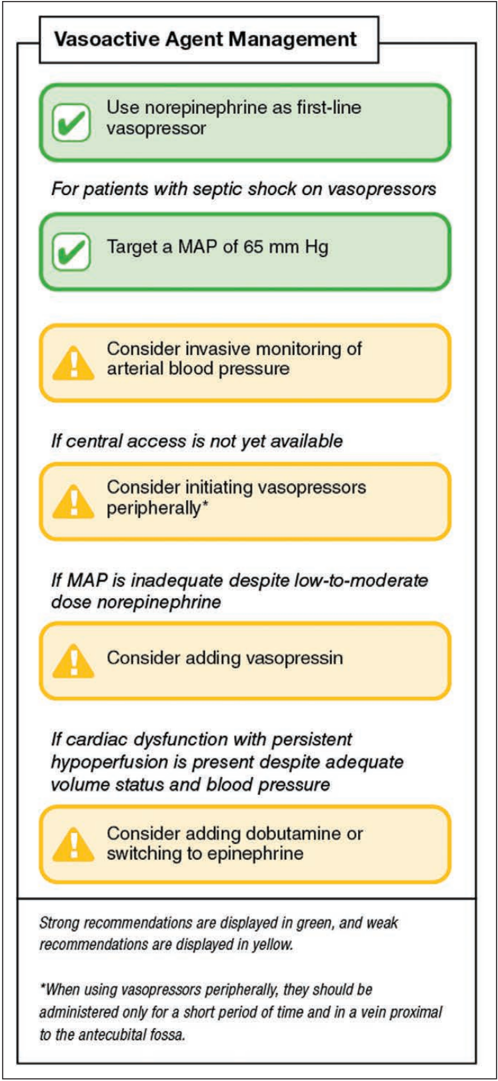
- Initial resuscitation: at least 30 mL/kg IV crystalloid within the first 3 hr for sepsis-induced hypoperfusion or septic shock (weak, low; downgraded from strong, low). For septic shock on vasopressors, initial MAP target of 65 mm Hg over higher targets (strong, moderate). Norepinephrine recommended as first-line vasopressor (strong).
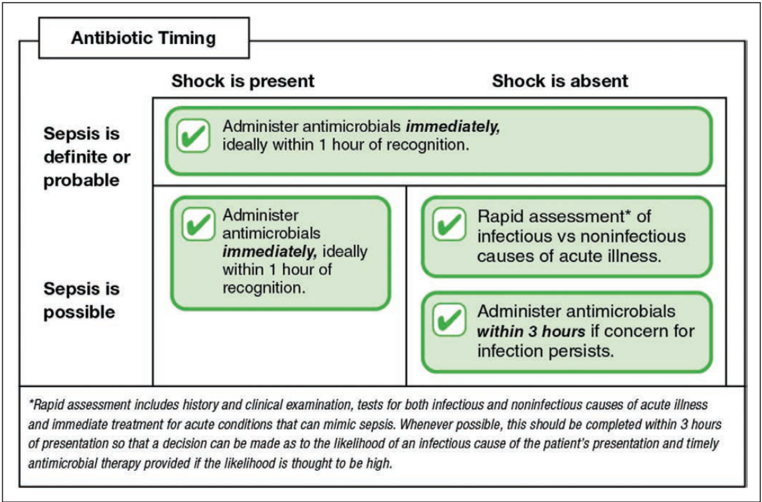
- Antimicrobials: for possible septic shock or high likelihood of sepsis, administer immediately, ideally within 1 hr of recognition (strong, low for septic shock; strong, very low for sepsis without shock). For possible sepsis without shock, rapid assessment and, if concern persists, antimicrobials within 3 hr (weak, very low). Recommend against procalcitonin plus clinical evaluation to decide when to start antimicrobials (weak, very low).
- Other selected recommendations: balanced crystalloids over normal saline (weak, low); against starches (strong, high); IV corticosteroids for ongoing vasopressor requirement (weak, moderate); against IV vitamin C (weak, low); restrictive RBC transfusion strategy (strong, moderate); early enteral nutrition within 72 hr (weak, very low).
Methods
- International guidelines for adult patients with sepsis or septic shock in the hospital setting; recommendations are numbered through 93.
- Evidence synthesis includes RCTs, meta-analyses, and observational studies; GRADE methodology is referenced, with recommendations graded strong or weak and quality of evidence rated.
- Methodology details are in Supplemental Digital Content: Methodology; the main text presents recommendations and rationales.
Limitations
- Many recommendations are weak and/or based on low or very low quality evidence; several questions had insufficient evidence to make a recommendation.
- Evidence often derives from high-income settings, and the text notes resource-limited settings may have different effects and limited availability of tests, drugs, and ICU resources.
- The guidelines state recommendations cannot replace clinician decision-making for unique patients; methodology is not fully described in the main text (evident).
Model-written summary. Check it against the paper before relying on it.
Integrity signals
Registry
Cites
Statistics
Figures
Verification
Claims the paper makes
6 Valid · 3 Not valid · 3 Not checked · 13 Own results and interpretations
Every source the paper cites for this claim was checked and supports it.
In the paper
“Sepsis is life-threatening organ dysfunction caused by a dysregulated host response to infection (1).”
§ KEY WORDS: adults; evidence > INTRODUCTION
What the sources say
- Supportedcites [1] 1. Singer M, Deutschman CS, Seymour CW, et al: The third in- ternational consensus definitions for sepsis and septic shock (Sepsis-3). JAMA 2016; 315:801-810 source
The Results/Recommendations section, under “Definition of Sepsis,” states the citing sentence’s definition verbatim. (LLM, conf=0.95)
- Supported
The cited sources support only part of this claim — read each source’s verdict below.
In the paper
“Data analysis used to support the recommendations of the Third International Consensus Conference on the Definitions of Sepsis identified qSOFA as a predictor of poor outcome in patients with known or suspected infection, but no analysis was performed to support its use as a screening tool (5).”
§ KEY WORDS: adults; evidence > Rationale
What the sources say
- Partly supportedcites [5] 5. Seymour CW, Liu VX, Iwashyna TJ, et al: Assessment of clinical criteria for sepsis: For the third international consensus defi- nitions for sepsis and septic shock (Sepsis-3). JAMA 2016; 315:762-774 sourceExperimental — accuracy not yet measured
The Results (Performance of New, Simple Criteria) show that qSOFA predicted hospital mortality among patients with suspected infection. The Discussion (Criteria Outside of the ICU; Limitations) says the study did not test whether qSOFA could distinguish patients with infection from those without it, supporting the narrower point that it was not evaluated as a stand-alone infection screen. The broader claim that no analysis supported any screening use goes beyond those passages: the Discussion recommends using qSOFA outside the ICU to consider the possibility of sepsis. (LLM, conf=0.83)
- Partly supported
The cited sources support only part of this claim — read each source’s verdict below.
In the paper
“Sepsis and septic shock are major healthcare problems, impacting millions of people around the world each year and killing between one in three and one in six of those it affects (2)(3)(4).”
§ KEY WORDS: adults; evidence > INTRODUCTION
What the sources say
- Not checked — no full text of the sourcecites [2] 2. Fleischmann C, Scherag A, Adhikari NK, et al; International Forum of Acute Care Trialists: Assessment of global incidence and mortality of hospital-treated sepsis. Current estimates and limitations. Am J Respir Crit Care Med 2016; 193:259-272 source
- Partly supportedcites [3] 3. Fleischmann-Struzek C, Mellhammar L, Rose N, et al: Incidence and mortality of hospital-and ICU-treated sepsis: Results from an updated and expanded systematic review and meta-analysis. Intensive Care Med 2020; 46:1552-1562 sourceExperimental — accuracy not yet measured
The Introduction reports millions of sepsis cases worldwide, and Results > Hospital-treated sepsis reports 26.7% hospital mortality—within the claimed one-in-six to one-in-three range. But the estimate applies to hospital-treated sepsis, not everyone affected worldwide; the paper does not establish that range for septic shock, and it reports 41.9% mortality for ICU-treated sepsis. (LLM, conf=0.86)
- Not checked — no full text of the sourcecites [4] 4. Rhee C, Dantes R, Epstein L, et al; CDC Prevention Epicenter Program: Incidence and trends of sepsis in US hospi- tals using clinical vs claims data, 2009-2014. JAMA 2017; 318:1241-1249 source
The cited sources support only part of this claim — read each source’s verdict below.
In the paper
“The association of lactate level with mortality in patients with suspected infection and sepsis is well established (45,46).”
§ KEY WORDS: adults; evidence > Rationale
What the sources say
- Not checked — no full text of the sourcecites [45] 45. Borthwick HA, Brunt LK, Mitchem KL, et al: Does lactate measurement performed on admission predict clinical out- come on the intensive care unit? A concise systematic review. Ann Clin Biochem 2012; 49:391-394 source
- Partly supportedcites [46] 46. Liu G, An Y, Yi X, et al: Early lactate levels for prediction of mortality in patients with sepsis or septic shock: A meta-anal- ysis. Int J Exp Med 2017; 10:37-47 sourceExperimental — accuracy not yet measured
The Results (Table 1; page unavailable) show that sepsis-severity groups with higher lactate values also had higher hospital mortality. The Methods define those groups partly by lactate level, however, and the paper does not establish a separate lactate–mortality association across the broader population with suspected infection. (LLM, conf=0.82)
The cited sources that could be checked couldn’t confirm or dispute this claim.
In the paper
“Hyperglycemia (> 180mg/dL), hypoglycemia and increased glycemic variability are associated with increased mortality in critically ill patients (509-511).”
§ KEY WORDS: adults; evidence > Rationale
What the sources say
- Could not verifycites [509] 509. Morandi A, Vasilevskis E, Pandharipande PP, et al: Inappropriate medication prescriptions in elderly adults sur- viving an intensive care unit hospitalization. J Am Geriatr Soc 2013; 61:1128-1134 600. sourceExperimental — accuracy not yet measured
The Methods and Results describe older ICU survivors studied for inappropriate medication prescriptions, and the Discussion addresses prescribing risks; no passage links blood-glucose levels to mortality. Searches for hyperglycemia, hypoglycemia, glycemic variability, and the 180 mg/dL threshold found no supporting passage in our copy. Page numbers were not available. (LLM, conf=0.77)
- Could not verifycites [510] 510. Scales DC, Fischer HD, Li P, et al: Unintentional continuation of medications intended for acute illness after hospital dis- charge: A population-based cohort study. J Gen Intern Med 2016; 31:196-202 601. sourceExperimental — accuracy not yet measured
The study’s Background and Methods (p. 1) concern medications continued after hospital discharge. Its Results (p. 4) list 30-day mortality, but do not relate it to blood glucose. Searches for hyperglycemia, hypoglycemia, glycemic variability, and glucose thresholds found no passage supporting the claimed association in critically ill patients. (LLM, conf=0.76)
- Not checked — no full text of the sourcecites [511] 511. Stelfox HT, Bastos J, Niven DJ, et al: Critical care transi- tion programs and the risk of readmission or death after dis- charge from ICU. Intensive Care Med 2016; 42:401-410 602. source
- Could not verify
20 more claims · 4 with their cited sources checked
Create a free account to see all 25 claims and every source verdict.
Claims other papers make about this one
Each is checked against this paper’s own text: does it say what the citing paper says it does?
The source backs part of the claim, not all of it — or backs it for a different population, condition or comparison.
In the citing paper
“The Surviving Sepsis Campaign guidelines recommend the use of machine learning algorithms that utilize scoring systems for the early screening of patients [36].”
From Bias in artificial intelligence algorithms and recommendations for mitigation (2023) · cites this paper as [36]
Experimental — accuracy not yet measuredThe cited source says what the claim attributes to it.
In the citing paper
“Early recognition and prompt treatment can improve patient outcomes and reduce mortality.2”
From Development and validation of a screening tool for sepsis without laboratory results in the emergency department: a machine learning study (2025) · cites this paper as [2]
The cited source says what the claim attributes to it.
In the citing paper
“Early administration of appropriate antimicrobial therapy can be life-saving in patients with sepsis”
From Trends in empiric broad-Spectrum antibiotic use for suspected community-onset Sepsis in US hospitals (2024) · cites this paper as [6]
In the citing paper
“Current approaches to sepsis put extraordinary responsibility on the individual for preventing the syndrome in a very acute sense – wash wounds effectively, wash hands frequently, get preventative vaccines, and, in our current crisis, wear face masks according to your own sense of risk (CDC, 2021; Dellinger et al., 2013; Evans et al., 2021; Sepsis_Alliance, 2021).”
From On race, human variation, and who gets and dies of sepsis (2022) · cites this paper as Evans et al., 2021
Self-check
Percentages, sums and reported differences re-computed from the paper’s own numbers.
Each contradiction between two passages listed here was confirmed by an independent check.
Rated minor: it would not touch a result — a value no result rests on, a p-value that stays on the same side of the significance level, or a conflict that is clerical, resolved elsewhere in the paper, or outside its own findings.
In the paper
“33 of 260 patients (12%) experienced digital ischemia after receiving terlipressin”
§ KEY WORDS: adults; evidence > Rationale
Reported 12 · recomputed 12.692308
Rated minor: it would not touch a result — a value no result rests on, a p-value that stays on the same side of the significance level, or a conflict that is clerical, resolved elsewhere in the paper, or outside its own findings.
In the paper
“length of hospitalization (MD, 7.00 days; 95% CI, -26.24 to 12.24)”
§ KEY WORDS: adults; evidence > Rationale
Reported 7 · recomputed -7
Rated minor: it would not touch a result — a value no result rests on, a p-value that stays on the same side of the significance level, or a conflict that is clerical, resolved elsewhere in the paper, or outside its own findings.
In the paper
§ KEY WORDS: adults; evidence > Strong recommendation, high quality of evidence.
“lower static filling pressures (MD, -2.3 cm H 2 O”
§ KEY WORDS: adults; evidence > Strong recommendation, high quality of evidence.
“95% CI, 3.02-1.05)”
Rated minor: it would not touch a result — a value no result rests on, a p-value that stays on the same side of the significance level, or a conflict that is clerical, resolved elsewhere in the paper, or outside its own findings.
In the paper
§ KEY WORDS: adults; evidence > Rationale
“Our literature search identified one new RCT that compared the combination of mechanical and pharmacological prophylaxis to pharmacological prophylaxis alone (500).”
§ KEY WORDS: adults; evidence > Rationale
“The PREVENT study randomized 2003 critically ill patients to intermittent pneumatic calf compression alone or in combination with pharmacological prophylaxis (500).”
Rated minor: it would not touch a result — a value no result rests on, a p-value that stays on the same side of the significance level, or a conflict that is clerical, resolved elsewhere in the paper, or outside its own findings.
In the paper
§ KEY WORDS: adults; evidence > Rationale
“issued a strong recommendation to use norepinephrine as a first line agent instead of dopamine, vasopressin, epinephrine and selepressin and angiotensin II in patients with septic shock as a first-line agent”
§ KEY WORDS: adults; evidence > Rationale
“and a weak recommendation over selepressin and angiotensin II.”
Citations
Cites
Meta-analysis in clinical trials
DerSimonian, R., & Laird, N. (1986) · Controlled Clinical Trials · doi:10.1016/0197-2456(86)90046-2 · Cited by 39,552
The third international consensus definitions for sepsis and septic shock (Sepsis-3).
Singer, M., Deutschman, C. S., Seymour, C. W., Shankar-Hari, M., Annane, D., Bauer, M., Bellomo, R., Bernard, G. R., Chiche, J.-D., Coopersmith, C. M., et al. (2016) · JAMA · doi:10.1001/jama.2016.0287 · Cited by 28,250
Self-citationGRADE: an emerging consensus on rating quality of evidence and strength of recommendations
Guyatt, G. H., Oxman, A. D., Vist, G. E., Kunz, R., Falck-Ytter, Y., Alonso-Coello, P., & Schünemann, H. J. (2008) · BMJ · doi:10.1136/bmj.39489.470347.ad · Cited by 23,305
(2000) · New England Journal of Medicine · doi:10.1056/nejm200005043421801 · Cited by 12,941
Early goal-directed therapy in the treatment of severe sepsis and septic shock
Rivers, E., Nguyen, B., Havstad, S., Ressler, J., Muzzin, A., Knoblich, B., Peterson, E., & Tomlanovich, M. (2001) · New England Journal of Medicine · doi:10.1056/nejmoa010307 · Cited by 10,743
Intensive insulin therapy in critically ill patients.
Van den Berghe, G., Wouters, P., Weekers, F., Verwaest, C., Bruyninckx, F., Schetz, M., Vlasselaers, D., Ferdinande, P., Lauwers, P., & Bouillon, R. (2001) · New England Journal of Medicine · doi:10.1056/nejmoa011300 · Cited by 9,977
Surviving Sepsis Campaign: International Guidelines for Management of Severe Sepsis and Septic Shock
Dellinger, R. P., Levy, M. M., Rhodes, A., Annane, D., Gerlach, H., Opal, S. M., Sevransky, J. E., Sprung, C. L., Douglas, I. S., Jaeschke, R., et al. (2013) · Critical Care Medicine · doi:10.1097/ccm.0b013e31827e83af · Cited by 9,694
Self-citationAcute Respiratory Distress Syndrome: The Berlin Definition
(2012) · JAMA · doi:10.1001/jama.2012.5669 · Cited by 8,731
GRADE guidelines: 3. Rating the quality of evidence
Balshem, H., Helfand, M., Schünemann, H. J., Oxman, A. D., Kunz, R., Brozek, J., Vist, G. E., Falck-Ytter, Y., Meerpohl, J., & Norris, S. (2011) · Journal of Clinical Epidemiology · doi:10.1016/j.jclinepi.2010.07.015 · Cited by 8,285
The Surviving Sepsis Campaign Guidelines Committee including The Pediatric Subgroup*, Dellinger, R. P., Levy, M. M., Rhodes, A., Annane, D., Gerlach, H., Opal, S. M., Sevransky, J. E., Sprung, C. L., Douglas, I. S., et al. (2013) · Intensive Care Medicine · doi:10.1007/s00134-012-2769-8 · Cited by 7,290
Self-citation
Research works printed but not linked: 5
- 46. Liu G, An Y, Yi X, et al: Early lactate levels for prediction of mortality in patients with sepsis or septic shock: A meta-anal- ysis. Int J Exp Med 2017; 10:37-47
- 285. Gamper G, Havel C, Arrich J, et al: Vasopressors for hypoten- sive shock. Cochrane Database Syst Rev 2016; 2:CD003709 361.
- 373. Cavalcanti AB, Suzumura ÉA, Laranjeira LN, et al: Effect of lung recruitment and titrated positive end-expiratory pres- sure (PEEP) vs low PEEP on mortality in patients with acute respiratory distress syndrome: A randomized clinical trial. JAMA 2017; 318:1335-1345 453. · DOI · Paper page
- 2018, 14. Diabetes care in the hospital: Standards of medical care in diabetes—2018., Diabetes Care, 41, S144
- 545. Wei Zhong Bing Ji Jiu Yi Xue 2019; 31:298-302 636.
Cited by
Items 701–800 of 2,891
Bronchoscopic Diagnosis of Severe Respiratory Infections
Röder, M., Cordero, N. A. Y. K., & Morris, A. C. (2024) · Journal of Clinical Medicine · doi:10.3390/jcm13196020 · Cited by 15
“However, an association between antibiotic timing and mortality constitutes an important caveat; sampling should not delay timely medication [48,49].”
BackgroundGastrodenol suppresses NLRP3/GSDMD mediated pyroptosis and ameliorates inflammatory diseases
Chen, P., Wang, Y., Tang, H., Liu, Z., Wang, J., Wang, T., Xu, Y., & Ji, S.-L. (2024) · Cellular Immunology · doi:10.1016/j.cellimm.2024.104888 · Cited by 8
Transformer-based model for predicting length of stay in intensive care unit in sepsis patients
Kim, J., Kim, G.-H., Kim, J. W., Kim, K. H., Maeng, J., Shin, Y.-G., & Park, S. (2025) · Frontiers in Medicine · doi:10.3389/fmed.2024.1473533 · Cited by 9
Wang, X., Long, Y., Su, L., Zhang, Q., Shan, G., & He, H. (2022) · Frontiers in Cellular and Infection Microbiology · doi:10.3389/fcimb.2022.844134 · Cited by 8
Paudel, R., Bissell, B. D., Dogra, P., Morris, P. E., & Chaaban, S. (2022) · Cureus · doi:10.7759/cureus.24012 · Cited by 15
“Discussion Sepsis and its complications remain the leading cause of morbidity and mortality worldwide [3,13].”
BackgroundDankert, A., Kraxner, J., Breitfeld, P., Bopp, C., Issleib, M., Doehn, C., Bathe, J., Krause, L., Zöllner, C., & Petzoldt, M. (2022) · Journal of Clinical Medicine · doi:10.3390/jcm11123501 · Cited by 9
First-Line Vasopressor Use in Septic Shock and Route of Administration: An Epidemiologic Study
Teja, B. J., Bosch, N. A., Wijeysundera, D. N., Wijeysundera, H. C., Saskin, R., Hill, A. D., Stelfox, H. T., Walkey, A. J., & Wunsch, H. (2022) · Annals of the American Thoracic Society · doi:10.1513/annalsats.202203-222oc · Cited by 9
Zou, H.-X., Qiu, B., Zhang, Z., Hu, T., Wan, L., Liu, J., Huang, H., & Lai, S. (2022) · Frontiers in Cardiovascular Medicine · doi:10.3389/fcvm.2022.923066 · Cited by 8
“Sepsis is a life-threatening organ dysfunction caused by a deregulated host response to infection, which is one of the major and urgent public health challenges worldwide (1, 2).”
BackgroundLin, C., Leu, S., Tsai, Y., Zhou, S.-K., Lin, C., Huang, S., Chang, C., Ho, M.-C., Lee, W., Chen, M., et al. (2022) · Quantitative Imaging in Medicine and Surgery · doi:10.21037/qims-22-127 · Cited by 7
Belletti, A., Azzolini, M. L., Baldetti, L., Landoni, G., Franco, A., & Zangrillo, A. (2022) · General Reanimatology · doi:10.15360/1813-9779-2022-5-60-77 · Cited by 8
Scott, J., Trevi, L., McNeil, H. C., Ewen, T., Mawson, P., McDonald, D., Filby, A. J., Lall, R., Booth, K., Boschman, G. A., et al. (2022) · BMJ Open · doi:10.1136/bmjopen-2022-068321 · Cited by 8
Damps, M., Gajda, M., Kowalska, M., & Kucewicz-Czech, E. M. (2022) · International Journal of Environmental Research and Public Health · doi:10.3390/ijerph192416975 · Cited by 9
“Introduction In the latest issue of the Surviving Sepsis Campaign guidelines [1] a new section ‘Long-term outcomes and goals of care’ has been added.”
BackgroundZhu, D., Luo, L., Zeng, H., Zhang, Z., Huang, M., & Zhou, S. (2022) · Journal of Biomedical Research · doi:10.7555/jbr.36.20220212 · Cited by 10
Chihade, D. B., Smith, P., Swift, D. A., Otani, S., Zhang, W., Chen, C., Jeffers, L. A., Liang, Z., Shimazui, T., Burd, E. M., et al. (2023) · Shock · doi:10.1097/shk.0000000000002081 · Cited by 9
Self-citationManagement of pneumonia in the critically ill
Di, P. A. N., NIELSEN, E., CHUNG, S., & Niederman, M. S. (2023) · Minerva Medica · doi:10.23736/s0026-4806.22.08467-1 · Cited by 11
Polushin, Y. S., Соколов, Д. В., Dreval, R. О., & Zabotina, A. N. (2023) · Messenger of Anesthesiology and Resuscitation · doi:10.24884/2078-5658-2023-20-1-6-16 · Cited by 8
Lu, D., & Mao, W. (2023) · Clinical and investigative medicine · doi:10.25011/cim.v46i1.40275 · Cited by 13
Zeydi, A. E., Parvizi, A., Haddadi, S., Karkhah, S., Hosseini, S. J., Mollaei, A., Firooz, M., Ramezani, S., Osuji, J. C., Vajargah, P. G., et al. (2023) · Archives of Academic Emergency Medicine · doi:10.22037/aaem.v11i1.1874 · Cited by 17
Jensen, M. E., Jensen, A. S. R., Meilandt, C., Jørgensen, K. W., Væggemose, U., Bach, A., Kirkegaard, H., & Jessen, M. K. (2022) · Scandinavian Journal of Trauma Resuscitation and Emergency Medicine · doi:10.1186/s13049-022-01025-1 · Cited by 8
Zhao, C., Zhai, Y.-J., Hu, Z., et al. (2022) · Research Square · doi:10.21203/rs.3.rs-1592554/v1 · Cited by 8
Selby, A. R., Khan, N. S., Dadashian, T., & Hall, R. G. (2023) · Journal of Clinical Medicine · doi:10.3390/jcm12041344 · Cited by 8
“Introduction Norepinephrine is a first-line vasopressor for the treatment of hypotension in critically ill patients with septic shock [1].”
BackgroundIntraoperative Ventilator Management of the Critically Ill Patient
Hennessey, E., Bittner, E. A., White, P., Kovar, A. J., & Meuchel, L. W. (2023) · Anesthesiology Clinics · doi:10.1016/j.anclin.2022.11.004 · Cited by 8
“While stating that the evidence is low and the recommendation is weak, given that sepsis is an independent risk factor for the development of ARDS, they recommend utilizing low TV strategies to avoid the underuse of or the delayed implementation of LPV in an at-risk population.(90)”
BackgroundMethodImproving Blood Culture Quality with a Medical Staff Educational Program: A Prospective Cohort Study
Chen, Y., Dai, Y., Zhou, Y., Huang, Y., Jin, Y., Geng, Y., Ji, B., Xu, R., Zhu, W., Hu, S., et al. (2023) · Infection and Drug Resistance · doi:10.2147/idr.s412348 · Cited by 6
Blood Pressure Goals in Critically Ill Patients
Rajkumar, K. P., Hicks, M. H., Marchant, B. E., & Khanna, A. K. (2023) · Methodist DeBakey Cardiovascular Journal · doi:10.14797/mdcvj.1260 · Cited by 11
Martin, M., Forveille, S., Lascarrou, J.-B., Seguin, A., Canet, E., Lemarie, J., Agbakou, M., Desmedt, L., Blonz, G., Zambon, O., et al. (2024) · Annals of Intensive Care · doi:10.1186/s13613-024-01243-z · Cited by 9
Custódio, N. S., Machado, L. F., Luckemeyer, G. D., Syrio, J. D., Frutuoso, I. S., Chanes, D. A. V., Kaltenbacher, L. T., Braz, M. M., Nogueira, M. C. L., Gandolfi, J. V., et al. (2024) · Revista da Associação Médica Brasileira · doi:10.1590/1806-9282.20231282 · Cited by 7
“According to the guidelines of the Survival Sepsis Campaign (SSC), de-escalation or interruption of treatment should be performed as soon as possible 5 .”
MethodSelf-citationASHCHERKIN, N., Abdalla, A., Gupta, S., Bhatt, S. K., Yee, C., & Cartin‐Ceba, R. (2024) · Acute and Critical Care · doi:10.4266/acc.2023.01046 · Cited by 8
Social determinants of health and sepsis: a case-control study
Sheikh, F., Douglas, W. A., Diao, Y. D., Correia, R. H., Gregoris, R., Machon, C., Johnston, N. W., Fox‐Robichaud, A., & Canada, O. B. O. S. (2024) · Canadian Journal of Anesthesia/Journal canadien d anesthésie · doi:10.1007/s12630-024-02790-6 · Cited by 6
“1 In 2017, the worldwide incidence of sepsis was 48.9 million cases with 11 million sepsis-related deaths, representing approximately 20% of all global deaths.”
BackgroundInfluentialThe use of peripheral vasopressors and its implications for hospital medicine
Kalinoski, M., Kalinoski, T., & Pendleton, K. M. (2024) · British Journal of Hospital Medicine · doi:10.12968/hmed.2024.0048 · Cited by 14
Competency-based medical education: Connecting training outcomes to patient care
Schumacher, D. J., Gielissen, K. A., & Kinnear, B. (2024) · Current problems in pediatric and adolescent health care · doi:10.1016/j.cppeds.2024.101675 · Cited by 17
Post-discharge functional outcomes in older patients with sepsis
Ge, S., Zha, L., Tanaka, A., Narii, N., Shimomura, Y., Komatsu, M., Komukai, S., Murata, F., Maeda, M., Kiyohara, K., et al. (2024) · Critical Care · doi:10.1186/s13054-024-05080-1 · Cited by 10
“For patients with sepsis who have a high CNL level pre-admission, we recommend adequate and standardized treatment for sepsis as outlined in the latest guidelines to minimize deterioration in prognosis, along with comprehensive rehabilitation, and post-discharge care and follow-up [34–36].”
BackgroundMethodDas ROSE-Konzept – modernes Flüssigkeitsmanagement in der Intensivmedizin
Willam, C., & Herbst, L. (2024) · Medizinische Klinik - Intensivmedizin und Notfallmedizin · doi:10.1007/s00063-024-01193-1 · Cited by 9
Hölsken, O., Sponheuer, K., Weber, F., Martens‐Lobenhoffer, J., Bode‐Böger, S. M., Kloft, C., Treskatsch, S., & Angermair, S. (2024) · Journal of Personalized Medicine · doi:10.3390/jpm14121135 · Cited by 8
Grudzinska, F. S., Faniyi, A. A., Belchamber, K. B. R., Chen, C. T., Stockley, R. A., Jasper, A. E., Parekh, D., Sapey, E., Scott, A., & THICKETT, D. R. (2024) · Thorax · doi:10.1136/thorax-2024-222215 · Cited by 8
Boulet, N., Quenot, J., Serrand, C., Antier, N., Garnier, S., Buzançais, A., Müller, L., Roger, C., Lefrant, J., & Barbar, S. D. (2024) · Critical Care · doi:10.1186/s13054-024-05155-z · Cited by 10
Mezzanotte, V., Paterno, G., Cerroni, I., Marchi, L. D., Taka, K., Buzzatti, E., Mallegni, F., Meddi, E., Moretti, F., Buccisano, F., et al. (2025) · Journal of Clinical Medicine · doi:10.3390/jcm14041254 · Cited by 8
“Sepsis and septic shock were defined and managed following the 2021 international guidelines of the “Surviving sepsis campaign” [23].”
Cai, X.-E., Ling, W.-T., Cai, X.-T., Yan, M.-K., Zhang, Y.-J., & Xu, J. (2025) · BMJ Open · doi:10.1136/bmjopen-2024-086367 · Cited by 10
Melatonin Exerts Positive Effects on Sepsis Through Various Beneficial Mechanisms
Xu, J., Liang, C., Yao, S., & Wang, F. (2025) · Drug Design Development and Therapy · doi:10.2147/dddt.s509735 · Cited by 8
Zhou, Y., Yu, Z., & Lu, Y. (2025) · Life Sciences · doi:10.1016/j.lfs.2025.123556 · Cited by 10
MG53 protects against septic cardiac dysfunction by ubiquitinating ATF2
Tian, M., Shi, Y., Gong, X., Tan, W., Guo, X., Chen, Y., Yang, P., Ren, H., Cai, Q., Ma, J., et al. (2025) · Journal of Advanced Research · doi:10.1016/j.jare.2025.03.031 · Cited by 8
Tongyoo, S., Chobngam, S., Yolsiriwat, N., & Jiranakorn, C. (2025) · Annals of Medicine · doi:10.1080/07853890.2025.2484464 · Cited by 10
Protein C in adult patients with sepsis: from pathophysiology to monitoring and supplementation
Coloretti, I., Corcione, A., PASCALE, G. D., Donati, A., Forfori, F., Marietta, M., Panigada, M., Simioni, P., Tascini, C., Viale, P., et al. (2025) · Journal of Anesthesia Analgesia and Critical Care · doi:10.1186/s44158-025-00243-0 · Cited by 9
Use of procalcitonin in therapeutic decisions in the pediatric intensive care unit
Tissières, P., Torné, E. E., Hübner, J., Randolph, A. G., Galán, C. R., & Weiss, S. L. (2025) · Annals of Intensive Care · doi:10.1186/s13613-025-01470-y · Cited by 14
Zhang, M., Zhong, M., Cheng, Y., & Zhang, T. (2025) · JMIR Medical Informatics · doi:10.2196/74940 · Cited by 14
Sepsis and Septic Shock During Pregnancy and Postpartum
Bauer, M. E. B., & Pacheco, L. D. (2025) · Obstetrics and Gynecology · doi:10.1097/aog.0000000000005991 · Cited by 11
Gupta, S., Klompas, M., & Rhee, C. (2025) · Clinical Infectious Diseases · doi:10.1093/cid/ciaf336 · Cited by 17
Self-citationMoradbaki, H., Hassani-Pajooh, H., Hasanloei, M. A. V., Hatamkhani, S., Amini, K., Zamanirafe, M., Mehrpooya, M., & Taher, A. (2025) · Naunyn-Schmiedeberg s Archives of Pharmacology · doi:10.1007/s00210-025-04526-9 · Cited by 10
Li, X., Chen, W., Qu, Z., Chen, J., Li, L., Li, S., Wang, Y., & Lyu, J. (2025) · Military Medical Research · doi:10.1186/s40779-025-00641-z · Cited by 18
A Comprehensive Review of Fluid Resuscitation Strategies in Traumatic Brain Injury
Ziaka, M., Hautz, W. E., & Exadaktylos, A. K. (2025) · Journal of Clinical Medicine · doi:10.3390/jcm14176289 · Cited by 13
Prognostic value of presepsin in sepsis and septic shock: a meta-analysis
Xing, X., Wang, Q., Zhang, Y., & Zhang, G. (2025) · Frontiers in Immunology · doi:10.3389/fimmu.2025.1680877 · Cited by 11
“Prompt and accurate identi fi cation of sepsis is of paramount importance, as it facilitates the early initiation of targeted therapeutic interventions that substantially in fl uence patient survival and clinical outcomes (2).”
Black, L. P., Hopson, C., Puskarich, M. A., Modave, F. P., McCarthy, D. M., DeVos, E., GARVAN, C. W., Fernandez, R., & Guirgis, F. W. (2025) · Annals of Emergency Medicine · doi:10.1016/j.annemergmed.2025.09.024 · Cited by 9
Self-citationZhao, X., Shao, R., Yu, Y., Hu, Z., Jiang, Y., Zhou, Y., Zhong, Z., & Zhou, J. (2026) · ACS Nano · doi:10.1021/acsnano.5c21151 · Cited by 10
Felix, N. S., Maia, L. A., Rocha, N. N., Rodrigues, G. C., Medeiros, M., da Silva, L. A., Baldavira, C. M., Fernezlian, S., Eher, E. M., Capelozzi, V. L., et al. (2022) · Frontiers in Physiology · doi:10.3389/fphys.2022.992401 · Cited by 7
“The recommendation of 30 ml/kg as an initial fluid volume (within the first 3 h of resuscitation) was set in the 2021 Surviving Sepsis Campaign Guidelines (SSCG) (Evans et al., 2021), according to the average volume of fluid before randomization in the ProCESS and ARISE trials.”
MethodWilliams, C., Kellett, W. F., Ireland, M., Wahl, W. L., Wisler, J., & Jalilvand, A. (2023) · Surgical Infections · doi:10.1089/sur.2022.329 · Cited by 7
Prado, Y., Echeverría, C., Feijóo, C. G., Riedel, C. A., Cabello‐Verrugio, C., Santibanez, J. F., & Simón, F. (2023) · Antioxidants · doi:10.3390/antiox12030659 · Cited by 9
“Endothelial fibrosis has been detected in septic ICU patients and in several animal septic models, and the pharmacological inhibition of endotoxemia-induced endothelial fibrosis improves organ failure and survival [13,20,21].”
BackgroundInfluentialChenbhanich, J., Ungprasert, P., & Kröner, P. T. (2023) · American Journal of Medical Genetics Part A · doi:10.1002/ajmg.a.63217 · Cited by 8
Rikhraj, K. J. K., Ronsley, C., Sekhon, M. S., Mitra, A. R., & Griesdale, D. E. G. (2023) · Canadian Journal of Anesthesia/Journal canadien d anesthésie · doi:10.1007/s12630-023-02494-3 · Cited by 7
Alshehri, A. M., Kovacevic, M. P., Dube, K. M., Lupi, K. E., & DeGrado, J. R. (2023) · Annals of Pharmacotherapy · doi:10.1177/10600280231191131 · Cited by 9
Clinical Phenotypes of Sepsis in a Cohort of Hospitalized Patients According to Infection Site
Schertz, A. R., Eisner, A. E., Smith, S. A., Lenoir, K. M., & Thomas, K. W. (2023) · Critical Care Explorations · doi:10.1097/cce.0000000000000955 · Cited by 10
“Sepsis is a syndrome defined by a dysregulated host response to infection resulting in organ failure and death (1, 2).”
BackgroundThe Ins and Outs of IV Fluids in Hemodynamic Resuscitation
Kaufman, D. A., Lopes, M. A., Malviya, N., & Magder, S. A. (2023) · Critical Care Medicine · doi:10.1097/ccm.0000000000006001 · Cited by 9
“Sepsis is the commonest cause of distributive shock (50).”
BackgroundParanjape, V. V., Henao-Guerrero, N., Menciotti, G., & Saksena, S. (2023) · Frontiers in Veterinary Science · doi:10.3389/fvets.2023.1238549 · Cited by 7
Zhou, Z.-P., Zhong, L., Liu, Y., Yang, Z.-J., Huang, J.-J., Li, D.-Z., Chen, Y., Luan, Y., Yao, Y.-M., & Wu, M. T. (2024) · Frontiers in Pharmacology · doi:10.3389/fphar.2023.1261305 · Cited by 9
A Case for the Evidence-Based Use of Peripheral Vasopressors
Munroe, E. S. (2024) · CHEST Journal · doi:10.1016/j.chest.2023.09.015 · Cited by 8
Lee, J. H., Han, W. H., Kim, D. H., & Kim, J. H. (2024) · Journal of Clinical Medicine · doi:10.3390/jcm13041009 · Cited by 7
“Early resuscitation is crucial for improving multiple organ dysfunction and reducing mortality in patients with septic shock [4].”
BackgroundInfluentialHarnessing Extracellular microRNAs for Diagnostics and Therapeutics in Acute Systemic Inflammation
Hollis, R. J., Aziz, M., Jacob, A., & Wang, P. (2024) · Cells · doi:10.3390/cells13060545 · Cited by 8
“Sepsis is an acute inflammatory process in which the body’s immune system mounts a disproportionate response to local or systemic infection, leading to deleterious outcomes, such as organ failure or even death [14,15].”
BackgroundThe effects of antioxidant supplementation on short-term mortality in sepsis patients
Pei, H., Qu, J., Chen, J., Zhang, Y.-L., Zhang, M., Zhao, G., & Lu, Z. (2024) · Heliyon · doi:10.1016/j.heliyon.2024.e29156 · Cited by 10
“Compared with the 2016 international sepsis guidelines, the latest 2021 sepsis management guidelines [23] from the European Society of Critical Care Medicine (ESICM) and American Society of Critical Care Medicine (SCCM) only give a weak recommendation for ascorbic acid in sepsis or septic shock.”
Hoffman, A., & Nizet, V. (2024) · Journal of Pharmacology and Experimental Therapeutics · doi:10.1124/jpet.123.002095 · Cited by 8
Li, J., Guo, W., Wang, J., Feng, X., Lin, Q., Zheng, Y., Zhang, F., Mi, Y., Zhu, X., Jiang, E., et al. (2024) · Infection and Drug Resistance · doi:10.2147/idr.s458427 · Cited by 7
Therapeutic Drug Monitoring and Biomarkers; towards Better Dosing of Antimicrobial Therapy
Wehbe, E., Patanwala, A. E., Lu, C. Y., Kim, H. Y., STOCKER, S. L., & Alffenaar, J. C. (2024) · Pharmaceutics · doi:10.3390/pharmaceutics16050677 · Cited by 8
“However, this is not considered reliable to guide the initiation of antibiotics in patients with sepsis [78].”
BackgroundBeyond Unplanned ICU Transfers: Linking a Revised Definition of Deterioration to Patient Outcomes
Byrd, T. F., Phelan, T., Ingraham, N. E., Langworthy, B., Bhasin, A., Kc, A., Melton, G. B., & Tignanelli, C. J. (2024) · Critical Care Medicine · doi:10.1097/ccm.0000000000006333 · Cited by 8
Mester, P., Keller, D., Kunst, C., Räth, U., Rusch, S., Schmid, S. A., Krautbauer, S., Müller, M., Buechler, C., & Pavel, V. (2024) · Viruses · doi:10.3390/v16071084 · Cited by 9
Self-citationVascular access device selection: Optimizing patient outcomes - Part 1
Nickel, B. (2024) · Nursing · doi:10.1097/nsg.0000000000000050 · Cited by 7
Zampieri, F. G., Bagshaw, S. M., Njimi, H., Vincent, J., Backer, D. D., SOAP II Investigators, Biston, P., Devriendt, J., Madl, C., Chochrad, D., et al. (2024) · Critical Care · doi:10.1186/s13054-024-05016-9 · Cited by 10
A Critical Assessment of Time-to-Antibiotics Recommendations in Pediatric Sepsis
Chiotos, K., Balamuth, F., & Fitzgerald, J. C. (2024) · Journal of the Pediatric Infectious Diseases Society · doi:10.1093/jpids/piae100 · Cited by 10
Bai, A. D., Daneman, N., Brown, K. A., Boyd, J. G., & Gill, S. S. (2024) · Journal of Infection · doi:10.1016/j.jinf.2024.106283 · Cited by 10
Patanwala, A. E., Flannery, A. H., Mehta, H. B., Hills, T. E., McArthur, C. J., & Erstad, B. L. (2024) · CHEST Journal · doi:10.1016/j.chest.2024.10.012 · Cited by 7
The smell of sepsis: Electronic nose measurements improve early recognition of sepsis in the ED
van der Aart, T. J., Visser, M., van Londen, M., van de Wetering, K. M. H., ter Maaten, J. C., & Bouma, H. R. (2024) · The American Journal of Emergency Medicine · doi:10.1016/j.ajem.2024.11.045 · Cited by 9
Genetic analysis of diagnostic and therapeutic potential for ferroptosis in postoperative sepsis
Pei, S., Liu, J., Wang, Z., Fan, Y., Meng, S., Huang, X., Cui, Y., & Xie, K. (2025) · International Immunopharmacology · doi:10.1016/j.intimp.2025.114042 · Cited by 8
Transforming sepsis heterogeneity: challenges and progress
Dellinger, R. P., & Bartock, J. L. (2025) · Frontiers in Science · doi:10.3389/fsci.2025.1557323 · Cited by 9
Self-citationFu, X., Lin, X., Seery, S., et al. (2022) · World Journal of Emergency Medicine · doi:10.5847/wjem.j.1920-8642.2022.057 · Cited by 7
Protuš, M., Uchytilová, E., Indrova, V., Lelito, J., Viklický, O., Hrubá, P., & Kieslichová, E. (2022) · Frontiers in Medicine · doi:10.3389/fmed.2022.923524 · Cited by 8
Choi, K., Park, J. E., Kim, A., Hwang, S., Bae, J., Shin, T. G., & Kim, K. (2022) · Clinical and Experimental Emergency Medicine · doi:10.15441/ceem.22.276 · Cited by 7
Antimicrobial Challenge in Acute Care Surgery
Schena, C. A., de’Angelis, G. L., Carra, M. C., Bianchi, G., & de’Angelis, N. (2022) · Antibiotics · doi:10.3390/antibiotics11101315 · Cited by 12
Antibiotic stewardship: Dead bugs do not mutate
Martín‐Loeches, I., Léone, M., & Einav, S. (2022) · Journal of Translational Internal Medicine · doi:10.2478/jtim-2022-0059 · Cited by 8
Association between chronic steroids and outcomes in hepatobiliary and pancreatic surgery
Jehan, F., Ganguli, S., Song, C., et al. (2023) · The American Journal of Surgery · doi:10.1016/j.amjsurg.2023.01.021 · Cited by 7
Scoring systems for early detection of sepsis on the ward
Karlsen, E. E., Rønsåsbjørg, N. A., Skrede, S., & Mosevoll, K. A. (2023) · Tidsskrift for Den norske legeforening · doi:10.4045/tidsskr.21.0905 · Cited by 7
Chen, X., Liu, H.-Q., Nie, Q., Wang, H., & Xiang, T. (2023) · Frontiers in Endocrinology · doi:10.3389/fendo.2023.1135726 · Cited by 12
Czempik, P. F., & Wiórek, A. (2023) · Scientific Reports · doi:10.1038/s41598-023-32002-y · Cited by 13
IL2RB affects Th1/Th2 and Th17 responses of peripheral blood mononuclear cells from septic patients
Zhou, J., Zhang, Y., & Zhuang, Q. (2023) · Allergologia et Immunopathologia · doi:10.15586/aei.v51i3.757 · Cited by 7
August, B., Kale-Pradhan, P. B., Giuliano, C. A., & Johnson, L. B. (2023) · Pharmacotherapy The Journal of Human Pharmacology and Drug Therapy · doi:10.1002/phar.2834 · Cited by 9
Starmer, A. J., Michael, M. M., Spector, N. D., & Riesenberg, L. A. (2023) · The Joint Commission Journal on Quality and Patient Safety · doi:10.1016/j.jcjq.2023.06.006 · Cited by 14
Kang, D. O., Nam, H. S., Kim, S., et al. (2023) · Scientific Reports · doi:10.1038/s41598-023-40363-7 · Cited by 7
Wei, Z., Liu, Y., Mei, X., Zhong, J., & Huang, F. (2024) · Frontiers in Genetics · doi:10.3389/fgene.2024.1353118 · Cited by 7
“Sepsis is a signi fi cant worldwide contributor to death, causing approximately 6 million fatalities each year (Evans et al., 2021).”
BackgroundWang, Y., Huang, Q., & He, F. (2022) · Journal of Clinical Laboratory Analysis · doi:10.1002/jcla.24331 · Cited by 7
Weinelt, F. A., Stegemann, M. S., Theloe, A., Pfäfflin, F., Achterberg, S., Weber, F., Dübel, L., Mikołajewska, A., Uhrig, A., Kießling, P., et al. (2022) · Antibiotics · doi:10.3390/antibiotics11060758 · Cited by 13
Fluids or vasopressors for the initial resuscitation of septic shock
Macdonald, S., Peake, S. L., Corfield, A. R., & Delaney, A. (2022) · Frontiers in Medicine · doi:10.3389/fmed.2022.1069782 · Cited by 6
Pre-Sepsis Length of Hospital Stay and Mortality: A Nationwide Multicenter Cohort Study
Kim, J., Lee, H. Y., Lee, J., Oh, D. K., Lee, S. Y., Park, M. H., Lim, C., Lee, S., & on behalf of the Korean Sepsis Alliance (KSA) Investigators (2024) · Journal of Korean Medical Science · doi:10.3346/jkms.2024.39.e87 · Cited by 6
Chen, S., Chang, T., Wang, Y.-L., Lee, E., Lin, J., Hsiao, Y.-W., Jaing, T., Yang, C., & Hung, I. (2024) · Cancers · doi:10.3390/cancers16081512 · Cited by 7
“Although guidelines for the management of severe sepsis/septic shock are constantly developed [5,6], severe sepsis/septic shock in children with hemato-oncological diseases is frequently devastating and unresponsive to recommended therapies [7].”
BackgroundUrosepsis: Pathophysiologie, Diagnose und Management – ein Update
Stangl, F. P., Wagenlehner, F., Schneidewind, L., & Kranz, J. (2024) · Die Urologie · doi:10.1007/s00120-024-02336-0 · Cited by 12
Limb Necrosis in the Setting of Vasopressor Use
Derry, K. H., Rocks, M. C., Izard, P., Nicholas, R. S., Sommer, P. M., & Hacquebord, J. H. (2024) · American Journal of Critical Care · doi:10.4037/ajcc2024171 · Cited by 9
Metadata
- Authors
- Evans, L., Rhodes, A., Alhazzani, W., Antonelli, M., Coopersmith, C. M., French, C., Machado, F. R., Mcintyre, L., Ostermann, M., Prescott, H. C., Schorr, C., Simpson, S., Wiersinga, W. J., Alshamsi, F., Angus, D. C., Arabi, Y., Azevedo, L., Beale, R., Beilman, G., Belley-Cote, E., Burry, L., Cecconi, M., Centofanti, J., Coz Yataco, A., De Waele, J., Dellinger, R. P., Doi, K., Du, B., Estenssoro, E., Ferrer, R., Gomersall, C., Hodgson, C., Hylander Møller, M., Iwashyna, T., Jacob, S., Kleinpell, R., Klompas, M., Koh, Y., Kumar, A., Kwizera, A., Lobo, S., Masur, H., McGloughlin, S., Mehta, S., Mehta, Y., Mer, M., Nunnally, M., Oczkowski, S., Osborn, T., Papathanassoglou, E., Perner, A., Puskarich, M., Roberts, J., Schweickert, W., Seckel, M., Sevransky, J., Sprung, C. L., Welte, T., Zimmerman, J., & Levy, M.
- Affiliations
- University of Washington (US)
- St George's, University of London (GB)
- McMaster University (CA)
- Agostino Gemelli University Polyclinic (IT)
- Emory University (US)
- Western Health (AU)
- Universidade Federal de São Paulo (BR)
- Ottawa Hospital (CA)
- St Thomas' Hospital (GB)
- University of Michigan (US)
- Cooper Health System, Camden, New Jersey, USA.
- University of Kansas Medical Center (US)
- Amsterdam University Medical Centers (NL)
- United Arab Emirates University (AE)
- University of Pittsburgh (US)
- King Saud bin Abdulaziz University for Health Sciences (SA)
- Universidade de São Paulo (BR)
- Guy's Hospital (GB)
- University of Minnesota (US)
- Population Health Research Institute, Hamilton, Ontario, Canada.
- Mount Sinai Hospital (CA)
- Humanitas University (IT)
- Lexington Veterans Affairs Medical Center/University of Kentucky College of Medicine, Lexington, Kentucky, USA.
- Ghent University Hospital, Ghent, Belgium.
- The University of Tokyo (JP)
- Peking Union Medical College Hospital (CN)
- Hospital Interzonal de Agudos San Martin de La Plata, Buenos Aires, Argentina.
- Vall d'Hebron Institut de Recerca (ES)
- Prince of Wales Hospital (CN)
- Monash University (AU)
- Copenhagen University Hospital Rigshospitalet, Department of Intensive Care, Copenhagen, Denmark.
- Michigan Medicine (US)
- Liverpool School of Tropical Medicine (GB)
- Vanderbilt University (US)
- Brigham and Women's Hospital (US)
- Asan Medical Center (KR)
- University of Manitoba (CA)
- Makerere University (UG)
- Faculdade de Medicina de São José do Rio Preto (BR)
- National Institutes of Health (US)
- Alfred Health (AU)
- Medanta The Medicity (IN)
- University of the Witwatersrand (ZA)
- New York University (US)
- Washington University in St. Louis (US)
- University of Alberta (CA)
- Rigshospitalet (DK)
- The University of Queensland (AU)
- University of Pennsylvania (US)
- ChristianaCare, Newark, Delaware, USA.
- Hebrew University of Jerusalem (IL)
- Medizinische Hochschule Hannover (DE)
- World Federation of Intensive and Critical Care, Brussels, Belgium.
- Brown University (US)
- ORCID
- Evans, Laura
- Rhodes, Andrew
- Alhazzani, Waleed
- Antonelli, Massimo
- Coopersmith, Craig M.
- French, Craig
- Machado, Flávia R.
- Mcintyre, Lauralyn
- Ostermann, Marlies
- Prescott, Hallie C.
- Schorr, Christa
- Simpson, Steven
- Wiersinga, W. Joost
- Alshamsi, Fayez
- Angus, Derek C.
- Arabi, Yaseen
- Azevedo, Luciano
- Beilman, Gregory
- Burry, Lisa
- Cecconi, Maurizio
- Centofanti, John
- Doi, Kent
- Du, Bin
- Estenssoro, Elisa
- Ferrer, Ricard
- Gomersall, Charles
- Hodgson, Carol
- Iwashyna, Theodore
- Jacob, Shevin
- Kleinpell, Ruth
- Klompas, Michael
- Koh, Younsuck
- Kumar, Anand
- Kwizera, Arthur
- Lobo, Suzana
- Masur, Henry
- Mehta, Sangeeta
- Mehta, Yatin
- Mer, Mervyn
- Nunnally, Mark
- Oczkowski, Simon
- Osborn, Tiffany
- Papathanassoglou, Elizabeth
- Perner, Anders
- Puskarich, Michael
- Roberts, Jason
- Schweickert, William
- Seckel, Maureen
- Sprung, Charles L.
- Welte, Tobias
- Levy, Mitchell
- Venue
- Critical Care Medicine
- Published
- 2021-10-14
- Volume
- 49
- Issue
- 11
- Pages
- e1063-e1143
- ISSN
- 0090-3493 (ISSN-L)
- OpenAlex
- W3203103016
- Semantic Scholar
- 990960fc8bfa3ab9c6b5e3bb7c36dd6bb38e7fad
- Cited by
- 2,935
- References
- 732
- Citations by year
- 2026: 621 · 2025: 675 · 2024: 639 · 2023: 576 · 2022: 395 · 2021: 18
- FWCI
- 293.48
- Type
- journal article
- Language
- en
- Open access
- green
- pure.amsterdamumc.nl
- Licence
- cc-by
- Locations
- Critical Care Medicine (publishedVersion)
- PubMed (publishedVersion)
- Pure Amsterdam UMC (acceptedVersion, cc-by)
- Data Archiving and Networked Services (DANS) (submittedVersion, other-oa)
- Funders
- Pfizer
- AstraZeneca
- World Health Organization (COVID-19)
- American Association of Colleges of Pharmacy
- Gilead Sciences (COVID-19)
- Infectious Diseases Society of America
- Brown University
- Edwards Lifesciences
- Society for Academic Emergency Medicine
- European Respiratory Society
- American College of Emergency Physicians
- McMaster University
- Society of Critical Care Anesthesiologists
- Medicines Company
- Società Italiana Anestesia, Analgesia, Rianimazione e Terapia Intensiva
- Marcus Foundation
- Insmed
- National Institute for Health and Care Research (17/63/42)
- Intensive Care Society
- Society of Hospital Pharmacists of Australia
- Deutsche Forschungsgemeinschaft
- Bundesministerium für Bildung und Forschung
- Fonds Wetenschappelijk Onderzoek
- Israel Science Foundation
- Universiteit Gent
- Astellas Pharma
- Shionogi
- Vlaamse regering
- European Society of Intensive Care Medicine
- Grifols
- Dansk Selskab for Anæstesiologi og Intensiv Medicin
- CytoSorbents Europe
- National Institutes of Health (2020-2021, COVID-19)
- Medical Research Council (COVID-19)
- National Health and Medical Research Council
- Topics
- Health Sciences › Medicine › Critical Care and Intensive Care Medicine › Sepsis Diagnosis and Treatment
- Health Sciences › Medicine › Surgery › Abdominal Surgery and Complications
- Health Sciences › Medicine › Nephrology › Acute Kidney Injury Research
- Keywords
- sepsis, septic shock, sepsis treatment, fluid resuscitation, blood lactate, qSOFA, sepsis screening, vasopressors, sepsis mortality, performance improvement programs, adult patients, early sepsis detection, SIRS
- MeSH terms
- Anti-Infective Agents, Blood Glucose, Cardiotonic Agents, Critical Care, Diagnosis, Differential, Drug Administration Routes, Drug Administration Schedule, Fluid Therapy, Hemodynamics, Humans, Immunoglobulins, Intensive Care Units, Reference Values, Respiration, Artificial, Resuscitation, Severity of Illness Index, Shock, Septic, Vasoconstrictor Agents, Biomarkers, Practice Guidelines as Topic, Renal Replacement Therapy, Erythrocyte Transfusion, Sepsis, Lactic Acid, Electronic Health Records, Time-to-Treatment, Arterial Pressure, Organ Dysfunction Scores
About these checks
Registry, retraction, Cites and statistics results are computed, not judged, with one exception: a printed reference that no index lists is read once by a model before it counts as a citation error. Claims are extracted by a model and kept only when their quote appears verbatim in the text; each cited source is then checked, with a model’s help, for whether it says what the claim relies on. Those verdicts can be wrong — read the claim’s quote and the cited source before relying on one.
The claim verdicts this report counts are experimental: their accuracy is not yet measured.
A language model drew the claims from the paper on 2026-09-26 (prompt extract-v2).
Cited sources are checked with a language model’s help (gpt-6-sol).
Statistics and arithmetic are recomputed, not judged.
Confidence bands are shown only for fields calibrated on our annotated test set. None is calibrated yet, so no band is shown.
What counts as a claim ›How we measure confidence ›How we check this ›
Are you an author, or do you see a problem with this page? Request a review
Data sources
Bibliographic data: Semantic Scholar, OpenAlex, Crossref.
Contains information from the Semantic Scholar Academic Graph Datasets, made available under the ODC Attribution License (ODC-BY 1.0).
Semantic Scholar’s data is described in: Kinney, R., et al. (2023). The Semantic Scholar Open Data Platform. arXiv:2301.10140.
