

Surviving Sepsis Campaign: International Guidelines for Management of Sepsis and Septic Shock 2021.
Open accessThe DOI matches its Crossref record; 697 of the 732 references it cites were found in a registry or an index, and 1 are not checked yet; 11 of the 24 sources its claims cite were checked for support.
Abstract
INTRODUCTION Sepsis is life-threatening organ dysfunction caused by a dysregulated host response to infection (1). Sepsis and septic shock are major healthcare problems, impacting millions of people around the world each year and killing between one in three and one in six of those it affects (2–4). Early identification and appropriate management in the initial hours after the development of sepsis improve outcomes. The recommendations in this document are intended to provide guidance for the clinician caring for adult patients with sepsis or septic shock in the hospital setting. Recommendations from these guidelines cannot replace the clinician’s decision-making capability when presented with a unique patient’s clinical variables. These guidelines are intended to reflect best practice (Table 1). TABLE 1. - Table of Current Recommendations and Changes From Previous 2016 Recommendations Recommendations 2021 Recommendation Strength and Quality of Evidence Changes From 2016 Recommendations 1. For hospitals and health systems, we recommend using a performance improvement program for sepsis, including sepsis screening for acutely ill, high-risk patients and standard operating procedures for treatment. Strong , moderate-quality evidence (for screening) Changed from Best practice statement “We recommend that hospitals and hospital systems have a performance improvement program for sepsis including sepsis screening for acutely ill, high-risk patients.” Strong , very low-quality evidence (for standard operating procedures) 2. We recommend against using qSOFA compared with SIRS, NEWS, or MEWS as a single-screening tool for sepsis or septic shock. Strong , moderate-quality evidence NEW 3. For adults suspected of having sepsis, we suggest measuring blood lactate. Weak , low quality of evidence INITIAL RESUSCITATION 4. Sepsis and septic shock are medical emergencies, and we recommend that treatment and resuscitation begin immediately. Best practice statement 5. For patients with sepsis induced hypoperfusion or septic shock we suggest that at least 30 mL/kg of IV crystalloid fluid should be given within the first 3 hr of resuscitation. Weak, low quality of evidence DOWNGRADE from Strong , low quality of evidence “We recommend that in the initial resuscitation from sepsis-induced hypoperfusion, at least 30 mL/kg of IV crystalloid fluid be given within the first 3 hr” 6. For adults with sepsis or septic shock, we suggest using dynamic measures to guide fluid resuscitation, over physical examination, or static parameters alone. Weak , very low quality of evidence 7. For adults with sepsis or septic shock, we suggest guiding resuscitation to decrease serum lactate in patients with elevated lactate level, over not using serum lactate. Weak , low quality of evidence 8. For adults with septic shock, we suggest using capillary refill time to guide resuscitation as an adjunct to other measures of perfusion. Weak , low quality of evidence NEW MEAN ARTERIAL PRESSURE 9. For adults with septic shock on vasopressors, we recommend an initial target mean arterial pressure (MAP) of 65 mm Hg over higher MAP targets. Strong , moderate-quality evidence ADMISSION TO INTENSIVE CARE 10. For adults with sepsis or septic shock who require we suggest the patients to the within Weak , low quality of evidence For adults with suspected sepsis or septic shock we recommend and for and an of is or Best practice statement For adults with septic shock or a for sepsis, we recommend within hr of Strong , low quality of evidence from “We recommend that of should be as as after and within one for septic shock and sepsis Strong , very low quality of evidence , quality of evidence For adults with sepsis shock, we recommend of the of of Best practice statement For adults with sepsis shock, we suggest a of and for infection the of within 3 hr from the time when sepsis first Weak , very low quality of evidence NEW from “We recommend that of IV should be as as after and within hr for septic shock and sepsis , quality of evidence For adults with a low of infection and shock, we suggest to the Weak , very low quality of evidence NEW from “We recommend that of IV should be as as after and within hr for septic shock and sepsis , quality of evidence For adults with suspected sepsis or septic shock, we suggest against using clinical to when to as compared to clinical alone. Weak , very low quality of evidence For adults with sepsis or septic shock at of we recommend using with over using Best practice statement NEW from “We recommend with one or for patients with sepsis or septic shock to and or Strong , quality of evidence For adults with sepsis or septic shock at low of we suggest against using with as compared with using Weak , low quality of evidence NEW from “We recommend with one or for patients with sepsis or septic shock to and or Strong , quality of evidence For adults with sepsis or septic shock and for we suggest using with for treatment over one Weak , very
Verified 2026-11-25 · 1 reference not checked yet
Overview
CoChat Summary
TL;DR
The 2021 Surviving Sepsis Campaign guidelines provide updated international recommendations for adult hospital management of sepsis and septic shock, covering screening, initial resuscitation, infection, hemodynamics, ventilation, additional therapies, and long-term outcomes. Key changes include recommending performance improvement programs with sepsis screening, recommending against qSOFA as a single screening tool, and refining antimicrobial timing and fluid/vasopressor guidance.
Key findings
- Performance improvement programs including sepsis screening for acutely ill, high-risk patients: strong recommendation, moderate quality for screening; strong, very low quality for standard operating procedures. A meta-analysis of 50 observational studies associated these programs with reduced mortality (OR, 0.66; 95% CI, 0.61–0.72). The panel recommended against qSOFA compared with SIRS, NEWS, or MEWS as a single screening tool (strong, moderate).
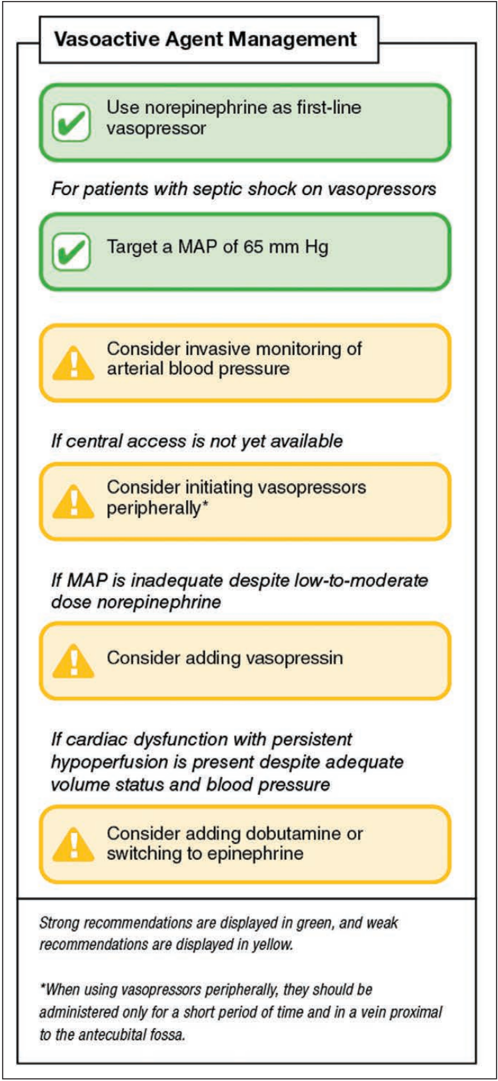
- Initial resuscitation: at least 30 mL/kg IV crystalloid within the first 3 hr for sepsis-induced hypoperfusion or septic shock (weak, low; downgraded from strong, low). For septic shock on vasopressors, initial MAP target of 65 mm Hg over higher targets (strong, moderate). Norepinephrine recommended as first-line vasopressor (strong).
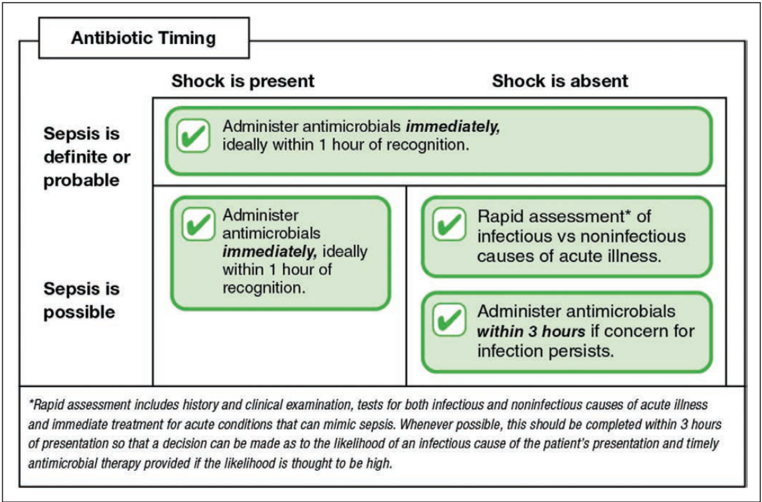
- Antimicrobials: for possible septic shock or high likelihood of sepsis, administer immediately, ideally within 1 hr of recognition (strong, low for septic shock; strong, very low for sepsis without shock). For possible sepsis without shock, rapid assessment and, if concern persists, antimicrobials within 3 hr (weak, very low). Recommend against procalcitonin plus clinical evaluation to decide when to start antimicrobials (weak, very low).
- Other selected recommendations: balanced crystalloids over normal saline (weak, low); against starches (strong, high); IV corticosteroids for ongoing vasopressor requirement (weak, moderate); against IV vitamin C (weak, low); restrictive RBC transfusion strategy (strong, moderate); early enteral nutrition within 72 hr (weak, very low).
Methods
- International guidelines for adult patients with sepsis or septic shock in the hospital setting; recommendations are numbered through 93.
- Evidence synthesis includes RCTs, meta-analyses, and observational studies; GRADE methodology is referenced, with recommendations graded strong or weak and quality of evidence rated.
- Methodology details are in Supplemental Digital Content: Methodology; the main text presents recommendations and rationales.
Limitations
- Many recommendations are weak and/or based on low or very low quality evidence; several questions had insufficient evidence to make a recommendation.
- Evidence often derives from high-income settings, and the text notes resource-limited settings may have different effects and limited availability of tests, drugs, and ICU resources.
- The guidelines state recommendations cannot replace clinician decision-making for unique patients; methodology is not fully described in the main text (evident).
Model-written summary. Check it against the paper before relying on it.
Integrity signals
Registry
Cites
Statistics
Figures
Verification
Claims the paper makes
6 Valid · 3 Not valid · 3 Not checked · 13 Own results and interpretations
Every source the paper cites for this claim was checked and supports it.
In the paper
“Sepsis is life-threatening organ dysfunction caused by a dysregulated host response to infection (1).”
§ KEY WORDS: adults; evidence > INTRODUCTION
What the sources say
- Supportedcites [1] 1. Singer M, Deutschman CS, Seymour CW, et al: The third in- ternational consensus definitions for sepsis and septic shock (Sepsis-3). JAMA 2016; 315:801-810 source
The Results/Recommendations section, under “Definition of Sepsis,” states the citing sentence’s definition verbatim. (LLM, conf=0.95)
- Supported
The cited sources support only part of this claim — read each source’s verdict below.
In the paper
“Data analysis used to support the recommendations of the Third International Consensus Conference on the Definitions of Sepsis identified qSOFA as a predictor of poor outcome in patients with known or suspected infection, but no analysis was performed to support its use as a screening tool (5).”
§ KEY WORDS: adults; evidence > Rationale
What the sources say
- Partly supportedcites [5] 5. Seymour CW, Liu VX, Iwashyna TJ, et al: Assessment of clinical criteria for sepsis: For the third international consensus defi- nitions for sepsis and septic shock (Sepsis-3). JAMA 2016; 315:762-774 sourceExperimental — accuracy not yet measured
The Results (Performance of New, Simple Criteria) show that qSOFA predicted hospital mortality among patients with suspected infection. The Discussion (Criteria Outside of the ICU; Limitations) says the study did not test whether qSOFA could distinguish patients with infection from those without it, supporting the narrower point that it was not evaluated as a stand-alone infection screen. The broader claim that no analysis supported any screening use goes beyond those passages: the Discussion recommends using qSOFA outside the ICU to consider the possibility of sepsis. (LLM, conf=0.83)
- Partly supported
The cited sources support only part of this claim — read each source’s verdict below.
In the paper
“Sepsis and septic shock are major healthcare problems, impacting millions of people around the world each year and killing between one in three and one in six of those it affects (2)(3)(4).”
§ KEY WORDS: adults; evidence > INTRODUCTION
What the sources say
- Not checked — no full text of the sourcecites [2] 2. Fleischmann C, Scherag A, Adhikari NK, et al; International Forum of Acute Care Trialists: Assessment of global incidence and mortality of hospital-treated sepsis. Current estimates and limitations. Am J Respir Crit Care Med 2016; 193:259-272 source
- Partly supportedcites [3] 3. Fleischmann-Struzek C, Mellhammar L, Rose N, et al: Incidence and mortality of hospital-and ICU-treated sepsis: Results from an updated and expanded systematic review and meta-analysis. Intensive Care Med 2020; 46:1552-1562 sourceExperimental — accuracy not yet measured
The Introduction reports millions of sepsis cases worldwide, and Results > Hospital-treated sepsis reports 26.7% hospital mortality—within the claimed one-in-six to one-in-three range. But the estimate applies to hospital-treated sepsis, not everyone affected worldwide; the paper does not establish that range for septic shock, and it reports 41.9% mortality for ICU-treated sepsis. (LLM, conf=0.86)
- Not checked — no full text of the sourcecites [4] 4. Rhee C, Dantes R, Epstein L, et al; CDC Prevention Epicenter Program: Incidence and trends of sepsis in US hospi- tals using clinical vs claims data, 2009-2014. JAMA 2017; 318:1241-1249 source
The cited sources support only part of this claim — read each source’s verdict below.
In the paper
“The association of lactate level with mortality in patients with suspected infection and sepsis is well established (45,46).”
§ KEY WORDS: adults; evidence > Rationale
What the sources say
- Not checked — no full text of the sourcecites [45] 45. Borthwick HA, Brunt LK, Mitchem KL, et al: Does lactate measurement performed on admission predict clinical out- come on the intensive care unit? A concise systematic review. Ann Clin Biochem 2012; 49:391-394 source
- Partly supportedcites [46] 46. Liu G, An Y, Yi X, et al: Early lactate levels for prediction of mortality in patients with sepsis or septic shock: A meta-anal- ysis. Int J Exp Med 2017; 10:37-47 sourceExperimental — accuracy not yet measured
The Results (Table 1; page unavailable) show that sepsis-severity groups with higher lactate values also had higher hospital mortality. The Methods define those groups partly by lactate level, however, and the paper does not establish a separate lactate–mortality association across the broader population with suspected infection. (LLM, conf=0.82)
The cited sources that could be checked couldn’t confirm or dispute this claim.
In the paper
“Hyperglycemia (> 180mg/dL), hypoglycemia and increased glycemic variability are associated with increased mortality in critically ill patients (509-511).”
§ KEY WORDS: adults; evidence > Rationale
What the sources say
- Could not verifycites [509] 509. Morandi A, Vasilevskis E, Pandharipande PP, et al: Inappropriate medication prescriptions in elderly adults sur- viving an intensive care unit hospitalization. J Am Geriatr Soc 2013; 61:1128-1134 600. sourceExperimental — accuracy not yet measured
The Methods and Results describe older ICU survivors studied for inappropriate medication prescriptions, and the Discussion addresses prescribing risks; no passage links blood-glucose levels to mortality. Searches for hyperglycemia, hypoglycemia, glycemic variability, and the 180 mg/dL threshold found no supporting passage in our copy. Page numbers were not available. (LLM, conf=0.77)
- Could not verifycites [510] 510. Scales DC, Fischer HD, Li P, et al: Unintentional continuation of medications intended for acute illness after hospital dis- charge: A population-based cohort study. J Gen Intern Med 2016; 31:196-202 601. sourceExperimental — accuracy not yet measured
The study’s Background and Methods (p. 1) concern medications continued after hospital discharge. Its Results (p. 4) list 30-day mortality, but do not relate it to blood glucose. Searches for hyperglycemia, hypoglycemia, glycemic variability, and glucose thresholds found no passage supporting the claimed association in critically ill patients. (LLM, conf=0.76)
- Not checked — no full text of the sourcecites [511] 511. Stelfox HT, Bastos J, Niven DJ, et al: Critical care transi- tion programs and the risk of readmission or death after dis- charge from ICU. Intensive Care Med 2016; 42:401-410 602. source
- Could not verify
20 more claims · 4 with their cited sources checked
Create a free account to see all 25 claims and every source verdict.
Claims other papers make about this one
Each is checked against this paper’s own text: does it say what the citing paper says it does?
The source backs part of the claim, not all of it — or backs it for a different population, condition or comparison.
In the citing paper
“The Surviving Sepsis Campaign guidelines recommend the use of machine learning algorithms that utilize scoring systems for the early screening of patients [36].”
From Bias in artificial intelligence algorithms and recommendations for mitigation (2023) · cites this paper as [36]
Experimental — accuracy not yet measuredThe cited source says what the claim attributes to it.
In the citing paper
“Early recognition and prompt treatment can improve patient outcomes and reduce mortality.2”
From Development and validation of a screening tool for sepsis without laboratory results in the emergency department: a machine learning study (2025) · cites this paper as [2]
The cited source says what the claim attributes to it.
In the citing paper
“Early administration of appropriate antimicrobial therapy can be life-saving in patients with sepsis”
From Trends in empiric broad-Spectrum antibiotic use for suspected community-onset Sepsis in US hospitals (2024) · cites this paper as [6]
In the citing paper
“Current approaches to sepsis put extraordinary responsibility on the individual for preventing the syndrome in a very acute sense – wash wounds effectively, wash hands frequently, get preventative vaccines, and, in our current crisis, wear face masks according to your own sense of risk (CDC, 2021; Dellinger et al., 2013; Evans et al., 2021; Sepsis_Alliance, 2021).”
From On race, human variation, and who gets and dies of sepsis (2022) · cites this paper as Evans et al., 2021
Self-check
Percentages, sums and reported differences re-computed from the paper’s own numbers.
Each contradiction between two passages listed here was confirmed by an independent check.
Rated minor: it would not touch a result — a value no result rests on, a p-value that stays on the same side of the significance level, or a conflict that is clerical, resolved elsewhere in the paper, or outside its own findings.
In the paper
“33 of 260 patients (12%) experienced digital ischemia after receiving terlipressin”
§ KEY WORDS: adults; evidence > Rationale
Reported 12 · recomputed 12.692308
Rated minor: it would not touch a result — a value no result rests on, a p-value that stays on the same side of the significance level, or a conflict that is clerical, resolved elsewhere in the paper, or outside its own findings.
In the paper
“length of hospitalization (MD, 7.00 days; 95% CI, -26.24 to 12.24)”
§ KEY WORDS: adults; evidence > Rationale
Reported 7 · recomputed -7
Rated minor: it would not touch a result — a value no result rests on, a p-value that stays on the same side of the significance level, or a conflict that is clerical, resolved elsewhere in the paper, or outside its own findings.
In the paper
§ KEY WORDS: adults; evidence > Strong recommendation, high quality of evidence.
“lower static filling pressures (MD, -2.3 cm H 2 O”
§ KEY WORDS: adults; evidence > Strong recommendation, high quality of evidence.
“95% CI, 3.02-1.05)”
Rated minor: it would not touch a result — a value no result rests on, a p-value that stays on the same side of the significance level, or a conflict that is clerical, resolved elsewhere in the paper, or outside its own findings.
In the paper
§ KEY WORDS: adults; evidence > Rationale
“Our literature search identified one new RCT that compared the combination of mechanical and pharmacological prophylaxis to pharmacological prophylaxis alone (500).”
§ KEY WORDS: adults; evidence > Rationale
“The PREVENT study randomized 2003 critically ill patients to intermittent pneumatic calf compression alone or in combination with pharmacological prophylaxis (500).”
Rated minor: it would not touch a result — a value no result rests on, a p-value that stays on the same side of the significance level, or a conflict that is clerical, resolved elsewhere in the paper, or outside its own findings.
In the paper
§ KEY WORDS: adults; evidence > Rationale
“issued a strong recommendation to use norepinephrine as a first line agent instead of dopamine, vasopressin, epinephrine and selepressin and angiotensin II in patients with septic shock as a first-line agent”
§ KEY WORDS: adults; evidence > Rationale
“and a weak recommendation over selepressin and angiotensin II.”
Citations
Cites
Meta-analysis in clinical trials
DerSimonian, R., & Laird, N. (1986) · Controlled Clinical Trials · doi:10.1016/0197-2456(86)90046-2 · Cited by 39,552
The third international consensus definitions for sepsis and septic shock (Sepsis-3).
Singer, M., Deutschman, C. S., Seymour, C. W., Shankar-Hari, M., Annane, D., Bauer, M., Bellomo, R., Bernard, G. R., Chiche, J.-D., Coopersmith, C. M., et al. (2016) · JAMA · doi:10.1001/jama.2016.0287 · Cited by 28,250
Self-citationGRADE: an emerging consensus on rating quality of evidence and strength of recommendations
Guyatt, G. H., Oxman, A. D., Vist, G. E., Kunz, R., Falck-Ytter, Y., Alonso-Coello, P., & Schünemann, H. J. (2008) · BMJ · doi:10.1136/bmj.39489.470347.ad · Cited by 23,305
(2000) · New England Journal of Medicine · doi:10.1056/nejm200005043421801 · Cited by 12,941
Early goal-directed therapy in the treatment of severe sepsis and septic shock
Rivers, E., Nguyen, B., Havstad, S., Ressler, J., Muzzin, A., Knoblich, B., Peterson, E., & Tomlanovich, M. (2001) · New England Journal of Medicine · doi:10.1056/nejmoa010307 · Cited by 10,743
Intensive insulin therapy in critically ill patients.
Van den Berghe, G., Wouters, P., Weekers, F., Verwaest, C., Bruyninckx, F., Schetz, M., Vlasselaers, D., Ferdinande, P., Lauwers, P., & Bouillon, R. (2001) · New England Journal of Medicine · doi:10.1056/nejmoa011300 · Cited by 9,977
Surviving Sepsis Campaign: International Guidelines for Management of Severe Sepsis and Septic Shock
Dellinger, R. P., Levy, M. M., Rhodes, A., Annane, D., Gerlach, H., Opal, S. M., Sevransky, J. E., Sprung, C. L., Douglas, I. S., Jaeschke, R., et al. (2013) · Critical Care Medicine · doi:10.1097/ccm.0b013e31827e83af · Cited by 9,694
Self-citationAcute Respiratory Distress Syndrome: The Berlin Definition
(2012) · JAMA · doi:10.1001/jama.2012.5669 · Cited by 8,731
GRADE guidelines: 3. Rating the quality of evidence
Balshem, H., Helfand, M., Schünemann, H. J., Oxman, A. D., Kunz, R., Brozek, J., Vist, G. E., Falck-Ytter, Y., Meerpohl, J., & Norris, S. (2011) · Journal of Clinical Epidemiology · doi:10.1016/j.jclinepi.2010.07.015 · Cited by 8,285
The Surviving Sepsis Campaign Guidelines Committee including The Pediatric Subgroup*, Dellinger, R. P., Levy, M. M., Rhodes, A., Annane, D., Gerlach, H., Opal, S. M., Sevransky, J. E., Sprung, C. L., Douglas, I. S., et al. (2013) · Intensive Care Medicine · doi:10.1007/s00134-012-2769-8 · Cited by 7,290
Self-citation
Research works printed but not linked: 5
- 46. Liu G, An Y, Yi X, et al: Early lactate levels for prediction of mortality in patients with sepsis or septic shock: A meta-anal- ysis. Int J Exp Med 2017; 10:37-47
- 285. Gamper G, Havel C, Arrich J, et al: Vasopressors for hypoten- sive shock. Cochrane Database Syst Rev 2016; 2:CD003709 361.
- 373. Cavalcanti AB, Suzumura ÉA, Laranjeira LN, et al: Effect of lung recruitment and titrated positive end-expiratory pres- sure (PEEP) vs low PEEP on mortality in patients with acute respiratory distress syndrome: A randomized clinical trial. JAMA 2017; 318:1335-1345 453. · DOI · Paper page
- 2018, 14. Diabetes care in the hospital: Standards of medical care in diabetes—2018., Diabetes Care, 41, S144
- 545. Wei Zhong Bing Ji Jiu Yi Xue 2019; 31:298-302 636.
Cited by
Items 101–200 of 2,891
Parenteral Vitamin C in Patients with Severe Infection: A Systematic Review
Agarwal, A., Basmaji, J., Fernando, S. M., Ge, F. Z., Xiao, Y., Faisal, H., Honarmand, K., Hylands, M., Lau, V. I., Lewis, K. A., et al. (2022) · NEJM Evidence · doi:10.1056/evidoa2200105 · Cited by 48
Kim, D., Chung, S., Kang, W. S., & Kim, J. S. (2021) · Diagnostics · doi:10.3390/diagnostics12010049 · Cited by 50
Medical nutrition therapy in patients receiving ECMO: Evidence‐based guidance for clinical practice
Dresen, E., Naidoo, O., Hill, A., Elke, G., Lindner, M., Jonckheer, J., Waele, E. D., Meybohm, P., Modir, R., Patel, J. J., et al. (2022) · Journal of Parenteral and Enteral Nutrition · doi:10.1002/jpen.2467 · Cited by 51
Thwaites, L., Nasa, P., Abbenbroek, B., Dat, V. Q., Finfer, S. R., Kwizera, A., Ling, L., Lobo, S. M., Sinto, R., Aditianingsih, D., et al. (2024) · Intensive Care Medicine · doi:10.1007/s00134-024-07735-7 · Cited by 58
“The SSC Guidelines committee and the Delphi experts agree that epinephrine can be used as an alternative when norepinephrine or vasopressin is unavailable [15].”
InfluentialSelf-citationChua, W. L., Rusli, K. D. B., & Aitken, L. M. (2024) · Journal of Clinical Nursing · doi:10.1111/jocn.17061 · Cited by 68
Rhee, C., Strich, J. R., Chiotos, K., Classen, D. C., Cosgrove, S. E., Greeno, R., Heil, E. L., Kadri, S. S., Kalil, A. C., Gilbert, D. N., et al. (2024) · Clinical Infectious Diseases · doi:10.1093/cid/ciad447 · Cited by 40
Self-citationWang, D., Jia, H., Zheng, X., Xi, X., Zheng, Y., & Li, W. (2024) · BMC Pulmonary Medicine · doi:10.1186/s12890-024-02913-1 · Cited by 51
“Sepsis is a major global health issue that affects millions of people worldwide every year and leads to one-third to one-sixth of deaths [20–23].”
BackgroundTandoğdu, Z., Köves, B., Ristovski, S., Balcı, M. B. C., Rennesund, K., Gravas, S., Nale, D., Medina‐Polo, J., Garabášová, M. K., Costantini, E., et al. (2022) · World Journal of Urology · doi:10.1007/s00345-024-04979-2 · Cited by 44
Setarehaseman, A., Mohammadi, A., & Maitta, R. W. (2025) · Life · doi:10.3390/life15020274 · Cited by 51
“According to the Surviving Sepsis Campaign guidelines, platelet transfusion is recommended when counts drop below 10 × 10 9 /L, even in the absence of bleeding [77].”
Sinto, R., Lie, K. C., Setiati, S., Suwarto, S., Nelwan, E. J., Djumaryo, D. H., Karyanti, M. R., Prayitno, A., Sumariyono, S., Moore, C. E., et al. (2022) · Antimicrobial Resistance and Infection Control · doi:10.1186/s13756-022-01114-x · Cited by 52
Evolving Management Practices for Early Sepsis-induced Hypoperfusion: A Narrative Review
Munroe, E. S., Hyzy, R. C., Semler, M. W., Shankar-Hari, M., Young, P. J., Zampieri, F. G., & Prescott, H. C. (2023) · American Journal of Respiratory and Critical Care Medicine · doi:10.1164/rccm.202209-1831ci · Cited by 40
Self-citationPrevalence of sepsis among adults in China: A systematic review and meta-analysis
Lei, S., Li, X., Zhao, H., Xie, Y., & Li, J. (2022) · Frontiers in Public Health · doi:10.3389/fpubh.2022.977094 · Cited by 44
Rosa, S. D., Marengo, M., Fiorentino, M., Fanelli, V., Brienza, N., Fiaccadori, E., Grasselli, G., Morabito, S., Pota, V., Romagnoli, S., et al. (2023) · Journal of Nephrology · doi:10.1007/s40620-023-01637-5 · Cited by 41
Sartelli, M., Barie, P. S., Agnoletti, V., Al‐Hasan, M. N., Ansaloni, L., Biffl, W. L., Buonomo, L. A., Blot, S. I., Cheadle, W. G., Coimbra, R. S. M., et al. (2024) · World Journal of Emergency Surgery · doi:10.1186/s13017-024-00552-9 · Cited by 69
Zhang, J., Yan, W., Dong, Y., Luo, X., Miao, H., Maimaijuma, T., Xu, X., Jiang, H., Huang, Z., Qi, L., et al. (2024) · Journal of Thoracic Disease · doi:10.21037/jtd-24-1191 · Cited by 53
Enteral nutrition in critically ill patients under vasoactive drug therapy: the NUTRIVAD study
Flordelís Lasierra, J. L., Montejo González, J. C., López Delgado, J. C., Zárate Chug, P., Martínez Lozano‐Aranaga, F., Lorencio Cárdenas, C., Bordejé Laguna, M. L., Maichle, S., Terceros Almanza, L. J., Trasmonte Martínez, M. V., et al. (2022) · Journal of Parenteral and Enteral Nutrition · doi:10.1002/jpen.2371 · Cited by 39
Teshome, B. F., Park, T., Arackal, J., Hampton, N., Kollef, M. H., & Micek, S. T. (2024) · Clinical Infectious Diseases · doi:10.1093/cid/ciae253 · Cited by 39
“The practice of ADE is recommended by several clinical practice guidelines and position statements as a safe approach to treat-ment and the primary method of preventing the development of new resistance [3, 6, 23, 24].”
Regulatory T Cells: Angels or Demons in the Pathophysiology of Sepsis?
Gao, Y., Yao, Y., Zhang, X., Chen, F., Meng, X.-L., Chen, X., Wang, C.-L., Liu, Y., Tian, X., Shou, S., et al. (2022) · Frontiers in Immunology · doi:10.3389/fimmu.2022.829210 · Cited by 52
López-Cortés, L. E., Delgado-Valverde, M., Moreno-Mellado, E., Goikoetxea Aguirre, J., Guio Carrión, L., Blanco Vidal, M. J., López Soria, L. M., Pérez-Rodríguez, M. T., Martínez Lamas, L., Arnaiz de las Revillas, F., et al. (2024) · The Lancet Infectious Diseases · doi:10.1016/s1473-3099(23)00686-2 · Cited by 38
Fostervold, A., Raffelsberger, N., Hetland, M. A. K., Bakksjø, R., Bernhoff, E., Samuelsen, Ø., Sundsfjord, A., Afset, J. E., Berntsen, C. F., Bævre-Jensen, R. M., et al. (2024) · Journal of Infection · doi:10.1016/j.jinf.2024.106155 · Cited by 39
Review: sepsis guidelines and core measure bundles
Desposito, L., & Bascara, C. J. (2024) · Postgraduate Medicine · doi:10.1080/00325481.2024.2388021 · Cited by 46
He, L., Yang, D., Ding, Q., Su, Y., & Ding, N. (2022) · Infectious Diseases and Therapy · doi:10.1007/s40121-022-00736-3 · Cited by 40
Roberson, S. W., Nwosu, S., Collar, E. M., Kiehl, A. L., Harrison, F. E., Bastarache, J. A., Wilson, J. E., Mart, M. F., Sevransky, J., Ely, E. W., et al. (2023) · JAMA Network Open · doi:10.1001/jamanetworkopen.2023.0380 · Cited by 50
Self-citationBezati, S., Velliou, M., Ventoulis, I., Simitsis, P., Parissis, J., & Polyzogopoulou, E. (2023) · Heart Failure Reviews · doi:10.1007/s10741-023-10303-8 · Cited by 52
Beran, A., Altorok, N., Srour, O., Malhas, S., Khokher, W., Mhanna, M., Ayesh, H., Aladamat, N., Abuhelwa, Z., Srour, K., et al. (2022) · Journal of Clinical Medicine · doi:10.3390/jcm11071971 · Cited by 47
Pandolfi, F., Brun‐Buisson, C., Guillemot, D., & Watier, L. (2022) · Critical Care · doi:10.1186/s13054-022-04212-9 · Cited by 42
Leisman, D. E., Handisides, D. R., Busse, L. W., Chappell, M. C., Chawla, L. S., Filbin, M. R., Goldberg, M. B., Ham, K. R., Khanna, A. K., Ostermann, M., et al. (2024) · Critical Care · doi:10.1186/s13054-024-04910-6 · Cited by 39
Self-citationMyocardial effects of angiotensin II compared to norepinephrine in an animal model of septic shock
Garcia, B., Su, F., Dewachter, L., Favory, R., Khaldi, A., Moiroux-Sahraoui, A., Annoni, F., Vasques‐Nóvoa, F., Rocha-Oliveira, E., Roncon‐Albuquerque, R., et al. (2022) · Critical Care · doi:10.1186/s13054-022-04161-3 · Cited by 40
MacVane, S. H., & Dwivedi, H. P. (2024) · Journal of Antimicrobial Chemotherapy · doi:10.1093/jac/dkae282 · Cited by 36
“30,65 Moreover, early de-escalation of broad-spectrum therapy appears to be safe and may lower the risk of unintended consequences associated with broad-spectrum exposure.”
BackgroundHooper, G. A., Klippel, C., McLean, S. R., Stenehjem, E. A., Webb, B. J., Murnin, E., Hough, C. L., Bledsoe, J. R., Brown, S. M., & Peltan, I. D. (2023) · Clinical Infectious Diseases · doi:10.1093/cid/ciad101 · Cited by 41
Enhanced perioperative care in emergency general surgery: the WSES position paper
Ceresoli, M., Braga, M., Zanini, N., Abu‐Zidan, F. M., Parini, D., Länger, T., Sartelli, M., Damaskos, D., Biffl, W. L., Amico, F., et al. (2023) · World Journal of Emergency Surgery · doi:10.1186/s13017-023-00519-2 · Cited by 48
Validation of SeptiCyte RAPID to Discriminate Sepsis from Non-Infectious Systemic Inflammation
BALK, R. A., Esper, A. M., Martin, G. S., Miller, R. R., Lopansri, B. K., Burke, J. P., Levy, M. M., Opal, S. M., Rothman, R. E., D’Alessio, F. R., et al. (2024) · Journal of Clinical Medicine · doi:10.3390/jcm13051194 · Cited by 44
“The recently updated Surviving Sepsis Campaign (SSC) guidelines (2021) divide patients into three groups (low, intermediate, and high) based on sepsis probability, and recommend appropriate evaluation and treatment of these groups [42].”
BackgroundSelf-citationChuang, C.-J., Yeh, H.-T., Niu, K.-Y., Chen, C., Seak, C., & Yen, C. (2025) · European Journal of Emergency Medicine · doi:10.1097/mej.0000000000001235 · Cited by 52
The Burden of Sepsis and Septic Shock in the Intensive Care Unit
Via, L. L., Maniaci, A., Lentini, M., Cuttone, G., Ronsivalle, S., Tutino, S., Rubulotta, F. M., Nunnari, G., & Marıno, A. (2025) · Journal of Clinical Medicine · doi:10.3390/jcm14196691 · Cited by 62
“…or septic shock requiring large volumes of crys-talloids, the SSC guidelines suggest considering albumin in addition to crystalloids, based on evidence of potential hemodynamic benefits and reduced net fluid balance, though this remains a weak recommendation with moderate-quality evidence [45].”
InfluentialMottale, R., Dupuis, C., Szklarzewska, S., & Preiser, J. (2025) · Annals of Intensive Care · doi:10.1186/s13613-025-01588-z · Cited by 57
Effect of Serum Ferritin on the Prognosis of Patients with Sepsis: Data from the MIMIC-IV Database
Fang, Y., Zhang, H., Guo, Z., Ren, C., Zhang, Y., Liu, Q., Wang, Z., & Zhang, X. (2022) · Emergency Medicine International · doi:10.1155/2022/2104755 · Cited by 42
Liang, B., Su, J., Shao, H., Chen, H., & Xie, B. (2023) · Critical Care · doi:10.1186/s13054-023-04392-y · Cited by 43
Moon, S. J., Ko, R.-E., Park, C.-M., Suh, G. Y., Hwang, J., & Chung, C. R. (2023) · Nutrients · doi:10.3390/nu15143201 · Cited by 34
“Lastly, the recent SSC-4 guidelines advocated for early EN within 72 h of ICU admission [12].”
BackgroundMethodInfluentialKlingensmith, N. J., & Coopersmith, C. M. (2023) · Surgical Infections · doi:10.1089/sur.2022.420 · Cited by 37
Self-citationMunroe, E. S., Heath, M. E., Eteer, M., Gershengorn, H. B., Horowitz, J. K., Jones, J., Kaatz, S., Kakazu, M. T., McLaughlin, E. S., Flanders, S. A., et al. (2023) · CHEST Journal · doi:10.1016/j.chest.2023.10.027 · Cited by 41
Self-citationKlinkmann, G., Waterstradt, K., Klammt, S., Schnurr, K., Schewe, J., Wasserkort, R., & Mitzner, S. R. (2023) · International Journal of Molecular Sciences · doi:10.3390/ijms241612551 · Cited by 33
“Another elementary aspect of sepsis pathophysiology already appears in its definition, which assigns a special significance to the occurrence of organ insufficiencies [1,2].”
BackgroundMethodInfluentialRelationship between liver dysfunction, lipoprotein concentration and mortality during sepsis
Tanaka, S., de Tymowski, C., Stern, J., Bouzid, D., Zappella, N., Snauwaert, A., Robert, T., Lortat‐Jacob, B., Tran‐Dinh, A., Augustin, P., et al. (2022) · PLoS ONE · doi:10.1371/journal.pone.0272352 · Cited by 38
“To our knowledge, there is no consensual definition of sepsis-associated liver dysfunction [28].”
BackgroundPark, H., Lee, J., Oh, D. K., Park, M. H., Lim, C., Lee, S., Lee, H. Y., & the Korean Sepsis Alliance (KSA) Investigators (2023) · Scientific Reports · doi:10.1038/s41598-023-33227-7 · Cited by 39
Damage control surgery in emergency general surgery: What you need to know
Risinger, W. B., & Smith, J. W. (2023) · The Journal of Trauma: Injury, Infection, and Critical Care · doi:10.1097/ta.0000000000004112 · Cited by 46
Xu, T., Song, S., Zhu, K., Yang, Y., Wu, C., Wang, N., & Lu, S. (2025) · Scientific Reports · doi:10.1038/s41598-024-81860-7 · Cited by 47
Yan, Y., Li, B., Gao, Q., Wu, M., Ma, H., Bai, J., Ma, C., Xie, X., Gong, Y., Xu, L., et al. (2025) · Advanced Science · doi:10.1002/advs.202412799 · Cited by 41
Pan, X., Xie, J., Zhang, L., Wang, X., Zhang, S., Zhuang, Y., Lin, X., Shi, S., Shi, S., & Lin, W. (2023) · BMC Infectious Diseases · doi:10.1186/s12879-023-08045-x · Cited by 43
Qu, G., Liu, H., Li, J., Huang, S., Zhao, N., Zeng, L., & Deng, J. (2023) · Scientific Reports · doi:10.1038/s41598-023-32992-9 · Cited by 34
Lactate: The Fallacy of Oversimplification
Müller, J., Raděj, J., Horák, J., Karvunidis, T., Valešová, L., Kříž, M., & Matějovič, M. (2023) · Biomedicines · doi:10.3390/biomedicines11123192 · Cited by 38
“It has been suggested that lactate can be used to recognize patients with “occult” shock [4].”
BackgroundLei, J., Zhai, J., Zhang, Y., Qi, J., & Sun, C. (2025) · Journal of Medical Internet Research · doi:10.2196/66733 · Cited by 46
Lactate metabolic reprogramming and histone lactylation modification in sepsis
Zhang, J., Wu, D., Zeng, F., Gu, H., Li, C. K., Cata, J. P., Guo, K., Miao, C., & Zhang, H. (2025) · International Journal of Biological Sciences · doi:10.7150/ijbs.116088 · Cited by 48
Antimicrobial Stewardship in the ICU
Murphy, C. V., Reed, E. E., Herman, D. D., Magrum, B., Beatty, J. J., & Stevenson, K. (2022) · Seminars in Respiratory and Critical Care Medicine · doi:10.1055/s-0041-1740977 · Cited by 39
Durand, M., Hagimont, E., Louis, H., Asfar, P., Frippiat, J., Singer, M., Gauchotte, G., Labat, C., Lacolley, P. J., Lévy, B., et al. (2022) · Critical Care Medicine · doi:10.1097/ccm.0000000000005503 · Cited by 38
Angiotensin 1–7 in an experimental septic shock model
Garcia, B., Su, F., Manicone, F., Dewachter, L., Favory, R., Khaldi, A., Moiroux-Sahraoui, A., Moreau, A., Herpain, A., Vincent, J., et al. (2023) · Critical Care · doi:10.1186/s13054-023-04396-8 · Cited by 32
What is new and different in the 2021 Surviving Sepsis Campaign guidelines
Prescott, H. C., & Ostermann, M. (2023) · Medizinische Klinik - Intensivmedizin und Notfallmedizin · doi:10.1007/s00063-023-01028-5 · Cited by 46
Self-citationPiedmont, S., Goldhahn, L., Swart, E., Robra, B., Fleischmann-Struzek, C., Somasundaram, R., & Bauer, W. (2024) · Infection · doi:10.1007/s15010-024-02181-5 · Cited by 48
Mixed Shock Complicating Cardiogenic Shock: Frequency, Predictors, and Clinical Outcomes
Baldetti, L., Gallone, G., Filiberti, G., Pescarmona, L., Cesari, A., Rizza, V., Roagna, E., Gurrieri, D., Peveri, B., Nocera, L., et al. (2024) · Circulation Heart Failure · doi:10.1161/circheartfailure.123.011404 · Cited by 38
Jessen, M. K., Andersen, L. W., Thomsen, M. H., Kristensen, P., Hayeri, W., Hassel, R. E., Messerschmidt, T. G., Sølling, C. G., Perner, A., Petersen, J. A. K., et al. (2022) · Academic Emergency Medicine · doi:10.1111/acem.14546 · Cited by 33
Self-citationDurr, D., Niemi, T., Despraz, J., Tusgul, S., Dami, F., Akrour, R., Carron, P., Pogam, M. L., Calandra, T., & Meylan, S. (2022) · Antibiotics · doi:10.3390/antibiotics11111518 · Cited by 49
Jeffrey, M., Denny, K. J., Lipman, J., & Morris, A. C. (2023) · Intensive Care Medicine · doi:10.1007/s00134-023-07108-6 · Cited by 44
Wang, Y., Gao, Z., Zhang, Y., Lu, Z., & Sun, F. (2025) · Internal and Emergency Medicine · doi:10.1007/s11739-024-03732-2 · Cited by 29
Optimizing Vasopressin Use and Initiation Timing in Septic Shock
Sacha, G. L., & Bauer, S. R. (2023) · CHEST Journal · doi:10.1016/j.chest.2023.07.009 · Cited by 37
Baek, M. S., Kwon, Y. S., Kang, S., Shim, D., Yoon, Y., & Kim, J. H. (2024) · Acute and Critical Care · doi:10.4266/acc.2023.01613 · Cited by 33
Perera, Y., Raitt, J., Poole, K., Metcalfe, D., & Lewinsohn, A. (2024) · Scandinavian Journal of Trauma Resuscitation and Emergency Medicine · doi:10.1186/s13049-024-01240-y · Cited by 33
Rabi, R., Alsaid, R. M., Matar, A. N., Dawabsheh, Y., & Gaber, D. A. (2024) · Science Progress · doi:10.1177/00368504241274023 · Cited by 44
Blood Pressure Targets for Adults with Vasodilatory Shock — An Individual Patient Data Meta-Analysis
Angriman, F., Momenzade, N., Adhikari, N. K. J., Mouncey, P., Asfar, P., Yarnell, C. J., Ong, S. W. X., Pinto, R. L., Doidge, J., Shankar‐Hari, M., et al. (2024) · NEJM Evidence · doi:10.1056/evidoa2400359 · Cited by 37
Lin, T.-H., Chung, H.-Y., Jian, M.-J., Chang, C.-K., Lin, H.-H., Yen, C.-T., Tang, S.-H., Pan, P.-C., Perng, C.-L., Chang, F.-Y., et al. (2025) · Journal of Medical Internet Research · doi:10.2196/56155 · Cited by 29
Ford, J. S., Morrison, J. C., Kyaw, M., Hewlett, M. M., Tahir, P., Jain, S., Nemati, S., Malhotra, A., & Wardi, G. (2025) · Annals of Internal Medicine · doi:10.7326/annals-24-02426 · Cited by 44
Acute pancreatitis: mechanisms and therapeutic approaches
Hu, Q., Hu, Y., Tan, C., Yue, Y., Su, H., Huang, Z., Tang, W., Wang, R. X., Liu, J., & Wan, M. (2026) · Signal Transduction and Targeted Therapy · doi:10.1038/s41392-025-02394-6 · Cited by 56
Ko, R., Kwon, O., Cho, K.-J., Lee, Y. J., Kwon, J., Park, J., Kim, J. S., Kim, A. J., Jo, Y. H., Lee, Y., et al. (2022) · Journal of Korean Medical Science · doi:10.3346/jkms.2022.37.e122 · Cited by 36
Goodman, K. E., Baghdadi, J. D., Magder, L. S., Heil, E. L., Sutherland, M., Dillon, R. J., Puzniak, L., Tamma, P. D., & Harris, A. D. (2022) · Clinical Infectious Diseases · doi:10.1093/cid/ciac504 · Cited by 31
Predictors of Serious Infection in Systemic Lupus Erythematosus: A Time-to-Event Analysis
Ko, T., Koelmeyer, R., Li, N., Yap, K., Yeo, A. L., Kent, J. R., Pellicano, R., Golder, V., Kitching, A. R., Morand, E. F., et al. (2022) · Seminars in Arthritis and Rheumatism · doi:10.1016/j.semarthrit.2022.152099 · Cited by 31
Moskowitz, A. L., Berg, K. M., Grossestreuer, A. V., Balaji, L., Liu, X., Cocchi, M. N., Chase, M., Gong, M. N., Gong, J. F., Parikh, S. M., et al. (2023) · American Journal of Respiratory and Critical Care Medicine · doi:10.1164/rccm.202301-0034oc · Cited by 33
Alliance for Innovation on Maternal Health: Consensus Bundle on Sepsis in Obstetric Care
Bauer, M. E. B., Albright, C. M., Prabhu, M., Heine, R. P., Lennox, C., Allen, C., Burke, C. A., Chavez, A., Hughes, B. L., Kendig, S. M., et al. (2023) · Obstetrics and Gynecology · doi:10.1097/aog.0000000000005304 · Cited by 36
Role of the interstitium during septic shock: a key to the understanding of fluid dynamics?
Dargent, A., Dumargne, H., Labruyère, M., Brézillon, S., Brassart‐Pasco, S., Blot, M., Charles, P., Fournel, I., Quenot, J., & Jacquier, M. (2023) · Journal of Intensive Care · doi:10.1186/s40560-023-00694-z · Cited by 37
Yuan, K. Z., Luk, A., Wei, J., Walker, A. S., Zhu, T., & Eyre, D. W. (2024) · Journal of Infection · doi:10.1016/j.jinf.2024.106388 · Cited by 35
Joannès-Boyau, O., Conte, P. L., Bonnet, M., Cesaréo, E., Chousterman, B. G., Chaiba, D., Douay, B., Futier, E., Harrois, A., Huraux, C., et al. (2022) · Anaesthesia Critical Care & Pain Medicine · doi:10.1016/j.accpm.2022.101058 · Cited by 36
Carayannopoulos, K. L., Pidutti, A., Upadhyaya, Y., Alshamsi, F. E., Basmaji, J., Granholm, A., Alhazzani, W. A., & Lewis, K. A. (2022) · Critical Care Medicine · doi:10.1097/ccm.0000000000005726 · Cited by 31
Self-citationShikonin inhibits immune checkpoint PD-L1 expression on macrophage in sepsis by modulating PKM2
Yuan, L., Wang, Y., Chen, Y., Chen, X., Li, S., & Liu, X. (2023) · International Immunopharmacology · doi:10.1016/j.intimp.2023.110401 · Cited by 31
Guo, Q., Qu, P., Cui, W., Liu, M., Zhu, H., Chen, W., Sun, N., Geng, S., Song, W., Li, X., et al. (2023) · BMC Infectious Diseases · doi:10.1186/s12879-023-08387-6 · Cited by 35
Variables influencing the prediction of fluid responsiveness: a systematic review and meta-analysis
Sánchez, J. I. A., Ruiz, J. D., Fernández, J. J. D., Martínez, L., Hernández, F. L. C., Herrera, C. A. S., & Ospina-Tascón, G. A. (2023) · Critical Care · doi:10.1186/s13054-023-04629-w · Cited by 36
Novel evidence on sepsis-inducing pathogens: from laboratory to bedside
Gatica, S., Fuentes, B., Rivera-Asín, E., Ramírez-Céspedes, P., Sepúlveda-Alfaro, J., Catalán, E. A., Bueno, S. M., Kalergis, A. M., Simón, F., Riedel, C. A., et al. (2023) · Frontiers in Microbiology · doi:10.3389/fmicb.2023.1198200 · Cited by 43
“Empiric antimicrobial therapy follows a general Gram-negative bacteremia algorithm with prolonged delivery of broad-spectrum β-lactam antibiotics as the first indication (Evans et al., 2021).”
BackgroundExpert consensus on blood pressure management in critically ill patients
Yu, Y., Gong, Y., Hu, B., Ouyang, B., Pan, A., Liu, J., Liu, F., Shang, X., Yang, X., Tu, G.-W., et al. (2023) · Journal of Intensive Medicine · doi:10.1016/j.jointm.2023.06.001 · Cited by 37
“[4] Evans L, Rhodes A, Alhazzani W, Antonelli M, Coopersmith CM, French C, et al.”
BackgroundLactate: elucidating its indispensable role in human health
Zhang, S., Wang, J., Xu, Z., Cheng, Z., Shao, B., & Yu, J. (2026) · Molecular Cancer · doi:10.1186/s12943-025-02519-z · Cited by 41
“Current sepsis guidelines emphasize that while lactate is a strong prognostic indicator for mortality and the need for resuscitation, its elevation has multiple causes beyond global hypoperfusion [152].”
Kowalkowski, M. A., Rios, A., McSweeney, J., Murphy, S., McWilliams, A. D., Chou, S., Hetherington, T. C., Rossman, W., & Taylor, S. P. (2022) · American Journal of Respiratory and Critical Care Medicine · doi:10.1164/rccm.202203-0590le · Cited by 28
Serum Ferritin as a Predictor of Outcomes in Hospitalized Patients with Covid-19 Pneumonia
Shakaroun, D., Lazar, M. H., Horowitz, J. C., & Jennings, J. H. (2022) · Journal of Intensive Care Medicine · doi:10.1177/08850666221113252 · Cited by 32
Adrenal Insufficiency in Cirrhosis
Wentworth, B. J., & Siragy, H. M. (2022) · Journal of the Endocrine Society · doi:10.1210/jendso/bvac115 · Cited by 33
Guidelines for the Use of Procalcitonin for Rational Use of Antibiotics
Chaudhry, D., Sharma, A., Govil, D., Hadda, V., Jain, N., Tiwari, P., Samavedam, S., Dixit, S., Govindagoudar, M. B., Khilnani, G. C., et al. (2022) · Indian Journal of Critical Care Medicine · doi:10.5005/jp-journals-10071-24326 · Cited by 39
Uses of Procalcitonin as a Biomarker in Critical Care Medicine
Maves, R. C., & Enwezor, C. H. (2022) · Infectious Disease Clinics of North America · doi:10.1016/j.idc.2022.07.004 · Cited by 37
Powell, M. Z., Mara, K. C., Bansal, R., Hathcock, M. A., Khurana, A., Bennani, N. N., Wang, Y., Paludo, J., Villasboas, J. C., Ansell, S. M., et al. (2023) · Cancer Medicine · doi:10.1002/cam4.5665 · Cited by 34
Quality indicators in intensive care medicine for Germany - fourth edition 2022
Kumpf, O., Assenheimer, M., Bloos, F., Brauchle, M., Braun, J.-P., Brinkmann, A., Czorlich, P., Dame, C., Dubb, R., Gahn, G., et al. (2023) · German medical science · doi:10.3205/000324 · Cited by 45
Düsing, C., Cimiano, P., Rehberg, S., Scherer, C., Kaup, O., Köster, C., Hellmich, S., Herrmann, D., Meier, K. L., Claßen, S., et al. (2024) · Artificial Intelligence in Medicine · doi:10.1016/j.artmed.2024.102982 · Cited by 26
Carlton, E. F., Gebremariam, A., Maddux, A. B., McNamara, N., Barbaro, R. P., Cornell, T. T., Iwashyna, T. J., Prosser, L. A., Zimmerman, J. J., Weiss, S. L., et al. (2022) · Archives of Pediatrics and Adolescent Medicine · doi:10.1001/jamapediatrics.2022.3554 · Cited by 30
Self-citationTosi, M., Coloretti, I., Meschiari, M., Biasi, S. D., Girardis, M., & Busani, S. (2024) · Antibiotics · doi:10.3390/antibiotics13050406 · Cited by 37
“Appropriate antibiotic treatment along with source control remain the interventions with a real and proven impact on outcome [6].”
BackgroundMortality-associated plasma proteome dynamics in a prospective multicentre sepsis cohort
Palmowski, L., Weber, M., Bayer, M., Mi, Y., Schork, K., Eisenacher, M., Nowak, H., Rahmel, T., Bergmann, L., Witowski, A., et al. (2024) · EBioMedicine · doi:10.1016/j.ebiom.2024.105508 · Cited by 31
S3-Leitlinie Sepsis – Prävention, Diagnose, Therapie und Nachsorge – Update 2025
Brunkhorst, F. M., Adamzik, M., Axer, H., Bauer, M. W., Bode, C., Bone, H.-G., Brenner, T., Bucher, M., David, S., Dietrich, M., et al. (2025) · Medizinische Klinik - Intensivmedizin und Notfallmedizin · doi:10.1007/s00063-025-01317-1 · Cited by 47
Law, A. C., Bosch, N. A., Peterson, D., & Walkey, A. J. (2022) · CHEST Journal · doi:10.1016/j.chest.2022.04.147 · Cited by 27
Intravenous fluid therapy in sepsis
Seitz, K. P., Qian, E. T., & Semler, M. W. (2022) · Nutrition in Clinical Practice · doi:10.1002/ncp.10892 · Cited by 34
Lee, J. H., Kim, S. H., Jang, J. H., Park, J. H., Jo, K. M., No, T.-H., Jang, H. J., & Lee, H.-K. (2022) · Medicine · doi:10.1097/md.0000000000031895 · Cited by 33
“[21–23] These result of our study suggest that it is important to evaluate the initial level of lactate and track the lactate clearance as a target of resuscitation in early phase of sepsis and septic shock, and consistent with the international guidelines of Surviving Sepsis Campaign.[24] Regarding prediction for pro…”
ResultWu, H.-Y., Chang, P.-H., Huang, Y., Tsai, C.-S., Chen, K., Lin, I., Hsih, W.-H., Tsai, W.-L., Chen, J.-A., Yang, T.-L., et al. (2022) · Journal of Microbiology Immunology and Infection · doi:10.1016/j.jmii.2022.12.003 · Cited by 26
Metadata
- Authors
- Evans, L., Rhodes, A., Alhazzani, W., Antonelli, M., Coopersmith, C. M., French, C., Machado, F. R., Mcintyre, L., Ostermann, M., Prescott, H. C., Schorr, C., Simpson, S., Wiersinga, W. J., Alshamsi, F., Angus, D. C., Arabi, Y., Azevedo, L., Beale, R., Beilman, G., Belley-Cote, E., Burry, L., Cecconi, M., Centofanti, J., Coz Yataco, A., De Waele, J., Dellinger, R. P., Doi, K., Du, B., Estenssoro, E., Ferrer, R., Gomersall, C., Hodgson, C., Hylander Møller, M., Iwashyna, T., Jacob, S., Kleinpell, R., Klompas, M., Koh, Y., Kumar, A., Kwizera, A., Lobo, S., Masur, H., McGloughlin, S., Mehta, S., Mehta, Y., Mer, M., Nunnally, M., Oczkowski, S., Osborn, T., Papathanassoglou, E., Perner, A., Puskarich, M., Roberts, J., Schweickert, W., Seckel, M., Sevransky, J., Sprung, C. L., Welte, T., Zimmerman, J., & Levy, M.
- Affiliations
- University of Washington (US)
- St George's, University of London (GB)
- McMaster University (CA)
- Agostino Gemelli University Polyclinic (IT)
- Emory University (US)
- Western Health (AU)
- Universidade Federal de São Paulo (BR)
- Ottawa Hospital (CA)
- St Thomas' Hospital (GB)
- University of Michigan (US)
- Cooper Health System, Camden, New Jersey, USA.
- University of Kansas Medical Center (US)
- Amsterdam University Medical Centers (NL)
- United Arab Emirates University (AE)
- University of Pittsburgh (US)
- King Saud bin Abdulaziz University for Health Sciences (SA)
- Universidade de São Paulo (BR)
- Guy's Hospital (GB)
- University of Minnesota (US)
- Population Health Research Institute, Hamilton, Ontario, Canada.
- Mount Sinai Hospital (CA)
- Humanitas University (IT)
- Lexington Veterans Affairs Medical Center/University of Kentucky College of Medicine, Lexington, Kentucky, USA.
- Ghent University Hospital, Ghent, Belgium.
- The University of Tokyo (JP)
- Peking Union Medical College Hospital (CN)
- Hospital Interzonal de Agudos San Martin de La Plata, Buenos Aires, Argentina.
- Vall d'Hebron Institut de Recerca (ES)
- Prince of Wales Hospital (CN)
- Monash University (AU)
- Copenhagen University Hospital Rigshospitalet, Department of Intensive Care, Copenhagen, Denmark.
- Michigan Medicine (US)
- Liverpool School of Tropical Medicine (GB)
- Vanderbilt University (US)
- Brigham and Women's Hospital (US)
- Asan Medical Center (KR)
- University of Manitoba (CA)
- Makerere University (UG)
- Faculdade de Medicina de São José do Rio Preto (BR)
- National Institutes of Health (US)
- Alfred Health (AU)
- Medanta The Medicity (IN)
- University of the Witwatersrand (ZA)
- New York University (US)
- Washington University in St. Louis (US)
- University of Alberta (CA)
- Rigshospitalet (DK)
- The University of Queensland (AU)
- University of Pennsylvania (US)
- ChristianaCare, Newark, Delaware, USA.
- Hebrew University of Jerusalem (IL)
- Medizinische Hochschule Hannover (DE)
- World Federation of Intensive and Critical Care, Brussels, Belgium.
- Brown University (US)
- ORCID
- Evans, Laura
- Rhodes, Andrew
- Alhazzani, Waleed
- Antonelli, Massimo
- Coopersmith, Craig M.
- French, Craig
- Machado, Flávia R.
- Mcintyre, Lauralyn
- Ostermann, Marlies
- Prescott, Hallie C.
- Schorr, Christa
- Simpson, Steven
- Wiersinga, W. Joost
- Alshamsi, Fayez
- Angus, Derek C.
- Arabi, Yaseen
- Azevedo, Luciano
- Beilman, Gregory
- Burry, Lisa
- Cecconi, Maurizio
- Centofanti, John
- Doi, Kent
- Du, Bin
- Estenssoro, Elisa
- Ferrer, Ricard
- Gomersall, Charles
- Hodgson, Carol
- Iwashyna, Theodore
- Jacob, Shevin
- Kleinpell, Ruth
- Klompas, Michael
- Koh, Younsuck
- Kumar, Anand
- Kwizera, Arthur
- Lobo, Suzana
- Masur, Henry
- Mehta, Sangeeta
- Mehta, Yatin
- Mer, Mervyn
- Nunnally, Mark
- Oczkowski, Simon
- Osborn, Tiffany
- Papathanassoglou, Elizabeth
- Perner, Anders
- Puskarich, Michael
- Roberts, Jason
- Schweickert, William
- Seckel, Maureen
- Sprung, Charles L.
- Welte, Tobias
- Levy, Mitchell
- Venue
- Critical Care Medicine
- Published
- 2021-10-14
- Volume
- 49
- Issue
- 11
- Pages
- e1063-e1143
- ISSN
- 0090-3493 (ISSN-L)
- OpenAlex
- W3203103016
- Semantic Scholar
- 990960fc8bfa3ab9c6b5e3bb7c36dd6bb38e7fad
- Cited by
- 2,935
- References
- 732
- Citations by year
- 2026: 621 · 2025: 675 · 2024: 639 · 2023: 576 · 2022: 395 · 2021: 18
- FWCI
- 293.48
- Type
- journal article
- Language
- en
- Open access
- green
- pure.amsterdamumc.nl
- Licence
- cc-by
- Locations
- Critical Care Medicine (publishedVersion)
- PubMed (publishedVersion)
- Pure Amsterdam UMC (acceptedVersion, cc-by)
- Data Archiving and Networked Services (DANS) (submittedVersion, other-oa)
- Funders
- Pfizer
- AstraZeneca
- World Health Organization (COVID-19)
- American Association of Colleges of Pharmacy
- Gilead Sciences (COVID-19)
- Infectious Diseases Society of America
- Brown University
- Edwards Lifesciences
- Society for Academic Emergency Medicine
- European Respiratory Society
- American College of Emergency Physicians
- McMaster University
- Society of Critical Care Anesthesiologists
- Medicines Company
- Società Italiana Anestesia, Analgesia, Rianimazione e Terapia Intensiva
- Marcus Foundation
- Insmed
- National Institute for Health and Care Research (17/63/42)
- Intensive Care Society
- Society of Hospital Pharmacists of Australia
- Deutsche Forschungsgemeinschaft
- Bundesministerium für Bildung und Forschung
- Fonds Wetenschappelijk Onderzoek
- Israel Science Foundation
- Universiteit Gent
- Astellas Pharma
- Shionogi
- Vlaamse regering
- European Society of Intensive Care Medicine
- Grifols
- Dansk Selskab for Anæstesiologi og Intensiv Medicin
- CytoSorbents Europe
- National Institutes of Health (2020-2021, COVID-19)
- Medical Research Council (COVID-19)
- National Health and Medical Research Council
- Topics
- Health Sciences › Medicine › Critical Care and Intensive Care Medicine › Sepsis Diagnosis and Treatment
- Health Sciences › Medicine › Surgery › Abdominal Surgery and Complications
- Health Sciences › Medicine › Nephrology › Acute Kidney Injury Research
- Keywords
- sepsis, septic shock, sepsis treatment, fluid resuscitation, blood lactate, qSOFA, sepsis screening, vasopressors, sepsis mortality, performance improvement programs, adult patients, early sepsis detection, SIRS
- MeSH terms
- Anti-Infective Agents, Blood Glucose, Cardiotonic Agents, Critical Care, Diagnosis, Differential, Drug Administration Routes, Drug Administration Schedule, Fluid Therapy, Hemodynamics, Humans, Immunoglobulins, Intensive Care Units, Reference Values, Respiration, Artificial, Resuscitation, Severity of Illness Index, Shock, Septic, Vasoconstrictor Agents, Biomarkers, Practice Guidelines as Topic, Renal Replacement Therapy, Erythrocyte Transfusion, Sepsis, Lactic Acid, Electronic Health Records, Time-to-Treatment, Arterial Pressure, Organ Dysfunction Scores
About these checks
Registry, retraction, Cites and statistics results are computed, not judged, with one exception: a printed reference that no index lists is read once by a model before it counts as a citation error. Claims are extracted by a model and kept only when their quote appears verbatim in the text; each cited source is then checked, with a model’s help, for whether it says what the claim relies on. Those verdicts can be wrong — read the claim’s quote and the cited source before relying on one.
The claim verdicts this report counts are experimental: their accuracy is not yet measured.
A language model drew the claims from the paper on 2026-09-26 (prompt extract-v2).
Cited sources are checked with a language model’s help (gpt-6-sol).
Statistics and arithmetic are recomputed, not judged.
Confidence bands are shown only for fields calibrated on our annotated test set. None is calibrated yet, so no band is shown.
What counts as a claim ›How we measure confidence ›How we check this ›
Are you an author, or do you see a problem with this page? Request a review
Data sources
Bibliographic data: Semantic Scholar, OpenAlex, Crossref.
Contains information from the Semantic Scholar Academic Graph Datasets, made available under the ODC Attribution License (ODC-BY 1.0).
Semantic Scholar’s data is described in: Kinney, R., et al. (2023). The Semantic Scholar Open Data Platform. arXiv:2301.10140.
