

Vitamin D status and risk for malignant cutaneous melanoma: recent advances
Open accessThe DOI matches its Crossref record; 71 of the 72 references it cites were found in a registry or an index.
Abstract
Cutaneous malignant melanoma, whose incidence is increasing steadily worldwide, is the result of complex interactions between individual genetic factors and environmental risk factors. Ultraviolet radiation represents the most important environmental risk factor for the development of skin cancers, including melanoma. Sun exposure and early sunburn during childhood are the principal causes of cutaneous melanoma insurgence in adults, with double the risk relative to a nonexposed population. Consequently, ultraviolet protection has long been recognized as an important measure to prevent such a malignancy. Biological and epidemiological data suggest that vitamin D status could affect the risk of cancer and play a role in cancer prevention by exerting antiproliferative effects. Solar radiations are critical for vitamin D synthesis in humans; however, uncontrolled and intensive sun exposure is dangerous to skin health and may contribute toward the development of cutaneous malignant melanoma. An optimum balance between sun protection and exposure is thus advocated. Additional research is required to confirm the preventive role of vitamin D in melanoma incidence or a positive influence on patient outcome.
Overview
The claims and statistics of this paper haven’t been checked yet.
Free: it reads the open-access text and checks the first 5 claims that cite a source we can check. Create a free account to check every claim.
Integrity signals
Registry
Cites
Statistics
Figures
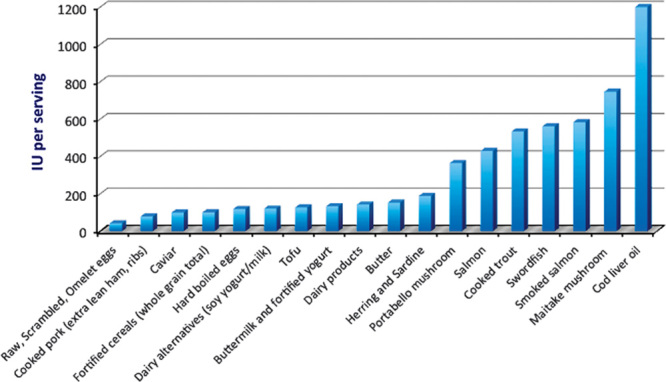
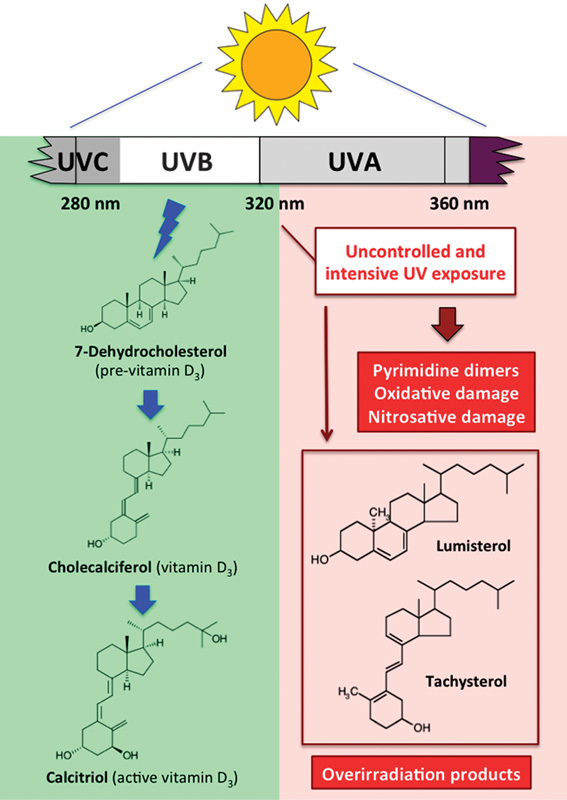
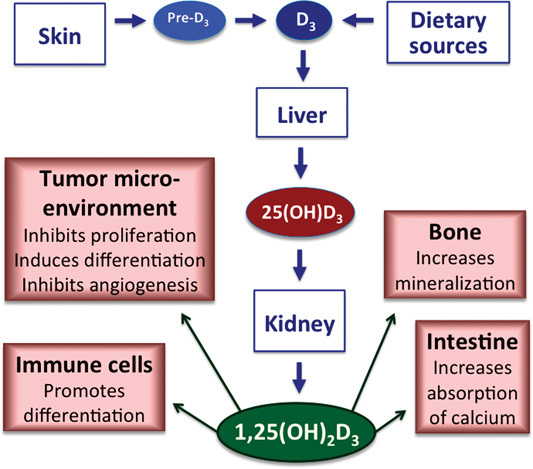
Verification
Claims the paper makes
The claims and statistics of this paper haven’t been checked yet.
Free: it reads the open-access text and checks the first 5 claims that cite a source we can check. Create a free account to check every claim.
Claims other papers make about this one
Each is checked against this paper’s own text: does it say what the citing paper says it does?
The source backs part of the claim, not all of it — or backs it for a different population, condition or comparison.
In the citing paper
“Previously, some studies reported that 1,25(OH)2D3, 20(OH)D3, 20(OH)L3, 22(OH)L3, 24(OH)L3 and 20,22(OH)2L3 inhibited proliferation of a variety of cell types, including normal and immortalized human keratinocytes [45,59,60].”
From Protective Effects of Novel Derivatives of Vitamin D3 and Lumisterol Against UVB-Induced Damage in Human Keratinocytes Involve Activation of Nrf2 and P53 Defense Mechanisms (2019) · cites this paper as [60]
Experimental — accuracy not yet measured
Self-check
Percentages, sums and reported differences re-computed from the paper’s own numbers.
The self-check needs the paper’s full text.
Citations
Cites
Estimates of worldwide burden of cancer in 2008: GLOBOCAN 2008
Ferlay, J., Shin, H., Bray, F., Forman, D., Mathers, C., & Parkin, D. M. (2010) · International Journal of Cancer · doi:10.1002/ijc.25516 · Cited by 21,293
Holick, M. F. (2007) · New England Journal of Medicine · doi:10.1056/nejmra070553 · Cited by 13,720
Holick, M. F., Binkley, N. C., Bischoff-Ferrari, H. A., Gordon, C. M., Hanley, D. A., Heaney, R. P., Murad, M. H., & Weaver, C. M. (2011) · The Journal of Clinical Endocrinology & Metabolism · doi:10.1210/jc.2011-0385 · Cited by 10,538
Ross, A. C., Manson, J. E., Abrams, S. A., Aloia, J. F., Brannon, P. M., Clinton, S. K., Durazo-Arvizu, R. A., Gallagher, J. C., Gallo, R. L., Jones, G., et al. (2011) · The Journal of Clinical Endocrinology & Metabolism · doi:10.1210/jc.2010-2704 · Cited by 4,026
Vitamin D deficiency: a worldwide problem with health consequences
Holick, M. F., & Chen, T. C. (2008) · The American Journal of Clinical Nutrition · doi:10.1093/ajcn/87.4.1080s · Cited by 2,689 · cited 1×
“Reduced levels of vitamin D influence the onset and progression of several diseases such as autoimmune diseases, respiratory infections, diabetes mellitus type 1 and 2, hypertension and cardiovascular diseases, neuromuscular disorders, and cancer (Holick and Chen, 2008).”
BackgroundVitamin D: importance in the prevention of cancers, type 1 diabetes, heart disease, and osteoporosis
Holick, M. F. (2004) · The American Journal of Clinical Nutrition · doi:10.1093/ajcn/79.3.362 · Cited by 1,665
Common genetic determinants of vitamin D insufficiency: a genome-wide association study
Wang, T. J., Zhang, F., Richards, J. B., Kestenbaum, B., van Meurs, J. B., Berry, D., Kiel, D. P., Streeten, E. A., Ohlsson, C., Koller, D. L., et al. (2010) · The Lancet · doi:10.1016/s0140-6736(10)60588-0 · Cited by 1,540
Genetics and biology of vitamin D receptor polymorphisms
Uitterlinden, A. G., Fang, Y., van Meurs, J. B. J., Pols, H. A. P., & van Leeuwen, J. P. T. M. (2004) · Gene · doi:10.1016/j.gene.2004.05.014 · Cited by 1,539
Vitamin D signalling pathways in cancer: potential for anticancer therapeutics
Deeb, K. K., Trump, D. L., & Johnson, C. S. (2007) · Nature Reviews Cancer · doi:10.1038/nrc2196 · Cited by 1,419
SLC24A5, a putative cation exchanger, affects pigmentation in zebrafish and humans
Lamason, R. L., Mohideen, M.-A. P. K., Mest, J. R., Wong, A. C., Norton, H. L., Aros, M. C., Jurynec, M. J., Mao, X., Humphreville, V. R., Humbert, J. E., et al. (2005) · Science · doi:10.1126/science.1116238 · Cited by 1,043 · cited 3×
“The strongest evidence of pigmentation– mutation associations is found in the pigmentary genes MC1R, ASIP, SLC24A5, SLC45A2, TYR, OCA2, and KITLG (Bonilla et al., 2005; Graf et al., 2005; Lamason et al., 2005; Yuasa et al., 2007; Nan et al., 2009; de Gruijter et al., 2011).”
BackgroundValverde, P., Healy, E., Jackson, I., Rees, J. L., & Thody, A. J. (1995) · Nature Genetics · doi:10.1038/ng1195-328 · Cited by 999 · cited 1×
“It regulates the expression of more than 900 genes, among which are genes of cell cycle progression, differentiation, and apoptosis (Valverde et al., 1995; Bonilla et al., 2005; Graf et al., 2005; Lamason et al., 2005).”
BackgroundPludowski, P., Holick, M. F., Pilz, S., Wagner, C. L., Hollis, B. W., Grant, W. B., Shoenfeld, Y., Lerchbaum, E., Llewellyn, D. J., Kienreich, K., et al. (2013) · Autoimmunity Reviews · doi:10.1016/j.autrev.2013.02.004 · Cited by 836
Genome-wide association study of circulating vitamin D levels
Ahn, J., Yu, K., Stolzenberg-Solomon, R., Simon, K. C., McCullough, M. L., Gallicchio, L., Jacobs, E. J., Ascherio, A., Helzlsouer, K., Jacobs, K. B., et al. (2010) · Human Molecular Genetics · doi:10.1093/hmg/ddq155 · Cited by 810
Grant, W. B. (2002) · Cancer · doi:10.1002/cncr.10427 · Cited by 756
Increasing Burden of Melanoma in the United States
Linos, E., Swetter, S. M., Cockburn, M. G., Colditz, G. A., & Clarke, C. A. (2009) · Journal of Investigative Dermatology · doi:10.1038/jid.2008.423 · Cited by 746
Stumpf, W. E., Sar, M., Reid, F. A., Tanaka, Y., & DeLuca, H. F. (1979) · Science · doi:10.1126/science.505004 · Cited by 711
Parkin, D. M., Boyd, L., & Walker, L. C. (2011) · British Journal of Cancer · doi:10.1038/bjc.2011.489 · Cited by 663
Enzymes involved in the activation and inactivation of vitamin D
PROSSER, D., & JONES, G. (2004) · Trends in Biochemical Sciences · doi:10.1016/j.tibs.2004.10.005 · Cited by 658
Melanoma epidemiology and trends
Garbe, C., & Leiter, U. (2009) · Clinics in Dermatology · doi:10.1016/j.clindermatol.2008.09.001 · Cited by 657
Zittermann, A., Iodice, S., Pilz, S., Grant, W. B., Bagnardi, V., & Gandini, S. (2012) · The American Journal of Clinical Nutrition · doi:10.3945/ajcn.111.014779 · Cited by 382 · cited 2×
“Finally, there is evidence that patients with CMM who strictly avoid sun exposure might benefit from 25-OHD supplements that are sufficient to maintain serum levels above 30 ng/ml (Gambichler et al., 2012; Zittermann et al., 2012).”
BackgroundHuman prostate cells synthesize 1,25-dihydroxyvitamin D3 from 25-hydroxyvitamin D3.
Schwartz, G. G., Whitlatch, L. W., Chen, T. C., Lokeshwar, B. L., & Holick, M. F. (1998) · PubMed · Cited by 365
Newton, J. M., Cohen-Barak, O., Hagiwara, N., Gardner, J. M., Davisson, M. T., King, R. A., & Brilliant, M. H. (2001) · The American Journal of Human Genetics · doi:10.1086/324340 · Cited by 355 · cited 2×
“Human mutations in this gene can cause oculocutaneous albinism type 4 (Newton et al., 2001).”
BackgroundNewton-Bishop, J. A., Beswick, S., Randerson-Moor, J., Chang, Y.-M., Affleck, P., Elliott, F., Chan, M., Leake, S., Karpavicius, B., Haynes, S., et al. (2009) · Journal of Clinical Oncology · doi:10.1200/jco.2009.22.1135 · Cited by 295 · cited 1×
“In other studies, deeper Breslow thickness or higher stage was associated with lower serum vitamin D or both (Newton-Bishop et al., 2009; Nürnberg et al., 2009; Gambichler et al., 2012).”
BackgroundPálmer, H. G., Larriba, M. J., García, J. M., Ordóñez-Morán, P., Peña, C., Peiró, S., Puig, I., Rodríguez, R., de la Fuente, R., Bernad, A., et al. (2004) · Nature Medicine · doi:10.1038/nm1095 · Cited by 286
Modulation of the Vitamin D3 Response by Cancer-Associated Mutant p53
Stambolsky, P., Tabach, Y., Fontemaggi, G., Weisz, L., Maor-Aloni, R., Sigfried, Z., Shiff, I., Kogan, I., Shay, M., Kalo, E., et al. (2010) · Cancer Cell · doi:10.1016/j.ccr.2009.11.025 · Cited by 245 · cited 1×
“Stambolsky et al. (2010) reported that mutp53 can interact functionally and physically with VDR. Mutp53 is recruited into VDR-regulated genes, augmenting the transactivation of some genes or decreasing the expression of others.”
BackgroundWu, X.-C., Eide, M. J., King, J., Saraiya, M., Huang, Y., Wiggins, C., Barnholtz-Sloan, J. S., Martin, N., Cokkinides, V., Miller, J., et al. (2011) · Journal of the American Academy of Dermatology · doi:10.1016/j.jaad.2011.05.034 · Cited by 242
UV Damage and DNA Repair in Malignant Melanoma and Nonmelanoma Skin Cancer
Rass, K., & Reichrath, J. (2009) · Advances in Experimental Medicine and Biology · doi:10.1007/978-0-387-77574-6_13 · Cited by 221
13th Workshop consensus for vitamin D nutritional guidelines
Norman, A. W., Bouillon, R., Whiting, S. J., Vieth, R., & Lips, P. (2007) · The Journal of Steroid Biochemistry and Molecular Biology · doi:10.1016/j.jsbmb.2006.12.071 · Cited by 221
Graf, J., Hodgson, R., & van Daal, A. (2005) · Human Mutation · doi:10.1002/humu.20143 · Cited by 221
Epidemiological Support for an Hypothesis for Melanoma Induction Indicating a Role for UVA Radiation
Moan, J., Dahlback, A., & Setlow, R. B. (1999) · Photochemistry and Photobiology · doi:10.1111/j.1751-1097.1999.tb07995.x · Cited by 215
Genetic variants in pigmentation genes, pigmentary phenotypes, and risk of skin cancer in Caucasians
Nan, H., Kraft, P., Hunter, D. J., & Han, J. (2009) · International Journal of Cancer · doi:10.1002/ijc.24327 · Cited by 205
Evolution and Function of Vitamin D
Holick, M. F. (2003) · Recent Results in Cancer Research · doi:10.1007/978-3-642-55580-0_1 · Cited by 203
Nejentsev, S., Godfrey, L., Snook, H., Rance, H., Nutland, S., Walker, N. M., Lam, A. C., Guja, C., Ionescu-Tirgoviste, C., Undlien, D. E., et al. (2004) · Human Molecular Genetics · doi:10.1093/hmg/ddh169 · Cited by 190
Gupta, R., Dixon, K. M., Deo, S. S., Holliday, C. J., Slater, M., Halliday, G. M., Reeve, V. E., & Mason, R. S. (2006) · Journal of Investigative Dermatology · doi:10.1038/sj.jid.5700597 · Cited by 164
Rigel, D. S. (2010) · Seminars in Cutaneous Medicine and Surgery · doi:10.1016/j.sder.2010.10.005 · Cited by 159
Parkin, D. M. (2011) · British Journal of Cancer · doi:10.1038/bjc.2011.474 · Cited by 156
Garland, C. F., Garland, F. C., & Gorham, E. D. (2003) · Annals of Epidemiology · doi:10.1016/s1047-2797(02)00461-1 · Cited by 140 · cited 1×
“Another study showed no direct relationship between high or low levels of vitamin D and the occurrence and severity of melanoma (Garland et al., 2003).”
BackgroundDooley, C. M., Schwarz, H., Mueller, K. P., Mongera, A., Konantz, M., Neuhauss, S. C. F., Nüsslein‐Volhard, C., & Geisler, R. (2013) · Pigment Cell & Melanoma Research · doi:10.1111/pcmr.12053 · Cited by 140 · cited 2×
“Among these, SLC45A2 serves a major function in the process of melanin synthesis by controlling the activity and traffic of tyrosinase to the melanosomes and maintaining the melanosomal pH (Lucotte et al., 2010; Dooley et al., 2013).”
BackgroundBonilla, C., Boxill, L.-A., Donald, S. A. M., Williams, T., Sylvester, N., Parra, E. J., Dios, S., Norton, H. L., Shriver, M. D., & Kittles, R. A. (2005) · Human Genetics · doi:10.1007/s00439-004-1251-2 · Cited by 138 · cited 3×
“The strongest evidence of pigmentation– mutation associations is found in the pigmentary genes MC1R, ASIP, SLC24A5, SLC45A2, TYR, OCA2, and KITLG (Bonilla et al., 2005; Graf et al., 2005; Lamason et al., 2005; Yuasa et al., 2007; Nan et al., 2009; de Gruijter et al., 2011).”
BackgroundTang, J. Y., Fu, T., LeBlanc, E., Manson, J. E., Feldman, D., Linos, E., Vitolins, M. Z., Zeitouni, N. C., Larson, J., & Stefanick, M. L. (2011) · Journal of Clinical Oncology · doi:10.1200/jco.2011.34.5967 · Cited by 117 · cited 1×
“Tang et al. (2011) found that daily supplementation with 1000 mg of calcium and 400 IU of vitamin D did not reduce the overall incidence of NMSC or melanoma in a large randomized double-blinded placebo-controlled trial.”
BackgroundUltraviolet Radiation and Malignant Melanoma
Moan, J. E., Porojnicu, A. C., & Dahlback, A. (2009) · Advances in experimental medicine and biology · doi:10.1007/978-0-387-77574-6_9 · Cited by 116
Maruyama, R., Aoki, F., Toyota, M., Sasaki, Y., Akashi, H., Mita, H., Suzuki, H., Akino, K., Ohe-Toyota, M., Maruyama, Y., et al. (2006) · Cancer Research · doi:10.1158/0008-5472.can-05-2562 · Cited by 115
Reduced serum 25-hydroxyvitamin D levels in stage IV melanoma patients.
Nürnberg, B., Gräber, S., Gärtner, B. C., Geisel, J., Pföhler, C., Schadendorf, D., Tilgen, W., & Reichrath, J. (2009) · PubMed · Cited by 108
Spina, C. S., Tangpricha, V., Uskoković, M. R., Adorinic, L., Maehr, H., & Holick, M. F. (2006) · PubMed · Cited by 100
Evans, S. R. T., Nolla, J. M., Hanfelt, J., Shabahang, M. M., Nauta, R. J., & Shchepotin, I. B. (1998) · PubMed · Cited by 92
Rochel, N., Tocchini-Valentini, G. D., Egea, P. F., Juntunen, K., Garnier, J., Vihko, P., & Moras, D. (2001) · European Journal of Biochemistry · doi:10.1046/j.1432-1327.2001.01953.x · Cited by 83
Vitamin D Supplementation: What's Known, What to Do, and What's Needed
Haines, S. T., & Park, S. K. (2012) · Pharmacotherapy: The Journal of Human Pharmacology and Drug Therapy · doi:10.1002/phar.1037 · Cited by 77
Fang, S., Sui, D., Wang, Y., Liu, H., Chiang, Y.-J., Ross, M. I., Gershenwald, J. E., Cormier, J. N., Royal, R. E., Lucci, A., et al. (2016) · Journal of Clinical Oncology · doi:10.1200/jco.2015.64.1357 · Cited by 71 · cited 3×
“In a recent study, Fang et al. (2016) simultaneously examined vitamin D and C-reactive protein levels in a hospital-based cohort of patients with melanoma in relation to demographics, tumor histopathology, disease stage, and clinical outcome measures.”
BackgroundInfluentialWeinstein, S. J., Purdue, M. P., Smith‐Warner, S. A., Mondul, A. M., Black, A., Ahn, J., Huang, W., Horst, R. L., Kopp, W., Rager, H., et al. (2015) · International Journal of Cancer · doi:10.1002/ijc.29157 · Cited by 70
Vitamin D metabolism in mammary gland and breast cancer
Welsh, J. (2011) · Molecular and Cellular Endocrinology · doi:10.1016/j.mce.2011.05.020 · Cited by 66
Casula, M., Muggiano, A., Cossu, A., Budroni, M., Caracò, C., Ascierto, P. A., Pagani, E., Stanganelli, I., Canzanella, S., Sini, M. C., et al. (2009) · BMC Cancer · doi:10.1186/1471-2407-9-352 · Cited by 55
Self-citationMeta-analysis of Vitamin D–Binding Protein and Cancer Risk
Tagliabue, E., Raimondi, S., & Gandini, S. (2015) · Cancer Epidemiology Biomarkers & Prevention · doi:10.1158/1055-9965.epi-15-0262 · Cited by 55
Vinceti, M., Malagoli, C., Fiorentini, C., Longo, C., Crespi, C. M., Albertini, G., Ricci, C., Lanzoni, A., Reggiani, M., Virgili, A., et al. (2011) · Nutrition and Cancer · doi:10.1080/01635581.2011.539314 · Cited by 52
Zhao, X., Yang, B., Yu, G.-H., Liu, S.-Z., & Yuan, Z. (2014) · Archives of Dermatological Research · doi:10.1007/s00403-014-1464-8 · Cited by 38
Colombino, M., Lissia, A., Franco, R., Botti, G., Ascierto, P. A., Manca, A., Sini, M. C., Pisano, M., Paliogiannis, P., Tanda, F., et al. (2013) · Dermatology · doi:10.1159/000350683 · Cited by 36
Self-citationBsmI polymorphism of vitamin D receptor gene and cancer risk: A comprehensive meta-analysis
Raimondi, S., Pasquali, E., Gnagnarella, P., Serrano, D., Disalvatore, D., Johansson, H. A., & Gandini, S. (2014) · Mutation research. Fundamental and molecular mechanisms of mutagenesis · doi:10.1016/j.mrfmmm.2014.06.001 · Cited by 35
Pre-Diagnostic Circulating Vitamin D and Risk of Melanoma in Men
Major, J. M., Kiruthu, C., Weinstein, S. J., Horst, R. L., Snyder, K., Virtamo, J., & Albanes, D. (2012) · PLoS ONE · doi:10.1371/journal.pone.0035112 · Cited by 35 · cited 2×
“The risk could also be modified by the individual’s ability to utilize the circulating vitamin D. Major et al. (2012) carried out the first prospective study evaluating the relationship between prediagnostic serum vitamin D concentrations and subsequent melanoma risk.”
BackgroundResultEpidemiology and genetic susceptibility of malignant melanoma in North Sardinia, Italy
Cossu, A., Casula, M., Cesaraccio, R., Lissia, A., Colombino, M., Sini, M. C., Budroni, M., Tanda, F., Paliogiannis, P., & Palmieri, G. (2016) · European Journal of Cancer Prevention · doi:10.1097/cej.0000000000000223 · Cited by 32
Self-citationLópez, S., García, O., Yurrebaso, I., Flores, C., Acosta‐Herrera, M., Chen, H., Gardeazábal, J., Careaga, J. M., Boyano, M. D., Sánchez, A., et al. (2014) · PLoS ONE · doi:10.1371/journal.pone.0104367 · Cited by 28
Distribution of Two Asian-Related Coding SNPs in the MC1R and OCA2 Genes
Yuasa, I., Umetsu, K., Harihara, S., Kido, A., Miyoshi, A., Saitou, N., Dashnyam, B., Jin, F., Lucotte, G., Chattopadhyay, P. K., et al. (2007) · Biochemical Genetics · doi:10.1007/s10528-007-9095-9 · Cited by 28 · cited 2×
“The strongest evidence of pigmentation– mutation associations is found in the pigmentary genes MC1R, ASIP, SLC24A5, SLC45A2, TYR, OCA2, and KITLG (Bonilla et al., 2005; Graf et al., 2005; Lamason et al., 2005; Yuasa et al., 2007; Nan et al., 2009; de Gruijter et al., 2011).”
BackgroundDiscrepant alterations in main candidate genes among multiple primary melanomas
Colombino, M., Sini, M. C., Lissia, A., GIORGI, V. D., Stanganelli, I., Ayala, F., Massi, D., Rubino, C., Manca, A., Paliogiannis, P., et al. (2014) · Journal of Translational Medicine · doi:10.1186/1479-5876-12-117 · Cited by 28
Self-citationReichrath, J., & Reichrath, S. (2012) · PubMed · doi:10.3109/00365513.2012.682876 · Cited by 27
Peña-Chilet, M., Ibarrola‐Villava, M., Martín‐González, M., Rodríguez, M. F., Gómez‐Fernández, C., Planelles, D., Carretero, G., Lluch, A. M., Nagore, E., & Ribas, G. (2013) · PLoS ONE · doi:10.1371/journal.pone.0059607 · Cited by 26
Hou, W., Wan, X., & Fan, J. (2015) · BMC Genetics · doi:10.1186/s12863-015-0163-6 · Cited by 24
Sequential development of eczematous type “multiple drug allergy” to unrelated drugs
Özkaya, E., & Yazganoğlu, K. D. (2011) · Journal of the American Academy of Dermatology · doi:10.1016/j.jaad.2010.12.028 · Cited by 24
Sunnier European countries have lower melanoma mortality
Shipman, A. R., Clark, A., & Levell, N. J. (2011) · Clinical and Experimental Dermatology · doi:10.1111/j.1365-2230.2011.04024.x · Cited by 22
de Gruijter, J. M., Lao, Ó., Vermeulen, M., Xue, Y., Woodwark, C., Gillson, C., Coffey, A. J., Ayub, Q., Mehdi, S. Q., Kayser, M., et al. (2011) · Investigative Genetics · doi:10.1186/2041-2223-2-24 · Cited by 22
Lucotte, G., Mercier, G., Diéterlen, F., & Yuasa, I. (2010) · Biochemical Genetics · doi:10.1007/s10528-009-9289-4 · Cited by 18
North-South gradients of melanomas and non-melanomas: A role of vitamin D?
Moan, J. E., Grigalavicius, M., Baturaite, Z., Juzeniene, A., & Dahlback, A. (2013) · Dermato-Endocrinology · doi:10.4161/derm.23791 · Cited by 11
Vitamin D and overall mortality
Guerrieri‐Gonzaga, A., & Gandini, S. (2012) · Pigment Cell & Melanoma Research · doi:10.1111/pcmr.12036 · Cited by 11
Significantly Decreased Methylthioadenosine Phosphorylase Expression in Malignant Melanoma
Gambichler, T., Scola, N., & Bechara, F. G. (2012) · American Journal of Dermatopathology · doi:10.1097/dad.0b013e31823625eb · Cited by 2
Cited by
Exploring vitamin D signalling within skin cancer
Vishlaghi, N., & Lisse, T. S. (2020) · Clinical Endocrinology · doi:10.1111/cen.14150 · Cited by 203
Chaiprasongsuk, A., Janjetovic, Z., Kim, T.-K., Jarrett, S. G., D'Orazio, J. A., Holick, M. F., Tang, E. K. Y., Tuckey, R. C., Panich, U., Li, W., et al. (2019) · Redox Biology · doi:10.1016/j.redox.2019.101206 · Cited by 146
Vitamin D Status and the Host Resistance to Infections: What It Is Currently (Not) Understood
Lang, P. O., & Aspinall, R. (2017) · Clinical Therapeutics · doi:10.1016/j.clinthera.2017.04.004 · Cited by 91
Vitamin D Receptor Polymorphism and Cancer: An Update
Rai, V., Abdo, J., Agrawal, S., & Agrawal, D. K. (2017) · Anticancer Research · doi:10.21873/anticanres.11784 · Cited by 91
The miRNAs Role in Melanoma and in Its Resistance to Therapy
Varrone, F., & Caputo, E. (2020) · International Journal of Molecular Sciences · doi:10.3390/ijms21030878 · Cited by 85
Metadata
- Authors
- Ombra, M. N., Paliogiannis, P., Doneddu, V., Sini, M. C., Colombino, M., Rozzo, C., Stanganelli, I., Tanda, F., Cossu, A., & Palmieri, G.
- Affiliations
- Institute of Food Science (IT)
- University of Sassari (IT)
- National Research Council (IT)
- Istituto Scientifico Romagnolo per lo Studio e la Cura dei Tumori (IT)
- Corresponding author
- Paliogiannis, Panagiotis
- ORCID
- Venue
- European Journal of Cancer Prevention
- Published
- 2017-11
- Volume
- 26
- Issue
- 6
- Pages
- 532-541
- ISSN
- 0959-8278 (ISSN-L)
- PMC
- PMC5627529
- OpenAlex
- W2582163146
- Semantic Scholar
- 8dfe6820707695ed8d06f76b387e8dbd5564d615
- Cited by
- 39
- References
- 72
- Citations by year
- 2025: 3 · 2024: 3 · 2023: 3 · 2022: 5 · 2021: 2 · 2020: 6 · 2019: 10 · 2018: 4 · 2017: 3
- FWCI
- 1.00
- Type
- journal article
- Language
- en
- Open access
- hybrid
- doi.org
- Licence
- Locations
- European Journal of Cancer Prevention (publishedVersion, cc-by-nc-nd)
- Europe PMC (PubMed Central) (publishedVersion, cc-by-nc-nd)
- PubMed Central (publishedVersion, cc-by-nc-nd)
- PubMed (publishedVersion)
- UnissResearch (Università degli Studi di Sassari) (submittedVersion)
- Topics
- Health Sciences › Medicine › Endocrinology, Diabetes and Metabolism › Vitamin D Research Studies
- Health Sciences › Medicine › Oncology › Cutaneous Melanoma Detection and Management
- Health Sciences › Medicine › Dermatology › Skin Protection and Aging
- Keywords
- vitamin D status, cutaneous melanoma, ultraviolet radiation, sun exposure, sunburn, sun protection, cancer prevention, antiproliferative activity, melanoma risk factors
- MeSH terms
- Cutaneous Malignant Melanoma, Humans, Melanoma, Risk Factors, Skin Neoplasms, Sunlight, Ultraviolet Rays, Vitamin D, Receptors, Calcitriol
About these checks
Registry, retraction, Cites and statistics results are computed, not judged, with one exception: a printed reference that no index lists is read once by a model before it counts as a citation error. Claims are extracted by a model and kept only when their quote appears verbatim in the text; each cited source is then checked, with a model’s help, for whether it says what the claim relies on. Those verdicts can be wrong — read the claim’s quote and the cited source before relying on one.
Statistics and arithmetic are recomputed, not judged.
Confidence bands are shown only for fields calibrated on our annotated test set. None is calibrated yet, so no band is shown.
What counts as a claim ›How we measure confidence ›How we check this ›
Are you an author, or do you see a problem with this page? Request a review
Data sources
Bibliographic data: Semantic Scholar, OpenAlex, Crossref.
Contains information from the Semantic Scholar Academic Graph Datasets, made available under the ODC Attribution License (ODC-BY 1.0).
Semantic Scholar’s data is described in: Kinney, R., et al. (2023). The Semantic Scholar Open Data Platform. arXiv:2301.10140.
