

Gut hormones in microbiota-gut-brain cross-talk
Open accessThe DOI matches its Crossref record; 63 of the 63 references it cites were found in a registry or an index.
Abstract
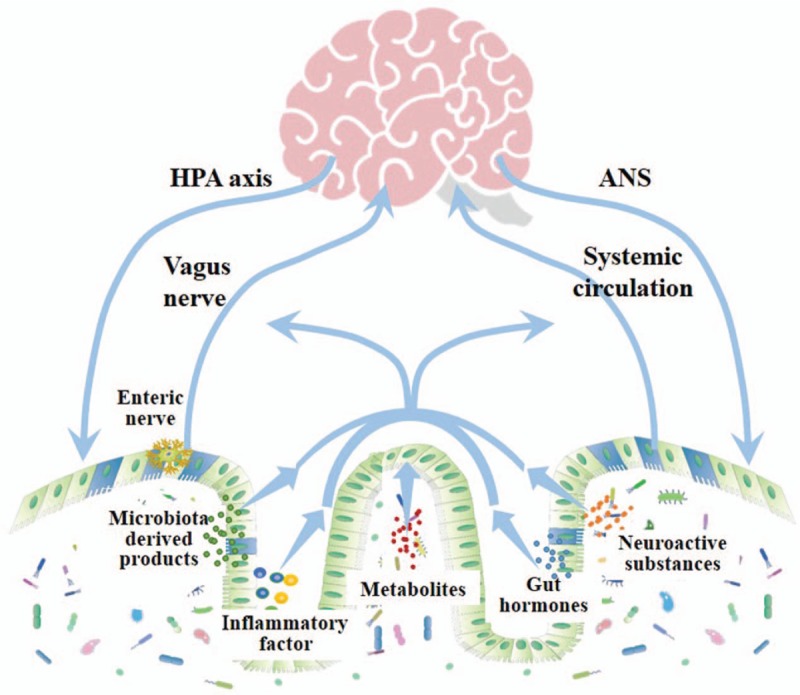
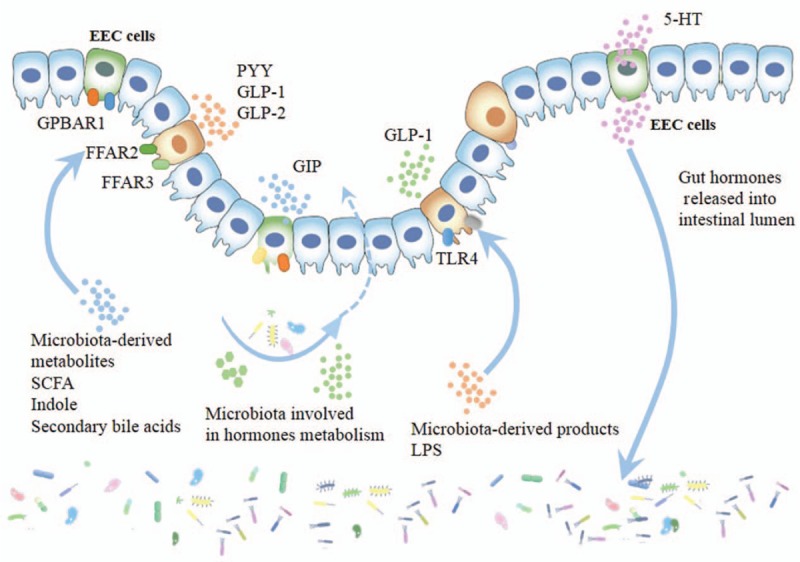
The homeostasis of the gut-brain axis has been shown to exert several effects on physiological and psychological health. The gut hormones released by enteroendocrine cells scattered throughout the gastrointestinal tract are important signaling molecules within the gut-brain axis. The interaction between gut microbiota and gut hormones has been greatly appreciated in gut-brain cross-talk. The microbiota plays an essential role in modulating many gut-brain axis-related diseases, ranging from gastrointestinal disorders to psychiatric diseases. Similarly, gut hormones also play pleiotropic and important roles in maintaining health, and are key signals involved in gut-brain axis. More importantly, gut microbiota can affect the release and functions of gut hormones. This review highlights the role of gut microbiota in the gut-brain axis and focuses on how microbiota-related gut hormones modulate various physiological functions. Future studies could target the microbiota-hormones-gut brain axis to develop novel therapeutics for different psychiatric and gastrointestinal disorders, such as obesity, anxiety, and depression.
Overview
The claims and statistics of this paper haven’t been checked yet.
Free: it reads the open-access text and checks the first 5 claims that cite a source we can check. Create a free account to check every claim.
Integrity signals
Registry
Cites
Statistics
Figures
Verification
Claims the paper makes
The claims and statistics of this paper haven’t been checked yet.
Free: it reads the open-access text and checks the first 5 claims that cite a source we can check. Create a free account to check every claim.
Claims other papers make about this one
Each is checked against this paper’s own text: does it say what the citing paper says it does?
The cited source says what the claim attributes to it.
In the citing paper
“It is also already known the important physiological role of gut microbiota in the metabolic homeostasis, hormones secretion, and brain function of the host [118–121].”
From NAD+ Precursors Nicotinamide Mononucleotide (NMN) and Nicotinamide Riboside (NR): Potential Dietary Contribution to Health (2023) · cites this paper as [119]
Self-check
Percentages, sums and reported differences re-computed from the paper’s own numbers.
The self-check needs the paper’s full text.
Citations
Cites
The Microbial Metabolites, Short-Chain Fatty Acids, Regulate Colonic T reg Cell Homeostasis
Smith, P. M., Howitt, M. R., Panikov, N., Michaud, M., Gallini, C. A., Bohlooly-Y, M., Glickman, J. N., & Garrett, W. S. (2013) · Science · doi:10.1126/science.1241165 · Cited by 5,413 · cited 1×
“It has been reported that SCFAs could play roles in glucose homeostasis, reduction of food intake, and modulation of lymphocyte function([13,14]) either through G-protein-coupled receptors (GPCRs) or acting as epigenetic modulators of histone deacetylases.”
BackgroundCryan, J. F., O'Riordan, K. J., Cowan, C. S. M., Sandhu, K. V., Bastiaanssen, T. F. S., Boehme, M., Codagnone, M. G., Cussotto, S., Fulling, C., Golubeva, A. V., et al. (2019) · Physiological Reviews · doi:10.1152/physrev.00018.2018 · Cited by 5,286 · cited 1×
“Current evidence indicates that the gut modulates CNS functions primarily through the immune system and neuroimmune mechanisms, neurotransmitters, and ANS, which usually involves the vagus nerve, enteric nervous system, enteroendocrine signaling, and metabolites originating from the gut microbiota.([9]) For example, t…”
BackgroundA role for ghrelin in the central regulation of feeding
Nakazato, M., Murakami, N., Date, Y., Kojima, M., Matsuo, H., Kangawa, K., & Matsukura, S. (2001) · Nature · doi:10.1038/35051587 · Cited by 3,443 · cited 1×
“Ghrelin binds to the growth hormone secretagogue receptor 1a isoform (GHS-R1a) and plays various roles in food intake and memory regulation.([33]) Our previous study in obese patients included 30 individuals who underwent laparoscopic sleeve gastrectomy (LSG).”
BackgroundZelante, T., Iannitti, R. G., Cunha, C., De Luca, A., Giovannini, G., Pieraccini, G., Zecchi, R., D’Angelo, C., Massi-Benedetti, C., Fallarino, F., et al. (2013) · Immunity · doi:10.1016/j.immuni.2013.08.003 · Cited by 2,614 · cited 1×
“These indole compounds have been found to activate the aryl hydrocarbon receptor (AHR), and play extensive roles in the cell cycle, mucosal barrier, and immune regulation.([20,21]) Some species (Lactobacillus reuteri, Lactobacillus johnsonii, and Lactobacillus murinus) have been identified to provide indole derivative…”
BackgroundTolhurst, G., Heffron, H., Lam, Y. S., Parker, H. E., Habib, A. M., Diakogiannaki, E., Cameron, J., Grosse, J., Reimann, F., & Gribble, F. M. (2012) · Diabetes · doi:10.2337/db11-1019 · Cited by 2,404
Gut hormone PYY3-36 physiologically inhibits food intake
Batterham, R. L., Cowley, M. A., Small, C. J., Herzog, H., Cohen, M. A., Dakin, C. L., Wren, A. M., Brynes, A. E., Low, M. J., Ghatei, M. A., et al. (2002) · Nature · doi:10.1038/nature00887 · Cited by 2,351
Zheng, P., Zeng, B., Zhou, C., Liu, M., Fang, Z., Xu, X., Zeng, L., Chen, J., Fan, S., Du, X., et al. (2016) · Molecular Psychiatry · doi:10.1038/mp.2016.44 · Cited by 2,023 · cited 1×
“GF mice received fecal microbiota transplantation (FMT) showed the similar phenotypes as the “donors,” for examples, FMT of GF mice with microbiota frommajor depressive disorders patients results in increased depression-like behaviors.([11]) Colonization with the microbiota from patients with schizophrenia induces sch…”
BackgroundInteractions between the microbiota, immune and nervous systems in health and disease
Fung, T. C., Olson, C. A., & Hsiao, E. Y. (2017) · Nature Neuroscience · doi:10.1038/nn.4476 · Cited by 1,900 · cited 1×
“827 and Parkinson’s disease.([10]) GF mice received fecal microbiota transplantation (FMT) showed the similar phenotypes as the “donors,” for examples, FMT of GF mice with microbiota frommajor depressive disorders patients results in increased depression-like behaviors.”
BackgroundThe short-chain fatty acid acetate reduces appetite via a central homeostatic mechanism
Frost, G., Sleeth, M. L., Sahuri-Arisoylu, M., Lizarbe, B., Cerdan, S., Brody, L., Anastasovska, J., Ghourab, S., Hankir, M., Zhang, S., et al. (2014) · Nature Communications · doi:10.1038/ncomms4611 · Cited by 1,771 · cited 1×
“Acetate has been implied to play a direct role in the central appetite regulation,([18]) however, a study has shown that acetate produced by gut microbes could stimulate the parasympathetic nervous system and secretion of ghrelin, thereby increasing food intake.”
BackgroundKimura, I., Ozawa, K., Inoue, D., Imamura, T., Kimura, K., Maeda, T., Terasawa, K., Kashihara, D., Hirano, K., Tani, T., et al. (2013) · Nature Communications · doi:10.1038/ncomms2852 · Cited by 1,512 · cited 1×
“GPR43 was expressed in white adipose tissue, which allows SCFAs act as hormonal molecules and stimulate energy expenditure in the skeletal muscles and liver.([17]) More importantly, the effects of different SCFAs on the host physiology are distinct and the results are inconsistent.”
Background
Cited by
Gut Bacteria and Neurotransmitters
Dicks, L. M. T. (2022) · Microorganisms · doi:10.3390/microorganisms10091838 · Cited by 482
“Signals generated by the hypothalamus reach the pituitary and adrenal glands and communicate with EECs via the hypothalamic pituitary adrenal axis (HPA) [9].”
BackgroundInfluentialDiet and the Microbiota–Gut–Brain Axis: Sowing the Seeds of Good Mental Health
Berding, K., Vlckova, K., Marx, W., Schellekens, H., Stanton, C., Clarke, G., Jacka, F., Dinan, T. G., & Cryan, J. F. (2021) · Advances in Nutrition · doi:10.1093/advances/nmaa181 · Cited by 451
Gut liver brain axis in diseases: the implications for therapeutic interventions
Yan, M., Man, S., Sun, B., Ma, L., Guo, L., Huang, L., & Gao, W. (2023) · Signal Transduction and Targeted Therapy · doi:10.1038/s41392-023-01673-4 · Cited by 287
“218,219 5-HT represents one of the most distinctive gut hormones and is generated by enterochromaf fi n cells.”
BackgroundInfluentialThe gut microbiome in Alzheimer’s disease: what we know and what remains to be explored
Chandra, S., Sisodia, S. S., & Vassar, R. J. (2023) · Molecular Neurodegeneration · doi:10.1186/s13024-023-00595-7 · Cited by 278
“For example, differences in GMB-hormone interactions [28, 29] as well as differences in immune response between sexes [30] might be responsible.”
BackgroundChakrabarti, A., Geurts, L., Hoyles, L., Iozzo, P., Kraneveld, A. D., La Fata, G., Miani, M., Patterson, E., Pot, B., Shortt, C., et al. (2022) · Cellular and Molecular Life Sciences · doi:10.1007/s00018-021-04060-w · Cited by 237
“Recent studies suggest that gut hormones are involved in the physiological processes that lead to disorders such as anxiety and depression—with indications that mood disorders and obesity often co-exist [35].”
Background
Metadata
- Authors
- Sun, L.-J., Li, J.-N., & Nie, Y.-Z.
- Affiliations
- State Key Laboratory of Cancer Biology, National Clinical Research Center for Digestive Diseases and Xijing Hospital of Digestive Diseases, The Fourth Military Medical University, Xi’an, Shaanxi 710032, China
- Department of Gastroenterology, Chinese Academy of Medical Sciences, Peking Union Medical College Hospital, Beijing 100730, China.
- Venue
- Chinese Medical Journal
- Published
- 2020-03-02
- Volume
- 133
- Issue
- 7
- Pages
- 826-833
- ISSN
- 0366-6999 (ISSN-L)
- 2542-5641
- PMC
- PMC7147657
- OpenAlex
- W3012468462
- Semantic Scholar
- ddf0f8df7797419d80bced352f449901a2e7dc28
- Cited by
- 145
- References
- 63
- Citations by year
- 2026: 17 · 2025: 38 · 2024: 31 · 2023: 22 · 2022: 19 · 2021: 8 · 2020: 9
- FWCI
- 1.39
- Type
- journal article
- Language
- en
- Open access
- gold
- doi.org
- Licence
- Locations
- Chinese Medical Journal (publishedVersion, cc-by-nc-nd)
- PubMed Central (publishedVersion, cc-by-nc-nd)
- PubMed (publishedVersion)
- DOAJ (DOAJ: Directory of Open Access Journals) (submittedVersion, cc-by-sa)
- Topics
- Life Sciences › Biochemistry, Genetics and Molecular Biology › Molecular Biology › Gut microbiota and health
- Health Sciences › Medicine › Gastroenterology › Gastrointestinal motility and disorders
- Life Sciences › Neuroscience › Endocrine and Autonomic Systems › Regulation of Appetite and Obesity
- Keywords
- gastrointestinal hormones, gut microbiota, gut-brain axis, enteroendocrine cells, mental illness, gastrointestinal diseases, obesity, anxiety, depression
- MeSH terms
- Gastrointestinal Microbiome, Animals, Anxiety, Appetite, Depression, Humans, Gastrointestinal Tract, Microbiota
About these checks
Registry, retraction, Cites and statistics results are computed, not judged, with one exception: a printed reference that no index lists is read once by a model before it counts as a citation error. Claims are extracted by a model and kept only when their quote appears verbatim in the text; each cited source is then checked, with a model’s help, for whether it says what the claim relies on. Those verdicts can be wrong — read the claim’s quote and the cited source before relying on one.
Statistics and arithmetic are recomputed, not judged.
Confidence bands are shown only for fields calibrated on our annotated test set. None is calibrated yet, so no band is shown.
What counts as a claim ›How we measure confidence ›How we check this ›
Are you an author, or do you see a problem with this page? Request a review
Data sources
Bibliographic data: Semantic Scholar, OpenAlex, Crossref.
Contains information from the Semantic Scholar Academic Graph Datasets, made available under the ODC Attribution License (ODC-BY 1.0).
Semantic Scholar’s data is described in: Kinney, R., et al. (2023). The Semantic Scholar Open Data Platform. arXiv:2301.10140.
