

Gut hormones in microbiota-gut-brain cross-talk
Open accessThe DOI matches its Crossref record; 63 of the 63 references it cites were found in a registry or an index.
Abstract
The homeostasis of the gut-brain axis has been shown to exert several effects on physiological and psychological health. The gut hormones released by enteroendocrine cells scattered throughout the gastrointestinal tract are important signaling molecules within the gut-brain axis. The interaction between gut microbiota and gut hormones has been greatly appreciated in gut-brain cross-talk. The microbiota plays an essential role in modulating many gut-brain axis-related diseases, ranging from gastrointestinal disorders to psychiatric diseases. Similarly, gut hormones also play pleiotropic and important roles in maintaining health, and are key signals involved in gut-brain axis. More importantly, gut microbiota can affect the release and functions of gut hormones. This review highlights the role of gut microbiota in the gut-brain axis and focuses on how microbiota-related gut hormones modulate various physiological functions. Future studies could target the microbiota-hormones-gut brain axis to develop novel therapeutics for different psychiatric and gastrointestinal disorders, such as obesity, anxiety, and depression.
Overview
The claims and statistics of this paper haven’t been checked yet.
Free: it reads the open-access text and checks the first 5 claims that cite a source we can check. Create a free account to check every claim.
Integrity signals
Registry
Cites
Statistics
Figures
Verification
Claims the paper makes
The claims and statistics of this paper haven’t been checked yet.
Free: it reads the open-access text and checks the first 5 claims that cite a source we can check. Create a free account to check every claim.
Claims other papers make about this one
Each is checked against this paper’s own text: does it say what the citing paper says it does?
The cited source says what the claim attributes to it.
In the citing paper
“It is also already known the important physiological role of gut microbiota in the metabolic homeostasis, hormones secretion, and brain function of the host [118–121].”
From NAD+ Precursors Nicotinamide Mononucleotide (NMN) and Nicotinamide Riboside (NR): Potential Dietary Contribution to Health (2023) · cites this paper as [119]
Self-check
Percentages, sums and reported differences re-computed from the paper’s own numbers.
The self-check needs the paper’s full text.
Citations
Cites
The Microbial Metabolites, Short-Chain Fatty Acids, Regulate Colonic T reg Cell Homeostasis
Smith, P. M., Howitt, M. R., Panikov, N., Michaud, M., Gallini, C. A., Bohlooly-Y, M., Glickman, J. N., & Garrett, W. S. (2013) · Science · doi:10.1126/science.1241165 · Cited by 5,413 · cited 1×
“It has been reported that SCFAs could play roles in glucose homeostasis, reduction of food intake, and modulation of lymphocyte function([13,14]) either through G-protein-coupled receptors (GPCRs) or acting as epigenetic modulators of histone deacetylases.”
BackgroundCryan, J. F., O'Riordan, K. J., Cowan, C. S. M., Sandhu, K. V., Bastiaanssen, T. F. S., Boehme, M., Codagnone, M. G., Cussotto, S., Fulling, C., Golubeva, A. V., et al. (2019) · Physiological Reviews · doi:10.1152/physrev.00018.2018 · Cited by 5,286 · cited 1×
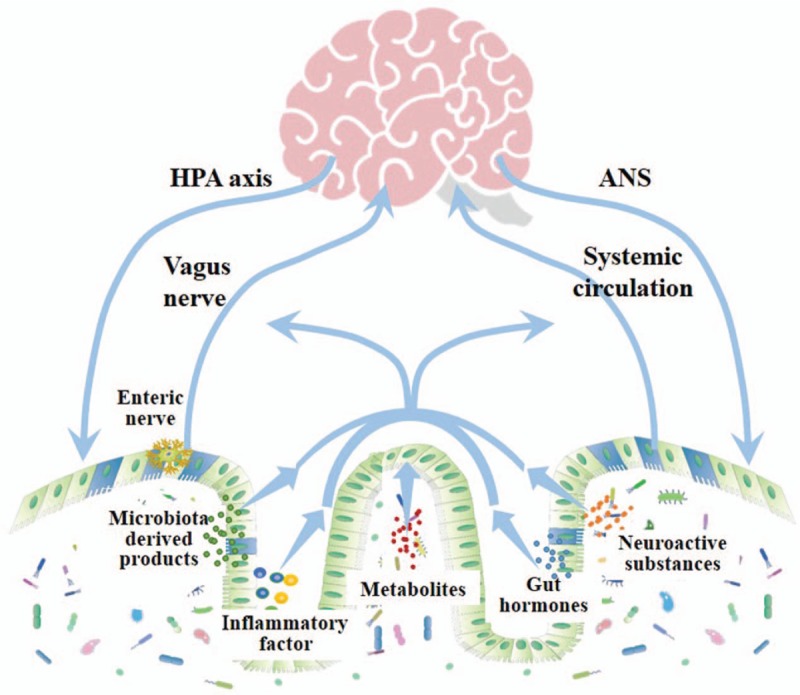
“Current evidence indicates that the gut modulates CNS functions primarily through the immune system and neuroimmune mechanisms, neurotransmitters, and ANS, which usually involves the vagus nerve, enteric nervous system, enteroendocrine signaling, and metabolites originating from the gut microbiota.([9]) For example, t…”
BackgroundA role for ghrelin in the central regulation of feeding
Nakazato, M., Murakami, N., Date, Y., Kojima, M., Matsuo, H., Kangawa, K., & Matsukura, S. (2001) · Nature · doi:10.1038/35051587 · Cited by 3,443 · cited 1×
“Ghrelin binds to the growth hormone secretagogue receptor 1a isoform (GHS-R1a) and plays various roles in food intake and memory regulation.([33]) Our previous study in obese patients included 30 individuals who underwent laparoscopic sleeve gastrectomy (LSG).”
BackgroundZelante, T., Iannitti, R. G., Cunha, C., De Luca, A., Giovannini, G., Pieraccini, G., Zecchi, R., D’Angelo, C., Massi-Benedetti, C., Fallarino, F., et al. (2013) · Immunity · doi:10.1016/j.immuni.2013.08.003 · Cited by 2,614 · cited 1×
“These indole compounds have been found to activate the aryl hydrocarbon receptor (AHR), and play extensive roles in the cell cycle, mucosal barrier, and immune regulation.([20,21]) Some species (Lactobacillus reuteri, Lactobacillus johnsonii, and Lactobacillus murinus) have been identified to provide indole derivative…”
BackgroundTolhurst, G., Heffron, H., Lam, Y. S., Parker, H. E., Habib, A. M., Diakogiannaki, E., Cameron, J., Grosse, J., Reimann, F., & Gribble, F. M. (2012) · Diabetes · doi:10.2337/db11-1019 · Cited by 2,404
Gut hormone PYY3-36 physiologically inhibits food intake
Batterham, R. L., Cowley, M. A., Small, C. J., Herzog, H., Cohen, M. A., Dakin, C. L., Wren, A. M., Brynes, A. E., Low, M. J., Ghatei, M. A., et al. (2002) · Nature · doi:10.1038/nature00887 · Cited by 2,351
Zheng, P., Zeng, B., Zhou, C., Liu, M., Fang, Z., Xu, X., Zeng, L., Chen, J., Fan, S., Du, X., et al. (2016) · Molecular Psychiatry · doi:10.1038/mp.2016.44 · Cited by 2,023 · cited 1×
“GF mice received fecal microbiota transplantation (FMT) showed the similar phenotypes as the “donors,” for examples, FMT of GF mice with microbiota frommajor depressive disorders patients results in increased depression-like behaviors.([11]) Colonization with the microbiota from patients with schizophrenia induces sch…”
BackgroundInteractions between the microbiota, immune and nervous systems in health and disease
Fung, T. C., Olson, C. A., & Hsiao, E. Y. (2017) · Nature Neuroscience · doi:10.1038/nn.4476 · Cited by 1,900 · cited 1×
“827 and Parkinson’s disease.([10]) GF mice received fecal microbiota transplantation (FMT) showed the similar phenotypes as the “donors,” for examples, FMT of GF mice with microbiota frommajor depressive disorders patients results in increased depression-like behaviors.”
BackgroundThe short-chain fatty acid acetate reduces appetite via a central homeostatic mechanism
Frost, G., Sleeth, M. L., Sahuri-Arisoylu, M., Lizarbe, B., Cerdan, S., Brody, L., Anastasovska, J., Ghourab, S., Hankir, M., Zhang, S., et al. (2014) · Nature Communications · doi:10.1038/ncomms4611 · Cited by 1,771 · cited 1×
“Acetate has been implied to play a direct role in the central appetite regulation,([18]) however, a study has shown that acetate produced by gut microbes could stimulate the parasympathetic nervous system and secretion of ghrelin, thereby increasing food intake.”
BackgroundKimura, I., Ozawa, K., Inoue, D., Imamura, T., Kimura, K., Maeda, T., Terasawa, K., Kashihara, D., Hirano, K., Tani, T., et al. (2013) · Nature Communications · doi:10.1038/ncomms2852 · Cited by 1,512 · cited 1×
“GPR43 was expressed in white adipose tissue, which allows SCFAs act as hormonal molecules and stimulate energy expenditure in the skeletal muscles and liver.([17]) More importantly, the effects of different SCFAs on the host physiology are distinct and the results are inconsistent.”
BackgroundGut/brain axis and the microbiota
Mayer, E. A., Tillisch, K., & Gupta, A. (2015) · Journal of Clinical Investigation · doi:10.1172/jci76304 · Cited by 1,503
Lamas, B., Richard, M. L., Leducq, V., Pham, H.-P., Michel, M.-L., Da Costa, G., Bridonneau, C., Jegou, S., Hoffmann, T. W., Natividad, J. M., et al. (2016) · Nature Medicine · doi:10.1038/nm.4102 · Cited by 1,482 · cited 2×
“[22] Lamas et al[23] reported that mice lacking bacteria capable of catabolizing tryptophan were much more susceptible to colitis.”
BackgroundAcetate mediates a microbiome–brain–β-cell axis to promote metabolic syndrome
Perry, R. J., Peng, L., Barry, N. A., Cline, G. W., Zhang, D., Cardone, R. L., Petersen, K. F., Kibbey, R. G., Goodman, A. L., & Shulman, G. I. (2016) · Nature · doi:10.1038/nature18309 · Cited by 1,299
Expression of ghrelin receptor mRNA in the rat and the mouse brain
Zigman, J. M., Jones, J. E., Lee, C. E., Saper, C. B., & Elmquist, J. K. (2006) · The Journal of Comparative Neurology · doi:10.1002/cne.20823 · Cited by 1,074 · cited 1×
“The ghrelin receptors are widely expressed in various areas of the brain, including the hippocampus, arcuate nucleus, ventromedial nucleus, substantia nigra, dentate gyrus, ventral tegmental area, and pituitary.([32]) Ghrelin binds to the growth hormone secretagogue receptor 1a isoform (GHS-R1a) and plays various role…”
BackgroundDepression and obesity: evidence of shared biological mechanisms
Milaneschi, Y., Simmons, W. K., van Rossum, E. F. C., & Penninx, B. W. (2019) · Molecular Psychiatry · doi:10.1038/s41380-018-0017-5 · Cited by 1,073 · cited 1×
“Most intriguingly, obesity and mood disorders often tend to co-exist.([43]) There are several gut hormones, including 5-HT, NPY, GLP-1, CCK, and ghrelin, that are identified with known roles in mood disorders, such as anxiety and depression.”
BackgroundInhibition of gastric inhibitory polypeptide signaling prevents obesity
Miyawaki, K., Yamada, Y., Ban, N., Ihara, Y., Tsukiyama, K., Zhou, H., Fujimoto, S., Oku, A., Tsuda, K., Toyokuni, S., et al. (2002) · Nature Medicine · doi:10.1038/nm727 · Cited by 963 · cited 1×
“However, its role in food intake is debated as there was evidence suggesting it might rather promote adiposity.([41]) A recent study identified that the neurons expressing the GIP receptor play a key role in food intake control in mouse and human brain,([42]) which provide novel insights into the functions of GIP.”
BackgroundLactobacillus reuteri induces gut intraepithelial CD4 + CD8αα + T cells
Cervantes-Barragan, L., Chai, J. N., Tianero, M. D., Di Luccia, B., Ahern, P. P., Merriman, J., Cortez, V. S., Caparon, M. G., Donia, M. S., Gilfillan, S., et al. (2017) · Science · doi:10.1126/science.aah5825 · Cited by 896
STIMULATION OF INSULIN SECRETION BY GASTRIC INHIBITORY POLYPEPTIDE IN MAN. 1
Dupre, J., Ross, S. A., Watson, D., & Brown, J. C. (1973) · The Journal of Clinical Endocrinology & Metabolism · doi:10.1210/jcem-37-5-826 · Cited by 860
Inter-kingdom signalling: Communication between bacteria and their hosts
Hughes, D. T., & Sperandio, V. (2008) · Nature Reviews Microbiology · doi:10.1038/nrmicro1836 · Cited by 761
Kynurenine pathway metabolism and the microbiota-gut-brain axis
Kennedy, P. J., Cryan, J. F., Dinan, T. G., & Clarke, G. (2017) · Neuropharmacology · doi:10.1016/j.neuropharm.2016.07.002 · Cited by 724 · cited 1×
“The availability of tryptophan in the CNS is largely affected by its metabolism via the kynurenine pathway in the peripheral tissues.([45]) Second, 5-HT derived from enterochromaffin cells exerts critical effects on immune regulation.”
BackgroundZheng, P., Zeng, B., Liu, M., Chen, J., Pan, J., Han, Y., Liu, Y., Cheng, K., Zhou, C., Wang, H., et al. (2019) · Science Advances · doi:10.1126/sciadv.aau8317 · Cited by 704 · cited 2×
“The gut and the brain communicate to regulate health and disease through the brain-gut axis.([4]) The CNS modulates the intestinal function via the hypothalamic-pituitaryadrenal axis (HPA) axis, as well as via sympathetic and parasympathetic branches of the autonomic nervous system (ANS).”
BackgroundEnteroendocrine Cells: Chemosensors in the Intestinal Epithelium
Gribble, F. M., & Reimann, F. (2016) · Annual Review of Physiology · doi:10.1146/annurev-physiol-021115-105439 · Cited by 683 · cited 1×
“EECs are generally classified into ten different types according to the primary hormone produced by them([27]) [Table 1].”
BackgroundThe neurobiology of stress and gastrointestinal disease
MAYER, E. A. (2000) · Gut · doi:10.1136/gut.47.6.861 · Cited by 666 · cited 1×
“Parasympathetic and vagal outputs to the intestine and stomach are altered after acute stress stimulation,([7]) which participate in the modulation of gut functions, including gut motility, permeability, acid secretion, and immune response.”
BackgroundIndole and Tryptophan Metabolism: Endogenous and Dietary Routes to Ah Receptor Activation
Hubbard, T. D., Murray, I. A., & Perdew, G. H. (2015) · Drug Metabolism and Disposition · doi:10.1124/dmd.115.064246 · Cited by 640 · cited 1×
“828 compounds have been found to activate the aryl hydrocarbon receptor (AHR), and play extensive roles in the cell cycle, mucosal barrier, and immune regulation.([20,21]) Some species (Lactobacillus reuteri, Lactobacillus johnsonii, and Lactobacillus murinus) have been identified to provide indole derivatives from di…”
BackgroundMicrobial genes, brain & behaviour – epigenetic regulation of the gut–brain axis
Stilling, R. M., Dinan, T. G., & Cryan, J. F. (2014) · Genes, Brain and Behavior · doi:10.1111/gbb.12109 · Cited by 637
Microbial endocrinology: the interplay between the microbiota and the endocrine system
Neuman, H., Debelius, J. W., Knight, R., & Koren, O. (2015) · FEMS Microbiology Reviews · doi:10.1093/femsre/fuu010 · Cited by 613 · cited 2×
“help in explaining the complicated communication between the gut and the brain.([3]) New therapeutic strategies may be developed to prevent or alleviate gutbrain axis-related disorders.”
BackgroundAbbott, C. R., Monteiro, M., Small, C. J., Sajedi, A., Smith, K. L., Parkinson, J. R. C., Ghatei, M. A., & Bloom, S. R. (2005) · Brain Research · doi:10.1016/j.brainres.2005.03.011 · Cited by 599 · cited 1×
“It ismore likely to activate the receptors located on enteric nervous system (ENS) or vagal afferent terminals close to the site of secretion.([38]) PYY is primarily produced in the ileum and colon in response to lipids and other nutrients, such as proteins and carbohydrates.”
BackgroundNøhr, M. K., Pedersen, M. H., Gille, A., Egerod, K. L., Engelstoft, M. S., Husted, A. S., Sichlau, R. M., Grunddal, K. V., Seier Poulsen, S., Han, S., et al. (2013) · Endocrinology · doi:10.1210/en.2013-1142 · Cited by 578
Anxiety, depression, and the microbiome: A role for gut peptides
Lach, G., Schellekens, H., Dinan, T. G., & Cryan, J. F. (2018) · Neurotherapeutics · doi:10.1007/s13311-017-0585-0 · Cited by 573 · cited 1×
“Recently, it has been reported that gut hormones are also key regulators of anxiety and depression.([28])”
BackgroundBacterial metabolite indole modulates incretin secretion from intestinal enteroendocrine L cells
Chimerel, C., Emery, E., Summers, D. K., Keyser, U., Gribble, F. M., & Reimann, F. (2014) · Cell Reports · doi:10.1016/j.celrep.2014.10.032 · Cited by 548 · cited 1×
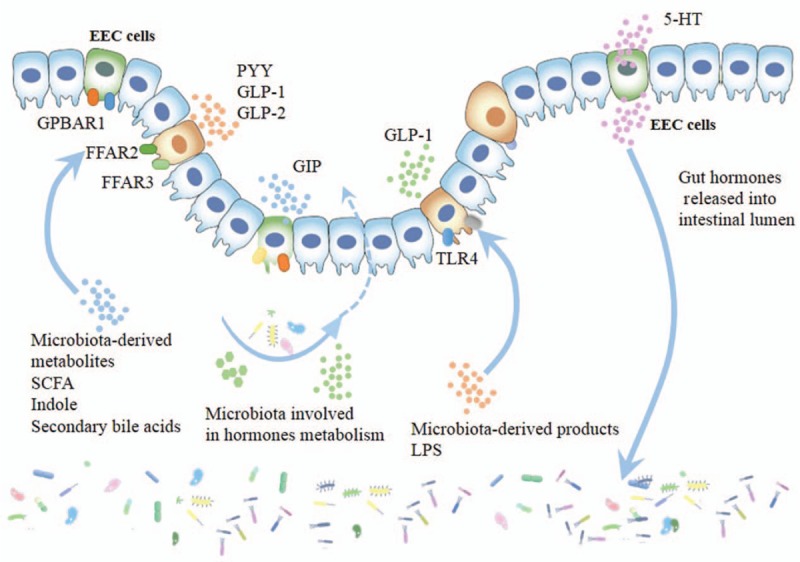
“Indole is a product of tryptophan produced by bacteria, and it has been observed to elicit a rapid stimulation of GLP-1 release in vitro by inhibiting voltagegated K channels and increasing Ca influx.([61])”
BackgroundWang, H.-X., & Wang, Y.-P. (2016) · Chinese Medical Journal · doi:10.4103/0366-6999.190667 · Cited by 546 · cited 1×
“Although the mechanisms underlying the gut and brain interactions are yet to be fully resolved, the concept of the gut-brain axis is becoming more relevant as the gut microbiota can exert considerable influence on the central nervous system (CNS).([1])”
BackgroundNicolucci, A. C., Hume, M. P., Martínez, I., Mayengbam, S., Walter, J., & Reimer, R. A. (2017) · Gastroenterology · doi:10.1053/j.gastro.2017.05.055 · Cited by 516 · cited 2×
“4%.([56,57]) An evolutionary-oriented study hypothesized that a variety of hormone-metabolismrelated enzymes might have evolved from the bacterial genes.”
BackgroundThe effects of serotonin in immune cells
Herr, N., Bode, C., & Duerschmied, D. (2017) · Frontiers in Cardiovascular Medicine · doi:10.3389/fcvm.2017.00048 · Cited by 497 · cited 1×
“Additionally, in CNS it can also act as a neurotransmitter to regulate mood, sleep, and appetite.([44]) Although the peripheral and central 5-HT are synthesized in different ways and separated by the blood-brain barrier, they are observed closely linked to CNS functions.”
BackgroundCNS inflammation and neurodegeneration
Chitnis, T., & Weiner, H. L. (2017) · Journal of Clinical Investigation · doi:10.1172/jci90609 · Cited by 470 · cited 1×
“As it is well known that inflammation plays a critical role in various CNS diseases, including Parkinson’s disease, multiple sclerosis, amyotrophic lateral sclerosis, and Alzheimer’s disease,([24]) these studies make substantial contributions to provide novel strategies for the treatment of these diseases.”
BackgroundThe microbiota regulate neuronal function and fear extinction learning
Chu, C., Murdock, M. H., Jing, D., Won, T. H., Chung, H., Kressel, A. M., Tsaava, T., Addorisio, M. E., Putzel, G. G., Zhou, L., et al. (2019) · Nature · doi:10.1038/s41586-019-1644-y · Cited by 421 · cited 1×
“A recent study using single-cell sequencing in the brain revealed great alteration in gene expression in the prefrontal cortex of the brain, which suggests that microbes related metabolites may affect CNS, such as neuronal function and fear extinction learning.([12]) Microbiota-derived metabolites, such as short-chain…”
BackgroundLyte, M. (2013) · PLoS Pathogens · doi:10.1371/journal.ppat.1003726 · Cited by 399 · cited 1×
“These molecules are released by the neurons, enterochromaffin cells, and immune cells into the gut lumen, and subsequently, affect the composition and function of the gut microbiota.([5]) It has been verified that norepinephrine, whose level increases after stress, can stimulate the proliferation of enteric pathogens.”
BackgroundShort chain fatty acids and their receptors: new metabolic targets
Layden, B. T., Angueira, A. R., Brodsky, M., Durai, V., & Lowe, W. L. (2013) · Translational Research · doi:10.1016/j.trsl.2012.10.007 · Cited by 357 · cited 1×
“It has been reported that SCFAs could play roles in glucose homeostasis, reduction of food intake, and modulation of lymphocyte function([13,14]) either through G-protein-coupled receptors (GPCRs) or acting as epigenetic modulators of histone deacetylases.”
BackgroundIntestinal microbiota determine severity of myocardial infarction in rats
Lam, V., Su, J., Koprowski, S., Hsu, A., Tweddell, J. S., Rafiee, P., Gross, G. J., Salzman, N. H., & Baker, J. E. (2012) · The FASEB Journal · doi:10.1096/fj.11-197921 · Cited by 340 · cited 1×
“The level of plasma leptin decreased after treatment with antibiotics.([55]) A series of studies have provided integral evidence about the gut microbiota, host hormones, and gut-brain axis.”
BackgroundAdriaenssens, A. E., Biggs, E. K., Darwish, T., Tadross, J., Sukthankar, T., Girish, M., Polex-Wolf, J., Lam, B. Y., Zvetkova, I., Pan, W., et al. (2019) · Cell Metabolism · doi:10.1016/j.cmet.2019.07.013 · Cited by 324 · cited 1×
“A recent study identified that the neurons expressing the GIP receptor play a key role in food intake control in mouse and human brain,([42]) which provide novel insights into the functions of GIP.”
BackgroundGut-Brain Cross-Talk in Metabolic Control
Clemmensen, C., Müller, T. D., Woods, S. C., Berthoud, H.-R., Seeley, R. J., & Tschöp, M. H. (2017) · Cell · doi:10.1016/j.cell.2017.01.025 · Cited by 297 · cited 4×
“829 the key signals involved in the gut-brain crosstalk and human energy metabolism, such as ghrelin, PYY, GLP-1, glucose-dependent insulinotropic polypeptide (GIP), and CCK,([29]) all of which are released in response to food ingestion and act to modulate different functions of the CNS.”
BackgroundInfluentialAcute inflammation and negative mood: mediation by cytokine activation
Wright, C. E., Strike, P. C., Brydon, L., & Steptoe, A. (2005) · Brain, Behavior, and Immunity · doi:10.1016/j.bbi.2004.10.003 · Cited by 287 · cited 1×
“Furthermore, this immune response has been reported to be associated with anxiety, depression, or memory impairment.([25]) Polysaccharide A is a kind of product secreted from the microbiota.”
BackgroundEnteroendocrine cells express functional Toll-like receptors
Bogunovic, M., Davé, S. H., Tilstra, J. S., Chang, D. T. W., Harpaz, N., Xiong, H., Mayer, L. F., & Plevy, S. E. (2007) · American Journal of Physiology-Gastrointestinal and Liver Physiology · doi:10.1152/ajpgi.00249.2006 · Cited by 230 · cited 1×
“They promote the secretion of GLP-1 in mice([58]) and trigger the release of CCK in vitro.([59]) SCFA produced by the bacteria can activate G-coupled receptor FFAR2 and FFAR3 in the L-cells, elevate intracellular Ca and stimulate GLP-1 secretion.”
BackgroundIyer, L. M., Aravind, L., Coon, S. L., Klein, D. C., & Koonin, E. V. (2004) · Trends in Genetics · doi:10.1016/j.tig.2004.05.007 · Cited by 217 · cited 1×
“They promote the secretion of GLP-1 in mice([58]) and trigger the release of CCK in vitro.”
BackgroundDürk, T., Panther, E., Müller, T., Sorichter, S., Ferrari, D., Pizzirani, C., Di Virgilio, F., Myrtek, D., Norgauer, J., & Idzko, M. (2005) · International Immunology · doi:10.1093/intimm/dxh242 · Cited by 212 · cited 1×
“It can promote the secretion of cytokines from lymphocytes and monocytes([46,47]) and participate in the modulation of CNS functions.”
BackgroundWang, Y., Telesford, K. M., Ochoa-Repáraz, J., Haque-Begum, S., Christy, M., Kasper, E. J., Wang, L., Wu, Y., Robson, S. C., Kasper, D. L., et al. (2014) · Nature Communications · doi:10.1038/ncomms5432 · Cited by 204
Brain regions where cholecystokinin suppresses feeding in rats
Blevins, J. E., Stanley, B. G., & Reidelberger, R. D. (2000) · Brain Research · doi:10.1016/s0006-8993(99)02477-4 · Cited by 179 · cited 1×
“Additionally, CCK can cross the blood-brain barrier and directly bind to CCK-A receptors within the hypothalamus and hindbrain, which trigger its action to regulate appetite.([37])”
BackgroundA ghrelin-growth hormone axis drives stress-induced vulnerability to enhanced fear
Meyer, R. M., Burgos-Robles, A., Liu, E., Correia, S. S., & Goosens, K. A. (2014) · Molecular Psychiatry · doi:10.1038/mp.2013.135 · Cited by 169 · cited 1×
“whereas its antagonists inhibited fear memory, implying that ghrelin promotes anxiety and depression-like behaviors in rodents.([54]) In our previous study, the anxiety scores were decreased post-LSG accompanied by a sharp reduction in plasma ghrelin, which also provides evidence to support this view.”
ResultHume, M. P., Nicolucci, A. C., & Reimer, R. A. (2017) · American Journal of Clinical Nutrition · doi:10.3945/ajcn.116.140947 · Cited by 167 · cited 2×
“4%.([56,57]) An evolutionary-oriented study hypothesized that a variety of hormone-metabolismrelated enzymes might have evolved from the bacterial genes.”
BackgroundSerotonin Upregulates Mitogen-Stimulated B Lymphocyte Proliferation through 5-HT1AReceptors
Iken, K., Chheng, S., Fargin, A., Goulet, A.-C., & Kouassi, É. (1995) · Cellular Immunology · doi:10.1006/cimm.1995.1092 · Cited by 149
Stengel, A., Goebel, M., Wang, L., & Taché, Y. (2010) · Peptides · doi:10.1016/j.peptides.2009.11.019 · Cited by 129 · cited 1×
“Additionally, ghrelin can cross the blood-brain barrier and reach the hypothalamus where the food intake regulatory center is present.([31]) The ghrelin receptors are widely expressed in various areas of the brain, including the hippocampus, arcuate nucleus, ventromedial nucleus, substantia nigra, dentate gyrus, ventr…”
BackgroundFasting Launches CRTC to Facilitate Long-Term Memory Formation in Drosophila
Hirano, Y., Masuda, T., Naganos, S., Matsuno, M., Ueno, K., Miyashita, T., Horiuchi, J., & Saitoe, M. (2013) · Science · doi:10.1126/science.1227170 · Cited by 129 · cited 1×
“More interestingly, a recent study has demonstrated that an elevated ghrelin level following hunger instigates adaptation to stress.([53]) Repeated injection of ghrelin receptor agonists in animals increased the fear memory induced by stress,”
BackgroundSun, L., Zhang, H., Cao, Y., Wang, C., Zhao, C., Wang, H., Cui, G., Wang, M., Pan, Y., Shi, Y., et al. (2019) · International Journal of Medical Sciences · doi:10.7150/ijms.37322 · Cited by 127 · cited 1×
“Interestingly, this alteration in the microbiota was largely ameliorated by the classical antidepressant fluoxetine.([63]) It is well known that fluoxetine inhibits the reuptake of 5-HT and increases serotonergic neurotransmission.”
BackgroundSelf-citationRole of central glucagon-like peptide-1 in stress regulation
Ghosal, S., Myers, B., & Herman, J. P. (2013) · Physiology & Behavior · doi:10.1016/j.physbeh.2013.04.003 · Cited by 107 · cited 2×
“[49] GLP-1, best known as a hormone stimulating glucosedependent insulin secretion, also responses to stress through the activation of the GLP-1 receptor, for example, endogenous or exogenous glucocorticoids reduce the bioavailability of GLP-1.”
BackgroundJeon, T. Y., Lee, S., Kim, H. H., Kim, Y. J., Son, H. C., Kim, D. H., & Sim, M. S. (2004) · The Journal of Clinical Endocrinology & Metabolism · doi:10.1210/jc.2004-0872 · Cited by 91 · cited 1×
“Its level was identified to decline sharply following gastrectomy.([30]) Ghrelin is now the only peripherallyderived hormone to increase appetite and food intake.”
BackgroundRezayat, M., Roohbakhsh, A., Zarrindast, M.-R., Massoudi, R., & Djahanguiri, B. (2005) · Physiology & Behavior · doi:10.1016/j.physbeh.2005.03.002 · Cited by 82 · cited 1×
“It seems that CCK modulates mood disorders through other neurotransmitters, including glutamate, dopamine, acetylcholine, and GABA, all of which play key roles in emotional behaviors.([52])”
BackgroundOlivares, M., Schüppel, V., Hassan, A. M., Beaumont, M., Neyrinck, A. M., Bindels, L. B., Benítez-Páez, A., Sanz, Y., Haller, D., Holzer, P., et al. (2018) · Frontiers in Microbiology · doi:10.3389/fmicb.2018.01900 · Cited by 72 · cited 1×
“Interestingly, studies have documented that the functions of the EECs are modulated by the gut microbiota, whose diversity and composition greatly influence the release of variable gut hormones, including cholecystokinin (CCK), peptide YY (PYY), glucagon-like peptide 1 (GLP-1), and gastric inhibitory polypeptide.([2])…”
BackgroundHunger promotes fear extinction by activation of an amygdala microcircuit
Verma, D., Wood, J., Lach, G., Herzog, H., Sperk, G., & Tasan, R. (2016) · Neuropsychopharmacology · doi:10.1038/npp.2015.163 · Cited by 69 · cited 1×
“The Y4 receptors can be activated by NPY and PP, and then they participate in the modulation of anxiety and depression.([49])”
BackgroundZhang, Y., Ji, G., Li, G., Hu, Y., Liu, L., Jin, Q., Meng, Q., Zhao, J., Yuan, K., Liu, J., et al. (2018) · International Journal of Obesity · doi:10.1038/s41366-018-0126-x · Cited by 69 · cited 2×
“In our previous study, the anxiety scores were decreased post-LSG accompanied by a sharp reduction in plasma ghrelin, which also provides evidence to support this view.([34])”
BackgroundResultSelf-citationDel Boca, C., Lutz, P. E., Le Merrer, J., Koebel, P., & Kieffer, B. L. (2012) · Neuroscience · doi:10.1016/j.neuroscience.2012.05.022 · Cited by 59
Li, G., Ji, G., Hu, Y., Liu, L., Jin, Q., Zhang, W., Liu, L., Wang, Y., Zhao, J., von Deneen, K. M., et al. (2019) · Psychoneuroendocrinology · doi:10.1016/j.psyneuen.2018.10.022 · Cited by 50 · cited 1×
“In addition, a reduction in ghrelin was positively correlated with a reduction in the activity of the right dorsolateral prefrontal cortex, suggesting that ghrelin might be an important factor leading to the reduction in appetite post-LSG.([35]) These findings in subjects undergoing LSG demonstrate that ghrelin could…”
BackgroundSelf-citationLipid sensing in the gut, brain and liver
Rasmussen, B. A., Breen, D. M., & Lam, T. K. T. (2011) · Trends in Endocrinology and Metabolism · doi:10.1016/j.tem.2011.11.001 · Cited by 47 · cited 1×
“CCK binds to the GPCRs, often known as CCK-A and CCK-B, which are mainly expressed in the gut and brain, respectively.([36]) CCK then inhibits food intake via interaction with leptin in the vagal afferents and the brain.”
BackgroundElectroanalytical approaches to study signaling mechanisms in the gastrointestinal tract
Patel, B. A. (2011) · Neurogastroenterology & Motility · doi:10.1111/j.1365-2982.2011.01708.x · Cited by 32 · cited 1×
“For example, 5-HT released by the enterochromaffin cells is not only secreted towards the intestinal submucosa, but also towards the gut lumen,([62]) which may lead to alterations in the gut microbiota.”
BackgroundSerotonergic Mediation of Vomiting
Gale, J. D. (1995) · Journal of Pediatric Gastroenterology and Nutrition · doi:10.1097/00005176-199501001-00008 · Cited by 22 · cited 1×
“A characterized example is that a rapid release of 5-HT during chemotherapy induces nausea and emesis, which is largely dependent on the activation of the vagal afferents in the gut.([48]) All this evidence suggests that 5-HT is largely involved in the modulation of the gut-brain axis.”
Background
Cited by
Gut Bacteria and Neurotransmitters
Dicks, L. M. T. (2022) · Microorganisms · doi:10.3390/microorganisms10091838 · Cited by 482
“Signals generated by the hypothalamus reach the pituitary and adrenal glands and communicate with EECs via the hypothalamic pituitary adrenal axis (HPA) [9].”
BackgroundInfluentialDiet and the Microbiota–Gut–Brain Axis: Sowing the Seeds of Good Mental Health
Berding, K., Vlckova, K., Marx, W., Schellekens, H., Stanton, C., Clarke, G., Jacka, F., Dinan, T. G., & Cryan, J. F. (2021) · Advances in Nutrition · doi:10.1093/advances/nmaa181 · Cited by 451
Gut liver brain axis in diseases: the implications for therapeutic interventions
Yan, M., Man, S., Sun, B., Ma, L., Guo, L., Huang, L., & Gao, W. (2023) · Signal Transduction and Targeted Therapy · doi:10.1038/s41392-023-01673-4 · Cited by 287
“218,219 5-HT represents one of the most distinctive gut hormones and is generated by enterochromaf fi n cells.”
BackgroundInfluentialThe gut microbiome in Alzheimer’s disease: what we know and what remains to be explored
Chandra, S., Sisodia, S. S., & Vassar, R. J. (2023) · Molecular Neurodegeneration · doi:10.1186/s13024-023-00595-7 · Cited by 278
“For example, differences in GMB-hormone interactions [28, 29] as well as differences in immune response between sexes [30] might be responsible.”
BackgroundChakrabarti, A., Geurts, L., Hoyles, L., Iozzo, P., Kraneveld, A. D., La Fata, G., Miani, M., Patterson, E., Pot, B., Shortt, C., et al. (2022) · Cellular and Molecular Life Sciences · doi:10.1007/s00018-021-04060-w · Cited by 237
“Recent studies suggest that gut hormones are involved in the physiological processes that lead to disorders such as anxiety and depression—with indications that mood disorders and obesity often co-exist [35].”
Background
Metadata
- Authors
- Sun, L.-J., Li, J.-N., & Nie, Y.-Z.
- Affiliations
- State Key Laboratory of Cancer Biology, National Clinical Research Center for Digestive Diseases and Xijing Hospital of Digestive Diseases, The Fourth Military Medical University, Xi’an, Shaanxi 710032, China
- Department of Gastroenterology, Chinese Academy of Medical Sciences, Peking Union Medical College Hospital, Beijing 100730, China.
- Venue
- Chinese Medical Journal
- Published
- 2020-03-02
- Volume
- 133
- Issue
- 7
- Pages
- 826-833
- ISSN
- 0366-6999 (ISSN-L)
- 2542-5641
- PMC
- PMC7147657
- OpenAlex
- W3012468462
- Semantic Scholar
- ddf0f8df7797419d80bced352f449901a2e7dc28
- Cited by
- 145
- References
- 63
- Citations by year
- 2026: 17 · 2025: 38 · 2024: 31 · 2023: 22 · 2022: 19 · 2021: 8 · 2020: 9
- FWCI
- 1.39
- Type
- journal article
- Language
- en
- Open access
- gold
- doi.org
- Licence
- Locations
- Chinese Medical Journal (publishedVersion, cc-by-nc-nd)
- PubMed Central (publishedVersion, cc-by-nc-nd)
- PubMed (publishedVersion)
- DOAJ (DOAJ: Directory of Open Access Journals) (submittedVersion, cc-by-sa)
- Topics
- Life Sciences › Biochemistry, Genetics and Molecular Biology › Molecular Biology › Gut microbiota and health
- Health Sciences › Medicine › Gastroenterology › Gastrointestinal motility and disorders
- Life Sciences › Neuroscience › Endocrine and Autonomic Systems › Regulation of Appetite and Obesity
- Keywords
- gastrointestinal hormones, gut microbiota, gut-brain axis, enteroendocrine cells, mental illness, gastrointestinal diseases, obesity, anxiety, depression
- MeSH terms
- Gastrointestinal Microbiome, Animals, Anxiety, Appetite, Depression, Humans, Gastrointestinal Tract, Microbiota
About these checks
Registry, retraction, Cites and statistics results are computed, not judged, with one exception: a printed reference that no index lists is read once by a model before it counts as a citation error. Claims are extracted by a model and kept only when their quote appears verbatim in the text; each cited source is then checked, with a model’s help, for whether it says what the claim relies on. Those verdicts can be wrong — read the claim’s quote and the cited source before relying on one.
Statistics and arithmetic are recomputed, not judged.
Confidence bands are shown only for fields calibrated on our annotated test set. None is calibrated yet, so no band is shown.
What counts as a claim ›How we measure confidence ›How we check this ›
Are you an author, or do you see a problem with this page? Request a review
Data sources
Bibliographic data: Semantic Scholar, OpenAlex, Crossref.
Contains information from the Semantic Scholar Academic Graph Datasets, made available under the ODC Attribution License (ODC-BY 1.0).
Semantic Scholar’s data is described in: Kinney, R., et al. (2023). The Semantic Scholar Open Data Platform. arXiv:2301.10140.
