

Clinical characteristics of fatal and recovered cases of coronavirus disease 2019 in Wuhan, China: a retrospective study.
Open accessThe DOI matches its Crossref record; 28 of the 30 references it cites were found in a registry or an index, and 2 are not checked yet.
Abstract
Background: The 2019 novel coronavirus has caused the outbreak of the acute respiratory disease in Wuhan, Hubei Province of China since December 2019. This study was performed to analyze the clinical characteristics of patients who succumbed to and who recovered from 2019 novel coronavirus disease (COVID-19). Methods: Clinical data were collected from two tertiary hospitals in Wuhan. A retrospective investigation was conducted to analyze the clinical characteristics of fatal cases of COVID-19 (death group) and we compare them with recovered patients (recovered group). Continuous variables were analyzed using the Mann-Whitney U test. Categorical variables were analyzed by χ 2 test or Fisher exact test as appropriate. Results: Our study enrolled 109 COVID-19 patients who died during hospitalization and 116 recovered patients. The median age of the death group was older than the recovered group (69 [62, 74] vs. 40 [33, 57] years, Z = 9.738, P < 0.001). More patients in the death group had underlying diseases (72.5% vs. 41.4%, χ 2 = 22.105, P < 0.001). Patients in the death group had a significantly longer time of illness onset to hospitalization (10.0 [6.5, 12.0] vs. 7.0 [5.0, 10.0] days, Z = 3.216, P = 0.001). On admission, the proportions of patients with symptoms of dyspnea (70.6% vs. 19.0%, χ 2 = 60.905, P < 0.001) and expectoration (32.1% vs. 12.1%, χ 2 = 13.250, P < 0.001) were significantly higher in the death group. The blood oxygen saturation was significantly lower in the death group (85 [77, 91]% vs. 97 [95, 98]%, Z = 10.625, P < 0.001). The white blood cell (WBC) in death group was significantly higher on admission (7.23 [4.87, 11.17] vs. 4.52 [3.62, 5.88] ×10 9/L, Z = 7.618, P < 0.001). Patients in the death group exhibited significantly lower lymphocyte count (0.63 [0.40, 0.79] vs. 1.00 [0.72, 1.27] ×10 9/L, Z = 8.037, P < 0.001) and lymphocyte percentage (7.10 [4.45, 12.73]% vs. 23.50 [15.27, 31.25]%, Z = 10.315, P < 0.001) on admission, and the lymphocyte percentage continued to decrease during hospitalization (7.10 [4.45, 12.73]% vs. 2.91 [1.79, 6.13]%, Z = 5.242, P < 0.001). Alanine transaminase (22.00 [15.00, 34.00] vs. 18.70 [13.00, 30.38] U/L, Z = 2.592, P = 0.010), aspartate transaminase (34.00 [27.00, 47.00] vs. 22.00 [17.65, 31.75] U/L, Z = 7.308, P < 0.001), and creatinine levels (89.00 [72.00, 133.50] vs. 65.00 [54.60, 78.75] μmol/L, Z = 6.478, P < 0.001) were significantly higher in the death group than those in the recovered group. C-reactive protein (CRP) levels were also significantly higher in the death group on admission (109.25 [35.00, 170.28] vs. 3.22 [1.04, 21.80] mg/L, Z = 10.206, P < 0.001) and showed no significant improvement after treatment (109.25 [35.00, 170.28] vs. 81.60 [27.23, 179.08] mg/L, Z = 1.219, P = 0.233). The patients in the death group had more complications such as acute respiratory distress syndrome (ARDS) (89.9% vs. 8.6%, χ 2 = 148.105, P < 0.001), acute cardiac injury (59.6% vs. 0.9%, χ 2 = 93.222, P < 0.001), acute kidney injury (18.3% vs. 0%, χ 2 = 23.257, P < 0.001), shock (11.9% vs. 0%, χ 2 = 14.618, P < 0.001), and disseminated intravascular coagulation (DIC) (6.4% vs. 0%, χ 2 = 7.655, P = 0.006). Conclusions: Compared to the recovered group, more patients in the death group exhibited characteristics of advanced age, pre-existing comorbidities, dyspnea, oxygen saturation decrease, increased WBC count, decreased lymphocytes, and elevated CRP levels. More patients in the death group had complications such as ARDS, acute cardiac injury, acute kidney injury, shock, and DIC.
Overview
The claims and statistics of this paper haven’t been checked yet.
Free: it reads the open-access text and checks the first 5 claims that cite a source we can check. Create a free account to check every claim.
Integrity signals
Registry
Cites
Statistics
Figures
Verification
Claims the paper makes
The claims and statistics of this paper haven’t been checked yet.
Free: it reads the open-access text and checks the first 5 claims that cite a source we can check. Create a free account to check every claim.
Claims other papers make about this one
Each is checked against this paper’s own text: does it say what the citing paper says it does?
The cited source says what the claim attributes to it.
In the citing paper
“Given the fact that this group is reportedly more vulnerable during COVID-19 (Chen et al., 2020; Deng et al., 2020; Liu W. et al., 2020; Pan et al., 2020; World Health Organization, 2020), the findings are consistent with other similar studies (Rajkumar, 2020; Özdin and Bayrak Özdin, 2020).”
From Knowledge of COVID-19 and Its Influence on Mindfulness, Cognitive Emotion Regulation and Psychological Flexibility in the Indian Community (2020) · cites this paper as Deng et al., 2020
Self-check
Percentages, sums and reported differences re-computed from the paper’s own numbers.
The self-check needs the paper’s full text.
Citations
Cites
Clinical features of patients infected with 2019 novel coronavirus in Wuhan, China
Huang, C., Wang, Y., Li, X., Ren, L., Zhao, J., Hu, Y., Zhang, L., Fan, G., Xu, J., Gu, X., et al. (2020) · The Lancet · doi:10.1016/s0140-6736(20)30183-5 · Cited by 48,884
A novel coronavirus from patients with pneumonia in China, 2019
Zhu, N., Zhang, D., Wang, W., Li, X., Yang, B., Song, J., Zhao, X., Huang, B., Shi, W., Lu, R., et al. (2020) · New England Journal of Medicine · doi:10.1056/nejmoa2001017 · Cited by 28,244
Yang, X., Yu, Y., Xu, J., Shu, H., Xia, J., Liu, H., Wu, Y., Zhang, L., Yu, Z., Fang, M., et al. (2020) · The Lancet Respiratory Medicine · doi:10.1016/s2213-2600(20)30079-5 · Cited by 10,066 · cited 7×
“Discussion Table 2: Clinical symptoms and signs of the death and recovered groups with COVID-19.”
ResultInfluentialSelf-citationChan, J. F.-W., Yuan, S., Kok, K.-H., To, K. K.-W., Chu, H., Yang, J., Xing, F., Liu, J., Yip, C. C.-Y., Poon, R. W.-S., et al. (2020) · The Lancet · doi:10.1016/s0140-6736(20)30154-9 · Cited by 8,944 · cited 2×
“2019-nCoV is also a beta coronavirus that causes ARDS and can be transmitted between humans.([7]) Similar to SARS-CoV, the 2019-nCoV is speculated to use the angiotensin-converting enzyme (ACE) 2 as a receptor for cell invasion.”
BackgroundWan, Y., Shang, J., Graham, R., Baric, R. S., & Li, F. (2020) · Journal of Virology · doi:10.1128/jvi.00127-20 · Cited by 4,341
Self-citationAssiri, A., Al-Tawfiq, J. A., Al-Rabeeah, A. A., Al-Rabiah, F. A., Al-Hajjar, S., Al-Barrak, A., Flemban, H., Al-Nassir, W. N., Balkhy, H. H., Al-Hakeem, R. F., et al. (2013) · The Lancet Infectious Diseases · doi:10.1016/s1473-3099(13)70204-4 · Cited by 1,435 · cited 2×
“Previous studies also showed that the transaminases were elevated in the MERS and SARS patients.([20-23]) A recent study showed that elderly patients infected with 2019-nCoV have higher CRP levels.”
BackgroundResultWeiss, S. R., & Leibowitz, J. L. (2011) · Advances in Virus Research · doi:10.1016/b978-0-12-385885-6.00009-2 · Cited by 896 · cited 1×
“Coronaviruses are enveloped RNA viruses that could affect birds, humans, and other mammals, leading to respiratory, digestive, hepatic, and nervous system disorders.([4,5]) Among the six coronaviruses known to infect humans, two of them can cause ARDS, which are the severe acute respiratory syndrome coronavirus (SARSC…”
BackgroundFatal swine acute diarrhoea syndrome caused by an HKU2-related coronavirus of bat origin
Zhou, P., Fan, H., Lan, T., Yang, X.-L., Shi, W.-F., Zhang, W., Zhu, Y., Zhang, Y.-W., Xie, Q.-M., Mani, S., et al. (2018) · Nature · doi:10.1038/s41586-018-0010-9 · Cited by 757 · cited 1×
“Coronaviruses are enveloped RNA viruses that could affect birds, humans, and other mammals, leading to respiratory, digestive, hepatic, and nervous system disorders.([4,5]) Among the six coronaviruses known to infect humans, two of them can cause ARDS, which are the severe acute respiratory syndrome coronavirus (SARSC…”
BackgroundSelf-citationWong, R. S. M., Wu, A., To, K. F., Lee, N., Lam, C. W. K., Wong, C. K., Chan, P. K. S., Ng, M. H. L., Yu, L. M., Hui, D. S., et al. (2003) · BMJ · doi:10.1136/bmj.326.7403.1358 · Cited by 561 · cited 1×
“that during the acute phase of SARS-CoV infection in humans, the blood lymphocyte counts, particularly CD4 + and CD8 + T cell counts, were decreased.([16-18]) Another study suggested that lymphocyte cells, especially CD4 + and CD8 + T cells may play protective roles in coronavirus infection.”
BackgroundSun, P., Qie, S., Liu, Z., Ren, J., Li, K., & Xi, J. (2020) · Journal of Medical Virology · doi:10.1002/jmv.25735 · Cited by 523
T cell-mediated immune response to respiratory coronaviruses
Channappanavar, R., Zhao, J., & Perlman, S. (2014) · Immunologic Research · doi:10.1007/s12026-014-8534-z · Cited by 512
Cho, S. J., & Stout-Delgado, H. W. (2020) · Annual Review of Physiology · doi:10.1146/annurev-physiol-021119-034610 · Cited by 458 · cited 1×
“One of the possible reasons for this phenomenon might be that the lung aging is associated with an inability of lung cells andmultiple structural and functional changes in the respiratory tract, giving rise to decreased lung function, altered pulmonary remodeling, diminished regeneration, and enhanced susceptibility t…”
BackgroundLew, T. W. K. (2003) · JAMA · doi:10.1001/jama.290.3.374 · Cited by 426 · cited 1×
“A previous study which enrolled 199 patients reported the median age of SARS non-survivors was 52 (25, 78) years and age (per 1-year increase) is a risk factor for death.([9]) Another study showed that the median age of MERS non-survivors was 62 (53, 73) years, older than the survivors [46 (35, 57) years].”
ResultFollow-up chest radiographic findings in patients with MERS-CoV after recovery
Das, K. M., Lee, E. Y., Singh, R., Enani, M. A., Al Dossari, K., Van Gorkom, K., Larsson, S. G., & Langer, R. D. (2017) · Indian Journal of Radiology and Imaging · doi:10.4103/ijri.ijri_469_16 · Cited by 370 · cited 2×
“[28] Another study found lung fibrosis in 33% of patients who have recovered from MERS-CoV.”
BackgroundLi, T., Qiu, Z., Zhang, L., Han, Y., He, W., Liu, Z., Ma, X., Fan, H., Lu, W., Xie, J., et al. (2004) · The Journal of Infectious Diseases · doi:10.1086/381535 · Cited by 282 · cited 1×
“that during the acute phase of SARS-CoV infection in humans, the blood lymphocyte counts, particularly CD4 + and CD8 + T cell counts, were decreased.([16-18]) Another study suggested that lymphocyte cells, especially CD4 + and CD8 + T cells may play protective roles in coronavirus infection.”
BackgroundEly, E. W., Wheeler, A. P., Thompson, B. T., Ancukiewicz, M., Steinberg, K. P., Bernard, G. R., & for the Acute Respiratory Distress Syndrome Network (2002) · Annals of Internal Medicine · doi:10.7326/0003-4819-136-1-200201010-00007 · Cited by 268
Expression of Lymphocytes and Lymphocyte Subsets in Patients with Severe Acute Respiratory Syndrome
Cui, W., Fan, Y., Wu, W., Zhang, F., Wang, J., & Ni, A. (2003) · Clinical Infectious Diseases · doi:10.1086/378587 · Cited by 180 · cited 1×
“that during the acute phase of SARS-CoV infection in humans, the blood lymphocyte counts, particularly CD4 + and CD8 + T cell counts, were decreased.([16-18]) Another study suggested that lymphocyte cells, especially CD4 + and CD8 + T cells may play protective roles in coronavirus infection.”
BackgroundArabi, Y. M., Al-Omari, A., Mandourah, Y., Al-Hameed, F., Sindi, A. A., Alraddadi, B., Shalhoub, S., Almotairi, A., Al Khatib, K., Abdulmomen, A., et al. (2017) · Critical Care Medicine · doi:10.1097/ccm.0000000000002621 · Cited by 180
Griffith, J. F., Antonio, G. E., Kumta, S. M., Hui, D. S. C., Wong, J. K. T., Joynt, G. M., Wu, A. K. L., Cheung, A. Y. K., Chiu, K. H., Chan, K. M., et al. (2005) · Radiology · doi:10.1148/radiol.2351040100 · Cited by 176 · cited 1×
“Previous studies in corticosteroid therapy suggest that high doses of corticosteroids do not diminish the mortality rate for SARS but tend to result in severe adverse reactions.([26,27]) Further research is required to investigate the necessity, dose, and timing of corticosteroid therapy in 2019-nCoV infection.”
BackgroundXie, L., Liu, Y., Xiao, Y., Tian, Q., Fan, B., Zhao, H., & Chen, W. (2005) · Chest · doi:10.1378/chest.127.6.2119 · Cited by 143 · cited 2×
“Furthermore, it is found that 45% of patients showed signs of pulmonary fibrosis within one month after being infected with SARS-CoV.([28]) Another study found lung fibrosis in 33% of patients who have recovered from MERS-CoV.”
BackgroundLadha, K. S., Zhao, K., Quraishi, S. A., Kurth, T., Eikermann, M., Kaafarani, H. M. A., Klein, E. N., Seethala, R., & Lee, J. (2015) · BMJ Open · doi:10.1136/bmjopen-2015-008990 · Cited by 140 · cited 1×
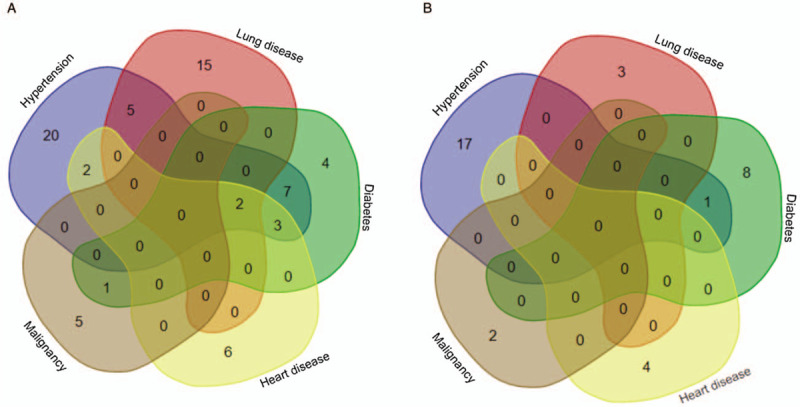
“The comorbidities, particularly the cardiovascular diseases and chronic pulmonary diseases, were reported to be important to predict the in-hospital mortality in critically ill patients.([13]) In our study, more patients in the death group had underlying diseases, especially hypertension, lung disease, and heart disea…”
BackgroundSARS in Singapore – Predictors of Disease Severity
Leong, H.-N., Earnest, A., Lim, H.-H., Chin, C.-F., Tan, C. S., Puhaindran, M. E., Tan, A. C., Chen, M. I., & Leo, Y.-S. (2006) · Annals of the Academy of Medicine, Singapore · doi:10.47102/annals-acadmedsg.v35n5p326 · Cited by 110
Clinical Issues and Research in Respiratory Failure from Severe Acute Respiratory Syndrome
Levy, M. M., Baylor, M. S., Bernard, G. R., Fowler, R. A., Franks, T. J., Hayden, F. G., Helfand, R. F., Lapinsky, S. E., Martin, T. R., Niederman, M. S., et al. (2005) · American Journal of Respiratory and Critical Care Medicine · doi:10.1164/rccm.200405-621ws · Cited by 54 · cited 1×
“Previous studies in corticosteroid therapy suggest that high doses of corticosteroids do not diminish the mortality rate for SARS but tend to result in severe adverse reactions.([26,27]) Further research is required to investigate the necessity, dose, and timing of corticosteroid therapy in 2019-nCoV infection.”
Backgroundon behalf of the LUNG SAFE Investigators, Boyle, A. J., the ESICM Trials Group, Madotto, F., Laffey, J. G., Bellani, G., Pham, T. O., Pesenti, A., Thompson, B., O’Kane, C. M., et al. (2018) · Critical Care · doi:10.1186/s13054-018-2158-y · Cited by 47 · cited 2×
“Recent studies also showed that diabetes has no significant correlation with the initiation, progression, and prognosis of ARDS.”
BackgroundSevere acute respiratory syndrome in Taiwan: analysis of epidemiological characteristics in 29 cases
Jang, T.-N., Yeh, D. Y., Shen, S., Huang, C., Jiang, J.-S., & Kao, S.-J. (2003) · Journal of Infection · doi:10.1016/j.jinf.2003.09.004 · Cited by 43 · cited 3×
“[7] Moreover, CRP was considered to be a significant predictor for disease severity in SARS.”
ResultJi, M., Chen, M., Hong, X., Chen, T., & Zhang, N. (2019) · Medicine · doi:10.1097/md.0000000000015095 · Cited by 30 · cited 2×
“Recent studies also showed that diabetes has no significant correlation with the initiation, progression, and prognosis of ARDS.”
BackgroundCui, H. (2004) · World Journal of Gastroenterology · doi:10.3748/wjg.v10.i11.1652 · Cited by 28 · cited 1×
“Previous studies also showed that the transaminases were elevated in the MERS and SARS patients.([20-23]) A recent study showed that elderly patients infected with 2019-nCoV have higher CRP levels.”
ResultTsai, S., Peng, Y., & Wang, N. (2006) · The American Journal of the Medical Sciences · doi:10.1097/00000441-200605000-00013 · Cited by 25
Wu, K., Lu, S., Changchien, C., Chiu, K., Kuo, C., Chuah, S., Liu, J.-W., Lin, M., Eng, H.-L., Chen, S.-S., et al. (2004) · American Journal of Tropical Medicine and Hygiene · doi:10.4269/ajtmh.2004.71.125 · Cited by 24 · cited 1×
“Previous studies also showed that the transaminases were elevated in the MERS and SARS patients.([20-23]) A recent study showed that elderly patients infected with 2019-nCoV have higher CRP levels.”
Result(2002) · Annals of Internal Medicine · doi:10.7326/0003-4819-136-1-200201010-00004 · Cited by 21
Cited by
Hematological findings and complications of COVID‐19
Terpos, E., Ntanasis‐Stathopoulos, I., Elalamy, I., Kastritis, E., Sergentanis, T. N., Politou, M., Psaltopoulou, T., Gerotziafas, G., & Dimopoulos, M. A. (2020) · American Journal of Hematology · doi:10.1002/ajh.25829 · Cited by 1,673
“001) compared with those who survived.(26,30) Contrary to non-survivors, survivors demonstrated a nadir of lymphocytes counted on day 7 from symptom onset and a subsequent restoration.”
BackgroundResultImmune response to SARS‐CoV‐2 and mechanisms of immunopathological changes in COVID‐19
Azkur, A. K., Akdis, M., Azkur, D., Sokolowska, M., van de Veen, W., Brüggen, M., O’Mahony, L., Gao, Y., Nadeau, K., & Akdis, C. A. (2020) · Allergy · doi:10.1111/all.14364 · Cited by 1,119
Antibiotic prescribing in patients with COVID-19: rapid review and meta-analysis
Langford, B. J., So, M., Raybardhan, S., Leung, V., Soucy, J.-P. R., Westwood, D., Daneman, N., & MacFadden, D. R. (2021) · Clinical Microbiology and Infection · doi:10.1016/j.cmi.2020.12.018 · Cited by 876
Is diabetes mellitus associated with mortality and severity of COVID-19? A meta-analysis
Kumar, A., Arora, A., Sharma, P., Anikhindi, S. A., Bansal, N., Singla, V., Khare, S., & Srivastava, A. (2020) · Diabetes & Metabolic Syndrome: Clinical Research & Reviews · doi:10.1016/j.dsx.2020.04.044 · Cited by 776
Initiative, T. C.-1. H. G. (2020) · European Journal of Human Genetics · doi:10.1038/s41431-020-0636-6 · Cited by 763
Metadata
- Authors
- Deng, Y., Liu, W., Liu, K., Fang, Y.-Y., Shang, J., Zhou, L., Wang, K., Leng, F., Wei, S., Chen, L., & Liu, H.-G.
- Affiliations
- Tongji Hospital (CN)
- Central Hospital of Wuhan (CN)
- Department of Respiratory and Critical Care Medicine, Tongji Hospital, Tongji Medical College, Huazhong University of Science and Technology, Wuhan, Hubei 430030, China
- Corresponding author
- Liu, Wei
- Liu, Kui
- Venue
- Chinese Medical Journal
- Published
- 2020-03-20
- Volume
- 133
- Issue
- 11
- Pages
- 1261-1267
- ISSN
- 0366-6999 (ISSN-L)
- 2542-5641
- PMC
- PMC7289311
- OpenAlex
- W3013689008
- Semantic Scholar
- 1b052499e1ff8e4bc2bc78ca7b3d2344d47c0239
- Cited by
- 657
- References
- 29
- Citations by year
- 2026: 3 · 2025: 17 · 2024: 20 · 2023: 41 · 2022: 77 · 2021: 198 · 2020: 300
- FWCI
- 20.18
- Type
- journal article
- Language
- en
- Open access
- gold
- doi.org
- Licence
- Locations
- Chinese Medical Journal (publishedVersion, cc-by-nc-nd)
- PubMed Central (publishedVersion, cc-by-nc-nd)
- PubMed (publishedVersion)
- DOAJ (DOAJ: Directory of Open Access Journals) (submittedVersion, cc-by-sa)
- Topics
- Health Sciences › Medicine › Infectious Diseases › COVID-19 Clinical Research Studies
- Health Sciences › Medicine › Clinical Neurology › Long-Term Effects of COVID-19
- Health Sciences › Medicine › Infectious Diseases › SARS-CoV-2 and COVID-19 Research
- Keywords
- COVID-19 pandemic, SARS-CoV-2, fatal outcome, recovered patients, clinical features, dyspnea, oxygen saturation, white blood cell count, C-reactive protein, procalcitonin, length of hospital stay, underlying comorbidities, acute respiratory illness, Wuhan outbreak, prognostic factors, mortality risk factors
- MeSH terms
- Betacoronavirus, COVID-19, SARS-CoV-2, Adult, Aged, Aged, 80 and over, C-Reactive Protein, Female, Humans, Male, Middle Aged, Oxygen, Pneumonia, Viral, Retrospective Studies, Coronavirus Infections, Pandemics
About these checks
Registry, retraction, Cites and statistics results are computed, not judged, with one exception: a printed reference that no index lists is read once by a model before it counts as a citation error. Claims are extracted by a model and kept only when their quote appears verbatim in the text; each cited source is then checked, with a model’s help, for whether it says what the claim relies on. Those verdicts can be wrong — read the claim’s quote and the cited source before relying on one.
Statistics and arithmetic are recomputed, not judged.
Confidence bands are shown only for fields calibrated on our annotated test set. None is calibrated yet, so no band is shown.
What counts as a claim ›How we measure confidence ›How we check this ›
Are you an author, or do you see a problem with this page? Request a review
Data sources
Bibliographic data: Semantic Scholar, OpenAlex, Crossref.
Contains information from the Semantic Scholar Academic Graph Datasets, made available under the ODC Attribution License (ODC-BY 1.0).
Semantic Scholar’s data is described in: Kinney, R., et al. (2023). The Semantic Scholar Open Data Platform. arXiv:2301.10140.
