

Regenerative Peripheral Nerve Interfaces for the Treatment of Postamputation Neuroma Pain: A Pilot Study
Open accessThe DOI matches its Crossref record; 47 of the 47 references it cites were found in a registry or an index.
Abstract
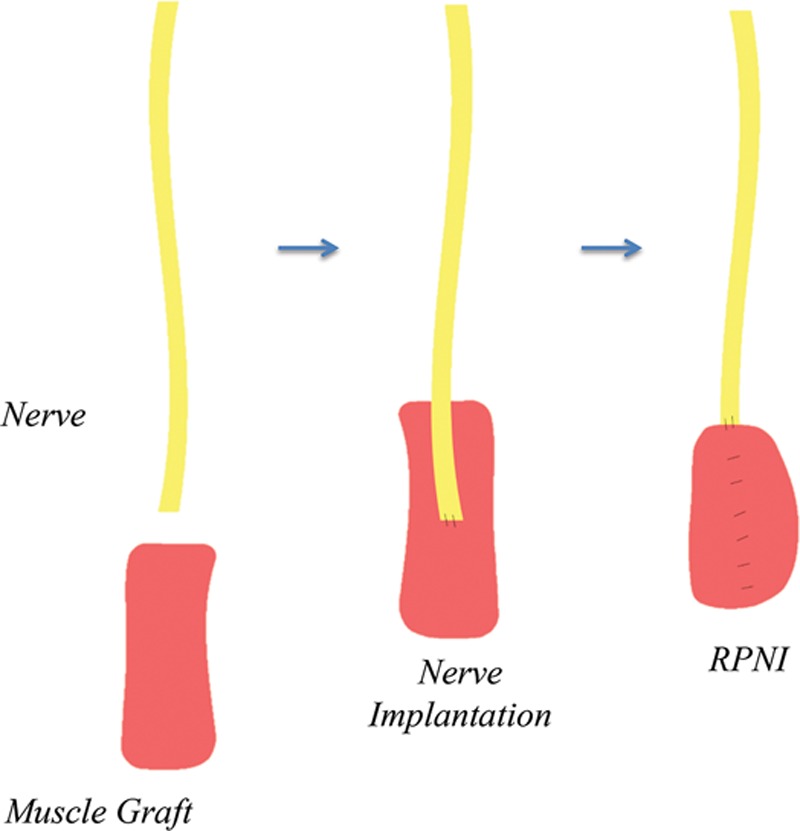
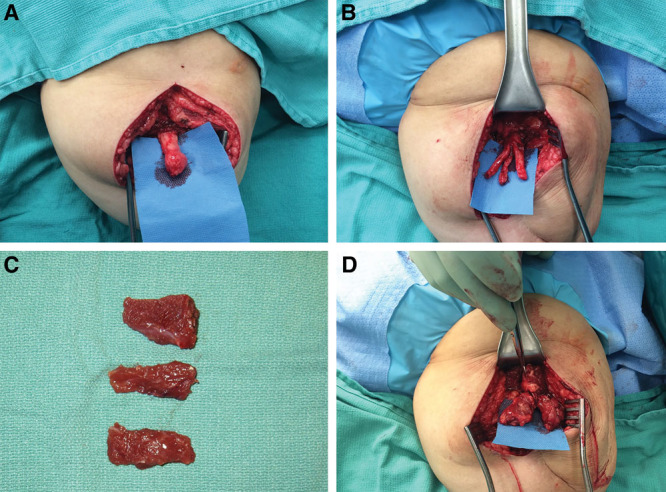
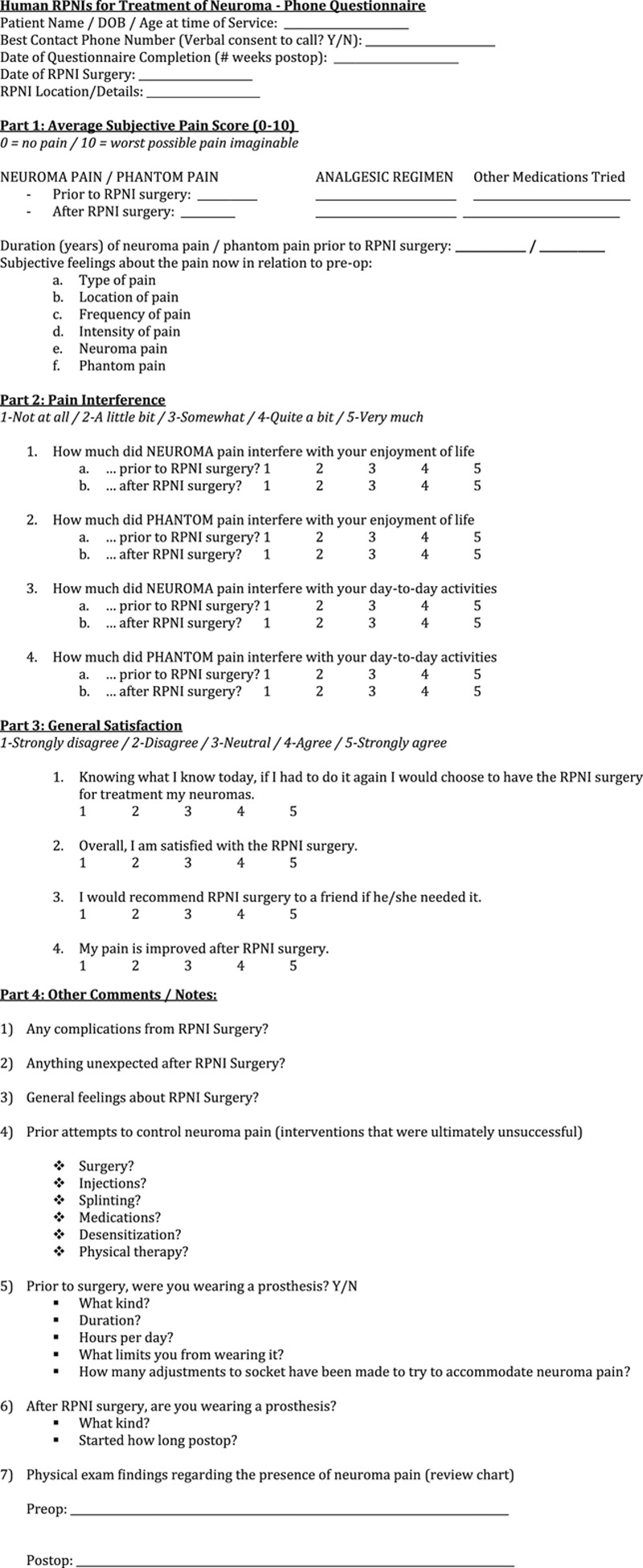
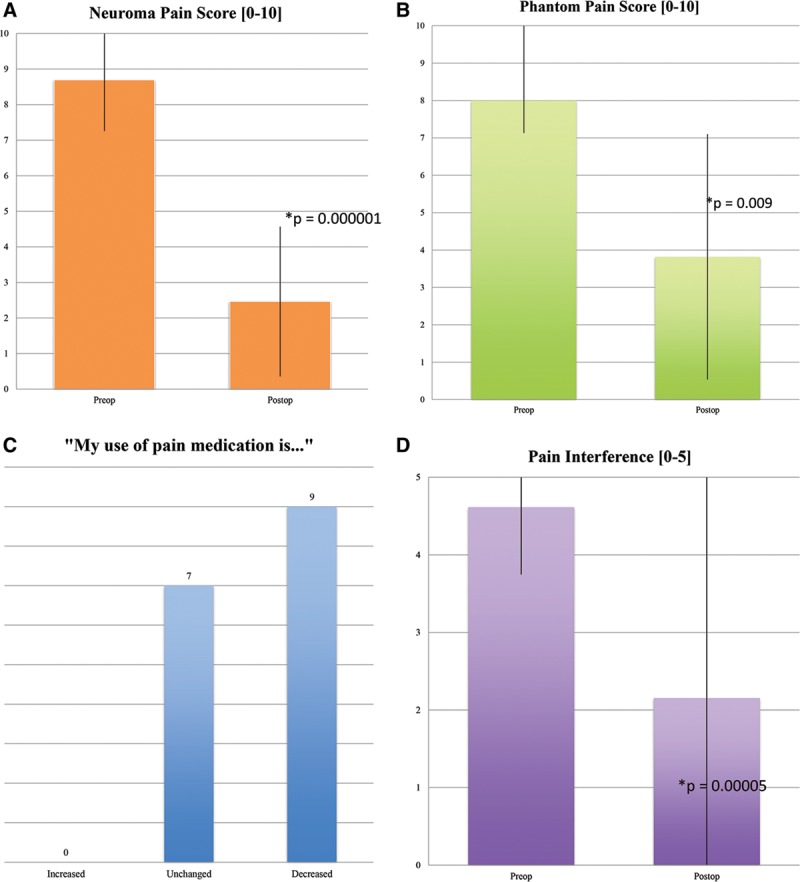
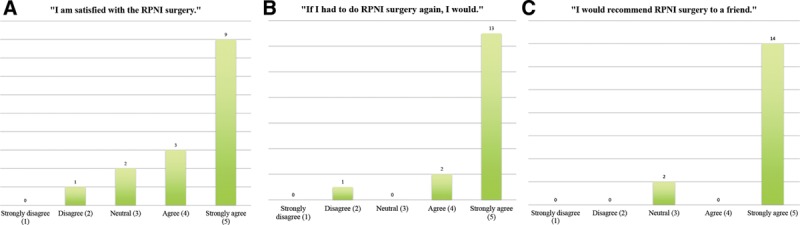
Background: Originally designed for prosthetic control, regenerative peripheral nerve interfaces (RPNIs) prevent neuroma formation by providing free muscle grafts as physiological targets for peripheral nerve ingrowth. We report the first series of patients undergoing RPNI implantation for treatment of symptomatic postamputation neuromas. Methods: A retrospective case series of all amputees undergoing RPNI implantation for treatment of symptomatic neuromas between November 2013 and June 2015 is presented. Data were obtained via chart review and phone interviews using questions derived from the Patient Reported Outcomes Measurement Information System instruments. Statistical analyses were performed using dependent sample t tests with a significance threshold of P < 0.01. Results: Forty-six RPNIs were implanted into 16 amputees for neuroma relief (3 upper extremities and 14 lower extremities). Mean age was 53.5 years (6 females and 10 males). All patients participated in postoperative phone interviews at 7.5 ± 3.4 (range: 3–15) months. Patients reported a 71% reduction in neuroma pain and a 53% reduction in phantom pain. Most patients felt satisfied or highly satisfied with RPNI surgery (75%), reporting decreased (56%) or stable (44%) levels of analgesic use. Most patients would strongly recommend RPNI surgery to a friend (88%) and would do it again if given the option (94%). Complications included delayed wound healing (n = 4) and neuroma pain at a different site (n = 2). Conclusions: RPNI implantation carries a reasonable complication profile while offering a simple, effective treatment for symptomatic neuromas. Most patients report a significant reduction in neuroma and phantom pain with a high level of satisfaction. The physiological basis for preventing neuroma recurrence is an intriguing benefit to this approach.
Overview
The claims and statistics of this paper haven’t been checked yet.
Free: it reads the open-access text and checks the first 5 claims that cite a source we can check. Create a free account to check every claim.
Integrity signals
Registry
Cites
Statistics
Figures
Verification
Claims the paper makes
The claims and statistics of this paper haven’t been checked yet.
Free: it reads the open-access text and checks the first 5 claims that cite a source we can check. Create a free account to check every claim.
Claims other papers make about this one
Each is checked against this paper’s own text: does it say what the citing paper says it does?
The source backs part of the claim, not all of it — or backs it for a different population, condition or comparison.
In the citing paper
“In addition, RPNIs have been shown to prevent and treat neuroma pain and phantom pain after amputation (18–20).”
From A regenerative peripheral nerve interface allows real-time control of an artificial hand in upper limb amputees (2020) · cites this paper as [20]
Experimental — accuracy not yet measuredThe source backs part of the claim, not all of it — or backs it for a different population, condition or comparison.
In the citing paper
“RPNIs have shown to be an effective technique to reduce symptomatic neuroma pain and also prevent neuroma formation (18–20).”
From A regenerative peripheral nerve interface allows real-time control of an artificial hand in upper limb amputees (2020) · cites this paper as [20]
Experimental — accuracy not yet measuredThe cited source says what the claim attributes to it.
In the citing paper
“RPNIs have also shown promising results in the treatment of neuroma pain [37].”
From Interfaces with the peripheral nervous system for the control of a neuroprosthetic limb: a review (2020) · cites this paper as [37]
The check wasn’t confident either way, so it gives no verdict — never disputed.
In the citing paper
“After the implantation procedure, fibrous tissue grows around the electrode as part of a foreign body reaction and this is profitable since it stabilizes the electrode. Following this stabilization process, signals from the nerves are both accurate and reproducible [37, 45].”
From Interfaces with the peripheral nervous system for the control of a neuroprosthetic limb: a review (2020) · cites this paper as [37]
Experimental — accuracy not yet measured
Self-check
Percentages, sums and reported differences re-computed from the paper’s own numbers.
The self-check needs the paper’s full text.
Citations
Cites
Cella, D., Riley, W., Stone, A., Rothrock, N., Reeve, B., Yount, S., Amtmann, D., Bode, R., Buysse, D., Choi, S., et al. (2010) · Journal of Clinical Epidemiology · doi:10.1016/j.jclinepi.2010.04.011 · Cited by 5,128
Estimating the Prevalence of Limb Loss in the United States: 2005 to 2050
Ziegler-Graham, K., MacKenzie, E. J., Ephraim, P. L., Travison, T. G., & Brookmeyer, R. (2008) · Archives of Physical Medicine and Rehabilitation · doi:10.1016/j.apmr.2007.11.005 · Cited by 2,816
The role and interpretation of pilot studies in clinical research
Leon, A. C., Davis, L. L., & Kraemer, H. C. (2011) · Journal of Psychiatric Research · doi:10.1016/j.jpsychires.2010.10.008 · Cited by 1,917
The regeneration of skeletal muscle fibers following injury: a review
CARLSON, B. M., & FAULKNER, J. A. (1983) · Medicine & Science in Sports & Exercise · doi:10.1249/00005768-198315030-00003 · Cited by 419
Targeted Muscle Reinnervation: A Novel Approach to Postamputation Neuroma Pain
Souza, J. M., Cheesborough, J. E., Ko, J. H., Cho, M. S., Kuiken, T. A., & Dumanian, G. A. (2014) · Clinical Orthopaedics & Related Research · doi:10.1007/s11999-014-3528-7 · Cited by 407
Postamputation pain: epidemiology, mechanisms, and treatment
Cohen, S., & Hsu (2013) · Journal of Pain Research · doi:10.2147/jpr.s32299 · Cited by 372
Treatment of the Painful Neuroma by Neuroma Resection and Muscle Implantation
Dellon, A. L., & Mackinnon, S. E. (1986) · Plastic and Reconstructive Surgery · doi:10.1097/00006534-198603000-00016 · Cited by 354
Ambulatory and inpatient procedures in the United States, 1996.
Owings, M. F., & Kozak, L. J. (1998) · PubMed · Cited by 314
McFarland, L. V., Winkler, S. L. H., Heinemann, A. W., Jones, M., & Esquenazi, A. (2010) · The Journal of Rehabilitation Research and Development · doi:10.1682/jrrd.2009.03.0027 · Cited by 227
AUTOGENOUS FREE GRAFTS OF SKELETAL MUSCLE: A Preliminary Experimental and Clinical Study
THOMPSON, N. (1971) · Plastic and Reconstructive Surgery · doi:10.1097/00006534-197107000-00004 · Cited by 190
Research works printed but not linked: 2
- Nedic A Moon JD Kung TA Von Frey monofilament testing successfully discriminates between sensory function of mixed nerve and sensory nerve regenerative peripheral nerve interfaces. 2013 6th International IEEE/EMBS Conference on Neural Engineering (NER) 255 258
- Woo SL Urbanchek M Cederna PS Revisiting nonvascularized partial muscle grafts: a novel use for prosthetic control. Plast Reconstr Surg 2014 134 344e 346e 25068369 · DOI
Cited by
Items 101–200 of 273
Tang, C., Wang, P., Li, Z., Zhong, S., Yang, L., & Li, G. (2024) · Neural Regeneration Research · doi:10.4103/nrr.nrr-d-24-00613 · Cited by 11
“The RPNI technique has demonstrated substantial potential in improving the quality of life for individuals with upper limb amputations (Woo et al., 2016; Kubiak et al., 2018; Ganesh Kumar and Kung, 2021).”
Hybrid Bionic Nerve Interface for Application in Bionic Limbs
Cho, Y., Jeong, H. H., Shin, H., Pak, C. J., Cho, J., Kim, Y., Kim, D.-G., Kim, T. K., Kim, H., Kim, S., et al. (2023) · Advanced Science · doi:10.1002/advs.202303728 · Cited by 11
Targeted Peripheral Nerve Interface: Case Report with Literature Review
Bhashyam, A. R., Liu, Y. K., & Kao, D. S. (2021) · Plastic & Reconstructive Surgery Global Open · doi:10.1097/gox.0000000000003532 · Cited by 11
Nerve Interface Strategies for Neuroma Management and Prevention
Hoyt, B. W., Potter, B. K., & Souza, J. M. (2021) · Hand Clinics · doi:10.1016/j.hcl.2021.05.004 · Cited by 11
Sperry, B. P., Cheney, C. W., Kuo, K. T., Clements, N. D., Burnham, T. R., Conger, A., Cushman, D. M., & McCormick, Z. L. (2021) · PM&R · doi:10.1002/pmrj.12722 · Cited by 11
“Regenerative peripheral nerve interfaces, a surgical technique in which nerves transected during amputation are implanted into devascularized muscle autographs, offer promising results but require further study.(28) Neuromodulation techniques such as deep brain stimulation, spinal cord stimulation, dorsal root ganglio…”
BackgroundRevision Peripheral Nerve Surgery of the Upper Extremity
Dibbs, R. P., Ali, K., Sarrami, S. M., & Koshy, J. C. (2021) · Seminars in Plastic Surgery · doi:10.1055/s-0041-1727290 · Cited by 10
Hart, S. E., & Brown, D. L. (2021) · Hand Clinics · doi:10.1016/j.hcl.2021.05.005 · Cited by 10
Self-citationQuinn, K. N., Tian, Y., Budde, R. B., Irazoqui, P. P., TUFFAHA, S. H., & Thakor, N. V. (2023) · Muscle & Nerve · doi:10.1002/mus.28029 · Cited by 9
“22,23 emerge in the clinical setting within the next decade and in the longer-term future.”
BackgroundMethodInfluentialTaghlabi, K. M., Cruz-Garza, J. G., Hassan, T., Potnis, O., Bhenderu, L. S. S., Guerrero, J. R., Whitehead, R. E., Wu, Y. C., Luan, L., Xie, C., et al. (2024) · Journal of Neural Engineering · doi:10.1088/1741-2552/ad200f · Cited by 9
“They provide stability and accurate detection of nerve signals but lead migration can be a common failure mode [36–38].”
BackgroundWade, S. M., Harrington, C. J., Hoyt, B. W., Melendez-Munoz, A. M., Potter, B. K., & Souza, J. M. (2021) · Military Medicine · doi:10.1093/milmed/usab403 · Cited by 9
Toward Natural Limb Function: A New Era in Prosthetic Innovation
Tian, Y., Wallace, D. M., Cederna, P. S., Chestek, C. A., & Kemp, S. W. P. (2025) · Annals of Neurology · doi:10.1002/ana.27287 · Cited by 8
Self-citationOrthoplastic Approach to Extremity Reconstruction: A Paradigm Shift in Integrated Limb Salvage
Lin, C., Chou, Y., Hsu, C., Huang, R., & Lin, C. H. (2025) · Seminars in Plastic Surgery · doi:10.1055/s-0045-1810090 · Cited by 8
“44 Recent evidence shows that when performed as a primary procedure during amputation, RPNI resulted in 100% of patients remaining free from neuroma pain and 49% from phantom limb pain at follow-up.”
Lee, J. C., Kemp, S. W. P., & Kung, T. A. (2024) · Seminars in Plastic Surgery · doi:10.1055/s-0043-1778078 · Cited by 9
“31 Prophylactically, chronic PLP only developed in 23% of patients who underwent RPNI surgery at time of initial amputation, and this incidence was signi fi cantly lower when compared to the 41% of patients in the control group.”
BackgroundMethodResultInfluentialSelf-citationGates, D. H., Gonzalez, M. A., Kung, T. A., & Chestek, C. A. (2023) · Current Opinion in Biomedical Engineering · doi:10.1016/j.cobme.2023.100497 · Cited by 8
Self-citationLimb Amputations in Cancer: Modern Perspectives, Outcomes, and Alternatives
Huynh, T. H., Kuruvilla, D., Nester, M. D., Zervoudakis, G., Letson, G. D., Joyce, D. M., Binitie, O. T., & Lazarides, A. L. (2023) · Current Oncology Reports · doi:10.1007/s11912-023-01475-5 · Cited by 8
“Additionally, patients who receive RPNI have reported reduction in both phantom limb pain and neuroma pain [46].”
Pettersen, E., Sassu, P., Pedrini, F. A., Granberg, H., Reinholdt, C., Breyer, J. M., Roche, A. D., Hart, A. M., Ladak, A., Power, H. A., et al. (2024) · Journal of Visualized Experiments · doi:10.3791/66379 · Cited by 8
Self-citationCurrent Concepts in Lower Extremity Amputation: A Primer for Plastic Surgeons
Hanwright, P. J., Suresh, V., Shores, J. T., Souza, J. M., & TUFFAHA, S. H. (2023) · Plastic & Reconstructive Surgery · doi:10.1097/prs.0000000000010664 · Cited by 7
New insights into muscle activity associated with phantom hand movements in transhumeral amputees
Chateaux, M., Rossel, O., Vérité, F., Nicol, C., Touillet, A., Paysant, J., Jarrassé, N., & Graaf, J. B. D. (2024) · Frontiers in Human Neuroscience · doi:10.3389/fnhum.2024.1443833 · Cited by 7
Stump-plasty: An Operation Born of Necessity in Gaza
Godwin, Y., Almaqadma, A., Abukhoussa, H., & Obaid, M. (2021) · Strategies in Trauma and Limb Reconstruction · doi:10.5005/jp-journals-10080-1526 · Cited by 7
Development of an acellular nerve cap xenograft for neuroma prevention
Faust, A. E., Soletti, L., Cwalina, N. A., Miller, A. D., Wood, M. D., Mahan, M. A., Cheetham, J., & Brown, B. N. (2022) · Journal of Biomedical Materials Research Part A · doi:10.1002/jbm.a.37437 · Cited by 7
Gonzalez, M. A., Vu, P. P., Vaskov, A. K., Cederna, P. S., Chestek, C. A., & Gates, D. H. (2022) · International Conference on Rehabilitation Robotics · doi:10.1109/icorr55369.2022.9896481 · Cited by 7
Self-citationNerve Injury, Repair, and Reconstruction
Krauss, E. M., Weber, R. V., & Mackinnon, S. E. (2021) · Elsevier eBooks · doi:10.1016/b978-0-323-65381-7.00052-6 · Cited by 7
Berberoglu, I., Kemp, S. W. P., & Hooper, R. C. (2025) · Plastic & Reconstructive Surgery · doi:10.1097/prs.0000000000012312 · Cited by 6
Hespe, G. E., & Brown, D. L. (2024) · Seminars in Plastic Surgery · doi:10.1055/s-0043-1778041 · Cited by 6
“22 RPNI has also been utilized for prophylactic prevention of neuropathic pain following amputation and was shown to result in no neuroma formation (compared to 13% symptomatic neuromas in the control group) as well as a signi fi cant reduction in PLP. 23”
MethodSelf-citationThe Agonist-Antagonist Myoneural Interface in a Transtibial Amputation
Harrington, C. J., Dearden, M. E., Richards, J., Carty, M. J., Souza, J. M., & Potter, B. K. (2023) · JBJS Essential Surgical Techniques · doi:10.2106/jbjs.st.22.00038 · Cited by 6
Surgical Treatment Protocol for Peripheral Nerve Dysfunction of the Lower Extremity
Ward, K. L., & Rodríguez‐Collazo, E. R. (2020) · Clinics in Podiatric Medicine and Surgery · doi:10.1016/j.cpm.2020.09.002 · Cited by 6
Cut wires: The Electrophysiology of Regenerated Tissue
Lowe, A. L., & Thakor, N. V. (2021) · Bioelectronic Medicine · doi:10.1186/s42234-021-00062-y · Cited by 6
Millevolte, A. X. T., Dingle, A. M., Ness, J. P., Novello, J., Zeng, W., Lü, Y., Minor, R. L., Nemke, B. W., Markel, M. D., Suminski, A. J., et al. (2021) · Frontiers in Neuroscience · doi:10.3389/fnins.2021.613844 · Cited by 6
Current Concepts of the Management of Painful Traumatic Peripheral Nerve Neuromas
Lee, E. Y., Sammarco, M. C., Spinner, R. J., & Shin, A. Y. (2024) · Journal of the American Academy of Orthopaedic Surgeons · doi:10.5435/jaaos-d-24-00581 · Cited by 5
Savitz, B. L., Dean, Y. E., Popa, N. K., Cornely, R. M., Byers, V., Gutama, B. W., Abbott, E. N., Torres‐Guzman, R. A., Alter, N. E., Stehr, J. D., et al. (2025) · Annals of Plastic Surgery · doi:10.1097/sap.0000000000004273 · Cited by 5
“44,49 52”
Roubaud, M. S., Babu, A. B. K., Moon, B. S., & Lewis, V. O. (2025) · Journal of the American Academy of Orthopaedic Surgeons · doi:10.5435/jaaos-d-25-00252 · Cited by 5
Prostheses and Rehabilitation Principles in Pediatric Limb Deficiency
Sinskey, Y. L., & Spires, M. C. (2024) · Physical Medicine and Rehabilitation Clinics of North America · doi:10.1016/j.pmr.2024.05.005 · Cited by 5
Contemporary Approaches to Peripheral Nerve Surgery
Doherty, C. D., Brown, E. E., Berger, M., Seal, A., Tang, D. T., Chandler, R. M., & Bristol, S. G. (2022) · Plastic Surgery · doi:10.1177/22925503221120571 · Cited by 5
Isbester, K., Ferrin, P. C., Krakauer, K. N., & Peters, B. R. (2023) · Plastic & Reconstructive Surgery Global Open · doi:10.1097/gox.0000000000005241 · Cited by 5
Hooper, R. C., Kelly, B. M., Cederna, P. S., & Siegel, G. (2024) · Physical Medicine and Rehabilitation Clinics of North America · doi:10.1016/j.pmr.2024.06.001 · Cited by 5
Self-citationAmputation Surgeries for the Lower Limb
Grimm, P. D., & Potter, B. K. (2020) · Elsevier eBooks · doi:10.1016/b978-0-323-60913-5.00019-2 · Cited by 5
Li, J., Huang, T. C., Chaudhry, A. R., Cantwell, S., & Moran, S. L. (2021) · Microsurgery · doi:10.1002/micr.30722 · Cited by 5
“colleagues have shown that RPNI can reduce neuroma pain (Santosa et al., 2020; Woo et al., 2016).”
BackgroundBruce, W. J., Brown, A. L., Romanelli, M. R., & Mailey, B. A. (2022) · Cureus · doi:10.7759/cureus.22513 · Cited by 5
“transection into a segment of denervated muscle or dermis to prevent further aberrant growth [6-8].”
Redefining the Topography of the Tibial Nerve
Oexeman, S., Arroyo, C. I., Rodríguez‐Collazo, E. R., & Segura, R. P. (2021) · Clinics in Podiatric Medicine and Surgery · doi:10.1016/j.cpm.2021.02.002 · Cited by 4
Gozzi, N., & Valle, G. D. (2023) · Elsevier eBooks · doi:10.1016/b978-0-443-18498-7.00014-4 · Cited by 4
Combined TMR and RPNI in a vasculopathy patient: A case report
Galbraith, L. G., Najafali, D., & Gatherwright, J. R. (2023) · JPRAS Open · doi:10.1016/j.jpra.2023.10.007 · Cited by 4
Wee, C. E., Boas, S. R., Coquillard, C. L., Cai, Y., Kurlander, D. E., Maasarani, S., Leavitt, T., Long, T. C., Lineberry, K. D., & Khouri, J. S. (2024) · Annals of Plastic Surgery · doi:10.1097/sap.0000000000003836 · Cited by 4
Nerve injury, repair and reconstruction
Weber, R. V., Yee, A., Bottros, M. M., & Mackinnon, S. E. (2015) · Wiley eBooks · doi:10.1002/9781118655412.ch56 · Cited by 4
Anderson, S. R., Gupta, N., Johnson, E. A., & Johnson, R. M. (2022) · BMJ Case Reports · doi:10.1136/bcr-2022-249705 · Cited by 4
The neurobiology of targeted muscle reinnervation for post-amputation pain
Tanner, N. J., & Ayalon, O. B. (2023) · Plastic and Aesthetic Research · doi:10.20517/2347-9264.2022.95 · Cited by 3
Transradial Amputation and Wrist Disarticulation
Chow, I., & Gaston, R. G. (2023) · Operative Techniques in Orthopaedics · doi:10.1016/j.oto.2023.101058 · Cited by 3
Central Sensitization: Central Mechanisms of Neuroma and Neuropathic Pain
Muhlestein, W. E., Chiravuri, S., & Yang, L. J. ‐. (2024) · Springer eBooks · doi:10.1007/978-3-031-59758-9_3 · Cited by 3
Theoretical foundations of Progressive Motor Training (PMT) for Phantom Limb Pain
Ortiz-Catalan, M. (2026) · Journal of NeuroEngineering and Rehabilitation · doi:10.1186/s12984-025-01790-x · Cited by 3
“Such an approach could be implemented through various surgical procedures, including Targeted Muscle [30–32] and/or Sensory Reinnervation [33–35], or Regenerative Peripheral Nerve Interfaces [36, 37], followed by early motor training interventions such as PMT or Mirror Therapy.”
Lee, K., Sadeh, O., Barrientos, A., Genzelev, A., Ayalon, O. B., Agrawal, N. A., Bekisz, J. M., & Hacquebord, J. H. (2026) · Journal of Clinical Medicine · doi:10.3390/jcm15020882 · Cited by 3
“Although originally not intended for neuroma prevention, advanced nerve interface procedures, specifically targeted muscle reinnervation (TMR) and regenerative peripheral nerve interfaces (RPNIs), have been shown to effectively prevent neuroma formation and reduce chronic pain [7,8].”
An Updated Nerve Sparing Surgical Technique for Addressing Morton’s Neuroma
Patel, N. R., Oexeman, S., & Rodríguez‐Collazo, E. R. (2021) · Clinics in Podiatric Medicine and Surgery · doi:10.1016/j.cpm.2021.07.002 · Cited by 3
Quinn, K. N., Perkins, P., Wang, S., Harris, T., Subramanian, S., Glass, C., TUFFAHA, S. H., & Thakor, N. V. (2023) · International IEEE/EMBS Conference on Neural Engineering · doi:10.1109/ner52421.2023.10123865 · Cited by 3
“intuitive control of advanced prostheses [2-6].”
Innovations in Amputation Rehabilitation and Prosthetic Design
Matsumoto, M. E., Cave, J., & Shaffer, J. (2024) · Physical Medicine and Rehabilitation Clinics of North America · doi:10.1016/j.pmr.2024.06.008 · Cited by 3
Neuropathogenesis of Phantom Pain Syndrome: Overview of Foreign Research
Shagina, E. D., Nikishina, V. B., & Zapesotskaya, I. V. (2025) · National Psychological Journal · doi:10.11621/npj.2025.0202 · Cited by 3
Surgery and Behavioral Testing in the Tibial Neuroma Transposition Model in Rats
Brakkee, E. M., DeVinney, E., Eijkelkamp, N., & Coert, J. H. (2023) · Journal of Visualized Experiments · doi:10.3791/64659 · Cited by 3
New surgical options to improve the quality of life of amputees
Kang, N., Woollard, A., & Konczalik, W. (2019) · Surgery (Oxford) · doi:10.1016/j.mpsur.2019.02.007 · Cited by 3
Diagnostik und chirurgische Therapie schmerzhafter Neurome
Kolbenschlag, J., Prahm, C., Hurth, H. V., Grimm, A. M., Schuhmann, M. U., Winter, N., Daigeler, A., & Heinzel, J. C. (2023) · Der Nervenarzt · doi:10.1007/s00115-023-01563-8 · Cited by 3
BKA with TMR Are Changing the Options in Limb Salvage
Attinger, C. E., & Kleiber, G. M. (2022) · Springer eBooks · doi:10.1007/978-981-16-9816-3_10 · Cited by 3
Targeted Muscle Reinnervation of the brachial plexus region: A cadaveric study and case series
Anderson, S. R., Wimalawansa, S. M., Lans, J., Eberlin, K. R., & Valerio, I. L. (2022) · Orthoplastic Surgery · doi:10.1016/j.orthop.2022.08.003 · Cited by 3
Surgical Management of Chronic Neuropathic Burn Pain
Ku, Y. C., Akhavan, A., & Hultman, C. S. (2024) · Clinics in Plastic Surgery · doi:10.1016/j.cps.2024.02.009 · Cited by 2
Rodríguez‐Collazo, E. R., Colberg, E. B., Schnack, L. L., Mckenzie, A., Ali, S. A., & Talbot, D. (2024) · Plastic & Reconstructive Surgery Global Open · doi:10.1097/gox.0000000000006042 · Cited by 2
Regenerative Peripheral Nerve Interfaces for Treatment of Symptomatic Neuromas
Kumar, N. G., Cederna, P. S., & Kung, T. A. (2024) · Springer eBooks · doi:10.1007/978-3-031-59758-9_18 · Cited by 2
Self-citationRees, A. B., Mastracci, J. C., Posey, S. L., Loeffler, B. J., & Gaston, R. G. (2024) · Hand · doi:10.1177/15589447241277842 · Cited by 2
“1,2 3-8 RPNI also reduces the rate of symptomatic neuroma formation 9,10 but does not produce a sufficient myoelectric signal to allow detection by surface electrodes.”
Baranwal, N., Menville, J. E., Persad‐Paisley, E. M., Sobti, N., & Kalliainen, L. K. (2024) · PubMed Central · Cited by 2
Kanetis, J., Gonzalez, M. A., Vaskov, A. K., Cederna, P. S., Chestek, C. A., & Gates, D. H. (2024) · IEEE Transactions on Medical Robotics and Bionics · doi:10.1109/tmrb.2024.3504001 · Cited by 2
“After allowing the muscle to revascularize and the nerve to reinnervate, RPNIs produce consistent motor signals with high signal to noise ratios [15] that can be used as input signals to provide accurate and stable control of a prosthetic hand [14], [16], [17].”
Self-citationExploring phantom phenomena following brachial plexus block in intact limbs
Pettersen, E., Valle, G., Sassu, P., Reinholdt, C., & Ortiz-Catalan, M. (2025) · Brain Research · doi:10.1016/j.brainres.2025.149955 · Cited by 2
Directed functional reinnervation to curb nociception and enable sensation
Zhu, L., Johnston, B. R., Tereshenko, V., Bernstock, J. D., Liu, S. C., Madinger, A. M., Pariseau, P. M., Dowlatshahi, A. S., Eberlin, K. R., & Srinivasan, S. S. (2025) · iScience · doi:10.1016/j.isci.2025.114431 · Cited by 2
“16,17 During reinnervation of the muscle, motor fibers reinnervate the muscular motor units, while sensory fibers rein-nervate muscle spindles and Golgi tendon organs to relay afferent signals of position, velocity, and force.”
Schwentker, A. R. (2021) · Journal of Bone and Joint Surgery · doi:10.2106/jbjs.21.00096 · Cited by 2
Talis, R. M., Raja, A. A. Z., Huh, J., & Cederna, P. S. (2022) · Foot & Ankle Surgery Techniques Reports & Cases · doi:10.1016/j.fastrc.2022.100222 · Cited by 2
Self-citationNerve Decompression and Distal Transtibial Amputation
Collazo, E. R. R., Oexeman, S., & Schnack, L. L. (2022) · Clinics in Podiatric Medicine and Surgery · doi:10.1016/j.cpm.2022.05.009 · Cited by 2
Umansky, D., Elzinga, K. E., & Midha, R. (2024) · Handbook of clinical neurology · doi:10.1016/b978-0-323-90108-6.00012-0 · Cited by 2
Current and Future Directions for Upper Extremity Amputations
Best, C. S. W., & Kung, T. A. (2024) · Clinics in Plastic Surgery · doi:10.1016/j.cps.2024.05.001 · Cited by 2
Self-citationPotter, B. K. (2019) · Clinical Orthopaedics and Related Research · doi:10.1097/corr.0000000000000872 · Cited by 2
“A retrospective clinical pilot study has likewise demonstrated promising results for both neuroma and phantom pain [15].”
BackgroundProsthetic Care for the Mangled Extremity
Rheinstein, J., Carroll, K., & Stevens, P. M. (2021) · Springer eBooks · doi:10.1007/978-3-319-56648-1_17 · Cited by 2
Guo, Y., Zhao, W., Huang, J., Shen, M., Li, S., Liu, C., Su, X., Li, G., Bi, S., & Pei, G. (2023) · PubMed Central · doi:10.7507/1002-1892.202304045 · Cited by 2
Quick Review and Technical Approach for Regenerative Peripheral Nerve Interface Surgery
Chávez, O. H. G., Castillo, A. G., Mariscal, S. C., Orozco, X. G. V., Dauth, D. M. S., Quintero, C. J. M., Hernández, J. M., Merino, R. P., Hernandez, M. I., & Díaz-Solleiro, C. (2023) · Modern Plastic Surgery · doi:10.4236/mps.2023.134013 · Cited by 2
Moradian, S., Taritsa, I. C., Sharma, S. B., Mioton, L. M., Dumanian, G. A., & Ko, J. H. (2024) · Plastic & Reconstructive Surgery Global Open · doi:10.1097/gox.0000000000005742 · Cited by 2
“12 In this patient, neurolysis of the left SPN and DPN was performed, and then both nerves were wrapped with free muscle grafts harvested from the thigh.”
MethodDiagnosis and Management of Neuropathic Breast Pain
Bejar-Chapa, M., Caragher, S. P., Gfrerer, L., Valerio, I. L., Colwell, A. S., & Winograd, J. M. (2024) · Plastic & Reconstructive Surgery Global Open · doi:10.1097/gox.0000000000006266 · Cited by 2
Beyond Amputation: Functional Restoration after Upper-Extremity Limb Loss
Bricker, J. T., Bagdady, K. R., Janes, L. E., Souza, J. M., Dumanian, G. A., & Ko, J. H. (2025) · Journal of Hand Surgery Global Online · doi:10.1016/j.jhsg.2025.01.008 · Cited by 2
“33 Similar to early TMR, RPNI performed at the time of amputation has shown good outcomes.”
Lowe, A. L., Issa, M., Johnson, J. A., Chen, D., Brown, E., Orsini, A. A., Quinn, K. N., Bhargava, A., Pathak, A. P., TUFFAHA, S. H., et al. (2025) · Muscle & Nerve · doi:10.1002/mus.70001 · Cited by 2
“RPNIs are popular as bio-amplifiers because the surgery is relatively easy to perform and has shown good outcomes for pain relief [5, 9–11].”
Targeted Muscle Reinnervation in the Oncologic Population: A Literature Review and Current Practice
Roubaud, M. S. (2020) · Current Surgery Reports · doi:10.1007/s40137-020-00266-2 · Cited by 2
The clinical significance of a swollen neuroma: a meaningful distinction or an incidental finding?
Svientek, S. R., Kemp, S. W. P., Cederna, P. S., & Kung, T. A. (2020) · Annals of Palliative Medicine · doi:10.21037/apm-20-1021 · Cited by 2
Self-citationA novel nerve isolation technique for targeted muscle reinnervation during below knee amputation
Thompson, J. R., Figy, S. C., Chandra, S. R., O'Neill, Y., Cheung, S. S., Tecos, M. E., & Pipinos, I. I. (2023) · Journal of Vascular Surgery Cases and Innovative Techniques · doi:10.1016/j.jvscit.2023.101219 · Cited by 1
“Several groups have reported various techniques for reinnervation, including targeted muscle reinnervation (TMR) and regenerative peripheral nerve interface.(1,4) Both are nerve transfer procedures believed to decrease neuroma formation by providing a “home” for the nerve in the remaining distal target muscle.”
Nam, H. H., Martinazzi, B. J., Lorenz, F. J., Kirchner, G. J., Bonaddio, V., Adeyemo, A., Walley, K. C., & Aynardi, M. C. (2024) · Foot & Ankle Specialist · doi:10.1177/19386400241230597 · Cited by 1
Satkunabalan, M., Tay, J. Q., & Ng, Z. Y. (2024) · European Journal of Plastic Surgery · doi:10.1007/s00238-024-02225-x · Cited by 1
“Theoretically, this would offer a physiological platform for axon regeneration and organized peripheral nerve ingrowth, thereby reducing the risk of neuroma formation [14].”
InfluentialImaging the Nerve “Allograft to Muscle Target” Technique in Neuroma Management
Hale, E. S., Tadisina, K. K., Jose, J., & Xu, K. Y. (2024) · Plastic & Reconstructive Surgery Global Open · doi:10.1097/gox.0000000000006058 · Cited by 1
Yang, B., Suresh, R., Nam, J., Mayo, A. L., Hitzig, S. L., & Wong, A. L. (2024) · Muscle & Nerve · doi:10.1002/mus.28231 · Cited by 1
“32,44 Two out of 10 studies provided detailed documentation regarding specifics such as the type or prosthesis, duration and frequency of use, 22,53 while others reported a binary response of either use or disuse without providing more details.”
InfluentialInterdisciplinary Surgical Decision Making for Painful Neuroma
Hoyt, B. W., Tintle, S. M., Potter, B. K., & Souza, J. M. (2024) · Springer eBooks · doi:10.1007/978-3-031-59758-9_13 · Cited by 1
Reimbursement for Neuroma Surgery Over the Past Decade
Stearns, S. A., Raizman, N., Raasveld, F. V., Tereshenko, V., Gfrerer, L., Valerio, I. L., Winograd, J. M., & Eberlin, K. R. (2025) · Annals of Plastic Surgery · doi:10.1097/sap.0000000000004297 · Cited by 1
Soft-Tissue Contouring and Nerve Management During Lower-Limb Osseointegration Surgery
Vaeth, A. M., Black, G. G., Vernice, N. A., Wei, L., Choate, C. G., Truong, A. Y.-Q., Hoellwarth, J. S., Reif, T. J., Rozbruch, S. R., & Otterburn, D. M. (2025) · JBJS Essential Surgical Techniques · doi:10.2106/jbjs.st.22.00074 · Cited by 1
Nag, S., Kennedy, P., Aris, K. L., Moore, A. M., & Farhadi, R. (2025) · Annals of Plastic Surgery · doi:10.1097/sap.0000000000004516 · Cited by 1
Stump pain management in patients with lower limb osseointegration
Taqi, M., Alttahir, M., Muderis, M. A., & Tetsworth, K. D. (2025) · Injury · doi:10.1016/j.injury.2025.112881 · Cited by 1
Hespe, G. E., Saunders, M. N., Hamill, J. B., Heidenreich, K. N., Yosef, M., Khalatbari, S. H., Kennedy, S. H., Agarwal, S., & Brown, D. L. (2026) · Plastic & Reconstructive Surgery · doi:10.1097/prs.0000000000012641 · Cited by 1
Self-citationChen, T., Mohanty, A. J., Yucheng, T., Kemp, S. W. P., Cederna, P. S., & Kung, T. A. (2026) · Expert Review of Medical Devices · doi:10.1080/17434440.2026.2615785 · Cited by 1
“Multiple retrospective studies have reported cases in which patients initially treated with RPNI surgery on major peripheral nerves later developed new-onset pain attributable to untreated smaller nerves [59,60].”
Self-citationChoate, C. G., Vaeth, A. M., Truong, A. Y., Hoellwarth, J. S., Reif, T. J., Rozbruch, S. R., & Otterburn, D. M. (2026) · Annals of Plastic Surgery · doi:10.1097/sap.0000000000004690 · Cited by 1
Tummala, S., Wood, B. A., Mittal, M. M., Sambandam, S. N., & Wukich, D. K. (2026) · Journal of orthopaedic surgery · doi:10.1177/10225536261439416 · Cited by 1
“14, 15 Accurate risk strati fi cation not only supports personalized surgical planning and ef fi cient use of healthcare resources but also informs targeted preventive strategies and more effective preoperative patient counseling.”
Evaluating key features of assessment tools for post-amputation pain: a scoping review
Limakatso, K., Ndhlovu, F., McGowan, E., Ho, T., & Ortiz-Catalan, M. (2026) · Disability and Rehabilitation · doi:10.1080/09638288.2026.2709659 · Cited by 1
Gabriyanchik, M. A., Pirogov, K., Startseva, O. I., Meskhi, K. T., & Решетов, И. (2026) · Journal of Clinical Medicine · doi:10.3390/jcm15155959 · Cited by 1
“In RPNI surgery, the transected nerve end is implanted into a free, devascularized autologous skeletal muscle graft, which subsequently revascularizes and is reinnervated, allowing organized axonal ingrowth and neuromuscular junction formation [5,7].”
InfluentialNeubauer, D. C., Warner, R. T., Fox, J. P., Souza, J. M., & O’Reilly, E. B. (2021) · Current Trauma Reports · doi:10.1007/s40719-021-00212-2 · Cited by 1
Ahmed, S., Roth, D., Hulsman, L., Gross, J. N., Weber, E. L., Archual, A. J., Christie, B. M., Danforth, R. M., Adkinson, J. M., & Hassanein, A. H. (2024) · Journal of Plastic Reconstructive & Aesthetic Surgery · doi:10.1016/j.bjps.2024.05.007 · Cited by 1
Histopathological Confirmation of Axonal Sprouting in Regenerative Peripheral Nerve Interface
Chang, S. H., Maenohara, Y., Hirose, J., Omata, Y., Fujiwara, S., Haga, N., Ikemura, M., Saito, T., Tanaka, S., & Matsumoto, T. (2024) · Plastic & Reconstructive Surgery Global Open · doi:10.1097/gox.0000000000005878 · Cited by 1
Metadata
- Authors
- Woo, S. L., Kung, T. A., Brown, D. L., Leonard, J. A., Kelly, B. M., & Cederna, P. S.
- Affiliations
- Michigan Medicine (US)
- Corresponding author
- Woo, Shoshana L.
- Kung, Theodore A.
- Brown, David L.
- Cederna, Paul S.
- Venue
- Plastic and Reconstructive Surgery - Global Open
- Published
- 2016-12
- Volume
- 4
- Issue
- 12
- Pages
- e1038
- ISSN
- 2169-7574 (ISSN-L)
- PMC
- PMC5222635
- OpenAlex
- W2973865545
- Cited by
- 230
- References
- 47
- Citations by year
- 2026: 17 · 2025: 22 · 2024: 47 · 2023: 34 · 2022: 32 · 2021: 30 · 2020: 28 · 2019: 6 · 2018: 10 · 2017: 2
- FWCI
- 8.79
- Type
- journal article
- Language
- en
- Open access
- gold
- doi.org
- Licence
- Locations
- Plastic & Reconstructive Surgery Global Open (publishedVersion, cc-by-nc-nd)
- PubMed Central (publishedVersion, cc-by-nc-nd)
- PubMed (publishedVersion)
- Topics
- Health Sciences › Medicine › Anesthesiology and Pain Medicine › Pain Management and Treatment
- Life Sciences › Neuroscience › Cellular and Molecular Neuroscience › Neuroscience and Neural Engineering
- Health Sciences › Medicine › Surgery › Nerve Injury and Rehabilitation
- Keywords
- regenerative peripheral nerve interface, neuroma pain, phantom pain, amputation, free muscle graft, patient satisfaction, analgesic use, surgical complications, delayed wound healing
About these checks
Registry, retraction, Cites and statistics results are computed, not judged, with one exception: a printed reference that no index lists is read once by a model before it counts as a citation error. Claims are extracted by a model and kept only when their quote appears verbatim in the text; each cited source is then checked, with a model’s help, for whether it says what the claim relies on. Those verdicts can be wrong — read the claim’s quote and the cited source before relying on one.
Statistics and arithmetic are recomputed, not judged.
Confidence bands are shown only for fields calibrated on our annotated test set. None is calibrated yet, so no band is shown.
What counts as a claim ›How we measure confidence ›How we check this ›
Are you an author, or do you see a problem with this page? Request a review
Data sources
Bibliographic data: Semantic Scholar, OpenAlex, Crossref.
Contains information from the Semantic Scholar Academic Graph Datasets, made available under the ODC Attribution License (ODC-BY 1.0).
Semantic Scholar’s data is described in: Kinney, R., et al. (2023). The Semantic Scholar Open Data Platform. arXiv:2301.10140.
