

Regenerative Peripheral Nerve Interfaces for the Treatment of Postamputation Neuroma Pain: A Pilot Study
Open accessThe DOI matches its Crossref record; 47 of the 47 references it cites were found in a registry or an index.
Abstract
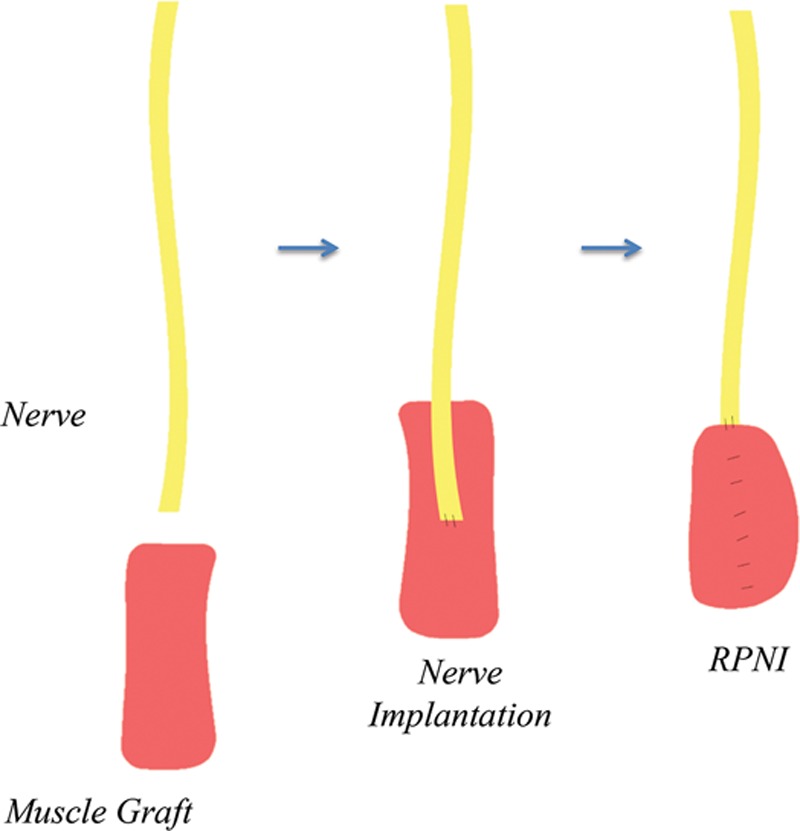
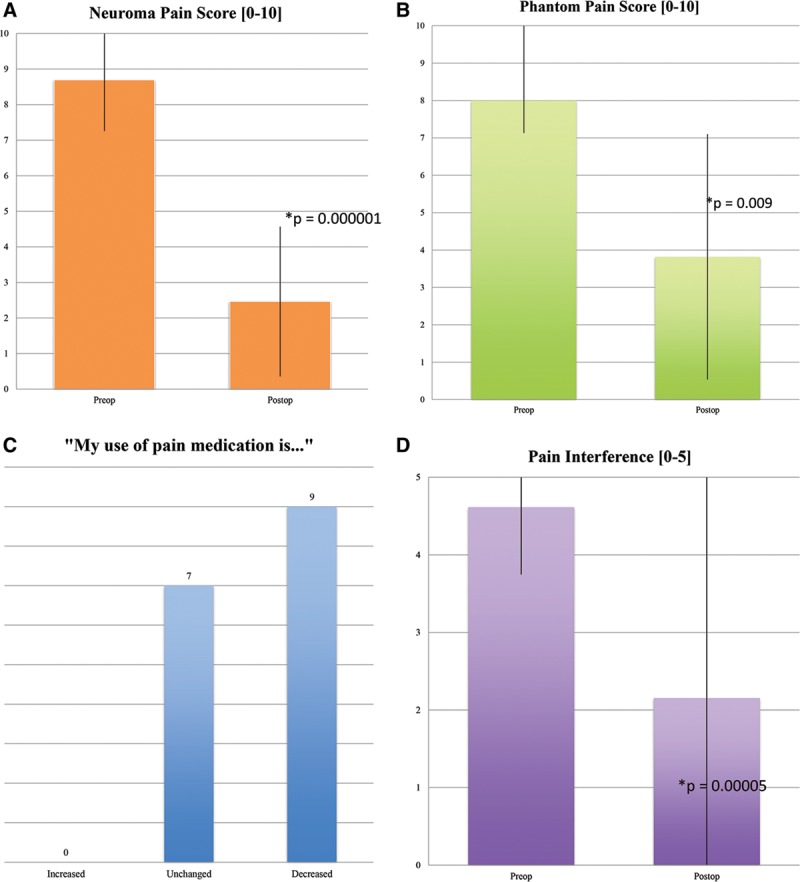
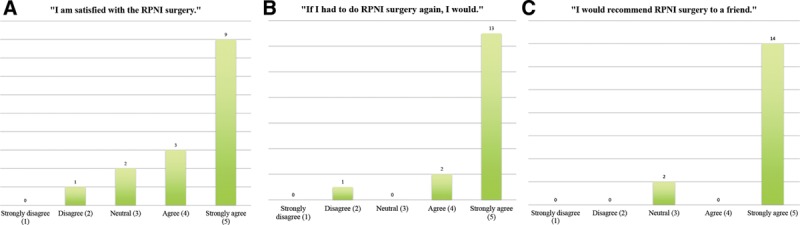
Background: Originally designed for prosthetic control, regenerative peripheral nerve interfaces (RPNIs) prevent neuroma formation by providing free muscle grafts as physiological targets for peripheral nerve ingrowth. We report the first series of patients undergoing RPNI implantation for treatment of symptomatic postamputation neuromas. Methods: A retrospective case series of all amputees undergoing RPNI implantation for treatment of symptomatic neuromas between November 2013 and June 2015 is presented. Data were obtained via chart review and phone interviews using questions derived from the Patient Reported Outcomes Measurement Information System instruments. Statistical analyses were performed using dependent sample t tests with a significance threshold of P < 0.01. Results: Forty-six RPNIs were implanted into 16 amputees for neuroma relief (3 upper extremities and 14 lower extremities). Mean age was 53.5 years (6 females and 10 males). All patients participated in postoperative phone interviews at 7.5 ± 3.4 (range: 3–15) months. Patients reported a 71% reduction in neuroma pain and a 53% reduction in phantom pain. Most patients felt satisfied or highly satisfied with RPNI surgery (75%), reporting decreased (56%) or stable (44%) levels of analgesic use. Most patients would strongly recommend RPNI surgery to a friend (88%) and would do it again if given the option (94%). Complications included delayed wound healing (n = 4) and neuroma pain at a different site (n = 2). Conclusions: RPNI implantation carries a reasonable complication profile while offering a simple, effective treatment for symptomatic neuromas. Most patients report a significant reduction in neuroma and phantom pain with a high level of satisfaction. The physiological basis for preventing neuroma recurrence is an intriguing benefit to this approach.
Overview
The claims and statistics of this paper haven’t been checked yet.
Free: it reads the open-access text and checks the first 5 claims that cite a source we can check. Create a free account to check every claim.
Integrity signals
Registry
Cites
Statistics
Figures
Verification
Claims the paper makes
The claims and statistics of this paper haven’t been checked yet.
Free: it reads the open-access text and checks the first 5 claims that cite a source we can check. Create a free account to check every claim.
Claims other papers make about this one
Each is checked against this paper’s own text: does it say what the citing paper says it does?
The source backs part of the claim, not all of it — or backs it for a different population, condition or comparison.
In the citing paper
“In addition, RPNIs have been shown to prevent and treat neuroma pain and phantom pain after amputation (18–20).”
From A regenerative peripheral nerve interface allows real-time control of an artificial hand in upper limb amputees (2020) · cites this paper as [20]
Experimental — accuracy not yet measuredThe source backs part of the claim, not all of it — or backs it for a different population, condition or comparison.
In the citing paper
“RPNIs have shown to be an effective technique to reduce symptomatic neuroma pain and also prevent neuroma formation (18–20).”
From A regenerative peripheral nerve interface allows real-time control of an artificial hand in upper limb amputees (2020) · cites this paper as [20]
Experimental — accuracy not yet measuredThe cited source says what the claim attributes to it.
In the citing paper
“RPNIs have also shown promising results in the treatment of neuroma pain [37].”
From Interfaces with the peripheral nervous system for the control of a neuroprosthetic limb: a review (2020) · cites this paper as [37]
The check wasn’t confident either way, so it gives no verdict — never disputed.
In the citing paper
“After the implantation procedure, fibrous tissue grows around the electrode as part of a foreign body reaction and this is profitable since it stabilizes the electrode. Following this stabilization process, signals from the nerves are both accurate and reproducible [37, 45].”
From Interfaces with the peripheral nervous system for the control of a neuroprosthetic limb: a review (2020) · cites this paper as [37]
Experimental — accuracy not yet measured
Self-check
Percentages, sums and reported differences re-computed from the paper’s own numbers.
The self-check needs the paper’s full text.
Citations
Cites
Cella, D., Riley, W., Stone, A., Rothrock, N., Reeve, B., Yount, S., Amtmann, D., Bode, R., Buysse, D., Choi, S., et al. (2010) · Journal of Clinical Epidemiology · doi:10.1016/j.jclinepi.2010.04.011 · Cited by 5,128
Estimating the Prevalence of Limb Loss in the United States: 2005 to 2050
Ziegler-Graham, K., MacKenzie, E. J., Ephraim, P. L., Travison, T. G., & Brookmeyer, R. (2008) · Archives of Physical Medicine and Rehabilitation · doi:10.1016/j.apmr.2007.11.005 · Cited by 2,816
The role and interpretation of pilot studies in clinical research
Leon, A. C., Davis, L. L., & Kraemer, H. C. (2011) · Journal of Psychiatric Research · doi:10.1016/j.jpsychires.2010.10.008 · Cited by 1,917
The regeneration of skeletal muscle fibers following injury: a review
CARLSON, B. M., & FAULKNER, J. A. (1983) · Medicine & Science in Sports & Exercise · doi:10.1249/00005768-198315030-00003 · Cited by 419
Targeted Muscle Reinnervation: A Novel Approach to Postamputation Neuroma Pain
Souza, J. M., Cheesborough, J. E., Ko, J. H., Cho, M. S., Kuiken, T. A., & Dumanian, G. A. (2014) · Clinical Orthopaedics & Related Research · doi:10.1007/s11999-014-3528-7 · Cited by 407
Postamputation pain: epidemiology, mechanisms, and treatment
Cohen, S., & Hsu (2013) · Journal of Pain Research · doi:10.2147/jpr.s32299 · Cited by 372
Treatment of the Painful Neuroma by Neuroma Resection and Muscle Implantation
Dellon, A. L., & Mackinnon, S. E. (1986) · Plastic and Reconstructive Surgery · doi:10.1097/00006534-198603000-00016 · Cited by 354
Ambulatory and inpatient procedures in the United States, 1996.
Owings, M. F., & Kozak, L. J. (1998) · PubMed · Cited by 314
McFarland, L. V., Winkler, S. L. H., Heinemann, A. W., Jones, M., & Esquenazi, A. (2010) · The Journal of Rehabilitation Research and Development · doi:10.1682/jrrd.2009.03.0027 · Cited by 227
AUTOGENOUS FREE GRAFTS OF SKELETAL MUSCLE: A Preliminary Experimental and Clinical Study
THOMPSON, N. (1971) · Plastic and Reconstructive Surgery · doi:10.1097/00006534-197107000-00004 · Cited by 190
Research works printed but not linked: 2
- Nedic A Moon JD Kung TA Von Frey monofilament testing successfully discriminates between sensory function of mixed nerve and sensory nerve regenerative peripheral nerve interfaces. 2013 6th International IEEE/EMBS Conference on Neural Engineering (NER) 255 258
- Woo SL Urbanchek M Cederna PS Revisiting nonvascularized partial muscle grafts: a novel use for prosthetic control. Plast Reconstr Surg 2014 134 344e 346e 25068369 · DOI
Cited by
Items 201–273 of 273
Emergence of Nerve Interfaces with Robotic Applications
Burke, K. L., Dumanian, G. A., & Cederna, P. S. (2024) · Springer eBooks · doi:10.1007/978-3-031-57132-9_6 · Cited by 1
Self-citationPeripheral Nerve Blocks as a Predictor of Nerve Reconstruction Success After Major Limb Amputation
Martinez, D. E., DeMartino, A. G., Furtmüller, G. J., & Nagarsheth, K. (2024) · Cureus · doi:10.7759/cureus.69458 · Cited by 1
“…nerve reconstruction, targeted muscle reinnervation (TMR) and regenerative peripheral nerve interface (RPNI), have demonstrated lower rates of terminal neuroma formation when employed in patients to create neuromuscular interfaces for bionic prosthetic reconstruction (see below) [5,15,16].”
BackgroundCho, J., Suh, H. P., Pak, C. J., & Hong, J. P. (2024) · Journal of Reconstructive Microsurgery · doi:10.1055/a-2434-4605 · Cited by 1
“12,15 There have been constant attempts to operate robotic limbs using these biological signals and transmit and optimize integrated neural signals for further development.”
Bonvillain, K. W., Bloomer, A. K., GRAHAM, G., Serbin, R., Seymour, R. B., Hsu, J. R., & Loeffler, B. J. (2025) · OTA International The Open Access Journal of Orthopaedic Trauma · doi:10.1097/oi9.0000000000000385 · Cited by 1
“6 In their comparative study evaluating the role of RPNI as a prophylactic measure against postamputation pain, Pejkova reported a significantly greater prosthetic use in the intervention group compared with the controls.”
Asgari, R., Bazzazan, M. A., Jafari, F., & Mozhdehipanah, H. (2025) · Case Reports in Neurological Medicine · doi:10.1155/crnm/9363655 · Cited by 1
“In case of vascular events, immediate management with hyaluronidase, aspirin, corticosteroids, vasodilators, and anticoagulants is advised, along with prompt referral if visual or neurologic symptoms occur [19, 20].”
Cardiac myocyte microtissue aggregates broadcast local field potentialsPreprint
Serruya, M. D., Das, S., Katiyar, K. S., Struzyna, L. A., Burrell, J. C., & Cullen, D. K. (2018) · bioRxiv (Cold Spring Harbor Laboratory) · doi:10.1101/376418 · Cited by 1
Restoring Fine Motor Prosthetic Hand Control via Peripheral Neural Technology
Vu, P. P. (2019) · Deep Blue (University of Michigan) · Cited by 1
Facettenreiches Problem Postamputationsschmerz
Franz, P. (2017) · NeuroTransmitter · doi:10.1007/s15016-017-6000-6
Reply: Surgery for Symptomatic Neuroma: Anatomic Distribution and Predictors of Secondary Surgery
Lans, J., & Eberlin, K. R. (2020) · Plastic & Reconstructive Surgery · doi:10.1097/prs.0000000000006668
Kumar, N. G., Cederna, P. S., & Kung, T. A. (2021) · Techniques in Orthopaedics · doi:10.1097/bto.0000000000000542
Self-citationDistal Femur, Tibial Plateau, and Tibial Shaft Fractures
Wu, K. Y., Obey, M. R., Dy, C. J., & Berkes, M. B. (2021) · Springer eBooks · doi:10.1007/978-3-030-84428-8_13
Nerve Injury After Open and Arthroscopic Surgery of the Ankle and Foot, Including Morton Neuroma
Gopman, J. M., Weinfeld, S. B., & Melamed, E. (2021) · Springer eBooks · doi:10.1007/978-3-030-84428-8_18
Nerve Injury After Distal Radius, Metacarpal, and Finger Fractures
Miller, T. J., Kamal, R. N., & Fox, P. M. (2021) · Springer eBooks · doi:10.1007/978-3-030-84428-8_7
Hemmings, J. (2006) · ePrints Soton (University of Southampton)
Westenberg, R. F., Chen, N. C., & Eberlin, K. R. (2021) · Plastic & Reconstructive Surgery · doi:10.1097/prs.0000000000008073
Implantable Neural Interfaces for Direct Control of Hand Prostheses
Vaskov, A. K. (2021) · Deep Blue (University of Michigan) · doi:10.7302/2843
Rehabilitation Lessons from a Decade of Conflict
Feuvre, P. A. L., Sherman, K. E., & Wareham, A. P. (2022) · Springer eBooks · doi:10.1007/978-3-031-10355-1_40
Closing the Loop: How Sensation Impacts Prosthetic Function and Control
Gonzalez, M. (2023) · Deep Blue (University of Michigan) · doi:10.7302/7420
de Ruiter, G. C. W. (2024) · Plastic and Aesthetic Research · doi:10.20517/2347-9264.2023.80
Carter, J., Richardson, P., Stark, H. L., & Henton, J. M. D. (2024) · European Journal of Plastic Surgery · doi:10.1007/s00238-024-02167-4
“…that all ablated nerves are treated is highlighted by the unmasking of two newly symptomatic neuromas following initial treatment by Woo et al. [9] In their study, they performed further RPNI on one of the symptomatic nerves with a resolution of symptoms, while the other patient opted out in…”
InfluentialPettersen, E., Sassu, P., Pedrini, F. A., Granberg, H., Reinholdt, C., Breyer, J. M., Roche, A. D., Hart, A. M., Ladak, A., Power, H. A., et al. (2024) · doi:10.3791/66379-v
Self-citationPettersen, E., Sassu, P., Pedrini, F. A., Granberg, H., Reinholdt, C., Breyer, J. M., Roche, A. D., Hart, A. M., Ladak, A., Power, H. A., et al. (2024) · doi:10.3791/66378-v
Self-citationPhantomschmerzen: gegenwärtige Behandlungsstrategien
Lorbeer, L., Schiessler, J., Eberhardt, M. J., Pardo, L. A., Sehmisch, S., & Ernst, J. (2024) · Orthopädie und Unfallchirurgie up2date · doi:10.1055/a-2177-7974
Upper Extremity Amputee Neuroma Cases
Lake, N. H., Gaston, R. G., Loeffler, B. J., Chepla, K. J., & Kung, T. A. (2024) · Springer eBooks · doi:10.1007/978-3-031-59758-9_22
Self-citationKalff, M. N., Hoursch, V., Kirsten, N., Pardo, L. A., Kasprzak, K., Egger, M., Schmidt, S. N., Sehmisch, S., & Ernst, J. (2025) · Die Unfallchirurgie · doi:10.1007/s00113-025-01536-3
Aktuelle Entwicklungen und Ausblicke
Schröter, P. (2025) · Springer eBooks · doi:10.1007/978-3-662-67795-7_33
Modeling the Action-Perception loop and its role in phantom limb pain using active inference
Ramne, M., Lundh, T., & Sensinger, J. W. (2026) · Journal of Theoretical Biology · doi:10.64898/2025.12.05.692511
Pettersen, E., Sassu, P., Reinholdt, C., Dahm, P. O., Rolfson, O., Björkman, A., Innocenti, M., Pedrini, F. A., Breyer, J. M., Roche, A. D., et al. (2024) · Figshare · doi:10.6084/m9.figshare.26586360
Pettersen, E., Sassu, P., Reinholdt, C., Dahm, P. O., Rolfson, O., Björkman, A., Innocenti, M., Pedrini, F. A., Breyer, J. M., Roche, A. D., et al. (2024) · Figshare · doi:10.6084/m9.figshare.26586363
Pettersen, E., Sassu, P., Reinholdt, C., Dahm, P. O., Rolfson, O., Björkman, A., Innocenti, M., Pedrini, F. A., Breyer, J. M., Roche, A. D., et al. (2024) · Figshare · doi:10.6084/m9.figshare.26586366
Case series: Design, measures, and classic example
Naga, H. I., & Levinson, H. (2026) · Elsevier eBooks · doi:10.1016/b978-0-323-91168-9.00090-9
Hamlet, C. A., Saffari, T. M., Phondge, V., Lin, S. S., O’Connor, J. P., & Lee, E. S. (2026) · Archives of Orthopaedic and Trauma Surgery · doi:10.1007/s00402-025-06140-z
“However, these procedures increase operating room time, time under anesthesia, hospital length of stay, patient costs, and there are no reliable methods to predict which patients are most at risk for symptomatic neuroma and who would benefit most from prophylactic surgical interventions [ 15 ].”
SHUNMUGAVELU, K., Dhinakaran, E. C., & Dhatchnamoorthy, D. M. (2023) · Student s Journal of Health Research Africa · doi:10.51168/sjhrafrica.v4i6.2439
Luo, X., Nagayasu, T., Zhang, Y., He, Z., Yang, J., Li, C., Duan, G., Zong, Q., Liu, Y., Yang, K., et al. (2026) · Bioactive Materials · doi:10.1016/j.bioactmat.2026.03.009
“(RPNI) within muscle [9], and protecting nerve stumps using nerve caps).”
Manzoor, A., Khan, M., Macaraeg, C., Yohe, G. J., & Giladi, A. M. (2026) · Journal of Hand Surgery Global Online · doi:10.1016/j.jhsg.2026.100985
Martinović, D., Lasić, S., Puizina, E., Martinovic, L., Puizina, J., Božić, J., & Dediol, E. (2026) · Medicina · doi:10.3390/medicina62081581
Updates in Lower Extremity Reconstruction
Brown, C. A., & Roubaud, M. S. (2026) · Clinics in Plastic Surgery · doi:10.1016/j.cps.2026.02.004
Middleton, A. (2026) · Duke University Press eBooks · doi:10.1215/9781478062233-007
Middleton, A. (2026) · Duke University Press eBooks · doi:10.1215/9781478062233-008
Middleton, A. (2026) · Duke University Press eBooks · doi:10.1215/9781478062233-010
Middleton, A. (2026) · Duke University Press eBooks · doi:10.1215/9781478062233-002
Middleton, A. (2026) · Duke University Press eBooks · doi:10.1215/9781478062233-006
Middleton, A. (2026) · Duke University Press eBooks · doi:10.1215/9781478062233-003
(2026) · Duke University Press eBooks · doi:10.1215/9781478062233-004
Middleton, A. (2026) · Duke University Press eBooks · doi:10.1215/9781478062233-009
Middleton, A. (2026) · Duke University Press eBooks · doi:10.1215/9781478062233-012
Middleton, A. (2026) · Duke University Press eBooks · doi:10.1215/9781478062233-016
Middleton, A. (2026) · Duke University Press eBooks · doi:10.1215/9781478062233-011
Middleton, A. (2026) · Duke University Press eBooks · doi:10.1215/9781478062233-015
Middleton, A. (2026) · Duke University Press eBooks · doi:10.1215/9781478062233-001
(2026) · Duke University Press eBooks · doi:10.1215/9781478062233-013
Middleton, A. (2026) · Duke University Press eBooks · doi:10.1215/9781478062233-005
Liu, Y., Liu, X., Zhang, X., Xie, J., Zhao, Z., Liu, Y., Li, G., & Wang, Y. (2026) · Journal of Orthopaedic Surgery and Research · doi:10.1186/s13018-026-06862-9
“Woo et al. [24] found that among patients treated with regenerative peripheral nerve interfaces, 71% reported relief from neuroma pain, and 53% reported relief from phantom limb pain.”
Lin, Z., Chen, Y., Zang, H., Wang, C., & Li, G. (2026) · Operative Neurosurgery · doi:10.1227/ons.0000000000002053
Rat Hindlimb Below-Knee Amputation Model and Immediate Targeted Muscle Reinnervation
Zepeda, J. M., Ebert, M., Minas, L., Mraz, G., & Hoben, G. M. (2026) · Journal of Visualized Experiments · doi:10.3791/69119
Optimizing the Transradial Amputation
Strother, C. R. C., Abadeer, A. I., & Gaston, R. G. (2026) · Hand Clinics · doi:10.1016/j.hcl.2026.03.003
Historical Perspective of the Surgical Innovations to Improve Prosthetic Control
Ramsey, M. D., Bagdady, K. R., Janes, L. E., Dumanian, G. A., & Ko, J. H. (2026) · Hand Clinics · doi:10.1016/j.hcl.2026.03.008
Neuromas and Nerve Tumors of the Upper Extremity
Gajewski, C. R., & Wessel, L. E. (2026) · Elsevier eBooks · doi:10.1016/b978-0-443-11129-7.00047-2
Outcomes Following Targeted Muscle Reinnervation in Pediatric Amputations: A Systematic Review
Giuffre, M. J., Platt, A., Kahl, C. K., Ponich, B., Jonsson, E. L., Elzinga, K. E., & Temple‐Oberle, C. F. (2026) · Plastic & Reconstructive Surgery Global Open · doi:10.1097/gox.0000000000007567
González-Prieto, J., Arenillas, M., Barbero, E. S., Pecharromán, A. G., Muñoz, J. D., Rivas, E. A., Morillo, M. D. C., Cristóbal, L., Giannetti, R., & Maldonado, A. A. (2026) · Journal of Translational Medicine · doi:10.1186/s12967-026-08453-y
Targeted Muscle Reinnervation for Management and Prevention of Symptomatic Neuroma
Raasveld, F. V., Mayrhofer‐Schmid, M., Johnston, B. R., Harhaus, L., Zuidam, J. M., Valerio, I. L., Ko, J. H., Dumanian, G. A., & Eberlin, K. R. (2026) · Muscle & Nerve · doi:10.1002/mus.70335 · Cited by 1
Georgieva, G., Dzokikj, G., Gramatnikovski, N., Srbov, B., Nikolovska, B., Redzepi, M., Atanasova, A., & Pejkova, S. (2026) · PRILOZI · doi:10.2478/prilozi-2026-0023
“The modern RPNI technique refines this principle through the use of small free muscle grafts harvested from the amputated limb, secured with microsurgical precision to optimize reinnervation and minimize recurrent neuroma formation [7,12].”
Peripheral Nerve Repair and Reconstruction: Current Techniques, Adjuncts, and Emerging Therapies
Skipp, N., Dokic, L., Wassef, C. R., Gonzalez, J., Love, A., Mercer, H., & Mercer, D. M. (2026) · UNM’s Digital Repository (University of New Mexico)
Saini, J. B., Yang, B., Wong, A. L., & Mayo, A. L. (2026) · Prosthetics and Orthotics International · doi:10.1097/pxr.0000000000000556
Михайлович, Н. А., Plakhtyr, Z., Bohdan, I., Ganau, M., & Tchantchaleishvili, N. (2026) · Current Problems in Surgery · doi:10.1016/j.cpsurg.2026.102162
Lee, K., Sadeh, O., Barrientos, A., Genzelev, A., Ayalon, O. B., Bekisz, J. M., & Hacquebord, J. H. (2026) · Hand · doi:10.1177/15589447261476303
Effective Interventions in Restoring Mobility and Relieving Pain After Lower Limb Amputation
Kim, S. (., Kim, G., Shoha, D., Fraix, M. P., & Agrawal, D. K. (2026) · Journal of Orthopaedics and Sports Medicine · doi:10.26502/josm.511500282
“Surgical neurorehabilitation strategies, including TMR and RPNI, also address neuroma pain while enhancing prosthetic control by reassigning severed nerves to new motor targets [84,87,161].”
Technological Innovations in the Restoration of Upper Limb Amputees
Cheng, J., & Jao, B. C. (2026) · Hand Clinics · doi:10.1016/j.hcl.2026.08.010
Internet Impressions: A Sentiment Analysis of Reddit Discussions on Peripheral Nerve Surgery
Coyle, L., Rothchild, E., Wood, M. C., Schechter, I., Odoom, G. P., & Ricci, J. A. (2026) · Journal of Surgical Research · doi:10.1016/j.jss.2026.08.067
Scherer, V., Wolff, D., & Fossati, G. (2026) · Cirugía del Uruguay/Cirugía del Uruguay · doi:10.31837/cir.urug/10.1.18
Hsieh, M. L., Barber, A., Ebert, M., Dominguez, E., Morgan, A., & Rivedal, D. D. (2026) · Annals of Plastic Surgery · doi:10.1097/sap.0000000000004892
Unmasking Neuroma Pain in the Upper Extremity Amputee
Rinaldi, J. M., Posey, S. L., Loeffler, B. J., & Gaston, R. G. (2026) · Hand · doi:10.1177/15589447261495113
Vespa, V., Kemp, S. W. P., Gates, D. H., Gillespie, R. B., Cederna, P. S., & Kung, T. A. (2026) · PM&R · doi:10.1002/pmrj.70250
Self-citation
Metadata
- Authors
- Woo, S. L., Kung, T. A., Brown, D. L., Leonard, J. A., Kelly, B. M., & Cederna, P. S.
- Affiliations
- Michigan Medicine (US)
- Corresponding author
- Woo, Shoshana L.
- Kung, Theodore A.
- Brown, David L.
- Cederna, Paul S.
- Venue
- Plastic and Reconstructive Surgery - Global Open
- Published
- 2016-12
- Volume
- 4
- Issue
- 12
- Pages
- e1038
- ISSN
- 2169-7574 (ISSN-L)
- PMC
- PMC5222635
- OpenAlex
- W2973865545
- Semantic Scholar
- 801356af4a65f43d22752a2efc4c9b9bb13fe557
- Cited by
- 230
- References
- 47
- Citations by year
- 2026: 17 · 2025: 22 · 2024: 47 · 2023: 34 · 2022: 32 · 2021: 30 · 2020: 28 · 2019: 6 · 2018: 10 · 2017: 2
- FWCI
- 8.79
- Type
- journal article
- Language
- en
- Open access
- gold
- doi.org
- Licence
- Locations
- Plastic & Reconstructive Surgery Global Open (publishedVersion, cc-by-nc-nd)
- PubMed Central (publishedVersion, cc-by-nc-nd)
- PubMed (publishedVersion)
- Topics
- Health Sciences › Medicine › Anesthesiology and Pain Medicine › Pain Management and Treatment
- Life Sciences › Neuroscience › Cellular and Molecular Neuroscience › Neuroscience and Neural Engineering
- Health Sciences › Medicine › Surgery › Nerve Injury and Rehabilitation
- Keywords
- regenerative peripheral nerve interface, neuroma pain, phantom pain, amputation, free muscle graft, patient satisfaction, analgesic use, surgical complications, delayed wound healing
About these checks
Registry, retraction, Cites and statistics results are computed, not judged, with one exception: a printed reference that no index lists is read once by a model before it counts as a citation error. Claims are extracted by a model and kept only when their quote appears verbatim in the text; each cited source is then checked, with a model’s help, for whether it says what the claim relies on. Those verdicts can be wrong — read the claim’s quote and the cited source before relying on one.
Statistics and arithmetic are recomputed, not judged.
Confidence bands are shown only for fields calibrated on our annotated test set. None is calibrated yet, so no band is shown.
What counts as a claim ›How we measure confidence ›How we check this ›
Are you an author, or do you see a problem with this page? Request a review
Data sources
Bibliographic data: Semantic Scholar, OpenAlex, Crossref.
Contains information from the Semantic Scholar Academic Graph Datasets, made available under the ODC Attribution License (ODC-BY 1.0).
Semantic Scholar’s data is described in: Kinney, R., et al. (2023). The Semantic Scholar Open Data Platform. arXiv:2301.10140.
