

What is the clinical evidence on psilocybin for the treatment of psychiatric disorders? A systematic review
Open accessThe DOI matches its Crossref record; 68 of the 68 references it cites were found in a registry or an index.
Abstract
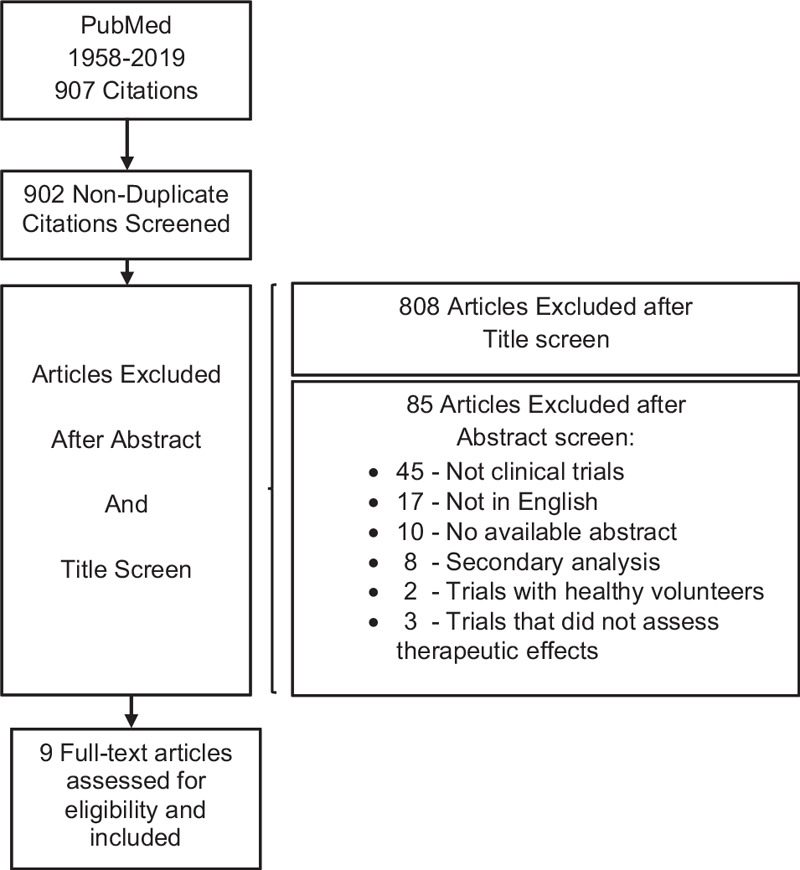
Background: Psilocybin is a predominant agonist of 5HT 1A and 5HT 2A/C receptors and was first isolated in 1958, shortly before it became a controlled substance. Research on the potential therapeutic effects of this compound has recently re-emerged alongside what is being addressed as a psychedelic renaissance. Methods: In this paper we performed a systematic review of the clinical trials conducted so far regarding the therapeutic effects of psilocybin on psychiatric disorders. The eligibility criteria included clinical trials that assessed psilocybin's potential therapeutic effects on patients with psychiatric disorders. Nine hundred seven articles were found and screened in regard to the title, from which 94 were screened through abstract and 9 met the eligibility criteria and were included. Results: The papers published focused on 3 disorders: depression, obsessive-compulsive disorder (OCD) and substance use disorder (namely tobacco and alcohol). Psilocybin has shown a relatively safe profile and very promising results, with reductions found on most of the psychiatric rating scales’ scores. Research on depression showed the most solid evidence, supported by 3 randomized controlled trials. Studies on OCD and substance use disorder showed more limitations due to their open-label design. Conclusions: Altogether, the results from the studies reviewed in this paper suggest a substantial therapeutic potential. This calls for further research to confirm the results observed so far and further explain the underlying mechanisms.
Overview
The claims and statistics of this paper haven’t been checked yet.
Free: it reads the open-access text and checks the first 5 claims that cite a source we can check. Create a free account to check every claim.
Integrity signals
Registry
Cites
Statistics
Figures
Verification
Claims the paper makes
The claims and statistics of this paper haven’t been checked yet.
Free: it reads the open-access text and checks the first 5 claims that cite a source we can check. Create a free account to check every claim.
Claims other papers make about this one
Each is checked against this paper’s own text: does it say what the citing paper says it does?
The source backs part of the claim, not all of it — or backs it for a different population, condition or comparison.
In the citing paper
“Although psychedelic therapies have demonstrated outstanding benefits in several clinical trials”
From Psychedelics and Other Psychoplastogens for Treating Mental Illness. (2021) · cites this paper as [290]
Experimental — accuracy not yet measured
Self-check
Percentages, sums and reported differences re-computed from the paper’s own numbers.
The self-check needs the paper’s full text.
Citations
Cites
The Hospital Anxiety and Depression Scale
Zigmond, A. S., & Snaith, R. P. (1983) · Acta Psychiatrica Scandinavica · doi:10.1111/j.1600-0447.1983.tb09716.x · Cited by 47,139
An inventory for measuring depression
BECK, A. T. (1961) · Archives of General Psychiatry · doi:10.1001/archpsyc.1961.01710120031004 · Cited by 38,032 · cited 2×
“Primary outcome measures were assessed with self-reports on: STAI(20) of State (STAI-S) and of Trait (STAI-T) subscales; Hospital Anxiety and Depression Scale (HADS)(22) subscales of anxiety (HADS-A), depression (HADS-D) and total (HAD-T); and BDI.(18) No serious adverse events were reported.”
MethodDepression and quality of life in older persons: A review
Sivertsen, H., Bjørkløf, G. H., Engedal, K., Selbæk, G., & Helvik, A.-S. (2015) · Dementia and Geriatric Cognitive Disorders · doi:10.1159/000437299 · Cited by 14,152
Molecular Mechanisms of Depression: Perspectives on New Treatment Strategies
Lang, U. E., & Borgwardt, S. (2013) · Cellular Physiology and Biochemistry · doi:10.1159/000350094 · Cited by 8,475
Scoville, W. B. (1949) · Journal of neurosurgery · doi:10.3171/jns.1949.6.1.0065 · Cited by 7,381
A Meta-Analysis of Cytokines in Major Depression
Dowlati, Y., Herrmann, N., Swardfager, W., Liu, H., Sham, L., Reim, E. K., & Lanctôt, K. L. (2010) · Biological Psychiatry · doi:10.1016/j.biopsych.2009.09.033 · Cited by 4,729 · cited 1×
“Some authors(59) propose that one of the mechanisms through which psilocybin improves depression symptoms is by blocking the activity of inflammatory cytokines, namely TNF-a, whose levels have been found to be significantly higher in depressed patients.(60) Research with fMRI in healthy volunteers after psilocybin adm…”
BackgroundRush, A. J., Trivedi, M. H., Ibrahim, H. M., Carmody, T. J., Arnow, B., Klein, D. N., Markowitz, J. C., Ninan, P. T., Kornstein, S., Manber, R., et al. (2003) · Biological Psychiatry · doi:10.1016/s0006-3223(02)01866-8 · Cited by 3,829
Drevets, W. C., Price, J. L., & Furey, M. L. (2008) · Brain Structure and Function · doi:10.1007/s00429-008-0189-x · Cited by 2,241
Griffiths, R. R., Johnson, M. W., Carducci, M. A., Umbricht, A., Richards, W. A., Richards, B. D., Cosimano, M. P., & Klinedinst, M. A. (2016) · Journal of Psychopharmacology · doi:10.1177/0269881116675513 · Cited by 2,201 · cited 1×
“The best option seems to be the use of an inactive low dose of psilocybin, as it showed some protection against monitor expectancy and it assures the benefit of the instruction that psilocybin is going to be administered on each session.(27) Additionally, because psilocybin administration was associated with psycholog…”
BackgroundA scale for the assessment of hedonic tone the Snaith-Hamilton pleasure scale
Snaith, R. P., Hamilton, M., Morley, S., Humayan, A., Hargreaves, D., & Trigwell, P. (1995) · British Journal of Psychiatry · doi:10.1192/bjp.167.1.99 · Cited by 1,778
Nichols, D. E. (2016) · Pharmacological Reviews · doi:10.1124/pr.115.011478 · Cited by 1,762
Ross, S., Bossis, A., Guss, J., Agin-Liebes, G., Malone, T., Cohen, B., Mennenga, S. E., Belser, A., Kalliontzi, K., Babb, J., et al. (2016) · Journal of Psychopharmacology · doi:10.1177/0269881116675512 · Cited by 1,698 · cited 1×
“Notably, results have shown BDI score reductions lasting as long as 6months(16) and reaching as high as 83% anti-depressant response and 85% remission rates (defined by BDI scores), 7weeks following a single dose of psilocybin.(21) Significant reductions were also reported on other depression measures suchasQIDS,GRID-…”
BackgroundGriffiths, R. R., Richards, W. A., McCann, U., & Jesse, R. (2006) · Psychopharmacology · doi:10.1007/s00213-006-0457-5 · Cited by 1,684
Carhart-Harris, R. L., Bolstridge, M., Rucker, J., Day, C. M. J., Erritzoe, D., Kaelen, M., Bloomfield, M., Rickard, J. A., Forbes, B., Feilding, A., et al. (2016) · The Lancet Psychiatry · doi:10.1016/s2215-0366(16)30065-7 · Cited by 1,540
Carhart-Harris, R. L., Leech, R., Hellyer, P. J., Shanahan, M., Feilding, A., Tagliazucchi, E., Chialvo, D. R., & Nutt, D. (2014) · Frontiers in Human Neuroscience · doi:10.3389/fnhum.2014.00020 · Cited by 1,252
Nichols, D. E. (2004) · Pharmacology & Therapeutics · doi:10.1016/j.pharmthera.2003.11.002 · Cited by 1,211
Pilot Study of Psilocybin Treatment for Anxiety in Patients With Advanced-Stage Cancer
Grob, C. S., Danforth, A. L., Chopra, G. S., Hagerty, M., McKay, C. R., Halberstadt, A. L., & Greer, G. R. (2011) · Archives of General Psychiatry · doi:10.1001/archgenpsychiatry.2010.116 · Cited by 1,206 · cited 1×
“Additionally, no adverse psychological effects were observed and all subjects tolerated well the treatment sessions.(16) Another randomized double-blind placebo-controlled crossover study(21) assessed the efficacy of a single dose of 0.”
BackgroundHuman hallucinogen research: guidelines for safety
Johnson, M., Richards, W., & Griffiths, R. (2008) · Journal of Psychopharmacology · doi:10.1177/0269881108093587 · Cited by 1,203 · cited 2×
“Given the risks associated with its use, Johnson and his colleagues have developed guidelines for research safety that include measures such as careful volunteer preparation and having a safe physical session environment.(12) After decades of suspension, human hallucinogen research has resumed in what is being address…”
BackgroundNeural correlates of the psychedelic state as determined by fMRI studies with psilocybin
Carhart-Harris, R. L., Erritzoe, D., Williams, T., Stone, J. M., Reed, L. J., Colasanti, A., Tyacke, R. J., Leech, R., Malizia, A. L., Murphy, K., et al. (2012) · Proceedings of the National Academy of Sciences · doi:10.1073/pnas.1119598109 · Cited by 1,172 · cited 1×
“Research with fMRI in healthy volunteers after psilocybin administration has shown reduced activity in the medial Pre-Frontal Cortex (PFC) and decreased connectivity within the default mode network (DMN).(61,62) This becomes more relevant given that depressive symptoms have been associated with increased activity in t…”
BackgroundPsilocybin-assisted treatment for alcohol dependence: A proof-of-concept study
Bogenschutz, M. P., Forcehimes, A. A., Pommy, J. A., Wilcox, C. E., Barbosa, P., & Strassman, R. J. (2015) · Journal of Psychopharmacology · doi:10.1177/0269881114565144 · Cited by 1,151
Measures of abstinence in clinical trials: issues and recommendations
Hughes, J. R., Keely, J. P., Niaura, R. S., Ossip-Klein, D. J., Richmond, R. L., & Swan, G. E. (2003) · Nicotine & Tobacco Research · doi:10.1093/ntr/5.1.13 · Cited by 1,058
Psilocybin with psychological support for treatment-resistant depression: six-month follow-up
Carhart-Harris, R. L., Bolstridge, M., Day, C. M. J., Rucker, J., Watts, R., Erritzoe, D. E., Kaelen, M., Giribaldi, B., Bloomfield, M., Pilling, S., et al. (2018) · Psychopharmacology · doi:10.1007/s00213-017-4771-x · Cited by 970
Martin, W. R., Sloan, J. W., Sapira, J. D., & Jasinski, D. R. (1971) · Clinical Pharmacology & Therapeutics · doi:10.1002/cpt1971122part1245 · Cited by 943
Psilocybin occasioned mystical-type experiences: immediate and persisting dose-related effects
Griffiths, R. R., Johnson, M. W., Richards, W. A., Richards, B. D., McCann, U., & Jesse, R. (2011) · Psychopharmacology · doi:10.1007/s00213-011-2358-5 · Cited by 932
Pilot study of the 5-HT 2A R agonist psilocybin in the treatment of tobacco addiction
Johnson, M. W., Garcia-Romeu, A., Cosimano, M. P., & Griffiths, R. R. (2014) · Journal of Psychopharmacology · doi:10.1177/0269881114548296 · Cited by 914 · cited 1×
“An open-label pilot study researched the safety and preliminary efficacy of psilocybin on treating tobacco addiction.(48) This study included 15 subjects that smoked a minimum of 10 cigarettes a day, that had multiple unsuccessful quit attempts and that still showed desire to stop smoking.”
BackgroundMiller, W. R., & Tonigan, J. S. (1996) · Psychology of Addictive Behaviors · doi:10.1037/0893-164x.10.2.81 · Cited by 860
Psychometric properties of the Penn Alcohol Craving Scale
Flannery, B. A., Volpicelli, J. R., & Pettinati, H. M. (1999) · Alcoholism Clinical and Experimental Research · doi:10.1111/j.1530-0277.1999.tb04349.x · Cited by 852
Safety, tolerability, and efficacy of psilocybin in 9 patients with obsessive-compulsive disorder
Moreno, F. A., Wiegand, C. B., Taitano, E. K., & Delgado, P. L. (2006) · The Journal of Clinical Psychiatry · doi:10.4088/jcp.v67n1110 · Cited by 789
Measures of abstinence in clinical trials: issues and recommendations
Hughes, J., Keely, J., Niaura, R., Ossip-Klein, D., Richmond, R., & Swan, G. (2003) · Nicotine & Tobacco Research · doi:10.1080/1462220031000070552 · Cited by 712
Long-term follow-up of psilocybin-facilitated smoking cessation
Johnson, M. W., Garcia-Romeu, A., & Griffiths, R. R. (2017) · The American Journal of Drug and Alcohol Abuse · doi:10.3109/00952990.2016.1170135 · Cited by 696
Psychometric evaluation of the altered states of consciousness rating scale (OAV)
Studerus, E., Gamma, A., & Vollenweider, F. X. (2010) · PLoS ONE · doi:10.1371/journal.pone.0012412 · Cited by 683
Validation of the revised Mystical Experience Questionnaire in experimental sessions with psilocybin
Barrett, F. S., Johnson, M. W., & Griffiths, R. R. (2015) · Journal of Psychopharmacology · doi:10.1177/0269881115609019 · Cited by 637
Psilocybin for treatment-resistant depression: fMRI-measured brain mechanisms
Carhart-Harris, R. L., Roseman, L., Bolstridge, M., Demetriou, L., Pannekoek, J. N., Wall, M. B., Tanner, M., Kaelen, M., McGonigle, J., Murphy, K., et al. (2017) · Scientific Reports · doi:10.1038/s41598-017-13282-7 · Cited by 587
The Standardized Psychometric Assessment of Altered States of Consciousness (ASCs) in Humans
Dittrich, A. (1998) · Pharmacopsychiatry · doi:10.1055/s-2007-979351 · Cited by 577
The Alcohol Abstinence Self-Efficacy scale.
DiClemente, C. C., Carbonari, J. P., Montgomery, R. P., & Hughes, S. O. (1994) · Journal of Studies on Alcohol · doi:10.15288/jsa.1994.55.141 · Cited by 546
Studerus, E., Kometer, M., Hasler, F., & Vollenweider, F. X. (2011) · Journal of Psychopharmacology · doi:10.1177/0269881110382466 · Cited by 532 · cited 1×
“These events go in accordance with previous reports.(13,42,54,55) The occurrence of adverse events was more often reported with higher doses of psilocybin(27); however, out of all studies, there were no reports of serious adverse events and all adverse events were readily managed by the staff without the need of pharm…”
ResultShear, M. K., Vander Bilt, J., Rucci, P., Endicott, J., Lydiard, B., Otto, M. W., Pollack, M. H., Chandler, L., Williams, J., Ali, A., et al. (2001) · Depression and Anxiety · doi:10.1002/da.1033 · Cited by 483 · cited 1×
“The primary outcome measures chosen were the GRID-Hamilton Depression Rating Scale (GRID-HAM-D-17)(28) and the Structured InterviewGuide for theHamiltonAnxietyRatingScale (HAM-A).(29) A clinically significant responsewas defined as≥50%score decrease compared to baseline.”
MethodShear, M. K., Vander Bilt, J., Rucci, P., Endicott, J., Lydiard, B., Otto, M. W., Pollack, M. H., Chandler, L., Williams, J., Ali, A., et al. (2001) · Depression and Anxiety · doi:10.1002/da.1033.abs · Cited by 483
Psilocybin-Occasioned mystical experiences in the treatment of tobacco addiction.
Garcia-Romeu, A., Griffiths, R., & Johnson, M. (2015) · Current Drug Abuse Reviews · doi:10.2174/1874473708666150107121331 · Cited by 476
The pharmacology of psilocybin
Passie, T., Seifert, J., Schneider, U., & Emrich, H. M. (2002) · Addiction Biology · doi:10.1080/1355621021000005937 · Cited by 465 · cited 1×
“Its main active metabolite, psilocin, is obtained after desphosphorylation of psilocybin in the intestinal mucosa.(1,2) Psilocybin administration can lead to changes in perception, derealization, depersonalization, impaired attention, thought content disorder, symptoms of anxiety or elation and change of intuition.”
BackgroundStrassman, R. J. (1994) · Archives of General Psychiatry · doi:10.1001/archpsyc.1994.03950020022002 · Cited by 453
Hasler, F., Grimberg, U., Benz, M. A., Huber, T., & Vollenweider, F. X. (2004) · Psychopharmacology · doi:10.1007/s00213-003-1640-6 · Cited by 451
Stuck in a rut: rethinking depression and its treatment
Holtzheimer, P. E., & Mayberg, H. S. (2011) · Trends in Neurosciences · doi:10.1016/j.tins.2010.10.004 · Cited by 430
Kennedy, S. H., Konarski, J. Z., Segal, Z. V., Lau, M. A., Bieling, P. J., McIntyre, R. S., & Mayberg, H. S. (2007) · American Journal of Psychiatry · doi:10.1176/ajp.2007.164.5.778 · Cited by 420
Deakin, J. F. W., Lees, J., McKie, S., Hallak, J. E. C., Williams, S. R., & Dursun, S. M. (2008) · Archives of General Psychiatry · doi:10.1001/archgenpsychiatry.2007.37 · Cited by 311
Response and remission criteria in major depression – A validation of current practice
Riedel, M., Möller, H.-J., Obermeier, M., Schennach-Wolff, R., Bauer, M., Adli, M., Kronmüller, K., Nickel, T., Brieger, P., Laux, G., et al. (2010) · Journal of Psychiatric Research · doi:10.1016/j.jpsychires.2010.03.006 · Cited by 288 · cited 1×
“In addition, about 85% of psilocybin-first group vs ∼15% (with BDI) of the control group met criteria for anti-depressant remission, defined as 50% or greater reduction plus HADS-D 7(23) or BDI 12.(24,25) The assessment of the”
BackgroundPsilocybin – Summary of knowledge and new perspectives
Tylš, F., Páleníček, T., & Horáček, J. (2014) · European Neuropsychopharmacology · doi:10.1016/j.euroneuro.2013.12.006 · Cited by 276
Identifying HAM‐A cutoffs for mild, moderate, and severe generalized anxiety disorder
Matza, L. S., Morlock, R., Sexton, C., Malley, K., & Feltner, D. (2010) · International Journal of Methods in Psychiatric Research · doi:10.1002/mpr.323 · Cited by 269 · cited 2×
“Symptom remission was defined as ≥50% reduction from baseline scores plus a score of 7 on either GRIDHAMD or HAM-A.30,31 Fifteen secondary measures were also applied, including BDI,18 HADS22 and STAI.20 No serious adverse events were reported although some adverse events were registered.”
MethodClassic hallucinogens in the treatment of addictions
Bogenschutz, M. P., & Johnson, M. W. (2016) · Progress in Neuro-Psychopharmacology and Biological Psychiatry · doi:10.1016/j.pnpbp.2015.03.002 · Cited by 226
Alucinógenos en las culturas precolombinas mesoamericanas
Carod-Artal, F. J. (2011) · Neurología · doi:10.1016/j.nrl.2011.07.003 · Cited by 191 · cited 2×
“Its main active metabolite, psilocin, is obtained after desphosphorylation of psilocybin in the intestinal mucosa.1,2 Psilocybin administration can lead to changes in perception, derealization, depersonalization, impaired attention, thought content disorder, symptoms of anxiety or elation and change of intuition.3 Psi…”
Farb, N. A. S., Anderson, A. K., Bloch, R. T., & Segal, Z. V. (2011) · Biological Psychiatry · doi:10.1016/j.biopsych.2011.03.009 · Cited by 141
Konstitutionsaufklärung und Synthese von Psilocybin
Hofmann, A. A., Frey, A., Ott, H., Petrzilka, T., & Troxler, F. (1958) · Cellular and Molecular Life Sciences · doi:10.1007/bf02160424 · Cited by 140 · cited 2×
“psilocybin was first isolated only in 1958 by Albert Hofmann.(7) Shortly after, it became marketed as Indocybin; however, clinical research on psilocybin was scarce, limited to anecdotal casereports.”
BackgroundPsilocybin dose-dependently causes delayed, transient headaches in healthy volunteers
Johnson, M. W., Andrew Sewell, R., & Griffiths, R. R. (2012) · Drug and Alcohol Dependence · doi:10.1016/j.drugalcdep.2011.10.029 · Cited by 127 · cited 1×
“These events go in accordance with previous reports.(13,42,54,55) The occurrence of adverse events was more often reported with higher doses of psilocybin(27); however, out of all studies, there were no reports of serious adverse events and all adverse events were readily managed by the staff without the need of pharm…”
ResultHallucinogen-induced relief of obsessions and compulsions
Moreno, F., & Delgado, P. L. (1997) · American Journal of Psychiatry · doi:10.1176/ajp.154.7.1037b · Cited by 85
Shaping the renaissance of psychedelic research
Sessa, B. (2012) · The Lancet · doi:10.1016/s0140-6736(12)60600-x · Cited by 85 · cited 2×
“Given the risks associated with its use, Johnson and his colleagues have developed guidelines for research safety that include measures such as careful volunteer preparation and having a safe physical session environment.12 After decades of suspension, human hallucinogen research has resumed in what is being addressed…”
BackgroundRelief of obsessive-compulsive symptoms by LSD and psilocin
Leonard, H. L., & RAPOPORT, J. L. (1987) · American Journal of Psychiatry · doi:10.1176/ajp.144.9.1239b · Cited by 81
Profiles of antidepressant activity with the Montgomery‐Asberg depression rating scale
Montgomery, S. A., Smeyatsky, N., de Ruiter, M., & Montgomery, D. B. (1985) · Acta Psychiatrica Scandinavica · doi:10.1111/j.1600-0447.1985.tb08073.x · Cited by 64
Psilocybin and Obsessive Compulsive Disorder
Wilcox, J. A. (2014) · Journal of Psychoactive Drugs · doi:10.1080/02791072.2014.963754 · Cited by 54
Hallucinogenic drugs in pre-Columbian Mesoamerican cultures
Carod-Artal, F. J. (2015) · Neurología (English Edition) · doi:10.1016/j.nrleng.2011.07.010 · Cited by 53
Hung, C.-I., Liu, C.-Y., Wang, S.-J., Yao, Y.-C., & Yang, C.-H. (2012) · International Journal of Psychiatry in Clinical Practice · doi:10.3109/13651501.2011.617456 · Cited by 47
The fibrinolytic system: A new target for treatment of depression with psychedelics
Idell, R. D., Florova, G., Komissarov, A. A., Shetty, S., Girard, R., & Idell, S. (2017) · Medical Hypotheses · doi:10.1016/j.mehy.2017.01.013 · Cited by 41
Reeves, G. M., Rohan, K. J., Langenberg, P., Snitker, S., & Postolache, T. T. (2012) · Journal of Affective Disorders · doi:10.1016/j.jad.2011.12.003 · Cited by 40 · cited 1×
“In addition, about 85% of psilocybin-first group vs ∼15% (with BDI) of the control group met criteria for anti-depressant remission, defined as 50% or greater reduction plus HADS-D 7(23) or BDI 12.(24,25) The assessment of the”
BackgroundA randomized trial of short psychotherapy versus sustained‐release bupropion for smoking cessation
Zernig, G., Wallner, R., Grohs, U., Kriechbaum, N., Kemmler, G., & Saria, A. (2008) · Addiction · doi:10.1111/j.1360-0443.2008.02348.x · Cited by 40 · cited 1×
“Treatment also included 2 components of an effective group based smoking cessation therapy.(49) In addition, integration meetings and weekly support meetings were conducted after the TQD for 10weeks.”
MethodGao, K., Wu, R., Kemp, D. E., Chen, J., Karberg, E., Conroy, C., Chan, P., Ren, M., Serrano, M. B., Ganocy, S. J., et al. (2014) · The Journal of Clinical Psychiatry · doi:10.4088/jcp.13m08847 · Cited by 29 · cited 2×
“Symptom remission was defined as ≥50% reduction from baseline scores plus a score of 7 on either GRIDHAMD or HAM-A.30,31 Fifteen secondary measures were also applied, including BDI,18 HADS22 and STAI.20 No serious adverse events were reported although some adverse events were registered.”
MethodThe Psycholytic Treatment of a Childhood Schizophrenic Girl
Fisher, G. M. (1970) · International Journal of Social Psychiatry · doi:10.1177/002076407001600204 · Cited by 22 · cited 1×
“Shortly after, it became marketed as Indocybin; however, clinical research on psilocybin was scarce, limited to anecdotal casereports.(8,9) As a result of the increasing widespread use of psychedelics in the 1960s, psilocybin research stopped almost completely after the Controlled Substances Act classified it as a Sch…”
BackgroundFURTHER OBSERVATIONS REGARDING HALLUCINOGENIC TREATMENT
Geert-Jörgensen, E. (1968) · Acta Psychiatrica Scandinavica · doi:10.1111/j.1600-0447.1968.tb01990.x · Cited by 13
Reflections on the Concord Prison Project and the Follow-up Study
Metzner, R. (1998) · Journal of Psychoactive Drugs · doi:10.1080/02791072.1998.10399716 · Cited by 6 · cited 1×
“In fact, by 2005, around 2000 subjects had undergone psychotherapy in clinical studies with psilocybin.(15) In this paper, we review all the clinical trials conducted so far on the potential therapeutic effects of psilocybin on patients with psychiatric disorders.”
BackgroundChoosing a Global Assessment Scale to Describe the Functioning of Children
Sorensen, J. L., Hargreaves, W. A., & Friedlander, S. (1984) · Archives of General Psychiatry · doi:10.1001/archpsyc.1984.01790230072014 · Cited by 4
Research works printed but not linked: 5
- Stamets P. Psilocybin Mushrooms of the World: An Identification Guide [Internet]. Ten Speed Press; 1996: 258 p. Available from: http://books.google.com/books?id=GAmfNNwHkjIC. Accessed November 2018.
- Spielberger CD Gorsuch RL Lushene R Vagg PR Jacobs GA. State-Trait Anxiety Inventory. Menlo Park, CA: Mind Garden; 1970. Available from: https://jamanetwork.com/journals/jamapsychiatry/fullarticle/210962
- Miller WR Tonigan JS Longabaugh R. The Drinker Inventory of Consequences (Drinc): an instrument for assessing adverse con- sequences of alcohol abuse. Test manual (Vol. 4). Rockville, MD: US Government Printing Office; 1995.
- Sobell LC Sobell MB. Timeline follow-back: A technique for assessing self-reported alcohol consumption. In: Litten R, Allen J (editors). Measuring Alcohol Consumption. Rockville, MD: Humana Press; 1992. p. 207–224.
- Hollister LE. Effects of hallucinogens in humans. In Jacobs BL (editor). Hallucinogens: Neurochemical, Behavioral, and Clinical Perspectives. New York: Raven Press; 1984: pp. 19–33.
Cited by
Psychedelics and Other Psychoplastogens for Treating Mental Illness.
Vargas, M. V., Meyer, R., Avanes, A. A., Rus, M., & Olson, D. E. (2021) · Frontiers in Psychiatry · doi:10.3389/fpsyt.2021.727117 · Cited by 166
Efficacy of psilocybin for treating symptoms of depression: systematic review and meta-analysis
Metaxa, A.-M., & Clarke, M. J. (2024) · BMJ · doi:10.1136/bmj-2023-078084 · Cited by 121
“29-32 Lastly, systematic reviews did not consider grey literature, 33 34 which might have led to a substantial overestimation of psilocybin’s efficacy as a treatment for depression.”
BackgroundDrug-drug interactions between psychiatric medications and MDMA or psilocybin: a systematic review
Sarparast, A., Thomas, K., Malcolm, B., & Stauffer, C. S. (2022) · Psychopharmacology · doi:10.1007/s00213-022-06083-y · Cited by 88
Trends in drug use among nightclub and festival attendees in New York City, 2017-2022
Palamar, J. J., Le, A., Cleland, C. M., & Keyes, K. M. (2023) · International Journal of Drug Policy · doi:10.1016/j.drugpo.2023.104001 · Cited by 56
Pepe, M., Hesami, M., de la Cerda, K. A., Perreault, M. L., Hsiang, T., & Jones, A. M. P. (2023) · Biotechnology Advances · doi:10.1016/j.biotechadv.2023.108247 · Cited by 36
Metadata
- Authors
- Castro Santos, H., & Gama Marques, J.
- Affiliations
- Hospital Júlio de Matos, Centro Hospitalar Psiquiátrico de Lisboa
- Venue
- Porto Biomedical Journal
- Published
- 2021-01
- Volume
- 6
- Issue
- 1
- Pages
- e128
- ISSN
- 2444-8664 (ISSN-L)
- PMC
- PMC8055489
- OpenAlex
- W3133450788
- Semantic Scholar
- 8cd9d6c2293e30ceb9b7cf858d556039e1374ec1
- Cited by
- 37
- References
- 68
- Citations by year
- 2026: 3 · 2025: 8 · 2024: 10 · 2023: 10 · 2022: 3 · 2021: 3
- FWCI
- 0.86
- Type
- journal article
- Language
- en
- Open access
- diamond
- doi.org
- Locations
- Porto Biomedical Journal (publishedVersion, cc-by)
- PubMed Central (publishedVersion, cc-by)
- PubMed (publishedVersion)
- Topics
- Social Sciences › Psychology › Clinical Psychology › Psychedelics and Drug Studies
- Health Sciences › Medicine › Pharmacology (medical) › Treatment of Major Depression
- Social Sciences › Health › Religion, Spirituality, and Psychology
- Keywords
- psilocybin, psychedelic therapy, mental illness, depression, obsessive-compulsive disorder, substance use disorders, tobacco use, alcohol consumption, treatment efficacy, safety profile
About these checks
Registry, retraction, Cites and statistics results are computed, not judged, with one exception: a printed reference that no index lists is read once by a model before it counts as a citation error. Claims are extracted by a model and kept only when their quote appears verbatim in the text; each cited source is then checked, with a model’s help, for whether it says what the claim relies on. Those verdicts can be wrong — read the claim’s quote and the cited source before relying on one.
Statistics and arithmetic are recomputed, not judged.
Confidence bands are shown only for fields calibrated on our annotated test set. None is calibrated yet, so no band is shown.
What counts as a claim ›How we measure confidence ›How we check this ›
Are you an author, or do you see a problem with this page? Request a review
Data sources
Bibliographic data: Semantic Scholar, OpenAlex, Crossref.
Contains information from the Semantic Scholar Academic Graph Datasets, made available under the ODC Attribution License (ODC-BY 1.0).
Semantic Scholar’s data is described in: Kinney, R., et al. (2023). The Semantic Scholar Open Data Platform. arXiv:2301.10140.
