

Clinical- and Cost-effectiveness of Telemedicine in Type 2 Diabetes Mellitus: A Systematic Review and Meta-analysis
Open accessThe DOI matches its Crossref record, with a small difference in title or year; 64 of the 65 references it cites were found in a registry or an index.
Abstract
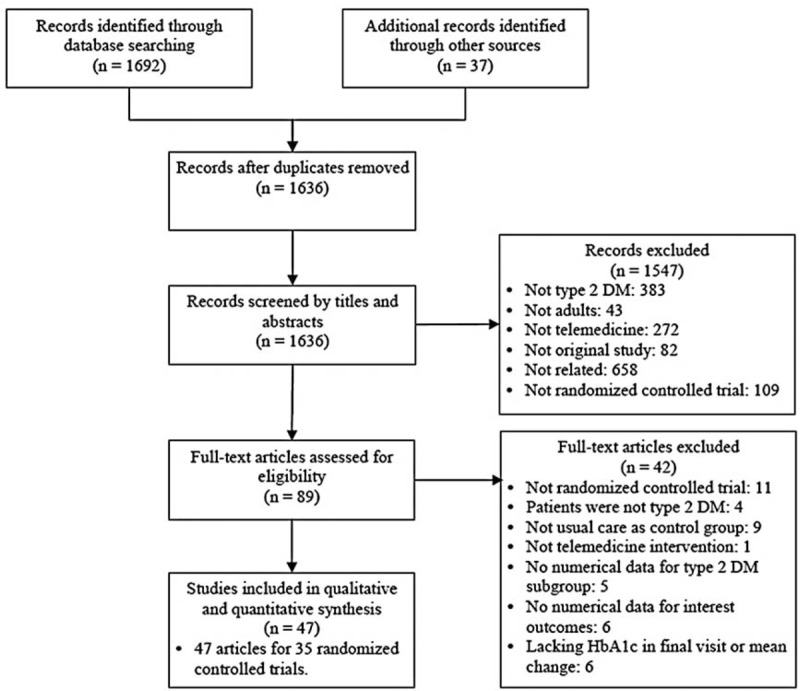
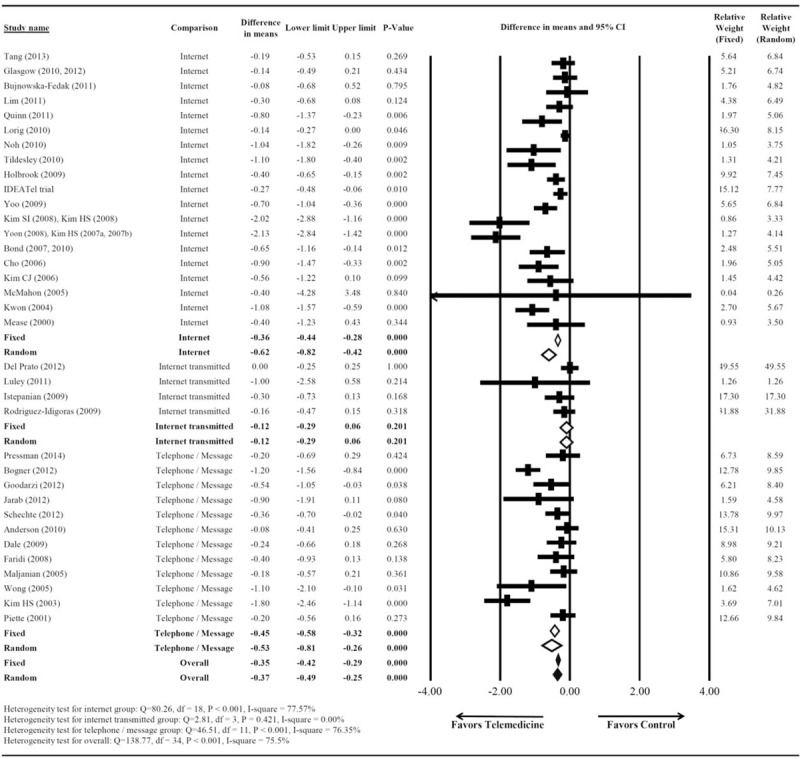
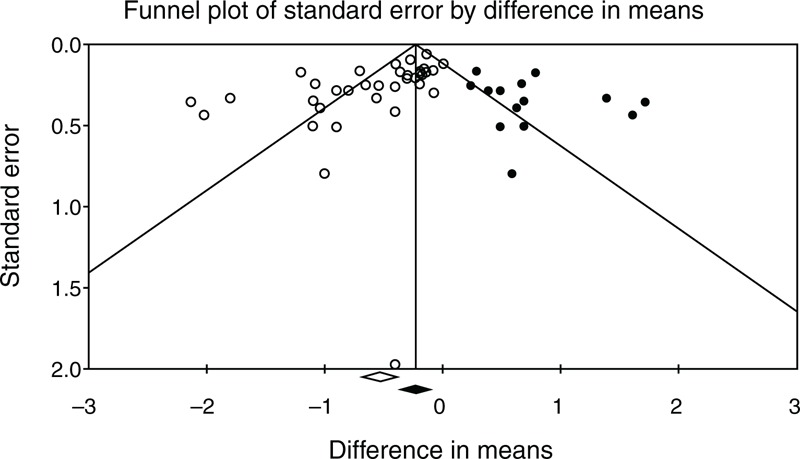
Emerging telemedicine programs offer potential low-cost solutions to the management of chronic disease. We sought to evaluate the clinical effectiveness and cost effectiveness of telemedicine approaches on glycemic control in patients with type 2 diabetes mellitus. Using terms related to type 2 diabetes and telemedicine, MEDLINE, Cochrane, EMBASE, and CINAHL Plus were searched to identify relevant studies published through February 28, 2014. Data from identified clinical trials were pooled according to telemedicine approach, and evaluated using conventional meta-analytical methods. We identified 47 articles, from 35 randomized controlled trials, reporting quantitative outcomes for hemoglobin A1c (HbA1c). Twelve of the 35 studies provided intervention via telephone, either in the form of a call or a text message; 19 studies tested internet-based programs, employing video-conferencing and/or informational websites; and four studies used interventions involving electronically transmitted recommendations made by clinicians in response to internet-based reporting by patients. Overall, pooled results from these studies revealed a small, but statistically significant, decrease in HbA1c following intervention, compared to conventional treatment (pooled difference in means=-0.37, 95% CI=-0.49 to -0.25, Z=-6.08, P<0.001). Only two of the 35 studies included assessment of cost-effectiveness. These studies were disparate, both in terms of overall expense and relative cost-effectiveness. Optimization of telemedicine approaches could potentially allow for more effective self-management of disease in type 2 diabetes patients, though evidence to-date is unconvincing. Furthermore, significant publication bias was detected, suggesting that the literature should be interpreted cautiously.
Overview
The claims and statistics of this paper haven’t been checked yet.
Free: it reads the open-access text and checks the first 5 claims that cite a source we can check. Create a free account to check every claim.
Integrity signals
Registry
Cites
Statistics
Figures
Verification
Claims the paper makes
The claims and statistics of this paper haven’t been checked yet.
Free: it reads the open-access text and checks the first 5 claims that cite a source we can check. Create a free account to check every claim.
Claims other papers make about this one
Each is checked against this paper’s own text: does it say what the citing paper says it does?
The source backs part of the claim, not all of it — or backs it for a different population, condition or comparison.
In the citing paper
“while the other six reviews concluded that remote monitoring was more effective than face-to-face care [14–19].”
From Telemedicine in the OECD: An umbrella review of clinical and cost-effectiveness, patient experience and implementation (2020) · cites this paper as [18]
Experimental — accuracy not yet measuredThe source backs part of the claim, not all of it — or backs it for a different population, condition or comparison.
In the citing paper
“This was the most commonly described telehealth component in the included systematic reviews and was associated with improved clinical outcomes in diabetes and heart failure [33,35,36,38,42,44,54,58]; however, findings for asthma and COPD were mostly neutral or inconsistent [61-63,65,66,68,69].”
From Telehealth Interventions to Support Self-Management of Long-Term Conditions: A Systematic Metareview of Diabetes, Heart Failure, Asthma, Chronic Obstructive Pulmonary Disease, and Cancer (2017) · cites this paper as [54]
Experimental — accuracy not yet measuredThe source backs part of the claim, not all of it — or backs it for a different population, condition or comparison.
In the citing paper
“Among 3 reviews [25, 32, 34], 2 have indicated a positive effect of cost savings due to less travel, wait times and increased access to services.”
From Effect of virtual care in type 2 diabetes management – a systematic umbrella review of systematic reviews and meta-analysis (2025) · cites this paper as [25]
Experimental — accuracy not yet measuredThe cited source says what the claim attributes to it.
In the citing paper
“Included studies in the second review produced very different incremental cost-effectiveness ratio (ICER) values of $491 and $29,869 for remote monitoring in patients with Type 2 diabetes [18].”
From Telemedicine in the OECD: An umbrella review of clinical and cost-effectiveness, patient experience and implementation (2020) · cites this paper as [18]
The cited source says what the claim attributes to it.
In the citing paper
“Of seven 2-star reviews [29,30,33,42,46,52,54], 4 were meta-analyses, all of which showed significant reductions in HbA1c compared with controls, although the effect sizes were small.”
4 more claims about this paper
Create a free account to see every claim other papers make about this one.
Self-check
Percentages, sums and reported differences re-computed from the paper’s own numbers.
The self-check needs the paper’s full text.
Citations
Cites
Liberati, A., Altman, D. G., Tetzlaff, J., Mulrow, C., Gøtzsche, P. C., Ioannidis, J. P. A., Clarke, M., Devereaux, P. J., Kleijnen, J., & Moher, D. (2009) · PLoS Medicine · doi:10.1371/journal.pmed.1000100 · Cited by 28,164
Liberati, A., Altman, D. G., Tetzlaff, J., Mulrow, C., Gøtzsche, P. C., Ioannidis, J. P. A., Clarke, M., Devereaux, P. J., Kleijnen, J., & Moher, D. (2009) · Annals of Internal Medicine · doi:10.7326/0003-4819-151-4-200908180-00136 · Cited by 10,349
Estimating the mean and variance from the median, range, and the size of a sample
Hozo, S. P., Djulbegovic, B., & Hozo, I. (2005) · BMC Medical Research Methodology · doi:10.1186/1471-2288-5-13 · Cited by 9,062
McCambridge, J., Witton, J., & Elbourne, D. R. (2014) · Journal of Clinical Epidemiology · doi:10.1016/j.jclinepi.2013.08.015 · Cited by 2,748
Verhagen, A. P., de Vet, H. C. W., de Bie, R. A., Kessels, A. G. H., Boers, M., Bouter, L. M., & Knipschild, P. G. (1998) · Journal of Clinical Epidemiology · doi:10.1016/s0895-4356(98)00131-0 · Cited by 2,379
Standards of Medical Care in Diabetes—2012
(2012) · Diabetes Care · doi:10.2337/dc12-s011 · Cited by 2,240
Gerontechnology acceptance by elderly Hong Kong Chinese: A senior technology acceptance model (STAM)
Chen, K., & Chan, A. H. S. (2014) · Ergonomics · doi:10.1080/00140139.2014.895855 · Cited by 679 · cited 1×
“Furthermore, while type 1 DM is first diagnosed in childhood, with patients acquiring self-management skills at a young age, type 2 DM is most frequently associated with an older population, more often unfamiliar with and averse to the technologies utilized in telemedicine.(15,16) To more clearly evaluate the potentia…”
MethodQuinn, C. C., Shardell, M. D., Terrin, M. L., Barr, E. A., Ballew, S. H., & Gruber-Baldini, A. L. (2011) · Diabetes Care · doi:10.2337/dc11-0366 · Cited by 650
Twenty years of telemedicine in chronic disease management – an evidence synthesis
Wootton, R. (2012) · Journal of Telemedicine and Telecare · doi:10.1258/jtt.2012.120219 · Cited by 545 · cited 3×
“Indeed, we are presently seeing unprecedented opportunities to reach previously underserved communities through telemedicine, and much has been discussed in the literature about the utility of such approaches in the control of chronic diseases, like type 2 DM. Undoubtedly, telemedicine holds the potential to significa…”
BackgroundSystematic review of cost effectiveness studies of telemedicine interventions
Whitten, P. S., Mair, F. S., Haycox, A., May, C. R., Williams, T. L., & Hellmich, S. (2002) · BMJ · doi:10.1136/bmj.324.7351.1434 · Cited by 526 · cited 3×
“Indeed, we are presently seeing unprecedented opportunities to reach previously underserved communities through telemedicine, and much has been discussed in the literature about the utility of such approaches in the control of chronic diseases, like type 2 DM. Undoubtedly, telemedicine holds the potential to significa…”
BackgroundLiang, X., Wang, Q., Yang, X., Cao, J., Chen, J., Mo, X., Huang, J., Wang, L., & Gu, D. (2011) · Diabetic Medicine · doi:10.1111/j.1464-5491.2010.03180.x · Cited by 515
Introduction to the Practice of Telemedicine
Craig, J., & Petterson, V. (2005) · Journal of Telemedicine and Telecare · doi:10.1177/1357633x0501100102 · Cited by 503 · cited 1×
“INTRODUCTION T elemedicine, as described by the World Health Organization (WHO) and the American Telemedicine Association, is characterized by the remote exchange of medical information and/or services between patient and clinician through electronic information communication technologies.(1,2,3) Ideally, telemedicine…”
BackgroundZurovac, D., Sudoi, R. K., Akhwale, W. S., Ndiritu, M., Hamer, D. H., Rowe, A. K., & Snow, R. W. (2011) · The Lancet · doi:10.1016/s0140-6736(11)60783-6 · Cited by 403
Shea, S., Weinstock, R. S., Teresi, J. A., Palmas, W., Starren, J., Cimino, J. J., Lai, A. M., Field, L., Morin, P. C., Goland, R., et al. (2009) · Journal of the American Medical Informatics Association · doi:10.1197/jamia.m3157 · Cited by 379
Computer-based diabetes self-management interventions for adults with type 2 diabetes mellitus
Pal, K., Eastwood, S. V., Michie, S., Farmer, A. J., Barnard, M. L., Peacock, R., Wood, B., Inniss, J. D., & Murray, E. (2013) · Cochrane Database of Systematic Reviews · doi:10.1002/14651858.cd008776.pub2 · Cited by 344
Piette, J. D., Weinberger, M., Kraemer, F. B., & McPhee, S. J. (2001) · Diabetes Care · doi:10.2337/diacare.24.2.202 · Cited by 329
Web-Based Care Management in Patients With Poorly Controlled Diabetes
McMahon, G. T., Gomes, H. E., Hickson Hohne, S., Hu, T. M.-J., Levine, B. A., & Conlin, P. R. (2005) · Diabetes Care · doi:10.2337/diacare.28.7.1624 · Cited by 319
Online Diabetes Self-Management Program
Lorig, K., Ritter, P. L., Laurent, D. D., Plant, K., Green, M., Jernigan, V. B. B., & Case, S. (2010) · Diabetes Care · doi:10.2337/dc09-2153 · Cited by 316
Shea, S., Weinstock, R. S., Starren, J., Teresi, J., Palmas, W., Field, L., Morin, P., Goland, R., Izquierdo, R. E., Wolff, L. T., et al. (2006) · Journal of the American Medical Informatics Association · doi:10.1197/jamia.m1917 · Cited by 312
Tang, P. C., Overhage, J. M., Chan, A. S., Brown, N. L., Aghighi, B., Entwistle, M. P., Hui, S. L., Hyde, S. M., Klieman, L. H., Mitchell, C. J., et al. (2013) · Journal of the American Medical Informatics Association · doi:10.1136/amiajnl-2012-001263 · Cited by 240
Holbrook, A., Thabane, L., Keshavjee, K., Dolovich, L., Bernstein, B., Chan, D., Troyan, S., Foster, G., Gerstein, H., & for the COMPETE II Investigators (2009) · Canadian Medical Association Journal · doi:10.1503/cmaj.081272 · Cited by 231
Bogner, H. R., Morales, K. H., de Vries, H. F., & Cappola, A. R. (2012) · The Annals of Family Medicine · doi:10.1370/afm.1344 · Cited by 228
Faridi, Z., Liberti, L., Shuval, K., Northrup, V., Ali, A., & Katz, D. L. (2008) · Journal of Evaluation in Clinical Practice · doi:10.1111/j.1365-2753.2007.00881.x · Cited by 217 · cited 1×
“Twelve of the 35 studies used telephone-based interventions that aimed at supporting and educating participant self-management, and were comprised of either periodic conversations with a healthcare advocate(10,22,27,28,37,52,54,56) or automated text messaging.(26,42) Most of the studies tailored these communications i…”
BackgroundFarmer, A., Gibson, O. J., Tarassenko, L., & Neil, A. (2005) · Diabetic Medicine · doi:10.1111/j.1464-5491.2005.01627.x · Cited by 211
Twelve-month outcomes of an Internet-based diabetes self-management support program
Glasgow, R. E., Kurz, D., King, D., Dickman, J. M., Faber, A. J., Halterman, E., Woolley, T., Toobert, D. J., Strycker, L. A., Estabrooks, P. A., et al. (2012) · Patient Education and Counseling · doi:10.1016/j.pec.2011.07.024 · Cited by 205
Establishment of Blood Glucose Monitoring System Using the Internet
Kwon, H.-S., Cho, J.-H., Kim, H.-S., Song, B.-R., Ko, S.-H., Lee, J.-M., Kim, S.-R., Chang, S.-A., Kim, H.-S., Cha, B.-Y., et al. (2004) · Diabetes Care · doi:10.2337/diacare.27.2.478 · Cited by 197
A short message service by cellular phone in type 2 diabetic patients for 12 months
Yoon, K.-H., & Kim, H.-S. (2008) · Diabetes Research and Clinical Practice · doi:10.1016/j.diabres.2007.09.007 · Cited by 196
Cho, J.-H., Chang, S.-A., Kwon, H.-S., Choi, Y.-H., Ko, S.-H., Moon, S.-D., Yoo, S.-J., Song, K.-H., Son, H.-S., Kim, H.-S., et al. (2006) · Diabetes Care · doi:10.2337/dc05-2371 · Cited by 196
Lim, S., Kang, S. M., Shin, H., Lee, H. J., Won Yoon, J., Yu, S. H., Kim, S.-Y., Yoo, S. Y., Jung, H. S., Park, K. S., et al. (2011) · Diabetes Care · doi:10.2337/dc10-1447 · Cited by 191
A nurse short message service by cellular phone in type‐2 diabetic patients for six months
Kim, H., & Jeong, H. (2007) · Journal of Clinical Nursing · doi:10.1111/j.1365-2702.2007.01698.x · Cited by 180
Effectiveness of mobile and internet intervention in patients with obese type 2 diabetes
Kim, S.-I., & Kim, H.-S. (2008) · International Journal of Medical Informatics · doi:10.1016/j.ijmedinf.2007.07.006 · Cited by 180
Evaluation of a mobile phone telemonitoring system for glycaemic control in patients with diabetes
Istepanian, R. S., Zitouni, K., Harry, D., Moutosammy, N., Sungoor, A., Tang, B., & Earle, K. A. (2009) · Journal of Telemedicine and Telecare · doi:10.1258/jtt.2009.003006 · Cited by 177
Jarab, A. S., Alqudah, S. G., Mukattash, T. L., Shattat, G., & Al-Qirim, T. (2012) · Journal of Managed Care Pharmacy · doi:10.18553/jmcp.2012.18.7.516 · Cited by 168
Adherence to diabetes control recommendations: impact of nurse telephone calls
Kim, H., & Oh, J. (2003) · Journal of Advanced Nursing · doi:10.1046/j.1365-2648.2003.02800.x · Cited by 163
A Ubiquitous Chronic Disease Care system using cellular phones and the internet
Yoo, H. J., Park, M. S., Kim, T. N., Yang, S. J., Cho, G. J., Hwang, T. G., Baik, S. H., Choi, D. S., Park, G. H., & Choi, K. M. (2009) · Diabetic Medicine · doi:10.1111/j.1464-5491.2009.02732.x · Cited by 161
Goodarzi, M., Ebrahimzadeh, I., Rabi, A., Saedipoor, B., & Jafarabadi, M. A. (2012) · Journal of Diabetes & Metabolic Disorders · doi:10.1186/2251-6581-11-10 · Cited by 159 · cited 1×
“Twelve of the 35 studies used telephone-based interventions that aimed at supporting and educating participant self-management, and were comprised of either periodic conversations with a healthcare advocate(10,22,27,28,37,52,54,56) or automated text messaging.(26,42) Most of the studies tailored these communications i…”
BackgroundDale, J. R., Caramlau, I. O., Sturt, J. A., Friede, T., & Walker, R. (2008) · Patient Education and Counseling · doi:10.1016/j.pec.2008.09.014 · Cited by 145
Telemedicine Improved Diabetic Management
Whitlock, W. L., Brown, A., Moore, K., Pavliscsak, H., Dingbaum, A., Lacefield, D., Buker, K., & Xenakis, S. (2000) · Military Medicine · doi:10.1093/milmed/165.8.579 · Cited by 133
Kim, H.-S. (2007) · International Journal of Nursing Studies · doi:10.1016/j.ijnurstu.2006.01.011 · Cited by 130
Bond, G. E., Burr, R. L., Wolf, F. M., & Feldt, K. (2010) · The Diabetes Educator · doi:10.1177/0145721710366758 · Cited by 130
Bond, G. E., Burr, R., Wolf, F. M., Price, M., McCurry, S. M., & Teri, L. (2007) · Diabetes Technology & Therapeutics · doi:10.1089/dia.2006.0057 · Cited by 121
Nurse follow‐up of patients with diabetes: randomized controlled trial
Wong, F. K. Y., Mok, M. P. H., Chan, T., & Tsang, M. W. (2005) · Journal of Advanced Nursing · doi:10.1111/j.1365-2648.2005.03404.x · Cited by 114
Trief, P. M., Izquierdo, R., Eimicke, J. P., Teresi, J. A., Goland, R., Palmas, W., Shea, S., & Weinstock, R. S. (2013) · Ethnicity & Health · doi:10.1080/13557858.2012.700915 · Cited by 112
Glasgow, R. E., Kurz, D., King, D., Dickman, J. M., Faber, A. J., Halterman, E., Wooley, T., Toobert, D. J., Strycker, L. A., Estabrooks, P. A., et al. (2010) · Journal of General Internal Medicine · doi:10.1007/s11606-010-1480-0 · Cited by 106
Telephone Modem Access Improves Diabetes Control in Those with Insulin-Requiring Diabetes
Ahring, K. K., Ahring, J. P. K., Joyce, C., & Farid, N. R. (1992) · Diabetes Care · doi:10.2337/diacare.15.8.971 · Cited by 105 · cited 1×
“Previously, strategies have included weekly transmission of blood glucose data by modem, with or without nurse follow-up, with moderate success.(8,9) More recently, researchers have explored approaches utilizing the internet for reporting, education, and support; telemetry devices; and cell phone text messaging to imp…”
BackgroundKIM, C.-J., & KANG, D.-H. (2006) · CIN: Computers, Informatics, Nursing · doi:10.1097/00024665-200611000-00008 · Cited by 98
Web-Based Comprehensive Information System for Self-Management of Diabetes Mellitus
Noh, J.-H., Cho, Y.-J., Nam, H.-W., Kim, J.-H., Kim, D.-J., Yoo, H.-S., Kwon, Y.-W., Woo, M.-H., Cho, J.-W., Hong, M.-H., et al. (2010) · Diabetes Technology & Therapeutics · doi:10.1089/dia.2009.0122 · Cited by 90
Bujnowska-Fedak, M. M., Puchała, E., & Steciwko, A. (2011) · Telemedicine and e-Health · doi:10.1089/tmj.2010.0113 · Cited by 84
What Explains Usage of Mobile Physician-Rating Apps? Results From a Web-Based Questionnaire
Bidmon, S., Terlutter, R., & Röttl, J. (2014) · Journal of Medical Internet Research · doi:10.2196/jmir.3122 · Cited by 80 · cited 1×
“Furthermore, while type 1 DM is first diagnosed in childhood, with patients acquiring self-management skills at a young age, type 2 DM is most frequently associated with an older population, more often unfamiliar with and averse to the technologies utilized in telemedicine.(15,16) To more clearly evaluate the potentia…”
MethodTelemedicine Influence on the Follow-Up of Type 2 Diabetes Patients
Rodríguez-Idígoras, M. I., Sepúlveda-Muñoz, J., Sánchez-Garrido-Escudero, R., Martínez-González, J. L., Escolar-Castelló, J. L., Paniagua-Gómez, I. M., Bernal-López, R., Fuentes-Simón, M. V., & Garófano-Serrano, D. (2009) · Diabetes Technology & Therapeutics · doi:10.1089/dia.2008.0114 · Cited by 79 · cited 1×
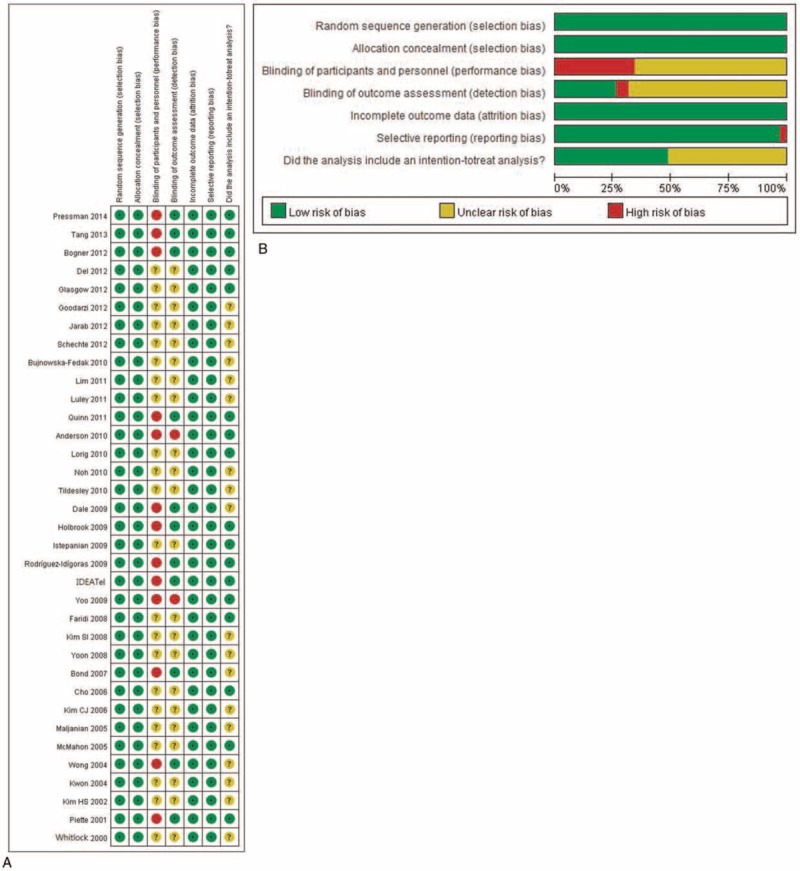
“As stated by Rodrı́guez-Idı́goras (2009), given the nature of the intervention, it is almost impossible to blind the patients, as well as their healthcare providers.(40) Of all those involved in the studies, the outcome assessors demonstrated the greatest opportunity and frequency of blinding.”
BackgroundDepression and Glycemic Control in Elderly Ethnically Diverse Patients With Diabetes
Trief, P. M., Morin, P. C., Izquierdo, R., Teresi, J. A., Eimicke, J. P., Goland, R., Starren, J., Shea, S., & Weinstock, R. S. (2006) · Diabetes Care · doi:10.2337/diacare.29.04.06.dc05-1769 · Cited by 77
Weinstock, R. S., Brooks, G., Palmas, W., Morin, P. C., Teresi, J. A., Eimicke, J. P., Silver, S., Izquierdo, R., Goland, R., & Shea, S. (2011) · Age and Ageing · doi:10.1093/ageing/afq147 · Cited by 72
Luley, C. H., Blaik, A., Reschke, K., Klose, S., & Westphal, S. (2010) · Diabetes Research and Clinical Practice · doi:10.1016/j.diabres.2010.11.020 · Cited by 72
Anderson, D. R., Christison-Lagay, J., Villagra, V., Liu, H., & Dziura, J. (2010) · Journal of General Internal Medicine · doi:10.1007/s11606-010-1419-5 · Cited by 64
Technological intervention for obese patients with type 2 diabetes
Kim, H.-S., & Song, M.-S. (2008) · Applied Nursing Research · doi:10.1016/j.apnr.2007.01.007 · Cited by 59
Tildesley, H. D., Mazanderani, A. B., & Ross, S. A. (2010) · Diabetes Care · doi:10.2337/dc09-2256 · Cited by 57
Prato, S. D., Nicolucci, A., Lovagnini-Scher, A. C., Turco, S., Leotta, S., & Vespasiani, G. (2012) · Diabetes Technology & Therapeutics · doi:10.1089/dia.2011.0163 · Cited by 54
Maljanian, R., Grey, N., Staff, I., & Conroy, L. (2005) · Disease Management · doi:10.1089/dis.2005.8.15 · Cited by 51
Moreno, L., Dale, S. B., Chen, A. Y., & Magee, C. A. (2009) · Diabetes Care · doi:10.2337/dc09-0094 · Cited by 50 · cited 1×
“Cost-Effectiveness of Telemedicine Intervention Only two studies addressed the costs associated with telemedicine interventions.(28,60) Schechter (2012) utilized a telephone-based intervention, comprised of 10 phone conversations per year between the patient and a healthcare practitioner.”
BackgroundPalmas, W., Shea, S., Starren, J., Teresi, J. A., Ganz, M. L., Burton, T. M., Pashos, C. L., Blustein, J., Field, L., Morin, P. C., et al. (2010) · Journal of the American Medical Informatics Association · doi:10.1136/jamia.2009.002592 · Cited by 47
Shea, S., Kothari, D., Teresi, J. A., Kong, J., Eimicke, J. P., Lantigua, R. A., Palmas, W., & Weinstock, R. S. (2013) · American Journal of Public Health · doi:10.2105/ajph.2012.300909 · Cited by 46
Schechter, C. B., Cohen, H. W., Shmukler, C., & Walker, E. A. (2012) · Diabetes Care · doi:10.2337/dc12-0048 · Cited by 39 · cited 1×
“Cost-Effectiveness of Telemedicine Intervention Only two studies addressed the costs associated with telemedicine interventions.(28,60) Schechter (2012) utilized a telephone-based intervention, comprised of 10 phone conversations per year between the patient and a healthcare practitioner.”
BackgroundBergenstal, R. M., Anderson, R. L., Bina, D. M., Johnson, M. L., Davidson, J. L., Solarz-Johnson, B., & Kendall, D. M. (2005) · Diabetes Technology & Therapeutics · doi:10.1089/dia.2005.7.241 · Cited by 37 · cited 1×
“Previously, strategies have included weekly transmission of blood glucose data by modem, with or without nurse follow-up, with moderate success.(8,9) More recently, researchers have explored approaches utilizing the internet for reporting, education, and support; telemetry devices; and cell phone text messaging to imp…”
BackgroundPressman, A. R., Kinoshita, L., Kirk, S., Barbosa, G. M., Chou, C., & Minkoff, J. (2014) · Telemedicine and e-Health · doi:10.1089/tmj.2013.0157 · Cited by 35 · cited 1×
“Four of the studies used internet-transmitted interventions, whereby participants’ blood glucose readings were regularly transmitted directly to their nurses’ or physicians’ offices via the internet,(31) telephone,(23,31) Bluetooth,(31,39) modem,(31) cable,(31) cellphone,(39) or a remote biometric devices that transmi…”
Background
Research works printed but not linked: 3
- World Health Organization. Telemedicine – Opportunities and Developments in Member States. Global Observatory for eHealth Series. vol. 2: 2014 2; Available from: http://www.whoint/goe/publications/ehealth_series_vol2/en/.
- Institute of Medicine. The Role of Telehealth in an Evolving Health Care Environment: Workshop Summary. Washington, DC: The National Academies Press; 2012. 24901186
- Glasgow RE Kurz D King D Outcomes of minimal and moderate support versions of an internet-based diabetes self-management support program. J Gen Intern Med 2010; 25: 1315– 1322. 20714820 PMC2988142 · DOI · Paper page
Cited by
Bringing health care to the patient: An overview of the use of telemedicine in OECD countries
(2020) · OECD Health Working Papers · doi:10.1787/8e56ede7-en · Cited by 539
Greenwood, D. A., Gee, P. M., Fatkin, K. J., & Peeples, M. (2017) · Journal of Diabetes Science and Technology · doi:10.1177/1932296817713506 · Cited by 526
Iribarren, S. J., Cato, K., Falzon, L., & Stone, P. W. (2017) · PLOS ONE · doi:10.1371/journal.pone.0170581 · Cited by 519
Hanlon, P., Daines, L., Campbell, C., McKinstry, B., Weller, D., & Pinnock, H. (2017) · Journal of Medical Internet Research · doi:10.2196/jmir.6688 · Cited by 499
The clinical effectiveness of telehealth: A systematic review of meta-analyses from 2010 to 2019
Snoswell, C. L., Chelberg, G., De Guzman, K. R., Haydon, H. M., Thomas, E. E., Caffery, L. J., & Smith, A. C. (2023) · Journal of Telemedicine and Telecare · doi:10.1177/1357633x211022907 · Cited by 397
Metadata
- Authors
- Zhai, Y.-K., Zhu, W.-J., Cai, Y.-L., Sun, D.-X., & Zhao, J.
- Affiliations
- Zhengzhou University (CN)
- Corresponding author
- Zhao, Jie
- ORCID
- Zhao, Jie
- Venue
- Medicine
- Published
- 2014-12
- Volume
- 93
- Issue
- 28
- Pages
- e312
- ISSN
- 0025-7974 (ISSN-L)
- PMC
- PMC4603080
- OpenAlex
- W2048921463
- Semantic Scholar
- daa38a0b9a2cb880ea9394edd285dfb5b48f2b85
- Cited by
- 221
- References
- 65
- Citations by year
- 2026: 2 · 2025: 12 · 2024: 8 · 2023: 19 · 2022: 32 · 2021: 30 · 2020: 32 · 2019: 17 · 2018: 21 · 2017: 20 · 2016: 23 · 2015: 5
- FWCI
- 2.50
- Type
- journal article
- Language
- en
- Open access
- gold
- doi.org
- Licence
- cc-by-nc-nd
- Locations
- Medicine (publishedVersion, cc-by-nc-nd)
- PubMed Central (publishedVersion, cc-by-nc-nd)
- PubMed (publishedVersion)
- Funders
- Zhengzhou University
- Innovation Scientists and Technicians Troop Construction Projects of Henan Province
- Topics
- Health Sciences › Medicine › Public Health, Environmental and Occupational Health › Telemedicine and Telehealth Implementation
- Health Sciences › Health Professions › General Health Professions › Mobile Health and mHealth Applications
- Health Sciences › Medicine › Endocrinology, Diabetes and Metabolism › Diabetes Management and Education
- Keywords
- telemedicine, type 2 diabetes, glycemic control, HbA1c, cost-effectiveness, telephone-delivered intervention, text messaging intervention, online intervention, videoconferencing, self-management, publication bias
- MeSH terms
- Blood Glucose, Diabetes Mellitus, Type 2, Humans, Self Care, Reproducibility of Results, Telemedicine
About these checks
Registry, retraction, Cites and statistics results are computed, not judged, with one exception: a printed reference that no index lists is read once by a model before it counts as a citation error. Claims are extracted by a model and kept only when their quote appears verbatim in the text; each cited source is then checked, with a model’s help, for whether it says what the claim relies on. Those verdicts can be wrong — read the claim’s quote and the cited source before relying on one.
Statistics and arithmetic are recomputed, not judged.
Confidence bands are shown only for fields calibrated on our annotated test set. None is calibrated yet, so no band is shown.
What counts as a claim ›How we measure confidence ›How we check this ›
Are you an author, or do you see a problem with this page? Request a review
Data sources
Bibliographic data: Semantic Scholar, OpenAlex, Crossref.
Contains information from the Semantic Scholar Academic Graph Datasets, made available under the ODC Attribution License (ODC-BY 1.0).
Semantic Scholar’s data is described in: Kinney, R., et al. (2023). The Semantic Scholar Open Data Platform. arXiv:2301.10140.
