

Pathophysiology of refractory obsessive-compulsive disorder: A study of visual search combined with overactive performance monitoring
Open accessThe DOI matches its Crossref record; 45 of the 45 references it cites were found in a registry or an index.
Abstract
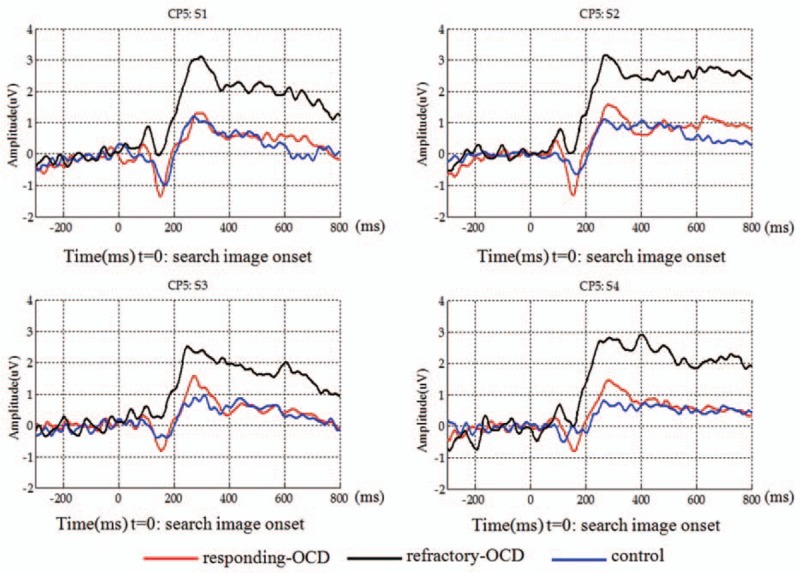
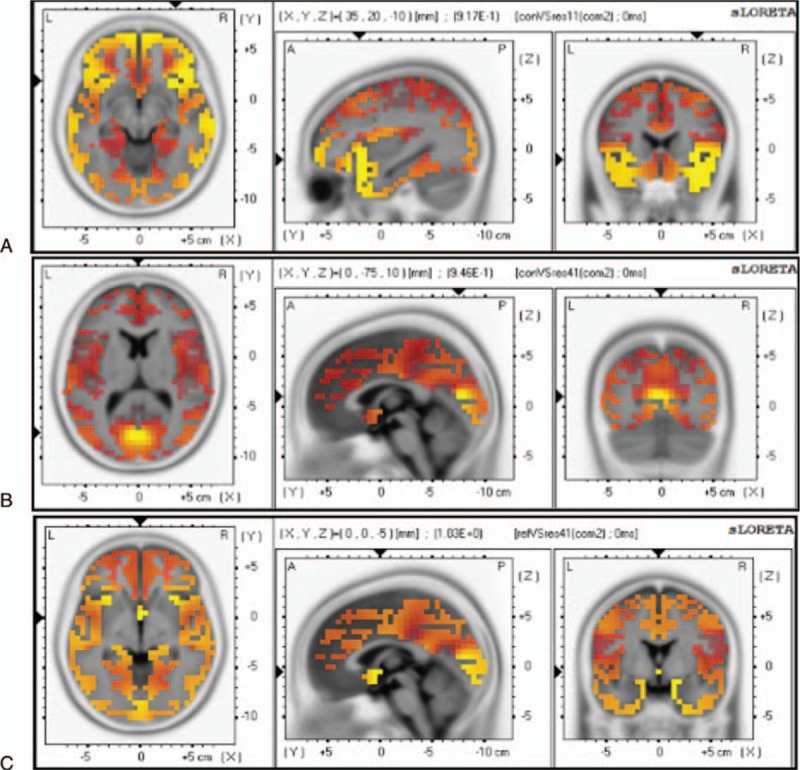
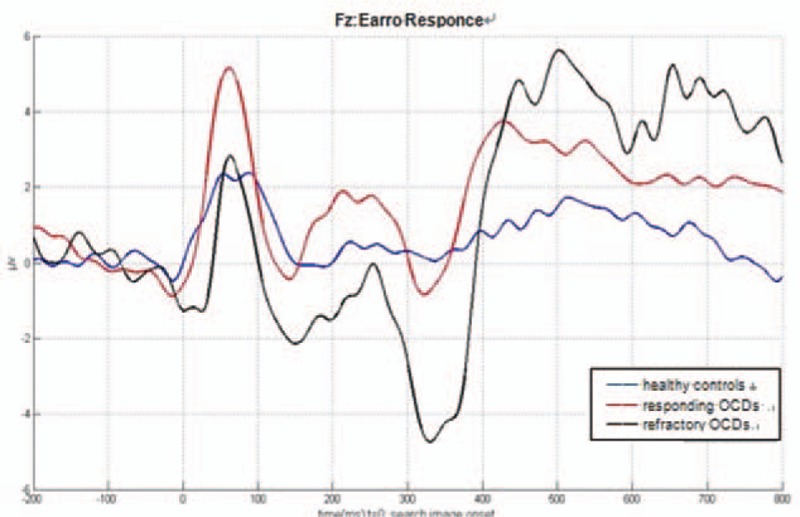
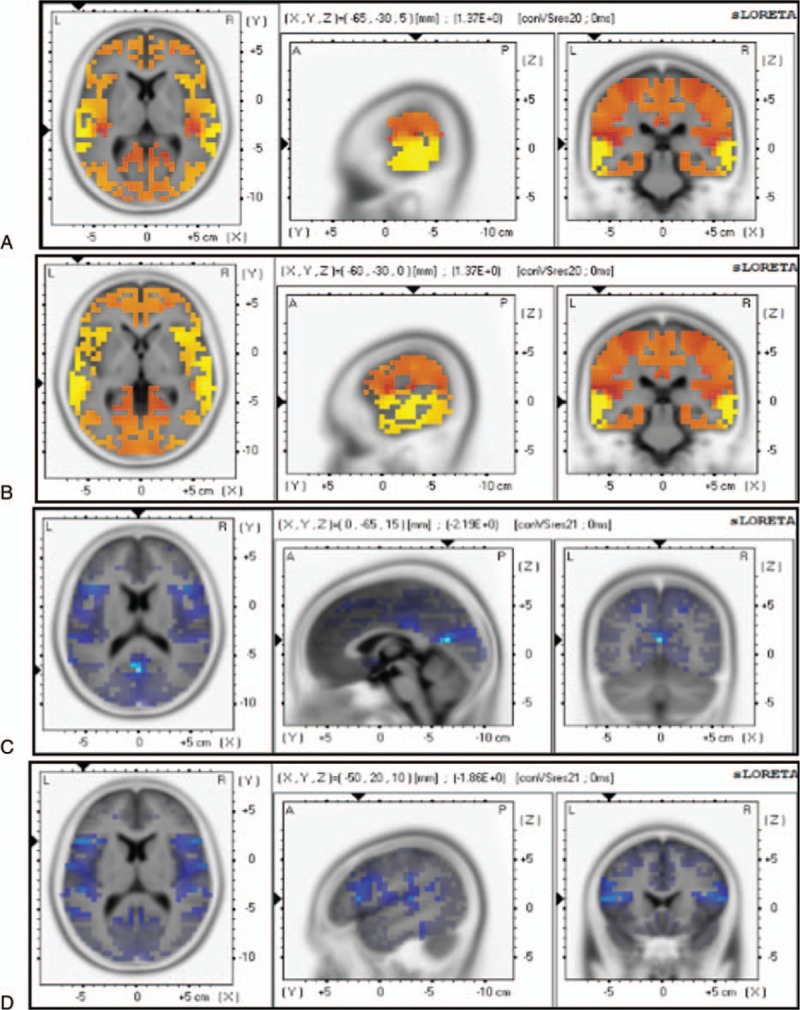
Based on both functional and structural studies of excessive activity, fronto-striatal-thalamic-cortical and cortico-striatal circuits have been hypothesized to underlie the pathophysiology of obsessive-compulsive disorder (OCD). However, the neurobiological underpinnings of OCD refractory to medication and therapy remain controversial. This study aimed to evaluate neuroanatomical abnormalities of the whole brain and to evaluate visual processing in patients with refractory OCD.This study was comprised of 2 experiments. The neuroanatomical abnormalities of the whole brain were evaluated using a visual search in combination with overactive performance monitoring (Experiment I), and visual processing was evaluated using event-related potentials recorded from subjects during performance of a visual search task. We also examined the amplitudes and latency of the error-related negativity (ERN) using a modified flanker task (Experiment II). Standard low-resolution electromagnetic tomography analysis was applied to determine the special areas.Patients with refractory OCD had a significantly greater number of saccades and prolonged latencies relative to the healthy controls. Scalp map topography confirmed that visual cognitive and executive dysfunction was localized to the fusiform gyrus. Furthermore, we found that during a modified flanker task, ERNs had a greater amplitude and a prolonged latency relative to those of the healthy controls. Further data analysis suggested that cognitive dysfunction and compulsive behavior in OCD patients were linked to abnormalities within the dorsolateral prefrontal cortex (DLPFC).We identified abnormal activities within the fusiform gyrus and DLPFC that likely play important roles in the pathophysiology of OCD.
Overview
The claims and statistics of this paper haven’t been checked yet.
Free: it reads the open-access text and checks the first 5 claims that cite a source we can check. Create a free account to check every claim.
Integrity signals
Registry
Cites
Statistics
Figures
Verification
Claims the paper makes
The claims and statistics of this paper haven’t been checked yet.
Free: it reads the open-access text and checks the first 5 claims that cite a source we can check. Create a free account to check every claim.
Claims other papers make about this one
Each is checked against this paper’s own text: does it say what the citing paper says it does?
The cited source doesn’t support the claim as written.
In the citing paper
“the question of whether the ERN and other error‐related evoked potentials differ between treatment‐resistant patients and nonresistant patients has not been evaluated except in one study which, however, involved only three treatment‐resistant OCD patients [11].”
From Error-Related Brain Potentials as Biomarkers of Pathology Severity and Treatment Resistance in Patients With Obsessive-Compulsive Disorder (2026) · cites this paper as [11]
Checked by a reasoning model — may be wrong.
Experimental — accuracy not yet measuredThe source backs part of the claim, not all of it — or backs it for a different population, condition or comparison.
In the citing paper
“All patients had longer response times and made more errors than control participants, but treatment‐resistant patients had shorter response times and made more errors than responders.”
From Error-Related Brain Potentials as Biomarkers of Pathology Severity and Treatment Resistance in Patients With Obsessive-Compulsive Disorder (2026) · cites this paper as [11]
Experimental — accuracy not yet measuredThe source backs part of the claim, not all of it — or backs it for a different population, condition or comparison.
In the citing paper
“Using functional imaging, Liu et al. [11] separated three resistant patients from six other patients who responded to drug treatments.”
From Error-Related Brain Potentials as Biomarkers of Pathology Severity and Treatment Resistance in Patients With Obsessive-Compulsive Disorder (2026) · cites this paper as [11]
Experimental — accuracy not yet measuredThe cited source says what the claim attributes to it.
In the citing paper
“The amplitude of the ERN evoked during a flanker task was lower in resistant patients than in responders and tended to be lower than in controls.”
From Error-Related Brain Potentials as Biomarkers of Pathology Severity and Treatment Resistance in Patients With Obsessive-Compulsive Disorder (2026) · cites this paper as [11]
The cited source says what the claim attributes to it.
In the citing paper
“Nevertheless, this finding appears to be consistent with the report by Liu et al. [11], which found a weaker ERN in highly resistant patients than in other patients.”
From Error-Related Brain Potentials as Biomarkers of Pathology Severity and Treatment Resistance in Patients With Obsessive-Compulsive Disorder (2026) · cites this paper as [11]
2 more claims about this paper
Create a free account to see every claim other papers make about this one.
Self-check
Percentages, sums and reported differences re-computed from the paper’s own numbers.
The self-check needs the paper’s full text.
Citations
Cites
The Yale-Brown Obsessive Compulsive Scale: I. Development, Use, and Reliability
Goodman, W. K. (1989) · Archives of General Psychiatry · doi:10.1001/archpsyc.1989.01810110048007 · Cited by 7,712 · cited 1×
“Images from a total of 6 categories (each containing 40 images of daily-life objects) were selected as the targets, including vehicles, kitchen appliances, small animals, musical instruments, fruits and vegetables, and small household appliances.”
BackgroundA new method for off-line removal of ocular artifact
Gratton, G., Coles, M. G. H., & Donchin, E. (1983) · Electroencephalography and Clinical Neurophysiology · doi:10.1016/0013-4694(83)90135-9 · Cited by 5,055
MacDonald, A. W., Cohen, J. D., Stenger, V. A., & Carter, C. S. (2000) · Science · doi:10.1126/science.288.5472.1835 · Cited by 3,666
The Obsessive-Compulsive Inventory: Development and validation of a short version.
Foa, E. B., Huppert, J. D., Leiberg, S., Langner, R., Kichic, R., Hajcak, G., & Salkovskis, P. M. (2002) · Psychological Assessment · doi:10.1037/1040-3590.14.4.485 · Cited by 2,959 · cited 1×
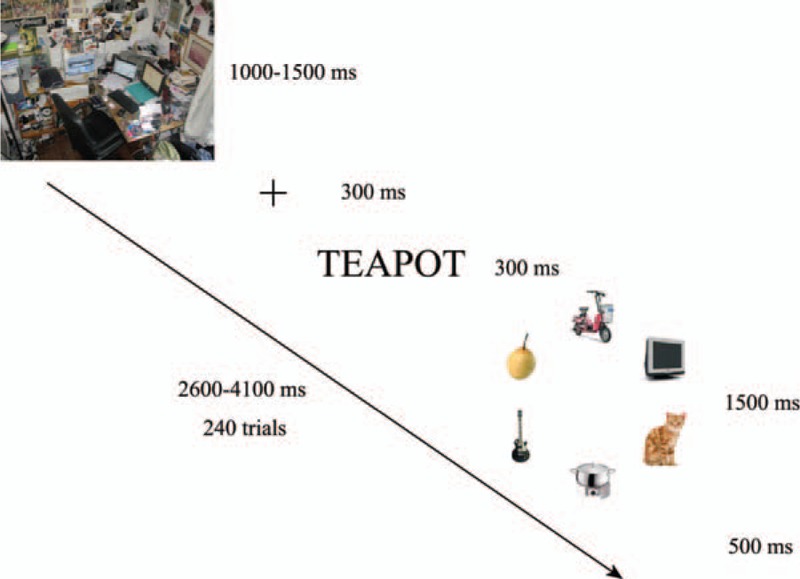
“Finally, 6 object images from the 6 categories, respectively, including the target image or not, were presented in the center of the screen with a 2.4-degree visual angle radius.”
MethodInfluentialCohen, L., Dehaene, S., Naccache, L., Lehéricy, S., Dehaene-Lambertz, G., Hénaff, M.-A., & Michel, F. (2000) · Brain · doi:10.1093/brain/123.2.291 · Cited by 1,954
The unique role of the visual word form area in reading
Dehaene, S., & Cohen, L. (2011) · Trends in Cognitive Sciences · doi:10.1016/j.tics.2011.04.003 · Cited by 1,390
Menzies, L., Chamberlain, S. R., Laird, A. R., Thelen, S. M., Sahakian, B. J., & Bullmore, E. T. (2008) · Neuroscience & Biobehavioral Reviews · doi:10.1016/j.neubiorev.2007.09.005 · Cited by 1,190 · cited 1×
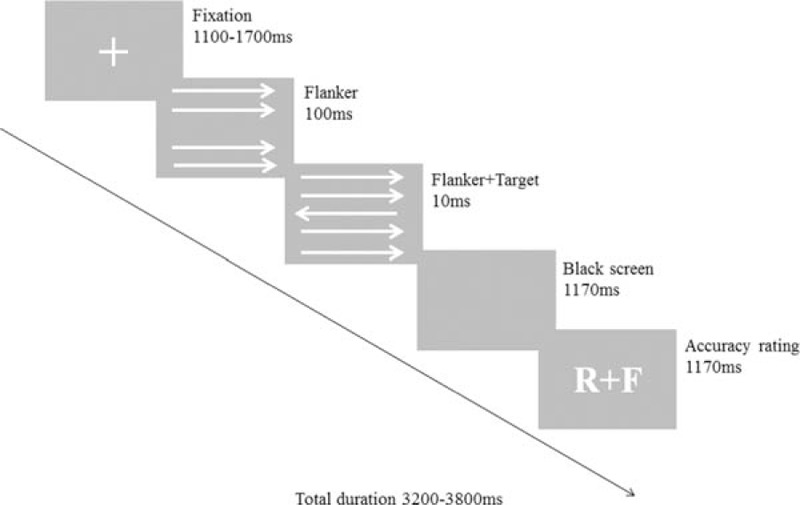
“Experiment I included a visual search combined with an ERP experiment, and Experiment II was carried out using the modified flanker interference task.”
MethodFunctional imaging with low-resolution brain electromagnetic tomography (LORETA): a review.
Pascual-Marqui, R. D., Esslen, M., Kochi, K., & Lehmann, D. (2002) · PubMed · Cited by 885
Denys, D., Mantione, M., Figee, M., van den Munckhof, P., Koerselman, F., Westenberg, H., Bosch, A., & Schuurman, R. (2010) · Archives of General Psychiatry · doi:10.1001/archgenpsychiatry.2010.122 · Cited by 763 · cited 1×
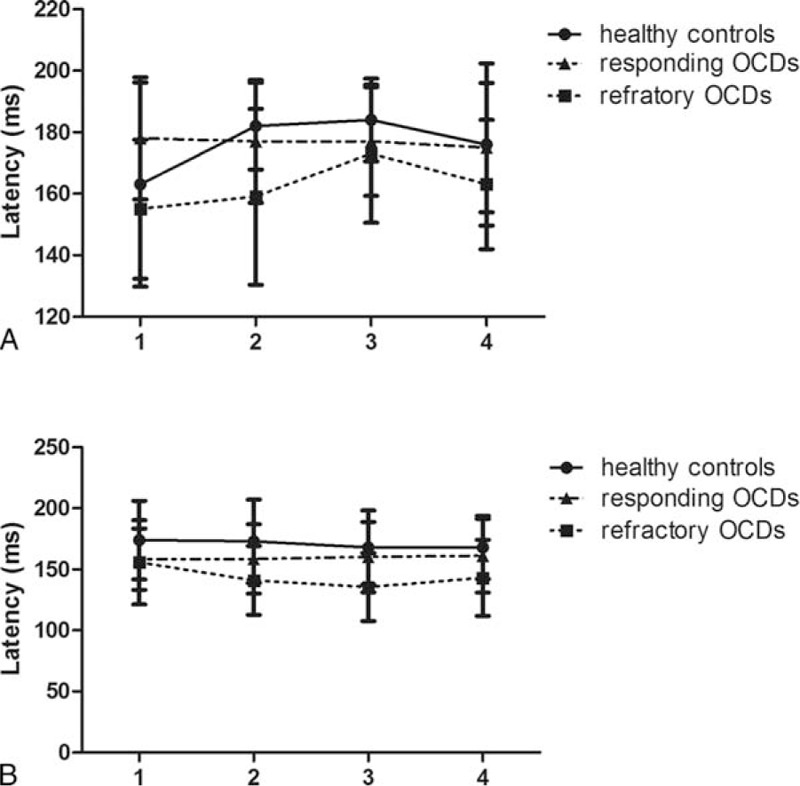
“Patients with refractory OCD had a significantly greater number of saccades and prolonged latencies relative to the healthy controls.”
BackgroundAction-Monitoring Dysfunction in Obsessive-Compulsive Disorder
Gehring, W. J., Himle, J., & Nisenson, L. G. (2000) · Psychological Science · doi:10.1111/1467-9280.00206 · Cited by 670 · cited 1×
“Experiment I included a visual search combined with an ERP experiment, and Experiment II was carried out using the modified flanker interference task.”
MethodFrontal midline theta reflects anxiety and cognitive control: Meta-analytic evidence
Cavanagh, J. F., & Shackman, A. J. (2015) · Journal of Physiology-Paris · doi:10.1016/j.jphysparis.2014.04.003 · Cited by 623 · cited 1×
“Experiment I included a visual search combined with an ERP experiment, and Experiment II was carried out using the modified flanker interference task.”
MethodLuu, P., Tucker, D. M., & Makeig, S. (2004) · Clinical Neurophysiology · doi:10.1016/j.clinph.2004.03.031 · Cited by 545
Dorsal anterior cingulate cortex shows fMRI response to internal and external error signals
Holroyd, C. B., Nieuwenhuis, S., Yeung, N., Nystrom, L., Mars, R. B., Coles, M. G. H., & Cohen, J. D. (2004) · Nature Neuroscience · doi:10.1038/nn1238 · Cited by 485
Error-related hyperactivity of the anterior cingulate cortex in obsessive-compulsive disorder
Fitzgerald, K. D., Welsh, R. C., Gehring, W. J., Abelson, J. L., Himle, J. A., Liberzon, I., & Taylor, S. F. (2005) · Biological Psychiatry · doi:10.1016/j.biopsych.2004.10.038 · Cited by 378
Aouizerate, B., Cuny, E., Martin-Guehl, C., Guehl, D., Amieva, H., Benazzouz, A., Fabrigoule, C., Allard, M., Rougier, A., Bioulac, B., et al. (2004) · Journal of Neurosurgery · doi:10.3171/jns.2004.101.4.0682 · Cited by 359
Hester, R., Foxe, J. J., Molholm, S., Shpaner, M., & Garavan, H. (2005) · NeuroImage · doi:10.1016/j.neuroimage.2005.04.035 · Cited by 310
Endrass, T., Klawohn, J., Schuster, F., & Kathmann, N. (2008) · Neuropsychologia · doi:10.1016/j.neuropsychologia.2007.12.001 · Cited by 254 · cited 4×
“Abbreviations: ACC = Anterior cingulate cortex, BDI = Beck-Depression-Inventory, CGI =Clinical Global Impressions, DLPFC = Dorsolateral prefrontal cortex, DLPFC = Dorsolateral prefrontal cortex, DSM-IV = Diagnostic and Statistical Manual of Mental Disorders, EEG = Electroencephalography, ERN = error-related negativity…”
BackgroundInfluentialA cybernetic model of obsessive-compulsive psychopathology
Pitman, R. K. (1987) · Comprehensive Psychiatry · doi:10.1016/0010-440x(87)90070-8 · Cited by 229 · cited 1×
“Experiment I included a visual search combined with an ERP experiment, and Experiment II was carried out using the modified flanker interference task.”
MethodRiesel, A., Endrass, T., Kaufmann, C., & Kathmann, N. (2011) · American Journal of Psychiatry · doi:10.1176/appi.ajp.2010.10030416 · Cited by 228 · cited 1×
“Experiment I included a visual search combined with an ERP experiment, and Experiment II was carried out using the modified flanker interference task.”
MethodClinical features associated to refractory obsessive–compulsive disorder
FERRAO, Y., SHAVITT, R., BEDIN, N., DEMATHIS, M., CARLOSLOPES, A., FONTENELLE, L., TORRES, A., & MIGUEL, E. (2006) · Journal of Affective Disorders · doi:10.1016/j.jad.2006.04.019 · Cited by 223 · cited 1×
“Furthermore, we found that during a modified flanker task, ERNs had a greater amplitude and a prolonged latency relative to those of the healthy controls.”
BackgroundLafleur, D. L., Pittenger, C., Kelmendi, B., Gardner, T., Wasylink, S., Malison, R. T., Sanacora, G., Krystal, J. H., & Coric, V. (2006) · Psychopharmacology · doi:10.1007/s00213-005-0246-6 · Cited by 199
Roche, R. A. P., Garavan, H., Foxe, J. J., & O’Mara, S. M. (2004) · Experimental Brain Research · doi:10.1007/s00221-004-1985-z · Cited by 177
Early (M170) activation of face-specific cortex by face-like objects
Hadjikhani, N., Kveraga, K., Naik, P., & Ahlfors, S. P. (2009) · NeuroReport · doi:10.1097/wnr.0b013e328325a8e1 · Cited by 169
Prevalence of Symptoms of Body Dysmorphic Disorder and Its Correlates: A Cross-Cultural Comparison
Bohne, A., Keuthen, N. J., Wilhelm, S., Deckersbach, T., & Jenike, M. A. (2002) · Psychosomatics · doi:10.1176/appi.psy.43.6.486 · Cited by 164
(2006) · PubMed · Cited by 159
OCD cognitions and symptoms in different religious contexts
Yorulmaz, O., Gençöz, T., & Woody, S. R. (2008) · Journal of Anxiety Disorders · doi:10.1016/j.janxdis.2008.11.001 · Cited by 148
Evidence-Based Assessment of Obsessive–Compulsive Disorder
Rapp, A. M., Bergman, R. L., Piacentini, J., & Mcguire, J. F. (2016) · Journal of Central Nervous System Disease · doi:10.4137/jcnsd.s38359 · Cited by 148 · cited 1×
“Worldwide, lifetime prevalence estimates for OCD are approximately 2%.([1]) Two popular and well-characterized treatments for OCD are cognitive behavior therapy and selective serotonin reuptake inhibitors, with 40% to 60% of patients achieving significant symptomatic improvement.”
BackgroundVolumetric MRI study of key brain regions implicated in obsessive–compulsive disorder
Atmaca, M., Yildirim, H., Ozdemir, H., Tezcan, E., & Kursad Poyraz, A. (2007) · Progress in Neuro-Psychopharmacology and Biological Psychiatry · doi:10.1016/j.pnpbp.2006.06.008 · Cited by 145 · cited 1×
“Experiment I included a visual search combined with an ERP experiment, and Experiment II was carried out using the modified flanker interference task.”
MethodError-Related Electrocortical Responses Are Enhanced in Children With Obsessive–Compulsive Behaviors
Santesso, D. L., Segalowitz, S. J., & Schmidt, L. A. (2006) · Developmental Neuropsychology · doi:10.1207/s15326942dn2903_3 · Cited by 134
Abramovitch, A., Dar, R., Hermesh, H., & Schweiger, A. (2012) · Journal of Neuropsychology · doi:10.1111/j.1748-6653.2011.02021.x · Cited by 126 · cited 1×
“Experiment I included a visual search combined with an ERP experiment, and Experiment II was carried out using the modified flanker interference task.”
MethodOkasha, A. (2004) · The British Journal of Psychiatry · doi:10.1192/bjp.185.3.266 · Cited by 124
Schlösser, R. G. M., Wagner, G., Schachtzabel, C., Peikert, G., Koch, K., Reichenbach, J. R., & Sauer, H. (2010) · Human Brain Mapping · doi:10.1002/hbm.20980 · Cited by 111 · cited 1×
“Further data analysis suggested that cognitive dysfunction and compulsive behavior in OCD patients were linked to abnormalities within the dorsolateral prefrontal cortex (DLPFC).”
BackgroundFreyer, T., Klöppel, S., Tüscher, O., Kordon, A., Zurowski, B., Kuelz, A.-K., Speck, O., Glauche, V., & Voderholzer, U. (2011) · Psychological Medicine · doi:10.1017/s0033291710000309 · Cited by 105 · cited 1×
“Experiment I included a visual search combined with an ERP experiment, and Experiment II was carried out using the modified flanker interference task.”
MethodSymptom Structure in Japanese Patients With Obsessive-Compulsive Disorder
Matsunaga, H., Maebayashi, K., Hayashida, K., Okino, K., Matsui, T., Iketani, T., Kiriike, N., & Stein, D. J. (2008) · American Journal of Psychiatry · doi:10.1176/appi.ajp.2007.07020340 · Cited by 100
Hippocampus and amygdalar volumes in patients with refractory obsessive–compulsive disorder
Atmaca, M., Yildirim, H., Ozdemir, H., Ozler, S., Kara, B., Ozler, Z., Kanmaz, E., Mermi, O., & Tezcan, E. (2008) · Progress in Neuro-Psychopharmacology and Biological Psychiatry · doi:10.1016/j.pnpbp.2008.04.002 · Cited by 90 · cited 1×
“Experiment I included a visual search combined with an ERP experiment, and Experiment II was carried out using the modified flanker interference task.”
MethodError-related negativity and tic history in pediatric obsessive-compulsive disorder
Hanna, G. L., Carrasco, M., Harbin, S. M., Nienhuis, J. K., LaRosa, C. E., Chen, P., Fitzgerald, K. D., & Gehring, W. J. (2012) · Journal of the American Academy of Child & Adolescent Psychiatry · doi:10.1016/j.jaac.2012.06.019 · Cited by 80
Symptom-specific EEG power correlations in patients with obsessive–compulsive disorder
Pogarell, O. M., Juckel, G., Mavrogiorgou, P., Mulert, C., Folkerts, M., Hauke, W., Zaudig, M., Möller, H., & Hegerl, U. (2006) · International Journal of Psychophysiology · doi:10.1016/j.ijpsycho.2006.02.002 · Cited by 70 · cited 1×
“Experiment I included a visual search combined with an ERP experiment, and Experiment II was carried out using the modified flanker interference task.”
MethodP300 event-related potentials and cognitive function in social phobia
Sachs, G., Anderer, P., Margreiter-Neuwirth, N., Semlitsch, H. V., Saletu, B., & Katschnig, H. (2004) · Psychiatry Research Neuroimaging · doi:10.1016/j.pscychresns.2004.05.005 · Cited by 69 · cited 1×
“Experiment I included a visual search combined with an ERP experiment, and Experiment II was carried out using the modified flanker interference task.”
MethodSanz, M., Molina, V., Martin-Loeches, M., Calcedo, A., & Rubia, F. J. (2001) · Psychiatry Research · doi:10.1016/s0165-1781(00)00250-x · Cited by 66
Niehaus, D. J. H., Kinnear, C. J., Corfield, V. A., du Toit, P. L., van Kradenburg, J., Moolman-Smook, J. C., Weyers, J. B., Potgieter, A., Seedat, S., Emsley, R. A., et al. (2001) · Journal of Affective Disorders · doi:10.1016/s0165-0327(00)00246-9 · Cited by 54
Rampacher, F., Lennertz, L., Vogeley, A., Schulze‐Rauschenbach, S., Kathmann, N., Falkai, P., & Wagner, M. (2010) · Progress in Neuro-Psychopharmacology and Biological Psychiatry · doi:10.1016/j.pnpbp.2010.05.008 · Cited by 45 · cited 1×
“Experiment I included a visual search combined with an ERP experiment, and Experiment II was carried out using the modified flanker interference task.”
MethodMeyer, E., Souza, F., Heldt, E., Knapp, P., Cordioli, A., Shavitt, R. G., & Leukefeld, C. (2010) · Behavioural and Cognitive Psychotherapy · doi:10.1017/s1352465810000111 · Cited by 44 · cited 1×
“We identified abnormal activities within the fusiform gyrus and DLPFC that likely play important roles in the pathophysiology of OCD.”
BackgroundJung, W. H., Gu, B.-M., Kang, D., Park, J., Yoo, S. Y., Choi, C., Lee, J., & Kwon, J. S. (2008) · European Archives of Psychiatry and Clinical Neuroscience · doi:10.1007/s00406-008-0833-8 · Cited by 38 · cited 1×
“Experiment I included a visual search combined with an ERP experiment, and Experiment II was carried out using the modified flanker interference task.”
MethodError-Related Negativity and Tic History in Pediatric Obsessive-Compulsive Disorder
Hanna, G. L., Carrasco, M., Harbin, S. M., Nienhuis, J. K., LaRosa, C. E., Chen, P., Fitzgerald, K. D., & Gehring, W. J. (2012) · F1000Research · doi:10.7490/f1000research.1090231.1 · Cited by 23
Harkin, B., & Kessler, K. (2012) · Depression and Anxiety · doi:10.1002/da.21911 · Cited by 13 · cited 1×
“Experiment I included a visual search combined with an ERP experiment, and Experiment II was carried out using the modified flanker interference task.”
Method
Research works printed but not linked: 4
- Do LLTN Goldstein S Naglieri JA American Psychiatric Association Diagnostic and Statistical Manual of Mental Disorders (DSM-IV). Encyclopedia of Child Behavior and Development. Boston, MA: Springer US; 2011 84– 5.
- Fitzgerald KD Welsh RC Gehring WJ Error-related hyperactivity of the anterior cingulate cortex in obsessive-compulsive disorder. Biol Psychiatry 2005; 57: 287– 94. 15691530 · DOI · Paper page
- Riesel A Endrass T Kaufmann C Overactive error-related brain activity as a candidate endophenotype for obsessive-compulsive disorder: evidence from unaffected first-degree relatives. Am J Psychiatry 2011; 168: 317– 24. 21123314 · DOI · Paper page
- Santesso DL Segalowitz SJ Schmidt LA Error-related electrocortical responses are enhanced in children with obsessive-compulsive behaviors. Dev Neuropsychol 2006; 29: 431– 45. 16671860 · DOI · Paper page
Cited by
Brooks, S. J., Löchner, C., SHOPTAW, S. J., & Stein, D. J. (2017) · Progress in brain research · doi:10.1016/bs.pbr.2017.08.002 · Cited by 75
A Systematic Review of Deep Brain Stimulation Targets for Obsessive Compulsive Disorder
Raviv, N., Staudt, M. D., Rock, A. K., MacDonell, J., Slyer, J., & Pilitsis, J. G. (2020) · Neurosurgery · doi:10.1093/neuros/nyaa249 · Cited by 50
Michael, J. A., Wang, M., Kaur, M., Fitzgerald, P. B., Fitzgibbon, B. M., & Hoy, K. E. (2021) · Journal of Affective Disorders · doi:10.1016/j.jad.2021.04.049 · Cited by 43
Jiang, X., Liu, L., Ji, H., & Zhu, Y. (2018) · Frontiers in Human Neuroscience · doi:10.3389/fnhum.2018.00506 · Cited by 28
“, 2016) and OCD (the sustained attention/executive function and impulsivity/compulsivity circuits; Jung et al., 2017; Liu et al., 2017), and one in TS (the hyperactivity circuit; Fahim et al.”
BackgroundGhaffari, H., Yoonessi, A., Darvishi-Bayazi, M.-J., & Ahmadi, A. (2018) · Basic and Clinical Neuroscience Journal · doi:10.29252/nirp.bcn.9.2.135 · Cited by 12
“Also based on Liu et al. (2017) study, cognitive dysfunction and compulsive behaviors in patients with OCD are associated with abnormalities within the DLPFC.”
Metadata
- Authors
- Liu, Q., Tan, B., Zhou, J., Zheng, Z., Li, L., & Yang, Y.
- Affiliations
- University of Electronic Science and Technology of China (CN)
- Corresponding author
- Li, Ling
- Yang, Yanchun
- Venue
- Medicine
- Published
- 2017-01
- Volume
- 96
- Issue
- 1
- Pages
- e5655
- ISSN
- 0025-7974 (ISSN-L)
- PMC
- PMC5228661
- OpenAlex
- W2570939587
- Cited by
- 9
- References
- 45
- Citations by year
- 2026: 2 · 2021: 2 · 2020: 1 · 2019: 1 · 2018: 2 · 2017: 1
- FWCI
- 1.70
- Type
- journal article
- Language
- en
- Open access
- gold
- doi.org
- Licence
- cc-by
- Locations
- Medicine (publishedVersion, cc-by)
- PubMed Central (publishedVersion, cc-by)
- PubMed (publishedVersion)
- Topics
- Social Sciences › Psychology › Clinical Psychology › Obsessive-Compulsive Spectrum Disorders
- Life Sciences › Neuroscience › Cognitive Neuroscience › Neural and Behavioral Psychology Studies
- Social Sciences › Psychology › Experimental and Cognitive Psychology › Anxiety, Depression, Psychometrics, Treatment, Cognitive Processes
- Keywords
- refractory obsessive-compulsive disorder, pathophysiology, visual search, visual processing, error-related negativity, flanker task, fusiform gyrus, dorsolateral prefrontal cortex, saccades, executive dysfunction, compulsive behavior, neuroanatomical abnormalities, event-related potentials, LORETA
- MeSH terms
- Adult, Brain Mapping, Electroencephalography, Evoked Potentials, Female, Frontal Lobe, Gyrus Cinguli, Humans, Male, Neuropsychological Tests, Obsessive-Compulsive Disorder, Occipital Lobe, Psychiatric Status Rating Scales, Reaction Time, Saccades, Task Performance and Analysis, Temporal Lobe, Tomography, Visual Perception, Case-Control Studies, Young Adult
About these checks
Registry, retraction, Cites and statistics results are computed, not judged, with one exception: a printed reference that no index lists is read once by a model before it counts as a citation error. Claims are extracted by a model and kept only when their quote appears verbatim in the text; each cited source is then checked, with a model’s help, for whether it says what the claim relies on. Those verdicts can be wrong — read the claim’s quote and the cited source before relying on one.
Statistics and arithmetic are recomputed, not judged.
Confidence bands are shown only for fields calibrated on our annotated test set. None is calibrated yet, so no band is shown.
What counts as a claim ›How we measure confidence ›How we check this ›
Are you an author, or do you see a problem with this page? Request a review
Data sources
Bibliographic data: Semantic Scholar, OpenAlex, Crossref.
Contains information from the Semantic Scholar Academic Graph Datasets, made available under the ODC Attribution License (ODC-BY 1.0).
Semantic Scholar’s data is described in: Kinney, R., et al. (2023). The Semantic Scholar Open Data Platform. arXiv:2301.10140.
