

Comparative analysis of basal metabolic rate measurement methods in overweight and obese individuals: A retrospective study
Open accessThe DOI matches its Crossref record; 34 of the 35 references it cites were found in a registry or an index.
Abstract
The global prevalence of overweight and obesity is on the rise, presenting significant health challenges worldwide. Obesity is associated with various chronic diseases and imposes substantial economic burdens on society. Accurate assessment of basal metabolic rate (BMR) is crucial for effective weight management strategies. This retrospective study, conducted at Baskent University Hospital between October 2019 and October 2023, analyzed data from 133 overweight and obese individuals. Various methods including indirect calorimetry (IC), predictive equations (Harris–Benedict and Mifflin–St Jeor), and bioelectrical impedance analysis (BIA) were used to estimate BMR. Additionally, demographic, clinical, and body composition data were recorded. The mean BMR measured using IC was 1581 ± 322 kcal/day, which was significantly lower than the BMR estimated by other methods such as BIA (1765.8 ± 344.09 kcal/day), Harris–Benedict (1787.64 ± 341.4 kcal/day), and Mifflin–St Jeor equations (1690.08 ± 296.36 kcal/day) (P < .001). Among the predictive equations, the Mifflin–St Jeor method provided BMR estimates closest to the gold standard IC. When BMR measurement methods were compared to IC, 36.8% of measurements with the Harris–Benedict equation method, 50.4% with the Mifflin–St Jeor equation method, and 36.1% with the BIA method were within ± 10% agreement with IC measurements. Significant correlations were found between BMR and body composition parameters such as fat-free mass, muscle mass, and fat mass (R = 0.681, P < .001; R = 0.699, P < .001; R = 0.595, P < .001, respectively). Regression analysis identified that variables such as weight, height, body mass index, and muscle mass significantly predicted BMR measured by IC, accounting for 69.1% of the variance. This study underscores the challenges in assessing BMR in overweight and obese individuals. While IC remains the gold standard, predictive equations and BIA offer alternative methods. The Mifflin–St Jeor equation emerged as a practical option, closely aligning with IC results. However, discrepancies between methods and the influence of body composition highlight the importance of individualized approaches to BMR assessment in weight management strategies.
Overview
The claims and statistics of this paper haven’t been checked yet.
Free: it reads the open-access text and checks the first 5 claims that cite a source we can check. Create a free account to check every claim.
Integrity signals
Registry
Cites
Statistics
Figures
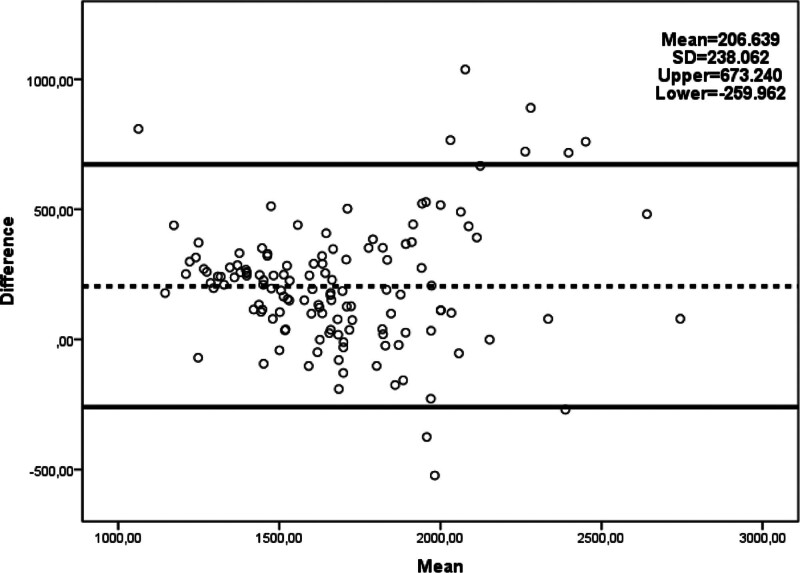
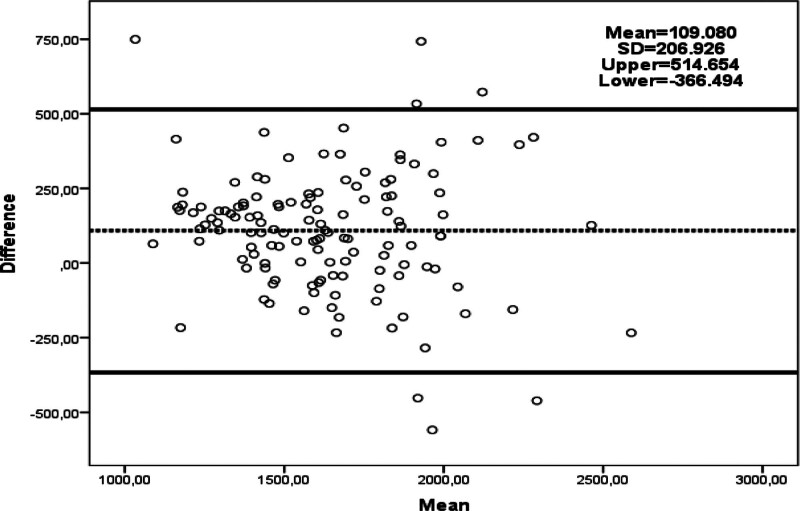
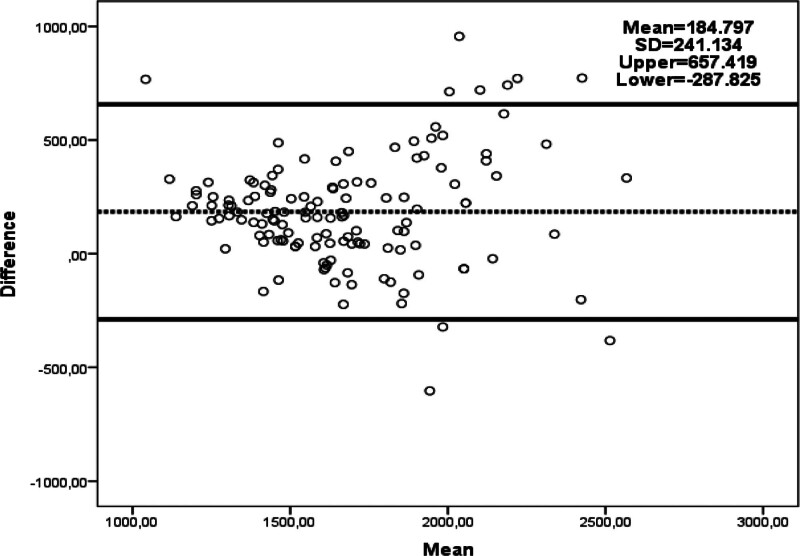
Verification
Claims the paper makes
The claims and statistics of this paper haven’t been checked yet.
Free: it reads the open-access text and checks the first 5 claims that cite a source we can check. Create a free account to check every claim.
Claims other papers make about this one
Each is checked against this paper’s own text: does it say what the citing paper says it does?
The source backs part of the claim, not all of it — or backs it for a different population, condition or comparison.
In the citing paper
“The Mifflin–St Jeor equation is one of the most validated and widely used formulas:Men: BMR = 10 × weight (kg) + 6.25 × height (cm) − 5 × age (years) + 5.”
From Lifestyle Medicine for Obesity in the Era of Highly Effective Anti-Obesity Treatment (2025) · cites this paper as [125]
Experimental — accuracy not yet measuredThe cited source says what the claim attributes to it.
In the citing paper
“A recent study by Karagun and Baklaci confirmed that the Mifflin–St Jeor equation closely approximates the BMR compared to indirect calorimetry in individuals with overweight and obesity [125].”
From Lifestyle Medicine for Obesity in the Era of Highly Effective Anti-Obesity Treatment (2025) · cites this paper as [125]
Self-check
Percentages, sums and reported differences re-computed from the paper’s own numbers.
The self-check needs the paper’s full text.
Citations
Cites
‘Small Changes' to Diet and Physical Activity Behaviors for Weight Management
Hills, A. P., Byrne, N. M., Lindstrom, R., & Hill, J. O. (2013) · Obesity Facts · doi:10.1159/000345030 · Cited by 9,493
Obesity: global epidemiology and pathogenesis
Blüher, M. (2019) · Nature Reviews Endocrinology · doi:10.1038/s41574-019-0176-8 · Cited by 5,126 · cited 1×
“[3] Obesity not only contributes to morbidity but also imposes significant economic burdens on society due to the chronic diseases associated with it.”
BackgroundHaslam, D. W., & James, W. P. T. (2005) · The Lancet · doi:10.1016/s0140-6736(05)67483-1 · Cited by 3,757
A new predictive equation for resting energy expenditure in healthy individuals
Mifflin, M., St Jeor, S., Hill, L., Scott, B., Daugherty, S., & Koh, Y. (1990) · The American Journal of Clinical Nutrition · doi:10.1093/ajcn/51.2.241 · Cited by 2,544 · cited 1×
“BMR was estimated using the Mifflin–St Jeor equation, [22] which takes into account age, gender, weight, and height of the participants.”
MethodEconomic Burden of Obesity: A Systematic Literature Review
Tremmel, M., Gerdtham, U.-G., Nilsson, P., & Saha, S. (2017) · International Journal of Environmental Research and Public Health · doi:10.3390/ijerph14040435 · Cited by 1,154 · cited 1×
“[4] The primary contributors to obesity are excessive and unhealthy eating habits, coupled with physical inactivity.”
BackgroundBasal metabolic rate studies in humans: measurement and development of new equations
Henry, C. (2005) · Public Health Nutrition · doi:10.1079/phn2005801 · Cited by 1,033
The Harris Benedict equation reevaluated: resting energy requirements and the body cell mass
Roza, A. M., & Shizgal, H. M. (1984) · The American Journal of Clinical Nutrition · doi:10.1093/ajcn/40.1.168 · Cited by 824 · cited 1×
“BMR was estimated using the Harris–Benedict equation, [21] which takes into account age, gender, weight, and height of the participants.”
MethodThe Global Burden of Obesity and the Challenges of Prevention
Seidell, J. C., & Halberstadt, J. (2015) · Annals of Nutrition and Metabolism · doi:10.1159/000375143 · Cited by 786 · cited 1×
“[2] Obesity poses a significant health problem as it greatly raises the likelihood of developing diseases like type 2 diabetes mellitus, fatty liver disease, hypertension, coronary artery disease, dementia, osteoarthritis, obstructive sleep apnea, and various cancers.”
BackgroundHumans against Obesity: Who Will Win?
Caballero, B. (2019) · Advances in Nutrition · doi:10.1093/advances/nmy055 · Cited by 638 · cited 1×
“[1] Obesity and its associated disorders have emerged as significant health issues on a global scale.”
BackgroundFrankenfield, D., Roth-Yousey, L., & Compher, C. (2005) · Journal of the American Dietetic Association · doi:10.1016/j.jada.2005.02.005 · Cited by 623 · cited 5×
“[11] The results regarding the Mifflin–St Jeor equation in our study were in line with the findings reported in this systematic review.”
BackgroundResultInfluentialJohnstone, A. M., Murison, S. D., Duncan, J. S., Rance, K. A., & Speakman, J. R. (2005) · The American Journal of Clinical Nutrition · doi:10.1093/ajcn/82.5.941 · Cited by 514 · cited 1×
“[33] In our study, we observed a noteworthy correlation between fat-free mass, muscle mass, fat mass, and the calculation methods of BMR. Univariate and multivariate regression analyses revealed that age, height, weight, BMI, fat percentage, fat-free mass, muscle mass, fat mass, and bone mass were…”
MethodIndirect Calorimetry: A Practical Guide for Clinicians
Haugen, H. A., Chan, L., & Li, F. (2007) · Nutrition in Clinical Practice · doi:10.1177/0115426507022004377 · Cited by 512 · cited 1×
“As a result, weight loss interventions typically rely on prediction equations to estimate BMR. [11,28,29] The literature extensively evaluates the adequacy and reliability of these methods.”
BackgroundMeasurement of energy expenditure
Levine, J. A. (2005) · Public Health Nutrition · doi:10.1079/phn2005800 · Cited by 401 · cited 1×
“[7] BMR represents the amount of energy needed on a daily basis to sustain fundamental biological activities.”
BackgroundDietary interventions for obesity: clinical and mechanistic findings.
Chao, A. M., Quigley, K. M., & Wadden, T. A. (2021) · Journal of Clinical Investigation · doi:10.1172/jci140065 · Cited by 257 · cited 1×
“[6] The total daily The authors have no funding and conflicts of interest to disclose.”
BackgroundIndirect Calorimetry in Clinical Practice
Delsoglio, M., Achamrah, N., Berger, M. M., & Pichard, C. (2019) · Journal of Clinical Medicine · doi:10.3390/jcm8091387 · Cited by 238 · cited 1×
“[24,25] While IC is considered the gold standard, predictive equations and BIA can be used to estimate BMR. [24,26,27] IC is considered the gold standard for BMR measurement, boasting high validity.”
Validation of several established equations for resting metabolic rate in obese and nonobese people
Frankenfield, D. C., Rowe, W. A., Smith, J. S., & Cooney, R. N. (2003) · Journal of the American Dietetic Association · doi:10.1016/s0002-8223(03)00982-9 · Cited by 237
Accurate Determination of Energy Needs in Hospitalized Patients
Boullata, J., Williams, J., Cottrell, F., Hudson, L., & Compher, C. (2007) · Journal of the American Dietetic Association · doi:10.1016/j.jada.2006.12.014 · Cited by 201 · cited 1×
“[15,16] While IC being the gold standard, standardized equations like the Harris–Benedict and Mifflin equations offer convenient application but exhibit limited reliability.”
MethodLazzer, S., Bedogni, G., Lafortuna, C. L., Marazzi, N., Busti, C., Galli, R., de Col, A., Agosti, F., & Sartorio, A. (2010) · Obesity · doi:10.1038/oby.2009.162 · Cited by 198 · cited 2×
“Fat-free mass is the primary factor that determines BMR. [14] Molnar et al find that fat-free mass primarily influences resting metabolic rate, although age, gender, and fat mass also significantly contribute to it.”
BackgroundMethodFlancbaum, L., Choban, P. S., Sambucco, S., Verducci, J., & Burge, J. C. (1999) · The American Journal of Clinical Nutrition · doi:10.1093/ajcn/69.3.461 · Cited by 173
The effect of obesity, age, puberty and gender on resting metabolic rate in children and adolescents
Molnár, D., & Schutz, Y. (1997) · European Journal of Pediatrics · doi:10.1007/s004310050618 · Cited by 137 · cited 1×
“[32] Similarly, Johnstone et al also found that factors contributing to the variability in BMR include fat-free mass, fat mass, age, and circulating thyroxine.”
Sabounchi, N. S., Rahmandad, H., & Ammerman, A. (2013) · International Journal of Obesity · doi:10.1038/ijo.2012.218 · Cited by 135 · cited 1×
“[11,12,29,30] Luy et al found that in obese Filipinos with type 2 DM or prediabetes, both the Harris–Benedict equation and BIA have a tendency to overestimate BMR when compared to measurements acquired using IC.”
ResultThe Importance of Energy Balance
Hill, J. O., Wyatt, H. R., Peters, J. C., Anschutz Health & Wellness Center, U. O. C., Anschutz Health & Wellness Center, U. O. C., & Anschutz Health & Wellness Center, U. O. C. (2010) · European Endocrinology · doi:10.17925/ee.2013.09.02.111 · Cited by 133 · cited 1×
“[24,25] While IC is considered the gold standard, predictive equations and BIA can be used to estimate BMR. [24,26,27] IC is considered the gold standard for BMR measurement, boasting high validity.”
Madden, A. M., Mulrooney, H. M., & Shah, S. (2016) · Journal of Human Nutrition and Dietetics · doi:10.1111/jhn.12355 · Cited by 104 · cited 1×
“[19] The findings of a recent systematic review and meta-analysis, which synthesized results from multiple studies, demonstrated that the WHO and Harris & Benedict equations were the most accurate and precise in predicting BMR among individuals with severe obesity.”
ResultShetty, P. (2005) · Public Health Nutrition · doi:10.1079/phn2005792 · Cited by 101 · cited 2×
“[9,10] A 11–13] BMR fluctuates based on factors such as age, gender, weight, height, and is intricately linked to an individual’s body composition.”
BackgroundPredicting basal metabolic rate in the obese is difficult
Horgan, G. W., & Stubbs, R. J. (2003) · European Journal of Clinical Nutrition · doi:10.1038/sj.ejcn.1601542 · Cited by 71 · cited 1×
“[9,10] A 11–13] BMR fluctuates based on factors such as age, gender, weight, height, and is intricately linked to an individual’s body composition.”
BackgroundThe Importance of Energy Balance
Hill, J. O., Wyat, H. R., & Peters, J. C. (2013) · US Endocrinology · doi:10.17925/use.2013.09.01.27 · Cited by 49
Luy, S. C. R., & Dampil, O. A. (2018) · Journal of the ASEAN Federation of Endocrine Societies · doi:10.15605/jafes.033.02.07 · Cited by 44 · cited 2×
“[30] In our study, we observed results consistent with those reported in the study by Luy et al We found that BMR measured using predictive equations (Harris–Benedict and Mifflin equations) and BIA yielded significantly different results.”
ResultAre Predictive Energy Expenditure Equations in Ventilated Surgery Patients Accurate?
Tignanelli, C. J., Andrews, A. G., Sieloff, K. M., Pleva, M. R., Reichert, H. A., Wooley, J. A., Napolitano, L. M., & Cherry‐Bukowiec, J. R. (2017) · Journal of Intensive Care Medicine · doi:10.1177/0885066617702077 · Cited by 36 · cited 1×
“[11,17] A systematic analysis of predictive equations in people with overweight and obesity revealed that the Harris–Benedict equation demonstrated the greatest accuracy for individuals with overweight and obesity, while the Lazzer equation showed the lowest bias for individuals with obesity (BMI >…”
BackgroundMacêna, M. D. L., Paula, D. T. D. C., Júnior, A. E. D. S., Praxedes, D. R. S., Pureza, I. R. D. O. M., de Melo, I. S. V., & Bueno, N. B. (2022) · Nutrition Reviews · doi:10.1093/nutrit/nuac031 · Cited by 34
Effect of basal metabolic rate on lifespan: a sex-specific Mendelian randomization study
Ng, J. C. M., & Schooling, C. M. (2023) · Scientific Reports · doi:10.1038/s41598-023-34410-6 · Cited by 29
Radley, D., Cooke, C. B., Fuller, N. J., Oldroyd, B., Truscott, J. G., Coward, W. A., Wright, A., & Gately, P. (2009) · PubMed · Cited by 25
Predictive equations overestimate the resting metabolic rate in postmenopausal women
Bonganha, V., Libardi, C. A., dos Santos, C. F., de Souza, G. V., Conceição, M. S., Chacon‐Mikahil, M. P. T., & Madruga, V. A. (2013) · The journal of nutrition health & aging · doi:10.1007/s12603-012-0395-3 · Cited by 22
The conceptual framework for estimating food energy requirement
Ferro-Luzzi, A. (2005) · Public Health Nutrition · doi:10.1079/phn2005789 · Cited by 19 · cited 1×
“[9,10] A 11–13] BMR fluctuates based on factors such as age, gender, weight, height, and is intricately linked to an individual’s body composition.”
BackgroundCampos, T. A. D. M., Mariz, V. G., Mulder, A. D. R. P., Curioni, C. C., & Bezerra, F. F. (2024) · Obesity Reviews · doi:10.1111/obr.13739 · Cited by 11
Cited by
Lifestyle Medicine for Obesity in the Era of Highly Effective Anti-Obesity Treatment
Sannidhi, D., Abeles, R., Andrew, W., Bonnet, J. P., Vitale, K., Niranjan, V., Gulati, M., Pauly, K., Moran, R., Alexander, L., et al. (2025) · Nutrients · doi:10.3390/nu17142382 · Cited by 29
“A recent study by Karagun and Baklaci confirmed that the Mifflin–St Jeor equation closely approximates the BMR compared to indirect calorimetry in individuals with overweight and obesity [125].”
Harimawan, A. I. W., Prabandari, A. A. S. M., Wihandani, D. M., Jawi, I. M., Weta, I. W., Senapathi, T. G. A., Dewi, N. N. A., Sundari, L. P. R., & Ryalino, C. (2025) · Frontiers in Nutrition · doi:10.3389/fnut.2025.1638075 · Cited by 12
“The positive relationship between ECW/TBW and fat mass components may reflect the pro-inflammatory state of obesity, which can lead to fluid shifts from the intracellular to extracellular compartments (31, 32).”
Current Evidence-Based Clinical Nutritional Approaches in Lipedema: A Scoping Review
Atabılen, B., Çelik, M. N., Başar, H. B. A., Ağagündüz, D., & Karaca, O. B. (2025) · Nutrition Reviews · doi:10.1093/nutrit/nuaf203 · Cited by 10
Xu, Y., Peng, C., Tang, S., Zhang, Y., Zhen, Y., Yin, Y., Wang, X., Ding, Y., Yu, Q., Ma, R., et al. (2025) · Journal of Translational Medicine · doi:10.1186/s12967-025-07130-w · Cited by 8
“BSA was calculated using the Mosteller formula [23]: BMR was estimated using the Mifflin-St Jeor equation [24, 25]: Males : BMR = (10 × Weight ( kg )) + (6 .”
Association of predicted basal metabolic rate and insulin resistance in a Chinese general population
Wang, L., Lu, T., Wu, P., Chen, K., & Yi-ming, M. (2025) · BMC Endocrine Disorders · doi:10.1186/s12902-025-01976-3 · Cited by 4
“For example, Wang et al. introduced a refined model for normal-weight Chinese adults with improved accuracy over traditional equations [13], and Karagun and Baklaci identified the Mifflin–St Jeor equation as the most consistent with indirect calorimetry in overweight individuals [14].”
Metadata
- Authors
- Karagun, B., & Baklaci, N.
- Affiliations
- Department of Endocrinology and Metabolism Diseases, Faculty of Medicine, Baskent University, Adana, Turkey.
- Başkent University (TR)
- ORCID
- Karagun, Baris
- Venue
- Medicine
- Published
- 2024-08-30
- Volume
- 103
- Issue
- 35
- Pages
- e39542
- ISSN
- 0025-7974 (ISSN-L)
- 1536-5964
- PMC
- PMC11365691
- OpenAlex
- W4402038182
- Semantic Scholar
- 6dbc581bb36525a1399236aff17ae6e0957a6a7a
- Cited by
- 24
- References
- 35
- Citations by year
- 2026: 14 · 2025: 9 · 2024: 1
- FWCI
- 6.79
- Type
- journal article
- Language
- en
- Open access
- gold
- doi.org
- Locations
- Medicine (publishedVersion, cc-by)
- PubMed Central (publishedVersion, cc-by)
- PubMed (publishedVersion)
- Funders
- Baskent Üniversitesi
- Topics
- Health Sciences › Medicine › Physiology (medical) › Body Composition Measurement Techniques
- Health Sciences › Medicine › Public Health, Environmental and Occupational Health › Obesity, Physical Activity, Diet
- Health Sciences › Nursing › Nutrition and Dietetics › Clinical Nutrition and Gastroenterology
- Keywords
- basal metabolic rate, obesity, overweight, indirect calorimetry, bioelectrical impedance analysis, Harris-Benedict equation, Mifflin-St Jeor equation, prediction equations, body composition, fat-free mass, muscle mass, fat mass, energy expenditure, weight management, measurement agreement, body mass index
- MeSH terms
- Adult, Basal Metabolism, Body Composition, Calorimetry, Indirect, Female, Humans, Male, Middle Aged, Obesity, Retrospective Studies, Body Mass Index, Electric Impedance, Overweight
About these checks
Registry, retraction, Cites and statistics results are computed, not judged, with one exception: a printed reference that no index lists is read once by a model before it counts as a citation error. Claims are extracted by a model and kept only when their quote appears verbatim in the text; each cited source is then checked, with a model’s help, for whether it says what the claim relies on. Those verdicts can be wrong — read the claim’s quote and the cited source before relying on one.
Statistics and arithmetic are recomputed, not judged.
Confidence bands are shown only for fields calibrated on our annotated test set. None is calibrated yet, so no band is shown.
What counts as a claim ›How we measure confidence ›How we check this ›
Are you an author, or do you see a problem with this page? Request a review
Data sources
Bibliographic data: Semantic Scholar, OpenAlex, Crossref.
Contains information from the Semantic Scholar Academic Graph Datasets, made available under the ODC Attribution License (ODC-BY 1.0).
Semantic Scholar’s data is described in: Kinney, R., et al. (2023). The Semantic Scholar Open Data Platform. arXiv:2301.10140.
