

The DOI matches its Crossref record; 54 of the 55 references it cites were found in a registry or an index; none of the 19 sources its claims cite is checked for support yet.
Assessing Lifetime Stress Exposure Using the Stress and Adversity Inventory for Adults (Adult STRAIN): An Overview and Initial Validation
Open accessAbstract
Objective: Numerous theories have proposed that acute and chronic stressors may exert a cumulative effect on life-span health by causing biological “wear and tear,” or allostatic load, which in turn promotes disease. Very few studies have directly tested such models, though, partly because of the challenges associated with efficiently assessing stress exposure over the entire life course. To address this issue, we developed the first online system for systematically assessing lifetime stress exposure, called the Stress and Adversity Inventory (STRAIN), and describe its initial validation here. Methods: Adults recruited from the community (n = 205) were administered the STRAIN, Childhood Trauma Questionnaire—Short Form, and Perceived Stress Scale, as well as measures of socioeconomic status, personality, social desirability, negative affect, mental and physical health complaints, sleep quality, computer-assessed executive function, and doctor-diagnosed general health problems and autoimmune disorders. Results: The STRAIN achieved high acceptability and was completed relatively quickly (mean = 18 minutes 39 seconds; interquartile range = 12–23 minutes). The structure of the lifetime stress data best fit two latent classes overall and five distinct trajectories over time. Concurrent associations with the Childhood Trauma Questionnaire—Short Form and Perceived Stress Scale were good (r values = .147–.552). Moreover, the STRAIN was not significantly related to personality traits or social desirability characteristics and, in adjusted analyses, emerged as the measure most strongly associated with all six of the health and cognitive outcomes assessed except current mental health complaints (β values = .16–.41; risk ratios = 1.02–1.04). Finally, test-retest reliability for the main stress exposure indices over 2–4 weeks was excellent (r values = .904–.919). Conclusions: The STRAIN demonstrated good usability and acceptability; very good concurrent, discriminant, and predictive validity; and excellent test-retest reliability.
Overview
AI snapshot
Written from the paper’s full text.
TL;DR
The Adult STRAIN is a self- or interviewer-administered online measure of lifetime stress exposure that showed high usability, excellent test-retest reliability, and good concurrent, discriminant, and predictive validity in a community sample of 205 adults. It predicted six health/cognitive outcomes and generally outperformed the CTQ-SF and PSS, though the study was largely cross-sectional and the sample was not racially diverse.
Key findings
- Participants completed the STRAIN in an average of 18 minutes 39 seconds; completion rate was 90.8% among 369 who began, and negative affect did not change from pre- to post-STRAIN (M = 1.65 vs. 1.67, p = .341, d = 0.03).
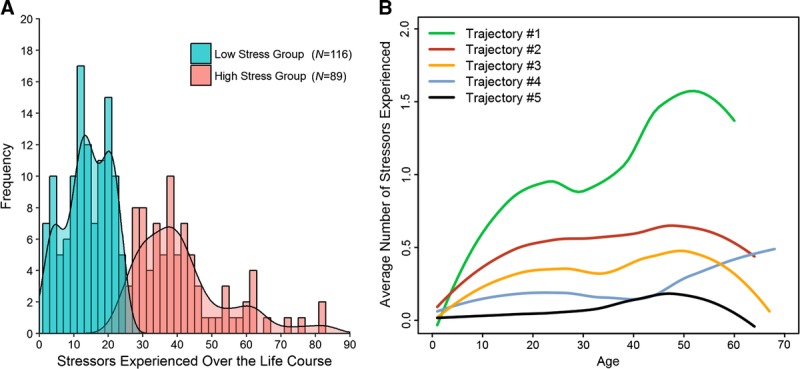
- Participants reported an average of 25.77 lifetime stressors (SD = 16.85; range 1–83) and an average overall severity score of 63.26 (SD = 37.73). Latent class analysis found two groups: low-stress (n = 116; M = 13.90 stressors) and high-stress (n = 89; M = 41.25 stressors); latent trajectory analysis found five trajectories.
- Concurrent validity: lifetime stressor count correlated with CTQ-SF (r = .552, p < .001) and PSS (r = .147, p = .035). Discriminant validity: it was not significantly associated with Big Five traits or social desirability (p values ≥ .08), whereas the PSS correlated with all five Big Five traits (|r| ≥ .17).
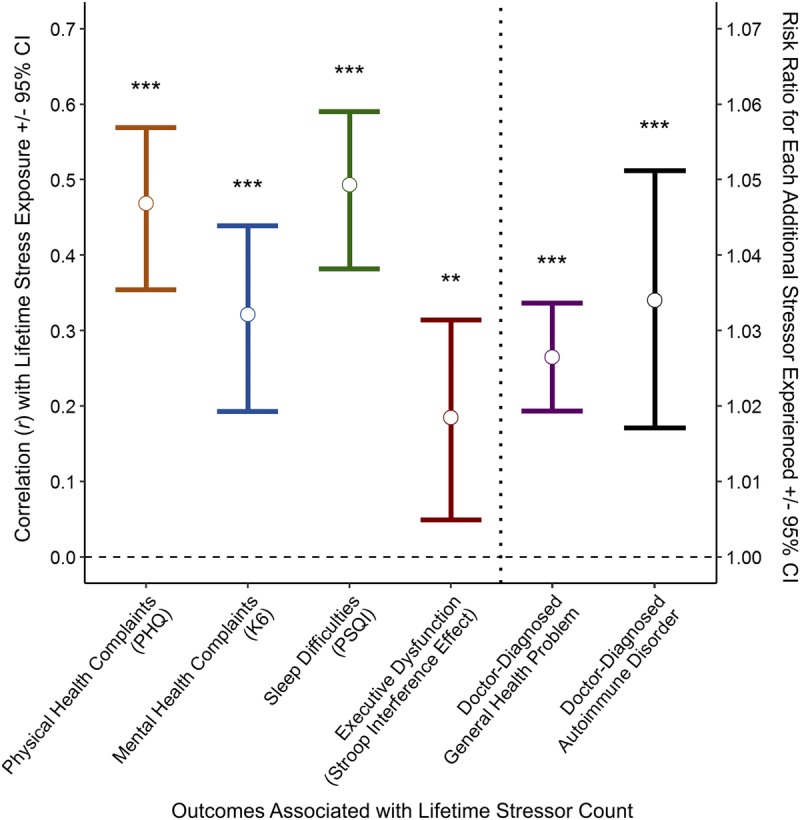
- Predictive validity: lifetime stressor count predicted self-reported current health complaints (r = .321 and r = .469), worse sleep quality (r = .493), poorer executive function (r = .185), more doctor-diagnosed general health problems (RR = 1.026, 95% CI = 1.019–1.034), and more doctor-diagnosed autoimmune disorders (RR = 1.034, 95% CI = 1.017–1.051). Test-retest reliability over about 2 weeks was r = .919 for total lifetime stressor count and r = .904 for total severity; all main indices had r ≥ .873.
Methods
- Community-based online sample of 205 adults (96 men, 107 women, 2 transgender; mean age = 37.82 years, SD = 11.72, range 19–68; 85.4% white). A randomly selected 100 participants completed the STRAIN again after a median of 13 days (range 9–36) for test-retest reliability, with 100% compliance.
- Lifetime stress exposure was assessed with the Adult STRAIN, which enquires about 55 stressors (26 acute life events, 29 chronic difficulties) across 2 stressor types, 12 life domains, and 5 social-psychological characteristics. Other measures included the CTQ-SF, PSS, Ten Item Personality Inventory, Social Desirability Scale, PANAS negative affect, Stroop task, PSQI, K-6, PHQ, and doctor-diagnosed general health and autoimmune conditions.
- Analyses used R 3.2.5; correlations and linear models for continuous outcomes, generalized linear models for count outcomes, latent class analysis with mclust (1–9 Gaussian clusters, BIC-selected), and latent trajectory analysis with flexmix using a quintic polynomial.
Limitations
- Stated by the paper: the design was largely cross-sectional except for the test-retest portion, so causation cannot be assumed; STRAIN scores are self-reported and could still be influenced by unmeasured reporting biases or by recently occurring stressors; no biological samples were collected; and the sample was not particularly diverse with respect to race or ethnicity.
- Stated by the paper: future work should test longer test-retest intervals, larger and more diverse samples, different cultures and languages, comparison with interview-based expert-rated measures, and predictive validity against biological and clinical outcomes less susceptible to self-report bias.
- Evident from the text: the sample was a convenience online sample with a high attention-check failure/dropout rate before the final 205 were retained (45.7% of respondents), which may further limit generalizability beyond the stated racial/ethnic diversity concern.
Model-written summary. Check it against the paper before relying on it.
Integrity signals
Registry
Cites
Statistics
Figures
Verification
Claims the paper makes
57 Own result · 16 Own method · 16 Own interpretation · 9 Not checked yet · 3 No basis given
A result the paper reports from its own data — it cites no other source for it, so there is none to check. The quote shows it is in the paper.
In the paper
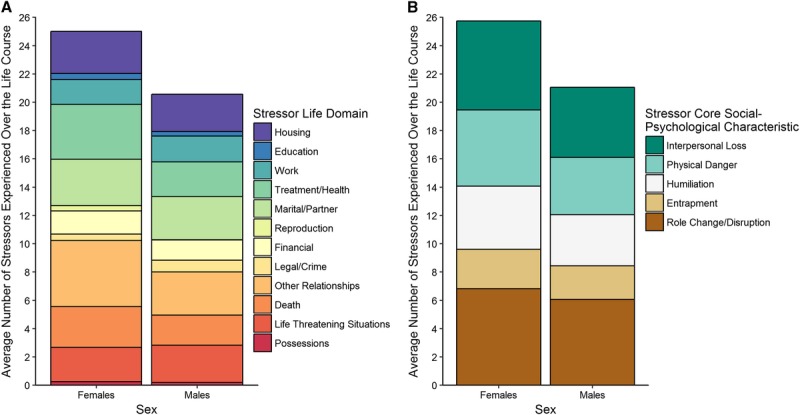
“males experienced more legal/crime stressors (p = .011)”
§ Assessing Lifetime Stress Exposure Using the Stress and Adversity Inventory for Adults (Adult STRAIN): An Overview and Initial Validation > RESULTS > Stress Exposure by Timing, Type, Life Domain, and Core Social-Psychological Characteristic
plaincorrelational- Asserted: passes — The authors put it forward as true.
- Checkable: passes — It can be checked against evidence.
- Load-bearing: unclear — It is unclear whether the paper’s conclusions depend on it.
- Based: passes — The paper gives a reason why it holds.
A result the paper reports from its own data — it cites no other source for it, so there is none to check. The quote shows it is in the paper.
In the paper
“and significantly (but more weakly) correlated with participants' PSS total score (r = .147, p = .035)”
§ Assessing Lifetime Stress Exposure Using the Stress and Adversity Inventory for Adults (Adult STRAIN): An Overview and Initial Validation > RESULTS > Validity
plaincorrelational- Asserted: passes — The authors put it forward as true.
- Checkable: passes — It can be checked against evidence.
- Load-bearing: passes — The paper’s conclusions depend on it.
- Based: passes — The paper gives a reason why it holds.
A result the paper reports from its own data — it cites no other source for it, so there is none to check. The quote shows it is in the paper.
In the paper
“females experienced more stressors in the life domains of treatment/health (p < .001)”
§ Assessing Lifetime Stress Exposure Using the Stress and Adversity Inventory for Adults (Adult STRAIN): An Overview and Initial Validation > RESULTS > Stress Exposure by Timing, Type, Life Domain, and Core Social-Psychological Characteristic
plaincorrelational- Asserted: passes — The authors put it forward as true.
- Checkable: passes — It can be checked against evidence.
- Load-bearing: unclear — It is unclear whether the paper’s conclusions depend on it.
- Based: passes — The paper gives a reason why it holds.
A result the paper reports from its own data — it cites no other source for it, so there is none to check. The quote shows it is in the paper.
In the paper
“the STRAIN demonstrated good concurrent validity with the CTQ-SF and PSS”
§ Assessing Lifetime Stress Exposure Using the Stress and Adversity Inventory for Adults (Adult STRAIN): An Overview and Initial Validation > DISCUSSION
boostedcorrelational- Asserted: passes — The authors put it forward as true.
- Checkable: passes — It can be checked against evidence.
- Load-bearing: passes — The paper’s conclusions depend on it.
- Based: passes — The paper gives a reason why it holds.
A result the paper reports from its own data — it cites no other source for it, so there is none to check. The quote shows it is in the paper.
In the paper
“the two primary indices of lifetime stress exposure—namely, total lifetime stressor count and total lifetime stressor severity—achieved test-retest reliabilities of r = .919, p < .001, and r = .904, p < .001, respectively”
§ Assessing Lifetime Stress Exposure Using the Stress and Adversity Inventory for Adults (Adult STRAIN): An Overview and Initial Validation > RESULTS > Test-Retest Reliability
plaincorrelationaln = 100 ·- Asserted: passes — The authors put it forward as true.
- Checkable: passes — It can be checked against evidence.
- Load-bearing: passes — The paper’s conclusions depend on it.
- Based: passes — The paper gives a reason why it holds.
A result the paper reports from its own data — it cites no other source for it, so there is none to check. The quote shows it is in the paper.
In the paper
“However, negative affect did not change from pre-STRAIN (M = 1.65, SD = 0.83) to post-STRAIN (M = 1.67, SD = 0.85; t(170) = −0.96, p = .341, d = 0.03)”
§ Assessing Lifetime Stress Exposure Using the Stress and Adversity Inventory for Adults (Adult STRAIN): An Overview and Initial Validation > RESULTS > Usability and Acceptability of the STRAIN
plain- Asserted: passes — The authors put it forward as true.
- Checkable: passes — It can be checked against evidence.
- Load-bearing: passes — The paper’s conclusions depend on it.
- Based: passes — The paper gives a reason why it holds.
A result the paper reports from its own data — it cites no other source for it, so there is none to check. The quote shows it is in the paper.
In the paper
“as well as worse sleep quality over the preceding month (β = .362, p < .001)”
§ Assessing Lifetime Stress Exposure Using the Stress and Adversity Inventory for Adults (Adult STRAIN): An Overview and Initial Validation > RESULTS > Validity
plaincorrelationaln = 205 ·- Asserted: passes — The authors put it forward as true.
- Checkable: passes — It can be checked against evidence.
- Load-bearing: passes — The paper’s conclusions depend on it.
- Based: passes — The paper gives a reason why it holds.
A result the paper reports from its own data — it cites no other source for it, so there is none to check. The quote shows it is in the paper.
In the paper
“and physical health complaints (β = .401, p < .001)”
§ Assessing Lifetime Stress Exposure Using the Stress and Adversity Inventory for Adults (Adult STRAIN): An Overview and Initial Validation > RESULTS > Validity
plaincorrelationaln = 205 ·- Asserted: passes — The authors put it forward as true.
- Checkable: passes — It can be checked against evidence.
- Load-bearing: passes — The paper’s conclusions depend on it.
- Based: passes — The paper gives a reason why it holds.
A result the paper reports from its own data — it cites no other source for it, so there is none to check. The quote shows it is in the paper.
In the paper
“marginally more physical danger and humiliation stressors (p values < .057)”
§ Assessing Lifetime Stress Exposure Using the Stress and Adversity Inventory for Adults (Adult STRAIN): An Overview and Initial Validation > RESULTS > Stress Exposure by Timing, Type, Life Domain, and Core Social-Psychological Characteristic
plaincorrelational- Asserted: passes — The authors put it forward as true.
- Checkable: passes — It can be checked against evidence.
- Load-bearing: unclear — It is unclear whether the paper’s conclusions depend on it.
- Based: passes — The paper gives a reason why it holds.
A result the paper reports from its own data — it cites no other source for it, so there is none to check. The quote shows it is in the paper.
In the paper
“and poorer executive function (r = .185, p = .008).”
§ Assessing Lifetime Stress Exposure Using the Stress and Adversity Inventory for Adults (Adult STRAIN): An Overview and Initial Validation > RESULTS > Validity
plaincorrelational- Asserted: passes — The authors put it forward as true.
- Checkable: passes — It can be checked against evidence.
- Load-bearing: passes — The paper’s conclusions depend on it.
- Based: passes — The paper gives a reason why it holds.
- It may state two separate claims as one. 21
- Probably not a substantial claim. 14
- The quote only partly states this claim. 1
A result the paper reports from its own data — it cites no other source for it, so there is none to check. The quote shows it is in the paper.
In the paper
“In comparison, in unadjusted bivariate associations, the CTQ-SF was significantly correlated with neuroticism in an unadjusted bivariate correlation (r = .148, p = .035), but this association was no longer significant when adjusting for age, sex, race, and socioeconomic status (β = .08, p = .269).”
§ Assessing Lifetime Stress Exposure Using the Stress and Adversity Inventory for Adults (Adult STRAIN): An Overview and Initial Validation > RESULTS > Validity
plaincorrelational- Asserted: passes — The authors put it forward as true.
- Checkable: passes — It can be checked against evidence.
- Load-bearing: passes — The paper’s conclusions depend on it.
- Based: passes — The paper gives a reason why it holds.
It may state two separate claims as one.
A result the paper reports from its own data — it cites no other source for it, so there is none to check. The quote shows it is in the paper.
In the paper
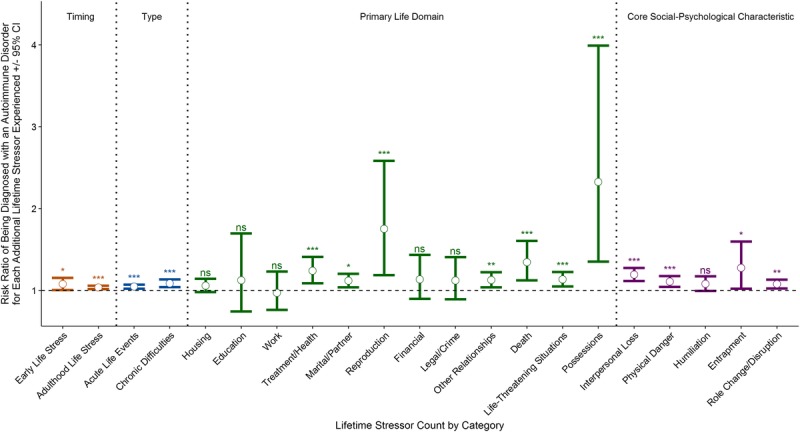
“although acute life events and chronic difficulties both yielded significant associations”
§ Assessing Lifetime Stress Exposure Using the Stress and Adversity Inventory for Adults (Adult STRAIN): An Overview and Initial Validation > RESULTS > Stress Exposure by Timing, Type, Life Domain, and Core Social-Psychological Characteristic
plaincorrelational- Asserted: passes — The authors put it forward as true.
- Checkable: passes — It can be checked against evidence.
- Load-bearing: passes — The paper’s conclusions depend on it.
- Based: passes — The paper gives a reason why it holds.
It may state two separate claims as one.
A result the paper reports from its own data — it cites no other source for it, so there is none to check. The quote shows it is in the paper.
In the paper
“As summarized in Table 2, overall stressor count was associated with participants' sex (F(2,202) = 5.05, p = .007), age (r =.185, p = .008), and socioeconomic status (r = −.290, p < .001), but was unrelated to race (F(4,199) = 0.54, p = .708).”
§ Assessing Lifetime Stress Exposure Using the Stress and Adversity Inventory for Adults (Adult STRAIN): An Overview and Initial Validation > RESULTS > Descriptive Statistics
plaincorrelational- Asserted: passes — The authors put it forward as true.
- Checkable: passes — It can be checked against evidence.
- Load-bearing: unclear — It is unclear whether the paper’s conclusions depend on it.
- Based: passes — The paper gives a reason why it holds.
It may state two separate claims as one.
A result the paper reports from its own data — it cites no other source for it, so there is none to check. The quote shows it is in the paper.
In the paper
“We observed the classic Stroop effect in this study, with participants exhibiting longer reaction times for incongruent than for congruent words (Mdiff = 119.5 milliseconds, t(204) = 25.78, p < .001).”
§ Assessing Lifetime Stress Exposure Using the Stress and Adversity Inventory for Adults (Adult STRAIN): An Overview and Initial Validation > METHODS > Cognitive Measures
plain- Asserted: passes — The authors put it forward as true.
- Checkable: passes — It can be checked against evidence.
- Load-bearing: fails — The paper’s conclusions may not depend on it.
- Based: passes — The paper gives a reason why it holds.
Probably not a substantial claim. The paper’s conclusions may not depend on it.
A result the paper reports from its own data — it cites no other source for it, so there is none to check. The quote shows it is in the paper.
In the paper
“In unadjusted bivariate associations, lifetime stressor count was not significantly associated with any of the Big Five personality traits, with or without adjusting for covariates, nor was it related to social desirability (p values ≥ .08).”
§ Assessing Lifetime Stress Exposure Using the Stress and Adversity Inventory for Adults (Adult STRAIN): An Overview and Initial Validation > RESULTS > Validity
plain- Asserted: passes — The authors put it forward as true.
- Checkable: passes — It can be checked against evidence.
- Load-bearing: passes — The paper’s conclusions depend on it.
- Based: passes — The paper gives a reason why it holds.
It may state two separate claims as one.
A result the paper reports from its own data — it cites no other source for it, so there is none to check. The quote shows it is in the paper.
In the paper
“The average time to complete the STRAIN was 18 minutes and 39 seconds (interquartile range = 11 minutes 45 seconds–22 minutes 58 seconds).”
§ Assessing Lifetime Stress Exposure Using the Stress and Adversity Inventory for Adults (Adult STRAIN): An Overview and Initial Validation > RESULTS > Usability and Acceptability of the STRAIN
plainn = 205- Asserted: passes — The authors put it forward as true.
- Checkable: passes — It can be checked against evidence.
- Load-bearing: fails — The paper’s conclusions may not depend on it.
- Based: passes — The paper gives a reason why it holds.
Probably not a substantial claim. The paper’s conclusions may not depend on it.
A result the paper reports from its own data — it cites no other source for it, so there is none to check. The quote shows it is in the paper.
In the paper
“marginally more physical danger and humiliation stressors (p values < .057)”
§ Assessing Lifetime Stress Exposure Using the Stress and Adversity Inventory for Adults (Adult STRAIN): An Overview and Initial Validation > RESULTS > Stress Exposure by Timing, Type, Life Domain, and Core Social-Psychological Characteristic
plaincorrelational- Asserted: passes — The authors put it forward as true.
- Checkable: passes — It can be checked against evidence.
- Load-bearing: unclear — It is unclear whether the paper’s conclusions depend on it.
- Based: passes — The paper gives a reason why it holds.
The quote only partly states this claim.
A result the paper reports from its own data — it cites no other source for it, so there is none to check. The quote shows it is in the paper.
In the paper
“participants completed the STRAIN in approximately 18 minutes.”
§ Assessing Lifetime Stress Exposure Using the Stress and Adversity Inventory for Adults (Adult STRAIN): An Overview and Initial Validation > DISCUSSION
plain- Asserted: passes — The authors put it forward as true.
- Checkable: passes — It can be checked against evidence.
- Load-bearing: fails — The paper’s conclusions may not depend on it.
- Based: passes — The paper gives a reason why it holds.
Probably not a substantial claim. The paper’s conclusions may not depend on it.
A result the paper reports from its own data — it cites no other source for it, so there is none to check. The quote shows it is in the paper.
In the paper
“In contrast, the CTQ-SF was not significantly associated with any of the health or cognitive outcomes measured, and the PSS was associated with only half of the outcomes measured.”
§ Assessing Lifetime Stress Exposure Using the Stress and Adversity Inventory for Adults (Adult STRAIN): An Overview and Initial Validation > RESULTS > Validity
plaincorrelational- Asserted: passes — The authors put it forward as true.
- Checkable: passes — It can be checked against evidence.
- Load-bearing: passes — The paper’s conclusions depend on it.
- Based: passes — The paper gives a reason why it holds.
It may state two separate claims as one.
A result the paper reports from its own data — it cites no other source for it, so there is none to check. The quote shows it is in the paper.
In the paper
“In addition, the STRAIN was the measure that correlated most strongly with every outcome assessed except for current mental health complaints, which was predicted more strongly by the PSS.”
§ Assessing Lifetime Stress Exposure Using the Stress and Adversity Inventory for Adults (Adult STRAIN): An Overview and Initial Validation > RESULTS > Validity
plaincorrelational- Asserted: passes — The authors put it forward as true.
- Checkable: passes — It can be checked against evidence.
- Load-bearing: passes — The paper’s conclusions depend on it.
- Based: passes — The paper gives a reason why it holds.
It may state two separate claims as one.
A result the paper reports from its own data — it cites no other source for it, so there is none to check. The quote shows it is in the paper.
In the paper
“The PSS, in contrast, was positively or negatively correlated with all five Big Five personality traits (i.e., openness, conscientiousness, extraversion, agreeableness, and neuroticism; |r values| ≥ .17, p values ≤ .014) and marginally inversely correlated with social desirability (r = −.128, p = .068).”
§ Assessing Lifetime Stress Exposure Using the Stress and Adversity Inventory for Adults (Adult STRAIN): An Overview and Initial Validation > RESULTS > Validity
plaincorrelational- Asserted: passes — The authors put it forward as true.
- Checkable: passes — It can be checked against evidence.
- Load-bearing: passes — The paper’s conclusions depend on it.
- Based: passes — The paper gives a reason why it holds.
It may state two separate claims as one.
A result the paper reports from its own data — it cites no other source for it, so there is none to check. The quote shows it is in the paper.
In the paper
“These participants reported that the STRAIN was “interesting” and “easy-to-use.””
§ Assessing Lifetime Stress Exposure Using the Stress and Adversity Inventory for Adults (Adult STRAIN): An Overview and Initial Validation > RESULTS > Usability and Acceptability of the STRAIN
plainn = 205- Asserted: passes — The authors put it forward as true.
- Checkable: passes — It can be checked against evidence.
- Load-bearing: unclear — It is unclear whether the paper’s conclusions depend on it.
- Based: passes — The paper gives a reason why it holds.
It may state two separate claims as one.
None of the sources cited for this claim have been checked yet.
In the paper
“The resulting consensus from this body of work is that acute life events (e.g., getting divorced or fired from a job) and chronic difficulties (e.g., ongoing marital or financial problems) increase risk for a wide variety of mental and physical health problems, including anxiety disorders, depression, autoimmune disorders, cardiovascular disease, certain cancers, and Alzheimer's disease (6–10).”
§ Assessing Lifetime Stress Exposure Using the Stress and Adversity Inventory for Adults (Adult STRAIN): An Overview and Initial Validation > INTRODUCTION
What the sources say
- Not checked yetcites [6] Cohen S Janicki-Deverts D Miller GE Psychological stress and disease. JAMA 2007; 298: 1685– 7. 17925521 source
- Not checked yetcites [7] Kendler KS Karkowski LM Prescott CA Causal relationship between stressful life events and the onset of major depression. Am J Psychiatry 1999; 156: 837– 41. 10360120 source
- Not checked yetcites [8] Krantz DS Kop WJ Santiago HT Gottdiener JS Mental stress as a trigger of myocardial ischemia and infarction. Cardiol Clin 1996; 14: 271– 87. 8724559 source
- Not checked yetcites [9] Leserman J Role of depression, stress, and trauma in HIV disease progression. Psychosom Med 2008; 70: 539– 45. 18519880 source
- Not checked yetcites [10] Slavich GM Life stress and health: a review of conceptual issues and recent findings. Teach Psychol 2016; 43: 346– 55. 27761055 PMC5066570 source
boosteddirect- Asserted: passes — The authors put it forward as true.
- Checkable: passes — It can be checked against evidence.
- Load-bearing: passes — The paper’s conclusions depend on it.
- Based: passes — The paper gives a reason why it holds.
Probably not a substantial claim.
What the paper did — it cites no source for this, so there is none to check. The quote shows it is in the paper.
In the paper
“Of these 205 participants, 100 individuals, selected at random, were followed over time to examine the test-retest reliability of the STRAIN, with 100% compliance.”
§ Assessing Lifetime Stress Exposure Using the Stress and Adversity Inventory for Adults (Adult STRAIN): An Overview and Initial Validation > METHODS > Participants and Procedure
plainn = 100- Asserted: passes — The authors put it forward as true.
- Checkable: passes — It can be checked against evidence.
- Load-bearing: passes — The paper’s conclusions depend on it.
- Based: passes — The paper gives a reason why it holds.
Probably not a substantial claim. It may state two separate claims as one.
None of the sources cited for this claim have been checked yet.
In the paper
“This approach yielded eight preliminary studies, showing that the STRAIN predicts biological reactivity to acute stress (27), metabolic function (28), memory (29), diurnal cortisol levels in women diagnosed with ovarian cancer (30), depression and fatigue in women diagnosed with breast cancer (31,32), and self-reported mental and physical health in the general population (33,34).”
§ Assessing Lifetime Stress Exposure Using the Stress and Adversity Inventory for Adults (Adult STRAIN): An Overview and Initial Validation > INTRODUCTION > Stress and Adversity Inventory: An Overview
What the sources say
- Not checked yetcites [27] Lam JCW Shields GS Trainor BC Slavich GM Yonelinas AP Greater lifetime stress exposure predicts blunted cortisol but heightened DHEA reactivity to acute stress, 2017 Under review. PMC6377358 30110520 source
- Not matchedcites [28] Kurtzman L O'Donovan A Koslov K Arenander J Epel ES Slavich GM Sweating the big stuff: dispositional pessimism exacerbates the deleterious effects of life stress on metabolic health. Eur J Psychotraumatol 2012; 3.
Couldn’t be matched to a paper in Crossref, so it can’t be checked.
- Not checked yetcites [29] Goldfarb EV Shields GS Daw ND Slavich GM Phelps EA Low lifetime stress exposure is associated with reduced stimulus-response memory. Learn Mem 2017; 24: 162– 8. 28298555 PMC5362698 source
plaincorrelational- Asserted: passes — The authors put it forward as true.
- Checkable: passes — It can be checked against evidence.
- Load-bearing: unclear — It is unclear whether the paper’s conclusions depend on it.
- Based: passes — The paper gives a reason why it holds.
It may state two separate claims as one.
What the paper did — it cites no source for this, so there is none to check. The quote shows it is in the paper.
In the paper
“All study procedures were approved by the institutional review board of the University of California, Los Angeles.”
§ Assessing Lifetime Stress Exposure Using the Stress and Adversity Inventory for Adults (Adult STRAIN): An Overview and Initial Validation > METHODS > Participants and Procedure
plain- Asserted: passes — The authors put it forward as true.
- Checkable: passes — It can be checked against evidence.
- Load-bearing: fails — The paper’s conclusions may not depend on it.
- Based: passes — The paper gives a reason why it holds.
Probably not a substantial claim. The paper’s conclusions may not depend on it.
What the paper did — it cites no source for this, so there is none to check. The quote shows it is in the paper.
In the paper
“Participants completed all of the measures online and data were retained for those who answered all of the questions without failing the attention checks (45.7% of respondents).”
§ Assessing Lifetime Stress Exposure Using the Stress and Adversity Inventory for Adults (Adult STRAIN): An Overview and Initial Validation > METHODS > Participants and Procedure
plain- Asserted: passes — The authors put it forward as true.
- Checkable: passes — It can be checked against evidence.
- Load-bearing: fails — The paper’s conclusions may not depend on it.
- Based: passes — The paper gives a reason why it holds.
Probably not a substantial claim. The paper’s conclusions may not depend on it.
What the paper did — it cites no source for this, so there is none to check. The quote shows it is in the paper.
In the paper
“Stressors were originally identified for possible inclusion in the STRAIN using a seven-step process.”
§ Assessing Lifetime Stress Exposure Using the Stress and Adversity Inventory for Adults (Adult STRAIN): An Overview and Initial Validation > METHODS > Life Stress Measures
plain- Asserted: passes — The authors put it forward as true.
- Checkable: passes — It can be checked against evidence.
- Load-bearing: fails — The paper’s conclusions may not depend on it.
- Based: passes — The paper gives a reason why it holds.
Probably not a substantial claim. The paper’s conclusions may not depend on it.
What the paper did — it cites no source for this, so there is none to check. The quote shows it is in the paper.
In the paper
“Internal consistency for this scale was excellent, α = .92.”
§ Assessing Lifetime Stress Exposure Using the Stress and Adversity Inventory for Adults (Adult STRAIN): An Overview and Initial Validation > METHODS > Demographic and Potential Confounding Factors
plain- Asserted: passes — The authors put it forward as true.
- Checkable: passes — It can be checked against evidence.
- Load-bearing: fails — The paper’s conclusions may not depend on it.
- Based: passes — The paper gives a reason why it holds.
Probably not a substantial claim. The paper’s conclusions may not depend on it.
What the paper did — it cites no source for this, so there is none to check. The quote shows it is in the paper.
In the paper
“Internal consistency for this scale was excellent, α = .94.”
§ Assessing Lifetime Stress Exposure Using the Stress and Adversity Inventory for Adults (Adult STRAIN): An Overview and Initial Validation > METHODS > Life Stress Measures
plain- Asserted: fails — The authors may not put it forward as true.
- Checkable: passes — It can be checked against evidence.
- Load-bearing: fails — The paper’s conclusions may not depend on it.
- Based: fails — The paper may give no reason why it holds.
Probably not a substantial claim. The authors may not put it forward as true. The paper’s conclusions may not depend on it. The paper may give no reason why it holds.
None of the sources cited for this claim have been checked yet.
In the paper
“When this stress response is repeatedly engaged or prolonged, however, biological “wear and tear”—sometimes referred to as allostatic load—occurs (14), and greater allostatic load in turn increases risk for disease and premature mortality (14,15).”
§ Assessing Lifetime Stress Exposure Using the Stress and Adversity Inventory for Adults (Adult STRAIN): An Overview and Initial Validation > INTRODUCTION
What the sources say
- Not checked yetcites [14] McEwen BS Stress, adaptation, and disease. Allostasis and allostatic load. Ann N Y Acad Sci 1998; 840: 33– 44. 9629234 source
- Not checked yetcites [15] Lupien SJ McEwen BS Gunnar MR Heim C Effects of stress throughout the lifespan on the brain, behaviour and cognition. Nat Rev Neurosci 2009; 10: 434– 45. 19401723 source
plaindirect- Asserted: passes — The authors put it forward as true.
- Checkable: passes — It can be checked against evidence.
- Load-bearing: passes — The paper’s conclusions depend on it.
- Based: passes — The paper gives a reason why it holds.
It may state two separate claims as one.
What the paper did — it cites no source for this, so there is none to check. The quote shows it is in the paper.
In the paper
“The K-6 and PHQ both demonstrated very good internal consistency (α = .91 and α = .84, respectively).”
§ Assessing Lifetime Stress Exposure Using the Stress and Adversity Inventory for Adults (Adult STRAIN): An Overview and Initial Validation > METHODS > Health Measures
boosted- Asserted: passes — The authors put it forward as true.
- Checkable: passes — It can be checked against evidence.
- Load-bearing: fails — The paper’s conclusions may not depend on it.
- Based: passes — The paper gives a reason why it holds.
Probably not a substantial claim. The paper’s conclusions may not depend on it.
In the paper
“classic theories of stress, which posit that different stressors have similar biobehavioral consequences (53).”
§ Assessing Lifetime Stress Exposure Using the Stress and Adversity Inventory for Adults (Adult STRAIN): An Overview and Initial Validation > DISCUSSION
What the sources say
- Not checked yetcites [53] Selye H The evolution of the stress concept. Am Sci 1973; 61: 692– 9. 4746051
plain- Asserted: passes — The authors put it forward as true.
- Checkable: passes — It can be checked against evidence.
- Load-bearing: passes — The paper’s conclusions depend on it.
- Based: passes — The paper gives a reason why it holds.
Probably not a substantial claim.
A conclusion the paper draws from its own results — it cites no other source for it, so there is none to check. The quote shows it is in the paper.
In the paper
“In sum, then, the STRAIN exhibited outstanding predictive validity and outperformed the CTQ-SF and PSS in all but one instance.”
§ Assessing Lifetime Stress Exposure Using the Stress and Adversity Inventory for Adults (Adult STRAIN): An Overview and Initial Validation > RESULTS > Validity
boostedcorrelational- Asserted: passes — The authors put it forward as true.
- Checkable: passes — It can be checked against evidence.
- Load-bearing: passes — The paper’s conclusions depend on it.
- Based: passes — The paper gives a reason why it holds.
It may state two separate claims as one.
What the paper did — it cites no source for this, so there is none to check. The quote shows it is in the paper.
In the paper
“To examine the comparative predictive validity of the STRAIN, CTQ-SF, and PSS, we conducted analyses that included each instrument simultaneously, and that adjusted for participants' age, sex, race, socioeconomic status, and negative affect.”
§ Assessing Lifetime Stress Exposure Using the Stress and Adversity Inventory for Adults (Adult STRAIN): An Overview and Initial Validation > RESULTS > Validity
plaincorrelational- Asserted: passes — The authors put it forward as true.
- Checkable: passes — It can be checked against evidence.
- Load-bearing: passes — The paper’s conclusions depend on it.
- Based: passes — The paper gives a reason why it holds.
It may state two separate claims as one.
What the paper did — it cites no source for this, so there is none to check. The quote shows it is in the paper.
In the paper
“because the study design was largely cross sectional (with the exception of the longitudinal test-retest portion), all of the results are correlational, and causation, therefore, cannot be assumed.”
§ Assessing Lifetime Stress Exposure Using the Stress and Adversity Inventory for Adults (Adult STRAIN): An Overview and Initial Validation > DISCUSSION
plaincorrelational- Asserted: passes — The authors put it forward as true.
- Checkable: passes — It can be checked against evidence.
- Load-bearing: passes — The paper’s conclusions depend on it.
- Based: passes — The paper gives a reason why it holds.
It may state two separate claims as one.
A conclusion the paper draws from its own results — it cites no other source for it, so there is none to check. The quote shows it is in the paper.
In the paper
“The discriminant validity of the STRAIN is thus slightly better than the CTQ-SF and substantially better than the PSS.”
§ Assessing Lifetime Stress Exposure Using the Stress and Adversity Inventory for Adults (Adult STRAIN): An Overview and Initial Validation > RESULTS > Validity
plaincorrelational- Asserted: passes — The authors put it forward as true.
- Checkable: passes — It can be checked against evidence.
- Load-bearing: passes — The paper’s conclusions depend on it.
- Based: passes — The paper gives a reason why it holds.
It may state two separate claims as one.
What the paper did — it cites no source for this, so there is none to check. The quote shows it is in the paper.
In the paper
“scores on the STRAIN are based on participants' reports, and although we assessed associations between these scores and participants' personality and social desirability characteristics, self-reporting biases could still have influenced the results in unmeasured ways.”
§ Assessing Lifetime Stress Exposure Using the Stress and Adversity Inventory for Adults (Adult STRAIN): An Overview and Initial Validation > DISCUSSION
hedgedconditional- Asserted: passes — The authors put it forward as true.
- Checkable: passes — It can be checked against evidence.
- Load-bearing: unclear — It is unclear whether the paper’s conclusions depend on it.
- Based: passes — The paper gives a reason why it holds.
It may state two separate claims as one.
A conclusion the paper draws from its own results — it cites no other source for it, so there is none to check. The quote shows it is in the paper.
In the paper
“Therefore, responses to the STRAIN are not influenced by personality traits or by social desirability.”
§ Assessing Lifetime Stress Exposure Using the Stress and Adversity Inventory for Adults (Adult STRAIN): An Overview and Initial Validation > RESULTS > Validity
plain- Asserted: passes — The authors put it forward as true.
- Checkable: passes — It can be checked against evidence.
- Load-bearing: passes — The paper’s conclusions depend on it.
- Based: passes — The paper gives a reason why it holds.
It may state two separate claims as one.
What the paper did — it cites no source for this, so there is none to check. The quote shows it is in the paper.
In the paper
“Recently occurring stressors could also have influenced participants' reports of the stressors they experienced over the life-span.”
§ Assessing Lifetime Stress Exposure Using the Stress and Adversity Inventory for Adults (Adult STRAIN): An Overview and Initial Validation > DISCUSSION
hedgedconditional- Asserted: passes — The authors put it forward as true.
- Checkable: passes — It can be checked against evidence.
- Load-bearing: fails — The paper’s conclusions may not depend on it.
- Based: fails — The paper may give no reason why it holds.
Probably not a substantial claim. The paper’s conclusions may not depend on it. The paper may give no reason why it holds.
A conclusion the paper draws from its own results — it cites no other source for it, so there is none to check. The quote shows it is in the paper.
In the paper
“Namely, more lifetime stressors were experienced by females, older individuals, and socioeconomically disadvantaged groups.”
§ Assessing Lifetime Stress Exposure Using the Stress and Adversity Inventory for Adults (Adult STRAIN): An Overview and Initial Validation > RESULTS > Descriptive Statistics
plaincorrelational- Asserted: passes — The authors put it forward as true.
- Checkable: passes — It can be checked against evidence.
- Load-bearing: unclear — It is unclear whether the paper’s conclusions depend on it.
- Based: passes — The paper gives a reason why it holds.
It may state two separate claims as one.
What the paper did — it cites no source for this, so there is none to check. The quote shows it is in the paper.
In the paper
“biological samples were not collected as part of this study”
§ Assessing Lifetime Stress Exposure Using the Stress and Adversity Inventory for Adults (Adult STRAIN): An Overview and Initial Validation > DISCUSSION
plain- Asserted: passes — The authors put it forward as true.
- Checkable: passes — It can be checked against evidence.
- Load-bearing: fails — The paper’s conclusions may not depend on it.
- Based: passes — The paper gives a reason why it holds.
Probably not a substantial claim. The paper’s conclusions may not depend on it.
A conclusion the paper draws from its own results — it cites no other source for it, so there is none to check. The quote shows it is in the paper.
In the paper
“In sum, then, the STRAIN demonstrated excellent predictive validity across a variety of different health-related and cognitive outcomes, and these associations were robust while adjusting for participants' age, sex, race, socioeconomic status, and negative affect.”
- Also stated in: § DISCUSSION · plain
“The STRAIN was also associated with several different aspects of health and cognition, including self-reported physical and mental health complaints, sleep quality, executive function, and doctor-diagnosed general health problems and autoimmune disorders.”
§ Assessing Lifetime Stress Exposure Using the Stress and Adversity Inventory for Adults (Adult STRAIN): An Overview and Initial Validation > RESULTS > Validity
boostedcorrelationaln = 205 ·- Asserted: passes — The authors put it forward as true.
- Checkable: passes — It can be checked against evidence.
- Load-bearing: passes — The paper’s conclusions depend on it.
- Based: passes — The paper gives a reason why it holds.
It may state two separate claims as one.
- Also stated in: § DISCUSSION · plain
A conclusion the paper draws from its own results — it cites no other source for it, so there is none to check. The quote shows it is in the paper.
In the paper
“the present data suggest that the STRAIN reliably assesses lifetime stress exposure in an inexpensive, user-friendly, noninvasive manner.”
§ Assessing Lifetime Stress Exposure Using the Stress and Adversity Inventory for Adults (Adult STRAIN): An Overview and Initial Validation > DISCUSSION
hedgedcorrelational- Asserted: passes — The authors put it forward as true.
- Checkable: passes — It can be checked against evidence.
- Load-bearing: passes — The paper’s conclusions depend on it.
- Based: passes — The paper gives a reason why it holds.
It may state two separate claims as one.
What the paper did — it cites no source for this, so there is none to check. The quote shows it is in the paper.
In the paper
“males and females of differing ages were approximately equally represented in this study, but the present sample was not particularly diverse with respect to race or ethnicity.”
§ Assessing Lifetime Stress Exposure Using the Stress and Adversity Inventory for Adults (Adult STRAIN): An Overview and Initial Validation > DISCUSSION
plain- Asserted: passes — The authors put it forward as true.
- Checkable: passes — It can be checked against evidence.
- Load-bearing: unclear — It is unclear whether the paper’s conclusions depend on it.
- Based: passes — The paper gives a reason why it holds.
It may state two separate claims as one.
The paper relies on this without support.
The STRAIN's lifetime stressor count provides an objective measure of stress exposure.
“permitting researchers to assess individuals' “objective” stress exposure (i.e., their lifetime stressor count) as well as their “subjective” stress experience (i.e., their lifetime stressor severity).”
The paper relies on this without support.
The STRAIN's 55 stressors comprehensively cover all acute life events and chronic difficulties an individual may experience over the life course.
“assessing all of the acute life events and chronic difficulties that an individual has experienced over his or her life course (51).”
The paper relies on this without support.
Participants' retrospective reports of lifetime stressors are accurate enough to yield valid measures of lifetime stress exposure.
“scores on the STRAIN are based on participants' reports”
“self-reporting biases could still have influenced the results in unmeasured ways”
Claims other papers make about this one
Each is checked against this paper’s own text: does it say what the citing paper says it does?
In the citing paper
“its parent instrument, the Adult STRAIN, exhibited excellent test-retest reliability over 2–4 weeks (rs = 0.904–0.919 for the main stress indices) in a recent validation study (Slavich and Shields 2018).”
From Life stress and suicide in adolescents (2019) · cites this paper as Slavich and Shields 2018
In the citing paper
“The classification system that designates which stressor falls into which category was created during the initial development and validation of the STRAIN and was informed by an exhaustive review of the life stress literature, the structure of gold-standard stress assessment instruments, and consultations with stress assessment experts (see Slavich and Shields 2018).”
From Life stress and suicide in adolescents (2019) · cites this paper as Slavich and Shields 2018
In the citing paper
“Higher Adult STRAIN scores have also been associated with worse mental and physical health, as well as poorer cognitive, biological, clinical functioning across several different studies and distinct health contexts (e.g., Bower et al. 2014; Cuneo et al. 2017; Dooley et al. 2017; Goldfarb et al. 2017; Lam et al. 2019; Shields et al. 2017a, b; Slavich and Shields 2018; Toussaint et al. 2016).”
From Life stress and suicide in adolescents (2019) · cites this paper as Slavich and Shields 2018
Statistics recomputed
Every reported test result, recomputed from its test statistic and degrees of freedom. A result shows as not adding up only once an independent check has confirmed it.
- Consistentt(204) = 25.78reported p < .001 · recomputed p < .001
“t(204) = 25.78, p < .001”
- Consistentt(170) = -0.96reported p = .341 · recomputed p = .338
“t(170) = −0.96, p = .341”
- ConsistentF(2, 202) = 5.05reported p = .007 · recomputed p = .007
“F(2,202) = 5.05, p = .007”
- ConsistentF(4, 199) = 0.54reported p = .708 · recomputed p = .707
“F(4,199) = 0.54, p = .708”
Self-check
Percentages, sums and reported differences re-computed from the paper’s own numbers.
Each contradiction between two passages listed here was confirmed by an independent check.
Rated minor: it would not touch a result — a value no result rests on, a p-value that stays on the same side of the significance level, or a conflict that is clerical, resolved elsewhere in the paper, or outside its own findings.
In the paper
§ Assessing Lifetime Stress Exposure Using the Stress and Adversity Inventory for Adults (Adult STRAIN): An Overview and Initial Validation > RESULTS > Validity
“Lifetime stressor count was significantly associated with more self-reported current physical health complaints (r = .321, p < .001) and physical health complaints (r = .469, p < .001)”
§ Assessing Lifetime Stress Exposure Using the Stress and Adversity Inventory for Adults (Adult STRAIN): An Overview and Initial Validation > RESULTS > Validity
“Lifetime stressor count as assessed by the STRAIN strongly predicted each of the six health-related outcomes assessed, including current physical health complaints, current mental health complaints, sleep difficulties over the past month, executive dysfunction, and doctor-diagnosed general health problems and autoimmune disorders.”
Citations
Cites
The Pittsburgh Sleep Quality Index: a new instrument for psychiatric practice and research
Buysse, D. J., Reynolds, C. F., Monk, T. H., Berman, S. R., & Kupfer, D. J. (1989) · Psychiatry Research · doi:10.1016/0165-1781(89)90047-4 · Cited by 35,234 · cited 4×
“BIC = Bayesian Information Criterion, CTQ-SF = Childhood Trauma Questionnaire—Short Form, K-6 = Kessler 6-Item Psychological Distress Inventory, PHQ = Physical Health Questionnaire, PSQI = Pittsburgh Sleep Quality Inventory, PSS = Perceived Stress Scale, STRAIN = Stress and Adversity Inventory”
MethodInfluentialA Global Measure of Perceived Stress
Cohen, S., Kamarck, T., & Mermelstein, R. (1983) · Journal of Health and Social Behavior · doi:10.2307/2136404 · Cited by 32,807 · cited 3×
“BIC = Bayesian Information Criterion, CTQ-SF = Childhood Trauma Questionnaire—Short Form, K-6 = Kessler 6-Item Psychological Distress Inventory, PHQ = Physical Health Questionnaire, PSQI = Pittsburgh Sleep Quality Inventory, PSS = Perceived Stress Scale, STRAIN = Stress and Adversity Inventory”
MethodDevelopment and validation of brief measures of positive and negative affect: The PANAS scales.
Watson, D., Clark, L. A., & Tellegen, A. (1988) · Journal of Personality and Social Psychology · doi:10.1037/0022-3514.54.6.1063 · Cited by 32,433 · cited 2×
“Negative Affect Participants' levels of negative affect over the past week were assessed using the Positive and Negative Affect Schedule (40).”
MethodDiamond, A. (2013) · Annual Review of Psychology · doi:10.1146/annurev-psych-113011-143750 · Cited by 13,268 · cited 1×
“, GREEN, written in green font) and 60 were color-word incongruent (GREEN, written in blue font), which engages both facets of inhibitory control—namely, response inhibition and interference control (45).”
BackgroundKESSLER, R. C., ANDREWS, G., COLPE, L. J., HIRIPI, E., MROCZEK, D. K., NORMAND, S.-L. T., WALTERS, E. E., & ZASLAVSKY, A. M. (2002) · Psychological Medicine · doi:10.1017/s0033291702006074 · Cited by 10,327 · cited 6×
“We used the Kessler 6-Item Psychological Distress Inventory (K-6) (48) and the Physical Health Questionnaire (PHQ) (49) to assess mental health and physical health, respectively, over the preceding month.”
MethodInfluentialA very brief measure of the Big-Five personality domains
Gosling, S. D., Rentfrow, P. J., & Swann, W. B. (2003) · Journal of Research in Personality · doi:10.1016/s0092-6566(03)00046-1 · Cited by 8,307
Development and validation of a brief screening version of the Childhood Trauma Questionnaire
Bernstein, D. P., Stein, J. A., Newcomb, M. D., Walker, E., Pogge, D., Ahluvalia, T., Stokes, J., Handelsman, L., Medrano, M., Desmond, D., et al. (2003) · Child Abuse & Neglect · doi:10.1016/s0145-2134(02)00541-0 · Cited by 6,419 · cited 1×
“Childhood Adversity Participants' levels of childhood adversity were measured using the Childhood Trauma Questionnaire—Short Form (CTQ-SF; (35)).”
MethodEffects of stress throughout the lifespan on the brain, behaviour and cognition
Lupien, S. J., McEwen, B. S., Gunnar, M. R., & Heim, C. (2009) · Nature Reviews Neuroscience · doi:10.1038/nrn2639 · Cited by 6,256
Stress, adaptation, and disease. Allostasis and allostatic load
McEWEN, B. S. (1998) · Annals of the New York Academy of Sciences · doi:10.1111/j.1749-6632.1998.tb09546.x · Cited by 5,092
(1988) · Cited by 4,111
Research works printed but not linked: 2
- 1980, Presidential address—1980. Psychosomatic and psychoimmunologic research, Psychosom Med, 42, 307
- 1996, Mental stress as a trigger of myocardial ischemia and infarction, Cardiol Clin, 14, 271
Cited by
Sorted by citations
Items 101–200 of 268
Lifetime stressor exposure is related to suicidality in autistic adults: A multinational study
Moseley, R. L., Hedley, D., Turner‐Cobb, J. M., Uljarević, M., Bury, S. M., Shields, G. S., Trollor, J. N., Stokes, M. A., & Slavich, G. M. (2024) · Autism · doi:10.1177/13623613241299872 · Cited by 14
“Interestingly, we did not find evidence that autistic women experienced more entrapment or interpersonal loss stressors than autistic men, which has been found in non-autistic samples (Cazassa et al., 2020; Slavich & Shields, 2018; Sturmbauer et al., 2019).”
InfluentialSelf-citationKim, S., Zhang, W., Pak, V. M., Aqua, J. K., Hertzberg, V., Spahr, C. M., Slavich, G. M., & Bai, J. (2021) · BMJ Open · doi:10.1136/bmjopen-2020-047281 · Cited by 12
Self-citationLee, G., & Lee, S. H. (2022) · ASCE Construction Research Congress (CRC) · doi:10.1061/9780784483985.033 · Cited by 13
McLoughlin, E., Fletcher, D., Graham, H. L., Arnold, R., Madigan, D. J., Slavich, G. M., & Moore, L. J. (2022) · International Journal of Sport and Exercise Psychology · doi:10.1080/1612197x.2022.2153203 · Cited by 14
“Indeed, by assessing elite athletes’ lifetime stressor exposure using the STRAIN, practitioners could identify athletes who have been exposed to a large amount and severe personal stressors across their lives, and particularly stressors that are chronic or have occurred recently.”
BackgroundMethodInfluentialSelf-citationUnpacking workplace stress and forensic expert decision-making: From theory to practice
Almazrouei, M. A., Kukucka, J., Morgan, R. M., & Levy, I. (2024) · Forensic Science International Synergy · doi:10.1016/j.fsisyn.2024.100473 · Cited by 16
“Stress level can be considered to be a function of the number of exposures, frequency, severity, duration, or some combination of these (see, e.g. [98]), and the level of stress that an individual experiences has been shown to affect decision-making [99], and in turn, performance.”
BackgroundMayer, S. E., Guan, J., Lin, J., Hamlat, E. J., Parker, J. E., Brownell, K., Price, C. A., Mujahid, M. S., Tomiyama, A. J., Slavich, G. M., et al. (2022) · Psychological Medicine · doi:10.1017/s0033291722003397 · Cited by 11
Self-citationUchino, B. N., & Eisenberger, N. I. (2019) · Psychosomatic Medicine · doi:10.1097/psy.0000000000000741 · Cited by 11
Nagpal, A., Barone, J., Tauseef, H. A., Ross, J. M., Gray, Z. J., Schmalenberger, K. M., Shields, G. S., Slavich, G. M., & Eisenlohr-Moul, T. A. (2024) · Psychological Medicine · doi:10.1017/s0033291724001661 · Cited by 10
“2018; Evans, Li, & Whipple, 2013), leading to worse health outcomes over time (Slavich & Shields, 2018).”
InfluentialSelf-citationMeasuring adversity in the ABCD® Study: systematic review and recommendations for best practices
Breslin, F. J., Ratliff, E. L., Cohen, Z. P., Croff, J., & Kerr, K. L. (2025) · BMC Medical Research Methodology · doi:10.1186/s12874-025-02521-5 · Cited by 9
“There are multiple methods for measuring ELA, including the Childhood Trauma Questionnaire [7], Life Events and Difficulties Schedule [8], and the Stress and Adversity Inventory [9].”
Foubert, L., Noël, Y., Spahr, C. M., & Slavich, G. M. (2021) · Journal of Clinical Psychology · doi:10.1002/jclp.23131 · Cited by 12
“Fourth, although the STRAIN has been shown to have excellent test‐ retest reliability (e.g., Slavich & Shields, 2018), it is a retrospective instrument and can be influenced by biases in reporting or remembering stressors.”
BackgroundMethodSelf-citationMurphy, M. L. M., Sichko, S., Bui, T. Q., Libowitz, M. R., Shields, G. S., & Slavich, G. M. (2022) · Journal of Clinical Psychology · doi:10.1002/jclp.23417 · Cited by 10
“…contexts have demonstrated that the STRAIN has excellent measurement properties, including very good concurrent validity, discriminant validity, predictive validity, and test – retest reliability (Cazassa et al., 2020; Slavich & Shields, 2018; Slavich et al., 2019; Sturmbauer et al., 2019).”
BackgroundMethodInfluentialSelf-citationWarner, B. B., Rosa, B. A., Ndao, I. M., Tarr, P. I., Miller, J. P., England, S. K., Luby, J. L., Rogers, C. E., Hall-Moore, C. M., Bryant, R. E., et al. (2023) · Nature Communications · doi:10.1038/s41467-023-41421-4 · Cited by 12
“…Stressors: The Edinburgh Postnatal Depression Scale (EPDS) 93 completed in each trimester; Perceived Stress scale (PSS) 94 completed in each trimester and averaged over trimesters; and a one-time lifetime STRAIN survey 95 , a comprehensive measure of lifetime stressful and traumatic life events.”
MethodEustress, distress, and oxidative stress: Promising pathways for mind-body medicine
Aschbacher, K., & Mason, A. E. (2019) · Elsevier eBooks · doi:10.1016/b978-0-12-818606-0.00029-8 · Cited by 10
Modeling Prenatal Adversity/Advantage: Effects on Birth WeightPreprint
Luby, J. L., Barch, D. M., Warner, B. B., Rogers, C. E., Smyser, C. D., Triplett, R. L., Arora, J. K., Smyser, T. A., England, S. K., Slavich, G. M., et al. (2021) · medRxiv · doi:10.1101/2021.12.16.21267938 · Cited by 9
“The STRAIN 28 , a comprehensive measure of lifetime stressful and traumatic life events, was collected at the time of neonatal scan (N=255) or at a follow-up exam (N=108); no differences in STRAIN scores based on time of administration were found.”
BackgroundSelf-citationLi, X., Dong, M., Xia, W., Huang, C., Zheng, T., & Zhu, X. (2024) · Journal of Affective Disorders · doi:10.1016/j.jad.2024.11.082 · Cited by 10
Bernabé, B. P., Maki, P. M., Cunningham, J. L., Eisenlohr-Moul, T. A., Tussing-Humphreys, L. M., Carroll, I. M., Meltzer-Brody, S. E., Gilbert, J. A., & Kimmel, M. (2023) · Translational Psychiatry · doi:10.1038/s41398-022-02276-3 · Cited by 9
“, heart rate variability, hair cortisol levels [89], clinician- or partner-rated behavioral symptoms) are needed to identify temporal causality and confirm possible mediators.”
BackgroundPsychometric properties of the Adulthood Trauma Inventory.
Wittbrodt, M. T., Vaccarino, V., Shah, A. J., Mayer, E. A., & Bremner, J. D. (2020) · Health Psychology · doi:10.1037/hea0000856 · Cited by 10
“The previous authors indicated the weak association between the PSS and adults STRAIN is likely because of less discriminant validity (Slavich & Shields, 2018).”
BackgroundResultInfluentialSichko, S., Bui, T. Q., Vinograd, M., Shields, G. S., Saha, K., Devkota, S., Alvarez, H. A. O., Carroll, J., Cole, S. W., Irwin, M. R., et al. (2021) · Brain Behavior & Immunity - Health · doi:10.1016/j.bbih.2021.100334 · Cited by 9
Self-citationPratscher, S. D., Sibille, K. T., & Fillingim, R. B. (2023) · Pilot and Feasibility Studies · doi:10.1186/s40814-023-01247-9 · Cited by 9
Personality types in individuals with type 1 and type 2 diabetes
Rouland, A., Chauvet‐Gélinier, J., Sberna, A.-L., Crevisy, E., Buffier, P., Mouillot, T., Petit, J.-M., & Vergès, B. L. (2020) · Endocrine Connections · doi:10.1530/ec-19-0499 · Cited by 9
Pasion, R., Macedo, I., Paiva, T. O., Patrick, C. J., Krueger, R. F., & Barbosa, F. (2023) · Journal of Psychopathology and Behavioral Assessment · doi:10.1007/s10862-023-10073-5 · Cited by 10
“As such, it shows some degree of associations with Sustained Threat conceptualizations and operationalizations, being positively correlated with other measures of life adversity included in the RDoC matrix (Cazassa et al., 2020; S. ; Slavich & Shields, 2018).”
Prenatal social disadvantage is associated with alterations in functional networks at birth
Nielsen, A. N., Triplett, R. L., Bernardez, L. M., Tooley, U. A., Herzberg, M. P., Lean, R. E., Kaplan, S., Meyer, D., Kenley, J. K., Alexopoulos, D., et al. (2024) · Proceedings of the National Academy of Sciences · doi:10.1073/pnas.2405448121 · Cited by 10
“The following maternal measures were included in the psychosocial stress variable: Perceived stress scale (49) and Edinburgh Postnatal Depression Scale (50) in each trimester, Stress and Adversity Inventory (STRAIN) (51), and Everyday Discrimination Scale (52).”
Bleil, M. E., Roisman, G. I., Gregorich, S. E., Appelhans, B. M., Hiatt, R. A., Pianta, R. C., Marsland, A. L., Slavich, G. M., Thomas, A. S., Yeung, W. S., et al. (2023) · BMJ Open · doi:10.1136/bmjopen-2022-066655 · Cited by 9
Self-citationLifetime stressor exposure is associated with greater rewarding effects of stress-related eating
Klatzkin, R. R., Nadel, T., Lallo, B., Mosby, E., Perkins, D., Qureshi, H., McKay, N. J., & Slavich, G. M. (2024) · Physiology and Behavior · doi:10.1016/j.physbeh.2024.114610 · Cited by 8
Self-citationThe Short Stress State Questionnaire in German (SSSQ-G)
Ringgold, V., Shields, G. S., Hauck, F., Kurz, M., Schindler-Gmelch, L., Abel, L., Richer, R., Eskofier, B., & Rohleder, N. (2024) · European Journal of Health Psychology · doi:10.1027/2512-8442/a000160 · Cited by 8
“In the epidemiological tradition, exposure to life stressors can be measured via comprehensive life history assessments, using tools such as the Stress and Adversity Inventory (STRAIN; Slavich & Shields, 2018 ; Sturmbauer et al., 2019 ).”
Self-citationStanhope, K. K., Temple, J. R., Bann, C., Parker, C. B., Dudley, D. J., & HOGUE, C. J. R. (2021) · Social Science & Medicine · doi:10.1016/j.socscimed.2021.114138 · Cited by 8
The importance of assessing life stress exposure in multiple sclerosis: A case report
Polick, C. S., Polick, S. R., Stoddard, S. A., Braley, T. J., & Slavich, G. M. (2021) · Multiple Sclerosis and Related Disorders · doi:10.1016/j.msard.2021.103145 · Cited by 8
Self-citationPlank, J. R., Glover, S. C., Moloney, B. D., Hoeh, N. R., Sundram, F., Sumner, R. L., Muthukumaraswamy, S. D., & Lin, J. C. (2022) · Trials · doi:10.1186/s13063-022-06738-3 · Cited by 8
“Questionnaires for tertiary outcomes include the Beck Depression Inventory (BDI-II; [41]), Behavioural Activation for Depression Scale (BADS; [42]), Profile of Mood States (POMS; [43]), Lifetime Stress and Adversity Inventory (STRAIN; [44]), the SF-36 health survey [45], and the Sickness Questionnaire (SicknessQ; [46]…”
MethodPolick, C. S., Ploutz-Snyder, R. J., Braley, T. J., Connell, C. M., & Stoddard, S. A. (2023) · Brain and Behavior · doi:10.1002/brb3.3073 · Cited by 8
“The STRAIN was validated with an autoimmune sample and has shown good test–retest reliability over time (Slavich & Shields, 2018).”
MethodSarullo, K., Barch, D. M., Smyser, C. D., Rogers, C. E., Warner, B. B., Miller, J. P., England, S. K., Luby, J. L., & Swamidass, S. J. (2023) · Biological Psychiatry Global Open Science · doi:10.1016/j.bpsgos.2023.05.001 · Cited by 9
“Psycho-social stress is described by self-perceived discrimination if attributed to race (51) and was measured by the Edinburgh Postnatal Depression Scale (52), the Perceived Stress Scale (53), and lifetime stressful and traumatic life events (Stress and Adversity Inventory) (54).”
Sebold, M., Spitta, G., Gleich, T., Dembler, T., Butler, O., Zacharias, K., Aydın, S., Garbusow, M., Rapp, M. A., Schubert, F., et al. (2019) · Journal of Neural Transmission · doi:10.1007/s00702-019-01985-2 · Cited by 9
Maara, J., Cirillo, C., Ángeles, G., Prencipe, L., de Milliano, M. P. M., Lima, S. M., & Palermo, T. (2023) · SSM - Population Health · doi:10.1016/j.ssmph.2023.101403 · Cited by 9
“Stress is a keystone of disease, thought to play an etiologic and/or exacerbating role in the development of many diseases, including anxiety disorders and depression (Slavich & Irwin, 2014; Slavich & Shields, 2018), and other chronic outcomes (Cohen et al., 2007; Leserman, 2008).”
BackgroundClay, J. M., Baker, K. A., Mezabrovschi, R., Berti, G., Shields, G. S., Slavich, G. M., Stafford, L. D., & Parker, M. O. (2023) · Journal of Psychiatric Research · doi:10.1016/j.jpsychires.2023.06.020 · Cited by 8
“The STRAIN has excellent concurrent, discriminant, and incremental validity (Cazassa et al., 2020; Slavich and Shields, 2018; Sturmbauer et al., 2019) and is considered as a ‘gold standard’ assessment (Crosswell and Lockwood, 2020).”
BackgroundMethodSelf-citationArnold, R., Brown, D. J. W., & McLoughlin, E. (2024) · Journal of Sports Sciences · doi:10.1080/02640414.2024.2382561 · Cited by 7
“In addition to the frequency scale, a severity response scale was created for this study based on previous literature and extant measurement tools (see, e.g., Slavich & Shields, 2018).”
Ringgold, V., & Rohleder, N. (2024) · Current Opinion in Behavioral Sciences · doi:10.1016/j.cobeha.2024.101463 · Cited by 8
Mohan, L., Roos, L. G., Bui, T. Q., Sichko, S., & Slavich, G. M. (2024) · International Journal of Clinical and Health Psychology · doi:10.1016/j.ijchp.2024.100525 · Cited by 8
“Although the STRAIN has been shown to be insensitive to social desirability and mood biases (Slavich & Shields, 2018) — and that perceived social support and cognitive reappraisal use are perhaps best assessed using selfreport — these biases nevertheless need to be taken into account.”
Self-citationMitochondrial and psychosocial stress-related regulation of FGF21 in humans
Kurade, M., Bobba‐Alves, N., Kelly, C. A., Behnke, A., Conklin, Q. A., Juster, R., Hirano, M., Trumpff, C., & Picard, M. A. (2025) · Nature Metabolism · doi:10.1038/s42255-025-01388-6 · Cited by 7
Beydoun, H. A., Beydoun, M. A., Maldonado, A. I., Kuczmarski, M. F., Weiss, J., Evans, M. K., & Zonderman, A. B. (2023) · Journal of Alzheimer s Disease · doi:10.3233/jad-220888 · Cited by 7
Genetic influences on depression and selection into adverse life experiences
Rauf, T., & Jeremy Freese, A. (2024) · Social Science & Medicine · doi:10.1016/j.socscimed.2024.116633 · Cited by 9
Stress across the lifecourse and adult mental and physical health outcomes
Suglia, S. F., Shelton, R. C., Factor-Litvak, P. R., Kezios, K., Batayeh, B., Cirillo, P. M., Cohn, B. A., & Link, B. G. (2025) · Annals of Behavioral Medicine · doi:10.1093/abm/kaaf001 · Cited by 7
Shields, G. S., & Hunter, C. L. (2024) · Stress · doi:10.1080/10253890.2024.2341626 · Cited by 7
“…were assessed using a modified version of the Childhood trauma Questionnaire-Short Form. the CtQ-SF is valid and reliable (Bernstein et al., 2003; Slavich & Shields, 2018); for example, greater childhood adversity as quantified by the CtQ-SF predicts the occurrence of doctor-diagnosed autoimmune…”
Self-citationGarvin, L. A., Slavich, G. M., Schrepf, A., Davis, L. Z., Thaker, P. H., Goodheart, M. J., Cole, S. W., Sood, A. K., & Lutgendorf, S. K. (2021) · Psycho-Oncology · doi:10.1002/pon.5682 · Cited by 7
“Moreover, the STRAIN has been validated in both cancer(10,40) and non‐cancer samples.(4,39)”
MethodSelf-citationStressed, sick, and sad: Neuroendoimmune pathways between subjective lifetime stress and depression
Gardhouse, K., Carcone, D., & Ruocco, A. C. (2021) · Brain Behavior & Immunity - Health · doi:10.1016/j.bbih.2021.100249 · Cited by 9
Klatzkin, R. R., Nadel, T., Wilkinson, L. L., Gaffney, K., Files, H., Gray, Z. J., & Slavich, G. M. (2023) · Appetite · doi:10.1016/j.appet.2023.106494 · Cited by 9
Self-citationAllen, T. A., Harkness, K. L., Lam, R. W. M., Milev, R. V., Frey, B. N., Müller, D. J., Uher, R., Kennedy, S. H., & Quilty, L. C. (2021) · Personality and Mental Health · doi:10.1002/pmh.1514 · Cited by 6
Kim, L. Y., Rose, S. M. S., Mengelkoch, S., Moriarity, D. P., Gassen, J., Alley, J. C., Roos, L. G., Jiang, T., Alavi, A., Thota, D. D., et al. (2024) · Stress · doi:10.1080/10253890.2024.2401788 · Cited by 7
“…enriched survey measurements to determine which assessments of early life stressor exposure [e.g. aces questionnaire (Felitti et al., 1998), stRaiN (slavich & shields, 2018), early-life resource scarcity (hill et al., 2016), early-life unpredictability (Mittal et al., 2015)], are associated with…”
Self-citationKim, E. S., Kim, Y. T., Oh, K., Shin, Y. C., Jeon, S. W., Shin, D., Cho, S. J., Slavich, G. M., & Kim, J. (2024) · Brain Sciences · doi:10.3390/brainsci15010032 · Cited by 6
“This approach replicated the procedure followed in the original, German, and Brazilian Portuguese Adult STRAIN validation studies [27–29].”
InfluentialSelf-citationEvaluation of copeptin and psychological stress among healthcare providers during COVID-19 pandemic
Demerdash, H. M., Omar, E. M., & Arida, E. (2021) · Egyptian Journal of Anaesthesia · doi:10.1080/11101849.2021.1925442 · Cited by 6
“a computer-assisted methodology to determine stress; The Stress and Adversity Inventory [STRAIN] [13].”
MethodMcIntosh, E. C., Beam, C. R., Spahr, C. M., Slavich, G. M., & Thames, A. D. (2022) · Psychosomatic Medicine · doi:10.1097/psy.0000000000001125 · Cited by 6
“The STRAIN was used to assess the severity of all chronic stressors experienced over the life course (27).”
BackgroundMethodSelf-citationMcLoughlin, E., Arnold, R., Moore, L. J., Slavich, G. M., & Fletcher, D. (2023) · Anxiety Stress & Coping · doi:10.1080/10615806.2023.2246023 · Cited by 6
“Within this paradigm, there is an understanding that there is no social reality independent of us that can be accessed and that rea-lities are subjective, multiple, created, mind-dependent, and change over time (Smith & Sparkes, 2009).”
InfluentialSelf-citationBuro, A. W., Baskin, M. L., Miller, D. R., Ward, T., West, D. S., Gore, L. R., Gwede, C. K., Epel, E. S., & Carson, T. L. (2022) · BMC Public Health · doi:10.1186/s12889-022-12519-z · Cited by 6
“STRAIN contains approximately 220 total questions, with automated omission of questions that are inappropriate for the respondent’s demographic characteristics.”
BackgroundMethodInfluentialShao, H., Du, M., Wang, D. B., Wu, X., Ren, Z., Yu, Y., Wu, A. M. S., Zhang, G., Lu, H. J., Xu, D., et al. (2025) · Journal of Affective Disorders · doi:10.1016/j.jad.2025.120212 · Cited by 5
Modasi, J., Khachadourian, V., O’Hora, K., Kushan, L., Slavich, G. M., Shields, G. S., Velthorst, E., & Bearden, C. E. (2023) · Psychological Medicine · doi:10.1017/s0033291723000740 · Cited by 5
“Developed in response to a dearth of research assessing lifetime stressor exposure (Slavich, 2019), the STRAIN is a reliable, user-friendly instrument that can be completed in less than 20 min (Slavich & Shields, 2018).”
InfluentialSelf-citationImpact of lifetime stressor exposure on neuroenergetics in schizophrenia spectrum disorders
Chiappelli, J., Savransky, A., Ma, Y., Gao, S., Kvarta, M. D., Kochunov, P. V., Slavich, G. M., & Hong, L. E. (2024) · Schizophrenia Research · doi:10.1016/j.schres.2024.04.027 · Cited by 5
Self-citationMengelkoch, S., Alley, J. C., Cole, S. W., & Slavich, G. M. (2024) · Journal of Affective Disorders · doi:10.1016/j.jad.2024.11.024 · Cited by 5
“…discriminant, and test-retest validity, and has been shown to predict a wide variety of psychological, biological, and clinical outcomes, including HPA axis functioning and depression (Cazassa et al., 2020; Lam et al., 2019; Slavich and Shields, 2018; Slavich et al., 2019; Sturmbauer et al., 2019).”
Self-citationLinking hair cortisol and life stress: The role of stress reactivity and habituation
Planert, J., Tobias Stalder, A., Huthsteiner, K., Slavich, G. M., Klucken, T., & Finke, J. B. (2025) · Psychoneuroendocrinology · doi:10.1016/j.psyneuen.2025.107715 · Cited by 4
“…structured self-administered computerized assessment that measures exposure to a wide variety of acute and chronic stressors across early life and adulthood by systematically integrating stressors of various life domains while accounting for their severity (Slavich and Shields, 2018).”
InfluentialSelf-citationHaehner, P., Pfeifer, L. S., Jahre, L. M., Luhmann, M., Wolf, O. T., & Frach, L. (2023) · Psychological Test Adaptation and Development · doi:10.1027/2698-1866/a000037 · Cited by 4
“…tool to identify at-risk individuals in the general population since it is shorter than other self-report measures of stress (SOS: 30 items, SOS-S: 10 items vs., e.g., Daily Hassles Inventory: 117 items, or Stress and Adversity Inventory: 220 items; Kanner et al., 1981; Slavich & Shields, 2018).”
Steffen, P. R. (2023) · Frontiers in Neuroergonomics · doi:10.3389/fnrgo.2023.1245946 · Cited by 4
“…specificity in how the word stress is used to maximize clarity in what is meant, and broader conceptual models that integrate biological, psychological, sociological, and epidemiological approaches (Cohen et al., 2016; Slavich and Shields, 2018; Croswell and Lockwood, 2020; Croswell et al., 2022).”
BackgroundLee, G., & Lee, S. H. (2024) · Journal of Computing in Civil Engineering · doi:10.1061/jccee5.cpeng-5665 · Cited by 4
Eser, H. Y., Ertuna, D., Yalçınay-İnan, M., Sabitay, I. K., Balli, M., Kilçiksiz, C. M., Küçüker, M. U., Kılıç, Ö., Ercan, A. C., Güçlü, O., et al. (2024) · Frontiers in Psychology · doi:10.3389/fpsyg.2024.1479845 · Cited by 4
Polick, C. S., Ploutz-Snyder, R. J., Braley, T. J., Connell, C. M., & Stoddard, S. A. (2023) · PLoS ONE · doi:10.1371/journal.pone.0292233 · Cited by 4
“Childhood stressors were measured with the Stress and Adversity Inventory (STRAIN) which assesses stressors across the lifespan, and was validated using the Childhood Trauma Questionnaire [39].”
MethodKnutson, K. L., Pershing, M. L., Abbott, S. M., Alexandria, S. J., Chiluka, S., Chirinos, D. A., Giachello, A. L. M., Gupta, N., Harrington, K. A., Rittner, S. S., et al. (2023) · BMJ Open · doi:10.1136/bmjopen-2023-073734 · Cited by 4
Stress exposure, perceived stress severity, and their effects on health
Maltseva, K. (2024) · Sociology Theory Methods Marketing · doi:10.15407/sociology2024.01.187 · Cited by 9
McGuire, A., Jackson, Y., Grasso, D. J., Slavich, G. M., & Kingston, N. M. (2024) · Journal of Interpersonal Violence · doi:10.1177/08862605241233271 · Cited by 4
“The author(s) declared no potential conflicts of interests with respect to the authorship and/or publication of this article.”
Self-citationMalat, J., Johns‐Wolfe, E., Smith, T. C., Shields, G. S., Jacquez, F., & Slavich, G. M. (2020) · Journal of Health Psychology · doi:10.1177/1359105320963210 · Cited by 4
“…over 1 month) and predictive validity in relation to several different psychological, biological, and health outcomes (e.g., Banica et al., 2020; Cazassa et al., 2020; McMullin et al., in press; Olvera Alvarez et al., 2019; Pegg et al., 2019; Sturmbauer et al., 2019; see Slavich and Shields, 2018).”
BackgroundMethodSelf-citationCarcone, D., Gardhouse, K., Goghari, V., Lee, A. C. H., & Ruocco, A. (2022) · Journal of Psychiatric Research · doi:10.1016/j.jpsychires.2022.09.005 · Cited by 3
Self-Reported Stress, Trauma, and Prevalence of Laryngoresponders in the General Population
Helou, L. B., Welch, B., Hoch, S. E., & Gartner‐Schmidt, J. L. (2023) · Journal of Speech Language and Hearing Research · doi:10.1044/2023_jslhr-22-00669 · Cited by 5
Ridosh, M. M., Adams, W., Driscoll, C. F. B., Magaña, F., Sawin, K. J., & Holmbeck, G. N. (2024) · Research in Nursing & Health · doi:10.1002/nur.22387 · Cited by 3
Saban, K. L., Joyce, C., Nyembwe, A., Janusek, L. W., Tell, D., de la Peña, P., Motley, D., Shawahin, L. N., Prescott, L., Potts‐Thompson, S., et al. (2025) · JMIR Research Protocols · doi:10.2196/65649 · Cited by 3
Burić, I., Žderić, L., Wrzesien, M., & de Bruin, E. I. (2025) · Mindfulness · doi:10.1007/s12671-025-02625-5 · Cited by 3
“…greater than 0.90 over 2–4 weeks, but it was not possible to calculate internal consistency on the current dataset because the STRAIN is administered and scored within an automated online platform that does not provide raw data (Slavich & Shields, 2018; see http:// www. strai nsetup. com ).”
InfluentialGreen, M., Horsfall, L., & Saied, A. (2025) · American Journal of Medical Genetics Part B Neuropsychiatric Genetics · doi:10.1002/ajmg.b.33058 · Cited by 3
Saygin, M., Gevonden, M. J., & de Geus, E. J. C. (2025) · Biological Psychology · doi:10.1016/j.biopsycho.2025.109171 · Cited by 4
Identifying Mentions of Life Stressors in Clinical Notes
Datar, S., Lindemann, E. A., Silverman, G., McEwan, R., Finzel, R., Kotlyar, M., Melton, G. B., & Serguei, P. (2021) · IEEE International Conference on Healthcare Informatics (ICHI) · doi:10.1109/ichi52183.2021.00033 · Cited by 2
Depression and Inflammation in Women With Breast Cancer: Risk and Resilience Factors
Korecki, J. R., Slavich, G. M., Ganz, P. A., Irwin, M. R., Cole, S. W., Crespi, C. M., & Bower, J. E. (2025) · Psychosomatic Medicine · doi:10.1097/psy.0000000000001398 · Cited by 3
Self-citationPanier, L. Y. X., Allison, G. O., Sejourne, C., Slavich, G. M., & Weinberg, A. (2025) · Development and Psychopathology · doi:10.1017/s095457942510028x · Cited by 3
Self-citationStress: Historical Approaches to Allostasis
Humiston, T., & Lansing, A. H. (2021) · Springer eBooks · doi:10.1007/978-3-030-81245-4_1 · Cited by 3
Davis, K. M., Shields, G. S., Slavich, G. M., & Zilioli, S. (2025) · Annals of Behavioral Medicine · doi:10.1093/abm/kaaf013 · Cited by 3
Self-citationByrne, M. L., Lind, M. N., Horn, S. R. G.-V., Mills, K. L., Nelson, B. W., Barnes, M. L., Slavich, G. M., & Allen, N. B. (2020) · doi:10.31234/osf.io/z85qj · Cited by 3
Self-citationUnderstanding the Intersections of Stress and the Marketplace to Improve Consumer Well-BeingPreprint
Nitsch, F. J., & Plaßmann, H. (2024) · SSRN Electronic Journal · doi:10.2139/ssrn.4816043 · Cited by 3
The D-stress scale: a measure of stress based on a new approach
Ducher, J.-L., Fouques, D., Locret, S., & Romo, L. (2025) · International Journal of Psychiatry in Clinical Practice · doi:10.1080/13651501.2025.2560350 · Cited by 2
“…for specific populations (Bedewy & Gabriel, 2015), and there are some that take the form of a semi-structured interview (e.g. leDs) (Brown & harris, 1978) while others involve an online system (e.g. stRain) (slavich & shields, 2018). however, the Pss remains the most widely used measure of stress.”
DeSomma, A., Maletz, S. N., Basinski, T. L., Morales, R., Castria, T. B. D., Bloomston, M., Chen, D., Douglas, W. G., Huguet, K. L., Jeong, D. K., et al. (2025) · BMC Cancer · doi:10.1186/s12885-025-15007-w · Cited by 2
“…a comprehensive tool that assesses an individual’s exposure to acute and chronic stressors across the entire life course, considering the severity, frequency, exposure timing, and duration of stressors across different life domains [34] (see h t t p s : / / w w w . s t r a i n s e t u p . c o m ) .”
Self-citationNaeim, M., Narimani, M., Mikaeili, N., Naeim, M., & Naeim, R. (2026) · Discover Psychology · doi:10.1007/s44202-026-00728-1 · Cited by 2
“Emerging epigenetic findings further reveal that chronic stress can alter gene expression in pathways related to inflammation and immune regulation [18].”
Kozik, V., Schwab, M. G., Thiel, S., Hellwig, K., Rakers, F., & Dreiling, M. (2022) · Frontiers in Neurology · doi:10.3389/fneur.2022.830057 · Cited by 2
“The mother’s stress level during pregnancy is thus estimated using a questionnaire based on the Stress and Adversity Inventory (STRAIN) (56), which was adapted to this study’s context.”
MethodDelfel, E. L., Hammond, A., Shields, G. S., Moore, D. J., Slavich, G. M., & Thames, A. D. (2023) · Stress and Health · doi:10.1002/smi.3245 · Cited by 3
“Although the STRAIN has been shown to be insensitive to self ‐ reporting biases (Slavich & Shields, 2018), these instructions are all retrospective and can be subject to unmeasured memory or other biases.”
BackgroundMethodInfluentialSelf-citationBrasfield, M. B., Bui, C., Patihis, L., Crowther, M. R., Allen, R. S., & McDonough, I. M. (2023) · The Gerontologist · doi:10.1093/geront/gnad042 · Cited by 2
D’Amico, D., Amestoy, M. E., & Fiocco, A. J. (2024) · Canadian Journal on Aging / La Revue canadienne du vieillissement · doi:10.1017/s071498082300079x · Cited by 2
“Cumulative stress and stress at early, midlife, and late life were indexed using the Stress and Adversity Inventory (STRAIN; Slavich & Shields, 2018), an automated online assessment system that measures lifetime exposure to 55 acute and chronic stressors (e.g., death of relatives, negative health…”
InfluentialPolick, C. S., Darwish, H., de Oliveira, L. P., Watson, A., Vissoci, J. R. N., Calhoun, P. S., Ploutz-Snyder, R. J., Connell, C. M., Braley, T. J., & Stoddard, S. A. (2024) · Sclerosis · doi:10.3390/sclerosis2040022 · Cited by 4
Parra, L. A., Roos, L. G., Layland, E. K., Spahr, C. M., Goldbach, J. T., Bray, B. C., Kipke, M. D., & Slavich, G. M. (2025) · Journal of Racial and Ethnic Health Disparities · doi:10.1007/s40615-025-02305-z · Cited by 2
Self-citationBjork, J., Kenley, J. K., Gardner, C., Latham, A. R., Smyser, T. A., Miller, J. P., Shimony, J. S., Neil, J. J., Warner, B. B., Luby, J. L., et al. (2025) · The Journal of Pediatrics · doi:10.1016/j.jpeds.2025.114676 · Cited by 2
“29 As a separate domain of adversity, maternal Psychosocial Stress during pregnancy 25 included Edinburgh Postnatal Depression Scale (EPDS), 30 Cohen Perceived Stress Scale, 31 the Stress and Adversity Inventory for Adults 32 to assess life events, and the Everyday Discrimination Survey 33 to describe experiences of r…”
Health measurement instruments and their applicability to military veterans: a systematic review
Jomy, J., Jani, P., Sheikh, F., Charide, R., Mah, J. C., Couban, R., Kligler, B., Darzi, A. J., White, B. K., Hoppe, T., et al. (2023) · BMJ Military Health · doi:10.1136/military-2022-002219 · Cited by 3
Cumulative lifetime stressor exposure impairs stimulus–response but not contextual learning
Pahi, M. R., Andoh, J., Shields, G. S., Acosta-Ortiz, A., Gómez, S. E. S., & Slavich, G. M. (2024) · Scientific Reports · doi:10.1038/s41598-024-62595-x · Cited by 5
“Our results are in contrast with a recent study in which 82.4% of individuals belonging to the general population exhibited low levels of stress exposure over the entire life course, while just 17.6% of individuals exhibited a substantial increase in stress exposure over time 9 ).”
BackgroundMethodResultInfluentialSelf-citationSecondary Traumatic Stress in Teachers and School Communities Impacted by the Opioid Epidemic
Steketee, A. (2020) · Chapman University Digital Commons (Chapman University) · doi:10.36837/chapman.000176 · Cited by 2
“The cumulative load of stress, adversity, and trauma on the lifespan were also supported by the validated work (N = 205) of Slavich and Shields (2018) who found that the total lifetime stressor count was strongly correlated with the respondents’ childhood adversity (CTQ-SF) total score (r = .”
MethodInfluentialUnderstanding and mitigating the impact of race with adversarial autoencoders
Sarullo, K., & Swamidass, S. J. (2024) · Communications Medicine · doi:10.1038/s43856-024-00627-3 · Cited by 1
“Psychosocialstressisdescribedby the Edinburgh Postnatal Depression Scale (EPDS) 26 , Perceived Stress Scale (PSS) 27 , and lifetime stressful and traumatic life events (STRAIN) 28,29 .”
Epstein, C. M., McCoy, T. P., Kabbe, A., & Sattler, K. M. P. (2025) · Journal of Obstetric, Gynecologic & Neonatal Nursing · doi:10.1016/j.jogn.2025.06.002 · Cited by 1
McLoughlin, E., Arnold, R., & Mellalieu, S. D. (2025) · Journal of Applied Sport Psychology · doi:10.1080/10413200.2025.2535994 · Cited by 1
“The participants who received the Adult STRAIN and Sport SAM consisted of 298 sport performers (153 male, 143 female, 2 preferred to self-describe) between the ages of 18 and 75 ( M age ¼ 30.71 years, SD ¼ 13.31).”
InfluentialShields, G. S., & Malone, T. (2025) · Journal of Behavioral and Experimental Economics · doi:10.1016/j.socec.2025.102438 · Cited by 17
Self-citationFrom lifetime stressor exposure to daily stress experience: Associations with hair cortisol
Huthsteiner, K., Finke, J. B., Planert, J., Slavich, G. M., Klucken, T., & Stalder, T. (2026) · Comprehensive Psychoneuroendocrinology · doi:10.1016/j.cpnec.2026.100348 · Cited by 1
“More recent research using the Stress and Adversity Inventory (STRAIN; [14]), an online assessment tool assessing self-reported life-time stressor count, severity, timing, and duration of exposure, likewise found positive associations between greater lifetime stressor exposure and hair cortisol…”
InfluentialSelf-citationInstrumentos de avaliação do estresse na população brasileira: uma revisão integrativa
Cazassa, M. J., Slavich, G. M., Silva, V. H. P. E., de Souza, L. H., Damasceno, E. S., Cordeiro, R. T. A., & Oliveira, M. D. S. (2023) · Revista Brasileira de Terapias Cognitivas · doi:10.5935/1808-5687.20230041 · Cited by 1
Self-citationSmile, You’re on Camera: Investigating the Relationship between Selfie Smiles and Distress
Lind, M. N., Byrne, M. L., Devine, S., & Allen, N. B. (2024) · Journal of Trial and Error · doi:10.36850/8716-5abe · Cited by 1
Fauver, M., Clark, E. M., & Schwartz, C. E. (2024) · Frontiers in Integrative Neuroscience · doi:10.3389/fnint.2024.1365672 · Cited by 1
Metadata
- Authors
- Slavich, G. M., & Shields, G. S.
- Affiliations
- University of California, Los Angeles (US)
- Corresponding author
- Slavich, George M.
- Venue
- Psychosomatic Medicine
- Published
- 2018-01
- Volume
- 80
- Issue
- 1
- Pages
- 17-27
- ISSN
- 0033-3174 (ISSN-L)
- 1534-7796
- PMC
- PMC5757659
- OpenAlex
- W2923152359
- Semantic Scholar
- 3ac8d7509e928af2e1b16965795b32cb45f9963c
- Cited by
- 268
- References
- 55
- Citations by year
- 2026: 18 · 2025: 29 · 2024: 45 · 2023: 31 · 2022: 60 · 2021: 35 · 2020: 23 · 2019: 17 · 2018: 7
- FWCI
- 7.29
- Type
- journal article
- Language
- en
- Open access
- hybrid
- doi.org
- Licence
- Locations
- Psychosomatic Medicine (publishedVersion, cc-by-nc-nd)
- PubMed Central (publishedVersion, cc-by-nc-nd)
- PubMed (publishedVersion)
- Funders
- National Institute of Mental Health (K08MH103443)
- Topics
- Life Sciences › Neuroscience › Behavioral Neuroscience › Stress Responses and Cortisol
- Social Sciences › Psychology › Clinical Psychology › Child Abuse and Trauma
- Social Sciences › Psychology › Clinical Psychology › Resilience and Mental Health
- Keywords
- allostatic load, cumulative stress, life course, stress trajectories, childhood trauma, perceived stress, online surveys, test-retest reliability, psychometric validation, health outcomes, autoimmune disease, sleep quality, executive function
- MeSH terms
- Adult Survivors of Child Adverse Events, Adult, Aged, Female, Humans, Male, Middle Aged, Psychiatric Status Rating Scales, Psychometrics, Stress, Psychological, Reproducibility of Results, Young Adult
About these checks
Registry, retraction, Cites and statistics results are computed, not judged, with one exception: a printed reference that no index lists is read once by a model before it counts as a citation error. Claims are extracted by a model and kept only when their quote appears verbatim in the text; each cited source is then checked, with a model’s help, for whether it says what the claim relies on. Those verdicts can be wrong — read the claim’s quote and the cited source before relying on one.
A language model drew the claims from the paper on 2026-10-08, under version 3 of the claim definition (model deepseek-v4.1-flash, prompt extract-v3).
A second model labelled each claim on 2026-10-08 (model jev-1.13-20260917, definition revision gold-guideline-v0.2).
Statistics and arithmetic are recomputed, not judged.
Confidence bands are shown only for fields calibrated on our annotated test set. None is calibrated yet, so no band is shown.
What counts as a claim ›How we measure confidence ›How we check this ›
Are you an author, or do you see a problem with this page? Request a review
