

The DOI matches its Crossref record; 102 of the 103 references it cites were found in a registry or an index.
A variational approach to niche construction
Open accessAbstract
In evolutionary biology, niche construction is sometimes described as a genuine evolutionary process whereby organisms, through their activities and regulatory mechanisms, modify their environment such as to steer their own evolutionary trajectory, and that of other species. There is ongoing debate, however, on the extent to which niche construction ought to be considered a bona fide evolutionary force, on a par with natural selection. Recent formulations of the variational free-energy principle as applied to the life sciences describe the properties of living systems, and their selection in evolution, in terms of variational inference. We argue that niche construction can be described using a variational approach. We propose new arguments to support the niche construction perspective, and to extend the variational approach to niche construction to current perspectives in various scientific fields.
Overview
The claims and statistics of this paper haven’t been checked yet.
Run the check — free, no account needed. It reads the open-access text and checks the sources it cites.
Integrity signals
Registry
Cites
Statistics
Figures
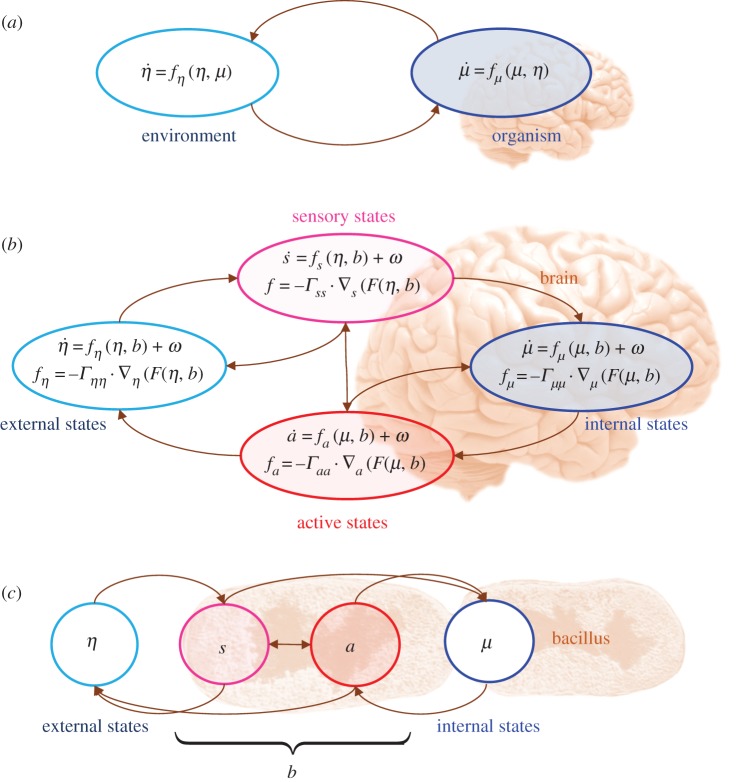
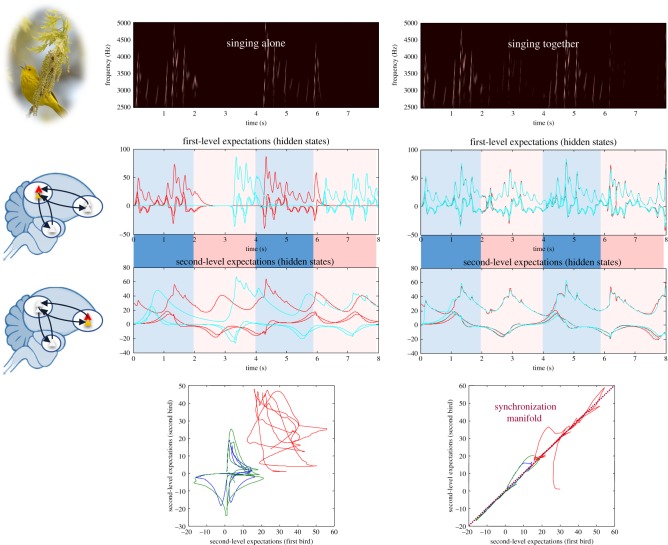
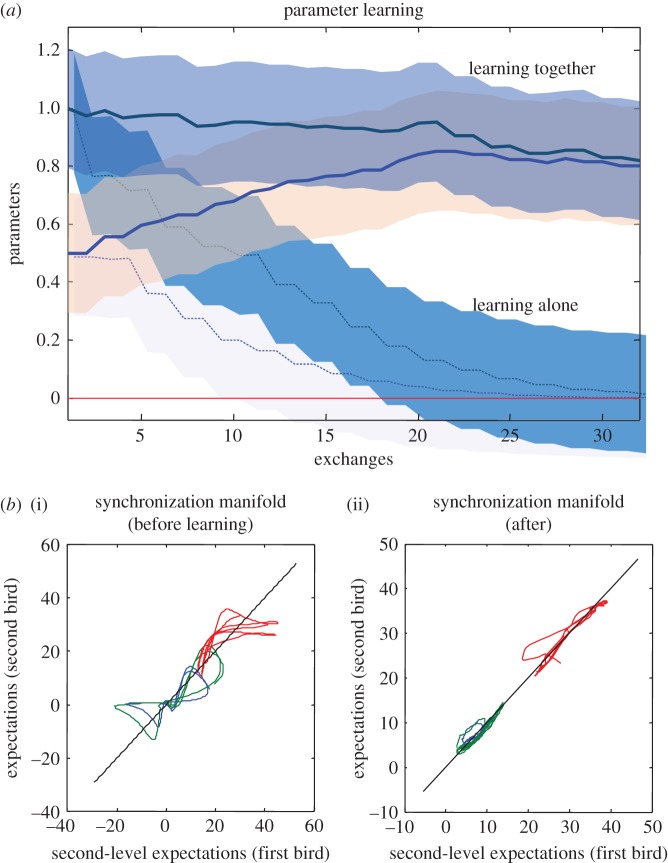
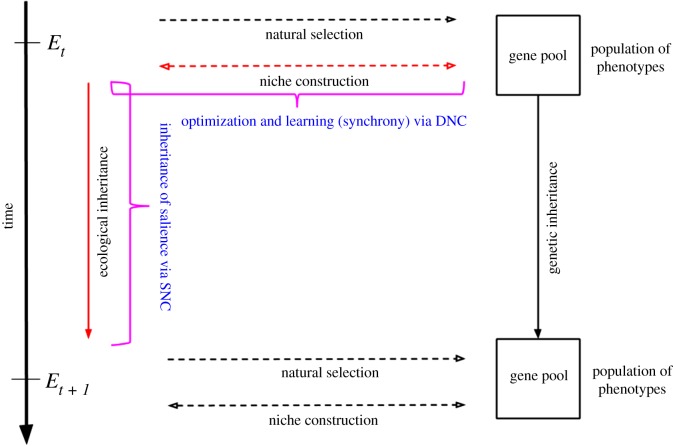
Verification
Claims the paper makes
The claims and statistics of this paper haven’t been checked yet.
Run the check — free, no account needed. It reads the open-access text and checks the sources it cites.
Claims other papers make about this one
Each is checked against this paper’s own text: does it say what the citing paper says it does?
The cited source says what the claim attributes to it.
In the citing paper
“As we show here, niche construction, which can be seen as a meta-learning mechanism (Constant et al., 2018), can prove promising in complexifying environments and population dynamics and bring us closer to artificial agents with behaviors reminiscent of natural ones.”
From Dynamics of niche construction in adaptable populations evolving in diverse environments (2023) · cites this paper as Constant et al., 2018
The cited source says what the claim attributes to it.
In the citing paper
“This process has been formalized as free energy minimization through environmental modification, providing a variational basis for niche construction (Constant et al., 2018).”
From Social Reality Construction via Active Inference: Modeling the Dialectic of Conformity and Creativity (2026) · cites this paper as Constant et al., 2018
The cited source says what the claim attributes to it.
In the citing paper
“However, specific phenotypes are determined by interactions between internal intrinsic dynamics (i.e., intra-system evolution) as well as external systems with which these dynamics couple via niche construction and phenotypic plasticity (Constant et al., 2018).”
From An Integrated World Modeling Theory (IWMT) of Consciousness (2020) · cites this paper as Constant et al., 2018
Self-check
Percentages, sums and reported differences re-computed from the paper’s own numbers.
The self-check needs the paper’s full text.
Citations
Cites
Situated Learning: Legitimate Peripheral Participation.
Bloch, M. E. F., Lave, J., & Wenger, É. (1994) · Man · doi:10.2307/2804509 · Cited by 39,362
Situated Learning: Legitimate Peripheral Participation
Lave, J., & Wenger, E. (1991) · Cambridge University Press eBooks · doi:10.1017/cbo9780511815355 · Cited by 35,324
The free-energy principle: a unified brain theory?
Friston, K. (2010) · Nature Reviews Neuroscience · doi:10.1038/nrn2787 · Cited by 8,120 · cited 3×
“Somatic changes can be cast as a Bayesian update of the parameters of the model embodied by the organism, and genotypic change through natural selection can be cast as a process of Bayesian model selection [20–24] (see the electronic supplementary material for further details).”
BackgroundSelf-citationNonequilibrium Equality for Free Energy Differences
Jarzynski, C. (1997) · Physical Review Letters · doi:10.1103/physrevlett.78.2690 · Cited by 5,231
(2003) · Cited by 2,898
Being there: putting brain, body, and world together again
(1997) · Choice Reviews Online · doi:10.5860/choice.34-6204 · Cited by 2,631
POSITIVE AND NEGATIVE EFFECTS OF ORGANISMS AS PHYSICAL ECOSYSTEM ENGINEERS
Jones, C. G., Lawton, J. H., & Shachak, M. (1997) · Ecology · doi:10.1890/0012-9658(1997)078[1946:paneoo]2.0.co;2 · Cited by 2,485
A Natural History of Human Thinking
Tomasello, M. (2014) · doi:10.4159/9780674726369 · Cited by 1,923
(2003) · Cited by 1,680
Haken, H. (1983) · Springer series in synergetics · doi:10.1007/978-3-642-88338-5 · Cited by 1,471
Research works printed but not linked: 3
- 10.2307/j.ctvc77f0d · DOI · Paper page
- Veissière S. 2016 Varieties of Tulpa experiences: the hypnotic nature of human sociality, personhood, and interphenomenality. Hypnosis and meditation: towards an integrative science of conscious planes, pp. 55–76. Oxford, UK: Oxford University Press Oxford.
- Odling-Smee FJ. 2010 Niche inheritance. In Evolution: the extended synthesis (eds M Pigliucci, GB Miller), pp. 175–208. Cambridge, MA: MIT Press.
Cited by
Sorted by citations
Thinking through other minds: A variational approach to cognition and culture
Veissière, S. P. L., Constant, A., Ramstead, M. J. D., Friston, K. J., & Kirmayer, L. J. (2020) · Behavioral and Brain Sciences · doi:10.1017/s0140525x19001213 · Cited by 348
Self-citationNew directions in predictive processing
Hohwy, J. (2020) · Mind & Language · doi:10.1111/mila.12281 · Cited by 283
Deeply Felt Affect: The Emergence of Valence in Deep Active Inference
Hesp, C., Smith, R., Parr, T., Allen, M., Friston, K. J., & Ramstead, M. J. D. (2021) · Neural Computation · doi:10.1162/neco_a_01341 · Cited by 246
Self-citationActive inference on discrete state-spaces: A synthesis
Da Costa, L., Parr, T., Sajid, N., Veselic, S., Neacsu, V., & Friston, K. (2020) · Journal of Mathematical Psychology · doi:10.1016/j.jmp.2020.102447 · Cited by 226
“[1,9,10] Atari games Active inference compares favourably to reinforcement learning in the game of Doom.”
BackgroundResultSelf-citationA free energy principle for a particular physics
Friston, K. (2019) · arXiv · doi:10.48550/arxiv.1906.10184 · Cited by 222
Self-citation
Metadata
- Authors
- Constant, A., Ramstead, M. J. D., Veissière, S. P. L., Campbell, J. O., & Friston, K. J.
- Affiliations
- University of Amsterdam (NL)
- McGill University (CA)
- Independent Researcher, Victoria, BC, Canada
- Wellcome Centre for Human Neuroimaging (GB)
- Corresponding author
- Constant, Axel
- Venue
- Journal of The Royal Society Interface
- Publisher
- The Royal Society
- Published
- 2018-04
- Volume
- 15
- Issue
- 141
- ISSN
- 1742-5662 (ISSN-L)
- 1742-5689
- PMC
- PMC5938575
- OpenAlex
- W2797051230
- Cited by
- 204
- References
- 103
- Citations by year
- 2026: 8 · 2025: 23 · 2024: 23 · 2023: 22 · 2022: 24 · 2021: 27 · 2020: 54 · 2019: 18 · 2018: 5
- FWCI
- 28.44
- Type
- journal article
- Language
- en
- Open access
- hybrid
- doi.org
- Locations
- Journal of The Royal Society Interface (publishedVersion, cc-by)
- Europe PMC (PubMed Central) (publishedVersion, cc-by)
- PubMed Central (publishedVersion, cc-by)
- PubMed (publishedVersion)
- PhilPapers (PhilPapers Foundation) (submittedVersion)
- UCL Discovery (University College London) (submittedVersion)
- Funders
- Wellcome Trust (088130/Z/09/Z)
- Social Sciences and Humanities Research Council of Canada
- Topics
- Social Sciences › Arts and Humanities › History and Philosophy of Science › Philosophy of Biology and Scientific Explanation
- Life Sciences › Biochemistry, Genetics and Molecular Biology › Genetics › Evolution and Genetic Dynamics
- Life Sciences › Neuroscience › Cognitive Neuroscience › Embodied and Extended Cognition
- Keywords
- niche construction, variational inference, natural selection, evolutionary trajectories, biological systems
- MeSH terms
- Adaptation, Physiological, Bayes Theorem, Biological Evolution, Models, Theoretical
About these checks
Registry, retraction, Cites and statistics results are computed, not judged, with one exception: a printed reference that no index lists is read once by a model before it counts as a citation error. Claims are extracted by a model and kept only when their quote appears verbatim in the text; each cited source is then checked, with a model’s help, for whether it says what the claim relies on. Those verdicts can be wrong — read the claim’s quote and the cited source before relying on one.
Statistics and arithmetic are recomputed, not judged.
Confidence bands are shown only for fields calibrated on our annotated test set. None is calibrated yet, so no band is shown.
What counts as a claim ›How we measure confidence ›How we check this ›
Are you an author, or do you see a problem with this page? Request a review
