

The DOI matches its Crossref record; 102 of the 103 references it cites were found in a registry or an index.
A variational approach to niche construction
Open accessAbstract
In evolutionary biology, niche construction is sometimes described as a genuine evolutionary process whereby organisms, through their activities and regulatory mechanisms, modify their environment such as to steer their own evolutionary trajectory, and that of other species. There is ongoing debate, however, on the extent to which niche construction ought to be considered a bona fide evolutionary force, on a par with natural selection. Recent formulations of the variational free-energy principle as applied to the life sciences describe the properties of living systems, and their selection in evolution, in terms of variational inference. We argue that niche construction can be described using a variational approach. We propose new arguments to support the niche construction perspective, and to extend the variational approach to niche construction to current perspectives in various scientific fields.
Overview
The claims and statistics of this paper haven’t been checked yet.
Run the check — free, no account needed. It reads the open-access text and checks the sources it cites.
Integrity signals
Registry
Cites
Statistics
Figures
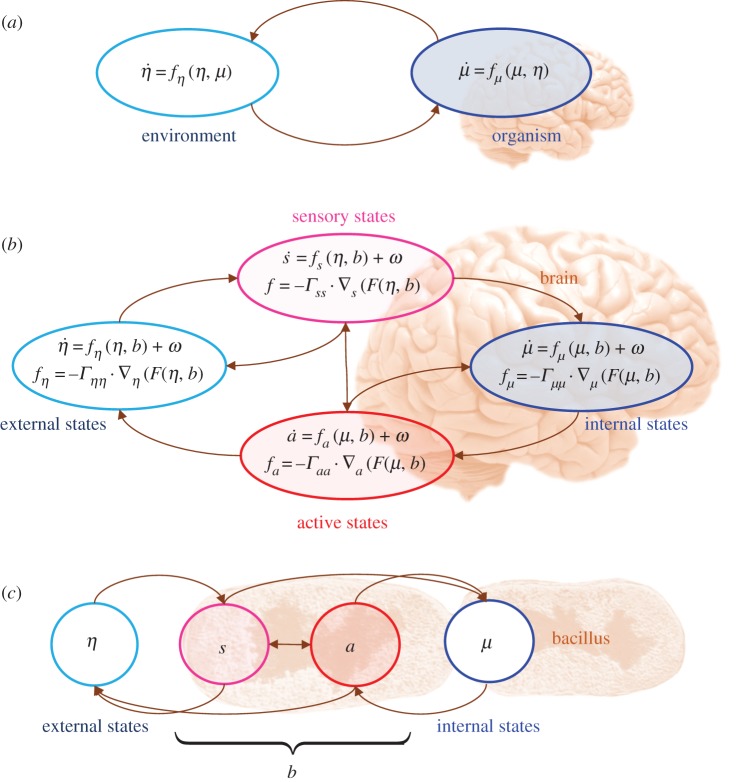
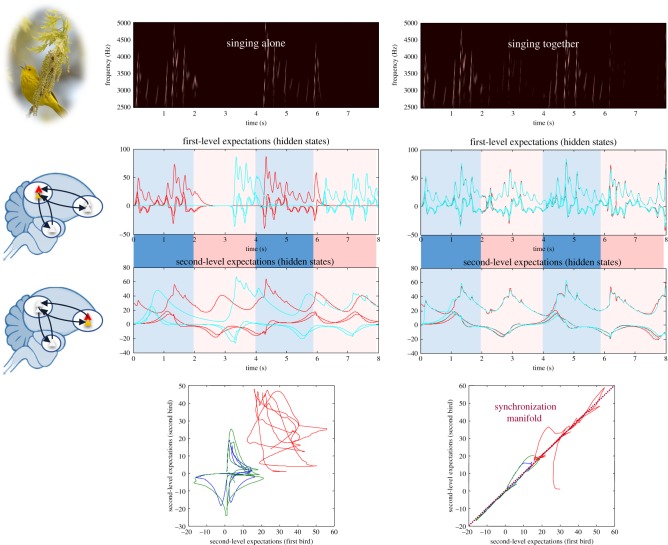
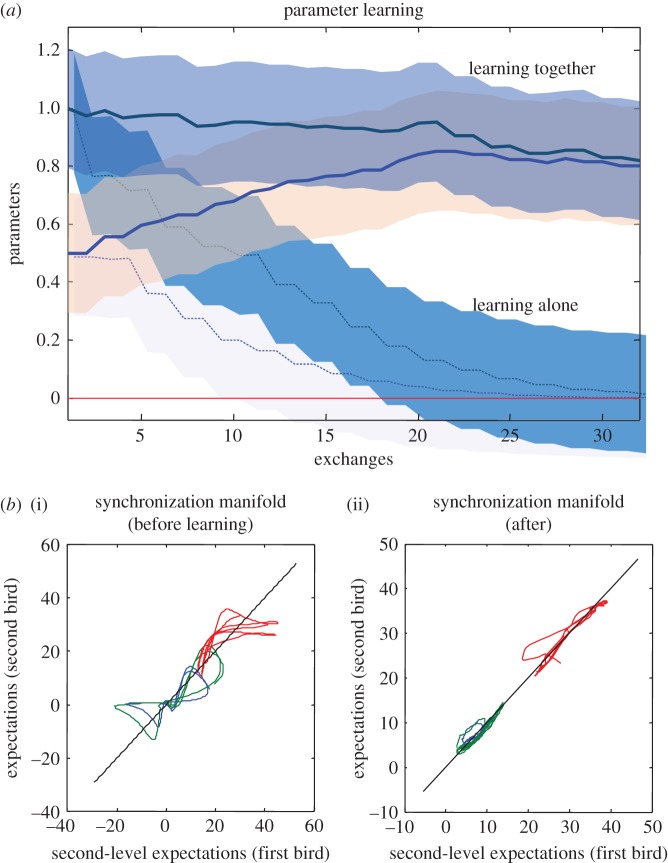
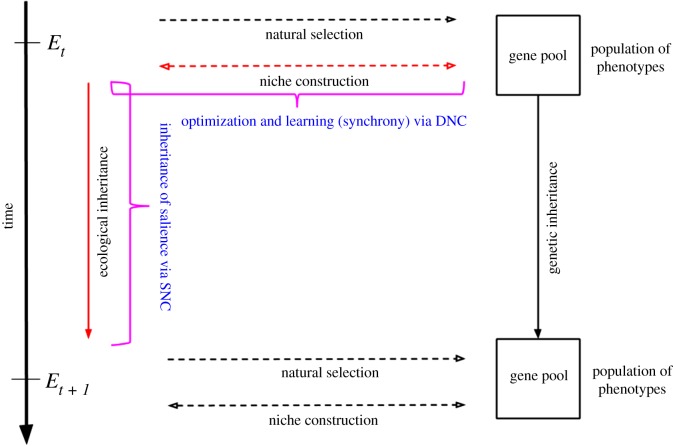
Verification
Claims the paper makes
The claims and statistics of this paper haven’t been checked yet.
Run the check — free, no account needed. It reads the open-access text and checks the sources it cites.
Claims other papers make about this one
Each is checked against this paper’s own text: does it say what the citing paper says it does?
The cited source says what the claim attributes to it.
In the citing paper
“As we show here, niche construction, which can be seen as a meta-learning mechanism (Constant et al., 2018), can prove promising in complexifying environments and population dynamics and bring us closer to artificial agents with behaviors reminiscent of natural ones.”
From Dynamics of niche construction in adaptable populations evolving in diverse environments (2023) · cites this paper as Constant et al., 2018
The cited source says what the claim attributes to it.
In the citing paper
“This process has been formalized as free energy minimization through environmental modification, providing a variational basis for niche construction (Constant et al., 2018).”
From Social Reality Construction via Active Inference: Modeling the Dialectic of Conformity and Creativity (2026) · cites this paper as Constant et al., 2018
The cited source says what the claim attributes to it.
In the citing paper
“However, specific phenotypes are determined by interactions between internal intrinsic dynamics (i.e., intra-system evolution) as well as external systems with which these dynamics couple via niche construction and phenotypic plasticity (Constant et al., 2018).”
From An Integrated World Modeling Theory (IWMT) of Consciousness (2020) · cites this paper as Constant et al., 2018
Self-check
Percentages, sums and reported differences re-computed from the paper’s own numbers.
The self-check needs the paper’s full text.
Citations
Cites
Situated Learning: Legitimate Peripheral Participation.
Bloch, M. E. F., Lave, J., & Wenger, É. (1994) · Man · doi:10.2307/2804509 · Cited by 39,362
Situated Learning: Legitimate Peripheral Participation
Lave, J., & Wenger, E. (1991) · Cambridge University Press eBooks · doi:10.1017/cbo9780511815355 · Cited by 35,324
The free-energy principle: a unified brain theory?
Friston, K. (2010) · Nature Reviews Neuroscience · doi:10.1038/nrn2787 · Cited by 8,120 · cited 3×
“Somatic changes can be cast as a Bayesian update of the parameters of the model embodied by the organism, and genotypic change through natural selection can be cast as a process of Bayesian model selection [20–24] (see the electronic supplementary material for further details).”
BackgroundSelf-citationNonequilibrium Equality for Free Energy Differences
Jarzynski, C. (1997) · Physical Review Letters · doi:10.1103/physrevlett.78.2690 · Cited by 5,231
(2003) · Cited by 2,898
Being there: putting brain, body, and world together again
(1997) · Choice Reviews Online · doi:10.5860/choice.34-6204 · Cited by 2,631
POSITIVE AND NEGATIVE EFFECTS OF ORGANISMS AS PHYSICAL ECOSYSTEM ENGINEERS
Jones, C. G., Lawton, J. H., & Shachak, M. (1997) · Ecology · doi:10.1890/0012-9658(1997)078[1946:paneoo]2.0.co;2 · Cited by 2,485
A Natural History of Human Thinking
Tomasello, M. (2014) · doi:10.4159/9780674726369 · Cited by 1,923
(2003) · Cited by 1,680
Haken, H. (1983) · Springer series in synergetics · doi:10.1007/978-3-642-88338-5 · Cited by 1,471
The extended evolutionary synthesis: its structure, assumptions and predictions
Laland, K. N., Uller, T., Feldman, M. W., Sterelny, K., Müller, G. B., Moczek, A., Jablonka, E., & Odling-Smee, J. (2015) · Proceedings of the Royal Society B: Biological Sciences · doi:10.1098/rspb.2015.1019 · Cited by 1,399
Henrich, J. (2016) · Choice Reviews Online · doi:10.5860/choice.195747 · Cited by 1,196
The formation of vegetable mould, through the action of worms : with observations on their habits /
Darwin, C. R. (1881) · J. Murray eBooks · doi:10.5962/bhl.title.107559 · Cited by 1,143
Evolution from Molecules to Men.
Fryer, G., & Bendall, D. S. (1984) · Journal of Ecology · doi:10.2307/2260026 · Cited by 1,142
Does evolutionary theory need a rethink?
Laland, K. N., Uller, T., Feldman, M., Sterelny, K., Müller, G. B., Moczek, A. P., Jablonka, E., Odling‐Smee, J., Wray, G. A., Hoekstra, H. E., et al. (2014) · Nature · doi:10.1038/514161a · Cited by 1,091
Every good regulator of a system must be a model of that system †
CONANT, R. C., & ROSS ASHBY, W. (1970) · International Journal of Systems Science · doi:10.1080/00207727008920220 · Cited by 1,063
Henrich, J. (2016) · doi:10.1515/9781400873296 · Cited by 1,002
Algorithmic Information Theory
Chaitin, G. J. (1977) · IBM Journal of Research and Development · doi:10.1147/rd.214.0350 · Cited by 982
Towards a unified science of cultural evolution
Mesoudi, A., Whiten, A., & Laland, K. N. (2006) · Behavioral and Brain Sciences · doi:10.1017/s0140525x06009083 · Cited by 886
Precise minds in uncertain worlds: Predictive coding in autism.
Van de Cruys, S., Evers, K., Van der Hallen, R., Van Eylen, L., Boets, B., de-Wit, L., & Wagemans, J. (2014) · Psychological Review · doi:10.1037/a0037665 · Cited by 885
Friston, K. (2013) · Journal of The Royal Society Interface · doi:10.1098/rsif.2013.0475 · Cited by 754
Self-citation(2008) · Choice Reviews Online · doi:10.5860/choice.45-4467 · Cited by 746
Active inference and epistemic value
Friston, K., Rigoli, F., Ognibene, D., Mathys, C., Fitzgerald, T., & Pezzulo, G. (2015) · Cognitive Neuroscience · doi:10.1080/17588928.2015.1020053 · Cited by 731
Self-citationEvery Good Regulator of a System Must Be a Model of That System
Conant, R. C., & Ashby, W. R. (1991) · Facets of Systems Science · doi:10.1007/978-1-4899-0718-9_37 · Cited by 712
Cause and Effect in Biology Revisited: Is Mayr’s Proximate-Ultimate Dichotomy Still Useful?
Laland, K. N., Sterelny, K., Odling‐Smee, J., Hoppitt, W., & Uller, T. (2011) · Science · doi:10.1126/science.1210879 · Cited by 693
An introduction to niche construction theory
Laland, K. N., Matthews, B., & Feldman, M. W. (2016) · Evolutionary Ecology · doi:10.1007/s10682-016-9821-z · Cited by 690
Friston, K., FitzGerald, T., Rigoli, F., Schwartenbeck, P., O⿿Doherty, J., & Pezzulo, G. (2016) · Neuroscience & Biobehavioral Reviews · doi:10.1016/j.neubiorev.2016.06.022 · Cited by 674
Self-citationFriston, K. J., & Stephan, K. E. (2007) · Synthese · doi:10.1007/s11229-007-9237-y · Cited by 673
Self-citationCooperative Breeding and Human Cognitive Evolution
Burkart, J. M., Hrdy, S. B., & Van Schaik, C. P. (2009) · Evolutionary Anthropology: Issues, News, and Reviews · doi:10.1002/evan.20222 · Cited by 646
Self-organization, free energy minimization, and optimal grip on a field of affordances
Bruineberg, J. P., & Rietveld, E. (2014) · Frontiers in Human Neuroscience · doi:10.3389/fnhum.2014.00599 · Cited by 594
Folk psychological narratives: the sociocultural basis of understanding reasons
(2008) · Choice Reviews Online · doi:10.5860/choice.45-5269 · Cited by 591
Odling-Smee, F. J., Laland, K. N., & Feldman, M. W. (2013) · Princeton University Press eBooks · doi:10.1515/9781400847266 · Cited by 586
Nonlinear Fokker-Planck Equations
Frank, T. D. (2005) · Springer eBooks · doi:10.1007/b137680 · Cited by 581
Notes on Landauer's principle, reversible computation, and Maxwell's Demon
Bennett, C. H. (2003) · Studies in History and Philosophy of Science Part B Studies in History and Philosophy of Modern Physics · doi:10.1016/s1355-2198(03)00039-x · Cited by 493
Toward an interpretation of dynamic neural activity in terms of chaotic dynamical systems
Tsuda, I. (2001) · Behavioral and Brain Sciences · doi:10.1017/s0140525x01000097 · Cited by 486
The Role of behavior in evolution
(1989) · Choice Reviews Online · doi:10.5860/choice.26-2706 · Cited by 479
Wild capuchin monkeys ( Cebus libidinosus ) use anvils and stone pounding tools
Fragaszy, D. M., Izar, P., Visalberghi, E. M., Ottoni, E. B., & de Oliveira, M. G. (2004) · American Journal of Primatology · doi:10.1002/ajp.20085 · Cited by 472
Algorithmic Information Theory
Chaitin, G. J. (1987) · Cambridge University Press eBooks · doi:10.1017/cbo9780511608858 · Cited by 465
Niche Construction Theory: A Practical Guide for Ecologists
Odling‐Smee, J., Erwin, D. H., Palkovacs, E. P., Feldman, M. W., & Laland, K. N. (2013) · The Quarterly Review of Biology · doi:10.1086/669266 · Cited by 460
Ramstead, M. J. D., Veissière, S. P. L., & Kirmayer, L. J. (2016) · Frontiers in Psychology · doi:10.3389/fpsyg.2016.01090 · Cited by 422
Self-citationPERSPECTIVE: SEVEN REASONS (NOT) TO NEGLECT NICHE CONSTRUCTION
Laland, K. N., & Sterelny, K. (2006) · Evolution · doi:10.1111/j.0014-3820.2006.tb00520.x · Cited by 384
A free energy principle for biological systems
Karl, F. (2012) · Entropy · doi:10.3390/e14112100 · Cited by 377
Friston, K., & Frith, C. (2015) · Consciousness and Cognition · doi:10.1016/j.concog.2014.12.003 · Cited by 359
Self-citationAnswering Schrödinger's question: A free-energy formulation
Ramstead, M. J. D., Badcock, P. B., & Friston, K. J. (2018) · Physics of Life Reviews · doi:10.1016/j.plrev.2017.09.001 · Cited by 354
Self-citationHrdy, S. B. (2011) · Harvard University Press eBooks · doi:10.2307/j.ctt1c84czb · Cited by 339
A tutorial on variational Bayesian inference
Fox, C. W., & Roberts, S. (2011) · Artificial Intelligence Review · doi:10.1007/s10462-011-9236-8 · Cited by 329
Cultural Niche Construction: An Introduction
Laland, K. N., & O’Brien, M. J. (2011) · Biological Theory · doi:10.1007/s13752-012-0026-6 · Cited by 312
Path integrals and symmetry breaking for optimal control theory
Kappen, H. J. (2005) · Journal of Statistical Mechanics Theory and Experiment · doi:10.1088/1742-5468/2005/11/p11011 · Cited by 309
Settling nature and nurture into an ontogenetic niche
West, M. J., & King, A. P. (1987) · Developmental Psychobiology · doi:10.1002/dev.420200508 · Cited by 305
Philosophy and Predictive Processing
Thomas, M., & Wanja, W. (2017) · Cited by 290
Being There: Putting Brain, Body and World Together Again
Newton, N., & Clark, A. (1998) · The American Journal of Psychology · doi:10.2307/1423541 · Cited by 290
THE NICHE CONSTRUCTION PERSPECTIVE: A CRITICAL APPRAISAL
Scott‐Phillips, T. C., Laland, K. N., Shuker, D. M., Dickins, T. E., & West, S. A. (2013) · Evolution · doi:10.1111/evo.12332 · Cited by 287
Active inference, communication and hermeneutics
Friston, K. J., & Frith, C. D. (2015) · Cortex · doi:10.1016/j.cortex.2015.03.025 · Cited by 266 · cited 2×
“Conversely, when action upon the environment effectively teaches the environment about the agent—and the environment holds imprecise beliefs about the agent—the environment will yield to the agent’s beliefs more readily (cf. results summarized in figure 3 [71]).”
BackgroundSelf-citationIngold, T. (2016) · Routledge eBooks · doi:10.4324/9781315625324 · Cited by 245
Extended Phenotype – But Not Too Extended. A Reply to Laland, Turner and Jablonka
Dawkins, R. (2004) · Biology & Philosophy · doi:10.1023/b:biph.0000036180.14904.96 · Cited by 236
Knowing one's place: a free-energy approach to pattern regulation
Friston, K., Levin, M., Sengupta, B., & Pezzulo, G. (2015) · Journal of The Royal Society Interface · doi:10.1098/rsif.2014.1383 · Cited by 234
Self-citationSocial intelligence, human intelligence and niche construction
Sterelny, K. (2007) · Philosophical Transactions of the Royal Society B: Biological Sciences · doi:10.1098/rstb.2006.2006 · Cited by 233
Hrdy, S. B. (2001) · Natural history · Cited by 221
Information and efficiency in the nervous system-a synthesis.
Sengupta, B., Stemmler, M. B., & Friston, K. J. (2013) · PLoS Computational Biology · doi:10.1371/journal.pcbi.1003157 · Cited by 212
Self-citationEnculturing brains through patterned practices
Roepstorff, A., Niewöhner, J., & Beck, S. (2010) · Neural Networks · doi:10.1016/j.neunet.2010.08.002 · Cited by 205
Differentiable generalized synchronization of chaos
Hunt, B. R., Ott, E., & Yorke, J. A. (1997) · Physical Review E · doi:10.1103/physreve.55.4029 · Cited by 201
Adaptation and Inclusive Fitness
West, S. A., & Gardner, A. (2013) · Current Biology · doi:10.1016/j.cub.2013.05.031 · Cited by 198
Perception and self-organized instability
Friston, K. J., Breakspear, M. J., & Deco, G. (2012) · Frontiers in Computational Neuroscience · doi:10.3389/fncom.2012.00044 · Cited by 189
Self-citationTarget Article with Commentaries: Developmental niche construction
Flynn, E., Laland, K. N., Kendal, R. L., & Kendal, J. R. (2013) · Developmental Science · doi:10.1111/desc.12030 · Cited by 179
The implications of embodiment: Cognition and communication
Kriz, J. (2012) · Psychotherapy Research · doi:10.1080/10503307.2012.719650 · Cited by 168
(2012) · The MIT Press eBooks · doi:10.7551/mitpress/9219.001.0001 · Cited by 156
Tschacher, W., & Haken, H. (2007) · New Ideas in Psychology · doi:10.1016/j.newideapsych.2006.09.002 · Cited by 152
Free Energy, Value, and Attractors
Friston, K. J., & Ao, P. (2011) · Computational and Mathematical Methods in Medicine · doi:10.1155/2012/937860 · Cited by 146
Self-citationEmerging of Stochastic Dynamical Equalities and Steady State Thermodynamics from Darwinian Dynamics
Ao, P. (2008) · Communications in Theoretical Physics · doi:10.1088/0253-6102/49/5/01 · Cited by 144
Ecological Inheritance and Cultural Inheritance: What Are They and How Do They Differ?
Odling‐Smee, J., & Laland, K. N. (2011) · Biological Theory · doi:10.1007/s13752-012-0030-x · Cited by 141
Universal darwinism as a process of bayesian inference
Campbell, J. O. (2016) · Frontiers in Systems Neuroscience · doi:10.3389/fnsys.2016.00049 · Cited by 140
Self-citationLaws in Darwinian evolutionary theory
Ao, P. (2005) · Physics of Life Reviews · doi:10.1016/j.plrev.2005.03.002 · Cited by 136
Towards a neuronal gauge theory
Sengupta, B., Tozzi, A., Cooray, G. K., Douglas, P. K., & Friston, K. J. (2016) · PLOS Biology · doi:10.1371/journal.pbio.1002400 · Cited by 132
Self-citationThe Encultured Brain: An Introduction to Neuroanthropology
Lende, D. H., & Downey, G. (2012) · Project Muse (Johns Hopkins University) · Cited by 130
Why developmental niche construction is not selective niche construction: and why it matters
Stotz, K. C. (2017) · Interface Focus · doi:10.1098/rsfs.2016.0157 · Cited by 130
Towards a biology of traditions
Fragaszy, D. M., & Perry, S. (2003) · Cambridge University Press eBooks · doi:10.1017/cbo9780511584022.002 · Cited by 118
On markov blankets and hierarchical self-organisation
Palacios, E. R., Razi, A., Parr, T., Kirchhoff, M., & Friston, K. (2020) · Journal of Theoretical Biology · doi:10.1016/j.jtbi.2019.110089 · Cited by 115
Self-citationExtended evolutionary psychology: the importance of transgenerational developmental plasticity
Stotz, K. C. (2014) · Frontiers in Psychology · doi:10.3389/fpsyg.2014.00908 · Cited by 113
Wolf, M., Kurvers, R. H. J. M., Ward, A. J. W., Krause, S., & Krause, J. (2013) · Proceedings of the Royal Society B Biological Sciences · doi:10.1098/rspb.2012.2777 · Cited by 106
Folk Psychological Narratives: The Sociocultural Basis of Understanding Reasons
Cmeciu, D. (2013) · The European Legacy · doi:10.1080/10848770.2013.791435 · Cited by 88
Kendal, J. R. (2011) · Biological Theory · doi:10.1007/s13752-012-0038-2 · Cited by 85
Niche Inheritance: A Possible Basis for Classifying Multiple Inheritance Systems in Evolution
Odling‐Smee, J. (2007) · Biological Theory · doi:10.1162/biot.2007.2.3.276 · Cited by 83
Extending the Extended Phenotype
Laland, K. N. (2004) · Biology & Philosophy · doi:10.1023/b:biph.0000036113.38737.d8 · Cited by 75
Dissanayake, E. (2009) · Cognitive Semiotics · doi:10.1515/cogsem.2009.5.fall2009.136 · Cited by 71
Odling‐Smee, J. (2010) · The MIT Press eBooks · doi:10.7551/mitpress/9780262513678.003.0008 · Cited by 71
Cumulative Cultural Evolution and the Origins of Language
Sterelny, K. (2016) · Biological Theory · doi:10.1007/s13752-016-0247-1 · Cited by 67
Path integral control and bounded rationality
Braun, D. A., Ortega, P. A., Theodorou, E. A., & Stefan Schaal, A. (2011) · IEEE Symposium on Adaptive Dynamic Programming and Reinforcement Learning · doi:10.1109/adprl.2011.5967366 · Cited by 58
West, M. J., King, A. P., & Arberg, A. A. (1988) · Handbook of behavioral neurobiology · doi:10.1007/978-1-4684-5421-5_2 · Cited by 48
Community Resources for Learning: How Capuchin Monkeys Construct Technical Traditions
Fragaszy, D. M. (2011) · Biological Theory · doi:10.1007/s13752-012-0032-8 · Cited by 37
Biological Self-organisation and Markov blanketsPreprint
Palacios, E. R., Razi, A., Parr, T., Kirchhoff, M. D., & Friston, K. J. (2017) · bioRxiv (Cold Spring Harbor Laboratory) · doi:10.1101/227181 · Cited by 34
Self-citationDissanayake, E. (2009) · Cognitive Semiotics · doi:10.3726/81609_136 · Cited by 34
Experiential fantasies, prediction, and enactive minds
Kirchhoff, M. D. (2015) · PhilPapers (PhilPapers Foundation) · Cited by 30
Evolving human landscapes: a virtual laboratory approach
Magliocca, N. R., & Ellis, E. C. (2016) · Journal of Land Use Science · doi:10.1080/1747423x.2016.1241314 · Cited by 22
Reconceptualizing the Human Social Niche
Palmer, C. T., Coe, K., & Steadman, L. B. (2016) · Current Anthropology · doi:10.1086/685703 · Cited by 20
Decoding early myelopoiesis from dynamics of core endogenous network
Su, H., Wang, G., Yuan, R., Wang, J., Tang, Y., Ao, P., & Zhu, X. (2017) · Science China Life Sciences · doi:10.1007/s11427-017-9059-y · Cited by 19
Collective behaviour, uncertainty and environmental change
Bentley, R. A., & O’Brien, M. J. (2015) · Philosophical Transactions of the Royal Society A Mathematical Physical and Engineering Sciences · doi:10.1098/rsta.2014.0461 · Cited by 18
Fitness landscapes among many options under social influence
Caiado, C., Brock, W. A., Bentley, R. A., & O’Brien, M. J. (2016) · Journal of Theoretical Biology · doi:10.1016/j.jtbi.2015.12.013 · Cited by 17
Evolution from Molecules to Men
Ninio, J. (1986) · FEBS Letters · doi:10.1016/0014-5793(86)81554-x · Cited by 12
Cultural Evolution and Gene–Culture Coevolution
Richerson, P. J. (2017) · Evolutionary Studies in Imaginative Culture · doi:10.26613/esic.1.1.17 · Cited by 11
Niche Construction and Gene-Culture Coevolution: An Evolutionary Basis for the Human Sciences
Odling-Smee, F. J., Laland, K. N., & Feldman, M. W. (2000) · Perspectives in ethology · doi:10.1007/978-1-4615-1221-9_4 · Cited by 10
Culture as a Response to Uncertainty
Tobler, P. N., & Christopoulos, G. I. (2016) · Oxford University Press eBooks · doi:10.1093/oxfordhb/9780199357376.013.6 · Cited by 1
(1982)
Research works printed but not linked: 3
- 10.2307/j.ctvc77f0d · DOI · Paper page
- Veissière S. 2016 Varieties of Tulpa experiences: the hypnotic nature of human sociality, personhood, and interphenomenality. Hypnosis and meditation: towards an integrative science of conscious planes, pp. 55–76. Oxford, UK: Oxford University Press Oxford.
- Odling-Smee FJ. 2010 Niche inheritance. In Evolution: the extended synthesis (eds M Pigliucci, GB Miller), pp. 175–208. Cambridge, MA: MIT Press.
Cited by
Sorted by citations
Thinking through other minds: A variational approach to cognition and culture
Veissière, S. P. L., Constant, A., Ramstead, M. J. D., Friston, K. J., & Kirmayer, L. J. (2020) · Behavioral and Brain Sciences · doi:10.1017/s0140525x19001213 · Cited by 348
Self-citationNew directions in predictive processing
Hohwy, J. (2020) · Mind & Language · doi:10.1111/mila.12281 · Cited by 283
Deeply Felt Affect: The Emergence of Valence in Deep Active Inference
Hesp, C., Smith, R., Parr, T., Allen, M., Friston, K. J., & Ramstead, M. J. D. (2021) · Neural Computation · doi:10.1162/neco_a_01341 · Cited by 246
Self-citationActive inference on discrete state-spaces: A synthesis
Da Costa, L., Parr, T., Sajid, N., Veselic, S., Neacsu, V., & Friston, K. (2020) · Journal of Mathematical Psychology · doi:10.1016/j.jmp.2020.102447 · Cited by 226
“[1,9,10] Atari games Active inference compares favourably to reinforcement learning in the game of Doom.”
BackgroundResultSelf-citationA free energy principle for a particular physics
Friston, K. (2019) · arXiv · doi:10.48550/arxiv.1906.10184 · Cited by 222
Self-citation
Metadata
- Authors
- Constant, A., Ramstead, M. J. D., Veissière, S. P. L., Campbell, J. O., & Friston, K. J.
- Affiliations
- University of Amsterdam (NL)
- McGill University (CA)
- Independent Researcher, Victoria, BC, Canada
- Wellcome Centre for Human Neuroimaging (GB)
- Corresponding author
- Constant, Axel
- Venue
- Journal of The Royal Society Interface
- Publisher
- The Royal Society
- Published
- 2018-04
- Volume
- 15
- Issue
- 141
- ISSN
- 1742-5662 (ISSN-L)
- 1742-5689
- PMC
- PMC5938575
- OpenAlex
- W2797051230
- Cited by
- 204
- References
- 103
- Citations by year
- 2026: 8 · 2025: 23 · 2024: 23 · 2023: 22 · 2022: 24 · 2021: 27 · 2020: 54 · 2019: 18 · 2018: 5
- FWCI
- 28.44
- Type
- journal article
- Language
- en
- Open access
- hybrid
- doi.org
- Locations
- Journal of The Royal Society Interface (publishedVersion, cc-by)
- Europe PMC (PubMed Central) (publishedVersion, cc-by)
- PubMed Central (publishedVersion, cc-by)
- PubMed (publishedVersion)
- PhilPapers (PhilPapers Foundation) (submittedVersion)
- UCL Discovery (University College London) (submittedVersion)
- Funders
- Wellcome Trust (088130/Z/09/Z)
- Social Sciences and Humanities Research Council of Canada
- Topics
- Social Sciences › Arts and Humanities › History and Philosophy of Science › Philosophy of Biology and Scientific Explanation
- Life Sciences › Biochemistry, Genetics and Molecular Biology › Genetics › Evolution and Genetic Dynamics
- Life Sciences › Neuroscience › Cognitive Neuroscience › Embodied and Extended Cognition
- Keywords
- niche construction, variational inference, natural selection, evolutionary trajectories, biological systems
- MeSH terms
- Adaptation, Physiological, Bayes Theorem, Biological Evolution, Models, Theoretical
About these checks
Registry, retraction, Cites and statistics results are computed, not judged, with one exception: a printed reference that no index lists is read once by a model before it counts as a citation error. Claims are extracted by a model and kept only when their quote appears verbatim in the text; each cited source is then checked, with a model’s help, for whether it says what the claim relies on. Those verdicts can be wrong — read the claim’s quote and the cited source before relying on one.
Statistics and arithmetic are recomputed, not judged.
Confidence bands are shown only for fields calibrated on our annotated test set. None is calibrated yet, so no band is shown.
What counts as a claim ›How we measure confidence ›How we check this ›
Are you an author, or do you see a problem with this page? Request a review
