

The DOI matches its Crossref record; 14 of the 14 references it cites were found in a registry or an index.
Favipiravir versus Arbidol for COVID-19: A Randomized Clinical Trial
Open accessPreprint — published as 10.3389/fphar.2021.683296
Abstract
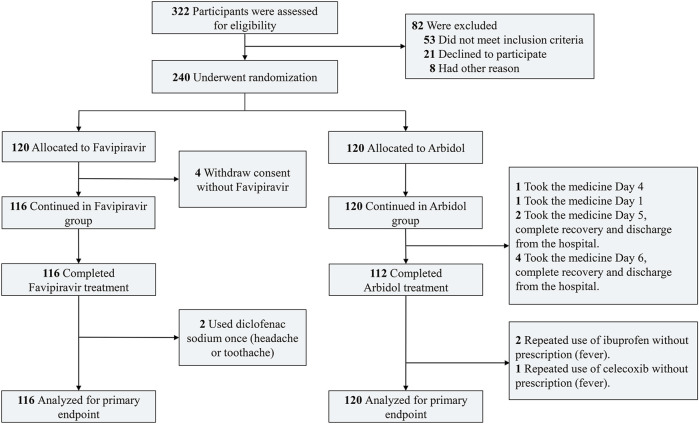
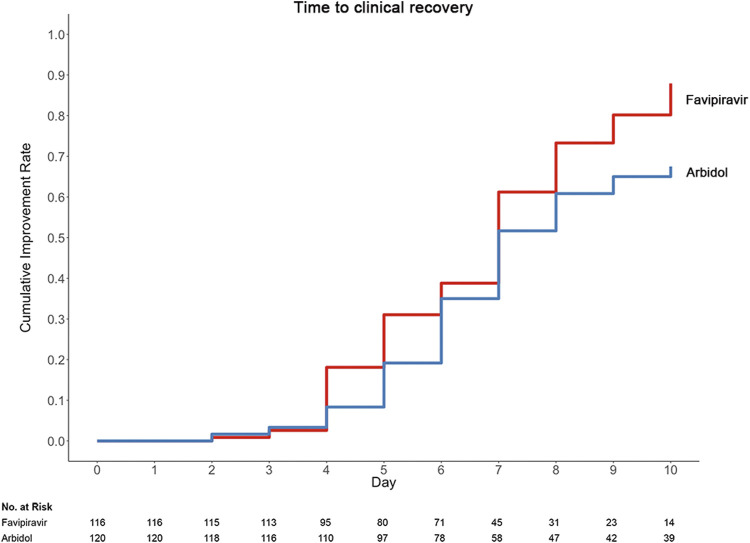
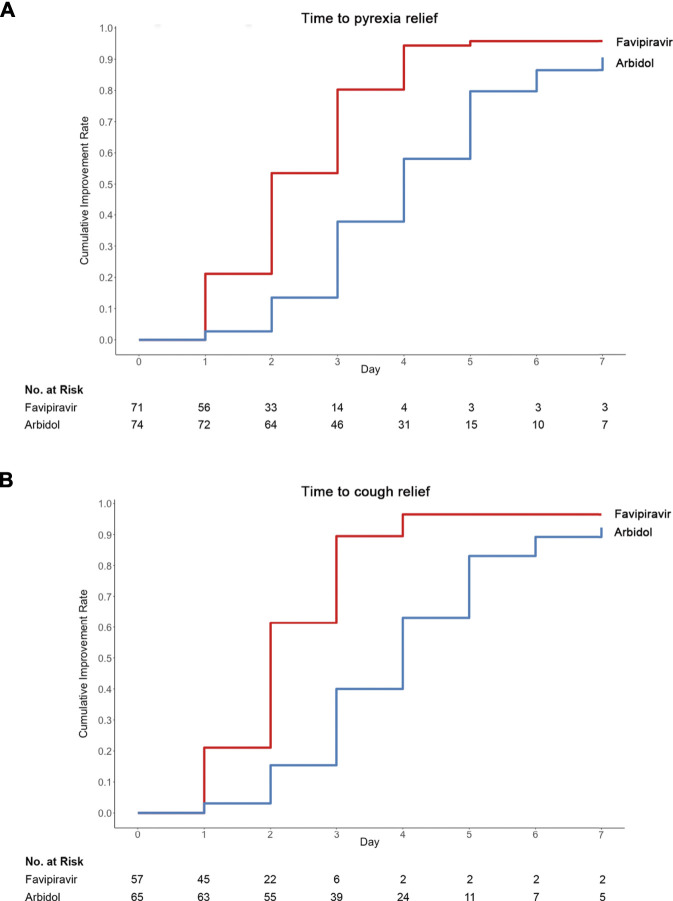
Background: No clinically proven effective antiviral strategy exists for the epidemic Coronavirus Disease 2019 (COVID-19). Methods: We conducted a prospective, randomized, controlled, open-label multicenter trial involving adult patients with COVID-19. Patients were randomly assigned in a 1:1 ratio to receive conventional therapy plus Umifenovir (Arbidol) (200mg*3/day) or Favipiravir (1600mg*2/first day followed by 600mg*2/day) for 10 days. The primary outcome was clinical recovery rate of Day 7. Latency to relief for pyrexia and cough, the rate of auxiliary oxygen therapy (AOT) or noninvasive mechanical ventilation (NMV) were the secondary outcomes. Safety data were collected for 17 days. Results: 240 enrolled COVID-19 patients underwent randomization; 120 patients were assigned to receive Favipiravir (116 assessed), and 120 to receive Arbidol (120 assessed). Clinical recovery rate of Day 7 does not significantly differ between Favipiravir group (71/116) and Arbidol group (62/120) (P=0.1396, difference of recovery rate: 0.0954; 95% CI: -0.0305 to 0.2213). Favipiravir led to shorter latencies to relief for both pyrexia (difference: 1.70 days, P<0.0001) and cough (difference: 1.75 days, P<0.0001). No difference was observed of AOT or NMV rate (both P>0.05). The most frequently observed Favipiravir-associated adverse event was raised serum uric acid (16/116, OR: 5.52, P=0.0014). Conclusions: Among patients with COVID-19, Favipiravir, compared to Arbidol, did not significantly improve the clinically recovery rate at Day 7. Favipiravir significantly improved the latency to relief for pyrexia and cough. Adverse effects caused Favipiravir are mild and manageable. This trial is registered with Chictr.org.cn (ChiCTR2000030254).
Overview
The claims and statistics of this paper haven’t been checked yet.
Run the check — free, no account needed. It reads the open-access text and checks the sources it cites.
Integrity signals
Registry
Cites
Statistics
Figures
Verification
Claims the paper makes
The claims and statistics of this paper haven’t been checked yet.
Run the check — free, no account needed. It reads the open-access text and checks the sources it cites.
Claims other papers make about this one
Each is checked against this paper’s own text: does it say what the citing paper says it does?
In the citing paper
“The subgroup effect is consistent with evidence from other meta-analyses.36”
From Drug treatments for covid-19: living systematic review and network meta-analysis (2020) · cites this paper as [36]
Self-check
Percentages, sums and reported differences re-computed from the paper’s own numbers.
The self-check needs the paper’s full text.
Citations
Cites
Clinical features of patients infected with 2019 novel coronavirus in Wuhan, China
Huang, C., Wang, Y., Li, X., Ren, L., Zhao, J., Hu, Y., Zhang, L., Fan, G., Xu, J., Gu, X., et al. (2020) · The Lancet · doi:10.1016/s0140-6736(20)30183-5 · Cited by 48,884
Self-citation[Asymptomatic infection of COVID-19 and its challenge to epidemic prevention and control].
Gao, X., Chen, W., Guo, L., Zhang, T.-Z., & Zhao, H.-Q. (2020) · Zhonghua liu xing bing xue za zhi = Zhonghua liuxingbingxue zazhi · doi:10.3760/cma.j.cn112338-20200427-00659 · Cited by 28,519 · cited 2×
“In China, although arbidol has been recommended in The Novel Coronavirus Pneumonia Diagnosis and Treatment Scheme (6th trial version) [8].”
BackgroundZhou, F., Yu, T., Du, R., Fan, G., Liu, Y., Liu, Z., Xiang, J., Wang, Y., Song, B., Gu, X., et al. (2020) · The Lancet · doi:10.1016/s0140-6736(20)30566-3 · Cited by 27,263 · cited 1×
“The clinical studies of some drugs (human interferon alfa-2b, ribavirin, chloroquine phosphate, lopinavir and arbidol) were currently undergoing to test the efficacy and safety of these drugs in the treatment of COVID-19 [7].”
BackgroundSelf-citationWang, D., Hu, B., Hu, C., Zhu, F., Liu, X., Zhang, J., Wang, B., Xiang, H., Cheng, Z., Xiong, Y., et al. (2020) · JAMA · doi:10.1001/jama.2020.1585 · Cited by 20,148 · cited 4×
“or with Child-Pugh C; (3) Severe/critical patients whose expected survival time <48”
BackgroundMethodInfluentialSelf-citationLa certeza de lo impredecible: Cultura Educación y Sociedad en tiempos de COVID19
Martínez González, M. (2020) · DSPACE System - Metalibrary (University of the Coast) · Cited by 18,463
Early transmission dynamics in Wuhan, China, of novel coronavirus-infected pneumonia
Li, Q., Guan, X., Wu, P., Wang, X., Zhou, L., Tong, Y., Ren, R., Leung, K. S. M., Lau, E. H. Y., Wong, J. Y., et al. (2020) · New England Journal of Medicine · doi:10.1056/nejmoa2001316 · Cited by 16,575
Self-citationAlberca, G., Fernandes, I. G., Sato, M., et al. (2020) · Frontiers for Young Minds · doi:10.3389/frym.2020.00074 · Cited by 8,821
Discovering drugs to treat coronavirus disease 2019 (COVID-19)
Dong, L., Hu, S., & Gao, J. (2020) · Drug Discoveries & Therapeutics · doi:10.5582/ddt.2020.01012 · Cited by 1,391
Zhang, H., Kang, Z., Gong, H., Xu, D., Wang, J., Li, Z., Cui, X., Xiao, J., Meng, T., Zhou, W., et al. (2020) · doi:10.1101/2020.01.30.927806 · Cited by 658 · cited 1×
“6171) and digestive tract reactions (nausea, anti-acid, flatulence [10]) (14 [11.”
BackgroundIn Vitro and In Vivo Activities of Anti-Influenza Virus Compound T-705
Furuta, Y., Takahashi, K., Fukuda, Y., Kuno, M., Kamiyama, T., Kozaki, K., Nomura, N., Egawa, H., Minami, S., Watanabe, Y., et al. (2002) · Antimicrobial Agents and Chemotherapy · doi:10.1128/aac.46.4.977-981.2002 · Cited by 508
Cited by
Sorted by citations
Items 201–300 of 675
Shiraki, K., Sato, N., Sakai, K., Matsumoto, S., Kaszynski, R. H., & Takemoto, M. (2022) · Pharmacology & Therapeutics · doi:10.1016/j.pharmthera.2022.108121 · Cited by 33
“However, liver dysfunction might be a result of COVID-19 itself because the incidence rate of liver dysfunction did not differ between the favipiravir and control groups (Cai et al., 2020; Chen et al., 2020; Singh, Barkate, Patil, Rangwala, & Pendse, 2020).”
BackgroundAmani, B., Amani, B., Zareei, S., et al. (2021) · Immunity, Inflammation and Disease · doi:10.1002/iid3.502 · Cited by 30
COVID-19 therapy: What weapons do we bring into battle?
de Almeida, S. M. V., Soares, J. C. S., dos Santos, K. L., Alves, J. E. F., Ribeiro, A. G., Jacob, Í. T. T., Ferreira, C. J. D. S., dos Santos, J. C., de Oliveira, J. F., de Carvalho, L. B., et al. (2020) · Bioorganic & Medicinal Chemistry · doi:10.1016/j.bmc.2020.115757 · Cited by 36
Allam, A. E., Assaf, H. K., Hassan, H., et al. (2020) · RSC Advances · doi:10.1039/d0ra05265e · Cited by 30
The Significance of Natural Product Derivatives and Traditional Medicine for COVID-19
Wang, D., Huang, J., Yeung, A. W. K., Tzvetkov, N. T., Horbańczuk, J. O., Willschke, H., Gai, Z., & Atanasov, A. G. (2020) · Processes · doi:10.3390/pr8080937 · Cited by 29
“88 μM [28] Favipiravir (Day 1: 1600 mg twice daily, Days 2-14: 600 mg twice daily) decreased viral clearance time, improved chest imaging [37]; Favipir vir (Day 1: 1600 mg twice daily, Days 2-10: 600 mg twice daily) shortened latencies to rel ef for both pyrexia and cough [38] ChiCTR: >8 USCTR: >8”
BackgroundInfluentialSelf-citationErgür, F. Ö., Yıldız, M., Şener, M., et al. (2022) · Sao Paulo medical journal = Revista paulista de medicina · doi:10.1590/1516-3180.2021.0489.r1.13082021 · Cited by 29
Alamer, A., Alrashed, A. A., AlFaifi, M., Alosaimi, B., AlHassar, F., Almutairi, M. G., Howaidi, J., Almutairi, W., Mohzari, Y. A., Sulaiman, T., et al. (2021) · Current Medical Research and Opinion · doi:10.1080/03007995.2021.1920900 · Cited by 30
Prakash, A., Singh, H., Kaur, H., et al. (2020) · Indian Journal of Pharmacology · doi:10.4103/ijp.ijp_998_20 · Cited by 29
Case studies of SARS-CoV-2 treated with favipiravir among patients in critical or severe condition
Takahashi, H., Iwasaki, Y., Watanabe, T., et al. (2020) · International Journal of Infectious Diseases · doi:10.1016/j.ijid.2020.08.047 · Cited by 29
COVID-19: The Immune Responses and Clinical Therapy Candidates
Zhand, S., Jazi, M. S., Mohammadi, S., Rasekhi, R. T., Rostamian, G., Kalani, M. R., Rostamian, A., George, J., & Douglas, M. W. (2020) · International Journal of Molecular Sciences · doi:10.3390/ijms21155559 · Cited by 35
Srinivas, P., Sacha, G. L., & Koval, C. E. (2020) · Cleveland Clinic Journal of Medicine · doi:10.3949/ccjm.87a.ccc030 · Cited by 27
Kara, A., Yakut, S., Caglayan, C., et al. (2022) · Drug and chemical toxicology (New York, N.Y. 1978) · doi:10.1080/01480545.2022.2066116 · Cited by 28
The time to offer treatments for COVID-19
Ngo, B., Marik, P. E., Kory, P. D., Shapiro, L., Thomadsen, R., Iglesias, J. I., Ditmore, S., Rendell, M., Varón, J., Dubé, M. P., et al. (2021) · Expert Opinion on Investigational Drugs · doi:10.1080/13543784.2021.1901883 · Cited by 31
“In India, a study of 150 mild to moderate COVID19 patients showed median time to clinical cure of 3 days (95% CI: 3 days, 4 days) for FVP versus 5 days (95% CI: 4 days, 6 days) for control, P = 0.030, and FVP received approval in July 2020 to treat COVID-19 [23].”
BackgroundInfluentialCoronavirus disease 2019 (COVID-19): Immunological approaches and emerging pharmacologic treatments
Goodarzi, P., Mahdavi, F., Mirzaei, R., Hasanvand, H., Sholeh, M., Zamani, F., Sohrabi, M., Tabibzadeh, A., Jeda, A. S., Niya, M. H. K., et al. (2020) · International Immunopharmacology · doi:10.1016/j.intimp.2020.106885 · Cited by 33
“compared the efficacy of favipiravir versus arbidol [99].”
Favipiravir tautomerism: a theoretical insight
Antonov, L. (2020) · Theoretical Chemistry Accounts · doi:10.1007/s00214-020-02656-2 · Cited by 39
Kaptein, S. J. F., Jacobs, S., Langendries, L., et al. (2020) · bioRxiv · doi:10.1101/2020.06.19.159053 · Cited by 28
Smarz-Widelska, I., Grywalska, E., Morawska, I., Forma, A., Michalski, A., Mertowski, S., Hrynkiewicz, R., Niedźwiedzka‐Rystwej, P., Korona‐Głowniak, I., Parczewski, M., et al. (2021) · International Journal of Molecular Sciences · doi:10.3390/ijms22137082 · Cited by 30
Clinical Management of COVID-19: A Review of Pharmacological Treatment Options
Heustess, A., Allard, M., Thompson, D. K., & Fasinu, P. S. (2021) · Pharmaceuticals · doi:10.3390/ph14060520 · Cited by 28
“Similar superiority of FPV was demonstrated over umifenovir in a randomized (1:1) open-label controlled trial involving 240 patients in a multicenter setting [88].”
BackgroundUpdate on Antiviral Strategies Against COVID-19: Unmet Needs and Prospects
Liu, C., Lu, C.-H., Wong, S. H., & Lin, L. (2021) · Frontiers in Immunology · doi:10.3389/fimmu.2020.616595 · Cited by 24
“However, neither of the two drugs effectively rescued severe disease patients, indicating the restricted use of favipiravir in moderate COVID-19 patients to prevent deterioration (16).”
BackgroundMethodTherapeutic modalities and novel approaches in regenerative medicine for COVID-19
Ramezankhani, R., Solhi, R., Memarnejadian, A., Nami, F., Hashemian, S. M. R., Tricot, T., Vosough, M., & Verfaillie, C. M. (2020) · International Journal of Antimicrobial Agents · doi:10.1016/j.ijantimicag.2020.106208 · Cited by 29
“However, comared with arbidol (an inhibitor of membrane fusion between he virus and the plasma membrane, and also endocytic vesile membranes), no significant improvement in the clinical recovry rate of patients was reported after 7 days of favipiravir therpy [66] .”
Systematic and Statistical Review of Coronavirus Disease 19 Treatment Trials
Siordia, J. A., Bernaba, M., Yoshino, K., Ulhaque, A., Kumar, S., Bernaba, M., & Bergin, E. (2020) · SN Comprehensive Clinical Medicine · doi:10.1007/s42399-020-00399-6 · Cited by 31
“There was no difference regarding oxygen and non-invasive positive pressure ventilation use between arbidol and favipiravir [7].”
BackgroundInfluentialPossible therapeutic agents for COVID-19: a comprehensive review
Elhusseiny, K. M., Abd‐Elhay, F. A., & Kamel, M. G. (2020) · Expert Review of Anti-infective Therapy · doi:10.1080/14787210.2020.1782742 · Cited by 31
Tırıs, G., Gazioğlu, I., Furton, K., et al. (2022) · Journal of Pharmaceutical and Biomedical Analysis · doi:10.1016/j.jpba.2022.115131 · Cited by 26
Antivirals and the Potential Benefits of Orally Inhaled Drug Administration in COVID-19 Treatment
Sahin, G., Dağıstan, Ö. A., Culha, M., Erturk, A., Basarir, N. S., Sancar, S., & Yıldız-Peköz, A. (2022) · Journal of Pharmaceutical Sciences · doi:10.1016/j.xphs.2022.06.004 · Cited by 30
“compared over 7 days, but no significant difference was found between the two.(65) A randomized controlled open-label trial stated”
Beyond Vaccines: Clinical Status of Prospective COVID-19 Therapeutics
Kumar, S., Çalışkan, D. M., Janowski, J., Faist, A., Conrad, B. C. G., Lange, J., Ludwig, S., & Brunotte, L. (2021) · Frontiers in Immunology · doi:10.3389/fimmu.2021.752227 · Cited by 28
Ophthalmic manifestations in the COVID-19 clinical spectrum
Kumar, K. K., Sampritha, U., Prakash, A. A., et al. (2021) · Indian Journal of Ophthalmology · doi:10.4103/ijo.ijo_3037_20 · Cited by 26
“[29,30] Although there has been no such evidence so far, in the case of the newer antiviral like Faviparavir and Remdesivir that have been used at our institution.[31,32] But, there has a been case report of Oseltamivir induced transient myopia and bilateral acute angle-closure glaucoma secondary to ciliochoroidal eff…”
BackgroundEmerging Therapeutic Modalities against COVID-19
Malik, S., Gupta, A., Zhong, X., Rasmussen, T. P., Manautou, J. E., & Bahal, R. (2020) · Pharmaceuticals · doi:10.3390/ph13080188 · Cited by 27
Remdesivir: A beacon of hope from Ebola virus disease to COVID ‐19
Nili, A., Farbod, A., Neishabouri, A., Mozafarihashjin, M., Tavakolpour, S., & Mahmoudi, H. (2020) · Reviews in Medical Virology · doi:10.1002/rmv.2133 · Cited by 39
“After the initial Covid-19 outbreak, remdesivir emerged as a possible option when no other truly effective direct antiviral treatment existed, although a few in vitro data on possible efficacy of favipiravir (T-705), another antiviral drug, exist.(15,24) The timeline of events related to the therapeutic use of remdesi…”
BackgroundAn overview of the safety, clinical application and antiviral research of the COVID-19 therapeutics
Wang, D., Li, Z., & Liu, Y. (2020) · Journal of Infection and Public Health · doi:10.1016/j.jiph.2020.07.004 · Cited by 65
Wagner, T., Shweta, F., Murugadoss, K., et al. (2020) · medRxiv · doi:10.1101/2020.04.19.20067660 · Cited by 26
Existing Drugs Considered as Promising in COVID-19 Therapy
Janik, E., Niemcewicz, M., Podogrocki, M., Saluk, J., & Bijak, M. (2021) · International Journal of Molecular Sciences · doi:10.3390/ijms22115434 · Cited by 28
Repurposing therapeutic agents against SARS-CoV-2 infection: most promising and neoteric progress
Hossain, M. J., & Rahman, S. M. A. (2020) · Expert Review of Anti-infective Therapy · doi:10.1080/14787210.2021.1864327 · Cited by 32
COVID-19 associated complications and potential therapeutic targets
Monpara, J. D., Sodha, S., & Gupta, P. K. (2020) · European Journal of Pharmacology · doi:10.1016/j.ejphar.2020.173548 · Cited by 32
“In another independent, randomized, prospective study in 240 adult patients, favipiravir showed significant improvement of latency to pyrexia and cough observed on day 7 of treatment (Chen et al., 2020a).”
InfluentialAntiviral Agent Therapy Optimization in Special Populations of COVID-19 Patients
Li, L., Wang, X., Wang, R., Hu, Y., Jiang, S., & Lu, X. (2020) · Drug Design Development and Therapy · doi:10.2147/dddt.s259058 · Cited by 33
“piravir did not significantly improve the clinical recovery rate at Day 7, but significantly improved the latency to relief for pyrexia and cough.(24) Favipiravir is a relatively”
BackgroundSelf-citationBattling COVID-19: using old weapons for a new enemy
Kumar, R., Gupta, N. R., Kodan, P., Mittal, A., Soneja, M., & Wig, N. (2020) · Tropical Diseases Travel Medicine and Vaccines · doi:10.1186/s40794-020-00107-1 · Cited by 27
“Side effects include raised serum uric acid levels, psychiatric symptoms and gastrointestinal disturbances [101].”
BackgroundAtaei, S., Nemati‐Kande, E., & Bahrami, A. (2023) · Scientific Reports · doi:10.1038/s41598-023-49298-5 · Cited by 24
“These studies include randomized controlled trials and observational studies 14 .”
BackgroundHow to use COVID-19 antiviral drugs in patients with chronic kidney disease
Kale, A., Shelke, V., Dagar, N., Anders, H., & Gaikwad, A. B. (2023) · Frontiers in Pharmacology · doi:10.3389/fphar.2023.1053814 · Cited by 30
“Favipiravir is explored at several doses for treating COVID-19, including a maintenance dose of 200–600 mg twice daily for 10–14 days and various loading doses of 1600, 1800, and 2400 mg (Chen et al., 2020).”
BackgroundBrady, D. K., Gurijala, A. R., Huang, L., Hussain, A. A., Lingan, A. L., Pembridge, O. G., Ratangee, B. A., Sealy, T. T., Vallone, K. T., & Clements, T. P. (2022) · FEBS Journal · doi:10.1111/febs.16662 · Cited by 30
“No significant recovery rate differences were found between the two groups at day 7, but earlier resolution of fever and cough was seen in favipiravir-treated individuals [152].”
Background[Evaluation of the effectiveness of Riamilovir in the complex therapy of patients with COVID-19].
Kasyanenko, K., Kozlov, K., Maltsev, O. V., et al. (2021) · Терапевтический архив · doi:10.26442/00403660.2021.03.200719 · Cited by 24
Drug Repurposing for Prevention and Treatment of COVID-19: A Clinical Landscape
Hossain, M. S., Hami, I., Sawrav, M. S. S., Rabbi, M. F., Saha, O., Bahadur, N. M., & Rahaman, M. M. (2020) · Discoveries · doi:10.15190/d.2020.18 · Cited by 27
Kocayiğit, H., Süner, K. Ö., Tomak, Y., et al. (2020) · Journal of Clinical Pharmacy and Therapeutics · doi:10.1111/jcpt.13305 · Cited by 24
Muslim, S., Nasrin, N., Alotaibi, F. O., Prasad, G., Singh, S. K., Alam, I., & Mustafa, G. (2020) · SN Comprehensive Clinical Medicine · doi:10.1007/s42399-020-00407-9 · Cited by 25
Comprehensive Consensus Analysis of SARS-CoV-2 Drug Repurposing Campaigns
Mslati, H., Gentile, F., Perez, C. F., & Cherkasov, A. R. (2021) · Journal of Chemical Information and Modeling · doi:10.1021/acs.jcim.1c00384 · Cited by 29
Drug repurposing for the treatment of COVID-19: Pharmacological aspects and synthetic approaches
Batalha, P. N., Forezi, L. D. S. M., Lima, C. G. S., Pauli, F. P., Boechat, F. D. C. S., de Souza, M. C. B. V., Cunha, A. C., Ferreira, V. F., & da Silva, F. D. C. (2020) · Bioorganic Chemistry · doi:10.1016/j.bioorg.2020.104488 · Cited by 30
“and the original one was disclosed in 2000, having methyl 3-amino-6bromopyrazine-2-carboxylate 50 as starting material (Scheme 7) [72].”
Favipiravir use for SARS CoV-2 infection
Boretti, A. A. (2020) · Pharmacological Reports · doi:10.1007/s43440-020-00175-2 · Cited by 27
“Recently, in a small trial of 240 SARS CoV-2 patients, 120 were treated with Favipiravir and 120 with Arbidol [31].”
BackgroundDirectly Acting Antivirals for COVID-19: Where Do We Stand?
Teoh, S. L., Lim, Y., Lai, N., et al. (2020) · Frontiers in Microbiology · doi:10.3389/fmicb.2020.01857 · Cited by 23
COVID-19: Pharmacology and kinetics of viral clearance
Farina, N., Ramirez, G. A., LORENZO, R. D., di Filippo, L., Conte, C., Ciceri, F., Manfredi, A. A., & Rovere, P. Q. (2020) · Pharmacological Research · doi:10.1016/j.phrs.2020.105114 · Cited by 26
“Favipiravir was not associated with significant differences in terms of recovery rate at one week when compared to umifenavir, despite a significantly faster improvement in symptom relief [36].”
BackgroundCovid-19: a comprehensive review of a formidable foe and the road ahead
Hussain, A., Yadav, S., Hadda, V., Suri, T. M., Tiwari, P., Mittal, S., Madan, K., & Mohan, A. (2020) · Expert Review of Respiratory Medicine · doi:10.1080/17476348.2020.1782198 · Cited by 30
Ito, K., Ohmagari, N., Mikami, A., et al. (2020) · Global Health & Medicine · doi:10.35772/ghm.2020.01034 · Cited by 23
“A randomized clinical trial from Wuhan, although the report has not been evaluated critically, reported that favipiravir has a higher 7 day's clinical recovery rate and more effectively reduced incidence of fever and cough compared with arbidol in ordinary COVID-19 patients untreated with antiviral previously (13).”
ResultArshad, U., Pertinez, H., Box, H., et al. (2020) · medRxiv · doi:10.1101/2020.04.16.20068379 · Cited by 23
“and/or diabetes) [38].”
Umar, Y. (2020) · Journal of Taibah University for Science · doi:10.1080/16583655.2020.1848982 · Cited by 23
A narrative review of COVID-19: magnesium isoglycyrrhizinate as a potential adjuvant treatment
Tang, C., Ding, H., Sun, Y., Han, Z., & Kong, L. (2021) · Annals of Palliative Medicine · doi:10.21037/apm-20-1971 · Cited by 18
“0320, 0322: Favipiravir trails: better treatment effects , no significant improvement on clinically recovery rate (106, 107)”
BackgroundCurrent treatment strategies for COVID‑19 (Review)
Han, F., Liu, Y., Mo, M., Chen, J., Wang, C., Yang, Y., & Wu, J. (2021) · Molecular Medicine Reports · doi:10.3892/mmr.2021.12498 · Cited by 34
“2 days in control patients at hospitals in Wuhan and Shenzhen (China) (45).”
BackgroundSelf-citationCOVID‐19; current situation and recommended interventions
Saeed, H., Osama, H., Madney, Y. M., Harb, H. S., Abdelrahman, M. A., Ehrhardt, C., & Abdelrahim, M. E. A. (2020) · International Journal of Clinical Practice · doi:10.1111/ijcp.13886 · Cited by 24
Crump, A., & Tanimoto, T. E. (2020) · JMA Journal · doi:10.31662/jmaj.2019-0073 · Cited by 19
“The drug has also displayed activity against several newly discovered viruses, such as the Heartland virus (HRTV) (43) and Severe Acute Respiratory Syndrome Coronavirus 2 (44), (45), ((46)).”
BackgroundRecent Advancements in the Diagnosis, Prevention, and Prospective Drug Therapy of COVID-19
Ahsan, W., Alhazmi, H. A., Patel, K., Mangla, B., Bratty, M. A., Javed, S., Najmi, A., Sultan, M. H., Makeen, H. A., Khalid, A., et al. (2020) · Frontiers in Public Health · doi:10.3389/fpubh.2020.00384 · Cited by 18
Rattanaumpawan, P., Jirajariyavej, S., Lerdlamyong, K., et al. (2020) · medRxiv · doi:10.1101/2020.06.24.20133249 · Cited by 21
Shi, Q., Zhou, Q. X., Wang, X., Liao, J., Yang, Y. P., Wang, Z., Lu, S., Ma, Y., Xun, Y., Luo, X., et al. (2020) · Annals of Translational Medicine · doi:10.21037/atm-20-3301 · Cited by 15
“One study of RCT with a total of 236 patients (53) reported the effectiveness and safety of favipiravir for adult patients with COVID-19.”
BackgroundSelf-citationPotential therapeutic and pharmacological strategies for SARS-CoV2
Ghareeb, D. A., Saleh, S. R., Nofal, M. S., Kaddah, M. M. Y., Hassan, S. F., Seif, I. K., El‐Zahaby, S. A., Khedr, S. M., Kenawy, M. Y., Masoud, A. A., et al. (2021) · Journal of Pharmaceutical Investigation · doi:10.1007/s40005-021-00520-4 · Cited by 21
Erdem, H., Ekren, P. K., Çağlayan, D., et al. (2020) · Turkish Journal of Medical Sciences · doi:10.3906/sag-2008-33 · Cited by 20
“It also had a significantly higher recovery rate compared to umifenovir, and shortened the time with fever and respiratory symptoms even in patients with hypertension and diabetes, albeit with no statistically significant difference between the two drugs in terms of requirement for oxygen support and noninvasive mecha…”
BackgroundLou, Y., Liu, L., Yao, H., Hu, X., Su, J., Xu, K., Luo, R., Yang, X., He, L., Lu, X., et al. (2020) · European Journal of Pharmaceutical Sciences · doi:10.1016/j.ejps.2020.105631 · Cited by 207
Oral Methioninase for Covid-19 Methionine-restriction Therapy
Hoffman, R. M., & Han, Q. (2020) · In Vivo · doi:10.21873/invivo.11948 · Cited by 28
“Arbidol is an inhibitor that blocks the fusion of the influenza virus with the cell and is active against coronavirus in vitro (5).”
BackgroundInfluentialRecent advances made in the synthesis of small drug molecules for clinical applications: An insight
Arora, G., Shrivastava, R., Kumar, P., et al. (2021) · Current Research in Green and Sustainable Chemistry · doi:10.1016/j.crgsc.2021.100097 · Cited by 19
An Overview of Current Knowledge of Deadly CoVs and Their Interface with Innate Immunity
Zhang, Y., Gargan, S., Lu, Y., & Stevenson, N. J. (2021) · Viruses · doi:10.3390/v13040560 · Cited by 17
Self-citationShoaib, M. H., Ahmed, F. R., Sikandar, M., Yousuf, R. I., & Saleem, M. T. (2021) · Frontiers in Pharmacology · doi:10.3389/fphar.2021.576448 · Cited by 18
Efficacy and Safety of New and Emerging Drugs for COVID-19: Favipiravir and Dexamethasone
Sood, S., Bhatia, G. K., Seth, P., et al. (2021) · Current Pharmacology Reports · doi:10.1007/s40495-021-00253-w · Cited by 19
Sumon, T. A., Hussain, M. A., Hasan, M. T., Hasan, M., Jang, W. J., Bhuiya, E. H., Chowdhury, A. A. M., Sharifuzzaman, S. M., Brown, C. L., Kwon, H., et al. (2021) · Frontiers in Molecular Biosciences · doi:10.3389/fmolb.2020.585899 · Cited by 22
Perveen, R. A., Nasir, M., Mohammad Murshed, M., et al. (2021) · doi:10.18535/ijmsci/v8i01.03 · Cited by 19
SARS-CoV-2 therapeutics: how far do we stand from a remedy?
Singh, A. K., & Gupta, V. (2021) · Pharmacological Reports · doi:10.1007/s43440-020-00204-0 · Cited by 23
Gusarov, S., & Stoyanov, S. R. (2020) · The Journal of Physical Chemistry Letters · doi:10.1021/acs.jpclett.0c02836 · Cited by 21
Parlakpınar, H., Polat, S., & Acet, H. (2020) · Fundamental & Clinical Pharmacology · doi:10.1111/fcp.12589 · Cited by 19
“It has been proposed for COVID19 based on its inhibitory effect on RNA-dependent RNA polymerase (RdRP) (43).”
BackgroundThe broad-spectrum antiviral recommendations for drug discovery against COVID-19
Hazafa, A., ur-Rahman, K., Haq, I. U., Jahan, N., Mumtaz, M., Farman, M. T., Naeem, H., Abbas, F., Naeem, M., Sadiqa, S., et al. (2020) · Drug Metabolism Reviews · doi:10.1080/03602532.2020.1770782 · Cited by 23
“…by 600mg twice daily up to 10 days) and Arbidol (200mg thrice daily up-to 10 days) to COVID-19-infected patients (120:120) showed that Favipiravir has better results (p< 0.0001) than Arbidol (p¼ 0.1396) with a significant reduction in cough and pyrexia COVID-19 infected patients (Chen et al. 2020).”
BackgroundInfluentialTreatments for COVID-19: emerging drugs against the coronavirus - reply.
Potì, F., Pozzoli, C., Adami, M., Poli, E., & Costa, L. G. (2020) · Acta bio-medica dell'Ateneo parmense/Acta biomedica · doi:10.23750/abm.v91i2.9639 · Cited by 22
“moderate to severe COVID-19 infection (85).”
Response to "Dose Rationale for Favipiravir Use in Patients Infected With SARS‐CoV‐2"
Du, Y.-X., & Chen, X.-P. (2020) · Clinical pharmacology and therapy · doi:10.1002/cpt.1878 · Cited by 19
Балыкова, Л. А., Granovskaya, M. V., Zaslavskaya, K. Y., Simakina, E. N., Agafina, A. S., Ivanova, A. Y., Kolontarev, K. B., & DIu, P. (2020) · Infectious diseases News Opinions Training · doi:10.33029/2305-3496-2020-9-3-16-29 · Cited by 20
Diagnosis, prevention, and treatment of coronavirus disease: a review
Sarangi, M. K., Padhi, S. K., Dheeman, S., Karn, S. K., Patel, L. D., Yi, D. K., & Nanda, S. S. (2021) · Expert Review of Anti-infective Therapy · doi:10.1080/14787210.2021.1944103 · Cited by 19
“[67] hypothesized that favipiravir is superior to umifenovir because of its efficacy in treating moderate symp-”
BackgroundDrug repurposing: new strategies for addressing COVID-19 outbreak
Shende, P. K., Khanolkar, B., & Gaud, R. (2020) · Expert Review of Anti-infective Therapy · doi:10.1080/14787210.2021.1851195 · Cited by 24
“019), however, no significant differences were noticed in the severe or severe and moderate (combined) arms [17].”
BackgroundCurrent and Future Direct-Acting Antivirals Against COVID-19
Chan, S. (2020) · Frontiers in Microbiology · doi:10.3389/fmicb.2020.587944 · Cited by 21
“Other modifications of enfuvirtide: PEGylation, glycosylation and ligation with a human IgG Fc-binding peptide all increased potency and half-life (Cheng et al., 2015; Bi et al., 2019; Wang et al., 2019).”
BackgroundA contemporary look at COVID-19 medications: available and potentially effective drugs.
Alshaeri, H., & Natto, Z. (2020) · European Review for Medical and Pharmacological Sciences · doi:10.26355/eurrev_202009_22870 · Cited by 18
Kumar, S., Basu, M., Ghosh, P., Pal, U., & Ghosh, M. K. (2023) · Genes & Diseases · doi:10.1016/j.gendis.2022.12.019 · Cited by 25
“, elevation in uric acid level, abnormal GIT symptoms, abnormality in liver enzymes, and psychotropic side effects.(55) Further, favipiravir in combination with IFNa aerosol inhalation in COVID-19 was evaluated in another open-label clinical study, which showed better chest computed tomography (CT) image and rapid vir…”
Piya, A. A., Ahmed, T., Khaleque, M., et al. (2022) · Computational and Theoretical Chemistry · doi:10.1016/j.comptc.2022.113902 · Cited by 17
“[4] found that Favipiravir might be an effective medicine against COVID-19 by improving the recovery rate on Day 7.”
BackgroundDrug repurposing strategies and key challenges for COVID-19 management
Mule, S., Singh, A., Greish, K. F., Sahebkar, A., Kesharwani, P., & Shukla, R. (2021) · Journal of drug targeting · doi:10.1080/1061186x.2021.2013852 · Cited by 22
“019 showed variations in clinical improvements on day 7, but there were no major variations in the severe or moderate and severe (combination) groups [106].”
BackgroundDrug-Based Therapeutic Strategies for COVID-19-Infected Patients and Their Challenges
Zarkesh, K., Entezar-Almahdi, E., Ghasemiyeh, P., Akbarian, M., Bahmani, M., Roudaki, S., Fazlinejad, R., Mohammadi‐Samani, S., Firouzabadi, N., Hosseini, M., et al. (2021) · Future Microbiology · doi:10.2217/fmb-2021-0116 · Cited by 18
Hossain, M. J., Jannat, T., Brishty, S. R., Roy, U., Mitra, S., Rafi, M. O., Islam, M. R., Nesa, M. L., Islam, M. R., & Emran, T. B. (2021) · Biologics · doi:10.3390/biologics1020016 · Cited by 16
Bosaeed, M., Mahmoud, E., Alharbi, A. M., Altayib, H., Albayat, H., Alharbi, F. G., Ghalilah, K. M., Arfaj, A. A., Al-Jishi, J. M., Alarfaj, A., et al. (2021) · Infectious Diseases and Therapy · doi:10.1007/s40121-021-00496-6 · Cited by 23
Jain, S., Potschka, H., Chandra, P. P., Tripathi, M., & Vohora, D. (2021) · Epilepsy Research · doi:10.1016/j.eplepsyres.2021.106675 · Cited by 22
“Few clinical trials have also validated the antiviral action of these drugs in COVID-19 patients (Chen et al., 2020b; Gao et al., 2020; Gautret et al., 2020).”
Rohilla, S. (2020) · Drug development research (Print) · doi:10.1002/ddr.21720 · Cited by 17
“…may also develop acute respiratory distress syndrome (ARDS), respiratory failure, acute cardiac injury, coagulation abnormalities, disturbed immune system causing amplified cytokines release, and multiple organ failure resulting in death (Chen et al., 2020; Huang et al., 2020; Wang et al., 2020).”
BackgroundRepurposing clinically available drugs and therapies for pathogenic targets to combat SARS‐CoV‐2
Xue, Y., Mei, H., Chen, Y., Griffin, J. D., Liu, Q., Weisberg, E., & Yang, J. C. (2023) · MedComm · doi:10.1002/mco2.254 · Cited by 20
A Comprehensive Review on the Efficacy of Several Pharmacologic Agents for the Treatment of COVID-19
Haddad, F., Dokmak, G., & Karaman, R. (2022) · Life · doi:10.3390/life12111758 · Cited by 25
“Favipiravir was given to half of the patients, and Arbidol (umifenovir) was given to the remaining patients (Figure 1e) [57].”
BackgroundInfluentialAmparo, T. R., Seibert, J. B., Silveira, B. M., Costa, F. S. F., Almeida, T. C., Braga, S. F. P., da Silva, G. N., dos Santos, O. D. H., & de Souza, G. H. B. (2021) · Phytochemistry Reviews · doi:10.1007/s11101-021-09754-4 · Cited by 25
“nelfinavir, prulifloxacin, hydroxychloroquine, arbidol, remdesivir and favipiravir (Arya et al. 2020; Lin et al. 2018; Qamar et al. 2020; Fantini et al. 2020; Zhu et al. 2020; Wang et al. 2020; Chen et al. 2020).”
BackgroundInfluentialHonarmand, K., Penn, J. B., Agarwal, A., Siemieniuk, R. A. C., Brignardello‐Petersen, R., Bartoszko, J. J., Zeraatkar, D., Agoritsas, T., Burns, K. E. A., Fernando, S. M., et al. (2021) · Journal of Clinical Epidemiology · doi:10.1016/j.jclinepi.2021.07.002 · Cited by 16
Pipeline Pharmacological Therapies in Clinical Trial for COVID-19 Pandemic: a Recent Update
Kumari, P., Rawat, K., & Saha, L. (2020) · Current Pharmacology Reports · doi:10.1007/s40495-020-00226-5 · Cited by 19
Hasan, M., Parvez, M. S. A., Azim, K. F., et al. (2020) · doi:10.26434/chemrxiv.12118857 · Cited by 16
“[51] Chen C, Huang J, Cheng Z, Wu J, Chen S, Zhang Y, et al.”
BackgroundStructure-Based Drug Design of RdRp Inhibitors against SARS-CoV-2
Shehzadi, K., Saba, A., Yu, M., & Liang, J. (2023) · Topics in Current Chemistry · doi:10.1007/s41061-023-00432-x · Cited by 19
“FPV’s most important side effect was teratogenicity, followed by abnormal liver enzymes, mental symptoms, intestinal symptoms and elevation in serum uric acid in a randomized test of FPV in 241 patients with SARS-CoV-2 [77].”
BackgroundLaw, M. F., Ho, R., Law, K. W. T., & Cheung, C. K. M. (2021) · World Journal of Hepatology · doi:10.4254/wjh.v13.i12.1850 · Cited by 21
Evaluation of favipiravir in the treatment of COVID-19 based on the real-world
Deng, W., Yang, C.-R., Yang, S., et al. (2021) · Expert Review of Anti-Infective Therapy · doi:10.1080/14787210.2022.2012155 · Cited by 15
Duse, P., & Baheti, K. (2021) · Journal of Pharmaceutical Research International · doi:10.9734/jpri/2021/v33i47a33014 · Cited by 15
Thiruchelvam, K., Kow, C. S., Hadi, M., et al. (2021) · Expert Review of Anti-Infective Therapy · doi:10.1080/14787210.2021.1949984 · Cited by 15
Nasir, M., Perveen, R., Murshed, M., et al. (2021) · doi:10.9734/jpri/2020/v32i4531088 · Cited by 15
“At first china and Japan, then many countries around the world started to use favipiravir against SARS-CoV-2, though the scarcity of published RCTs reflects a lack of significant evidence in favor of it [10].”
BackgroundRisk management strategies and therapeutic modalities to tackle COVID-19/SARS-CoV-2
Shah, S. M. A., Rasheed, T., Rızwan, K., Bilal, M., Iqbal, H. M. N., Rasool, N., Toma, S. I., Marceanu, L. G., & Bobescu, E. (2020) · Journal of Infection and Public Health · doi:10.1016/j.jiph.2020.12.023 · Cited by 22
“One comparative study of arbidol gainst favipiravir showed that favipiravir is superior to arbidol in ombating SARS-CoV-2 [82].”
Metadata
- Authors
- Chen, C., Zhang, Y., Huang, J., Yin, P., Cheng, Z., Wu, J., Chen, S., Zhang, Y., Chen, B., Lu, M., Luo, Y., Ju, L., Zhang, J., & Wang, X.
- Affiliations
- Zhongnan Hospital of Wuhan University (CN)
- Peking University (CN)
- Huazhong University of Science and Technology (CN)
- Hubei Zhongshan Hospital (CN)
- Corresponding author
- Wang, Xinghuan
- ORCID
- Venue
- Frontiers in Pharmacology
- Publisher
- openRxiv
- Published
- 2020-03-20
- Volume
- 12
- Pages
- 683296-683296
- ISSN
- 1663-9812 (ISSN-L)
- PMC
- PMC8443786
- OpenAlex
- W3197627421
- Cited by
- 852
- References
- 12
- Citations by year
- 2026: 2 · 2025: 18 · 2024: 32 · 2023: 54 · 2022: 136 · 2021: 231 · 2020: 379
- FWCI
- 36.00
- Type
- journal article
- Language
- en
- Open access
- gold
- doi.org
- Licence
- cc-by
- Locations
- Frontiers in Pharmacology (publishedVersion, cc-by)
- medRxiv (acceptedVersion)
- Europe PMC (PubMed Central) (publishedVersion, other-oa)
- PubMed Central (publishedVersion, cc-by)
- PubMed (publishedVersion)
- DOAJ (DOAJ: Directory of Open Access Journals) (submittedVersion, cc-by-sa)
- Funders
- Capital Medical University
- Huazhong University of Science and Technology
- Tongji University
- Wuhan University
- Wuhan University of Science and Technology
- Shanghai University of Traditional Chinese Medicine
- Longhua Hospital Shanghai University of Traditional Chinese Medicine
- Science and Technology Department of Hubei Province
- National Key Research and Development Program of China (2020YFC0844400)
- Topics
- Health Sciences › Medicine › Infectious Diseases › COVID-19 Clinical Research Studies
- Health Sciences › Medicine › Infectious Diseases › SARS-CoV-2 and COVID-19 Research
- Health Sciences › Medicine › Clinical Neurology › Long-Term Effects of COVID-19
- Keywords
- favipiravir, umifenovir, arbidol, COVID-19 pandemic, antiviral therapy, clinical recovery, non-invasive ventilation, mechanical ventilation, serum uric acid, drug safety, SARS-CoV-2, adults, randomized trial comparison, adverse events
About these checks
Registry, retraction, Cites and statistics results are computed, not judged, with one exception: a printed reference that no index lists is read once by a model before it counts as a citation error. Claims are extracted by a model and kept only when their quote appears verbatim in the text; each cited source is then checked, with a model’s help, for whether it says what the claim relies on. Those verdicts can be wrong — read the claim’s quote and the cited source before relying on one.
Statistics and arithmetic are recomputed, not judged.
Confidence bands are shown only for fields calibrated on our annotated test set. None is calibrated yet, so no band is shown.
What counts as a claim ›How we measure confidence ›How we check this ›
Are you an author, or do you see a problem with this page? Request a review
