

The DOI matches its Crossref record; 14 of the 14 references it cites were found in a registry or an index.
Favipiravir versus Arbidol for COVID-19: A Randomized Clinical Trial
Open accessPreprint — published as 10.3389/fphar.2021.683296
Abstract
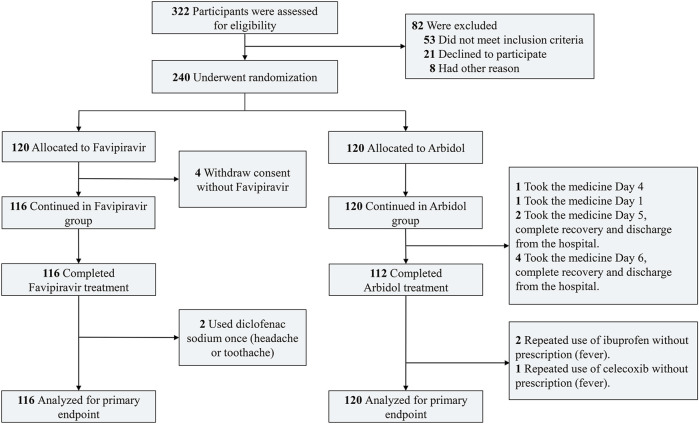
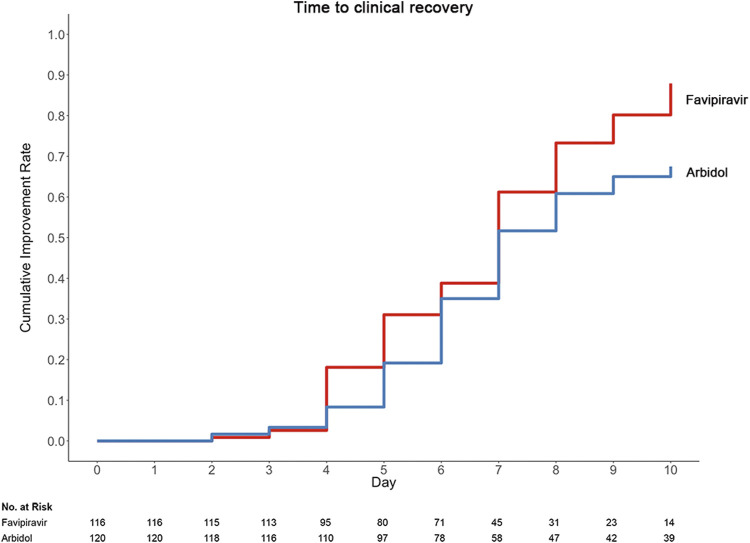
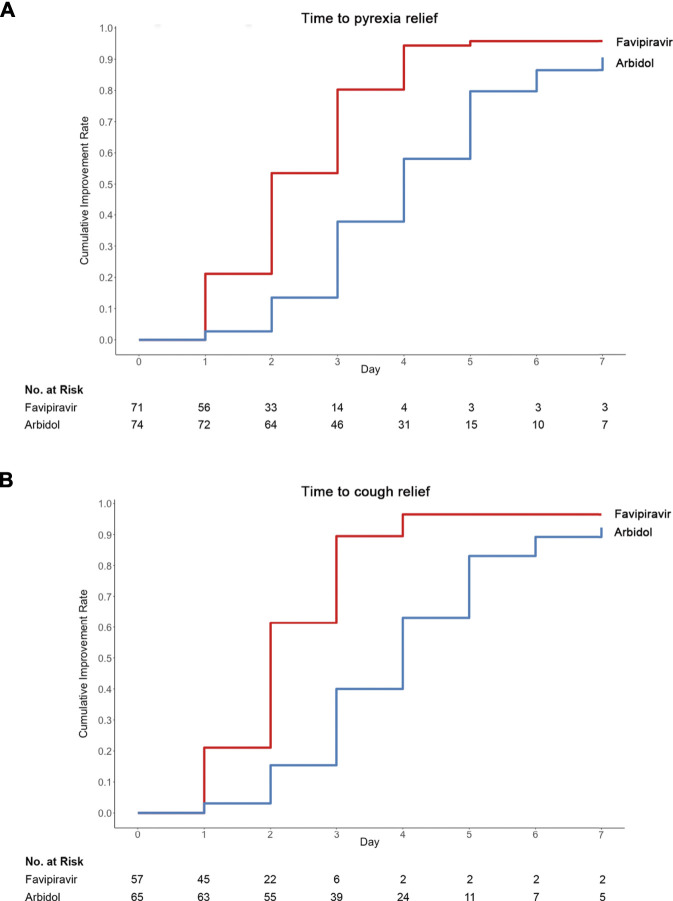
Background: No clinically proven effective antiviral strategy exists for the epidemic Coronavirus Disease 2019 (COVID-19). Methods: We conducted a prospective, randomized, controlled, open-label multicenter trial involving adult patients with COVID-19. Patients were randomly assigned in a 1:1 ratio to receive conventional therapy plus Umifenovir (Arbidol) (200mg*3/day) or Favipiravir (1600mg*2/first day followed by 600mg*2/day) for 10 days. The primary outcome was clinical recovery rate of Day 7. Latency to relief for pyrexia and cough, the rate of auxiliary oxygen therapy (AOT) or noninvasive mechanical ventilation (NMV) were the secondary outcomes. Safety data were collected for 17 days. Results: 240 enrolled COVID-19 patients underwent randomization; 120 patients were assigned to receive Favipiravir (116 assessed), and 120 to receive Arbidol (120 assessed). Clinical recovery rate of Day 7 does not significantly differ between Favipiravir group (71/116) and Arbidol group (62/120) (P=0.1396, difference of recovery rate: 0.0954; 95% CI: -0.0305 to 0.2213). Favipiravir led to shorter latencies to relief for both pyrexia (difference: 1.70 days, P<0.0001) and cough (difference: 1.75 days, P<0.0001). No difference was observed of AOT or NMV rate (both P>0.05). The most frequently observed Favipiravir-associated adverse event was raised serum uric acid (16/116, OR: 5.52, P=0.0014). Conclusions: Among patients with COVID-19, Favipiravir, compared to Arbidol, did not significantly improve the clinically recovery rate at Day 7. Favipiravir significantly improved the latency to relief for pyrexia and cough. Adverse effects caused Favipiravir are mild and manageable. This trial is registered with Chictr.org.cn (ChiCTR2000030254).
Overview
The claims and statistics of this paper haven’t been checked yet.
Run the check — free, no account needed. It reads the open-access text and checks the sources it cites.
Integrity signals
Registry
Cites
Statistics
Figures
Verification
Claims the paper makes
The claims and statistics of this paper haven’t been checked yet.
Run the check — free, no account needed. It reads the open-access text and checks the sources it cites.
Claims other papers make about this one
Each is checked against this paper’s own text: does it say what the citing paper says it does?
In the citing paper
“The subgroup effect is consistent with evidence from other meta-analyses.36”
From Drug treatments for covid-19: living systematic review and network meta-analysis (2020) · cites this paper as [36]
Self-check
Percentages, sums and reported differences re-computed from the paper’s own numbers.
The self-check needs the paper’s full text.
Citations
Cites
Clinical features of patients infected with 2019 novel coronavirus in Wuhan, China
Huang, C., Wang, Y., Li, X., Ren, L., Zhao, J., Hu, Y., Zhang, L., Fan, G., Xu, J., Gu, X., et al. (2020) · The Lancet · doi:10.1016/s0140-6736(20)30183-5 · Cited by 48,884
Self-citation[Asymptomatic infection of COVID-19 and its challenge to epidemic prevention and control].
Gao, X., Chen, W., Guo, L., Zhang, T.-Z., & Zhao, H.-Q. (2020) · Zhonghua liu xing bing xue za zhi = Zhonghua liuxingbingxue zazhi · doi:10.3760/cma.j.cn112338-20200427-00659 · Cited by 28,519 · cited 2×
“In China, although arbidol has been recommended in The Novel Coronavirus Pneumonia Diagnosis and Treatment Scheme (6th trial version) [8].”
BackgroundZhou, F., Yu, T., Du, R., Fan, G., Liu, Y., Liu, Z., Xiang, J., Wang, Y., Song, B., Gu, X., et al. (2020) · The Lancet · doi:10.1016/s0140-6736(20)30566-3 · Cited by 27,263 · cited 1×
“The clinical studies of some drugs (human interferon alfa-2b, ribavirin, chloroquine phosphate, lopinavir and arbidol) were currently undergoing to test the efficacy and safety of these drugs in the treatment of COVID-19 [7].”
BackgroundSelf-citationWang, D., Hu, B., Hu, C., Zhu, F., Liu, X., Zhang, J., Wang, B., Xiang, H., Cheng, Z., Xiong, Y., et al. (2020) · JAMA · doi:10.1001/jama.2020.1585 · Cited by 20,148 · cited 4×
“or with Child-Pugh C; (3) Severe/critical patients whose expected survival time <48”
BackgroundMethodInfluentialSelf-citationLa certeza de lo impredecible: Cultura Educación y Sociedad en tiempos de COVID19
Martínez González, M. (2020) · DSPACE System - Metalibrary (University of the Coast) · Cited by 18,463
Early transmission dynamics in Wuhan, China, of novel coronavirus-infected pneumonia
Li, Q., Guan, X., Wu, P., Wang, X., Zhou, L., Tong, Y., Ren, R., Leung, K. S. M., Lau, E. H. Y., Wong, J. Y., et al. (2020) · New England Journal of Medicine · doi:10.1056/nejmoa2001316 · Cited by 16,575
Self-citationAlberca, G., Fernandes, I. G., Sato, M., et al. (2020) · Frontiers for Young Minds · doi:10.3389/frym.2020.00074 · Cited by 8,821
Discovering drugs to treat coronavirus disease 2019 (COVID-19)
Dong, L., Hu, S., & Gao, J. (2020) · Drug Discoveries & Therapeutics · doi:10.5582/ddt.2020.01012 · Cited by 1,391
Zhang, H., Kang, Z., Gong, H., Xu, D., Wang, J., Li, Z., Cui, X., Xiao, J., Meng, T., Zhou, W., et al. (2020) · doi:10.1101/2020.01.30.927806 · Cited by 658 · cited 1×
“6171) and digestive tract reactions (nausea, anti-acid, flatulence [10]) (14 [11.”
BackgroundIn Vitro and In Vivo Activities of Anti-Influenza Virus Compound T-705
Furuta, Y., Takahashi, K., Fukuda, Y., Kuno, M., Kamiyama, T., Kozaki, K., Nomura, N., Egawa, H., Minami, S., Watanabe, Y., et al. (2002) · Antimicrobial Agents and Chemotherapy · doi:10.1128/aac.46.4.977-981.2002 · Cited by 508
Cited by
Sorted by citations
Wang, Y., Zhang, D., Du, G., Du, R., Zhao, J., Jin, Y., Fu, S., Gao, L., Cheng, Z., Lu, Q., et al. (2020) · The Lancet · doi:10.1016/s0140-6736(20)31022-9 · Cited by 3,442
“9 In severe illness, one uncontrolled study of five patients given convalescent plasma suggested a possible benefit, although the patients already had detectable anti-SARS-CoV-2 neutralising antibodies before receipt of the plasma.”
BackgroundSelf-citationPharmacologic Treatments for Coronavirus Disease 2019 (COVID-19)
Sanders, J. M., Monogue, M. L., Jodlowski, T. Z., & Cutrell, J. B. (2020) · JAMA · doi:10.1001/jama.2020.6019 · Cited by 2,392
“Male 30 (73) 67 (68) 75 (54) 35 (67) 9 (50) 8 (67) 637 (58)”
Immunology of COVID-19: Current State of the Science
Vabret, N., Britton, G. J., Gruber, C., Hegde, S., Kim, J., Kuksin, M., Levantovsky, R., Malle, L., Moreira, A., Park, M. D., et al. (2020) · Immunity · doi:10.1016/j.immuni.2020.05.002 · Cited by 1,623
Self-citationStructure of the RNA-dependent RNA polymerase from COVID-19 virus
Gao, Y., Yan, L., Huang, Y., Liu, F., Zhao, Y., Cao, L., Wang, T., Sun, Q., Ming, Z., Zhang, L., et al. (2020) · Science · doi:10.1126/science.abb7498 · Cited by 1,614
Self-citationDrug treatments for covid-19: living systematic review and network meta-analysis
Siemieniuk, R. A., Bartoszko, J. J., Zeraatkar, D., Kum, E., Qasim, A., Díaz Martinez, J. P., Izcovich, A., Rochwerg, B., Lamontagne, F., Han, M. A., et al. (2020) · BMJ · doi:10.1136/bmj.m2980 · Cited by 846
Aftab, R. (2020) · InnovAiT Education and inspiration for general practice · doi:10.1177/1755738020938394 · Cited by 3
Grant, M. C., Geoghegan, L., Arbyn, M., Mohammed, Z., McGuinness, L. A., Clarke, E. L., & Wade, R. G. (2020) · PLoS ONE · doi:10.1371/journal.pone.0234765 · Cited by 676
A Review of SARS-CoV-2 and the Ongoing Clinical Trials
Tu, Y. F., Chien, C., Yarmishyn, A. A., Lin, Y., Luo, Y., Lin, Y.-T., Lai, W.-Y., Yang, D., Chou, S., Yang, Y., et al. (2020) · International Journal of Molecular Sciences · doi:10.3390/ijms21072657 · Cited by 702
“In a randomized clinical trial aimed at comparing arbidol with favipiravir (ChiCTR2000030254), the latter was demonstrated to be far more superior in treatment outcome [65].”
BackgroundSelf-citationAssessment and characterisation of post‐COVID‐19 manifestations
Kamal, M., Abo Omirah, M., Hussein, A., & Saeed, H. (2021) · International Journal of Clinical Practice · doi:10.1111/ijcp.13746 · Cited by 603
“A lot of medications were included in clinical trials to act as antiviral but there are no clear results to indicate the confirmed effect for any of the investigated medications [7-9].”
BackgroundAn Update on Current Therapeutic Drugs Treating COVID-19
Wu, R., Wang, L., Kuo, H. D., Shannar, A., Peter, R. M., Chou, P. J., Li, S. N., Hudlikar, R. R., Liu, X., Liu, Z., et al. (2020) · Current Pharmacology Reports · doi:10.1007/s40495-020-00216-7 · Cited by 600
“There are two randomized and open-label trials ongoing in China, investigating the efficacy and safety of umifenovir against COVID-19.”
BackgroundInfluentialSultan, S., Altayar, O., Siddique, S. M., Davitkov, P., Feuerstein, J. D., Lim, J. K., Falck-Ytter, Y., & El-Serag, H. B. (2020) · Gastroenterology · doi:10.1053/j.gastro.2020.05.001 · Cited by 437
Drug repurposing approach to fight COVID-19
Singh, T. U., Parida, S., Lingaraju, M. C., Kesavan, M., Kumar, D., & Singh, R. K. (2020) · Pharmacological Reports · doi:10.1007/s43440-020-00155-6 · Cited by 490
Role of favipiravir in the treatment of COVID-19
Joshi, S., Parkar, J., Ansari, A., et al. (2020) · International Journal of Infectious Diseases · doi:10.1016/j.ijid.2020.10.069 · Cited by 386
Favipiravir: Pharmacokinetics and Concerns About Clinical Trials for 2019‐nCoV Infection
Du, Y., & Chen, X. (2020) · Clinical Pharmacology & Therapeutics · doi:10.1002/cpt.1844 · Cited by 426
“Data obtained from influenza treatment and proof-of-concept clinical trial in EVD aids the determination of dose regimen in clinical trials or experimental use of the drug in COVID-19.”
BackgroundInfluentialFavipiravir: A new and emerging antiviral option in COVID-19
Agrawal, U., Raju, R. S., & Udwadia, Z. (2020) · Medical Journal Armed Forces India · doi:10.1016/j.mjafi.2020.08.004 · Cited by 390
“Chen et al.(16) had conducted a prospective, open-label multicentric trial in China to compare two treatment arms in the management of clinically confirmed COVID-19 (maximum duration of symptom onset before randomization: 12 days).”
Emerging treatment strategies for COVID-19 infection
Gavriatopoulou, M., Ntanasis‐Stathopoulos, I., Korompoki, E., Fotiou, D., Migkou, M., Tzanninis, I., Ψαλτοπούλου, Θ., Kastritis, E., Terpos, E., & Dimopoulos, M. A. (2020) · Clinical and Experimental Medicine · doi:10.1007/s10238-020-00671-y · Cited by 335
“Results emerging from the ELSO registry demonstrate that ECMO is feasible and it has been applied with safety and efficacy in more than 1000 COVID19 patients with severe refractory ARDS with a remarkable ICU/hospital discharge rate of more than 50% [43].”
MethodSARS-CoV-2 infection in children
Çokuğraş, H. C., & Önal, P. (2020) · Turkish Archives of Pediatrics · doi:10.14744/turkpediatriars.2020.20270 · Cited by 135
“In a comparison made between 120 patients who used arbidol and 116 patients who used favipiravir, it was reported that favipiravirin had a significant effect in terms of improving cough and fever compared with arbidol, but there was no difference in the time of clinical recovery, and the drug’s most common adverse eff…”
ResultCOVID-19 and Cancer: a Comprehensive Review
Gosain, R., Abdou, Y. G., Singh, A., Rana, N. K., Puzanov, I. J., & Ernstoff, M. S. (2020) · Current Oncology Reports · doi:10.1007/s11912-020-00934-7 · Cited by 295
Current status of potential therapeutic candidates for the COVID-19 crisis
Zhang, J., Xie, B., & Hashimoto, K. (2020) · Brain Behavior and Immunity · doi:10.1016/j.bbi.2020.04.046 · Cited by 287
“…al., 2020; Zhang et al., 2020a), neurological injury (Mao et al., 2020; Wu et al., 2020), gastrointestinal injury (Yao et al., 2020), immune injury (Chen et al., 2020b; Guan et al., 2020; Qin et al., 2020; Wang et al., 2020b; Xu et al., 2020; Yao et al., 2020; Liu et al., 2020b; Zheng et al.,…”
Self-citationKaptein, S. J. F., Jacobs, S., Langendries, L., Seldeslachts, L., ter Horst, S., Liesenborghs, L., Hens, B., Vergote, V., Heylen, E., Barthélémy, K., et al. (2020) · Proceedings of the National Academy of Sciences · doi:10.1073/pnas.2014441117 · Cited by 283
“…study already showed that, in COVID-19 patients with mild symptoms (fever and respiratory symptoms without difficulties in breathing), the clinical recovery rate at day 7 was higher in the favipiravir-treated group compared to the control group, which received treatment with arbidol (39).”
Current pharmacological treatments for COVID‐19: What's next?
Scavone, C., Brusco, S., Bertini, M., Sportiello, L., Rafaniello, C., Zoccoli, A., Berrino, L., Racagni, G., Rossi, F., & Capuano, A. (2020) · British Journal of Pharmacology · doi:10.1111/bph.15072 · Cited by 289
Comparison of SARS-CoV-2 detection in nasopharyngeal swab and saliva
Iwasaki, S., Fujisawa, S., Nakakubo, S., et al. (2020) · medRxiv · doi:10.1101/2020.05.13.20100206 · Cited by 249
Udwadia, Z., Singh, P., Barkate, H. V., Patil, S., Rangwala, S., Pendse, A., Kadam, J., Wu, W., Caracta, C. F., & Tandon, M. (2020) · International Journal of Infectious Diseases · doi:10.1016/j.ijid.2020.11.142 · Cited by 292
COVID-19 in older people: a rapid clinical review
Lithander, F. E., Neumann, S., Tenison, E., Lloyd, K., Welsh, T. J., Rodrigues, J. C. L., Higgins, J. P. T., Scourfield, L., Christensen, H., Haunton, V. J., et al. (2020) · Age and Ageing · doi:10.1093/ageing/afaa093 · Cited by 250
“We identified two management guidelines [55, 56], four completed small-scale exploratory trials [57-60], four case series [12, 61-63], three retrospective reviews [64-66], and one rapid review of the effectiveness of antivirals [69].”
BackgroundInfluentialAn update on drugs with therapeutic potential for SARS-CoV-2 (COVID-19) treatment
Drożdżal, S., Rosik, J., Lechowicz, K., Machaj, F., Szostak, B., Przybyciński, J., Lorzadeh, S., Kotfis, K., Ghavami, S., & Łoś, M. (2021) · Drug Resistance Updates · doi:10.1016/j.drup.2021.100794 · Cited by 301
A real-time dashboard of clinical trials for COVID-19
Thorlund, K., Dron, L., Park, J., Hsu, G. G., Forrest, J. I., & Mills, E. J. (2020) · The Lancet Digital Health · doi:10.1016/s2589-7500(20)30086-8 · Cited by 227
“Findings from randomised clinical trials that have been published as of April 21, 2020, have investigated the efficacy of lopinavir-ritonavir compared with standard of care, 1 hydroxychloroquine compared with best supportive care, 2 favipiravir compared with arbidol, 3 and lopinavir-ritonavir compared with arbidol.”
MethodCannalire, R., Cerchia, C., Beccari, A. R., Leva, F. S. D., & Summa, V. (2020) · Journal of Medicinal Chemistry · doi:10.1021/acs.jmedchem.0c01140 · Cited by 261
Erku, D., Belachew, S. A., Abrha, S., Sinnollareddy, M., Thomas, J., Steadman, K. J., & Tesfaye, W. H. (2020) · Research in Social and Administrative Pharmacy · doi:10.1016/j.sapharm.2020.04.032 · Cited by 242
Therapeutic management of patients with COVID-19: a systematic review
Tobaiqy, M. A., Qashqary, M. E., Aldahery, S. T., Mujallad, A., Hershan, A. A., Kamal, M. A., & Helmi, N. M. (2020) · Infection Prevention in Practice · doi:10.1016/j.infpip.2020.100061 · Cited by 243
“…Zhang et al., 2020 Clinical trials for the treatment of coronavirus disease 2019 (COVID-19): a rapid response to urgent need Yes Commentary 46 Chen et al., 2020 Convalescent plasma as a potential therapy for COVID-19 Yes Commentary 47 Yang et al., 2020 Corona virus disease 2019: a growing…”
InfluentialA review of the safety of favipiravir – a potential treatment in the COVID-19 pandemic?
Pilkington, V., Pepperrell, T., & Hill, A. (2020) · Journal of virus eradication · doi:10.1016/s2055-6640(20)30016-9 · Cited by 202
One year update on the COVID-19 pandemic: Where are we now?
Mishra, S. K., & Tripathi, T. (2020) · Acta Tropica · doi:10.1016/j.actatropica.2020.105778 · Cited by 196
“…influenza, sore throat, fever, cough, fatigue, and shortness of breath; in some cases, patients develop gastrointestinal problems, such as diarrhea and vomiting, whereas in severe cases, patients develop ARDS, thus resulting in multiorgan failure and death (Chen et al., 2020b; Huang et al., 2020).”
InfluentialRNA-Dependent RNA Polymerase as a Target for COVID-19 Drug Discovery
Zhu, W. J., Chen, C. Z., Gorshkov, K., Xu, M., Lo, D. C., & Zheng, W. (2020) · SLAS DISCOVERY · doi:10.1177/2472555220942123 · Cited by 186
Self-citationStructure of the SARS-CoV-2 RNA-dependent RNA polymerase in the presence of favipiravir-RTP
Naydenova, K., Muir, K., Wu, L.-F., Zhang, Z., Coscia, F., Peet, M. J., Castro‐Hartmann, P., Pu, Q., Sader, K., Dent, K. C., et al. (2021) · Proceedings of the National Academy of Sciences · doi:10.1073/pnas.2021946118 · Cited by 188
Antivirals for COVID-19: A critical review
Frediansyah, A., Tiwari, R., Sharun, K., Dhama, K., & Harapan, H. (2020) · Clinical Epidemiology and Global Health · doi:10.1016/j.cegh.2020.07.006 · Cited by 188
“Its efficacy has also been assessed in a randomized clinical trial.(121) Favipiravir is currently being used for COVID19 treatment in Japan(79) and Indonesia(122) (Table 1).”
Indicator Regularized Non-Negative Matrix Factorization Method-Based Drug Repurposing for COVID-19
Tang, X., Cai, L., Meng, Y., Xu, J., Lu, C., & Yang, J. (2021) · Frontiers in Immunology · doi:10.3389/fimmu.2020.603615 · Cited by 156
Risk factors prediction, clinical outcomes, and mortality in COVID‐19 patients
Alizadehsani, R., Sani, Z. A., Behjati, M., et al. (2020) · medRxiv · doi:10.1101/2020.07.07.20148569 · Cited by 149
Kanjanasirirat, P., Suksatu, A., Manopwisedjaroen, S., Munyoo, B., Tuchinda, P., Jearawuttanakul, K., Seemakhan, S., Charoensutthivarakul, S., Wongtrakoongate, P., Rangkasenee, N., et al. (2020) · Scientific Reports · doi:10.1038/s41598-020-77003-3 · Cited by 174
Pizzorno, A., Padey, B., Dubois, J., et al. (2020) · Antiviral Research · doi:10.1016/j.antiviral.2020.104878 · Cited by 137
Can Zn Be a Critical Element in COVID-19 Treatment?
Rahman, M. T., & Idid, S. Z. I. S. O. (2020) · Biological Trace Element Research · doi:10.1007/s12011-020-02194-9 · Cited by 157
“Such randomized clinical trials on lopinavirritonavir did not show any benefit beyond standard care [74]; favipiravir, compared with Arbidol, did not significantly improve the clinical recovery rate at day 7 [75].”
BackgroundArshad, U., Pertinez, H. E., Box, H., Tatham, L. M., Rajoli, R. K. R., Curley, P., Neary, M., Sharp, J., Liptrott, N. J., Valentijn, A., et al. (2020) · Clinical Pharmacology & Therapeutics · doi:10.1002/cpt.1909 · Cited by 153
Favipiravir for the treatment of patients with COVID-19: a systematic review and meta-analysis
Manabe, T., Kambayashi, D., Akatsu, H., & Kudo, K. (2021) · BMC Infectious Diseases · doi:10.1186/s12879-021-06164-x · Cited by 167
COVID ‐19: immunopathology, pathophysiological mechanisms, and treatment options
van Eijk, L. E., Binkhorst, M., Bourgonje, A. R., Offringa, A. K., Mulder, D. J., Bos, E. M., Kolundžić, N., Abdulle, A. E., van der Voort, P. H. J., Rikkert, M. G. M. O., et al. (2021) · The Journal of Pathology · doi:10.1002/path.5642 · Cited by 156
A review of therapeutic agents and Chinese herbal medicines against SARS-COV-2 (COVID-19)
Huang, F., Li, Y., Leung, E. L., Liu, X., Liu, K., Qu, W., Lan, Y., Li, X., Yu, H., Cui, L., et al. (2020) · Pharmacological Research · doi:10.1016/j.phrs.2020.104929 · Cited by 140
Guo, T., Shen, Q., Guo, W., He, W., Li, J., Zhang, Y., Wang, Y., Zhou, Z., Deng, D., Ouyang, X., et al. (2020) · Gerontology · doi:10.1159/000508734 · Cited by 150
Self-citationSARS-CoV-2 and COVID-19: From the Bench to the Bedside
Romagnoli, S., Peris, A., Gaudio, A. R. D., & Geppetti, P. (2020) · Physiological Reviews · doi:10.1152/physrev.00020.2020 · Cited by 141
“Recently tested in an open-label randomized trial, favipiravir showed faster resolution of fever and cough, but similar rates of respiratory failure, compared with the control group receiving umifenovir (or Arbidol) (13).”
BackgroundGuedes, I. A., Costa, L. S. C., Santos, K. B., Karl, A. L. M., Rocha, G. K., Teixeira, I. M., Galheigo, M. M., Medeiros, V., Krempser, E., Custódio, F. L., et al. (2021) · Scientific Reports · doi:10.1038/s41598-021-84700-0 · Cited by 152
Low, Z. Y., Farouk, I. A., & Lal, S. K. (2020) · Viruses · doi:10.3390/v12091058 · Cited by 189
“, Influenza • Raises serum uric acid • Diarrhoea Inhibits viral RbRp in the genome replication process currently ongoing [23,89,103]”
BackgroundMetabolic syndrome and COVID-19: An update on the associated comorbidities and proposed therapies
Costa, F. F., Rosário, W. R., Farias, A. C. R., de Souza, R. G., Gondim, R. S. D., & Barroso, W. A. (2020) · Diabetes & Metabolic Syndrome Clinical Research & Reviews · doi:10.1016/j.dsx.2020.06.016 · Cited by 147
HPLC-UV method for quantification of favipiravir in pharmaceutical formulations
Bulduk, I. (2020) · Acta Chromatographica · doi:10.1556/1326.2020.00828 · Cited by 116
“After a pilot trial by Zhongnan Hospital of Wuhan University has found a better recovery rate in COVID-19 patients in the favipiravir group compared to the arbidol group [8], FVP is considered to be worth further investigation as a potential candidate drug for this disease.”
MethodPharmacotherapy in COVID-19; A narrative review for emergency providers
Mehta, N., Mazer-Amirshahi, M. E., Alkindi, N., & Pourmand, A. (2020) · The American Journal of Emergency Medicine · doi:10.1016/j.ajem.2020.04.035 · Cited by 122
“The most common adverse effects were abnormal transaminases, psychiatric symptoms, gastrointestinal discomfort and elevated serum uric acid ( Table 2 ) (11) .”
Repurposing Drugs, Ongoing Vaccine, and New Therapeutic Development Initiatives Against COVID-19
Saha, R. P., Sharma, A. R., Singh, M. K., Samanta, S., Bhakta, S., Mandal, S., Bhattacharya, M., Lee, S. S., & Chakraborty, C. (2020) · Frontiers in Pharmacology · doi:10.3389/fphar.2020.01258 · Cited by 118
Shrestha, D. B., Budhathoki, P., Khadka, S., Shah, P. B., Pokharel, N., & Rashmi, P. (2020) · Virology Journal · doi:10.1186/s12985-020-01412-z · Cited by 115
“Chen et al [17] 2020, RCT, China Total: 236”
BackgroundA promising antiviral candidate drug for the COVID-19 pandemic: A mini-review of remdesivir
Liang, C., Tian, L., Liu, Y., Hui, N., Qiao, G., Li, H., Shi, Z., Tang, Y., Zhang, D., Xie, X., et al. (2020) · European Journal of Medicinal Chemistry · doi:10.1016/j.ejmech.2020.112527 · Cited by 115
A global treatments for coronaviruses including COVID‐19
Yousefi, B., Valizadeh, S., Ghaffari, H., Vahedi, A., Karbalaei, M., & Eslami, M. (2020) · Journal of Cellular Physiology · doi:10.1002/jcp.29785 · Cited by 120
“In a randomized clinical trial, Chen et al. (2020) showed that in patients with moderate COVID‐19 who were untreated with antiviral drugs, favipiravir increased clinical recovery over 7 days and reduced fever, cough, and respiratory problems, it was therefore used as an effective drug in these…”
BackgroundRad, A. S., Ardjmand, M., Esfahani, M. R., & Khodashenas, B. (2020) · Spectrochimica Acta Part A Molecular and Biomolecular Spectroscopy · doi:10.1016/j.saa.2020.119082 · Cited by 115
COVID-19: A review of the proposed pharmacological treatments
Lam, S., Lombardi, A. M., & Ouanounou, A. (2020) · European Journal of Pharmacology · doi:10.1016/j.ejphar.2020.173451 · Cited by 135
“Furthermore, high levels of IL-6 were found to be the main cause of cytokine storm (Zhang et al., 2020; S. Zhang et al., 2020).”
InfluentialRNA‐dependent RNA polymerase of SARS‐CoV‐2 as a therapeutic target
Wang, Y., Anirudhan, V., Du, R., Cui, Q., & Rong, L. (2020) · Journal of Medical Virology · doi:10.1002/jmv.26264 · Cited by 120
“(ChiCTR2000030254), FPV showed superior efficacy to treat moderate COVID‐19 pneumonia as compared with Arbidol (umifenovir, a membrane fusion inhibitor).(73) In a small‐scale non‐randomized controlled study at The Third People's Hospital of Shenzhen”
BackgroundA review of potential suggested drugs for coronavirus disease (COVID-19) treatment
Tarighi, P., Eftekhari, S., Chizari, M., Sabernavaei, M., Jafari, D., & Mirzabeigi, P. (2021) · European Journal of Pharmacology · doi:10.1016/j.ejphar.2021.173890 · Cited by 129
Structural Basis of SARS-CoV-2 Polymerase Inhibition by Favipiravir
Peng, Q., Peng, R., Yuan, B., Wang, M., Zhao, J., Fu, L., Qi, J., & Shi, Y. (2021) · The Innovation · doi:10.1016/j.xinn.2021.100080 · Cited by 99
“Given the better record of Favipiravir than Remdesivir with regard to side effects, 28,29 itmayrepresentabetteroptionforclinicaltreatmentof SARS-CoV-2 infections, as well as a panel of other human-infecting RNA viruses.”
Treatment Options for COVID-19: A Review
Ali, M. J., Hanif, M., Haider, M. A., Ahmed, M. U., Sundas, F., Hirani, A., Khan, I. A., Anis, K., & Karim, A. H. (2020) · Frontiers in Medicine · doi:10.3389/fmed.2020.00480 · Cited by 108
Covid-19: what treatments are being investigated?
Mahase, E. (2020) · BMJ · doi:10.1136/bmj.m1252 · Cited by 108
The impact of sofosbuvir/daclatasvir or ribavirin in patients with severe COVID-19
Eslami, G., Mousaviasl, S., Radmanesh, E., Jelvay, S., Bitaraf, S., Simmons, B., Wentzel, H., Hill, A. M., Sadeghı, A., Freeman, J. A., et al. (2020) · Journal of Antimicrobial Chemotherapy · doi:10.1093/jac/dkaa331 · Cited by 112
Current Strategies of Antiviral Drug Discovery for COVID-19
Mei, M., & Tan, X. (2021) · Frontiers in Molecular Biosciences · doi:10.3389/fmolb.2021.671263 · Cited by 111
Huang, D., He, Y., Wang, T., Yang, H., Yao, R., & Liang, Z. (2020) · Journal of Medical Virology · doi:10.1002/jmv.26256 · Cited by 118
An update on COVID-19: SARS-CoV-2 variants, antiviral drugs, and vaccines
Hillary, V. E., & Ceasar, S. A. (2023) · Heliyon · doi:10.1016/j.heliyon.2023.e13952 · Cited by 121
“In February 2020, China investigated the use of favipiravir for the treatment of SARS-CoV-2 infection by providing 1600 mg for the first day (every 12 h), followed by 600 mg for 10 days (every 12 h), and observed a significant difference between hosts with mild fever and cold [64].”
Jin, Y., Zhan, Q., Peng, Z., Ren, X., Yin, X., Cai, L., Yuan, Y., Yue, J., Zhang, X., Yang, Q., et al. (2020) · Military Medical Research · doi:10.1186/s40779-020-00270-8 · Cited by 117
Self-citationGe, Y., Tian, T., Huang, S., Wan, F., Li, J., Li, S., Wang, X., Yang, H., Hong, L., Wu, N., et al. (2021) · Signal Transduction and Targeted Therapy · doi:10.1038/s41392-021-00568-6 · Cited by 300
“24 In particular, the inhibitory activities against SARS-CoV-2 replication of favipiravir at 30 μ M, CVL218 at 3.5 μ M and a combination of both were measured in Vero E6 cells (Methods).”
BackgroundInfluentialSelf-citationTargeting Proteases for Treating COVID-19
Luan, B., Huynh, T., Cheng, X. M., Lan, G., & Wang, H. (2020) · Journal of Proteome Research · doi:10.1021/acs.jproteome.0c00430 · Cited by 109
Fighting COVID-19: A quick review of diagnoses, therapies, and vaccines
Shih, H., Wu, C.-J., Tu, Y., & Chi, C. (2020) · Biomedical Journal · doi:10.1016/j.bj.2020.05.021 · Cited by 109
“[46] Chen C, Huang J, Cheng Z, Wu J, Chen S, Zhang Y, et al.”
COVID-19 and the Kidneys: An Update
Benedetti, C., Waldman, M. A., Zaza, G., Riella, L. V., & Cravedi, P. (2020) · Frontiers in Medicine · doi:10.3389/fmed.2020.00423 · Cited by 145
Efficacy of antiviral therapies for COVID-19: a systematic review of randomized controlled trials
Vegivinti, C. T. R., Evanson, K. W., Lyons, H., Akosman, I., Barrett, A., Hardy, N. J., Kane, B., Keesari, P. R., Pulakurthi, Y. S., Sheffels, E., et al. (2022) · BMC Infectious Diseases · doi:10.1186/s12879-022-07068-0 · Cited by 119
“Antiviral treatments compared in the included studies were umifenovir (Arbidol) [25, 29, 31, 47], baloxavir marboxil [30], enisamium [50], Table 1 Search terms Search terms Database Search date Number of results (Lopinavir OR Ritonavir OR Remdesivir OR Ribavirin OR Arbidol OR Favipiravir OR Sofosbuvir OR Daclatasvir)…”
Emerging Therapeutic Approaches to Combat COVID-19: Present Status and Future Perspectives
Vivekanandhan, K., Poornima, S., Barabadi, H., Arumugam, V., Raj, D. D. R. D. P., Manikandan, S., Subbaiya, R., Anand, K., Pandi, B., Chandrasekaran, B., et al. (2021) · Frontiers in Molecular Biosciences · doi:10.3389/fmolb.2021.604447 · Cited by 60
Uric Acid Elevation by Favipiravir, an Antiviral Drug.
Mishima, E., Anzai, N., Miyazaki, M., et al. (2020) · Tohoku journal of experimental medicine · doi:10.1620/tjem.251.87 · Cited by 90
“Thus, favipiravir can also increase blood uric acid levels in COVID-19 patients; however, these studies did not show data about the detailed uric acid levels.”
BackgroundInfluentialCOVID-19 Pandemic: Epidemiology, Etiology, Conventional and Non-Conventional Therapies
Rauf, A., Abu‐Izneid, T., Olatunde, A., Khalil, A. A., Alhumaydhi, F. A., Tufail, T., Shariati, M. A., Ребезов, М. Б., Almarhoon, Z. M., Mabkhot, Y. N., et al. (2020) · International Journal of Environmental Research and Public Health · doi:10.3390/ijerph17218155 · Cited by 134
“However, a non-significant improvement was seen in clinical recovery rate observed at day 7 in both groups [143].”
BackgroundImmune Therapy, or Antiviral Therapy, or Both for COVID-19: A Systematic Review
Cantini, F., Goletti, D., Petrone, L., Fard, S. N., Niccoli, L., & Foti, R. (2020) · Drugs · doi:10.1007/s40265-020-01421-w · Cited by 112
Wang, X., & Guan, Y. (2020) · Medicinal Research Reviews · doi:10.1002/med.21728 · Cited by 95
Self-citationEmerging pharmacological therapies for ARDS: COVID-19 and beyond
Horie, S., McNicholas, B., Rezoagli, E., Pham, T. O., Curley, G., McAuley, D. F., O’Kane, C. M., Nichol, A., dos Santos, C. C., Rocco, P. R. M., et al. (2020) · Intensive Care Medicine · doi:10.1007/s00134-020-06141-z · Cited by 100
“Umifenovir (arbidol) Inhibits viral interaction and binding with host cells via ACE2 Retrospective analysis showed that arbidol treatment (n = 16) in comparison with lopinavir/ritonavir treatment (n = 36) reduced viral load in SARS-CoV-2 patients [69] No benefit over favipiravir in openlabel trial [70] 1.”
BackgroundMethodResultInfluentialAn overview on nanoparticle-based strategies to fight viral infections with a focus on COVID-19
Yasamineh, S., Kalajahi, H. G., Yasamineh, P., Yazdani, Y., Gholizadeh, O., Tabatabaie, R., Afkhami, H., Davodabadi, F., farkhad, A. K., Pahlevan, D., et al. (2022) · Journal of Nanobiotechnology · doi:10.1186/s12951-022-01625-0 · Cited by 102
“Tulbah AS, Lee W‑H. Physicochemical Characteristics and In Vitro Toxic‑ ity/Anti‑SARS‑CoV‑2 Activity of Favipiravir Solid Lipid Nanoparticles (SLNs).”
BackgroundInfluentialFavipiravir and COVID-19: A Simplified Summary
Ghasemnejad‐Berenji, M., & Pashapour, S. (2020) · Drug Research · doi:10.1055/a-1296-7935 · Cited by 102
“In addition another multicenter, open-labelled clinical trial reported that in moderate COVID-19 patients untreated with antiviral previously, favipiravir can be considered as a preferred treatment because of the higher clinical recovery rate of day 7 and more effectively reduced incidence of fever, cough besides some…”
BackgroundIdentification of SARS-CoV-2 entry inhibitors among already approved drugs
Yang, L., Pei, R., Li, H., Ma, X.-N., Zhou, Y., Zhu, F.-H., He, P., Tang, W., Zhang, Y.-C., Xiong, J., et al. (2020) · Acta Pharmacologica Sinica · doi:10.1038/s41401-020-00556-6 · Cited by 87
Self-citationJuul, S., Nielsen, E. E., Feinberg, J. B., Siddiqui, F., Kamp, C. B., Barot, E., Nielsen, N., Bentzer, P., Veroniki, A. A., Thabane, L., et al. (2020) · PLoS Medicine · doi:10.1371/journal.pmed.1003293 · Cited by 85
Nanocarrier vaccines for SARS-CoV-2
Machhi, J., Shahjin, F., Das, S., Patel, M., Abdelmoaty, M. M., Cohen, J. D., Singh, P. A., Baldi, A., Bajwa, N., Kumar, R., et al. (2021) · Advanced Drug Delivery Reviews · doi:10.1016/j.addr.2021.01.002 · Cited by 100
“The drug acts by inhibiting cell membrane-SARS-CoV-2 envelope fusion [57].”
Natural history of COVID-19 and current knowledge on treatment therapeutic options
dos Santos, W. G. (2020) · Biomedicine & Pharmacotherapy · doi:10.1016/j.biopha.2020.110493 · Cited by 235
“However, it was shown that patients treated with umifenovir demonstrated inferior outcome in clinical recovery rate and less improvement in symptoms like fever and cough, when compared to favipiravir [160].”
Battagello, D. S., Dragunas, G., Klein, M., Ayub, A. L. P., Velloso, F. J., & Correa, R. G. (2020) · Clinical Science · doi:10.1042/cs20200904 · Cited by 88
Minimum costs to manufacture new treatments for COVID-19
Hill, A. M., Wang, J., Levi, J., Heath, K., & Fortunak, J. (2020) · Journal of Virus Eradication · doi:10.1016/s2055-6640(20)30018-2 · Cited by 81
Favipiravir in Therapy of Viral Infections
Łagocka, R., Dziedziejko, V., Kłos, P., et al. (2021) · Journal of Clinical Medicine · doi:10.3390/jcm10020273 · Cited by 75
“Treatment of COVID-19 patients Day 1: 3200 mg (1600 mg twice a day) Day 2–10: 1200 mg (600 mg twice a day) [26]”
BackgroundMethodInfluentialClinical efficacy of antivirals against novel coronavirus (COVID-19): A review
Jomah, S., Asdaq, S. M. B., & Al‐Yamani, M. (2020) · Journal of Infection and Public Health · doi:10.1016/j.jiph.2020.07.013 · Cited by 93
Savi, C. D., Hughes, D. L., & Kværnø, L. (2020) · Organic Process Research & Development · doi:10.1021/acs.oprd.0c00233 · Cited by 98
The COVID-19 Vaccines: Recent Development, Challenges and Prospects
Yan, Y., Pang, Y. X., Lyu, Z., Wang, R., Wu, X., You, C., Zhao, H., Manickam, S., Lester, E. H., Wu, T., et al. (2021) · Vaccines · doi:10.3390/vaccines9040349 · Cited by 87
Potential therapeutic targets and promising drugs for combating SARS‐CoV‐2
Zhou, H., Fang, Y., Xu, T., Ni, W., Shen, A., & Meng, X. (2020) · British Journal of Pharmacology · doi:10.1111/bph.15092 · Cited by 78
“prospective, multicentre, open-label, randomized superiority trial (ChiCTR200030254) has come to the similar conclusion that favipiravir (1600 mg/time/bid on the first day; 600 mg/time/bid from the second day to the end of treatment) should be regarded as one of the most promising candidate drugs for combating SARS-Co…”
BackgroundCutaneous sıde‐effects of the potential COVID‐19 drugs
Türsen, Ü., Türsen, B., & Lotti, T. (2020) · Dermatologic Therapy · doi:10.1111/dth.13476 · Cited by 69
“There are no reports on the skin reaction of umifenovir.(16)”
BackgroundBhavana, V., Thakor, P., Singh, S. B., & Mehra, N. K. (2020) · Life Sciences · doi:10.1016/j.lfs.2020.118336 · Cited by 87
“Favipiravir showed significant relief in cough and pyrexia after 7 days treatments [43].”
Remdesivir in Coronavirus Disease 2019 (COVID-19) treatment: a review of evidence
Lin, H., Cho, S., Aravamudan, V. M., Sanda, H., Palraj, R., Molton, J. S., & Venkatachalam, I. (2021) · Infection · doi:10.1007/s15010-020-01557-7 · Cited by 101
“Duration of febrile illness and cough, however, was significantly shorter in the favipiravir group [31].”
BackgroundInfluentialLiu, W. Y., Zhou, P., Chen, K., Ye, Z., Liu, F., Li, X., He, N., Wu, Z., Zhang, Q., Gong, X., et al. (2020) · Canadian Medical Association Journal · doi:10.1503/cmaj.200647 · Cited by 84
Self-citationCutaneous manifestations in hospitalized patients diagnosed as COVID ‐19
Aşkın, Ö., Altunkalem, R. N., Altınışık, D. D., Uzunçakmak, T. K., Türsen, Ü., & Kutlubay, Z. (2020) · Dermatologic Therapy · doi:10.1111/dth.13896 · Cited by 73
Research Progress of Coronavirus Based on Bibliometric Analysis
Zhai, F., Zhai, Y., Cong, C., Song, T., Xiang, R., Feng, T., Liang, Z., Zeng, Y., Yang, J., Yang, J., et al. (2020) · International Journal of Environmental Research and Public Health · doi:10.3390/ijerph17113766 · Cited by 70
Andrew, M., & Jayaraman, G. (2021) · Carbohydrate Research · doi:10.1016/j.carres.2021.108326 · Cited by 80
“Currently, the repurposing of antivirals [5,6] has been the possible strategy to prevent the mild and moderate COVID-19 cases [7, 8].”
Padhi, A. K., Seal, A., Khan, J. M., Ahamed, M., & Tripathi, T. (2020) · European Journal of Pharmacology · doi:10.1016/j.ejphar.2020.173836 · Cited by 84
“Arbidol has been shown to be superior to the antiviral favipiravir, which did not improve the clinical recovery rate at day 7 compared to that in the arbidol group (Chen et al., 2020).”
Varghese, P. M., Tsolaki, A. G., Yasmin, H., Shastri, A., Ferluga, J., Vatish, M., Madan, T., & Kishore, U. (2020) · Immunobiology · doi:10.1016/j.imbio.2020.152008 · Cited by 83
Effectiveness of favipiravir in COVID-19: a live systematic review
Özlüşen, B., Kozan, Ş., Akcan, R. E., Kalender, M., Yaprak, D., Peltek, İ. B., Keske, Ş., Gönen, M., & Ergönül, Ö. (2021) · European Journal of Clinical Microbiology & Infectious Diseases · doi:10.1007/s10096-021-04307-1 · Cited by 80
Metadata
- Authors
- Chen, C., Zhang, Y., Huang, J., Yin, P., Cheng, Z., Wu, J., Chen, S., Zhang, Y., Chen, B., Lu, M., Luo, Y., Ju, L., Zhang, J., & Wang, X.
- Affiliations
- Zhongnan Hospital of Wuhan University (CN)
- Peking University (CN)
- Huazhong University of Science and Technology (CN)
- Hubei Zhongshan Hospital (CN)
- Corresponding author
- Wang, Xinghuan
- ORCID
- Venue
- Frontiers in Pharmacology
- Publisher
- openRxiv
- Published
- 2020-03-20
- Volume
- 12
- Pages
- 683296-683296
- ISSN
- 1663-9812 (ISSN-L)
- PMC
- PMC8443786
- OpenAlex
- W3197627421
- Cited by
- 852
- References
- 12
- Citations by year
- 2026: 2 · 2025: 18 · 2024: 32 · 2023: 54 · 2022: 136 · 2021: 231 · 2020: 379
- FWCI
- 36.00
- Type
- journal article
- Language
- en
- Open access
- gold
- doi.org
- Licence
- cc-by
- Locations
- Frontiers in Pharmacology (publishedVersion, cc-by)
- medRxiv (acceptedVersion)
- Europe PMC (PubMed Central) (publishedVersion, other-oa)
- PubMed Central (publishedVersion, cc-by)
- PubMed (publishedVersion)
- DOAJ (DOAJ: Directory of Open Access Journals) (submittedVersion, cc-by-sa)
- Funders
- Capital Medical University
- Huazhong University of Science and Technology
- Tongji University
- Wuhan University
- Wuhan University of Science and Technology
- Shanghai University of Traditional Chinese Medicine
- Longhua Hospital Shanghai University of Traditional Chinese Medicine
- Science and Technology Department of Hubei Province
- National Key Research and Development Program of China (2020YFC0844400)
- Topics
- Health Sciences › Medicine › Infectious Diseases › COVID-19 Clinical Research Studies
- Health Sciences › Medicine › Infectious Diseases › SARS-CoV-2 and COVID-19 Research
- Health Sciences › Medicine › Clinical Neurology › Long-Term Effects of COVID-19
- Keywords
- favipiravir, umifenovir, arbidol, COVID-19 pandemic, antiviral therapy, clinical recovery, non-invasive ventilation, mechanical ventilation, serum uric acid, drug safety, SARS-CoV-2, adults, randomized trial comparison, adverse events
About these checks
Registry, retraction, Cites and statistics results are computed, not judged, with one exception: a printed reference that no index lists is read once by a model before it counts as a citation error. Claims are extracted by a model and kept only when their quote appears verbatim in the text; each cited source is then checked, with a model’s help, for whether it says what the claim relies on. Those verdicts can be wrong — read the claim’s quote and the cited source before relying on one.
Statistics and arithmetic are recomputed, not judged.
Confidence bands are shown only for fields calibrated on our annotated test set. None is calibrated yet, so no band is shown.
What counts as a claim ›How we measure confidence ›How we check this ›
Are you an author, or do you see a problem with this page? Request a review
