

The DOI matches its Crossref record; 46 of the 48 references it cites were found in a registry or an index.
Fast and accurate protein structure search with Foldseek
Open accessPreprint — published as 10.1038/s41587-023-01773-0 · Paper page
Abstract
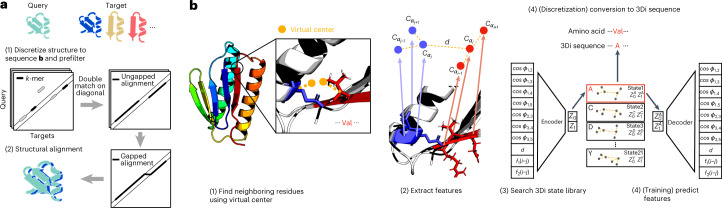
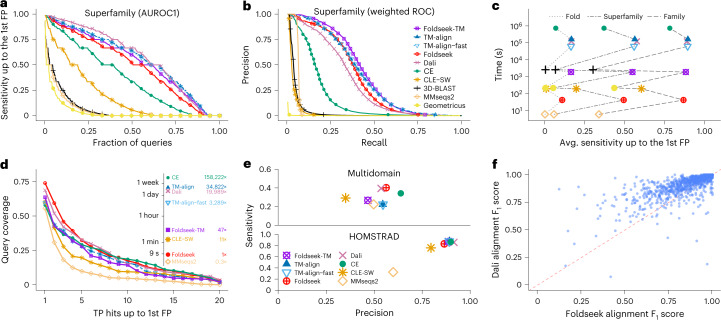
As structure prediction methods are generating millions of publicly available protein structures, searching these databases is becoming a bottleneck. Foldseek aligns the structure of a query protein against a database by describing the amino acid backbone of proteins as sequences over a structural alphabet. Foldseek decreases computation times by four to five orders of magnitude with 86%, 88% and 133% of the sensitivities of DALI, TM-align and CE, respectively.
Overview
The claims and statistics of this paper haven’t been checked yet.
Run the check — free, no account needed. It reads the open-access text and checks the sources it cites.
Integrity signals
Registry
Cites
Statistics
Figures
Verification
Claims the paper makes
The claims and statistics of this paper haven’t been checked yet.
Run the check — free, no account needed. It reads the open-access text and checks the sources it cites.
Self-check
Percentages, sums and reported differences re-computed from the paper’s own numbers.
The self-check needs the paper’s full text.
Citations
Cites
Basic local alignment search tool
Altschul, S. F., Gish, W., Miller, W., Myers, E. W., & Lipman, D. J. (1990) · Journal of Molecular Biology · doi:10.1006/jmbi.1990.9999 · Cited by 98,669
Highly accurate protein structure prediction with AlphaFold
Jumper, J., Evans, R., Pritzel, A., Green, T., Figurnov, M., Ronneberger, O., Tunyasuvunakool, K., Bates, R., Žídek, A., Potapenko, A., et al. (2021) · Nature · doi:10.1038/s41586-021-03819-2 · Cited by 43,764
Self-citationVaradi, M., Anyango, S., Deshpande, M., Nair, S., Natassia, C., Yordanova, G., Yuan, D., Stroe, O., Wood, G., Laydon, A., et al. (2022) · Nucleic Acids Research · doi:10.1093/nar/gkab1061 · Cited by 7,850
Accelerated Profile HMM Searches
Eddy, S. R. (2011) · PLoS Computational Biology · doi:10.1371/journal.pcbi.1002195 · Cited by 6,975
Evolutionary-scale prediction of atomic level protein structure with a language model
Lin, Z., Akin, H., Rao, R., Hie, B., Zhu, Z., Lu, W., Smetanin, N., Verkuil, R., Kabeli, O., Shmueli, Y., et al. (2022) · doi:10.1101/2022.07.20.500902 · Cited by 5,990
Accurate prediction of protein structures and interactions using a 3-track network
Baek, M., DiMaio, F., Anishchenko, I., Dauparas, J., Ovchinnikov, S., Lee, G. R., Wang, J., Cong, Q., Kinch, L. N., Schaeffer, R. D., et al. (2021) · doi:10.1101/2021.06.14.448402 · Cited by 5,549
Sensitive protein alignments at tree-of-life scale using DIAMOND
Buchfink, B., Reuter, K., & Drost, H.-G. (2021) · Nature Methods · doi:10.1038/s41592-021-01101-x · Cited by 5,097
MMseqs2 enables sensitive protein sequence searching for the analysis of massive data sets
Steinegger, M., & Söding, J. (2017) · Nature Biotechnology · doi:10.1038/nbt.3988 · Cited by 4,840
Self-citationTM-align: a protein structure alignment algorithm based on the TM-score
Zhang, Y. (2005) · Nucleic Acids Research · doi:10.1093/nar/gki524 · Cited by 3,774
Protein structure alignment by incremental combinatorial extension (CE) of the optimal path.
Shindyalov, I., & Bourne, P. (1998) · Protein Engineering · doi:10.1093/protein/11.9.739 · Cited by 2,199
Research works printed but not linked: 16
- 10.1126/science.abj8754 · DOI · Paper page
- Lin, Z. et al. bioRxiv (2022). 2022.07.20.500902.
- 10.1038/nbt.3988 · DOI · Paper page
- Kim, H. et al. bioRxiv 2022.12.09.519715 (2022).
- 2009, Journal of Statistical Software, 32, 1
- Van den Oord, A. et al. Adv Neur Inf Proc Syst (NIPS) 30 (2017). · DOI
- 10.1093/NAR/GKAB1061 · DOI · Paper page
- 10.1093/bioinformatics/btq078 · DOI
- 10.1006/jmbi.1990.9999 · DOI · Paper page
- 10.1038/S41586-021-03819-2 · DOI · Paper page
- 10.1093/bioinformatics/btt473 · DOI · Paper page
- 10.1093/protein/11.9.739 · DOI
- 2020, Bioinformatics, 36, i718, 10.1093/bioinformatics/btaa839 · DOI
- 10.1002/pro.5560071126 · DOI
- Lin, Z. et al. bioRxiv (2022). 2022.07.20.500902.
- 10.1093/nar/gki524 · DOI · Paper page
Cited by
Sorted by citations
Items 601–700 of 997
A conserved pilin from uncultured gut bacterial clade TANB77 enhances cancer immunotherapy
Kim, C. Y., Park, D. J., Ahn, B., Baek, S., Hong, M. H., Nguyen, L. T., Hwang, S. H., Kim, N., Podlesny, D., Orakov, A. N., et al. (2024) · Nature Communications · doi:10.1038/s41467-024-55388-3 · Cited by 11
Novel archaeal ribosome dimerization factor facilitating unique 30S–30S dimerization
Hassan, A. H., Pinkas, M., Yaeshima, C., Ishino, S., Uchiumi, T., Ito, K. R., & Demo, G. (2024) · Nucleic Acids Research · doi:10.1093/nar/gkae1324 · Cited by 9
Manfredi, M., Vazzana, G., Savojardo, C., Martelli, P. L., & Casadio, R. (2025) · Computational and Structural Biotechnology Journal · doi:10.1016/j.csbj.2025.01.008 · Cited by 11
Kocot, A. M., Swebocki, T., Ciemińska, K., Łupkowska, A., Kapusta, M., Grimon, D., Laskowska, E., Kaczorowska, A., Kaczorowski, T., Boukherroub, R., et al. (2025) · Scientific Reports · doi:10.1038/s41598-024-80440-z · Cited by 10
LPS binding caspase activation and recruitment domains (CARDs) are bipartite lipid binding modules
Cao, A., Devant, P., Wang, C., Sun, M., Kennedy, S. N., Ma, W., Ruan, J., & Kagan, J. C. (2025) · Science Advances · doi:10.1126/sciadv.adt9027 · Cited by 12
Fridman, C. M., Keppel, K., Rudenko, V., Altuna-Alvarez, J., Albesa-Jové, D., Bosis, E., & Salomon, D. (2025) · PLoS Biology · doi:10.1371/journal.pbio.3003053 · Cited by 10
Weixler, L., Žaja, R., Ikenga, N. J., Siefert, J., Mohan, G., Aydın, G., Wijngaarden, S., Filippov, D. V., Lüscher, B., & Feijs, K. L. H. (2025) · Communications Biology · doi:10.1038/s42003-025-07901-7 · Cited by 10
Structural motif search across the protein universe with Folddisco
Kim, H., Kim, R. S., Mirdita, M., Yoon, J., & Steinegger, M. (2026) · Nature Biotechnology · doi:10.1038/s41587-026-03162-9 · Cited by 10
Self-citationCoupling chromosome organization to genome segregation in Archaea
Kabli, A. F., Ng, I. W., Read, N., Pal, P., Reimann, J., Tran, N. T., Albers, S.-V., Le, T. B. K., & Barillà, D. (2025) · Nature Communications · doi:10.1038/s41467-025-61997-3 · Cited by 10
Pidgeon, R., Giurleo, A., Dridi, L., & Castagner, B. (2025) · npj Biofilms and Microbiomes · doi:10.1038/s41522-025-00849-w · Cited by 11
Designing novel solenoid proteins with in silico evolution
(2025) · doi:10.1038/s42004-025-01817-3 · Cited by 10
Molecular basis for anti-jumbo phage immunity by AVAST type 5
Muralidharan, A., Costa, A. R., Fierlier, D., van den Berg, D. F., van den Bossche, H., Zoumaro-Djayoon, A. D., Rodríguez-Molina, A., Pabst, M., Pačesa, M., Correia, B. E., et al. (2026) · Molecular Cell · doi:10.1016/j.molcel.2026.01.004 · Cited by 9
Specialized RNA decay fine-tunes monogenic antigen expression in Trypanosoma brucei
Lansink, L. I. M., Aye, H. M., Walther, L., Longmore, S., Jones, M., Dowle, A., Reis-Cunha, J. L., & Faria, J. R. C. (2026) · Nature Microbiology · doi:10.1038/s41564-026-02289-4 · Cited by 11
Varidnaviruses in the Human Gut: A Major Expansion of the Order Vinavirales
Yutin, N., Rayko, M., Antipov, D., Mutz, P., Wolf, Y. I., Krupovìč, M., & Koonin, E. V. (2022) · Viruses · doi:10.3390/v14091842 · Cited by 8
Mesdaghi, S., Price, R. M., Madine, J., & Rigden, D. J. (2023) · Journal of Structural Biology · doi:10.1016/j.jsb.2023.108010 · Cited by 9
Learning from the unknown: exploring the range of bacterial functionality
Mahlich, Y., Zhu, C., Chung, H., Velaga, P. K., De Paolis Kaluza, M. C., Radivojac, P., Friedberg, I., & Bromberg, Y. (2023) · Nucleic Acids Research · doi:10.1093/nar/gkad757 · Cited by 10
Regeneration in the absence of canonical neoblasts in an early branching flatworm
Gąsiorowski, L., Chai, C., Rozanski, A., Purandare, G., Ficze-Schmidt, F., Mizi, A., Wang, B., & Rink, J. C. (2025) · Nature Communications · doi:10.1038/s41467-024-54716-x · Cited by 11
Widespread Horizontal Gene Transfer Among Animal VirusesPreprint
Buck, C. B., Welch, N. L., Belford, A. K., Varsani, A., Pastrana, D. V., Tisza, M. J., & Starrett, G. J. (2024) · bioRxiv (Cold Spring Harbor Laboratory) · doi:10.1101/2024.03.25.586562 · Cited by 13
P( all-atom ) Is Unlocking New Path For Protein DesignPreprint
Qu, W., Guan, J., Ma, R., Zhai, K., Wu, W., & Wang, H. (2024) · bioRxiv (Cold Spring Harbor Laboratory) · doi:10.1101/2024.08.16.608235 · Cited by 16
Distilling Structural Representations into Protein Sequence ModelsPreprint
Ouyang-Zhang, J., Gong, C., Zhao, Y., Krähenbühl, P., Klivans, A. R., & Diaz, D. J. (2024) · bioRxiv (Cold Spring Harbor Laboratory) · doi:10.1101/2024.11.08.622579 · Cited by 12
AlphaFold3 for Structure-guided Ligand DiscoveryPreprint
Menon, K. M., Davasam, A., Chen, G., Bryant, C., Deng, Z., Lam, B., Yang, C., Barcelos, D., Liu, F., Alon, A., et al. (2025) · bioRxiv (Cold Spring Harbor Laboratory) · doi:10.64898/2025.12.04.692352 · Cited by 15
Posttranslational modifications in bacteria during phage infection
Longin, H., Broeckaert, N., van Noort, V., Lavigne, R., & Hendrix, H. (2024) · Current Opinion in Microbiology · doi:10.1016/j.mib.2024.102425 · Cited by 9
Ohdate, K., Sakata, M., Maeda, K., Sakamaki, Y., Nimura-Matsune, K., Ohbayashi, R., Hess, W. R., & Watanabe, S. (2024) · Frontiers in Microbiology · doi:10.3389/fmicb.2024.1311290 · Cited by 9
Lan, T., Su, S., Ping, P., Hutvágner, G., Liu, T., Pan, Y. F., & Li, J. (2024) · Nature Machine Intelligence · doi:10.1038/s42256-024-00803-z · Cited by 9
Miller, J. E., Agdanowski, M. P., Dolinsky, J. L., Sawaya, M. R., Cascio, D., Rodríguez, J. A., & Yeates, T. O. (2024) · Acta Crystallographica Section D Structural Biology · doi:10.1107/s205979832400072x · Cited by 9
Structural analysis of the dynamic ribosome-translocon complex
Lewis, A. J., Zhong, F., Keenan, R. J., & Hegde, R. S. (2024) · eLife · doi:10.7554/elife.95814.3 · Cited by 9
Franklin, A., Salgueiro, V. C., Layton, A. J., Sullivan, R., Mize, T. H., Vázquez-Iniesta, L., Benedict, S. T., Gurcha, S. S., Anso, I., Besra, G. S., et al. (2024) · Nature Communications · doi:10.1038/s41467-024-50051-3 · Cited by 10
Lazaridi, S., Yuan, J., & Lemmin, T. (2024) · Scientific Reports · doi:10.1038/s41598-024-68206-z · Cited by 9
Sundararaj, B. K., Goyal, M., & Samuelson, J. C. (2024) · mSphere · doi:10.1128/msphere.00466-24 · Cited by 8
Attrah, M., Schärer, M. R., Esposito, M., Gionchetta, G., Bürgmann, H., Lens, P. N. L., Fenner, K., van de Vossenberg, J. L. C. M., & Robinson, S. L. (2024) · Microbiome · doi:10.1186/s40168-024-01879-w · Cited by 9
Evolution, structure, and drug-metabolizing activity of mammalian prenylcysteine oxidases
Barone, M., Pizzorni, L., Fraaije, M. W., Mascotti, M. L., & Mattevi, A. (2024) · Journal of Biological Chemistry · doi:10.1016/j.jbc.2024.107810 · Cited by 10
Vaysset, H., Meers, C., Cury, J., Bernheim, A., & Sternberg, S. H. (2025) · Nature Microbiology · doi:10.1038/s41564-024-01889-2 · Cited by 8
Cutting-edge deep-learning based tools for metagenomic research
Karin, E. L., & Steinegger, M. (2025) · National Science Review · doi:10.1093/nsr/nwaf056 · Cited by 10
Self-citationChen, M., Koszti, S. G., Bonavoglia, A., Maco, B., von Rohr, O., Peng, H., Soldati‐Favre, D., & Kloehn, J. (2025) · Nature Communications · doi:10.1038/s41467-025-57302-x · Cited by 9
Zhu, J., Xie, R., Ren, Q., Zhou, J., Chen, C., Xie, M.-X., Zhou, Y., Zhang, Y., Liu, N., Wang, J., et al. (2025) · Nature Communications · doi:10.1038/s41467-025-57902-7 · Cited by 10
The Protein Design Archive (PDA): insights from 40 years of protein design
Chronowska, M., Stam, M. J., Woolfson, D. N., Costanzo, L. D., & Wood, C. W. (2025) · Nature Biotechnology · doi:10.1038/s41587-025-02607-x · Cited by 10
Osei, E. K., O’Hea, R., Cambillau, C., Athalye, A., Hille, F., Franz, C. M. A. P., O’Doherty, Á., Wilson, M., Murray, G. G. R., Weinert, L. A., et al. (2025) · Microbiological Research · doi:10.1016/j.micres.2025.128147 · Cited by 9
Molecular mechanism of bacteriophage contraction structure of an S-layer–penetrating bacteriophage
Wilson, J. S., Fortier, L.-C., Fagan, R. P., & Bullough, P. A. (2025) · Life Science Alliance · doi:10.26508/lsa.202403088 · Cited by 9
Abulude, I. J., Rodríguez-Luna, I. C., Varela, A. S., Camilli, A., Kadouri, D. E., & Guo, X. (2025) · Frontiers in Bioinformatics · doi:10.3389/fbinf.2025.1566486 · Cited by 8
Application of LLMs/Transformer-Based Models for Metabolite Annotation in Metabolomics
Liu, Y., Zhang, F., Ge, Y., Liu, Q., He, S., & Shen, X. (2025) · Health and Metabolism · doi:10.53941/hm.2025.100014 · Cited by 9
Proteomic Ligandability Maps of Phosphorus(V) Stereoprobes Identify Covalent TLCD1 Inhibitors
Sharma, H. A., Bielecki, M., Holm, M. A., Thompson, T. M., Yin, Y., Cravatt, J. B., Ware, T. B., Reed, A., Nassir, M., Ewing, T. E., et al. (2025) · Journal of the American Chemical Society · doi:10.1021/jacs.5c01944 · Cited by 11
Huynh, U., King, J., & Zastrow, M. L. (2025) · Scientific Reports · doi:10.1038/s41598-025-98577-w · Cited by 10
Li, H., Shao, L., Liu, Z., Liu, Q., & Xiang, Y. (2025) · Nature Communications · doi:10.1038/s41467-025-59301-4 · Cited by 9
Cutting-edge tools for structural biology: bringing AlphaFold to the people
Elfmann, C., & Stülke, J. (2025) · Trends in Microbiology · doi:10.1016/j.tim.2025.03.014 · Cited by 9
Planells‐Cárcel, A., Sánchez‐Martí, S., Muñiz‐Calvo, S., & Guillamón, J. M. (2025) · Journal of Pineal Research · doi:10.1111/jpi.70053 · Cited by 7
Yin, M., Zhou, H., Wu, J., Zhu, Y., Zhan, Y., Kong, Z., Xu, H., Hsieh, C., Chen, J., Hou, T., et al. (2025) · Research · doi:10.34133/research.0721 · Cited by 12
McCausland, J. W., Kloos, Z. A., Irnov, I., Sonnert, N. D., Zhou, J., Putnik, R., Mueller, E. A., Steere, A. C., Palm, N. W., Grimes, C. L., et al. (2025) · PLoS Pathogens · doi:10.1371/journal.ppat.1013324 · Cited by 11
Yu, G., Bi, X., Ma, T., Li, Y., & Wang, J. (2025) · Bioinformatics · doi:10.1093/bioinformatics/btaf228 · Cited by 10
Integrating metagenomics and cultivation unveils oral phage diversity and potential impact on hosts
Jie, Z., Liang, H., Meng, Y., Zhang, J., Zhang, T., Li, W., Lin, X., Hu, T., Han, M., Liang, W., et al. (2025) · npj Biofilms and Microbiomes · doi:10.1038/s41522-025-00773-z · Cited by 12
Recent advances in the inference of deep viral evolutionary history
Mifsud, J. C. O., Suchard, M. A., Holmes, E. C., & Lemey, P. (2025) · Journal of Virology · doi:10.1128/jvi.00292-25 · Cited by 13
Novel regulators of heparan sulfate proteoglycans modulate cellular uptake of α-synuclein fibrils
Vanderperre, B., Muraleedharan, A., Dorion, M., Larroquette, F., del Cid‐Pellitero, E., Rajakulendran, N., Chen, C. X. ‐., Larivière, R., Michaud-Tardif, C., Goiran, T., et al. (2025) · Communications Biology · doi:10.1038/s42003-025-08786-2 · Cited by 18
Modeling Alternative Conformational States in CASP16
Dube, N., Ramelot, T. A., Benavides, T. L., Huang, Y. J., Moult, J., Kryshtafovych, A., & Montelione, G. T. (2025) · Proteins Structure Function and Bioinformatics · doi:10.1002/prot.70065 · Cited by 11
Recurrent acquisition of nuclease-protease pairs in antiviral immunity
Tuck, O. T., Hu, J. J., Lopez, S. C., Adler, B. A., O'Brien, C. E., Hsieh, K., Meredith, C., Loi, K. J., Yoon, P. H., Doherty, E. E., et al. (2025) · Science · doi:10.1126/science.aea8769 · Cited by 7
InsectBase 3.0: a comprehensive multi-omics resource for insects
Wang, Z., Chen, H., Jin, S., Li, Z., Yang, M., Xiao, Y., Zhao, C., Zhou, T., Li, F., Liu, Y., et al. (2025) · Nucleic Acids Research · doi:10.1093/nar/gkaf1248 · Cited by 11
Protein language models uncover carbohydrate-active enzyme function in metagenomics
Thurimella, K., Mohamed, A. M. T., Li, C., Vatanen, T., Graham, D. B., Owens, R. M., La Rosa, S. L., Plichta, D. R., Bacallado, S., & Xavier, R. J. (2025) · BMC Bioinformatics · doi:10.1186/s12859-025-06286-y · Cited by 9
GrainGenes: genetics, genomes, and pangenomes
Yao, E., Blake, V. C., Sharma, P. K., Poretsky, E., Michel, S., Birkett, C. L., Waring, D. J., Jannink, J., Gu, Y., Tiwari, V. K., et al. (2025) · Genetics · doi:10.1093/genetics/iyaf270 · Cited by 9
Plant base editing: a decade of progress and future applications
Zhang, R., Zheng, Z., Li, G., Zheng, X., Su, L., Yuan, X., Li, T., Tan, J., Zeng, D., Zhang, S., et al. (2025) · aBIOTECH · doi:10.1016/j.abiote.2025.100003 · Cited by 10
De novo design of potent CRISPR–Cas13 inhibitors
Taveneau, C., Chai, H. X., D’Silva, J., Bamert, R. S., Chen, H., Hayes, B. K., Calvert, R. W., Purcell, J., Curwen, D. J., Munder, F., et al. (2026) · Nature Chemical Biology · doi:10.1038/s41589-025-02136-3 · Cited by 12
Large-scale capsid-mediated mobilisation of bacterial genomic DNA in the gut microbiome
Borodovich, T., Buttimer, C., Wilson, J. S., Bárdy, P., Smith, M., Hill, C. M., Khokhlova, E. V., Harte, M., Govi, B., Fogg, P. C. M., et al. (2026) · Nature Communications · doi:10.1038/s41467-026-68726-4 · Cited by 12
Structural modeling reveals phage proteins that manipulate bacterial immune signaling
Tal, N., Hadary, R., Chang, R. B., Osterman, I. А., Jacobson, R. L., Yirmiya, E., Béchon, N., Hochhauser, D., Rivera, M., Madhala, B., et al. (2026) · Science · doi:10.1126/science.aea1761 · Cited by 12
Tke5 is a Pseudomonas putida toxin that kills plant pathogens by depolarising membranes
Velázquez, C., Arce‐Rodríguez, A., Altuna-Alvarez, J., Rojas-Palomino, J., Flores-Cerón, A., Narváez, C. C., Ruiz, A., Noya, J. D. L. P., Civantos, C., Magaña, A. G., et al. (2026) · Communications Biology · doi:10.1038/s42003-026-09863-w · Cited by 8
Nicastro, G. G., Sibinelli-Sousa, S., Hespanhol, J. T., Santos, T. W. C., Munoz, J. P., Santos, R. S., Perez-Sepulveda, B. M., Miyamoto, S., Aravind, L., de Souza, R. F., et al. (2026) · PLOS Biology · doi:10.1371/journal.pbio.3003680 · Cited by 9
Chakraborty, C., Bhattacharya, M., & Lee, S.-S. (2026) · Frontiers in Artificial Intelligence · doi:10.3389/frai.2026.1739303 · Cited by 11
Shankar, S. S., Banarjee, R., Jathar, S. M., Rajesh, S., Ramasamy, S., & Kulkarni, M. J. (2023) · Journal of Biomolecular Structure and Dynamics · doi:10.1080/07391102.2023.2220804 · Cited by 10
AlphaCutter: Efficient removal of non‐globular regions from predicted protein structures
Tam, C., & Iwasaki, W. (2023) · PROTEOMICS · doi:10.1002/pmic.202300176 · Cited by 8
Muthye, V., & Wasmuth, J. D. (2023) · Frontiers in Parasitology · doi:10.3389/fpara.2023.1162697 · Cited by 8
Solomon, J. B., Liu, Y. A., Górecki, K., Quechol, R., Lee, C. C., Jasniewski, A. J., Hu, Y., & Ribbe, M. W. (2023) · mBio · doi:10.1128/mbio.02572-23 · Cited by 9
Marini, E., Olivença, C., Ramalhete, S., Aguirre, A. M., Ingle, P., Melo, M. N., Antunes, W., Minton, N. P., Hernández, G., Cordeiro, T. N., et al. (2023) · PLoS Pathogens · doi:10.1371/journal.ppat.1011741 · Cited by 8
Dodge, G. J., Anderson, A. J., He, Y., Liu, W., Viner, R., & Imperiali, B. (2024) · eLife · doi:10.7554/elife.91125 · Cited by 9
Manakova, E., Golovinas, E., Pocevičiūtė, R., Sasnauskas, G., Šilanskas, A., Rutkauskas, D., Jankunec, M., Zagorskaitė, E., Jurgelaitis, E., Grybauskas, A., et al. (2023) · Nucleic Acids Research · doi:10.1093/nar/gkad1241 · Cited by 8
Ahmed, M., Wheeler, R. J., Týč, J., Shafiq, S., Sunter, J. D., & Vaughan, S. (2024) · Journal of Cell Science · doi:10.1242/jcs.261692 · Cited by 9
An autonomous plasmid as an inovirus phage satellite
Schmid, N., Brandt, D., Walasek, C., Rolland, C., Wittmann, J., Fischer, D., Müsken, M., Kalinowski, J., & Thormann, K. M. (2024) · Applied and Environmental Microbiology · doi:10.1128/aem.00246-24 · Cited by 8
Surm, J. M., Landau, M., Columbus-Shenkar, Y. Y., & Moran, Y. (2024) · Molecular Biology and Evolution · doi:10.1093/molbev/msae082 · Cited by 9
The Development and Opportunities of Predictive Biotechnology
Nestl, B. M., Nebel, B. A., Resch, V., Schürmann, M., & Tischler, D. (2024) · ChemBioChem · doi:10.1002/cbic.202300863 · Cited by 9
Maleckis, M., Wibowo, M., Williams, S. E., Gotfredsen, C. H., Sigrist, R., Souza, L. D. O., Cowled, M. S., Charusanti, P., Gren, T., Saha, S., et al. (2024) · ACS Chemical Biology · doi:10.1021/acschembio.4c00121 · Cited by 9
Zhang, C., Liu, Q., & Freddolino, L. (2026) · Genomics Proteomics & Bioinformatics · doi:10.1093/gpbjnl/qzag018 · Cited by 11
Dohnálek, V., & Doležal, P. (2024) · Open Biology · doi:10.1098/rsob.240021 · Cited by 12
Barcytė, D., Jaške, K., Pánek, T., Yurchenko, T., Ševčíková, T., Eliášová, A., & Eliáš, M. (2024) · Open Biology · doi:10.1098/rsob.240022 · Cited by 9
Functional protein mining with conformal guarantees
Boger, R. S., Chithrananda, S., Angelopoulos, A. N., Yoon, P. H., Jordan, M. I., & Doudna, J. A. (2025) · Nature Communications · doi:10.1038/s41467-024-55676-y · Cited by 14
Structurally heterogeneous ribosomes cooperate in protein synthesis in bacterial cells
Helena-Bueno, K., Kopetschke, S., Filbeck, S., Chan, L. I., Birsan, S., Baslé, A., Hudson, M., Pfeffer, S., Hill, C. H., & Melnikov, S. V. (2025) · Nature Communications · doi:10.1038/s41467-025-57955-8 · Cited by 10
OriV-Finder: a comprehensive web server for bacterial plasmid replication origin analysis
Li, Y., & Gao, F. (2025) · Nucleic Acids Research · doi:10.1093/nar/gkaf341 · Cited by 9
Structural insights into ubiquitin chain cleavage by Legionella ovarian tumor deubiquitinases
Kang, S., Kim, G., Choi, M., Jeong, M., van der Heden van Noort, G. J., Roh, S.-H., & Shin, D. (2023) · Life Science Alliance · doi:10.26508/lsa.202201876 · Cited by 9
O’Meara, M. J., Rapala, J. R., Nichols, C. B., Alexandre, C., Billmyre, R. B., Steenwyk, J. L., Alspaugh, J. A., & O’Meara, T. R. (2024) · PLoS Genetics · doi:10.1371/journal.pgen.1011158 · Cited by 8
Vanderperre, B., Muraleedharan, A., Dorion, M., Larroquette, F., del Cid‐Pellitero, E., Rajakulendran, N., Chen, C. X., Larivière, R., Michaud-Tardif, C., Chidiac, R., et al. (2023) · bioRxiv (Cold Spring Harbor Laboratory) · doi:10.1101/2023.09.29.560170 · Cited by 9
Nuclear pores as conduits for fluid flow during osmotic stressPreprint
Hoffmann, P. C., Kim, H., Obarska-Kosińska, A., Kreysing, J. P., Andino-Frydman, E. Y., Cruz-León, S., Cernikova, L., Kosiński, J., Turoňová, B., Hummer, G., et al. (2024) · bioRxiv (Cold Spring Harbor Laboratory) · doi:10.1101/2024.01.17.575985 · Cited by 9
Birth of new protein folds and functions in the viromePreprint
Nomburg, J., Price, N., & Doudna, J. (2024) · bioRxiv · doi:10.1101/2024.01.22.576744 · Cited by 8
Pourmirzaei, M., Esmaili, F., Pourmirzaei, M., Wang, D.-L., & Xu, D. (2024) · bioRxiv · doi:10.1101/2024.05.31.596915 · Cited by 12
Systematic annotation of hyper-variability hotspots in phage genomes and plasmidsPreprint
Egorov, A. A., Hauryliuk, V., & Atkinson, G. C. (2024) · bioRxiv (Cold Spring Harbor Laboratory) · doi:10.1101/2024.10.15.618418 · Cited by 10
Phenotypic landscape of a fungal meningitis pathogen reveals its unique biologyPreprint
Boucher, M. J., Banerjee, S., Joshi, M., Wei, A. L., Huang, M. Y., Lei, S., Ciranni, M., Condon, A., Langen, A., Goddard, T. D., et al. (2024) · bioRxiv (Cold Spring Harbor Laboratory) · doi:10.1101/2024.10.22.619677 · Cited by 9
Persistent homology reveals strong phylogenetic signal in 3D protein structures
Dagher, L. B., Madern, D., Malbos, P., & Brochier‐Armanet, C. (2024) · PNAS Nexus · doi:10.1093/pnasnexus/pgae158 · Cited by 8
PPInterface: A Comprehensive Dataset of 3D Protein-Protein Interface Structures
Abali, Z., Aydin, Z., Khokhar, M., Ateş, Y. C., Gürsoy, A., & Keskin, Ö. (2024) · Journal of Molecular Biology · doi:10.1016/j.jmb.2024.168686 · Cited by 9
Danov, A., Pollin, I., Moon, E., Ho, M., Wilson, B. A., Papathanos, P. A., Kaplan, T., & Levy, A. (2024) · Molecular Systems Biology · doi:10.1038/s44320-024-00053-6 · Cited by 8
Gawriljuk, V. O., Godoy, A. S., Oerlemans, R., Welker, L. A. T., Hirsch, A. K. H., & Groves, M. R. (2024) · Nature Communications · doi:10.1038/s41467-024-50671-9 · Cited by 8
Alonso, V. L., Escalante, A. M., Araya, E. R., Frattini, G., Tavernelli, L. E., Moreno, D. M., Furlán, R. L. E., & Serra, E. C. (2024) · Frontiers in Microbiology · doi:10.3389/fmicb.2024.1465672 · Cited by 9
Tachioka, M., Tsudome, M., Tsuda, M., Hiraoka, S., Miyazaki, M., Takaki, Y., & Deguchi, S. (2024) · Journal of Wood Science · doi:10.1186/s10086-024-02168-8 · Cited by 8
Multi-conflict islands are a widespread trend within Serratia spp.
Cummins, T., Songra, S., Garrett, S. R., Blower, T. R., & Mariano, G. (2024) · Cell Reports · doi:10.1016/j.celrep.2024.115055 · Cited by 8
Brenes-Álvarez, M., Ropp, H. R., Papagiannidis, D., Potel, C. M., Stein, F., Scholz, I., Steglich, C., Savitski, M. M., Vioque, A., Muro-Pastor, A., et al. (2024) · Nucleic Acids Research · doi:10.1093/nar/gkae1247 · Cited by 7
Data and AI-driven synthetic binding protein discovery
Li, Y., Duan, Z., Li, Z., & Xue, W. (2025) · Trends in Pharmacological Sciences · doi:10.1016/j.tips.2024.12.002 · Cited by 8
From Lesions to Lessons: Two Decades of Filamentous Plant Pathogen Genomics
Fagundes, W. C., Huang, Y.-S., Häußler, S., & Langner, T. (2025) · Molecular Plant-Microbe Interactions · doi:10.1094/mpmi-09-24-0115-fi · Cited by 8
Tandem Repeats Provide Evidence for Convergent Evolution to Similar Protein Structures
Wright, E. S. (2025) · Genome Biology and Evolution · doi:10.1093/gbe/evaf013 · Cited by 11
Metadata
- Authors
- van Kempen, M., Kim, S. S., Tumescheit, C., Mirdita, M., Lee, J., Gilchrist, C. L. M., Söding, J., & Steinegger, M.
- Affiliations
- Max Planck Institute for Multidisciplinary Sciences (DE)
- Seoul National University (KR)
- Corresponding author
- Söding, Johannes
- Steinegger, Martin
- ORCID
- Venue
- Nature Biotechnology
- Publisher
- openRxiv
- Published
- 2022-02-09
- Volume
- 42
- Issue
- 2
- Pages
- 243-246
- ISSN
- 0733-222X (ISSN-L)
- PMC
- PMC10869269
- OpenAlex
- W4375858802
- Cited by
- 2,598
- References
- 48
- Citations by year
- 2026: 830 · 2025: 917 · 2024: 592 · 2023: 211 · 2022: 44
- FWCI
- 226.70
- Type
- journal article
- Language
- en
- Open access
- hybrid
- doi.org
- Licence
- cc-by
- Locations
- Nature Biotechnology (publishedVersion, cc-by)
- bioRxiv (Cold Spring Harbor Laboratory) (acceptedVersion, cc-by)
- PubMed Central (publishedVersion, cc-by)
- PubMed (publishedVersion)
- MPG.PuRe (Max Planck Society) (submittedVersion, other-oa)
- GoeScholar The Publication Server of the Georg-August-Universität Göttingen (Georg-August-Universität Göttingen) (submittedVersion, cc-by)
- Seoul National University Open Repository (Seoul National University) (submittedVersion)
- Funders
- National Research Foundation
- Bundesministerium für Bildung und Forschung
- Seoul National University
- National Research Foundation of Korea (2021-R1C1-C102065, 2019R1A6A1A10073437, 2020M3A9G7103933, 2021R1C1C102065, 2021M3A9I4021220, 2021-M3A9-I4021220, 2020M3‐A9G7‐103933, 2019R1A6A1, 2019R1-A6A1-A10073437)
- Max-Planck-Gesellschaft
- Samsung
- Topics
- Life Sciences › Biochemistry, Genetics and Molecular Biology › Molecular Biology › Protein Structure and Dynamics
- Life Sciences › Biochemistry, Genetics and Molecular Biology › Structural Biology › Enzyme Structure and Function
- Life Sciences › Biochemistry, Genetics and Molecular Biology › Molecular Biology › Machine Learning in Bioinformatics
- Keywords
- protein structure search, Foldseek, structural alignment, structural alphabet, protein structure database, computational efficiency
- MeSH terms
- Algorithms, Amino Acids, Proteins, Software, Databases, Protein
About these checks
Registry, retraction, Cites and statistics results are computed, not judged, with one exception: a printed reference that no index lists is read once by a model before it counts as a citation error. Claims are extracted by a model and kept only when their quote appears verbatim in the text; each cited source is then checked, with a model’s help, for whether it says what the claim relies on. Those verdicts can be wrong — read the claim’s quote and the cited source before relying on one.
Statistics and arithmetic are recomputed, not judged.
Confidence bands are shown only for fields calibrated on our annotated test set. None is calibrated yet, so no band is shown.
What counts as a claim ›How we measure confidence ›How we check this ›
Are you an author, or do you see a problem with this page? Request a review
