

The DOI matches its Crossref record; 64 of the 64 references it cites were found in a registry or an index.
Flexible multitask computation in recurrent networks utilizes shared dynamical motifs
Open accessAbstract
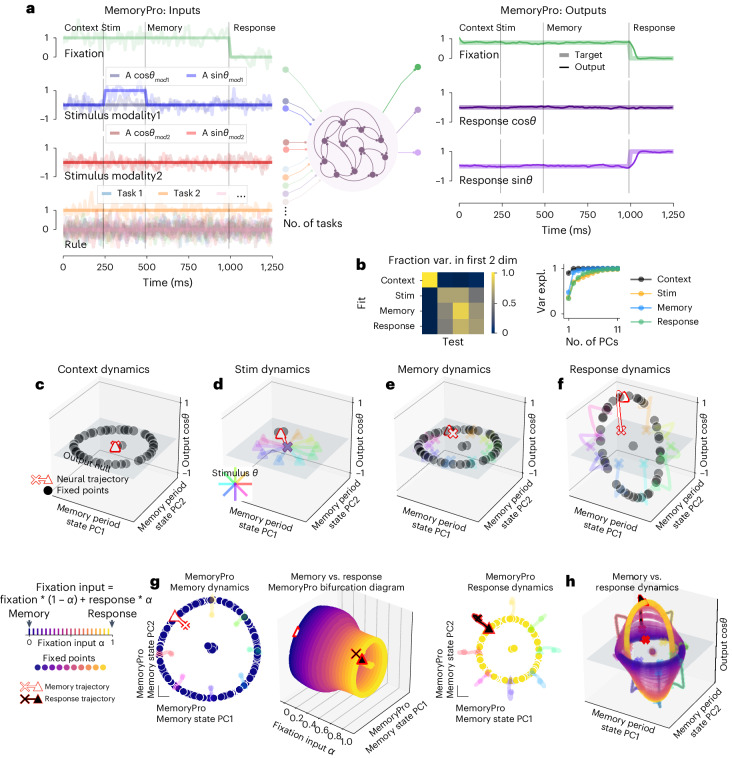
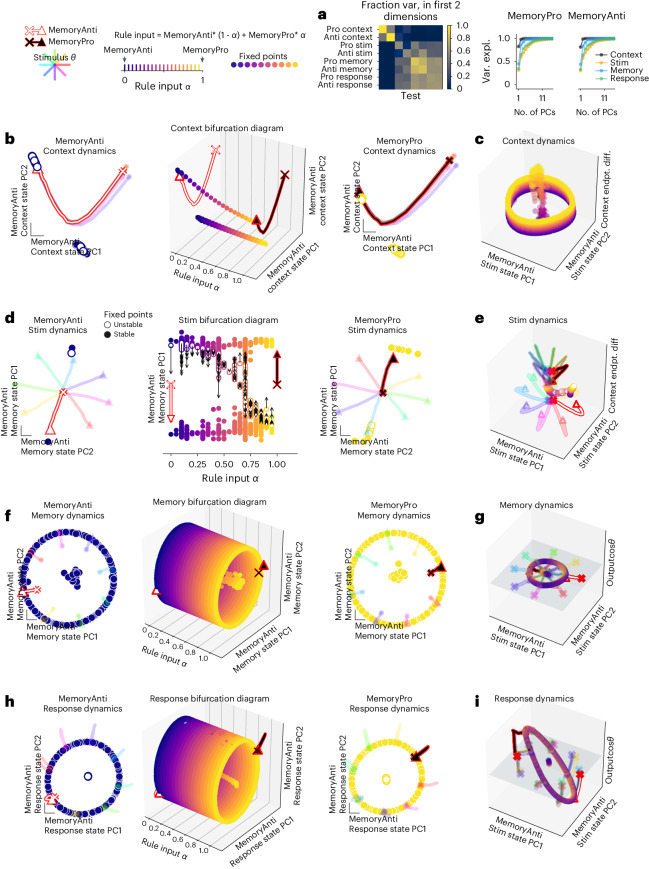
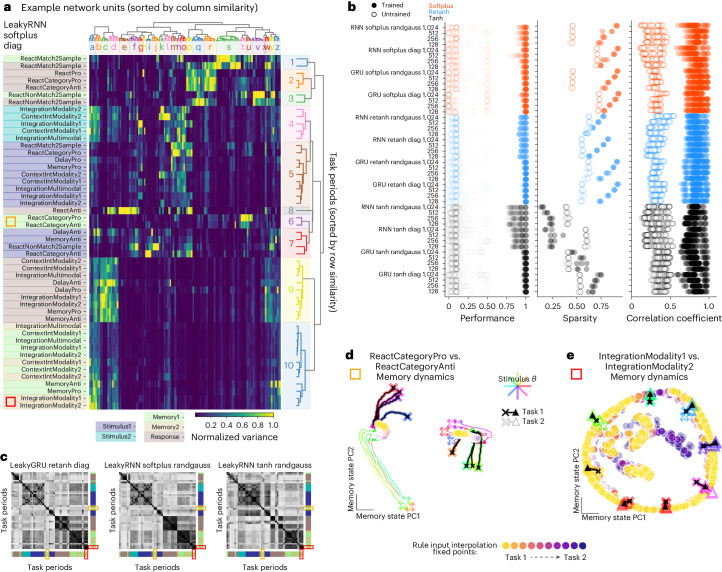
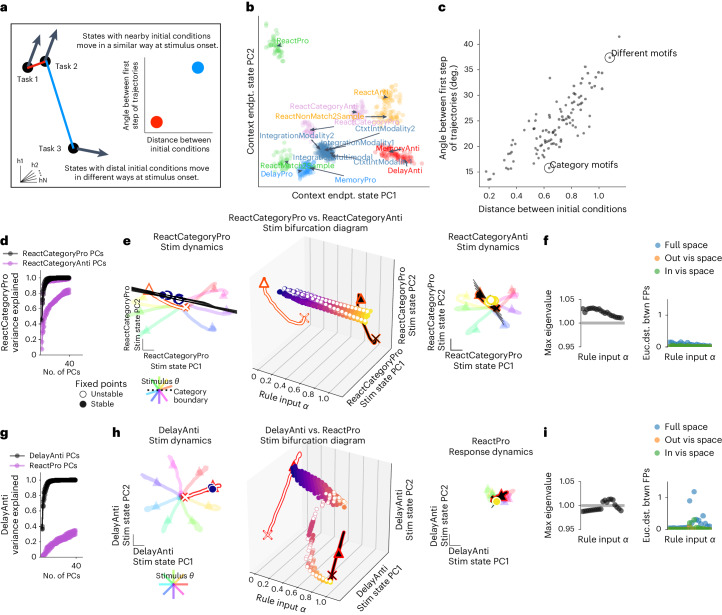
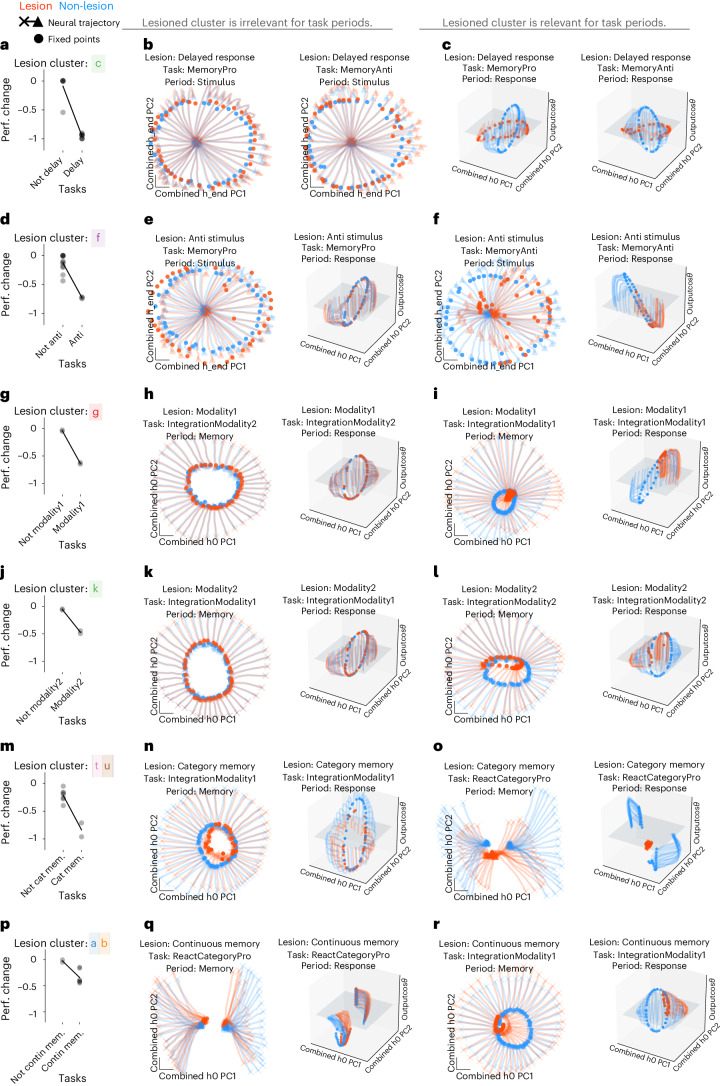
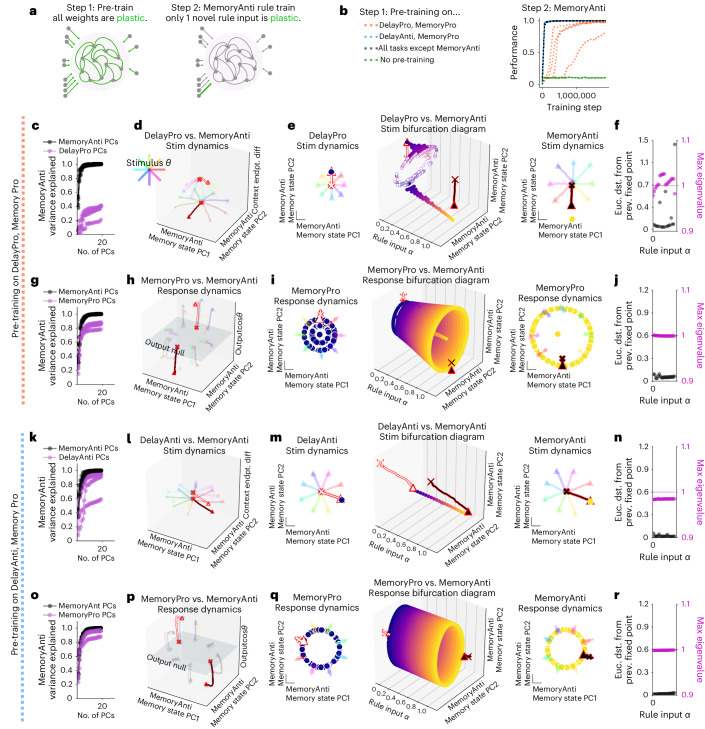
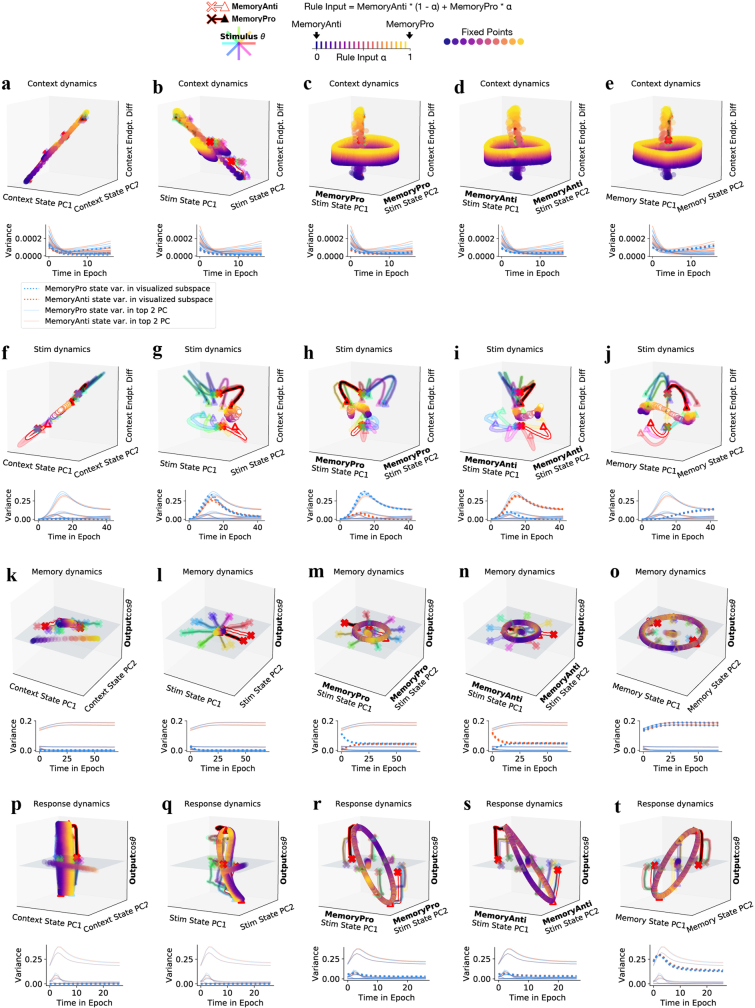
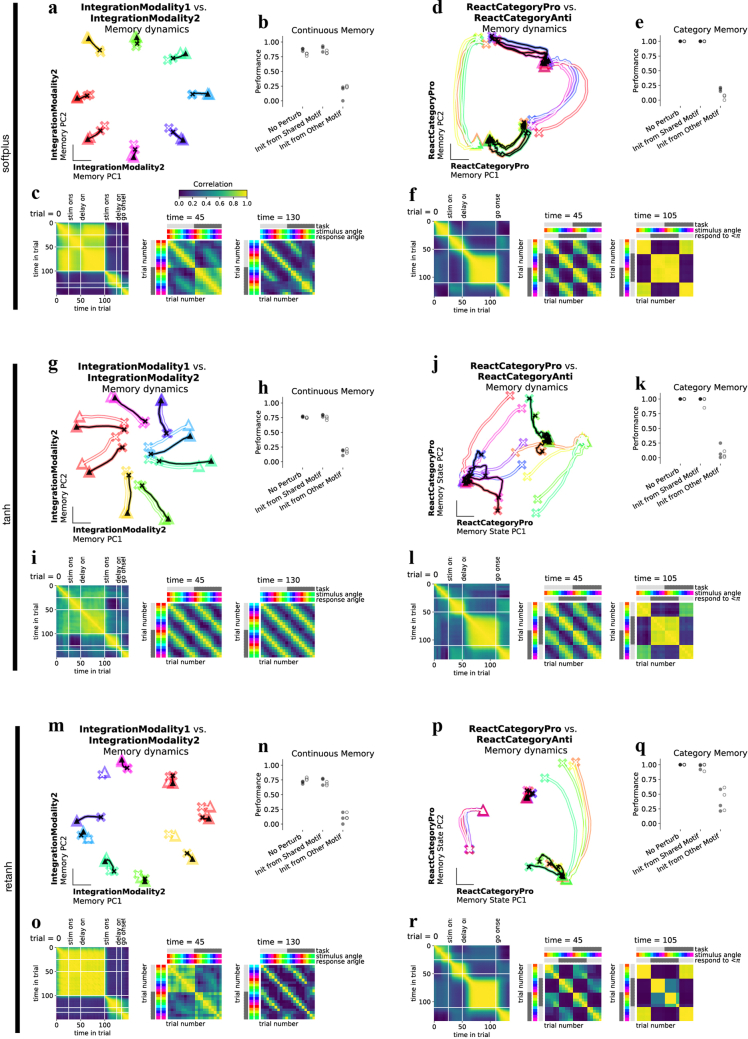
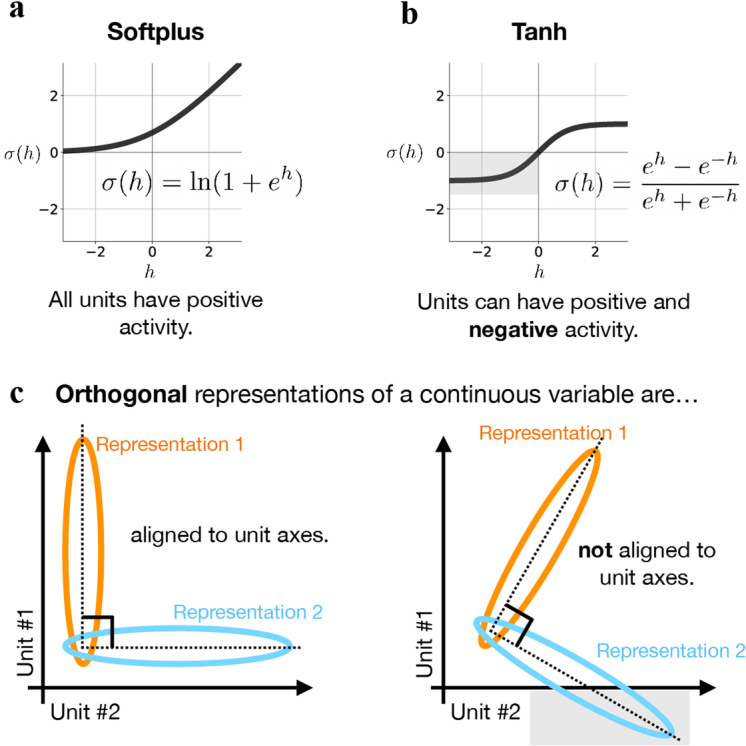
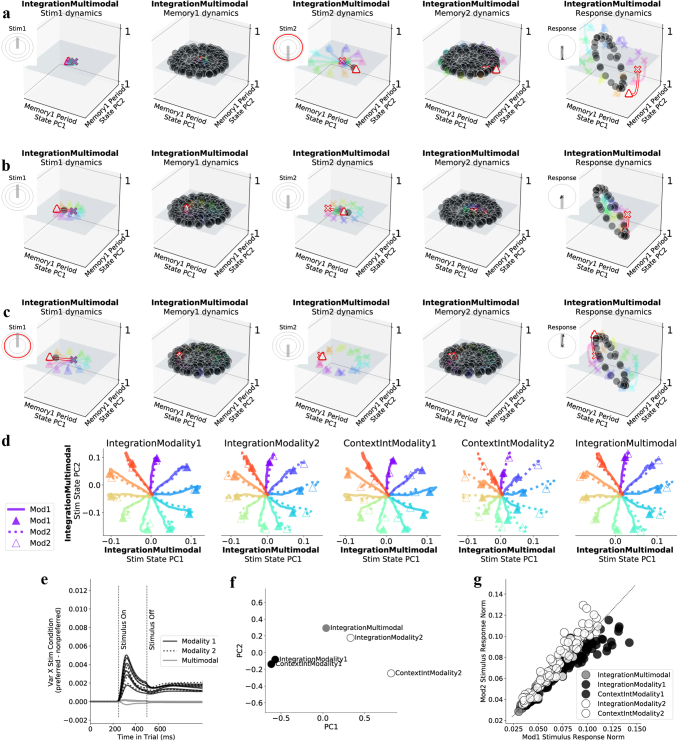
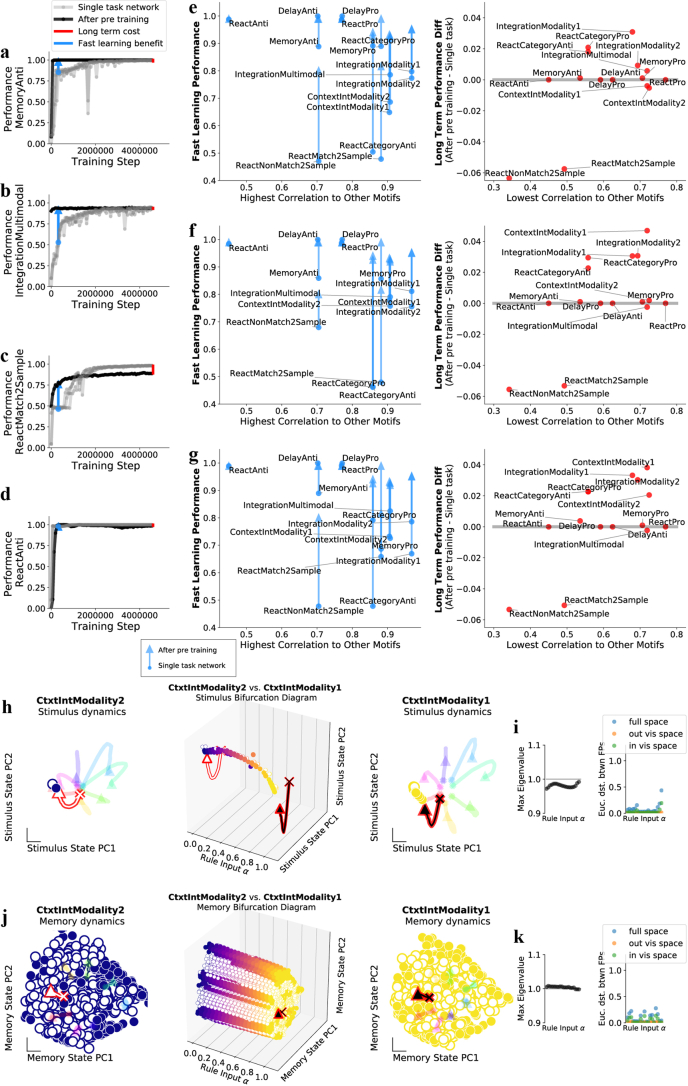
Flexible computation is a hallmark of intelligent behavior. Yet, little is known about how neural networks contextually reconfigure for different computations. Humans are able to perform a new task without extensive training, presumably through the composition of elementary processes that were previously learned. Cognitive scientists have long hypothesized the possibility of a compositional neural code, where complex neural computations are made up of constituent components; however, the neural substrate underlying this structure remains elusive in biological and artificial neural networks. Here we identified an algorithmic neural substrate for compositional computation through the study of multitasking artificial recurrent neural networks. Dynamical systems analyses of networks revealed learned computational strategies that mirrored the modular subtask structure of the task-set used for training. Dynamical motifs such as attractors, decision boundaries and rotations were reused across different task computations. For example, tasks that required memory of a continuous circular variable repurposed the same ring attractor. We show that dynamical motifs are implemented by clusters of units and are reused across different contexts, allowing for flexibility and generalization of previously learned computation. Lesioning these clusters resulted in modular effects on network performance: a lesion that destroyed one dynamical motif only minimally perturbed the structure of other dynamical motifs. Finally, modular dynamical motifs could be reconfigured for fast transfer learning. After slow initial learning of dynamical motifs, a subsequent faster stage of learning reconfigured motifs to perform novel tasks. This work contributes to a more fundamental understanding of compositional computation underlying flexible general intelligence in neural systems. We present a conceptual framework that establishes dynamical motifs as a fundamental unit of computation, intermediate between the neuron and the network. As more whole brain imaging studies record neural activity from multiple specialized systems simultaneously, the framework of dynamical motifs will guide questions about specialization and generalization across brain regions.
Overview
The claims and statistics of this paper haven’t been checked yet.
Run the check — free, no account needed. It reads the open-access text and checks the sources it cites.
Integrity signals
Registry
Cites
Statistics
Figures
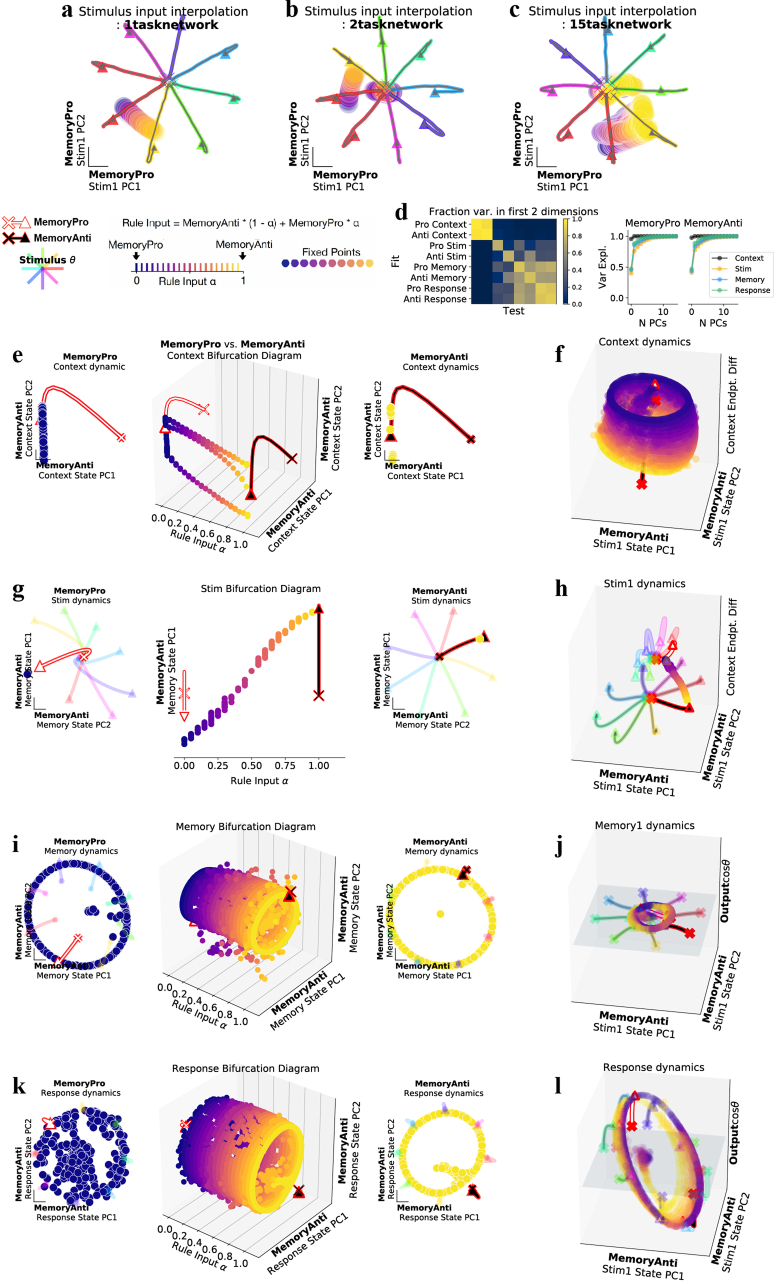
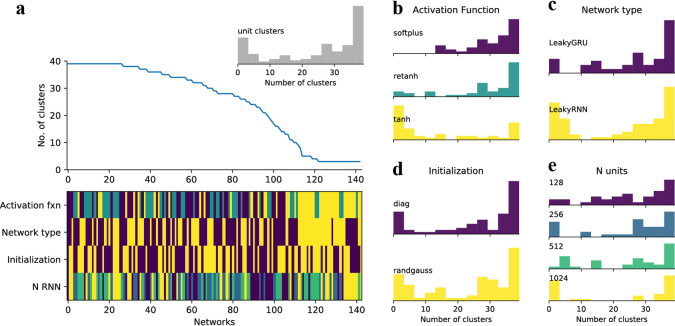
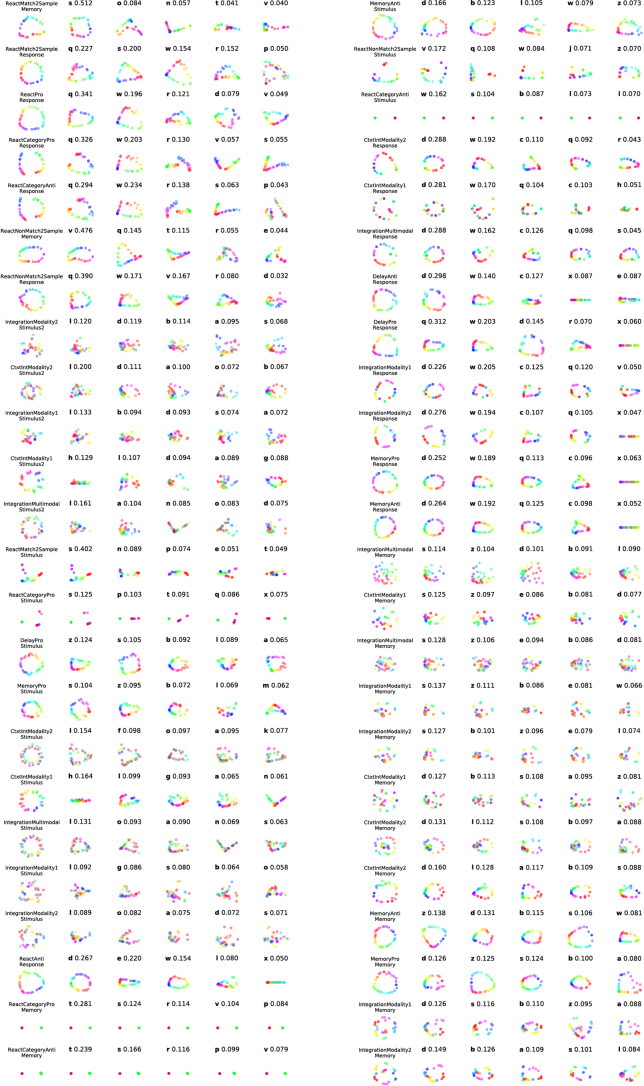
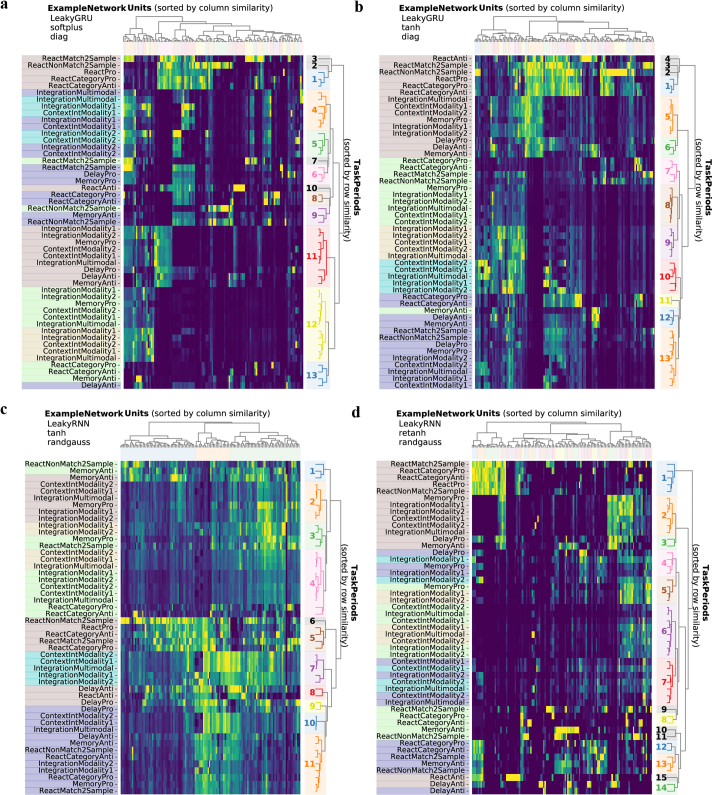
Verification
Claims the paper makes
The claims and statistics of this paper haven’t been checked yet.
Run the check — free, no account needed. It reads the open-access text and checks the sources it cites.
Claims other papers make about this one
Each is checked against this paper’s own text: does it say what the citing paper says it does?
The cited source says what the claim attributes to it.
In the citing paper
“For example, RNNs trained in many computational tasks develop modular neural populations and dynamical motifs that are re-used across tasks (Driscoll et al., 2022; Yang et al., 2019).”
From Remapping in a recurrent neural network model of navigation and context inference (2023) · cites this paper as Driscoll et al., 2022
In the citing paper
“neurons in the medial entorhinal cortex typically represent one or more features such as spatial position, heading direction, and environmental landmarks and are therefore thought to support navigation.[15][16][17][18][19][20][21][22]”
From Remapping in a recurrent neural network model of navigation and context inference (2023) · cites this paper as [17]
Self-check
Percentages, sums and reported differences re-computed from the paper’s own numbers.
The self-check needs the paper’s full text.
Citations
Cites
Adam: A Method for Stochastic Optimization
Kingma, D. P., & Ba, J. (2014) · arXiv · doi:10.48550/arxiv.1412.6980 · Cited by 98,946
Human-level control through deep reinforcement learning
Mnih, V., Kavukcuoglu, K., Silver, D., Rusu, A. A., Veness, J., Bellemare, M. G., Graves, A., Riedmiller, M., Fidjeland, A. K., Ostrovski, G., et al. (2015) · Nature · doi:10.1038/nature14236 · Cited by 30,357
Hierarchical Grouping to Optimize an Objective Function
Ward, J. H. (1963) · Journal of the American Statistical Association · doi:10.1080/01621459.1963.10500845 · Cited by 21,341
Mastering the game of Go with deep neural networks and tree search
Silver, D., Huang, A., Maddison, C. J., Guez, A., Sifre, L., van den Driessche, G., Schrittwieser, J., Antonoglou, I., Panneershelvam, V., Lanctot, M., et al. (2016) · Nature · doi:10.1038/nature16961 · Cited by 15,612
Nonlinear Dynamics and Chaos: With Applications to Physics, Biology, Chemistry, and Engineering
Strogatz, S. H., Friedman, M. J., Mallinckrodt, A. J., & McKay, S. R. (1994) · Computers in Physics · doi:10.1063/1.4823332 · Cited by 4,654
A general reinforcement learning algorithm that masters chess, shogi, and Go through self-play
Silver, D., Hubert, T., Schrittwieser, J., Antonoglou, I., Lai, M., Guez, A., Lanctot, M., Sifre, L., Kumaran, D., Graepel, T., et al. (2018) · Science · doi:10.1126/science.aar6404 · Cited by 3,562 · cited 1×
“While artificial systems are capable of outperforming humans in specific complex cognitive tasks 1–3 , they so far lack flexibility for rapid learning and task switching.”
BackgroundHierarchical Grouping to Optimize an Objective Function
Ward, J. H. (1963) · Journal of the American Statistical Association · doi:10.2307/2282967 · Cited by 3,294
Building machines that learn and think like people
Lake, B. M., Ullman, T. D., Tenenbaum, J. B., & Gershman, S. J. (2017) · Behavioral and Brain Sciences · doi:10.1017/s0140525x16001837 · Cited by 2,550
Performance-optimized hierarchical models predict neural responses in higher visual cortex
Yamins, D. L. K., Hong, H., Cadieu, C. F., Solomon, E. A., Seibert, D., & DiCarlo, J. J. (2014) · Proceedings of the National Academy of Sciences · doi:10.1073/pnas.1403112111 · Cited by 1,924
Context-dependent computation by recurrent dynamics in prefrontal cortex
Mante, V., Sussillo, D., Shenoy, K. V., & Newsome, W. T. (2013) · Nature · doi:10.1038/nature12742 · Cited by 1,910
Self-citation
Research works printed but not linked: 5
- 1989, in Psychology of Learning and Motivation, 24, 109
- Goudar, V. , Peysakhovich, B. , Freedman, D. J. & Buffalo, E. A. Elucidating the neural mechanisms of Learning-to-Learn. bioRxiv (2021).
- 2019, Task representations in neural networks trained to perform many cognitive tasks, Nature neuroscience, 22, 297, 10.1038/s41593-018-0310-2 · DOI · Paper page
- 2018, Fixedpoint?nder: A tensor?ow toolbox for identifying and characterizing ?xed points in recurrent neural networks, Journal of Open Source Software, 3, 1003, 10.21105/joss.01003 · DOI
- 10.1038/nature12742 · DOI
Cited by
Sorted by citations
Items 201–213 of 213
Decoding behavior with minimal and interpretable agent models
Nicoletti, G., & Celani, A. (2026) · PLoS Computational Biology · doi:10.1371/journal.pcbi.1014585
Bu, X., Jiang, H., Guo, T., Li, H., & Chen, Y. (2026) · Biomimetics · doi:10.3390/biomimetics11080569
Necessity and plurality of neural dynamics under ROSE
Murphy, E. (2026) · Cognitive Neuroscience · doi:10.1080/17588928.2026.2718716
In Search of Unity in Diversity: A Unifying View on Emergence at ScalesPreprint
Karki, S. (2026) · SSRN Electronic Journal · doi:10.2139/ssrn.7459642
Discrete synaptic states and context-modulated readouts support continual learningPreprint
Gao, Y., Mihalaş, Ş., & Turcu, D. (2026) · bioRxiv (Cold Spring Harbor Laboratory) · doi:10.64898/2026.09.11.750704
Condruz, N., Bulygin, I., Chintaluri, C., & Vogels, T. P. (2026) · bioRxiv (Cold Spring Harbor Laboratory) · doi:10.64898/2026.09.14.751508
Exponentiated gradient learning yields brain-like synaptic distributions
Cornford, J. H., Pogodin, R., Ghosh, A., Sheng, K., Bicknell, B. A., Codol, O., Li, P., Clark, B. A., Lajoie, G., & Richards, B. A. (2026) · Neuron · doi:10.1016/j.neuron.2026.08.026
Diversity in the impact of heterogeneities on recurrent networks performing a cognitive task
Santhosh, A., & Narayanan, R. (2026) · Patterns · doi:10.1016/j.patter.2026.101685 · Cited by 4
What We (Do and Don’t) Mean When We Talk About Computational Implementation
Williams, D. J. (2026) · MetaScientia: Journal of the History and Philosophy of Science · doi:10.68469/xbyz2h18
Tuned inhibitory control of neuronal firing thresholds explains predictive sensorimotor behavior
Ahn, J., Kim, S., Park, J., Woo, S., Sohn, H., & Lee, S. (2026) · Communications Biology · doi:10.1038/s42003-026-11082-2
A split attractor design for rapidly writing a navigational goal
Lanz, A. J., Kathman, N. D., Hao, E., Ermentrout, B., & Nagel, K. I. (2026) · Nature · doi:10.1038/s41586-026-11144-9 · Cited by 6
Neural circuit mechanisms for multi-taskingPreprint
Beirán, M., Marschall, O., Zemlianova, K. O., Bernardo, A. D., Ostojic, S., & Litwin-Kumar, A. (2026) · bioRxiv (Cold Spring Harbor Laboratory) · doi:10.64898/2026.10.01.755960
Versteeg, C., McCart, J., Ostrow, M., Zoltowski, D. M., Washington, C. B., Driscoll, L. N., Codol, O., Michaels, J. A., Linderman, S. W., Sussillo, D., et al. (2026) · PLoS Computational Biology · doi:10.1371/journal.pcbi.1014755 · Cited by 4
Self-citation
Metadata
- Authors
- Driscoll, L., Shenoy, K., & Sussillo, D.
- Affiliations
- Stanford University (US)
- Howard Hughes Medical Institute (US)
- Corresponding author
- Driscoll, Laura
- Venue
- Nature Neuroscience
- Publisher
- openRxiv
- Published
- 2022-08-15
- Volume
- 27
- Issue
- 7
- Pages
- 1349-1363
- ISSN
- 1097-6256 (ISSN-L)
- PMC
- PMC11239504
- OpenAlex
- W4400462656
- Cited by
- 217
- References
- 62
- Citations by year
- 2026: 78 · 2025: 58 · 2024: 45 · 2023: 31 · 2022: 4
- FWCI
- 26.71
- Type
- journal article
- Language
- en
- Open access
- hybrid
- doi.org
- Licence
- cc-by
- Locations
- Nature Neuroscience (publishedVersion, cc-by)
- bioRxiv (Cold Spring Harbor Laboratory) (acceptedVersion)
- PubMed Central (publishedVersion, cc-by)
- PubMed (publishedVersion)
- Funders
- Simons Foundation (543049, 1155867, 543045)
- Topics
- Physical Sciences › Computer Science › Artificial Intelligence › Neural Networks and Applications
- Life Sciences › Neuroscience › Cognitive Neuroscience › Neural dynamics and brain function
- Life Sciences › Neuroscience › Cognitive Neuroscience › Memory and Neural Mechanisms
- Keywords
- recurrent neural networks, multi-task learning, modular computation, ring attractor, attractor dynamics, decision boundaries, transfer learning
- MeSH terms
- Algorithms, Animals, Learning, Models, Neurological, Nerve Net, Neurons, Neural Networks, Computer
About these checks
Registry, retraction, Cites and statistics results are computed, not judged, with one exception: a printed reference that no index lists is read once by a model before it counts as a citation error. Claims are extracted by a model and kept only when their quote appears verbatim in the text; each cited source is then checked, with a model’s help, for whether it says what the claim relies on. Those verdicts can be wrong — read the claim’s quote and the cited source before relying on one.
Statistics and arithmetic are recomputed, not judged.
Confidence bands are shown only for fields calibrated on our annotated test set. None is calibrated yet, so no band is shown.
What counts as a claim ›How we measure confidence ›How we check this ›
Are you an author, or do you see a problem with this page? Request a review
