

The DOI matches its Crossref record; 64 of the 64 references it cites were found in a registry or an index.
Flexible multitask computation in recurrent networks utilizes shared dynamical motifs
Open accessAbstract
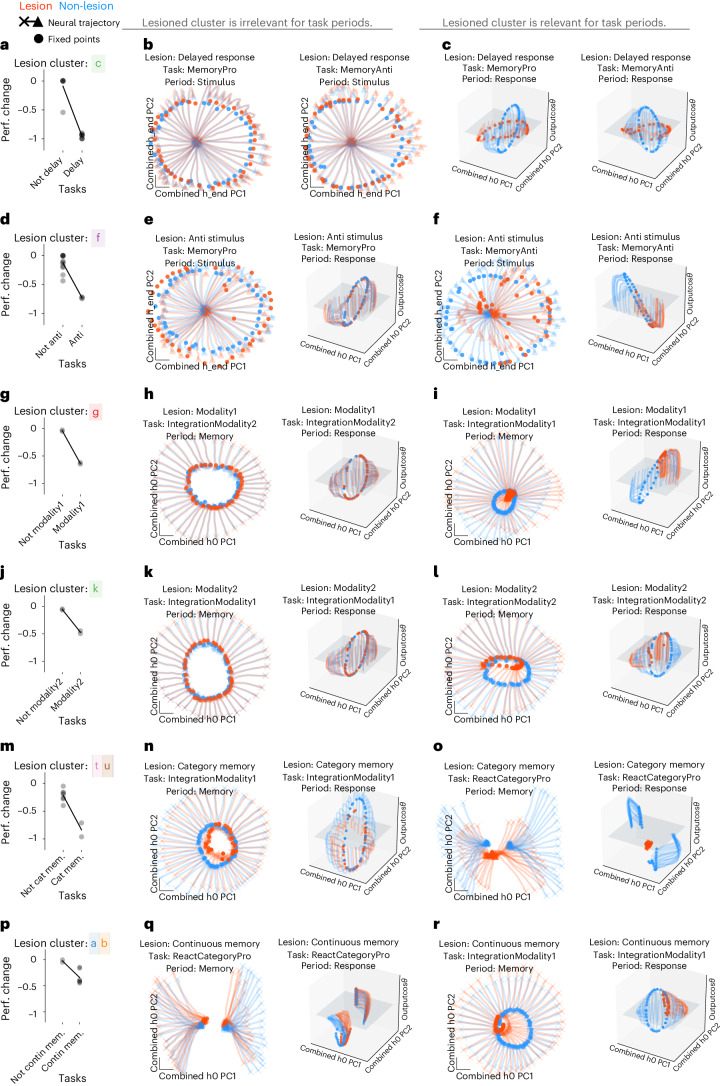
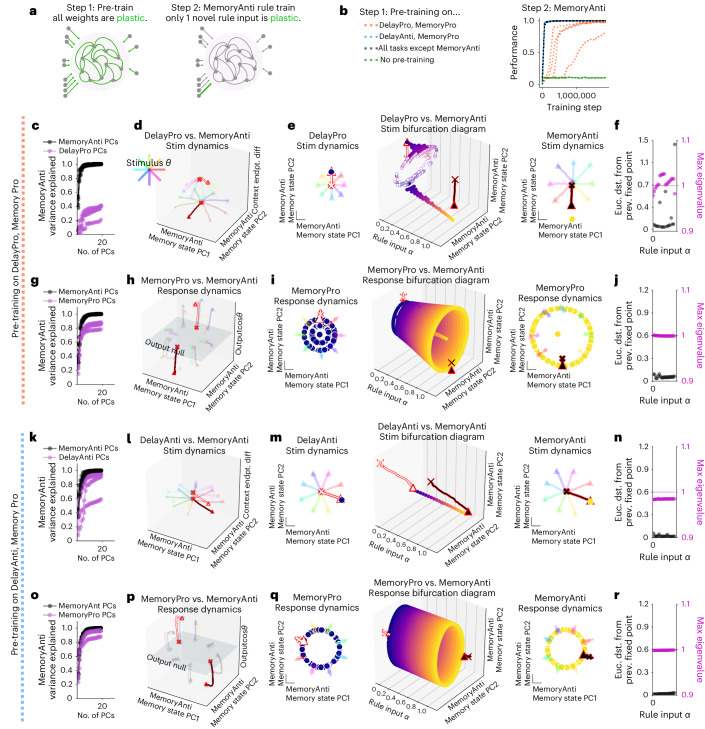
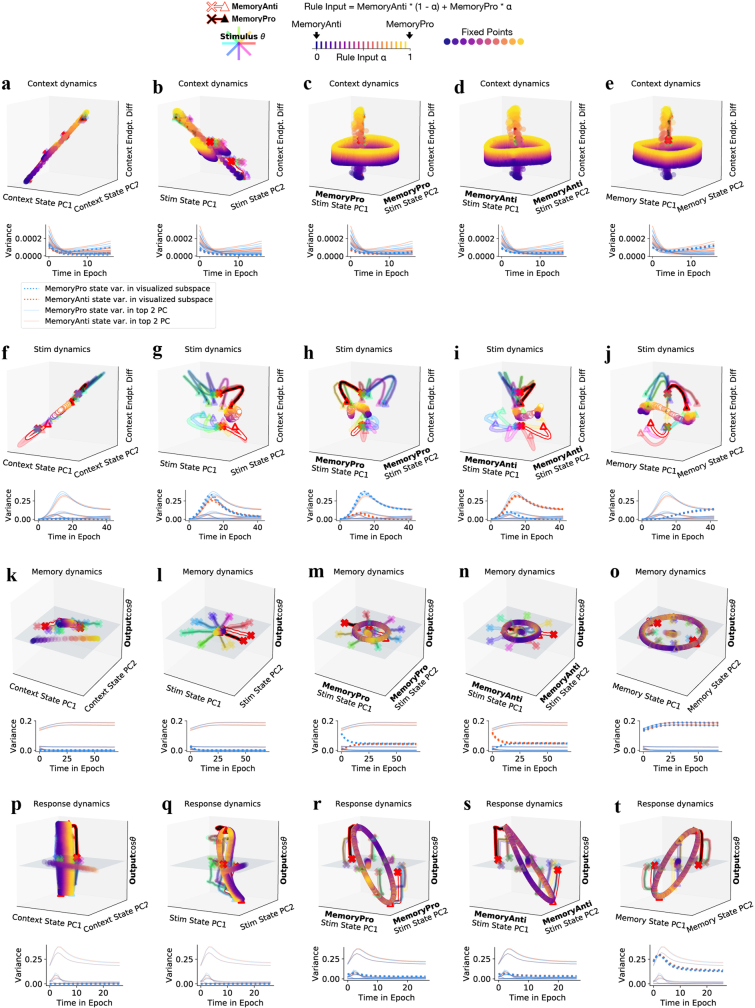
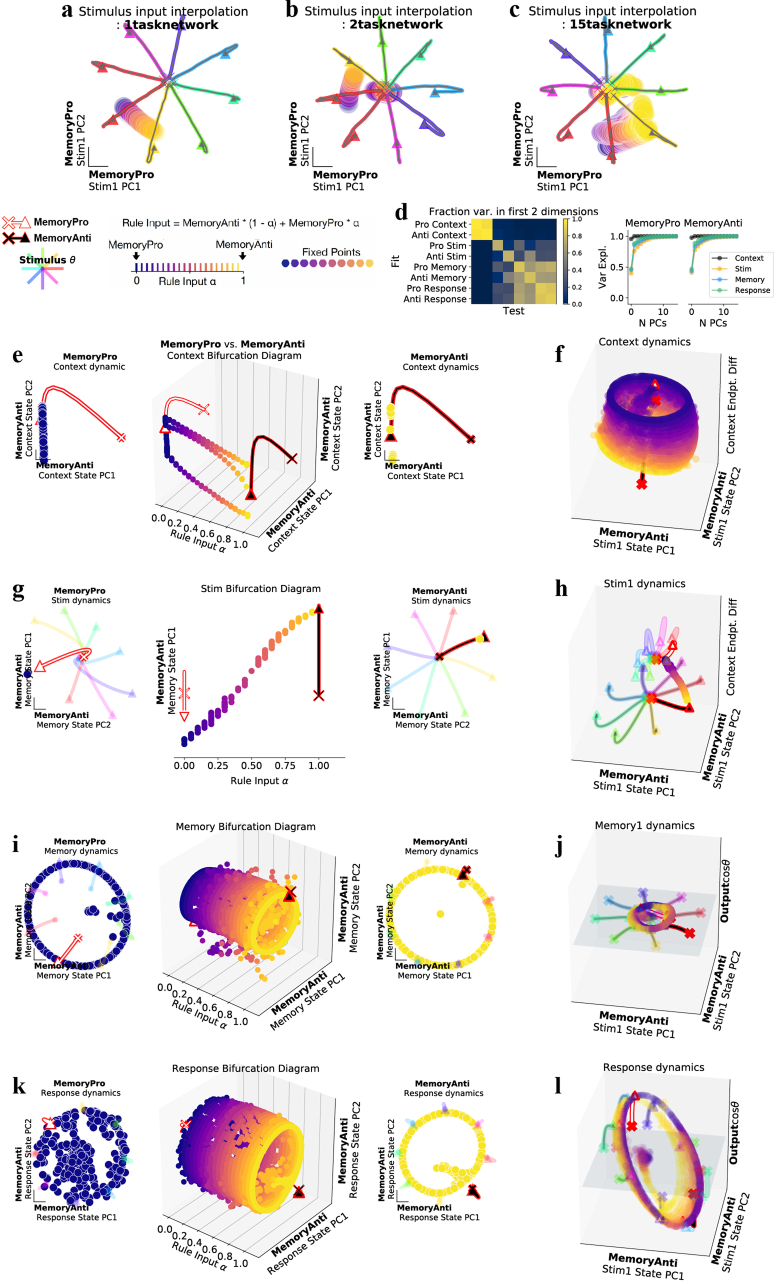
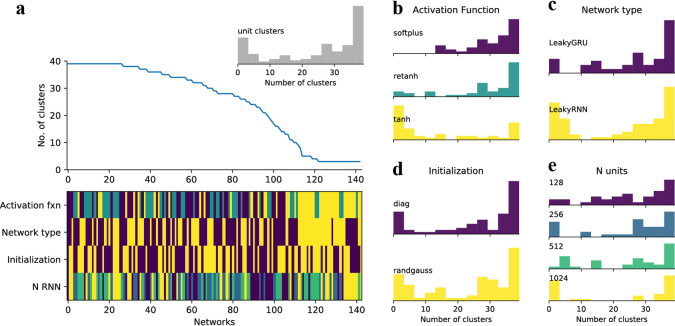
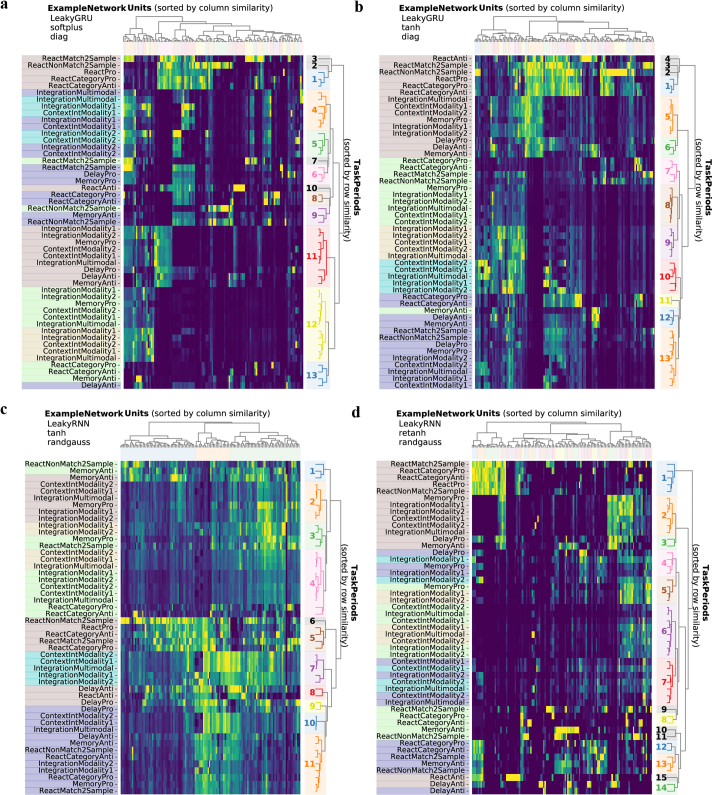
Flexible computation is a hallmark of intelligent behavior. Yet, little is known about how neural networks contextually reconfigure for different computations. Humans are able to perform a new task without extensive training, presumably through the composition of elementary processes that were previously learned. Cognitive scientists have long hypothesized the possibility of a compositional neural code, where complex neural computations are made up of constituent components; however, the neural substrate underlying this structure remains elusive in biological and artificial neural networks. Here we identified an algorithmic neural substrate for compositional computation through the study of multitasking artificial recurrent neural networks. Dynamical systems analyses of networks revealed learned computational strategies that mirrored the modular subtask structure of the task-set used for training. Dynamical motifs such as attractors, decision boundaries and rotations were reused across different task computations. For example, tasks that required memory of a continuous circular variable repurposed the same ring attractor. We show that dynamical motifs are implemented by clusters of units and are reused across different contexts, allowing for flexibility and generalization of previously learned computation. Lesioning these clusters resulted in modular effects on network performance: a lesion that destroyed one dynamical motif only minimally perturbed the structure of other dynamical motifs. Finally, modular dynamical motifs could be reconfigured for fast transfer learning. After slow initial learning of dynamical motifs, a subsequent faster stage of learning reconfigured motifs to perform novel tasks. This work contributes to a more fundamental understanding of compositional computation underlying flexible general intelligence in neural systems. We present a conceptual framework that establishes dynamical motifs as a fundamental unit of computation, intermediate between the neuron and the network. As more whole brain imaging studies record neural activity from multiple specialized systems simultaneously, the framework of dynamical motifs will guide questions about specialization and generalization across brain regions.
Overview
The claims and statistics of this paper haven’t been checked yet.
Run the check — free, no account needed. It reads the open-access text and checks the sources it cites.
Integrity signals
Registry
Cites
Statistics
Figures
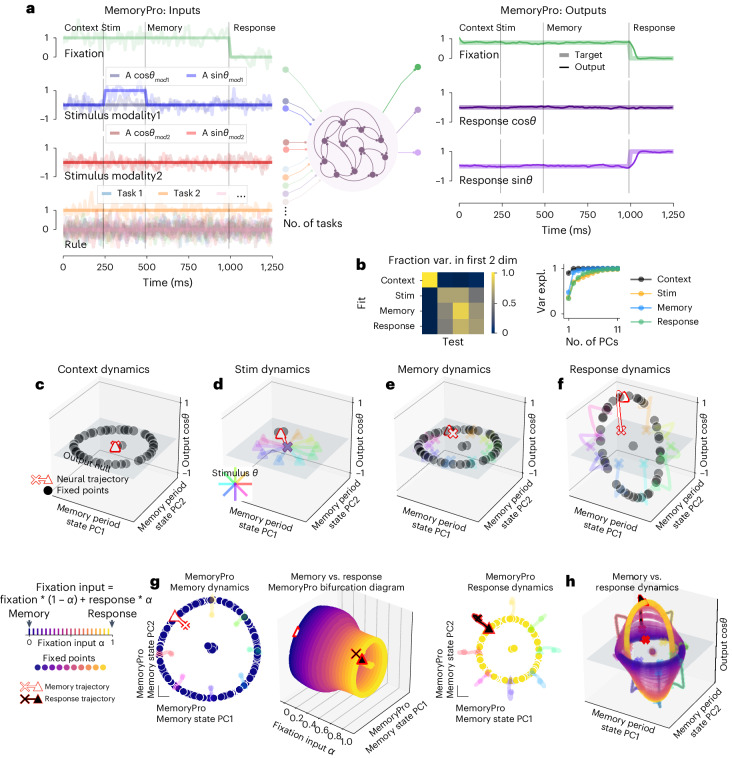
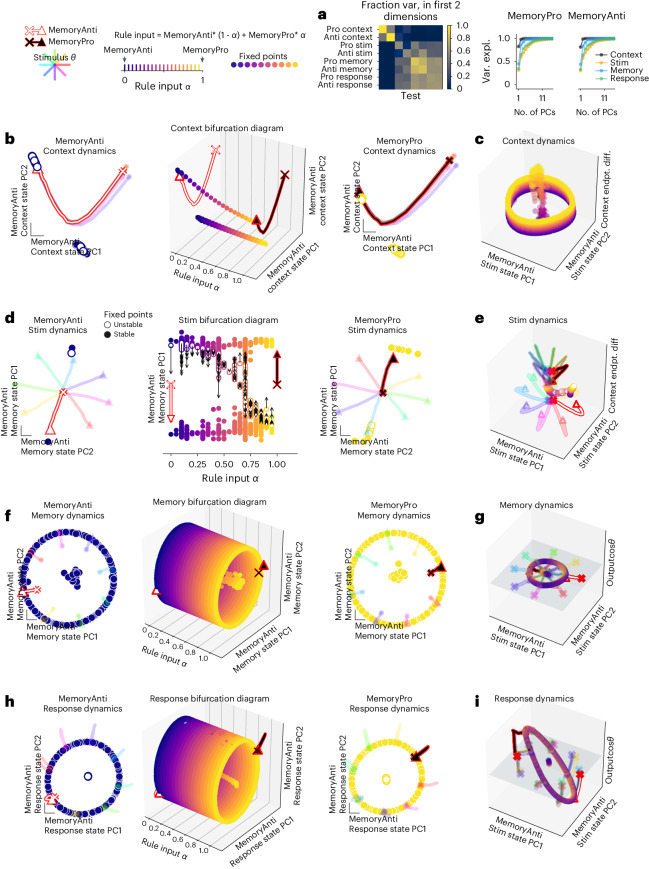
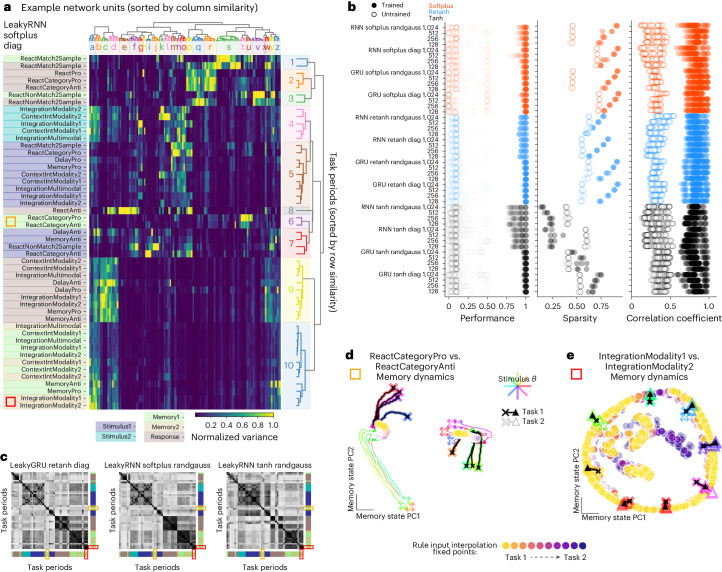
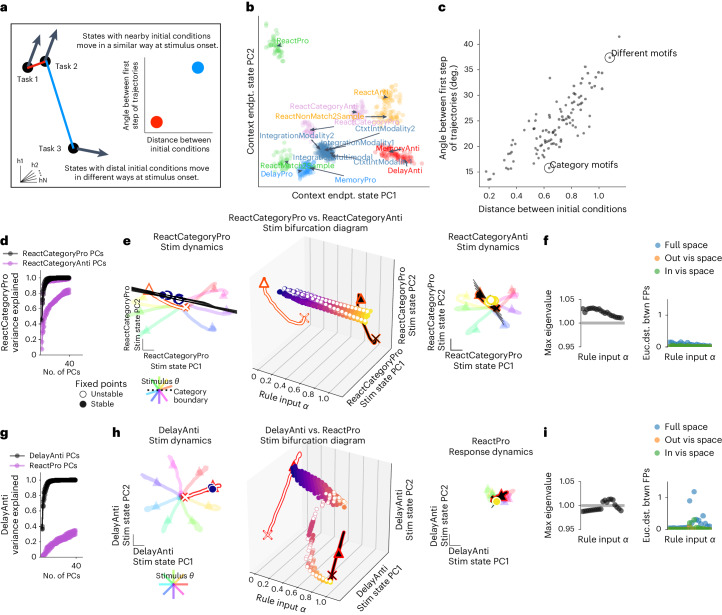
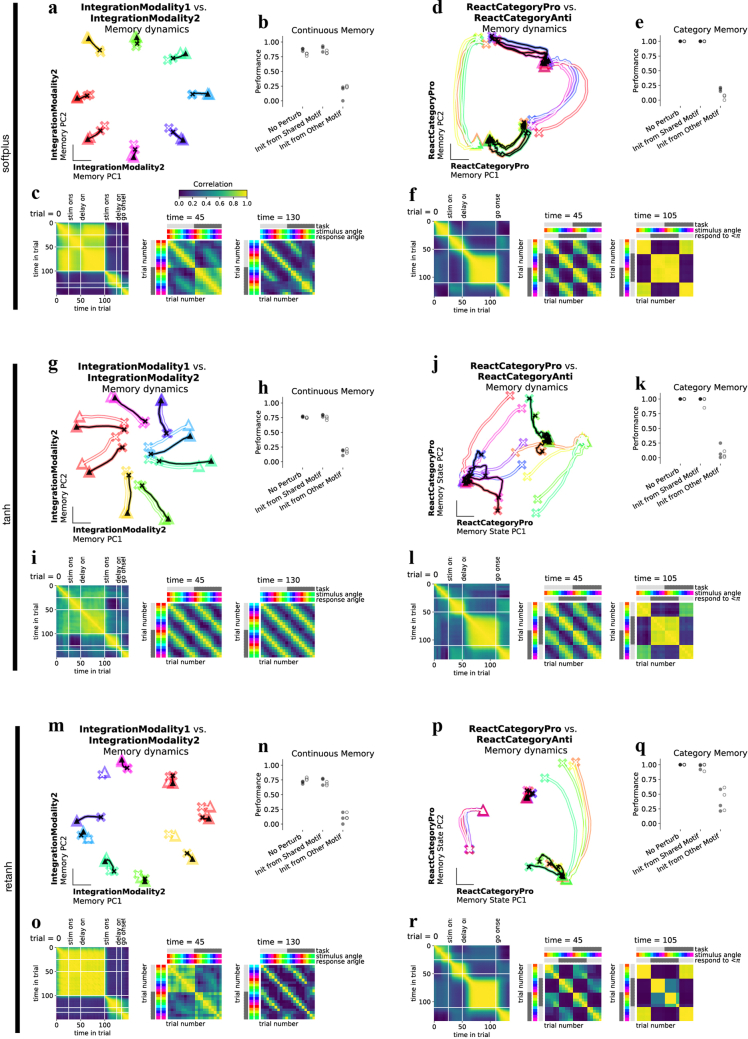
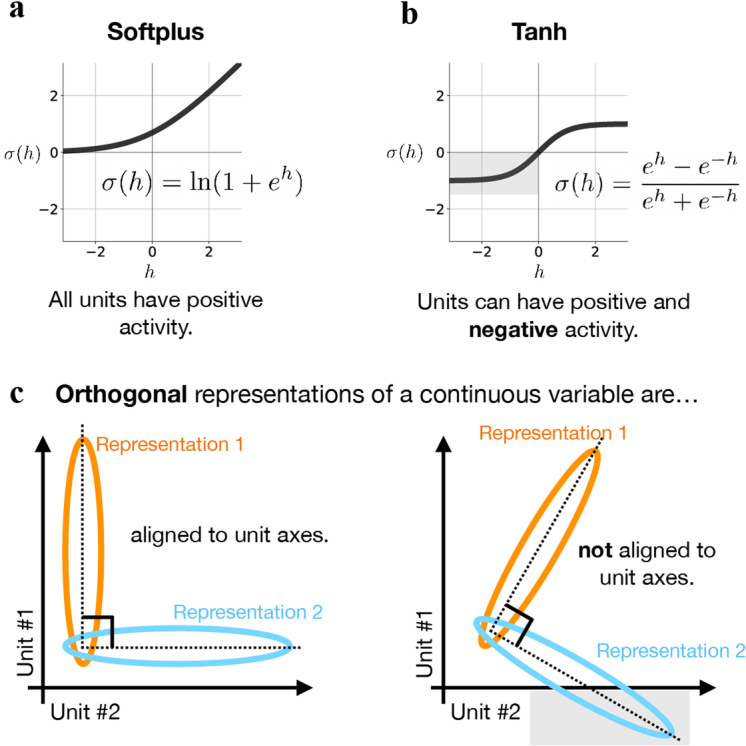
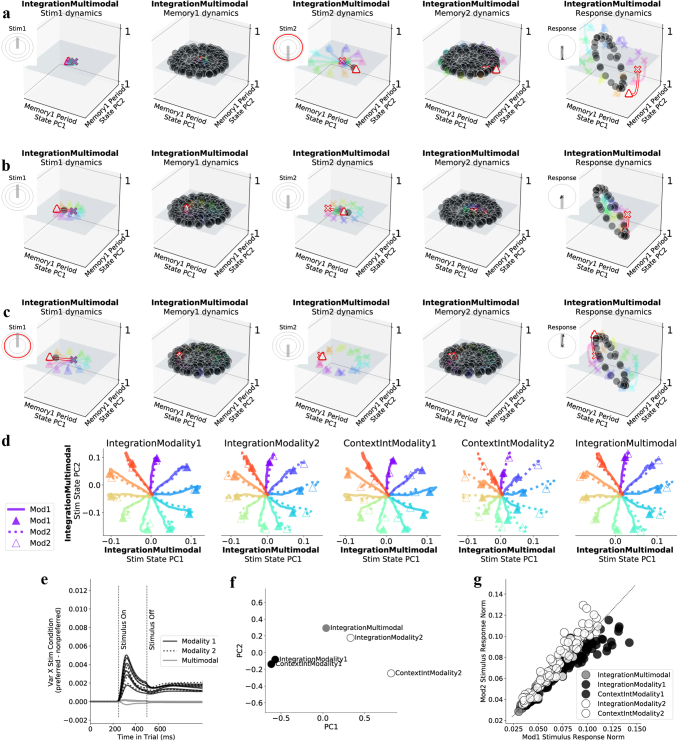
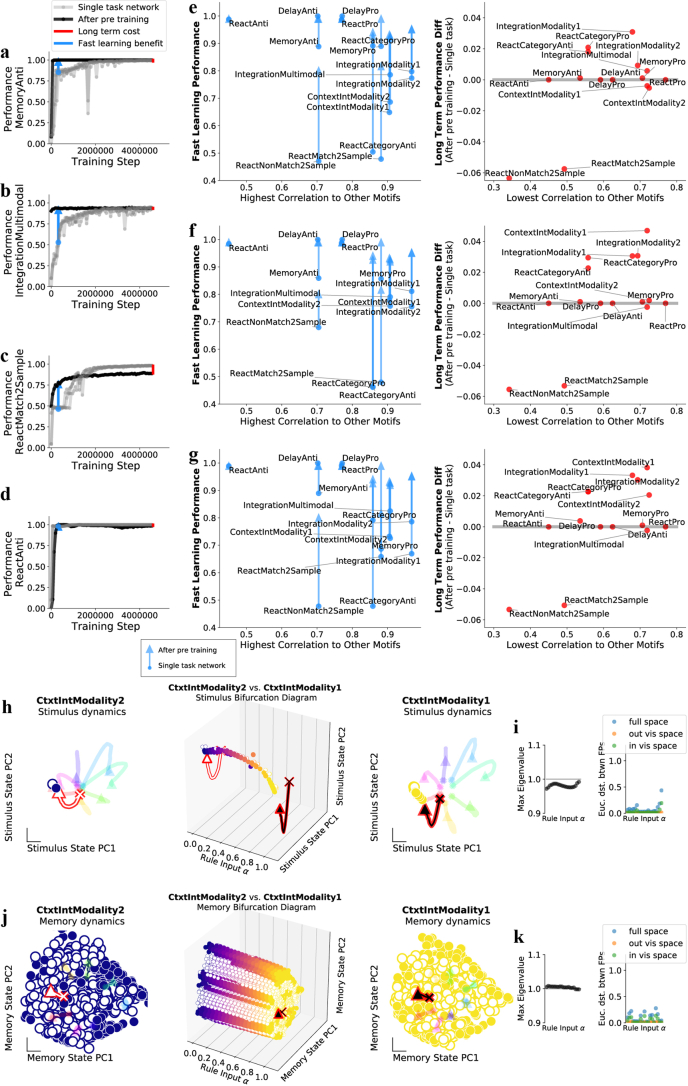
Verification
Claims the paper makes
The claims and statistics of this paper haven’t been checked yet.
Run the check — free, no account needed. It reads the open-access text and checks the sources it cites.
Claims other papers make about this one
Each is checked against this paper’s own text: does it say what the citing paper says it does?
The cited source says what the claim attributes to it.
In the citing paper
“For example, RNNs trained in many computational tasks develop modular neural populations and dynamical motifs that are re-used across tasks (Driscoll et al., 2022; Yang et al., 2019).”
From Remapping in a recurrent neural network model of navigation and context inference (2023) · cites this paper as Driscoll et al., 2022
In the citing paper
“neurons in the medial entorhinal cortex typically represent one or more features such as spatial position, heading direction, and environmental landmarks and are therefore thought to support navigation.[15][16][17][18][19][20][21][22]”
From Remapping in a recurrent neural network model of navigation and context inference (2023) · cites this paper as [17]
Self-check
Percentages, sums and reported differences re-computed from the paper’s own numbers.
The self-check needs the paper’s full text.
Citations
Cites
Adam: A Method for Stochastic Optimization
Kingma, D. P., & Ba, J. (2014) · arXiv · doi:10.48550/arxiv.1412.6980 · Cited by 98,946
Human-level control through deep reinforcement learning
Mnih, V., Kavukcuoglu, K., Silver, D., Rusu, A. A., Veness, J., Bellemare, M. G., Graves, A., Riedmiller, M., Fidjeland, A. K., Ostrovski, G., et al. (2015) · Nature · doi:10.1038/nature14236 · Cited by 30,357
Hierarchical Grouping to Optimize an Objective Function
Ward, J. H. (1963) · Journal of the American Statistical Association · doi:10.1080/01621459.1963.10500845 · Cited by 21,341
Mastering the game of Go with deep neural networks and tree search
Silver, D., Huang, A., Maddison, C. J., Guez, A., Sifre, L., van den Driessche, G., Schrittwieser, J., Antonoglou, I., Panneershelvam, V., Lanctot, M., et al. (2016) · Nature · doi:10.1038/nature16961 · Cited by 15,612
Nonlinear Dynamics and Chaos: With Applications to Physics, Biology, Chemistry, and Engineering
Strogatz, S. H., Friedman, M. J., Mallinckrodt, A. J., & McKay, S. R. (1994) · Computers in Physics · doi:10.1063/1.4823332 · Cited by 4,654
A general reinforcement learning algorithm that masters chess, shogi, and Go through self-play
Silver, D., Hubert, T., Schrittwieser, J., Antonoglou, I., Lai, M., Guez, A., Lanctot, M., Sifre, L., Kumaran, D., Graepel, T., et al. (2018) · Science · doi:10.1126/science.aar6404 · Cited by 3,562 · cited 1×
“While artificial systems are capable of outperforming humans in specific complex cognitive tasks 1–3 , they so far lack flexibility for rapid learning and task switching.”
BackgroundHierarchical Grouping to Optimize an Objective Function
Ward, J. H. (1963) · Journal of the American Statistical Association · doi:10.2307/2282967 · Cited by 3,294
Building machines that learn and think like people
Lake, B. M., Ullman, T. D., Tenenbaum, J. B., & Gershman, S. J. (2017) · Behavioral and Brain Sciences · doi:10.1017/s0140525x16001837 · Cited by 2,550
Performance-optimized hierarchical models predict neural responses in higher visual cortex
Yamins, D. L. K., Hong, H., Cadieu, C. F., Solomon, E. A., Seibert, D., & DiCarlo, J. J. (2014) · Proceedings of the National Academy of Sciences · doi:10.1073/pnas.1403112111 · Cited by 1,924
Context-dependent computation by recurrent dynamics in prefrontal cortex
Mante, V., Sussillo, D., Shenoy, K. V., & Newsome, W. T. (2013) · Nature · doi:10.1038/nature12742 · Cited by 1,910
Self-citationMulti-task connectivity reveals flexible hubs for adaptive task control
Cole, M. W., Reynolds, J. R., Power, J. D., Repovs, G., Anticevic, A., & Braver, T. S. (2013) · Nature Neuroscience · doi:10.1038/nn.3470 · Cited by 1,704
Hensch, T. K. (2004) · Annual Review of Neuroscience · doi:10.1146/annurev.neuro.27.070203.144327 · Cited by 1,300
Universally Sloppy Parameter Sensitivities in Systems Biology Models
Gutenkunst, R. N., Waterfall, J. J., Casey, F. P., Brown, K. S., Myers, C. R., & Sethna, J. P. (2007) · PLoS Computational Biology · doi:10.1371/journal.pcbi.0030189 · Cited by 1,261
Variability, compensation and homeostasis in neuron and network function
Marder, E., & Goaillard, J.-M. (2006) · Nature Reviews Neuroscience · doi:10.1038/nrn1949 · Cited by 1,212
Pre-trained models: Past, present and future
Han, X., Zhang, Z., Ding, N., Gu, Y., Liu, X., Huo, Y., Qiu, J., Yao, Y., Zhang, A., Zhang, L., et al. (2021) · AI Open · doi:10.1016/j.aiopen.2021.08.002 · Cited by 994
Cortical activity in the null space: permitting preparation without movement
Kaufman, M. T., Churchland, M. M., Ryu, S. I., & Shenoy, K. V. (2014) · Nature Neuroscience · doi:10.1038/nn.3643 · Cited by 831
Self-citationHierarchical organization of cortical and thalamic connectivity
Harris, J. A., Mihalas, S., Hirokawa, K. E., Whitesell, J. D., Choi, H., Bernard, A., Bohn, P., Caldejon, S., Casal, L., Cho, A., et al. (2019) · Nature · doi:10.1038/s41586-019-1716-z · Cited by 785
Neural constraints on learning
Sadtler, P. T., Quick, K. M., Golub, M. D., Chase, S. M., Ryu, S. I., Tyler-Kabara, E. C., Yu, B. M., & Batista, A. P. (2014) · Nature · doi:10.1038/nature13665 · Cited by 713
A neural network that finds a naturalistic solution for the production of muscle activity
Sussillo, D., Churchland, M. M., Kaufman, M. T., & Shenoy, K. V. (2015) · Nature Neuroscience · doi:10.1038/nn.4042 · Cited by 598
Self-citationOpening the black box: low-dimensional dynamics in high-dimensional recurrent neural networks
Sussillo, D., & Barak, O. (2013) · Neural Computation · doi:10.1162/neco_a_00409 · Cited by 575
Self-citationTask representations in neural networks trained to perform many cognitive tasks
Yang, G. R., Joglekar, M. R., Song, H. F., Newsome, W. T., & Wang, X.-J. (2019) · Nature Neuroscience · doi:10.1038/s41593-018-0310-2 · Cited by 549
Robust timing and motor patterns by taming chaos in recurrent neural networks
Laje, R., & Buonomano, D. V. (2013) · Nature Neuroscience · doi:10.1038/nn.3405 · Cited by 454
Flexible timing by temporal scaling of cortical responses
Wang, J., Narain, D., Hosseini, E. A., & Jazayeri, M. (2017) · Nature Neuroscience · doi:10.1038/s41593-017-0028-6 · Cited by 425
Linking Connectivity, Dynamics, and Computations in Low-Rank Recurrent Neural Networks
Mastrogiuseppe, F., & Ostojic, S. (2018) · Neuron · doi:10.1016/j.neuron.2018.07.003 · Cited by 413
Motor Cortex Embeds Muscle-like Commands in an Untangled Population Response
Russo, A. A., Bittner, S. R., Perkins, S. M., Seely, J., London, B. M., Lara, A. H., Miri, A., Marshall, N. J., Kohn, A., Jessell, T. M., et al. (2018) · Neuron · doi:10.1016/j.neuron.2018.01.004 · Cited by 309
Learning by neural reassociation
Golub, M. D., Sadtler, P. T., Oby, E. R., Quick, K. M., Ryu, S. I., Tyler‐Kabara, E. C., Batista, A. P., Chase, S. M., & Yu, B. M. (2018) · Nature Neuroscience · doi:10.1038/s41593-018-0095-3 · Cited by 281
Alleviating catastrophic forgetting using context-dependent gating and synaptic stabilization
Masse, N. Y., Grant, G. D., & Freedman, D. J. (2018) · Proceedings of the National Academy of Sciences · doi:10.1073/pnas.1803839115 · Cited by 278
Flexible Sensorimotor Computations through Rapid Reconfiguration of Cortical Dynamics
Remington, E. D., Narain, D., Hosseini, E. A., & Jazayeri, M. (2018) · Neuron · doi:10.1016/j.neuron.2018.05.020 · Cited by 257
Task-Dependent Changes in the Large-Scale Dynamics and Necessity of Cortical Regions
Pinto, L., Rajan, K., DePasquale, B., Thiberge, S. Y., Tank, D. W., & Brody, C. D. (2019) · Neuron · doi:10.1016/j.neuron.2019.08.025 · Cited by 244
The role of population structure in computations through neural dynamics
Dubreuil, A., Valente, A., Beiran, M., Mastrogiuseppe, F., & Ostojic, S. (2022) · Nature Neuroscience · doi:10.1038/s41593-022-01088-4 · Cited by 237
New neural activity patterns emerge with long-term learning
Oby, E. R., Golub, M. D., Hennig, J. A., Degenhart, A. D., Tyler-Kabara, E. C., Yu, B. M., Chase, S. M., & Batista, A. P. (2019) · Proceedings of the National Academy of Sciences · doi:10.1073/pnas.1820296116 · Cited by 221 · cited 1×
“We hypothesize that this two-stage process of slow and fast learning could provide some intuition for off-and on-manifold brain-machine interface learning results in nonhuman primates 33–35 .”
BackgroundSavings upon Re-Aiming in Visuomotor Adaptation
Morehead, J. R., Qasim, S. E., Crossley, M. J., & Ivry, R. B. (2015) · Journal of Neuroscience · doi:10.1523/jneurosci.1046-15.2015 · Cited by 215
Concepts and Compositionality: In Search of the Brain's Language of Thought
Frankland, S., & Greene, J. D. (2019) · Annual Review of Psychology · doi:10.1146/annurev-psych-122216-011829 · Cited by 198
Reward-based training of recurrent neural networks for cognitive and value-based tasks
Song, H., Yang, G. R., & Wang, X. (2017) · eLife · doi:10.7554/elife.21492 · Cited by 175
Linguistic generalization and compositionality in modern artificial neural networks
Baroni, M. (2019) · Philosophical Transactions of the Royal Society B Biological Sciences · doi:10.1098/rstb.2019.0307 · Cited by 174
From fixed points to chaos: Three models of delayed discrimination
Barak, O., Sussillo, D., Romo, R., Tsodyks, M. V., & Abbott, L. F. (2013) · Progress in Neurobiology · doi:10.1016/j.pneurobio.2013.02.002 · Cited by 172
Self-citationHand Knob Area of Premotor Cortex Represents the Whole Body in a Compositional Way
Willett, F. R., Deo, D. R., Avansino, D. T., Rezaii, P., Hochberg, L. R., Henderson, J. M., & Shenoy, K. V. (2020) · Cell · doi:10.1016/j.cell.2020.02.043 · Cited by 171
Self-citationCompositionality of Rule Representations in Human Prefrontal Cortex
Reverberi, C., Görgen, K., & Haynes, J. (2011) · Cerebral Cortex · doi:10.1093/cercor/bhr200 · Cited by 152
Carnevale, F., de Lafuente, V., Romo, R., Barak, O., & Parga, N. (2015) · Neuron · doi:10.1016/j.neuron.2015.04.014 · Cited by 122
Universality and individuality in neural dynamics across large populations of recurrent networks
Maheswaranathan, N., Williams, A. H., Golub, M. D., Ganguli, S., & Sussillo, D. (2019) · PubMed · doi:10.48550/arxiv.1907.08549 · Cited by 103
Self-citationShaping dynamics with multiple populations in low-rank recurrent networks
Beiran, M., Dubreuil, A., Valente, A., Mastrogiuseppe, F., & Ostojic, S. (2021) · Neural Computation · doi:10.1162/neco_a_01381 · Cited by 92
Saxena, S., Russo, A. A., Cunningham, J. P., & Churchland, M. M. (2022) · eLife · doi:10.7554/elife.67620 · Cited by 85
Theory of the Multiregional Neocortex: Large-Scale Neural Dynamics and Distributed Cognition
Wang, X.-J. (2022) · Annual Review of Neuroscience · doi:10.1146/annurev-neuro-110920-035434 · Cited by 83
Computational models in the age of large datasets
O’Leary, T., Sutton, A. C., & Marder, E. E. (2015) · Current Opinion in Neurobiology · doi:10.1016/j.conb.2015.01.006 · Cited by 79
Gated Recurrent Units Viewed Through the Lens of Continuous Time Dynamical Systems
Jordan, I. D., Sokół, P., & Park, I. M. (2021) · Frontiers in Computational Neuroscience · doi:10.3389/fncom.2021.678158 · Cited by 70
Modularity and robustness of frontal cortical networks
Chen, G., Kang, B., Lindsey, J. W., Druckmann, S., & Li, N. (2021) · Cell · doi:10.1016/j.cell.2021.05.026 · Cited by 70
Shaping Dynamics With Multiple Populations in Low-Rank Recurrent Networks
Beiran, M., Dubreuil, A., Valente, A., Mastrogiuseppe, F., & Ostojic, S. (2021) · UCL Discovery (University College London) · Cited by 58
Goudar, V., Peysakhovich, B., Freedman, D. J., Buffalo, E. A., & Wang, X. (2023) · Nature Neuroscience · doi:10.1038/s41593-023-01293-9 · Cited by 58
How to study the neural mechanisms of multiple tasks
Yang, G. R., Cole, M. W., & Rajan, K. (2019) · Current Opinion in Behavioral Sciences · doi:10.1016/j.cobeha.2019.07.001 · Cited by 56
Natural language instructions induce compositional generalization in networks of neurons
Riveland, R., & Pouget, A. (2024) · Nature Neuroscience · doi:10.1038/s41593-024-01607-5 · Cited by 53
A Dataset and Architecture for Visual Reasoning with a Working Memory
Yang, G. R., Ganichev, I., Wang, X., Shlens, J., & Sussillo, D. (2018) · Conference on Cognitive Computational Neuroscience (CCN) · doi:10.1007/978-3-030-01249-6_44 · Cited by 47
Self-citationResidual dynamics resolves recurrent contributions to neural computation
Galgali, A. R., Sahani, M., & Mante, V. (2023) · Nature Neuroscience · doi:10.1038/s41593-022-01230-2 · Cited by 46
Organizing recurrent network dynamics by task-computation to enable continual learning
Duncker, L., Driscoll, L. N., Shenoy, K. V., Sahani, M., & Sussillo, D. (2020) · UCL Discovery (University College London) · Cited by 42
Self-citationRecurrent networks endowed with structural priors explain suboptimal animal behavior
Molano‐Mazón, M., Shao, Y., Duque, D., Yang, G. R., Ostojic, S., & de la Rocha, J. (2023) · Current Biology · doi:10.1016/j.cub.2022.12.044 · Cited by 39
Golub, M. D., & Sussillo, D. (2018) · The Journal of Open Source Software · doi:10.21105/joss.01003 · Cited by 37
Self-citationCognitive experience alters cortical involvement in goal-directed navigation
Arlt, C., Barroso-Luque, R., Kira, S., Bruno, C. A., Xia, N., Chettih, S. N., Soares, S., Pettit, N. L., & Harvey, C. D. (2022) · eLife · doi:10.7554/elife.76051 · Cited by 34
Low-dimensional encoding of decisions in parietal cortex reflects long-term training history
Latimer, K. W., & Freedman, D. J. (2023) · Nature Communications · doi:10.1038/s41467-023-36554-5 · Cited by 25
Pagan, M., Tang, V. D., Aoi, M., Pillow, J. W., Mante, V., Sussillo, D., & Brody, C. D. (2022) · bioRxiv (Cold Spring Harbor Laboratory) · doi:10.1101/2022.11.28.518207 · Cited by 21
Self-citationOstrow, M., Eisen, A. J., Kozachkov, L., & Fiete, I. (2023) · Conference on Cognitive Computational Neuroscience (CCN) · doi:10.32470/ccn.2023.1356-0 · Cited by 13
FROM CONTINUOUS DYNAMICS TO SYMBOLS
JAEGER, H. (1999) · Studies of nonlinear phenomena in life science · doi:10.1142/9789812815354_0003 · Cited by 11
Codimension-2 parameter space structure of continuous-time recurrent neural networks
Beer, R. D. (2022) · Biological Cybernetics · doi:10.1007/s00422-022-00938-5 · Cited by 11
Ecologically pre-trained RNNs explain suboptimal animal decisionsPreprint
Molano‐Mazón, M., Shao, Y., Duque, D., Yang, G. R., Ostojic, S., & de la Rocha, J. (2021) · bioRxiv (Cold Spring Harbor Laboratory) · doi:10.1101/2021.05.15.444287 · Cited by 6
Low-dimensional encoding of decisions in parietal cortex reflects long-term training historyPreprint
Latimer, K. W., & Freedman, D. J. (2021) · bioRxiv (Cold Spring Harbor Laboratory) · doi:10.1101/2021.10.07.463576 · Cited by 5
Generalization in Sensorimotor Networks Configured with Natural Language InstructionsPreprint
Riveland, R., & Pouget, A. (2022) · bioRxiv (Cold Spring Harbor Laboratory) · doi:10.1101/2022.02.22.481293 · Cited by 5
Research works printed but not linked: 5
- 1989, in Psychology of Learning and Motivation, 24, 109
- Goudar, V. , Peysakhovich, B. , Freedman, D. J. & Buffalo, E. A. Elucidating the neural mechanisms of Learning-to-Learn. bioRxiv (2021).
- 2019, Task representations in neural networks trained to perform many cognitive tasks, Nature neuroscience, 22, 297, 10.1038/s41593-018-0310-2 · DOI · Paper page
- 2018, Fixedpoint?nder: A tensor?ow toolbox for identifying and characterizing ?xed points in recurrent neural networks, Journal of Open Source Software, 3, 1003, 10.21105/joss.01003 · DOI
- 10.1038/nature12742 · DOI
Cited by
Sorted by citations
Reconstructing computational system dynamics from neural data with recurrent neural networks
Durstewitz, D., Koppe, G., & Thurm, M. I. (2023) · Nature reviews. Neuroscience · doi:10.1038/s41583-023-00740-7 · Cited by 158
Preparatory activity and the expansive null-space
Churchland, M. M., & Shenoy, K. V. (2024) · Nature reviews. Neuroscience · doi:10.1038/s41583-024-00796-z · Cited by 135
Self-citationA neural manifold view of the brain
Perich, M. G., Narain, D., & Gallego, J. Á. (2025) · Nature Neuroscience · doi:10.1038/s41593-025-02031-z · Cited by 125
Abstract representations emerge naturally in neural networks trained to perform multiple tasks
Johnston, W. J., & Fusi, S. (2023) · Nature Communications · doi:10.1038/s41467-023-36583-0 · Cited by 89
Gao, B., Yao, R., & Li, Y. (2025) · Computers & Mathematics with Applications · doi:10.1016/j.camwa.2025.01.007 · Cited by 75
Metadata
- Authors
- Driscoll, L., Shenoy, K., & Sussillo, D.
- Affiliations
- Stanford University (US)
- Howard Hughes Medical Institute (US)
- Corresponding author
- Driscoll, Laura
- Venue
- Nature Neuroscience
- Publisher
- openRxiv
- Published
- 2022-08-15
- Volume
- 27
- Issue
- 7
- Pages
- 1349-1363
- ISSN
- 1097-6256 (ISSN-L)
- PMC
- PMC11239504
- OpenAlex
- W4400462656
- Cited by
- 217
- References
- 62
- Citations by year
- 2026: 78 · 2025: 58 · 2024: 45 · 2023: 31 · 2022: 4
- FWCI
- 26.71
- Type
- journal article
- Language
- en
- Open access
- hybrid
- doi.org
- Licence
- cc-by
- Locations
- Nature Neuroscience (publishedVersion, cc-by)
- bioRxiv (Cold Spring Harbor Laboratory) (acceptedVersion)
- PubMed Central (publishedVersion, cc-by)
- PubMed (publishedVersion)
- Funders
- Simons Foundation (543049, 1155867, 543045)
- Topics
- Physical Sciences › Computer Science › Artificial Intelligence › Neural Networks and Applications
- Life Sciences › Neuroscience › Cognitive Neuroscience › Neural dynamics and brain function
- Life Sciences › Neuroscience › Cognitive Neuroscience › Memory and Neural Mechanisms
- Keywords
- recurrent neural networks, multi-task learning, modular computation, ring attractor, attractor dynamics, decision boundaries, transfer learning
- MeSH terms
- Algorithms, Animals, Learning, Models, Neurological, Nerve Net, Neurons, Neural Networks, Computer
About these checks
Registry, retraction, Cites and statistics results are computed, not judged, with one exception: a printed reference that no index lists is read once by a model before it counts as a citation error. Claims are extracted by a model and kept only when their quote appears verbatim in the text; each cited source is then checked, with a model’s help, for whether it says what the claim relies on. Those verdicts can be wrong — read the claim’s quote and the cited source before relying on one.
Statistics and arithmetic are recomputed, not judged.
Confidence bands are shown only for fields calibrated on our annotated test set. None is calibrated yet, so no band is shown.
What counts as a claim ›How we measure confidence ›How we check this ›
Are you an author, or do you see a problem with this page? Request a review
