

A live cell protein complementation assay for ORFeome-wide probing of human HOX interactomes
Open accessPreprint — published as 10.3390/cells12010200 · Paper page
The DOI matches its Crossref record; 52 of the 52 references it cites were found in a registry or an index.
Abstract
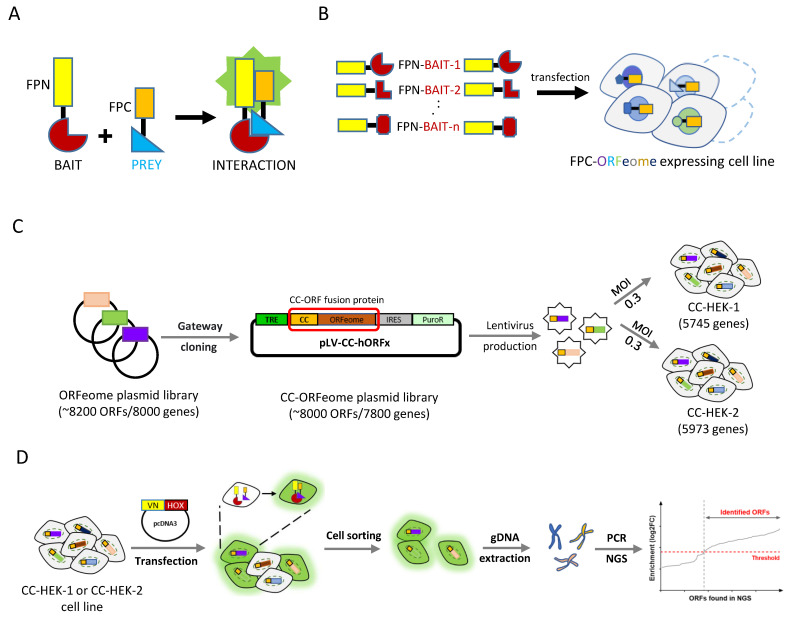
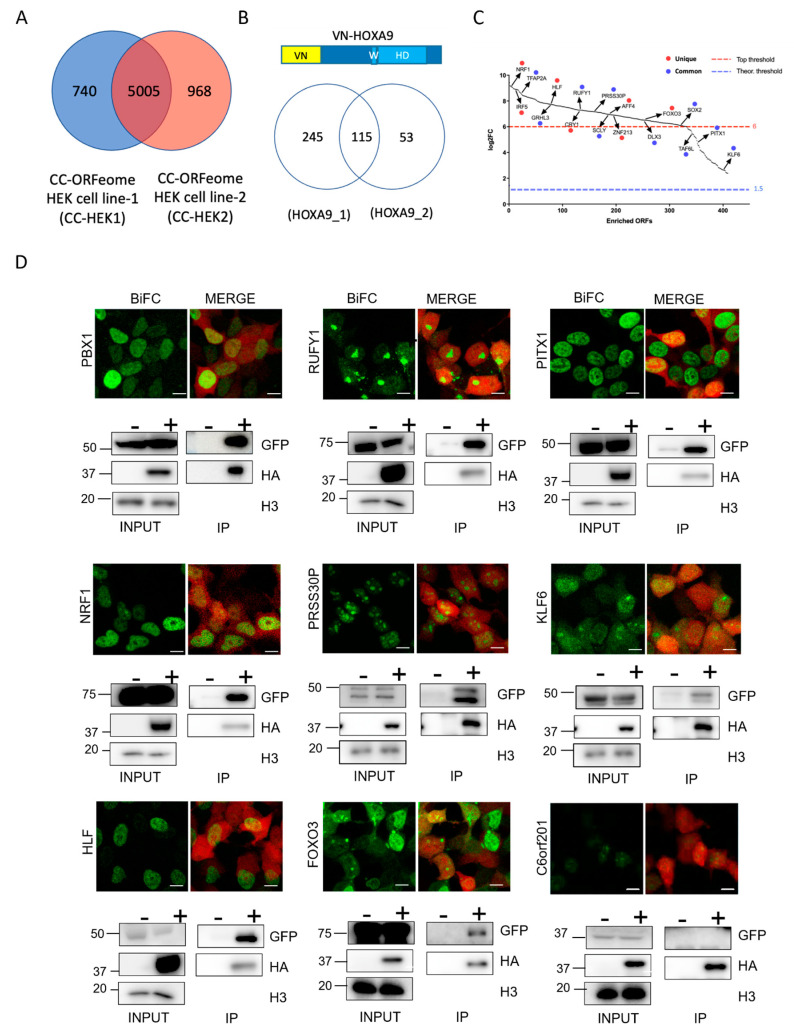
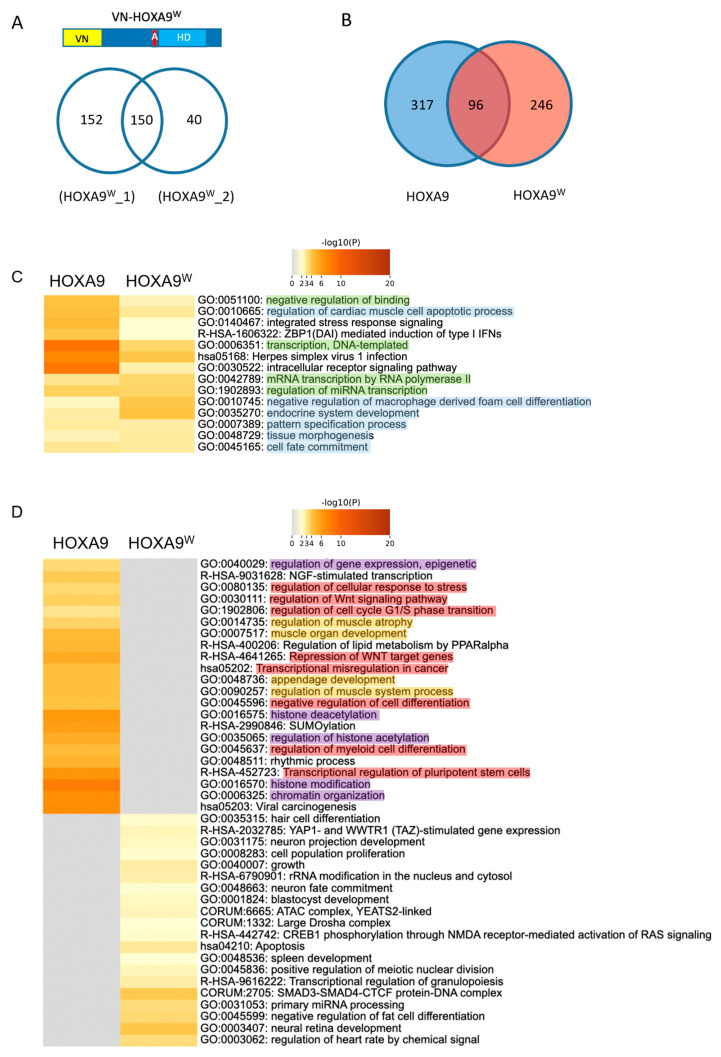
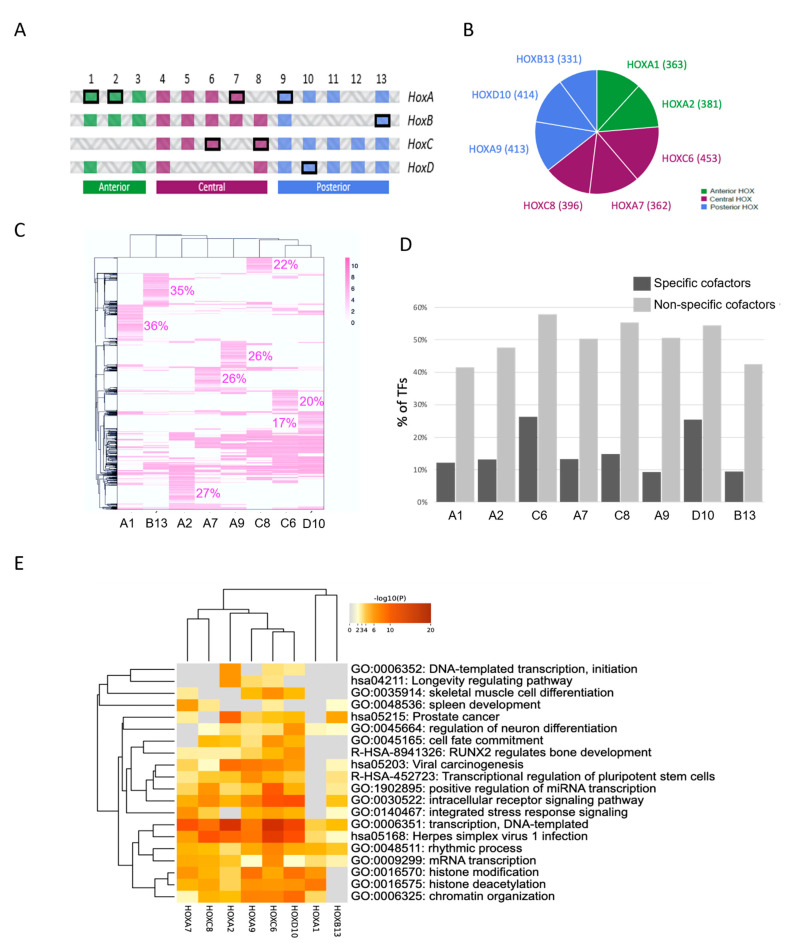
Biological pathways rely on the formation of intricate protein interaction networks called interactomes. Getting a comprehensive map of interactomes implies developing tools that allow capturing transient and low affinity protein-protein interactions (PPIs) in live conditions. Here we present an experimental strategy, Cell-PCA (Cell Protein Complementation Assay), which is based on BiFC (Bimolecular Fluorescence Complementation) and high throughput sequencing for ORFeome-wide analyses of different interactomes in the same live cell context. The specificity and sensitivity of Cell-PCA was established by using a wild type and a single amino-acid mutated HOXA9 protein, and the approach was subsequently applied for seven additional human HOX proteins. These proof-of-concept experiments revealed novel molecular properties of HOX interactomes and led to the identification of a novel cofactor of HOXB13 for promoting its proliferative activity in a cancer cell context. Taken together, our work demonstrates that Cell-PCA is pertinent for revealing and, importantly, comparing interactomes between different or highly related bait proteins in the same cell context.
Overview
The claims and statistics of this paper haven’t been checked yet.
Free: it reads the open-access text and checks the first 5 claims that cite a source we can check. Create a free account to check every claim.
Integrity signals
Registry
Cites
Statistics
Figures
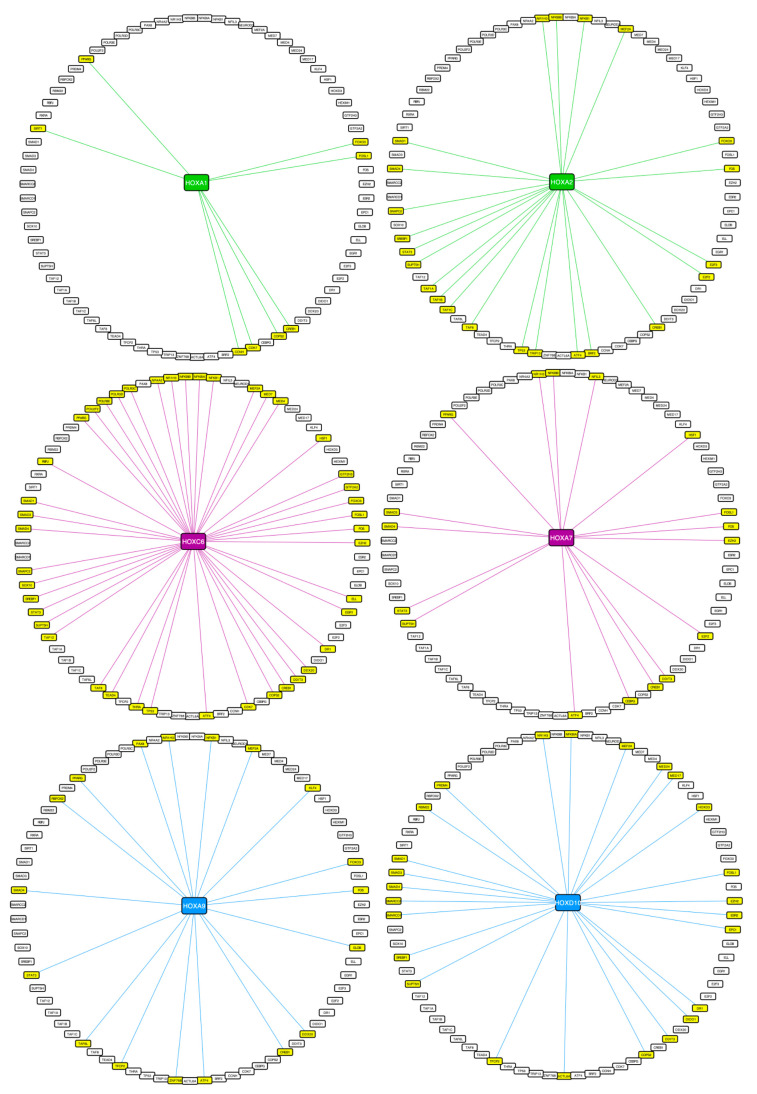
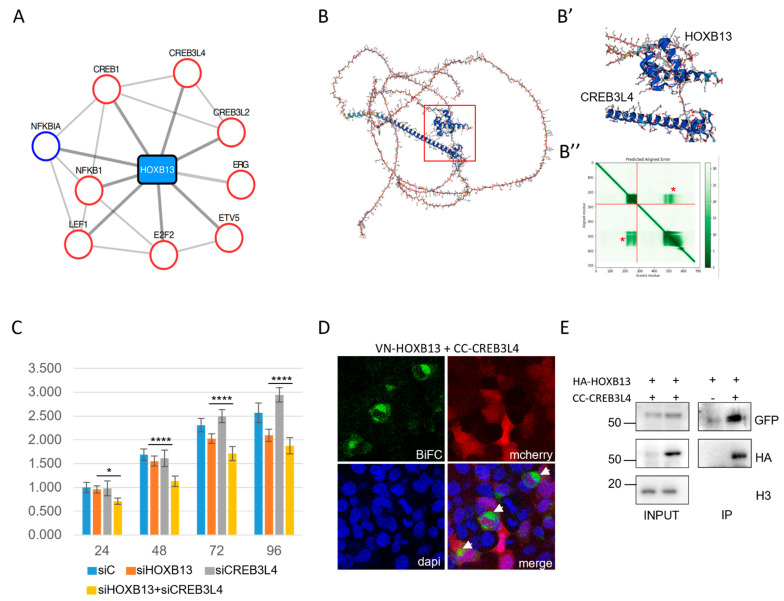
Verification
Claims the paper makes
The claims and statistics of this paper haven’t been checked yet.
Free: it reads the open-access text and checks the first 5 claims that cite a source we can check. Create a free account to check every claim.
Self-check
Percentages, sums and reported differences re-computed from the paper’s own numbers.
The self-check needs the paper’s full text.
Citations
Cites
Cytoscape: A software Environment for integrated models of biomolecular interaction networks
Shannon, P., Markiel, A., Ozier, O., Baliga, N. S., Wang, J. T., Ramage, D., Amin, N., Schwikowski, B., & Ideker, T. (2003) · Genome Research · doi:10.1101/gr.1239303 · Cited by 51,888
Highly accurate protein structure prediction with AlphaFold
Jumper, J., Evans, R., Pritzel, A., Green, T., Figurnov, M., Ronneberger, O., Tunyasuvunakool, K., Bates, R., Žídek, A., Potapenko, A., et al. (2021) · Nature · doi:10.1038/s41586-021-03819-2 · Cited by 43,764
Cutadapt removes adapter sequences from high-throughput sequencing reads
Martin, M. (2011) · EMBnet.journal · doi:10.14806/ej.17.1.200 · Cited by 33,889
Varadi, M., Anyango, S., Deshpande, M., Nair, S., Natassia, C., Yordanova, G., Yuan, D., Stroe, O., Wood, G., Laydon, A., et al. (2022) · Nucleic Acids Research · doi:10.1093/nar/gkab1061 · Cited by 7,850
An automated method for finding molecular complexes in large protein interaction networks
Bader, G. D., & Hogue, C. W. (2003) · BMC Bioinformatics · doi:10.1186/1471-2105-4-2 · Cited by 6,072
The Galaxy platform for accessible, reproducible and collaborative biomedical analyses: 2018 update
Afgan, E., Baker, D., Batut, B., van den Beek, M., Bouvier, D., Čech, M., Chilton, J., Clements, D., Coraor, N., Grüning, B. A., et al. (2018) · Nucleic Acids Research · doi:10.1093/nar/gky379 · Cited by 3,662
SMARCAD1 ATPase activity is required to silence endogenous retroviruses in embryonic stem cells
Sachs, P., Ding, D., Bergmaier, P., Lamp, B., Schlagheck, C., Finkernagel, F., Nist, A., Stiewe, T., & Mermoud, J. E. (2019) · Nature Communications · doi:10.1038/s41467-019-09078-0 · Cited by 2,384
Comparative assessment of large-scale data sets of protein–protein interactions
von Mering, C., Krause, R., Snel, B., Cornell, M., Oliver, S. G., Fields, S., & Bork, P. (2002) · Nature · doi:10.1038/nature750 · Cited by 2,365
Hu, C.-D., & Kerppola, T. K. (2003) · Nature Biotechnology · doi:10.1038/nbt816 · Cited by 781
Yeast Two-Hybrid, a Powerful Tool for Systems Biology
Brückner, A., Polge, C., Lentze, N., Auerbach, D., & Schlattner, U. (2009) · International Journal of Molecular Sciences · doi:10.3390/ijms10062763 · Cited by 617
NCBI BLAST+ integrated into Galaxy
Cock, P. J. A., Chilton, J. M., Grüning, B., Johnson, J. E., & Soranzo, N. (2015) · Gigascience · doi:10.1186/s13742-015-0080-7 · Cited by 268
Miller, K. E., Kim, Y., Huh, W.-K., & Park, H.-O. (2015) · Journal of Molecular Biology · doi:10.1016/j.jmb.2015.03.005 · Cited by 250
Structure of HoxA9 and Pbx1 bound to DNA: Hox hexapeptide and DNA recognition anterior to posterior
LaRonde-LeBlanc, N. A., & Wolberger, C. (2003) · Genes & Development · doi:10.1101/gad.1103303 · Cited by 236
Huang, Q., Whitington, T., Gao, P., Lindberg, J. F., Yang, Y., Sun, J., Väisänen, M.-R., Szulkin, R., Annala, M., Yan, J., et al. (2014) · Nature Genetics · doi:10.1038/ng.2862 · Cited by 214
Antibody-based therapies for malaria
Pleass, R. J., & Holder, A. A. (2005) · Nature Reviews Microbiology · doi:10.1038/nrmicro1267 · Cited by 182
Role of Hox genes in stem cell differentiation
Seifert, A. (2015) · World Journal of Stem Cells · doi:10.4252/wjsc.v7.i3.583 · Cited by 165
Biology and Clinical Implications of the 19q13 Aggressive Prostate Cancer Susceptibility Locus
Gao, P., Xia, J.-H., Sipeky, C., Dong, X.-M., Zhang, Q., Yang, Y., Zhang, P., Cruz, S. P., Zhang, K., Zhu, J., et al. (2018) · Cell · doi:10.1016/j.cell.2018.06.003 · Cited by 161
Reassessing the Role of Hox Genes during Vertebrate Development and Evolution
Mallo, M. (2017) · Trends in Genetics · doi:10.1016/j.tig.2017.11.007 · Cited by 150
Quantitative multi-gene expression profiling of primary prostate cancer
Schmidt, U., Fuessel, S., Koch, R., Baretton, G. B., Lohse, A., Tomasetti, S., Unversucht, S., Froehner, M., Wirth, M. P., & Meye, A. (2006) · The Prostate · doi:10.1002/pros.20490 · Cited by 122
Lee, O.-H., Kim, H., He, Q., Baek, H. J., Yang, D., Chen, L., Liang, J., Chae, H. K., Safari, A., Liu, D., et al. (2010) · Molecular & Cellular Proteomics · doi:10.1074/mcp.m110.001628 · Cited by 122
Regulation of Apoptosis by the Ft1 Protein, a New Modulator of Protein Kinase B/Akt
Remy, I., & Michnick, S. W. (2004) · Molecular and Cellular Biology · doi:10.1128/mcb.24.4.1493-1504.2004 · Cited by 121
Yeast Two‐Hybrid Assay to Identify Interacting Proteins
Paiano, A., Margiotta, A., Luca, M. D., & Bucci, C. (2018) · Current Protocols in Protein Science · doi:10.1002/cpps.70 · Cited by 115
In vitro immunotherapy potency assays using real-time cell analysis
Cerignoli, F., Abassi, Y. A., Lamarche, B. J., Guenther, G., Santa Ana, D., Guimet, D., Zhang, W., Zhang, J., & Xi, B. (2018) · PLOS ONE · doi:10.1371/journal.pone.0193498 · Cited by 105
Homeobox Genes in Cancers: From Carcinogenesis to Recent Therapeutic Intervention
Feng, Y., Zhang, T., Wang, Y., Xie, M., Ji, X., Luo, X., Huang, W., & Xia, L. (2021) · Frontiers in Oncology · doi:10.3389/fonc.2021.770428 · Cited by 105
A retrovirus-based protein complementation assay screen reveals functional AKT1-binding partners
Ding, Z., Liang, J., Lu, Y., Yu, Q., Songyang, Z., Lin, S., & Mills, G. B. (2006) · Proceedings of the National Academy of Sciences · doi:10.1073/pnas.0606917103 · Cited by 104
Comprehensive Analysis of a cis-Regulatory Region Reveals Pleiotropy in Enhancer Function
Preger-Ben Noon, E., Sabarís, G., Ortiz, D. M., Sager, J., Liebowitz, A., Stern, D. L., & Frankel, N. (2018) · Cell Reports · doi:10.1016/j.celrep.2018.02.073 · Cited by 90
Remy, I., Campbell‐Valois, F., & Michnick, S. W. (2007) · Nature Protocols · doi:10.1038/nprot.2007.266 · Cited by 88
A system for site-specific integration of transgenes in mammalian cells
Chi, X., Zheng, Q., Jiang, R., Chen-Tsai, R. Y., & Kong, L.-J. (2019) · PLoS ONE · doi:10.1371/journal.pone.0219842 · Cited by 79
Kim, Y.-R., Kim, I., Kang, T. W., Choi, C., Kim, K. K., Kim, M. S., Kim, K. K., & Jung, C. (2013) · Oncogene · doi:10.1038/onc.2013.404 · Cited by 72
Şimşek, S., Sukuroglu, A. A., Yetkin, D., Özbek, B., Battal, D., & Genç, R. (2020) · Scientific Reports · doi:10.1038/s41598-020-70796-3 · Cited by 72
Deregulation of a Hox Protein Regulatory Network Spanning Prostate Cancer Initiation and Progression
Chen, J. L., Li, J., Kiriluk, K. J., Rosen, A. M., Paner, G. P., Antic, T., Lussier, Y. A., & Griend, D. J. V. (2012) · Clinical Cancer Research · doi:10.1158/1078-0432.ccr-12-0373 · Cited by 72
Genome-wide bimolecular fluorescence complementation analysis of SUMO interactome in yeast
Sung, M., Lim, G., Yi, D.-G., Chang, Y. J., Yang, E. B., Lee, K., & Huh, W. (2013) · Genome Research · doi:10.1101/gr.148346.112 · Cited by 66
Taminiau, A., Draime, A., Tys, J., Lambert, B., Vandeputte, J., Nguyen, N., Renard, P., Geerts, D., & Rezsöhazy, R. (2016) · Nucleic Acids Research · doi:10.1093/nar/gkw606 · Cited by 65
Berendzen, K. W., Böhmer, M., Wallmeroth, N., Peter, S., Vesić, M., Zhou, Y. Y., Tiesler, F. K., Schleifenbaum, F. E., & Harter, K. (2012) · Plant Methods · doi:10.1186/1746-4811-8-25 · Cited by 58
Protein interactions of the transcription factor Hoxa1
Lambert, B., Vandeputte, J., Remacle, S., Bergiers, I., Simonis, N., Twizere, J., Vidal, M., & Rezsöhazy, R. (2012) · BMC Developmental Biology · doi:10.1186/1471-213x-12-29 · Cited by 58
Human HOX Proteins Use Diverse and Context-Dependent Motifs to Interact with TALE Class Cofactors
Dard, A., Reboulet, J., Jia, Y. Y., Bleicher, F., Duffraisse, M., Vanaker, J.-M., Forcet, C., & Merabet, S. (2018) · Cell Reports · doi:10.1016/j.celrep.2018.02.070 · Cited by 55
Self-citationBischof, J., Duffraisse, M., Furger, E., Ajuria, L., Giraud, G., Vanderperre, S., Paul, R., Björklund, M., Ahr, D., Ahmed, A. W., et al. (2018) · eLife · doi:10.7554/elife.38853 · Cited by 55
Self-citationDickson, G. J., Liberante, F. G., Kettyle, L. M., O’Hagan, K., Finnegan, D. P. J., Bullinger, L., Geerts, D., McMullin, M. F., Lappin, T. R. J., Mills, K., et al. (2013) · Haematologica · doi:10.3324/haematol.2012.079012 · Cited by 49
VanOpstall, C., Perike, S., Brechka, H., Gillard, M., Lamperis, S. M., Zhu, B., Brown, R. M., Bhanvadia, R. R., & Griend, D. J. V. (2020) · eLife · doi:10.7554/elife.53600 · Cited by 47
Beilan, J. A., Strakosha, R., Palacios, D. A., & Rosser, C. J. (2014) · BMC Urology · doi:10.1186/1471-2490-14-1 · Cited by 45
Converting stem cells to dendritic cells by agonist antibodies from unbiased morphogenic selections
Yea, K., Zhang, H., Xie, J., Jones, T. M., Yang, G., Song, B. D., & Lerner, R. A. (2013) · Proceedings of the National Academy of Sciences · doi:10.1073/pnas.1313671110 · Cited by 39
Carnesecchi, J., Sigismondo, G., Domsch, K., Baader, C. E. P., Rafiee, M.-R., Krijgsveld, J., & Lohmann, I. (2020) · Nature Communications · doi:10.1038/s41467-020-15223-x · Cited by 36
Multiple roles of HOX proteins in Metastasis: Let me count the ways
Jonkers, J., Pai, P., & Sukumar, S. V. (2020) · Cancer and Metastasis Reviews · doi:10.1007/s10555-020-09908-4 · Cited by 31
Cooper, S. E., Hodimont, E., & Green, C. (2015) · Cell Cycle · doi:10.1080/15384101.2015.1053667 · Cited by 30
Dard, A., Jia, Y. Y., Reboulet, J., Bleicher, F., Lavau, C., & Merabet, S. (2019) · Scientific Reports · doi:10.1038/s41598-019-42096-y · Cited by 30
Self-citationMisawa, A., Kondo, Y., Takei, H., & Takizawa, T. (2021) · Genes · doi:10.3390/genes12020182 · Cited by 30
Peptide-based inhibition of the HOXA9/PBX interaction retards the growth of human meningioma
Ando, H., Natsume, A., Senga, T., Watanabe, R., Ito, I., Ohno, M., Iwami, K., Ohka, F., Motomura, K., Kinjo, S., et al. (2013) · Cancer Chemotherapy and Pharmacology · doi:10.1007/s00280-013-2316-5 · Cited by 25
HOXB13 regulates the prostate-derived Ets factor: Implications for prostate cancer cell invasion
KIM, I.-J., Kang, T. W., JEONG, T., Kim, Y.-R., & Jung, C. (2014) · International Journal of Oncology · doi:10.3892/ijo.2014.2485 · Cited by 24
ERRα coordinates actin and focal adhesion dynamics
Tribollet, V., Cerutti, C., Géloën, A., Berger, E., Mets, R. D. M. D., Balland, M., Courchet, J., Vanacker, J.-M., & Forcet, C. (2022) · Cancer Gene Therapy · doi:10.1038/s41417-022-00461-6 · Cited by 14
Self-citationOncogenic regulatory circuits driven by 19q13 rs11672691 underlies prostate cancer aggressiveness
Xia, J., & Wei, G. (2018) · Molecular & Cellular Oncology · doi:10.1080/23723556.2018.1516451 · Cited by 7
Varnaitė, R., & MacNeill, S. A. (2016) · PROTEOMICS · doi:10.1002/pmic.201670171 · Cited by 6
Baëza, M., Viala, S., Heim, M., Dard, A., Hudry, B., Duffraisse, M., Rogulja-Ortmann, A., Brun, C., & Merabet, S. (2015) · eLife · doi:10.7554/elife.06034.045 · Cited by 2
Self-citation
Research works printed but not linked: 2
- Dard A , Jia Y , Reboulet J , Bleicher F , Lavau C & Merabet S (2019b) The human HOXA9 protein uses paralog-specific residues of the homeodomain to interact with TALE-class cofactors. Sci Rep 9 · DOI
- 2022, Comprehensive Landscape of HOXA2, HOXA9, and HOXA10 as Potential Biomarkers for Predicting Progression and Prognosis in Prostate Cancer, J Immunol Res, 24, 5740971
Metadata
- Authors
- Jia, Y., Reboulet, J., Gillet, B., Hughes, S., Forcet, C., Tribollet, V., Sleiman, N. H., Kundlacz, C., Vanacker, J.-M., Bleicher, F., & Merabet, S.
- Affiliations
- Lyon 1 Université (FR)
- Corresponding author
- Bleicher, Françoise
- Merabet, Samir
- ORCID
- Venue
- Cells
- Publisher
- openRxiv
- Published
- 2022-11-09
- Volume
- 12
- Issue
- 1
- Pages
- 200-200
- ISSN
- 2073-4409 (ISSN-L)
- PMC
- PMC9818449
- OpenAlex
- W4313573216
- Cited by
- 10
- References
- 52
- Citations by year
- 2026: 1 · 2025: 2 · 2024: 4 · 2023: 3
- FWCI
- 0.89
- Type
- journal article
- Language
- en
- Open access
- gold
- doi.org
- Licence
- cc-by
- Locations
- Cells (publishedVersion, cc-by)
- bioRxiv (Cold Spring Harbor Laboratory) (acceptedVersion)
- PubMed Central (publishedVersion, cc-by)
- PubMed (publishedVersion)
- HAL (submittedVersion, cc-by)
- HAL (submittedVersion, other-oa)
- DOAJ (DOAJ: Directory of Open Access Journals) (submittedVersion, cc-by-sa)
- Funders
- Fondation pour la Recherche Médicale (5503-P, PJA20191209567, 160896, 119030, 201708070003)
- China Scholarship Council (5503-P, PJA20191209567, 119030, 201708070003, 160896)
- Centre National de la Recherche Scientifique (UAR3444)
- École Normale Supérieure de Lyon
- Division of Arctic Sciences (201708070003, 5503-P, 160896, 119030, PJA20191209567)
- Topics
- Life Sciences › Biochemistry, Genetics and Molecular Biology › Molecular Biology › Bioinformatics and Genomic Networks
- Life Sciences › Biochemistry, Genetics and Molecular Biology › Cell Biology › Biotin and Related Studies
- Life Sciences › Biochemistry, Genetics and Molecular Biology › Biophysics › Advanced Fluorescence Microscopy Techniques
- Keywords
- protein-protein interaction, protein-protein interaction network, Hox proteins, bimolecular fluorescence complementation, HOXA9, HOXB13, tumor cell proliferation, live-cell imaging
- MeSH terms
- Humans, Microscopy, Fluorescence, Protein Interaction Maps
About these checks
Registry, retraction, Cites and statistics results are computed, not judged, with one exception: a printed reference that no index lists is read once by a model before it counts as a citation error. Claims are extracted by a model and kept only when their quote appears verbatim in the text; each cited source is then checked, with a model’s help, for whether it says what the claim relies on. Those verdicts can be wrong — read the claim’s quote and the cited source before relying on one.
Statistics and arithmetic are recomputed, not judged.
Confidence bands are shown only for fields calibrated on our annotated test set. None is calibrated yet, so no band is shown.
What counts as a claim ›How we measure confidence ›How we check this ›
Are you an author, or do you see a problem with this page? Request a review
Data sources
Bibliographic data: Semantic Scholar, OpenAlex, Crossref.
Contains information from the Semantic Scholar Academic Graph Datasets, made available under the ODC Attribution License (ODC-BY 1.0).
Semantic Scholar’s data is described in: Kinney, R., et al. (2023). The Semantic Scholar Open Data Platform. arXiv:2301.10140.
