

The DOI matches its Crossref record; 1 of the 1 references it cites were found in a registry or an index.
PERK-mediated antioxidant response is key for pathogen persistence in ticks
Open accessPreprint — published as 10.1128/msphere.00321-23 · Paper page
Abstract
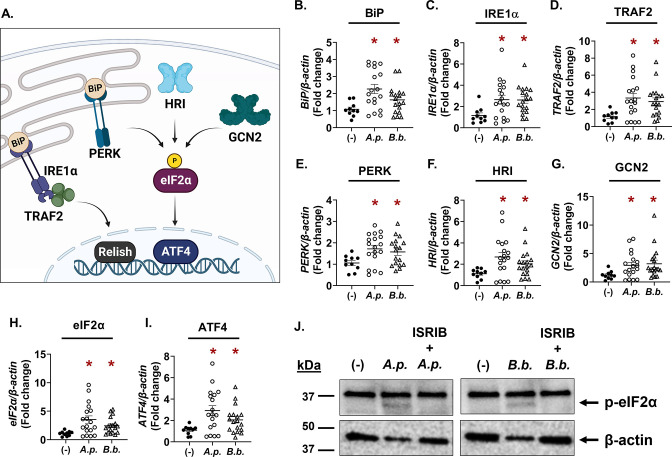
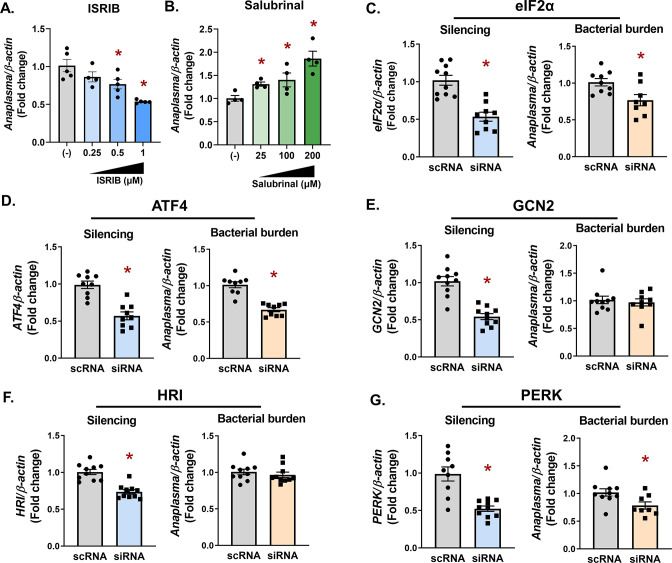
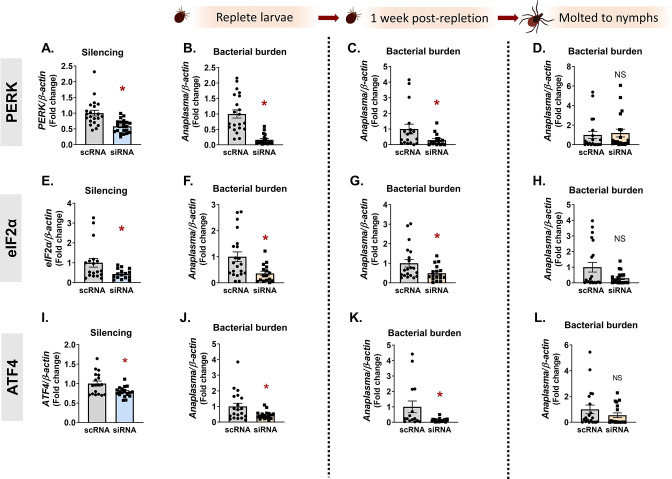
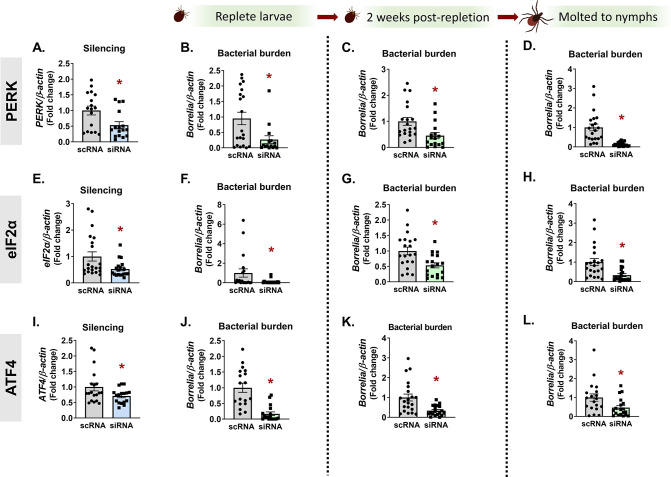
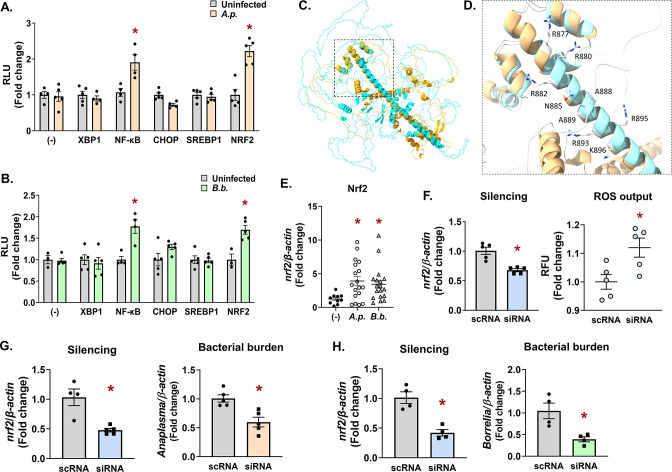
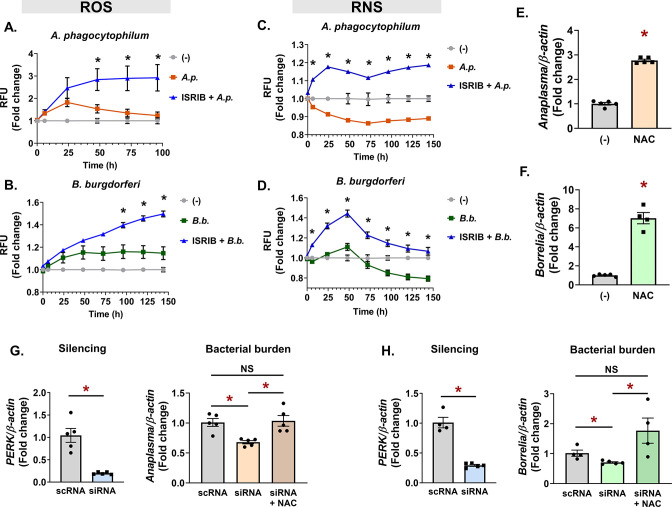
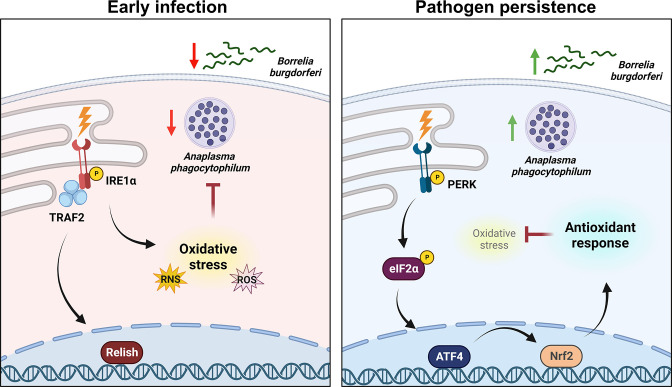
A crucial phase in the lifecycle of tick-borne pathogens is the time spent colonizing and persisting within the arthropod. Tick immunity is emerging as a key force shaping how transmissible pathogens interact with the vector. How pathogens remain in the tick despite immunological pressure remains unknown. In persistently infected Ixodes scapularis , we found that Borrelia burgdorferi (Lyme disease) and Anaplasma phagocytophilum (granulocytic anaplasmosis) activate a cellular stress pathway mediated by the endoplasmic reticulum receptor PERK and the central regulatory molecule, eIF2α. Disabling the PERK pathway through pharmacological inhibition and RNAi significantly decreased microbial numbers. In vivo RNA interference of the PERK pathway not only reduced the number of A. phagocytophilum and B. burgdorferi colonizing larvae after a bloodmeal, but also significantly reduced the number of bacteria that survive the molt. An investigation into PERK pathway-regulated targets revealed that A. phagocytophilum and B. burgdorferi induce activity of the antioxidant response regulator, Nrf2. Tick cells deficient for nrf2 expression or PERK signaling showed accumulation of reactive oxygen and nitrogen species in addition to reduced microbial survival. Supplementation with antioxidants rescued the microbicidal phenotype caused by blocking the PERK pathway. Altogether, our study demonstrates that the Ixodes PERK pathway is activated by transmissible microbes and facilitates persistence in the arthropod by potentiating an Nrf2-regulated antioxidant environment.
Overview
The claims and statistics of this paper haven’t been checked yet.
Run the check — free, no account needed. It reads the open-access text and checks the sources it cites.
Integrity signals
Registry
Cites
Statistics
Figures
Verification
Claims the paper makes
The claims and statistics of this paper haven’t been checked yet.
Run the check — free, no account needed. It reads the open-access text and checks the sources it cites.
Self-check
Percentages, sums and reported differences re-computed from the paper’s own numbers.
The self-check needs the paper’s full text.
Citations
Cites
Highly accurate protein structure prediction with AlphaFold
Jumper, J., Evans, R., Pritzel, A., Green, T., Figurnov, M., Ronneberger, O., Tunyasuvunakool, K., Bates, R., Žídek, A., Potapenko, A., et al. (2021) · Nature · doi:10.1038/s41586-021-03819-2 · Cited by 43,764
Research works printed but not linked: 98
- Paddock, C. D. , Lane, R. S. , Staples, J. E. & Labruna, M. B. CHANGING PARADIGMS FOR TICK-BORNE DISEASES IN THE AMERICAS. Global Health Impacts of Vector-Borne Diseases: Workshop Summary (National Academies Press (US), 2016).
- 10.17226/13134 · DOI
- 10.1017/S0031182004005967 · DOI
- Park, J. M. , Oliva Chávez, A. S. & Shaw, D. K . Ticks: More Than Just a Pathogen Delivery Service. Frontiers in Cellular and Infection Microbiology 11, (2021). · DOI
- Adegoke, A. , Ribeiro, J. M. C. , Brown, S. , Smith, R. C. & Karim, S . Rickettsia parkeri hijacks tick hemocytes to manipulate cellular and humoral transcriptional responses. Frontiers in Immunology 14, (2023). · DOI
- 10.1038/embor.2011.177 · DOI
- 10.1603/0022-2585-38.1.99 · DOI
- 1996, Phagocytes from both vertebrate and invertebrate species use “coiling” phagocytosis, Developmental & Comparative Immunology, 20, 393, 10.1016/S0145-305X(96)00023-7 · DOI
- Shaw, D. K. et al. Infection-derived lipids elicit an immune deficiency circuit in arthropods. Nature Communications 8, ncomms14401 (2017). · DOI
- 10.1073/pnas.1808905116 · DOI
- 2016, Exploring the immune signalling pathway-related genes of the cattle tick Rhipicephalus microplus: From molecular characterization to transcriptional profile upon microbial challenge, Dev. Comp. Immunol, 59, 1, 10.1016/j.dci.2015.12.018 · DOI
- Smith, A. A. & Pal, U . Immunity-related genes in Ixodes scapularis--perspectives from genome information. Front Cell Infect Microbiol 4, 116 (2014). · DOI
- 10.1093/infdis/jis484 · DOI
- 10.1016/j.chom.2016.06.001 · DOI
- Rana, V. S. et al. Dome1–JAK–STAT signaling between parasite and host integrates vector immunity and development. Science 379, eabl3837 (2023). · DOI
- O’Neal, A. J. et al. Croquemort elicits activation of the immune deficiency pathway in ticks. Proceedings of the National Academy of Sciences 120, e2208673120 (2023). · DOI
- Gulia-Nuss, M. et al. Genomic insights into the Ixodes scapularis tick vector of Lyme disease. Nat Commun 7, 10507 (2016).
- 10.1093/molbev/msv093 · DOI
- 2022, The Unfolded-Protein Response Triggers the Arthropod Immune Deficiency Pathway, mBio, 13, e00703
- Rosche, K. L. , Sidak-Loftis, L. C. , Hurtado, J. , Fisk, E. A. & Shaw, D. K . Arthropods Under Pressure: Stress Responses and Immunity at the Pathogen- Vector Interface. Front. Immunol. 11, (2021). · DOI
- 10.1038/nri.2016.62 · DOI
- 10.1038/nrm3270 · DOI
- 10.1146/annurev.biochem.73.011303.074134 · DOI
- 10.1086/322044 · DOI
- 10.15252/embr.201642195 · DOI · Paper page
- 10.1016/S1097-2765(03)00105-9 · DOI
- Taniuchi, S. , Miyake, M. , Tsugawa, K. , Oyadomari, M. & Oyadomari, S . Integrated stress response of vertebrates is regulated by four eIF2α kinases. Scientific Reports 6, 32886 (2016). · DOI
- 10.1007/s00018-012-1252-6 · DOI
- 10.1038/sj.emboj.7600596 · DOI
- 10.1038/ncb2738 · DOI · Paper page
- Sidrauski, C. , McGeachy, A. M. , Ingolia, N. T. & Walter, P . The small molecule ISRIB reverses the effects of eIF2α phosphorylation on translation and stress granule assembly. eLife 4, e05033 (2015). · DOI
- 2005, Structure–activity relationship studies of salubrinal lead to its active biotinylated derivative, Bioorganic & Medicinal Chemistry Letters, 15, 3849, 10.1016/j.bmcl.2005.05.120 · DOI
- 10.1126/science.1101902 · DOI
- 10.1128/JCM.36.12.3574-3578.1998 · DOI
- 10.1073/pnas.1613422114 · DOI
- 10.1016/j.chom.2013.12.001 · DOI
- Narasimhan, S. et al. Modulation of the tick gut milieu by a secreted tick protein favors Borrelia burgdorferi colonization. Nat Commun 8, 184 (2017). · DOI
- 10.4269/ajtmh.1990.42.352 · DOI
- 10.21775/cimb.042.113 · DOI
- 10.1186/1471-2164-9-552 · DOI
- 1997, Borrelia burgdorferi activates nuclear factor-kappa B and is a potent inducer of chemokine and adhesion molecule gene expression in endothelial cells and fibroblasts, J Immunol, 158, 3285, 10.4049/jimmunol.158.7.3285 · DOI
- 10.1016/j.ygeno.2008.05.005 · DOI
- Dumler, J. S. , Lichay, M. , Chen, W.-H. , Rennoll-Bankert, K. E. & Park, J . Anaplasma phagocytophilum Activates NF-κB Signaling via Redundant Pathways. Frontiers in Public Health 8, (2020). · DOI
- 10.1128/IAI.05219-11 · DOI
- 10.1073/pnas.91.21.9926 · DOI · Paper page
- 10.1016/j.tibs.2014.02.002 · DOI
- Sarcinelli, C. et al. ATF4-Dependent NRF2 Transcriptional Regulation Promotes Antioxidant Protection during Endoplasmic Reticulum Stress. Cancers (Basel ) 12, 569 (2020). · DOI
- 10.1074/jbc.M314219200 · DOI
- 10.1074/jbc.M101198200 · DOI
- 10.1006/bbrc.1997.6943 · DOI · Paper page
- 10.1016/s0021-9258(18)99004-6 · DOI · Paper page
- 2023, A high-quality Ixodes scapularis genome advances tick science, Nat Genet, 55, 301, 10.1038/s41588-022-01275-w · DOI
- 2022, Structural basis of transcription regulation by CNC family transcription factor, Nrf2, Nucleic Acids Research, 50, 12543, 10.1093/nar/gkac1102 · DOI
- 10.1111/j.1462-5822.2006.00835.x · DOI
- 2008, Determining the cellular targets of reactive oxygen species in Borrelia burgdorferi, Methods Mol. Biol, 431, 213
- 10.1111/j.1365-2958.2009.06951.x · DOI
- 10.1128/IAI.01018-09 · DOI
- 10.1128/IAI.68.12.6697-6703.2000 · DOI
- 10.1046/j.1462-5822.2003.00323.x · DOI
- 10.1128/IAI.72.8.4772-4783.2004 · DOI
- Alberdi, P. et al. The redox metabolic pathways function to limit Anaplasma phagocytophilum infection and multiplication while preserving fitness in tick vector cells. Sci Rep 9, 13236 (2019). · DOI
- Ramsey, M. E. et al. A high-throughput genetic screen identifies previously uncharacterized Borrelia burgdorferi genes important for resistance against reactive oxygen and nitrogen species. PLOS Pathogens 13, e1006225 (2017). · DOI
- Bourret, T. J. et al. The Nucleotide Excision Repair Pathway Protects Borrelia burgdorferi from Nitrosative Stress in Ixodes scapularis Ticks. Frontiers in Microbiology 7, (2016). · DOI
- 10.1111/j.1365-2958.2011.07691.x · DOI
- Troxell, B. et al. Pyruvate Protects Pathogenic Spirochetes from H2O2 Killing. PLOS ONE 9, e84625 (2014). · DOI
- 10.1074/jbc.M113.538272 · DOI
- 10.1016/j.chom.2007.06.001 · DOI
- Park, J. M. et al. An Anaplasma phagocytophilum T4SS effector, AteA, is essential for tick infection. 2023.02.06.527355 Preprint at https://doi.org/10.1101/2023.02.06.527355 (2023). · DOI
- 10.1016/j.it.2018.09.003 · DOI
- 10.1016/j.bbrc.2012.01.037 · DOI
- Liu, Z.-W. et al. Protein kinase RNA- like endoplasmic reticulum kinase (PERK) signaling pathway plays a major role in reactive oxygen species (ROS)- mediated endoplasmic reticulum stress- induced apoptosis in diabetic cardiomyopathy. Cardiovascular Diabetology 12, 158 (2013). · DOI
- 10.1111/j.1440-1681.2007.04638.x · DOI · Paper page
- 10.1074/mcp.M115.051938 · DOI
- 10.7554/eLife.86636.1 · DOI
- 10.1089/ars.2017.7342 · DOI
- 10.1038/nrd4002 · DOI · Paper page
- 2015, An insight into the functional role of Thioredoxin reductase, a selenoprotein, in maintaining normal native microbiota in the Gulf- Coast tick (Amblyomma maculatum), Insect Mol Biol, 24, 570, 10.1111/imb.12184 · DOI
- 2017, Catalase is a determinant of the colonization and transovarial transmission of Rickettsia parkeri in the Gulf Coast tick Amblyomma maculatum, Insect Molecular Biology, 26, 414, 10.1111/imb.12304 · DOI
- Kumar, D. , Embers, M. , Mather, T. N. & Karim, S . Is selenoprotein K required for Borrelia burgdorferi infection within the tick vector Ixodes scapularis? Parasites & Vectors 12, 289 (2019). · DOI
- Hernandez, E. P. , Talactac, M. R. , Vitor, R. J. S. , Yoshii, K. & Tanaka, T . An Ixodes scapularis glutathione S-transferase plays a role in cell survival and viability during Langat virus infection of a tick cell line. Acta Tropica 214, 105763 (2021). · DOI
- Crispell, G. , Budachetri, K. & Karim, S . Rickettsia parkeri colonization in Amblyomma maculatum: the role of superoxide dismutases. Parasites & Vectors 9, 291 (2016). · DOI
- Adamson, S. W. , Browning, R. E. , Budachetri, K. , Ribeiro, J. M. C. & Karim, S . Knockdown of Selenocysteine-Specific Elongation Factor in Amblyomma maculatum Alters the Pathogen Burden of Rickettsia parkeri with Epigenetic Control by the Sin3 Histone Deacetylase Corepressor Complex. PLOS ONE 8, e82012 (2013). · DOI
- Kocan, K. M. et al. Silencing of genes involved in Anaplasma marginale-tick interactions affects the pathogen developmental cycle in Dermacentor variabilis. BMC Developmental Biology 9, 42 (2009). · DOI
- 2016, Assessment of tick antioxidant responses to exogenous oxidative stressors and insight into the role of catalase in the reproductive fitness of the Gulf Coast tick, Amblyomma maculatum, Insect Molecular Biology, 25, 283, 10.1111/imb.12218 · DOI
- Budachetri, K. et al. The tick endosymbiont Candidatus Midichloria mitochondrii and selenoproteins are essential for the growth of Rickettsia parkeri in the Gulf Coast tick vector. Microbiome 6, 141 (2018). · DOI
- DeSouza-Vieira, T. et al. Heme Oxygenase-1 Induction by Blood-Feeding Arthropods Controls Skin Inflammation and Promotes Disease Tolerance. Cell Reports 33, 108317 (2020). · DOI
- Perner, J. et al. Acquisition of exogenous haem is essential for tick reproduction. eLife 5, e12318. · DOI
- Shaw, D. K. et al. Infection-derived lipids elicit an immune deficiency circuit in arthropods. Nature Communications 8, 14401 (2017). · DOI
- 10.1111/j.1574-695X.2012.01001.x · DOI
- 2007, ASC/PYCARD and Caspase-1 Regulate the IL-18/IFN-γ Axis during Anaplasma phagocytophilum Infection1, The Journal of Immunology, 179, 4783, 10.4049/jimmunol.179.7.4783 · DOI
- 10.1128/IAI.69.1.446-455.2001 · DOI
- James, A. E. , Rogovskyy, A. S. , Crowley, M. A. & Bankhead, T . Characterization of a DNA Adenine Methyltransferase Gene of Borrelia hermsii and Its Dispensability for Murine Infection and Persistence. PLOS ONE 11, e0155798 (2016). · DOI
- 10.1111/j.1365-2958.2007.05895.x · DOI
- 10.1093/infdis/jit380 · DOI
- 10.1016/j.chom.2018.10.005 · DOI · Paper page
- 10.1093/bioinformatics/btp033 · DOI
- 10.1093/NAR/GKAB1061 · DOI · Paper page
- 10.1002/PRO.3943 · DOI
Metadata
- Authors
- Rosche, K. L., Hurtado, J., Fisk, E. A., Vosbigian, K. A., Warren, A. L., Sidak-Loftis, L. C., Wright, S. J., Ramirez-Zepp, E., Park, J. M., & Shaw, D. K.
- Affiliations
- Washington State University (US)
- Corresponding author
- Shaw, Dana K.
- ORCID
- Venue
- mSphere
- Publisher
- openRxiv
- Published
- 2023-06-01
- Volume
- 8
- Issue
- 5
- Pages
- e0032123-e0032123
- ISSN
- 2379-5042 (ISSN-L)
- PMC
- PMC10597351
- OpenAlex
- W4386910548
- Cited by
- 10
- References
- 1
- Citations by year
- 2026: 4 · 2025: 6
- FWCI
- 2.34
- Type
- journal article
- Language
- en
- Open access
- gold
- doi.org
- Licence
- cc-by
- Locations
- mSphere (publishedVersion, cc-by)
- bioRxiv (Cold Spring Harbor Laboratory) (acceptedVersion, cc-by-nc-nd)
- PubMed Central (publishedVersion, cc-by)
- PubMed (publishedVersion)
- PubMed Central (submittedVersion, cc-by-nc-nd)
- DOAJ (DOAJ: Directory of Open Access Journals) (submittedVersion, cc-by-sa)
- Funders
- Oklahoma State University
- University of Minnesota
- Washington State University
- National Institutes of Health
- National Institute of Food and Agriculture
- University of California, San Francisco
- National Institute of General Medical Sciences (T32GM008336)
- National Institute of Allergy and Infectious Diseases (R21AI148578, R21AI139772, R01AI162819, R21AI148578, R21AI139772, T32AI007025, R01AI162819)
- National Institute of Biomedical Imaging and Bioengineering (R25EB027606)
- Topics
- Life Sciences › Immunology and Microbiology › Parasitology › Vector-borne infectious diseases
- Life Sciences › Immunology and Microbiology › Immunology › Invertebrate Immune Response Mechanisms
- Life Sciences › Agricultural and Biological Sciences › Insect Science › Insect symbiosis and bacterial influences
- Keywords
- PERK signaling, unfolded protein response, tick immunity, Borrelia burgdorferi, Anaplasma phagocytophilum, Nrf2, antioxidant response, reactive oxygen species, reactive nitrogen species, Ixodes scapularis, tick-borne pathogens, eIF2α, tick innate immunity, Lyme disease, human granulocytic anaplasmosis
About these checks
Registry, retraction, Cites and statistics results are computed, not judged, with one exception: a printed reference that no index lists is read once by a model before it counts as a citation error. Claims are extracted by a model and kept only when their quote appears verbatim in the text; each cited source is then checked, with a model’s help, for whether it says what the claim relies on. Those verdicts can be wrong — read the claim’s quote and the cited source before relying on one.
Statistics and arithmetic are recomputed, not judged.
Confidence bands are shown only for fields calibrated on our annotated test set. None is calibrated yet, so no band is shown.
What counts as a claim ›How we measure confidence ›How we check this ›
Are you an author, or do you see a problem with this page? Request a review
