

The DOI matches its Crossref record; 1 of the 1 references it cites were found in a registry or an index.
Arabidopsis CNL receptor SUT1 confers immunity in hydathodes against the vascular pathogen Xanthomonas campestris pv. campestris
Open accessPreprint — published as 10.1371/journal.ppat.1013256
Abstract
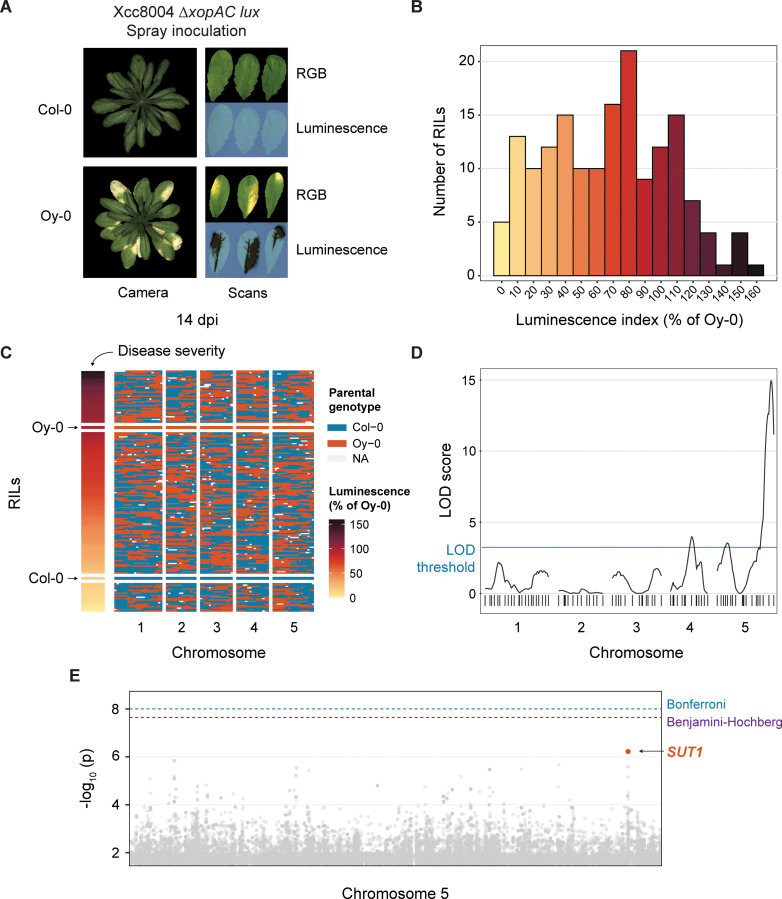
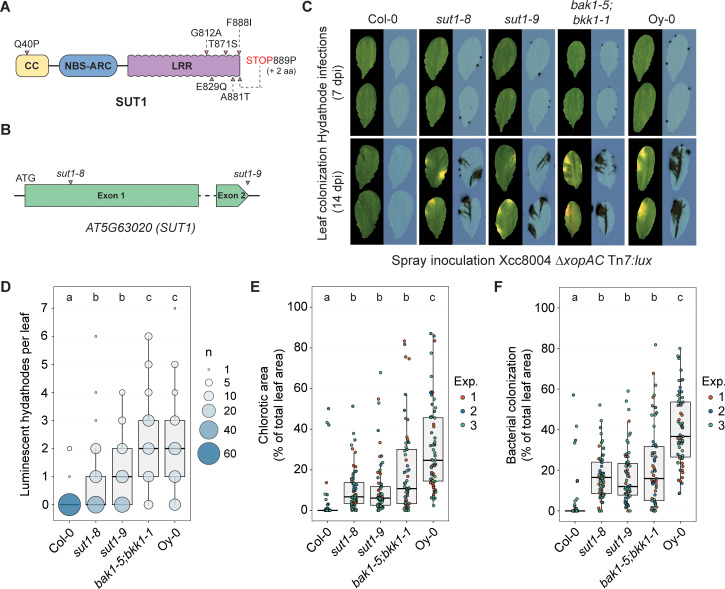
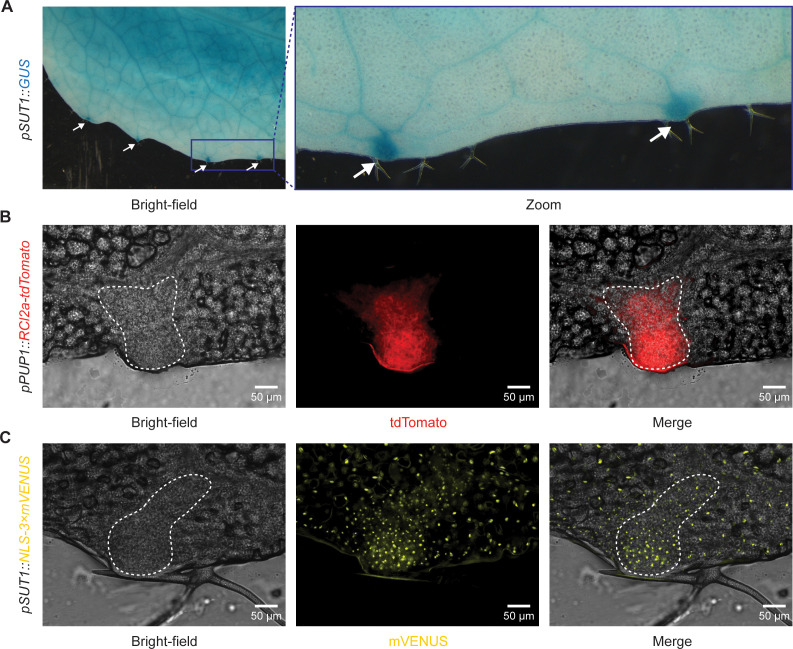
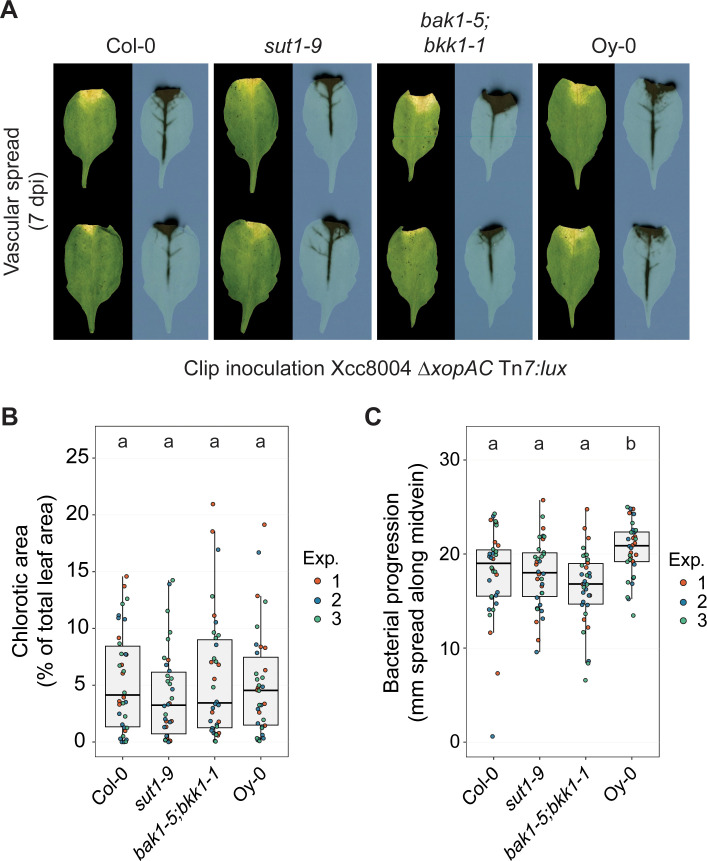
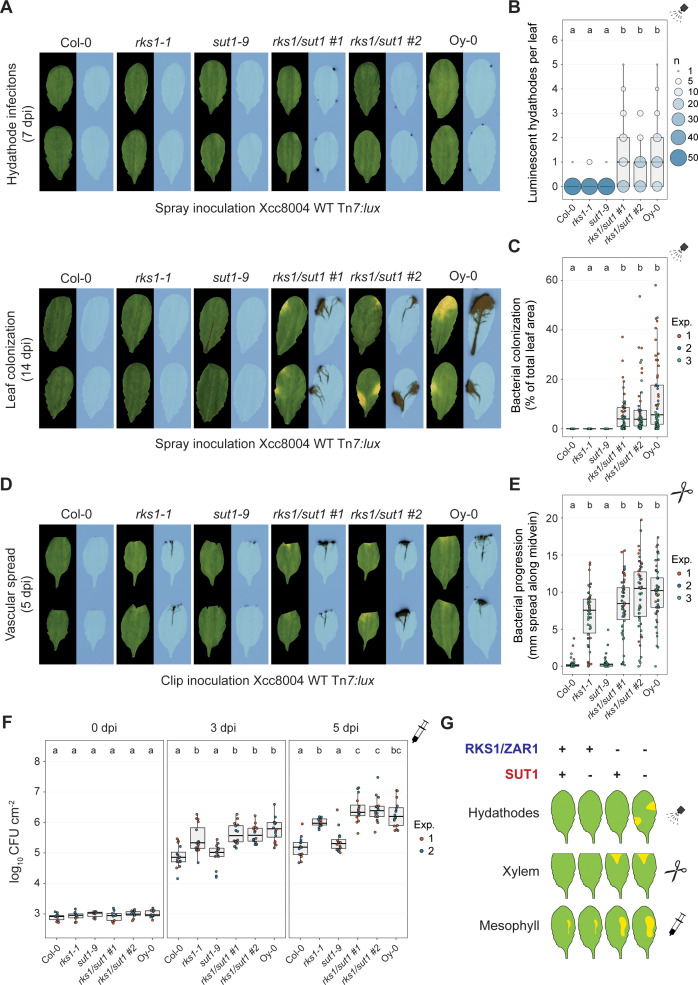
Bacterial plant pathogens exploit natural openings, such as pores or wounds, to enter the plant interior and cause disease. Plants guard these openings through defense mechanisms. However, bacteria from the genus Xanthomonas have specialized in that they enter their host via a special entry point, the hydathode—an organ at the leaf margin involved in xylem sap guttation. Hydathodes can mount an immune response against bacteria, including non-adapted and adapted pathogens like X. campestris pv. campestris (Xcc) that cause vascular disease. Previously, it was shown that the RKS1/ZAR1 immune complex confers vascular resistance against Xcc by recognizing XopAC activity, a type III effector (T3E). However, in absence of XopAC recognition, Arabidopsis Col-0 hydathodes still display resistance against Xcc. Here we mapped the causal gene using an inoculation method that promotes Xcc hydathode entry. Using a population of Recombinant Inbred Lines (RILs) of a cross between a susceptible (Oy-0) and resistant accession (Col-0), a major QTL for Xcc resistance was found on the right arm of Chromosome 5 in Col-0. Combining this result with a genome-wide association analysis yielded a single candidate gene encoding a coiled-coil nucleotide-binding leucine-rich repeat (CNL-type) immune receptor protein called SUPPRESSOR OF TOPP4 1 (SUT1). Expression of SUT1 was confirmed in hydathodes. We reveal that RKS1/ZAR1 and SUT1 confer different levels of Xcc resistance in different tissue types. Both RKS1/ZAR1 and SUT1 are alone sufficient for Xcc resistance in Col-0 hydathodes. However, RKS1/ZAR1 resistance is also effective in tissue types that represent late infection stages, i.e. xylem and mesophyll. In contrast, SUT1 resistance is not effective in the xylem, while weakly additive to RKS1/ZAR1 in the mesophyll. We thus identify a novel R gene, SUT1 , that confers Xcc resistance primarily early in the infection during hydathode colonization. Author summary: Black rot disease, caused by the bacterial pathogen Xanthomonas campestris pv. campestris (Xcc), is an economically important disease of cabbage crops. Xcc is unique in that it enters the plant interior through specialized organs at the leaf margin. These structures called hydathodes contain water pores and are involved in root pressure regulation. Although we know that hydathodes can mount an immune response against these bacteria, specific immune receptors still need to be discovered. Here we use the model plant Arabidopsis thaliana to map an hydathode-effective resistance gene. By screening two different Arabidopsis populations, we could map a single gene, SUT1, that is involved in this resistance. SUT1 restricts the early hydathode colonization by Xcc thus suppressing disease progression. Interestingly, SUT1 resistance was not effective in the plant vascular system, which the bacteria subsequently colonize. Therefore, this study provides a new insight into the role of hydathodes in anti-bacterial resistance in plants and opens the door for research on tissue- and organ-specific resistance mechanisms.
Overview
The claims and statistics of this paper haven’t been checked yet.
Run the check — free, no account needed. It reads the open-access text and checks the sources it cites.
Integrity signals
Registry
Cites
Statistics
Figures
Verification
Claims the paper makes
The claims and statistics of this paper haven’t been checked yet.
Run the check — free, no account needed. It reads the open-access text and checks the sources it cites.
Self-check
Percentages, sums and reported differences re-computed from the paper’s own numbers.
The self-check needs the paper’s full text.
Citations
Cites
Highly accurate protein structure prediction with AlphaFold
Jumper, J., Evans, R., Pritzel, A., Green, T., Figurnov, M., Ronneberger, O., Tunyasuvunakool, K., Bates, R., Žídek, A., Potapenko, A., et al. (2021) · Nature · doi:10.1038/s41586-021-03819-2 · Cited by 43,764
Research works printed but not linked: 71
- 10.1104/pp.16.01853 · DOI · Paper page
- 10.1016/j.molp.2020.09.007 · DOI
- 10.1038/nature02485 · DOI · Paper page
- 10.1073/pnas.0705147104 · DOI · Paper page
- 10.1038/s41586-022-04684-3 · DOI
- 10.1016/j.cell.2006.06.054 · DOI · Paper page
- 10.1038/s41586-020-2702-1 · DOI · Paper page
- 10.1104/pp.16.01852 · DOI
- 10.1126/sciadv.abc4516 · DOI
- 10.1094/MPMI.1998.11.6.537 · DOI
- 10.1146/annurev-phyto-082718-100228 · DOI
- 10.1371/journal.pone.0232566 · doi:10.1371/journal.pone.0232566
- 10.1111/tpj.17014 · doi:10.1111/tpj.17014
- 10.1016/j.cub.2022.06.014 · doi:10.1016/j.cub.2022.06.014
- 10.1038/s44319-023-00023-3 · DOI
- 10.1016/j.cub.2023.01.013 · doi:10.1016/j.cub.2023.01.013
- 10.1093/plcell/koac041 · DOI · Paper page
- 10.1016/j.tplants.2021.08.012 · DOI · Paper page
- 10.1093/femsre/fuw026 · DOI · Paper page
- 10.15252/embr.202357495 · DOI
- 10.1126/science.aav5870 · DOI · Paper page
- 10.1038/nrmicro.2018.17 · DOI · Paper page
- 10.1126/sciadv.abg8723 · doi:10.1126/sciadv.abg8723
- 10.1016/j.chom.2015.08.004 · DOI · Paper page
- 10.1371/journal.pone.0073469 · doi:10.1371/journal.pone.0073469
- 10.1534/genetics.107.083899 · DOI
- 10.1007/978-1-4939-9458-8_16 · doi:10.1007/978-1-4939-9458-8_16
- 10.1093/bioinformatics/btg112 · DOI · Paper page
- 10.1186/gb-2009-10-1-r1 · DOI · Paper page
- 10.1007/978-1-4939-7747-5_22 · DOI
- 10.1111/tpj.14447 · DOI
- 10.1038/s41588-024-01715-9 · DOI
- 10.1111/j.1462-5822.2008.01260.x · DOI
- 10.1126/science.abd9993 · DOI · Paper page
- 10.1385/0-89603-321-X:125 · doi:10.1385/0-89603-321-x:125
- 10.1016/j.cell.2020.01.013 · DOI · Paper page
- 10.1016/j.chom.2023.08.019 · DOI
- 10.1093/plcell/koaa060 · DOI · Paper page
- 10.1371/journal.pgen.1003766 · DOI
- 10.1111/tpj.15197 · DOI
- 10.1073/pnas.1315520110 · DOI · Paper page
- 10.1186/s12864-024-10684-6 · DOI
- 10.1093/plphys/kiad478 · DOI
- 10.1016/j.cell.2019.07.038 · DOI · Paper page
- 10.1146/annurev-phyto-010820-012733 · doi:10.1146/annurev-phyto-010820-012733
- 10.1016/j.chom.2012.01.015 · DOI · Paper page
- 10.1101/2024.11.24.625045 · DOI
- 10.1371/journal.pgen.1005835 · DOI
- 10.1104/pp.20.01018 · DOI
- 10.1016/j.chom.2022.02.002 · doi:10.1016/j.chom.2022.02.002
- 10.1016/j.chom.2022.02.006 · DOI
- 10.1038/nature20166 · DOI · Paper page
- 10.1111/mpp.12237 · DOI
- 10.1038/s41586-023-06531-5 · DOI
- 10.1016/j.molp.2015.12.011 · DOI
- 10.1007/s12033-019-00213-2 · DOI
- 10.1038/s41467-021-23738-0 · DOI
- 10.1007/s11248-011-9510-1 · DOI
- 10.1186/s13007-024-01213-3 · doi:10.1186/s13007-024-01213-3
- 10.1111/mpp.70055 · doi:10.1111/mpp.70055
- 10.1371/journal.pone.0083043 · DOI · Paper page
- 10.1046/j.1365-313x.1998.00343.x · DOI · Paper page
- 10.1038/nprot.2006.24 · DOI · Paper page
- 10.1111/1462-2920.15296 · DOI
- 10.1016/0378-1119(91)90604-A · DOI · Paper page
- 10.1073/pnas.76.4.1648 · DOI · Paper page
- 10.1094/Phyto-60-969 · DOI · Paper page
- 10.1038/nature08800 · DOI · Paper page
- 10.1038/ng.546 · DOI · Paper page
- 10.1093/plphys/kiad326 · DOI
- 10.1186/1746-4811-5-16 · DOI · Paper page
Metadata
- Authors
- Taks, N. W., van Hulten, M., van Splunter-Berg, J. A., Chatterjee, S., Stevens, F. D., Paauw, M., Pfeilmeier, S., & van den Burg, H. A.
- Affiliations
- University of Amsterdam (NL)
- Rijk Zwaan (Netherlands) (NL)
- Corresponding author
- van den Burg, Harrold A.
- ORCID
- Venue
- PLoS Pathogens
- Publisher
- openRxiv
- Published
- 2024-06-24
- Volume
- 21
- Issue
- 6
- Pages
- e1013256-e1013256
- ISSN
- 1553-7366 (ISSN-L)
- PMC
- PMC12233906
- OpenAlex
- W4411798641
- Cited by
- 9
- References
- 1
- Citations by year
- 2026: 4 · 2025: 3 · 2024: 2
- FWCI
- 3.78
- Type
- journal article
- Language
- en
- Open access
- gold
- doi.org
- Licence
- Locations
- PLoS Pathogens (publishedVersion, cc-by)
- bioRxiv (Cold Spring Harbor Laboratory) (acceptedVersion, cc-by)
- PubMed Central (publishedVersion, cc-by)
- PubMed (publishedVersion)
- UvA-DARE (University of Amsterdam) (submittedVersion, cc-by)
- DOAJ (DOAJ: Directory of Open Access Journals) (submittedVersion, cc-by-sa)
- Funders
- Nederlandse Organisatie voor Wetenschappelijk Onderzoek (OCENW.XS24.1.155)
- Topics
- Life Sciences › Agricultural and Biological Sciences › Plant Science › Plant Pathogenic Bacteria Studies
- Life Sciences › Agricultural and Biological Sciences › Plant Science › Plant-Microbe Interactions and Immunity
- Life Sciences › Immunology and Microbiology › Immunology › Immune Response and Inflammation
- Keywords
- SUT1, Xanthomonas campestris pv. campestris, hydathodes, vascular resistance, plant immunity, type III effectors, Arabidopsis thaliana, resistance genes, xylem, mesophyll, QTL mapping, genome-wide association study
- MeSH terms
- Plant Diseases, Xanthomonas campestris, Arabidopsis, Arabidopsis Proteins, Xylem, Plant Immunity, Disease Resistance
About these checks
Registry, retraction, Cites and statistics results are computed, not judged, with one exception: a printed reference that no index lists is read once by a model before it counts as a citation error. Claims are extracted by a model and kept only when their quote appears verbatim in the text; each cited source is then checked, with a model’s help, for whether it says what the claim relies on. Those verdicts can be wrong — read the claim’s quote and the cited source before relying on one.
Statistics and arithmetic are recomputed, not judged.
Confidence bands are shown only for fields calibrated on our annotated test set. None is calibrated yet, so no band is shown.
What counts as a claim ›How we measure confidence ›How we check this ›
Are you an author, or do you see a problem with this page? Request a review
How to cite
Cite CoChat for the checks on this page, and the paper for its own findings.
- This page
- CoChat. (2026). Citation check: Arabidopsis CNL receptor SUT1 confers immunity in hydathodes against the vascular pathogen Xanthomonas campestris pv. campestris. https://app.cochat.ai/papers/10.1101/2024.06.20.599835
- The paper
- Taks, N. W., van Hulten, M., van Splunter-Berg, J. A., Chatterjee, S., Stevens, F. D., Paauw, M., Pfeilmeier, S., & van den Burg, H. A. (2024). Arabidopsis CNL receptor SUT1 confers immunity in hydathodes against the vascular pathogen Xanthomonas campestris pv. campestris. PLoS Pathogens. https://doi.org/10.1101/2024.06.20.599835
Data sources
Bibliographic data: Semantic Scholar, OpenAlex, Crossref.
Contains information from the Semantic Scholar Academic Graph Datasets, made available under the ODC Attribution License (ODC-BY 1.0).
Semantic Scholar’s data is described in: Kinney, R., et al. (2023). The Semantic Scholar Open Data Platform. arXiv:2301.10140.
