

The DOI matches its Crossref record; 1 of the 1 references it cites were found in a registry or an index.
Structure and function of the human apoptotic scramblase Xkr4
Open accessPreprint — published as 10.1038/s41467-025-62739-1 · Paper page
Abstract
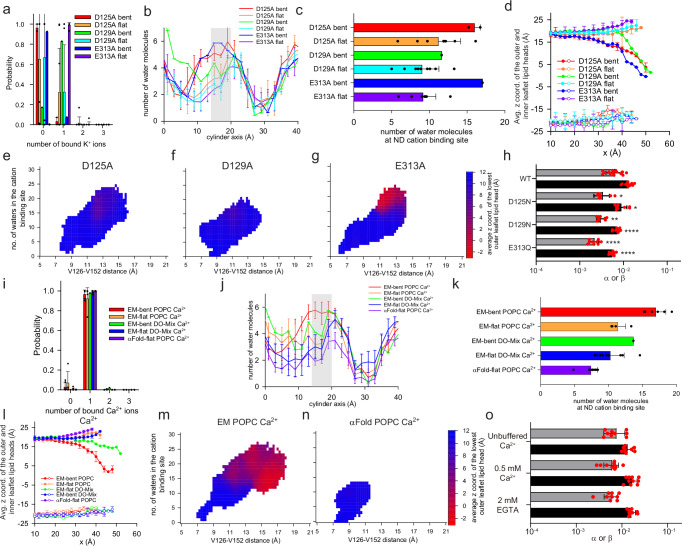
Phosphatidylserine externalization on the surface of dying cells is a key signal for their recognition and clearance by macrophages and is mediated by members of the X-Kell related (Xkr) protein family. Defective Xkr-mediated scrambling impairs clearance, leading to inflammation. It was proposed that activation of the Xkr4 apoptotic scramblase requires caspase cleavage, followed by dimerization and ligand binding. Here, using a combination of biochemical approaches we show that purified monomeric, full-length human Xkr4 (hXkr4) scrambles lipids. CryoEM imaging shows that hXkr4 adopts a novel conformation, where three conserved acidic residues create an electronegative surface embedded in the membrane. Molecular dynamics simulations show this conformation induces membrane thinning, which could promote scrambling. Thinning is ablated or reduced in conditions where scrambling is abolished or reduced. Our work provides insights into the molecular mechanisms of hXkr4 scrambling and suggests the ability to thin membranes might be a general property of active scramblases.
Overview
The claims and statistics of this paper haven’t been checked yet.
Run the check — free, no account needed. It reads the open-access text and checks the sources it cites.
Integrity signals
Registry
Cites
Statistics
Figures
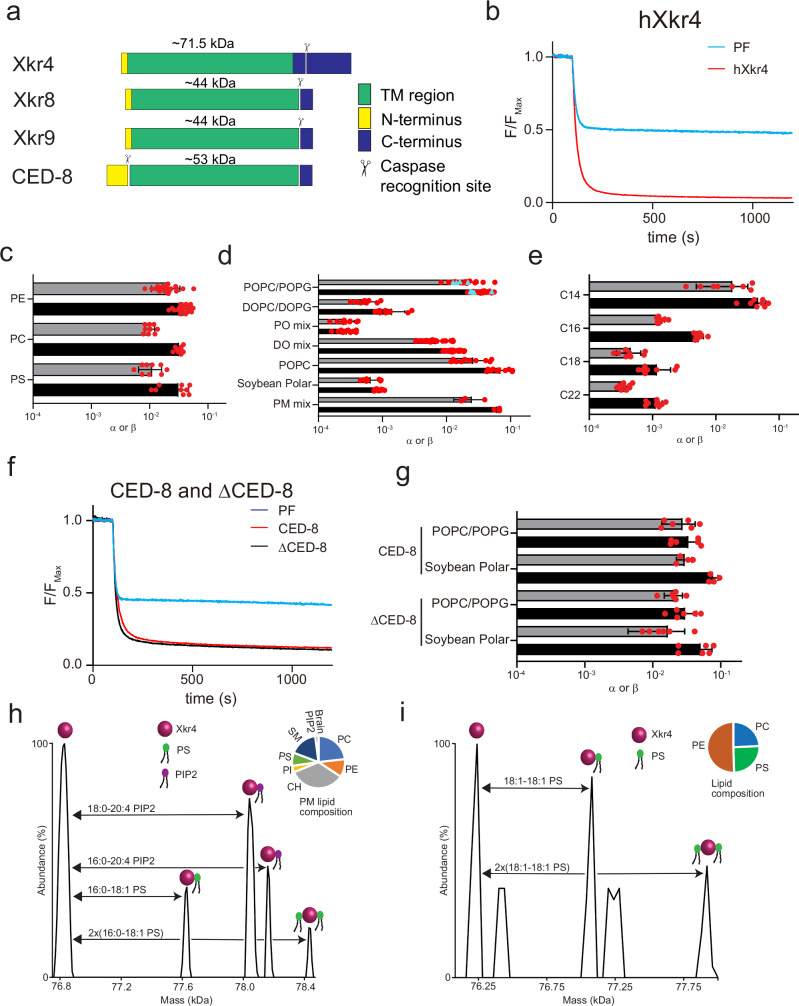
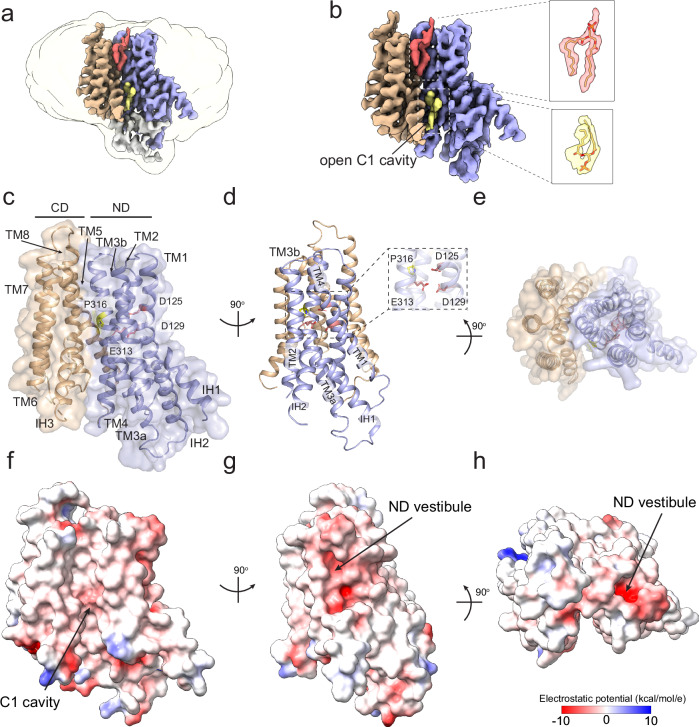
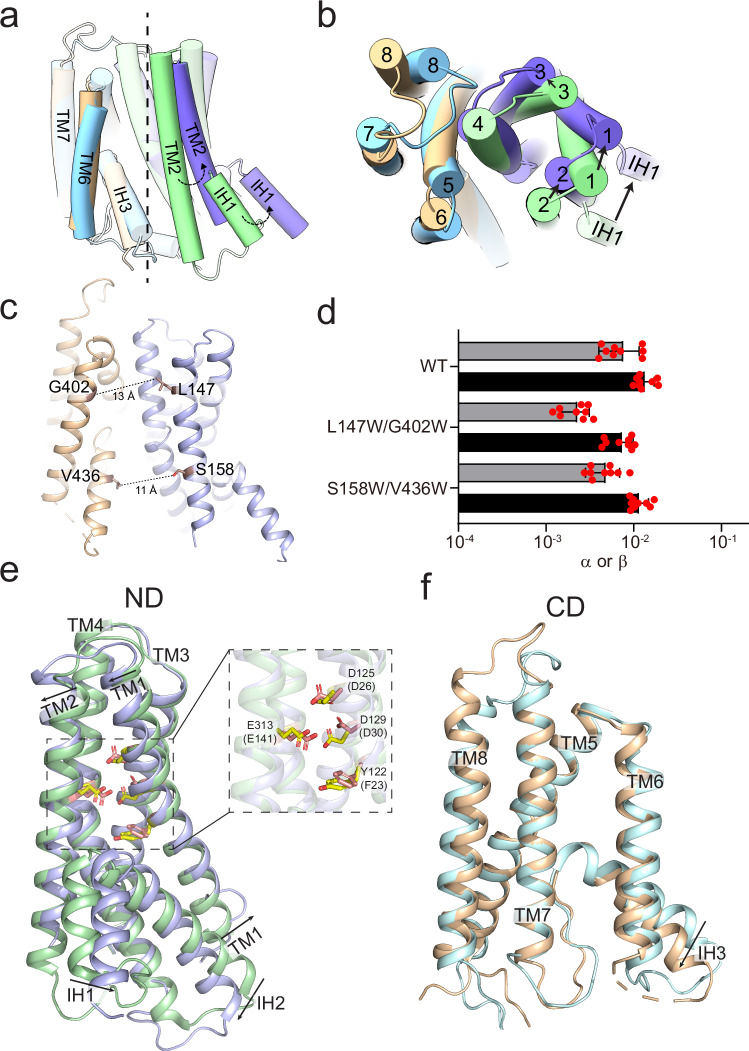
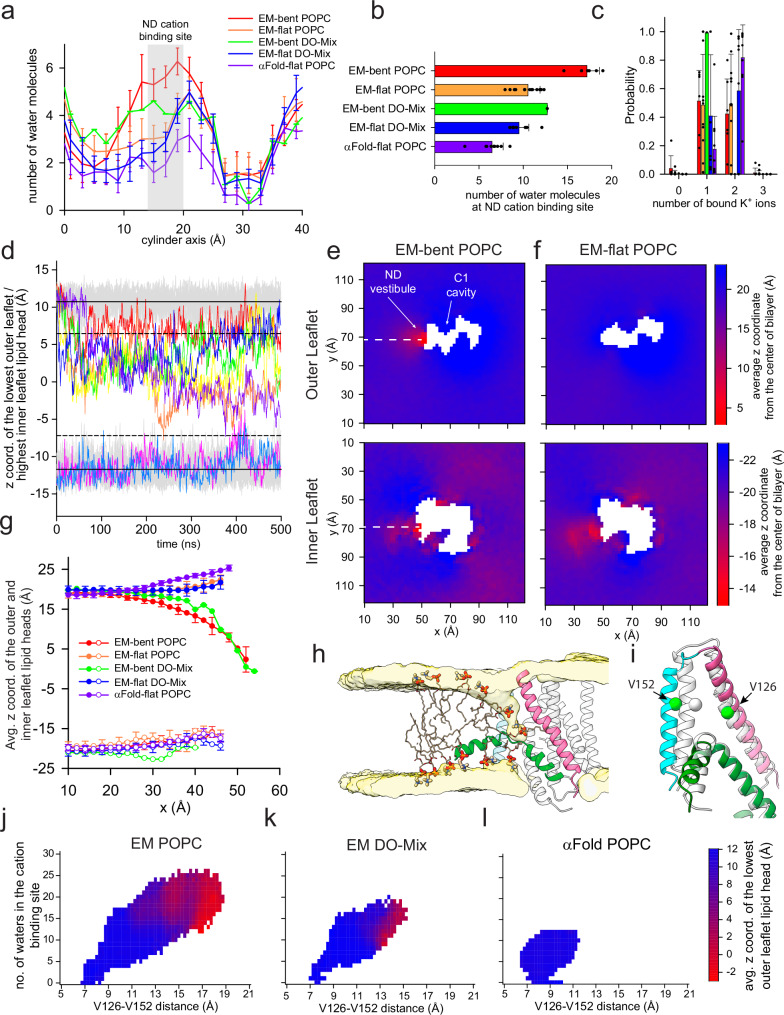
Verification
Claims the paper makes
The claims and statistics of this paper haven’t been checked yet.
Run the check — free, no account needed. It reads the open-access text and checks the sources it cites.
Self-check
Percentages, sums and reported differences re-computed from the paper’s own numbers.
The self-check needs the paper’s full text.
Citations
Cites
Highly accurate protein structure prediction with AlphaFold
Jumper, J., Evans, R., Pritzel, A., Green, T., Figurnov, M., Ronneberger, O., Tunyasuvunakool, K., Bates, R., Žídek, A., Potapenko, A., et al. (2021) · Nature · doi:10.1038/s41586-021-03819-2 · Cited by 43,764
Research works printed but not linked: 81
- 10.1152/physrev.00020.2015 · DOI
- Sakuragi, T. and S. Nagata , Regulation of phospholipid distribution in the lipid bilayer by flippases and scramblases. Nature Reviews Molecular Cell Biology, 2023. · DOI
- 10.1016/j.cub.2018.01.007 · DOI
- 2017, Anoctamins/TMEM16 Proteins: Chloride Channels Flirting with Lipids and Extracellular Vesicles, Annu Rev Physiol, 10, 119
- 2007, Apoptosis in health and disease and modulation of apoptosis for therapy: An overview, Indian J Clin Biochem, 22, 6, 10.1007/BF02913307 · DOI
- 10.1038/471310a · DOI
- 10.1110/ps.04789804 · DOI
- 10.1038/ni.3253 · DOI · Paper page
- 2020, Efferocytosis in health and disease, Nature Reviews Immunology, 20, 254, 10.1038/s41577-019-0240-6 · DOI · Paper page
- 10.1007/s10495-008-0187-8 · DOI
- 2021, Release mechanisms of major DAMPs, Apoptosis, 26, 152, 10.1007/s10495-021-01663-3 · DOI
- 2019, Inflammation and its resolution in atherosclerosis: mediators and therapeutic opportunities, Nature Reviews Cardiology, 16, 389
- 10.1016/j.gene.2005.10.037 · DOI
- 10.1126/science.1236758 · DOI
- 10.1074/jbc.M114.583419 · DOI
- 10.1038/ng.81 · DOI · Paper page
- 10.1073/pnas.1720732115 · DOI
- 2017, Xk-related protein 8 regulates myoblast differentiation and survival, The FEBS Journal, 284, 3575, 10.1111/febs.14261 · DOI
- 2018, XK-related protein 5 (XKR5) is a novel negative regulator of KIT/D816V-mediated transformation, Oncogenesis, 7, 48, 10.1038/s41389-018-0057-3 · DOI
- 10.1152/ajplung.00320.2007 · DOI
- 10.1046/j.1440-1711.2003.t01-1-01170.x · DOI · Paper page
- 2021, Caspase cleavage releases a nuclear protein fragment that stimulates phospholipid scrambling at the plasma membrane, Mol Cell, 81, 1397, 10.1016/j.molcel.2021.02.025 · DOI
- 2017, XKR4 Gene Effects on Cerebellar Development Are Not Specific to ADHD, Front Cell Neurosci, 11, 396, 10.3389/fncel.2017.00396 · DOI
- 2013, Imaging gene and environmental effects on cerebellum in Attention-Deficit/Hyperactivity Disorder and typical development, NeuroImage: Clinical, 2, 103, 10.1016/j.nicl.2012.11.010 · DOI
- 10.1016/j.bcp.2007.06.042 · DOI
- 2013, Caspase-mediated activation of Caenorhabditis elegans CED-8 promotes apoptosis and phosphatidylserine externalization, Nature Communications, 4, 2726, 10.1038/ncomms3726 · DOI
- 10.1073/pnas.1820499116 · DOI
- 10.1073/pnas.1610403113 · DOI
- 2023, Extracellular calcium functions as a molecular glue for transmembrane helices to activate the scramblase Xkr4, Nat Commun, 14, 5592, 10.1038/s41467-023-40934-2 · DOI
- 10.1038/s41594-021-00665-8 · DOI
- 10.7554/eLife.69800 · DOI
- 10.1073/PNAS.2205425119/SUPPL_FILE/PNAS.2205425119.SM02.MP4 · DOI
- 10.1002/bies.202200106 · DOI
- Ghanbarpour, A. , et al., A model for a partnership of lipid transfer proteins and scramblases in membrane expansion and organelle biogenesis. Proc Natl Acad Sci U S A, 2021. 118(16). · DOI
- Adlakha, J. , et al., Structural and biochemical insights into lipid transport by VPS13 proteins. J Cell Biol, 2022. 221(5). · DOI
- 2024, The role of the C-terminal tail region as a plug to regulate XKR8 lipid scramblase, J Biol Chem, 300, 105755, 10.1016/j.jbc.2024.105755 · DOI
- 10.1007/s00018-006-6167-7 · DOI
- 2022, TMEM16 scramblases thin the membrane to enable lipid scrambling, Nat Commun, 13, 2604, 10.1038/s41467-022-30300-z · DOI
- Falzone, M.E. , et al., Structural basis of Ca(2+)-dependent activation and lipid transport by a TMEM16 scramblase. Elife, 2019. 8. · DOI
- 2023, Direct determination of oligomeric organization of integral membrane proteins and lipids from intact customizable bilayer, Nat Methods, 20, 891, 10.1038/s41592-023-01864-5 · DOI
- 2023, Studying Membrane Protein-Lipid Specificity through Direct Native Mass Spectrometric Analysis from Tunable Proteoliposomes, J Am Soc Mass Spectrom, 34, 1917, 10.1021/jasms.3c00110 · DOI
- 10.1016/j.str.2012.06.009 · DOI
- 10.1038/nprot.2014.173 · DOI
- Malvezzi, M. , et al., Out of the groove transport of lipids by TMEM16 and GPCR scramblases PNAS, 2018. · DOI
- 10.1007/978-1-0716-0373-4_15 · DOI
- Feng, Z. , O.E. Alvarenga , and A. Accardi , Structural basis of closed groove scrambling by a TMEM16 protein. Nat Struct Mol Biol, 2024. · DOI
- 2013, Ca2+-dependent phospholipid scrambling by a reconstituted TMEM16 ion channel, Nature Communications, 4, 2367, 10.1038/ncomms3367 · DOI
- 10.1038/sj.cdd.4400497 · DOI
- 10.1016/j.bpj.2016.09.032 · DOI
- 10.7554/eLife.44365 · DOI
- 10.1038/nature13984 · DOI
- 10.1038/s41586-022-04814-x · DOI
- 2017, cryoSPARC: algorithms for rapid unsupervised cryo-EM structure determination, Nature Methods, 14, 290, 10.1038/nmeth.4169 · DOI · Paper page
- 2019, The structural basis of lipid scrambling and inactivation in the endoplasmic reticulum scramblase TMEM16K, Nature Communications, 10, 3956, 10.1038/s41467-019-11753-1 · DOI
- 10.1038/s41467-018-05724-1 · DOI
- 10.1073/pnas.1607574113 · DOI
- Jiang, T. , et al., Lipids and ions traverse the membrane by the same physical pathway in the nhTMEM16 scramblase. Elife, 2017. 6. · DOI
- 2021, Molecular mechanisms of ion conduction and ion selectivity in TMEM16 lipid scramblases, Nature Communications, 12, 2826, 10.1038/s41467-021-22724-w · DOI
- 10.1038/s41467-022-34497-x · DOI
- 2019, Stepwise activation mechanism of the scramblase nhTMEM16 revealed by cryo-EM, eLife, 8, e44364, 10.7554/eLife.44364 · DOI
- 2019, Cryo-EM Studies of TMEM16F Calcium-Activated Ion Channel Suggest Features Important for Lipid Scrambling, Cell Reports, 28, 567, 10.1016/j.celrep.2019.06.023 · DOI
- Jarvis, D.L. , Chapter 14 Baculovirus–Insect Cell Expression Systems, in Methods in Enzymology, R.R. Burgess and M.P. Deutscher , Editors. 2009, Academic Press. p. 191–222. · DOI
- 10.1038/nbt1036 · DOI
- 2022, Deconvolving Native and Intact Protein Mass Spectra with UniDec, Methods Mol Biol, 2500, 159, 10.1007/978-1-0716-2325-1_12 · DOI
- 10.1016/j.jsb.2015.08.008 · DOI
- 2019, Real-time cryo-electron microscopy data preprocessing with Warp, Nat Methods, 16, 1146, 10.1038/s41592-019-0580-y · DOI
- 10.1016/j.jsb.2009.01.002 · DOI
- 10.1016/j.jsb.2005.03.010 · DOI
- 2017, Phenix tool to compute a difference map for cryo-EM, Computational Crystallography Newsletter, 8, 8
- 2013, PHENIX News, Computational Crystallography Newsletter, 4, 43
- 10.1107/S2059798319011471/HTTPS://GOLDBOOK.IUPAC.ORG/E02002.HTML · DOI
- 2022, ColabFold: making protein folding accessible to all, Nature Methods, 19, 679, 10.1038/s41592-022-01488-1 · DOI · Paper page
- Webb, B. and A. Sali , Comparative Protein Structure Modeling Using MODELLER. Curr Protoc Bioinformatics, 2016. 54: p. 5.6.1–5.6.37. · DOI
- 10.1016/0263-7855(96)00018-5 · DOI · Paper page
- 10.1002/jcc.23702 · DOI
- 10.1021/ct300400x · DOI
- 10.1063/1.445869 · DOI
- 2020, The Ca2+ permeation mechanism of the ryanodine receptor revealed by a multi-site ion model, Nature Communications, 11, 922, 10.1038/s41467-020-14573-w · DOI
- 2015, GROMACS: High performance molecular simulations through multi-level parallelism from laptops to supercomputers, SoftwareX, 1–2, 19
- 10.1038/s41594-023-01210-5 · DOI
- 2023, MOSAICS: A software suite for analysis of membrane structure and dynamics in simulated trajectories, Biophysical Journal, 122, 2023, 10.1016/j.bpj.2022.11.005 · DOI
Metadata
- Authors
- Chakraborty, S., Feng, Z., Lee, S., Alvarenga, O. E., Panda, A., Bruni, R., Khelashvili, G., Gupta, K., & Accardi, A.
- Affiliations
- Weill Cornell Medicine (US)
- Yale University (US)
- New York Structural Biology Center (US)
- Corresponding author
- Accardi, Alessio
- ORCID
- Venue
- Nature Communications
- Publisher
- openRxiv
- Published
- 2024-08-09
- Volume
- 16
- Issue
- 1
- Pages
- 7317-7317
- ISSN
- 2041-1723 (ISSN-L)
- PMC
- PMC12334663
- OpenAlex
- W4413054266
- Cited by
- 5
- References
- 1
- Citations by year
- 2026: 3 · 2025: 1 · 2024: 1
- FWCI
- 1.20
- Type
- journal article
- Language
- en
- Open access
- gold
- doi.org
- Licence
- Locations
- Nature Communications (publishedVersion, cc-by-nc-nd)
- bioRxiv (Cold Spring Harbor Laboratory) (acceptedVersion, cc-by-nc-nd)
- PubMed Central (publishedVersion, cc-by-nc-nd)
- PubMed (publishedVersion)
- PubMed Central (submittedVersion, cc-by-nc-nd)
- DOAJ (DOAJ: Directory of Open Access Journals) (submittedVersion, cc-by-sa)
- Funders
- National Science Foundation (DEAC05- 00OR22725, 1746886)
- U.S. Department of Energy (AC05-00OR22725, DE--AC05--00OR22725, DE-AC05?, 00OR22725)
- U.S. Department of Health and Human Services (R01GM141192)
- Division of Intramural Research, National Institute of Allergy and Infectious Diseases (R01AI178180)
- National Institutes of Health (DE-AC05-00OR22725, GM 103310)
- Directorate for Biological Sciences (1746886)
- Office of Science (DEAC05- 00OR22725, AC05-00OR22725)
- Weill Cornell Medical College
- National Institute of General Medical Sciences (P41GM103310, SCR_019202, P41GM116799, DE-AC05-00OR22725, GM103310, T32GM132081, R01GM141192)
- National Institute of Allergy and Infectious Diseases (R01AI178180)
- Topics
- Life Sciences › Biochemistry, Genetics and Molecular Biology › Molecular Biology › Lipid Membrane Structure and Behavior
- Life Sciences › Immunology and Microbiology › Immunology › Phagocytosis and Immune Regulation
- Life Sciences › Biochemistry, Genetics and Molecular Biology › Molecular Biology › Cell death mechanisms and regulation
- Keywords
- phosphatidylserine exposure, membrane thinning, protein conformation, caspase cleavage, inflammation, cryo-electron microscopy, molecular dynamics simulation
About these checks
Registry, retraction, Cites and statistics results are computed, not judged, with one exception: a printed reference that no index lists is read once by a model before it counts as a citation error. Claims are extracted by a model and kept only when their quote appears verbatim in the text; each cited source is then checked, with a model’s help, for whether it says what the claim relies on. Those verdicts can be wrong — read the claim’s quote and the cited source before relying on one.
Statistics and arithmetic are recomputed, not judged.
Confidence bands are shown only for fields calibrated on our annotated test set. None is calibrated yet, so no band is shown.
What counts as a claim ›How we measure confidence ›How we check this ›
Are you an author, or do you see a problem with this page? Request a review
How to cite
Cite CoChat for the checks on this page, and the paper for its own findings.
- This page
- CoChat. (2026). Citation check: Structure and function of the human apoptotic scramblase Xkr4. https://app.cochat.ai/papers/10.1101/2024.08.07.607004
- The paper
- Chakraborty, S., Feng, Z., Lee, S., Alvarenga, O. E., Panda, A., Bruni, R., Khelashvili, G., Gupta, K., & Accardi, A. (2024). Structure and function of the human apoptotic scramblase Xkr4. Nature Communications. https://doi.org/10.1101/2024.08.07.607004
