

The late onset Alzheimer’s disease risk factor iRhom2/RHBDF2 is a modifier of microglial TREM2 proteolysis
Open accessPreprint — published as 10.26508/lsa.202403080 · Paper page
The DOI matches its Crossref record; 97 of the 98 references it cites were found in a registry or an index; none of the 92 sources its claims cite is checked for support yet.
Abstract
The cell surface receptor TREM2 is a key genetic risk factor and drug target in Alzheimer’s disease (AD). In the brain, TREM2 is expressed in microglia, where it undergoes proteolytic cleavage, linked to AD risk, but the responsible protease in microglia is still unknown. Another microglia-expressed AD risk factor is catalytically inactive rhomboid 2 (iRhom2, RHBDF2), which binds to and acts as a non-catalytic subunit of the metalloprotease ADAM17. A potential role in TREM2 proteolysis is not yet known. Using microglial-like BV2 cells, bone marrow-derived macrophages and primary murine microglia, we identify iRhom2 as a modifier of ADAM17-mediated TREM2 shedding. Loss of iRhom2 increased TREM2 in cell lysates and at the cell surface and enhanced TREM2 signaling and microglial phagocytosis of the amyloid β-peptide (Aβ). This study establishes ADAM17 as a physiological TREM2 protease in microglia, and suggests iRhom2 as a potential drug target for modulating TREM2 proteolysis in AD.
Overview
CoChat Summary
TL;DR
This study identifies the ADAM17/iRhom2 complex as a physiological TREM2 protease in microglia and shows that loss of iRhom2 reduces sTREM2, increases full-length/surface TREM2, and enhances TREM2 signaling, phagocytosis, and lipid droplet formation. It establishes iRhom2/RHBDF2 as a modifier of microglial TREM2 proteolysis relevant to late-onset Alzheimer’s disease risk.
Key findings
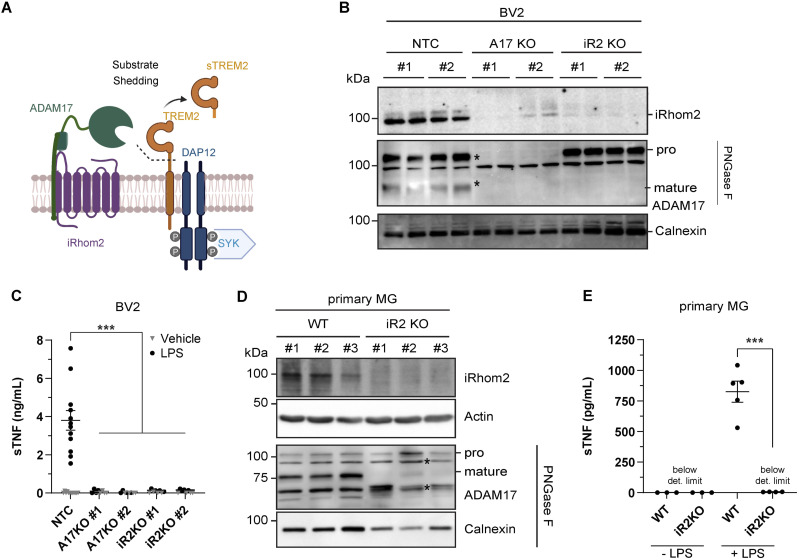
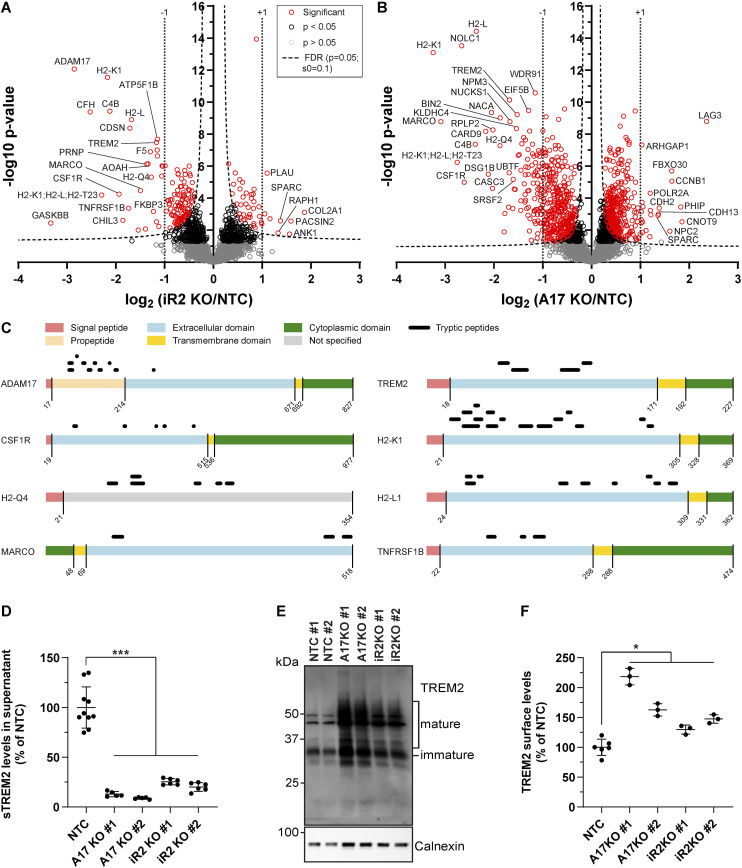
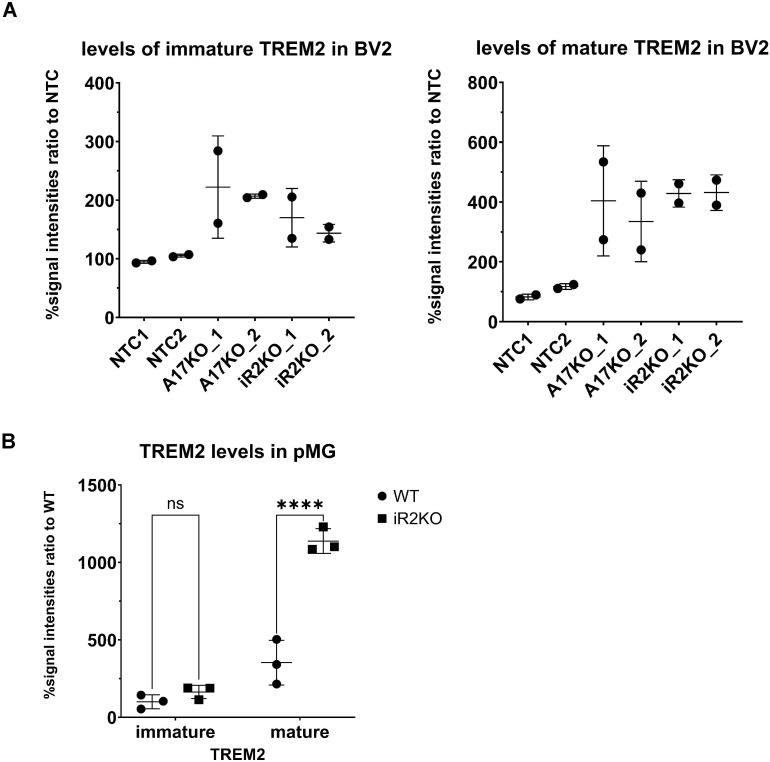
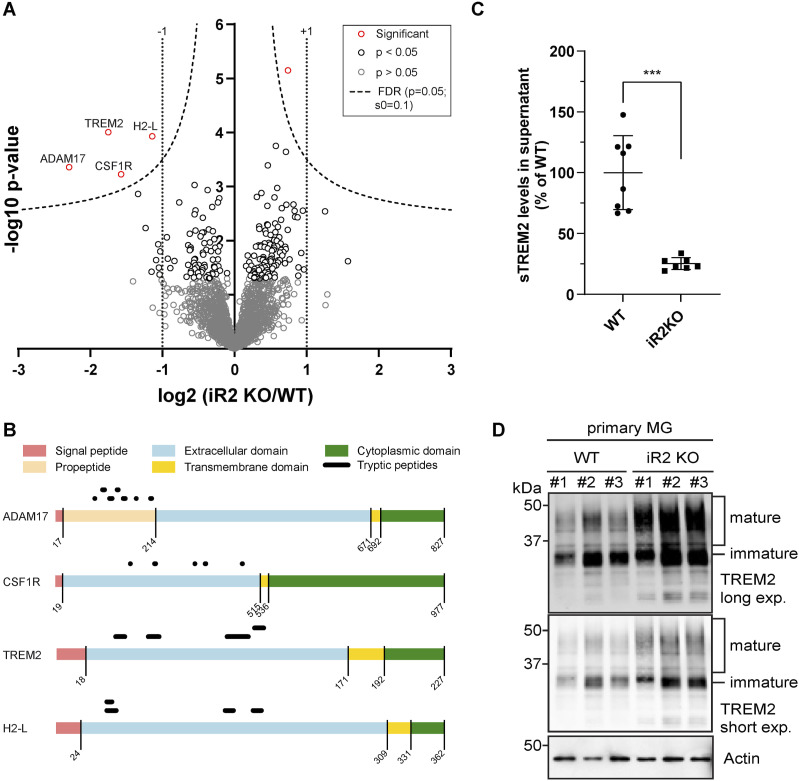
- Loss of iRhom2 or ADAM17 in BV2 microglial cells reduced sTREM2: hiSPECS showed >50% reduction, and ELISA measured ∼90% reduction upon ADAM17 loss and ∼75% upon iRhom2 loss; full-length TREM2 increased in lysates and at the cell surface.
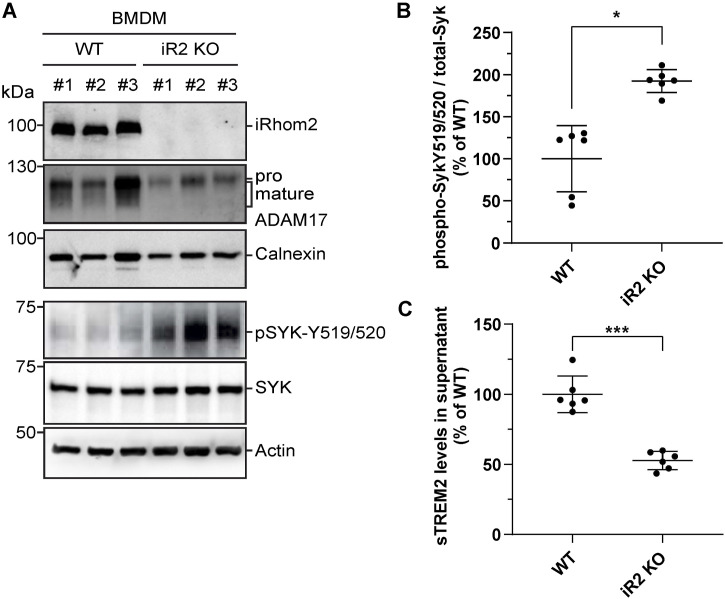
- In primary iRhom2−/− microglia, sTREM2 was reduced to almost 25% by ELISA and full-length TREM2 increased; in iRhom2−/− BMDMs, pSyk levels were doubled and sTREM2 was reduced by 50%.
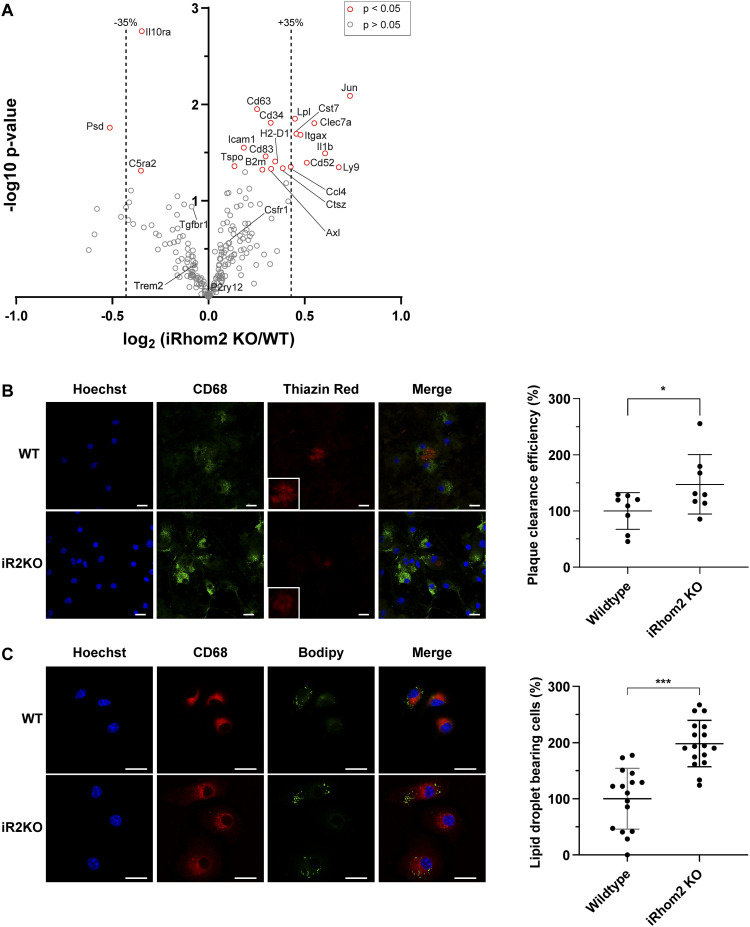
- iRhom2−/− microglia showed >35% increased expression of DAM-linked genes Clec7a, Itgax, Cst7, and Lpl, unchanged homeostatic genes and TREM2 expression, a 50% increase in Aβ plaque clearance efficiency, and doubled numbers of lipid droplet–bearing cells.
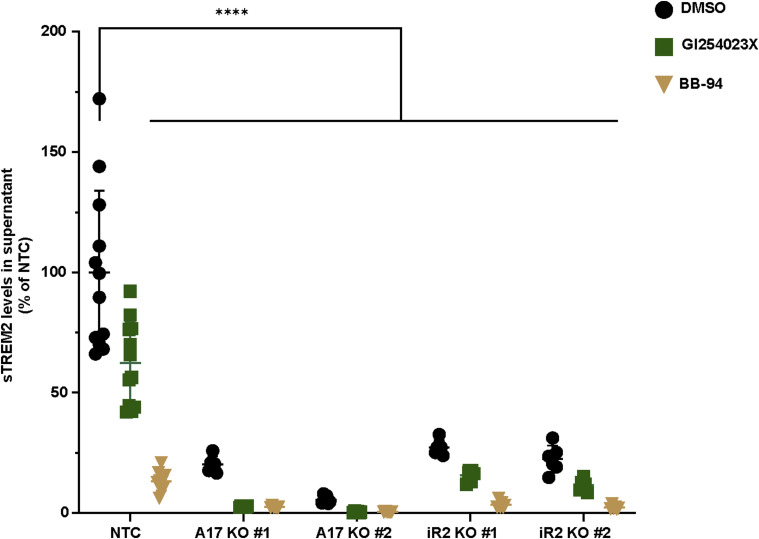
- ADAM10 also contributes to TREM2 proteolysis in BV2 cells, but to a lower extent than ADAM17; ADAM10-preferring inhibitor GI254023X or broad-spectrum BB94 nearly completely blocked remaining sTREM2 in iRhom2−/− and ADAM17−/− BV2 cells.
Methods
- Used BV2 microglial-like cells with CRISPR/Cas9 knockout of iRhom2 or ADAM17 and non-targeting controls; primary microglia from WT and iRhom2−/− pups; BMDMs from WT and iRhom2−/− mice; and APPPS1 mouse brain sections for ex vivo Aβ plaque clearance.
- Secretome proteomics by hiSPECS with click-sugar labeling and LC-MS/MS; validation by sTREM2/TNF ELISA, immunoblot, and flow cytometry; NanoString gene expression panel (226 genes, 218 after pruning) in acutely isolated microglia; ex vivo Aβ plaque clearance and BODIPY lipid droplet staining.
- Statistics included two-sided t tests, one-way/two-way ANOVA with post hoc tests, and permutation-based FDR for proteomics; data are means ± SD.
Limitations
- The paper states that knockout of iRhom2 or ADAM17 did not fully abolish sTREM2, suggesting one or several additional proteases may also contribute; ADAM10 also contributes to TREM2 proteolysis in BV2 cells.
- The paper states it remains unclear whether increased TREM2 cleavage and sTREM2 production are beneficial or detrimental in AD, potentially depending on whether studies examine amyloid or tau pathology in vitro/in animal models versus AD risk in genetic studies.
- Text-evident: signaling studies used BMDMs because of low primary microglial cell numbers; phagocytosis and lipid droplet assays are ex vivo/in vitro, not in vivo; NanoString used a selected 226-gene panel, and iRhom2−/− microglia were not in a full DAM state but shared some gene expression changes with it.
Model-written summary. Check it against the paper before relying on it.
Integrity signals
Registry
Cites
Statistics
Figures
Verification
Claims the paper makes
0 Valid · 1 Not valid · 38 Not checked · 59 Own results and interpretations
A result the paper reports from its own data — it cites no other source for it, so there is none to check. The quote shows it is in the paper.
In the paper
“Notably, pSyk levels were doubled in iRhom2-deficient BMDMs compared with WT controls (Fig 4A and B)”
§ The late-onset Alzheimer’s disease risk factor RHBDF2 is a modifier of microglial TREM2 proteolysis > Results > iRhom2 deficiency enhances TREM2 signaling in peripheral myeloid cells
plainstates an association- Asserted: passes — The authors put it forward as true.
- Checkable: passes — It can be checked against evidence.
- Load-bearing: passes — The paper’s conclusions depend on it.
- Based: passes — The paper gives a reason why it holds.
A result the paper reports from its own data — it cites no other source for it, so there is none to check. The quote shows it is in the paper.
In the paper
“Compared with WT microglia, the number of lipid droplet–bearing microglia was doubled in iRhom2-deficient cells (Fig 5C).”
- Also stated in: § iRhom2 deficiency enhances microglial phagocytosis and lipid droplet formation · plain
“increases the number of lipid droplet–bearing microglia.”
§ The late-onset Alzheimer’s disease risk factor RHBDF2 is a modifier of microglial TREM2 proteolysis > Results > iRhom2 deficiency enhances microglial phagocytosis and lipid droplet formation
plainstates a cause- Asserted: passes — The authors put it forward as true.
- Checkable: passes — It can be checked against evidence.
- Load-bearing: passes — The paper’s conclusions depend on it.
- Based: passes — The paper gives a reason why it holds.
- Also stated in: § iRhom2 deficiency enhances microglial phagocytosis and lipid droplet formation · plain
A result the paper reports from its own data — it cites no other source for it, so there is none to check. The quote shows it is in the paper.
In the paper
“and by enhanced TREM2 at the microglial cell surface.”
§ The late-onset Alzheimer’s disease risk factor RHBDF2 is a modifier of microglial TREM2 proteolysis > Discussion
plainstates a cause- Asserted: passes — The authors put it forward as true.
- Checkable: passes — It can be checked against evidence.
- Load-bearing: passes — The paper’s conclusions depend on it.
- Based: passes — The paper gives a reason why it holds.
A result the paper reports from its own data — it cites no other source for it, so there is none to check. The quote shows it is in the paper.
In the paper
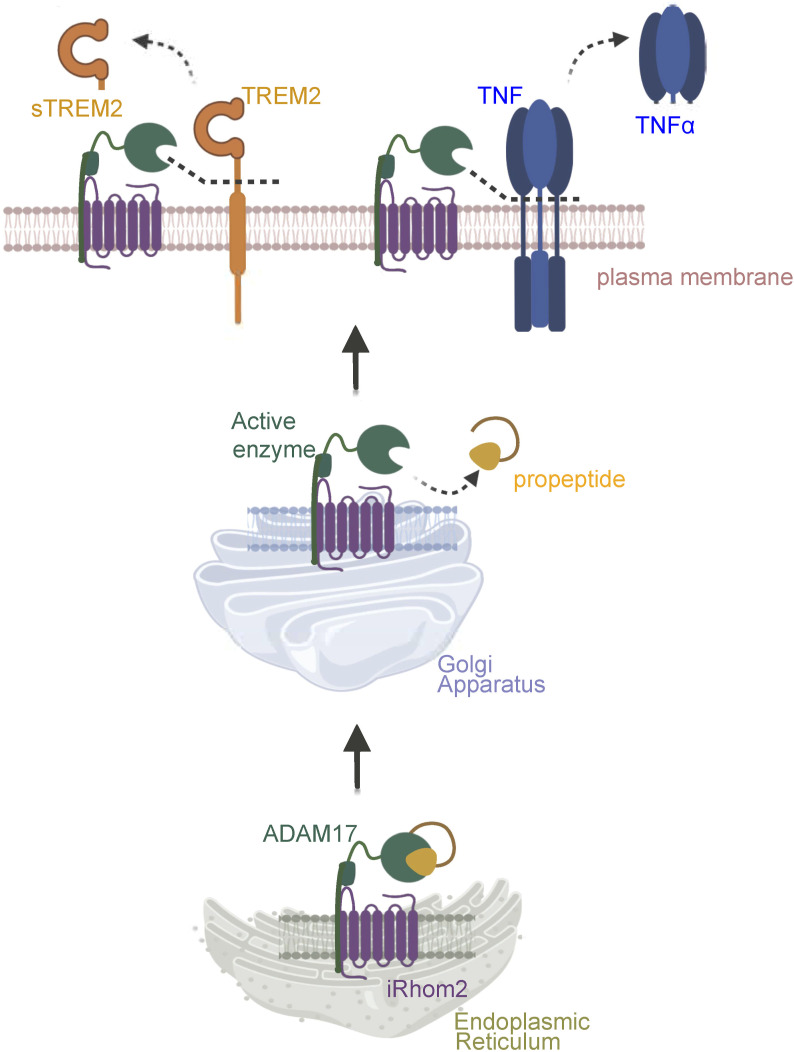
“the mature, proteolytically active form of ADAM17, which has a lower molecular weight because of prodomain cleavage in the TGN, was strongly reduced in iRhom2−/− BV2 cells (Figs 1B and S1 for a scheme).”
§ The late-onset Alzheimer’s disease risk factor RHBDF2 is a modifier of microglial TREM2 proteolysis > Results > Loss of iRhom2 blocks ADAM17 activity in microglia
boostedstates a cause- Asserted: passes — The authors put it forward as true.
- Checkable: passes — It can be checked against evidence.
- Load-bearing: passes — The paper’s conclusions depend on it.
- Based: passes — The paper gives a reason why it holds.
A result the paper states — it cites no source for it, so there is none to check. The quote shows it is in the paper.
In the paper
“we observed enhanced levels of pSyk”
§ The late-onset Alzheimer’s disease risk factor RHBDF2 is a modifier of microglial TREM2 proteolysis > Discussion
plainstates a cause- Asserted: passes — The authors put it forward as true.
- Checkable: passes — It can be checked against evidence.
- Load-bearing: passes — The paper’s conclusions depend on it.
- Based: passes — The paper gives a reason why it holds.
42 more claims
Create a free account to see all 98 claims and to verify the 75 references still open.
- It may state two separate claims as one. 31
- Probably not a substantial claim. 33
- The quote only partly states this claim. 1
Self-check
Percentages, sums and reported differences re-computed from the paper’s own numbers.
Each contradiction between two passages listed here was confirmed by an independent check.
Rated minor: it would not touch a result — a value no result rests on, a p-value that stays on the same side of the significance level, or a conflict that is clerical, resolved elsewhere in the paper, or outside its own findings.
In the paper
§ The late-onset Alzheimer’s disease risk factor RHBDF2 is a modifier of microglial TREM2 proteolysis > Results > iRhom2 deficiency enhances TREM2 signaling in peripheral myeloid cells
“In addition, we observed a 50% reduction in soluble TREM2 production (Fig 4C), mirroring the results seen in BV2 cells and primary microglia (Fig 1C and E).”
§ The late-onset Alzheimer’s disease risk factor RHBDF2 is a modifier of microglial TREM2 proteolysis > Introduction
“(C, E) Data information: data (C, E) are represented as means ± SD from at least three independent experiments.”
Rated minor: it would not touch a result — a value no result rests on, a p-value that stays on the same side of the significance level, or a conflict that is clerical, resolved elsewhere in the paper, or outside its own findings.
In the paper
§ The late-onset Alzheimer’s disease risk factor RHBDF2 is a modifier of microglial TREM2 proteolysis > Results > iRhom2 deficiency enhances microglial phagocytosis and lipid droplet formation
“Gene expression of acutely isolated microglia was analyzed using a NanoString panel that included 235 selected genes related to microglial activation”
§ The late-onset Alzheimer’s disease risk factor RHBDF2 is a modifier of microglial TREM2 proteolysis > Materials and Methods > NanoString
“RNA levels of a customized codeset containing 226 genes were analyzed using NanoString technology at Proteros.”
Rated minor: it would not touch a result — a value no result rests on, a p-value that stays on the same side of the significance level, or a conflict that is clerical, resolved elsewhere in the paper, or outside its own findings.
In the paper
§ The late-onset Alzheimer’s disease risk factor RHBDF2 is a modifier of microglial TREM2 proteolysis > Results > iRhom2 enables ADAM17-mediated proteolysis of TREM2 in BV2 cells
“Quantification of mature and immature TREM2 levels in primary microglia was performed using data from Fig 3E.”
§ The late-onset Alzheimer’s disease risk factor RHBDF2 is a modifier of microglial TREM2 proteolysis > Results > iRhom2 controls TREM2 proteolysis in primary microglia
“(D) Immunoblot analysis of TREM2 levels in primary microglial lysates derived from WT or iRhom2−/− pups.”
Rated minor: it would not touch a result — a value no result rests on, a p-value that stays on the same side of the significance level, or a conflict that is clerical, resolved elsewhere in the paper, or outside its own findings.
In the paper
§ The late-onset Alzheimer’s disease risk factor RHBDF2 is a modifier of microglial TREM2 proteolysis > Results > iRhom2 deficiency enhances microglial phagocytosis and lipid droplet formation
“At four days in vitro (DIV4), microglial lysosomes were stained with CD68 (red), lipid droplets with BODIPY (green), and nuclei (blue) with Hoechst.”
§ The late-onset Alzheimer’s disease risk factor RHBDF2 is a modifier of microglial TREM2 proteolysis > Materials and Methods > Lipid droplet staining in primary microglia
“At DIV3, microglia were fixed in 4% PFA/sucrose for 20 min.”
Citations
Cites
Significance analysis of microarrays applied to the ionizing radiation response
Tusher, V. G., Tibshirani, R., & Chu, G. (2001) · Proceedings of the National Academy of Sciences · doi:10.1073/pnas.091062498 · Cited by 10,568
The Perseus computational platform for comprehensive analysis of (prote)omics data
Tyanova, S., Temu, T., Sinitcyn, P., Carlson, A., Hein, M. Y., Geiger, T., Mann, M., & Cox, J. (2016) · Nature Methods · doi:10.1038/nmeth.3901 · Cited by 8,803
The PRIDE database resources in 2022: a hub for mass spectrometry-based proteomics evidences
Perez-Riverol, Y., Bai, J., Bandla, C., García-Seisdedos, D., Hewapathirana, S., Kamatchinathan, S., Kundu, D. J., Prakash, A., Frericks-Zipper, A., Eisenacher, M., et al. (2022) · Nucleic Acids Research · doi:10.1093/nar/gkab1038 · Cited by 6,125
A Unique Microglia Type Associated with Restricting Development of Alzheimer’s Disease
Keren-Shaul, H., Spinrad, A., Weiner, A., Matcovitch-Natan, O., Dvir-Szternfeld, R., Ulland, T. K., David, E., Baruch, K., Lara-Astaiso, D., Toth, B., et al. (2017) · Cell · doi:10.1016/j.cell.2017.05.018 · Cited by 5,493
DIA-NN: neural networks and interference correction enable deep proteome coverage in high throughput
Demichev, V., Messner, C. B., Vernardis, S. I., Lilley, K. S., & Ralser, M. (2020) · Nature Methods · doi:10.1038/s41592-019-0638-x · Cited by 3,343
A metalloproteinase disintegrin that releases tumour-necrosis factor-α from cells
Black, R. A., Rauch, C. T., Kozlosky, C. J., Peschon, J. J., Slack, J. L., Wolfson, M. F., Castner, B. J., Stocking, K. L., Reddy, P., Srinivasan, S., et al. (1997) · Nature · doi:10.1038/385729a0 · Cited by 3,149
TREM2 Variants in Alzheimer's Disease
Guerreiro, R., Wojtas, A., Bras, J., Carrasquillo, M., Rogaeva, E., Majounie, E., Cruchaga, C., Sassi, C., Kauwe, J. S. K., Younkin, S., et al. (2013) · New England Journal of Medicine · doi:10.1056/nejmoa1211851 · Cited by 3,020
New insights into the genetic etiology of Alzheimer’s disease and related dementias
Bellenguez, C., Küçükali, F., Jansen, I. E., Kleineidam, L., Moreno-Grau, S., Amin, N., Naj, A. C., Campos-Martin, R., Grenier-Boley, B., Andrade, V., et al. (2022) · Nature Genetics · doi:10.1038/s41588-022-01024-z · Cited by 2,498
Bard, F., Cannon, C., Barbour, R., Burke, R.-L., Games, D., Grajeda, H., Guido, T., Hu, K., Huang, J., Johnson-Wood, K., et al. (2000) · Nature Medicine · doi:10.1038/78682 · Cited by 2,012
Single-pot, solid-phase-enhanced sample preparation for proteomics experiments
Hughes, C. S., Moggridge, S., Müller, T., Sorensen, P. H., Morin, G. B., & Krijgsveld, J. (2019) · Nature Protocols · doi:10.1038/s41596-018-0082-x · Cited by 1,941
Research works printed but not linked: 1
- Guerreiro R, Hardy J (2013) TREM2 and neurodegenerative disease. New Engl J Med 369: 1569– 1570. 10.1056/NEJMc1306509 24143816 · DOI · Paper page
Cited by
Roles of TREM2 in Alzheimer’s disease
Qi, X., Zhu, K., Ke, W., Wang, J., Mao, S., & Chen, G. (2025) · Translational Neurodegeneration · doi:10.1186/s40035-025-00515-3 · Cited by 43
Xu, L., Zhang, R., Zhang, X., Liu, B., Shang, X., & Huang, D. (2025) · Molecular Medicine · doi:10.1186/s10020-025-01326-y · Cited by 10
LeVasseur, H. L., & Zhou, B. (2025) · Journal of Neuroimmunology · doi:10.1016/j.jneuroim.2025.578711 · Cited by 2
Lü, M., Bai, K., Bai, Y., Miao, Y., Zhao, T., Yang, Y., Chen, J., Yang, T., Li, T., & Wei, H. (2025) · Pediatric Discovery · doi:10.1002/pdi3.70024 · Cited by 1
Li, Z., Ming, Q., Fu, L., Yang, J., Lv, Y., Chen, B., & Lu, Z. (2026) · Frontiers in Nutrition · doi:10.3389/fnut.2026.1886340 · Cited by 1
Metadata
- Authors
- Jocher, G., Müller, S. A., Hsia, H.-E., Lastra Osua, M., Özcelik, G., Hofmann, L. I., Aßfalg, M., Dinkel, L., Feng, X., Schlepckow, K., Willem, M., Haass, C., Tahirovic, S., Blobel, C. P., & Lichtenthaler, S. F.
- Affiliations
- German Center for Neurodegenerative Diseases (DE)
- Hospital for Special Surgery (US)
- Corresponding author
- Lichtenthaler, Stefan F.
- ORCID
- Venue
- Life Science Alliance
- Publisher
- openRxiv
- Published
- 2024-09-16
- Volume
- 8
- Issue
- 5
- Pages
- e202403080-e202403080
- ISSN
- 2575-1077 (ISSN-L)
- PMC
- PMC11909414
- OpenAlex
- W4408398886
- Semantic Scholar
- f77567a3bc894c78e1b3a87447a459a499f22af3
- Cited by
- 6
- References
- 98
- Citations by year
- 2026: 2 · 2025: 4
- FWCI
- 1.69
- Type
- journal article
- Language
- en
- Open access
- gold
- doi.org
- Licence
- Locations
- Life Science Alliance (publishedVersion, cc-by)
- bioRxiv (Cold Spring Harbor Laboratory) (submittedVersion)
- DZNE Pub (publishedVersion, cc-by)
- Europe PMC (PubMed Central) (publishedVersion, cc-by)
- PubMed Central (publishedVersion, cc-by)
- PubMed (publishedVersion)
- Open access LMU (Ludwid Maxmilian's Universitat Munchen) (submittedVersion, cc-by)
- DOAJ (DOAJ: Directory of Open Access Journals) (submittedVersion)
- Funders
- Alzheimer Forschung Initiative (390857198)
- Deutsche Forschungsgemeinschaft (EXC 2145, EXC 2145SyNergy, 390857198, CoEN6005)
- Eberhard Karls Universität Tübingen
- Bundesministerium für Forschung, Technologie und Raumfahrt (EXC 2145 SyNergy)
- Friedrich Naumann Stiftung
- National Institutes of Health
- National Institute of General Medical Sciences (R35GM134907)
- Topics
- Life Sciences › Neuroscience › Neurology › Neuroinflammation and Neurodegeneration Mechanisms
- Life Sciences › Neuroscience › Cellular and Molecular Neuroscience › Alzheimer's disease research and treatments
- Life Sciences › Biochemistry, Genetics and Molecular Biology › Molecular Biology › Inflammasome and immune disorders
- Keywords
- late-onset Alzheimer's disease, TREM2, RHBDF2, iRhom2, ADAM17, microglia, receptor shedding, amyloid-beta phagocytosis, TREM2 signaling, genetic risk factors, therapeutic target
- MeSH terms
- ADAM17 Protein, Alzheimer Disease, Animals, Carrier Proteins, Humans, Macrophages, Membrane Glycoproteins, Mice, Inbred C57BL, Phagocytosis, Receptors, Immunologic, Risk Factors, Signal Transduction, Amyloid beta-Peptides, Microglia, Mice, Proteolysis
About these checks
Registry, retraction, Cites and statistics results are computed, not judged, with one exception: a printed reference that no index lists is read once by a model before it counts as a citation error. Claims are extracted by a model and kept only when their quote appears verbatim in the text; each cited source is then checked, with a model’s help, for whether it says what the claim relies on. Those verdicts can be wrong — read the claim’s quote and the cited source before relying on one.
A language model drew the claims from the paper on 2026-11-27, under version 3 of the claim definition (model deepseek-v4.1-flash, prompt extract-v3).
A second model labelled each claim on 2026-11-27 (model jev-1.13-20260917, definition revision gold-guideline-v0.2).
Statistics and arithmetic are recomputed, not judged.
Confidence bands are shown only for fields calibrated on our annotated test set. None is calibrated yet, so no band is shown.
What counts as a claim ›How we measure confidence ›How we check this ›
Are you an author, or do you see a problem with this page? Request a review
How to cite
Cite CoChat for the checks on this page, and the paper for its own findings.
- This page
- CoChat. (2026). Citation check: The late onset Alzheimer’s disease risk factor iRhom2/RHBDF2 is a modifier of microglial TREM2 proteolysis. https://app.cochat.ai/papers/10.1101/2024.09.13.612888
- The paper
- Jocher, G., Müller, S. A., Hsia, H.-E., Lastra Osua, M., Özcelik, G., Hofmann, L. I., Aßfalg, M., Dinkel, L., Feng, X., Schlepckow, K., Willem, M., Haass, C., Tahirovic, S., Blobel, C. P., & Lichtenthaler, S. F. (2024). The late onset Alzheimer’s disease risk factor iRhom2/RHBDF2 is a modifier of microglial TREM2 proteolysis. Life Science Alliance. https://doi.org/10.1101/2024.09.13.612888
Data sources
Bibliographic data: Semantic Scholar, OpenAlex, Crossref.
Contains information from the Semantic Scholar Academic Graph Datasets, made available under the ODC Attribution License (ODC-BY 1.0).
Semantic Scholar’s data is described in: Kinney, R., et al. (2023). The Semantic Scholar Open Data Platform. arXiv:2301.10140.
