

The late onset Alzheimer’s disease risk factor iRhom2/RHBDF2 is a modifier of microglial TREM2 proteolysis
Open accessPreprint — published as 10.26508/lsa.202403080 · Paper page
The DOI matches its Crossref record; 97 of the 98 references it cites were found in a registry or an index; none of the 92 sources its claims cite is checked for support yet.
Abstract
The cell surface receptor TREM2 is a key genetic risk factor and drug target in Alzheimer’s disease (AD). In the brain, TREM2 is expressed in microglia, where it undergoes proteolytic cleavage, linked to AD risk, but the responsible protease in microglia is still unknown. Another microglia-expressed AD risk factor is catalytically inactive rhomboid 2 (iRhom2, RHBDF2), which binds to and acts as a non-catalytic subunit of the metalloprotease ADAM17. A potential role in TREM2 proteolysis is not yet known. Using microglial-like BV2 cells, bone marrow-derived macrophages and primary murine microglia, we identify iRhom2 as a modifier of ADAM17-mediated TREM2 shedding. Loss of iRhom2 increased TREM2 in cell lysates and at the cell surface and enhanced TREM2 signaling and microglial phagocytosis of the amyloid β-peptide (Aβ). This study establishes ADAM17 as a physiological TREM2 protease in microglia, and suggests iRhom2 as a potential drug target for modulating TREM2 proteolysis in AD.
Overview
CoChat Summary
TL;DR
This study identifies the ADAM17/iRhom2 complex as a physiological TREM2 protease in microglia and shows that loss of iRhom2 reduces sTREM2, increases full-length/surface TREM2, and enhances TREM2 signaling, phagocytosis, and lipid droplet formation. It establishes iRhom2/RHBDF2 as a modifier of microglial TREM2 proteolysis relevant to late-onset Alzheimer’s disease risk.
Key findings
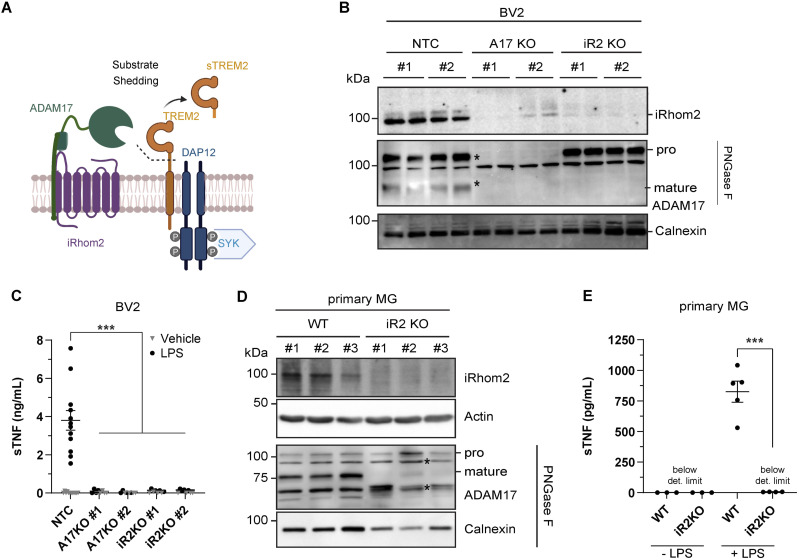
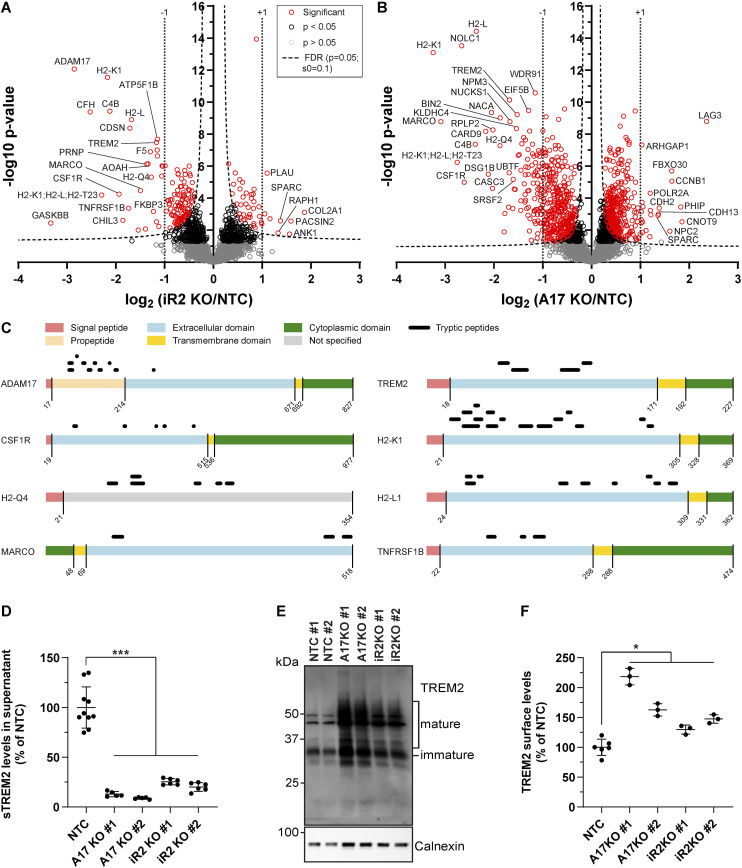
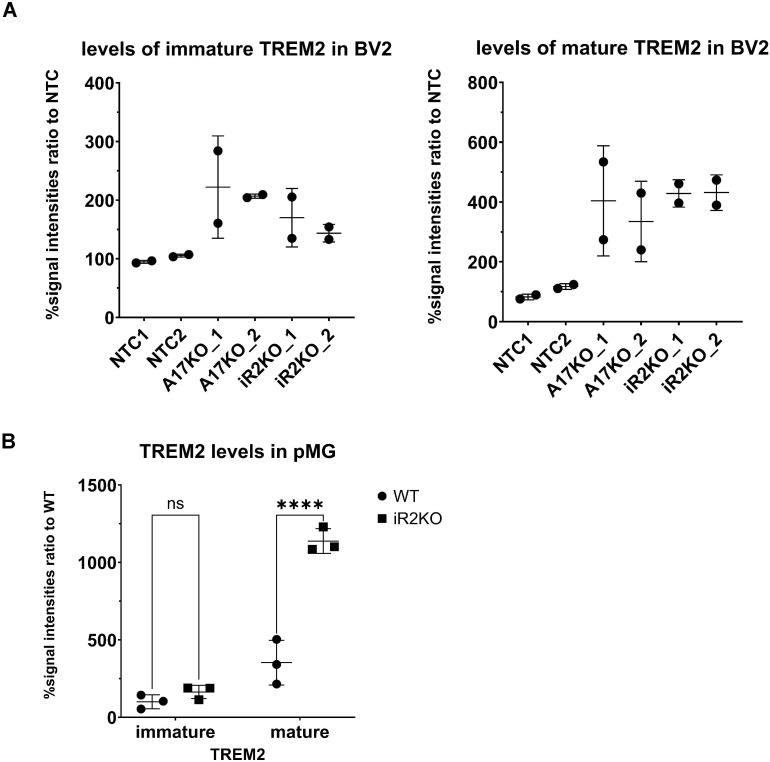
- Loss of iRhom2 or ADAM17 in BV2 microglial cells reduced sTREM2: hiSPECS showed >50% reduction, and ELISA measured ∼90% reduction upon ADAM17 loss and ∼75% upon iRhom2 loss; full-length TREM2 increased in lysates and at the cell surface.
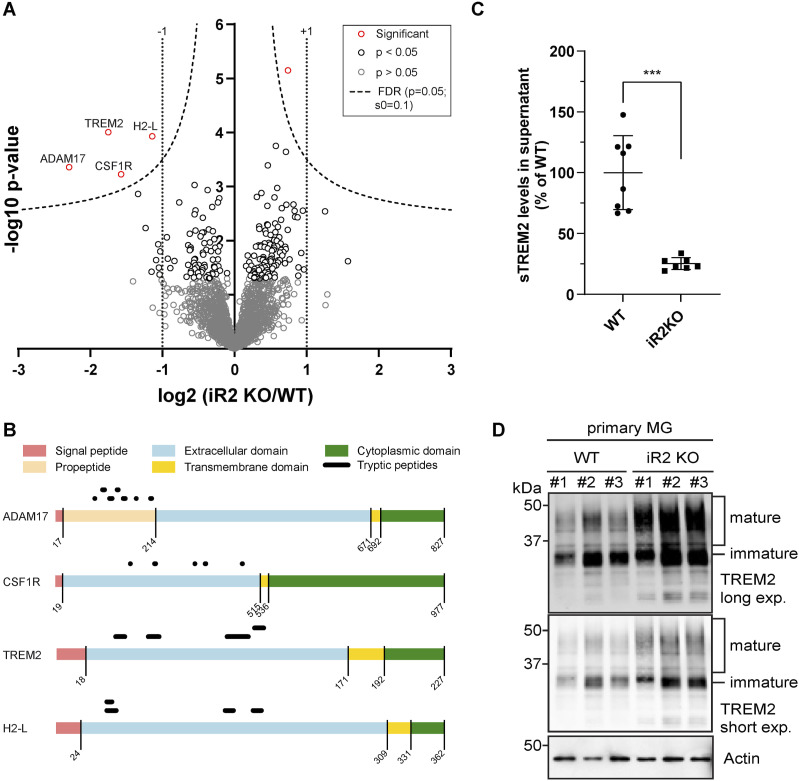
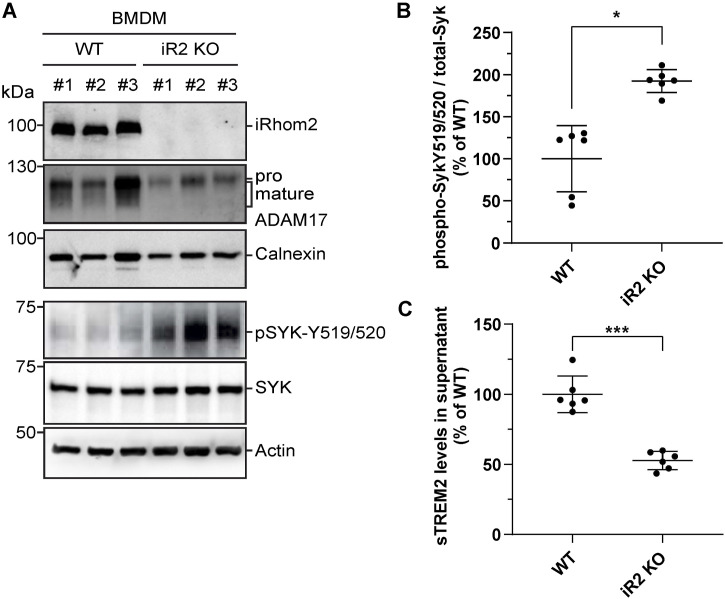
- In primary iRhom2−/− microglia, sTREM2 was reduced to almost 25% by ELISA and full-length TREM2 increased; in iRhom2−/− BMDMs, pSyk levels were doubled and sTREM2 was reduced by 50%.
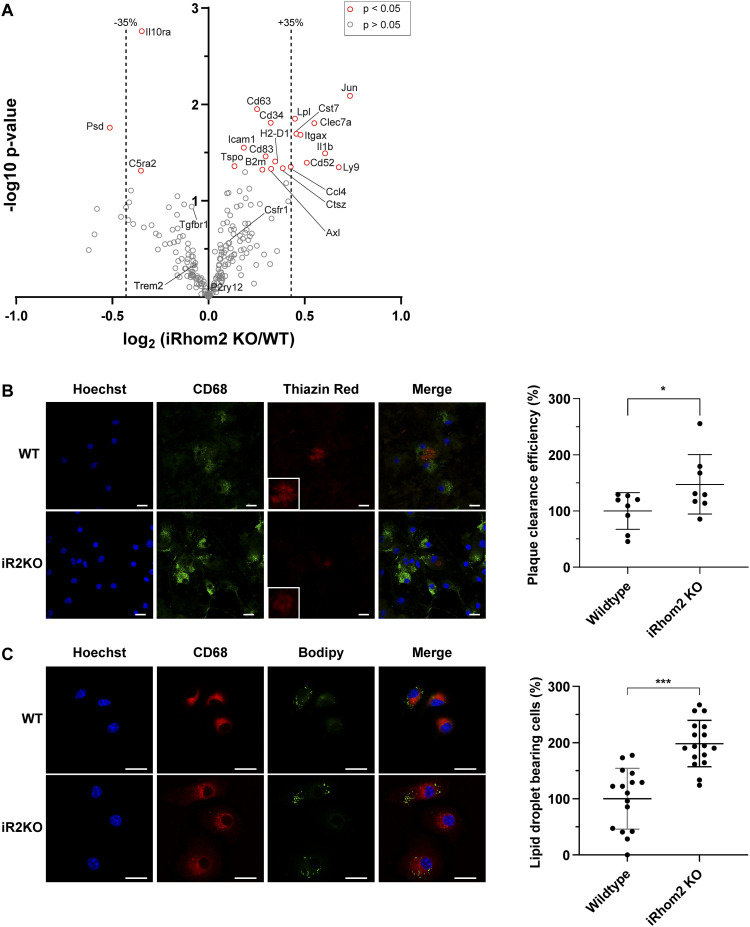
- iRhom2−/− microglia showed >35% increased expression of DAM-linked genes Clec7a, Itgax, Cst7, and Lpl, unchanged homeostatic genes and TREM2 expression, a 50% increase in Aβ plaque clearance efficiency, and doubled numbers of lipid droplet–bearing cells.
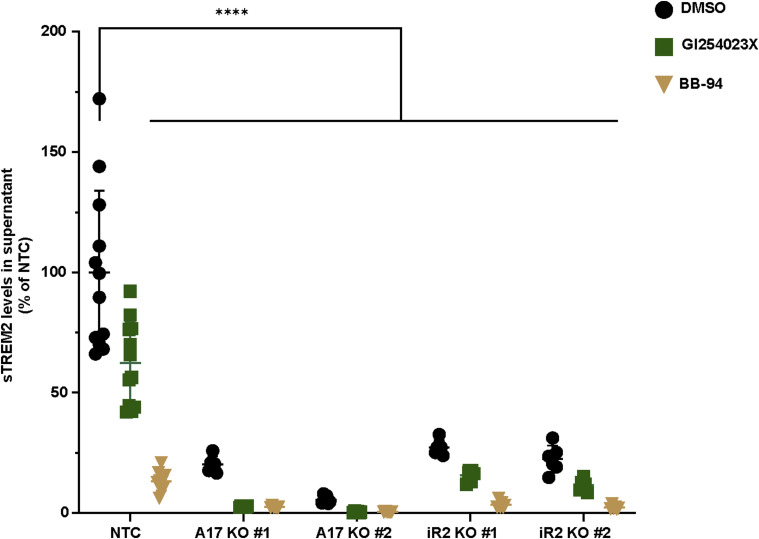
- ADAM10 also contributes to TREM2 proteolysis in BV2 cells, but to a lower extent than ADAM17; ADAM10-preferring inhibitor GI254023X or broad-spectrum BB94 nearly completely blocked remaining sTREM2 in iRhom2−/− and ADAM17−/− BV2 cells.
Methods
- Used BV2 microglial-like cells with CRISPR/Cas9 knockout of iRhom2 or ADAM17 and non-targeting controls; primary microglia from WT and iRhom2−/− pups; BMDMs from WT and iRhom2−/− mice; and APPPS1 mouse brain sections for ex vivo Aβ plaque clearance.
- Secretome proteomics by hiSPECS with click-sugar labeling and LC-MS/MS; validation by sTREM2/TNF ELISA, immunoblot, and flow cytometry; NanoString gene expression panel (226 genes, 218 after pruning) in acutely isolated microglia; ex vivo Aβ plaque clearance and BODIPY lipid droplet staining.
- Statistics included two-sided t tests, one-way/two-way ANOVA with post hoc tests, and permutation-based FDR for proteomics; data are means ± SD.
Limitations
- The paper states that knockout of iRhom2 or ADAM17 did not fully abolish sTREM2, suggesting one or several additional proteases may also contribute; ADAM10 also contributes to TREM2 proteolysis in BV2 cells.
- The paper states it remains unclear whether increased TREM2 cleavage and sTREM2 production are beneficial or detrimental in AD, potentially depending on whether studies examine amyloid or tau pathology in vitro/in animal models versus AD risk in genetic studies.
- Text-evident: signaling studies used BMDMs because of low primary microglial cell numbers; phagocytosis and lipid droplet assays are ex vivo/in vitro, not in vivo; NanoString used a selected 226-gene panel, and iRhom2−/− microglia were not in a full DAM state but shared some gene expression changes with it.
Model-written summary. Check it against the paper before relying on it.
Integrity signals
Registry
Cites
Statistics
Figures
Verification
Claims the paper makes
0 Valid · 1 Not valid · 38 Not checked · 59 Own results and interpretations
A result the paper reports from its own data — it cites no other source for it, so there is none to check. The quote shows it is in the paper.
In the paper
“Notably, pSyk levels were doubled in iRhom2-deficient BMDMs compared with WT controls (Fig 4A and B)”
§ The late-onset Alzheimer’s disease risk factor RHBDF2 is a modifier of microglial TREM2 proteolysis > Results > iRhom2 deficiency enhances TREM2 signaling in peripheral myeloid cells
plainstates an association- Asserted: passes — The authors put it forward as true.
- Checkable: passes — It can be checked against evidence.
- Load-bearing: passes — The paper’s conclusions depend on it.
- Based: passes — The paper gives a reason why it holds.
A result the paper reports from its own data — it cites no other source for it, so there is none to check. The quote shows it is in the paper.
In the paper
“Compared with WT microglia, the number of lipid droplet–bearing microglia was doubled in iRhom2-deficient cells (Fig 5C).”
- Also stated in: § iRhom2 deficiency enhances microglial phagocytosis and lipid droplet formation · plain
“increases the number of lipid droplet–bearing microglia.”
§ The late-onset Alzheimer’s disease risk factor RHBDF2 is a modifier of microglial TREM2 proteolysis > Results > iRhom2 deficiency enhances microglial phagocytosis and lipid droplet formation
plainstates a cause- Asserted: passes — The authors put it forward as true.
- Checkable: passes — It can be checked against evidence.
- Load-bearing: passes — The paper’s conclusions depend on it.
- Based: passes — The paper gives a reason why it holds.
- Also stated in: § iRhom2 deficiency enhances microglial phagocytosis and lipid droplet formation · plain
A result the paper reports from its own data — it cites no other source for it, so there is none to check. The quote shows it is in the paper.
In the paper
“and by enhanced TREM2 at the microglial cell surface.”
§ The late-onset Alzheimer’s disease risk factor RHBDF2 is a modifier of microglial TREM2 proteolysis > Discussion
plainstates a cause- Asserted: passes — The authors put it forward as true.
- Checkable: passes — It can be checked against evidence.
- Load-bearing: passes — The paper’s conclusions depend on it.
- Based: passes — The paper gives a reason why it holds.
A result the paper reports from its own data — it cites no other source for it, so there is none to check. The quote shows it is in the paper.
In the paper
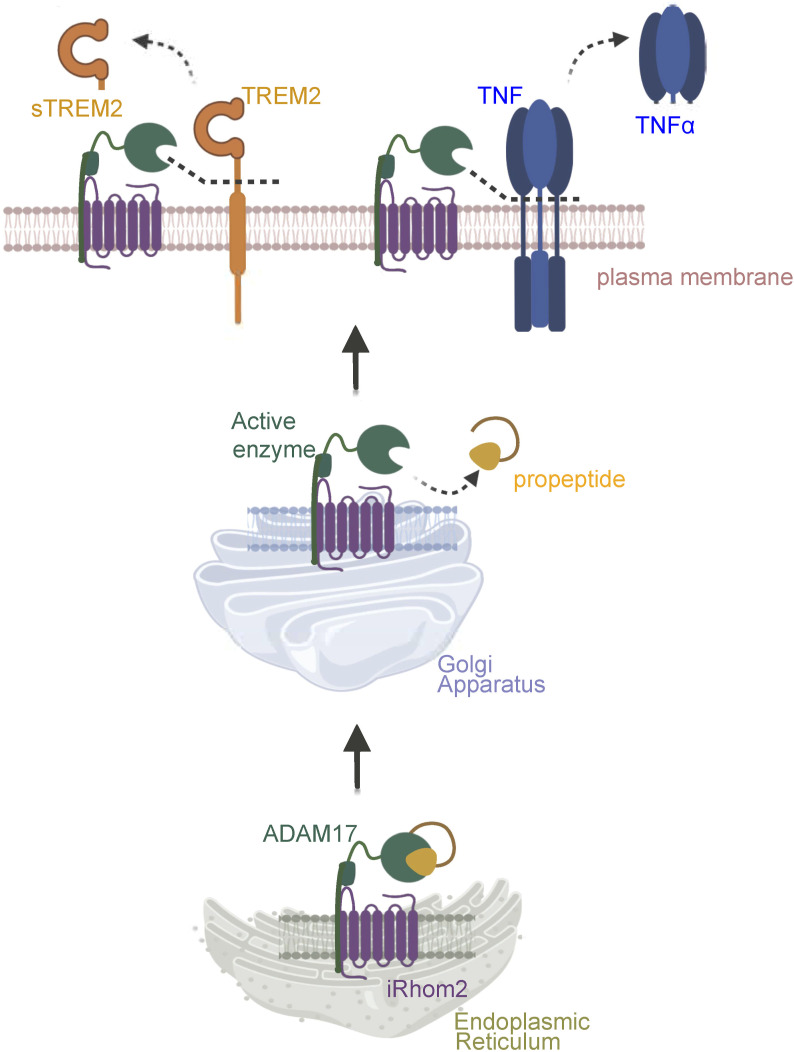
“the mature, proteolytically active form of ADAM17, which has a lower molecular weight because of prodomain cleavage in the TGN, was strongly reduced in iRhom2−/− BV2 cells (Figs 1B and S1 for a scheme).”
§ The late-onset Alzheimer’s disease risk factor RHBDF2 is a modifier of microglial TREM2 proteolysis > Results > Loss of iRhom2 blocks ADAM17 activity in microglia
boostedstates a cause- Asserted: passes — The authors put it forward as true.
- Checkable: passes — It can be checked against evidence.
- Load-bearing: passes — The paper’s conclusions depend on it.
- Based: passes — The paper gives a reason why it holds.
A result the paper states — it cites no source for it, so there is none to check. The quote shows it is in the paper.
In the paper
“we observed enhanced levels of pSyk”
§ The late-onset Alzheimer’s disease risk factor RHBDF2 is a modifier of microglial TREM2 proteolysis > Discussion
plainstates a cause- Asserted: passes — The authors put it forward as true.
- Checkable: passes — It can be checked against evidence.
- Load-bearing: passes — The paper’s conclusions depend on it.
- Based: passes — The paper gives a reason why it holds.
42 more claims
Create a free account to see all 98 claims and to verify the 75 references still open.
- It may state two separate claims as one. 31
- Probably not a substantial claim. 33
- The quote only partly states this claim. 1
Self-check
Percentages, sums and reported differences re-computed from the paper’s own numbers.
Each contradiction between two passages listed here was confirmed by an independent check.
Rated minor: it would not touch a result — a value no result rests on, a p-value that stays on the same side of the significance level, or a conflict that is clerical, resolved elsewhere in the paper, or outside its own findings.
In the paper
§ The late-onset Alzheimer’s disease risk factor RHBDF2 is a modifier of microglial TREM2 proteolysis > Results > iRhom2 deficiency enhances TREM2 signaling in peripheral myeloid cells
“In addition, we observed a 50% reduction in soluble TREM2 production (Fig 4C), mirroring the results seen in BV2 cells and primary microglia (Fig 1C and E).”
§ The late-onset Alzheimer’s disease risk factor RHBDF2 is a modifier of microglial TREM2 proteolysis > Introduction
“(C, E) Data information: data (C, E) are represented as means ± SD from at least three independent experiments.”
Rated minor: it would not touch a result — a value no result rests on, a p-value that stays on the same side of the significance level, or a conflict that is clerical, resolved elsewhere in the paper, or outside its own findings.
In the paper
§ The late-onset Alzheimer’s disease risk factor RHBDF2 is a modifier of microglial TREM2 proteolysis > Results > iRhom2 deficiency enhances microglial phagocytosis and lipid droplet formation
“Gene expression of acutely isolated microglia was analyzed using a NanoString panel that included 235 selected genes related to microglial activation”
§ The late-onset Alzheimer’s disease risk factor RHBDF2 is a modifier of microglial TREM2 proteolysis > Materials and Methods > NanoString
“RNA levels of a customized codeset containing 226 genes were analyzed using NanoString technology at Proteros.”
Rated minor: it would not touch a result — a value no result rests on, a p-value that stays on the same side of the significance level, or a conflict that is clerical, resolved elsewhere in the paper, or outside its own findings.
In the paper
§ The late-onset Alzheimer’s disease risk factor RHBDF2 is a modifier of microglial TREM2 proteolysis > Results > iRhom2 enables ADAM17-mediated proteolysis of TREM2 in BV2 cells
“Quantification of mature and immature TREM2 levels in primary microglia was performed using data from Fig 3E.”
§ The late-onset Alzheimer’s disease risk factor RHBDF2 is a modifier of microglial TREM2 proteolysis > Results > iRhom2 controls TREM2 proteolysis in primary microglia
“(D) Immunoblot analysis of TREM2 levels in primary microglial lysates derived from WT or iRhom2−/− pups.”
Rated minor: it would not touch a result — a value no result rests on, a p-value that stays on the same side of the significance level, or a conflict that is clerical, resolved elsewhere in the paper, or outside its own findings.
In the paper
§ The late-onset Alzheimer’s disease risk factor RHBDF2 is a modifier of microglial TREM2 proteolysis > Results > iRhom2 deficiency enhances microglial phagocytosis and lipid droplet formation
“At four days in vitro (DIV4), microglial lysosomes were stained with CD68 (red), lipid droplets with BODIPY (green), and nuclei (blue) with Hoechst.”
§ The late-onset Alzheimer’s disease risk factor RHBDF2 is a modifier of microglial TREM2 proteolysis > Materials and Methods > Lipid droplet staining in primary microglia
“At DIV3, microglia were fixed in 4% PFA/sucrose for 20 min.”
Citations
Cites
Significance analysis of microarrays applied to the ionizing radiation response
Tusher, V. G., Tibshirani, R., & Chu, G. (2001) · Proceedings of the National Academy of Sciences · doi:10.1073/pnas.091062498 · Cited by 10,568
The Perseus computational platform for comprehensive analysis of (prote)omics data
Tyanova, S., Temu, T., Sinitcyn, P., Carlson, A., Hein, M. Y., Geiger, T., Mann, M., & Cox, J. (2016) · Nature Methods · doi:10.1038/nmeth.3901 · Cited by 8,803
The PRIDE database resources in 2022: a hub for mass spectrometry-based proteomics evidences
Perez-Riverol, Y., Bai, J., Bandla, C., García-Seisdedos, D., Hewapathirana, S., Kamatchinathan, S., Kundu, D. J., Prakash, A., Frericks-Zipper, A., Eisenacher, M., et al. (2022) · Nucleic Acids Research · doi:10.1093/nar/gkab1038 · Cited by 6,125
A Unique Microglia Type Associated with Restricting Development of Alzheimer’s Disease
Keren-Shaul, H., Spinrad, A., Weiner, A., Matcovitch-Natan, O., Dvir-Szternfeld, R., Ulland, T. K., David, E., Baruch, K., Lara-Astaiso, D., Toth, B., et al. (2017) · Cell · doi:10.1016/j.cell.2017.05.018 · Cited by 5,493
DIA-NN: neural networks and interference correction enable deep proteome coverage in high throughput
Demichev, V., Messner, C. B., Vernardis, S. I., Lilley, K. S., & Ralser, M. (2020) · Nature Methods · doi:10.1038/s41592-019-0638-x · Cited by 3,343
A metalloproteinase disintegrin that releases tumour-necrosis factor-α from cells
Black, R. A., Rauch, C. T., Kozlosky, C. J., Peschon, J. J., Slack, J. L., Wolfson, M. F., Castner, B. J., Stocking, K. L., Reddy, P., Srinivasan, S., et al. (1997) · Nature · doi:10.1038/385729a0 · Cited by 3,149
TREM2 Variants in Alzheimer's Disease
Guerreiro, R., Wojtas, A., Bras, J., Carrasquillo, M., Rogaeva, E., Majounie, E., Cruchaga, C., Sassi, C., Kauwe, J. S. K., Younkin, S., et al. (2013) · New England Journal of Medicine · doi:10.1056/nejmoa1211851 · Cited by 3,020
New insights into the genetic etiology of Alzheimer’s disease and related dementias
Bellenguez, C., Küçükali, F., Jansen, I. E., Kleineidam, L., Moreno-Grau, S., Amin, N., Naj, A. C., Campos-Martin, R., Grenier-Boley, B., Andrade, V., et al. (2022) · Nature Genetics · doi:10.1038/s41588-022-01024-z · Cited by 2,498
Bard, F., Cannon, C., Barbour, R., Burke, R.-L., Games, D., Grajeda, H., Guido, T., Hu, K., Huang, J., Johnson-Wood, K., et al. (2000) · Nature Medicine · doi:10.1038/78682 · Cited by 2,012
Single-pot, solid-phase-enhanced sample preparation for proteomics experiments
Hughes, C. S., Moggridge, S., Müller, T., Sorensen, P. H., Morin, G. B., & Krijgsveld, J. (2019) · Nature Protocols · doi:10.1038/s41596-018-0082-x · Cited by 1,941
Disease-Associated Microglia: A Universal Immune Sensor of Neurodegeneration
Deczkowska, A., Keren-Shaul, H., Weiner, A., Colonna, M., Schwartz, M., & Amit, I. (2018) · Cell · doi:10.1016/j.cell.2018.05.003 · Cited by 1,474
Cloning of a disintegrin metalloproteinase that processes precursor tumour-necrosis factor-α
Moss, M. L., Jin, S.-L. C., Milla, M. E., Burkhart, W., Carter, H. L., Chen, W.-J., Clay, W. C., Didsbury, J. R., Hassler, D., Hoffman, C. R., et al. (1997) · Nature · doi:10.1038/385733a0 · Cited by 1,378
Grell, M., Douni, E., Wajant, H., Löhden, M., Clauss, M., Maxeiner, B., Georgopoulos, S., Lesslauer, W., Kollias, G., Pfizenmaier, K., et al. (1995) · Cell · doi:10.1016/0092-8674(95)90192-2 · Cited by 1,325
TREM2 Maintains Microglial Metabolic Fitness in Alzheimer’s Disease
Ulland, T. K., Song, W. M., Huang, S. C.-C., Ulrich, J. D., Sergushichev, A., Beatty, W. L., Loboda, A. A., Zhou, Y., Cairns, N. J., Kambal, A., et al. (2017) · Cell · doi:10.1016/j.cell.2017.07.023 · Cited by 1,263
ADAMs: key components in EGFR signalling and development
Blobel, C. P. (2005) · Nature Reviews Molecular Cell Biology · doi:10.1038/nrm1548 · Cited by 1,090
Self-citationAβ42‐driven cerebral amyloidosis in transgenic mice reveals early and robust pathology
Radde, R., Bolmont, T., Kaeser, S. A., Coomaraswamy, J., Lindau, D., Stoltze, L., Calhoun, M. E., Jäggi, F., Wolburg, H., Gengler, S., et al. (2006) · The EMBO Reports · doi:10.1038/sj.embor.7400784 · Cited by 986
Self-citationAlzheimer's disease: early alterations in brain DNA methylation at ANK1, BIN1, RHBDF2 and other loci
De Jager, P. L., Srivastava, G., Lunnon, K., Burgess, J., Schalkwyk, L. C., Yu, L., Eaton, M. L., Keenan, B. T., Ernst, J., McCabe, C., et al. (2014) · Nature Neuroscience · doi:10.1038/nn.3786 · Cited by 956
TREM2 mutations implicated in neurodegeneration impair cell surface transport and phagocytosis
Kleinberger, G., Yamanishi, Y., Suárez-Calvet, M., Czirr, E., Lohmann, E., Cuyvers, E., Struyfs, H., Pettkus, N., Wenninger-Weinzierl, A., Mazaheri, F., et al. (2014) · Science Translational Medicine · doi:10.1126/scitranslmed.3009093 · Cited by 798
Self-citationPaloneva, J., Manninen, T., Christman, G., Hovanes, K., Mandelin, J., Adolfsson, R., Bianchin, M., Bird, T., Miranda, R., Salmaggi, A., et al. (2002) · The American Journal of Human Genetics · doi:10.1086/342259 · Cited by 683
Kuhn, P., Wang, H., Dislich, B., Colombo, A., Zeitschel, U., Ellwart, J. W., Kremmer, E., Roßner, S., & Lichtenthaler, S. F. (2010) · The EMBO Journal · doi:10.1038/emboj.2010.167 · Cited by 621
Self-citationMethylomic profiling implicates cortical deregulation of ANK1 in Alzheimer's disease
Lunnon, K., Smith, R., Hannon, E., De Jager, P. L., Srivastava, G., Volta, M., Troakes, C., Al-Sarraj, S., Burrage, J., Macdonald, R., et al. (2014) · Nature Neuroscience · doi:10.1038/nn.3782 · Cited by 574
Heckl, D., Kowalczyk, M. S., Yudovich, D., Belizaire, R., Puram, R. V., McConkey, M. E., Thielke, A., Aster, J. C., Regev, A., & Ebert, B. L. (2014) · Nature Biotechnology · doi:10.1038/nbt.2951 · Cited by 555
Wang, S., Mustafa, M., Yuede, C. M., Salazar, S. V., Kong, P., Long, H., Ward, M., Siddiqui, O., Paul, R., Gilfillan, S., et al. (2020) · Journal of Experimental Medicine · doi:10.1084/jem.20200785 · Cited by 549
Schwartzentruber, J., Cooper, S., Liu, J. Z., Barrio-Hernandez, I., Bello, E., Kumasaka, N., Young, A. M. H., Franklin, R. J. M., Johnson, T., Estrada, K., et al. (2021) · Nature Genetics · doi:10.1038/s41588-020-00776-w · Cited by 532
Suárez‐Calvet, M., Kleinberger, G., Araque Caballero, M. Á., Brendel, M., Rominger, A., Alcolea, D., Fortea, J., Lleó, A., Blesa, R., Gispert, J. D., et al. (2016) · EMBO Molecular Medicine · doi:10.15252/emmm.201506123 · Cited by 522
Self-citationTREM2 drives microglia response to amyloid-β via SYK-dependent and -independent pathways
Wang, S., Sudan, R., Peng, V., Zhou, Y., Du, S., Yuede, C. M., Lei, T., Hou, J., Cai, Z., Cella, M., et al. (2022) · Cell · doi:10.1016/j.cell.2022.09.033 · Cited by 471
Cignarella, F., Filipello, F., Bollman, B., Cantoni, C., Locca, A., Mikesell, R., Manis, M., Ibrahim, A., Deng, L., Benitez, B. A., et al. (2020) · Acta Neuropathologica · doi:10.1007/s00401-020-02193-z · Cited by 418
Tumor Necrosis Factor Signaling Requires iRhom2 to Promote Trafficking and Activation of TACE
Adrain, C., Zettl, M., Christova, Y., Taylor, N., & Freeman, M. (2012) · Science · doi:10.1126/science.1214400 · Cited by 407
Rayaprolu, S., Mullen, B., Baker, M., Lynch, T., Finger, E., Seeley, W. W., Hatanpaa, K. J., Lomen-Hoerth, C., Kertesz, A., Bigio, E. H., et al. (2013) · Molecular Neurodegeneration · doi:10.1186/1750-1326-8-19 · Cited by 404
The complex genetic architecture of Alzheimer's disease: novel insights and future directions
Andrews, S. J., Renton, A. E., Fulton-Howard, B., Podlesny-Drabiniok, A., Marcora, E., & Goate, A. M. (2023) · eBioMedicine · doi:10.1016/j.ebiom.2023.104511 · Cited by 377
Zhong, L., Xu, Y., Zhuo, R., Wang, T., Wang, K., Huang, R., Wang, D., Gao, Y., Zhu, Y., Sheng, X., et al. (2019) · Nature Communications · doi:10.1038/s41467-019-09118-9 · Cited by 371
The Disintegrin/Metalloproteinase ADAM10 Is Essential for the Establishment of the Brain Cortex
Jorissen, E., Prox, J., Bernreuther, C., Weber, S., Schwanbeck, R., Serneels, L., Snellinx, A., Craessaerts, K., Thathiah, A., Tesseur, I., et al. (2010) · The Journal of Neuroscience · doi:10.1523/jneurosci.5221-09.2010 · Cited by 363
Self-citationSoluble TREM2 induces inflammatory responses and enhances microglial survival
Zhong, L., Chen, X.-F., Wang, T., Wang, Z., Liao, C., Wang, Z., Huang, R., Wang, D., Li, X., Wu, L., et al. (2017) · Journal of Experimental Medicine · doi:10.1084/jem.20160844 · Cited by 362
Intracellular maturation and localization of the tumour necrosis factor α convertase (TACE)
Schlöndorff, J. S., Becherer, J. D., & Blobel, C. (2000) · Biochemical Journal · doi:10.1042/0264-6021:3470131 · Cited by 359
Self-citationInitiative, F. T. A. D. N., Suárez-Calvet, M., Morenas-Rodríguez, E., Kleinberger, G., Schlepckow, K., Araque Caballero, M. Á., Franzmeier, N., Capell, A., Fellerer, K., Nuscher, B., et al. (2019) · Molecular Neurodegeneration · doi:10.1186/s13024-018-0301-5 · Cited by 347
Self-citationCerebrospinal fluid soluble TREM2 is higher in Alzheimer disease and associated with mutation status
Piccio, L., Deming, Y., Del-Águila, J. L., Ghezzi, L., Holtzman, D. M., Fagan, A. M., Fenoglio, C., Galimberti, D., Borroni, B., & Cruchaga, C. (2016) · Acta Neuropathologica · doi:10.1007/s00401-016-1533-5 · Cited by 337
The shedding protease ADAM17: Physiology and pathophysiology
Zunke, F., & Rose-John, S. (2017) · Biochimica et Biophysica Acta (BBA) - Molecular Cell Research · doi:10.1016/j.bbamcr.2017.07.001 · Cited by 336
iRhom2 Regulation of TACE Controls TNF-Mediated Protection Against Listeria and Responses to LPS
McIlwain, D. R., Lang, P. A., Maretzky, T., Hamada, K., Ohishi, K., Maney, S. K., Berger, T., Murthy, A., Duncan, G., Xu, H. C., et al. (2012) · Science · doi:10.1126/science.1214448 · Cited by 327
Self-citationEnhancing protective microglial activities with a dual function TREM2 antibody to the stalk region
Schlepckow, K., Monroe, K. M., Kleinberger, G., Cantuti‐Castelvetri, L., Parhizkar, S., Xia, D., Willem, M., Werner, G., Pettkus, N., Brunner, B., et al. (2020) · EMBO Molecular Medicine · doi:10.15252/emmm.201911227 · Cited by 324
Self-citationLichtenthaler, S. F., Lemberg, M. K., & Fluhrer, R. (2018) · The EMBO Journal · doi:10.15252/embj.201899456 · Cited by 323
Self-citationPiccio, L., Buonsanti, C., Cella, M., Tassi, I., Schmidt, R. E., Fenoglio, C., Rinker, J., Naismith, R. T., Panina-Bordignon, P., Passini, N., et al. (2008) · Brain · doi:10.1093/brain/awn217 · Cited by 307
Increased cerebrospinal fluid soluble TREM2 concentration in Alzheimer’s disease
Heslegrave, A., Heywood, W., Paterson, R., Magdalinou, N., Svensson, J., Johansson, P., Öhrfelt, A., Blennow, K., Hardy, J., Schott, J., et al. (2016) · Molecular Neurodegeneration · doi:10.1186/s13024-016-0071-x · Cited by 303
SYK coordinates neuroprotective microglial responses in neurodegenerative disease
Ennerfelt, H., Frost, E. L., Shapiro, D. A., Holliday, C., Zengeler, K. E., Voithofer, G., Bolte, A. C., Lammert, C. R., Kulas, J. A., Ulland, T. K., et al. (2022) · Cell · doi:10.1016/j.cell.2022.09.030 · Cited by 297
Suárez-Calvet, M., Araque Caballero, M. Á., Kleinberger, G., Bateman, R. J., Fagan, A. M., Morris, J. C., Levin, J., Danek, A., Ewers, M., Haass, C., et al. (2016) · Science Translational Medicine · doi:10.1126/scitranslmed.aag1767 · Cited by 272
Self-citationThe MS4A gene cluster is a key modulator of soluble TREM2 and Alzheimer’s disease risk
Deming, Y., Filipello, F., Cignarella, F., Cantoni, C., Hsu, S., Mikesell, R., Li, Z., Del-Aguila, J. L., Dube, U., Farias, F. G., et al. (2019) · Science Translational Medicine · doi:10.1126/scitranslmed.aau2291 · Cited by 271
Self-citationWang, X., He, Q., Zhou, C., Xu, Y., Liu, D., Fujiwara, N., Kubota, N., Click, A., Henderson, P., Vancil, J., et al. (2023) · Immunity · doi:10.1016/j.immuni.2022.11.013 · Cited by 262
TREM2 Variant p.R47H as a Risk Factor for Sporadic Amyotrophic Lateral Sclerosis
Cady, J., Koval, E. D., Benitez, B. A., Zaidman, C., Jockel-Balsarotti, J., Allred, P., Baloh, R. H., Ravits, J., Simpson, E., Appel, S. H., et al. (2014) · JAMA Neurology · doi:10.1001/jamaneurol.2013.6237 · Cited by 262
Schlepckow, K., Kleinberger, G., Fukumori, A., Feederle, R., Lichtenthaler, S. F., Steiner, H., & Haass, C. (2017) · EMBO Molecular Medicine · doi:10.15252/emmm.201707672 · Cited by 261
Self-citationTREM2 and Neurodegenerative Disease
(2013) · New England Journal of Medicine · doi:10.1056/nejmc1306509 · Cited by 254
van Lengerich, B., Zhan, L., Xia, D., Chan, D., Joy, D., Park, J. I., Tatarakis, D., Calvert, M., Hummel, S., Lianoglou, S., et al. (2023) · Nature Neuroscience · doi:10.1038/s41593-022-01240-0 · Cited by 233
Self-citationSayed, F. A., Telpoukhovskaia, M., Kodama, L., Li, Y., Zhou, Y., Le, D., Hauduc, A., Ludwig, C., Gao, F., Clelland, C., et al. (2018) · Proceedings of the National Academy of Sciences · doi:10.1073/pnas.1811411115 · Cited by 229
Emerging Microglia Biology Defines Novel Therapeutic Approaches for Alzheimer’s Disease
Lewcock, J. W., Schlepckow, K., Di Paolo, G., Tahirovic, S., Monroe, K. M., & Haass, C. (2020) · Neuron · doi:10.1016/j.neuron.2020.09.029 · Cited by 221
Self-citationThe alpha secretase ADAM10: A metalloprotease with multiple functions in the brain
Saftig, P., & Lichtenthaler, S. F. (2015) · Progress in Neurobiology · doi:10.1016/j.pneurobio.2015.10.003 · Cited by 208
Self-citationTREM-2 promotes macrophage survival and lung disease after respiratory viral infection
Wu, K., Byers, D. E., Jin, X., Agapov, E., Alexander-Brett, J., Patel, A. C., Cella, M., Gilfilan, S., Colonna, M., Kober, D. L., et al. (2015) · Journal of Experimental Medicine · doi:10.1084/jem.20141732 · Cited by 207
Thornton, P., Sevalle, J., Deery, M. J., Fraser, G., Zhou, Y., Ståhl, S., Franssen, E. H., Dodd, R. B., Qamar, S., Gomez Perez‐Nievas, B., et al. (2017) · EMBO Molecular Medicine · doi:10.15252/emmm.201707673 · Cited by 200
Moss, M. L., Sklair-Tavron, L., & Nudelman, R. (2008) · Nature Clinical Practice Rheumatology · doi:10.1038/ncprheum0797 · Cited by 198
TREM2 dependent and independent functions of microglia in Alzheimer’s disease
Hou, J., Chen, Y., Grajales-Reyes, G., & Colonna, M. (2022) · Molecular Neurodegeneration · doi:10.1186/s13024-022-00588-y · Cited by 191
Microglial immune checkpoint mechanisms
Deczkowska, A., Amit, I., & Schwartz, M. (2018) · Nature Neuroscience · doi:10.1038/s41593-018-0145-x · Cited by 185
A single-nuclei RNA sequencing study of Mendelian and sporadic AD in the human brain
Del-Aguila, J. L., Li, Z., Dube, U., Mihindukulasuriya, K. A., Budde, J. P., Fernandez, M. V., Ibanez, L., Bradley, J., Wang, F., Bergmann, K., et al. (2019) · Alzheimer's Research & Therapy · doi:10.1186/s13195-019-0524-x · Cited by 183
Cuyvers, E., Bettens, K., Philtjens, S., Van Langenhove, T., Gijselinck, I., van der Zee, J., Engelborghs, S., Vandenbulcke, M., Van Dongen, J., Geerts, N., et al. (2014) · Neurobiology of Aging · doi:10.1016/j.neurobiolaging.2013.09.009 · Cited by 182
Morenas-Rodríguez, E., Li, Y., Nuscher, B., Franzmeier, N., Xiong, C., Suárez-Calvet, M., Fagan, A. M., Schultz, S., Gordon, B. A., Benzinger, T. L. S., et al. (2022) · The Lancet Neurology · doi:10.1016/s1474-4422(22)00027-8 · Cited by 178
Self-citationFeuerbach, D., Schindler, P., Barske, C., Joller, S., Beng-Louka, E., Worringer, K. A., Kommineni, S., Kaykas, A., Ho, D. J., Ye, C., et al. (2017) · Neuroscience Letters · doi:10.1016/j.neulet.2017.09.034 · Cited by 175
Heterozygous TREM2 mutations in frontotemporal dementia
Borroni, B., Ferrari, F., Galimberti, D., Nacmias, B., Barone, C., Bagnoli, S., Fenoglio, C., Piaceri, I., Archetti, S., Bonvicini, C., et al. (2014) · Neurobiology of Aging · doi:10.1016/j.neurobiolaging.2013.09.017 · Cited by 173
iRhom2 controls the substrate selectivity of stimulated ADAM17-dependent ectodomain shedding
Maretzky, T., McIlwain, D. R., Issuree, P. D. A., Li, X., Malapeira, J., Amin, S., Lang, P. A., Mak, T. W., & Blobel, C. P. (2013) · Proceedings of the National Academy of Sciences · doi:10.1073/pnas.1302553110 · Cited by 163
Self-citationiRHOM2 is a critical pathogenic mediator of inflammatory arthritis
Issuree, P. D. A., Maretzky, T., McIlwain, D. R., Monette, S., Qing, X., Lang, P. A., Swendeman, S. L., Park-Min, K.-H., Binder, N., Kalliolias, G. D., et al. (2013) · Journal of Clinical Investigation · doi:10.1172/jci66168 · Cited by 162
Self-citationiRhoms 1 and 2 are essential upstream regulators of ADAM17-dependent EGFR signaling
Li, X., Maretzky, T., Weskamp, G., Monette, S., Qing, X., Issuree, P. D. A., Crawford, H. C., McIlwain, D. R., Mak, T. W., Salmon, J. E., et al. (2015) · Proceedings of the National Academy of Sciences · doi:10.1073/pnas.1505649112 · Cited by 149
Self-citationChronic TREM2 activation exacerbates Aβ-associated tau seeding and spreading
Jain, N., Lewis, C. A., Ulrich, J. D., & Holtzman, D. M. (2023) · Journal of Experimental Medicine · doi:10.1084/jem.20220654 · Cited by 146
Christova, Y., Adrain, C., Bambrough, P., Ibrahim, A., & Freeman, M. (2013) · EMBO reports · doi:10.1038/embor.2013.128 · Cited by 145
Alzheimer’s disease-associated (hydroxy)methylomic changes in the brain and blood
Lardenoije, R., Roubroeks, J. A. Y., Pishva, E., Leber, M., Wagner, H., Iatrou, A., Smith, A. R., Smith, R. G., Eijssen, L. M. T., Kleineidam, L., et al. (2019) · Clinical Epigenetics · doi:10.1186/s13148-019-0755-5 · Cited by 135
Soluble TREM2: Innocent bystander or active player in neurological diseases?
Filipello, F., Goldsbury, C., You, S. F., Locca, A., Karch, C. M., & Piccio, L. (2022) · Neurobiology of Disease · doi:10.1016/j.nbd.2022.105630 · Cited by 134
ADAM10 and ADAM17 promote SARS‐CoV‐2 cell entry and spike protein‐mediated lung cell fusion
Jocher, G., Grass, V., Tschirner, S. K., Riepler, L., Breimann, S., Kaya, T., Oelsner, M., Hamad, M. S., Hofmann, L. I., Blobel, C. P., et al. (2022) · The EMBO Reports · doi:10.15252/embr.202154305 · Cited by 131
Self-citationMicroglial microRNAs mediate sex-specific responses to tau pathology
Kodama, L., Guzman, E., Etchegaray, J. I., Li, Y., Sayed, F. A., Zhou, L., Zhou, Y., Zhan, L., Le, D., Udeochu, J. C., et al. (2020) · Nature Neuroscience · doi:10.1038/s41593-019-0560-7 · Cited by 115
Schlepckow, K., Morenas-Rodríguez, E., Hong, S., & Haass, C. (2023) · The Lancet Neurology · doi:10.1016/s1474-4422(23)00247-8 · Cited by 114
Self-citationLee, J.-K., McCoy, M. K., Harms, A. S., Ruhn, K. A., Gold, S. J., & Tansey, M. G. (2008) · The Journal of Neuroscience · doi:10.1523/jneurosci.1806-08.2008 · Cited by 114
A rare coding variant in TREM2 increases risk for Alzheimer's disease in Han Chinese
Jiang, T., Tan, L., Chen, Q., Tan, M.-S., Zhou, J.-S., Zhu, X.-C., Lu, H., Wang, H.-F., Zhang, Y.-D., & Yu, J.-T. (2016) · Neurobiology of Aging · doi:10.1016/j.neurobiolaging.2016.02.023 · Cited by 110
Loss of NPC1 enhances phagocytic uptake and impairs lipid trafficking in microglia
Colombo, A., Dinkel, L., Müller, S. A., Sebastian Monasor, L., Schifferer, M., Cantuti-Castelvetri, L., König, J., Vidatic, L., Bremova-Ertl, T., Lieberman, A. P., et al. (2021) · Nature Communications · doi:10.1038/s41467-021-21428-5 · Cited by 108
Self-citationiRhom2 promotes lupus nephritis through TNF-α and EGFR signaling
Qing, X., Chinenov, Y., Redecha, P., Madaio, M., Roelofs, J. J. T. H., Farber, G., Issuree, P. D., Donlin, L., Mcllwain, D. R., Mak, T. W., et al. (2018) · Journal of Clinical Investigation · doi:10.1172/jci97650 · Cited by 96
Self-citationLi, Q. S., Sun, Y., & Wang, T. (2020) · Clinical Epigenetics · doi:10.1186/s13148-020-00944-z · Cited by 89
An optimized quantitative proteomics method establishes the cell type‐resolved mouse brain secretome
Tüshaus, J., Müller, S. A., Kataka, E. S., Zaucha, J., Sebastian Monasor, L., Su, M., Güner, G., Jocher, G., Tahirovic, S., Frishman, D., et al. (2020) · The EMBO Journal · doi:10.15252/embj.2020105693 · Cited by 88
Self-citationZhang, X., Tang, L., Yang, J., Meng, L., Chen, J., Zhou, L., Wang, J., Xiong, M., & Zhang, Z. (2023) · Nature Communications · doi:10.1038/s41467-023-42505-x · Cited by 84
Functional characterization of Alzheimer’s disease genetic variants in microglia
Yang, X., Wen, J., Yang, H., Jones, I. R., Zhu, X., Liu, W., Li, B., Clelland, C. D., Luo, W., Wong, M. Y., et al. (2023) · Nature Genetics · doi:10.1038/s41588-023-01506-8 · Cited by 71
Colombo, A., Wang, H., Kuhn, P.-H., Page, R., Kremmer, E., Dempsey, P. J., Crawford, H. C., & Lichtenthaler, S. F. (2013) · Neurobiology of Disease · doi:10.1016/j.nbd.2012.08.011 · Cited by 62
Self-citationWang, L., Nykänen, N.-P., Western, D., Gorijala, P., Timsina, J., Li, F., Wang, Z., Ali, M., Yang, C., Liu, M., et al. (2024) · Molecular Neurodegeneration · doi:10.1186/s13024-023-00687-4 · Cited by 58
Regulation of ADAM10 by the TspanC8 Family of Tetraspanins and Their Therapeutic Potential
Harrison, N., Koo, C. Z., & Tomlinson, M. G. (2021) · International Journal of Molecular Sciences · doi:10.3390/ijms22136707 · Cited by 52
TREM2 splice isoforms generate soluble TREM2 species that disrupt long-term potentiation
Moutinho, M., Coronel, I., Tsai, A. P., Di Prisco, G. V., Pennington, T., Atwood, B. K., Puntambekar, S. S., Smith, D. C., Martinez, P., Han, S., et al. (2023) · Genome Medicine · doi:10.1186/s13073-023-01160-z · Cited by 42
Meprin β cleaves TREM2 and controls its phagocytic activity on macrophages
Berner, D. K., Wessolowski, L., Armbrust, F., Schneppenheim, J., Schlepckow, K., Koudelka, T., Scharfenberg, F., Lucius, R., Tholey, A., Kleinberger, G., et al. (2020) · The FASEB Journal · doi:10.1096/fj.201902183r · Cited by 36
Self-citationTrem2 H157Y increases soluble TREM2 production and reduces amyloid pathology
Qiao, W., Chen, Y., Zhong, J., Madden, B. J., Charlesworth, C. M., Martens, Y. A., Liu, C., Knight, J. A., Ikezu, T. C., Kurti, A., et al. (2023) · Molecular Neurodegeneration · doi:10.1186/s13024-023-00599-3 · Cited by 31
QARIP: a web server for quantitative proteomic analysis of regulated intramembrane proteolysis
Ivankov, D. N., Bogatyreva, N. S., Hönigschmid, P., Dislich, B., Hogl, S., Kuhn, P.-H., Frishman, D., & Lichtenthaler, S. F. (2013) · Nucleic Acids Research · doi:10.1093/nar/gkt436 · Cited by 29
Self-citationWeskamp, G., Tüshaus, J., Li, D., Feederle, R., Maretzky, T., Swendemann, S., Falck-Pedersen, E., McIlwain, D. R., Mak, T. W., Salmon, J. E., et al. (2020) · Journal of Biological Chemistry · doi:10.1074/jbc.ra119.011136 · Cited by 26
Self-citationThe complex life of rhomboid pseudoproteases
Adrain, C., & Cavadas, M. (2020) · The FEBS Journal · doi:10.1111/febs.15548 · Cited by 25
iRhom2 regulates CSF1R cell surface expression and non‐steady state myelopoiesis in mice
Qing, X., D. Rogers, L., Mortha, A., Lavin, Y., Redecha, P., Issuree, P. D., Maretzky, T., Merad, M., R. McIlwain, D., Mak, T. W., et al. (2016) · European Journal of Immunology · doi:10.1002/eji.201646482 · Cited by 21
Self-citationiRhoms in the brain – a new frontier?
Lichtenthaler, S. F., O'Hara, B. F., & Blobel, C. P. (2015) · Cell Cycle · doi:10.1080/15384101.2015.1084187 · Cited by 17
Self-citationPalma‐Gudiel, H., Yu, L., Huo, Z., Yang, J., Wang, Y., Gu, T., Gao, C., Jager, P. L. D., Jin, P., Bennett, D. A., et al. (2022) · Alzheimer s & Dementia · doi:10.1002/alz.12761 · Cited by 16
Haass, C. (2021) · Neuron · doi:10.1016/j.neuron.2021.03.029 · Cited by 16
Self-citationThe pseudoprotease iRhom1 controls ectodomain shedding of membrane proteins in the nervous system
Tüshaus, J., Müller, S. A., Shrouder, J., Arends, M., Simons, M., Plesnila, N., Blobel, C. P., & Lichtenthaler, S. F. (2021) · The FASEB Journal · doi:10.1096/fj.202100936r · Cited by 13
Self-citationProteolytically generated soluble Tweak Receptor Fn14 is a blood biomarker for γ‐secretase activity
Güner, G., Aßfalg, M., Zhao, K., Dreyer, T. F., Lahiri, S., Lo, Y., Slivinschi, B. I., Imhof, A., Jocher, G., Strohm, L., et al. (2022) · EMBO Molecular Medicine · doi:10.15252/emmm.202216084 · Cited by 13
Self-citationFu, X., Chen, S., Lian, H.-W., Deng, Y., Duan, R., Zhang, Y., & Jiang, T. (2023) · Brain Sciences · doi:10.3390/brainsci13040642 · Cited by 5
Research works printed but not linked: 1
- Guerreiro R, Hardy J (2013) TREM2 and neurodegenerative disease. New Engl J Med 369: 1569– 1570. 10.1056/NEJMc1306509 24143816 · DOI · Paper page
Cited by
Roles of TREM2 in Alzheimer’s disease
Qi, X., Zhu, K., Ke, W., Wang, J., Mao, S., & Chen, G. (2025) · Translational Neurodegeneration · doi:10.1186/s40035-025-00515-3 · Cited by 43
Xu, L., Zhang, R., Zhang, X., Liu, B., Shang, X., & Huang, D. (2025) · Molecular Medicine · doi:10.1186/s10020-025-01326-y · Cited by 10
LeVasseur, H. L., & Zhou, B. (2025) · Journal of Neuroimmunology · doi:10.1016/j.jneuroim.2025.578711 · Cited by 2
Lü, M., Bai, K., Bai, Y., Miao, Y., Zhao, T., Yang, Y., Chen, J., Yang, T., Li, T., & Wei, H. (2025) · Pediatric Discovery · doi:10.1002/pdi3.70024 · Cited by 1
Li, Z., Ming, Q., Fu, L., Yang, J., Lv, Y., Chen, B., & Lu, Z. (2026) · Frontiers in Nutrition · doi:10.3389/fnut.2026.1886340 · Cited by 1
Metadata
- Authors
- Jocher, G., Müller, S. A., Hsia, H.-E., Lastra Osua, M., Özcelik, G., Hofmann, L. I., Aßfalg, M., Dinkel, L., Feng, X., Schlepckow, K., Willem, M., Haass, C., Tahirovic, S., Blobel, C. P., & Lichtenthaler, S. F.
- Affiliations
- German Center for Neurodegenerative Diseases (DE)
- Hospital for Special Surgery (US)
- Corresponding author
- Lichtenthaler, Stefan F.
- ORCID
- Venue
- Life Science Alliance
- Publisher
- openRxiv
- Published
- 2024-09-16
- Volume
- 8
- Issue
- 5
- Pages
- e202403080-e202403080
- ISSN
- 2575-1077 (ISSN-L)
- PMC
- PMC11909414
- OpenAlex
- W4408398886
- Semantic Scholar
- f77567a3bc894c78e1b3a87447a459a499f22af3
- Cited by
- 6
- References
- 98
- Citations by year
- 2026: 2 · 2025: 4
- FWCI
- 1.69
- Type
- journal article
- Language
- en
- Open access
- gold
- doi.org
- Licence
- Locations
- Life Science Alliance (publishedVersion, cc-by)
- bioRxiv (Cold Spring Harbor Laboratory) (submittedVersion)
- DZNE Pub (publishedVersion, cc-by)
- Europe PMC (PubMed Central) (publishedVersion, cc-by)
- PubMed Central (publishedVersion, cc-by)
- PubMed (publishedVersion)
- Open access LMU (Ludwid Maxmilian's Universitat Munchen) (submittedVersion, cc-by)
- DOAJ (DOAJ: Directory of Open Access Journals) (submittedVersion)
- Funders
- Alzheimer Forschung Initiative (390857198)
- Deutsche Forschungsgemeinschaft (EXC 2145, EXC 2145SyNergy, 390857198, CoEN6005)
- Eberhard Karls Universität Tübingen
- Bundesministerium für Forschung, Technologie und Raumfahrt (EXC 2145 SyNergy)
- Friedrich Naumann Stiftung
- National Institutes of Health
- National Institute of General Medical Sciences (R35GM134907)
- Topics
- Life Sciences › Neuroscience › Neurology › Neuroinflammation and Neurodegeneration Mechanisms
- Life Sciences › Neuroscience › Cellular and Molecular Neuroscience › Alzheimer's disease research and treatments
- Life Sciences › Biochemistry, Genetics and Molecular Biology › Molecular Biology › Inflammasome and immune disorders
- Keywords
- late-onset Alzheimer's disease, TREM2, RHBDF2, iRhom2, ADAM17, microglia, receptor shedding, amyloid-beta phagocytosis, TREM2 signaling, genetic risk factors, therapeutic target
- MeSH terms
- ADAM17 Protein, Alzheimer Disease, Animals, Carrier Proteins, Humans, Macrophages, Membrane Glycoproteins, Mice, Inbred C57BL, Phagocytosis, Receptors, Immunologic, Risk Factors, Signal Transduction, Amyloid beta-Peptides, Microglia, Mice, Proteolysis
About these checks
Registry, retraction, Cites and statistics results are computed, not judged, with one exception: a printed reference that no index lists is read once by a model before it counts as a citation error. Claims are extracted by a model and kept only when their quote appears verbatim in the text; each cited source is then checked, with a model’s help, for whether it says what the claim relies on. Those verdicts can be wrong — read the claim’s quote and the cited source before relying on one.
A language model drew the claims from the paper on 2026-11-27, under version 3 of the claim definition (model deepseek-v4.1-flash, prompt extract-v3).
A second model labelled each claim on 2026-11-27 (model jev-1.13-20260917, definition revision gold-guideline-v0.2).
Statistics and arithmetic are recomputed, not judged.
Confidence bands are shown only for fields calibrated on our annotated test set. None is calibrated yet, so no band is shown.
What counts as a claim ›How we measure confidence ›How we check this ›
Are you an author, or do you see a problem with this page? Request a review
Data sources
Bibliographic data: Semantic Scholar, OpenAlex, Crossref.
Contains information from the Semantic Scholar Academic Graph Datasets, made available under the ODC Attribution License (ODC-BY 1.0).
Semantic Scholar’s data is described in: Kinney, R., et al. (2023). The Semantic Scholar Open Data Platform. arXiv:2301.10140.
