

True Random Number Generators Using Electrical Noise
Open accessThe DOI matches its Crossref record; 100 of the 102 references it cites were found in a registry or an index; 3 of the 44 sources its claims cite were checked for support.
Abstract
True random number generators (TRNGs) are a fundamental resource in information security and can guarantee the absolute security of information in principle. Entropy source is the most critical part of TRNGs, which provides the unpredictability and is the root of security for TRNGs. Electrical noise, which is inevitable and unpredictable in electronic systems, is always used as entropy source for TRNGs. This review discusses the different methods to harvest electrical noise in TRNGs, including the early amplify noise based on amplifier, phase jitter based on oscillator, the effect of electrical noise on the metastable behavior and amplify noise based on chaos circuits. Each method has its own strengths in aspect of speed, cost, complexity and portability. Finally, some post-processing technologies and TRNG evaluation methods are also discussed.
Overview
CoChat Summary
TL;DR
This is a review paper on true random number generators (TRNGs) that use electrical noise as the entropy source. It surveys four harvesting approaches—amplify-noise, oscillator, metastability, and chaos—plus post-processing and evaluation methods, emphasizing that raw bits are often biased and need correction.
Key findings
- Electrical noise is presented as an ideal entropy source because it is “inevitable and unpredictable” in electronic systems; the paper identifies shot noise, thermal noise, and flicker noise as the main types.
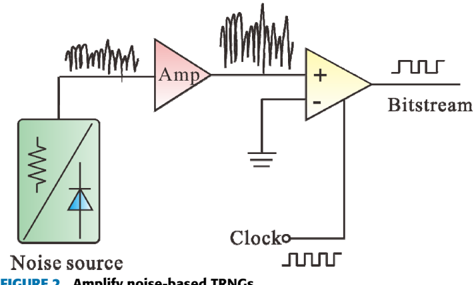
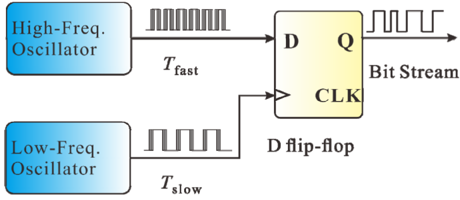
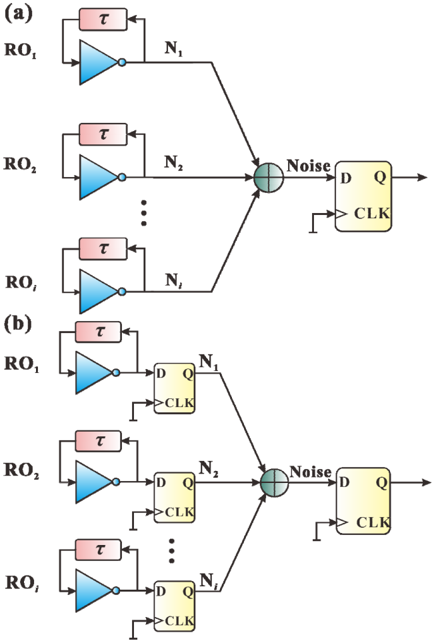
- The review groups electrical-noise TRNGs into four main families: amplify-noise-based, oscillator-based, metastability-based, and chaos-based TRNGs.
- Reported representative performance figures include a chaos-based TRNG claimed to reach 12.8 Gbps, an all-electronic chaotic TRNG with 80 Gbps throughput, a metastability-based design with 2 Mbit/s, another with 12.5 Mbps, and an Intel metastability-based TRNG with 162.5 Mbps at 1.3 GHz, 1.5 mW total power, and 90 µW leakage.
- The paper argues that post-processing is usually needed because raw bits are biased/correlated; common methods include XOR and von Neumann correction, but these reduce throughput.
Methods
- Narrative review of the TRNG literature, organized around entropy sources, harvesting methods, post-processing, and evaluation.
- Synthesizes prior work and representative implementations rather than presenting new experimental data; the paper cites example bit rates, power figures, and design properties from the literature.
- Discusses analysis tools used in TRNG assessment, including Shannon entropy, min-entropy, and statistical test suites such as NIST SP-800.22, Diehard, TestU01, and AIS31.
Limitations
- The paper is a review, so it does not present a single unified experimental dataset or new comparative benchmark; this is evident from the text.
- It states that many raw TRNG outputs are biased or correlated and therefore require post-processing, which reduces throughput.
- It notes several practical challenges in the surveyed designs, including power consumption, sensitivity to PVT conditions, frequency locking/attacks, aging, technology dependence, and difficulty in precise threshold tuning.
Model-written summary. Check it against the paper before relying on it.
Integrity signals
Registry
Cites
Statistics
Figures




Verification
Claims the paper makes
3 Valid · 1 Not valid · 23 Not checked · 23 Own results and interpretations
The cited sources support only part of this claim — read each source’s verdict below.
In the paper
“Due to its high bandwidth, unpredictability and insensitive to various disturbance and tolerances of components, chaos is a perfect entropy source for fast TRNGs [14], [76], [77].”
§ True Random Number Generators Using Electrical Noise > D. TRNGS BASED ON CHAOS
What the sources say
- Not checked — no full text of the sourcecites [14] 14. T. Stojanovski and L. Kocarev, ''Chaos-based random number generators-Part I: Analysis,'' IEEE Trans. Circuits Syst. I, Fundam. Theory Appl., vol. 48, no. 3, pp. 281-288, Mar. 2001. source
- Not checked — no full text of the sourcecites [76] 76. A. Beirami and H. Nejati, ''A framework for investigating the performance of chaotic-map truly random number generators,'' IEEE Trans. Circuits Syst. II, Exp. Briefs, vol. 60, no. 7, pp. 446-450, Jul. 2013. source
- Partly supportedcites [77] 77. M. Drutarovsky and P. Galajda, ''A robust chaos-based true random num- ber generator embedded in reconfigurable switched-capacitor hardware,'' in Proc. 17th Int. Conf. Radioelektronika, Brno, Czech Republic, 2007, pp. 1-6. sourceExperimental — accuracy not yet measured
The Introduction (page unavailable) describes chaotic circuits as an efficient TRNG alternative and explains why their output can be unpredictable. The Conclusions (page unavailable) report up to 60 kbit/s for this design, but do not establish high bandwidth as a general property of chaos. Sections 5 and 5.1 report that circuit nonidealities cause redundancy and detectable correlations; the paper credits design optimization and postprocessing, not inherent insensitivity to disturbances or component tolerances, for reducing their effects. (LLM, conf=0.88)
plainstates a cause- Asserted: passes — The authors put it forward as true.
- Checkable: passes — It can be checked against evidence.
- Load-bearing: unclear — It is unclear whether the paper’s conclusions depend on it.
- Based: passes — The paper gives a reason why it holds.
- Rests on an assumption not shown here.
The sources with a verdict support this claim; the rest weren’t checked yet, have no full text we could read, or their verdicts aren’t rated yet.
In the paper
“NIST SP-800.22 statistical test suite [90] and Die-hard test suite [91] and Test U01 [92] and AIS31 [93] are most common statistical test suites to evaluate their RNGs by researchers.”
§ True Random Number Generators Using Electrical Noise > VI. TRNG EVALUATIONS
What the sources say
- Supportedcites [90] 90. L. E. Bassham, A. L. Rukhin, J. Soto, J. R. Nechvatal, M. E. Smid, S. D. Leigh, M. Levenson, M. Vangel, N. A. Heckert, and D. L. Banks, ''A statistical test suite for random and pseudorandom number generators for cryptographic applications,'' Nat. Inst. Standards Technol., Gaithers- burg, MD, USA, Tech. Rep. 800-22, May 2001. source
The citation to SP 800-22 identifies the NIST statistical test suite, not the separately cited suites. Section 2 describes it as a package of 15 tests for assessing sequences from random and pseudorandom number generators, and Section 5.1 says it is designed for evaluating such generators. (LLM, conf=0.91)
- Not matchedcites [91] 91. G. Marsaglia. The Marsaglia Random Number CD-ROM including the Diehard Battery of Test of Randomness. Accessed: Jan. 1995. [Online]. Available: http://stat.fsu.edu/pub/diehard/
Couldn’t be matched to a paper in Crossref, so it can’t be checked.
- Not checked — no full text of the sourcecites [92] 92. P. L'Ecuyer and R. Simard, ''TestU01: A C library for empirical testing of random number generators,'' AMC Trans. Math. Softw., vol. 33, no. 4, Aug. 2007, Art. no. 22. source
plain- Asserted: passes — The authors put it forward as true.
- Checkable: passes — It can be checked against evidence.
- Load-bearing: unclear — It is unclear whether the paper’s conclusions depend on it.
- Based: passes — The paper gives a reason why it holds.
- Supported
In the paper
“Meanwhile, a self-calibrating 2-step tuning mechanism was used for metastability-based TRNG by Intel and it provided tolerance to 20% PVT variation [10].”
§ True Random Number Generators Using Electrical Noise > C. TRNGS BASED ON METASTABILITY
What the sources say
- Not checked — no full text of the sourcecites [10] 10. S. K. Mathew, S. Srinivasan, M. A. Anders, H. Kaul, S. K. Hsu, F. Sheikh, A. Agarwal, S. Satpathy, and R. K. Krishnamurthy, '' 2.4 Gbps, 7 mW all-digital PVT-variation tolerant true random number generator for 45 nm CMOS high-performance microprocessors,'' IEEE J. Solid-State Circuits, vol. 47, no. 11, pp. 2807-2821, Nov. 2012. source
plainstates a cause- Asserted: passes — The authors put it forward as true.
- Checkable: passes — It can be checked against evidence.
- Load-bearing: unclear — It is unclear whether the paper’s conclusions depend on it.
- Based: passes — The paper gives a reason why it holds.
A conclusion the paper draws from its own results — it cites no other source for it, so there is none to check. The quote shows it is in the paper.
In the paper
“Because white noise is unpredictable and independent with frequency, it is an ideal entropy source for TRNGs.”
§ True Random Number Generators Using Electrical Noise > III. ENTROPY SOURCE
plainstates a cause- Asserted: passes — The authors put it forward as true.
- Checkable: passes — It can be checked against evidence.
- Load-bearing: passes — The paper’s conclusions depend on it.
- Based: passes — The paper gives a reason why it holds.
- Rests on 2 assumptions not shown here.
None of the sources cited for this claim have been checked yet.
In the paper
“Because metastability of bi-stable circuits can be influenced by thermal noise then a random bit is produced [9], [12], [26].”
§ True Random Number Generators Using Electrical Noise > I. INTRODUCTION
What the sources say
- Not checked — no full text of the sourcecites [9] 9. D. J. Kinniment and E. G. Chester, ''Design of an on-chip random number generator using metastability,'' in Proc. 28th Eur. Solid-State Circuits Conf., Florence, Italy, 2002, pp. 595-598.
- Not matchedcites [12] 12. C. Tokunaga, D. Blaauw, and T. Mudge, ''True random number generator with a metastability-based quality control,'' IEEE J. Solid-State Circuits, vol. 43, no. 1, pp. 78-85, Jan. 2008.
Couldn’t be matched to a paper in Crossref, so it can’t be checked.
- Not checked — no full text of the sourcecites [26] 26. J. Holleman, S. Bridges, B. P. Otis, and C. Diorio, ''A 3 µW CMOS true random number generator with adaptive floating-gate offset cancellation,'' IEEE J. Solid-State Circuits, vol. 43, no. 5, pp. 1324-1336, May 2008. source
plainstates a cause- Asserted: passes — The authors put it forward as true.
- Checkable: passes — It can be checked against evidence.
- Load-bearing: passes — The paper’s conclusions depend on it.
- Based: passes — The paper gives a reason why it holds.
7 more claims
Create a free account to see all 50 claims and to verify the 3 references still open.
- Probably not a substantial claim. 14
- It may state two separate claims as one. 28
Citations
Cites
Bassham, L. E., Rukhin, A. L., Soto, J., Nechvatal, J. R., Smid, M. E., Barker, E. B., Leigh, S. D., Levenson, M., Vangel, M., Banks, D. L., et al. (2010) · NIST Special Publication 800-22 Revision 1a · doi:10.6028/nist.sp.800-22r1a · Cited by 3,617 · cited 1×
“22 statistical test suite [90] and Die-hard test suite [91] and Test U01 [92] and AIS31 [93] are most common statistical test suites to evaluate their RNGs by researchers.”
BackgroundA general theory of phase noise in electrical oscillators
Hajimiri, A., & Lee, T. H. (1998) · IEEE Journal of Solid-State Circuits · doi:10.1109/4.658619 · Cited by 2,421
Rukhin, A., Sota, J., Nechvatal, J., Smid, M., Barker, E., Leigh, S., Levenson, M., Vangel, M., Banks, D., Heckert, A., et al. (2000) · doi:10.6028/nist.sp.800-22 · Cited by 1,867
Thermal Agitation of Electricity in Conductors
Johnson, J. B. (1928) · Physical Review · doi:10.1103/physrev.32.97 · Cited by 1,811
Jitter and phase noise in ring oscillators
Hajimiri, A., Limotyrakis, S., & Lee, T. H. (1999) · IEEE Journal of Solid-State Circuits · doi:10.1109/4.766813 · Cited by 1,071 · cited 1×
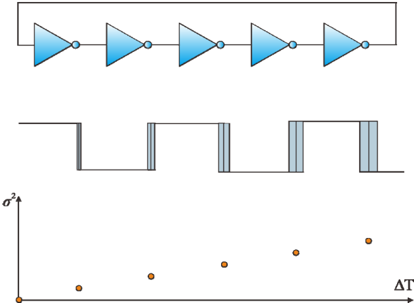
“Electrical noise also can lead to phase jitter in oscillator [20], [43], [44].”
BackgroundTestU01: A C library for empirical testing of random number generators
L'Ecuyer, P., & Simard, R. (2007) · ACM Transactions on Mathematical Software · doi:10.1145/1268776.1268777 · Cited by 1,014 · cited 3×
“22 statistical test suite [90] and Die-hard test suite [91] and Test U01 [92] and AIS31 [93] are most common statistical test suites to evaluate their RNGs by researchers.”
BackgroundQuantum random number generators
Herrero-Collantes, M., & Garcia-Escartin, J. C. (2017) · Reviews of Modern Physics · doi:10.1103/revmodphys.89.015004 · Cited by 791 · cited 1×
“Because of its natural randomness, noise is one of the preferred entropy sources for TRNGs [40].”
BackgroundPhase Noise and Jitter in CMOS Ring Oscillators
Abidi, A. A. (2006) · IEEE Journal of Solid-State Circuits · doi:10.1109/jssc.2006.876206 · Cited by 740 · cited 3×
“[45] A. A. Abidi and R. G. Meyer, ‘‘Noise in relaxation oscillators,’’ IEEE J. Solid-State Circuits, vol. JSSC-18, no. 6, pp. 794–802, Dec. 1983.”
MethodInfluentialA Provably Secure True Random Number Generator with Built-In Tolerance to Active Attacks
Sunar, B., Martin, W. J., & Stinson, D. R. (2007) · IEEE Transactions on Computers · doi:10.1109/tc.2007.250627 · Cited by 673
A noise-based IC random number generator for applications in cryptography
Petrie, C. S., & Connelly, J. A. (2000) · IEEE Transactions on Circuits and Systems I: Fundamental Theory and Applications · doi:10.1109/81.847868 · Cited by 487 · cited 5×
“After being amplified, noise is sampled and quantized in circuit devices [2], [41].”
BackgroundMethodResultInfluential
Research works printed but not linked: 1
- marsaglia, 1995, The Marsaglia Random Number CD-ROM Including the DieHard Battery of Test of Randomness
Cited by
Harnessing microcomb-based parallel chaos for random number generation and optical decision making
Shen, B., Shu, H., Xie, W., Chen, R., Liu, Z., Ge, Z., Zhang, X., Wang, Y., Zhang, Y., Cheng, B., et al. (2023) · Nature Communications · doi:10.1038/s41467-023-40152-w · Cited by 125
“1a1) induced by nonlinear circuits 12,13 such as application speci fi c integrated circuit (ASIC) and fi eld programmable gate array (FPGA) 14,15 .”
Self-citationTrue Random Number Generator Based on Fibonacci-Galois Ring Oscillators for FPGA
Nannipieri, P., Matteo, S. D., Baldanzi, L., Crocetti, L., Belli, J., Fanucci, L., & Saponara, S. (2021) · Applied Sciences · doi:10.3390/app11083330 · Cited by 80
“Several relevant contributions reviewed the state of the art, both from a mathematical [8] and an architectural [9] point of view; however, the available information addresses the problem at a high level, not focusing on particular technologies, such as Field Programmable Gate Arrays (FPGAs).”
BackgroundHigh-Throughput FPGA-Compatible TRNG Architecture Exploiting Multistimuli Metastable Cells
Sala, R. D., Bellizia, D., & Scotti, G. (2022) · IEEE Transactions on Circuits and Systems I Regular Papers · doi:10.1109/tcsi.2022.3199218 · Cited by 71
“The physical entropy sources usually exploited in TRNGs primitives are the jitter accumulation [8], [9], [10], the meta-stability [11], [12], [13] and, finally, thermal, shot and flicker noise [14].”
BackgroundA stream cipher algorithm based on 2D coupled map lattice and partitioned cellular automata
Liu, Z., Wang, Y., Zhao, Y., & Zhang, L. Y. (2020) · Nonlinear Dynamics · doi:10.1007/s11071-020-05804-2 · Cited by 39
Self-citationA Low Power Circuit Design for Chaos-Key Based Data Encryption
Nguyen, N., Pham-Nguyen, L., Nguyen, B. M., & Kaddoum, G. (2020) · IEEE Access · doi:10.1109/access.2020.2998395 · Cited by 39
“Therefore, at a certain point of observation, the chaotic sys-tem behaves as a random-like process [10].”
BackgroundSala, R. D., & Scotti, G. (2023) · IEEE Access · doi:10.1109/access.2023.3304901 · Cited by 37
“This approach is commonly used in hardware implementations of TRNGs, where the noise is amplified and filtered to extract the randomness [56].”
MethodQuantum Randomness in Cryptography—A Survey of Cryptosystems, RNG-Based Ciphers, and QRNGs
Saini, A., Tsokanos, A., & Kirner, R. (2022) · Information · doi:10.3390/info13080358 · Cited by 45
“[6] compared the advantages and challenges of entropy sources that use electrical noise.”
BackgroundA true random number generator that utilizes thermal noise in a programmable system‐on‐chip (PSoC)
Matsuoka, S., Ichikawa, S., & Fujieda, N. (2021) · International Journal of Circuit Theory and Applications · doi:10.1002/cta.3046 · Cited by 28
“Many related papers are found in the survey paper by Gong et al. 8 Analog components are also used for TRNGs.”
BackgroundInfluentialCharacterization of a Quantum Random Number Generator Based on Vacuum Fluctuations
Ferreira, M. J., Silva, N. A., Pinto, A. N., & Muga, N. J. (2021) · Applied Sciences · doi:10.3390/app11167413 · Cited by 18
“These extract randomness from measurements of some apparently unpredictable physical process, such as atmospheric or electrical noise [6,7].”
BackgroundChoi, W., Kwon, O., Lee, J., Oh, S., Heo, S., Ban, S., Seo, Y., Kim, D., & Hwang, H. (2024) · Applied Physics Reviews · doi:10.1063/5.0183292 · Cited by 18
A dynamically reconfigurable entropy source circuit for high-throughput true random number generator
Jin, L., Yi, M., Xiao, Y., Sun, L., Lu, Y., & Liang, H. (2023) · Microelectronics Journal · doi:10.1016/j.mejo.2023.105690 · Cited by 19
Dynamic control of photon lifetime for quantum random number generation
Okawachi, Y., Kim, B. Y., Zhao, Y., Ji, X., Lipson, M. F., & Gaeta, A. L. (2021) · Optica · doi:10.1364/optica.433102 · Cited by 19
Park, J., Kim, H., & Kim, H. (2024) · Advanced Intelligent Systems · doi:10.1002/aisy.202400648 · Cited by 15
True Random Number Generation Capability of a Ring Oscillator PUF for Reconfigurable Devices
Rojas-Muñoz, L. F., Sánchez-Solano, S., Martínez‐Rodríguez, M. C., & Brox, P. (2022) · Electronics · doi:10.3390/electronics11234028 · Cited by 16
“Within these TRNGs, those based on jitter tend to be easier to integrate and are characterized by being portable implementations, as mentioned in [19].”
MethodRandom number generation with a chaotic electromechanical resonator
Madiot, G., Correia, F., Barbay, S., & Braive, R. (2022) · Nanotechnology · doi:10.1088/1361-6528/ac86da · Cited by 12
“Thus chaos emerges as a possible solution to generate true randomness without appealing to stochastic [5] or quantum [6] phenomena.”
BackgroundImplementation of TRNG with SHA-3 for hardware security
Kamadi, A., & Abbas, Z. (2022) · Microelectronics Journal · doi:10.1016/j.mejo.2022.105410 · Cited by 13
“TRNGs contain the entropy source [1], which provides unpredictability and leads to randomness.”
BackgroundInfluentialRandom Sequence Generation using Superconducting Qubits
Gupta, M., & Nene, M. J. (2021) · International Conference on Intelligent Communication Technologies and Virtual Mobile Networks (ICICV) · doi:10.1109/icicv50876.2021.9388495 · Cited by 11
“Randomness was integrated into a computing device through instruction set using electrical noise [19].”
MethodA gigabit TRNG with novel lightweight post-processing method for cryptographic applications
Garıpcan, A. M., & Erdem, E. (2022) · The European Physical Journal Plus · doi:10.1140/epjp/s13360-022-02679-7 · Cited by 15
“This cryptographic perspective also defines the characteristic behavior of the method or architectures by which random numbers are obtained [1, 2].”
MethodRAVA: An Open Hardware True Random Number Generator Based on Avalanche Noise
Guerrer, G. (2023) · IEEE Access · doi:10.1109/access.2023.3327325 · Cited by 10
“The review literature [1], [2], [3], [4], [5] highlights various categories of physical phenomena utilized as entropy sources in TRNGs.”
BackgroundFPGA modeling of a novel fully-synthesizable and secure TRNG based on key-dependent s-box
Garıpcan, A. M., & Erdem, E. (2023) · Digital Signal Processing · doi:10.1016/j.dsp.2023.103969 · Cited by 11
Parallel Fast Random Bit Generation Based on Spectrotemporally Uncorrelated Random Laser Comb
Pang, Y., Ma, S., Ji, Q., Zhao, X., Qin, Z., Liu, Z., Lü, P., Bao, X., & Xu, Y. (2025) · Laser & Photonics Review · doi:10.1002/lpor.202500675 · Cited by 15
Liu, Y., Chen, C., Yang, D. D., Li, Q., & Li, X. (2020) · IEEE Access · doi:10.1109/access.2020.3028735 · Cited by 9
“Representative TRNGs are mainly based on physical entropy sources such as circuit thermal noise [7], [8], oscillators [9], and chaotic circuits [10], [11].”
BackgroundOn-Line Evaluation and Monitoring of Security Features of an RO-Based PUF/TRNG for IoT Devices
Rojas-Muñoz, L. F., Sánchez-Solano, S., Martínez‐Rodríguez, M. C., & Brox, P. (2023) · Sensors · doi:10.3390/s23084070 · Cited by 10
“As indicated in [42], TRNGs based on jitter are typically easier to integrate and are distinguished by having portable implementations.”
BackgroundA True Random Number Generator Based on Gait Data for the Internet of You
Cámara, C., Martín, H., Lopez, P. P., & Entrena, L. (2020) · IEEE Access · doi:10.1109/access.2020.2986822 · Cited by 13
“Among the most used entropy sources for TRNGs stand out the solutions that include different kinds of electrical noise [10], [11], clock jitter and coherent sampling [12], metastability [13], [14] and chaos [15], [16].”
BackgroundBahador, A., Moaiyeri, M. H., & Ghaderi, R. (2024) · IEEE Transactions on Computer-Aided Design of Integrated Circuits and Systems · doi:10.1109/tcad.2024.3446715 · Cited by 8
Hardware-Efficient Stochastic Binary CNN Architectures for Near-Sensor Computing
Parmar, V., Penkovsky, B., Querlioz, D., & Suri, M. (2022) · Frontiers in Neuroscience · doi:10.3389/fnins.2021.781786 · Cited by 8
“Unfortunately, uniform distribution, which is typically used for stochastic computing, is normally obtained only by additional circuit overheads leading to increased costs in terms of area and energy (Gong et al., 2019).”
BackgroundCorrelation free large-scale probabilistic computing using a true-random chaotic oscillator p-bit
Lee, W., Kim, H., Jung, H., Choi, Y., Jeon, J., & Kim, C. (2025) · Scientific Reports · doi:10.1038/s41598-025-93218-8 · Cited by 13
“The commonly used harvesting methods in CMOS-based TRNGs can be roughly classified into four categories 16 : direct noise amplification 17 , oscillator 18,19 , metastability 20–22 , and discrete-time chaotic oscillator 15,23–27 .”
El-Hadedy, M., Abelian, A., Lee, K., Cheng, B. N., & Hwu, W.-M. (2025) · IEEE Embedded Systems Letters · doi:10.1109/les.2024.3510365 · Cited by 7
“TRNGs [8] emerged to address these issues by generating randomness from physical processes, enhancing security.”
True Random Number Generator (TRNG) Using Sensors for Low Cost IoT Applications
Ansari, U., Chaudhary, A. K., & Verma, S. (2022) · International Conference on Communication, Computing and Internet of Things (IC3IoT) · doi:10.1109/ic3iot53935.2022.9767999 · Cited by 8
“…random number generator (PRNG) also called as software based RNGs. PRNG is deterministic in nature that is why it is repeatable and can be predicted [2], and second one is True random number generators (TRNG) which is non-deterministic in nature so that it is non repeatable and non-predictable [3].”
MethodA Precise Bare Simulation Approach to the Minimization of Some Distances. I. Foundations
Broniatowski, M., & Stummer, W. (2022) · IEEE Transactions on Information Theory · doi:10.1109/tit.2022.3215496 · Cited by 10
Attacks and Defenses for Single-Stage Residue Number System PRNGs
Vennos, A., George, K. B., & Michaels, A. J. (2021) · IoT · doi:10.3390/iot2030020 · Cited by 9
“…on naturally occurring entropy sources (e.g., temperature variations [22], oscillator time variations [23], quantum parameter observations [24], or ambient RF noise [25]) for their random generation, and PRNGs, which employ deterministic algorithms to calculate sequences of pseudorandom numbers.”
BackgroundExploring the intersection of natural sciences and information technology via entropy and randomness
Luescher, A. M., Heckel, R., & Grass, R. N. (2025) · Nature Communications · doi:10.1038/s41467-025-62353-1 · Cited by 13
“A typical and easily accessible source of randomness is electrical noise, which has been implemented in many variants 47 .”
Multi-bit per cycle true random number generator based on XOR-XNOR ring oscillator unit
Fan, Q., Ran, F., & Yan, L. (2024) · Microelectronics Journal · doi:10.1016/j.mejo.2024.106142 · Cited by 10
An ADC Based Random Number Generator from a Discrete Time Chaotic Map
Ergün, S., & Maden, F. (2021) · Asia-Pacific Conference on Communications (APCC) · doi:10.1109/apcc49754.2021.9609860 · Cited by 6
Crampton, O. M., Dowling, T. J., Roger, T., Smith, P. R., Dynes, J. F., Winnel, M. S., Marangon, D. G., Sanzaro, M., Singh, R., Perumangatt, C., et al. (2025) · npj Quantum Information · doi:10.1038/s41534-025-01100-2 · Cited by 11
Yüksel, İ. E., Olgun, A., Bostanci, F. N., Canpolat, O., Junior, G. F. D. O., Sadrosadati, M., Yağlıkçı, A. G., & Mutlu, O. (2025) · IEEE International Conference on Computer Design: VLSI in Computers and Processors (ICCD) · doi:10.1109/iccd65941.2025.00130 · Cited by 9
“True random number generators (TRNGs) harness entropy from random physical phenomena (e.g., electrical and thermal noise [1–3]) to generate unpredictable and irreproducible random bitstreams (i.e., true random numbers).”
Statistical Validation of a Physical Prime Random Number Generator Based on Quantum Noise
Ferreira, M. J., Silva, N. A., Pinto, A. N., & Muga, N. J. (2023) · Applied Sciences · doi:10.3390/app132312619 · Cited by 5
Homodyne Noise Characterization in Quantum Random Number Generators
Ferreira, M. J., Silva, N. A., Pinto, A. N., & Muga, N. J. (2021) · Telecoms Conference (ConfTELE) · doi:10.1109/conftele50222.2021.9435473 · Cited by 5
Context-Aware Authentication with Dynamic Credentials using Electricity Consumption Data
Soykan, E. Ü., Karaçay, L., Bilgin, Z., Tomur, E., Ersoy, M. A., Karakoç, F., & Çomak, P. (2021) · The Computer Journal · doi:10.1093/comjnl/bxab094 · Cited by 4
Chaotic photonics in microresonators
Jiang, X., Chang, L., Zhang, J., Wiersig, J., Hentschel, M., Wang, X., Cao, H. W., Xiao, Y., & Alù, A. (2026) · Nature Reviews Physics · doi:10.1038/s42254-026-00941-w · Cited by 5
Self-citationBernardini, E., Schiavolini, G., Orecchini, G., et al. (2025) · IEEE Topical Meeting on Silicon Monolithic Integrated Circuits in RF Systems (SiRF) · doi:10.1109/sirf63957.2025.11076623 · Cited by 3
Safeguarding Unmanned Aerial Vehicles Against Side Channel Analysis Via Motor Noise Injection
Radtke, T., & Ababei, C. (2022) · IEEE International Symposium on Hardware Oriented Security and Trust (HOST) · doi:10.1109/host54066.2022.9839837 · Cited by 3
A true random number generator with high bit rate and low energy efficiency
Cheng, X., Zhang, Y., Zhu, H., & Zhou, Y. (2023) · International Journal of Circuit Theory and Applications · doi:10.1002/cta.3563 · Cited by 3
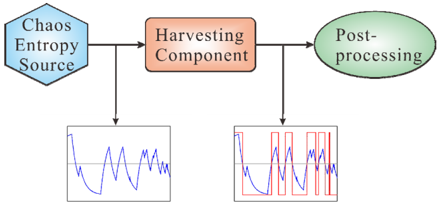
“Figure 1 is the architecture of traditional TRNG, which includes an entropy source, a harvesting component, and perhaps a post-processor.(25) As the core of TRNG, entropy source produces unpredictable data to provide the source of randomness.”
BackgroundEND-TRUE: Emerging Nanotechnology-Based Double-Throughput True Random Number Generator
Rai, S., Gupta, N., Bhattacharjee, A., Rupani, A., Raitza, M., Trommer, J., Mikolajick, T., & Kumar, A. S. (2022) · IFIP advances in information and communication technology · doi:10.1007/978-3-031-16818-5_9 · Cited by 3
Towards Post-Quantum Cryptography Using Thermal Noise Theory and True Random Numbers Generation
Ndagijimana, P., Nahayo, F., Assogba, M. K., Ametepe, A. F.-X., & Shabani, J. (2020) · Journal of Information Security · doi:10.4236/jis.2020.113010 · Cited by 2
A modeling method of algorithm-hardware based on SysML
Liu, Y., Zhao, C., & Li, Z. (2021) · Advances in Complex Systems · doi:10.1142/s1793962322500143 · Cited by 2
Proposal for True Random Number Generation in ferroelectric capacitors using noise-induced switching
Ramesh, M., Verma, A. K., & Ajoy, A. (2024) · IEEE Electron Devices Technology & Manufacturing Conference (EDTM) · doi:10.1109/edtm58488.2024.10511981 · Cited by 1
“A key component of these systems are hardware-based true random number generators (TRNG) [2], which utilize an inherent source of entropy as opposed to pseudo random number generators (PRNGs) which are algorithm-based.”
BackgroundTRIM: AI Guided Random Number Generation for Resource-Constrained IoT Systems
Suha, T., Rahman, M. H., Rice, A. E., Smith, C., Awad, R. A., & Chakraborty, P. (2025) · IEEE Access · doi:10.1109/access.2025.3586177 · Cited by 2
“True random numbers can be generated from different sources such as electrical noise [44], [45], quantum phase noise [46], microphones [47], and time delay in distributed memristors [48].”
Post processing free random number generation using classical and ambient light sources
Tillo, D., Tej, V. A., Dileep, K., & Ivan, J. S. (2025) · Optics Communications · doi:10.1016/j.optcom.2025.132199 · Cited by 1
Research on the Robustness of Boolean Chaotic Systems
Liu, H., Gao, H. Y., & Zhang, J. (2025) · Electronics · doi:10.3390/electronics14163291 · Cited by 1
Self-citationCao, J., Liu, W., Zhang, M., Wang, L., & Peng, J. (2025) · Advanced Quantum Technologies · doi:10.1002/qute.202500072 · Cited by 1
Random-Number Generation Using Chaos in RF-Irradiated Stacked Intrinsic Josephson Junction
Oikawa, D., Komatsu, H., Tsuzuki, K., & Andoh, H. (2026) · IEEE Transactions on Applied Superconductivity · doi:10.1109/tasc.2025.3650523 · Cited by 1
“Although some physical RN generators can achieve high generation speeds, they are vulnerable to exter-nal electromagnetic interference and exhibit strong dependence on environmental conditions [1], [2].”
Bridging disorder and order in random lasers for cryptographic applications via deep learning
Hu, Z., Qi, L., He, S., et al. (2026) · Communications Physics · doi:10.1038/s42005-026-02600-z · Cited by 1
Design and implementation of high-rate quantum random number generation system
Abazari, M., Jaberi, M., Farajzadeh, M., Dadahkhani, A., & Madani, S. A. (2026) · Indian Journal of Physics · doi:10.1007/s12648-026-04068-7 · Cited by 1
A Hardware Validation Framework for a Networked Dynamic Multi-factor Security Protocol
Lee, C., Scott, K. R., Khatri, S. P., & Ghrayeb, A. (2023) · International Conference on Advanced Communication Technologies and Networking (CommNet) · doi:10.1109/commnet60167.2023.10365286 · Cited by 1
“PRNGs use deterministic algorithms and an initial secret seed value to generate random sequences [12].”
BackgroundMethodHardware Security and Trust: Trends, Challenges, and Design Tools
Siriwardana, S. M. D. N. (2024) · International Research Journal of Innovations in Engineering and Technology · doi:10.47001/irjiet/2024.801016
True Random Number Generator Implemented in ReRAM Crossbar Based on Static Stochasticity of ReRAMs
Patni, T., & Pethe, A. J. (2023) · IEEE Asia Pacific Conference on Circuits and Systems (APCCAS) · doi:10.1109/apccas60141.2023.00024 · Cited by 2
“TRNGs exploit randomness in physical processes, e.g., Thermal Noise in electrical circuits [5], to generate random numbers.”
BackgroundSound-LDR Sensors Empowered Secure True Random Number Generator for PoS Consensus in Blockchain
Chai, H., Wu, J., Pan, Q., et al. (2024) · IEEE Conference on Big Data Security on Cloud (BigDataSecurity) · doi:10.1109/bigdatasecurity62737.2024.00032 · Cited by 1
High Voltage Transformer Condition Monitoring Using Memristive Echo State Networks
Nair, V. V., Anilkumar, P. G., & James, A. P. (2024) · IEEE International Symposium on Circuits and Systems proceedings · doi:10.1109/iscas58744.2024.10558533 · Cited by 1
“Both of these have certain criteria depending on which the randomness is generated [17].”
BackgroundHardware-Enabled Key Generation in Industry 4.0 Cryptosystems through Analog Hyperchaotic Signals
Sánchez, B. B., Rodríguez-Sela, F., Alcarria, R., et al. (2025) · Computers, materials & continua/Computers, materials & continua (Print) · doi:10.32604/cmc.2025.059012 · Cited by 1
“Solutions in which noise is amplified and, later, transformed into a bipolar signal using an analog comparator may also be found [34].”
Lightweight, High-Entropy TRNG Using Quad Cross-Coupled Feedback Architecture
Williams, S., Kirtonia, P., Akter, S., Khalil, K., & Bayoumi, M. (2025) · IEEE SoutheastCon · doi:10.1109/southeastcon56624.2025.10971554 · Cited by 1
“TRNGs excel over Pseudo Random Number Generators (PRNGs) by leveraging noise sources such as race conditions [4], metastability [5], jitter [6], shot noise [7], and avalanche noise [8].”
A precise bare simulation approach to the minimization of some distances. FoundationsPreprint
Michel Broniatowski, C., & Stummer, W. (2021) · arXiv (Cornell University) · doi:10.48550/arxiv.2107.01693 · Cited by 1
A Dual Entropy-Based Digital Random Number Generator
Ozturk, H. S., & Ergün, S. (2021) · IEEE Access · doi:10.1109/access.2021.3119593
Kramers' escape problem for white noise driven switching in ferroelectricsPreprint
Ramesh, M., Verma, A. K., & Ajoy, A. (2021) · arXiv (Cornell University) · doi:10.48550/arxiv.2112.01373
A random number generator with hardware switching devices
Shen, Y., Gao, X., Sun, Y., Li, Z., Xie, J., & Si, N. (2023) · International Conference on Computer Systems (ICCS) · doi:10.1109/iccs59700.2023.10335544
“Examples of these characteristics include atmospheric noise [1-2] , clock jitter [3] , electrical noise [4-5] , noise in device [6] , thermal noise [7] , which applied to RRAM [8] , SRAM arrays [9] and Flash memories [10] .”
MethodRandom Delay Generator for Stochastic On-Chip Calibration of Sub-20 ps Custom CMOS TDCs
Lackner, M., & Michalowska-Forsyth, A. M. (2024) · Austrochip Workshop on Microelectronics (Austrochip) · doi:10.1109/austrochip62761.2024.10716216
“The design of RNGs is a broad and complex topic with many possible architectures [12] [13].”
BackgroundTrue Random Number Generator Implemented in ReRAM Crossbar Based on Static Stochasticity of ReRAMs
Patni, T., & Pethe, A. J. (2024) · Advances in Science Technology and Engineering Systems Journal · doi:10.25046/aj090504 · Cited by 1
Bias Variation Compensation in Perimeter-Gated SPAD TRNGs
Sajal, M., Guthrie, H., & Dandin, M. P. (2025) · Conference proceedings · doi:10.1109/mwscas53549.2025.11244454
“TRNGs can be constructed using any classical source of noise, such as the thermal noise of resistors [13].”
Salamanca, L. M., Schiavolini, G., Dilek, S. M., et al. (2025) · Asia-Pacific Microwave Conference (APMC) · doi:10.1109/apmc65046.2025.11378725
“With avalanche diode devices, it is possible to obtain a highly precise circuit characterization, in terms of noise figure and gain [1]–[4], or to generate random numbers [5], [6], among a number of other applications.”
A Piezoelectric MEMS True Random Number Generator Driven by Amplitude-Modulated Internal Resonance
Chen, T.-Y., Basu, N., Chang, C. Y., et al. (2026) · Proceedings, IEEE micro electro mechanical systems · doi:10.1109/mems64181.2026.11419226
“A common realization of TRNGs is based on CMOS technologies that sample random fluctuations from thermal or electrical noise [7].”
Multisensor-Driven Entropy Algorithm for TRB Generation in Cryptographic Applications of IoT Devices
Vishwakarma, A., Chaudhary, A. K., Verma, S., Vishvakarma, S. K., & Hübner, M. (2026) · IETE Journal of Research · doi:10.1080/03772063.2026.2649313
“The first is a PRNG, which is repeatable and predictable due to its deterministic nature [22,23], while the second is a TRNG, which is non-deterministic and therefore neither repeatable nor predictable [24].”
Commensurable and Chaotic Nano-Contact Vortex Oscillator (NCVO) study for information processing
Ismail, A. R. (2022) · theses.fr (ABES) · doi:10.70675/b0996657z68f3z4b59zbb0czc151f6dda5df
A true random number generator based on nanowire-edge crossing memristors for image encryption
Wei, M., Lei, Y., Zhang, Y., Wang, J., & Yu, L. (2026) · Nanoscale · doi:10.1039/d6nr00157b
Nascimento, M. H. B. D., Moreno, E., & Conceição, C. M. (2026) · IEEE International Symposium on Circuits and Systems proceedings · doi:10.1109/iscas66217.2026.11562199
“The TRNG uses the intrinsic physical noise of a low-cost transistor operating in its avalanche region as an entropy source [9], conditioned by an Analog and Mixed-Signal (AMS) circuit.”
$\mu$RNG: A Framework for Assessing Randomness in Intermittent Computing Devices
Sah, P., & Hicks, M. (2026) · Proceedings - International Symposium on Computer Architecture/Proceedings · doi:10.1109/isca66397.2026.00086
“Other reviews examine true randomness derived from electrical noise [26] or silicon-embedded entropy mechanisms [18], while later work explores sources based on chaotic dynamics [96] and quantum phenomena [50].”
Dong, J., Wang, W., Wang, X., Liu, Z., Wang, W., Liu, J., & Liu, Z. (2026) · Integration · doi:10.1016/j.vlsi.2026.102842 · Cited by 1
Metadata
- Authors
- Gong, L., Zhang, J., Liu, H., Sang, L., & Wang, Y.
- Affiliations
- Taiyuan University of Technology (CN)
- Venue
- IEEE Access
- Published
- 2019
- Volume
- 7
- Pages
- 125796-125805
- ISSN
- 2169-3536 (ISSN-L)
- OpenAlex
- W2971887892
- Semantic Scholar
- 7c4060e0408d01e97de65cc2eb021c0e26655ddb
- Cited by
- 77
- References
- 102
- Citations by year
- 2026: 12 · 2025: 14 · 2024: 11 · 2023: 11 · 2022: 12 · 2021: 12 · 2020: 5
- FWCI
- 7.36
- Type
- journal article
- Language
- en
- Open access
- gold
- doi.org
- Locations
- IEEE Access (publishedVersion, cc-by)
- DOAJ (DOAJ: Directory of Open Access Journals) (submittedVersion, cc-by-sa)
- Funders
- National Natural Science Foundation of China (61731014, 61671316, 61775158, 61705159)
- Shanxi Scholarship Council of China (2017—key 2)
- Natural Science Foundation of Shanxi Province (201801D121145)
- Topics
- Physical Sciences › Computer Science › Hardware and Architecture › Physical Unclonable Functions (PUFs) and Hardware Security
- Physical Sciences › Computer Science › Computer Vision and Pattern Recognition › Chaos-based Image/Signal Encryption
- Physical Sciences › Computer Science › Artificial Intelligence › Cryptographic Implementations and Security
- Keywords
- true random number generator, electronic noise, entropy source, noise amplification, phase jitter, chaotic circuits, post-processing, hardware randomness
About these checks
Registry, retraction, Cites and statistics results are computed, not judged, with one exception: a printed reference that no index lists is read once by a model before it counts as a citation error. Claims are extracted by a model and kept only when their quote appears verbatim in the text; each cited source is then checked, with a model’s help, for whether it says what the claim relies on. Those verdicts can be wrong — read the claim’s quote and the cited source before relying on one.
The claim verdicts this report counts are experimental: their accuracy is not yet measured.
A language model drew the claims from the paper on 2026-10-09, under version 3 of the claim definition (model deepseek-v4.1-flash, prompt extract-v3).
A second model labelled each claim on 2026-10-09 (model jev-1.13-20260917, definition revision gold-guideline-v0.2).
Cited sources are checked with a language model’s help (gpt-6-sol).
Statistics and arithmetic are recomputed, not judged.
Confidence bands are shown only for fields calibrated on our annotated test set. None is calibrated yet, so no band is shown.
What counts as a claim ›How we measure confidence ›How we check this ›
Are you an author, or do you see a problem with this page? Request a review
Data sources
Bibliographic data: Semantic Scholar, OpenAlex, Crossref.
Contains information from the Semantic Scholar Academic Graph Datasets, made available under the ODC Attribution License (ODC-BY 1.0).
Semantic Scholar’s data is described in: Kinney, R., et al. (2023). The Semantic Scholar Open Data Platform. arXiv:2301.10140.
