

True Random Number Generators Using Electrical Noise
Open accessThe DOI matches its Crossref record; 100 of the 102 references it cites were found in a registry or an index; 3 of the 44 sources its claims cite were checked for support.
Abstract
True random number generators (TRNGs) are a fundamental resource in information security and can guarantee the absolute security of information in principle. Entropy source is the most critical part of TRNGs, which provides the unpredictability and is the root of security for TRNGs. Electrical noise, which is inevitable and unpredictable in electronic systems, is always used as entropy source for TRNGs. This review discusses the different methods to harvest electrical noise in TRNGs, including the early amplify noise based on amplifier, phase jitter based on oscillator, the effect of electrical noise on the metastable behavior and amplify noise based on chaos circuits. Each method has its own strengths in aspect of speed, cost, complexity and portability. Finally, some post-processing technologies and TRNG evaluation methods are also discussed.
Overview
CoChat Summary
TL;DR
This is a review paper on true random number generators (TRNGs) that use electrical noise as the entropy source. It surveys four harvesting approaches—amplify-noise, oscillator, metastability, and chaos—plus post-processing and evaluation methods, emphasizing that raw bits are often biased and need correction.
Key findings
- Electrical noise is presented as an ideal entropy source because it is “inevitable and unpredictable” in electronic systems; the paper identifies shot noise, thermal noise, and flicker noise as the main types.
- The review groups electrical-noise TRNGs into four main families: amplify-noise-based, oscillator-based, metastability-based, and chaos-based TRNGs.
- Reported representative performance figures include a chaos-based TRNG claimed to reach 12.8 Gbps, an all-electronic chaotic TRNG with 80 Gbps throughput, a metastability-based design with 2 Mbit/s, another with 12.5 Mbps, and an Intel metastability-based TRNG with 162.5 Mbps at 1.3 GHz, 1.5 mW total power, and 90 µW leakage.
- The paper argues that post-processing is usually needed because raw bits are biased/correlated; common methods include XOR and von Neumann correction, but these reduce throughput.
Methods
- Narrative review of the TRNG literature, organized around entropy sources, harvesting methods, post-processing, and evaluation.
- Synthesizes prior work and representative implementations rather than presenting new experimental data; the paper cites example bit rates, power figures, and design properties from the literature.
- Discusses analysis tools used in TRNG assessment, including Shannon entropy, min-entropy, and statistical test suites such as NIST SP-800.22, Diehard, TestU01, and AIS31.
Limitations
- The paper is a review, so it does not present a single unified experimental dataset or new comparative benchmark; this is evident from the text.
- It states that many raw TRNG outputs are biased or correlated and therefore require post-processing, which reduces throughput.
- It notes several practical challenges in the surveyed designs, including power consumption, sensitivity to PVT conditions, frequency locking/attacks, aging, technology dependence, and difficulty in precise threshold tuning.
Model-written summary. Check it against the paper before relying on it.
Integrity signals
Registry
Cites
Statistics
Figures





Verification
Claims the paper makes
3 Valid · 1 Not valid · 23 Not checked · 23 Own results and interpretations
The cited sources support only part of this claim — read each source’s verdict below.
In the paper
“Due to its high bandwidth, unpredictability and insensitive to various disturbance and tolerances of components, chaos is a perfect entropy source for fast TRNGs [14], [76], [77].”
§ True Random Number Generators Using Electrical Noise > D. TRNGS BASED ON CHAOS
What the sources say
- Not checked — no full text of the sourcecites [14] 14. T. Stojanovski and L. Kocarev, ''Chaos-based random number generators-Part I: Analysis,'' IEEE Trans. Circuits Syst. I, Fundam. Theory Appl., vol. 48, no. 3, pp. 281-288, Mar. 2001. source
- Not checked — no full text of the sourcecites [76] 76. A. Beirami and H. Nejati, ''A framework for investigating the performance of chaotic-map truly random number generators,'' IEEE Trans. Circuits Syst. II, Exp. Briefs, vol. 60, no. 7, pp. 446-450, Jul. 2013. source
- Partly supportedcites [77] 77. M. Drutarovsky and P. Galajda, ''A robust chaos-based true random num- ber generator embedded in reconfigurable switched-capacitor hardware,'' in Proc. 17th Int. Conf. Radioelektronika, Brno, Czech Republic, 2007, pp. 1-6. sourceExperimental — accuracy not yet measured
The Introduction (page unavailable) describes chaotic circuits as an efficient TRNG alternative and explains why their output can be unpredictable. The Conclusions (page unavailable) report up to 60 kbit/s for this design, but do not establish high bandwidth as a general property of chaos. Sections 5 and 5.1 report that circuit nonidealities cause redundancy and detectable correlations; the paper credits design optimization and postprocessing, not inherent insensitivity to disturbances or component tolerances, for reducing their effects. (LLM, conf=0.88)
plainstates a cause- Asserted: passes — The authors put it forward as true.
- Checkable: passes — It can be checked against evidence.
- Load-bearing: unclear — It is unclear whether the paper’s conclusions depend on it.
- Based: passes — The paper gives a reason why it holds.
- Rests on an assumption not shown here.
The sources with a verdict support this claim; the rest weren’t checked yet, have no full text we could read, or their verdicts aren’t rated yet.
In the paper
“NIST SP-800.22 statistical test suite [90] and Die-hard test suite [91] and Test U01 [92] and AIS31 [93] are most common statistical test suites to evaluate their RNGs by researchers.”
§ True Random Number Generators Using Electrical Noise > VI. TRNG EVALUATIONS
What the sources say
- Supportedcites [90] 90. L. E. Bassham, A. L. Rukhin, J. Soto, J. R. Nechvatal, M. E. Smid, S. D. Leigh, M. Levenson, M. Vangel, N. A. Heckert, and D. L. Banks, ''A statistical test suite for random and pseudorandom number generators for cryptographic applications,'' Nat. Inst. Standards Technol., Gaithers- burg, MD, USA, Tech. Rep. 800-22, May 2001. source
The citation to SP 800-22 identifies the NIST statistical test suite, not the separately cited suites. Section 2 describes it as a package of 15 tests for assessing sequences from random and pseudorandom number generators, and Section 5.1 says it is designed for evaluating such generators. (LLM, conf=0.91)
- Not matchedcites [91] 91. G. Marsaglia. The Marsaglia Random Number CD-ROM including the Diehard Battery of Test of Randomness. Accessed: Jan. 1995. [Online]. Available: http://stat.fsu.edu/pub/diehard/
Couldn’t be matched to a paper in Crossref, so it can’t be checked.
- Not checked — no full text of the sourcecites [92] 92. P. L'Ecuyer and R. Simard, ''TestU01: A C library for empirical testing of random number generators,'' AMC Trans. Math. Softw., vol. 33, no. 4, Aug. 2007, Art. no. 22. source
plain- Asserted: passes — The authors put it forward as true.
- Checkable: passes — It can be checked against evidence.
- Load-bearing: unclear — It is unclear whether the paper’s conclusions depend on it.
- Based: passes — The paper gives a reason why it holds.
- Supported
In the paper
“Meanwhile, a self-calibrating 2-step tuning mechanism was used for metastability-based TRNG by Intel and it provided tolerance to 20% PVT variation [10].”
§ True Random Number Generators Using Electrical Noise > C. TRNGS BASED ON METASTABILITY
What the sources say
- Not checked — no full text of the sourcecites [10] 10. S. K. Mathew, S. Srinivasan, M. A. Anders, H. Kaul, S. K. Hsu, F. Sheikh, A. Agarwal, S. Satpathy, and R. K. Krishnamurthy, '' 2.4 Gbps, 7 mW all-digital PVT-variation tolerant true random number generator for 45 nm CMOS high-performance microprocessors,'' IEEE J. Solid-State Circuits, vol. 47, no. 11, pp. 2807-2821, Nov. 2012. source
plainstates a cause- Asserted: passes — The authors put it forward as true.
- Checkable: passes — It can be checked against evidence.
- Load-bearing: unclear — It is unclear whether the paper’s conclusions depend on it.
- Based: passes — The paper gives a reason why it holds.
A conclusion the paper draws from its own results — it cites no other source for it, so there is none to check. The quote shows it is in the paper.
In the paper
“Because white noise is unpredictable and independent with frequency, it is an ideal entropy source for TRNGs.”
§ True Random Number Generators Using Electrical Noise > III. ENTROPY SOURCE
plainstates a cause- Asserted: passes — The authors put it forward as true.
- Checkable: passes — It can be checked against evidence.
- Load-bearing: passes — The paper’s conclusions depend on it.
- Based: passes — The paper gives a reason why it holds.
- Rests on 2 assumptions not shown here.
None of the sources cited for this claim have been checked yet.
In the paper
“Because metastability of bi-stable circuits can be influenced by thermal noise then a random bit is produced [9], [12], [26].”
§ True Random Number Generators Using Electrical Noise > I. INTRODUCTION
What the sources say
- Not checked — no full text of the sourcecites [9] 9. D. J. Kinniment and E. G. Chester, ''Design of an on-chip random number generator using metastability,'' in Proc. 28th Eur. Solid-State Circuits Conf., Florence, Italy, 2002, pp. 595-598.
- Not matchedcites [12] 12. C. Tokunaga, D. Blaauw, and T. Mudge, ''True random number generator with a metastability-based quality control,'' IEEE J. Solid-State Circuits, vol. 43, no. 1, pp. 78-85, Jan. 2008.
Couldn’t be matched to a paper in Crossref, so it can’t be checked.
- Not checked — no full text of the sourcecites [26] 26. J. Holleman, S. Bridges, B. P. Otis, and C. Diorio, ''A 3 µW CMOS true random number generator with adaptive floating-gate offset cancellation,'' IEEE J. Solid-State Circuits, vol. 43, no. 5, pp. 1324-1336, May 2008. source
plainstates a cause- Asserted: passes — The authors put it forward as true.
- Checkable: passes — It can be checked against evidence.
- Load-bearing: passes — The paper’s conclusions depend on it.
- Based: passes — The paper gives a reason why it holds.
7 more claims
Create a free account to see all 50 claims and to verify the 3 references still open.
- Probably not a substantial claim. 14
- It may state two separate claims as one. 28
Citations
Cites
Bassham, L. E., Rukhin, A. L., Soto, J., Nechvatal, J. R., Smid, M. E., Barker, E. B., Leigh, S. D., Levenson, M., Vangel, M., Banks, D. L., et al. (2010) · NIST Special Publication 800-22 Revision 1a · doi:10.6028/nist.sp.800-22r1a · Cited by 3,617 · cited 1×
“22 statistical test suite [90] and Die-hard test suite [91] and Test U01 [92] and AIS31 [93] are most common statistical test suites to evaluate their RNGs by researchers.”
BackgroundA general theory of phase noise in electrical oscillators
Hajimiri, A., & Lee, T. H. (1998) · IEEE Journal of Solid-State Circuits · doi:10.1109/4.658619 · Cited by 2,421
Rukhin, A., Sota, J., Nechvatal, J., Smid, M., Barker, E., Leigh, S., Levenson, M., Vangel, M., Banks, D., Heckert, A., et al. (2000) · doi:10.6028/nist.sp.800-22 · Cited by 1,867
Thermal Agitation of Electricity in Conductors
Johnson, J. B. (1928) · Physical Review · doi:10.1103/physrev.32.97 · Cited by 1,811
Jitter and phase noise in ring oscillators
Hajimiri, A., Limotyrakis, S., & Lee, T. H. (1999) · IEEE Journal of Solid-State Circuits · doi:10.1109/4.766813 · Cited by 1,071 · cited 1×
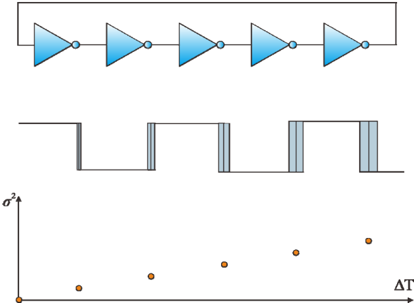
“Electrical noise also can lead to phase jitter in oscillator [20], [43], [44].”
BackgroundTestU01: A C library for empirical testing of random number generators
L'Ecuyer, P., & Simard, R. (2007) · ACM Transactions on Mathematical Software · doi:10.1145/1268776.1268777 · Cited by 1,014 · cited 3×
“22 statistical test suite [90] and Die-hard test suite [91] and Test U01 [92] and AIS31 [93] are most common statistical test suites to evaluate their RNGs by researchers.”
BackgroundQuantum random number generators
Herrero-Collantes, M., & Garcia-Escartin, J. C. (2017) · Reviews of Modern Physics · doi:10.1103/revmodphys.89.015004 · Cited by 791 · cited 1×
“Because of its natural randomness, noise is one of the preferred entropy sources for TRNGs [40].”
BackgroundPhase Noise and Jitter in CMOS Ring Oscillators
Abidi, A. A. (2006) · IEEE Journal of Solid-State Circuits · doi:10.1109/jssc.2006.876206 · Cited by 740 · cited 3×
“[45] A. A. Abidi and R. G. Meyer, ‘‘Noise in relaxation oscillators,’’ IEEE J. Solid-State Circuits, vol. JSSC-18, no. 6, pp. 794–802, Dec. 1983.”
MethodInfluentialA Provably Secure True Random Number Generator with Built-In Tolerance to Active Attacks
Sunar, B., Martin, W. J., & Stinson, D. R. (2007) · IEEE Transactions on Computers · doi:10.1109/tc.2007.250627 · Cited by 673
A noise-based IC random number generator for applications in cryptography
Petrie, C. S., & Connelly, J. A. (2000) · IEEE Transactions on Circuits and Systems I: Fundamental Theory and Applications · doi:10.1109/81.847868 · Cited by 487 · cited 5×
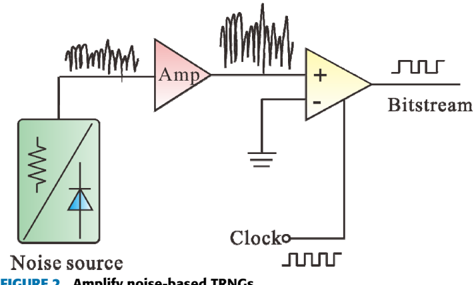
“After being amplified, noise is sampled and quantized in circuit devices [2], [41].”
BackgroundMethodResultInfluentialUltrahigh-Speed Random Number Generation Based on a Chaotic Semiconductor Laser
Reidler, I., Aviad, Y., Rosenbluh, M., & Kanter, I. (2009) · Physical Review Letters · doi:10.1103/physrevlett.103.024102 · Cited by 424 · cited 2×
“Thus, most studies of post-processing for ultrafast TRNGs are carried out offline [81].”
BackgroundBucci, M., Germani, L., Luzzi, R., Trifiletti, A., & Varanonuovo, M. (2003) · IEEE Transactions on Computers · doi:10.1109/tc.2003.1190581 · Cited by 403 · cited 2×
“Subsequently, some researches realized it and provided some methods to enhance its performance [23], [37], [51].”
BackgroundMethodA Provably Secure True Random Number Generator with Built-In Tolerance to Active AttacksPreprint
Sunar, B., Martin, W. J., & Stinson, D. R. (2007) · doi:10.1109/tc.2007.4 · Cited by 398 · cited 5×
“Recently, due to its simple structure and produce random bits effectively, TRNGs using phase jitter have been extensively researched [5], [38], [48].”
BackgroundMethodInfluentialChaos-based random number generators-part I: analysis [cryptography]
Stojanovski, T., & Kocarev, L. (2001) · IEEE Transactions on Circuits and Systems I: Fundamental Theory and Applications · doi:10.1109/81.915385 · Cited by 371 · cited 2×
“noise on the metastable behavior [9]–[12] and amplify noise based on chaos circuits [1], [13], [14].”
BackgroundMcNeill, J. A. (1997) · IEEE Journal of Solid-State Circuits · doi:10.1109/4.585289 · Cited by 342
True Random Bit Generation From a Double-Scroll Attractor
Yalcin, M. E., Suykens, J. A. K., & Vandewalle, J. (2004) · IEEE Transactions on Circuits and Systems I: Regular Papers · doi:10.1109/tcsi.2004.830683 · Cited by 280 · cited 1×
“However, analog circuit blocks is needed for continuous time chaosbased TRNGs, such as operational amplifier (OPAMP) [82], [83], whichmakes continuous time chaos-based TRNGs have large area and high consumption.”
BackgroundNoise in relaxation oscillators
Abidi, A. A., & Meyer, R. G. (1983) · IEEE Journal of Solid-State Circuits · doi:10.1109/jssc.1983.1052034 · Cited by 228 · cited 1×
“The research on phase noise and jitter in oscillator was introduced and developed until 1990s [45], [46].”
BackgroundThermal Agitation of Electricity in Conductors
JOHNSON, J. B. (1927) · Nature · doi:10.1038/119050c0 · Cited by 217
Mathew, S. K., Srinivasan, S., Anders, M. A., Kaul, H., Hsu, S. K., Sheikh, F., Agarwal, A., Satpathy, S., & Krishnamurthy, R. K. (2012) · IEEE Journal of Solid-State Circuits · doi:10.1109/jssc.2012.2217631 · Cited by 195 · cited 3×
“For this kind of noise-based TRNGs, noise must be amplified to a level that the threshold has no bias compared by a comparator, which needs lots of power to bring the noise level up a few orders of magnitude to digital logic level, and designing amplifier is a complex work [10].”
BackgroundMethodInfluentialPhase noise and timing jitter in oscillators with colored-noise sources
Demir, A. (2002) · IEEE Transactions on Circuits and Systems I: Fundamental Theory and Applications · doi:10.1109/tcsi.2002.805707 · Cited by 193 · cited 1×
“Electrical noise also can lead to phase jitter in oscillator [20], [43], [44].”
BackgroundThe Frequency Injection Attack on Ring-Oscillator-Based True Random Number Generators
Markettos, A. T., & Moore, S. W. (2009) · Lecture Notes in Computer Science · doi:10.1007/978-3-642-04138-9_23 · Cited by 192 · cited 2×
“However, some drawbacks can hinder the usage oscillatorbased TRNGs, such as aging, frequency locking, technology dependence and highly power consumption [60], [61].”
BackgroundNew Methods for Digital Generation and Postprocessing of Random Data
Golic, J. D. J. (2006) · IEEE Transactions on Computers · doi:10.1109/tc.2006.164 · Cited by 188 · cited 5×
“Also many researches take no account the effects of flicker noise [24].”
BackgroundMethodInfluentialDemir, A. (2006) · IEEE Transactions on Circuits and Systems I: Regular Papers · doi:10.1109/tcsi.2006.881184 · Cited by 184
High-Speed True Random Number Generation with Logic Gates Only
Dichtl, M., & Golić, J. D. (2007) · Lecture Notes in Computer Science · doi:10.1007/978-3-540-74735-2_4 · Cited by 182 · cited 7×
“By restarting FIRO and GARO under the same initial conditions and calculating time evolution of standard deviation of output, their randomness was evaluated and analyzed [25], [59].”
MethodInfluentialSecure Key Distribution Using Correlated Randomness in Lasers Driven by Common Random Light
Yoshimura, K., Muramatsu, J., Davis, P., Harayama, T., Okumura, H., Morikatsu, S., Aida, H., & Uchida, A. (2012) · Physical Review Letters · doi:10.1103/physrevlett.108.070602 · Cited by 174 · cited 1×
“Due to its non-periodicity and non-reproducibility, fast TRNGs are key in information security [28]–[30] and largescale parallel computation [31].”
BackgroundTrue Random Number Generator With a Metastability-Based Quality Control
Tokunaga, C., Blaauw, D., & Mudge, T. (2008) · IEEE Journal of Solid-State Circuits · doi:10.1109/jssc.2007.910965 · Cited by 172 · cited 4×
“presented the solution controlling the metastability proximity to produce random bit, which formed the bi-stable by adjusting the initial input inverters [12].”
BackgroundInfluentialAnalysis and Enhancement of Random Number Generator in FPGA Based on Oscillator Rings
Wold, K., & Tan, C. H. (2009) · International Journal of Reconfigurable Computing · doi:10.1155/2009/501672 · Cited by 168
New High Entropy Element for FPGA Based True Random Number Generators
Varchola, M., & Drutarovský, M. (2010) · Lecture notes in computer science · doi:10.1007/978-3-642-15031-9_24 · Cited by 160 · cited 1×
“In 2010, Varchola and Drutarovsky put forward a new bi-stable structure which was known as transition effect ring oscillator for TRNG [71].”
BackgroundFPGA-Based True Random Number Generation Using Circuit Metastability with Adaptive Feedback Control
Majzoobi, M., Koushanfar, F., & Devadas, S. (2011) · Lecture Notes in Computer Science · doi:10.1007/978-3-642-23951-9_2 · Cited by 155 · cited 1×
“Hence, it is hard to keep a bi-stable circuit in an unstable state [65], [66].”
Background16.3 A 23Mb/s 23pJ/b fully synthesized true-random-number generator in 28nm and 65nm CMOS
Yang, K., Fick, D., Henry, M. B., Lee, Y., Blaauw, D., & Sylvester, D. (2014) · 2014 IEEE International Solid-State Circuits Conference Digest of Technical Papers (ISSCC) · doi:10.1109/isscc.2014.6757434 · Cited by 155
Implementation and Testing of High-Speed CMOS True Random Number Generators Based on Chaotic Systems
Pareschi, F., Setti, G., & Rovatti, R. (2010) · IEEE Transactions on Circuits and Systems I: Regular Papers · doi:10.1109/tcsi.2010.2052515 · Cited by 147
True Random Number Generator with a Metastability-Based Quality Control
Tokunaga, C., Blaauw, D., & Mudge, T. (2007) · 2007 IEEE International Solid-State Circuits Conference. Digest of Technical Papers · doi:10.1109/isscc.2007.373465 · Cited by 139
Analysis and Enhancement of Random Number Generator in FPGA Based on Oscillator Rings
Wold, K., & Tan, C. H. (2008) · 2008 International Conference on Reconfigurable Computing and FPGAs · doi:10.1109/reconfig.2008.17 · Cited by 137
Evaluation Criteria for True (Physical) Random Number Generators Used in Cryptographic Applications
Schindler, W., & Killmann, W. (2003) · Lecture Notes in Computer Science · doi:10.1007/3-540-36400-5_31 · Cited by 135
On the Security of Oscillator-Based Random Number Generators
Baudet, M., Lubicz, D., Micolod, J., & Tassiaux, A. (2010) · Journal of Cryptology · doi:10.1007/s00145-010-9089-3 · Cited by 133 · cited 1×
“By restarting FIRO and GARO under the same initial conditions and calculating time evolution of standard deviation of output, their randomness was evaluated and analyzed [25], [59].”
MethodFPGA Implementation of Metastability-Based True Random Number Generator
HATA, H., & ICHIKAWA, S. (2012) · IEICE Transactions on Information and Systems · doi:10.1587/transinf.e95.d.426 · Cited by 115 · cited 1×
“For their all-digital designs and simple structures, TRNGs using metastable circuits are increasingly popular [11], [55], [68], [70].”
BackgroundFast nondeterministic random-bit generation using on-chip chaos lasers
Harayama, T., Sunada, S., Yoshimura, K., Davis, P., Tsuzuki, K., & Uchida, A. (2011) · Physical Review A · doi:10.1103/physreva.83.031803 · Cited by 110 · cited 2×
“And some challenges also are brought including scalability to higher rates, interfacing with computing and communication architectures [87].”
BackgroundMetastable Behavior in Digital Systems
Kleeman, L., & Cantoni, A. (1987) · IEEE Design & Test of Computers · doi:10.1109/mdt.1987.295189 · Cited by 105 · cited 1×
“Metastability also exists in RS latches [69] and D-type flipflops [64].”
BackgroundMathew, S. K., Johnston, D., Satpathy, S., Suresh, V., Newman, P., Anders, M. A., Kaul, H., Agarwal, A., Hsu, S. K., Chen, G., et al. (2016) · IEEE Journal of Solid-State Circuits · doi:10.1109/jssc.2016.2558490 · Cited by 102 · cited 1×
“For their all-digital designs and simple structures, TRNGs using metastable circuits are increasingly popular [11], [55], [68], [70].”
BackgroundA Design of Reliable True Random Number Generator for Cryptographic Applications
Bagini, V., & Bucci, M. (1999) · Lecture Notes in Computer Science · doi:10.1007/3-540-48059-5_18 · Cited by 101 · cited 1×
“After being amplified, noise is sampled and quantized in circuit devices [2], [41].”
MethodA novel design method for discrete time chaos based true random number generators
Cicek, I., Pusane, A. E., & Dundar, G. (2014) · Integration · doi:10.1016/j.vlsi.2013.06.003 · Cited by 101
A feedback strategy to improve the entropy of a chaos-based random bit generator
Addabbo, T., Alioto, M., Fort, A., Rocchi, S., & Vignoli, V. (2006) · IEEE Transactions on Circuits and Systems I: Regular Papers · doi:10.1109/tcsi.2005.856670 · Cited by 96 · cited 2×
“noise on the metastable behavior [9]–[12] and amplify noise based on chaos circuits [1], [13], [14].”
BackgroundDual-Metastability Time-Competitive True Random Number Generator
Wieczorek, P. Z., & Golofit, K. (2014) · IEEE Transactions on Circuits and Systems I: Regular Papers · doi:10.1109/tcsi.2013.2265952 · Cited by 87 · cited 1×
“Hence, it is hard to keep a bi-stable circuit in an unstable state [65], [66].”
BackgroundAmplification of intrinsic fluctuations by chaotic dynamics in physical systems
Fox, R. F., & Keizer, J. (1991) · Physical Review A · doi:10.1103/physreva.43.1709 · Cited by 86 · cited 1×
“Additionally, the uncertainties can be amplified by chaotic systems [32].”
BackgroundDesign and Implementation of a True Random Number Generator Based on Digital Circuit Artifacts
Epstein, M., Hars, L., Krasinski, R., Rosner, M., & Zheng, H. (2003) · Lecture Notes in Computer Science · doi:10.1007/978-3-540-45238-6_13 · Cited by 85 · cited 2×
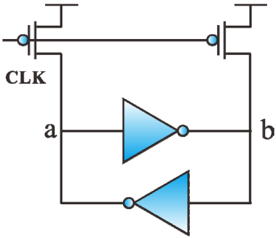
“The classical metastable-based TRNG was developed by Philips in [64], which used metastable cross-coupled inverters to handle thermal noise, as shown in Figure 7.”
BackgroundMethodKoizumi, H., Morikatsu, S., Aida, H., Nozawa, T., Kakesu, I., Uchida, A., Yoshimura, K., Muramatsu, J., & Davis, P. (2013) · Optics Express · doi:10.1364/oe.21.017869 · Cited by 79
Li, W., Reidler, I., Aviad, Y., Huang, Y., Song, H., Zhang, Y., Rosenbluh, M., & Kanter, I. (2013) · Physical Review Letters · doi:10.1103/physrevlett.111.044102 · Cited by 79 · cited 1×
“proposed an all-electronic TRNG based on high amplitude chaotic oscillations [79].”
BackgroundZhang, R., de S.Cavalcante, H. L. D., Gao, Z., Gauthier, D. J., Socolar, J. E. S., Adams, M. M., & Lathrop, D. P. (2009) · Physical Review E · doi:10.1103/physreve.80.045202 · Cited by 79 · cited 1×
“This does not rely on a clock and is promising candidates for TRNG because it is easily integrated [78].”
BackgroundDrutarovsky, M., & Galajda, P. (2007) · 2007 17th International Conference Radioelektronika · doi:10.1109/radioelek.2007.371423 · Cited by 77 · cited 1×
“Due to its high bandwidth, unpredictability and insensitive to various disturbance and tolerances of components, chaos is a perfect entropy source for fast TRNGs [14], [76], [77].”
BackgroundMcNeill, J. (2002) · IEEE International Symposium on Circuits and Systems proceedings · doi:10.1109/iscas.1994.409561 · Cited by 76
True Random Number Generator circuits based on single- and multi-phase beat frequency detection
Tang, Q., Kim, B., Lao, Y., Parhi, K. K., & Kim, C. H. (2014) · Proceedings of the IEEE 2014 Custom Integrated Circuits Conference · doi:10.1109/cicc.2014.6946136 · Cited by 75 · cited 1×
“These TRNGs extract entropy from edge-jitter of oscillator and sample jitter events using phasedetector, including ring oscillators [7], coupled oscillators [2], [22], [23] and Fibonacci/Galois ring oscillators [24], [25].”
Method1200μm2 Physical Random-Number Generators Based on SiN MOSFET for Secure Smart-Card Application
Matsumoto, M., Yasuda, S., Ohba, R., Ikegami, K., Tanamoto, T., & Fujita, S. (2008) · Digest of technical papers/Digest of technical papers - IEEE International Solid-State Circuits Conference · doi:10.1109/isscc.2008.4523233 · Cited by 71 · cited 1×
“Later, increasing noise magnitude with inserting a SiN layer rich in high-density electron traps was proposed [42].”
BackgroundCorrections to "A General Theory of Phase Noise in Electrical Oscillators"
Hajimiri, A., & Lee, T. H. (1998) · IEEE Journal of Solid-State Circuits · doi:10.1109/4.678662 · Cited by 67
TI-TRNG: Technology Independent True Random Number Generator
Rahman, M. T., Xiao, K., Forte, D., Zhang, X., Shi, J., & Tehranipoor, M. (2014) · Proceedings of the 51st Annual Design Automation Conference · doi:10.1145/2593069.2593236 · Cited by 65 · cited 1×
“presented adding self-compensation mechanism or extra power supply noise for oscillator-based TRNG to avoid frequency attacks [62].”
BackgroundA 3 $\mu$W CMOS True Random Number Generator With Adaptive Floating-Gate Offset Cancellation
Holleman, J., Bridges, S., Otis, B. P., & Diorio, C. (2008) · IEEE Journal of Solid-State Circuits · doi:10.1109/jssc.2008.920327 · Cited by 63 · cited 2×
“Because metastability of bi-stable circuits can be influenced by thermal noise then a random bit is produced [9], [12], [26].”
BackgroundModeling and simulation of oscillator-based random number generators
Petrie, C. S., & Connelly, J. A. (1996) · 1996 IEEE International Symposium on Circuits and Systems (ISCAS) · doi:10.1109/iscas.1996.541967 · Cited by 62 · cited 1×
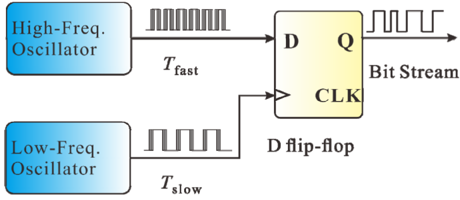
“In 1996, it was modeled that a low-frequency ring oscillator sampled a high-frequency ring oscillator using a D flip-flop for generate unpredictable bits [50], as shown in Figure 4.”
A novel chaos-based post-processing for TRNG
Avaroğlu, E., Tuncer, T., Özer, A. B., Ergen, B., & Türk, M. (2015) · Nonlinear Dynamics · doi:10.1007/s11071-015-1981-9 · Cited by 61 · cited 1×
“XOR and Von Neumann are the most common post-processing for TRNGs because of their easy application [88].”
Background(2002) · Cited by 60
Chaos in nonautonomous discrete dynamical systems
Dvořáková, J. (2012) · Communications in Nonlinear Science and Numerical Simulation · doi:10.1016/j.cnsns.2012.06.005 · Cited by 57 · cited 1×
“Future state of the discrete time chaotic systems is decided by differential equations which merely relates to the current state [84].”
BackgroundA High Speed IC Truly Random Number Generator Based on Chaotic Sampling of Regular Waveform
ERGÜN, S., GÜLER, Ü., & ASADA, K. (2011) · IEICE Transactions on Fundamentals of Electronics, Communications and Computer Sciences · doi:10.1587/transfun.e94.a.180 · Cited by 53 · cited 1×
“noise on the metastable behavior [9]–[12] and amplify noise based on chaos circuits [1], [13], [14].”
BackgroundWieczorek, P. Z., & Golofit, K. (2018) · IEEE Transactions on Circuits and Systems I: Regular Papers · doi:10.1109/tcsi.2017.2751144 · Cited by 53 · cited 2×
“Thus, a TRNG combined chaotic circuit and metastability was proposed [74].”
BackgroundMethodEntropy and Energy Bounds for Metastability Based TRNG with Lightweight Post-Processing
Suresh, V. B., & Burleson, W. P. (2015) · IEEE Transactions on Circuits and Systems I: Regular Papers · doi:10.1109/tcsi.2015.2441966 · Cited by 50 · cited 3×
“Due to its easy integration and energy-efficient in circuits [55], metastability is a perfect solution for TRNGs.”
BackgroundTrue Random Number Generation Via Sampling From Flat Band-Limited Gaussian Processes
Gov, N. C., Mihcak, M. K., & Ergun, S. (2011) · IEEE Transactions on Circuits and Systems I: Regular Papers · doi:10.1109/tcsi.2010.2089561 · Cited by 48 · cited 1×
“Several methods of harvesting electrical noise in TRNGs are available, such as amplify noise based on amplifier [2]–[4], phase jitter based on oscillator [5]–[8], the impact of electrical”
MethodTheory of fast nondeterministic physical random-bit generation with chaotic lasers
Harayama, T., Sunada, S., Yoshimura, K., Muramatsu, J., Arai, K., Uchida, A., & Davis, P. (2012) · Physical Review E · doi:10.1103/physreve.85.046215 · Cited by 47 · cited 1×
“Physical randomness is derived from electrical noise and amplified by deterministic chaos [80].”
BackgroundPhysical random number generator based on MOS structure after soft breakdown
Yasuda, S., Satake, H., Tanamoto, T., Ohba, R., Uchida, K., & Fujita, S. (2004) · IEEE Journal of Solid-State Circuits · doi:10.1109/jssc.2004.831480 · Cited by 46 · cited 3×
“Because the electrical properties of metal-oxide semiconductor (MOS) after soft breakdown (SBD) shows large fluctuation [17], [18].”
BackgroundMethodFully Digital Random Bit Generators for Cryptographic Applications
Bucci, M., & Luzzi, R. (2008) · IEEE Transactions on Circuits and Systems I: Regular Papers · doi:10.1109/tcsi.2008.916446 · Cited by 46 · cited 2×
“Subsequently, some researches realized it and provided some methods to enhance its performance [23], [37], [51].”
MethodHonjo, T., Uchida, A., Amano, K., Hirano, K., Someya, H., Okumura, H., Yoshimura, K., Davis, P., & Tokura, Y. (2009) · Optics Express · doi:10.1364/oe.17.009053 · Cited by 45
A true random number generator using time-dependent dielectric breakdown
Liu, N., Pinckney, N., Hanson, S., Sylvester, D., & Blaauw, D. T. (2011) · Symposium on VLSI Circuits · Cited by 45
An FPGA Implementation of the Resolve Time-Based True Random Number Generator With Quality Control
Wieczorek, P. Z. (2014) · IEEE Transactions on Circuits and Systems I: Regular Papers · doi:10.1109/tcsi.2014.2338615 · Cited by 44
Chen, X., Wang, L., Li, B., Wang, Y., Li, X., Liu, Y., & Yang, H. (2015) · IEEE Transactions on Computer-Aided Design of Integrated Circuits and Systems · doi:10.1109/tcad.2015.2511074 · Cited by 44 · cited 2×
“Subsequently, TRNG using random telegraph noise (RTN) was proposed due to its unpredictability and some basic guidelines for designing RNT-based TRNG also were provided [19].”
BackgroundMethodSelf-citationObserving the Randomness in RO-Based TRNG
Bochard, N., Bernard, F., & Fischer, V. (2009) · International Conference on ReConFigurable Computing and FPGAs (ReConFig) · doi:10.1109/reconfig.2009.57 · Cited by 42 · cited 1×
“is impossible to be eliminated [56], thus the TRNG may be attacked.”
BackgroundSrinivasan, S., Mathew, S., Erraguntla, V., & Krishnamurthy, R. (2009) · 2009 22nd International Conference on VLSI Design · doi:10.1109/vlsi.design.2009.69 · Cited by 41 · cited 1×
“Another popular digital technique harvesting noise is using the metastable behavior [9], [12], [26], [27].”
BackgroundAn Offset-Compensated Oscillator-Based Random Bit Source for Security Applications
Bock, H., Bucci, M., & Luzzi, R. (2004) · Lecture Notes in Computer Science · doi:10.1007/978-3-540-28632-5_20 · Cited by 37 · cited 1×
“Subsequently, some researches realized it and provided some methods to enhance its performance [23], [37], [51].”
MethodA Framework for Investigating the Performance of Chaotic-Map Truly Random Number Generators
Beirami, A., & Nejati, H. (2013) · IEEE Transactions on Circuits and Systems II: Express Briefs · doi:10.1109/tcsii.2013.2258274 · Cited by 36 · cited 1×
“Due to its high bandwidth, unpredictability and insensitive to various disturbance and tolerances of components, chaos is a perfect entropy source for fast TRNGs [14], [76], [77].”
BackgroundA digital IC Random Number Generator with logic gates only
Guler, U., Ergun, S., & Dundar, G. (2010) · 2010 17th IEEE International Conference on Electronics, Circuits and Systems · doi:10.1109/icecs.2010.5724498 · Cited by 34 · cited 1×
“designed the first ASIC implementation of TRNG combining FIROwithGAROand this design provided a throughput of 125Mbps [57].”
MethodOptimizing Speed of a True Random Number Generator in FPGA by Spectral Analysis
Wold, K., & Petrović, S. V. (2009) · International Conference on Computer Sciences and Convergence Information Technology · doi:10.1109/iccit.2009.95 · Cited by 32 · cited 1×
“Subsequently, Knut Wold and Slobodan Petrović optimized the parameters of modified TRNG by spectral analysis and achieved 300Mbit/s throughput [54].”
MethodLightweight TRNG Based on Multiphase Timing of Bistables
Wieczorek, P. Z. (2016) · IEEE Transactions on Circuits and Systems I: Regular Papers · doi:10.1109/tcsi.2016.2555248 · Cited by 27 · cited 2×
“However, some drawbacks can hinder the usage oscillatorbased TRNGs, such as aging, frequency locking, technology dependence and highly power consumption [60], [61].”
BackgroundMethod(2014) · Informatica · Cited by 26
Modeling CMOS Ring Oscillator Performance<newline/> as a Randomness Source
Guler, U., & Dundar, G. (2014) · IEEE Transactions on Circuits and Systems I: Regular Papers · doi:10.1109/tcsi.2013.2283993 · Cited by 25 · cited 3×
“based TRNGs, Ülkühan Güler derived randomness equations and defined randomness parameter [38].”
BackgroundMethodTao, S., & Dubrova, E. (2017) · IEEE International Symposium on Multiple-Valued Logic (ISMVL) · doi:10.1109/ismvl.2017.10 · Cited by 25 · cited 1×
“Recently, Sha Tao and Elena Dubrova harvested entropy from latches comparators in their detectable metastable states and harnessed several ternary valued latches to address the bias caused by conditions [75].”
BackgroundPhase noise and timing jitter in oscillators
Demir, A., Mehrotra, A., & Roychowdhury, J. (2002) · Custom Integrated Circuits Conference · doi:10.1109/cicc.1998.694904 · Cited by 24
Integrated cross-coupled chaos oscillator applied to random number generation
Tavas, V., Demirkol, A. Ş., Özoğuz, S., Zeki, A., & Toker, A. (2009) · IET Circuits Devices & Systems · doi:10.1049/iet-cds:20080144 · Cited by 22 · cited 2×
“These make it desirable candidates for applying to lightweight and hardware efficient TRNGs [82].”
BackgroundWang, Y., Hui, C., Liu, C., & Xu, C. (2016) · Review of Scientific Instruments · doi:10.1063/1.4945564 · Cited by 21 · cited 1×
“Usually, using postprocessing can increase that the probability of bits passing the test, while their throughput will be reduced [86].”
Self-citationA robust −40 to 120°C all-digital true random number generator in 40nm CMOS
Yang, K., Blaauw, D. T., & Sylvester, D. (2015) · Symposium on VLSI Circuits · doi:10.1109/vlsic.2015.7231275 · Cited by 21
Farcot, E., Best, S., Edwards, R., Belgacem, I., Xu, X., & Gill, P. (2019) · Chaos An Interdisciplinary Journal of Nonlinear Science · doi:10.1063/1.5079941 · Cited by 19 · cited 1×
“These make chaotic circuits convenient candidates for fast TRNGs and TRNGs using chaotic circuit have been extensive researched [33]–[35].”
MethodDual‐metastability FPGA‐based true random number generator
Wieczorek, P. Z. (2013) · Electronics Letters · doi:10.1049/el.2012.4126 · Cited by 18 · cited 1×
“Later, Piotr ZbigniewWieczorek proposed dual-metastability time-competitive TRNG [72], [73], which generated random number by comparing the unpredictable resolve time of two similar metastable D-latches (or flip-flops) to generate”
BackgroundSi nanodevices for random number generating circuits for cryptographic security
Fujita, S., Uchida, K., Yasuda, S., Ohba, R., Nozaki, H., & Tanamoto, T. (2004) · 2004 IEEE International Solid-State Circuits Conference (IEEE Cat. No.04CH37519) · doi:10.1109/isscc.2004.1332710 · Cited by 16 · cited 2×
“Fujita proposed using Si nanodevices to produce high-amplitude device noise, which reduced the size of TRNGs and produced high quality random numbers [15].”
BackgroundMethodReal-time 3Gbit/s true random bit generator based on a super-luminescent diode
Huang, M., Wang, A., Li, P., Xu, H., & Wang, Y. (2014) · Optics Communications · doi:10.1016/j.optcom.2014.03.052 · Cited by 16
Self-citationPawlowski, M., Jara, A., & Ogorzalek, M. (2015) · Sensors · doi:10.3390/s151026838 · Cited by 15 · cited 3×
“NIST SP-800.”
BackgroundMaximizing randomness in ring oscillators for security applications
Guler, U., & Dundar, G. (2011) · 2011 20th European Conference on Circuit Theory and Design (ECCTD) · doi:10.1109/ecctd.2011.6043291 · Cited by 13 · cited 1×
“Ülkühan Güler and Günhan Dündar realized the first integrated circuit implementation using Sunar’s method and generated high-quality random bits using the simple Von Neuman corrector instead of Sunar’s post-processor [52], [53].”
MethodMathew, S. K., Hsu, S. K., Krishnamurthy, R. K., Johnston, D., Newman, P., Satpathy, S. K., Suresh, V., Anders, M. A., Kaul, H., Chen, G., et al. (2015) · European Solid-State Circuits Conference (ESSCIRC) · doi:10.1109/esscirc.2015.7313842 · Cited by 11
A 500 mV 650 pW random number generator in 130 nm CMOS for a UWB localization system
De Roover, C., & Steyaert, M. (2010) · 2010 Proceedings of ESSCIRC · doi:10.1109/esscirc.2010.5619875 · Cited by 10 · cited 1×
“Hence, some researches focused on these problems were carried out, including Si nano-devices [15], identical inverters [16], oxide breakdown [17], [18] and random telegraph noise [19].”
BackgroundMetastability behavior of mismatched CMOS flip-flops using state diagram analysis
van Noije, W. A. M., Liu, W. T., & Navarro, J. (2002) · Proceedings of IEEE Custom Integrated Circuits Conference - CICC '93 · doi:10.1109/cicc.1993.590809 · Cited by 9 · cited 1×
“What’s worse, these inaccuracies affecting the symmetry of the metastability will cause bias and decrease the entropy rate of the outputs bits of metastable circuit [67].”
BackgroundGüler, Ü., & Dündar, G. (2012) · International Conference on Synthesis, Modeling, Analysis and Simulation Methods and Applications to Circuit Design · doi:10.1109/smacd.2012.6339388 · Cited by 9 · cited 1×
“Ülkühan Güler and Günhan Dündar realized the first integrated circuit implementation using Sunar’s method and generated high-quality random bits using the simple Von Neuman corrector instead of Sunar’s post-processor [52], [53].”
MethodGuler, U., Pusane, A. E., & Dundar, G. (2014) · 2014 International Conference on Information Science, Electronics and Electrical Engineering · doi:10.1109/infoseee.2014.6947786 · Cited by 9 · cited 1×
“Recently, due to its simple structure and produce random bits effectively, TRNGs using phase jitter have been extensively researched [5], [38], [48].”
BackgroundA true random number generator with on-line testability
Bohl, E., Lewis, M., & Galkin, S. (2014) · 2014 19th IEEE European Test Symposium (ETS) · doi:10.1109/ets.2014.6847799 · Cited by 9 · cited 1×
“presented the on-line testable solution to ensure randomness [63].”
Background(2006) · Digital WPI · Cited by 9
A Digital TRNG Based on Cross Feedback Ring Oscillators
Li, L., & Li, S. (2013) · IEICE Transactions on Fundamentals of Electronics Communications and Computer Sciences · doi:10.1587/transfun.e97.a.284 · Cited by 8 · cited 1×
“Inspired by [24] and [25], Lijuan Li and Shuguo Li proposed a digital TRNG using cross feedback ring oscillator [58].”
MethodCoupled Inverter Ring I/Q Oscillator for Low Power Frequency Synthesis
Xu, J., Verma, S., & Lee, T. C. M. (2006) · Symposium on VLSI Circuits · doi:10.1109/vlsic.2006.1705365 · Cited by 8 · cited 1×
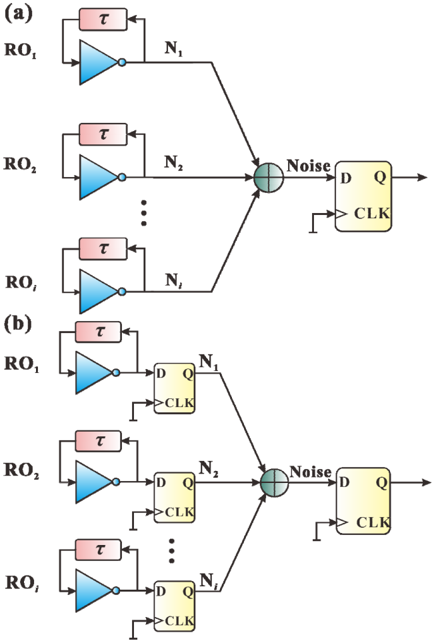
“In this paper, for simplicity, the model of ring oscillator is simplified as a single inverter, a delay τ and a feedback loop and the ring oscillator follows Barkhausen criterion [49].”
MethodAn Implementation of a 5-term GFSR Random Number Generator for Parallel Computations
Miyazawa, H., & Fushimi, M. (2009) · Cited by 3
Research works printed but not linked: 1
- marsaglia, 1995, The Marsaglia Random Number CD-ROM Including the DieHard Battery of Test of Randomness
Cited by
Harnessing microcomb-based parallel chaos for random number generation and optical decision making
Shen, B., Shu, H., Xie, W., Chen, R., Liu, Z., Ge, Z., Zhang, X., Wang, Y., Zhang, Y., Cheng, B., et al. (2023) · Nature Communications · doi:10.1038/s41467-023-40152-w · Cited by 125
“1a1) induced by nonlinear circuits 12,13 such as application speci fi c integrated circuit (ASIC) and fi eld programmable gate array (FPGA) 14,15 .”
Self-citationTrue Random Number Generator Based on Fibonacci-Galois Ring Oscillators for FPGA
Nannipieri, P., Matteo, S. D., Baldanzi, L., Crocetti, L., Belli, J., Fanucci, L., & Saponara, S. (2021) · Applied Sciences · doi:10.3390/app11083330 · Cited by 80
“Several relevant contributions reviewed the state of the art, both from a mathematical [8] and an architectural [9] point of view; however, the available information addresses the problem at a high level, not focusing on particular technologies, such as Field Programmable Gate Arrays (FPGAs).”
BackgroundHigh-Throughput FPGA-Compatible TRNG Architecture Exploiting Multistimuli Metastable Cells
Sala, R. D., Bellizia, D., & Scotti, G. (2022) · IEEE Transactions on Circuits and Systems I Regular Papers · doi:10.1109/tcsi.2022.3199218 · Cited by 71
“The physical entropy sources usually exploited in TRNGs primitives are the jitter accumulation [8], [9], [10], the meta-stability [11], [12], [13] and, finally, thermal, shot and flicker noise [14].”
BackgroundA stream cipher algorithm based on 2D coupled map lattice and partitioned cellular automata
Liu, Z., Wang, Y., Zhao, Y., & Zhang, L. Y. (2020) · Nonlinear Dynamics · doi:10.1007/s11071-020-05804-2 · Cited by 39
Self-citationA Low Power Circuit Design for Chaos-Key Based Data Encryption
Nguyen, N., Pham-Nguyen, L., Nguyen, B. M., & Kaddoum, G. (2020) · IEEE Access · doi:10.1109/access.2020.2998395 · Cited by 39
“Therefore, at a certain point of observation, the chaotic sys-tem behaves as a random-like process [10].”
Background
Metadata
- Authors
- Gong, L., Zhang, J., Liu, H., Sang, L., & Wang, Y.
- Affiliations
- Taiyuan University of Technology (CN)
- Venue
- IEEE Access
- Published
- 2019
- Volume
- 7
- Pages
- 125796-125805
- ISSN
- 2169-3536 (ISSN-L)
- OpenAlex
- W2971887892
- Semantic Scholar
- 7c4060e0408d01e97de65cc2eb021c0e26655ddb
- Cited by
- 77
- References
- 102
- Citations by year
- 2026: 12 · 2025: 14 · 2024: 11 · 2023: 11 · 2022: 12 · 2021: 12 · 2020: 5
- FWCI
- 7.36
- Type
- journal article
- Language
- en
- Open access
- gold
- doi.org
- Locations
- IEEE Access (publishedVersion, cc-by)
- DOAJ (DOAJ: Directory of Open Access Journals) (submittedVersion, cc-by-sa)
- Funders
- National Natural Science Foundation of China (61731014, 61671316, 61775158, 61705159)
- Shanxi Scholarship Council of China (2017—key 2)
- Natural Science Foundation of Shanxi Province (201801D121145)
- Topics
- Physical Sciences › Computer Science › Hardware and Architecture › Physical Unclonable Functions (PUFs) and Hardware Security
- Physical Sciences › Computer Science › Computer Vision and Pattern Recognition › Chaos-based Image/Signal Encryption
- Physical Sciences › Computer Science › Artificial Intelligence › Cryptographic Implementations and Security
- Keywords
- true random number generator, electronic noise, entropy source, noise amplification, phase jitter, chaotic circuits, post-processing, hardware randomness
About these checks
Registry, retraction, Cites and statistics results are computed, not judged, with one exception: a printed reference that no index lists is read once by a model before it counts as a citation error. Claims are extracted by a model and kept only when their quote appears verbatim in the text; each cited source is then checked, with a model’s help, for whether it says what the claim relies on. Those verdicts can be wrong — read the claim’s quote and the cited source before relying on one.
The claim verdicts this report counts are experimental: their accuracy is not yet measured.
A language model drew the claims from the paper on 2026-10-09, under version 3 of the claim definition (model deepseek-v4.1-flash, prompt extract-v3).
A second model labelled each claim on 2026-10-09 (model jev-1.13-20260917, definition revision gold-guideline-v0.2).
Cited sources are checked with a language model’s help (gpt-6-sol).
Statistics and arithmetic are recomputed, not judged.
Confidence bands are shown only for fields calibrated on our annotated test set. None is calibrated yet, so no band is shown.
What counts as a claim ›How we measure confidence ›How we check this ›
Are you an author, or do you see a problem with this page? Request a review
Data sources
Bibliographic data: Semantic Scholar, OpenAlex, Crossref.
Contains information from the Semantic Scholar Academic Graph Datasets, made available under the ODC Attribution License (ODC-BY 1.0).
Semantic Scholar’s data is described in: Kinney, R., et al. (2023). The Semantic Scholar Open Data Platform. arXiv:2301.10140.
