

Question Answering Systems With Deep Learning-Based Symbolic Processing
Open accessThe DOI matches its Crossref record; 53 of the 55 references it cites were found in a registry or an index.
Abstract
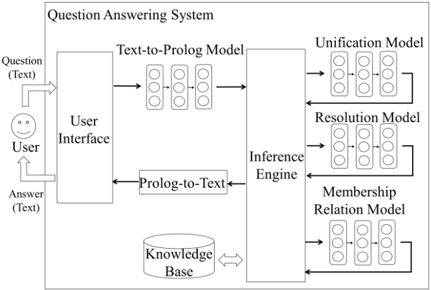
The authors propose methods to learn symbolic processing with deep learning and to build question answering systems by means of learned models. Symbolic processing, performed by the Prolog processing systems which execute unification, resolution, and list operations, is learned by a combination of deep learning models, Neural Machine Translation (NMT) and Word2Vec training. To our knowledge, the implementation of a Prolog-like processing system using deep learning is a new experiment that has not been conducted in the past. The results of their experiments revealed that the proposed methods are superior to the conventional methods because symbolic processing (1) has rich representations, (2) can interpret inputs even if they include unknown symbols, and (3) can be learned with a small amount of training data. In particular (2), handling of unknown data, which is a major task in artificial intelligence research, is solved using Word2Vec. Furthermore, question answering systems can be built from knowledge bases written in Prolog with learned symbolic processing, which, with conventional methods, is extremely difficult to accomplish. Their proposed systems can not only answer questions through powerful inferences by utilizing facts that harbor unknown data but also have the potential to build knowledge bases from a large amount of data, including unknown data, on the Web. The proposed systems are a completely new trial, there is no state-of-the-art methods in the sense of “newest”. Therefore, to evaluate their efficiency, they are compared with the most traditional and robust system i.e., the Prolog system. This is new research that encompasses the subjects of conventional artificial intelligence and neural network, and their systems have higher potential to build applications such as FAQ chatbots, decision support systems and energy-efficient estimation using a large amount of information on the Web. Mining hidden information through these applications will provide great value.
Overview
The claims and statistics of this paper haven’t been checked yet.
Free: it reads the open-access text and checks the first 5 claims that cite a source we can check. Create a free account to check every claim.
Integrity signals
Registry
Cites
Statistics
Figures


Verification
Claims the paper makes
The claims and statistics of this paper haven’t been checked yet.
Free: it reads the open-access text and checks the first 5 claims that cite a source we can check. Create a free account to check every claim.
Claims other papers make about this one
Each is checked against this paper’s own text: does it say what the citing paper says it does?
The source backs part of the claim, not all of it — or backs it for a different population, condition or comparison.
In the citing paper
“LLMs such as GPT-4 [79] and PaLM [80] are trained on massive datasets of text from books, web content, and dialogue corpora. These models exhibit emergent capabilities in natural language understanding, question answering, summarization, dialogue coherence, and even symbolic reasoning [81-83].”
From AI Agents vs. Agentic AI: A Conceptual taxonomy, applications and challenges (2026) · cites this paper as [81]
Experimental — accuracy not yet measured
Self-check
Percentages, sums and reported differences re-computed from the paper’s own numbers.
The self-check needs the paper’s full text.
Citations
Cites
Vaswani, A., Shazeer, N., Parmar, N., Uszkoreit, J., Jones, L., Gomez, A. N., Kaiser, L., & Polosukhin, I. (2017) · arXiv · doi:10.48550/arxiv.1706.03762 · Cited by 120,404 · cited 8×
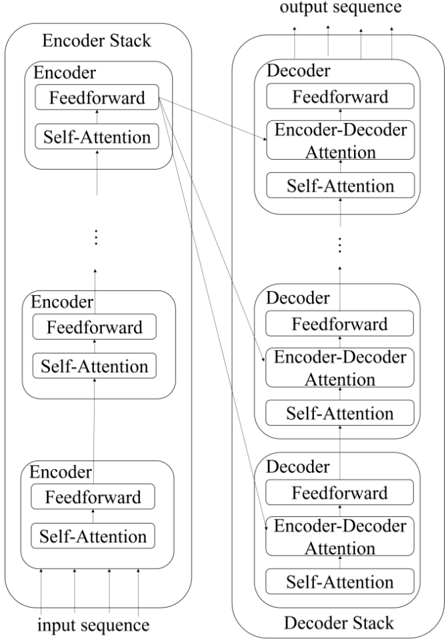
“Transformer [43] consists of two blocks, an Encoder Stack and a Decoder Stack.”
MethodInfluentialHochreiter, S., & Schmidhuber, J. (1997) · Neural Computation · doi:10.1162/neco.1997.9.8.1735 · Cited by 102,318 · cited 6×
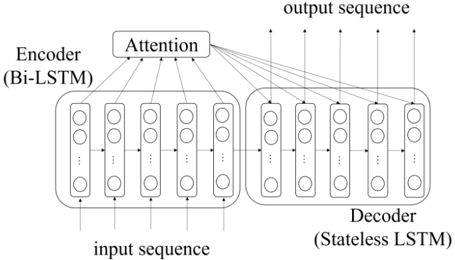
“Bi-LSTM has 128-dimensional output and three layers.”
MethodInfluentialAdam: A Method for Stochastic Optimization
Kingma, D. P., & Ba, J. (2014) · arXiv · doi:10.48550/arxiv.1412.6980 · Cited by 98,946 · cited 1×
“For optimization, we use the Adam optimizer [54] with α = 0.”
MethodExploiting Generative AI to Scale up Intelligent Tutoring Systems
Jakubův, J., Chvalovský, K., Goertzel, Z., Kaliszyk, C., Olšák, M., Piotrowski, B., Schulz, S., Suda, M., & Urban, J. (2023) · DROPS (Schloss Dagstuhl – Leibniz Center for Informatics) · doi:10.4230/lipics.itp.2023.19 · Cited by 76,658
Efficient Estimation of Word Representations in Vector Space
Mikolov, T., Chen, K., Corrado, G., & Dean, J. (2013) · arXiv · doi:10.48550/arxiv.1301.3781 · Cited by 26,568
Distributed Representations of Words and Phrases and their Compositionality
Mikolov, T., Sutskever, I., Chen, K., Corrado, G., & Dean, J. (2013) · arXiv · doi:10.48550/arxiv.1310.4546 · Cited by 24,533
Quinlan, J. R. (1986) · Machine Learning · doi:10.1007/bf00116251 · Cited by 21,439 · cited 1×
“Eventually, studies were conducted to generate rules where the knowledge base was rendered incomplete [2], [3] and to obtain inferences based on hypotheses when there was a shortage of data [4]–[6], which, consequently, helped to improve these expert systems.”
BackgroundSequence to Sequence Learning with Neural Networks
Sutskever, I., Vinyals, O., & Le, Q. V. (2014) · arXiv · doi:10.48550/arxiv.1409.3215 · Cited by 17,766 · cited 1×
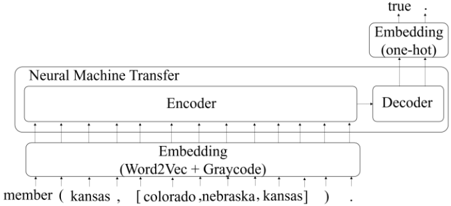
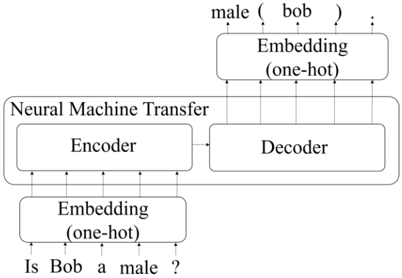
“We propose methods to learn matching, resolution and membership relations described in section II by combining Neural Machine Translation (NMT) [41]–[43] and”
MethodNeural Machine Translation by Jointly Learning to Align and Translate
Bahdanau, D., Cho, K., & Bengio, Y. (2014) · arXiv · doi:10.48550/arxiv.1409.0473 · Cited by 16,213 · cited 3×
“We apply pre-trained Word2Vec called GoogleNews-vectors-negative300 [40]–[42] to the unification, resolution and membership relation models.”
MethodElman, J. L. (1990) · Cognitive Science · doi:10.1207/s15516709cog1402_1 · Cited by 11,212 · cited 2×
“LSTM can handle sequential data with long-term dependencies that cannot be learned VOLUME 7, 2019 152373 with conventional RNNs.”
Method
Research works printed but not linked: 4
- shastri, 1992, Neurally motivated constraints on the working memory capacity of a production system for parallel processing: Implications of a connectionist model based on temporal synchrony, Proc 14th Ann Conf Cognitive Science Society, 14, 159
- 2018, Kinsources A Collaborative Web Platform for Kinship Data Sharing
- maas, 2013, Rectifier nonlinearities improve neural network acoustic models, Proc 30th Int Conf Mach Learn, 3
- kohn, 2014, IBM’s health analytics and clinical decision support, Yearb Med Inf, 9, 154
Cited by
AI Agents vs. Agentic AI: A Conceptual taxonomy, applications and challenges
Sapkota, R., Roumeliotis, K. I., & Karkee, M. (2026) · Information Fusion · doi:10.1016/j.inffus.2025.103599 · Cited by 671
“These models exhibit emergent capabilities in natural language understanding, question answering, summarization, dialogue coherence, and even symbolic reasoning [81–83].”
AI Agents vs. Agentic AI: A Conceptual Taxonomy, Applications and Challenges
Sapkota, R., Roumeliotis, K. I., & Karkee, M. (2025) · arXiv · doi:10.48550/arxiv.2505.10468 · Cited by 295
“These models exhibit emergent capabilities in natural language understanding, question answering, summarization, dialogue coherence, and even symbolic reasoning [81–83].”
AI Agents vs. Agentic AI: A Conceptual Taxonomy, Applications and Challenges
Sapkota, R., Roumeliotis, K. I., & Karkee, M. (2025) · SuperIntelligence - Robotics - Safety & Alignment · doi:10.70777/si.v2i3.15161 · Cited by 186
Is neuro-symbolic AI meeting its promises in natural language processing? A structured review
Hamilton, K., Nayak, A., Božić, B., & Longo, L. (2024) · Semantic Web · doi:10.3233/sw-223228 · Cited by 88
“1 0 0 0 0 0 1 [34] 1 0 0 0 0 0 1 [59] 0 0 0 0 0 0 0 [38] 1 0 1 1 0 0 3 [39] 1 0 0 0 1 0 2 [42] 1 0 0 0 0 0 1 [36] 0 1 0 1 0 0 2 [80] 0 0 0 0 0 0 0 [45] 1 0 0 0 0 0 1 [37] 1 0 0 1 0 0 2 [55] 1 0 1 0 0 1 2 [56] 1 0 0 0 0 0 1 [43] 1 0 0 0 0 0 1 [48] 1 0 0 1 0 0 2 [60] 0 0 0 1 0 1 1 [40] 1 0 0 0 0 0 1 [53]”
Hassija, V., Chakrabarti, A., Singh, A., Chamola, V., & Sikdar, B. (2023) · IEEE Access · doi:10.1109/access.2023.3339553 · Cited by 68
“In contrast, Hiroshi Honda et al. [28] proposed the fusion of symbolic processing with deep learning.”
Result
Metadata
- Authors
- Honda, H., & Hagiwara, M.
- Affiliations
- Keio University (JP)
- Venue
- IEEE Access
- Published
- 2019
- Volume
- 7
- Pages
- 152368-152378
- ISSN
- 2169-3536 (ISSN-L)
- OpenAlex
- W2981096080
- Cited by
- 23
- References
- 55
- Citations by year
- 2026: 3 · 2025: 6 · 2024: 4 · 2023: 4 · 2022: 3 · 2021: 3
- FWCI
- 0.68
- Type
- journal article
- Language
- en
- Open access
- gold
- doi.org
- Locations
- IEEE Access (publishedVersion, cc-by)
- DOAJ (DOAJ: Directory of Open Access Journals) (submittedVersion, cc-by-sa)
- Funders
- Keio University
- KLL Ph.D. Program Research Grant
- Topics
- Physical Sciences › Computer Science › Artificial Intelligence › Topic Modeling
- Physical Sciences › Computer Science › Artificial Intelligence › Natural Language Processing Techniques
- Physical Sciences › Computer Science › Artificial Intelligence › Logic, Reasoning, and Knowledge
- Keywords
- question answering systems, symbolic processing, Prolog, neural machine translation, Word2Vec, knowledge base, unification, resolution
About these checks
Registry, retraction, Cites and statistics results are computed, not judged, with one exception: a printed reference that no index lists is read once by a model before it counts as a citation error. Claims are extracted by a model and kept only when their quote appears verbatim in the text; each cited source is then checked, with a model’s help, for whether it says what the claim relies on. Those verdicts can be wrong — read the claim’s quote and the cited source before relying on one.
Statistics and arithmetic are recomputed, not judged.
Confidence bands are shown only for fields calibrated on our annotated test set. None is calibrated yet, so no band is shown.
What counts as a claim ›How we measure confidence ›How we check this ›
Are you an author, or do you see a problem with this page? Request a review
How to cite
Cite CoChat for the checks on this page, and the paper for its own findings.
- This page
- CoChat. (2026). Citation check: Question Answering Systems With Deep Learning-Based Symbolic Processing. https://app.cochat.ai/papers/10.1109/access.2019.2948081
- The paper
- Honda, H., & Hagiwara, M. (2019). Question Answering Systems With Deep Learning-Based Symbolic Processing. IEEE Access. https://doi.org/10.1109/access.2019.2948081
Data sources
Bibliographic data: Semantic Scholar, OpenAlex, Crossref.
Contains information from the Semantic Scholar Academic Graph Datasets, made available under the ODC Attribution License (ODC-BY 1.0).
Semantic Scholar’s data is described in: Kinney, R., et al. (2023). The Semantic Scholar Open Data Platform. arXiv:2301.10140.
