

Question Answering Systems With Deep Learning-Based Symbolic Processing
Open accessThe DOI matches its Crossref record; 53 of the 55 references it cites were found in a registry or an index.
Abstract
The authors propose methods to learn symbolic processing with deep learning and to build question answering systems by means of learned models. Symbolic processing, performed by the Prolog processing systems which execute unification, resolution, and list operations, is learned by a combination of deep learning models, Neural Machine Translation (NMT) and Word2Vec training. To our knowledge, the implementation of a Prolog-like processing system using deep learning is a new experiment that has not been conducted in the past. The results of their experiments revealed that the proposed methods are superior to the conventional methods because symbolic processing (1) has rich representations, (2) can interpret inputs even if they include unknown symbols, and (3) can be learned with a small amount of training data. In particular (2), handling of unknown data, which is a major task in artificial intelligence research, is solved using Word2Vec. Furthermore, question answering systems can be built from knowledge bases written in Prolog with learned symbolic processing, which, with conventional methods, is extremely difficult to accomplish. Their proposed systems can not only answer questions through powerful inferences by utilizing facts that harbor unknown data but also have the potential to build knowledge bases from a large amount of data, including unknown data, on the Web. The proposed systems are a completely new trial, there is no state-of-the-art methods in the sense of “newest”. Therefore, to evaluate their efficiency, they are compared with the most traditional and robust system i.e., the Prolog system. This is new research that encompasses the subjects of conventional artificial intelligence and neural network, and their systems have higher potential to build applications such as FAQ chatbots, decision support systems and energy-efficient estimation using a large amount of information on the Web. Mining hidden information through these applications will provide great value.
Overview
The claims and statistics of this paper haven’t been checked yet.
Free: it reads the open-access text and checks the first 5 claims that cite a source we can check. Create a free account to check every claim.
Integrity signals
Registry
Cites
Statistics
Figures


Verification
Claims the paper makes
The claims and statistics of this paper haven’t been checked yet.
Free: it reads the open-access text and checks the first 5 claims that cite a source we can check. Create a free account to check every claim.
Claims other papers make about this one
Each is checked against this paper’s own text: does it say what the citing paper says it does?
The source backs part of the claim, not all of it — or backs it for a different population, condition or comparison.
In the citing paper
“LLMs such as GPT-4 [79] and PaLM [80] are trained on massive datasets of text from books, web content, and dialogue corpora. These models exhibit emergent capabilities in natural language understanding, question answering, summarization, dialogue coherence, and even symbolic reasoning [81-83].”
From AI Agents vs. Agentic AI: A Conceptual taxonomy, applications and challenges (2026) · cites this paper as [81]
Experimental — accuracy not yet measured
Self-check
Percentages, sums and reported differences re-computed from the paper’s own numbers.
The self-check needs the paper’s full text.
Citations
Cites
Vaswani, A., Shazeer, N., Parmar, N., Uszkoreit, J., Jones, L., Gomez, A. N., Kaiser, L., & Polosukhin, I. (2017) · arXiv · doi:10.48550/arxiv.1706.03762 · Cited by 120,404 · cited 8×
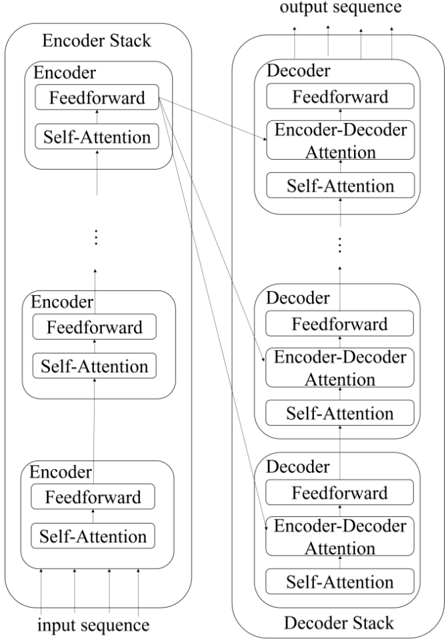
“Transformer [43] consists of two blocks, an Encoder Stack and a Decoder Stack.”
MethodInfluentialHochreiter, S., & Schmidhuber, J. (1997) · Neural Computation · doi:10.1162/neco.1997.9.8.1735 · Cited by 102,318 · cited 6×
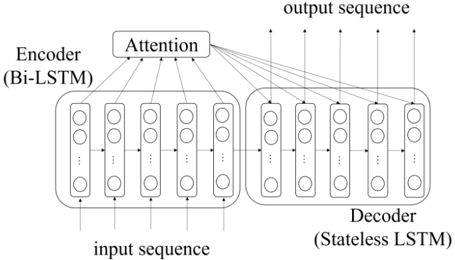
“Bi-LSTM has 128-dimensional output and three layers.”
MethodInfluentialAdam: A Method for Stochastic Optimization
Kingma, D. P., & Ba, J. (2014) · arXiv · doi:10.48550/arxiv.1412.6980 · Cited by 98,946 · cited 1×
“For optimization, we use the Adam optimizer [54] with α = 0.”
MethodExploiting Generative AI to Scale up Intelligent Tutoring Systems
Jakubův, J., Chvalovský, K., Goertzel, Z., Kaliszyk, C., Olšák, M., Piotrowski, B., Schulz, S., Suda, M., & Urban, J. (2023) · DROPS (Schloss Dagstuhl – Leibniz Center for Informatics) · doi:10.4230/lipics.itp.2023.19 · Cited by 76,658
Efficient Estimation of Word Representations in Vector Space
Mikolov, T., Chen, K., Corrado, G., & Dean, J. (2013) · arXiv · doi:10.48550/arxiv.1301.3781 · Cited by 26,568
Distributed Representations of Words and Phrases and their Compositionality
Mikolov, T., Sutskever, I., Chen, K., Corrado, G., & Dean, J. (2013) · arXiv · doi:10.48550/arxiv.1310.4546 · Cited by 24,533
Quinlan, J. R. (1986) · Machine Learning · doi:10.1007/bf00116251 · Cited by 21,439 · cited 1×
“Eventually, studies were conducted to generate rules where the knowledge base was rendered incomplete [2], [3] and to obtain inferences based on hypotheses when there was a shortage of data [4]–[6], which, consequently, helped to improve these expert systems.”
BackgroundSequence to Sequence Learning with Neural Networks
Sutskever, I., Vinyals, O., & Le, Q. V. (2014) · arXiv · doi:10.48550/arxiv.1409.3215 · Cited by 17,766 · cited 1×
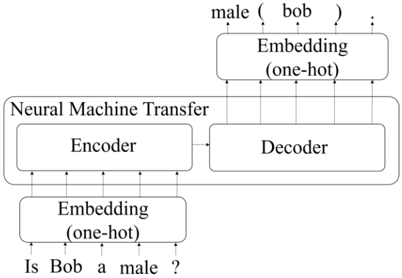
“We propose methods to learn matching, resolution and membership relations described in section II by combining Neural Machine Translation (NMT) [41]–[43] and”
MethodNeural Machine Translation by Jointly Learning to Align and Translate
Bahdanau, D., Cho, K., & Bengio, Y. (2014) · arXiv · doi:10.48550/arxiv.1409.0473 · Cited by 16,213 · cited 3×
“We apply pre-trained Word2Vec called GoogleNews-vectors-negative300 [40]–[42] to the unification, resolution and membership relation models.”
MethodElman, J. L. (1990) · Cognitive Science · doi:10.1207/s15516709cog1402_1 · Cited by 11,212 · cited 2×
“LSTM can handle sequential data with long-term dependencies that cannot be learned VOLUME 7, 2019 152373 with conventional RNNs.”
MethodModeling Relational Data with Graph Convolutional Networks
Schlichtkrull, M., Kipf, T. N., Bloem, P., van den Berg, R., Titov, I., & Welling, M. (2018) · Lecture Notes in Computer Science · doi:10.1007/978-3-319-93417-4_38 · Cited by 5,570
Linguistic Regularities in Continuous Space Word Representations
Mikolov, T., Yih, W.-T., & Zweig, G. (2013) · North American Chapter of the Association for Computational Linguistics · Cited by 2,912
Complex Embeddings for Simple Link Prediction
Trouillon, T., Welbl, J., Riedel, S., Gaussier, É., & Bouchard, G. (2016) · arXiv · doi:10.48550/arxiv.1606.06357 · Cited by 2,100 · cited 1×
“In particular, graph structures could be learned by deep learning [9], [10], and symbolic processing could be reexamined by neural networks [11]–[13].”
BackgroundProlog programming for artificial intelligence
(1986) · Computer-Aided Design · doi:10.1016/0010-4485(86)90018-7 · Cited by 1,061
Muggleton, S. (1991) · New Generation Computing · doi:10.1007/bf03037089 · Cited by 1,044
Goodfellow, I. J., Warde-Farley, D., Mirza, M., Courville, A., & Bengio, Y. (2013) · arXiv · doi:10.48550/arxiv.1302.4389 · Cited by 935 · cited 3×
“For optimization, we use Adam optimizer [53] with α = 5e-5, β1 = 0.”
MethodKAKAS, A. C., KOWALSKI, R. A., & TONI, F. (1992) · Journal of Logic and Computation · doi:10.1093/logcom/2.6.719 · Cited by 827
Learning surface text patterns for a Question Answering system
Ravichandran, D., & Hovy, E. (2001) · Proceedings of the 40th Annual Meeting on Association for Computational Linguistics - ACL '02 · doi:10.3115/1073083.1073092 · Cited by 809 · cited 1×
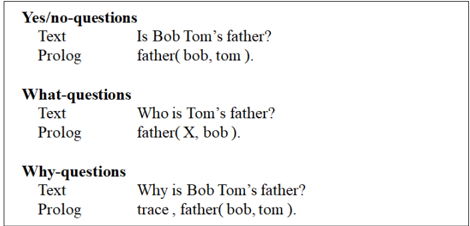
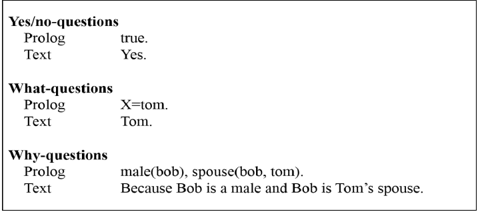
“This system supports yes/no-questions [48], what-questions [49], and why-questions [50].”
BackgroundKnowledge-based artificial neural networks
Towell, G. G., & Shavlik, J. W. (1994) · Artificial Intelligence · doi:10.1016/0004-3702(94)90105-8 · Cited by 746
Applications of Artificial Intelligence for Organic Chemistry: The DENDRAL Project
Lindsay, R., Buchanan, B. G., Feigenbaum, E. A., & Lederberg, J. (1980) · Profiles in Science · Cited by 380
SuperAgent: A Customer Service Chatbot for E-commerce Websites
Cui, L., Huang, S., Wei, F., Tan, C., Duan, C., & Zhou, M. (2017) · Proceedings of ACL 2017, System Demonstrations · doi:10.18653/v1/p17-4017 · Cited by 347 · cited 1×
“By applying the proposed systems, it will be possible to build applications such as high-performance frequently asked questions (FAQ) chatbots [16], [17], decision support systems (DSS) [18], [19] energy-efficient estimation in sensor networks [20]–[22] using information on the Web.”
MethodQuantitative evaluation of passage retrieval algorithms for question answering
Tellex, S., Katz, B., Lin, J., Fernandes, A., & Marton, G. (2003) · Proceedings of the 26th annual international ACM SIGIR conference on Research and development in informaion retrieval · doi:10.1145/860435.860445 · Cited by 279 · cited 1×
“Most of the conventional question answering systems [14], [15] are not entirely capable of inferring from a large amount of information on the Web containing unknown data.”
BackgroundNonmonotonic Reasoning: Logical Foundations of Commonsense
Brewka, G. (1991) · Publikationsdatenbank der Fraunhofer-Gesellschaft (Fraunhofer-Gesellschaft) · Cited by 264
ReasoNet: Learning to Stop Reading in Machine Comprehension
Shen, Y., Huang, P.-S., Gao, J., & Chen, W. (2017) · Proceedings of the 23rd ACM SIGKDD International Conference on Knowledge Discovery and Data Mining · doi:10.1145/3097983.3098177 · Cited by 262 · cited 1×
“Additionally, studies have also been carried out to embed questions in vector representations and infer answers by deep learning [37]–[39].”
BackgroundFast relational learning using bottom clause propositionalization with artificial neural networks
França, M. V. M., Zaverucha, G., & Garcez, A. D. (2013) · Machine Learning · doi:10.1007/s10994-013-5392-1 · Cited by 157 · cited 1×
“Additionally, studies have previously been conducted to learn propositional logic [24]–[26] and first-order predicate logic [27]–[29] as well as to perform unification [30], [31], similar to the present study.”
ResultThe Connectionist Inductive Learning and Logic Programming System
Garcez, A. S. A., & Zaverucha, G. (1999) · Applied Intelligence · doi:10.1023/a:1008328630915 · Cited by 152 · cited 1×
“Additionally, studies have previously been conducted to learn propositional logic [24]–[26] and first-order predicate logic [27]–[29] as well as to perform unification [30], [31], similar to the present study.”
ResultLogic Tensor Networks: Deep Learning and Logical Reasoning from Data and Knowledge
Serafini, L., & Garcez, A. D. (2016) · arXiv (Cornell University) · doi:10.48550/arxiv.1606.04422 · Cited by 131 · cited 1×
“With the emergence of deep learning, studies to learn symbolic processing with graph networks [11], [12], [32]–[34] and feedforward networks [13] have been performed and documented.”
BackgroundTang, L. R., & Mooney, R. J. (2000) · Conference on Empirical Methods in Natural Language Processing (EMNLP) · doi:10.3115/1117794.1117811 · Cited by 130
Hyperbolic Representation Learning for Fast and Efficient Neural Question Answering
Tay, Y., Tuan, L. A., & Hui, S. C. (2018) · ACM International Conference on Web Search and Data Mining (WSDM) · doi:10.1145/3159652.3159664 · Cited by 129 · cited 1×
“After the emergence of deep learning, studies about question answering systems with deep learning [15], [35], [36] have been conducted, and the performance of these systems have improved.”
BackgroundTensorLog: A Differentiable Deductive DatabasePreprint
Cohen, W. W. (2016) · arXiv (Cornell University) · doi:10.48550/arxiv.1605.06523 · Cited by 124
Neural-Symbolic Learning Systems
Garcez, A. D., Broda, K. B., & Gabbay, D. M. (2002) · Perspectives in neural computing · doi:10.1007/978-1-4471-0211-3 · Cited by 121 · cited 1×
“Before the emergence of deep learning, many studies have attempted to train neural networks on symbolic processing and use it for inference [23].”
BackgroundBoltzCONS: Dynamic symbol structures in a connectionist network
Touretzky, D. S. (1990) · Artificial Intelligence · doi:10.1016/0004-3702(90)90003-i · Cited by 116
Energy‐efficient adaptive transmission power control for wireless body area networks
Sodhro, A. H., Li, Y., & Shah, M. A. (2016) · IET Communications · doi:10.1049/iet-com.2015.0368 · Cited by 113 · cited 1×
“By applying the proposed systems, it will be possible to build applications such as high-performance frequently asked questions (FAQ) chatbots [16], [17], decision support systems (DSS) [18], [19] energy-efficient estimation in sensor networks [20]–[22] using information on the Web.”
MethodEnd-to-End Differentiable Proving
Rocktäschel, T., & Riedel, S. (2017) · arXiv (Cornell University) · doi:10.48550/arxiv.1705.11040 · Cited by 113 · cited 3×
“In particular, graph structures could be learned by deep learning [9], [10], and symbolic processing could be reexamined by neural networks [11]–[13].”
BackgroundAn e-business chatbot using AIML and LSA
Thomas, N. T. (2016) · 2016 International Conference on Advances in Computing, Communications and Informatics (ICACCI) · doi:10.1109/icacci.2016.7732476 · Cited by 109 · cited 1×
“By applying the proposed systems, it will be possible to build applications such as high-performance frequently asked questions (FAQ) chatbots [16], [17], decision support systems (DSS) [18], [19] energy-efficient estimation in sensor networks [20]–[22] using information on the Web.”
MethodAn Approach to Combining Explanation-based and Neural Learning Algorithms
SHAVLIK, J. W., & Towell, G. G. (1989) · Connection Science · doi:10.1080/09540098908915640 · Cited by 100 · cited 1×
“Additionally, studies have previously been conducted to learn propositional logic [24]–[26] and first-order predicate logic [27]–[29] as well as to perform unification [30], [31], similar to the present study.”
ResultPreface to the special issue on connectionist symbol processing
Hinton, G. E. (1990) · Artificial Intelligence · doi:10.1016/0004-3702(90)90002-h · Cited by 94
Decision Support Systems and Web Technologies: A Status Report
Bhargava, H. K., & Power, D. (2001) · Journal of the Association for Information Systems · Cited by 65
Corpus-based Question Answering for why-Questions
Higashinaka, R., & Isozaki, H. (2008) · Cited by 65
Towards Neural Theorem Proving at ScalePreprint
Minervini, P., Bošnjak, M., Rocktäschel, T., & Riedel, S. (2018) · arXiv (Cornell University) · doi:10.48550/arxiv.1807.08204 · Cited by 53 · cited 2×
“With the emergence of deep learning, studies to learn symbolic processing with graph networks [11], [12], [32]–[34] and feedforward networks [13] have been performed and documented.”
BackgroundThe ins and outs of reason maintenance
Doyle, J. (2018) · Figshare · doi:10.1184/r1/6610625 · Cited by 52
Towards Neural Network-based Reasoning
Peng, B., Lu, Z., Li, H., & Wong, K. (2015) · arXiv (Cornell University) · doi:10.48550/arxiv.1508.05508 · Cited by 52 · cited 1×
“Additionally, studies have also been carried out to embed questions in vector representations and infer answers by deep learning [37]–[39].”
BackgroundLifted Relational Neural NetworksPreprint
Šír, G., Aschenbrenner, V., Železný, F., & Kuželka, O. (2015) · arXiv (Cornell University) · doi:10.48550/arxiv.1508.05128 · Cited by 50 · cited 1×
“With the emergence of deep learning, studies to learn symbolic processing with graph networks [11], [12], [32]–[34] and feedforward networks [13] have been performed and documented.”
BackgroundDong, H., Mao, J., Lin, T., Wang, C., Li, L. C., & Zhou, D. (2019) · arXiv (Cornell University) · doi:10.48550/arxiv.1904.11694 · Cited by 40 · cited 3×
“In particular, graph structures could be learned by deep learning [9], [10], and symbolic processing could be reexamined by neural networks [11]–[13].”
BackgroundA structured connectionist unification algorithm
Hölldobler, S. (1990) · National Conference on Artificial Intelligence · Cited by 34
Answering Yes/No Questions via Question Inversion
Kanayama, H., Miyao, Y., & Prager, J. M. (2012) · International Conference on Computational Linguistics · Cited by 21
Separating Answers from Queries for Neural Reading ComprehensionPreprint
Weissenborn, D. (2016) · arXiv (Cornell University) · doi:10.48550/arxiv.1607.03316 · Cited by 21
Sequiera, R. D., Baruah, G., Tu, Z., Mohammed, S., Rao, J., Zhang, H., & Lin, J. (2017) · arXiv (Cornell University) · doi:10.48550/arxiv.1707.07804 · Cited by 21 · cited 2×
“After the emergence of deep learning, studies about question answering systems with deep learning [15], [35], [36] have been conducted, and the performance of these systems have improved.”
BackgroundUnification neural networks: unification by error-correction learning
Komendantskaya, E. (2010) · Logic Journal of IGPL · doi:10.1093/jigpal/jzq012 · Cited by 18 · cited 1×
“Additionally, studies have previously been conducted to learn propositional logic [24]–[26] and first-order predicate logic [27]–[29] as well as to perform unification [30], [31], similar to the present study.”
ResultA Simple End-to-End Question Answering Model for Product Information
Lai, T., Bui, T., Li, S., & Lipka, N. (2018) · Workshop on Economics and Natural Language Processing (ECONLP) · doi:10.18653/v1/w18-3105 · Cited by 13 · cited 1×
“After the emergence of deep learning, studies about question answering systems with deep learning [15], [35], [36] have been conducted, and the performance of these systems have improved.”
BackgroundNeural Prolog-the concepts, construction and mechanism
Ding, L. (2002) · Conference proceedings/Conference proceedings - IEEE International Conference on Systems, Man, and Cybernetics · doi:10.1109/icsmc.1995.538347 · Cited by 12
Energy-Efficiency of Tools and Applications on Internet
Sodhro, A. H., Sangaiah, A. K., Sodhro, G. H., Sekhari, A., Ouzrout, Y., & Pirbhulal, S. (2018) · Elsevier eBooks · doi:10.1016/b978-0-12-813314-9.00014-1 · Cited by 12 · cited 1×
“By applying the proposed systems, it will be possible to build applications such as high-performance frequently asked questions (FAQ) chatbots [16], [17], decision support systems (DSS) [18], [19] energy-efficient estimation in sensor networks [20]–[22] using information on the Web.”
MethodEnergy Efficiency in Wireless Body Sensor Networks
Sodhro, A. H., Fortino, G., Pirbhulal, S., Lodro, M. M., & Shah, M. A. (2017) · Chapman & Hall/CRC eBooks · doi:10.1201/9781315155517-16 · Cited by 12
Research works printed but not linked: 6
- G. Sourek, V. Aschenbrenner, F. Zelezny, and O. Kuzelka, ''Lifted rela- tional neural networks,'' in Proc. Int. Conf. Cogn. Comput., Integrating Neural Symbolic Approaches, Montreal, QC, Canada, 2015.
- L. Shastri, ''Neurally motivated constraints on the working memory capac- ity of a production system for parallel processing: Implications of a connectionist model based on temporal synchrony,'' in Proc. 14th Annu. Conf. Cognit. Sci. Soc. Bloomington, IN, USA: Psychology Press, vol. 14, Jul./Aug. 1992, p. 159.
- received the B.E., M.E., and Ph.D. degrees in electrical engineering from Keio University, Yokohama, Japan, in 1982, 1984, and 1987, respectively. Since 1987, he has been with Keio University, where he is currently a Professor. From 1991 to 1993, he was a Visiting Scholar with Stanford University. His research interests include neural networks, fuzzy systems, and affective engineering. He is a member of IEICE, IPSJ, JSAI, SOFT, IEE of Japan, and JNNS. He received from the IEEE Consumer Electronics Society Chester Sall Award, in 1990, the Author Award from Japan Society of Fuzzy Theory and Systems, in 1996, the Technical Award and Paper Awards from Japan Society of Kansei Engineering, in 2003, 2004, and 2014, respectively, and the Best Research Award from Japanese Neural Network Society, in 2013. He was the President of the Japan Society for Fuzzy Theory and Intelligent Informatics (SOFT).
- Kinsources: A Collaborative Web Platform for Kinship Data Sharing. Accessed: May 19, 2018. [Online]. Available: https://www.kinsources.net/
- A. Maas, A. Hannu, and A. Ng, ''Rectifier nonlinearities improve neural network acoustic models,'' in Proc. 30th Int. Conf. Mach. Learn., Atlanta, GA, USA, 2013, p. 3.
- M. S. Kohn, J. Sun, S. Knoop, A. Shabo, B. Carmeli, D. Sow, T. Syed-Mahmood, and W. Rapp, ''IBM's health analytics and clini- cal decision support.,'' Yearbook Med. Inf., vol. 9, no. 1, pp154-162, Aug. 2014.
Cited by
AI Agents vs. Agentic AI: A Conceptual taxonomy, applications and challenges
Sapkota, R., Roumeliotis, K. I., & Karkee, M. (2026) · Information Fusion · doi:10.1016/j.inffus.2025.103599 · Cited by 671
“These models exhibit emergent capabilities in natural language understanding, question answering, summarization, dialogue coherence, and even symbolic reasoning [81–83].”
AI Agents vs. Agentic AI: A Conceptual Taxonomy, Applications and Challenges
Sapkota, R., Roumeliotis, K. I., & Karkee, M. (2025) · arXiv · doi:10.48550/arxiv.2505.10468 · Cited by 295
“These models exhibit emergent capabilities in natural language understanding, question answering, summarization, dialogue coherence, and even symbolic reasoning [81–83].”
AI Agents vs. Agentic AI: A Conceptual Taxonomy, Applications and Challenges
Sapkota, R., Roumeliotis, K. I., & Karkee, M. (2025) · SuperIntelligence - Robotics - Safety & Alignment · doi:10.70777/si.v2i3.15161 · Cited by 186
Is neuro-symbolic AI meeting its promises in natural language processing? A structured review
Hamilton, K., Nayak, A., Božić, B., & Longo, L. (2024) · Semantic Web · doi:10.3233/sw-223228 · Cited by 88
“1 0 0 0 0 0 1 [34] 1 0 0 0 0 0 1 [59] 0 0 0 0 0 0 0 [38] 1 0 1 1 0 0 3 [39] 1 0 0 0 1 0 2 [42] 1 0 0 0 0 0 1 [36] 0 1 0 1 0 0 2 [80] 0 0 0 0 0 0 0 [45] 1 0 0 0 0 0 1 [37] 1 0 0 1 0 0 2 [55] 1 0 1 0 0 1 2 [56] 1 0 0 0 0 0 1 [43] 1 0 0 0 0 0 1 [48] 1 0 0 1 0 0 2 [60] 0 0 0 1 0 1 1 [40] 1 0 0 0 0 0 1 [53]”
Hassija, V., Chakrabarti, A., Singh, A., Chamola, V., & Sikdar, B. (2023) · IEEE Access · doi:10.1109/access.2023.3339553 · Cited by 68
“In contrast, Hiroshi Honda et al. [28] proposed the fusion of symbolic processing with deep learning.”
Result
Metadata
- Authors
- Honda, H., & Hagiwara, M.
- Affiliations
- Keio University (JP)
- Venue
- IEEE Access
- Published
- 2019
- Volume
- 7
- Pages
- 152368-152378
- ISSN
- 2169-3536 (ISSN-L)
- OpenAlex
- W2981096080
- Cited by
- 23
- References
- 55
- Citations by year
- 2026: 3 · 2025: 6 · 2024: 4 · 2023: 4 · 2022: 3 · 2021: 3
- FWCI
- 0.68
- Type
- journal article
- Language
- en
- Open access
- gold
- doi.org
- Locations
- IEEE Access (publishedVersion, cc-by)
- DOAJ (DOAJ: Directory of Open Access Journals) (submittedVersion, cc-by-sa)
- Funders
- Keio University
- KLL Ph.D. Program Research Grant
- Topics
- Physical Sciences › Computer Science › Artificial Intelligence › Topic Modeling
- Physical Sciences › Computer Science › Artificial Intelligence › Natural Language Processing Techniques
- Physical Sciences › Computer Science › Artificial Intelligence › Logic, Reasoning, and Knowledge
- Keywords
- question answering systems, symbolic processing, Prolog, neural machine translation, Word2Vec, knowledge base, unification, resolution
About these checks
Registry, retraction, Cites and statistics results are computed, not judged, with one exception: a printed reference that no index lists is read once by a model before it counts as a citation error. Claims are extracted by a model and kept only when their quote appears verbatim in the text; each cited source is then checked, with a model’s help, for whether it says what the claim relies on. Those verdicts can be wrong — read the claim’s quote and the cited source before relying on one.
Statistics and arithmetic are recomputed, not judged.
Confidence bands are shown only for fields calibrated on our annotated test set. None is calibrated yet, so no band is shown.
What counts as a claim ›How we measure confidence ›How we check this ›
Are you an author, or do you see a problem with this page? Request a review
Data sources
Bibliographic data: Semantic Scholar, OpenAlex, Crossref.
Contains information from the Semantic Scholar Academic Graph Datasets, made available under the ODC Attribution License (ODC-BY 1.0).
Semantic Scholar’s data is described in: Kinney, R., et al. (2023). The Semantic Scholar Open Data Platform. arXiv:2301.10140.
