

A Machine Learning Security Framework for Iot Systems
Open accessThe DOI matches its Crossref record; 47 of the 47 references it cites were found in a registry or an index.
Abstract
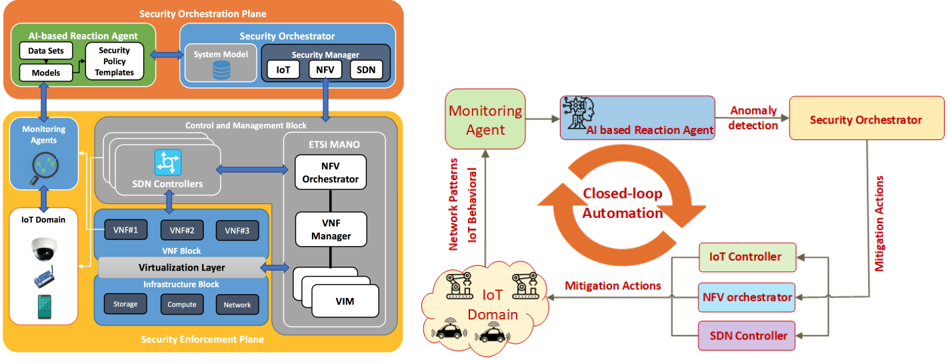
Internet of Things security is attracting a growing attention from both academic and industry communities. Indeed, IoT devices are prone to various security attacks varying from Denial of Service (DoS) to network intrusion and data leakage. This paper presents a novel machine learning (ML) based security framework that automatically copes with the expanding security aspects related to IoT domain. This framework leverages both Software Defined Networking (SDN) and Network Function Virtualization (NFV) enablers for mitigating different threats. This AI framework combines monitoring agent and AI-based reaction agent that use ML-Models divided into network patterns analysis, along with anomaly-based intrusion detection in IoT systems. The framework exploits the supervised learning, distributed data mining system and neural network for achieving its goals. Experiments results demonstrate the efficiency of the proposed scheme. In particular, the distribution of the attacks using the data mining approach is highly successful in detecting the attacks with high performance and low cost. Regarding our anomaly-based intrusion detection system (IDS) for IoT, we have evaluated the experiment in a real Smart building scenario using one-class SVM. The detection accuracy of anomalies achieved 99.71%. A feasibility study is conducted to identify the current potential solutions to be adopted and to promote the research towards the open challenges.
Overview
The claims and statistics of this paper haven’t been checked yet.
Free: it reads the open-access text and checks the first 5 claims that cite a source we can check. Create a free account to check every claim.
Integrity signals
Registry
Cites
Statistics
Figures




Verification
Claims the paper makes
The claims and statistics of this paper haven’t been checked yet.
Free: it reads the open-access text and checks the first 5 claims that cite a source we can check. Create a free account to check every claim.
Claims other papers make about this one
Each is checked against this paper’s own text: does it say what the citing paper says it does?
The source backs part of the claim, not all of it — or backs it for a different population, condition or comparison.
In the citing paper
“In [170], authors deployed a machine learning based security orchestration function which uses monitoring agents to identify IoT attacks and dynamic reaction module that deploys a virtual security function to secure the IoT devices.”
From Zero Trust Architecture (ZTA): A Comprehensive Survey (2022) · cites this paper as [170]
Experimental — accuracy not yet measuredThe check wasn’t confident either way, so it gives no verdict — never disputed.
In the citing paper
“Duan et al. [103] proposed a privacy and availability data clustering scheme based on the K-means algorithm and differential privacy to solve the privacy problem in IoT big data analysis and mining.”
From A Survey of IoT Privacy Security: Architecture, Technology, Challenges, and Trends (2024) · cites this paper as [103]
Experimental — accuracy not yet measured
Self-check
Percentages, sums and reported differences re-computed from the paper’s own numbers.
The self-check needs the paper’s full text.
Citations
Cites
Data mining: concepts and techniques
(2012) · Choice Reviews Online · doi:10.5860/choice.49-3305 · Cited by 28,531
Chandola, V., Banerjee, A., & Kumar, V. (2009) · ACM Computing Surveys · doi:10.1145/1541880.1541882 · Cited by 11,687 · cited 1×
“Nonetheless, our AI framework is intended to cope with not only anomalous-based IDS [21], but also knowledge-based IDS, by checking continuously signatures and patterns of previously known vulnerabilities and attacks [22].”
BackgroundA detailed analysis of the KDD CUP 99 data set
Tavallaee, M., Bagheri, E., Lu, W., & Ghorbani, A. A. (2009) · 2009 IEEE Symposium on Computational Intelligence for Security and Defense Applications · doi:10.1109/cisda.2009.5356528 · Cited by 5,396 · cited 1×
“Based on a work done on [32] the new NSL KDD dataset solved several serious problems, in which it eliminates about 77 of redundant records.”
A Survey of Data Mining and Machine Learning Methods for Cyber Security Intrusion Detection
Buczak, A. L., & Guven, E. (2016) · IEEE Communications Surveys & Tutorials · doi:10.1109/comst.2015.2494502 · Cited by 3,332
A Deep Learning Approach for Intrusion Detection Using Recurrent Neural Networks
Yin, C., Zhu, Y., Fei, J., & He, X. (2017) · IEEE Access · doi:10.1109/access.2017.2762418 · Cited by 2,100 · cited 1×
“…Machine (F-SVM) [38], Dirichlet Mixture Model (DMM) [39], Triangle Area Nearest Neighbors (TANN) [40], Deep Belief Networks (DBN) [41], Recurrent Neural Network (RNN) [42], Deep Neural Network (DNN) [43], [45], [46], Ensemble-DNN [44], Support Vector Machine based Dimensionality Reduction [47].”
A Deep Learning Approach to Network Intrusion Detection
Shone, N., Ngoc, T. N., Phai, V. D., & Shi, Q. (2018) · IEEE Transactions on Emerging Topics in Computational Intelligence · doi:10.1109/tetci.2017.2772792 · Cited by 1,819 · cited 2×
“namely, the Filter-based Support Vector Machine (FSVM) [38], Dirichlet Mixture Model (DMM) [39], Triangle Area Nearest Neighbors (TANN) [40], Deep Belief Networks (DBN) [41] , Recurrent Neural Network (RNN) [42], Deep Neural Network (DNN) [43], [45], [46] , Ensemble-DNN [44], Support Vector Machine”
MethodConvergence of Edge Computing and Deep Learning: A Comprehensive Survey
Wang, X., Han, Y., Leung, V. C. M., Niyato, D., Yan, X., & Chen, X. (2020) · IEEE Communications Surveys & Tutorials · doi:10.1109/comst.2020.2970550 · Cited by 1,498 · cited 1×
“Authors in [17] have investigated the use of Artificial Neural Networks in order to detect abnormal network traffic going from the gateway to the edge devices [18].”
MethodToward developing a systematic approach to generate benchmark datasets for intrusion detection
Shiravi, A., Shiravi, H., Tavallaee, M., & Ghorbani, A. A. (2012) · Computers & Security · doi:10.1016/j.cose.2011.12.012 · Cited by 1,345 · cited 1×
“There are several data sets widely used for this purpose, such as DARPA [29], KDD99 [30] and DEFCON [31].”
MethodA survey of intrusion detection in Internet of Things
Zarpelão, B. B., Miani, R. S., Kawakani, C. T., & de Alvarenga, S. C. (2017) · Journal of Network and Computer Applications · doi:10.1016/j.jnca.2017.02.009 · Cited by 1,022 · cited 1×
“Nonetheless, our AI framework is intended to cope with not only anomalous-based IDS [21], but also knowledge-based IDS, by checking continuously signatures and patterns of previously known vulnerabilities and attacks [22].”
BackgroundThe 1999 DARPA off-line intrusion detection evaluation
Lippmann, R., Haines, J. W., Fried, D. J., Korba, J., & Das, K. (2000) · Computer Networks · doi:10.1016/s1389-1286(00)00139-0 · Cited by 876 · cited 1×
“There are several data sets widely used for this purpose, such as DARPA [29], KDD99 [30] and DEFCON [31].”
Method
Research works printed but not linked: 2
- 30. U. Fayyad, K. Shim, P. Bradley, and S. Sarawagi, ACM SIGKDD Explo- rations Newsletter, vol. 2, no. 2. New York, NY, USA: Association for Computing Machinery, 2000.
- 50. MILOUD BAGAA (Member, IEEE) received the Engineering, master's, and Ph.D. degrees from the University of Science and Technology Houari Boumediene, Algiers, Algeria, in 2005, 2008, and 2014, respectively. From 2009 to 2015, he was a Researcher with the Research Center on Scientific and Technical Information, Algiers. From 2015 to 2016, he was with the Norwegian University of Science and Technology, Trondheim, Norway. He is currently a Senior Researcher with Aalto Uni- versity. His research interests include wireless sensor networks, the Internet of Things, 5G wireless communication, security, and networking modeling. From 2015 to 2016, he received the Postdoctoral Fellowship from the Euro- pean Research Consortium for Informatics and Mathematics.
Cited by
Items 101–200 of 271
A Countermeasure Method Using Poisonous Data Against Poisoning Attacks on IoT Machine Learning
Chiba, T., Sei, Y., Tahara, Y., & Ohsuga, A. (2021) · International Journal of Semantic Computing · doi:10.1142/s1793351x21400043 · Cited by 12
Exploring the Landscape of AI-SDN: A Comprehensive Bibliometric Analysis and Future Perspectives
Sahran, F., Altarturi, H., & Anuar, N. B. (2023) · Electronics · doi:10.3390/electronics13010026 · Cited by 15
Detecting Reconnaissance Activities in IoT Networks Using UNB CIC-IOT 2023 Dataset
Sharma, A., Babbar, H., & Vats, A. K. (2024) · Asian Conference on Innovation in Technology (ASIANCON) · doi:10.1109/asiancon62057.2024.10837951 · Cited by 9
“This evaluation must be given top priority [15].”
Jeon, S., Oh, Y.-S., Lee, Y.-J., & Lee, I.-G. (2024) · Computer Modeling in Engineering & Sciences · doi:10.32604/cmes.2024.047239 · Cited by 14
Machine Learning for Security and Security for Machine Learning: A Literature Review
Wiranda, N., & Sadikin, F. (2021) · International Conference on Information and Communications Technology (ICOIACT) · doi:10.1109/icoiact53268.2021.9563985 · Cited by 9
SECURITY AND PRIVACY IN MACHINE LEARNING: A SURVEY
(2021) · Issues in Information Systems · doi:10.48009/3_iis_2021_242-258 · Cited by 19
Machine Learning-Based Anomaly Detection in the Internet of Things
Sharma, A., & Babbar, H. (2023) · Asian Conference on Innovation in Technology (ASIANCON) · doi:10.1109/asiancon58793.2023.10270100 · Cited by 8
“Data patterns and any variations from these patterns can be recognised by the ML models, which can be trained to do so [12], [13].”
BackgroundMahmood, M. A. I., Ashab, F., Sohan, M. S., Chy, M. H. I., & Kader, M. F. (2025) · IEEE Access · doi:10.1109/access.2025.3613588 · Cited by 14
“Thus, they can carry sensitive personal data, such as user information and daily activities [2].”
Network Intrusion Detection System using ML
Kumar, R., & Nalband, A. H. (2022) · International Conference on Advances in Computing, Communication Control and Networking (ICAC3N) · doi:10.1109/icac3n56670.2022.10074106 · Cited by 9
“So, machine learning based misuse and anomaly detection [3] come with high precision and better efficiency to detect cyber threats by analyzing network traffic pattern.”
BackgroundBoT-IoT: Detection of Attacks in IoT-Cybersecurity for Smart Transportation
Sharma, A., & Babbar, H. (2023) · International Conference on Communication and Electronics Systems (ICCES) · doi:10.1109/icces57224.2023.10192814 · Cited by 9
“like as kitchenware, automobiles, heaters, and baby monitors, is partly responsible for the ongoing dialogue, events, and things [1].”
BackgroundSDN Architecture to prevent attacks with OpenFlow
Flauzac, O., Robledo, E. M. G., González, C., Mauhourat, F., & Nolot, F. (2020) · International Conference on Wireless Networks and Mobile Communications (WINCOM) · doi:10.1109/wincom50532.2020.9272445 · Cited by 7
“A framework based in SDN/NFV is presented in [20].”
MethodMachine Learning Algorithms and IoT Sensors for Securing the Networks
Sridevi, & Kolhar, A. (2025) · IGI Global eBooks · doi:10.4018/979-8-3693-7758-1.ch009 · Cited by 7
Efficient Autonomous Defense System Using Machine Learning on Edge Device
Cho, J. (2021) · Computers, materials & continua/Computers, materials & continua (Print) · doi:10.32604/cmc.2022.020826 · Cited by 8
Access management based on deep reinforcement learning for effective cloud storage security
Venkataswamy, S. B., Patil, K. S., Narayanaswamy, H. K., & Veerabadrappa, K. (2024) · International Journal of Systems Assurance Engineering and Management · doi:10.1007/s13198-024-02596-1 · Cited by 10
“This study presents a novel machine learning-based security framework (ML-SF) (Bagaa et al. 2020) that makes use of Software Defined Networking (SDN) and Network Function Virtualization (NFV).”
Extracting Optimal Number of Features for Machine Learning Models in Multilayer IoT Attacks
Sukhni, B. A., Manna, S. K., Dave, J. M., & Zhang, L. (2024) · Sensors · doi:10.3390/s24248121 · Cited by 6
Investigating the Security Issues of Multi-layer IoT Attacks Using Machine Learning Techniques
Sukhni, B. A., Dave, J. M., Manna, S. K., & Zhang, L. (2022) · International Conference on Human-Centered Cognitive Systems (HCCS) · doi:10.1109/hccs55241.2022.10090400 · Cited by 8
“Some good reviews of state-of-the-art intrusion detection techniques can be found in [6], [7], [8], [9], [10], [11] and [5].”
BackgroundMethodA Novel Ensemble Learning System for Cyberattack Classification
Mogoll髇-Guti閞rez, 觭., Núñez, J. C. S., Vegas, M. Á., & Lindo, A. C. (2023) · Intelligent Automation & Soft Computing · doi:10.32604/iasc.2023.039255 · Cited by 14
Sudharsanan, R., Rekha, M., Pritha, N. L., Ganapathy, G., Rasoni, G. A. N., & Uthayakumar, G. S. (2024) · Measurement Sensors · doi:10.1016/j.measen.2024.101035 · Cited by 7
HCL: A Hybrid CNN-LSTM Framework for Intrusion Detection in SDN-IoT Networks
Chouhan, A., Shahriar, N., & Yao, J. (2025) · 2012 International Conference on Computing, Networking and Communications (ICNC) · doi:10.1109/icnc64010.2025.10994022 · Cited by 5
“It uses algorithms like SVM, Naive Bayes, and Decision Trees to identify patterns indicative of attacks [11].”
DDoS Attack Detection and Mitigation Using Mininet and RYU Controller in SDN Environment
Kaushik, C., VarunTeja, D., Krishna, M. S., & Jaavali, S. (2024) · International Conference on Computing, Communication and Networking Technologies (ICCCNT) · doi:10.1109/icccnt61001.2024.10724700 · Cited by 5
MLADAD: Machine Learning Algorithms Analysis on DDoS Attack Detection in SDN-IoT Networks
Thalapala, V. S., Reddy, A. R., & Guravaiah, K. (2025) · Procedia Computer Science · doi:10.1016/j.procs.2025.03.297 · Cited by 7
Intrusion Detection in Internet of Things using Machine Learning Classifiers
Bhardwaj, S., Kumar, P., & Maringanti, H. B. (2021) · International Conference on Technological Advancements and Innovations (ICTAI) · doi:10.1109/ictai53825.2021.9673449 · Cited by 5
Review of AI Techniques in development of Network Intrusion Detection System in SDN Framework
Dahiya, S., Siwach, V., & Sehrawat, H. (2021) · International Conference on Computational Performance Evaluation (ComPE) · doi:10.1109/compe53109.2021.9752430 · Cited by 9
Toward an Improved Security Performance of Industrial Internet of Things Systems
Elhag, S., Alghamdi, A. M., & Al-Shomrani, N. A. (2022) · SN Computer Science · doi:10.1007/s42979-022-01566-3 · Cited by 6
“[18] presented a novel ML security model in IoT networks.”
BackgroundIPCA-SAMKNN: A Novel Network IDS for Resource Constrained Devices
Agbedanu, P. R., Musabe, R., Rwigema, J., Gatare, I., & Pavlidis, Y. (2022) · International Seminar on Machine Learning, Optimization, and Data Science (ISMODE) · doi:10.1109/ismode56940.2022.10180926 · Cited by 9
“Although the framework proposed by [9] is not exclusive to intrusion detection, it provides security policies that can be enforced from design through deployment and maintenance in IoT environments.”
BackgroundSmart Home Automation with IoT Sensor Systems for Energy Conservation using Zigbee and Wifi
Jagannathan, S., Deepa, V., Durai, B. S. K., Rajan, M. S., Celin, J. J. A., & Dhamodaran, S. (2024) · International Conference on Electronics and Sustainable Communication Systems (ICESC) · doi:10.1109/icesc60852.2024.10690054 · Cited by 5
“Bagaa et al. (2020) [8] proposed an IoT security framework based on machine learning, realizing the transfer of security threats through the combination of SDN and NFV, and tested the performance of the new model through a self-developed intrusion detection system.”
MethodDesign and Development of a Trust Mechanism to Enhance Security Protection in SDN‐Based IoT Network
Tsai, P., Lee, C., & Wang, T. (2025) · International Journal of Network Management · doi:10.1002/nem.70015 · Cited by 4
“To make further improvements in practical ways, research developments made by [23, 24] used policy-based, statistical, and machine learning models to classify traffic flows as legitimate or illegitimate, leveraging the features of SDN to detect and mitigate attacks during data transmission.”
Guarding Against IoT Threats: An Analysis of Intrusion Detection with the Kitsune Attack Dataset
Sharma, A., & Babbar, H. (2024) · International Conference on Technological Advancements in Computational Sciences (ICTACS) · doi:10.1109/ictacs62700.2024.10840935 · Cited by 4
“This study aims to evaluate how well ML approaches can strengthen the safety measures of IoT environments [14].”
Nazim, S., Hussain, S. S., Yousuf, B., Sultana, S., & Tanweer, E. (2025) · Internet of Things · doi:10.1016/j.iot.2025.101773 · Cited by 7
Logeswari, G., Anitha, T., Bose, S. K., Vijayalakshmi, S., Maheswaran, N., & Poongodi, M. (2023) · International Conference on Research Methodologies in Knowledge Management, Artificial Intelligence and Telecommunication Engineering (RMKMATE) · doi:10.1109/rmkmate59243.2023.10369737 · Cited by 4
Detection of Network Attacks on Application Servers Using Deep Learning in IoT Environments
Meegammana, N. W., & Fernando, H. (2023) · International Conference on Advancements in Computing (ICAC) · doi:10.1109/icac60630.2023.10417159 · Cited by 4
“The study performed a threat modeling process using MITRE ATT&CK ICS framework to identify Tactics, Techniques, and Tools (TTP) used by adversaries, including detection and mitigation measures in IoT environments [3].”
BackgroundMethodBennour, A., Elhoseny, M., Veerasamy, B. D., Bhatt, R., Agrawal, A., Shukla, P. K., & Ghabband, F. (2024) · Journal of High Speed Networks · doi:10.1177/09266801241289769 · Cited by 4
“Bagaa and colleagues 16 elaborated on a machine learning security framework for the systems dealing with the use of IoT in their research paper.”
The Era of Internet of Things: Towards better security using machine learning
Abdulla, H., Al-Raweshidy, H. S., & Awad, W. S. (2023) · International Conference on IT Innovation and Knowledge Discovery (ITIKD) · doi:10.1109/itikd56332.2023.10099608 · Cited by 6
“Recent research in anomaly detection has demonstrated that machine learning may be used to identify malicious Internet traffic [11].”
BackgroundEnhancing IoT Security: Machine Learning-Based Network Intrusion Detection
Sharma, A., & Babbar, H. (2023) · Asian Conference on Innovation in Technology (ASIANCON) · doi:10.1109/asiancon58793.2023.10269850 · Cited by 4
SDN Controllers and ML-Based Anomaly Detection in Embedded Systems: A Comparative Analysis
González, C., & Charfadine, S. M. (2023) · International Conference on Wireless Networks and Mobile Communications (WINCOM) · doi:10.1109/wincom59760.2023.10322912 · Cited by 4
“The combination of SDN and machine learning has strong potential for creating intelligent, robust, and secure IoT architectures [8].”
BackgroundIOTs Traffics Detection and Analysis Using Machine Learning for Cybersecurity Application
Altrad, A. M. M. (2023) · IEEE Eurasia Conference on IOT, Communication and Engineering (ECICE) · doi:10.1109/ecice59523.2023.10383018 · Cited by 4
“Additionally, the security measures applied to IoTs are more subjected to attacks due to the protocols and encryption techniques [11].”
MethodBojarajulu, B., Tanwar, S., & Rana, A. (2021) · IEEE Uttar Pradesh Section International Conference on Electrical, Electronics and Computer Engineering (UPCON) · doi:10.1109/upcon52273.2021.9667573 · Cited by 4
Analytical Study on Advanced Persistent Threat Detecting, Defending and Mitigating
Al-Sinayyid, A., Battula, R. R., Kadiyala, S., Mannuru, V., Sanford, T., & Sanchez, A. (2025) · Communications in computer and information science · doi:10.1007/978-3-031-85923-6_29 · Cited by 3
G., A., Anurekha, G., Bharathi, N. A., & Ancy Micheal, A. (2025) · Peer-to-Peer Networking and Applications · doi:10.1007/s12083-025-02108-3 · Cited by 5
“Bagaa et al. [20 ] proposed an IDS system to efficiently detect anomalies in the network, which uses sensor data to create a dataset.”
Multi-Agent AI Framework for Threat Mitigation and Resilience in Machine Learning Systems
Foundjem, A. T., Tidjon, L. N., Silva, L. D., & Khomh, F. (2026) · ACM Transactions on Software Engineering and Methodology · doi:10.1145/3780095 · Cited by 13
Malik, M. T., Muqeet, H. A., Akram, R., Obaid, H. M., Rehman, A. U., & Bermak, A. (2026) · The Journal of Engineering · doi:10.1049/tje2.70166 · Cited by 8
Egwuche, O. S., Greeff, J., & Ezugwu, A. E.-S. (2026) · Discover Applied Sciences · doi:10.1007/s42452-026-08445-z · Cited by 3
Pembelajaran Mesin untuk Sistem Keamanan - Literatur Review
Wiranda, N., Sadikin, F., & Saputra, W. A. (2022) · IJEIS (Indonesian Journal of Electronics and Instrumentation Systems) · doi:10.22146/ijeis.69022 · Cited by 4
Ananth, P., Saravanan, S., Chinnathambi, S., & Karthikeyan, S. (2025) · AIP conference proceedings · doi:10.1063/5.0262752 · Cited by 3
Quality Control - An Anthology of Cases
Kounis, L. D. (2022) · IntechOpen eBooks · doi:10.5772/intechopen.97961 · Cited by 5
Artificial Intelligence Deployment to Secure IoT in Industrial Environment
ALAmri, S. M. S., Al-Abri, F., & Sharma, T. (2022) · IntechOpen eBooks · doi:10.5772/intechopen.104469 · Cited by 5
Challenges, Attacks, and Countermeasures for Security in MANETs-IoT
Priyam, A., & Yadav, A. (2024) · Lecture notes in networks and systems · doi:10.1007/978-981-97-0641-9_27 · Cited by 3
Framework for Early Cyber Attack Detection Using ML Models Deployed On Fog Devices
Aditya, K., Kamath, P. N., Poral, Y., Mallika, B. D., & Acharya, V. (2024) · International Symposium on Digital Forensics and Security (ISDFS) · doi:10.1109/isdfs60797.2024.10527351 · Cited by 5
“A security framework for IoT systems was implemented in [10] using Software Defined Networks and Network Function Virtualization techniques.”
BackgroundMethodUmer, M. A., Belay, E. G., & Gouveia, L. B. (2024) · Sci · doi:10.3390/sci6030051 · Cited by 6
“Detection may be possible only after prolonged learning of neural network black boxes comprising multilayered perceptrons or a combination of decision trees and random forests [23,41,43–45].”
A COMPARATIVE STUDY ON INTRUSION DETECTION SYSTEMS FOR SECURED COMMUNICATION IN INTERNET OF THINGS
Anushiya, R., & Lavanya, V. S. (2021) · ICTACT Journal on Communication Technology · doi:10.21917/ijct.2021.0373 · Cited by 3
“[23] suggested a One Class Support Vector Machine (OCSVM) and Software Defined Networking (SDN).”
BackgroundA Convergence Time Predictive Model using Machine Learning for LLN
Garg, S., Mehrotra, D., Pandey, S., & Pandey, H. M. (2021) · IEEE Uttar Pradesh Section International Conference on Electrical, Electronics and Computer Engineering (UPCON) · doi:10.1109/upcon52273.2021.9667637 · Cited by 3
“Internet of Things (IoT) [2][3] is essentially one such communication network that permits physical entities and individuals to connect, gather and trade information.”
BackgroundA Review of IoT Applications for Monitoring Plant Growth and Adaptation to Climate Change
Zouari, M., & Hachicha, M. (2025) · JOURNAL OF OASIS AGRICULTURE AND SUSTAINABLE DEVELOPMENT · doi:10.56027/joasd.312025 · Cited by 2
Fernandes, R., Dalmazo, B. L., Riker, A., Filho, G. P. R., Meneguette, R. I., Pereira, L., & Immich, R. (2026) · Anais do Simpósio Brasileiro de Sistemas de Informação (SBSI) · doi:10.5753/sbsi.2026.248648 · Cited by 2
“A nossa proposta aproxima-se dos trabalhos existentes ao integrar aprendizado de m ´ aquina ` a detecc¸ ˜ ao de anomalias em SDN/IoT [Pan et al. 2022, Zhao et al. 2018, Protogerou et al. 2022, Bagaa et al. 2020] e ao reconhecer a import ˆ ancia da resili ˆ encia e da explicabilidade [Das et al. 2021, Starke et al. 201…”
InfluentialA Survey On Virtualization Technology and its Security Challenges in Mobile Cloud Computing
Yadav, R. K., Saran, M., & Tripathi, U. N. (2022) · International Journal of Applied Engineering Research · doi:10.37622/ijaer/17.4.2022.332-337 · Cited by 2
NSL-KDD: Cyberattack Detection in IoT Utilizing Machine Learning Approaches
Sharma, A., & Babbar, H. (2023) · IEEE Uttar Pradesh Section International Conference on Electrical, Electronics and Computer Engineering (UPCON) · doi:10.1109/upcon59197.2023.10434690 · Cited by 2
“With the growth of IoT technology, gadgets and machines etc. are getting smarter, and human participation has greatly decreased [2], [3].”
BackgroundA Taxonomy of IDS in IoTs: ML Classifiers, Feature Selection Models, Datasets and Future Directions
Alqahtani, H., & Abdullah, M. (2024) · International Journal of Advanced Computer Science and Applications · doi:10.14569/ijacsa.2024.0150682 · Cited by 2
“The study of [18] presents a novel security framework based on ML that automatically handles the growing security concerns associated with the IoTs.”
BackgroundA Framework for Detecting Multiple Cyberattacks in IoT Environments
Mekonnen, Y., & Kifle, M. (2025) · Journal of Ubiquitous Computing and Communication Technologies · doi:10.36548/jucct.2025.1.003 · Cited by 2
Sofiya, M., & Arulmozhi, M. (2025) · Scientific Reports · doi:10.1038/s41598-025-06975-x · Cited by 2
“The existing methods concentrates on traffic prediction of IoT devices 4,5 .”
Impact of Machine Learning Algorithms in Intrusion Detection Systems for Internet of Things
Jose, J., Jose, D. V., Rao, K. S., & Janz, J. (2021) · International Conference on Advances in Computing and Communications (ICACC) · doi:10.1109/icacc-202152719.2021.9708404 · Cited by 3
Future Security Issues in Internet of Energy
Benrebbouh, C., Cherbal, S., Mansouri, H., & Pathan, A. K. (2022) · International Conference on Advanced Science and Engineering (ICOASE) · doi:10.1109/icoase56293.2022.10075597 · Cited by 3
“One of the hot topics in the field of artificial intelligence (AI) today is Machine learning (ML) [39].”
BackgroundDesign Secure Cloud Based IoT Network for End to End Cloud Communication
Wankhade, A. D., & Wagh, K. (2023) · International Conference on Emerging Trends in Engineering and Technology (ICETET) · doi:10.1109/icetet-sip58143.2023.10151602 · Cited by 2
Sharphathy, M. N., & Sumalatha, V. (2023) · International Conference on Edge Computing and Applications (ICECAA) · doi:10.1109/icecaa58104.2023.10212308 · Cited by 3
An adaptable Intelligence Algorithm to a Cybersecurity Framework for IIOT
Tumbo, S. O., Villalba, K. M., & Donado, S. A. (2022) · Ingeniería y Competitividad · doi:10.25100/iyc.v24i2.11762 · Cited by 2
“- IDS: (Intruder Detection System) is a device or application that monitors a network or systems for malicious activity or policy violations (6), the intrusion detection system is constantly analyzing the traffic, it has the ability to identify anomalies or security violations based on patterns and…”
A Study on Advanced Networking using Intelligent Systems Applications
Gadhamsetty, V. D. A., & Kuma, R. (2023) · IEEE International Conference for Convergence in Technology (I2CT) · doi:10.1109/i2ct57861.2023.10126117 · Cited by 1
“[8] proposed a framework for SDN-based Net-”
BackgroundMethodInfluentialArora, G., & Kaur, B. (2023) · International Conference on Futuristic Technologies (INCOFT) · doi:10.1109/incoft60753.2023.10425018 · Cited by 1
IoT Flooding Attack Defense in SDN: A Real-Data Machine Learning Approach
González, C., & Charfadine, S. M. (2023) · International Conference on Advanced Engineering and Technologies (ICONNIC) · doi:10.1109/iconnic59854.2023.10467864 · Cited by 1
“In [13], the authors proposed a dynamic framework that integrates machine learning within an SDN and Network Function Virtualization (NFV) environment to enhance the security of IoT devices.”
BackgroundUsability and Adoption of Graphical Tools for Data-Driven Development
Weber, T., & Mayer, S. (2024) · Mensch und Computer (MuC) · doi:10.1145/3670653.3670658 · Cited by 1
“Machine Learning, particularly using Neural Networks, has enabled many improvements in fields that are critical to everyday life in our society, like healthcare [13], communication [57], and security [6, 45].”
Machine Learning-Based Threat Detection for Personal IoT Devices
Suryanshi, U., & Vashisth, R. (2024) · Lecture notes in networks and systems · doi:10.1007/978-981-97-7880-5_27 · Cited by 1
Beyond data sharing: enhancing IoT intrusion detection with blockchain-enabled federated learning
Naik, A., & Shukla, R. M. (2026) · Frontiers in Computer Science · doi:10.3389/fcomp.2026.1770179 · Cited by 1
bommareddy, A. R. (2024) · International Journal of Scientific Research in Computer Science Engineering and Information Technology · doi:10.32628/cseit241061171 · Cited by 2
Bajpai, N., Dhingra, M., & Chaurasia, N. (2025) · Lecture notes in electrical engineering · doi:10.1007/978-981-97-9507-9_35 · Cited by 3
Kanimozhi, R., & Madheswari, A. N. (2025) · Transactions on Emerging Telecommunications Technologies · doi:10.1002/ett.70113 · Cited by 1
“A ML–based IDS for Internet of Things (IoT) security presented in [8] provides high detection performance with low computational cost.”
Assessing the Suitability of IoT Security Datasets for IDS: A Comprehensive Review
Koppula, M., & Joseph, L. M. I. L. (2025) · IGI Global eBooks · doi:10.4018/979-8-3373-2200-1.ch012 · Cited by 1
A Cybersecurity Framework for Optimizing Broadband QoS in IoT Systems Using Machine Learning
Olivier, D. (2025) · doi:10.38124/ijisrt/25sep1362 · Cited by 1
UK-IDS-Machine Learning Based Intrusion Detection System for Unknown Attack Detection
Sowmya, T., Anita, E. A. M., & Lapina, M. (2025) · Lecture notes in networks and systems · doi:10.1007/978-3-032-07275-7_38 · Cited by 1
Frederick, B. A., & Taylor, O. E. (2025) · Internet of Things and Cloud Computing · doi:10.11648/j.iotcc.20251304.13 · Cited by 1
A detailed comparative study on cybersecurity in IoT environment
Sangwan, U., & Chhillar, R. S. (2026) · International Journal of Systems Assurance Engineering and Management · doi:10.1007/s13198-025-03124-5 · Cited by 2
Beyond the automation gap: A survey of continuous audit for IoT security
Briliyant, O. C., Javed, A., & Cherdantseva, Y. (2026) · Computers & Security · doi:10.1016/j.cose.2026.104953 · Cited by 4
Anomaly Detection Using Feature Selection and Ensemble of Machine Learning Models
Anbarasu, B., & Thaseen, I. S. (2022) · Lecture notes on data engineering and communications technologies · doi:10.1007/978-981-19-3015-7_16 · Cited by 2
Denial of Service Detection for IoT Networks Using Machine Learning
Abdulla, H., Al-Raweshidy, H. S., & Awad, W. S. (2023) · International Conference on Agents and Artificial Intelligence (ICAART) · doi:10.5220/0011885700003393 · Cited by 1
Survey of Secure IoT using Machine Learning Approach
Suthar, A. P. M., & Khara, S. V. (2023) · INTERANTIONAL JOURNAL OF SCIENTIFIC RESEARCH IN ENGINEERING AND MANAGEMENT · doi:10.55041/ijsrem18708 · Cited by 2
Privacy Preserving Algorithm for Blockchain-Based IOT System
Sawant, S. V., & Rathod, D. (2023) · Lecture notes in networks and systems · doi:10.1007/978-981-19-9304-6_42 · Cited by 1
Security Aware Resource Management Framework (SARMF) for Edge-Cloud Computing
Shwethashree, G. C., & Manjula, S. (2023) · International Conference on Trends in Electronics and Informatics (ICOEI) · doi:10.1109/icoei56765.2023.10125845 · Cited by 2
“In [45], they presented an AdaBoost ensemble learn ing strategy to reduce estimation error.”
MethodHarden-IoT: hardening the EoL devices by intercepting the attack vector for future B5G/6G IoT
Li, X., Wei, Q., Wu, Z., Guo, W., & He, L. (2023) · Wireless Networks · doi:10.1007/s11276-023-03517-z · Cited by 1
“However, both are unable to directly improve the current security situation [16, 17].”
S.Immanuvel, P. R. (2023) · Journal of Propulsion Technology · doi:10.52783/tjjpt.v44.i4.2604 · Cited by 1
“It was also implemented in the smart building environment for the success in SVM process [3].”
MethodCentralised Chaining for Wireless Personal Area Network
Halesh, M. R., Kottari, C. G., Ahamed, J., Rao, P. K., & Sandimani, V. Y. (2024) · Journal of ISMAC · doi:10.36548/jismac.2023.4.004 · Cited by 1
Ranjan, D. B. K. P. N., & Sumeet Gupta, H. J. J. (2024) · Journal of Informatics Education and Research · doi:10.52783/jier.v3i2.462 · Cited by 5
Aljohani, M. (2024) · Concurrency and Computation Practice and Experience · doi:10.1002/cpe.8068 · Cited by 1
An Efficient Investigation of Cloud Computing Security with Machine Learning Algorithm
Senthil Kumar, R., Yasotha, S., Manochithra, P., Senthil, J., & Sivakumar, D. G. (2024) · International Conference on Inventive Computation Technologies (ICICT) · doi:10.1109/icict60155.2024.10544578 · Cited by 1
“To categorize network risks, researchers Bagaa et al. [14] discussed to address the ever-increasing security risks posed by the Internet of Things and unveiled a groundbreaking ML security architecture.”
BackgroundEnhancing Internet of Things Security Through Optimization Algorithms and Machine Learning
Khan, Z. M. (2024) · Communications on Applied Nonlinear Analysis · doi:10.52783/cana.v31.778 · Cited by 1
“The following are some attacks and security threats identified at the network layer [11]:”
BackgroundModelo de Machine Learning para la Gestión de Amenazas con un SIEM de una Institución Financiera
Arbona, M. M., & Cevallos, R. A. A. (2025) · LATAM Revista Latinoamericana de Ciencias Sociales y Humanidades · doi:10.56712/latam.v6i2.3633 · Cited by 1
On Efficient and Secure Multi-access Edge Computing for Internet of Things
Akshita, A., Singh, Y. P., & Sheikh, Z. A. (2022) · Lecture notes in networks and systems · doi:10.1007/978-981-19-1142-2_23 · Cited by 2
Bojarajulu, B., Tanwar, S., & Rana, A. (2021) · International Conference on Computing, Communication and Security (ICCCS) · doi:10.1109/icccs51487.2021.9776344 · Cited by 1
Cooperative intrusion detection for software-defined resource-constrained networks.
Segura, G. A. N. (2021) · Digital Library of Theses and Dissertations (Universidade de São Paulo) · doi:10.11606/t.3.2021.tde-22022022-093544 · Cited by 1
Hsieh, W. (2024) · Research Square · doi:10.21203/rs.3.rs-5487468/v1 · Cited by 1
Beyond Automation Gap: A Survey on Continuous Compliance Audit for IoT SecurityPreprint
Briliyant, O. C. (2025) · SSRN Electronic Journal · doi:10.2139/ssrn.5526754 · Cited by 1
A Semi-supervised Intrusion Detection Algorithm Based on Auto-encoder
Du, X., Li, Y., & Feng, Z. (2021) · Lecture notes in computer science · doi:10.1007/978-3-030-68851-6_13
Performance Evaluation of Energy Detection, Matched Filtering and KNN Under Different Noise Models
Wang, X., Yang, J., Yu, T., Li, R., & Huang, M. (2021) · Lecture notes of the Institute for Computer Sciences, Social Informatics and Telecommunications Engineering · doi:10.1007/978-3-030-72802-1_10
Metadata
- Authors
- Bagaa, M., Taleb, T., Bernabe, J. B., & Skarmeta, A.
- Affiliations
- Aalto University (FI)
- Sejong University (KR)
- Venue
- IEEE Access
- Published
- 2020
- Volume
- 8
- Pages
- 114066-114077
- ISSN
- 2169-3536 (ISSN-L)
- OpenAlex
- W3026477862
- Semantic Scholar
- 69f4813f4c66f6b2078b98f8f3748151993d5bb5
- Cited by
- 271
- References
- 47
- Citations by year
- 2026: 25 · 2025: 53 · 2024: 53 · 2023: 62 · 2022: 40 · 2021: 34 · 2020: 4
- FWCI
- 16.45
- Type
- journal article
- Language
- en
- Open access
- gold
- doi.org
- Locations
- IEEE Access (publishedVersion, cc-by)
- Aaltodoc (Aalto University) (submittedVersion, cc-by)
- Le dépôt institutionnel (Université du Québec à Trois-Rivières) (submittedVersion)
- DOAJ (DOAJ: Directory of Open Access Journals) (submittedVersion, cc-by-sa)
- Funders
- European Research Project H2020 ANASTACIA (GA 731558)
- H2020 INSPIRE-5Gplus Project (GA 871808)
- AXA Postdoctoral Scholarship
- AXA Research Fund
- Academy of Finland 6Genesis Project (318927)
- Academy of Finland CSN Project (311654)
- Topics
- Physical Sciences › Computer Science › Computer Networks and Communications › Network Security and Intrusion Detection
- Physical Sciences › Computer Science › Information Systems › Internet of Things and AI
- Physical Sciences › Computer Science › Computer Networks and Communications › IoT and Edge/Fog Computing
- Keywords
- Internet of Things security, anomaly-based intrusion detection, software-defined networking, network function virtualization, denial-of-service attacks, network intrusion, data leakage, one-class support vector machine, smart buildings, distributed data mining
About these checks
Registry, retraction, Cites and statistics results are computed, not judged, with one exception: a printed reference that no index lists is read once by a model before it counts as a citation error. Claims are extracted by a model and kept only when their quote appears verbatim in the text; each cited source is then checked, with a model’s help, for whether it says what the claim relies on. Those verdicts can be wrong — read the claim’s quote and the cited source before relying on one.
Statistics and arithmetic are recomputed, not judged.
Confidence bands are shown only for fields calibrated on our annotated test set. None is calibrated yet, so no band is shown.
What counts as a claim ›How we measure confidence ›How we check this ›
Are you an author, or do you see a problem with this page? Request a review
Data sources
Bibliographic data: Semantic Scholar, OpenAlex, Crossref.
Contains information from the Semantic Scholar Academic Graph Datasets, made available under the ODC Attribution License (ODC-BY 1.0).
Semantic Scholar’s data is described in: Kinney, R., et al. (2023). The Semantic Scholar Open Data Platform. arXiv:2301.10140.
