

The DOI matches its Crossref record; 47 of the 47 references it cites were found in a registry or an index.
A Machine Learning Security Framework for Iot Systems
Open accessAbstract
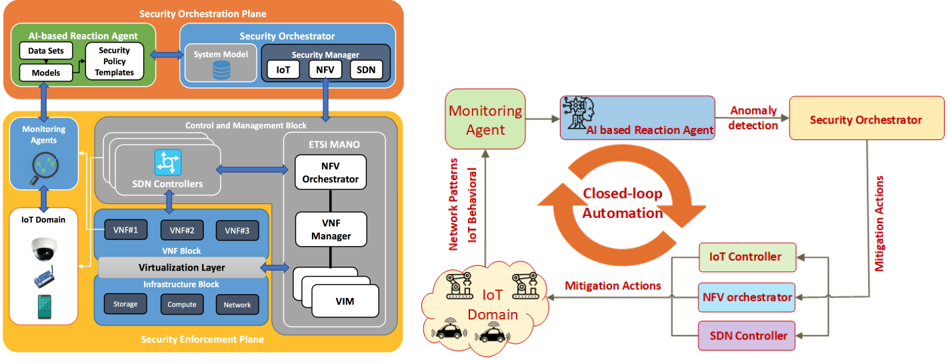
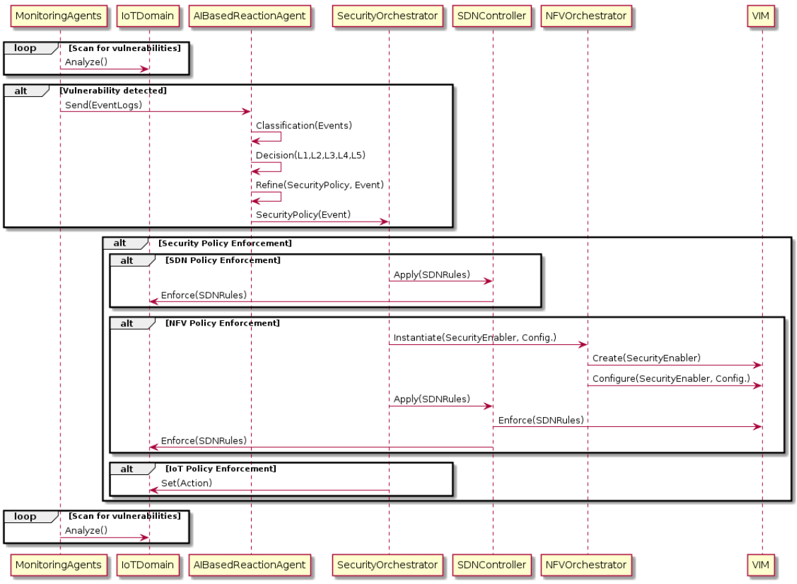
Internet of Things security is attracting a growing attention from both academic and industry communities. Indeed, IoT devices are prone to various security attacks varying from Denial of Service (DoS) to network intrusion and data leakage. This paper presents a novel machine learning (ML) based security framework that automatically copes with the expanding security aspects related to IoT domain. This framework leverages both Software Defined Networking (SDN) and Network Function Virtualization (NFV) enablers for mitigating different threats. This AI framework combines monitoring agent and AI-based reaction agent that use ML-Models divided into network patterns analysis, along with anomaly-based intrusion detection in IoT systems. The framework exploits the supervised learning, distributed data mining system and neural network for achieving its goals. Experiments results demonstrate the efficiency of the proposed scheme. In particular, the distribution of the attacks using the data mining approach is highly successful in detecting the attacks with high performance and low cost. Regarding our anomaly-based intrusion detection system (IDS) for IoT, we have evaluated the experiment in a real Smart building scenario using one-class SVM. The detection accuracy of anomalies achieved 99.71%. A feasibility study is conducted to identify the current potential solutions to be adopted and to promote the research towards the open challenges.
Overview
The claims and statistics of this paper haven’t been checked yet.
Free: it reads the open-access text and checks the first 5 claims that cite a source we can check. Create a free account to check every claim.
Integrity signals
Registry
Cites
Statistics
Figures




Verification
Claims the paper makes
The claims and statistics of this paper haven’t been checked yet.
Free: it reads the open-access text and checks the first 5 claims that cite a source we can check. Create a free account to check every claim.
Claims other papers make about this one
Each is checked against this paper’s own text: does it say what the citing paper says it does?
The source backs part of the claim, not all of it — or backs it for a different population, condition or comparison.
In the citing paper
“In [170], authors deployed a machine learning based security orchestration function which uses monitoring agents to identify IoT attacks and dynamic reaction module that deploys a virtual security function to secure the IoT devices.”
From Zero Trust Architecture (ZTA): A Comprehensive Survey (2022) · cites this paper as [170]
Experimental — accuracy not yet measuredThe check wasn’t confident either way, so it gives no verdict — never disputed.
In the citing paper
“Duan et al. [103] proposed a privacy and availability data clustering scheme based on the K-means algorithm and differential privacy to solve the privacy problem in IoT big data analysis and mining.”
From A Survey of IoT Privacy Security: Architecture, Technology, Challenges, and Trends (2024) · cites this paper as [103]
Experimental — accuracy not yet measured
Self-check
Percentages, sums and reported differences re-computed from the paper’s own numbers.
The self-check needs the paper’s full text.
Citations
Cites
Data mining: concepts and techniques
(2012) · Choice Reviews Online · doi:10.5860/choice.49-3305 · Cited by 28,531
Chandola, V., Banerjee, A., & Kumar, V. (2009) · ACM Computing Surveys · doi:10.1145/1541880.1541882 · Cited by 11,687 · cited 1×
“Nonetheless, our AI framework is intended to cope with not only anomalous-based IDS [21], but also knowledge-based IDS, by checking continuously signatures and patterns of previously known vulnerabilities and attacks [22].”
BackgroundA detailed analysis of the KDD CUP 99 data set
Tavallaee, M., Bagheri, E., Lu, W., & Ghorbani, A. A. (2009) · 2009 IEEE Symposium on Computational Intelligence for Security and Defense Applications · doi:10.1109/cisda.2009.5356528 · Cited by 5,396 · cited 1×
“Based on a work done on [32] the new NSL KDD dataset solved several serious problems, in which it eliminates about 77 of redundant records.”
A Survey of Data Mining and Machine Learning Methods for Cyber Security Intrusion Detection
Buczak, A. L., & Guven, E. (2016) · IEEE Communications Surveys & Tutorials · doi:10.1109/comst.2015.2494502 · Cited by 3,332
A Deep Learning Approach for Intrusion Detection Using Recurrent Neural Networks
Yin, C., Zhu, Y., Fei, J., & He, X. (2017) · IEEE Access · doi:10.1109/access.2017.2762418 · Cited by 2,100 · cited 1×
“…Machine (F-SVM) [38], Dirichlet Mixture Model (DMM) [39], Triangle Area Nearest Neighbors (TANN) [40], Deep Belief Networks (DBN) [41], Recurrent Neural Network (RNN) [42], Deep Neural Network (DNN) [43], [45], [46], Ensemble-DNN [44], Support Vector Machine based Dimensionality Reduction [47].”
A Deep Learning Approach to Network Intrusion Detection
Shone, N., Ngoc, T. N., Phai, V. D., & Shi, Q. (2018) · IEEE Transactions on Emerging Topics in Computational Intelligence · doi:10.1109/tetci.2017.2772792 · Cited by 1,819 · cited 2×
“namely, the Filter-based Support Vector Machine (FSVM) [38], Dirichlet Mixture Model (DMM) [39], Triangle Area Nearest Neighbors (TANN) [40], Deep Belief Networks (DBN) [41] , Recurrent Neural Network (RNN) [42], Deep Neural Network (DNN) [43], [45], [46] , Ensemble-DNN [44], Support Vector Machine”
MethodConvergence of Edge Computing and Deep Learning: A Comprehensive Survey
Wang, X., Han, Y., Leung, V. C. M., Niyato, D., Yan, X., & Chen, X. (2020) · IEEE Communications Surveys & Tutorials · doi:10.1109/comst.2020.2970550 · Cited by 1,498 · cited 1×
“Authors in [17] have investigated the use of Artificial Neural Networks in order to detect abnormal network traffic going from the gateway to the edge devices [18].”
MethodToward developing a systematic approach to generate benchmark datasets for intrusion detection
Shiravi, A., Shiravi, H., Tavallaee, M., & Ghorbani, A. A. (2012) · Computers & Security · doi:10.1016/j.cose.2011.12.012 · Cited by 1,345 · cited 1×
“There are several data sets widely used for this purpose, such as DARPA [29], KDD99 [30] and DEFCON [31].”
MethodA survey of intrusion detection in Internet of Things
Zarpelão, B. B., Miani, R. S., Kawakani, C. T., & de Alvarenga, S. C. (2017) · Journal of Network and Computer Applications · doi:10.1016/j.jnca.2017.02.009 · Cited by 1,022 · cited 1×
“Nonetheless, our AI framework is intended to cope with not only anomalous-based IDS [21], but also knowledge-based IDS, by checking continuously signatures and patterns of previously known vulnerabilities and attacks [22].”
BackgroundThe 1999 DARPA off-line intrusion detection evaluation
Lippmann, R., Haines, J. W., Fried, D. J., Korba, J., & Das, K. (2000) · Computer Networks · doi:10.1016/s1389-1286(00)00139-0 · Cited by 876 · cited 1×
“There are several data sets widely used for this purpose, such as DARPA [29], KDD99 [30] and DEFCON [31].”
MethodDeep learning approach for Network Intrusion Detection in Software Defined Networking
Tang, T. A., Mhamdi, L., McLernon, D., Zaidi, S. A. R., & Ghogho, M. (2016) · 2016 International Conference on Wireless Networks and Mobile Communications (WINCOM) · doi:10.1109/wincom.2016.7777224 · Cited by 806 · cited 2×
“Those systems, namely, the Filter-based Support Vector Machine (F-SVM) [38], Dirichlet Mixture Model (DMM) [39], Triangle Area Nearest Neighbors (TANN) [40], Deep Belief Networks (DBN) [41], Recurrent Neural Network (RNN) [42], Deep Neural Network (DNN) [43], [45], [46], Ensemble-DNN [44], Support Vector Machine based…”
MethodBuilding an Intrusion Detection System Using a Filter-Based Feature Selection Algorithm
Ambusaidi, M. A., He, X., Nanda, P., & Tan, Z. (2016) · IEEE Transactions on Computers · doi:10.1109/tc.2016.2519914 · Cited by 646 · cited 1×
“namely, the Filter-based Support Vector Machine (FSVM) [38], Dirichlet Mixture Model (DMM) [39], Triangle Area Nearest Neighbors (TANN) [40], Deep Belief Networks (DBN) [41] , Recurrent Neural Network (RNN) [42], Deep Neural Network (DNN) [43], [45], [46] , Ensemble-DNN [44], Support Vector Machine”
MethodSurvey on SDN based network intrusion detection system using machine learning approaches
Sultana, N., Chilamkurti, N., Peng, W., & Alhadad, R. (2019) · Peer-to-Peer Networking and Applications · doi:10.1007/s12083-017-0630-0 · Cited by 507 · cited 1×
“Different solutions that leverage SDN technology and ML techniques for enabling network intrusion detection systems have been suggested in [13].”
BackgroundWang, X., Wang, C., Li, X., Leung, V. C. M., & Taleb, T. (2020) · IEEE Internet of Things Journal · doi:10.1109/jiot.2020.2986803 · Cited by 402 · cited 1×
“More-over, when deep machine learning principles are incorporated into the system, they can actually adapt over time, giving an edge to the network administrators over the cybercrimi-nals [6].”
BackgroundSelf-citationAn intrusion detection system for connected vehicles in smart cities
Aloqaily, M., Otoum, S., Ridhawi, I. A., & Jararweh, Y. (2019) · Ad Hoc Networks · doi:10.1016/j.adhoc.2019.02.001 · Cited by 390 · cited 1×
“An intrusion detection system running on top of connected vehicles has been suggested in [19].”
BackgroundAL-Hawawreh, M., Moustafa, N., & Sitnikova, E. (2018) · Journal of Information Security and Applications · doi:10.1016/j.jisa.2018.05.002 · Cited by 335 · cited 1×
“namely, the Filter-based Support Vector Machine (FSVM) [38], Dirichlet Mixture Model (DMM) [39], Triangle Area Nearest Neighbors (TANN) [40], Deep Belief Networks (DBN) [41] , Recurrent Neural Network (RNN) [42], Deep Neural Network (DNN) [43], [45], [46] , Ensemble-DNN [44], Support Vector Machine”
Results of the KDD'99 classifier learning
Elkan, C. (2000) · ACM SIGKDD Explorations Newsletter · doi:10.1145/846183.846199 · Cited by 292
Consolidate IoT Edge Computing with Lightweight Virtualization
Morabito, R., Cozzolino, V., Ding, A. Y., Beijar, N., & Ott, J. (2018) · IEEE Network · doi:10.1109/mnet.2018.1700175 · Cited by 263 · cited 1×
“While in the NFV scope, several research papers focused on evaluating the performance and feasibility of running virtual security appliances on the edge using containers [11], [12] such as Intrusion Detection Systems (IDS) and firewalls.”
BackgroundIntrusion detection using deep belief networks
Alom, M. Z., Bontupalli, V., & Taha, T. M. (2015) · 2015 National Aerospace and Electronics Conference (NAECON) · doi:10.1109/naecon.2015.7443094 · Cited by 254 · cited 1×
“…Support Vector Machine (F-SVM) [38], Dirichlet Mixture Model (DMM) [39], Triangle Area Nearest Neighbors (TANN) [40], Deep Belief Networks (DBN) [41], Recurrent Neural Network (RNN) [42], Deep Neural Network (DNN) [43], [45], [46], Ensemble-DNN [44], Support Vector Machine based Dimensionality…”
MethodA triangle area based nearest neighbors approach to intrusion detection
Tsai, C.-F., & Lin, C.-Y. (2010) · Pattern Recognition · doi:10.1016/j.patcog.2009.05.017 · Cited by 243 · cited 2×
“Those systems, namely, the Filter-based Support Vector Machine (F-SVM) [38], Dirichlet Mixture Model (DMM) [39], Triangle Area Nearest Neighbors (TANN) [40], Deep Belief Networks (DBN) [41], Recurrent Neural Network (RNN) [42], Deep Neural Network (DNN) [43], [45], [46], Ensemble-DNN [44], Support Vector Machine based…”
MethodIn-network outlier detection in wireless sensor networks
Branch, J. W., Giannella, C., Szymanski, B., Wolff, R., & Kargupta, H. (2013) · Knowledge and Information Systems · doi:10.1007/s10115-011-0474-5 · Cited by 204 · cited 1×
“For example, neural networks can be used to detect network intrusion [27] and DoS attacks and K-NN in malware detections [28].”
Using machine learning to secure IoT systems
Canedo, J., & Skjellum, A. (2016) · 2016 14th Annual Conference on Privacy, Security and Trust (PST) · doi:10.1109/pst.2016.7906930 · Cited by 202 · cited 1×
“Authors in [17] have investigated the use of Artificial Neural Networks in order to detect abnormal network traffic going from the gateway to the edge devices [18].”
MethodMoustafa, N., Creech, G., & Slay, J. (2017) · Data Analytics · doi:10.1007/978-3-319-59439-2_5 · Cited by 202 · cited 2×
“Those systems, namely, the Filter-based Support Vector Machine (F-SVM) [38], Dirichlet Mixture Model (DMM) [39], Triangle Area Nearest Neighbors (TANN) [40], Deep Belief Networks (DBN) [41], Recurrent Neural Network (RNN) [42], Deep Neural Network (DNN) [43], [45], [46], Ensemble-DNN [44], Support Vector Machine based…”
MethodA systematic review of IoT communication strategies for an efficient smart environment
Souri, A., Hussien, A. A., Hoseyninezhad, M., & Norouzi, M. (2019) · Transactions on Emerging Telecommunications Technologies · doi:10.1002/ett.3736 · Cited by 172 · cited 1×
“IoT devices are taking over a variety of aspects of our current lives, such as health care, transportation, and home environments [1].”
BackgroundIoT Security Framework for Smart Cyber Infrastructures
Pacheco, J., & Hariri, S. (2016) · 2016 IEEE 1st International Workshops on Foundations and Applications of Self* Systems (FAS*W) · doi:10.1109/fas-w.2016.58 · Cited by 167 · cited 1×
“For instance, authors in [8] have presented an IoT security framework for smart infrastructures, such as smart homes and smart buildings.”
NFV: Security Threats and Best Practices
Lal, S., Taleb, T., & Dutta, A. (2017) · IEEE Communications Magazine · doi:10.1109/mcom.2017.1600899 · Cited by 165 · cited 1×
“Leveraging the flexibility and scalability offered by the integration of SDN and NFV, the telco operators will successfully be able to enforce the relevant security policies in the IoT domain [3].”
BackgroundSelf-citationMeasuring intrusion detection capability: an information-theoretic approach
Gu, G., Fogla, P., Dagon, D., Lee, W., & Skorić, B. (2006) · Proceedings of the 2006 ACM Symposium on Information, computer and communications security · doi:10.1145/1128817.1128834 · Cited by 162 · cited 1×
“1) Performance comparison measurements: The evaluation of the intrusion detection system is a fundamental problem, and it is important to select the metrics that can describe the strength of the IDS [35].”
BackgroundSecurity as a Service Model for Cloud Environment
Varadharajan, V., & Tupakula, U. (2014) · IEEE Transactions on Network and Service Management · doi:10.1109/tnsm.2014.041614.120394 · Cited by 158 · cited 1×
“In this fervent context, several works have already investigatedmodels to implement Security-as-aService (SECaaS) [4], [5].”
BackgroundBlockchain for Managing Heterogeneous Internet of Things: A Perspective Architecture
Tseng, L., Wong, L., Otoum, S., Aloqaily, M., & Ben‐Othman, J. (2020) · IEEE Network · doi:10.1109/mnet.001.1900103 · Cited by 154 · cited 1×
“Authors in [15] have presented a solution that leverages block-chain for managing scalable IoT systems.”
BackgroundToward carrier cloud: Potential, challenges, and solutions
Taleb, T. (2014) · IEEE Wireless Communications · doi:10.1109/mwc.2014.6845052 · Cited by 139 · cited 1×
“Network softwarization is a recent promising trend aiming at radically advancing telecommunication industries by embracing cloud computing technologies and software models in network services [2].”
BackgroundSelf-citationProviding secure and reliable communication for next generation networks in smart cities
Ridhawi, I. A., Otoum, S., Aloqaily, M., Jararweh, Y., & Baker, T. (2020) · Sustainable Cities and Society · doi:10.1016/j.scs.2020.102080 · Cited by 128 · cited 1×
“Authors in [16] have suggested a solution that secures the communications between IoT devices and the MEC.”
BackgroundVirtual IoT HoneyNets to Mitigate Cyberattacks in SDN/NFV-Enabled IoT Networks
Zarca, A. M., Bernabé, J. B., Skármeta, A., & Calero, J. M. A. (2020) · IEEE Journal on Selected Areas in Communications · doi:10.1109/jsac.2020.2986621 · Cited by 123
Security Management Architecture for NFV/SDN-Aware IoT Systems
Molina Zarca, A., Bernabe, J. B., Trapero, R., Rivera, D., Villalobos, J., Skarmeta, A., Bianchi, S., Zafeiropoulos, A., & Gouvas, P. (2019) · IEEE Internet of Things Journal · doi:10.1109/jiot.2019.2904123 · Cited by 114 · cited 1×
“Mehta et al. [20] provide an AI-based IDS method for IoT that exploits the relationship between a set of given time-series of sensor data for detecting anomalies.”
MethodIntrusion detection of multiple attack classes using a deep neural net ensemble
Ludwig, S. A. (2017) · IEEE Symposium Series on Computational Intelligence (SSCI) · doi:10.1109/ssci.2017.8280825 · Cited by 79 · cited 1×
“…Machine (F-SVM) [38], Dirichlet Mixture Model (DMM) [39], Triangle Area Nearest Neighbors (TANN) [40], Deep Belief Networks (DBN) [41], Recurrent Neural Network (RNN) [42], Deep Neural Network (DNN) [43], [45], [46], Ensemble-DNN [44], Support Vector Machine based Dimensionality Reduction [47].”
Enhancing IoT security through network softwarization and virtual security appliances
Zarca, A. M., Bernabé, J. B., Farris, I., Khettab, Y., Taleb, T., & Skármeta, A. (2018) · International Journal of Network Management · doi:10.1002/nem.2038 · Cited by 79 · cited 1×
“Leveraging SDN through its intelligence in routing the traffic and optimizing the network utilization are key enabling functions to manage the massive amounts of data flow in IoT networks and eliminate bottle-necks [23].”
Self-citationSDN-based security framework for the IoT in distributed grid
González, C., Charfadine, S. M., Flauzac, O., & Nolot, F. (2016) · International Conference on Smart and Sustainable Technologies (SpliTech) · doi:10.1109/splitech.2016.7555946 · Cited by 68 · cited 1×
“The flexibility of SDN have been leveraged in the works [9], [10] by defining SDN-based security frameworks.”
BackgroundSubba, B., Biswas, S., & Karmakar, S. (2016) · IEEE International Conference on Advanced Networks and Telecommunications Systems · doi:10.1109/ants.2016.7947776 · Cited by 62 · cited 1×
“…Machine (F-SVM) [38], Dirichlet Mixture Model (DMM) [39], Triangle Area Nearest Neighbors (TANN) [40], Deep Belief Networks (DBN) [41], Recurrent Neural Network (RNN) [42], Deep Neural Network (DNN) [43], [45], [46], Ensemble-DNN [44], Support Vector Machine based Dimensionality Reduction [47].”
QoS enhancement with deep learning-based interference prediction in mobile IoT
Zafar, S., Jangsher, S., Bouachir, O., Aloqaily, M., & Ben‐Othman, J. (2019) · Computer Communications · doi:10.1016/j.comcom.2019.09.010 · Cited by 55 · cited 1×
“Authors in [14] have proposed a solution that predicts the city buses location using a deep learning approach.”
BackgroundTowards provisioning of SDN/NFV-based security enablers for integrated protection of IoT systems
Farris, I., Bernabé, J. B., Toumi, N., García-Carrillo, D., Taleb, T., Skármeta, A., & Sahlin, B. (2017) · IEEE Conference on Standards for Communications and Networking · doi:10.1109/cscn.2017.8088617 · Cited by 52 · cited 2×
“Moreover, offloading the extra processing induced by security from these resource-constrained IoT devices to virtual instances [26] saves energy and improves efficiency leaving more headroom to other useful applications.”
BackgroundSelf-citationA secured SDN framework for IoT
Sahoo, K. S., Sahoo, B., & Panda, A. (2015) · doi:10.1109/mami.2015.7456584 · Cited by 50 · cited 1×
“[9], [10] by defining SDN-based security frameworks.”
Virtual security as a service for 5G verticals
Khettab, Y., Bagaa, M., Dutra, D. L. C., Taleb, T., & Toumi, N. (2018) · IEEE Wireless Communications and Networking Conference · doi:10.1109/wcnc.2018.8377298 · Cited by 48 · cited 1×
“In this fervent context, several works have already investigated models to implement Security-as-a-Service (SECaaS) [4], [5].”
Self-citationAssessing Lightweight Virtualization for Security-as-a-Service at the Network Edge
Boudi, A., Farris, I., Bagaa, M., & Taleb, T. (2018) · IEICE Transactions on Communications · doi:10.1587/transcom.2018eui0001 · Cited by 44 · cited 1×
“While in the NFV scope, several research papers focused on evaluating the performance and feasibility of running virtual security appliances on the edge using containers [11], [12] such as Intrusion Detection Systems (IDS) and firewalls.”
BackgroundSelf-citationIntrusion Detection System Using Machine Learning Approach
Akshaya, P. (2016) · International Journal Of Engineering And Computer Science · doi:10.18535/ijecs/v5i10.05 · Cited by 25 · cited 1×
“Equation 1 represents the Cost Per Example (CPE), for some works it is referred as Cost-Sensitive Classifica-tion (CSC) [37].”
BackgroundAssuring virtual network function image integrity and host sealing in Telco cloue
Lal, S., Ravidas, S., Oliver, I., & Taleb, T. (2017) · International Conference on Communications · doi:10.1109/icc.2017.7997299 · Cited by 23 · cited 1×
“…tools, such as Intrusion Detection Systems (IDSs) and Deep Packet Inspectors (DPIs), but also provision, and configure on-demand and scalable network security appliances, such as firewalls and authentication systems, in order to cope with the attacks detected by the monitoring agents [24], [25].”
BackgroundSelf-citationSecuring VNF communication in NFVI
Lal, S., Kalliola, A., Oliver, I., Ahola, K., & Taleb, T. (2017) · IEEE Conference on Standards for Communications and Networking · doi:10.1109/cscn.2017.8088620 · Cited by 15 · cited 1×
“…tools, such as Intrusion Detection Systems (IDSs) and Deep Packet Inspectors (DPIs), but also provision, and configure on-demand and scalable network security appliances, such as firewalls and authentication systems, in order to cope with the attacks detected by the monitoring agents [24], [25].”
BackgroundSelf-citationManaging AAA in NFV/SDN-enabled IoT scenarios
Zarca, A. M., García-Carrillo, D., Bernabé, J. B., Ortiz, J., Marín-Pérez, R., & Skármeta, A. (2018) · Global Internet of Things Summit (GIoTS) · doi:10.1109/giots.2018.8534551 · Cited by 14 · cited 1×
“These reaction countermeasures are being implemented and evaluated in the scope of Anastacia EU project [26], [48], [49], and are beyond the scope of this paper, which focuses on evaluating the machine learning mechanisms to detect the cyber-attacks in IoT systems.”
BackgroundHacıbeyoğlu, M., & IBRAHIM, M. H. (2016) · International Journal of Intelligent Systems and Applications in Engineering · doi:10.18201/ijisae.267490 · Cited by 13 · cited 1×
“Hence, the preprocessing step is primordial before building classification patterns in order to maximize the predictive accuracy [33].”
Method
Research works printed but not linked: 1
- fayyad, 2000, ACM SIGKDD Explorations Newsletter, 2
Cited by
Zero Trust Architecture (ZTA): A Comprehensive Survey
Syed, N. F., Shah, S. W., Shaghaghi, A., Anwar, A., Baig, Z., & Doss, R. (2022) · IEEE Access · doi:10.1109/access.2022.3174679 · Cited by 406
“In [170], authors deployed a machine learning based security orchestration function which uses monitoring agents to identify IoT attacks and dynamic reaction module that deploys a virtual security function to secure the IoT devices.”
BackgroundAbdullahi, M., Baashar, Y., Alhussian, H., Alwadain, A., Aziz, N., Capretz, L. F., & Abdulkadir, S. J. (2022) · Electronics · doi:10.3390/electronics11020198 · Cited by 361
“[88], a novel SVM model was proposed based on a security framework to enable mitigating different threats such as U2R in IoT systems.”
MethodA Survey on Intelligent Internet of Things: Applications, Security, Privacy, and Future Directions
Aouedi, O., Vu, T.-H., Sacco, A., Nguyen, D. C., Piamrat, K., Marchetto, G., & Pham, Q.-V. (2025) · IEEE Communications Surveys & Tutorials · doi:10.1109/comst.2024.3430368 · Cited by 277
Alwahedi, F., Aldhaheri, A., Ferrag, M. A., Battah, A., & Tihanyi, N. (2024) · Internet of Things and Cyber-Physical Systems · doi:10.1016/j.iotcps.2023.12.003 · Cited by 259
“Bagaa et al. (2020) [42] applied CFS in their distributed and semi-distributed models for feature selection, resulting in satisfactory outcomes.”
BackgroundMethodInfluentialA Survey of IoT Privacy Security: Architecture, Technology, Challenges, and Trends
Sun, P., Shen, S., Wan, Y., Wu, Z., Fang, Z., & Gao, X.-Z. (2024) · IEEE Internet of Things Journal · doi:10.1109/jiot.2024.3372518 · Cited by 172
“Bagaa et al. [103] proposed an IoT security framework based on machine learning, which realized the transfer of security threats through the combination of SDN and NFV and tested the performance of the new model through a self-developed intrusion detection system.”
Method
Metadata
- Authors
- Bagaa, M., Taleb, T., Bernabe, J. B., & Skarmeta, A.
- Affiliations
- Aalto University (FI)
- Sejong University (KR)
- Venue
- IEEE Access
- Published
- 2020
- Volume
- 8
- Pages
- 114066-114077
- ISSN
- 2169-3536 (ISSN-L)
- OpenAlex
- W3026477862
- Semantic Scholar
- 69f4813f4c66f6b2078b98f8f3748151993d5bb5
- Cited by
- 271
- References
- 47
- Citations by year
- 2026: 25 · 2025: 53 · 2024: 53 · 2023: 62 · 2022: 40 · 2021: 34 · 2020: 4
- FWCI
- 16.45
- Type
- journal article
- Language
- en
- Open access
- gold
- doi.org
- Locations
- IEEE Access (publishedVersion, cc-by)
- Aaltodoc (Aalto University) (submittedVersion, cc-by)
- Le dépôt institutionnel (Université du Québec à Trois-Rivières) (submittedVersion)
- DOAJ (DOAJ: Directory of Open Access Journals) (submittedVersion, cc-by-sa)
- Funders
- European Research Project H2020 ANASTACIA (GA 731558)
- H2020 INSPIRE-5Gplus Project (GA 871808)
- AXA Postdoctoral Scholarship
- AXA Research Fund
- Academy of Finland 6Genesis Project (318927)
- Academy of Finland CSN Project (311654)
- Topics
- Physical Sciences › Computer Science › Computer Networks and Communications › Network Security and Intrusion Detection
- Physical Sciences › Computer Science › Information Systems › Internet of Things and AI
- Physical Sciences › Computer Science › Computer Networks and Communications › IoT and Edge/Fog Computing
- Keywords
- Internet of Things security, anomaly-based intrusion detection, software-defined networking, network function virtualization, denial-of-service attacks, network intrusion, data leakage, one-class support vector machine, smart buildings, distributed data mining
About these checks
Registry, retraction, Cites and statistics results are computed, not judged, with one exception: a printed reference that no index lists is read once by a model before it counts as a citation error. Claims are extracted by a model and kept only when their quote appears verbatim in the text; each cited source is then checked, with a model’s help, for whether it says what the claim relies on. Those verdicts can be wrong — read the claim’s quote and the cited source before relying on one.
Statistics and arithmetic are recomputed, not judged.
Confidence bands are shown only for fields calibrated on our annotated test set. None is calibrated yet, so no band is shown.
What counts as a claim ›How we measure confidence ›How we check this ›
Are you an author, or do you see a problem with this page? Request a review
Data sources
Bibliographic data: Semantic Scholar, OpenAlex, Crossref.
Contains information from the Semantic Scholar Academic Graph Datasets, made available under the ODC Attribution License (ODC-BY 1.0).
Semantic Scholar’s data is described in: Kinney, R., et al. (2023). The Semantic Scholar Open Data Platform. arXiv:2301.10140.
