

Classification of Remote Sensing Images Using EfficientNet-B3 CNN Model With Attention
Open accessThe DOI matches its Crossref record; 89 of the 89 references it cites were found in a registry or an index.
Abstract
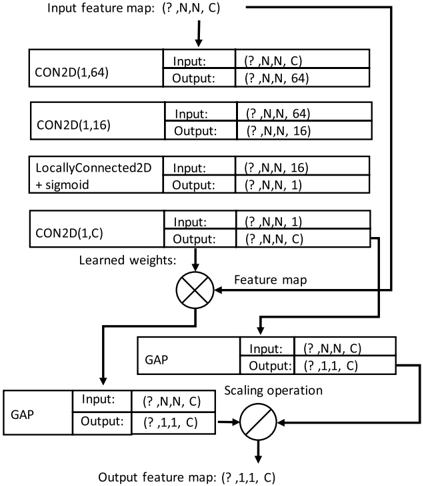
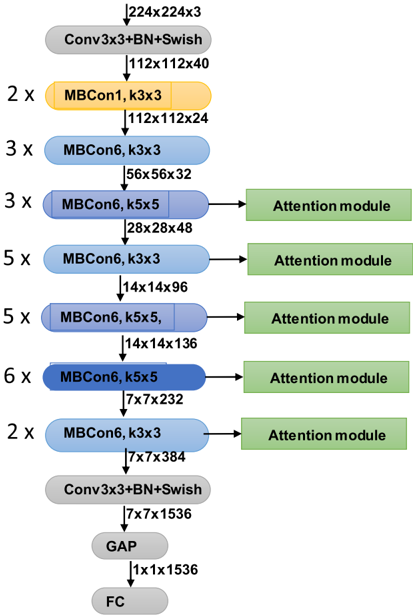
Scene classification is a highly useful task in Remote Sensing (RS) applications. Many efforts have been made to improve the accuracy of RS scene classification. Scene classification is a challenging problem, especially for large datasets with tens of thousands of images with a large number of classes and taken under different circumstances. One problem that is observed in scene classification is the fact that for a given scene, only one part of it indicates which class it belongs to, whereas the other parts are either irrelevant or they actually tend to belong to another class. To address this issue, this paper proposes a deep attention Convolutional Neural Network (CNN) for scene classification in remote sensing. CNN models use successive convolutional layers to learn feature maps from larger and larger regions (or receptive fields) of the scene. The attention mechanism computes a new feature map as a weighted average of these original feature maps. In particular, we propose a solution, named EfficientNet-B3-Attn-2, based on the pre-trained EfficientNet-B3 CNN enhanced with an attention mechanism. A dedicated branch is added to layer 262 of the network, to compute the required weights. These weights are learned automatically by training the whole CNN model end-to-end using the backpropagation algorithm. In this way, the network learns to emphasize important regions of the scene and suppress the regions that are irrelevant to the classification. We tested the proposed EfficientNet-B3-Attn-2 on six popular remote sensing datasets, namely UC Merced, KSA, OPTIMAL-31, RSSCN7, WHU-RS19, and AID datasets, showing its strong capabilities in classifying RS scenes.
Overview
The claims and statistics of this paper haven’t been checked yet.
Free: it reads the open-access text and checks the first 5 claims that cite a source we can check. Create a free account to check every claim.
Integrity signals
Registry
Cites
Statistics
Figures











Verification
Claims the paper makes
The claims and statistics of this paper haven’t been checked yet.
Free: it reads the open-access text and checks the first 5 claims that cite a source we can check. Create a free account to check every claim.
Claims other papers make about this one
Each is checked against this paper’s own text: does it say what the citing paper says it does?
The cited source says what the claim attributes to it.
In the citing paper
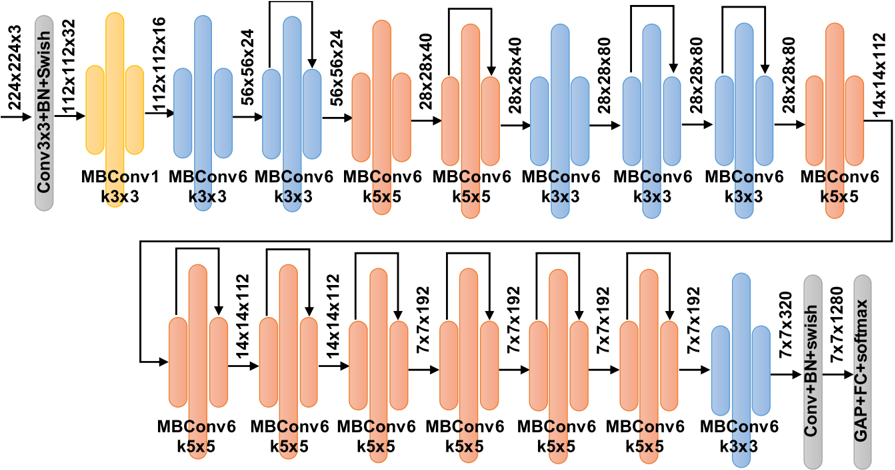
“For the extraction of features, the network uses the Mobile inverted bottleneck convolution (MB Conv) block that uses inverted residual connections28.”
From Image adaptive encryption using EfficientNet B3 feature guided multi scroll chaotic map with modulo controlled pseudo parallel processing (2025) · cites this paper as [28]
Experimental — accuracy not yet measured
Self-check
Percentages, sums and reported differences re-computed from the paper’s own numbers.
The self-check needs the paper’s full text.
Citations
Cites
1 retracted
Zhu, R., Li, Y., Mo, N., & Liu, Y. (2019) · Remote Sensing · doi:10.3390/rs11171996 · Cited by 45
RetractedDeep Residual Learning for Image Recognition
He, K., Zhang, X., Ren, S., & Sun, J. (2016) · 2016 IEEE Conference on Computer Vision and Pattern Recognition (CVPR) · doi:10.1109/cvpr.2016.90 · Cited by 235,474 · cited 1×
“In the original residual blocks defined ResidualNets [53], the skip connections exist between layers with wide number of channels (64 in Fig.”
BackgroundVaswani, A., Shazeer, N., Parmar, N., Uszkoreit, J., Jones, L., Gomez, A. N., Kaiser, L., & Polosukhin, I. (2017) · arXiv · doi:10.48550/arxiv.1706.03762 · Cited by 120,404 · cited 1×
“The attention mechanism (the idea of focusing on spe-cific parts of the input) has been applied in deep learning for speech recognition [30], Natural Language processing [31], multimodal reasoning and matching [32], object detection [33], and image recognition [34]–[36].”
BackgroundImageNet classification with deep convolutional neural networks
Krizhevsky, A., Sutskever, I., & Hinton, G. E. (2017) · Communications of the ACM · doi:10.1145/3065386 · Cited by 112,155 · cited 1×
“Tan and Le [50] show that the EfficientNet CNN models outperform all previous models both in term of the number of parameters and Top-1 accuracy when applied to the ImageNet dataset [51].”
MethodExploiting Generative AI to Scale up Intelligent Tutoring Systems
Jakubův, J., Chvalovský, K., Goertzel, Z., Kaliszyk, C., Olšák, M., Piotrowski, B., Schulz, S., Suda, M., & Urban, J. (2023) · DROPS (Schloss Dagstuhl – Leibniz Center for Informatics) · doi:10.4230/lipics.itp.2023.19 · Cited by 76,658
Squeeze-and-Excitation Networks
Hu, J., Shen, L., & Sun, G. (2018) · 2018 IEEE/CVF Conference on Computer Vision and Pattern Recognition · doi:10.1109/cvpr.2018.00745 · Cited by 35,667
MobileNetV2: Inverted Residuals and Linear Bottlenecks
Sandler, M., Howard, A., Zhu, M., Zhmoginov, A., & Chen, L.-C. (2018) · 2018 IEEE/CVF Conference on Computer Vision and Pattern Recognition · doi:10.1109/cvpr.2018.00474 · Cited by 28,755 · cited 1×
“MBConv is based on concepts borrowed from the MobileNet models [52].”
MethodEfficientNet: Rethinking Model Scaling for Convolutional Neural Networks
Tan, M., & Le, Q. V. (2019) · arXiv · doi:10.48550/arxiv.1905.11946 · Cited by 17,072 · cited 3×
“Recently, Tan and Le [50] studied the relationship between width and depth of CNNmodels and came upwith an efficient way to design CNN models that have less parameters, yet they provide better classification accuracy.”
BackgroundMethodSqueeze-and-Excitation Networks
Hu, J., Shen, L., Albanie, S., Sun, G., & Wu, E. (2020) · IEEE Transactions on Pattern Analysis and Machine Intelligence · doi:10.1109/tpami.2019.2913372 · Cited by 12,157
Review Article Digital change detection techniques using remotely-sensed data
SINGH, A. (1989) · International Journal of Remote Sensing · doi:10.1080/01431168908903939 · Cited by 3,849 · cited 1×
“Recent years have witnessed a rapid development in remote sensing (RS) technologies [1]–[3].”
Background
Research works printed but not linked: 3
- H. Alhichri. KSA Remote Sensing Datasets. Alhichri Research Page. Accessed: Dec. 1, 2020. [Online]. Available: http://alhichri.36bit.com/ksa_ dataset.html
- Z. Chen, S. Wang, X. Hou, and L. Shao, ''Recurrent transformer networks for remote sensing scene categorisation,'' in Proc. Brit. Mach. Vis. Conf., Newcastle upon Tyne, U.K., Sep. 2018.
- M. Castelluccio, G. Poggi, C. Sansone, and L. Verdoliva, ''Land Use classification in remote sensing images by convolutional neural networks,'' ArXiv, vol. abs/1508.00092, p. 12, 2015. · arXiv
Cited by
Items 301–357 of 357
WITHDRAWN: An Evaluation of CNN's Performance in Deep Learning for Pneumonia DiagnosisPreprint
Singh, P., & Singh, S. (2024) · Research Square · doi:10.21203/rs.3.rs-4886527/v1
Airport Visibility Classification Based on Multimodal Fusion of Image-Tabular Data
Wang, L., Cui, Z., Dong, S., & Wang, N. (2024) · IEEE Access · doi:10.1109/access.2024.3482969
“On the other hand, EfficientNet has shown superior performance compared to other state-of-the-art deep CNN architectures, such as InceptionV3, ResNet50, DenseNet, and ResNet [41], [42], particularly in image classification tasks [43].”
BackgroundSpatial data mining-focused research on image processing techniques for remotely sensed images
Fan, Y., Feng, S., & Du, J. (2024) · The Imaging Science Journal · doi:10.1080/13682199.2024.2410673
“[14] Developed a deep attention CNN for scene categorization, utilizing attention processes to enhance feature maps from CNN. Surpassed most existing approaches on different remote sensing datasets but performed less well on larger datasets.”
Hong, T. V. T., & Bình, N. T. (2024) · Communications in computer and information science · doi:10.1007/978-981-96-0437-1_14
Rouabhi, S., & Tlemsani, R. (2024) · Advances in educational technologies and instructional design book series · doi:10.4018/979-8-3693-7220-3.ch010 · Cited by 1
Evaluating Transfer Learning with EfficientNetB0 for Smoking Image Classification
Hafizh, R. A., Zefrinaldi, A., & Sulistiyo, M. D. (2024) · International Conference on Innovation and Intelligence for Informatics, Computing, and Technologies (3ICT) · doi:10.1109/3ict64318.2024.10824437
Leveraging Attention Mechanisms to Enhance Resnet50 for Satellite Image ClassificationPreprint
Almira, E., Kusuma, J. W., & Salsabila, S. (2025) · SSRN Electronic Journal · doi:10.2139/ssrn.5097671
Thein, A. M., & Htwe, A. N. (2025) · Lecture notes in electrical engineering · doi:10.1007/978-981-96-1531-5_40
Accelerating CNN Inference: Hybrid Model Pruning for Reduced Computational Demands and High Accuracy
Gadah, A. R., Isaak, S., & Saad, A. H. Y. (2024) · IEEE Student Conference on Research and Development (SCOReD) · doi:10.1109/scored64708.2024.10872661
“Therefore, these methods are suitable for testing on a sophisticated model such as the EfficientNet B3 [9].”
Abnormal Trajectory Type Loitering Detection Using YOLOv9 and CNN
Khair, A. W., & Kosala, G. (2025) · International Conference on Advancement in Data Science, E-learning and Information System (ICADEIS) · doi:10.1109/icadeis65852.2025.10933160
“In contrast to CNN architectures that scale only one dimension, EfficientNet applies compound scaling to proportionally balance all dimensions, increasing its accuracy and efficiency compared to existing CNNs such as AlexNet, ImageNet, GoogleNet, and MobileNetV2 [16], [17], [18], [19].”
V3DI ensemble model for high-accuracy aerial scene classification
Shastry, K. A., & Itagi, R. (2025) · Machine Graphics and Vision · doi:10.22630/mgv.2025.34.1.2
“Numerous HSRRS images have been collected recently, and key work has been done in the domains of pattern recognition, LULC [2,7].”
Leveraging Deep Learning Models for Retinoblastoma Detection
Almutairi, A. M., Alshebl, R. H., & Ibrahim, D. M. (2025) · International Conference on Innovation in Artificial Intelligence and Internet of Things (AIIT) · doi:10.1109/aiit63112.2025.11082920
WITHDRAWN: An Evaluation of CNN's Performance in Deep Learning for Pneumonia DiagnosisPreprint
Singh, P., & Singh, S. (2025) · Research Square · doi:10.21203/rs.3.rs-4886527/v2
Construction of Trusted Route Prediction Model Based on Deep Learning Algorithm
Yin, D., & Xu, L. (2025) · Lecture notes in networks and systems · doi:10.1007/978-981-96-6124-4_20
Khayam, S. U., Khan, M. A., Brahim, G. B., Mohammad, N., Rubab, S., & Shabaz, M. (2025) · De Gruyter eBooks · doi:10.1515/9783111612034-001
Miao, J., Gao, J., Wang, L., Luo, L., & Pu, Z. (2025) · Applied Sciences · doi:10.3390/app152010995
Salagar, R., & Patil, P. B. (2025) · Journal of Information & Knowledge Management · doi:10.1142/s0219649225500893
Land Use and Land Cover Analysis on LISS-III Multi-spectral Images Using UNet Deep Learning Model
Desai, N., & Naik, A. (2025) · Lecture notes in electrical engineering · doi:10.1007/978-981-96-7253-0_1
Geetha, P., & Kumar, R. (2025) · International Conference on Intelligent Communication Networks and Computational Techniques (ICICNCT) · doi:10.1109/icicnct66124.2025.11233203
“Accuracy % HBGNet [21] 76.4 LSTM [9] 78.6 CNN [28] 81.5 AMEFRN [30] 93.58 DCNN [22] 93.97 The accuracy metrics records in Table V collected from the DL based review papers such as HBGNet [20], AMEFRN [30] and DCNN [22].”
InfluentialAn intelligent framework for dynamic modeling of therapeutic response using clinical compliance data
Wang, X., & Xie, H. (2025) · Frontiers in Pharmacology · doi:10.3389/fphar.2025.1631599
Briones, P., Altamirano, E., Nieves, A., Carrizales, J., Klusmann, M., & Sampen, L. (2025) · International Conference on Electrical, Computer, Communications and Mechatronics Engineering (ICECCME) · doi:10.1109/iceccme64568.2025.11277708
“[12] III.”
Casuat, C. D. (2025) · IEEE International Conference on System Engineering and Technology (ICSET) · doi:10.1109/icset65917.2025.11283907
“Studies have demonstrated the practical utility of EfficientNet in various fields such as skin cancer classification [7], weed detection [8], acoustic signal-based malfunction detection [9], agricultural IoT monitoring [11], and remote sensing image classification [15].”
Big Data Classification Using Hybrid Squeeze‐ EfficientNet With Feature Fusion in Spark Architecture
Solairaj, A., Jeyaselvi, M., Mareeswari, V., & Sathya, M. (2026) · Transactions on Emerging Telecommunications Technologies · doi:10.1002/ett.70347
“Squeeze-EfficientNet is developed by the integration of SqueezeNet [26] and EfficientNet [22].”
InfluentialEfficient Net-Based Key Generation for Authentication and Access Control in Blockchain
Dike, O. D., Choudhary, R. K., & Gajmal, Y. (2026) · SN Computer Science · doi:10.1007/s42979-025-04669-9
“The uploaded data ℏ e is taken as the input for the Efficient - Net [ 32 ].”
InfluentialConvolutional Neural Networks for Accurate Ground-Space Classification in Satellite Images
Putra, S. P., Sitanggang, I. S., Adrianto, H. A., Utama, S., & Mukhayadi, M. (2025) · IEEE International Conference on Aerospace Electronics and Remote Sensing Technology (ICARES) · doi:10.1109/icares67579.2025.11371540
“Recent studies demonstrate EfficientNet's effectiveness in remote sensing for land cover classification [25], [26], semantic segmentation [27], and maritime applications [28].”
EfficientNetB3 Adapted Hybrid UNet with Attention Guided Decoding for Urban Scene Segmentation
Joddha, A., Manasvi, S., Kalburgi, S., & Trivedi, H. (2025) · International Conference on Intelligent Systems and Embedded Design (ISED) · doi:10.1109/ised67359.2025.11405024
“The EfficientNetB3 [16] + Attention U-Net model archi-Architecture as proposed, following the Eff-UNet [15] architecture was tested against the Cityscapes dataset for binary semantic Segmentation.”
EfficientNetB3 for the Early Detection of Alzheimer’s Disease
Bisht, D., Madan, P., Vishnoi, A., Upadhyay, U., Pant, V., & Arya, P. K. (2025) · Global AI Summit - International Conference on Artificial Intelligence and Emerging Technology (AI Summit) · doi:10.1109/aisummit66170.2025.11411142
“…strong feature extraction capabilities for MRI data, and by using transfer learning, pre-trained weights are adapted for Alzheimer’s classification, significantly improving model performance—particularly especially when distinguishing early symptoms of AD from other neurological conditions [8].”
Thangavel, K., Murugavelu, M., Nelson, S. C., & Sreekanth, G. R. (2026) · Medical Physics · doi:10.1002/mp.70375
“The most effective model we have built is a convolutional neural network called EfficientNet-B3, 17 which achieves higher accuracy with fewer parameters and lower computational cost than many other models by applying compound coefficient scaling during training that considers depth, width, and…”
InfluentialDeep Learning Approaches for Pneumonia Detection and Analysis with XAI
Bolukbasi, Z., Yurtoglu, H., Kugu, E., & Çukurtepe, H. (2026) · International Informatics and Software Engineering Conference (IISEC) · doi:10.1109/iisec69317.2026.11418517
Fu, J., Zhang, C., Fu, Q., Liu, F., Xue, Z., & Li, Z. (2026) · Artificial Intelligence in Agriculture · doi:10.1016/j.aiia.2026.02.005
AdhiLakshmi, S., P, V. S. S., Sheik Raseeth Ansar, A., & Chidambaram, S. (2025) · International Conference on Signal Processing, Computation, Electronics, Power and Telecommunication (IConSCEPT) · doi:10.1109/iconscept66142.2025.11437343
“Models based on transfer learning-based like VGG19[17],[19] and Efficient Net [15], when used in combination with segmentation models such as U-Net architecture [13],[14], demonstrate high classification accuracy and precise tumor localization in ultrasound imaging [1].”
Jaya, T., & Thayanandeswari, C. S. S. (2026) · Discover Computing · doi:10.1007/s10791-026-10039-7 · Cited by 1
PFEN: Lightweight Remote Sensing Image Classification Algorithm Based on Pyramid Architecture
Zhao, S., Gu, T., 钱立贵, Chen, T., Shao, X., & Zhu, J. (2026) · International Conference on Neural Networks, Information and Communication Engineering (NNICE) · doi:10.1109/nnice68970.2026.11465439
“To further verify the effectiveness of PFEN, it is compared with mainstream models such as ResNet-50 [20], DenseNet-121 [21], EfficientNet-B0 [22], and Swin Transformer [23].”
CALCNet: A Novel Cross-Module Attention Network for Efficient Land Cover Classification
Fayaz, M., Yar, H., Jiang, W., Ibrahim, A. H., Islam, M., & Dang, L. M. (2026) · Remote Sensing · doi:10.3390/rs18081218
Bouchelaghem, S., Chirayath, V., Tibermacine, I. E., Dempsey, A. C., & Purkis, S. J. (2026) · Frontiers in Marine Science · doi:10.3389/fmars.2026.1785978
A CNN-LSTM-based feature-level generation model for detecting the degree of salt stress in soybeans
Yang, H., Wu, G., Deng, L., Wang, J., Wan, X., Li, S., & Shi, H. (2026) · Computers and Electronics in Agriculture · doi:10.1016/j.compag.2026.111808
Dachawar, M., Iyer, L., Moolya, R., Deshpande, S., & Chandrasekaran, V. (2026) · Information systems engineering and management · doi:10.1007/978-3-032-20735-7_24
Brain tumor classification using hybrid spinal-EfficientNet using MRI images
Sambandham, P., Perla, S., Majji, R., & Datta, P. (2026) · Journal of Neuroimmunology · doi:10.1016/j.jneuroim.2026.578948
Deep Learning for Chest X-rays: Segmenting Thoracic Organs
Nahin, K. M., Ahmed, T., Shanin, Y. U., Zami, A., & Ahmed, M. (2025) · IEEE International Conference on Biomedical Engineering, Computer and Information Technology for Health (BECITHCON) · doi:10.1109/becithcon69222.2025.11503958
“Afterwards, the model was fine-tuned at a slower learning rate (1e-4) in order to correct systematic mistakes without altering previously learnt representations [14].”
InfluentialSethosa, N. I., Du, C., & Owolawi, P. A. (2026) · Lecture notes in networks and systems · doi:10.1007/978-3-032-20752-4_27
Sharma, V., Kalra, S., & Beniwal, R. (2026) · Franklin Open · doi:10.1016/j.fraope.2026.100633
Wang, W., Zhang, K., Jiang, Y., Dong, H., Zhang, H., & Wang, L. (2026) · Journal of the Chinese Institute of Engineers · doi:10.1080/02533839.2026.2680090
Deep learning-based myocardial infarction detection using echocardiography
Bulbule, S., & Soma, S. (2026) · BMC Cardiovascular Disorders · doi:10.1186/s12872-026-06033-y · Cited by 1
“The segmented results are used to derive displacement and area variation obtained by the combination of EfficientNet-B3-attn-2 [25] and SpinalNet [26].”
Kumar, N. V., Krishnamoorthy, S. K., Ramaswamy, V., Ponnada, S., Kotti, J., & Nagarajan, S. (2026) · Iranian Journal of Science and Technology Transactions of Electrical Engineering · doi:10.1007/s40998-026-01127-x · Cited by 1
Hyperspectral image processing techniques for environmental monitoring: a comprehensive review
Lekha, P. S., & Sirisha, B. L. (2026) · Environmental Monitoring and Assessment · doi:10.1007/s10661-026-15629-y
Islam, T., Sarker, T. T., Embaby, M., Ahmed, K. R., & AbuGhazaleh, A. A. (2026) · Smart Agricultural Technology · doi:10.1016/j.atech.2026.102358
Lv, X., & Wang, G. (2026) · Natural Resources Research · doi:10.1007/s11053-026-10695-y
Multi-Scale Features Fusion for Real-Scene Generative Text Image Forgery Localization
Zhu, Q., Dong, L., Wan, L., & Li, Y. (2026) · IEEE International Conference on Pattern Recognition, Machine Vision and Artificial Intelligence (PRMVAI) · doi:10.1109/prmvai70103.2026.11605628
Mao, S. (2026) · IEEE International Conference on Electronic Technology, Communication and Information (ICETCI) · doi:10.1109/icetci68937.2026.11610754
ShuffleNetV2-hSimKD: A Lightweight Network for Plant Disease Detection
Si, Q., Song, Y., & Han, S. I. (2026) · Agriculture · doi:10.3390/agriculture16151686
Samavati, S., & Shayegan, M. J. (2026) · Geomatica · doi:10.1016/j.geomat.2026.100128
A lightweight deep learning framework for tea cultivar identification based on leaf images
He, M., Chen, G., Wang, J., Tang, D., Liu, Q., Xiong, X., & Tan, L. (2026) · Frontiers in Plant Science · doi:10.3389/fpls.2026.1863075
SIFMap: Parallel CNN Inference Using Sub-Input-Feature Maps in PIM
Wu, T., He, S., Chen, W., Zhang, X., & Shi, T. (2026) · IEEE Transactions on Computers · doi:10.1109/tc.2026.3727031
“Convolutional neural networks (CNNs) demonstrate substantial performance in traditional classification [1], [15], detection [27], [51], and extraction tasks [16], [25], while also contributing to advanced large model scenarios.”
Automated detection of bridge and road damage in orthophotos using deep learning
Li, X., Liang, J., Zheng, S., Lin, C., Chen, Y., Li, H., & Chun, P. (2026) · AI in Civil Engineering · doi:10.1007/s43503-026-00108-7
“Based on the above analysis, the EfficientNet-b1-based model still has the following limitations:”
InfluentialМихайленко, И. И. (2026) · Digital models and solutions · doi:10.29141/2949-477x-2026-5-3-1
FBA: Fourier Block Attention for Hyperspectral Image Representation
Chaudhuri, U., Aswal, S., & Deshpande, S. S. (2026) · IEEE International Geoscience and Remote Sensing Symposium (IGARSS) · doi:10.1109/igarss60577.2026.11730504
Benbelhassen, R., Salem, Y. B., Yahia, M., & Ali, T. (2026) · IEEE International Geoscience and Remote Sensing Symposium (IGARSS) · doi:10.1109/igarss60577.2026.11730694
“…promotes feature reuse through dense connectivity [8]; EfficientNet-B3, which employs compound scaling to balance accuracy and computational efficiency [9], [10]; and ResNet-50, whose residual connections enhance training robustness [11], offer different trade-offs for LULC segmentation tasks.”
Metadata
- Authors
- Alhichri, H., Alswayed, A. S., Bazi, Y., Ammour, N., & Alajlan, N. A.
- Affiliations
- King Saud University (SA)
- Venue
- IEEE Access
- Published
- 2021
- Volume
- 9
- Pages
- 14078-14094
- ISSN
- 2169-3536 (ISSN-L)
- OpenAlex
- W3118660027
- Cited by
- 357
- References
- 86
- Citations by year
- 2026: 40 · 2025: 81 · 2024: 83 · 2023: 68 · 2022: 60 · 2021: 25
- FWCI
- 26.48
- Type
- journal article
- Language
- en
- Open access
- gold
- doi.org
- Locations
- IEEE Access (publishedVersion, cc-by)
- DOAJ (DOAJ: Directory of Open Access Journals) (submittedVersion, cc-by-sa)
- Funders
- Researchers Supporting Project through the King Saud University, Riyadh, Saudi Arabia (RSP-2020/69)
- Topics
- Physical Sciences › Computer Science › Computer Vision and Pattern Recognition › Remote-Sensing Image Classification
- Physical Sciences › Computer Science › Computer Vision and Pattern Recognition › Advanced Neural Network Applications
- Social Sciences › Geography, Planning and Development › Remote Sensing and Land Use
- Keywords
- remote sensing scene classification, EfficientNetB3, attention mechanism, pre-trained CNN fine-tuning, feature map weighting
About these checks
Registry, retraction, Cites and statistics results are computed, not judged, with one exception: a printed reference that no index lists is read once by a model before it counts as a citation error. Claims are extracted by a model and kept only when their quote appears verbatim in the text; each cited source is then checked, with a model’s help, for whether it says what the claim relies on. Those verdicts can be wrong — read the claim’s quote and the cited source before relying on one.
Statistics and arithmetic are recomputed, not judged.
Confidence bands are shown only for fields calibrated on our annotated test set. None is calibrated yet, so no band is shown.
What counts as a claim ›How we measure confidence ›How we check this ›
Are you an author, or do you see a problem with this page? Request a review
Data sources
Bibliographic data: Semantic Scholar, OpenAlex, Crossref.
Contains information from the Semantic Scholar Academic Graph Datasets, made available under the ODC Attribution License (ODC-BY 1.0).
Semantic Scholar’s data is described in: Kinney, R., et al. (2023). The Semantic Scholar Open Data Platform. arXiv:2301.10140.
