

A Tutorial on 5G NR V2X Communications
Open accessThe DOI matches its Crossref record; 34 of the 35 references it cites were found in a registry or an index.
Abstract
The Third Generation Partnership Project (3GPP) has recently published its Release 16 that includes the first Vehicle-to-Everything (V2X) standard based on the 5G New Radio (NR) air interface. 5G NR V2X introduces advanced functionalities on top of the 5G NR air interface to support connected and automated driving use cases with stringent requirements. This article presents an in-depth tutorial of the 3GPP Release 16 5G NR V2X standard for V2X communications, with a particular focus on the sidelink, since it is the most significant part of 5G NR V2X. The main part of the paper is an in-depth treatment of the key aspects of 5G NR V2X: the physical layer, the resource allocation, the quality of service management, the enhancements introduced to the Uu interface and the mobility management for V2N (Vehicle to Network) communications, as well as the co-existence mechanisms between 5G NR V2X and LTE V2X. We also review the use cases, the system architecture, and describe the evaluation methodology and simulation assumptions for 5G NR V2X. Finally, we provide an outlook on possible 5G NR V2X enhancements, including those identified within Release 17.
Overview
The claims and statistics of this paper haven’t been checked yet.
Free: it reads the open-access text and checks the first 5 claims that cite a source we can check. Create a free account to check every claim.
Integrity signals
Registry
Cites
Statistics
Figures












Verification
Claims the paper makes
The claims and statistics of this paper haven’t been checked yet.
Free: it reads the open-access text and checks the first 5 claims that cite a source we can check. Create a free account to check every claim.
Claims other papers make about this one
Each is checked against this paper’s own text: does it say what the citing paper says it does?
The source backs part of the claim, not all of it — or backs it for a different population, condition or comparison.
In the citing paper
“Advanced C-V2X applications demand transmission latencies of a few milliseconds and 99.999% reliability [2].”
From Explainable AI-Aided Feature Selection and Model Reduction for DRL-Based V2X Resource Allocation (2025) · cites this paper as [2]
Experimental — accuracy not yet measuredThe source backs part of the claim, not all of it — or backs it for a different population, condition or comparison.
In the citing paper
“Configured Grant Type 2 is used for periodic services with a scheduling timeline similar to dynamic scheduling in 5G-V2X sidelink communication.”
From Towards 6G V2X Sidelink: Survey of Resource Allocation—Mathematical Formulations, Challenges, and Proposed Solutions (2024) · cites this paper as [18]
Experimental — accuracy not yet measuredThe source backs part of the claim, not all of it — or backs it for a different population, condition or comparison.
In the citing paper
“To address the challenges posed by such scenarios, 5G-V2X introduces resource re-evaluation and pre-emption mechanisms in Mode B resource allocation [91], [18].”
From Towards 6G V2X Sidelink: Survey of Resource Allocation—Mathematical Formulations, Challenges, and Proposed Solutions (2024) · cites this paper as [18]
Experimental — accuracy not yet measuredThe cited source says what the claim attributes to it.
In the citing paper
“Configured Grant Type 1 is mainly used for periodic traffic in 5G-V2X sidelink communication.”
From Towards 6G V2X Sidelink: Survey of Resource Allocation—Mathematical Formulations, Challenges, and Proposed Solutions (2024) · cites this paper as [18]
The cited source says what the claim attributes to it.
In the citing paper
“Currently, the NR-V2X sidelink has been standardized by 3GPP to support low-latency high-reliability direct communication.”
From Reinforcement Learning-Based Resource Allocation Scheme of NR-V2X Sidelink for Joint Communication and Sensing (2025) · cites this paper as [4]
Self-check
Percentages, sums and reported differences re-computed from the paper’s own numbers.
The self-check needs the paper’s full text.
Citations
Cites
Dedicated Short-Range Communications (DSRC) Standards in the United States
Kenney, J. B. (2011) · Proceedings of the IEEE · doi:10.1109/jproc.2011.2132790 · Cited by 2,366
Polyphase codes with good periodic correlation properties (Corresp.)
Chu, D. (1972) · IEEE Transactions on Information Theory · doi:10.1109/tit.1972.1054840 · Cited by 1,730
Polyphase codes with good periodic correlation properties
Chu, D. C. (1972) · IEEE Transactions on Information Theory · Cited by 999
Vehicle-to-Everything (v2x) Services Supported by LTE-Based Systems and 5G
Chen, S., Hu, J., Shi, Y., Peng, Y., Fang, J., Zhao, R., & Zhao, L. (2017) · IEEE Communications Standards Magazine · doi:10.1109/mcomstd.2017.1700015 · Cited by 921
5G NR: the Next Generation Wireless Access Technology
(2018) · Elsevier eBooks · doi:10.1016/c2017-0-01347-2 · Cited by 876
An overview of 3GPP device-to-device proximity services
Lin, X., Andrews, J., Ghosh, A., & Ratasuk, R. (2014) · IEEE Communications Magazine · doi:10.1109/mcom.2014.6807945 · Cited by 798
Molina-Masegosa, R., & Gozalvez, J. (2017) · IEEE Vehicular Technology Magazine · doi:10.1109/mvt.2017.2752798 · Cited by 755
Taxonomy and Definitions for Terms Related to On-Road Motor Vehicle Automated Driving Systems
On-Road Automated Driving (ORAD) Committee (2017) · doi:10.4271/j3016_201401 · Cited by 675
Generalized chirp-like polyphase sequences with optimum correlation properties
Popovic, B. M. (1992) · IEEE Transactions on Information Theory · doi:10.1109/18.144727 · Cited by 419
Impact of Vehicles as Obstacles in Vehicular Ad Hoc Networks
Boban, M., Vinhoza, T. T. V., Ferreira, M., Barros, J., & Tonguz, O. K. (2011) · IEEE Journal on Selected Areas in Communications · doi:10.1109/jsac.2011.110103 · Cited by 351
Self-citation
Research works printed but not linked: 48
- 33. SA WG2, Study on Architectural Enhancements for 5G Multicast- Broadcast Services, document SP-190625, TSG SA Meeting #85, 3GPP, Sophia Antipolis, France, Sep. 2019.
- 101. 3GPP MCC Support, Final Report of 3GPP TSG RAN WG1 #AH_1901 V1.0.0, document 3GPP TSG RAN WG1 Meeting #96, 3GPP, Taipei, Taiwan, Mar. 2019.
- 100. WID on 5G V2X With NR Sidelink, document RP-200129 3GPP TSG RAN Meeting #87e, LG Electron., Seoul, South Korea, Mar. 2020.
- 50. J. Schlienz and A. Roessler, "Device to device communication in LTE," Rhode & Schwarz, Munich, Germany, White Paper, 2015.
- 57. Huawei, Sidelink Physical Layer Structure for NR V2X, document R1-1910054 3GPP TSG RAN WG1 Meeting #98bis, HiSilicon, Chongqing, China, Oct. 2019.
- 56. 3GPP MCC Support, Final Report of 3GPP TSG RAN WG1 #98bis V2.0.0, document TSG RAN WG1 Meeting #98bis, 3GPP, Chongqing, China, Oct. 2019.
- 55. 3GPP MCC Support, Draft Report of 3GPP TSG RAN WG1 #99 V0.1.0, document TSG RAN WG1 Meeting #99, 3GPP, Reno, NV, USA, Nov. 2019.
- 54. 3GPP MCC Support, Final Report of 3GPP TSG RAN WG1 #100bis- e V1.0.0, document TSG RAN WG1 Meeting #101-e, 3GPP, Sophia Antipolis, France, Jun. 2020.
- 40. J. Campos, Understanding the 5G NR Physical Layer, Keysight Technol., Santa Rosa, CA, USA, Nov. 2017.
- 5. F. Perry, "Overview of DSRC messages and performance require- ments," in Proc. UFTI DSRC Other Commun. Options Transp. Connectivity Workshop, 2017.
- 8. 3GPP, New SI Proposal: Study on Evaluation Methodology of New V2X Use Cases for LTE and NR, document RP-170837 TSG RAN Meeting #75, 3GPP, Dubrovnik, Croatia, Mar. 2017.
- 49. 3GPP MCC Support, Final Report of 3GPP TSG RAN WG1 #100-e V2.0.0, document TSG RAN WG1 Meeting #100bis-e, 3GPP, Sophia Antipolis, France, Apr. 2020.
- 9. New SID: Study on NR V2X, document RP-181480, 3GPP TSG RAN Meeting #80, 3GPP, Sophia Antipolis, France, Jun. 2018.
- 46. Final Report of 3GPP TSG RAN WG1 #101-e, 3GPP, Sophia Antipolis, France, Aug. 2020.
- 48. 3GPP MCC Support, Final Report of 3GPP TSG RAN WG1 #AH_1901 V1.0.0, document TSG RAN WG1 Meeting #96, 3GPP, Taipei, Taiwan, Mar. 2019.
- 47. 3GPP MCC Support, Final Report of 3GPP TSG RAN WG1 #95 v1.0.0, document TSG RAN WG1 Meeting #95, 3GPP, Sophia Antipolis, France, Nov. 2019.
- 44. Summary of RAN1 Agreements/Working Assumptions in WI 5G V2X With NR Sidelink, document R1-1913601, 3GPP TSG RAN WG1 Meeting #99, LG Electron., Reno, NV, USA, Nov. 2019.
- 127. A. E. Fernandez et al., "5GCAR scenarios, use cases, requirements and KPIs," in Proc. 5th Gener. Commun. Autom. Res. Innov., 2017, pp. 37-39.
- 126. New Work Item on NR Support of Multicast and Broadcast Services, document RP-193248 3GPP TSG RAN Meeting #86, Huawei, Sitges, Spain, Dec. 2019.
- 125. Revised SID: Study on NR Sidelink Relay, document RP-201474 3GPP TSG RAN Meeting #89e, 3GPP, Sophia Antipolis, France, Sep. 2020.
- 72. Huawei, Remaining Details of Physical Layer Procedures for Sidelink, document R1-2001555 3GPP TSG RAN WG1 Meeting #100e-bis, HiSilicon, Singapore, Apr. 2020.
- 77. Discussion on V2X Physical Layer Procedure, document R1-1906558 3GPP TSG RAN WG1 Meeting #97, MediaTek, Inc., Reno, NV, USA, May 2019.
- 64. Huawei, Remaining Details of Sidelink Synchronization Mechanisms, document R1-2001553, TSG RAN WG1 Meeting #100bis-e, 3GPP, Sophia Antipolis, France, Apr. 2020.
- 65. Sidelink Synchronization Mechanism, document R1-1911421 3GPP TSG RAN WG1 Meeting #98bis, VIVO, Dongguan, China, Oct. 2019.
- 67. Huawei, Sidelink Discovery for NR V2X, document R1-1903068 3GPP TSG RAN WG1 Meeting #96, HiSilicon, Athens, Greece, Mar. 2019.
- 68. Final Report of 3GPP TSG RAN WG1 #96 V2.0.0, document 3GPP TSG RAN WG1 Meeting #96, 3GPP MCC Support, Athens, Greece, Mar. 2019.
- 2. C2C-CC Manifesto, Car 2 Car Commun. Consortium, Braunschweig, Germany, 2007.
- 1. CAMP Vehicle Safety Communications Consortium, "Vehicle safety communications project: Task 3 final report: Identify intelligent vehicle safety applications enabled by DSRC," Nat. Highway Traffic Safety Admin., U.S. Dept. Transp., Washington, DC, USA, 2005.
- 96. Status Report to TSG (WI NR Mobility Enhancements), document RP- 192278 3GPP TSG RAN Meeting #85, Intel Corporat., Sitges, Spain, Sep. 2019.
- 94. Huawei, NR Uu and LTE Uu Support and Enhancement for Advanced V2X Use Cases, document R1-1812212 3GPP TSG RAN WG1 Meeting #95, HiSilicon, Spokane, WA, USA, Nov. 2018.
- 92. Analysis of NR Uu Support for Advanced V2X Use Cases, document R1-1810777 3GPP TSG RAN WG1 Meeting #94bis, Intel Corporat., Chengdu, China, Oct. 2018.
- 102. Report of 3GPP TSG RAN WG2 #105bis, document 3GPP TSG RAN WG2 Meeting #105bis, ETSI MCC, Xi'an, China, Apr. 2019.
- 111. Huawei, Sidelink Synchronization Mechanisms for NR V2X, document R1-1911885 3GPP TSG RAN WG1 Meeting #99, HiSilicon, Reno, NV, USA, Nov. 2019.
- 112. Study on Scenarios and Requirements of In-Coverage, Partial Coverage, and Out-of-Coverage Positioning Use Cases, document RP- 201384 3GPP TSG RAN Meeting #88e, LG Electron., Seoul, South Korea, Jul. 2020.
- 110. New WID on NR Sidelink Enhancement, document RP-193257 3GPP TSG RAN Meeting #86, LG Electron., Sitges, Spain, Dec. 2019.
- 98. Samsung Electronic, Introduction of T312 in NR, document R2- 1911445 3GPP TSG RAN WG2 Meeting #107, Qualcomm Inc., Prague, CZ, USA, Aug. 2019.
- 95. Status Report to TSG (WI NR Mobility Enhancements), document RP- 192533 3GPP TSG RAN Meeting #86, Intel Corporat., Sitges, Spain, Dec. 2019.
- 10. LG Electronics, New WID on 5G V2X With NR Sidelink, document RP-190766 3GPP TSG RAN Meeting #83, Huawei, Shenzhen, China, Mar. 2019.
- 13. 5GAA. White Paper C-V2X Use Cases: Methodology, Examples and Service Level Requirements. Accessed: Jun. 2019. [Online]. Available: https://5gaa.org/wp-content/uploads/2019/07/5GAA_191906 _WP_CV2X_UCs_v1.pdf
- 117. 117Summary of Email Discussion on Rel-17 Sidelink Enhancement, docu- ment RP-192745 3GPP TSG RAN Meeting #86, LG Electron., Sitges, Spain, Dec. 2019.
- 119. 'Miscellaneous Issues on Resource Allocation, 3GPP R1-1908914 TSG RAN WG1 Meeting #98, Ericsson, Prague, CZ, USA, Aug. 2019.
- 116. Discussion on Resource Allocation for Mode 2, document R1-1912588 3GPP TSG RAN WG1 Meeting #99, LG Electron., Reno, NV, USA, Nov. 2019.
- 120. Dynamic Sidelink Bi-Mode Transmission Under GNB Configuration, document R1-1912080 3GPP TSG RAN WG1 Meeting #99, Fujitsu, Reno, NV, USA, May 2019.
- 121. Resource Allocation for Mode-2 Transmissions, document R1-1910534 3GPP TSG RAN WG1 Meeting #98bis, Ericsson, Chongqing, China, Oct. 2019.
- 122. Geographic Information Based Dynamic TFRP Resource Selection Procedure in NR-V2X, document R1-1905375 3GPP TSG RAN WG1 Meeting #96bis, Fujitsu, Xian, China, Apr. 2019.
- 123. Huawei, Sidelink Resource Allocation Mode 2 for NR V2X, document R1-1911884 3GPP TSG RAN WG1 Meeting #99, HiSilicon, Reno, NV, USA, Nov. 2019.
- 2020, Summary of [108#50][V2X] Feature List and UE Caps
- 87. Huawei, Running CR to TS 38.331 for 5G V2X With NR Sidelink, doc- ument R2-1915983 3GPP TSG RAN WG2 Meeting #108, HiSilicon, Reno, NV, USA, Nov. 2019.
Cited by
Items 901–1,000 of 1,000
深津龍一, & Fukatsu, R. (2022) · Institutional Repositories DataBase (IRDB)
Ahmed, O. (2023) · White Rose eTheses Online (University of Leeds, The University of Sheffield, University of York)
Cooperative Mobility in Urban Environments
Hardes, T. (2023) · Qucosa (Saxon State and University Library Dresden)
Pregled novih različic standarda 5G
REŠIĆ, S. (2024) · Repository of the University of Ljubljana (University of Ljubljana)
Review and Evaluation of NRAs : Deliverable D2
Adesiyun, A., Andersson, A., Guy, I., Correia, G. H. D. A., Madadi, B., Farah, H., McCarthy, J., McPherson, K., Öörni, R., Silvano, A. P., et al. (2023) · DiVA (Digitala Vetenskapliga Arkivet)
Raro, R. V. C. B., Martinez, P. A., Cabrera, J. A., Asido, M. D., Castillano, U. K. I., & Cadubla, R. M. D. (2025) · International Symposium on Multimedia and Communication Technology (ISMAC) · doi:10.1109/ismac65024.2025.11175995
“16 models, the reader is encouraged to refer to [7] and [8].”
InfluentialCompact Antenna System Design for Enhanced CV2X Communication Security
Wu, J., & Chen, C.-C. (2025) · Digest - IEEE Antennas and Propagation Society. International Symposium · doi:10.1109/ap-s/cnc-usnc-ursi55537.2025.11266256
“Therefore, our primary design objective is to develop a compact low-cost antenna system for enhancing C-V2X communication security by adding interference rejection capability and maximal gain stability at the antenna stage via carefully selected pattern properties [7][8][9][10].”
Antonio, L. H. L., Terenciani, S. J. C., Eler, D. M., Filho, G. P. R., Pereira, L., Grande, R. E. D., & Meneguette, R. I. (2025) · Scientific Reports · doi:10.1038/s41598-025-32807-z
A Novel Adaptive Access Mechanism for Cellular V2X Networks
Li, Y., Yang, X., & Xiao, P. (2025) · EAI/Springer Innovations in Communication and Computing · doi:10.1007/978-3-031-93570-1_19
Liu, Y., Mei, J., & Zheng, K. (2025) · IEEE Vehicular Technology Conference · doi:10.1109/vtc2025-fall65116.2025.11310756
“This log is updated in two ways: • Receive a reception feedback: After the ego CAV transmits a CPM, the neighboring CAV acknowledges a successful reception (e.g., 5G NR V2X introduces the use of feedback channels in unicast and multicast communications [3]).”
Gameiro, J., Pirocchi, A., Matias, B., Paterlini, B. S., de Souza, K., Angelone, L., & Gama, U. (2025) · SAE technical papers on CD-ROM/SAE technical paper series · doi:10.4271/2025-36-0085
A Resource Allocation Method for V2X Communication via Multi-Objective DRL
Gu, Z., Ma, M., Li, Z., & Wang, C. (2025) · IEEE Vehicular Technology Conference · doi:10.1109/vtc2025-fall65116.2025.11310723
“Vehicle-to-everything (V2X) communication, a pivotal 6G component for vehicular networks [1], faces significant challenges in resource allocation for coexisting vehicle-to-vehicle (V2V) and vehicle-to-infrastructure (V2I) links.”
Chen, X., He, K., & Zhao, J. (2025) · IEEE Symposium on Computers and Communications (ISCC) · doi:10.1109/iscc65549.2025.11326147
“The proposed MMATD3-SPS algorithm was trained and evaluated in the 3GPP highway scenario [19], which utilizes a wrap-around design to ensure consistent vehicle density and realistic simulation conditions.”
DC-BL: Flexible Delay-Doppler Domain Channel Estimation via Decoupled Bayesian Learning
Gao, X., Feng, C., Tang, M., Li, Z., Fang, X., Li, Z., & Quek, T. Q. S. (2026) · IEEE Transactions on Vehicular Technology · doi:10.1109/tvt.2026.3654933
“However, accurate channel estimation for OTFS systems remains a challenging problem due to issues such as energy dispersion caused by fractional Doppler shifts, limited exploitation of inherent delay-Doppler domain sparsity, and prohibitive computational complexity.”
Vehicular Task Offloading with Quantum-Inspired Policy Iteration: A Reinforcement Learning Approach
Kumari, M., Sarkar, M., & Nonia, R. K. (2025) · International Conference on Electrical, Electronics, and Computer Science with Advance Power Technologies - A Future Trends (ICE2CPT) · doi:10.1109/ice2cpt66440.2025.11340040
“Vehicles utilize NR-V2X interfaces [15] to delegate tasks to RSUs via 5G/6G wireless connections.”
Two-Dimensional Dynamic Logic Resource Allocation for Scalable RIS Channel Emulation
Fei, D., Zhang, H., Chen, C., Zhou, H., Zheng, P., Wang, G., Li, C., Zhang, J., Song, H., & Ai, B. (2026) · Sensors · doi:10.3390/s26030813
“By leveraging massive arrays comprising hundreds or even thousands of low-cost reflecting elements, RISs empower the creation of Smart Radio Environments (SREs) with programmable signal propagation [11,12].”
Measurement of 5G-NR Signal in V2I Environment in 5 GHz Band by Software-defined Radio System
Harada, H., Shimomura, M., Mori, S., & Ohmi, N. (2025) · IEEE Virtual Conference on Communications (VCC) · doi:10.1109/vcc67261.2025.11351118
“Furthermore, to realize V2I and V2V systems, not only the previously used IEEE 802-based communication systems but also standardized 5G technologies, such as 5G-New Radio (NR) and 5G Sidelink, are being considered [2][3][5].”
Shimomura, M., Kawamatsu, D., Mori, S., Koda, Y., & Harada, H. (2025) · International Symposium on Wireless Personal Multimedia Communications (WPMC) · doi:10.1109/wpmc67460.2025.11351209
“5G new radio (5G-NR) sidelink communication is being considered as one of the communication methods used between vehicles in V2X communication [3].”
Novel Frequency Domain Signal Processing for DFTs-OFDM Radar using Zadoff-Chu Sequence
Umehira, M., & Takatori, Y. (2025) · International Symposium on Wireless Personal Multimedia Communications (WPMC) · doi:10.1109/wpmc67460.2025.11351171
“ITS (Intelligent Transportation System) using V2X (Vehicular to X) communications is also expected to improve the efficiency and safety of transportations [2].”
Morita, K., Yu, T., & Sakaguchi, K. (2026) · IEEE Consumer Communications and Networking Conference · doi:10.1109/ccnc65079.2026.11366327
“Intelligent Transportation Systems (ITS) aim to improve traffic safety and efficiency, with Vehicle-to-Everything (V2X) communication as a central component [3], which enables vehicles to share environmental information with Road Side Units (RSUs) and other vehicles.”
Hofmann, F., Fuchs, H., Llátser, I., Zimmermann, C., & Eckert, K. (2026) · Springer eBooks · doi:10.1007/978-3-658-45276-6_23
Scalable Sliding Resource Allocation in C-V2X Mode-3 with Multi-Agent Reinforcement Learning
Ali, M., Kim, S. M., & Kim, J. (2025) · International Conference on Information and Communication Technology Convergence (ICTC) · doi:10.1109/ictc66702.2025.11388464
“…Vehicle-to-Everything (C-V2X) communication is a foundational component of next-generation Intelligent Trans-portation Systems (ITS), enabling real-time data exchange among vehicles, infrastructure, and networks to enhance road safety, traffic efficiency, and cooperative autonomous driving [1].”
Characterization of the AMPLE Channel Model for IEEE 802.11ah-Based IoT
Xiao, L., Liu, J., Zhou, L., Hu, Q., Hua, Z., Zhang, R., Gu, W., & Zhang, J. (2025) · IEEE International Conference on Communication Technology (ICCT) · doi:10.1109/icct67417.2025.11373964
“In the context of IoT scenarios, there exist sub-GHz non-line-of-sight models for Low Power Wide Area Networks (LPWAN), European Cooperation in Science and Technology (COST) 2100 models for factory floors, and analogous solutions [2], [3], [4].”
An Empirical Analysis of Cooperative Perception for Occlusion Risk Mitigation
Wang, A., Xie, T., Wen, F., & Li, J. (2026) · IEEE Internet of Things Journal · doi:10.1109/jiot.2026.3668184
“We establish an adjacency network using a 200-m communication range that supports multihop message forwarding [4].”
Comprehensive Review of STAR-RIS-Assisted Vehicular Communication
Khan, H., Mittal, A., Khan, M. R., Alam, M. I., Siddiqui, S. T., & Alam, M. Z. (2025) · IEEE DELCON - International Conference on Recent Smart Technologies in Engineering for Sustainable Development (DELCON) · doi:10.1109/delcon68055.2025.11400264
“But keeping the communication links stable is very hard, especially when traffic density and channel conditions change, and the layout of the roads also changes because vehicles movement is changed [1].”
Estudio de la tecnología Cellular Vehicle-To-Everything
Álamo, S. F. (2021) · e_Buah
In-Vehicle Communication Challenges for Urban Emergency Vehicles
Kuo, H.-W., Liu, I., Su, Z.-Y., & Li, J.-S. (2026) · IEEE Eurasia Conference on Biomedical Engineering, Healthcare and Sustainability (ECBIOS) · doi:10.3390/engproc2026129009
Link-to-System Mapping for 5G NR Sidelink System Simulations
Henderson, T. R., Liu, P., Liu, C., & Cintrón, F. J. (2025) · IEEE World Forum on Public Safety Technology (WF-PST) · doi:10.1109/wf-pst65083.2025.00023
“For further background on these messages, the tutorial by Garcia et al. is recommended [10].”
Antonio, L. H. L., Terenciani, S. J. C., Eler, D. M., Pereira, L. A., Grande, R. E. D., Filho, G. P. R., & Meneguette, R. I. (2025) · IEEE International Conference on Big Data (BigData) · doi:10.1109/bigdata66926.2025.11402078
“Overcoming these issues is crucial for creating a more efficient, sustainable, and inclusive public transportation system in S˜ao Paulo [38,39].”
Proactive Self-Aware Multi-Agent Reinforcement Learning for Resource Management in NR-V2X Platooning
Koticha, R., Patel, D. K., Kalaria, K., & Patel, H. D. (2026) · International Conference on Communication Systems & Networks (COMSNETS) · doi:10.1109/comsnets67989.2026.11418304
“It provides Mode-2 distributed resource allocation mechanism, where the vehicles autonomously manages resources for direct Vehicle-To-Vehicle (V2V) transmission to improve reliability, reduce interference, and ensure low latency in dense traffic scenarios [4].”
Alleviating Congestion Attacks on Traffic Signal Systems
Tsai, T.-L., Wang, S., Wu, C.-T., Lin, T.-Y., Tu, C.-H., Tsai, M., Lee, W.-H., & Chang, D. (2026) · ACM Transactions on Cyber-Physical Systems · doi:10.1145/3801748
“V2X communications typically use dedicated short-range communications (DSRC) based on the IEEE 802.11p Wi-Fi standard [14, 15], or cellular vehicle-to-everything (C-V2X) utilizing 4G LTE and 5G NR cellular network infrastructure [4, 8].”
Communication Efficient Cooperative Perception via Codebook-Free Vector Quantization
Wang, J., Gao, Z., & Nordström, T. (2026) · IEEE Access · doi:10.1109/access.2026.3674083
Elsharief, M., & Jo, H. (2025) · Globecom · doi:10.1109/globecom59602.2025.11432587
“Despite autonomy advantages, NRV2X Mode 2 struggles in dense environments due to frequent resource contention and a lack of feedback mechanisms, leading to inefficient resource use and collisions [4].”
Realistic Performance Evaluation of NR-V2X in Urban Scenario Using Ray Tracing and ns-3
Ansari, M., Keshtiarast, N., & Kürner, T. (2025) · Globecom · doi:10.1109/globecom59602.2025.11431864
“The maximum supported bandwidth for NR-V2X sidelink communication also varies with the chosen subcarrier spacing [5].”
A Location-Based Resource Selection Scheme for Periodic Message Delivery in NR-V2X Networks
Pan, Y., Wang, B., & Zheng, J. G. (2025) · Globecom · doi:10.1109/globecom59602.2025.11431753
“As a critical enabler, NR technologies support a variety of V2X applications through improved spectral efficiency and radio resource allocation capabilities [1-3].”
InfluentialAndreani, M., Merani, M. L., Horváth, A., & Sereno, M. (2025) · Globecom · doi:10.1109/globecom59602.2025.11432452
“For safety applications (e.g., advanced driving, extended sensors), the success probability P succ typically ranges from 0.9 to 0.99999 [7].”
InfluentialCooperative Positioning with the Aid of Reconfigurable Intelligent Surface
Ammous, M. (2025) · TSpace (University of Toronto)
Uemori, S., Okura, R., Koda, Y., & Harada, H. (2026) · IEEE Open Journal of Vehicular Technology · doi:10.1109/ojvt.2026.3676404
“The third-generation partnership project (3GPP) standardized a sidelink based on a 5G New Radio (NR) interface [2].”
Chai, G., Li, H., Li, C., Cheng, N., & Yu, F. R. (2026) · IEEE Transactions on Cognitive Communications and Networking · doi:10.1109/tccn.2026.3677218
“First, the high-speed movement of vehicles causes frequent channel changes and delayed channel information feedback [9].”
Packet collision analysis in 5G NR sidelink for C-V2X with simulation in 5G-LENA
Κολοκυθά, Ζ. Α. (2026) · University of Thessaly Institutional Repository (University of Thessaly)
Enhanced Semi-persistent Scheduling for Resource Collision Avoidance in C-V2X
Li, X., & Lu, L. (2026) · Lecture notes in computer science · doi:10.1007/978-981-95-8414-7_7
AoI-Oriented Robust Resource Allocation for V2X Communications With Uncertain Channels
Chai, G., Zhang, Y., Li, C., Cheng, N., Qin, M., & Yu, F. R. (2026) · IEEE Transactions on Vehicular Technology · doi:10.1109/tvt.2026.3678812
“First, based on the NR-V2X Model 1, the resource allocation framework is executed centrally at the base station [55].”
A 24--30-GHz Sideband Reuse Transmitter With High IRR and High LOFT Suppression in 180-nm CMOS
Jiang, Q., Shen, Y., Wang, Y., Zhang, K., & Hu, S. (2026) · IEEE Transactions on Circuits and Systems I Regular Papers · doi:10.1109/tcsi.2026.3677439
“Centered around at 27 GHz, multiple sub-bands have been allocated to support mm-Wave communications, including the 5G New Radio (NR) bands n257, n258, and n261, which collectively span the frequency range from 24.25 to 29.5 GHz [2].”
InfluentialSiddiqui, M. A., Rahman, M. M., Goswami, N., Sufian, M. A., & Islam, R. (2026) · e-Prime – Nexus of Electrical Electronic and Intelligent Engineering · doi:10.1016/j.eprime.2026.201172
Kumar, P. S., Saxena, P., & Alay, Ö. (2026) · Computer Communications · doi:10.1016/j.comcom.2026.108523
Saha, R., Rahman, Z. B., ALAM, M. M., Rahman, A., Rahman, I. R., & Islam, A. (2026) · IEEE International Conference on Interdisciplinary Approaches in Technology and Management for Social Innovation (IATMSI) · doi:10.1109/iatmsi68868.2026.11466053
“This evolution is critically dependent on a robust, low-latency, and high-capacity communication framework, commonly known as vehicle-to-everything (V2X) technology [1].”
Labriji, I. (2022) · theses.fr (ABES) · doi:10.70675/679a9526z8a9cz4c36za387z6e7571424f32
Predictive Analyses of IoV Networks in Smart Cities
Muabila, J. T. (2024) · theses.fr (ABES) · doi:10.70675/4893b71bzdf53z49b6zbec7z14e18ec2064a
Towards Dependable 5G-NR Sidelink Communication
Yan, J. (2024) · theses.fr (ABES) · doi:10.70675/b0cd2287z58cdz40eczb5e2z75224712f9b2 · Cited by 2
Optimization of ITS-G5 network resource management to support C-ITS services
Rachedi, A. (2024) · theses.fr (ABES) · doi:10.70675/d5e52d34z461dz4555zb995z5352fcaf7b13
Architectures de communications pour les véhicules autonomes connectés
Bréhon–Grataloup, L. (2023) · theses.fr (ABES) · doi:10.70675/d2719824z2f88z4b0fzada4zd321c091d87c
Advancing the Security of 5G and Beyond Vehicular Networks through AI/DL
Djaidja, T. E. T. (2024) · theses.fr (ABES) · doi:10.70675/4fc3f8dez3ed4z45f1z876az5669176a61bb · Cited by 1
Vers une nouvelle génération du radar automobile communicant
Dapa, K. B. S. A. (2024) · theses.fr (ABES) · doi:10.70675/5c2ff233z95c9z43c2z8011z96b8f0b3d9c3
Joint design of control algorithms and communication protocols for Connected and Automated Vehicles
Bechihi, A. (2023) · theses.fr (ABES) · doi:10.70675/e603f0cbzac22z40c2z9e3dz6b2602693f50
Floating Gossip: Serverless Distributed Learning in Dynamic Scenarios
Rizzo, G., Palma, N. P., Marsan, M. A., & Mancuso, V. (2026) · IEEE Transactions on Mobile Computing · doi:10.1109/tmc.2026.3682564
“Bluetooth was followed by WiFi Direct [2], and then by the LTE sidelink [3] and the 5G New Radio sidelink [4].”
Pal, S., Debnath, S., & Chawngsangpuii, R. (2026) · Wireless Personal Communications · doi:10.1007/s11277-026-12024-1
“The qualitative comparison in Table 2 highlights the advantages of the proposed framework relative to standard LoRaWAN 1.0.x/1.1 as well as cellular IoT technologies such as NB-IoT [30] and 5G NR [31].”
InfluentialV2VSL: Infrastructure-Free, Decentralized Variable Speed Limit Control
Riehl, K., Pusino, D., Kouvelas, A., & Makridis, M. (2026) · Data Science for Transportation · doi:10.1007/s42421-026-00153-9
“In contrast,C-V2X,whichleveragescellularnetworks(4GLTE and increasingly 5G), has gained momentum in recent years due to its scalability, broader coverage, and strong industry backing (Garcia-Roger et al. 2020; Garcia et al. 2021; Husain et al. 2022).”
Signal-coupled velocity field-based energy-optimal trajectory planning for intelligent vehicles
Pengcheng, Z., Liu, F., Chen, J., Guo, S., Gao, C., & Chen, Z. (2026) · Journal of Renewable and Sustainable Energy · doi:10.1063/5.0311521
Semaya, D. K., CHEN, W., & Li, C. (2026) · Radioengineering · doi:10.13164/re.2026.0184
Connected and Automated Vehicle Scenario Manager Graphical User Interface
Fedotenkov, A., Efendiev, M., & Tikhonov, R. (2026) · International Russian Smart Industry Conference (SmartIndustryCon) · doi:10.1109/smartindustrycon68821.2026.11493153
“This approach enables detailed modeling of traffic flows and their interaction with infrastructure elements, including integration with communication network objects, such as Road Side Units (RSUs) used for V2X systems [22].”
A Surface-Wave Self-Canceling Method and Its Application to Vehicle Glass Antennas
Jiao, Y., Chen, Z. X., Zhang, B. H., Zhang, S., Chen, J. J., Deng, G.-Y., Su, H., & Zhang, X. Y. (2026) · IEEE Transactions on Antennas and Propagation · doi:10.1109/tap.2026.3687593
Intelligent Secrecy Capacity Optimization Under Deterministic Delay Constraints in V2X Networks
Zhang, J., Yu, A., Xiong, L., Liang, Y., Xu, X., & Zhang, H. (2026) · IEEE Wireless Communications Letters · doi:10.1109/lwc.2026.3689975
“For example, the deterministic delay requirements are 2-50 ms for vehicle platooning and 3-100 ms for extended sensors [3].”
BaniSalman, M., Aljaidi, M., Alshammari, A. A., Alkoradees, A. F., Safaan, S. A., Khishe, M., & Askari, E. (2026) · Scientific Reports · doi:10.1038/s41598-026-44466-9
“Even though 5G NR-V2X (release 16) has latency as low as 10ms to collision avoidance 23,24 , the risk vectors unique to hydrogen are not included in existing standards, resulting in the propagation of hazards being delayed 25 ; systems like VRDeepSafety combine V2X to predict accidents but are…”
A Probabilistic Model for Vehicle-to-Vehicle Communication With Autonomous Resource Selection
Shmonin, O., Kuptsov, V., Trushkov, S., Serebryakov, G., & Li, L. (2026) · IEEE Open Journal of the Communications Society · doi:10.1109/ojcoms.2026.3690954
“The size of each sub-channel is fixed, and it is composed of N RB contiguous RBs. NR V2X supports N RB = 10 , 15 , 20 , 25 , 50 , 75, and 100 RBs for possible sub-channel sizes [4], [5], [6].”
InfluentialTowards 6G Sidelink: Distributed Scheduling and Routing for Reliable Multi-Hop Connectivity
Nikooroo, S., Estrada-Jiménez, J. C., Machalek, A., Härri, J., Engel, T., & Turcanu, I. (2026) · Annual Conference on Wireless On-demand Network Systems and Services (WONS) · doi:10.23919/wons68803.2026.11501839 · Cited by 1
“The 5G NR-V2X standard introduces Sidelink communication to support direct Device-to-Device (D2D) interactions [4].”
HybridNetSlice: Leveraging Deep Learning for 5G Network Slice Prediction
Lodaya, A., Ponkshe, A., Bharamnaikar, A., Shastry, N., Varur, S., & Vijayalakshmi, M. (2026) · Lecture notes in networks and systems · doi:10.1007/978-981-95-3492-0_9
Pu, Y., Wang, W., Dong, D., Su, Z., & Qi, W. (2026) · International Conference on Communications, Information System and Computer Engineering (CISCE) · doi:10.1109/cisce69494.2026.11504740
“To achieve these, high data throughput is essential, pushing research toward higher-frequency bands such as millimeter wave (mmWave) and sub-terahertz [2].”
Fuzzy learning based robust channel allocation in V2X networks
Liu, X., Du, F., & Chai, G. (2026) · Journal of Information and Intelligence · doi:10.1016/j.jiixd.2026.05.001
A CNN-based Path Loss Prediction Scheme Assisted by Satellite Imagery
Du, K., & Liu, H. (2026) · International Conference on Generative Artificial Intelligence and Information Security (GAIIS) · doi:10.1109/gaiis69281.2026.11519285
“Statistics show that the energy consumption of a single 5G base station is approximately three times that of a 4G base station, making economic efficiency a key factor constraining network construction[4].”
Jiang, D., & Gu, X. (2026) · arXiv (Cornell University) · doi:10.48550/arxiv.2605.25431
“The NR-V2X generation replicated this binary structure at higher capability [14].”
Latency-aware joint optimization for RIS-assisted UAV-enabled V2X communications
Xue, J., & Wang, X. (2026) · Physical Communication · doi:10.1016/j.phycom.2026.103187
Feukeu, E. A. (2026) · Network · doi:10.3390/network6020036
“This finding validates the core design decision of the proposed approach and establishes the Doppler Shift as an essential input feature for ML-based link adaptation in high-mobility VANET environments [21,38].”
Huang, F., Lou, J., Wang, D., Wang, B., & He, Y. (2026) · Drones · doi:10.3390/drones10060431
Al-Masry, A., Ibrahim, M., El-Badawy, H. M., Hennawy, H. E., & Ahmed, M. (2026) · Telecom · doi:10.3390/telecom7030066
“Furthermore, 5G NR offers enhanced capabilities for connected and automated driving applications that require low latency and high reliability and bandwidth requirements [1].”
Zhang, Q., Zhang, N., Wang, H., Li, S. H., Wang, C., Yang, J., & Yin, G. (2026) · Chinese Journal of Mechanical Engineering · doi:10.1016/j.cjme.2026.100332
He, S., Zhang, X., Wang, Z., Pei, R., Li, G., & Gong, P. (2026) · SSRN Electronic Journal · doi:10.2139/ssrn.6899655
Eigen Structure-Based Sensing and Scheduling for NRV2X Mode 2Preprint
Annu, A., & Pachamuthu, R. (2026) · SSRN Electronic Journal · doi:10.2139/ssrn.6902582
He, S., Zhang, X., Wang, Z., Pei, R., Li, G., & Gong, P. (2026) · SSRN Electronic Journal · doi:10.2139/ssrn.6899740
Anowar, P. (2026) · arXiv (Cornell University) · doi:10.48550/arxiv.2606.07016
“Cellular V2X provides standards-aligned cellular implementations based on LTE and 5G New Radio, while DSRC offers low-latency peer-to-peer communication specifically designed for vehicular use (Castañeda Garcia et al., 2021; Mendes et al., 2025).”
InfluentialEMACA: Efficient and Mobility-Aware V2E Authentication With Collaborative Agents in VANETs
Wang, Y., Xia, Y., Liu, X., & Chen, J. (2026) · IEEE Internet of Things Journal · doi:10.1109/jiot.2026.3702054
“The wireless transmission rate R V 2 R is derived from the standard communication model based on Shannon capacity [31], [32], while R R 2 M represents the wired backhaul rate between the RSU and the MEC [33].”
Fault-tolerant localization for connected and automated vehicles in urban scenarios
Arozamena, M. R. (2026) · Communities in ADDI (University of the Basque Country)
Yang, F., Zhao, Y., Wang, Y., & Yang, J. (2026) · International Seminar on Artificial Intelligence, Networking and Information Technology (AINIT) · doi:10.1109/ainit70033.2026.11557863
“Meanwhile, realistic vehicular channel characterization remains important for V2X-oriented modeling and validation, and has become increasingly relevant in digital-twin-related wireless research under limited measurement resources [1],[2],[3].”
Chai, G., Huang, R., Zhou, G., Li, C., Cheng, N., & Yu, F. R. (2026) · IEEE Transactions on Cognitive Communications and Networking · doi:10.1109/tccn.2026.3704887
“In this work, we adopt NR mode 1, where the BS schedules wireless resource in centralized manner [12].”
Resource Allocation in Unlicensed Spectrum for D2D-Based V2X Communication
Lin, D., Li, Y. Q., Lai, X., Huang, W., & Zhang, H. (2026) · International Symposium on Autonomous Systems (ISAS) · doi:10.1109/icaisisas68969.2026.11567847
“With the evolution of Intelligent Connected Vehicles (ICVs) [1]toward autonomous driving and cooperative perception, V2X direct communication technology based on Device-to-Device (D2D) communication has become essential for achieving low-latency and high-reliability communications [2].”
Mondal, S., Siddique, S., & Chang, K. (2026) · IEEE Transactions on Vehicular Technology · doi:10.1109/tvt.2026.3708424
“The 5G NR V2X tutorial of [1] surveys the safety-service latency targets defined by ETSI and 3GPP: on the order of 100 ms for hazard warnings, tens of milliseconds for cooperative awareness messaging, and tighter still for advanced safety services.”
Sync Under Siege: Spoofing Attack and Detection in 5G NR-V2X Synchronization
Hossain, M. I., & Xie, J. L. (2026) · IEEE Conference on Computer Communications (INFOCOM) · doi:10.1109/infocom59046.2026.11571652
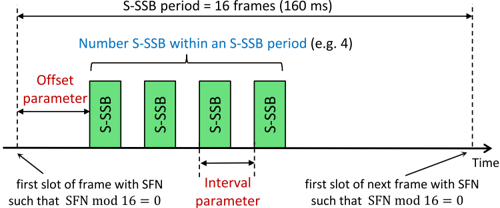
“…in-coverage or out-of-coverage [23] • The Direct Frame Number (DFN), assisting with timing reference alignment [14] • Other system information required for sidelink communication [14] This information is transmitted with fixed periodicity of 160ms, corresponding to a 16 frame periodicity [5].”
BEVCooper: Accurate and Communication-Efficient Bird’s-Eye-View Perception in Vehicular Networks
Hou, J., Yang, P., Dai, X., Liu, M., & Zhou, C. (2026) · IEEE Conference on Computer Communications (INFOCOM) · doi:10.1109/infocom59046.2026.11571666
“We consider two V2V sidelink throughput scenarios [32] in which the ego CAV is allocated bandwidth resources of 15–25 Mbps (low throughput) and 40–50 Mbps (high throughput), respectively.”
Ali, M., Kim, S. W., Khurshaid, T., & Nauman, A. (2026) · SSRN Electronic Journal · doi:10.2139/ssrn.7022002
Rui, Y., Zhuge, Y., Shi, J., Liao, P., Skruch, P., Xu, Y., Mei, P., Girgibo, N. W., & Karimi, H. R. (2026) · Journal of Artificial Intelligence and Soft Computing Research · doi:10.2478/jaiscr-2026-0018
“Complementing this, garcia et al. [100] presented a detailed tutorial on 5G NR V2X, covering 3GPP Release 16 standards with discussions on physical layer design, resource allocation, quality-of-service management, and coexistence with LTE V2X.”
How does penetration rate of intelligent eco-driving vehicles affect traffic flow?
Li, M., Wan, X., Wu, J., Jin, L., Bai, Y., Feng, X., Chen, C., & Yan, M. (2026) · Transportation Research Part C Emerging Technologies · doi:10.1016/j.trc.2026.105827
AoI Optimization in 5G NR-V2X Sidelink through Propagation-Aware Dynamic Congestion Control
Iwaki, R., Rolich, A., Nakazato, J., Yildiz, M., Tsukada, M., & Baiocchi, A. (2026) · IEEE International Conference on Pervasive Computing and Communications Workshops (PerCom Workshops) · doi:10.1109/percomworkshops68308.2026.11585202 · Cited by 1
“Beyond basic safety, 5G NR-V2X is designed to support advanced cooperative applications such as cooperative awareness, collective perception, and cooperative maneuvering [6].”
Research on Autonomous Vehicle Merging Control Strategy Based on Hierarchical DDPG-MPC
Li, G., Hui, P., Xueyu, W., Jiangtao, M., Wang, T. C., & Hao, M. (2026) · International Conference on Robotics, Automation and Intelligent Transportation Systems (RAITS) · doi:10.1109/raits68656.2026.11580225
Wang, W., Sun, Y., He, Y., Chen, H., Chen, Z., Xu, X. X., Ma, N., & Cui, S. R. (2026) · IEEE International Symposium on Personal, Indoor and Mobile Radio Communications (PIMRC) · doi:10.1109/pimrc69400.2026.11711568
“The proposed LM-SCIP runs entirely on RSU-A’s edge compute and fuses (i) local visual stream with (ii) a quality-varying external radar stream that RSU-B transmits to RSU-A over an RSU-to-RSU V2X sidelink [16].”
Yang, F., Zhao, Y., Wang, Y., Hu, J., & Nie, Z. (2026) · IEEE Transactions on Vehicular Technology · doi:10.1109/tvt.2026.3710182
“I N RECENT years, the application of cellular communication technologies, represented by 4G long-term evolution (LTE) and 5G new radio (NR), has been expanding in the automotive sector at an unprecedented rate, bringing revolutionary changes to the entire transportation ecosystem [1].”
Conflict Resolution-based Resource Allocation for Integrated Sensing and Communication in C-V2X
Shah, S. N. H., Martín‐Sacristán, D., Khan, A. U., Schneider, C., & Robert, J. (2025) · IEEE Globecom Workshops (GC Wkshps) · doi:10.1109/gcwkshps68340.2025.11591001
“For data transmission, a vehicle V x reserves contiguous TF resource set Ω c via the 3GPP-based Semi-Persistent Scheduling (SPS) scheme [10], which balances signaling overhead and utilization for periodic traffic.”
Kota, S., Pudi, D., Babu, P. S., Kumar, L., Bhashitha, D. S., & Haima, M. (2026) · IEEE Access · doi:10.1109/access.2026.3710837
Delay and risk estimation for wireless links with service interruptions
Pei, Z., Feng, L., Liu, Z., Qi, S., & Su, M. (2026) · Computer Networks · doi:10.1016/j.comnet.2026.112534
Metadata
- Authors
- Garcia, M. H. C., Molina-Galan, A., Boban, M., Gozalvez, J., Coll-Perales, B., Şahin, T., & Kousaridas, A.
- Affiliations
- Munich Research Center, Huawei Technologies Duesseldorf GmbH, Munich, Germany
- Universitat de Miguel Hernández d'Elx (ES)
- Huawei German Research Center (DE)
- UWICORE Laboratory, Universidad Miguel Hernandez de Elche, Elche, Spain
- ORCID
- Venue
- IEEE Communications Surveys & Tutorials
- Published
- 2021
- Volume
- 23
- Issue
- 3
- Pages
- 1972-2026
- ISSN
- 1553-877X (ISSN-L)
- 2373-745X
- OpenAlex
- W3126365018
- Semantic Scholar
- 356f84acfb52e20722e9306d8919aabef7e1d18f
- Cited by
- 975
- References
- 35
- Citations by year
- 2026: 133 · 2025: 196 · 2024: 223 · 2023: 239 · 2022: 141 · 2021: 43
- FWCI
- 47.50
- Type
- journal article
- Language
- en
- Open access
- hybrid
- doi.org
- Locations
- IEEE Communications Surveys & Tutorials (publishedVersion, cc-by)
- arXiv (Cornell University) (submittedVersion)
- arXiv (Cornell University) (cc-by)
- Funders
- UWICORE Laboratory, Universidad Miguel Hernandez de Elche
- Ministerio de Ciencia e Innovación (MCI), AEI, and FEDER funds through the Project (TEC2017-88612-R)
- Ministerio de Universidades (FPU18/00691, IJC2018-036862-I)
- Topics
- Physical Sciences › Engineering › Electrical and Electronic Engineering › Vehicular Ad Hoc Networks (VANETs)
- Physical Sciences › Engineering › Control and Systems Engineering › Traffic control and management
- Physical Sciences › Engineering › Media Technology › Telecommunications and Broadcasting Technologies
- Keywords
- 5G NR, vehicle-to-everything communication, 3GPP Release 16, sidelink, connected and automated driving, resource allocation, quality of service management, vehicle-to-network communication, physical layer, mobility management, system architecture, simulation methods
About these checks
Registry, retraction, Cites and statistics results are computed, not judged, with one exception: a printed reference that no index lists is read once by a model before it counts as a citation error. Claims are extracted by a model and kept only when their quote appears verbatim in the text; each cited source is then checked, with a model’s help, for whether it says what the claim relies on. Those verdicts can be wrong — read the claim’s quote and the cited source before relying on one.
Statistics and arithmetic are recomputed, not judged.
Confidence bands are shown only for fields calibrated on our annotated test set. None is calibrated yet, so no band is shown.
What counts as a claim ›How we measure confidence ›How we check this ›
Are you an author, or do you see a problem with this page? Request a review
Data sources
Bibliographic data: Semantic Scholar, OpenAlex, Crossref.
Contains information from the Semantic Scholar Academic Graph Datasets, made available under the ODC Attribution License (ODC-BY 1.0).
Semantic Scholar’s data is described in: Kinney, R., et al. (2023). The Semantic Scholar Open Data Platform. arXiv:2301.10140.
