

A Tutorial on 5G NR V2X Communications
Open accessThe DOI matches its Crossref record; 34 of the 35 references it cites were found in a registry or an index.
Abstract
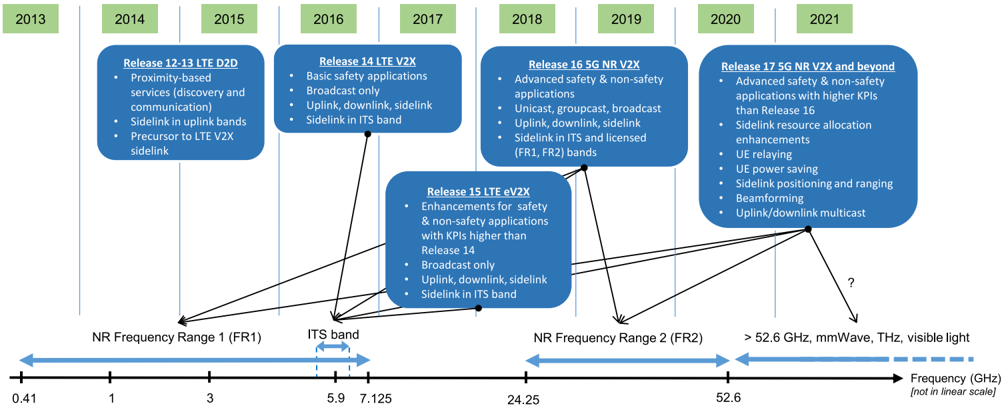
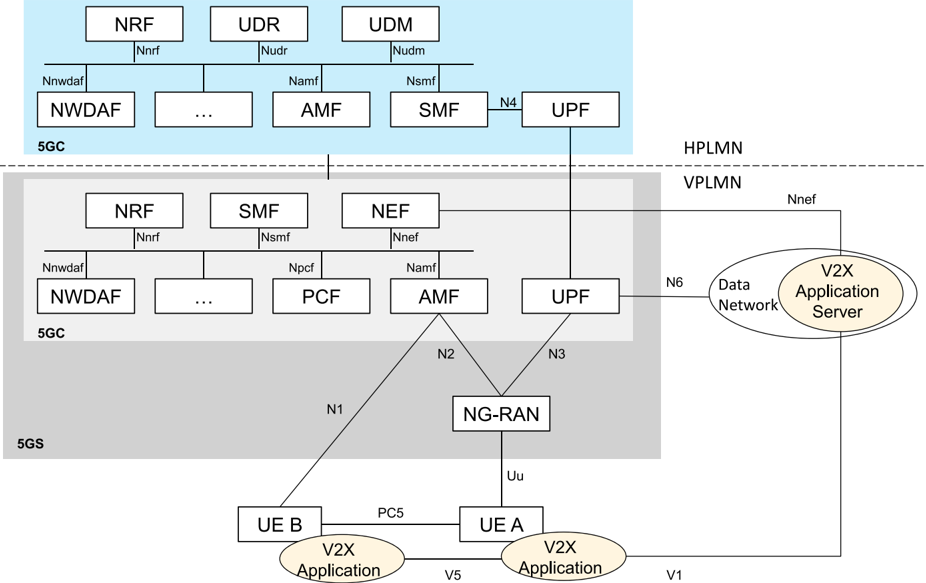
The Third Generation Partnership Project (3GPP) has recently published its Release 16 that includes the first Vehicle-to-Everything (V2X) standard based on the 5G New Radio (NR) air interface. 5G NR V2X introduces advanced functionalities on top of the 5G NR air interface to support connected and automated driving use cases with stringent requirements. This article presents an in-depth tutorial of the 3GPP Release 16 5G NR V2X standard for V2X communications, with a particular focus on the sidelink, since it is the most significant part of 5G NR V2X. The main part of the paper is an in-depth treatment of the key aspects of 5G NR V2X: the physical layer, the resource allocation, the quality of service management, the enhancements introduced to the Uu interface and the mobility management for V2N (Vehicle to Network) communications, as well as the co-existence mechanisms between 5G NR V2X and LTE V2X. We also review the use cases, the system architecture, and describe the evaluation methodology and simulation assumptions for 5G NR V2X. Finally, we provide an outlook on possible 5G NR V2X enhancements, including those identified within Release 17.
Overview
The claims and statistics of this paper haven’t been checked yet.
Free: it reads the open-access text and checks the first 5 claims that cite a source we can check. Create a free account to check every claim.
Integrity signals
Registry
Cites
Statistics
Figures













Verification
Claims the paper makes
The claims and statistics of this paper haven’t been checked yet.
Free: it reads the open-access text and checks the first 5 claims that cite a source we can check. Create a free account to check every claim.
Claims other papers make about this one
Each is checked against this paper’s own text: does it say what the citing paper says it does?
The source backs part of the claim, not all of it — or backs it for a different population, condition or comparison.
In the citing paper
“Advanced C-V2X applications demand transmission latencies of a few milliseconds and 99.999% reliability [2].”
From Explainable AI-Aided Feature Selection and Model Reduction for DRL-Based V2X Resource Allocation (2025) · cites this paper as [2]
Experimental — accuracy not yet measuredThe source backs part of the claim, not all of it — or backs it for a different population, condition or comparison.
In the citing paper
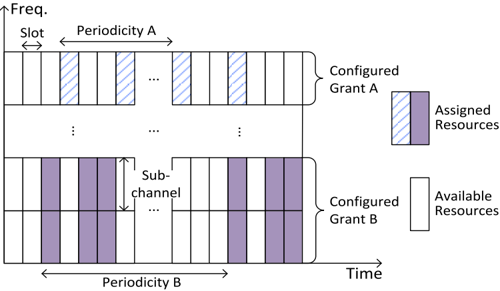
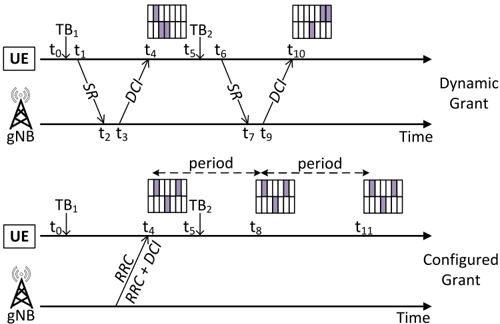
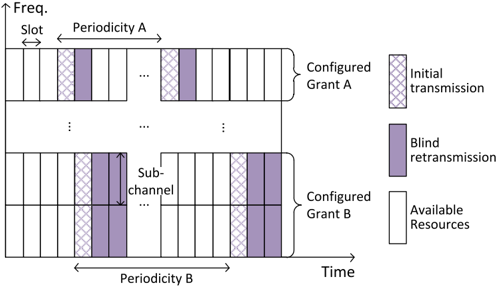
“Configured Grant Type 2 is used for periodic services with a scheduling timeline similar to dynamic scheduling in 5G-V2X sidelink communication.”
From Towards 6G V2X Sidelink: Survey of Resource Allocation—Mathematical Formulations, Challenges, and Proposed Solutions (2024) · cites this paper as [18]
Experimental — accuracy not yet measuredThe source backs part of the claim, not all of it — or backs it for a different population, condition or comparison.
In the citing paper
“To address the challenges posed by such scenarios, 5G-V2X introduces resource re-evaluation and pre-emption mechanisms in Mode B resource allocation [91], [18].”
From Towards 6G V2X Sidelink: Survey of Resource Allocation—Mathematical Formulations, Challenges, and Proposed Solutions (2024) · cites this paper as [18]
Experimental — accuracy not yet measuredThe cited source says what the claim attributes to it.
In the citing paper
“Configured Grant Type 1 is mainly used for periodic traffic in 5G-V2X sidelink communication.”
From Towards 6G V2X Sidelink: Survey of Resource Allocation—Mathematical Formulations, Challenges, and Proposed Solutions (2024) · cites this paper as [18]
The cited source says what the claim attributes to it.
In the citing paper
“Currently, the NR-V2X sidelink has been standardized by 3GPP to support low-latency high-reliability direct communication.”
From Reinforcement Learning-Based Resource Allocation Scheme of NR-V2X Sidelink for Joint Communication and Sensing (2025) · cites this paper as [4]
Self-check
Percentages, sums and reported differences re-computed from the paper’s own numbers.
The self-check needs the paper’s full text.
Citations
Cites
Dedicated Short-Range Communications (DSRC) Standards in the United States
Kenney, J. B. (2011) · Proceedings of the IEEE · doi:10.1109/jproc.2011.2132790 · Cited by 2,366
Polyphase codes with good periodic correlation properties (Corresp.)
Chu, D. (1972) · IEEE Transactions on Information Theory · doi:10.1109/tit.1972.1054840 · Cited by 1,730
Polyphase codes with good periodic correlation properties
Chu, D. C. (1972) · IEEE Transactions on Information Theory · Cited by 999
Vehicle-to-Everything (v2x) Services Supported by LTE-Based Systems and 5G
Chen, S., Hu, J., Shi, Y., Peng, Y., Fang, J., Zhao, R., & Zhao, L. (2017) · IEEE Communications Standards Magazine · doi:10.1109/mcomstd.2017.1700015 · Cited by 921
5G NR: the Next Generation Wireless Access Technology
(2018) · Elsevier eBooks · doi:10.1016/c2017-0-01347-2 · Cited by 876
An overview of 3GPP device-to-device proximity services
Lin, X., Andrews, J., Ghosh, A., & Ratasuk, R. (2014) · IEEE Communications Magazine · doi:10.1109/mcom.2014.6807945 · Cited by 798
Molina-Masegosa, R., & Gozalvez, J. (2017) · IEEE Vehicular Technology Magazine · doi:10.1109/mvt.2017.2752798 · Cited by 755
Taxonomy and Definitions for Terms Related to On-Road Motor Vehicle Automated Driving Systems
On-Road Automated Driving (ORAD) Committee (2017) · doi:10.4271/j3016_201401 · Cited by 675
Generalized chirp-like polyphase sequences with optimum correlation properties
Popovic, B. M. (1992) · IEEE Transactions on Information Theory · doi:10.1109/18.144727 · Cited by 419
Impact of Vehicles as Obstacles in Vehicular Ad Hoc Networks
Boban, M., Vinhoza, T. T. V., Ferreira, M., Barros, J., & Tonguz, O. K. (2011) · IEEE Journal on Selected Areas in Communications · doi:10.1109/jsac.2011.110103 · Cited by 351
Self-citation
Research works printed but not linked: 48
- 33. SA WG2, Study on Architectural Enhancements for 5G Multicast- Broadcast Services, document SP-190625, TSG SA Meeting #85, 3GPP, Sophia Antipolis, France, Sep. 2019.
- 101. 3GPP MCC Support, Final Report of 3GPP TSG RAN WG1 #AH_1901 V1.0.0, document 3GPP TSG RAN WG1 Meeting #96, 3GPP, Taipei, Taiwan, Mar. 2019.
- 100. WID on 5G V2X With NR Sidelink, document RP-200129 3GPP TSG RAN Meeting #87e, LG Electron., Seoul, South Korea, Mar. 2020.
- 50. J. Schlienz and A. Roessler, "Device to device communication in LTE," Rhode & Schwarz, Munich, Germany, White Paper, 2015.
- 57. Huawei, Sidelink Physical Layer Structure for NR V2X, document R1-1910054 3GPP TSG RAN WG1 Meeting #98bis, HiSilicon, Chongqing, China, Oct. 2019.
- 56. 3GPP MCC Support, Final Report of 3GPP TSG RAN WG1 #98bis V2.0.0, document TSG RAN WG1 Meeting #98bis, 3GPP, Chongqing, China, Oct. 2019.
- 55. 3GPP MCC Support, Draft Report of 3GPP TSG RAN WG1 #99 V0.1.0, document TSG RAN WG1 Meeting #99, 3GPP, Reno, NV, USA, Nov. 2019.
- 54. 3GPP MCC Support, Final Report of 3GPP TSG RAN WG1 #100bis- e V1.0.0, document TSG RAN WG1 Meeting #101-e, 3GPP, Sophia Antipolis, France, Jun. 2020.
- 40. J. Campos, Understanding the 5G NR Physical Layer, Keysight Technol., Santa Rosa, CA, USA, Nov. 2017.
- 5. F. Perry, "Overview of DSRC messages and performance require- ments," in Proc. UFTI DSRC Other Commun. Options Transp. Connectivity Workshop, 2017.
- 8. 3GPP, New SI Proposal: Study on Evaluation Methodology of New V2X Use Cases for LTE and NR, document RP-170837 TSG RAN Meeting #75, 3GPP, Dubrovnik, Croatia, Mar. 2017.
- 49. 3GPP MCC Support, Final Report of 3GPP TSG RAN WG1 #100-e V2.0.0, document TSG RAN WG1 Meeting #100bis-e, 3GPP, Sophia Antipolis, France, Apr. 2020.
- 9. New SID: Study on NR V2X, document RP-181480, 3GPP TSG RAN Meeting #80, 3GPP, Sophia Antipolis, France, Jun. 2018.
- 46. Final Report of 3GPP TSG RAN WG1 #101-e, 3GPP, Sophia Antipolis, France, Aug. 2020.
- 48. 3GPP MCC Support, Final Report of 3GPP TSG RAN WG1 #AH_1901 V1.0.0, document TSG RAN WG1 Meeting #96, 3GPP, Taipei, Taiwan, Mar. 2019.
- 47. 3GPP MCC Support, Final Report of 3GPP TSG RAN WG1 #95 v1.0.0, document TSG RAN WG1 Meeting #95, 3GPP, Sophia Antipolis, France, Nov. 2019.
- 44. Summary of RAN1 Agreements/Working Assumptions in WI 5G V2X With NR Sidelink, document R1-1913601, 3GPP TSG RAN WG1 Meeting #99, LG Electron., Reno, NV, USA, Nov. 2019.
- 127. A. E. Fernandez et al., "5GCAR scenarios, use cases, requirements and KPIs," in Proc. 5th Gener. Commun. Autom. Res. Innov., 2017, pp. 37-39.
- 126. New Work Item on NR Support of Multicast and Broadcast Services, document RP-193248 3GPP TSG RAN Meeting #86, Huawei, Sitges, Spain, Dec. 2019.
- 125. Revised SID: Study on NR Sidelink Relay, document RP-201474 3GPP TSG RAN Meeting #89e, 3GPP, Sophia Antipolis, France, Sep. 2020.
- 72. Huawei, Remaining Details of Physical Layer Procedures for Sidelink, document R1-2001555 3GPP TSG RAN WG1 Meeting #100e-bis, HiSilicon, Singapore, Apr. 2020.
- 77. Discussion on V2X Physical Layer Procedure, document R1-1906558 3GPP TSG RAN WG1 Meeting #97, MediaTek, Inc., Reno, NV, USA, May 2019.
- 64. Huawei, Remaining Details of Sidelink Synchronization Mechanisms, document R1-2001553, TSG RAN WG1 Meeting #100bis-e, 3GPP, Sophia Antipolis, France, Apr. 2020.
- 65. Sidelink Synchronization Mechanism, document R1-1911421 3GPP TSG RAN WG1 Meeting #98bis, VIVO, Dongguan, China, Oct. 2019.
- 67. Huawei, Sidelink Discovery for NR V2X, document R1-1903068 3GPP TSG RAN WG1 Meeting #96, HiSilicon, Athens, Greece, Mar. 2019.
- 68. Final Report of 3GPP TSG RAN WG1 #96 V2.0.0, document 3GPP TSG RAN WG1 Meeting #96, 3GPP MCC Support, Athens, Greece, Mar. 2019.
- 2. C2C-CC Manifesto, Car 2 Car Commun. Consortium, Braunschweig, Germany, 2007.
- 1. CAMP Vehicle Safety Communications Consortium, "Vehicle safety communications project: Task 3 final report: Identify intelligent vehicle safety applications enabled by DSRC," Nat. Highway Traffic Safety Admin., U.S. Dept. Transp., Washington, DC, USA, 2005.
- 96. Status Report to TSG (WI NR Mobility Enhancements), document RP- 192278 3GPP TSG RAN Meeting #85, Intel Corporat., Sitges, Spain, Sep. 2019.
- 94. Huawei, NR Uu and LTE Uu Support and Enhancement for Advanced V2X Use Cases, document R1-1812212 3GPP TSG RAN WG1 Meeting #95, HiSilicon, Spokane, WA, USA, Nov. 2018.
- 92. Analysis of NR Uu Support for Advanced V2X Use Cases, document R1-1810777 3GPP TSG RAN WG1 Meeting #94bis, Intel Corporat., Chengdu, China, Oct. 2018.
- 102. Report of 3GPP TSG RAN WG2 #105bis, document 3GPP TSG RAN WG2 Meeting #105bis, ETSI MCC, Xi'an, China, Apr. 2019.
- 111. Huawei, Sidelink Synchronization Mechanisms for NR V2X, document R1-1911885 3GPP TSG RAN WG1 Meeting #99, HiSilicon, Reno, NV, USA, Nov. 2019.
- 112. Study on Scenarios and Requirements of In-Coverage, Partial Coverage, and Out-of-Coverage Positioning Use Cases, document RP- 201384 3GPP TSG RAN Meeting #88e, LG Electron., Seoul, South Korea, Jul. 2020.
- 110. New WID on NR Sidelink Enhancement, document RP-193257 3GPP TSG RAN Meeting #86, LG Electron., Sitges, Spain, Dec. 2019.
- 98. Samsung Electronic, Introduction of T312 in NR, document R2- 1911445 3GPP TSG RAN WG2 Meeting #107, Qualcomm Inc., Prague, CZ, USA, Aug. 2019.
- 95. Status Report to TSG (WI NR Mobility Enhancements), document RP- 192533 3GPP TSG RAN Meeting #86, Intel Corporat., Sitges, Spain, Dec. 2019.
- 10. LG Electronics, New WID on 5G V2X With NR Sidelink, document RP-190766 3GPP TSG RAN Meeting #83, Huawei, Shenzhen, China, Mar. 2019.
- 13. 5GAA. White Paper C-V2X Use Cases: Methodology, Examples and Service Level Requirements. Accessed: Jun. 2019. [Online]. Available: https://5gaa.org/wp-content/uploads/2019/07/5GAA_191906 _WP_CV2X_UCs_v1.pdf
- 117. 117Summary of Email Discussion on Rel-17 Sidelink Enhancement, docu- ment RP-192745 3GPP TSG RAN Meeting #86, LG Electron., Sitges, Spain, Dec. 2019.
- 119. 'Miscellaneous Issues on Resource Allocation, 3GPP R1-1908914 TSG RAN WG1 Meeting #98, Ericsson, Prague, CZ, USA, Aug. 2019.
- 116. Discussion on Resource Allocation for Mode 2, document R1-1912588 3GPP TSG RAN WG1 Meeting #99, LG Electron., Reno, NV, USA, Nov. 2019.
- 120. Dynamic Sidelink Bi-Mode Transmission Under GNB Configuration, document R1-1912080 3GPP TSG RAN WG1 Meeting #99, Fujitsu, Reno, NV, USA, May 2019.
- 121. Resource Allocation for Mode-2 Transmissions, document R1-1910534 3GPP TSG RAN WG1 Meeting #98bis, Ericsson, Chongqing, China, Oct. 2019.
- 122. Geographic Information Based Dynamic TFRP Resource Selection Procedure in NR-V2X, document R1-1905375 3GPP TSG RAN WG1 Meeting #96bis, Fujitsu, Xian, China, Apr. 2019.
- 123. Huawei, Sidelink Resource Allocation Mode 2 for NR V2X, document R1-1911884 3GPP TSG RAN WG1 Meeting #99, HiSilicon, Reno, NV, USA, Nov. 2019.
- 2020, Summary of [108#50][V2X] Feature List and UE Caps
- 87. Huawei, Running CR to TS 38.331 for 5G V2X With NR Sidelink, doc- ument R2-1915983 3GPP TSG RAN WG2 Meeting #108, HiSilicon, Reno, NV, USA, Nov. 2019.
Cited by
Items 601–700 of 1,000
A General and Energy-Efficient Message Delivery Scheme With M3RSMA for Complex Intersections
Shi, Z., Sun, Y., & Liu, J. (2025) · IEEE Transactions on Intelligent Transportation Systems · doi:10.1109/tits.2025.3643819 · Cited by 2
“5) Open-Loop Power Control (OLPC)-Based RCMD Scheme: In this scheme, the transmit power of each message group is determined based on the OLPC strategy outlined in [40] and [41], which has been widely adopted in V2X systems.”
Spanos, T., Papageorgiou, N., & Paliouras, V. (2025) · IEEE Communications Letters · doi:10.1109/lcomm.2025.3590481 · Cited by 2
“For example, sidelink positioning [3], introduced in Release 17, enables direct device-to-device localization, reducing dependency on network infrastructure, and improving accuracy in GPS-denied environments [4].”
Liu, Y., Liu, Z., & Yao, Y. K. (2026) · Applied Sciences · doi:10.3390/app16020943 · Cited by 2
Zhang, J., Yuan, Y., Zhang, H., Lv, S., Xu, X., & Quek, T. Q. S. (2026) · IEEE Transactions on Vehicular Technology · doi:10.1109/tvt.2026.3656645 · Cited by 2
“(cid:2) It is worth mentioning that bandwidth resource limitation in communication networks is a long-standing issue [7].”
Efficient adaptive random network coding for video content dissemination in NR-V2X networks
Ma, J., Shang, B., Yu, Y., & Fan, P. (2026) · Science China Information Sciences · doi:10.1007/s11432-025-4672-1 · Cited by 2
Extremely Large-Aperture Arrays for V2X Communication, Localization and Sensing
Decarli, N., Giovannetti, C., Guidi, F., Guerra, A., Zanella, A., & Masini, B. M. (2026) · Sensors · doi:10.3390/s26051563 · Cited by 2
Chang, W.-T., & Chang, B. (2026) · Computer Modeling in Engineering & Sciences · doi:10.32604/cmes.2026.077118 · Cited by 2
Adaptive Subcarrier-Index Modulation for OFDM Transmissions
Zheng, K., & Ma, X. (2026) · IEEE Transactions on Wireless Communications · doi:10.1109/twc.2026.3688940 · Cited by 2
“Fifth-generation (5G) and beyond wireless networks are expected to provide higher data rates and ultra-low latency [1], [2], [3], [4].”
Demircioğlu, E. (2026) · Electronics · doi:10.3390/electronics15122668 · Cited by 2
One-bit signaling-based interference management for MIMO V2V sidelink
Nam, Y., & So, J. (2022) · ICT Express · doi:10.1016/j.icte.2022.04.004 · Cited by 2
A Deep Learning-Based Transmission Scheme Using Reduced Feedback for D2D Networks
Ban, T.-W. (2022) · IEEE Access · doi:10.1109/access.2022.3208572 · Cited by 2
Zhang, Q., Yu, B., & Feng, Z. (2022) · ACM MobiCom Workshop on Integrated Sensing and Communications Systems (ISACom) · doi:10.1145/3556562.3558570 · Cited by 2
“Fifth-generation (5G) communication technologies are considered to meet the communication requirements of autonomous vehicles with its characteristics of high data rate and low-latency [6].”
BackgroundAnalysis of spatial scheduling in downlink vehicular communications: Sub-6 GHz vs mmWave
Haghshenas, M., Linsalata, F., Barbieri, L., Brambilla, M., Nicoli, M., & Magarini, M. (2022) · ITU Journal on Future and Evolving Technologies · doi:10.52953/gewx7355 · Cited by 3
“Rooted in 5G [9, 10] and following the related evolution towards 6G [11, 12, 13], they are conceived to support direct interactions among vehicles and road infrastructures via Vehicle‐to‐Vehicle (V2V) and Vehicle‐to‐Infrastructure (V2I) communications [14, 15], while enabling a wide range of vehicular use cases [16, 1…”
BackgroundJo, J.-H., & Kim, D. K. (2022) · Asia-Pacific Conference on Communications (APCC) · doi:10.1109/apcc55198.2022.9943742 · Cited by 2
“Furthermore, the orientation of vehicles helps an efficient prediction of vehicle’s maneuvering to support autonomous driving vehicles to make quicker, safer by the planned movements of surrounding vehicles [5].”
BackgroundAnalytical Description of Access Probability and RRA strategy for UAV-Aided Vehicular Applications
Conserva, F., & Verdone, R. (2023) · ACM Workshop on Micro Aerial Vehicle Networks, Systems, and Applications (DroNet) · doi:10.1145/3597060.3597241 · Cited by 2
“Depending on the degree of the vehicle’s automation, the GUEs’ throughput demand𝑈 ∗ may vary, spanning over a range between 1 and 1000 Mbps [6].”
BackgroundDeep Learning-Based Adaptive Beamforming for Interference Cancellation in V2I Scenarios
Bhadauria, P., Kumar, R. K., & Sharma, S. (2023) · Traitement du signal · doi:10.18280/ts.400316 · Cited by 2
“The parameters used in this study follow [28, 29] and pertain to the scenario of roadside units (RSUs) with a height of approximately 25m, operating at 700MHz bandwidth, and consisting of 64 antenna elements with a noise level of 5dB.”
MethodJo, J.-H., Shim, J.-N., Chae, C., Kim, D. K., & Heath, R. W. (2023) · IEEE Transactions on Wireless Communications · doi:10.1109/twc.2023.3303462 · Cited by 2
“As the demand for higher data rates continues to rise, the authors of [21] have explored a 3GPP use case involving extended sensors that necessitates data exchange in the range from 10 Mbps to as high as 1 Gbps.”
BackgroundZhang, W., Zhou, T. Y., & Liu, L. (2022) · International Conference on Signal Processing Systems (ICSPS) · doi:10.1109/icsps58776.2022.00122 · Cited by 2
“Recently, the V2X communication technology has been evolving from long-term evolution-V2X (LTE-V2X) to 5G new radio-V2X (5G-V2X/NR-V2X) [1-3] in order to support higher automation levels.”
BackgroundDual-Band Antenna-in-Package (AiP) Front-End Module for 5G mmWave Mobile Device Applications
Kim, G., Kim, D., Kim, S., Lim, K., Yang, C., & You, C. (2023) · Digest - IEEE Antennas and Propagation Society. International Symposium · doi:10.1109/usnc-ursi52151.2023.10238193 · Cited by 2
“Gyoungdeuk Kim((1)), Dohyun Kim((1)), Sangkil Kim † ((1)), Kyungho Lim((2)), Chanwoo Yang((2)) and Chisang You ‡(2) ((1))Dept.”
BackgroundReliable NR-V2X Broadcast Transmission by Relay
Tang, S., & Obana, S. (2023) · IEEE Vehicular Technology Conference · doi:10.1109/vtc2023-fall60731.2023.10333390 · Cited by 2
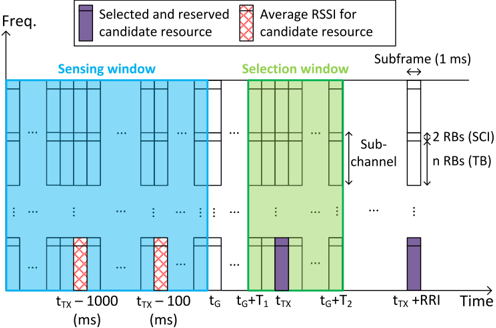
“If the number of candidate resources is insufficient, the threshold is increased by 3dB and the previous procedure is repeated [6].”
BackgroundAerial Reconfigurable Intelligent Surface for Vehicle-to-Vehicle Communication
Hashim, N., Leow, C. Y., Foh, C. H., Rahim, S. K. A., & Jayakumari, J. (2023) · IEEE Malaysia International Conference on Communications (MICC) · doi:10.1109/micc59384.2023.10419824 · Cited by 2
RAFDD: Relay-Assisted Fast Data Dissemination in 5G-V2X Networks
Dey, M. R., Rao, V. R., & Patra, M. (2024) · International Conference on Communication Systems & Networks (COMSNETS) · doi:10.1109/comsnets59351.2024.10427383 · Cited by 2
“It incorporates communications such as Vehicle-to-Vehicle (V2V), Vehicle-to-Infrastructure (V2I), Vehicle-to-Network (V2N), Vehicle-to-Pedestrian (V2P), Vehicle-to-Device (V2D), Vehicle-to-Grid (V2G) etc. [1], [2].”
Predicting Downlink Retransmissions in 5G Networks Using Deep Learning
Bouk, S. H., Omoniwa, B., & Shetty, S. S. (2024) · IEEE Consumer Communications and Networking Conference · doi:10.1109/ccnc51664.2024.10454769 · Cited by 2
“The fifth-generation (5G) wireless network technology is expected to revolutionize the manner in which we communicate and interact with the world around us [1], [2].”
BackgroundArtificial Intelligence and Machine Learning in 6G
Mishra, S., Shehzad, M. K., Chen, C. S., & Rose, L. (2023) · Springer eBooks · doi:10.1007/978-3-031-42567-7_5 · Cited by 2
MiTM Attack Detection Scheme Using Monitoring Information in V2X Communication
Chung, W.-J., Ahn, J., & Cho, T. (2023) · IEEE International Conference on Computer and Communications (ICCC) · doi:10.1109/iccc59590.2023.10507270 · Cited by 3
“V2X communication is mainly used for vehicle-to-vehicle (V2V) communication, wherein information is exchanged between autonomous vehicles, and vehicle-to-infrastructure (V2I) communication, wherein information is received from road infrastructure, such as traffic lights and accident information [6].”
BackgroundKim, B., & Gangadharan, D. (2024) · IEEE Access · doi:10.1109/access.2024.3419156 · Cited by 2
“Such an end-to-end latency ( i.e., the system-level QoS requirement) is affected by both the compute load and the network performance ( e.g., network bandwidth, latency, packet drop rates), and we explain how our work can be integrated with the network research domain [44], [46].”
BackgroundSecurity-Reliability Tradeoff for Hybrid Automatic Repeat Request-Assisted NR V2X Communication
Fu, Q., Liu, J., Wang, J., & Mat, J. (2024) · IEEE Wireless Communications and Networking Conference · doi:10.1109/wcnc57260.2024.10570983 · Cited by 2
“It is specified by the Third Generation Partnership Project (3GPP) Release 16 [1].”
BackgroundMethodInfluentialDual-layer Deep Reinforcement Learning for Joint Beam Management and Resource Allocation
Yang, X., He, X., Xu, C. G., Zeng, Y., Yang, Z., & Luo, T. (2024) · IEEE Wireless Communications and Networking Conference · doi:10.1109/wcnc57260.2024.10571034 · Cited by 2
“Another crucial procedure in distributed mmWave communication is resource allocation, which aims to optimize the spectrum efficiency for V2X communications [5].”
BackgroundMa, G., Pagilla, P. R., & Darbha, S. (2024) · IEEE Intelligent Vehicles Symposium · doi:10.1109/iv55156.2024.10588520 · Cited by 2
“Utilization of advanced communication technologies, such as Dedicated Short Range Communications (DSRC) [4], Vehicle-to-Vehicle (V2V) communication [5], or more inclusive Vehicle-to-Everything (V2X) communication [6], can be a strong enabler for CAVs to achieve such benefits.”
BackgroundSideSeeker: Contention-Based Distributed Relay Finding for Sidelink Mesh Networks
Wang, T., Wang, X., & Lin, Y. (2024) · IEEE Wireless Communications Letters · doi:10.1109/lwc.2024.3447057 · Cited by 2
“Such an inter-node coordination mechanism in Mode 2 is elaborated in [1], [3].”
BackgroundInfluentialWang, G. X., Lin, T., Dong, X., Wang, L., Leng, Q., & Shin, S.-Y. (2024) · Applied Sciences · doi:10.3390/app14209445 · Cited by 2
Kautz, M., Hammi, B., & García-Alfaro, J. (2024) · IEEE International Symposium on Network Computing and Applications (NCA) · doi:10.1109/nca61908.2024.00021 · Cited by 2
“Examples of such applications include Vehicle-to-Network (V2N) communications [6] and real-time high-definition video streaming for autonomous vehicles.”
SecHARQ: A Secure Scheme for HARQ-Assisted NR V2X Communications
Fu, Q., Liu, J., Wang, J., & Li, J. (2024) · IEEE Transactions on Network and Service Management · doi:10.1109/tnsm.2024.3506754 · Cited by 2
“For chase combining HARQ under the given maximum transmission rounds L , two options can be selected for NR V2X in the Feedback phase [2].”
InfluentialSmart&Safe Mobility Lab: Mixed Reality Environment with HIL, CV2X for VRU Detection
Capdevila, M. G., Vitorino, N., Poledna, Y., Malena, B., Drechsler, M. F., Albuquerque, G. G., Furlan, T. A. S., & Netto, R. S. (2024) · IEEE International Conference on Cloud Networking · doi:10.1109/cloudnet62863.2024.10815791 · Cited by 2
Enabling Ultra-Dense, Open-RAN, Vehicular Networks with Non-Linear MIMO Processing
Katsaros, G. N., & Nikitopoulos, K. (2024) · IEEE International Symposium on Personal, Indoor and Mobile Radio Communications (PIMRC) · doi:10.1109/pimrc59610.2024.10817206 · Cited by 2
“To investigate how the MPNL’s antenna gains can translate into practical connectivity gains offered by non-linear processing, we’ve examined five indicative V2I/V2N use cases, each presenting a different uplink data rate requirement [1], [24], [25].”
Comparison of Two Population Means in Path Loss Model Planning on5G Networks
Ubaidillah, A., Ulum, M., Sukri, H., Laksono, D. T., Alfita, R., & Sidik, R. F. (2024) · IEEE Information Technology International Seminar (ITIS) · doi:10.1109/itis64716.2024.10845284 · Cited by 2
Outage Analysis of Two-Way Full-Duplex RIS-Assisted V2V Networks with User Selection
Maurya, S., Gour, R., Yadav, S., Singh, S., & Bansal, M. (2024) · IEEE Conference on Information and Communication Technology (CICT) · doi:10.1109/cict64037.2024.10899451 · Cited by 2
“…meet the requirements of next-generation Internet of Vehicles (IoV) [2], where numerous vehicles connect to sense, monitor, and generate huge amounts of data for different intelligent transportation systems (ITS) applications, including safely exchanging of information and autonomous driving [3].”
Optimizing Throughput for NR V2X Message Delivery with Congestion Control
Fu, Q., Liu, J., Wang, J., & Kong, J. (2024) · Globecom · doi:10.1109/globecom52923.2024.10901153 · Cited by 2
“In Mode 2, with the help of the Semi-Persistent Scheduling (SPS), vehicles can autonomously select resources from a resource pool with a total of N subchannels in each slot ( 1 ms in NR V2X under 15 kHz sub-carrier space) [1].”
Ma, G., Pagilla, P. R., & Darbha, S. (2024) · IEEE International Conference on Intelligent Transportation Systems (ITSC) · doi:10.1109/itsc58415.2024.10919658 · Cited by 2
“…Dedicated Short-Range Communications (DSRC) [4], Long Term Evolution (LTE) [5], V2V communication [6], the 5th generation communication system (5G) [7], communication and exchange of motion information, e.g. vehicle’s acceleration/deceleration, between vehicles are becoming more and more…”
ADRTrack: Real-Time Hazardous Material Truck Management via V2X Cooperative Messages
Italiano, L., Brambilla, M., Ponti, M., Borghetti, F., Megna, G., Franceschini, D., Liga, V., Carambia, B., Studer, L., & Nicoli, M. (2024) · IEEE International Conference on Vehicular Electronics and Safety (ICVES) · doi:10.1109/icves61986.2024.10927833 · Cited by 2
“Vehicular tracking can also be achieved by leveraging the cellular network infrastructure with 5G technology [9], [10] for improved cooperative awareness [11], [12].”
Edge Computing Empowered Video Content Delivery Strategy in the Internet of Vehicles
Feng, Z., Ye, J., & Feng, C. (2024) · IEEE International Conference on Communication Technology (ICCT) · doi:10.1109/icct62411.2024.10946502 · Cited by 2
“The popularity of in-vehicle touch screens and the rapid advancement of intelligent driving technology have driven the demand for mobile multimedia services in the Internet of Vehicles (IoV) [1].”
Ahmed, S., Khan, S., Munasinghe, K. S., & Hossain, M. F. (2025) · Journal of Network and Systems Management · doi:10.1007/s10922-025-09922-3 · Cited by 2
“TABLE II URBAN SCENARIO PHYSICAL PARAMETERS [43], [44]”
Analysis of a Persistent Multi-Channel Slotted ALOHA Protocol Without Acknowledgment
Zanella, A., Baiocchi, A., & Rolich, A. (2025) · 2012 International Conference on Computing, Networking and Communications (ICNC) · doi:10.1109/icnc64010.2025.10993746 · Cited by 2
“This mechanism is similar to that proposed, e.g., in the case of 5G-NR V2X sidelink Mode 2 multiple access [2], [3].”
Directional Antennas Using Ecofriendly Materials and 3D Printing
Wojtczak, E., Kalista, W., Leszkowska, L., Rzymowski, M., Nyka, K., & Kulas, Ł. (2025) · European Conference on Antennas and Propagation · doi:10.23919/eucap63536.2025.10999452 · Cited by 2
“Increasing the antenna gain by adding a lens is especially important for long-distance communication and, therefore, it is an important aspect in dependable V2X communication [5],[6], which aims to connect vehicles with road infrastructure, such as traffic lights or pedestrian crossings [7].”
Xu, S., Liu, R., Zhang, H., Han, Z., & Zhao, L. (2024) · International Conference on Communication and Information Processing (ICCIP) · doi:10.1145/3708657.3708691 · Cited by 2
Doing More With Less: Balancing Probing Costs and Task Offloading Efficiency At the Network Edge
Li, X., Zhang, S., Ma, T., Wang, Z., & Luo, H. (2025) · IEEE Transactions on Parallel and Distributed Systems · doi:10.1109/tpds.2025.3590368 · Cited by 2
“Given the dense nature of edge networks, where user devices may have hundreds or even thousands of neighbors [4], it is both intractable and unnecessary to frequently probe the status of all edge devices, as many low-capacity and distant devices are improper offloading targets.”
ISAC-STAP: Space-time Adaptive Processing for ISAC Systems
Lee, N., Park, H. W., Kim, H., Jung, K., & Kim, S. (2024) · IEEE Globecom Workshops (GC Wkshps) · doi:10.1109/gcwkshp64532.2024.11101537 · Cited by 2
“To enhance target sensing performance in mobile ISAC applications, such as simultaneous localization and mapping [17] and vehicle-to-everything (V2X) communication [18], this paper proposes an ISAC-STAP algorithm.”
Enhanced SPS Velocity-Adaptive Scheme: Access Fairness in 5G NR V2I Networks
Xu, X., Wu, Q., Fan, P., & Wang, K. (2025) · IEEE International Workshop on Radio Frequency and Antenna Technologies (iWRF&AT) · doi:10.1109/iwrfat65352.2025.11102889 · Cited by 5
“NR V2X supports two types of communication: mode-1 (centralized) and mode-2 (distributed) [1], [2].”
Effective PSCCH Searching for 5G-NR V2X Sidelink Communications
Magueta, R., Domingues, J. L. C. P., Silva, A., & Marques, P. (2021) · Electronics · doi:10.3390/electronics10222827 · Cited by 3
“In 5G-NR V2X, user equipment’s (UEs) are vehicles, Road Side Units (RSUs), or mobile devices that are carried by pedestrians [7], which brings us to four different types of V2X communications: Vehicle-to-Vehicle (V2V), Vehicle-to-Infrastructure (V2I), Vehicleto-Pedestrian (V2P), and Vehicle-to-Network (V2N) [8].”
BackgroundLi, Q., Charaf, A., Gresset, N., & Bonneville, H. (2021) · Lecture notes in computer science · doi:10.1007/978-3-030-92684-7_6 · Cited by 2
Mim, M. M., Karmokar, M., Imam, K. M. T., Chowdhury, M.-U.-S., & Kabir, D. (2022) · IEEE Global Conference for Advancement in Technology (GCAT) · doi:10.1109/gcat55367.2022.9972015 · Cited by 2
“Any base station may support a single-or dual-interface mobile device [4]–[6].”
BackgroundIOT devices and 5G network security option from generation aspects
Fodor, M., & Viktor, P. (2022) · IEEE International Conference on Computational Cybernetics (ICCC) · doi:10.1109/iccc202255925.2022.9922850 · Cited by 2
“Some of the risks are not new, they were already present in previous mobile networks, but they may increase with the introduction of 5G.[9]”
BackgroundEfficient Platoon Strategy Design with Guaranteed String Stability based on C-V2X Autonomous Mode
Ning, R., & Lin, S. (2022) · IEEE Globecom Workshops (GC Wkshps) · doi:10.1109/gcwkshps56602.2022.10008697 · Cited by 3
“Assisted by C-V2X autonomous mode, sensing-based semipersistent scheduling (SPS) scheme is introduced to allow vehicles within the platoon to autonomously reserve radio resources without the assistance of the cellular infrastructure [6].”
BackgroundMethodA Vehicle Service Migration Strategy Algorithm in 5G NR-V2X
Zhou, L. (2023) · Frontiers in Computing and Intelligent Systems · doi:10.54097/fcis.v2i3.5211 · Cited by 2
Communication in Autonomous Vehicles through 5G Onboard Units - Understanding the Experimental Setup
Khan, M. J., Khan, M. A., Ullah, O., Malik, S., & El‐Sayed, H. (2022) · IEEE International Conference on Communication Technology (ICCT) · doi:10.1109/icct56141.2022.10072491 · Cited by 2
“Though the existing communication between vehicles helps in realizing the AD and reducing accidents, there is still a substantial need for possible enhancements that can benefit communications between vehicles [3].”
BackgroundSelf-Adapted Resource Allocation in V2X Communication
Jamal, M., Ullah, Z., & Abbas, M. (2023) · Ambient intelligence and smart environments · doi:10.3233/aise230018 · Cited by 3
Optimal D2D Learning-Based Neighbor Selection in mmWave Networks using Gittins Indices
Vamshi Vijay Krishna, J., Mahendran, V., & Badarla, V. (2023) · IEEE International Conference on Wireless and Mobile Computing, Networking and Communications (WiMob) · doi:10.1109/wimob58348.2023.10187885 · Cited by 2
“The neighbor discovery phase are of three types: EPClevel discovery wherein the proximity devices for a sender is advertised by EPC [11], [12], on the other hand ‘Model-A’ and ‘Model-B’ are device based discovery methods [13], [14].”
MethodA dual‐band polarization switchable antenna switch module for 5G new‐radio applications
Tsao, C., & Hsu, H. (2023) · International Journal of Circuit Theory and Applications · doi:10.1002/cta.3778 · Cited by 2
MARL-based Resource Allocation for Heterogeneous Traffic in V2X Communications
Lee, I., & Kim, D. K. (2023) · Asia-Pacific Conference on Communications (APCC) · doi:10.1109/apcc60132.2023.10460728 · Cited by 3
“Since all road entities using V2X communication have to utilize a wireless resource within a shared resource pool while satisfying strict QoS requirements, an appropriate resource allocation strategy is one of the main issues of V2X communication [4].”
BackgroundVehicle Density in mmWave 5G V2X Highway Communication Systems: A Channel Coding Approach
Chatzoulis, D., Chaikalis, C., Kosmanos, D., Xenakis, A., & Anagnostou, K. (2023) · South-East Europe Design Automation, Computer Engineering, Computer Networks and Social Media Conference (SEEDA-CECNSM) · doi:10.1109/seeda-cecnsm61561.2023.10470852 · Cited by 2
“3GPP embed the V2X services in the 5G NR, by introducing four advanced use cases, specifically vehicle platooning, extended sensors, advanced driving, and remote driving [12].”
BackgroundCooperative Perception for Connected Autonomous Vehicles Under Constrained V2V Networking
Sarlak, A., Boroujeni, S. P. H., Alzorgan, H., Amin, R., Razi, A., & Rajoli, H. (2023) · Asilomar Conference on Signals, Systems and Computers (ACSSC) · doi:10.1109/ieeeconf59524.2023.10476810 · Cited by 2
“Our approach is communication protocol-agnostic and applicable to V2V networking in any protocol, including DSRC [12], [13], LTE C-V2X (Cellular Vehicle-to-Everything) [14], and 5G-NR [15].”
MethodEfficient V2X Waveforms: NOMA combined with FBMC/UFMC reduces the Co-channel Interference
Zitouni, R., Casto, F. C., Mouelhi, S., & Senouci, B. (2022) · IEEE Middle East and North Africa Communications Conference (MENACOMM) · doi:10.1109/menacomm57252.2022.9998235 · Cited by 1
“11bd [5] and 5G NRV2X [6], [7] (NR for New Radio).”
Exploring 5G for Vehicular Networks
Khurana, M., Sharma, I., & Kaur, G. (2022) · International Conference on Parallel, Distributed and Grid Computing (PDGC) · doi:10.1109/pdgc56933.2022.10053232 · Cited by 1
“5G communication architecture will help in realizing this goal with its new radio (NR) standard providing spectrum diversity ranging from low band (<1GHz), mid band (1 – 6 GHz) to high band (mmWave, > 24GHz) for offering services to diverse set of applications [1].”
BackgroundJasper, A., Prakash, A., Paiva, S., & Pal, R. (2023) · Lecture notes in electrical engineering · doi:10.1007/978-981-99-0973-5_29 · Cited by 1
Evaluation of 5GNR-based Cooperative Collision Avoidance (CoCA)
Mannoni, V., & Denis, B. (2023) · IEEE Vehicular Technology Conference · doi:10.1109/vtc2023-spring57618.2023.10200977 · Cited by 1
“For the latter, we typically evaluate that the messages are correctly received within an a priori target latency requirement (typically 10 ms, as the usual reference for the Guaranteed Bit Rate data traffic [13]).”
BackgroundYou, Y., & Jung, Y.-A. (2023) · Mathematics · doi:10.3390/math11184003 · Cited by 2
Estimation of Reliability, BER, BLER and Throughput During the Coexistence of 4G LTE and 5G NR
Ray, J. K., Bera, R., Sil, S., Alfred, Q. M., Mondal, S. A., & Pit, M. (2023) · Communications in computer and information science · doi:10.1007/978-3-031-45124-9_14 · Cited by 1
Interference Management in Mobile Joint Communication and Radar Networks
Li, H., & Sun, J. (2023) · IEEE Vehicular Technology Conference · doi:10.1109/vtc2023-fall60731.2023.10333665 · Cited by 1
“For example, in NR C2X communication systems [3], a carrier-sensing-like mechanism is required in mode 2 of MAC protocol; meanwhile centralized scheduling is needed for mode 1 protocol.”
MethodKim, J., Kim, T.-W., Kim, W., Lee, D., Kim, T.-L., & Kwon, S. (2023) · Transactions of Korean Society of Automotive Engineers · doi:10.7467/ksae.2023.31.12.1003 · Cited by 1
Can 5G NR Sidelink Communications Support Wireless Augmented Reality?
Srivastava, A., Zhao, Q. Q., Lu, Y., Wang, P., Qu, Q., Ji, Z., Chan, Y. S., & Panwar, S. S. (2023) · Globecom · doi:10.1109/globecom54140.2023.10436759 · Cited by 1
“For details on SL Mode 2 parameters, please refer to [15].”
BackgroundPositioning Key Elements for Increasing Localization Precision of the VRUs in 5G NR Environments
Militaru, A. V., Bogdan, I., Comşa, C.-R., & Caruntu, C. F. (2022) · Buletinul Institutului Politehnic din Iaşi. Secţia Electrotehnică. Energetică. Electronică · doi:10.2478/bipie-2022-0022 · Cited by 1
Chang, W.-T., & Chang, B. (2024) · Lecture notes on data engineering and communications technologies · doi:10.1007/978-3-031-57840-3_12 · Cited by 1
Peng, B., Zhang, L., Li, E., Feng, Y., Zhang, Y., & Zhong, L. N. (2024) · International Conference on Smart City Engineering and Public Transportation (SCEPT) · doi:10.1117/12.3030779 · Cited by 1
“Millimeter waves are sent and received through Multiple Input Multiple Output (MIMO) antennas to achieve high speed, low latency, and high capacity mobile communications [9] , providing reliable support for multi-system information fusion [10] .”
BackgroundTraffic Signal Preemption and Prioritization for High-Density Road Networks
Wu, C.-T., Hsu, Y.-J., Tu, C.-H., & Wang, S. (2024) · ACM Symposium on Applied Computing · doi:10.1145/3605098.3635891 · Cited by 1
“Comparedwiththecellular LTEand5GNRcellularnetwork[3,9]infrastructure,operatingalso atthe5.”
Manipulating the Rainbow in Vehicular Relay Networks Using DRL: Beyond Beam Sweeping
Kim, D.-H., Castellanos, M. R., & Heath, R. W. (2024) · IEEE Vehicular Networking Conference (VNC) · doi:10.1109/vnc61989.2024.10576011 · Cited by 1
“Relay selection that rely on the solidified standard of PS-based beam sweeping [2], however, can incur significant control overhead leading to data rate deterioration.”
BackgroundLaghchim, F. E. A., Habibi, M., & Mazri, T. (2024) · International Conference on Networking, Information Systems & Security (NISS) · doi:10.1145/3659677.3659741 · Cited by 1
“• Public transport: Connected vehicle: 5G will support ultra-low latency and higher data rates to share data and sensor information between connected vehicles (V2X) and real-time infrastructure between thousands of connected cars [22].”
Optimal Resource Allocation Scheme for RIS-Assisted Vehicular Networks
Chen, W., Su, J., & Liu, Z. (2024) · Chinese Control Conference (CCC) · doi:10.23919/ccc63176.2024.10662500 · Cited by 1
“The deployment of the fifth-generation mobile communication network (5G) significantly drive the employment of vehicular networks [5].”
BackgroundLow Complexity Broadband Array Processing in Dynamic Scenarios with Jamming
de Lima, D. V., da Costa, J. P. C. L., Miranda, R. K., da Silva, A. A. S., Santos, G. A., Vargas, J. A. R., & de Alexandria, A. R. (2024) · IEEE Vehicular Technology Conference · doi:10.1109/vtc2024-spring62846.2024.10683503 · Cited by 1
BRIC: Bottom-Up Residual Vector Quantization for Learned Image Compression
Flowers, B., & Dey, S. (2024) · IEEE Access · doi:10.1109/access.2024.3476462 · Cited by 1
“While improvements in C-V2X will undoubtedly come as the standards evolve [85], the work in [79] showed that limited image transmissions could be realized over today’s commercially available C-V2X radios.”
BackgroundMenegatti, D., Wrona, A., Paola, A. D., Gentile, S., & Giuseppi, A. (2024) · IEEE International Conference on Automation Science and Engineering (CASE) · doi:10.1109/case59546.2024.10711748 · Cited by 3
“The latter have self–driving properties thanks to sensors’ and actuators’ equipment, and they can communicate in a wireless fashion with other vehicles (V2V) [3], with other critical infrastructures (V2I) [4] or with any available digital device near to them (V2X) [5].”
BackgroundEnhancing the Reliability of NR-V2X Sidelink Broadcast through Relay
Aoki, S., & Tang, S. (2024) · Asia-Pacific Conference on Communications (APCC) · doi:10.1109/apcc62576.2024.10768005 · Cited by 1
“To this end, the 3rd Generation Partnership Project (3GPP) defined Cellular Vehicle-to-Everything (C-V2X) for vehicular communication [1].”
InfluentialHuang, Y., & Liao, W. (2024) · IEEE Transactions on Vehicular Technology · doi:10.1109/tvt.2024.3514752 · Cited by 1
Research on forest fire information propagation model based on IoV
Dong, X., & Xia, S. (2025) · Scientific Reports · doi:10.1038/s41598-025-92407-9 · Cited by 1
Huang, C., & Tsai, C.-H. (2024) · European Conference on Communication Systems (ECCS) · doi:10.1109/eccs63650.2024.00017 · Cited by 1
Optimized ISAC Waveform Design in 6G Networks
Mura, S. (2025) · SpringerBriefs in applied sciences and technology · doi:10.1007/978-3-031-80268-3_12 · Cited by 1
Vehicle-to-Everything Services in 3GPP 5G Networks: An Empirical Analysis
Basnayake, V., Rathnayake, P., & Peltonen, E. (2025) · International Workshop on Edge Systems, Analytics and Networking (EdgeSys) · doi:10.1145/3721888.3722094 · Cited by 1
“V2N is a type of C-V2X connectivity that allows vehicles to connect to the Internet and access cloud services through cellular networks using the Uu interface[7], which operates in the traditional mobile broadband spectrum.”
Doppler Analysis and Modeling of V2V Channel at 6 GHz in Typical Urban Scenarios
Qin, Y., Tang, P., Tian, L., Liu, P., Zuo, W., Wei, Q., & Zhang, J. (2025) · European Conference on Antennas and Propagation · doi:10.23919/eucap63536.2025.10999546 · Cited by 1
Optimizing Traffic Signal Phases in Mixed Traffic Flow: A Deep Q-Learning Approach
Weng, S., Zhang, H., Wang, Z., Lv, Y., & Zhou, Q. F. (2025) · International Symposium on Autonomous Systems (ISAS) · doi:10.1109/icaisisas64483.2025.11051724 · Cited by 1
B., S. A., Badiger, M., Shetty, S., Chinmaya, H., Naik, S. C., Arasa, S. R., Lobo, A. D., & Shreyas, K. (2025) · Wiley eBooks · doi:10.1002/9781394275274.ch11 · Cited by 1
An Efficient Multi-Class Traffic Delivery Scheme in 5G Vehicle-to-Everything Communications
Rastogi, E., Jeong, J. P., Roy, A., & Saxena, N. (2025) · IEEE International Conference on Network Softwarization (NetSoft) · doi:10.1109/netsoft64993.2025.11080554 · Cited by 1
“Following this, we propose an alternative V2V communication link to disseminate DENMs using 5G NR V2V Mode 1 [21], [22].”
Centralized Decision-Making for Platooning By Using SPaT-Driven Reference Speeds
Yazgan, M., Tatar, S., & Zöllner, J. M. (2025) · IEEE Intelligent Vehicles Symposium · doi:10.1109/iv64158.2025.11097521 · Cited by 1
Saraswati, N. P. A., Ngurah Indra, E. R., & Kumara, I. N. S. (2025) · Majalah Ilmiah Teknologi Elektro · doi:10.24843/mite.205.v24i01.p04 · Cited by 1
Zhang, P., Zhao, S., Fan, W., Shen, Y., Jiang, X., & Xiao, F. (2025) · IEEE Transactions on Information Forensics and Security · doi:10.1109/tifs.2025.3598433 · Cited by 1
“To achieve higher data rates, the 5G new radio (NR) technology [3] will incorporate hybrid beamforming, supporting up to four spatial streams for communication.”
Securing IoV environments with blockchain-integrated detection systems
Rhaiem, O. B., Farhat, W., Zaghdoud, R., & Said, Y. (2025) · Cluster Computing · doi:10.1007/s10586-025-05434-6 · Cited by 1
“In general, the communication networks of IoV mainly support three interactions: vehicle-to-vehicle (V2V), vehicle-to-infrastructure (V2I) and vehicle to everything(V2X) [2].”
A Cooperative ISAC Tracking System for Complex Trajectories
Xu, Z., Xu, S., & Ding, H. (2025) · IEEE International Conference on Communications workshops · doi:10.1109/iccworkshops67674.2025.11162225 · Cited by 1
“With the continuous development of 5G-Advanced (5G-A) and 6G, Cellular-V2X (C-V2X), serving as the intelligent roadside networking infrastructure, is increasingly demonstrating its advantages in swiftly processing information and interacting with vehicle users (VUs) [1].”
On the Impact of Handovers on Packet Reliability in Mobile Networks
Atik, D., Gürsu, H. M., Khodapanah, B., Mehmeti, F., & Kellerer, W. (2025) · International Conference on Communications · doi:10.1109/icc52391.2025.11160968 · Cited by 1
“999 % [5].”
V2X Connected Smart Tyre Telemetry for Real-Time Road and Vehicle Monitoring
Viterbo, R., Cerutti, M., Felix, S. B., Brambilla, M., Turati, A., Chiola, D., Montorio, G., & Nicoli, M. (2025) · IEEE Vehicular Technology Conference · doi:10.1109/vtc2025-spring65109.2025.11174669 · Cited by 1
“In the connected mobility ecosystem, sharing floating car data via Vehicle-to-Everything (V2X) communication represents a valuable source of information for monitoring the conditions of both vehicle and environment [2], [3].”
Generalized Jamming Detection in NR V2X Using Gaussian Mixture Model
Fu, Q., Yu, M., Hui, F., & Liu, J. (2025) · IEEE Vehicular Technology Conference · doi:10.1109/vtc2025-spring65109.2025.11174755 · Cited by 1
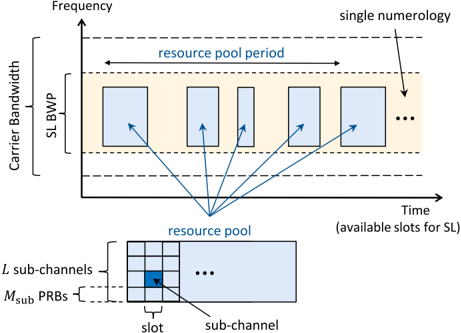
“Tom operating in Mode 2 can select n ( n ≤ N ) consecutive subchannels from the resource pool [12].”
Lightweight Online Clock Skew Estimation for Robust ITS Time Synchronization
Lee, W. (2025) · Applied Sciences · doi:10.3390/app151910581 · Cited by 1
Lin, R., Xie, S., Chen, W., & Xu, T. (2025) · Sensors · doi:10.3390/s25206287 · Cited by 1
“Within this framework, the Internet of Vehicles (IoV) [2,3] plays a pivotal role by enabling large-scale, low-latency, and high-reliability information exchange, thereby supporting traffic safety, road management, and mobility services [4,5].”
Metadata
- Authors
- Garcia, M. H. C., Molina-Galan, A., Boban, M., Gozalvez, J., Coll-Perales, B., Şahin, T., & Kousaridas, A.
- Affiliations
- Munich Research Center, Huawei Technologies Duesseldorf GmbH, Munich, Germany
- Universitat de Miguel Hernández d'Elx (ES)
- Huawei German Research Center (DE)
- UWICORE Laboratory, Universidad Miguel Hernandez de Elche, Elche, Spain
- ORCID
- Venue
- IEEE Communications Surveys & Tutorials
- Published
- 2021
- Volume
- 23
- Issue
- 3
- Pages
- 1972-2026
- ISSN
- 1553-877X (ISSN-L)
- 2373-745X
- OpenAlex
- W3126365018
- Semantic Scholar
- 356f84acfb52e20722e9306d8919aabef7e1d18f
- Cited by
- 975
- References
- 35
- Citations by year
- 2026: 133 · 2025: 196 · 2024: 223 · 2023: 239 · 2022: 141 · 2021: 43
- FWCI
- 47.50
- Type
- journal article
- Language
- en
- Open access
- hybrid
- doi.org
- Locations
- IEEE Communications Surveys & Tutorials (publishedVersion, cc-by)
- arXiv (Cornell University) (submittedVersion)
- arXiv (Cornell University) (cc-by)
- Funders
- UWICORE Laboratory, Universidad Miguel Hernandez de Elche
- Ministerio de Ciencia e Innovación (MCI), AEI, and FEDER funds through the Project (TEC2017-88612-R)
- Ministerio de Universidades (FPU18/00691, IJC2018-036862-I)
- Topics
- Physical Sciences › Engineering › Electrical and Electronic Engineering › Vehicular Ad Hoc Networks (VANETs)
- Physical Sciences › Engineering › Control and Systems Engineering › Traffic control and management
- Physical Sciences › Engineering › Media Technology › Telecommunications and Broadcasting Technologies
- Keywords
- 5G NR, vehicle-to-everything communication, 3GPP Release 16, sidelink, connected and automated driving, resource allocation, quality of service management, vehicle-to-network communication, physical layer, mobility management, system architecture, simulation methods
About these checks
Registry, retraction, Cites and statistics results are computed, not judged, with one exception: a printed reference that no index lists is read once by a model before it counts as a citation error. Claims are extracted by a model and kept only when their quote appears verbatim in the text; each cited source is then checked, with a model’s help, for whether it says what the claim relies on. Those verdicts can be wrong — read the claim’s quote and the cited source before relying on one.
Statistics and arithmetic are recomputed, not judged.
Confidence bands are shown only for fields calibrated on our annotated test set. None is calibrated yet, so no band is shown.
What counts as a claim ›How we measure confidence ›How we check this ›
Are you an author, or do you see a problem with this page? Request a review
Data sources
Bibliographic data: Semantic Scholar, OpenAlex, Crossref.
Contains information from the Semantic Scholar Academic Graph Datasets, made available under the ODC Attribution License (ODC-BY 1.0).
Semantic Scholar’s data is described in: Kinney, R., et al. (2023). The Semantic Scholar Open Data Platform. arXiv:2301.10140.
