

A Deep Convolutional Neural Network Method to Detect Seizures and Characteristic Frequencies Using Epileptic Electroencephalogram (EEG) Data
Open accessThe DOI matches its Crossref record; 40 of the 40 references it cites were found in a registry or an index.
Abstract
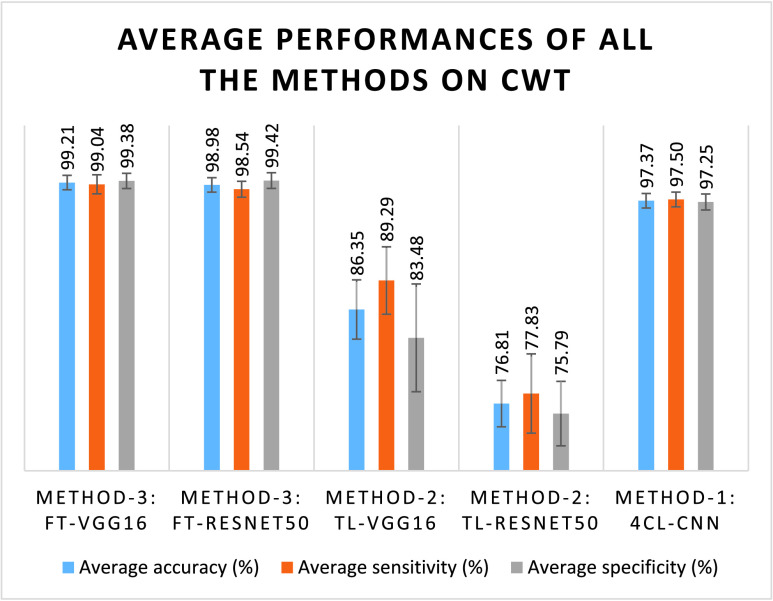
BACKGROUND: Diagnosing epileptic seizures using electroencephalogram (EEG) in combination with deep learning computational methods has received much attention in recent years. However, to date, deep learning techniques in seizure detection have not been effectively harnessed due to sub-optimal classifier design and improper representation of the time-domain signal. METHODS: In this study, we focused on designing and evaluating deep convolutional neural network-based classifiers for seizure detection. Signal-to-image conversion methods are proposed to convert time-domain EEG signal to a time-frequency represented image to prepare the input data for classification. We proposed and evaluated three classification methods comprising of five classifiers to determine which is more accurate for seizure detection. Accuracy data were then compared to previous studies of the same dataset. RESULTS: We found our proposed model and signal-to-image conversion method outperformed all previous studies in the most cases. The proposed FT-VGG16 classifier achieved the highest average classification accuracy of 99.21%. In addition, the Shapley Additive exPlanations (SHAP) analysis approach was employed to uncover the feature frequencies in the EEG that contribute most to improved classification accuracy. To the best of our knowledge, this is the first study to compute the contribution of frequency components to target seizure classification; thus allowing the identification of distinct seizure-related EEG frequency components compared to normal EEG measures. CONCLUSION: Thus our developed deep convolutional neural network models are useful to detect seizures and characteristic frequencies using EEG data collected from the patients and this model could be clinically applicable for the automated seizures detection.
Overview
The claims and statistics of this paper haven’t been checked yet.
Free: it reads the open-access text and checks the first 5 claims that cite a source we can check. Create a free account to check every claim.
Integrity signals
Registry
Cites
Statistics
Figures
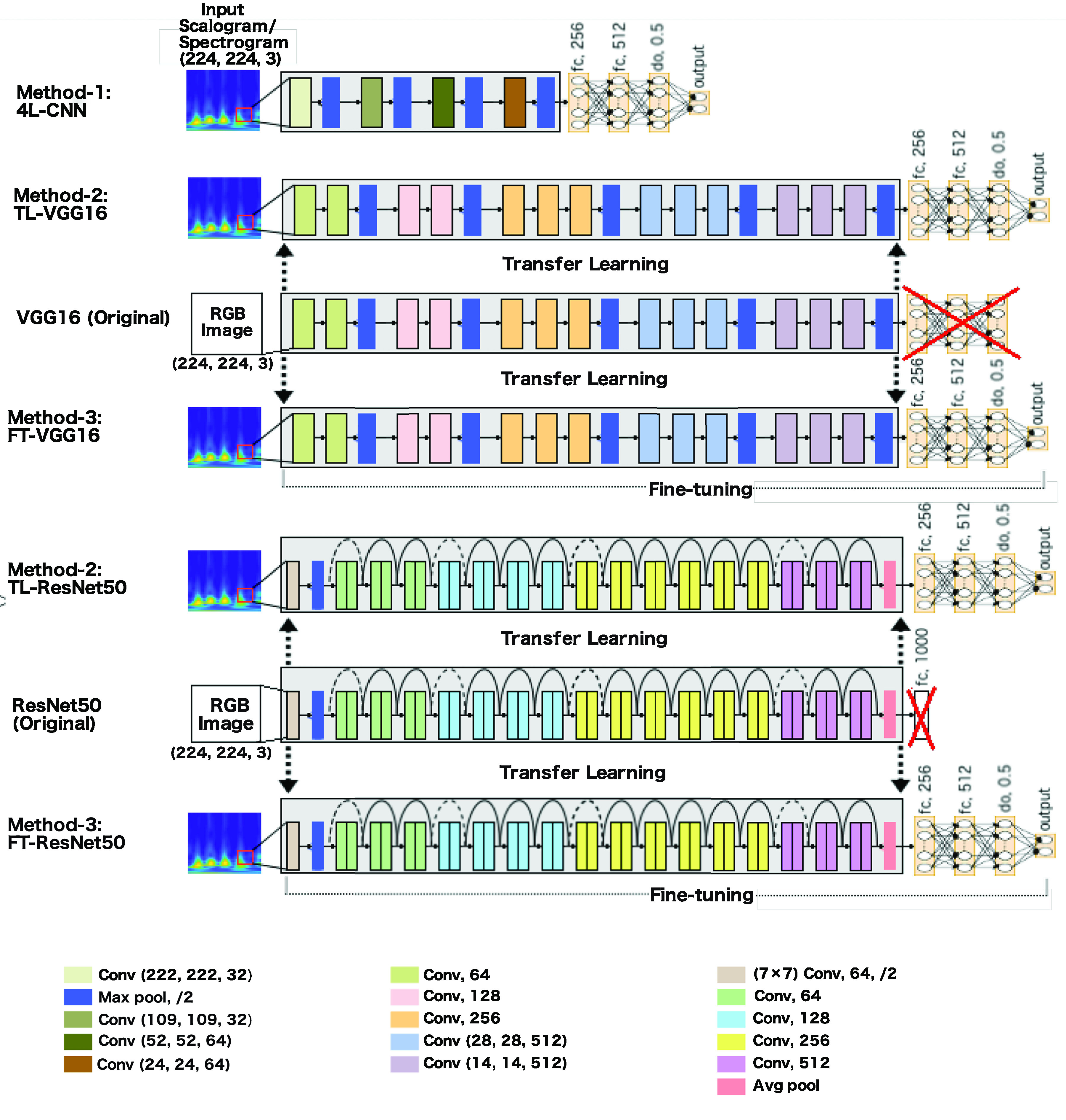
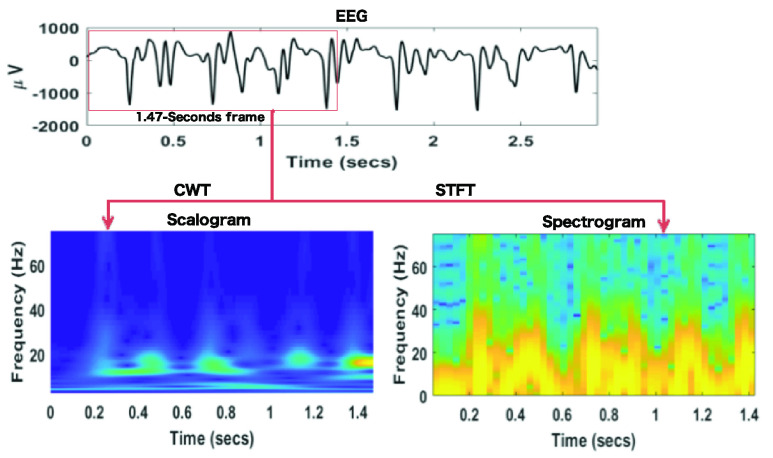
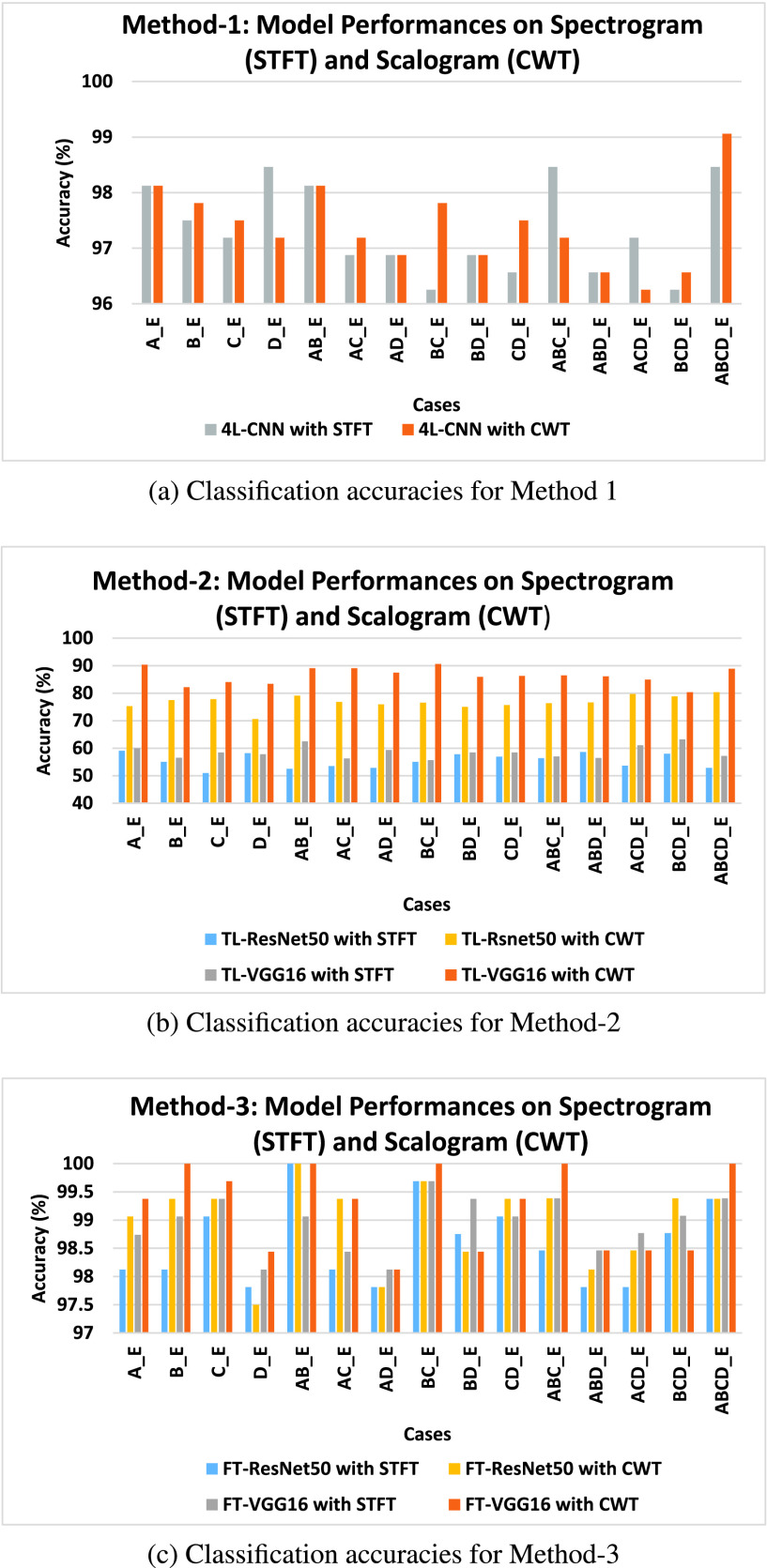
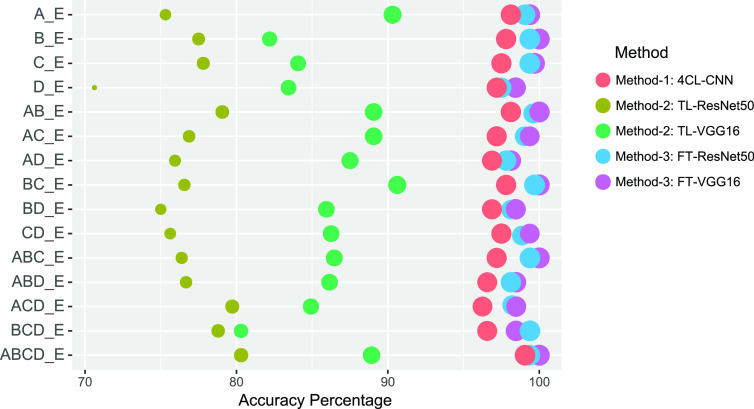

Verification
Claims the paper makes
The claims and statistics of this paper haven’t been checked yet.
Free: it reads the open-access text and checks the first 5 claims that cite a source we can check. Create a free account to check every claim.
Self-check
Percentages, sums and reported differences re-computed from the paper’s own numbers.
The self-check needs the paper’s full text.
Citations
Cites
Deep Residual Learning for Image Recognition
He, K., Zhang, X., Ren, S., & Sun, J. (2016) · 2016 IEEE Conference on Computer Vision and Pattern Recognition (CVPR) · doi:10.1109/cvpr.2016.90 · Cited by 235,474
Very Deep Convolutional Networks for Large-Scale Image Recognition
Simonyan, K., & Zisserman, A. (2014) · arXiv · doi:10.48550/arxiv.1409.1556 · Cited by 114,148
A Unified Approach to Interpreting Model Predictions
Lundberg, S., & Lee, S.-I. (2017) · arXiv · doi:10.48550/arxiv.1705.07874 · Cited by 23,707
A Practical Guide to Wavelet Analysis
Torrence, C., & Compo, G. P. (1998) · Bulletin of the American Meteorological Society · doi:10.1175/1520-0477(1998)079<0061:apgtwa>2.0.co;2 · Cited by 14,890
Gauriat, C.-M., Pencolé, Y., Ribot, P., & Brouillet, G. (2024) · HAL (Le Centre pour la Communication Scientifique Directe) · doi:10.4230/oasics.dx.2024.27 · Cited by 12,586
Improving neural networks by preventing co-adaptation of feature detectors
Hinton, G. E., Srivastava, N., Krizhevsky, A., Sutskever, I., & Salakhutdinov, R. R. (2012) · arXiv · doi:10.48550/arxiv.1207.0580 · Cited by 6,382 · cited 1×
“Another strategy we follow to combat the overfitting problem is the dropout technique [35].”
BackgroundIdentifying Medical Diagnoses and Treatable Diseases by Image-Based Deep Learning
Kermany, D. S., Goldbaum, M., Cai, W., Valentim, C. C. S., Liang, H., Baxter, S. L., McKeown, A., Yang, G., Wu, X., Yan, F., et al. (2018) · Cell · doi:10.1016/j.cell.2018.02.010 · Cited by 4,842
Axiomatic attribution for deep networks
Sundararajan, M., Taly, A., & Yan, Q. (2017) · arXiv · doi:10.48550/arxiv.1703.01365 · Cited by 4,087
Multi-column deep neural networks for image classification
Ciresan, D., Meier, U., & Schmidhuber, J. (2012) · 2012 IEEE Conference on Computer Vision and Pattern Recognition · doi:10.1109/cvpr.2012.6248110 · Cited by 3,720
Andrzejak, R. G., Lehnertz, K., Mormann, F., Rieke, C., David, P., & Elger, C. E. (2001) · Physical Review E · doi:10.1103/physreve.64.061907 · Cited by 3,032 · cited 1×
“We have used EEG data from the repository of the Bonn University [26].”
Method(1996) · Adapted Wavelet Analysis · doi:10.1201/9781439863619-15 · Cited by 2,703
Clinically applicable deep learning for diagnosis and referral in retinal disease
De Fauw, J., Ledsam, J. R., Romera-Paredes, B., Nikolov, S., Tomasev, N., Blackwell, S., Askham, H., Glorot, X., O’Donoghue, B., Visentin, D., et al. (2018) · Nature Medicine · doi:10.1038/s41591-018-0107-6 · Cited by 2,639
Acharya, U. R., Oh, S. L., Hagiwara, Y., Tan, J. H., & Adeli, H. (2018) · Computers in Biology and Medicine · doi:10.1016/j.compbiomed.2017.09.017 · Cited by 1,647
A deep learning approach for Parkinson’s disease diagnosis from EEG signals
Oh, S. L., Hagiwara, Y., Raghavendra, U., Yuvaraj, R., Arunkumar, N., Murugappan, M., & Acharya, U. R. (2020) · Neural Computing and Applications · doi:10.1007/s00521-018-3689-5 · Cited by 627
Automated diagnosis of epileptic EEG using entropies
Acharya, U. R., Molinari, F., Sree, S. V., Chattopadhyay, S., Ng, K.-H., & Suri, J. S. (2012) · Biomedical Signal Processing and Control · doi:10.1016/j.bspc.2011.07.007 · Cited by 626
An automated system for epilepsy detection using EEG brain signals based on deep learning approach
Ullah, I., Hussain, M., Qazi, E.-U.-H., & Aboalsamh, H. (2018) · Expert Systems with Applications · doi:10.1016/j.eswa.2018.04.021 · Cited by 622
Epileptic Seizure Detection Based on EEG Signals and CNN
Zhou, M., Tian, C., Cao, R., Wang, B., Niu, Y., Hu, T., Guo, H., & Xiang, J. (2018) · Frontiers in Neuroinformatics · doi:10.3389/fninf.2018.00095 · Cited by 483
Raghu, S., Sriraam, N., Temel, Y., Rao, S. V., & Kubben, P. L. (2020) · Neural Networks · doi:10.1016/j.neunet.2020.01.017 · Cited by 382
Mursalin, M., Zhang, Y., Chen, Y., & Chawla, N. V. (2017) · Neurocomputing · doi:10.1016/j.neucom.2017.02.053 · Cited by 311
Epileptic seizure detection using DWT based fuzzy approximate entropy and support vector machine
Kumar, Y., Dewal, M. L., & Anand, R. S. (2014) · Neurocomputing · doi:10.1016/j.neucom.2013.11.009 · Cited by 307
Erion, G., Janizek, J. D., Sturmfels, P., Lundberg, S. M., & Lee, S.-I. (2021) · Nature Machine Intelligence · doi:10.1038/s42256-021-00343-w · Cited by 300 · cited 1×
“A novel feature attribution method, called Expected Gradients [31] is used to calculate the SHAP values.”
MethodEpileptic EEG classification based on extreme learning machine and nonlinear features
Yuan, Q., Zhou, W., Li, S., & Cai, D. (2011) · Epilepsy Research · doi:10.1016/j.eplepsyres.2011.04.013 · Cited by 286
Hussein, R., Palangi, H., Ward, R. K., & Wang, Z. J. (2019) · Clinical Neurophysiology · doi:10.1016/j.clinph.2018.10.010 · Cited by 263
Epilepsy Detection by Using Scalogram Based Convolutional Neural Network from EEG Signals
Türk, Ö., & Özerdem, M. S. (2019) · Brain Sciences · doi:10.3390/brainsci9050115 · Cited by 219
Megiddo, I., Colson, A., Chisholm, D., Dua, T., Nandi, A., & Laxminarayan, R. (2016) · Epilepsia · doi:10.1111/epi.13294 · Cited by 185
Jaiswal, A. K., & Banka, H. (2017) · Biomedical Signal Processing and Control · doi:10.1016/j.bspc.2017.01.005 · Cited by 179
Early Alzheimer’s disease diagnosis based on EEG spectral images using deep learning
Bi, X., & Wang, H. (2019) · Neural Networks · doi:10.1016/j.neunet.2019.02.005 · Cited by 169
Learning Robust Features using Deep Learning for Automatic Seizure Detection
Thodoroff, P., Pineau, J., & Lim, A. (2016) · arXiv (Cornell University) · doi:10.48550/arxiv.1608.00220 · Cited by 163
Emami, A., Kunii, N., Matsuo, T., Shinozaki, T., Kawai, K., & Takahashi, H. (2019) · NeuroImage: Clinical · doi:10.1016/j.nicl.2019.101684 · Cited by 160
A Novel Deep Neural Network for Robust Detection of Seizures Using EEG Signals
Zhao, W., Zhao, W., Wang, W., Jiang, X., Zhang, X., Peng, Y., Zhang, B., & Zhang, G. (2020) · Computational and Mathematical Methods in Medicine · doi:10.1155/2020/9689821 · Cited by 152
A hybrid automated detection of epileptic seizures in EEG records
Tawfik, N. S., Youssef, S. M., & Kholief, M. (2015) · Computers & Electrical Engineering · doi:10.1016/j.compeleceng.2015.09.001 · Cited by 148
Seizure detection from EEG signals using Multivariate Empirical Mode Decomposition
Zahra, A., Kanwal, N., Rehman, N. U., Ehsan, S., & McDonald-Maier, K. D. (2017) · Computers in Biology and Medicine · doi:10.1016/j.compbiomed.2017.07.010 · Cited by 139
Learning Robust Features using Deep Learning for Automatic Seizure Detection
Thodoroff, P., Pineau, J., & Lim, A. (2016) · Cited by 127
Using Permutation Entropy to Measure the Changes in EEG Signals During Absence Seizures
Li, J., Yan, J., Liu, X., & Ouyang, G. (2014) · Entropy · doi:10.3390/e16063049 · Cited by 120
Gao, X., Yan, X., Gao, P., Gao, X., & Zhang, S. (2019) · Artificial Intelligence in Medicine · doi:10.1016/j.artmed.2019.101711 · Cited by 115
Classification of Focal and Non Focal Epileptic Seizures Using Multi-Features and SVM Classifier
Sriraam, N., & Raghu, S. (2017) · Journal of Medical Systems · doi:10.1007/s10916-017-0800-x · Cited by 101
Raghu, S., & Sriraam, N. (2017) · Expert Systems with Applications · doi:10.1016/j.eswa.2017.07.029 · Cited by 90
A convolutional neural network based framework for classification of seizure types
Raghu, S., Sriraam, N., Temel, Y., Rao, S. V., & Kubben, P. (2019) · Annual International Conference of the IEEE Engineering in Medicine and Biology Society (EMBC) · doi:10.1109/embc.2019.8857359 · Cited by 53
Deep Architectures for Automated Seizure Detection in Scalp EEGs
Golmohammadi, M., Ziyabari, S., Shah, V., de Diego, S. L., Iyad Obeid, A., & Picone, J. (2017) · arXiv (Cornell University) · doi:10.48550/arxiv.1712.09776 · Cited by 44
Epileptic seizure detection of electroencephalogram based on weighted-permutation entropy
Song, Z., Wang, J., Cai, L., Deng, B., & Qin, Y. (2016) · World Congress on Intelligent Control and Automation · doi:10.1109/wcica.2016.7578764 · Cited by 17
Research works printed but not linked: 1
- T. Tieleman and G. Hinton, “ Lecture 6.5-RMSPROP: Divide the gradient by a running average of its recent magnitude,” Neural Netw. Mach. Learn., vol. 4, no. 2, pp. 26– 31, 2012.
Cited by
Recognition of human emotions using EEG signals: A review
Rahman, M. M., Sarkar, A. K., Hossain, M. A., Hossain, M. S., Islam, M. R., Hossain, M. B., Quinn, J. M. W., & Moni, M. A. (2021) · Computers in Biology and Medicine · doi:10.1016/j.compbiomed.2021.104696 · Cited by 227
Znet: Deep Learning Approach for 2D MRI Brain Tumor Segmentation
Ottom, M. A., Rahman, H. A., & Dinov, I. D. (2022) · IEEE Journal of Translational Engineering in Health and Medicine · doi:10.1109/jtehm.2022.3176737 · Cited by 178
“The loss function in autoencoders is calculated in terms of the similarity between input images and the reconstructed images [19], [20].”
MethodEpileptic Seizure Detection Based on Bidirectional Gated Recurrent Unit Network
Zhang, Y., Yao, S., Yang, R., Liu, X., Qiu, W., Han, L., Zhou, W., & Shang, W. (2022) · IEEE Transactions on Neural Systems and Rehabilitation Engineering · doi:10.1109/tnsre.2022.3143540 · Cited by 156
Multiple classification of EEG signals and epileptic seizure diagnosis with combined deep learning
Varlı, M., & Yılmaz, H. (2023) · Journal of Computational Science · doi:10.1016/j.jocs.2023.101943 · Cited by 143
Cao, J. L., Zhou, T., Zhi, S., Lam, S., Ren, G., Zhang, Y., Wang, Y., Dong, Y., & Cai, J. (2024) · Information Sciences · doi:10.1016/j.ins.2024.120212 · Cited by 141
Metadata
- Authors
- Rashed-Al-Mahfuz, M., Moni, M. A., Uddin, S., Alyami, S. A., Summers, M. A., & Eapen, V.
- Affiliations
- University of Rajshahi (BD)
- UNSW Sydney (AU)
- The University of Sydney (AU)
- Imam Mohammad ibn Saud Islamic University (SA)
- Garvan Institute of Medical Research (AU)
- Corresponding author
- Moni, Mohammad Ali
- ORCID
- Venue
- IEEE Journal of Translational Engineering in Health and Medicine
- Published
- 2021
- Volume
- 9
- Pages
- 1-12
- ISSN
- 2168-2372 (ISSN-L)
- PMC
- PMC7851059
- OpenAlex
- W3119307757
- Cited by
- 138
- References
- 39
- Citations by year
- 2026: 13 · 2025: 33 · 2024: 31 · 2023: 27 · 2022: 28 · 2021: 6
- FWCI
- 12.09
- Type
- journal article
- Language
- en
- Open access
- gold
- doi.org
- Locations
- IEEE Journal of Translational Engineering in Health and Medicine (publishedVersion, cc-by)
- Europe PMC (PubMed Central) (publishedVersion, cc-by)
- PubMed Central (publishedVersion, cc-by)
- PubMed (publishedVersion)
- UNSWorks (UNSW Sydney) (submittedVersion, cc-by-nc-nd)
- Charles Sturt University Research Output (CRO) (submittedVersion, cc-by)
- DOAJ (DOAJ: Directory of Open Access Journals) (submittedVersion, cc-by-sa)
- Greater South Information System
- Topics
- Life Sciences › Neuroscience › Cognitive Neuroscience › EEG and Brain-Computer Interfaces
- Physical Sciences › Computer Science › Artificial Intelligence › Emotion and Mood Recognition
- Health Sciences › Medicine › Clinical Neurology › Epilepsy research and treatment
- Keywords
- seizure detection, epileptic EEG, deep convolutional neural networks, SHAP feature attribution, EEG frequency components, automated seizure detection, epilepsy diagnosis
- MeSH terms
- Electroencephalography, Epilepsy, Humans, Seizures, Signal Processing, Computer-Assisted, Neural Networks, Computer
About these checks
Registry, retraction, Cites and statistics results are computed, not judged, with one exception: a printed reference that no index lists is read once by a model before it counts as a citation error. Claims are extracted by a model and kept only when their quote appears verbatim in the text; each cited source is then checked, with a model’s help, for whether it says what the claim relies on. Those verdicts can be wrong — read the claim’s quote and the cited source before relying on one.
Statistics and arithmetic are recomputed, not judged.
Confidence bands are shown only for fields calibrated on our annotated test set. None is calibrated yet, so no band is shown.
What counts as a claim ›How we measure confidence ›How we check this ›
Are you an author, or do you see a problem with this page? Request a review
Data sources
Bibliographic data: Semantic Scholar, OpenAlex, Crossref.
Contains information from the Semantic Scholar Academic Graph Datasets, made available under the ODC Attribution License (ODC-BY 1.0).
Semantic Scholar’s data is described in: Kinney, R., et al. (2023). The Semantic Scholar Open Data Platform. arXiv:2301.10140.
