

Deep CNN-LSTM With Self-Attention Model for Human Activity Recognition Using Wearable Sensor
Open accessThe DOI matches its Crossref record; 55 of the 61 references it cites were found in a registry or an index; 5 of the 51 sources its claims cite were checked for support.
Abstract
Human Activity Recognition (HAR) systems are devised for continuously observing human behavior - primarily in the fields of environmental compatibility, sports injury detection, senior care, rehabilitation, entertainment, and the surveillance in intelligent home settings. Inertial sensors, e.g., accelerometers, linear acceleration, and gyroscopes are frequently employed for this purpose, which are now compacted into smart devices, e.g., smartphones. Since the use of smartphones is so widespread now-a-days, activity data acquisition for the HAR systems is a pressing need. In this article, we have conducted the smartphone sensor-based raw data collection, namely H-Activity, using an Android-OS-based application for accelerometer, gyroscope, and linear acceleration. Furthermore, a hybrid deep learning model is proposed, coupling convolutional neural network and long-short term memory network (CNN-LSTM), empowered by the self-attention algorithm to enhance the predictive capabilities of the system. In addition to our collected dataset (H-Activity), the model has been evaluated with some benchmark datasets, e.g., MHEALTH, and UCI-HAR to demonstrate the comparative performance of our model. When compared to other models, the proposed model has an accuracy of 99.93% using our collected H-Activity data, and 98.76% and 93.11% using data from MHEALTH and UCI-HAR databases respectively, indicating its efficacy in recognizing human activity recognition.We hope that our developed model could be applicable in the clinical settings and collected data could be useful for further research.
Overview
CoChat Summary
TL;DR
The paper proposes a deep CNN-LSTM model with self-attention for smartphone/wearable-sensor human activity recognition, trained on a new H-Activity dataset and evaluated on MHEALTH and UCI-HAR. It reports 99.93% accuracy on H-Activity, 98.76% on MHEALTH, and 93.11% on UCI-HAR.
Key findings
- The proposed M4 model achieved 99.93% accuracy on H-Activity (4,888 correctly classified instances), 98.76% on MHEALTH, and 93.11% on UCI-HAR.
- On H-Activity, recall was 99.92% for sitting/standing, 100% for walking, 99.75% for jogging, and 100% for running; precision was 100%, 99.83%, 100%, and 99.83%, respectively, with weak differentiation between jogging and running.
- On UCI-HAR, sitting and standing were confused (recall 74.95% and 82.70%, respectively); on MHEALTH, the confusion matrix shows low recall for some classes (e.g., Std 19.90%, Sit 42.79%) despite 98.76% overall accuracy.
- Compared with prior models, the proposed model outperformed LSTM-CNN (95.56%) and CNN,LSTM (93.80%) on MHEALTH, and on UCI-HAR outperformed CNN-LSTM (92%), CNN (91.98%), Stacked LSTM (93%), and Res-LSTM (91.6%).
Methods
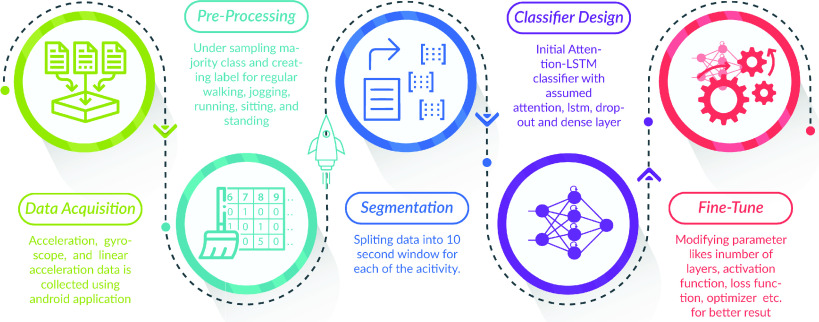
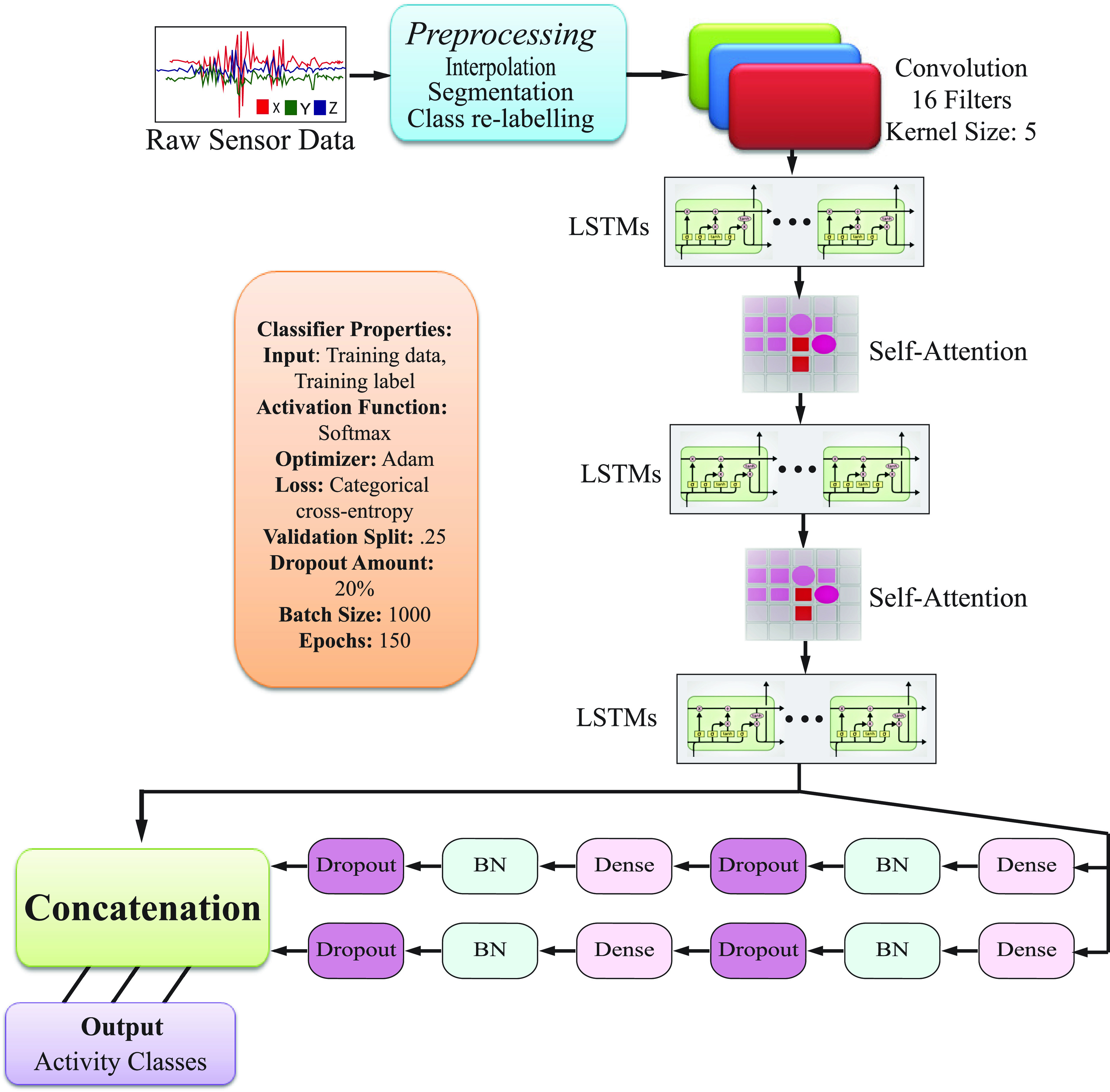
- Design: hybrid deep CNN-LSTM with self-attention; proposed M4 has 19 layers (CNN, LSTM, attention, dense, dropout, batch normalization, concatenate) with 633,188 trainable parameters, input size 10×9, trained for 150 epochs with batch size 1000, Adam optimizer, categorical cross-entropy, sigmoid/softmax activations.
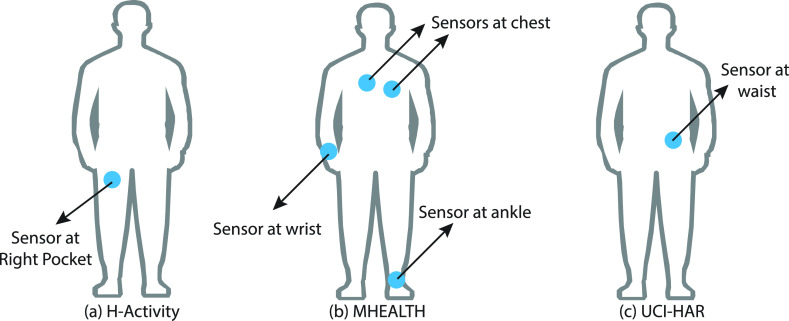
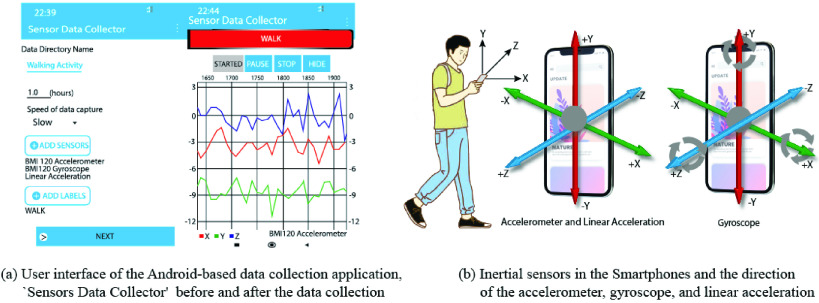
- Data: H-Activity was collected via an Android app from 10 volunteers aged 20–30, smartphone in the right trouser pocket, for 4 activities (sitting/standing, walking, jogging, running), at 10 Hz, yielding 48,920 samples with 9 features (accelerometer, gyroscope, linear acceleration on x/y/z); benchmark datasets were MHEALTH (10 volunteers, 12 activities, 50 Hz) and UCI-HAR (30 participants, 6 activities, 50 Hz, 10,299 samples).
- Preprocessing and analysis: under/oversampling, linear interpolation for missing values, sliding-window segmentation of size 10, one-hot encoding; evaluation used accuracy, precision, recall, F1, and AUC, with 25% of the whole dataset used for testing and four architectures (M1–M4) compared.
Limitations
- Stated: future work will add more participants and adjust the network structure; the paper also notes that comparison using final statistical measures with other existing approaches was not conducted because datasets and experimental settings differ.
- Stated/evident: H-Activity is small (10 volunteers, ages 20–30), uses a single sensor placement (right trouser pocket), a low 10 Hz sampling rate, and only four activities; the data were not subjected to noise cancellation, and the Android platform cannot read sensor data at a particular moment, only when a shift is detected.
- Evident: class imbalance required resampling; confusion remains between jogging/running and sitting/standing, and the MHEALTH confusion matrix shows low recall for some classes despite high overall accuracy.
Model-written summary. Check it against the paper before relying on it.
Integrity signals
Registry
Cites
Statistics
Figures
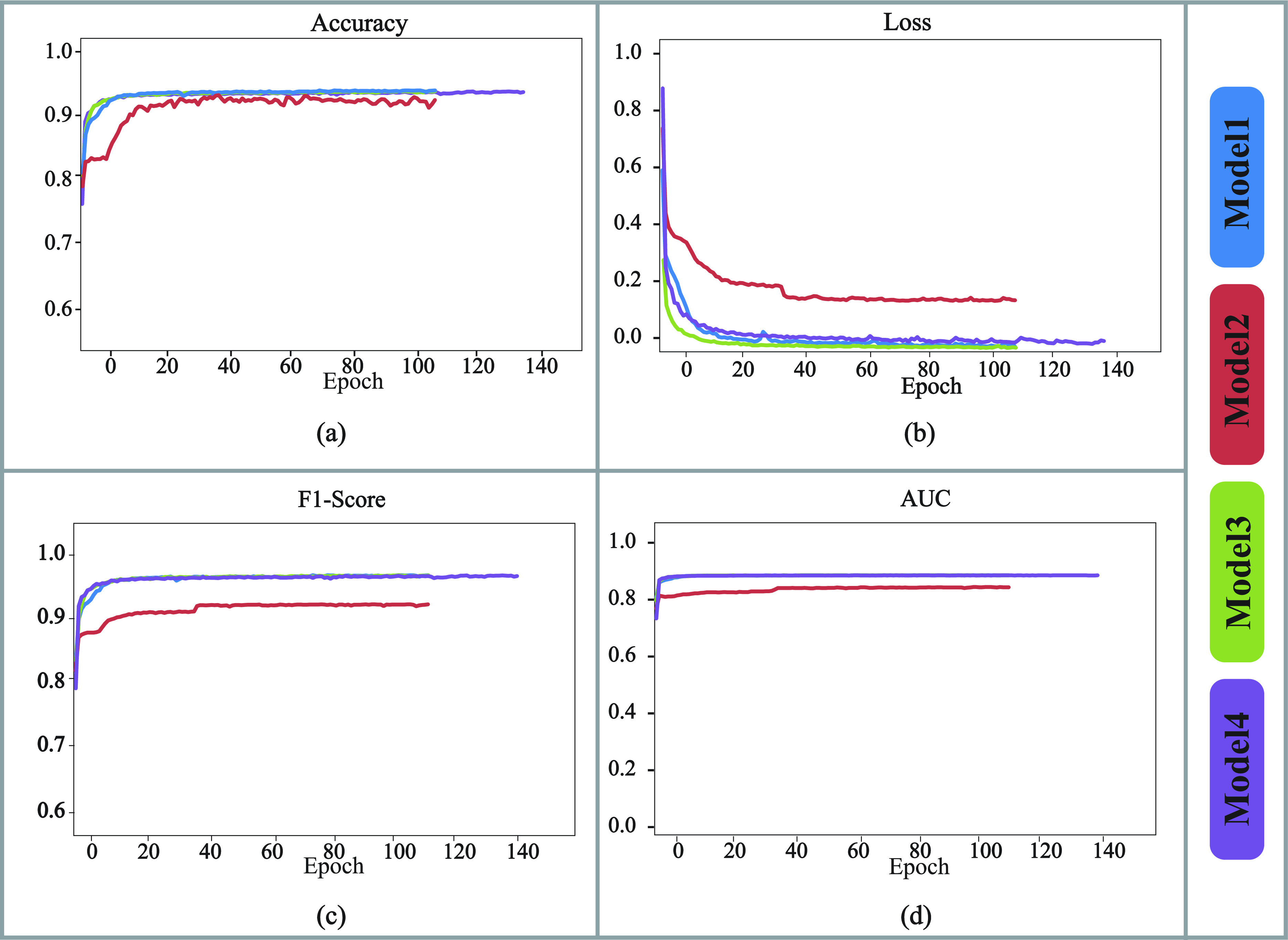
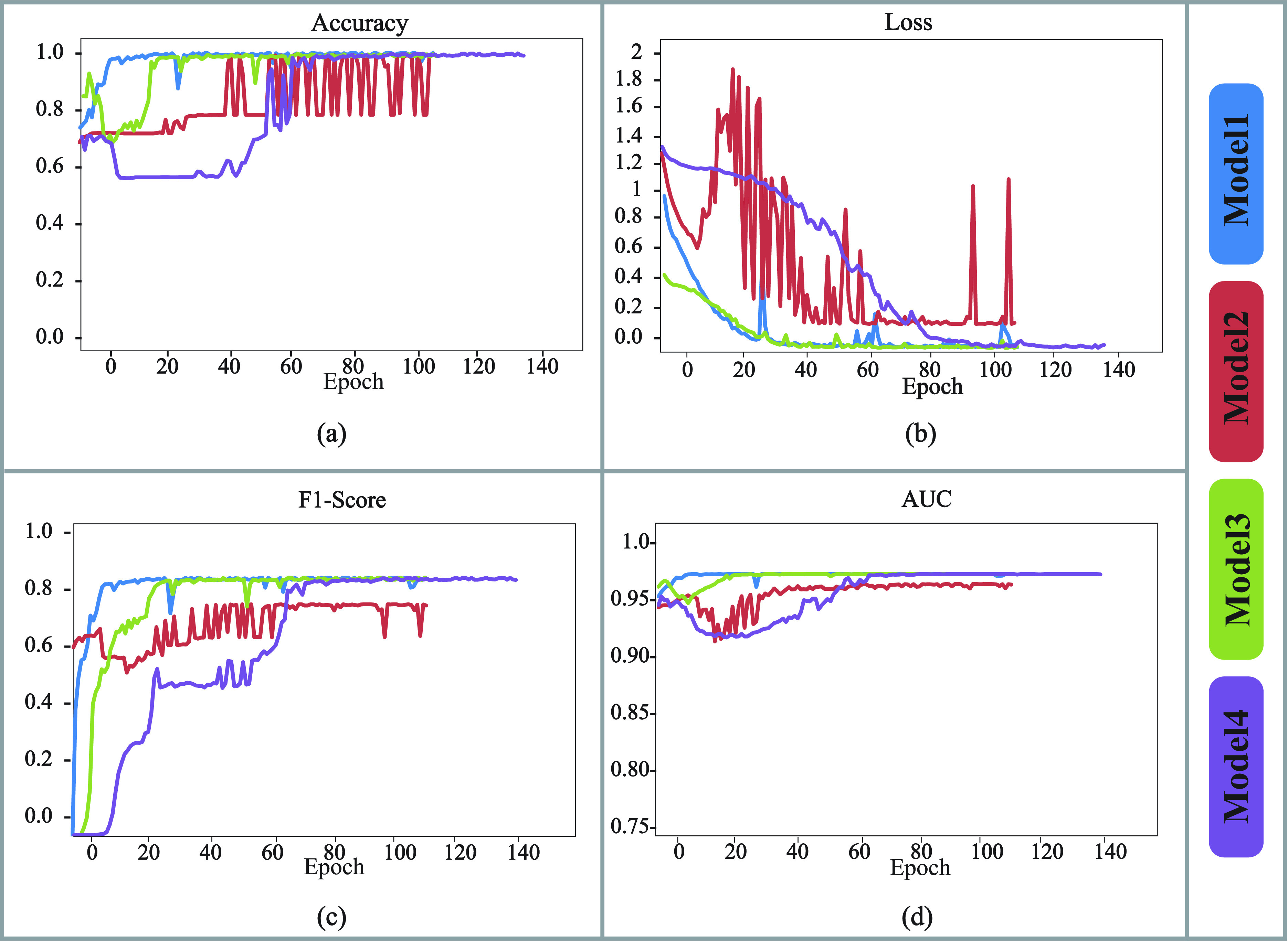
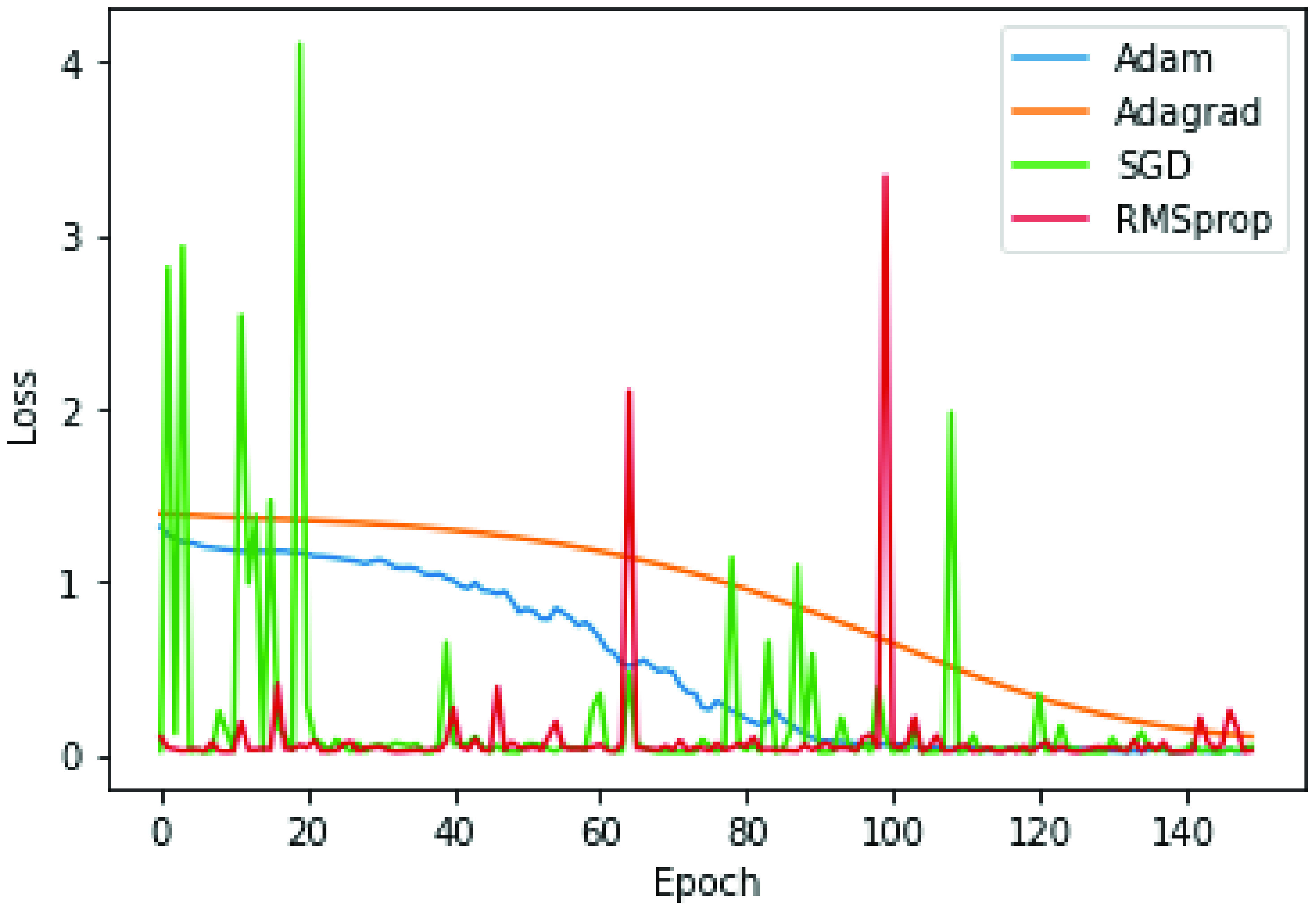
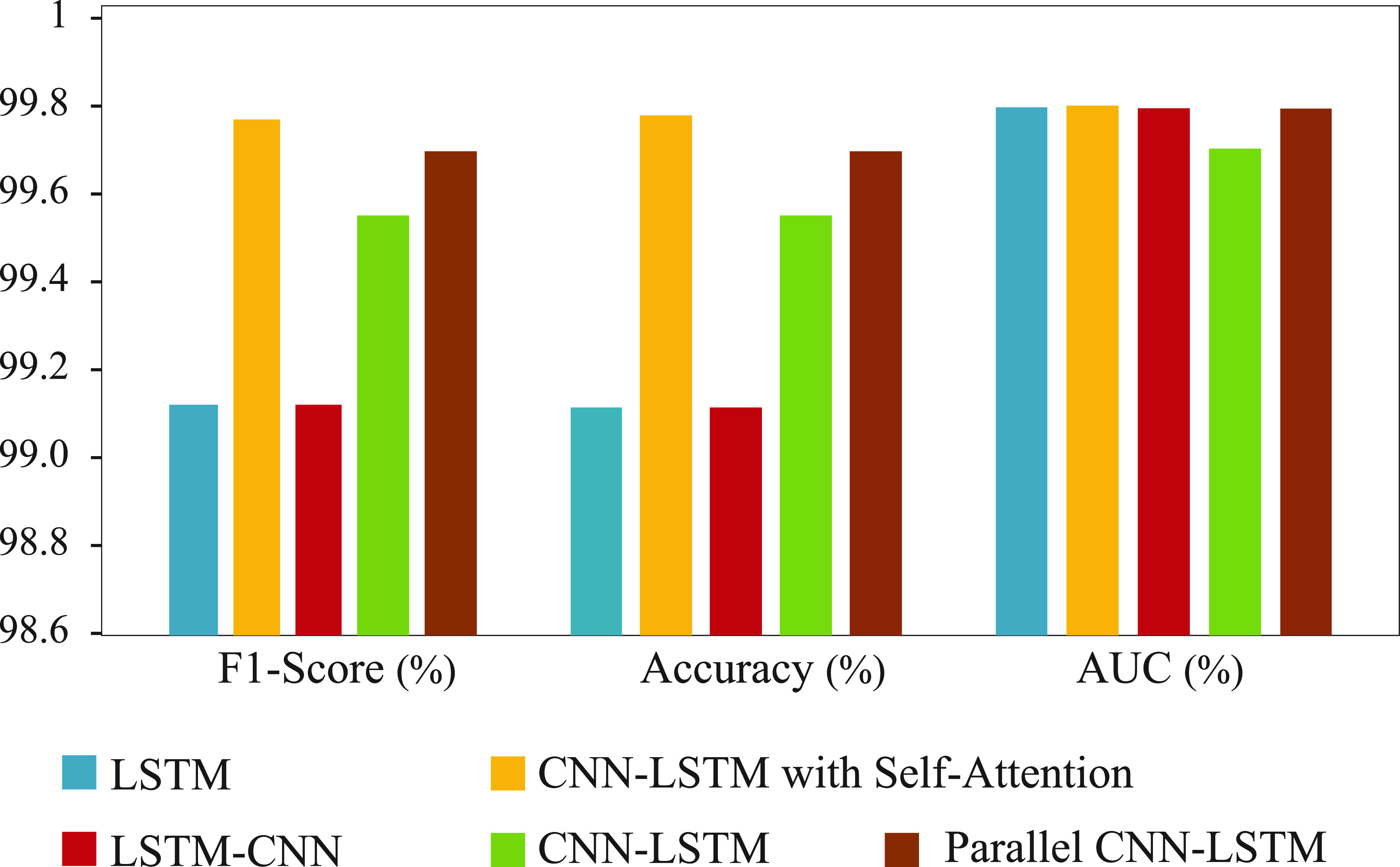
Verification
Claims the paper makes
2 Valid · 13 Not valid · 34 Not checked · 58 Own results and interpretations
At least one cited source doesn’t support this claim or points to a different paper, and none confirmed it — see the verdicts below.
In the paper
“deep learning norms are still underutilized for training time series of inertial sensor data for action detection [3], [5]–[8].”
§ Deep CNN-LSTM With Self-Attention Model for Human Activity Recognition Using Wearable Sensor > Introduction
What the sources say
- Disputedcites [3] J. Wang, Y. Chen, S. Hao, X. Peng, and L. Hu, “ Deep learning for sensor-based activity recognition: A survey,” Pattern Recognit. Lett., vol. 119, pp. 3– 11, Mar. 2019, doi: 10.1016/j.patrec.2018.02.010. sourceExperimental — accuracy not yet measured
Our copy of the survey states the opposite of the claim: the Abstract (p. 2) says 'deep learning based methods have been widely adopted for the sensor-based activity recognition tasks', and Section 3.1 (p. 4) states that body-worn inertial sensors (accelerometer, gyroscope, magnetometer) 'were widely used in deep learning based HAR', with the raw signal fed directly to the networks rather than hand-crafted features. Section 1 (p. 2) adds that deep learning 'is an ideal approach for HAR and has been widely explored in existing work'. The paper's remaining gaps (Section 7, p. 9: heavy reliance on labeled samples, distance from online/mobile deployment) concern supervision and on-device training, not underuse of deep learning on inertial time series. (LLM, conf=0.78)
Checked by a reasoning model — may be wrong.
- Not checked yetcites [5]–[8]
plain- Asserted: passes — The authors put it forward as true.
- Checkable: passes — It can be checked against evidence.
- Load-bearing: passes — The paper’s conclusions depend on it.
- Based: passes — The paper gives a reason why it holds.
- Disputed
A result the paper reports from its own data — it cites no other source for it, so there is none to check. The quote shows it is in the paper.
In the paper
“we have conducted the smartphone sensor-based raw data collection, namely H-Activity, using an Android-OS-based application for accelerometer, gyroscope, and linear acceleration.”
§ Deep CNN-LSTM With Self-Attention Model for Human Activity Recognition Using Wearable Sensor > Abstract
plain- Asserted: passes — The authors put it forward as true.
- Checkable: passes — It can be checked against evidence.
- Load-bearing: passes — The paper’s conclusions depend on it.
- Based: passes — The paper gives a reason why it holds.
A result the paper reports from its own data — it cites no other source for it, so there is none to check. The quote shows it is in the paper.
In the paper
“We proposed the deep CNN-LSTM with self-attention model for activity classification problem using our own dataset H-Activity as well as two public datasets; MHEALTH and UCI HAR.”
§ Deep CNN-LSTM With Self-Attention Model for Human Activity Recognition Using Wearable Sensor > Introduction
plainn = 10- Asserted: passes — The authors put it forward as true.
- Checkable: passes — It can be checked against evidence.
- Load-bearing: passes — The paper’s conclusions depend on it.
- Based: passes — The paper gives a reason why it holds.
A result the paper states — it cites no source for it, so there is none to check. The quote shows it is in the paper.
In the paper
“Our system is the combination of deep learning with self-attention model and wearable sensor-based human activity recognition framework that utilizes various smartphone sensors.”
§ Deep CNN-LSTM With Self-Attention Model for Human Activity Recognition Using Wearable Sensor > Introduction
plainn = 10- Asserted: passes — The authors put it forward as true.
- Checkable: passes — It can be checked against evidence.
- Load-bearing: passes — The paper’s conclusions depend on it.
- Based: passes — The paper gives a reason why it holds.
A result the paper states — it cites no source for it, so there is none to check. The quote shows it is in the paper.
In the paper
“a hybrid deep learning model is proposed, coupling convolutional neural network and long-short term memory network (CNN-LSTM), empowered by the self-attention algorithm to enhance the predictive capabilities of the system.”
§ Deep CNN-LSTM With Self-Attention Model for Human Activity Recognition Using Wearable Sensor > Abstract
plainstates a cause- Asserted: passes — The authors put it forward as true.
- Checkable: passes — It can be checked against evidence.
- Load-bearing: passes — The paper’s conclusions depend on it.
- Based: passes — The paper gives a reason why it holds.
29 more claims
Create a free account to see all 107 claims and to verify the 46 references still open.
- It may state two separate claims as one. 37
- Probably not a substantial claim. 52
Claims other papers make about this one
Each is checked against this paper’s own text: does it say what the citing paper says it does?
The source backs part of the claim, not all of it — or backs it for a different population, condition or comparison.
In the citing paper
“The architecture of BiGRU is simpler than that of BiLSTM, resulting in reduced computational overhead while effectively modeling long-term dependencies, which is essential for complex activities involving extended temporal sequences, such as conversational gestures. This differs from [24], in which LSTM-based models entail greater computational expenses.”
From Adaptive temporal attention mechanism and hybrid deep CNN model for wearable sensor-based human activity recognition (2025) · cites this paper as [24]
Experimental — accuracy not yet measuredThe source backs part of the claim, not all of it — or backs it for a different population, condition or comparison.
In the citing paper
“This leads to more reduced error rates in the confusion matrix (Fig. 8) when compared to CNN-BiGRU [10] and CNN-LSTM [24].”
From Adaptive temporal attention mechanism and hybrid deep CNN model for wearable sensor-based human activity recognition (2025) · cites this paper as [24]
Experimental — accuracy not yet measuredThe cited source says what the claim attributes to it.
In the citing paper
“This parallel design minimizes redundancy and improves efficiency relative to the sequential attention in [24] or the resource-intensive Transformer-based attention in [23].”
From Adaptive temporal attention mechanism and hybrid deep CNN model for wearable sensor-based human activity recognition (2025) · cites this paper as [24]
The cited source says what the claim attributes to it.
In the citing paper
“Previous studies, including [10, 18, 23, 24], have amalgamated convolutional neural networks (CNN), recurrent neural networks (RNN), and attention mechanisms;”
From Adaptive temporal attention mechanism and hybrid deep CNN model for wearable sensor-based human activity recognition (2025) · cites this paper as [24]
In the citing paper
“In contrast, models such as CNN-LSTM [24] and CNN-BiLSTM [18] utilize standard convolutions, which restrict their capacity to effectively capture a range of spatial scales.”
From Adaptive temporal attention mechanism and hybrid deep CNN model for wearable sensor-based human activity recognition (2025) · cites this paper as [24]
Self-check
Percentages, sums and reported differences re-computed from the paper’s own numbers.
Each contradiction between two passages listed here was confirmed by an independent check.
Rated major: it would touch a result — a value a result rests on, reported and recomputed p-values on opposite sides of the significance level, two passages that conflict with no sign which is right, or a cited work retracted before this paper was published.
In the paper
§ Deep CNN-LSTM With Self-Attention Model for Human Activity Recognition Using Wearable Sensor > Experimental Result Analysis > Evaluation on H-Activity, MHEALTH, and UCI-HAR Datasets
“There were 2714 properly categorized occurrences for the UCI-HAR data set, with total accuracy reaching 93.11%.”
§ Deep CNN-LSTM With Self-Attention Model for Human Activity Recognition Using Wearable Sensor > Experimental Result Analysis > Evaluation on H-Activity, MHEALTH, and UCI-HAR Datasets
“| Actual | Walk | 474 | 7 | 15 | 0 | 0 | 0 | 93.55 | | Actual | Up | 0 | 456 | 15 | 0 | 0 | 0 | 98.30 | | Actual | Down | 0 | 9 | 411 | 0 | 0 | 0 | 96.67 | | Actual | Sit | 0 | 22 | 0 | 396 | 71 | 2 | 74.95 | | Actual | Std | 0 | 49 | 0 | 99 | 440 | 0 | 82.70 | | Actual | Lay | 0 | 0 | 0 | 0 | 0 | 537 | 100 |”
Rated minor: it would not touch a result — a value no result rests on, a p-value that stays on the same side of the significance level, or a conflict that is clerical, resolved elsewhere in the paper, or outside its own findings.
In the paper
§ Deep CNN-LSTM With Self-Attention Model for Human Activity Recognition Using Wearable Sensor > Experimental Result Analysis > Hyper Parameter Selection
“The number of trainable parameters for these models was 152 902, 156 292, 197 508, and 633,188 respectively.”
§ Deep CNN-LSTM With Self-Attention Model for Human Activity Recognition Using Wearable Sensor > Experimental Result Analysis > Hyper Parameter Selection
“| Model M2 | 12 | LSTM, Dropout, BN, Dense | 197,508 | 196,484 | 1024 | | Model M3 | 11 | LSTM, Dropout, BN, Dense | 156,292 | 155,268 | 1024 |”
Rated minor: it would not touch a result — a value no result rests on, a p-value that stays on the same side of the significance level, or a conflict that is clerical, resolved elsewhere in the paper, or outside its own findings.
In the paper
§ Deep CNN-LSTM With Self-Attention Model for Human Activity Recognition Using Wearable Sensor > Experimental Result Analysis > Evaluation on H-Activity, MHEALTH, and UCI-HAR Datasets
“There were 4888 occurrences properly categorized for the H-Activity data set and the total accuracy was 99.93%.”
§ Deep CNN-LSTM With Self-Attention Model for Human Activity Recognition Using Wearable Sensor > Experimental Result Analysis > Evaluation on H-Activity, MHEALTH, and UCI-HAR Datasets
“| Actual | Sitting/Standing | 1222 | 1 | 0 | 0 | 99.92 | | | | Actual | Walking | 0 | 1223 | 0 | 0 | 100 | | | | Actual | Jogging | 0 | 1 | 1220 | 2 | 99.75 | | | | Actual | Running | 0 | 0 | 0 | 1223 | 100 | | |”
Rated minor: it would not touch a result — a value no result rests on, a p-value that stays on the same side of the significance level, or a conflict that is clerical, resolved elsewhere in the paper, or outside its own findings.
In the paper
“| Actual | Jog | 0 | 4 | 0 | 39 | 33 | 0 | 8 | 7 | 3 | 30157 | 243 | 226 | 90.11 | | |”
§ Deep CNN-LSTM With Self-Attention Model for Human Activity Recognition Using Wearable Sensor > Experimental Result Analysis > Evaluation on H-Activity, MHEALTH, and UCI-HAR Datasets
Reported 90.11 · recomputed 98.167318
Rated minor: it would not touch a result — a value no result rests on, a p-value that stays on the same side of the significance level, or a conflict that is clerical, resolved elsewhere in the paper, or outside its own findings.
In the paper
“| Actual | Walk | 0 | 0 | 0 | 30312 | 190 | 78 | 0 | 136 | 0 | 0 | 3 | 1 | 78.79 | | |”
§ Deep CNN-LSTM With Self-Attention Model for Human Activity Recognition Using Wearable Sensor > Experimental Result Analysis > Evaluation on H-Activity, MHEALTH, and UCI-HAR Datasets
Reported 78.79 · recomputed 98.671875
3 more findings
Create a free account to see every finding of this check.
Citations
Cites
Hochreiter, S., & Schmidhuber, J. (1997) · Neural Computation · doi:10.1162/neco.1997.9.8.1735 · Cited by 102,318 · cited 1×
“To address the challenge of long-term dependency, [51] proposed a novel neuron to the RNN group called LSTM.”
Learning long-term dependencies with gradient descent is difficult
Bengio, Y., Simard, P., & Frasconi, P. (1994) · IEEE Transactions on Neural Networks · doi:10.1109/72.279181 · Cited by 8,542 · cited 1×
“However, due to the disintegrating gradient problem, [50] states that RNN systems can only identify data for a short period of time.”
Activity recognition using cell phone accelerometers
Kwapisz, J. R., Weiss, G. M., & Moore, S. A. (2011) · ACM SIGKDD Explorations Newsletter · doi:10.1145/1964897.1964918 · Cited by 2,912 · cited 1×
“The way in which machine learning algorithms function was not to read a huge quantity of data at once, so that each entry in the H-Activity dataset was done with 10-sec segments, as recommended in [45].”
Deep Convolutional and LSTM Recurrent Neural Networks for Multimodal Wearable Activity Recognition
Ordóñez, F., & Roggen, D. (2016) · Sensors · doi:10.3390/s16010115 · Cited by 2,761 · cited 1×
“Proposed deep CNN-LSTM with self-attention model was compared with LSTM-CNN from Lyu et al. [53] and CNN-LSTM [54] under the same experimental scenario in order to further verify the model performance.”
A Survey on Human Activity Recognition using Wearable Sensors
Lara, O. D., & Labrador, M. A. (2013) · IEEE Communications Surveys & Tutorials · doi:10.1109/surv.2012.110112.00192 · Cited by 2,662 · cited 1×
“There have been numerous suggestions in the literature [3], [9]–[12] of traditional machine learning and profoundly trained methods for HAR using accelerometers over the last decade.”
Deep learning for sensor-based activity recognition: A survey
Wang, J., Chen, Y., Hao, S., Peng, X., & Hu, L. (2019) · Pattern Recognition Letters · doi:10.1016/j.patrec.2018.02.010 · Cited by 2,014 · cited 3×
“Wearable activity detectors, like the well-known Pedometer, are utilized in various healthcare applications for day-to-day fitness tracking [2], [3].”
Human activity recognition with smartphone sensors using deep learning neural networks
Ronao, C. A., & Cho, S.-B. (2016) · Expert Systems with Applications · doi:10.1016/j.eswa.2016.04.032 · Cited by 1,215
Nweke, H. F., Teh, Y. W., Al-garadi, M. A., & Alo, U. R. (2018) · Expert Systems with Applications · doi:10.1016/j.eswa.2018.03.056 · Cited by 930 · cited 1×
“Although deep learning techniques for machine learning have recently taken a lot of consideration in the research community, deep learning norms are still underutilized for training time series of inertial sensor data for action detection [3], [5]–[8].”
LSTM-CNN Architecture for Human Activity Recognition
Xia, K., Huang, J., & Wang, H. (2020) · IEEE Access · doi:10.1109/access.2020.2982225 · Cited by 851 · cited 3×
“…linear units (ReLU) are used by convolutional layers in the calculation of the feature maps, where the non-linear function is denoted like the following : In general, it is examined that the more convolution kernels are used, the more hidden features of the input samples could be extracted [48].”
mHealthDroid: A Novel Framework for Agile Development of Mobile Health Applications
Banos, O., Garcia, R., Holgado-Terriza, J. A., Damas, M., Pomares, H., Rojas, I., Saez, A., & Villalonga, C. (2014) · Lecture Notes in Computer Science · doi:10.1007/978-3-319-13105-4_14 · Cited by 583
Research works printed but not linked: 6
- J.-B. Yang, N. Nhut, P. San, X. li, and P. Shonali, “ Deep convolutional neural networks on multichannel time series for human activity recognition,” in Proc. IJCAI, Jul. 2015, pp. 3995– 4001.
- G. Weiss and J. Lockhart, “ The impact of personalization on smartphone-based activity recognition,” in Proc. AAAI Workshop, Jan. 2012.
- D. Anguita, A. Ghio, L. Oneto, X. Parra, and J. Reyes-Ortiz, “ A public domain dataset for human activity recognition using smartphones,” in Proc. 21st Int. Eur. Symp. Artif. Neural Netw., Comput. Intell. Mach. Learn., Jan. 2013, pp. 437– 442.
- Sensors Data Collector—Apps on Google Play. Accessed: Feb. 23rd, 2020. [Online]. Available: https://play.google.com/store/apps/details?id=com.opendata.labs.sensorsdatacollector
- A. Krizhevsky, I. Sutskever, and G. E. Hinton, “ Imagenet classification with deep convolutional neural networks,” in Proc. Adv. Neural Inf. Process. Syst., vol. 25, F. Pereira, C. J. C. Burges, L. Bottou, and K. Q. Weinberger, Eds. Red Hook, NY, USA: Curran Associates, 2012. [Online]. Available: https://proceedings.neurips.cc/paper/2012/file/c399862d3b9d6b76c8436e924a68c45b-Paper.pdf
- D. R. Francisco Javier Ordóñez, “ Deep convolutional and lstm recurrent neural networks for multimodal wearable activity recognition,” Sensors, vol. 16, no. 1, p. 115, Jan. 2016. PMC4732148 26797612 · DOI · Paper page
Cited by
Kumar, P., Chauhan, S., & Awasthi, L. K. (2024) · Archives of Computational Methods in Engineering · doi:10.1007/s11831-023-09986-x · Cited by 206
Chen, S., Fan, S., Qiao, Z., Wu, Z., Lin, B., Li, Z., Riegler, M. A., Wong, M. Y. H., Opheim, A., Korostynska, O., et al. (2025) · Advanced Materials · doi:10.1002/adma.202500412 · Cited by 164
Long Short-Term Memory Networks: A Comprehensive Survey
Krichen, M., & Mihoub, A. (2025) · AI · doi:10.3390/ai6090215 · Cited by 219
Human activity recognition from multiple sensors data using deep CNNs
Kaya, Y., & Topuz, E. K. (2023) · Multimedia Tools and Applications · doi:10.1007/s11042-023-15830-y · Cited by 94
“Khatun et al. reached 99.93%, 98.76%, and 93.11% accuracies in H-Activity, MHEALTH, and UCI-HAR datasets using the hybrid CNN-LSTM model, respectively [28].”
InfluentialAl‐qaness, M. A. A., Dahou, A., Trouba, N. T., Elaziz, M. A., & Helmi, A. M. (2024) · Future Generation Computer Systems · doi:10.1016/j.future.2024.06.016 · Cited by 80
Efficient human activity recognition on edge devices using DeepConv LSTM architectures
Zhou, H., Zhang, X., Feng, Y., Zhang, T., & Xiong, L. (2025) · Scientific Reports · doi:10.1038/s41598-025-98571-2 · Cited by 97
“Khatun et al. 23 introduced a deep convolutional LSTM model with a self-attention mechanism for human activity recognition.”
An ensemble deep learning model for human activity analysis using wearable sensory data
Batool, S., Khan, M. H., & Farid, M. S. (2024) · Applied Soft Computing · doi:10.1016/j.asoc.2024.111599 · Cited by 56
An Efficient Human Activity Recognition Using Hybrid Features and Transformer Model
Saidani, O., Alsafyani, M., Alroobaea, R., Alturki, N. M., Jahangir, R., & Jamel, L. (2023) · IEEE Access · doi:10.1109/access.2023.3314492 · Cited by 59
“HAR has become a rapidly growing field of research due to its of applications in several areas, including healthcare [2], sports [3], robotics [4], and security [5] as shown in Figure 1.”
BackgroundSemiPFL: Personalized Semi-Supervised Federated Learning Framework for Edge Intelligence
Tashakori, A., Zhang, W., Wang, Z. J., & Servati, P. (2023) · IEEE Internet of Things Journal · doi:10.1109/jiot.2022.3233599 · Cited by 60
“59 SemiFL [12] No Yes No No LSTM + FCNN F1 score 82 Flame [42] Yes No Yes Yes Deep ConvLSTM [79] F1 score 53”
BackgroundRETRACTED: A wearable-based sports health monitoring system using CNN and LSTM with self-attentions
Wang, T., Cui, J., & Fan, Y. (2023) · PLoS ONE · doi:10.1371/journal.pone.0292012 · Cited by 46
RetractedAl‐qaness, M. A. A., Helmi, A. M., Dahou, A., & Elaziz, M. A. (2022) · Biosensors · doi:10.3390/bios12100821 · Cited by 55
“[39] proposed a combined deep learning model (CNN-LSTM) with a self-attention mechanism for HAR smartphone applications.”
MethodA DCNN-LSTM based human activity recognition by mobile and wearable sensor networks
Jameer, S., & Syed, H. (2023) · Alexandria Engineering Journal · doi:10.1016/j.aej.2023.09.013 · Cited by 58
A smart e-health framework for monitoring the health of the elderly and disabled
Yazıcı, A., Zhumabekova, D. Z., Nurakhmetova, A., Yergaliyev, Z., Yatbaz, H. Y., Makisheva, Z., Lewis, M., & Ever, E. (2023) · Internet of Things · doi:10.1016/j.iot.2023.100971 · Cited by 52
Li, S., Zhu, T., Duan, F., Chen, L., Ning, H., Nugent, C., & Wan, Y. (2024) · IEEE Internet of Things Journal · doi:10.1109/jiot.2024.3463405 · Cited by 85
Qureshi, T. S., Shahid, M. H., Farhan, A. A., & Alamri, S. (2025) · Artificial Intelligence Review · doi:10.1007/s10462-025-11275-x · Cited by 70
Khalilzad, Z., Hasasneh, A., & Tadj, C. (2022) · Diagnostics · doi:10.3390/diagnostics12112802 · Cited by 38
Suglia, V., Palazzo, L., Bevilacqua, V., Passantino, A., Pagano, G., & D’Addio, G. (2024) · Sensors · doi:10.3390/s24072199 · Cited by 50
Khan, M., & Hossni, Y. (2025) · Scientific Reports · doi:10.1038/s41598-025-88378-6 · Cited by 50
A Privacy and Energy-Aware Federated Framework for Human Activity Recognition
Khan, A. R., Manzoor, H. U., Ayaz, F., Imran, M. A., & Zoha, A. (2023) · Sensors · doi:10.3390/s23239339 · Cited by 51
“Although SNNs are computationally efficient, traditional DL models, such as LSTM networks, are more effective in processing sequential data [18].”
MethodSelf-citationA hybrid CNN-LSTM machine learning model for rock mechanical parameters evaluation
Hu, Y., & Zhang, Q. (2023) · Geoenergy Science and Engineering · doi:10.1016/j.geoen.2023.211720 · Cited by 32
CNN-LSTM Model for Recognizing Video-Recorded Actions Performed in a Traditional Chinese Exercise
Chen, J., Wang, J., Yuan, Q., & Zhao, Y. (2023) · IEEE Journal of Translational Engineering in Health and Medicine · doi:10.1109/jtehm.2023.3282245 · Cited by 46
“based on wearable sensors have been developed [24], [25],”
MethodZilelioglu, H., Khodabandelou, G., Chibani, A., & Amirat, Y. (2023) · IEEE Sensors Journal · doi:10.1109/jsen.2023.3267243 · Cited by 32
“Depending on the dataset, current state-of-the-art hybrid architectures can outperform simpler CNN architectures by up to 2.9% [24], [25], [26], [28], [41].”
BackgroundInfluentialA Comprehensive Methodological Survey of Human Activity Recognition Across Diverse Data Modalities
Shin, J., Hassan, N., Miah, A. S. M., & Nishimura, S. (2025) · Sensors · doi:10.3390/s25134028 · Cited by 59
Lamaakal, I., Yahyati, C., Maleh, Y., El Makkaoui, K., Ouahbi, I., El-Latif, A. A. A., Zomorodi, M., & El-Rahiem, B. A. (2025) · Scientific Reports · doi:10.1038/s41598-025-26297-2 · Cited by 26
“…deep learning approaches such as CNN-LSTM hybrids, attention-enhanced recurrent networks, and self-supervised convolutional models have achieved strong results, with reported accuracies ranging from 90.89 to 99.93% across datasets like MHEALTH, UCI-HAR, and custom sensor-based benchmarks 19–23 .”
InfluentialWang, Y., Xu, H., Zheng, L., Zhao, G., Liu, Z., Zhou, S., Wang, M., & Xu, J. (2023) · IEEE Internet of Things Journal · doi:10.1109/jiot.2023.3265937 · Cited by 30
“To further verify the performance of the MPCC-MRCSE network, several typical recognition networks, including a CNN-LSTM [39], AlexNet, ResNet-50, U-Net, ResNet + TA [40], and Multi-ResAtt [41] are utilized on the OPPORTUNITY and PAMAP2 data sets for comparison.”
MethodVuong, T. H., Doan, T., & Takasu, A. (2023) · Sensors · doi:10.3390/s23249721 · Cited by 33
“These techniques include CNN [20,23,26,29,40], variants of RNNs like LSTM and GRU, and hybrid DL methods [19,27,28,41–43].”
MethodInfluentialHuman Activity Recognition Using Deep Residual Convolutional Network Based on Wearable Sensors
Yu, X., & Al‐qaness, M. A. A. (2024) · IEEE Journal of Biomedical and Health Informatics · doi:10.1109/jbhi.2024.3510860 · Cited by 34
Chai, Y., Liu, H., Zhu, H., Pan, Y., Zhou, A., Liu, H., Liu, J., & Qian, Y. (2024) · Information & Management · doi:10.1016/j.im.2024.103922 · Cited by 26
A self-attention model for cross-subject seizure detection
Abdallah, T., Jrad, N., Abdallah, F., Humeau‐Heurtier, A., & Bogaert, P. V. (2023) · Computers in Biology and Medicine · doi:10.1016/j.compbiomed.2023.107427 · Cited by 27
Intelligent Adaptive Real-Time Monitoring and Recognition System for Human Activities
Thakur, D., Guzzo, A., & Fortino, G. (2024) · IEEE Transactions on Industrial Informatics · doi:10.1109/tii.2024.3431628 · Cited by 27
“Khatun et al. [14] suggested a hybrid DL technique that incorporates a self-attention mechanism to improve the system’s prediction skills.”
MethodLight Residual Network for Human Activity Recognition using Wearable Sensor Data
Calatrava-Nicolás, F. M., & Mozos, O. M. (2023) · IEEE Sensors Letters · doi:10.1109/lsens.2023.3311623 · Cited by 22
“The last approaches addressing the HAR problem are mostly based on deep learning techniques [33], [34], including recurrent neural networks (RNNs), such as long short-term memory (LSTM) or gated recurrent units (GRUs) [20], [22], [25]; convolutional neural networks (CNNs) [23]; a combination of CNN and RNN [21]; or a…”
BackgroundMethodResultInfluentialEdge human activity recognition using federated learning on constrained devices
Trotta, A., Montori, F., Ciabattini, L., Billi, G., Bononi, L., & Felice, M. D. (2024) · Pervasive and Mobile Computing · doi:10.1016/j.pmcj.2024.101972 · Cited by 34
Human motion activity recognition and pattern analysis using compressed deep neural networks
Kumari, N. V., Yadagani, A., Behera, B., Semwal, V. B., & Mohanty, S. (2024) · Computer Methods in Biomechanics and Biomedical Engineering Imaging & Visualization · doi:10.1080/21681163.2024.2331052 · Cited by 30
“We have achieved 88%, 88.1% and 89% classification results for three models of deep learning namely, MLP, CNN-LSTM and CNN-GRU, respectively.”
InfluentialAshfaq, N., Khan, M. H., & Nisar, M. A. (2024) · Information · doi:10.3390/info15060343 · Cited by 26
“Khatun et al. [59] introduced a combination of LSTM and CNN networks to identify human actions based on sensory input from smartphones.”
BackgroundAn eXplainable Self-Attention-Based Spatial–Temporal Analysis for Human Activity Recognition
Meena, T., & Sarawadekar, K. P. (2023) · IEEE Sensors Journal · doi:10.1109/jsen.2023.3335449 · Cited by 24
“D CNN [37], Deep CNN-LSTM with self-attention [38], and LGSTNet [39] for Authorized licensed use limited to the terms of the applicable license agreement with IEEE.”
BackgroundFatima, R., Khan, M. H., Nisar, M. A., Doniec, R., Farid, M. S., & Grzegorzek, M. (2023) · Sensors · doi:10.3390/s24010075 · Cited by 23
Performance of removing aqueous contaminant by zirconium based adsorbents: a critical review
Zhao, D., Yang, Y., & Chen, J. P. (2024) · Frontiers in Chemical Engineering · doi:10.3389/fceng.2024.1282076 · Cited by 18
Bi-DeepViT: Binarized Transformer for Efficient Sensor-Based Human Activity Recognition
Luo, F., Li, A., Khan, S., Wu, K., & Wang, L. (2025) · IEEE Transactions on Mobile Computing · doi:10.1109/tmc.2025.3526166 · Cited by 25
Smart-Data-Glove-Based Gesture Recognition for Amphibious Communication
Fan, L., Zhang, Z., Zhu, B., Zuo, D., Yu, X., & Wang, Y. (2023) · Micromachines · doi:10.3390/mi14112050 · Cited by 22
“Shared Decoder D (cid:0) E c ( X ) + E p ( X ) (cid:1) : Used to decode samples composed of private features and shared features.”
BackgroundShen, Y., Wang, J., Feng, C., & Wang, Q. (2024) · Automation in Construction · doi:10.1016/j.autcon.2024.105300 · Cited by 26
DSANet: A lightweight hybrid network for human action recognition in virtual sports
Xiao, Z., Yu, F. Q., Liu, L., Peng, T., Hu, X., & Jiang, M. (2024) · Computer Animation and Virtual Worlds · doi:10.1002/cav.2274 · Cited by 18
Recognition of sports and daily activities through deep learning and convolutional block attention
Mekruksavanich, S., Phaphan, W., Hnoohom, N., & Jitpattanakul, A. (2024) · PeerJ Computer Science · doi:10.7717/peerj-cs.2100 · Cited by 31
Wearable Electronic Glove and Multilayer Para-LSTM-CNN-Based Method for Sign Language Recognition
Wang, D., Wang, M., Zhang, Z., Liu, T., Meng, C., & Guo, S. (2024) · IEEE Internet of Things Journal · doi:10.1109/jiot.2024.3454215 · Cited by 23
Hybrid Mode Sensor Fusion for Accurate Robot Positioning
Masalskyi, V., Dzedzickis, A., Korobiichuk, I., et al. (2025) · Sensors · doi:10.3390/s25103008 · Cited by 15
“Moreover, hybrid deep learning architectures that merge CNNs, LSTM, and self-attention mechanisms have attained remarkable precision in interpreting data from wearable sensors [18].”
Deep Learning in the Recognition of Activities of Daily Living Using Smartwatch Data
Cavalcante, A. F., Kunst, V. H. D. L., Chaves, T., de Souza, J. D. T., Ribeiro, I. M., Quintino, J. P., da Silva, F. Q. B., Santos, A. L. M., Teichrieb, V., & Gama, A. E. F. D. (2023) · Sensors · doi:10.3390/s23177493 · Cited by 22
A parallel CNN architecture for sport activity recognition based on minimal movement data
Zhao, H. V. (2024) · Scientific Reports · doi:10.1038/s41598-024-81733-z · Cited by 19
RFAR: A Real-Time Firefighter Activity Recognition System Using Wearable Accelerometer
Dao, T.-H., Tran, D.-N., Bui, V.-H., Nguyen, V. S., Hoa, D. K., Thanh, P. V., & Tran, D. (2025) · IEEE Sensors Journal · doi:10.1109/jsen.2025.3593466 · Cited by 16
“The advancement of artificial intelligence (AI) has further enhanced the automatic analysis of HAR data, with ML [19], [51] and DL [37], [46], [47], [52], [53], [54] being the two primary approaches.”
Yan, Y., Huang, Y.-C., Zhao, J., Liu, Y.-S., Ma, L., Yang, J., Yan, X., Xiong, J., & Wang, L. (2023) · IEEE Transactions on Human-Machine Systems · doi:10.1109/thms.2023.3275774 · Cited by 16
“[40]usedadeep CNN-LSTMwiththeself-attentionmodeltodistinguishthe activities,withacorrespondingaveragerecallvalueof82.”
Novel deep learning for multi-class classification of Alzheimer’s in disability using MRI datasets
Shahid, S. B., Kaikaus, M., Kabir, M. H., Yousuf, M., Azad, A., Al-Moisheer, A. S., Alotaibi, N., Alyami, S. A., Bhuiyan, T., & Moni, M. A. (2025) · Frontiers in Bioinformatics · doi:10.3389/fbinf.2025.1567219 · Cited by 21
“The F-measure (F1 score) combines “precision” and “recall,” which are calculated based on the number of properly identified samples, and both false positives and false negatives, and it provides a balance between the two (Khatun et al., 2022).”
Self-citationBiosensor-Based Multimodal Deep Human Locomotion Decoding via Internet of Healthcare Things
Javeed, M., Abdelhaq, M., Algarni, A. M., & Jalal, A. (2023) · Micromachines · doi:10.3390/mi14122204 · Cited by 16
Sensors-Based Human Activity Recognition Using Hybrid Features and Deep Capsule Network
Ghafoor, H. Y., Jahangir, R., Jaffar, A., Alroobaea, R., Saidani, O., & Alhayan, F. (2024) · IEEE Sensors Journal · doi:10.1109/jsen.2024.3402314 · Cited by 14
Intelligent Process Automation Using Artificial Intelligence to Create Human Assistant
Zaidi, S. M. H., Iqbal, R., Alharbi, A. A., Zuberi, H. H., Ahmed, A., & Sheikh, M. U. (2025) · International Journal of Software Science and Computational Intelligence · doi:10.4018/ijssci.371761 · Cited by 29
“This methodology is consistent with approaches found in recent research, such as the study described in (Khatun et al., 2022; Petković et al., 2021), which uses Long Short-Term Memory (LSTM) networks and strategic feature selection to accurately predict human actions.”
A human activity recognition model based on deep neural network integrating attention mechanism
Xu, F., Gao, X., & Wang, W. (2025) · Scientific Reports · doi:10.1038/s41598-025-98763-w · Cited by 19
“- Sensor Fusion Bottlenecks: Most models concatenate accelerometer and gyroscope data naively, ignoring cross-sensor correlations critical for fine-grained recognition (e.g., walking upstairs vs. downstairs) 18 .”
Human Action Recognition Using ConvBiLSTM-GRU In Indoor Environment
Sain, M. K., Singha, J., Saini, S., & Semwal, V. B. (2023) · IEEE Global Conference on Artificial Intelligence and Internet of Things (GCAIoT) · doi:10.1109/gcaiot61060.2023.10385107 · Cited by 12
Chen, S., Zhu, C., Chen, X., & Yi, J. (2025) · IEEE Transactions on Automation Science and Engineering · doi:10.1109/tase.2025.3573966 · Cited by 18
“Deep convolutional neural networks and long short-term memory networks (CNN-LSTM) architectures were used to improve human activity recognition [27], [28].”
Human Activity Recognition via Attention-Augmented TCN-BiGRU Fusion
He, J.-L., Wang, J., Lo, C.-M., & Jiang, Z. (2025) · Sensors · doi:10.3390/s25185765 · Cited by 17
“This hybrid model achieved favorable recognition performance on the self-collected H-Activity dataset, demonstrating the effectiveness of multimodal data fusion for complex action classification [30].”
Refat, M. A. R., Hossain, M. P., Islam, M. R., Rahman, A., Farid, F. A., Karim, H. B. A., & Miah, A. S. M. (2025) · Discover Applied Sciences · doi:10.1007/s42452-025-07896-0 · Cited by 13
“Khatun et al. [44] presented a CNN-LSTM model with a self-attention mechanism and achieved better accuracies over H-Activity, MHEALTH, and UCI-HAR, being 99.93%, 98.76%, and 93.11%, respectively, and demonstrated better clinical usability.”
InfluentialA Convolved Self-Attention Model for IMU-based Gait Detection and Human Activity Recognition
Tao, S., Goh, W. L., & Gao, Y. (2023) · IEEE International Conference on Artificial Intelligence Circuits and Systems (AICAS) · doi:10.1109/aicas57966.2023.10168654 · Cited by 13
“Recently there are a few hybrid models reported for HAR tasks [16-20].”
BackgroundYouwai, S., & Detcheewa, S. (2024) · Engineering Applications of Artificial Intelligence · doi:10.1016/j.engappai.2024.109664 · Cited by 15
Khatun, M. A., Yousuf, M., & Moni, M. A. (2023) · International Conference on Electrical, Computer and Communication Engineering · doi:10.1109/ecce57851.2023.10101550 · Cited by 19
“The primary goal of an action recognition system is to insinuate human motions and intrinsically predict human intents using sensors [2].”
BackgroundSelf-citationXiao, D., Zhu, F., Jiang, J., & Niu, X. (2023) · Frontiers in Neuroscience · doi:10.3389/fnins.2023.1273931 · Cited by 16
AReNet: Cascade learning of multibranch convolutional neural networks for human activity recognition
Boudjema, A., Titouna, F., & Titouna, C. (2023) · Multimedia Tools and Applications · doi:10.1007/s11042-023-17496-y · Cited by 14
Barua, A., Jiang, X., & Fuller, D. (2024) · BioMedical Engineering OnLine · doi:10.1186/s12938-024-01213-3 · Cited by 11
Hossain, M. B., LaMunion, S. R., Crouter, S. E., Melanson, E. L., & Sazonov, E. E. (2024) · Sensors · doi:10.3390/s24103046 · Cited by 9
“In [35], CNN and LSTM with self-attention mechanisms improved PAR performance, and a similar experiment in [36] enhanced arm exercise activity recognition.”
BackgroundIMU Data Based HAR Using Hybrid Model of CNN & Stacked LSTM
Dubey, A., & Zacharias, J. (2024) · International Conference on Advancements in Power, Communication and Intelligent Systems (APCI) · doi:10.1109/apci61480.2024.10616429 · Cited by 12
“While existing approaches of CNN-LSTMs are proficient at capturing spatio-temporal information [5], [17], [18], there was scope of defining the best architecture for extracting the meaningful and accurate information from the raw sensor data.”
BackgroundEncoding human activities using multimodal wearable sensory data
Khan, M. H., Shafiq, H., Farid, M. S., & Grzegorzek, M. (2024) · Expert Systems with Applications · doi:10.1016/j.eswa.2024.125564 · Cited by 13
Patel, A. D., Jhaveri, R. H., Patel, A. D., Shah, K. A., & Shah, J. H. (2024) · Software Practice and Experience · doi:10.1002/spe.3394 · Cited by 14
Ahmed, M. E., Yu, H., Vassallo, M., & Koufaki, P. (2025) · Smart Health · doi:10.1016/j.smhl.2025.100555 · Cited by 10
Wang, D., Gu, X., & Yu, H. (2023) · Journal of Bionic Engineering · doi:10.1007/s42235-023-00435-w · Cited by 12
“Recently, CNN-LSTM seems to be the most widely used for time series processing [17, 28].”
Zou, H., Chen, Z., Zhang, J., Wang, L., Zhang, F., Li, J., & Pan, Y. (2024) · IEEE Transactions on Emerging Topics in Computational Intelligence · doi:10.1109/tetci.2024.3378331 · Cited by 18
Human Activity Recognition: A Review of RFID and Wearable Sensor Technologies Powered by AI
Kanjilal, R., Küçük, M. F., & Uysal, I. (2025) · IEEE Journal of Radio Frequency Identification · doi:10.1109/jrfid.2025.3561345 · Cited by 15
“In [105], the authors proposed a CNN-LSTM with the self-attention model, which is shown in Fig.”
Albadawi, Y., & Shanableh, T. (2024) · IEEE Sensors Journal · doi:10.1109/jsen.2024.3422272 · Cited by 12
“Another approach was implemented by Khatun et al. [26], where they proposed a hybrid DL model that combines CNN and LSTM networks (CNN-LSTM) and utilizes a self-attention algorithm to improve the recognition accuracy of the system.”
MethodWang, J., Li, C., Zhang, B., Zhang, Y., Shi, L., Wang, X., Zhou, L., & Xiong, D. (2024) · Scientific Reports · doi:10.1038/s41598-024-68204-1 · Cited by 19
Improving Human Activity Recognition in Smart Healthcare with Ensemble Deep Learning
Soni, V., Yadav, H., Semwal, V. B., & Tripathi, S. (2024) · IETE Journal of Research · doi:10.1080/03772063.2024.2434579 · Cited by 9
Lang, S., Yang, J., Zhang, Y., et al. (2025) · Biosensors · doi:10.3390/bios15020083 · Cited by 9
Hybrid deep learning model-based human action recognition in indoor environment
Sain, M. K., Laskar, R. H., Singha, J., & Saini, S. (2023) · Robotica · doi:10.1017/s0263574723001327 · Cited by 9
“We evaluate the performance of these models on our proposed dataset and states-of-the-art datasets, that is, Wisdom Dataset [33], and UCI-HAR dataset [34], NTU-[35], UP-FALL [36], and UR-Fall [37] which are shown in Fig.”
MethodCompressed Deep Learning Model For Human Activity Recognition
k, A. A. O., Semwal, V. B., & Soni, V. (2024) · IEEE International Students' Conference on Electrical, Electronics and Computer Science (SCEECS) · doi:10.1109/sceecs61402.2024.10482048 · Cited by 11
“HAR is the process of identifying and classifying human movements and actions in daily life [1]l.”
BackgroundMulti-Framework Evidential Association Rule Fusion for Wearable Human Activity Recognition
Geng, X., Chen, X., Ma, Z., & Song, L. (2024) · IEEE Sensors Journal · doi:10.1109/jsen.2024.3363908 · Cited by 10
“…methods, including the classical models: LDA [32] and C4.5 [33]; fuzzy and belief rule-based classifiers: FRBCS [34] and BRBCS [35]; a typical association classifier: CBA [36]; and several popular neural network-based HAR models including MLP [37], WVT-CNN [38], Hier-ELM [29], and DCL-SAM [39].”
MethodGao, S., Chen, J., Chen, X., Uchitel, J., Tang, C., Cong, L., Pan, Y., & Zhao, H. (2024) · IEEE Journal of Biomedical and Health Informatics · doi:10.1109/jbhi.2024.3414291 · Cited by 10
“Khatun et al. [12] presented accelerometer data collected in four human activities (sitting/standing, walking, jogging, running) via accelerometer and gyroscopes on smartphones.”
Khatun, M. A., Yousuf, M. A., Turna, T. N., Azad, A., Alyami, S. A., & Moni, M. A. (2025) · Diagnostics · doi:10.3390/diagnostics15050537 · Cited by 13
Self-citationWang, Y., Zhang, X., & Chen, H. (2025) · Energy and Buildings · doi:10.1016/j.enbuild.2025.115740 · Cited by 15
Chen, Q., Lu, D., Feng, W., Ye, C., Qiu, L., Pan, J., & Li, J. (2025) · IEEE Transactions on Instrumentation and Measurement · doi:10.1109/tim.2025.3584138 · Cited by 14
SMOTE-Enhanced CNN-Bi-LSTM for wearable sensor-based human activity recognition
Arafa, A., Harfoush, H., El-Fishawy, N. A., & Radad, M. A. (2026) · Pervasive and Mobile Computing · doi:10.1016/j.pmcj.2026.102161 · Cited by 8
Nouriani, A., McGovern, R. A., & Rajamani, R. (2023) · Intelligent Systems with Applications · doi:10.1016/j.iswa.2023.200213 · Cited by 19
Amsaprabhaa, M. (2024) · Journal of Intelligent & Fuzzy Systems · doi:10.3233/jifs-233498 · Cited by 8
“…eight human activities, which is considerably higher than the results obtained using the three parallel LSTMs and a single 3-DCNN. Khatun et al. [24] have used an Android-OS-based application to gather raw data from the smartphone’s accelerometer, gyroscope, and linear acceleration in…”
RetractedLyu, L., & Huang, Y. (2024) · Heliyon · doi:10.1016/j.heliyon.2024.e28258 · Cited by 13
“[15] focuses on analyzing sensor movement data to identify various football movement types.”
BackgroundMethodReal-Time Prediction of Resident ADL Using Edge-Based Time-Series Ambient Sound Recognition
Lee, C., Yuh, A., & Kang, S. J. (2024) · Sensors · doi:10.3390/s24196435 · Cited by 11
“Smartphone-based HAR [15] Accel, Gyro, Lin Acc (H-Activity, MHEALTH, UCI-HAR) CNN-LSTM with self-attention for 99.93% accuracy on H-Activity.”
BackgroundInfluentialWearROBOT: An Energy Conservative Wearable Obstacle Detection Robot With LP Multi-Commodity Graph
Okafor, K. C., & Longe, O. M. (2022) · IEEE Access · doi:10.1109/access.2022.3211319 · Cited by 8
“Also, there are experimental investigations carried out to distinctly evaluate localized metrics such as energy consumption [34], node capacity, sensing scalability [36], prediction accuracy [25], node-to-node communication [37], and security [38].”
BackgroundMethodHuman Activity Recognition Based on a Modified Capsule Network
Zhu, S., Chen, W., Liu, F., Zhang, X., & Han, X. (2023) · Mobile Information Systems · doi:10.1155/2023/8273546 · Cited by 13
An Optimal Feature Selection Method for Human Activity Recognition Using Multimodal Sensory Data
Haider, T., Khan, M. H., & Farid, M. S. (2024) · Information · doi:10.3390/info15100593 · Cited by 9
Recognition of Human Activities Based on Ambient Audio and Vibration Data
Koch, M., Pfitzinger, T., Schlenke, F., Kohlmorgen, F., Groll, R., & Wöhrle, H. (2024) · IEEE Access · doi:10.1109/access.2024.3457912 · Cited by 10
LightGBM-Based Human Action Recognition Using Sensors
Liu, Y., & Chen, Z. (2025) · Sensors · doi:10.3390/s25123704 · Cited by 15
A lightweight deep learning with feature weighting for activity recognition
Ige, A. O., & Noor, M. H. M. (2022) · Computational Intelligence · doi:10.1111/coin.12565 · Cited by 10
Deep features fusion for user authentication based on human activity
Piugie, Y. B. W., Charrier, C., Manno, J. D., & Rosenberger, C. (2023) · IET Biometrics · doi:10.1049/bme2.12115 · Cited by 8
Wu, J., & Liu, Q. (2023) · Neural Processing Letters · doi:10.1007/s11063-023-11385-z · Cited by 11
Residual Neural Network Driven Human Activity Recognition by Exploiting FMCW Radar
Li, C., Wang, X., Shi, J., Wang, H., & Wan, L. (2023) · IEEE Access · doi:10.1109/access.2023.3322726 · Cited by 9
“In [19], Khatun et al. proposed to combine CNN and long short-term memory network (LSTM) based on the self-attention mechanism.”
BackgroundJayakumar, B., & Govindarajan, N. (2024) · Proceedings of the Institution of Mechanical Engineers Part P Journal of Sports Engineering and Technology · doi:10.1177/17543371241237085 · Cited by 8
“Overlapping sliding window frame sizes for analysis range from 200, 100, 50, 25, 20, 15, 10, and 5, corresponding to sampling rates of 2, 1, 0.05, 0.20, 0.15, 0.10, and 0.05 s at a sampling frequency of 100 Hz.”
InfluentialHuman Activity Recognition Using Deep Learning Techniques for Healthcare Applications
Shekhar, R., Tomar, D. S., Sharan, B., & Pateriya, R. K. (2024) · International Conference on Computing, Communication and Networking Technologies (ICCCNT) · doi:10.1109/icccnt61001.2024.10725736 · Cited by 7
“M. A. Khatun et al. [12] described the smartphone sensor-based raw data gathering process (H-Activity) that makes use of an Android OS-based application for linear acceleration, gyroscope, and accelerometer.”
MethodDonié, C., Das, N., Endo, S., & Hirche, S. (2025) · Scientific Reports · doi:10.1038/s41598-025-04263-2 · Cited by 10
Human Activity Recognition Based on Continuous-Wave Radar and Bidirectional Gate Recurrent Unit
Zhou, J., Sun, C., Jang, K., et al. (2023) · Electronics · doi:10.3390/electronics12194060 · Cited by 7
“In the realm of these applications, there are generally two distinct categories of sensors that can be utilized, namely wearable and non-wearable sensors [2].”
Background
Metadata
- Authors
- Khatun, M. A., Yousuf, M. A., Ahmed, S., Uddin, M. Z., Alyami, S. A., Al-Ashhab, S., Akhdar, H. F., Khan, A., Azad, A., & Moni, M. A.
- Affiliations
- Jahangirnagar University (BD)
- SINTEF Digital (NO)
- Imam Mohammad ibn Saud Islamic University (SA)
- The University of Queensland (AU)
- Swinburne University of Technology (AU)
- Corresponding author
- Moni, Mohammad Ali
- ORCID
- Venue
- IEEE Journal of Translational Engineering in Health and Medicine
- Published
- 2022
- Volume
- 10
- Pages
- 1-16
- ISSN
- 2168-2372 (ISSN-L)
- PMC
- PMC9252338
- OpenAlex
- W4285079306
- Cited by
- 288
- References
- 61
- Citations by year
- 2026: 68 · 2025: 84 · 2024: 75 · 2023: 54 · 2022: 7
- FWCI
- 17.97
- Type
- journal article
- Language
- en
- Open access
- gold
- doi.org
- Locations
- IEEE Journal of Translational Engineering in Health and Medicine (publishedVersion, cc-by)
- PubMed Central (publishedVersion, cc-by)
- PubMed (publishedVersion)
- Charles Sturt University Research Output (CRO) (submittedVersion, cc-by-nc-nd)
- DOAJ (DOAJ: Directory of Open Access Journals) (submittedVersion)
- NORA - Norwegian Open Research Archives (submittedVersion, cc-by)
- Greater South Information System
- Funders
- Deanship of Scientific Research at Imam Mohammad Ibn Saud Islamic University through Research Group (RG-21-09-20)
- Topics
- Physical Sciences › Computer Science › Computer Vision and Pattern Recognition › Context-Aware Activity Recognition Systems
- Physical Sciences › Engineering › Biomedical Engineering › Gait Recognition and Analysis
- Health Sciences › Medicine › Public Health, Environmental and Occupational Health › Physical Activity and Health
- Keywords
- human activity recognition, wearable sensors, smartphone sensors, inertial sensors, accelerometer, gyroscope, linear acceleration, CNN-LSTM, self-attention, mobile health, UCI-HAR, Android application
- MeSH terms
- Wearable Electronic Devices, Algorithms, Attention, Humans, Human Activities, Neural Networks, Computer
About these checks
Registry, retraction, Cites and statistics results are computed, not judged, with one exception: a printed reference that no index lists is read once by a model before it counts as a citation error. Claims are extracted by a model and kept only when their quote appears verbatim in the text; each cited source is then checked, with a model’s help, for whether it says what the claim relies on. Those verdicts can be wrong — read the claim’s quote and the cited source before relying on one.
The claim verdicts this report counts are experimental: their accuracy is not yet measured.
A language model drew the claims from the paper on 2026-10-07, under version 3 of the claim definition (model deepseek-v4.1-flash, prompt extract-v3).
A second model labelled each claim on 2026-10-07 (model jev-1.13-20260917, definition revision gold-guideline-v0.2).
Cited sources are checked with a language model’s help (qwen3.8-omni-flash).
Statistics and arithmetic are recomputed, not judged.
Confidence bands are shown only for fields calibrated on our annotated test set. None is calibrated yet, so no band is shown.
What counts as a claim ›How we measure confidence ›How we check this ›
Are you an author, or do you see a problem with this page? Request a review
Data sources
Bibliographic data: Semantic Scholar, OpenAlex, Crossref.
Contains information from the Semantic Scholar Academic Graph Datasets, made available under the ODC Attribution License (ODC-BY 1.0).
Semantic Scholar’s data is described in: Kinney, R., et al. (2023). The Semantic Scholar Open Data Platform. arXiv:2301.10140.
