

Deep CNN-LSTM With Self-Attention Model for Human Activity Recognition Using Wearable Sensor
Open accessThe DOI matches its Crossref record; 55 of the 61 references it cites were found in a registry or an index; 5 of the 51 sources its claims cite were checked for support.
Abstract
Human Activity Recognition (HAR) systems are devised for continuously observing human behavior - primarily in the fields of environmental compatibility, sports injury detection, senior care, rehabilitation, entertainment, and the surveillance in intelligent home settings. Inertial sensors, e.g., accelerometers, linear acceleration, and gyroscopes are frequently employed for this purpose, which are now compacted into smart devices, e.g., smartphones. Since the use of smartphones is so widespread now-a-days, activity data acquisition for the HAR systems is a pressing need. In this article, we have conducted the smartphone sensor-based raw data collection, namely H-Activity, using an Android-OS-based application for accelerometer, gyroscope, and linear acceleration. Furthermore, a hybrid deep learning model is proposed, coupling convolutional neural network and long-short term memory network (CNN-LSTM), empowered by the self-attention algorithm to enhance the predictive capabilities of the system. In addition to our collected dataset (H-Activity), the model has been evaluated with some benchmark datasets, e.g., MHEALTH, and UCI-HAR to demonstrate the comparative performance of our model. When compared to other models, the proposed model has an accuracy of 99.93% using our collected H-Activity data, and 98.76% and 93.11% using data from MHEALTH and UCI-HAR databases respectively, indicating its efficacy in recognizing human activity recognition.We hope that our developed model could be applicable in the clinical settings and collected data could be useful for further research.
Overview
CoChat Summary
TL;DR
The paper proposes a deep CNN-LSTM model with self-attention for smartphone/wearable-sensor human activity recognition, trained on a new H-Activity dataset and evaluated on MHEALTH and UCI-HAR. It reports 99.93% accuracy on H-Activity, 98.76% on MHEALTH, and 93.11% on UCI-HAR.
Key findings
- The proposed M4 model achieved 99.93% accuracy on H-Activity (4,888 correctly classified instances), 98.76% on MHEALTH, and 93.11% on UCI-HAR.
- On H-Activity, recall was 99.92% for sitting/standing, 100% for walking, 99.75% for jogging, and 100% for running; precision was 100%, 99.83%, 100%, and 99.83%, respectively, with weak differentiation between jogging and running.
- On UCI-HAR, sitting and standing were confused (recall 74.95% and 82.70%, respectively); on MHEALTH, the confusion matrix shows low recall for some classes (e.g., Std 19.90%, Sit 42.79%) despite 98.76% overall accuracy.
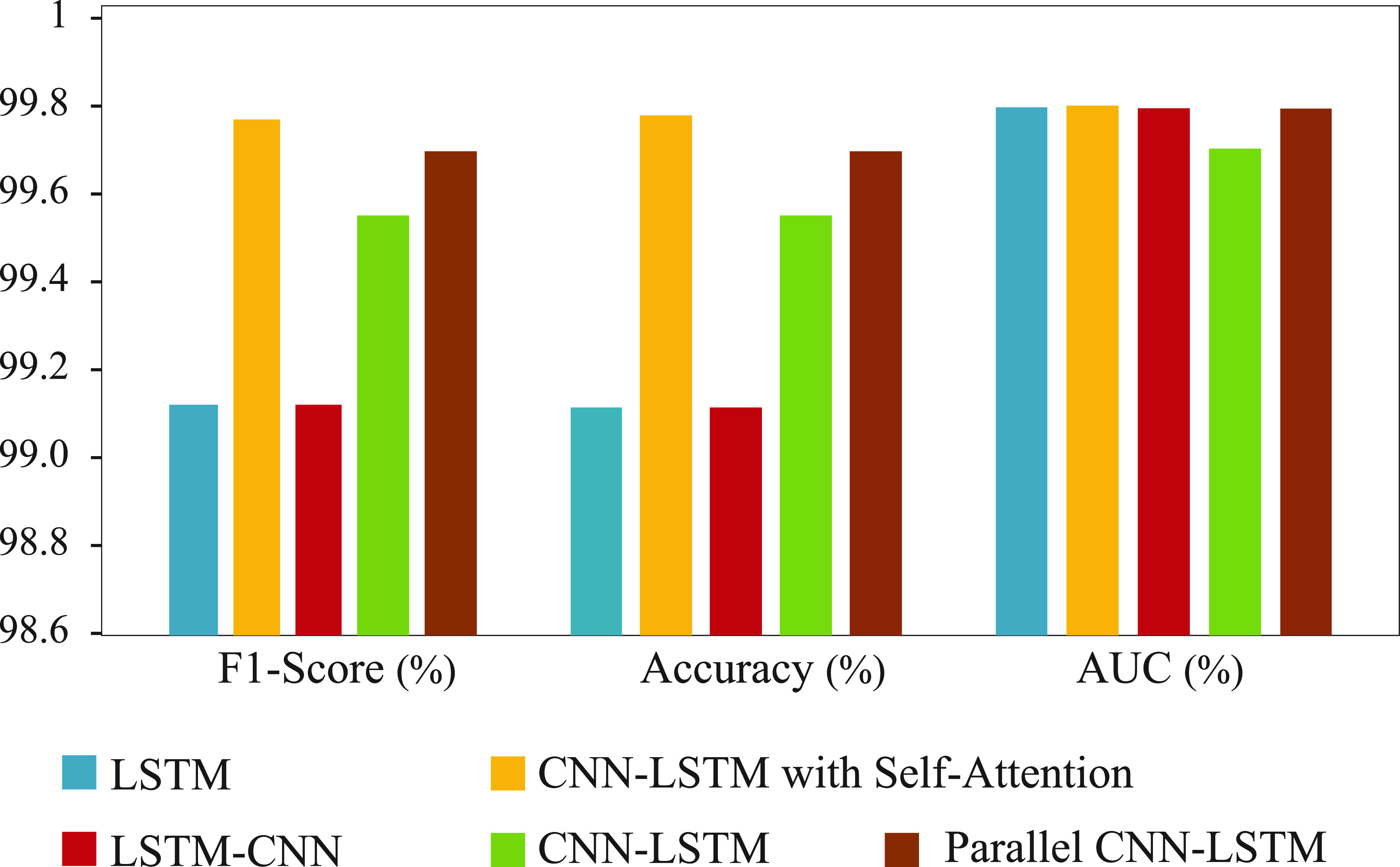
- Compared with prior models, the proposed model outperformed LSTM-CNN (95.56%) and CNN,LSTM (93.80%) on MHEALTH, and on UCI-HAR outperformed CNN-LSTM (92%), CNN (91.98%), Stacked LSTM (93%), and Res-LSTM (91.6%).
Methods
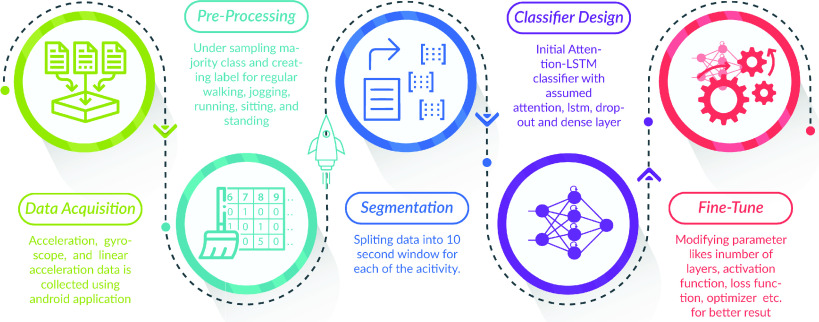
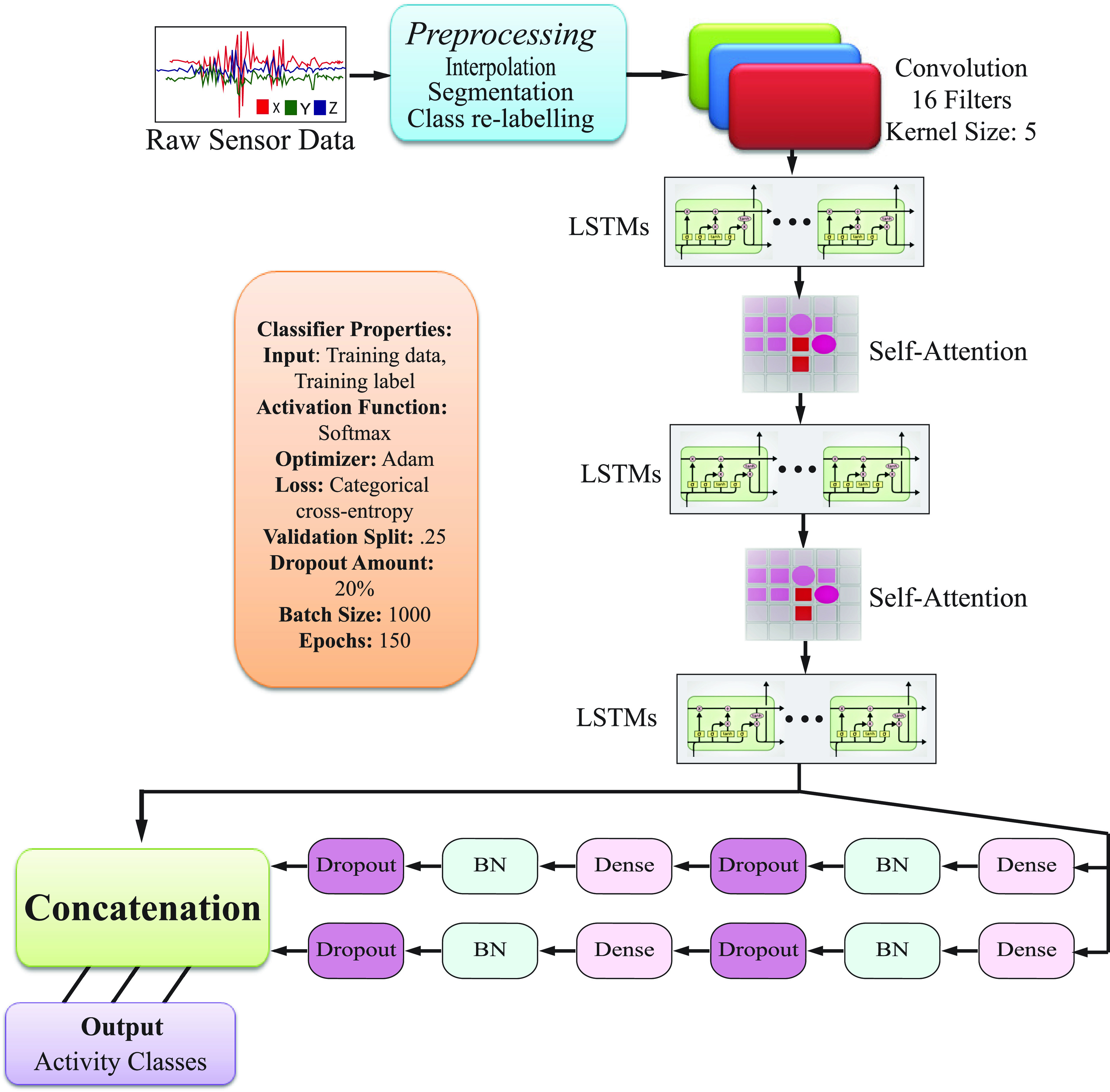
- Design: hybrid deep CNN-LSTM with self-attention; proposed M4 has 19 layers (CNN, LSTM, attention, dense, dropout, batch normalization, concatenate) with 633,188 trainable parameters, input size 10×9, trained for 150 epochs with batch size 1000, Adam optimizer, categorical cross-entropy, sigmoid/softmax activations.
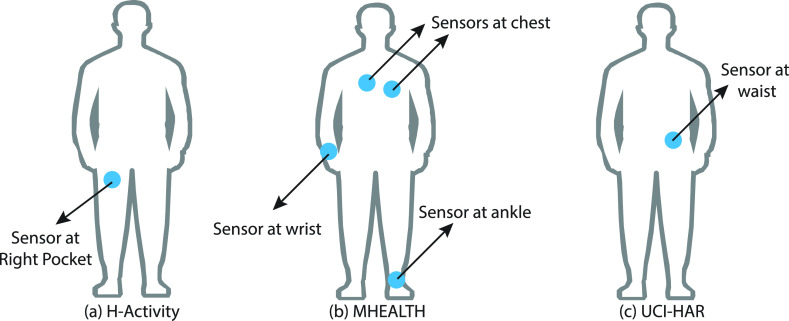
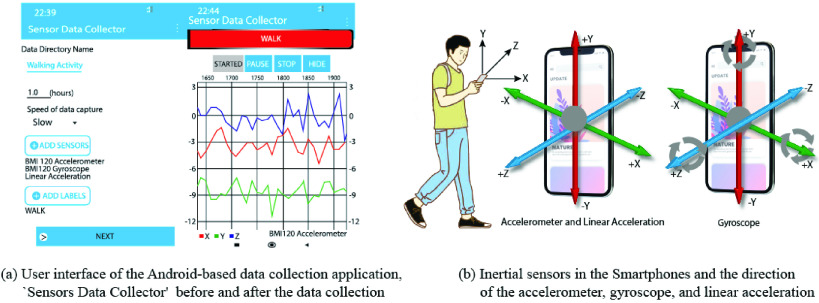
- Data: H-Activity was collected via an Android app from 10 volunteers aged 20–30, smartphone in the right trouser pocket, for 4 activities (sitting/standing, walking, jogging, running), at 10 Hz, yielding 48,920 samples with 9 features (accelerometer, gyroscope, linear acceleration on x/y/z); benchmark datasets were MHEALTH (10 volunteers, 12 activities, 50 Hz) and UCI-HAR (30 participants, 6 activities, 50 Hz, 10,299 samples).
- Preprocessing and analysis: under/oversampling, linear interpolation for missing values, sliding-window segmentation of size 10, one-hot encoding; evaluation used accuracy, precision, recall, F1, and AUC, with 25% of the whole dataset used for testing and four architectures (M1–M4) compared.
Limitations
- Stated: future work will add more participants and adjust the network structure; the paper also notes that comparison using final statistical measures with other existing approaches was not conducted because datasets and experimental settings differ.
- Stated/evident: H-Activity is small (10 volunteers, ages 20–30), uses a single sensor placement (right trouser pocket), a low 10 Hz sampling rate, and only four activities; the data were not subjected to noise cancellation, and the Android platform cannot read sensor data at a particular moment, only when a shift is detected.
- Evident: class imbalance required resampling; confusion remains between jogging/running and sitting/standing, and the MHEALTH confusion matrix shows low recall for some classes despite high overall accuracy.
Model-written summary. Check it against the paper before relying on it.
Integrity signals
Registry
Cites
Statistics
Figures
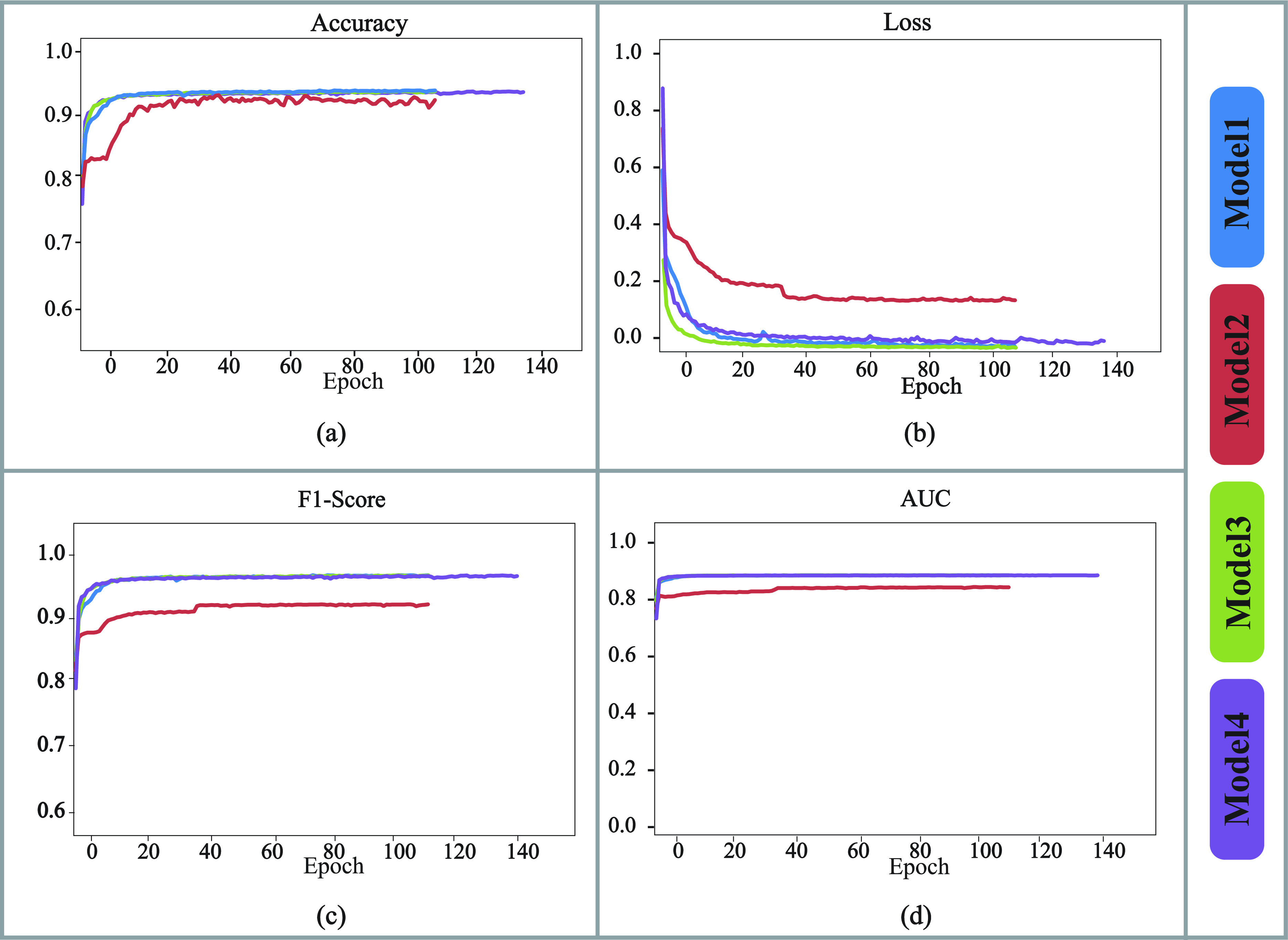
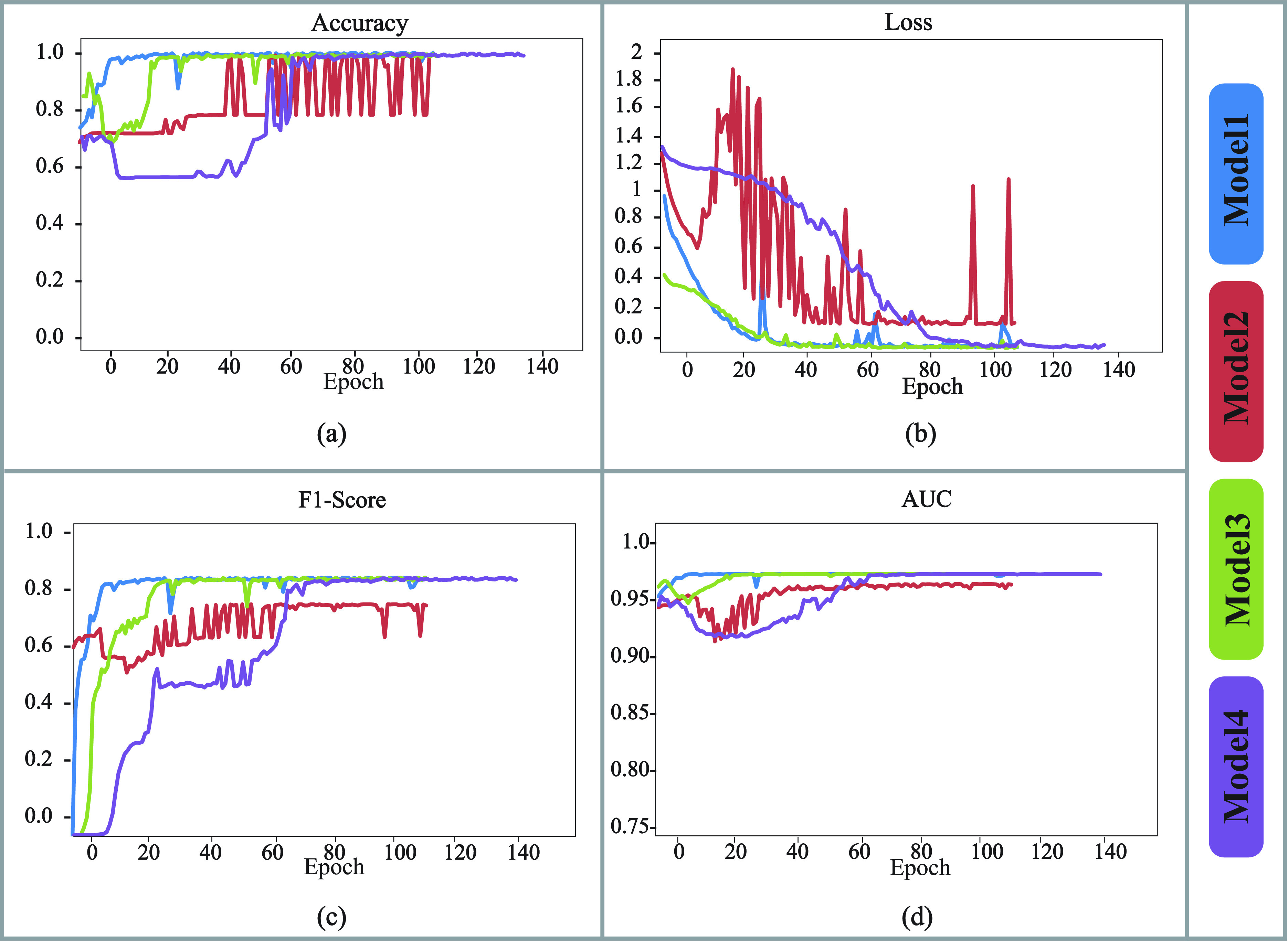
Verification
Claims the paper makes
2 Valid · 13 Not valid · 34 Not checked · 58 Own results and interpretations
At least one cited source doesn’t support this claim or points to a different paper, and none confirmed it — see the verdicts below.
In the paper
“deep learning norms are still underutilized for training time series of inertial sensor data for action detection [3], [5]–[8].”
§ Deep CNN-LSTM With Self-Attention Model for Human Activity Recognition Using Wearable Sensor > Introduction
What the sources say
- Disputedcites [3] J. Wang, Y. Chen, S. Hao, X. Peng, and L. Hu, “ Deep learning for sensor-based activity recognition: A survey,” Pattern Recognit. Lett., vol. 119, pp. 3– 11, Mar. 2019, doi: 10.1016/j.patrec.2018.02.010. sourceExperimental — accuracy not yet measured
Our copy of the survey states the opposite of the claim: the Abstract (p. 2) says 'deep learning based methods have been widely adopted for the sensor-based activity recognition tasks', and Section 3.1 (p. 4) states that body-worn inertial sensors (accelerometer, gyroscope, magnetometer) 'were widely used in deep learning based HAR', with the raw signal fed directly to the networks rather than hand-crafted features. Section 1 (p. 2) adds that deep learning 'is an ideal approach for HAR and has been widely explored in existing work'. The paper's remaining gaps (Section 7, p. 9: heavy reliance on labeled samples, distance from online/mobile deployment) concern supervision and on-device training, not underuse of deep learning on inertial time series. (LLM, conf=0.78)
Checked by a reasoning model — may be wrong.
- Not checked yetcites [5]–[8]
plain- Asserted: passes — The authors put it forward as true.
- Checkable: passes — It can be checked against evidence.
- Load-bearing: passes — The paper’s conclusions depend on it.
- Based: passes — The paper gives a reason why it holds.
- Disputed
A result the paper reports from its own data — it cites no other source for it, so there is none to check. The quote shows it is in the paper.
In the paper
“we have conducted the smartphone sensor-based raw data collection, namely H-Activity, using an Android-OS-based application for accelerometer, gyroscope, and linear acceleration.”
§ Deep CNN-LSTM With Self-Attention Model for Human Activity Recognition Using Wearable Sensor > Abstract
plain- Asserted: passes — The authors put it forward as true.
- Checkable: passes — It can be checked against evidence.
- Load-bearing: passes — The paper’s conclusions depend on it.
- Based: passes — The paper gives a reason why it holds.
A result the paper reports from its own data — it cites no other source for it, so there is none to check. The quote shows it is in the paper.
In the paper
“We proposed the deep CNN-LSTM with self-attention model for activity classification problem using our own dataset H-Activity as well as two public datasets; MHEALTH and UCI HAR.”
§ Deep CNN-LSTM With Self-Attention Model for Human Activity Recognition Using Wearable Sensor > Introduction
plainn = 10- Asserted: passes — The authors put it forward as true.
- Checkable: passes — It can be checked against evidence.
- Load-bearing: passes — The paper’s conclusions depend on it.
- Based: passes — The paper gives a reason why it holds.
A result the paper states — it cites no source for it, so there is none to check. The quote shows it is in the paper.
In the paper
“Our system is the combination of deep learning with self-attention model and wearable sensor-based human activity recognition framework that utilizes various smartphone sensors.”
§ Deep CNN-LSTM With Self-Attention Model for Human Activity Recognition Using Wearable Sensor > Introduction
plainn = 10- Asserted: passes — The authors put it forward as true.
- Checkable: passes — It can be checked against evidence.
- Load-bearing: passes — The paper’s conclusions depend on it.
- Based: passes — The paper gives a reason why it holds.
A result the paper states — it cites no source for it, so there is none to check. The quote shows it is in the paper.
In the paper
“a hybrid deep learning model is proposed, coupling convolutional neural network and long-short term memory network (CNN-LSTM), empowered by the self-attention algorithm to enhance the predictive capabilities of the system.”
§ Deep CNN-LSTM With Self-Attention Model for Human Activity Recognition Using Wearable Sensor > Abstract
plainstates a cause- Asserted: passes — The authors put it forward as true.
- Checkable: passes — It can be checked against evidence.
- Load-bearing: passes — The paper’s conclusions depend on it.
- Based: passes — The paper gives a reason why it holds.
29 more claims
Create a free account to see all 107 claims and to verify the 46 references still open.
- It may state two separate claims as one. 37
- Probably not a substantial claim. 52
Claims other papers make about this one
Each is checked against this paper’s own text: does it say what the citing paper says it does?
The source backs part of the claim, not all of it — or backs it for a different population, condition or comparison.
In the citing paper
“The architecture of BiGRU is simpler than that of BiLSTM, resulting in reduced computational overhead while effectively modeling long-term dependencies, which is essential for complex activities involving extended temporal sequences, such as conversational gestures. This differs from [24], in which LSTM-based models entail greater computational expenses.”
From Adaptive temporal attention mechanism and hybrid deep CNN model for wearable sensor-based human activity recognition (2025) · cites this paper as [24]
Experimental — accuracy not yet measuredThe source backs part of the claim, not all of it — or backs it for a different population, condition or comparison.
In the citing paper
“This leads to more reduced error rates in the confusion matrix (Fig. 8) when compared to CNN-BiGRU [10] and CNN-LSTM [24].”
From Adaptive temporal attention mechanism and hybrid deep CNN model for wearable sensor-based human activity recognition (2025) · cites this paper as [24]
Experimental — accuracy not yet measuredThe cited source says what the claim attributes to it.
In the citing paper
“This parallel design minimizes redundancy and improves efficiency relative to the sequential attention in [24] or the resource-intensive Transformer-based attention in [23].”
From Adaptive temporal attention mechanism and hybrid deep CNN model for wearable sensor-based human activity recognition (2025) · cites this paper as [24]
The cited source says what the claim attributes to it.
In the citing paper
“Previous studies, including [10, 18, 23, 24], have amalgamated convolutional neural networks (CNN), recurrent neural networks (RNN), and attention mechanisms;”
From Adaptive temporal attention mechanism and hybrid deep CNN model for wearable sensor-based human activity recognition (2025) · cites this paper as [24]
In the citing paper
“In contrast, models such as CNN-LSTM [24] and CNN-BiLSTM [18] utilize standard convolutions, which restrict their capacity to effectively capture a range of spatial scales.”
From Adaptive temporal attention mechanism and hybrid deep CNN model for wearable sensor-based human activity recognition (2025) · cites this paper as [24]
Self-check
Percentages, sums and reported differences re-computed from the paper’s own numbers.
Each contradiction between two passages listed here was confirmed by an independent check.
Rated major: it would touch a result — a value a result rests on, reported and recomputed p-values on opposite sides of the significance level, two passages that conflict with no sign which is right, or a cited work retracted before this paper was published.
In the paper
§ Deep CNN-LSTM With Self-Attention Model for Human Activity Recognition Using Wearable Sensor > Experimental Result Analysis > Evaluation on H-Activity, MHEALTH, and UCI-HAR Datasets
“There were 2714 properly categorized occurrences for the UCI-HAR data set, with total accuracy reaching 93.11%.”
§ Deep CNN-LSTM With Self-Attention Model for Human Activity Recognition Using Wearable Sensor > Experimental Result Analysis > Evaluation on H-Activity, MHEALTH, and UCI-HAR Datasets
“| Actual | Walk | 474 | 7 | 15 | 0 | 0 | 0 | 93.55 | | Actual | Up | 0 | 456 | 15 | 0 | 0 | 0 | 98.30 | | Actual | Down | 0 | 9 | 411 | 0 | 0 | 0 | 96.67 | | Actual | Sit | 0 | 22 | 0 | 396 | 71 | 2 | 74.95 | | Actual | Std | 0 | 49 | 0 | 99 | 440 | 0 | 82.70 | | Actual | Lay | 0 | 0 | 0 | 0 | 0 | 537 | 100 |”
Rated minor: it would not touch a result — a value no result rests on, a p-value that stays on the same side of the significance level, or a conflict that is clerical, resolved elsewhere in the paper, or outside its own findings.
In the paper
§ Deep CNN-LSTM With Self-Attention Model for Human Activity Recognition Using Wearable Sensor > Experimental Result Analysis > Hyper Parameter Selection
“The number of trainable parameters for these models was 152 902, 156 292, 197 508, and 633,188 respectively.”
§ Deep CNN-LSTM With Self-Attention Model for Human Activity Recognition Using Wearable Sensor > Experimental Result Analysis > Hyper Parameter Selection
“| Model M2 | 12 | LSTM, Dropout, BN, Dense | 197,508 | 196,484 | 1024 | | Model M3 | 11 | LSTM, Dropout, BN, Dense | 156,292 | 155,268 | 1024 |”
Rated minor: it would not touch a result — a value no result rests on, a p-value that stays on the same side of the significance level, or a conflict that is clerical, resolved elsewhere in the paper, or outside its own findings.
In the paper
§ Deep CNN-LSTM With Self-Attention Model for Human Activity Recognition Using Wearable Sensor > Experimental Result Analysis > Evaluation on H-Activity, MHEALTH, and UCI-HAR Datasets
“There were 4888 occurrences properly categorized for the H-Activity data set and the total accuracy was 99.93%.”
§ Deep CNN-LSTM With Self-Attention Model for Human Activity Recognition Using Wearable Sensor > Experimental Result Analysis > Evaluation on H-Activity, MHEALTH, and UCI-HAR Datasets
“| Actual | Sitting/Standing | 1222 | 1 | 0 | 0 | 99.92 | | | | Actual | Walking | 0 | 1223 | 0 | 0 | 100 | | | | Actual | Jogging | 0 | 1 | 1220 | 2 | 99.75 | | | | Actual | Running | 0 | 0 | 0 | 1223 | 100 | | |”
Rated minor: it would not touch a result — a value no result rests on, a p-value that stays on the same side of the significance level, or a conflict that is clerical, resolved elsewhere in the paper, or outside its own findings.
In the paper
“| Actual | Jog | 0 | 4 | 0 | 39 | 33 | 0 | 8 | 7 | 3 | 30157 | 243 | 226 | 90.11 | | |”
§ Deep CNN-LSTM With Self-Attention Model for Human Activity Recognition Using Wearable Sensor > Experimental Result Analysis > Evaluation on H-Activity, MHEALTH, and UCI-HAR Datasets
Reported 90.11 · recomputed 98.167318
Rated minor: it would not touch a result — a value no result rests on, a p-value that stays on the same side of the significance level, or a conflict that is clerical, resolved elsewhere in the paper, or outside its own findings.
In the paper
“| Actual | Walk | 0 | 0 | 0 | 30312 | 190 | 78 | 0 | 136 | 0 | 0 | 3 | 1 | 78.79 | | |”
§ Deep CNN-LSTM With Self-Attention Model for Human Activity Recognition Using Wearable Sensor > Experimental Result Analysis > Evaluation on H-Activity, MHEALTH, and UCI-HAR Datasets
Reported 78.79 · recomputed 98.671875
3 more findings
Create a free account to see every finding of this check.
Citations
Cites
Hochreiter, S., & Schmidhuber, J. (1997) · Neural Computation · doi:10.1162/neco.1997.9.8.1735 · Cited by 102,318 · cited 1×
“To address the challenge of long-term dependency, [51] proposed a novel neuron to the RNN group called LSTM.”
Learning long-term dependencies with gradient descent is difficult
Bengio, Y., Simard, P., & Frasconi, P. (1994) · IEEE Transactions on Neural Networks · doi:10.1109/72.279181 · Cited by 8,542 · cited 1×
“However, due to the disintegrating gradient problem, [50] states that RNN systems can only identify data for a short period of time.”
Activity recognition using cell phone accelerometers
Kwapisz, J. R., Weiss, G. M., & Moore, S. A. (2011) · ACM SIGKDD Explorations Newsletter · doi:10.1145/1964897.1964918 · Cited by 2,912 · cited 1×
“The way in which machine learning algorithms function was not to read a huge quantity of data at once, so that each entry in the H-Activity dataset was done with 10-sec segments, as recommended in [45].”
Deep Convolutional and LSTM Recurrent Neural Networks for Multimodal Wearable Activity Recognition
Ordóñez, F., & Roggen, D. (2016) · Sensors · doi:10.3390/s16010115 · Cited by 2,761 · cited 1×
“Proposed deep CNN-LSTM with self-attention model was compared with LSTM-CNN from Lyu et al. [53] and CNN-LSTM [54] under the same experimental scenario in order to further verify the model performance.”
A Survey on Human Activity Recognition using Wearable Sensors
Lara, O. D., & Labrador, M. A. (2013) · IEEE Communications Surveys & Tutorials · doi:10.1109/surv.2012.110112.00192 · Cited by 2,662 · cited 1×
“There have been numerous suggestions in the literature [3], [9]–[12] of traditional machine learning and profoundly trained methods for HAR using accelerometers over the last decade.”
Deep learning for sensor-based activity recognition: A survey
Wang, J., Chen, Y., Hao, S., Peng, X., & Hu, L. (2019) · Pattern Recognition Letters · doi:10.1016/j.patrec.2018.02.010 · Cited by 2,014 · cited 3×
“Wearable activity detectors, like the well-known Pedometer, are utilized in various healthcare applications for day-to-day fitness tracking [2], [3].”
Human activity recognition with smartphone sensors using deep learning neural networks
Ronao, C. A., & Cho, S.-B. (2016) · Expert Systems with Applications · doi:10.1016/j.eswa.2016.04.032 · Cited by 1,215
Nweke, H. F., Teh, Y. W., Al-garadi, M. A., & Alo, U. R. (2018) · Expert Systems with Applications · doi:10.1016/j.eswa.2018.03.056 · Cited by 930 · cited 1×
“Although deep learning techniques for machine learning have recently taken a lot of consideration in the research community, deep learning norms are still underutilized for training time series of inertial sensor data for action detection [3], [5]–[8].”
LSTM-CNN Architecture for Human Activity Recognition
Xia, K., Huang, J., & Wang, H. (2020) · IEEE Access · doi:10.1109/access.2020.2982225 · Cited by 851 · cited 3×
“…linear units (ReLU) are used by convolutional layers in the calculation of the feature maps, where the non-linear function is denoted like the following : In general, it is examined that the more convolution kernels are used, the more hidden features of the input samples could be extracted [48].”
mHealthDroid: A Novel Framework for Agile Development of Mobile Health Applications
Banos, O., Garcia, R., Holgado-Terriza, J. A., Damas, M., Pomares, H., Rojas, I., Saez, A., & Villalonga, C. (2014) · Lecture Notes in Computer Science · doi:10.1007/978-3-319-13105-4_14 · Cited by 583
Research works printed but not linked: 6
- J.-B. Yang, N. Nhut, P. San, X. li, and P. Shonali, “ Deep convolutional neural networks on multichannel time series for human activity recognition,” in Proc. IJCAI, Jul. 2015, pp. 3995– 4001.
- G. Weiss and J. Lockhart, “ The impact of personalization on smartphone-based activity recognition,” in Proc. AAAI Workshop, Jan. 2012.
- D. Anguita, A. Ghio, L. Oneto, X. Parra, and J. Reyes-Ortiz, “ A public domain dataset for human activity recognition using smartphones,” in Proc. 21st Int. Eur. Symp. Artif. Neural Netw., Comput. Intell. Mach. Learn., Jan. 2013, pp. 437– 442.
- Sensors Data Collector—Apps on Google Play. Accessed: Feb. 23rd, 2020. [Online]. Available: https://play.google.com/store/apps/details?id=com.opendata.labs.sensorsdatacollector
- A. Krizhevsky, I. Sutskever, and G. E. Hinton, “ Imagenet classification with deep convolutional neural networks,” in Proc. Adv. Neural Inf. Process. Syst., vol. 25, F. Pereira, C. J. C. Burges, L. Bottou, and K. Q. Weinberger, Eds. Red Hook, NY, USA: Curran Associates, 2012. [Online]. Available: https://proceedings.neurips.cc/paper/2012/file/c399862d3b9d6b76c8436e924a68c45b-Paper.pdf
- D. R. Francisco Javier Ordóñez, “ Deep convolutional and lstm recurrent neural networks for multimodal wearable activity recognition,” Sensors, vol. 16, no. 1, p. 115, Jan. 2016. PMC4732148 26797612 · DOI · Paper page
Cited by
Items 101–200 of 285
Balakrishnan, T. S., Jayalakshmi, D., Geetha, P., Raj, T. S., & Hemavathi, R. (2024) · Computer Methods in Biomechanics and Biomedical Engineering Imaging & Visualization · doi:10.1080/21681163.2024.2429402 · Cited by 7
Combined Activity Recognition Based on Continuous-wave Radar and Vision Transformer
Zhou, J., Sun, C., & Kim, Y. (2024) · IEEE Access · doi:10.1109/access.2024.3514140 · Cited by 10
Shah, H., & Holia, M. S. (2025) · Signal Processing Image Communication · doi:10.1016/j.image.2025.117308 · Cited by 8
Cemiloglu, A., & Akay, B. (2025) · Engineering Applications of Artificial Intelligence · doi:10.1016/j.engappai.2025.110788 · Cited by 5
Kiani, M., Shafaghi, H., Ghalati, A. G., & Moaiyeri, M. H. (2025) · IEEE Transactions on Instrumentation and Measurement · doi:10.1109/tim.2025.3568970 · Cited by 8
Hybrid Self-Attention-Based Human Activity Recognition Model for Consumer-Centric IoHT Devices
Bijrothiya, S., & Soni, V. (2025) · IEEE Transactions on Consumer Electronics · doi:10.1109/tce.2025.3575911 · Cited by 7
Research on Human Activity Recognition Algorithm Based on LSTM-1DCNN
Zhao, Y., Wang, X., Luo, Y., & Aslam, M. S. (2023) · Computers, materials & continua/Computers, materials & continua (Print) · doi:10.32604/cmc.2023.040528 · Cited by 10
Attention-Based CNN-LSTM for Enhanced Perception of Bone Milling States in Surgical Robots
Sun, J., Xia, G., Jiang, Z., Dai, Y., & Zhang, J. (2024) · IEEE Transactions on Instrumentation and Measurement · doi:10.1109/tim.2024.3415791 · Cited by 12
1-DCNN with Stacked LSTM Architecture for Human Activity Recognition Using Wearable Sensing Data
Krishnaleela, P., & Prakash, R. M. (2024) · IETE Journal of Research · doi:10.1080/03772063.2024.2402881 · Cited by 6
Wang, H., Yang, J., Cui, C., Tu, P., Li, J., Fu, B., & Xiang, W. (2023) · Expert Systems with Applications · doi:10.1016/j.eswa.2023.122696 · Cited by 8
Zhou, H., Sang, L., Luo, J., et al. (2024) · Proceedings of the Institution of Mechanical Engineers Part C Journal of Mechanical Engineering Science · doi:10.1177/09544062231223878 · Cited by 6
Improved Coyote Optimization Algorithm and Deep Learning Driven Activity Recognition in Healthcare
Alazwari, S., Eltahir, M. M. E., Almalki, N. S., Alzahrani, A., Alnfiai, M. M., & Salama, A. S. (2024) · IEEE Access · doi:10.1109/access.2024.3357989 · Cited by 11
A Privacy and Energy-Aware Federated Framework for Human Activity RecognitionPreprint
Khan, A. R., Manzoor, H. U., Ayaz, F., et al. (2023) · Preprints.org · doi:10.20944/preprints202310.0998.v1 · Cited by 6
Self-citationQuan, W., Tang, Y., Luo, W. H., & Zhang, L. (2025) · The Journal of Supercomputing · doi:10.1007/s11227-025-07576-1 · Cited by 5
A Framework for Daily Living Activity Recognition using Fusion of Smartphone Inertial Sensors Data
Khan, S., Shah, S. M. A., Noorani, S. H., Arsalan, A., Ehatisham-ul-Haq, M., Raheel, A., & Ahmed, W. (2023) · International Conference on Computing, Mathematics and Engineering Technologies (iCoMET) · doi:10.1109/icomet57998.2023.10099271 · Cited by 5
A CNN-MLP Deep Model for Sensor-based Human Activity Recognition
Nadia, A., Lyazid, S., Kazar, O., & Chibani, A. (2023) · International Conference on Innovations in Information Technology · doi:10.1109/iit59782.2023.10366481 · Cited by 6
A Hybrid Feature Selection Method for Human Activity Recognition
Saifi, R., Achroufene, A., Attoumi, H., et al. (2024) · International Conference on Pattern Analysis and Intelligent Systems (PAIS) · doi:10.1109/pais62114.2024.10541202 · Cited by 5
Wang, H., Wang, X., Lu, C., Yuan, M., Wang, Y., Yu, H., & Li, H. (2024) · IEEE Access · doi:10.1109/access.2024.3422256 · Cited by 8
Lopez, P. R., Oh, J.-H., Jeong, J. G., Jung, H., Lee, J.-H., Jaramillo, I. E., Chola, C., Lee, W. H., & Kim, T. (2022) · Applied Sciences · doi:10.3390/app13010379 · Cited by 7
Wang, Z., & Kang, K. (2025) · Scientific Reports · doi:10.1038/s41598-025-18444-6 · Cited by 5
Ayub, M., & El-Alfy, E.-S. M. (2025) · IEEE Access · doi:10.1109/access.2025.3631392 · Cited by 6
A Feature-Driven Hybrid Deep Learning for Human Activity Recognition in Holographic IoT Systems
Bijrothiya, S., & Soni, V. (2026) · IEEE Transactions on Consumer Electronics · doi:10.1109/tce.2026.3655723 · Cited by 5
Caption Generation for Sensing-Based Activity Using Attention-Based Learning Models
Pati, B., Sahoo, A. K., & Udgata, S. K. (2023) · IEEE Sensors Letters · doi:10.1109/lsens.2023.3347486 · Cited by 5
An Architecture for Human Activity Recognition Using TCN-Bi-LSTM HAR based on Wearable Sensor
Bijrothiya, S., & Soni, V. (2025) · Procedia Computer Science · doi:10.1016/j.procs.2025.03.261 · Cited by 6
Enhancing human activity recognition with TB-ConvAtt: A multi-dimensional attention framework
Hong-mei, Y., Wang, Y., Hu, R., Geng, Y., Wang, A., Zhou, X.-H., Yu, H., & Zhao, Q. (2025) · Biomedical Signal Processing and Control · doi:10.1016/j.bspc.2025.108314 · Cited by 5
Shallow Hierarchical CNN-LSTM for Activity Recognition to Integrate Postural Transition States
Tilley, D., & Martínez-Hernández, U. (2023) · Proceedings of IEEE Sensors/Proceedings of IEEE Sensors ... · doi:10.1109/sensors56945.2023.10325044 · Cited by 6
Kumar, P., & Suresh, S. (2024) · Evolving Systems · doi:10.1007/s12530-024-09570-z · Cited by 4
Nasir, I., Khan, M. H., & Farid, M. S. (2025) · Journal of the Franklin Institute · doi:10.1016/j.jfranklin.2025.108218 · Cited by 3
Talaat, M., Si, X. A., & Xi, J. (2023) · Journal of Respiration · doi:10.3390/jor3040022 · Cited by 3
Panneerselvam, V., & Thiagarajan, R. (2024) · Signal Image and Video Processing · doi:10.1007/s11760-024-03061-z · Cited by 3
Research on TCN Model Based on SSARF Feature Selection in the Field of Human Behavior Recognition
Zhang, W., Yu, G., & Deng, S. (2024) · IET Biometrics · doi:10.1049/2024/4982277 · Cited by 3
Debnath, A. K., Kim, Y., & Byun, Y.-C. (2025) · IEEE Access · doi:10.1109/access.2025.3574659 · Cited by 7
An Improved SVM Method for Movement Recognition of Lower Limbs by MIMU and sEMG
Yun, X., Xu, L., Gao, L., Zhanhao, L., & Bohan, S. (2023) · International Journal of Advanced Computer Science and Applications · doi:10.14569/ijacsa.2023.0140113 · Cited by 3
A Hybrid Deep Learning-Based Approach for Human Activity Recognition Using Wearable Sensors
Sharma, D., Roy, A., Bag, S. P., Singh, P. K., & Badr, Y. (2023) · Studies in big data · doi:10.1007/978-3-031-40688-1_11 · Cited by 7
Analysis of Android-Based Applications in Physical Education and Sports: Systematic Review
Ardha, M. A. A., Nurhasan, N., Nur, L., Chaeroni, A., Bikalawan, S. S., & Yang, C. B. (2024) · Retos · doi:10.47197/retos.v57.107158 · Cited by 16
WearableMil: An End-to-End Framework for Military Activity Recognition and Performance Monitoring
Gahtan, B., Funk, S., Ketko, I., Kodesh, E., Kuflik, T., & Bronstein, A. M. (2025) · IEEE International Conference on Healthcare Informatics (ICHI) · doi:10.1109/ichi64645.2025.00075 · Cited by 3
Chen, J., Yang, J., & Wang, Z. (2025) · Alexandria Engineering Journal · doi:10.1016/j.aej.2025.04.074 · Cited by 2
Lin, X.-Q., Lin, C.-J., Jhang, J., & Liang, S. (2025) · International Journal of Fuzzy Systems · doi:10.1007/s40815-025-02094-x · Cited by 3
Real-Time Boiler Fault Detection Using the Multimodal GCA Model Optimized by GVSAO
Xu, Z., Guo, S., & Mou, G. (2025) · IEEE Sensors Journal · doi:10.1109/jsen.2025.3608577 · Cited by 2
Lu, L., & Deng, T. (2025) · Biomedical Signal Processing and Control · doi:10.1016/j.bspc.2025.109141 · Cited by 3
Houssein, E. H., Mahdy, M. A., Kayed, M., Ouyang, H., & Mohamed, W. M. (2025) · Archives of Computational Methods in Engineering · doi:10.1007/s11831-025-10462-x · Cited by 6
Machine Learning-Empowered Depression Detection With Wearable Skin Electronics: A Review
Xu, Y., Zhao, Z., Zhu, H., Lai, S., Jia, Y., & Liu, G. (2026) · IEEE Sensors Journal · doi:10.1109/jsen.2026.3660322 · Cited by 3
Zhang, S.-Z., Yang, H.-Z., & Gao, Y. (2026) · Scientific Reports · doi:10.1038/s41598-026-41195-x · Cited by 5
Brery, A. F., Gallardo-Antolín, A., Fakhry, M., & González‐Carrasco, I. (2026) · Expert Systems with Applications · doi:10.1016/j.eswa.2026.132415 · Cited by 5
Wang, J., Zhang, K., Zhao, Y., Wang, X., & Aslam, M. S. (2023) · Computers, materials & continua/Computers, materials & continua (Print) · doi:10.32604/cmc.2023.040506 · Cited by 3
Inertial Sensor Based Human Activity Identification System Using CNN- LSTM Deep Learning Technique
Supriya, S., Shukla, A., & Manchanda, M. (2023) · IEEE Uttar Pradesh Section International Conference on Electrical, Electronics and Computer Engineering (UPCON) · doi:10.1109/upcon59197.2023.10434925 · Cited by 2
Human Activity Recognition Using CNN-LSTM-GRU Model
Pandey, G., Karn, A. K., & Jha, M. (2024) · International Research Journal on Advanced Engineering Hub (IRJAEH) · doi:10.47392/irjaeh.2024.0125 · Cited by 6
Manoj Kumar, R., Bala Subramanian, S., & Pooja, S. (2024) · International Conference on Control and Robotics Engineering (ICCRE) · doi:10.1109/iccre61448.2024.10589755 · Cited by 2
Postural Sway Detection using Kolmogorov-Arnold Network as Siamese Model
Nehary, E. A., Rajan, S., & Andò, B. (2024) · doi:10.1109/issi63632.2024.10720498 · Cited by 2
Rajesh, N., Sarojadevi, H., Nitya, S., et al. (2024) · doi:10.1109/ssitcon62437.2024.10796571 · Cited by 2
SSARS: Secure smart-home activity recognition system
Palagan, C. A., Raj, T. S. R., Pillai, N. M., & Yamini, K. A. P. (2025) · Computers & Electrical Engineering · doi:10.1016/j.compeleceng.2025.110203 · Cited by 3
Non-Invasive Monitoring of Alzheimer’s patients through WiFi Channel State Information
Turetta, C., Demrozi, F., Franceschi, S., Zamboni, D., & Pravadelli, G. (2023) · International Workshop on Advances in Sensors and Interfaces (IWASI) · doi:10.1109/iwasi58316.2023.10164475 · Cited by 3
Intelligent Surveillance Framework for Physical Abuse DetectionPreprint
Srividya, M. S., & Anala, M. R. (2023) · Research Square · doi:10.21203/rs.3.rs-3423578/v1 · Cited by 2
Hybrid Neuromorphic‐Federated Learning for Activity Recognition Using Multi‐modal Wearable Sensors
Khan, A. R., Manzoor, H. U., Ayaz, F., Imran, M. A., & Zoha, A. (2024) · Wiley eBooks · doi:10.1002/9781394257744.ch6 · Cited by 2
Self-citationAhangarani, D., Shirazi, M., & Ashraf, N. (2023) · International Conference on the Internet of Things (IoT) · doi:10.1109/iot60973.2023.10365342 · Cited by 1
Automated Improved Human Activity Recognition using Ensemble Modeling
Das, S., Maity, A., Jana, R., Biswas, R., Biswas, A., & Samanta, P. K. (2024) · International Conference on Recent Advances in Electrical, Electronics, Ubiquitous Communication, and Computational Intelligence (RAEEUCCI) · doi:10.1109/raeeucci61380.2024.10547875 · Cited by 2
A Human Activity Recognition model based on CNN and Transformer
Wang, M., Liu, R., & Xiong, Y. (2024) · Journal of Physics Conference Series · doi:10.1088/1742-6596/2816/1/012101 · Cited by 1
Human Activity Recognition with Unsupervised Learning of Event Logs
Θεοδωροπούλου, Γ., Bousdekis, A., Voulodimos, A. S., Ghazanfarpour, D., & Miaoulis, G. (2024) · Journal of Computer Information Systems · doi:10.1080/08874417.2024.2401049 · Cited by 1
Detection of Autism Spectrum Disorder Using Deep Learning Model
Siva Shankari, B., & Velammal, B. L. (2024) · International Conference on Innovative Computing, Intelligent Communication and Smart Electrical Systems (ICSES) · doi:10.1109/icses63760.2024.10910700 · Cited by 1
A Temporal-Channel-Spatial Attention Network for Skiing Recognition Based on Multigraph Generation
Zhang, Y., Fei, Q., Chen, Z., & Liu, X. (2025) · IEEE Transactions on Instrumentation and Measurement · doi:10.1109/tim.2025.3551001 · Cited by 6
Subari, N., Ghazali, K. H., & Ji, Y. (2025) · IEEE Access · doi:10.1109/access.2025.3567456 · Cited by 1
Sugandhi, R. R., Palayya, A. C. R., Pallissery, R., Paul, S. J., & Paul, S. H. J. (2025) · AIP conference proceedings · doi:10.1063/5.0269335 · Cited by 1
Ayub, M., & El-Alfy, E.-S. M. (2025) · Lecture notes in computer science · doi:10.1007/978-981-96-6588-4_15 · Cited by 2
A learning behavior classification model based on classroom meta-action sequences
Shou, Z., Yuan, X., Li, D., Mo, J., Zhang, H., Hua, Y., & Wu, Z. (2025) · Scientific Reports · doi:10.1038/s41598-025-06901-1 · Cited by 1
Advancing Human Activity Recognition Using Ensemble Deep CNN-GRU Network
Khan, M. H., Ashfaq, N., Asif, A., & Farid, M. S. (2025) · Lecture notes in networks and systems · doi:10.1007/978-3-031-91235-1_8 · Cited by 1
Jaishankar, B., Sobya, D., Porkodi, V., & Vellingiri, G. (2025) · International Journal of Communication Systems · doi:10.1002/dac.70260 · Cited by 1
Exploring Dimensionality with Knowledge Distillation for Human Activity Recognition
Nandi, D., Singh, P. K., & Chowdhury, C. (2025) · Human-Centric Intelligent Systems · doi:10.1007/s44230-025-00112-7 · Cited by 3
Internet of Things Dataset for Human Operator Activity Recognition in Industrial Environment
Forkan, A. R. M., Jayaraman, P. P., Antonmeryl, C., Montori, F., Banerjee, A., Fizza, K., & Georgakopoulos, D. (2025) · ACM International Conference on Information and Knowledge Management (CIKM) · doi:10.1145/3746252.3761649 · Cited by 1
Zhang, Z., & Wang, X. (2025) · Scientific Reports · doi:10.1038/s41598-025-34288-6 · Cited by 5
Hybrid Deep Learning Methods for Human Activity Recognition Based on Mobile Sensor Data
Ahmed, S. A., Hedar, A.-R., & Mohammed, M. K. (2025) · International Conference on Future Telecommunications and Artificial Intelligence (IC-FTAI) · doi:10.1109/ic-ftai67960.2025.11384510 · Cited by 1
Self-citationMultimodal Fusion-Based Human State Recognition Framework for Medical Applications
Han, Y., Jiang, P., Tian, Y., Zhang, Y., & Ding, H. (2026) · IEEE Sensors Journal · doi:10.1109/jsen.2026.3664191 · Cited by 1
Matta, A. A. S., & Manukonda, V. P. C. S. R. (2026) · Frontiers in Big Data · doi:10.3389/fdata.2026.1770989 · Cited by 1
Wang, Q., & Xia, C. (2025) · International Conference on Cyberworlds (CW) · doi:10.1109/cw68232.2025.00058 · Cited by 1
Gong, L., & Sun, L. (2025) · International Conference on Computational Modeling, Simulation and Data Analysis (CMSDA) · doi:10.1145/3796731.3796775 · Cited by 1
Artificial intelligence-empowered multi-scale data integration for precision exercise biomedicine
Li, J., Song, H., Ge, Z., & Luo, S. (2026) · Translational Exercise Biomedicine · doi:10.1515/teb-2026-0009 · Cited by 1
Enkhbayar, D., Oh, S., Lee, J., Kim, M., Urtnasan, E., & Key, J. (2026) · JMIR mhealth and uhealth · doi:10.2196/91479 · Cited by 1
Yang, K., Jia, Q., Huang, J., et al. (2026) · Medical & Biological Engineering & Computing · doi:10.1007/s11517-026-03649-2 · Cited by 1
Recognizing Stationary and Locomotion Activities using LSTM-XGB with Smartphone Sensors
Hnoohom, N., Chotivatunyu, P., Mekruksavanich, S., et al. (2022) · IEEE International Conference on Software Engineering and Service Science (ICSESS) · doi:10.1109/icsess54813.2022.9930285 · Cited by 1
Deep Learning-Based Human Activity Recognition Algorithms: A Comparative Study
Lu, Z. (2023) · IEEE International Conference on Image Processing and Computer Applications (ICIPCA) · doi:10.1109/icipca59209.2023.10257913 · Cited by 2
Human Abnormal Activity Prediction of Long Short-Term Memory using CNNs and RNNs in Deep Learning
Prathima, C., Suhel, S. M., Rajeti, R. S., Naik, M. S. K., Chaithanya, S., & Reddy, N. P. (2024) · International Conference on Science Technology Engineering and Mathematics (ICONSTEM) · doi:10.1109/iconstem60960.2024.10568890 · Cited by 1
Real-Time 3D Indoor Positioning with Human Activity Transition Recognition on Mobile Devices
Liang, W., Wang, Z., Guo, S. H., & Pun, M.-O. (2024) · International Conference on Communications · doi:10.1109/icc51166.2024.10623070 · Cited by 1
To Build and Evaluate Irregular Human Activity Detection System Using Deep CNN-LSTM Methodology
Pandey, V. P., Gulvi, T., Waghmare, S. R., Dalvi, P., Kesarkar, R., & Dayal, D. (2024) · IEEE International Conference on Advances in Computing Research on Science Engineering and Technology (ACROSET) · doi:10.1109/acroset62108.2024.10743555 · Cited by 5
SABO–LSTM: A Novel Human Behavior Recognition Method for Wearable Devices
Zhang, W., Yu, G., & Deng, S. (2024) · Journal of Engineering · doi:10.1155/je/5604741 · Cited by 1
CVLSTMLW-CNN: A IoT-Enabled Hybrid CNN Model for Heart Disease Prediction
Singh, S., Singh, A., Singh, S., & Khurana, R. (2025) · Information systems engineering and management · doi:10.1007/978-3-031-74885-1_23 · Cited by 2
THE CLASSIFICATION AND RECOGNITION OF WRESTLING INJURY BASED ON DEEP LEARNING
ZHANG, Y. (2025) · Journal of Mechanics in Medicine and Biology · doi:10.1142/s0219519425400433 · Cited by 1
Overview of the Application of Artificial Intelligence in Sports Events
Dong, H. (2024) · doi:10.1145/3723936.3723986 · Cited by 1
Gao, L., & Konomi, S. (2022) · Sensors · doi:10.3390/s23010113 · Cited by 2
Withdrawn: Leveraging LDA Feature Extraction to Augment Human Activity Recognition AccuracyPreprint
Vazan, M., Sharifi, E., Farahani, H., & Madadi, S. (2024) · Preprints.org · doi:10.20944/preprints202406.1528.v1 · Cited by 1
A Wearable Sensors Based Elderly Activity Recognition Model Using Deep LearningPreprint
Arafa, A., Harfoush, H., El-Fishawy, N. A., & Radad, M. A. (2025) · Research Square · doi:10.21203/rs.3.rs-6944419/v1 · Cited by 1
Li, J., Zhang, Q., & Zhai, C. (2023) · Internet Technology Letters · doi:10.1002/itl2.424
Human activity recognition method using joint deep learning and acceleration signal
Meqdad, M. N., Hussein, A. H., Husain, S. O., Jawad, A. M., & Kadry, S. (2023) · IAES International Journal of Artificial Intelligence · doi:10.11591/ijai.v12.i3.pp1459-1467
Predicting Rapid Impact Compaction Outcomes with Transformer-Based Deep Learning ModelsPreprint
Youwai, S., & Detcheewa, S. (2023) · Research Square · doi:10.21203/rs.3.rs-3349505/v1 · Cited by 1
A Real Time Implementation of SpectroNet for Music Player Application
Amadeus, C., Syafalni, I., Sutisna, N., & Adiono, T. (2023) · doi:10.1109/iceei59426.2023.10346736
Future Human Activity Prediction Using Wavelet And Lstm
Al-juaifari, M. K. R., & Athari, A. A. (2023) · The Journal of The University of Duhok · doi:10.26682/csjuod.2023.26.2.49 · Cited by 1
Helmi, A. M., Al-qaness, M., Dahou, A., Toureche, N., & Elaziz, M. A. (2024) · SSRN Electronic Journal · doi:10.2139/ssrn.4705410
Wang, J., Li, C., Zhang, B., et al. (2024) · Research Square · doi:10.21203/rs.3.rs-4379588/v1
Dhohada, C., & Sumalatha, K. (2024) · International Conference on Inventive Computation Technologies (ICICT) · doi:10.1109/icict60155.2024.10544460
Zhang, Y., Wang, S., Chen, Z., Liu, B., Liu, J., Yang, H. W., Hu, Y., Fu, Y., & Wu, Q. (2024) · SSRN Electronic Journal · doi:10.2139/ssrn.4874890
A Human Activity Determination Predicting Abnormality Using SVM Approach for Mining Field Workers
Nirmala, S., & Priya, R. A. (2024) · International Conference on Circuit, Power and Computing Technologies · doi:10.1109/iccpct61902.2024.10673253
IoT-Enabled Health Assistance for Post-disaster Scenarios
Hossain, S., Sarkar, R. R., Yousuf, M., et al. (2024) · Lecture notes in networks and systems · doi:10.1007/978-981-97-3937-0_44
Self-citation
Metadata
- Authors
- Khatun, M. A., Yousuf, M. A., Ahmed, S., Uddin, M. Z., Alyami, S. A., Al-Ashhab, S., Akhdar, H. F., Khan, A., Azad, A., & Moni, M. A.
- Affiliations
- Jahangirnagar University (BD)
- SINTEF Digital (NO)
- Imam Mohammad ibn Saud Islamic University (SA)
- The University of Queensland (AU)
- Swinburne University of Technology (AU)
- Corresponding author
- Moni, Mohammad Ali
- ORCID
- Venue
- IEEE Journal of Translational Engineering in Health and Medicine
- Published
- 2022
- Volume
- 10
- Pages
- 1-16
- ISSN
- 2168-2372 (ISSN-L)
- PMC
- PMC9252338
- OpenAlex
- W4285079306
- Cited by
- 288
- References
- 61
- Citations by year
- 2026: 68 · 2025: 84 · 2024: 75 · 2023: 54 · 2022: 7
- FWCI
- 17.97
- Type
- journal article
- Language
- en
- Open access
- gold
- doi.org
- Locations
- IEEE Journal of Translational Engineering in Health and Medicine (publishedVersion, cc-by)
- PubMed Central (publishedVersion, cc-by)
- PubMed (publishedVersion)
- Charles Sturt University Research Output (CRO) (submittedVersion, cc-by-nc-nd)
- DOAJ (DOAJ: Directory of Open Access Journals) (submittedVersion)
- NORA - Norwegian Open Research Archives (submittedVersion, cc-by)
- Greater South Information System
- Funders
- Deanship of Scientific Research at Imam Mohammad Ibn Saud Islamic University through Research Group (RG-21-09-20)
- Topics
- Physical Sciences › Computer Science › Computer Vision and Pattern Recognition › Context-Aware Activity Recognition Systems
- Physical Sciences › Engineering › Biomedical Engineering › Gait Recognition and Analysis
- Health Sciences › Medicine › Public Health, Environmental and Occupational Health › Physical Activity and Health
- Keywords
- human activity recognition, wearable sensors, smartphone sensors, inertial sensors, accelerometer, gyroscope, linear acceleration, CNN-LSTM, self-attention, mobile health, UCI-HAR, Android application
- MeSH terms
- Wearable Electronic Devices, Algorithms, Attention, Humans, Human Activities, Neural Networks, Computer
About these checks
Registry, retraction, Cites and statistics results are computed, not judged, with one exception: a printed reference that no index lists is read once by a model before it counts as a citation error. Claims are extracted by a model and kept only when their quote appears verbatim in the text; each cited source is then checked, with a model’s help, for whether it says what the claim relies on. Those verdicts can be wrong — read the claim’s quote and the cited source before relying on one.
The claim verdicts this report counts are experimental: their accuracy is not yet measured.
A language model drew the claims from the paper on 2026-10-07, under version 3 of the claim definition (model deepseek-v4.1-flash, prompt extract-v3).
A second model labelled each claim on 2026-10-07 (model jev-1.13-20260917, definition revision gold-guideline-v0.2).
Cited sources are checked with a language model’s help (qwen3.8-omni-flash).
Statistics and arithmetic are recomputed, not judged.
Confidence bands are shown only for fields calibrated on our annotated test set. None is calibrated yet, so no band is shown.
What counts as a claim ›How we measure confidence ›How we check this ›
Are you an author, or do you see a problem with this page? Request a review
Data sources
Bibliographic data: Semantic Scholar, OpenAlex, Crossref.
Contains information from the Semantic Scholar Academic Graph Datasets, made available under the ODC Attribution License (ODC-BY 1.0).
Semantic Scholar’s data is described in: Kinney, R., et al. (2023). The Semantic Scholar Open Data Platform. arXiv:2301.10140.
