

Deep CNN-LSTM With Self-Attention Model for Human Activity Recognition Using Wearable Sensor
Open accessThe DOI matches its Crossref record; 55 of the 61 references it cites were found in a registry or an index; 5 of the 51 sources its claims cite were checked for support.
Abstract
Human Activity Recognition (HAR) systems are devised for continuously observing human behavior - primarily in the fields of environmental compatibility, sports injury detection, senior care, rehabilitation, entertainment, and the surveillance in intelligent home settings. Inertial sensors, e.g., accelerometers, linear acceleration, and gyroscopes are frequently employed for this purpose, which are now compacted into smart devices, e.g., smartphones. Since the use of smartphones is so widespread now-a-days, activity data acquisition for the HAR systems is a pressing need. In this article, we have conducted the smartphone sensor-based raw data collection, namely H-Activity, using an Android-OS-based application for accelerometer, gyroscope, and linear acceleration. Furthermore, a hybrid deep learning model is proposed, coupling convolutional neural network and long-short term memory network (CNN-LSTM), empowered by the self-attention algorithm to enhance the predictive capabilities of the system. In addition to our collected dataset (H-Activity), the model has been evaluated with some benchmark datasets, e.g., MHEALTH, and UCI-HAR to demonstrate the comparative performance of our model. When compared to other models, the proposed model has an accuracy of 99.93% using our collected H-Activity data, and 98.76% and 93.11% using data from MHEALTH and UCI-HAR databases respectively, indicating its efficacy in recognizing human activity recognition.We hope that our developed model could be applicable in the clinical settings and collected data could be useful for further research.
Overview
CoChat Summary
TL;DR
The paper proposes a deep CNN-LSTM model with self-attention for smartphone/wearable-sensor human activity recognition, trained on a new H-Activity dataset and evaluated on MHEALTH and UCI-HAR. It reports 99.93% accuracy on H-Activity, 98.76% on MHEALTH, and 93.11% on UCI-HAR.
Key findings
- The proposed M4 model achieved 99.93% accuracy on H-Activity (4,888 correctly classified instances), 98.76% on MHEALTH, and 93.11% on UCI-HAR.
- On H-Activity, recall was 99.92% for sitting/standing, 100% for walking, 99.75% for jogging, and 100% for running; precision was 100%, 99.83%, 100%, and 99.83%, respectively, with weak differentiation between jogging and running.
- On UCI-HAR, sitting and standing were confused (recall 74.95% and 82.70%, respectively); on MHEALTH, the confusion matrix shows low recall for some classes (e.g., Std 19.90%, Sit 42.79%) despite 98.76% overall accuracy.
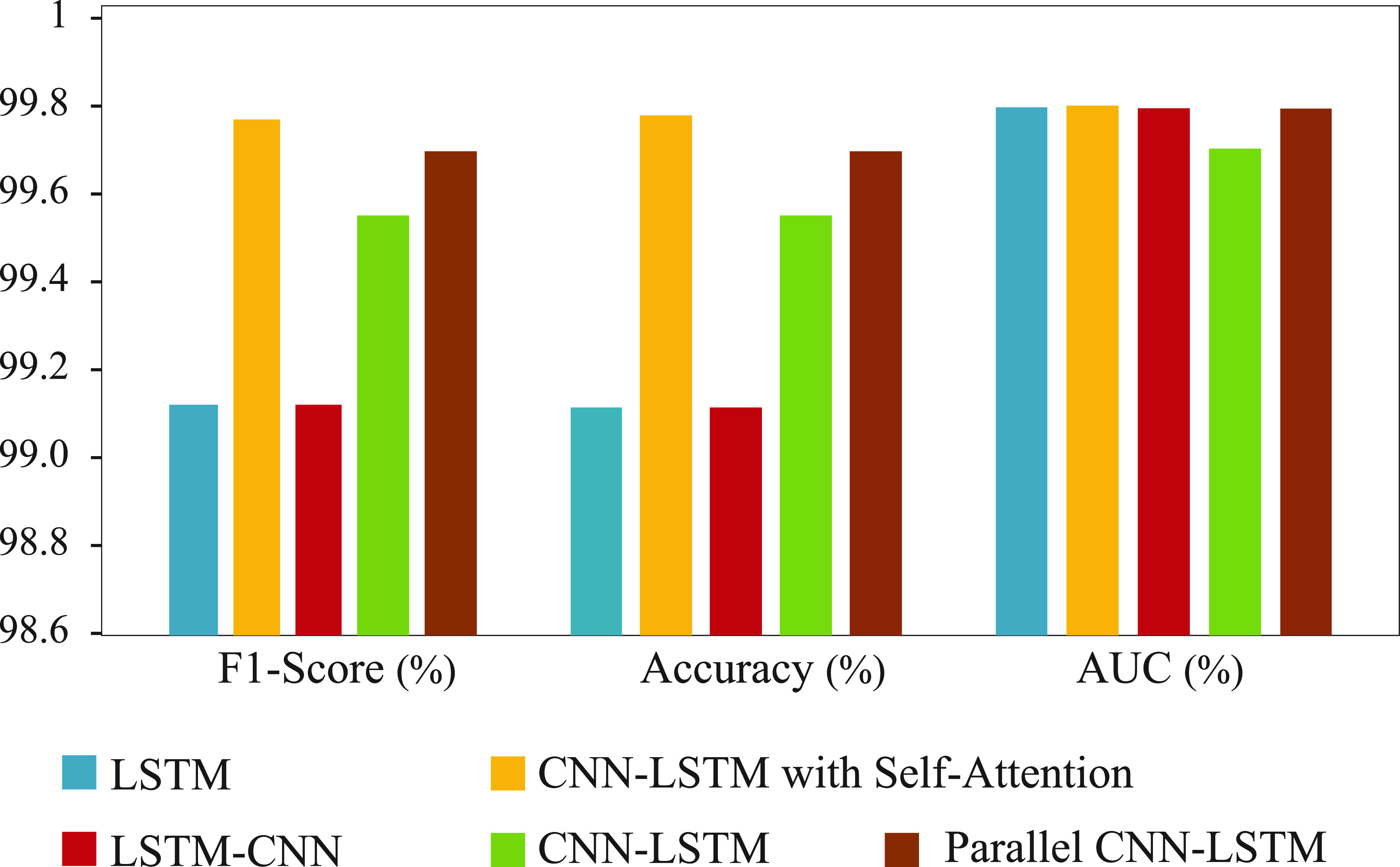
- Compared with prior models, the proposed model outperformed LSTM-CNN (95.56%) and CNN,LSTM (93.80%) on MHEALTH, and on UCI-HAR outperformed CNN-LSTM (92%), CNN (91.98%), Stacked LSTM (93%), and Res-LSTM (91.6%).
Methods
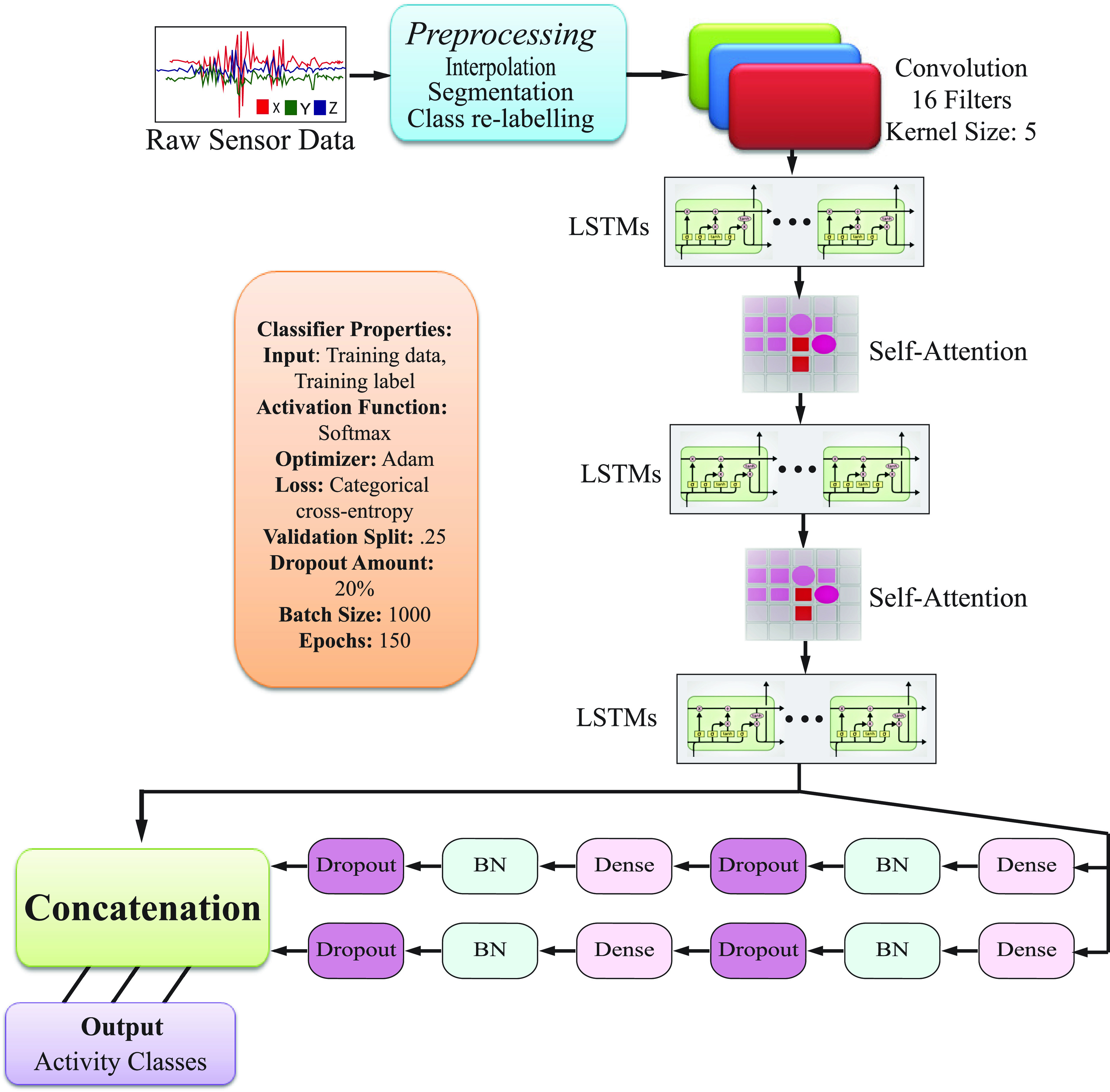
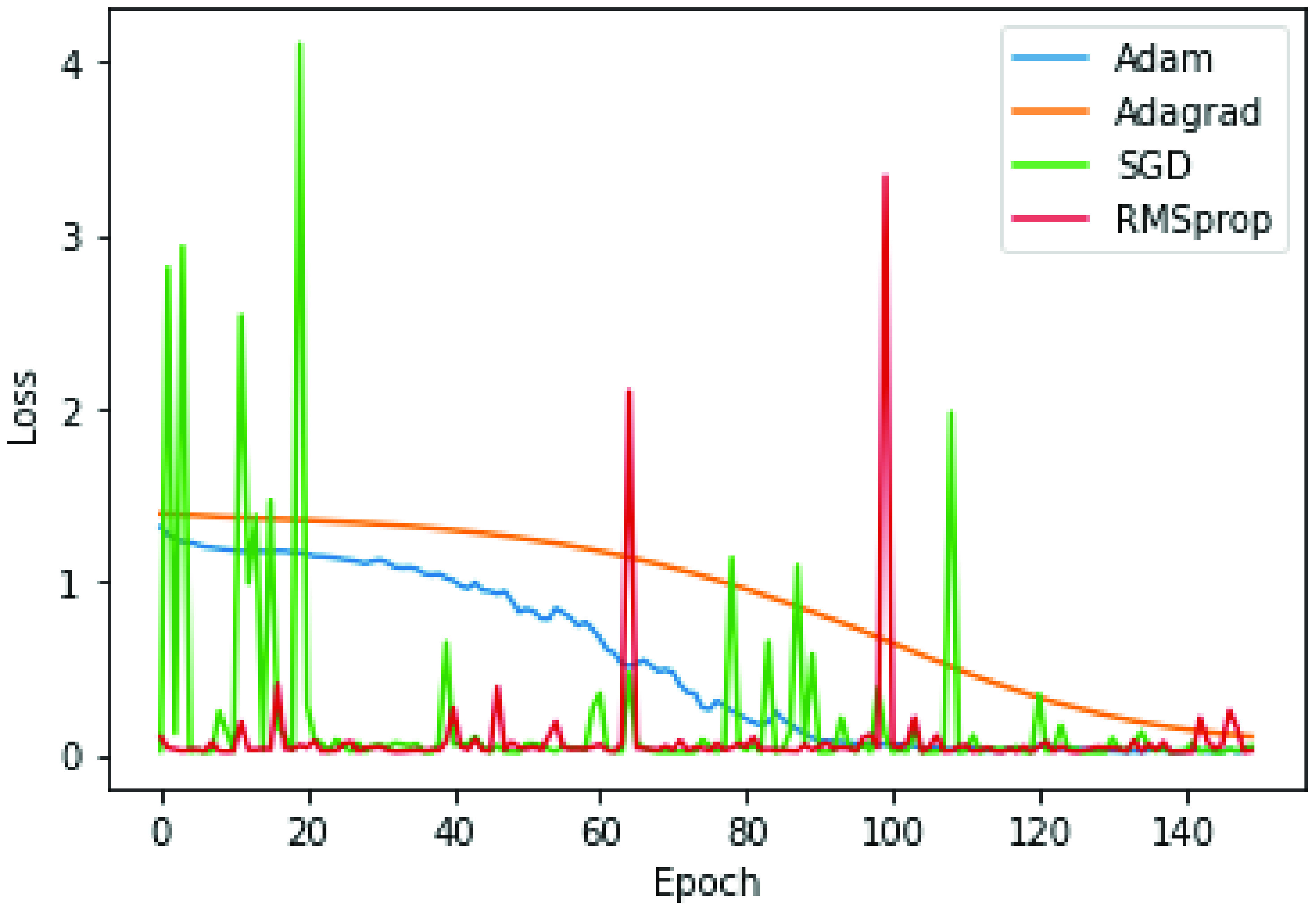
- Design: hybrid deep CNN-LSTM with self-attention; proposed M4 has 19 layers (CNN, LSTM, attention, dense, dropout, batch normalization, concatenate) with 633,188 trainable parameters, input size 10×9, trained for 150 epochs with batch size 1000, Adam optimizer, categorical cross-entropy, sigmoid/softmax activations.
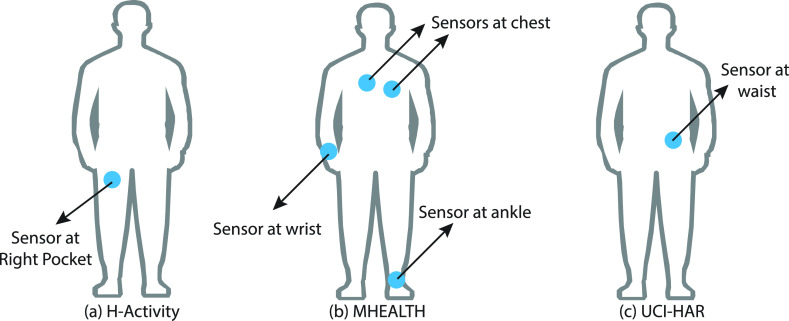
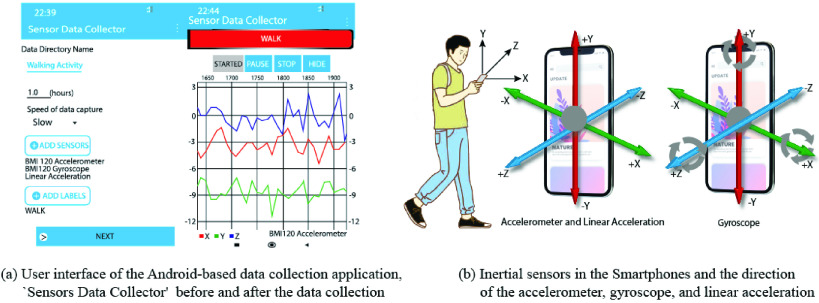
- Data: H-Activity was collected via an Android app from 10 volunteers aged 20–30, smartphone in the right trouser pocket, for 4 activities (sitting/standing, walking, jogging, running), at 10 Hz, yielding 48,920 samples with 9 features (accelerometer, gyroscope, linear acceleration on x/y/z); benchmark datasets were MHEALTH (10 volunteers, 12 activities, 50 Hz) and UCI-HAR (30 participants, 6 activities, 50 Hz, 10,299 samples).
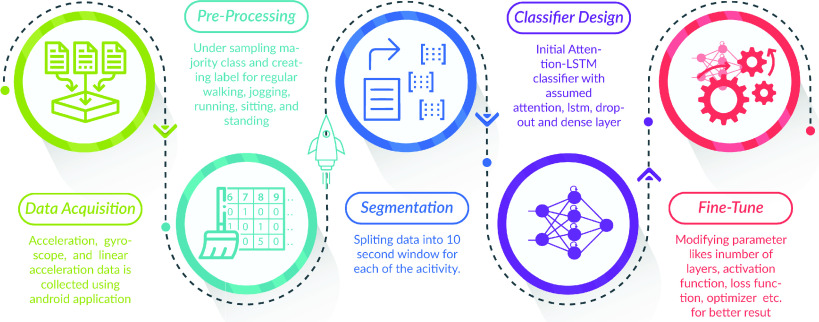
- Preprocessing and analysis: under/oversampling, linear interpolation for missing values, sliding-window segmentation of size 10, one-hot encoding; evaluation used accuracy, precision, recall, F1, and AUC, with 25% of the whole dataset used for testing and four architectures (M1–M4) compared.
Limitations
- Stated: future work will add more participants and adjust the network structure; the paper also notes that comparison using final statistical measures with other existing approaches was not conducted because datasets and experimental settings differ.
- Stated/evident: H-Activity is small (10 volunteers, ages 20–30), uses a single sensor placement (right trouser pocket), a low 10 Hz sampling rate, and only four activities; the data were not subjected to noise cancellation, and the Android platform cannot read sensor data at a particular moment, only when a shift is detected.
- Evident: class imbalance required resampling; confusion remains between jogging/running and sitting/standing, and the MHEALTH confusion matrix shows low recall for some classes despite high overall accuracy.
Model-written summary. Check it against the paper before relying on it.
Integrity signals
Registry
Cites
Statistics
Figures
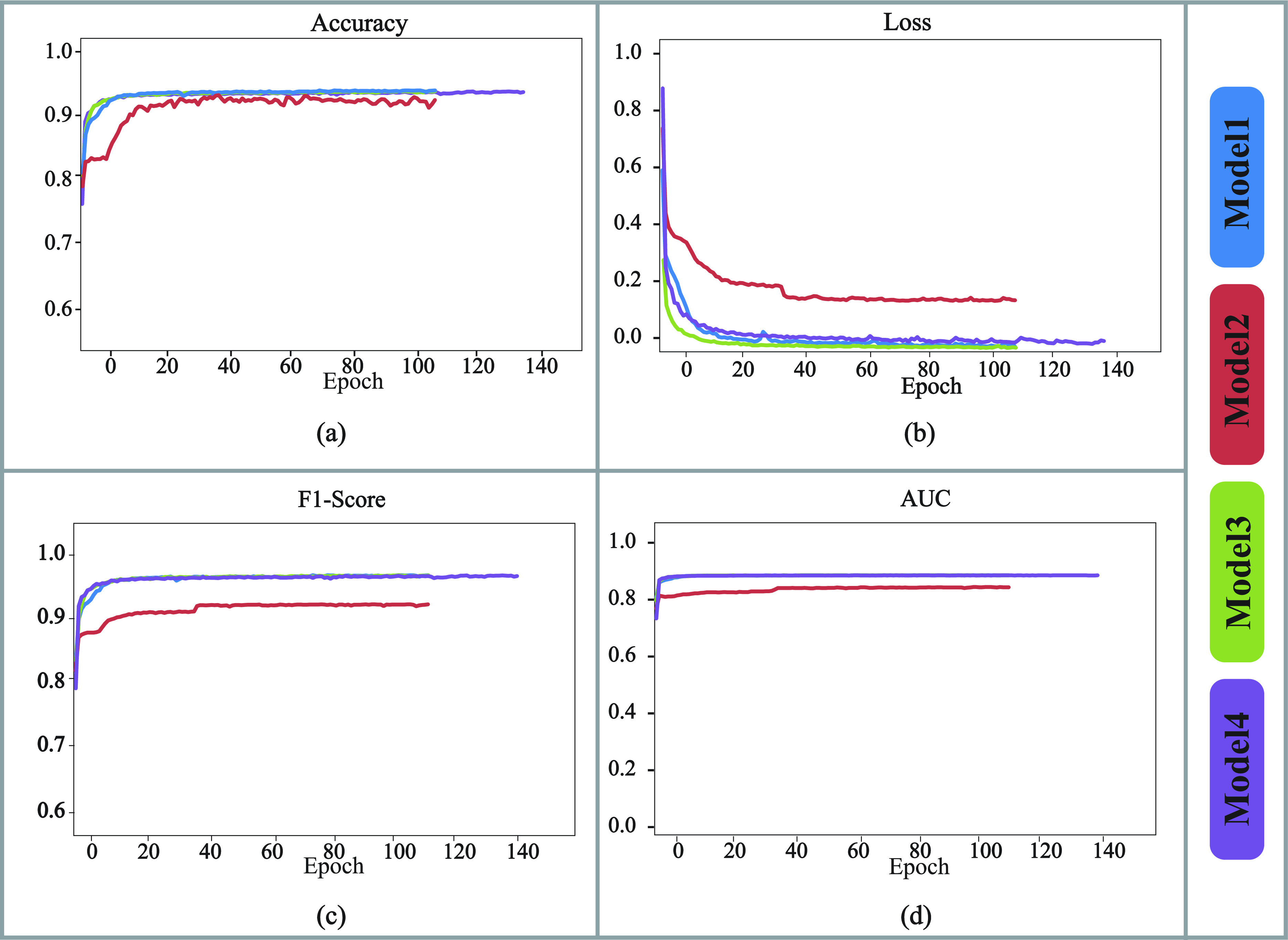
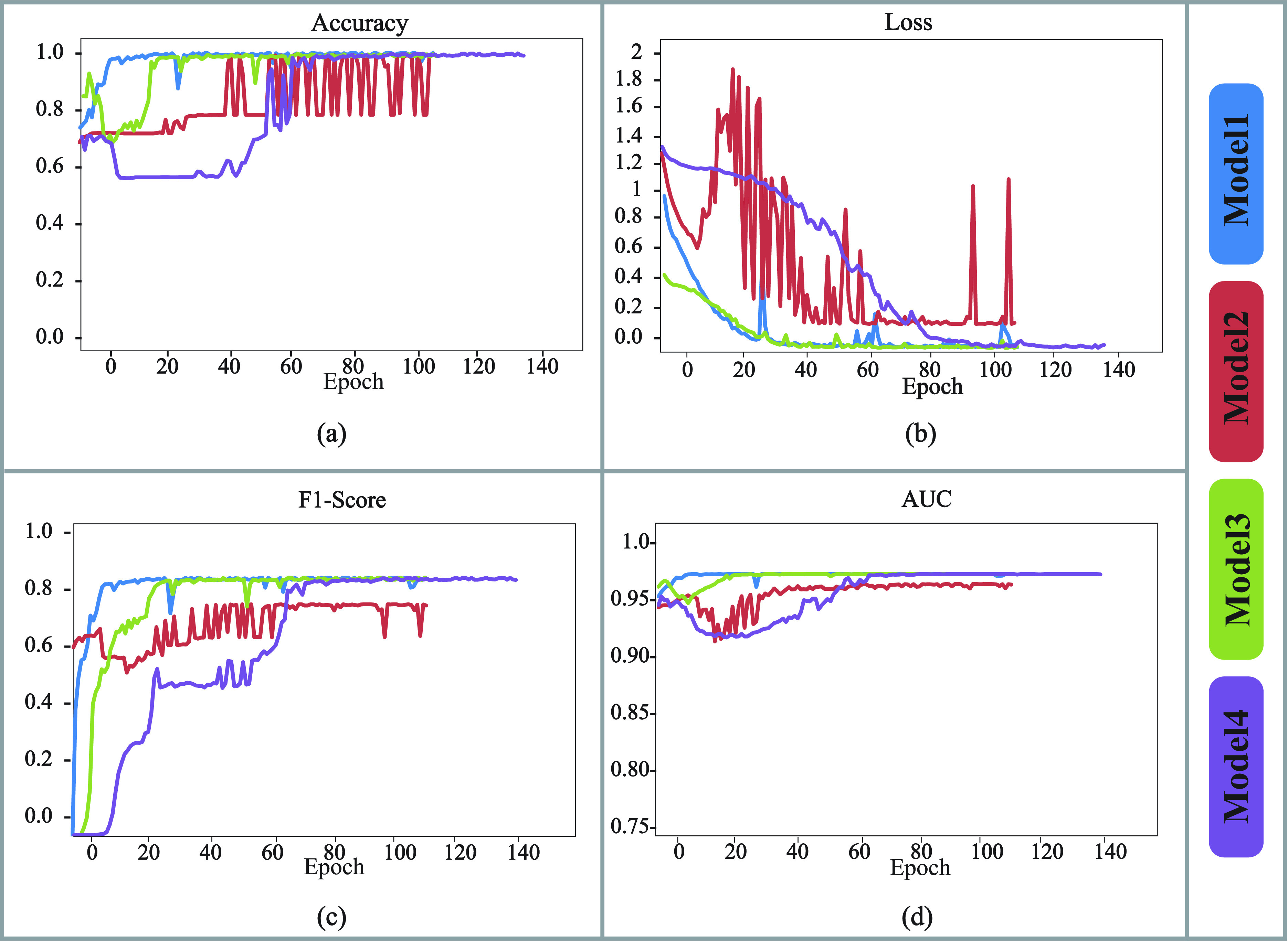
Verification
Claims the paper makes
2 Valid · 13 Not valid · 34 Not checked · 58 Own results and interpretations
At least one cited source doesn’t support this claim or points to a different paper, and none confirmed it — see the verdicts below.
In the paper
“deep learning norms are still underutilized for training time series of inertial sensor data for action detection [3], [5]–[8].”
§ Deep CNN-LSTM With Self-Attention Model for Human Activity Recognition Using Wearable Sensor > Introduction
What the sources say
- Disputedcites [3] J. Wang, Y. Chen, S. Hao, X. Peng, and L. Hu, “ Deep learning for sensor-based activity recognition: A survey,” Pattern Recognit. Lett., vol. 119, pp. 3– 11, Mar. 2019, doi: 10.1016/j.patrec.2018.02.010. sourceExperimental — accuracy not yet measured
Our copy of the survey states the opposite of the claim: the Abstract (p. 2) says 'deep learning based methods have been widely adopted for the sensor-based activity recognition tasks', and Section 3.1 (p. 4) states that body-worn inertial sensors (accelerometer, gyroscope, magnetometer) 'were widely used in deep learning based HAR', with the raw signal fed directly to the networks rather than hand-crafted features. Section 1 (p. 2) adds that deep learning 'is an ideal approach for HAR and has been widely explored in existing work'. The paper's remaining gaps (Section 7, p. 9: heavy reliance on labeled samples, distance from online/mobile deployment) concern supervision and on-device training, not underuse of deep learning on inertial time series. (LLM, conf=0.78)
Checked by a reasoning model — may be wrong.
- Not checked yetcites [5]–[8]
plain- Asserted: passes — The authors put it forward as true.
- Checkable: passes — It can be checked against evidence.
- Load-bearing: passes — The paper’s conclusions depend on it.
- Based: passes — The paper gives a reason why it holds.
- Disputed
A result the paper reports from its own data — it cites no other source for it, so there is none to check. The quote shows it is in the paper.
In the paper
“we have conducted the smartphone sensor-based raw data collection, namely H-Activity, using an Android-OS-based application for accelerometer, gyroscope, and linear acceleration.”
§ Deep CNN-LSTM With Self-Attention Model for Human Activity Recognition Using Wearable Sensor > Abstract
plain- Asserted: passes — The authors put it forward as true.
- Checkable: passes — It can be checked against evidence.
- Load-bearing: passes — The paper’s conclusions depend on it.
- Based: passes — The paper gives a reason why it holds.
A result the paper reports from its own data — it cites no other source for it, so there is none to check. The quote shows it is in the paper.
In the paper
“We proposed the deep CNN-LSTM with self-attention model for activity classification problem using our own dataset H-Activity as well as two public datasets; MHEALTH and UCI HAR.”
§ Deep CNN-LSTM With Self-Attention Model for Human Activity Recognition Using Wearable Sensor > Introduction
plainn = 10- Asserted: passes — The authors put it forward as true.
- Checkable: passes — It can be checked against evidence.
- Load-bearing: passes — The paper’s conclusions depend on it.
- Based: passes — The paper gives a reason why it holds.
A result the paper states — it cites no source for it, so there is none to check. The quote shows it is in the paper.
In the paper
“Our system is the combination of deep learning with self-attention model and wearable sensor-based human activity recognition framework that utilizes various smartphone sensors.”
§ Deep CNN-LSTM With Self-Attention Model for Human Activity Recognition Using Wearable Sensor > Introduction
plainn = 10- Asserted: passes — The authors put it forward as true.
- Checkable: passes — It can be checked against evidence.
- Load-bearing: passes — The paper’s conclusions depend on it.
- Based: passes — The paper gives a reason why it holds.
A result the paper states — it cites no source for it, so there is none to check. The quote shows it is in the paper.
In the paper
“a hybrid deep learning model is proposed, coupling convolutional neural network and long-short term memory network (CNN-LSTM), empowered by the self-attention algorithm to enhance the predictive capabilities of the system.”
§ Deep CNN-LSTM With Self-Attention Model for Human Activity Recognition Using Wearable Sensor > Abstract
plainstates a cause- Asserted: passes — The authors put it forward as true.
- Checkable: passes — It can be checked against evidence.
- Load-bearing: passes — The paper’s conclusions depend on it.
- Based: passes — The paper gives a reason why it holds.
29 more claims
Create a free account to see all 107 claims and to verify the 46 references still open.
- It may state two separate claims as one. 37
- Probably not a substantial claim. 52
Claims other papers make about this one
Each is checked against this paper’s own text: does it say what the citing paper says it does?
The source backs part of the claim, not all of it — or backs it for a different population, condition or comparison.
In the citing paper
“The architecture of BiGRU is simpler than that of BiLSTM, resulting in reduced computational overhead while effectively modeling long-term dependencies, which is essential for complex activities involving extended temporal sequences, such as conversational gestures. This differs from [24], in which LSTM-based models entail greater computational expenses.”
From Adaptive temporal attention mechanism and hybrid deep CNN model for wearable sensor-based human activity recognition (2025) · cites this paper as [24]
Experimental — accuracy not yet measuredThe source backs part of the claim, not all of it — or backs it for a different population, condition or comparison.
In the citing paper
“This leads to more reduced error rates in the confusion matrix (Fig. 8) when compared to CNN-BiGRU [10] and CNN-LSTM [24].”
From Adaptive temporal attention mechanism and hybrid deep CNN model for wearable sensor-based human activity recognition (2025) · cites this paper as [24]
Experimental — accuracy not yet measuredThe cited source says what the claim attributes to it.
In the citing paper
“This parallel design minimizes redundancy and improves efficiency relative to the sequential attention in [24] or the resource-intensive Transformer-based attention in [23].”
From Adaptive temporal attention mechanism and hybrid deep CNN model for wearable sensor-based human activity recognition (2025) · cites this paper as [24]
The cited source says what the claim attributes to it.
In the citing paper
“Previous studies, including [10, 18, 23, 24], have amalgamated convolutional neural networks (CNN), recurrent neural networks (RNN), and attention mechanisms;”
From Adaptive temporal attention mechanism and hybrid deep CNN model for wearable sensor-based human activity recognition (2025) · cites this paper as [24]
In the citing paper
“In contrast, models such as CNN-LSTM [24] and CNN-BiLSTM [18] utilize standard convolutions, which restrict their capacity to effectively capture a range of spatial scales.”
From Adaptive temporal attention mechanism and hybrid deep CNN model for wearable sensor-based human activity recognition (2025) · cites this paper as [24]
Self-check
Percentages, sums and reported differences re-computed from the paper’s own numbers.
Each contradiction between two passages listed here was confirmed by an independent check.
Rated major: it would touch a result — a value a result rests on, reported and recomputed p-values on opposite sides of the significance level, two passages that conflict with no sign which is right, or a cited work retracted before this paper was published.
In the paper
§ Deep CNN-LSTM With Self-Attention Model for Human Activity Recognition Using Wearable Sensor > Experimental Result Analysis > Evaluation on H-Activity, MHEALTH, and UCI-HAR Datasets
“There were 2714 properly categorized occurrences for the UCI-HAR data set, with total accuracy reaching 93.11%.”
§ Deep CNN-LSTM With Self-Attention Model for Human Activity Recognition Using Wearable Sensor > Experimental Result Analysis > Evaluation on H-Activity, MHEALTH, and UCI-HAR Datasets
“| Actual | Walk | 474 | 7 | 15 | 0 | 0 | 0 | 93.55 | | Actual | Up | 0 | 456 | 15 | 0 | 0 | 0 | 98.30 | | Actual | Down | 0 | 9 | 411 | 0 | 0 | 0 | 96.67 | | Actual | Sit | 0 | 22 | 0 | 396 | 71 | 2 | 74.95 | | Actual | Std | 0 | 49 | 0 | 99 | 440 | 0 | 82.70 | | Actual | Lay | 0 | 0 | 0 | 0 | 0 | 537 | 100 |”
Rated minor: it would not touch a result — a value no result rests on, a p-value that stays on the same side of the significance level, or a conflict that is clerical, resolved elsewhere in the paper, or outside its own findings.
In the paper
§ Deep CNN-LSTM With Self-Attention Model for Human Activity Recognition Using Wearable Sensor > Experimental Result Analysis > Hyper Parameter Selection
“The number of trainable parameters for these models was 152 902, 156 292, 197 508, and 633,188 respectively.”
§ Deep CNN-LSTM With Self-Attention Model for Human Activity Recognition Using Wearable Sensor > Experimental Result Analysis > Hyper Parameter Selection
“| Model M2 | 12 | LSTM, Dropout, BN, Dense | 197,508 | 196,484 | 1024 | | Model M3 | 11 | LSTM, Dropout, BN, Dense | 156,292 | 155,268 | 1024 |”
Rated minor: it would not touch a result — a value no result rests on, a p-value that stays on the same side of the significance level, or a conflict that is clerical, resolved elsewhere in the paper, or outside its own findings.
In the paper
§ Deep CNN-LSTM With Self-Attention Model for Human Activity Recognition Using Wearable Sensor > Experimental Result Analysis > Evaluation on H-Activity, MHEALTH, and UCI-HAR Datasets
“There were 4888 occurrences properly categorized for the H-Activity data set and the total accuracy was 99.93%.”
§ Deep CNN-LSTM With Self-Attention Model for Human Activity Recognition Using Wearable Sensor > Experimental Result Analysis > Evaluation on H-Activity, MHEALTH, and UCI-HAR Datasets
“| Actual | Sitting/Standing | 1222 | 1 | 0 | 0 | 99.92 | | | | Actual | Walking | 0 | 1223 | 0 | 0 | 100 | | | | Actual | Jogging | 0 | 1 | 1220 | 2 | 99.75 | | | | Actual | Running | 0 | 0 | 0 | 1223 | 100 | | |”
Rated minor: it would not touch a result — a value no result rests on, a p-value that stays on the same side of the significance level, or a conflict that is clerical, resolved elsewhere in the paper, or outside its own findings.
In the paper
“| Actual | Jog | 0 | 4 | 0 | 39 | 33 | 0 | 8 | 7 | 3 | 30157 | 243 | 226 | 90.11 | | |”
§ Deep CNN-LSTM With Self-Attention Model for Human Activity Recognition Using Wearable Sensor > Experimental Result Analysis > Evaluation on H-Activity, MHEALTH, and UCI-HAR Datasets
Reported 90.11 · recomputed 98.167318
Rated minor: it would not touch a result — a value no result rests on, a p-value that stays on the same side of the significance level, or a conflict that is clerical, resolved elsewhere in the paper, or outside its own findings.
In the paper
“| Actual | Walk | 0 | 0 | 0 | 30312 | 190 | 78 | 0 | 136 | 0 | 0 | 3 | 1 | 78.79 | | |”
§ Deep CNN-LSTM With Self-Attention Model for Human Activity Recognition Using Wearable Sensor > Experimental Result Analysis > Evaluation on H-Activity, MHEALTH, and UCI-HAR Datasets
Reported 78.79 · recomputed 98.671875
3 more findings
Create a free account to see every finding of this check.
Citations
Cites
Hochreiter, S., & Schmidhuber, J. (1997) · Neural Computation · doi:10.1162/neco.1997.9.8.1735 · Cited by 102,318 · cited 1×
“To address the challenge of long-term dependency, [51] proposed a novel neuron to the RNN group called LSTM.”
Learning long-term dependencies with gradient descent is difficult
Bengio, Y., Simard, P., & Frasconi, P. (1994) · IEEE Transactions on Neural Networks · doi:10.1109/72.279181 · Cited by 8,542 · cited 1×
“However, due to the disintegrating gradient problem, [50] states that RNN systems can only identify data for a short period of time.”
Activity recognition using cell phone accelerometers
Kwapisz, J. R., Weiss, G. M., & Moore, S. A. (2011) · ACM SIGKDD Explorations Newsletter · doi:10.1145/1964897.1964918 · Cited by 2,912 · cited 1×
“The way in which machine learning algorithms function was not to read a huge quantity of data at once, so that each entry in the H-Activity dataset was done with 10-sec segments, as recommended in [45].”
Deep Convolutional and LSTM Recurrent Neural Networks for Multimodal Wearable Activity Recognition
Ordóñez, F., & Roggen, D. (2016) · Sensors · doi:10.3390/s16010115 · Cited by 2,761 · cited 1×
“Proposed deep CNN-LSTM with self-attention model was compared with LSTM-CNN from Lyu et al. [53] and CNN-LSTM [54] under the same experimental scenario in order to further verify the model performance.”
A Survey on Human Activity Recognition using Wearable Sensors
Lara, O. D., & Labrador, M. A. (2013) · IEEE Communications Surveys & Tutorials · doi:10.1109/surv.2012.110112.00192 · Cited by 2,662 · cited 1×
“There have been numerous suggestions in the literature [3], [9]–[12] of traditional machine learning and profoundly trained methods for HAR using accelerometers over the last decade.”
Deep learning for sensor-based activity recognition: A survey
Wang, J., Chen, Y., Hao, S., Peng, X., & Hu, L. (2019) · Pattern Recognition Letters · doi:10.1016/j.patrec.2018.02.010 · Cited by 2,014 · cited 3×
“Wearable activity detectors, like the well-known Pedometer, are utilized in various healthcare applications for day-to-day fitness tracking [2], [3].”
Human activity recognition with smartphone sensors using deep learning neural networks
Ronao, C. A., & Cho, S.-B. (2016) · Expert Systems with Applications · doi:10.1016/j.eswa.2016.04.032 · Cited by 1,215
Nweke, H. F., Teh, Y. W., Al-garadi, M. A., & Alo, U. R. (2018) · Expert Systems with Applications · doi:10.1016/j.eswa.2018.03.056 · Cited by 930 · cited 1×
“Although deep learning techniques for machine learning have recently taken a lot of consideration in the research community, deep learning norms are still underutilized for training time series of inertial sensor data for action detection [3], [5]–[8].”
LSTM-CNN Architecture for Human Activity Recognition
Xia, K., Huang, J., & Wang, H. (2020) · IEEE Access · doi:10.1109/access.2020.2982225 · Cited by 851 · cited 3×
“…linear units (ReLU) are used by convolutional layers in the calculation of the feature maps, where the non-linear function is denoted like the following : In general, it is examined that the more convolution kernels are used, the more hidden features of the input samples could be extracted [48].”
mHealthDroid: A Novel Framework for Agile Development of Mobile Health Applications
Banos, O., Garcia, R., Holgado-Terriza, J. A., Damas, M., Pomares, H., Rojas, I., Saez, A., & Villalonga, C. (2014) · Lecture Notes in Computer Science · doi:10.1007/978-3-319-13105-4_14 · Cited by 583
Research works printed but not linked: 6
- J.-B. Yang, N. Nhut, P. San, X. li, and P. Shonali, “ Deep convolutional neural networks on multichannel time series for human activity recognition,” in Proc. IJCAI, Jul. 2015, pp. 3995– 4001.
- G. Weiss and J. Lockhart, “ The impact of personalization on smartphone-based activity recognition,” in Proc. AAAI Workshop, Jan. 2012.
- D. Anguita, A. Ghio, L. Oneto, X. Parra, and J. Reyes-Ortiz, “ A public domain dataset for human activity recognition using smartphones,” in Proc. 21st Int. Eur. Symp. Artif. Neural Netw., Comput. Intell. Mach. Learn., Jan. 2013, pp. 437– 442.
- Sensors Data Collector—Apps on Google Play. Accessed: Feb. 23rd, 2020. [Online]. Available: https://play.google.com/store/apps/details?id=com.opendata.labs.sensorsdatacollector
- A. Krizhevsky, I. Sutskever, and G. E. Hinton, “ Imagenet classification with deep convolutional neural networks,” in Proc. Adv. Neural Inf. Process. Syst., vol. 25, F. Pereira, C. J. C. Burges, L. Bottou, and K. Q. Weinberger, Eds. Red Hook, NY, USA: Curran Associates, 2012. [Online]. Available: https://proceedings.neurips.cc/paper/2012/file/c399862d3b9d6b76c8436e924a68c45b-Paper.pdf
- D. R. Francisco Javier Ordóñez, “ Deep convolutional and lstm recurrent neural networks for multimodal wearable activity recognition,” Sensors, vol. 16, no. 1, p. 115, Jan. 2016. PMC4732148 26797612 · DOI · Paper page
Cited by
Items 201–285 of 285
Temporal Intelligence: Recognizing User Activities with Stacked LSTM Networks
Singh, V., & Kumar, S. (2024) · Smart innovation, systems and technologies · doi:10.1007/978-981-97-6222-4_25
Praba, R. A., & Suganthi, L. (2024) · Network Computation in Neural Systems · doi:10.1080/0954898x.2024.2438967 · Cited by 3
Albadawi, Y., & Shanableh, T. (2024) · IEEE International Conference on Smart Communities: Improving Quality of Life using AI, Robotics and IoT (HONET) · doi:10.1109/honet63146.2024.10822931
PER-HDL: Physiotherapy exercise recognition with RGB-D Kinect sensor and hybrid deep learning models
Bijalwan, V., Baek, H., Khan, A. M., Mohamed, S., & Kim, Y. (2025) · Elsevier eBooks · doi:10.1016/b978-0-443-21505-6.00006-2
Self-citationSmart Construction: A Deep Learning Hybrid Model for Workers Activity Recognition
Sreekantha, D. K., Singh, C., S, G. H., Gupta, R. K., & Srivastava, R. (2024) · International Conference on Artificial Intelligence, Computational Electronics and Communication System (AICECS) · doi:10.1109/aicecs63354.2024.10957669
S3 KD: Semantic-aware Spiking Neural Networks Self-distillation for Human Action Recognition
Ni, J., Sarbajna, R., & Ngu, A. H. H. (2025) · IEEE International Conference on Pervasive Computing and Communications Workshops (PerCom Workshops) · doi:10.1109/percomworkshops65533.2025.00047 · Cited by 3
Enhancing Digital Child Safety Through a Transformer-Based Framework for Abnormal Behavior Detection
Mahor, V. K., Choudhary, J., & Singh, D. P. (2025) · IGI Global eBooks · doi:10.4018/979-8-3373-2716-7.ch007
He, T., Xia, Z., & Chan, S.-H. G. (2025) · IEEE Transactions on Mobile Computing · doi:10.1109/tmc.2025.3586618 · Cited by 2
Rajkumar, P., Hemaswathi, S., Santhiya, C., & Rajeshkannan, C. (2025) · Journal of Ambient Intelligence and Smart Environments · doi:10.1177/18761364251367768
Human Action Recognition – Analysis of Deep Learning Methods
Mol, P. M. A., & Mathew, T. E. (2025) · International Conference on Advancements in Power, Communication and Intelligent Systems (APCI) · doi:10.1109/apci65531.2025.11136916
Akbari, S., Horemans, H. L. D., Bussmann, J. B. J., & Zgonnikov, A. (2025) · Computers in Biology and Medicine · doi:10.1016/j.compbiomed.2025.111167 · Cited by 3
Automated Human Action Recognition Using Motion History Mask-Based Convolutional Neural Network
Mohideen, A. K., & Abhineswari, M. (2025) · Lecture notes in networks and systems · doi:10.1007/978-981-96-8901-9_28
Mekruksavanich, S., Tancharoen, D., & Jitpattanakul, A. (2025) · International Symposium on Communications and Information Technologies · doi:10.1109/iscit67082.2025.11231512 · Cited by 1
Srinath, S., Karim, B., Gudala, L., Malathi, G., & Pushpavalli, M. (2025) · International Conference on Intelligent Communication Networks and Computational Techniques (ICICNCT) · doi:10.1109/icicnct66124.2025.11233023
A Deep Learning Framework using Attention Mechanism for Human Activity Recognition
Senapati, A., Das, P., Priyadarshinee, S., & Ari, S. (2025) · IEEE India Council International Subsections Conference (INDISCON) · doi:10.1109/indiscon66021.2025.11252222
Wearable Multi-Sensor System for Human Activity Recognition using Fusion-based Deep Learning
Mitra, P., Quadri, H., Bella, K. P., Kiron, V., Maity, M., & Priyakumar, D. (2025) · IEEE India Council International Subsections Conference (INDISCON) · doi:10.1109/indiscon66021.2025.11254669
Covert Speech Detection via Polarization Dynamics in 10 Gbps IMDD Optical Fiber Links
Kouiani, H. G., Straullu, S., Ambrosone, R., Virgillito, E., & Curri, V. (2025) · European Conference on Optical Communication · doi:10.1109/ecoc66593.2025.11263157
DietWatch: Fine-Grained and Robust Dietary Monitoring via Smartwatch in Real-World Scenarios
Hou, Z., Xie, Y., Li, F., Liu, C., & Wang, H. (2025) · IEEE Internet of Things Journal · doi:10.1109/jiot.2025.3644247
Zhang, X., Wang, Y., & Deng, T. (2025) · Scientific Reports · doi:10.1038/s41598-025-32859-1 · Cited by 3
ACTIVITY RECOGNITION WITH A HYBRID CNN–NCP AND SELF-ATTENTION-BASED MODEL
Olgun, N., Çalışan, M., & Balım, C. (2025) · Middle East Journal of Science · doi:10.51477/mejs.1667055
Machine Learning Approach for Short-Term Prediction of Active Insulin and Blood Glucose Levels
Francisco, D., da Cruz, A. M. R., & Ribeiro, J. (2026) · Lecture notes in networks and systems · doi:10.1007/978-3-032-12882-9_8
Real-Time Analysis of Concrete Placement Progress Using Semantic Segmentation
Ye, Z., Zhang, L., Hu, Y., et al. (2026) · Buildings · doi:10.3390/buildings16020434
Daily Actigraphy-based Passive Screening of Depression using Artificial Intelligence (Preprint)Preprint
Enkhbayar, D., Oh, S., Lee, J., Kim, M., Urtnasan, E., & Key, J. (2026) · doi:10.2196/preprints.91479
AFTR-HAR-Net: Adaptive Fusion and Temporal Reasoning Network for Robust Human Activity Recognition
Prakash, D., Joy, A. T., Bandaru, S., R, B. R. B., & Subramaniam, S. (2025) · International Conference on Mobile Networks and Wireless Communications (ICMNWC) · doi:10.1109/icmnwc66779.2025.11354371
Bayat, N., Tran, A., Kim, J.-H., & Park, J. (2026) · IEEE Transactions on Instrumentation and Measurement · doi:10.1109/tim.2026.3657490 · Cited by 1
Zhang, X., Zhang, Y., Lin, L., Wang, Z., Jing, T., Huo, W., & Huang, X. L. (2026) · IEEE Transactions on Electron Devices · doi:10.1109/ted.2026.3661952
A multi-resolution CNN-LSTM architecture for sensor-based human activity recognition
Pareek, G., Singh, R. K., & Nigam, S. (2026) · Neural Computing and Applications · doi:10.1007/s00521-025-11719-z · Cited by 2
Activity Recognition Empowered Autonomic Systems with Generative Artificial Intelligence
Xu, X., Yang, J., Khan, M. A., Govindarajan, V., Khan, M. A., Baili, J., & Por, L. Y. (2026) · ACM Transactions on Autonomous and Adaptive Systems · doi:10.1145/3787222 · Cited by 2
Anomaly Detection for Elderly Behaviour Living inSmart Homes using Federated LearningPreprint
Shahid, Z. K., Saguna, S., Åhlund, C., & Mitra, K. (2026) · SSRN Electronic Journal · doi:10.2139/ssrn.6331969
Human Activity Recognition Based on a Hybrid Attention and TCN Model with Sensor Fusion
Bijrothiya, S., & Soni, V. (2025) · IEEE International Conference on Recent Advances in Computing and Systems (REACS) · doi:10.1109/reacs67479.2025.11413324
Liu, F.-J., Lu, M.-J., & Chao, M. (2026) · ECBIOS 2025 · doi:10.3390/engproc2026129021
Time‐Frequency Transformer: A Network for Sensor‐Based Human Activity Recognition
Xiao, S., Deng, J., Fang, C., Tang, C.-G., & Huang, Z.-Z. (2026) · International Conference on Climate Informatics · doi:10.1111/coin.70225 · Cited by 1
Wang, Q., Ma, J., Fu, M., Wang, J., Bai, Y. B., Jiang, Z., & Li, H. (2026) · iScience · doi:10.1016/j.isci.2026.115252
Piezoelectric sensor for students’ sports instrumentation performance and feature learning
Prabhu, P., Ravi, V., Rajivkannan, A., et al. (2026) · Mechanics of Advanced Materials and Structures · doi:10.1080/15376494.2026.2647101
Θεοδωροπούλου, Γ. (2024) · theses.fr (ABES) · doi:10.70675/c7af6514z89cez4634zad7fzf76f3e162dd0
Injury and Rehabilitation Assessment Using Convolutional Neural Networks
Chebbi, I., Abidi, S., & Ayed, L. J. B. (2026) · Lecture notes in networks and systems · doi:10.1007/978-3-032-18211-1_2
Hybrid Architecture GNNConViVit for the Recognition of Human Activities
Coulibaly, A., Adjobo, E. C., Gammoudi, A., & Saadaoui, W. (2026) · International Conference on Artificial Intelligence, Computer, Data Sciences and Applications (ACDSA) · doi:10.1109/acdsa67686.2026.11467992
Costa, S. P., Eigenheer, I., Dias, M. A., Ribas, L. C., Salvadeo, D. H. P., & Ranieri, C. M. (2026) · SSRN Electronic Journal · doi:10.2139/ssrn.6598003
A multi-method explainability approach for sensor-based health activity analytics
Kurniawan, A., Caesarendra, W., Ariyanto, M., Mursalim, M. K. N., & Hakim, D. L. (2026) · Healthcare Analytics · doi:10.1016/j.health.2026.100463
Wearable sensor and clinical data fusion for cardiovascular risk prediction
Kumar, N., Sharma, S., Devi, K., Dubey, A., Singh, A., & Singh, K. S. (2026) · Elsevier eBooks · doi:10.1016/b978-0-443-44025-0.00009-7
Automated Feature Selection for Lean and Early Human Activity RecognitionPreprint
Almog, D., & Rabin, N. (2026) · SSRN Electronic Journal · doi:10.2139/ssrn.6646722
Saha, S., Mukhopadhyay, P., Mahata, K., Basu, S., & Majumder, K. (2026) · CCF Transactions on Pervasive Computing and Interaction · doi:10.1007/s42486-026-00233-3 · Cited by 2
Mekruksavanich, S., & Jitpattanakul, A. (2026) · Technologies · doi:10.3390/technologies14050272 · Cited by 1
Alam, M. T., & Roy, K. (2025) · International Conference on Computer and Information Technology (ICCIT) · doi:10.1109/iccit68739.2025.11491709
Wearable Sensor-based Activity Detection of Human using a Hybrid CNN-LSTM Framework
A, P. K., Aishwarya, S., Jayanth, J., Thiraviya, C., & Oviya, S. (2025) · International Conference on Sustainable Computing and Smart Systems (ICSCSS) · doi:10.1109/icscss64956.2025.11500726
Semi-HAR: A Semi-supervised Approach for Human Activity Recognition by Machine Learning Models
Bhuiyan, R. K., Ahmed, S. U., Sadman, A. A. M. S., & Hossam-E-Haider, M. (2025) · IEEE International Conference on Signal Processing, Information, Communication and Systems (SPICSCON) · doi:10.1109/spicscon69221.2025.11504435
Self-citationMultiscale Convolutional Wavelet-BiGRU Network in Wearable Sensor-Based Human Activity Recognition
Zhang, J., & Wei, Q. (2026) · International Conference on Communications, Information System and Computer Engineering (CISCE) · doi:10.1109/cisce69494.2026.11504681
Yang, Z., Li, L., Ren, Z., Meng, Q., Xue, Y., Bu, C., Tao, L., Xiong, K., & Liu, D. (2026) · Neural Processing Letters · doi:10.1007/s11063-026-11851-4
Choudhury, N. A., & Soni, B. (2026) · Transactions on computer systems and networks · doi:10.1007/978-981-95-7206-9_2
Data Intensity-Based Feature Selection Protocol for Sensor-Based HAR System
Choudhury, N. A., & Soni, B. (2026) · Transactions on computer systems and networks · doi:10.1007/978-981-95-7206-9_4
Zhou, X., Wang, S., He, L., & Li, M. (2026) · Frontiers in Public Health · doi:10.3389/fpubh.2026.1829967
Gait Analysis for Disease Detection using CNN and LSTM
Meher, A. K., Ojha, R. K., & Panda, G. (2026) · doi:10.1109/ic-icns68863.2026.11537978
Jis, J. K., Chen, K., Chen, Z., Chen, L., Pouriyeh, S., Xie, Z., & Xie, Y. (2026) · Bioengineering · doi:10.3390/bioengineering13060698
A Comprehensive Review on Deep Learning Approaches for Smart Surveillance Systems
Garg, A., Gupta, S., & Gulati, P. (2026) · IETE Technical Review · doi:10.1080/02564602.2026.2688073 · Cited by 1
Hybrid CNN-LSTM Framework for Upper-Limb Motion Recognition Using Wearable IMU Sensors
Eshetu, S. H., Araya, S. T., Benachour, Y., Balcha, A. B., Damtie, A. A., & Endale, A. M. (2026) · International Conference on Interactive Systems & Information Society Technologies (InterSys) · doi:10.1109/intersys69825.2026.11565250
Attention-Guided Multi-Modal Sensor Fusion with Transformer Learning for Human Activity Recognition
S.Vinayagan, Bharath Kumara, J., Priyanka, M. S., Ram, V. S., & Kalaivani, A. (2026) · International Conference on Intelligent Systems and Computational Networks (ICISCN) · doi:10.1109/iciscn67954.2026.11566204
da Silva, T. B. C., Santiago, H. D. C., & Fernandes, B. (2026) · Artificial Intelligence Review · doi:10.1007/s10462-026-11619-1 · Cited by 1
Recent developments of textile-based triboelectric nanogenerators for smart sports applications
Guo, J., Ren, S., Li, Z., et al. (2026) · Biosensors and Bioelectronics · doi:10.1016/j.bios.2026.118978
NeuralHabit: an AI-powered habit analysis and recommendation system
Manjula, S., Shobha, T., Sharath, R., & Agarwal, P. K. (2025) · IEEE International Conference on Cybernetics, Cognition and Machine Learning Applications (ICCCMLA) · doi:10.1109/icccmla66092.2025.11580773
Madhan, S., & Rajakumari, S. B. (2026) · International Conference on Electrical and Electronics for Sustainable Innovations (ICEESI) · doi:10.1109/iceesi68020.2026.11583589
Jang, J. Y., & Cha, S. H. (2026) · Advanced Engineering Informatics · doi:10.1016/j.aei.2026.105043
Sujitha, S., Vidhyashree, S., & Saravanan, K. (2026) · IEEE International Conference on Intelligent Technologies for a Sustainable and Inclusive Future (ICITSIF) · doi:10.1109/icitsif69060.2026.11608680
Hashemifard, K., Climent-Pérez, P., & Flórez‐Revuelta, F. (2026) · Journal of Healthcare Informatics Research · doi:10.1007/s41666-026-00244-w
Alotaibi, R. S., Reyad, O., & Karar, M. E. (2026) · International Journal of Telemedicine and Applications · doi:10.1155/ijta/1465162
A Semi-Supervised CPC-Transformer Approach for Human Activity Recognition Under Label Scarcity
Fatahi, R., & Lesani, F. S. (2026) · IEEE Access · doi:10.1109/access.2026.3720473
Shen, Z., Gao, B., & Shi, M. (2026) · World Congress on Medical Physics and Biomedical Engineering, September 7 - 12, 2009, Munich, Germany · doi:10.1007/978-3-032-20291-8_18
Electrotactile, Vibrotactile, and Thermal Feedback in a Wearable CPR Training Game
Meng, Y., Liu, Z., & Ye, L. (2026) · IEEE International Conference on Healthcare Informatics (ICHI) · doi:10.1109/ichi69079.2026.00131
Optimizing Human Activity Recognition with Ensemble Deep Learning on Wearable Sensor Data
Ashfaq, N., Sadiq, I., Junaid, M., Khan, M. H., & Farid, M. S. (2024) · International Journal of Innovations in Science and Technology · doi:10.33411/ijist/1069
Ocular Artifact Removal in EEG: A Review
Mishra, A. K., & Choudhry, M. S. (2026) · International Conference on Sustainable Computing and Smart Systems (ICSCSS) · doi:10.1109/icscss69635.2026.11646035
Jyotsna, E., & Jarin, T. (2026) · Iranian Journal of Science and Technology Transactions of Electrical Engineering · doi:10.1007/s40998-026-01193-1
A Gear-Driven Plantar Energy Harvester with Integrated Self-Sensing for Human Locomotion Recognition
Wang, X.-R., Lin, W.-Q., Wang, W.-D., Yu, Y., Cong, M.-Y., Gao, Y.-Z., & Dong, W. (2026) · Italian National Conference on Sensors · doi:10.3390/s26165296
Activity contextualisation and terrain classification via wearables in Parkinson’s
Engin, F. V., Kuduz, H., Kaçar, F., Pearson, L. T., Das, J., Stuart, S., Woo, W. L., Godfrey, A., & Çelik, Y. (2026) · Computer Methods and Programs in Biomedicine · doi:10.1016/j.cmpb.2026.109622
Poonam, K., Kotra, V. S., Guha, R., & Chakrabarti, P. P. (2026) · ACM Transactions on Computing for Healthcare · doi:10.1145/3845798
Mekruksavanich, S., Phaphan, W., & Jitpattanakul, A. (2026) · International Conference on Big Data Analytics and Practices (IBDAP) · doi:10.1109/ibdap69915.2026.11677994
Mekruksavanich, S., Phaphan, W., & Jitpattanakul, A. (2026) · International Conference on Big Data Analytics and Practices (IBDAP) · doi:10.1109/ibdap69915.2026.11677760
Xie, D., Yan, P., Li, Y., Wang, Q., & Liu, J. (2026) · Sensors · doi:10.3390/s26185879
Su, Z., & Yang, Z. (2026) · Computers · doi:10.3390/computers15090640
Meghana, P., & Hashmi, M. F. (2026) · Computers & Electrical Engineering · doi:10.1016/j.compeleceng.2026.111563 · Cited by 1
Wang, W., Liu, H., Song, J., Li, Z., Tang, G., Li, M., Cao, X., & Zhou, B. (2026) · Spectrochimica Acta Part A Molecular and Biomolecular Spectroscopy · doi:10.1016/j.saa.2026.128842
Text sentiment recognition using a self-attention-based parallel long short term memory
Adagale, S. S., Vairagar, S., & Gupta, P. (2026) · International Journal of Data Science and Analytics · doi:10.1007/s41060-026-01305-4
A YOLOv8n-LSTM-Based Spatiotemporal Computer Vision Framework for Rehabilitation Movement Assessment
Lima Johnson, K., David Peter, S., N, A. K., et al. (2026) · doi:10.1109/icimrbe70745.2026.11710005
Takashi, G. O. S. O., Akiyama, M., Kasai, R., et al. (2026) · IOP Conference Series Earth and Environmental Science · doi:10.1088/1755-1315/1669/1/012001
Metadata
- Authors
- Khatun, M. A., Yousuf, M. A., Ahmed, S., Uddin, M. Z., Alyami, S. A., Al-Ashhab, S., Akhdar, H. F., Khan, A., Azad, A., & Moni, M. A.
- Affiliations
- Jahangirnagar University (BD)
- SINTEF Digital (NO)
- Imam Mohammad ibn Saud Islamic University (SA)
- The University of Queensland (AU)
- Swinburne University of Technology (AU)
- Corresponding author
- Moni, Mohammad Ali
- ORCID
- Venue
- IEEE Journal of Translational Engineering in Health and Medicine
- Published
- 2022
- Volume
- 10
- Pages
- 1-16
- ISSN
- 2168-2372 (ISSN-L)
- PMC
- PMC9252338
- OpenAlex
- W4285079306
- Cited by
- 288
- References
- 61
- Citations by year
- 2026: 68 · 2025: 84 · 2024: 75 · 2023: 54 · 2022: 7
- FWCI
- 17.97
- Type
- journal article
- Language
- en
- Open access
- gold
- doi.org
- Locations
- IEEE Journal of Translational Engineering in Health and Medicine (publishedVersion, cc-by)
- PubMed Central (publishedVersion, cc-by)
- PubMed (publishedVersion)
- Charles Sturt University Research Output (CRO) (submittedVersion, cc-by-nc-nd)
- DOAJ (DOAJ: Directory of Open Access Journals) (submittedVersion)
- NORA - Norwegian Open Research Archives (submittedVersion, cc-by)
- Greater South Information System
- Funders
- Deanship of Scientific Research at Imam Mohammad Ibn Saud Islamic University through Research Group (RG-21-09-20)
- Topics
- Physical Sciences › Computer Science › Computer Vision and Pattern Recognition › Context-Aware Activity Recognition Systems
- Physical Sciences › Engineering › Biomedical Engineering › Gait Recognition and Analysis
- Health Sciences › Medicine › Public Health, Environmental and Occupational Health › Physical Activity and Health
- Keywords
- human activity recognition, wearable sensors, smartphone sensors, inertial sensors, accelerometer, gyroscope, linear acceleration, CNN-LSTM, self-attention, mobile health, UCI-HAR, Android application
- MeSH terms
- Wearable Electronic Devices, Algorithms, Attention, Humans, Human Activities, Neural Networks, Computer
About these checks
Registry, retraction, Cites and statistics results are computed, not judged, with one exception: a printed reference that no index lists is read once by a model before it counts as a citation error. Claims are extracted by a model and kept only when their quote appears verbatim in the text; each cited source is then checked, with a model’s help, for whether it says what the claim relies on. Those verdicts can be wrong — read the claim’s quote and the cited source before relying on one.
The claim verdicts this report counts are experimental: their accuracy is not yet measured.
A language model drew the claims from the paper on 2026-10-07, under version 3 of the claim definition (model deepseek-v4.1-flash, prompt extract-v3).
A second model labelled each claim on 2026-10-07 (model jev-1.13-20260917, definition revision gold-guideline-v0.2).
Cited sources are checked with a language model’s help (qwen3.8-omni-flash).
Statistics and arithmetic are recomputed, not judged.
Confidence bands are shown only for fields calibrated on our annotated test set. None is calibrated yet, so no band is shown.
What counts as a claim ›How we measure confidence ›How we check this ›
Are you an author, or do you see a problem with this page? Request a review
Data sources
Bibliographic data: Semantic Scholar, OpenAlex, Crossref.
Contains information from the Semantic Scholar Academic Graph Datasets, made available under the ODC Attribution License (ODC-BY 1.0).
Semantic Scholar’s data is described in: Kinney, R., et al. (2023). The Semantic Scholar Open Data Platform. arXiv:2301.10140.
