

Faster R-CNN: Towards Real-Time Object Detection with Region Proposal Networks
Open accessThe DOI matches its Crossref record; 56 of the 60 references it cites were found in a registry or an index; 15 of the 27 sources its claims cite were checked for support.
Abstract
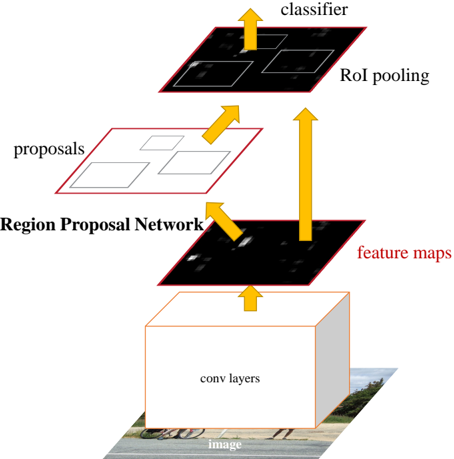
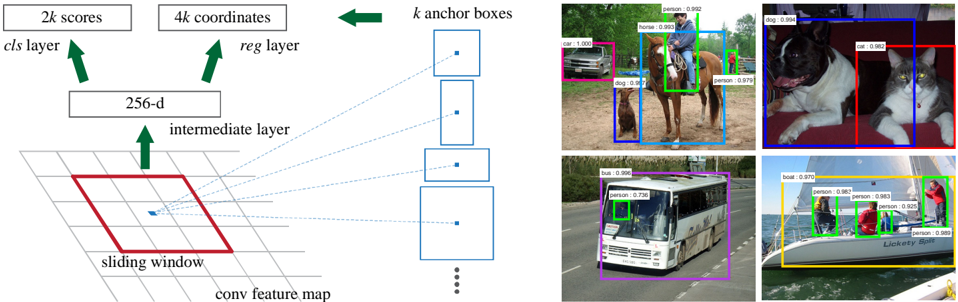
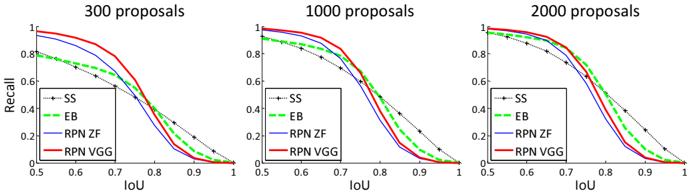
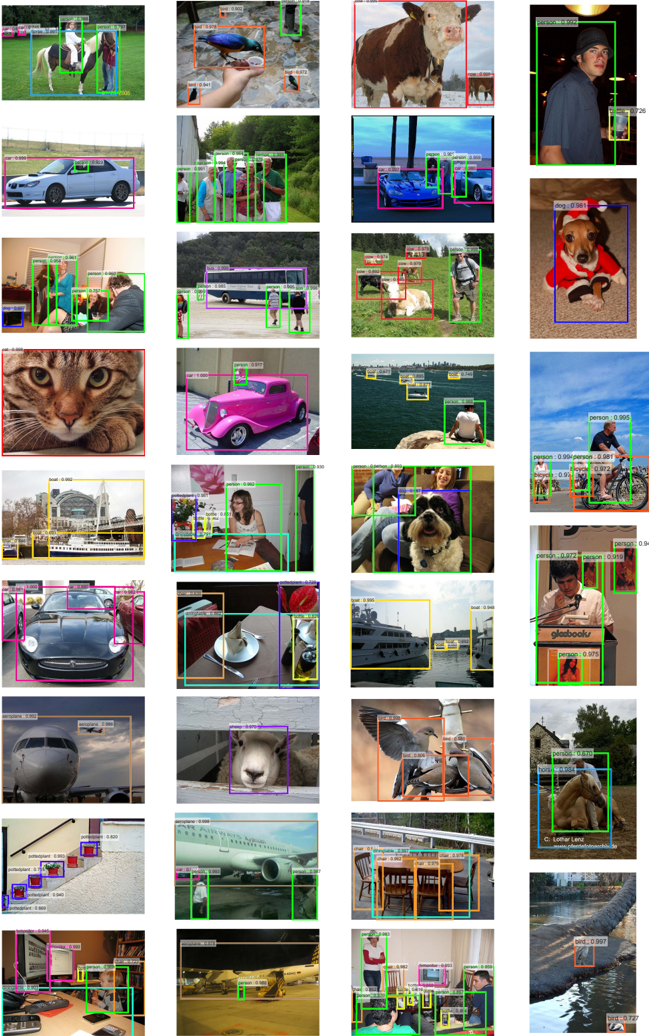
State-of-the-art object detection networks depend on region proposal algorithms to hypothesize object locations. Advances like SPPnet [1] and Fast R-CNN [2] have reduced the running time of these detection networks, exposing region proposal computation as a bottleneck. In this work, we introduce a Region Proposal Network (RPN) that shares full-image convolutional features with the detection network, thus enabling nearly cost-free region proposals. An RPN is a fully convolutional network that simultaneously predicts object bounds and objectness scores at each position. The RPN is trained end-to-end to generate high-quality region proposals, which are used by Fast R-CNN for detection. We further merge RPN and Fast R-CNN into a single network by sharing their convolutional features-using the recently popular terminology of neural networks with 'attention' mechanisms, the RPN component tells the unified network where to look. For the very deep VGG-16 model [3] , our detection system has a frame rate of 5 fps (including all steps) on a GPU, while achieving state-of-the-art object detection accuracy on PASCAL VOC 2007, 2012, and MS COCO datasets with only 300 proposals per image. In ILSVRC and COCO 2015 competitions, Faster R-CNN and RPN are the foundations of the 1st-place winning entries in several tracks. Code has been made publicly available.
Overview
CoChat Summary
TL;DR
Faster R-CNN introduces a Region Proposal Network (RPN) that shares convolutional features with Fast R-CNN, making region proposals nearly cost-free and enabling a unified object detection system. It achieves near real-time detection with state-of-the-art accuracy on PASCAL VOC and MS COCO.
Key findings
- With VGG-16 and shared features, Faster R-CNN reaches 69.9% mAP on PASCAL VOC 2007 test using 300 proposals, 73.2% with VOC07+12 training, 70.4% on VOC 2012 with 07++12, and 78.8% on VOC 2007 with COCO+07+12.
- Runtime: VGG-16 RPN + Fast R-CNN takes 198 ms total (5 fps), with RPN proposals costing 10 ms; ZF runs at 59 ms total (17 fps), versus SS + Fast R-CNN at 1830 ms (0.5 fps).
- Ablations: sharing features improves ZF mAP from 58.7% (unshared) to 59.9%; removing the reg layer drops mAP to 52.1%, and removing cls with 100 proposals drops it to 44.6%.
- On MS COCO test-dev, Faster R-CNN with VGG-16 and COCO train reaches 42.1% mAP@0.5 and 21.5% mAP@[.5,.95]; with COCO trainval it reaches 42.7% and 21.9%.
Methods
- The RPN is a fully convolutional network that slides a 3×3 window over shared conv features and predicts objectness scores and box regressions relative to anchors; default anchors use 3 scales (128², 256², 512²) and 3 aspect ratios (1:1, 1:2, 2:1), giving k = 9 anchors per position.
- Training uses a 4-step alternating scheme with ImageNet-pretrained ZF or VGG-16, SGD, single-scale images (shorter side s = 600), NMS at IoU 0.7, and 300 proposals at test time; evaluation is on PASCAL VOC 2007/2012 and MS COCO.
- Main metrics are detection mAP on PASCAL VOC and mAP@0.5 / mAP@[.5,.95] on MS COCO, with timing measured on a K40 GPU.
Limitations
- Stated in the paper: non-approximate joint training would require a differentiable RoI pooling/warping layer and is beyond the paper’s scope; the approximate joint training ignores gradients with respect to proposal box coordinates.
- Stated in the paper: cross-boundary anchors are ignored during training, and multi-scale feature extraction may improve accuracy but does not offer a good speed-accuracy trade-off.
- Evident from the text: the main experiments focus on PASCAL VOC and MS COCO with ZF/VGG-16 backbones, so generalization to other datasets, backbones, or detection regimes is not extensively characterized.
Model-written summary. Check it against the paper before relying on it.
Integrity signals
Registry
Cites
Statistics
Figures


Verification
Claims the paper makes
12 Valid · 5 Not valid · 8 Not checked · 83 Own results and interpretations
Every source the paper cites for this claim was checked and supports it.
In the paper
“Only by replacing VGG-16 with a 101layer residual net (ResNet-101) [18], the Faster R-CNN system increases the mAP from 41.5%/21.2% (VGG16) to 48.4%/27.2% (ResNet-101) on the COCO val set.”
What the sources say
- Supportedcites [18] [18] K. He, X. Zhang, S. Ren, and J. Sun, 'Deep residual learning for image recognition,' arXiv:1512.03385 , 2015. - source
Table 8 (p. 8) reports the exact COCO validation-set mAP values for baseline Faster R-CNN with VGG-16 and ResNet-101. Section 4.3 (p. 8) says the detection implementation was the same for both models and attributes the gain to replacing VGG-16 with ResNet-101. (LLM, conf=0.95)
plainstates a cause- Asserted: passes — The authors put it forward as true.
- Checkable: passes — It can be checked against evidence.
- Load-bearing: passes — The paper’s conclusions depend on it.
- Based: passes — The paper gives a reason why it holds.
- Supported
Every source the paper cites for this claim was checked and supports it.
In the paper
“This observation is still valid even when one increases the depth substantially to over 100 layers [18].”
What the sources say
- Supportedcites [18] [18] K. He, X. Zhang, S. Ren, and J. Sun, 'Deep residual learning for image recognition,' arXiv:1512.03385 , 2015. - source
In ImageNet Classification (p. 7), the paper reports that 101- and 152-layer ResNets outperform the 34-layer model, with no observed degradation. Its CIFAR-10 analysis (p. 7) also reports that a 110-layer ResNet converges well. These results support the stated extension to over 100 layers, although the isolated sentence does not specify what “this observation” refers to. (LLM, conf=0.87)
plain- Asserted: passes — The authors put it forward as true.
- Checkable: passes — It can be checked against evidence.
- Load-bearing: unclear — It is unclear whether the paper’s conclusions depend on it.
- Based: passes — The paper gives a reason why it holds.
- Supported
The cited sources support only part of this claim — read each source’s verdict below.
In the paper
“In ILSVRC and COCO 2015 competitions, Faster R-CNN and RPN are the basis of several 1st-place entries [18] in the tracks of ImageNet detection, ImageNet localization, COCO detection, and COCO segmentation.”
What the sources say
- Partly supportedcites [18] [18] K. He, X. Zhang, S. Ren, and J. Sun, 'Deep residual learning for image recognition,' arXiv:1512.03385 , 2015. - sourceExperimental — accuracy not yet measured
Section 4.3 (p. 8) lists first-place finishes in all four tracks, and the Object Detection Baselines (p. 10) describe a Faster R-CNN system using an RPN. The ImageNet Localization section (p. 12) also identifies its RPN-based method. But the copy attributes the entries collectively to deep residual nets; it does not establish that Faster R-CNN and RPN underpinned the COCO segmentation entry. (LLM, conf=0.86)
plainstates a cause- Asserted: passes — The authors put it forward as true.
- Checkable: passes — It can be checked against evidence.
- Load-bearing: unclear — It is unclear whether the paper’s conclusions depend on it.
- Based: passes — The paper gives a reason why it holds.
- Partly supported
The cited sources that could be checked couldn’t confirm or dispute this claim.
In the paper
“Yet when compared to efficient detection networks [2], Selective Search is an order of magnitude slower, at 2 seconds per image in a CPU implementation.”
What the sources say
- Could not verifycites [4] [4] J. R. Uijlings, K. E. van de Sande, T. Gevers, and A. W. Smeulders, 'Selective search for object recognition,' International Journal of Computer Vision (IJCV) , 2013. - sourceExperimental — accuracy not yet measured
The computational discussion in §5.3 (pp. 12–13) gives timings for complete object-recognition pipelines, not a two-second CPU runtime for Selective Search. The comparisons in §5.2.1 (p. 11) concern other object-location methods, not efficient detection networks. Searches for a two-second per-image runtime and a network comparison found neither claim in our copy. (LLM, conf=0.73)
- Not checked — no full text of the sourcecites [2] [2] R. Girshick, 'Fast R-CNN,' in IEEE International Conference on Computer Vision (ICCV) , 2015. - source
plainstates an association- Asserted: passes — The authors put it forward as true.
- Checkable: passes — It can be checked against evidence.
- Load-bearing: passes — The paper’s conclusions depend on it.
- Based: passes — The paper gives a reason why it holds.
- Could not verify
Every source the paper cites for this claim was checked and supports it.
In the paper
“We comprehensively evaluate our method on the PASCAL VOC detection benchmarks [11] where RPNs with Fast R-CNNs produce detection accuracy better than the strong baseline of Selective Search with Fast R-CNNs.”
What the sources say
- Supportedcites [11] [11] M. Everingham, L. Van Gool, C. K. I. Williams, J. Winn, and A. Zisserman, 'The PASCAL Visual Object Classes Challenge 2007 (VOC2007) Results,' 2007. - source
The citation is attached to “PASCAL VOC detection benchmarks,” not to the citing authors’ comparison of RPNs and Selective Search. Sections 5.2 and 6.2 describe the VOC detection task, its submitted methods, and its results, confirming the benchmark identification. (LLM, conf=0.92)
plainstates a cause- Asserted: passes — The authors put it forward as true.
- Checkable: passes — It can be checked against evidence.
- Load-bearing: passes — The paper’s conclusions depend on it.
- Based: passes — The paper gives a reason why it holds.
- Rests on an assumption not shown here.
- Supported
56 more claims
Create a free account to see all 108 claims and to verify the 2 references still open.
- Probably not a substantial claim. 11
- It may state two separate claims as one. 40
- The quote only partly states this claim. 1
Claims other papers make about this one
Each is checked against this paper’s own text: does it say what the citing paper says it does?
The source backs part of the claim, not all of it — or backs it for a different population, condition or comparison.
In the citing paper
“Unlike the original paper [19] that adopted stage-wise training regarding RPN, we use an improved implementation with end-to-end joint training similar to [37], which leads to higher baselines than [19].”
From Non-local Neural Networks (2018) · cites this paper as [37]
Experimental — accuracy not yet measuredThe source backs part of the claim, not all of it — or backs it for a different population, condition or comparison.
In the citing paper
“Faster RCNN is the first near-realtime deep learning detector (COCO mAP@.5=42.7%, VOC07 mAP=73.2%, 17fps with ZF-Net [48]).”
From Object Detection in 20 Years: A Survey (2023) · cites this paper as [19]
Experimental — accuracy not yet measuredThe source backs part of the claim, not all of it — or backs it for a different population, condition or comparison.
In the citing paper
“Faster RCNN is the first near-realtime deep learning detector (COCO mAP@.5=42.7%, VOC07 mAP=73.2%, 17fps with ZF-Net [48]).”
From Object Detection in 20 Years: A Survey (2023) · cites this paper as [47]
Experimental — accuracy not yet measuredThe source backs part of the claim, not all of it — or backs it for a different population, condition or comparison.
In the citing paper
“In the deep learning era, due to the increase of computing power, bootstrap was shortly discarded in object detection during 2014-2016 [16-20].”
From Object Detection in 20 Years: A Survey (2023) · cites this paper as [19]
Experimental — accuracy not yet measuredThe source backs part of the claim, not all of it — or backs it for a different population, condition or comparison.
In the citing paper
“The most commonly used idea to reduce the feature computational redundancy is to compute the feature map of the whole image only once [18, 19, 124], which have achieved tens or even hundreds of times of acceleration.”
From Object Detection in 20 Years: A Survey (2023) · cites this paper as [19]
Experimental — accuracy not yet measured
21 more claims about this paper
Create a free account to see every claim other papers make about this one.
Citations
Cites
Deep Residual Learning for Image Recognition
He, K., Zhang, X., Ren, S., & Sun, J. (2016) · 2016 IEEE Conference on Computer Vision and Pattern Recognition (CVPR) · doi:10.1109/cvpr.2016.90 · Cited by 235,474 · cited 7×
“to propose regions from data, and thus can easily benefit from deeper and more expressive features (such as the 101layer residual nets adopted in [18]).”
BackgroundInfluentialSelf-citationVery Deep Convolutional Networks for Large-Scale Image Recognition
Simonyan, K., & Zisserman, A. (2014) · arXiv · doi:10.48550/arxiv.1409.1556 · Cited by 114,148
ImageNet classification with deep convolutional neural networks
Krizhevsky, A., Sutskever, I., & Hinton, G. E. (2017) · Communications of the ACM · doi:10.1145/3065386 · Cited by 112,155 · cited 1×
“For the regression loss, we use L where R is the robust loss function (smooth L 1 ) defined in [5].”
MethodGoing deeper with convolutions
Szegedy, C., Liu, W., Jia, Y., Sermanet, P., Reed, S., Anguelov, D., Erhan, D., Vanhoucke, V., & Rabinovich, A. (2015) · 2015 IEEE Conference on Computer Vision and Pattern Recognition (CVPR) · doi:10.1109/cvpr.2015.7298594 · Cited by 48,562 · cited 1×
“1× 10(6) parameters (1536 × (4 + 1) × 800 for GoogleNet [34] in MultiBox [27]).”
Microsoft COCO: Common Objects in Context
Lin, T.-Y., Maire, M., Belongie, S., Hays, J., Perona, P., Ramanan, D., Dollár, P., & Zitnick, C. L. (2014) · Lecture Notes in Computer Science · doi:10.1007/978-3-319-10602-1_48 · Cited by 45,460 · cited 1×
“Region proposal methods typically rely on inexpensive features and economical inference schemes.”
MethodImageNet Large Scale Visual Recognition Challenge
Russakovsky, O., Deng, J., Su, H., Krause, J., Satheesh, S., Ma, S., Huang, Z., Karpathy, A., Khosla, A., Bernstein, M., et al. (2015) · International Journal of Computer Vision · doi:10.1007/s11263-015-0816-y · Cited by 39,380 · cited 1×
“, the shared convolutional layers) are initialized by pre-training a model for ImageNet classification [36], as is standard practice [5].”
MethodFully convolutional networks for semantic segmentation
Long, J., Shelhamer, E., & Darrell, T. (2015) · 2015 IEEE Conference on Computer Vision and Pattern Recognition (CVPR) · doi:10.1109/cvpr.2015.7298965 · Cited by 38,834 · cited 5×
“Our RPNs are thus a kind of fully-convolutional network (FCN) [14] and they can be trained end-to-end specifically for the task for generating detection proposals.”
BackgroundMethodInfluentialRich Feature Hierarchies for Accurate Object Detection and Semantic Segmentation
Girshick, R., Donahue, J., Darrell, T., & Malik, J. (2014) · 2014 IEEE Conference on Computer Vision and Pattern Recognition · doi:10.1109/cvpr.2014.81 · Cited by 32,684 · cited 7×
“, Selective Search [4] object detectors, RCNN [5], and Fast R-CNN [2]).”
BackgroundMethodInfluentialSelf-citationGirshick, R. (2015) · 2015 IEEE International Conference on Computer Vision (ICCV) · doi:10.1109/iccv.2015.169 · Cited by 28,105
Self-citationThe pascal visual object classes (VOC) challenge
Everingham, M., Van Gool, L., Williams, C. K. I., Winn, J., & Zisserman, A. (2010) · International Journal of Computer Vision · doi:10.1007/s11263-009-0275-4 · Cited by 19,599
Research works printed but not linked: 1
- [10] S. Ren, K. He, R. Girshick, and J. Sun, 'Faster R-CNN: Towards real-time object detection with region proposal networks,' in Neural Information Processing Systems (NIPS) , 2015. -
Cited by
Items 56,101–56,200 of 56,406
A vision-based system for monitoring scan-avoidance and anomalies at retail checkouts
Wang, Y., Zhang, Y., Zhu, Y., & Xu, Z. (2026) · Engineering Applications of Artificial Intelligence · doi:10.1016/j.engappai.2026.116209
ECRNet: An Event-Driven Network for Space Target Component Recognition
Yongqi, M. U., Zhi, X., Li, P., Gong, J., Jiang, S., Hu, J., Shi, T., Zhang, P., & Bao, G. (2026) · Springer proceedings in physics · doi:10.1007/978-981-92-4349-5_41
Shchechkin, I. D., Rodimova, S. A., Bobrov, N., Elagin, V. V., Ermakova, P., Mozherov, A. M., Kashina, A. V., Shcheslavskiy, V. I., Загайнов, В. Е., Вадимовна, З. Е., et al. (2026) · International Journal of Molecular Sciences · doi:10.3390/ijms27188162
“For the liver tissue, 31 images of normal tissue, 37 images of fibrosis and 36 images of steatosis were analyzed; for skin tissue, 4 images of each of normal and pathology were analyzed, and for pancreatic tissue, 3 images of normal and 3 of pathology were analyzed.”
Multimodal distillation learning for pantograph-catenary system inspection
Tan, J., Tan, S., & Ma, J. (2026) · Engineering Research Express · doi:10.1088/2631-8695/aea747
PSSANet: Phase-Sensitive and Scale-Adaptive Anchor-Free framework for Geospatial object detection
Deng, L., Dong, R., & Zhou, T. (2026) · Optics & Laser Technology · doi:10.1016/j.optlastec.2026.116391 · Cited by 1
Basis sharing and coefficient pruning for efficient neural network compression
Pham, V. T. (2026) · Neural Networks · doi:10.1016/j.neunet.2026.109630 · Cited by 2
Mordia, R., & Verma, A. K. (2026) · NDT · doi:10.3390/ndt4030027
A multi-modal deep learning approach: towards robust sports activity recognition in aerial videos
Allahem, H., Zahra, I., Allahim, A., et al. (2026) · PeerJ Computer Science · doi:10.7717/peerj-cs.4084
A Lightweight RPR-DETR for Prohibited Item Detection in X-Ray Security Inspection Images
Song, J., & Wei, J. (2026) · Electronics · doi:10.3390/electronics15184145
Ren, Y., Wen, G., Zhou, L., Fan, X., & Huang, Y. (2026) · Journal of Marine Science and Engineering · doi:10.3390/jmse14181697
Self-Supervised 3D Point Cloud Detection with Depthwise Separable Masked Autoencoders
Zhou, J., Ning, Y., Cao, J., Guo, S., Pengcheng, J. I., & Ji, P. (2026) · Remote Sensing · doi:10.3390/rs18183148
He, H., Tang, Q., Liu, Z., et al. (2026) · Ecological Informatics · doi:10.1016/j.ecoinf.2026.104050
Edge-Aware Attention with Shallow-Guided Fusion for Ship Detection in Remote Sensing
He, H., & Dong, L. (2026) · Sensors · doi:10.3390/s26185821
“Two-stage detectors such as Faster R-CNN [5] generate candidate boxes via region proposal networks with high precision but suffer from slow inference speed, failing real-time requirements.”
Wang, Y., & Yuan, H. (2026) · Springer proceedings in physics · doi:10.1007/978-981-92-4349-5_39
WAPR: A Foundation Model for Wide-Angle Refinement in Unseen Object Pose Estimation
Wang, Y., Hu, M., Li, H., Zhou, J., & Luo, C. (2026) · Lecture notes in computer science · doi:10.1007/978-3-032-37383-0_13
CMNet: Hybrid CNN–Mamba Network for Fabric Defect Detection
Chen, Y., Liu, Z., Wang, K., Zheng, D., & Zhang, H. (2026) · Electronics · doi:10.3390/electronics15184147
OCS-Net: Object Detection Network for Complex Underwater Scenes
Yuan, G., Fang, S., Yao, J., et al. (2026) · doi:10.1109/cisr70722.2026.11680189
“Typical two-stage detectors, exemplified by R-CNN [11] , Faster R-CNN [12] , and Cascade R-CNN [13] , improve detection performance through region proposal generation, region proposal networks, and cascaded detection heads, but usually suffer from high computational complexity.”
Perturbated Model Consistency for generalization-enhanced domain adaptive object detection
Zhou, W., Huang, X., Zhou, Z., Niu, C., Wu, W., & Li, X. (2026) · Knowledge-Based Systems · doi:10.1016/j.knosys.2026.117031
Shan, D., Qiu, Z., Ferrán, C., Liu, D., Cai, D., & Tong, X. (2026) · Sensors · doi:10.3390/s26185832
“Two-stage detectors usually achieve strong localization accuracy through region proposal generation [1,2], but their cascaded inference pipelines limit real-time deployment in UAV scenarios.”
FEDNet: Detection-Oriented Frequency Prior Learning for Underwater Object DetectionPreprint
Long, C., Zhao, K., Wang, J., Lü, T., & Zhang, Y. (2026) · SSRN Electronic Journal · doi:10.2139/ssrn.7471307
Zhao, S., Li, K., Luo, Y., et al. (2026) · ISPRS Journal of Photogrammetry and Remote Sensing · doi:10.1016/j.isprsjprs.2026.08.044
Fu, R., Deng, F., Wu, Z., et al. (2026) · Journal of Agricultural Engineering · doi:10.4081/jae.2026.2095
Sun, S.-Q., Liu, L., & Karimi, H. R. (2026) · Neural Networks · doi:10.1016/j.neunet.2026.109641
LUMA-YOLO: A Lightweight and Illumination-Adaptive Object Detector for Low-Light Autonomous Driving
Feng, M., Li, C., & Zhang, Z. (2026) · Arabian Journal for Science and Engineering · doi:10.1007/s13369-026-11660-w
Xin, M. A., Chen, J., Guo, H., Liu, W., & Lei, J. (2026) · Engineering Research Express · doi:10.1088/2631-8695/aea808
Xu, Y., Zhan, S., Yang, J., Wang, W., & Chen, H. (2026) · Sensors · doi:10.3390/s26185860
Pacharne, V., Rananaware, S., Thoke, A., Dasi, M., & Dongre, A. G. (2026) · International Conference on Inventive Systems and Control (ICISC) · doi:10.1109/icisc69558.2026.11681137
“The object detection technology called Faster R-CNN, developed by Ren et al. [5], allows accurate object identification due to the use of region proposal networks.”
Design and Implementation of a High-Precision Object Recognition Network Server Platform
Shi, S., Zhang, X., Zhang, H., & Yang, G. (2026) · International Conference on Software Engineering and Computer Applications · doi:10.1145/3829641.3829665
“Classic target detection algorithms lay the algorithm foundation for visual recognition, including two-stage algorithms represented by Faster R-CNN [ 7 ] based on ResNet feature extraction backbone [ 6 ] , single-stage algorithms such as SSD [ 8 ] , YOLOv3 [ 1 ] , YOLOv4 [ 2 ] and YOLOv6 [ 3 ] .”
Registration-free visible-thermal fusion for UAV detection
Huang, S., Wang, Y., Zou, L., Dang, L., Chi, H., Chen, X., Chen, K., & Wu, Q. (2026) · Information Fusion · doi:10.1016/j.inffus.2026.104787
Wu, Y., Zhang, Y., Zhang, S., et al. (2026) · Journal of Imaging Informatics in Medicine · doi:10.1007/s10278-026-02292-5
Li, Y., Zhang, F., & Achim, A. (2026) · Remote Sensing · doi:10.3390/rs18183172
Local-Global Optimal Transport Hashing for Cross-Modal Retrieval
Wei, Y., & Wang, M. (2026) · doi:10.1145/3829641.3829697
“Early studies typically adopted CNN backbones such as ResNet to extract visual features [5], followed by stacked fully connected layers for projection and compression.”
Detection of Symmetry-Breaking Insulator Defects via Asymmetric Direction-Aware YOLOv11
Wang, C., Zhang, F., & Zou, J. (2026) · Symmetry · doi:10.3390/sym18091541
Star-IBR: Star-Shaped Iterative Box Refinement for Insulator Defect Localization
Shen, Y., Zhao, Z., & Meng, Y. (2026) · Electronics · doi:10.3390/electronics15184183
Yan, Y., Ding, Y., Wei, K., et al. (2026) · Structural Control and Health Monitoring · doi:10.1155/stc/2011149
BOM-YOLOv12n: A Lightweight Detection Model for Protective Equipment in Smart Construction Sites
Wang, H., Zhou, S., Zhu, G., et al. (2026) · Electronics · doi:10.3390/electronics15184198
Image forgery localization via guided noise and multi-scale feature aggregation
Niu, Y., Chen, P., Zhang, L., Tan, L., & Chen, Y. (2026) · Journal of Information Security and Applications · doi:10.1016/j.jisa.2026.104643 · Cited by 4
Huang, Y., 韩庆邦, Wang, J., Ge, K., Su, N., & Xia, J. (2026) · Sensors · doi:10.3390/s26185848
“Earlier machine-learning approaches relied on physical parameters or manually designed features [10,11], which limited their ability to capture complex defect characteristics.”
MSN-TE: a network for multi-scale object detection in turbid environments
Xu, H., & Zhang, W. (2026) · Ships and Offshore Structures · doi:10.1080/17445302.2026.2731429
M, A. K., Avins, V. R., & Nath, A. S. (2026) · International Conference on Inventive Systems and Control (ICISC) · doi:10.1109/icisc69558.2026.11681229
“Faster R-CNN follows a similar two-stage process to Mask R-CNN, and provides class prediction and bounding box refinement in a second stage after region proposal generation through an RPN [15].”
An Object Detection Method Based on Frequency-Band Enhancement and Multi-Scale Fusion
Dai, Z., Qiu, Y., & Lu, Y. (2026) · Journal of Imaging · doi:10.3390/jimaging12090447
“To verify the effectiveness of the proposed method, comparisons were conducted on the KITTI dataset with Faster R-CNN [33], YOLOv3-tiny [34], YOLOv5n [35], YOLOv7-tiny [36], YOLOv8n [37], GOLD-YOLO [38], DINO [16], YOLOv10n [39], YOLOv11n [37], and RT-DETR.”
Jennaoui, I., Amadou, M. M. S., Bachaoui, E. M., Ghmari, A. E., Biniz, M., & Harti, A. E. (2026) · Lecture notes in networks and systems · doi:10.1007/978-3-032-30546-6_9
Real-Time Intelligent Surveillance System with Context-Aware Alert Optimization Using YOLOv8
Teja, V. S., & Naik, R. R. (2026) · International Conference on Inventive Systems and Control (ICISC) · doi:10.1109/icisc69558.2026.11681606
“Traditional surveillance systems primarily employ human monitoring and Gaussian Mixture Model (GMM)-based background subtraction for motion detection [20].”
InfluentialAn Empirical Analysis of Perception Behavior in Autonomous Driving
Raj, C., Jemini, R., Jaiswal, S., et al. (2026) · International Conference on Trends in Quantum Computing and Emerging Business Technologies (TQCEBT) · doi:10.1109/tqcebt67648.2026.11681220
“The difference between early region-based methods including R-CNN [3], Fast R-CNN [4], and Faster R-CNN [5] led to two stage pipelines which rose detection accuracy at the expense of computational complexity.”
Deep Learning-based Overshooting Top Detections from Satellite Imagery: Database and Model
Liu, J., Zhang, Y., & Kwong, S. (2026) · doi:10.1109/mlmc69743.2026.11686800
“Finally, a Faster R-CNN [30] detection head generates the OT predictions.”
Cascaded Deraining-Enhanced Fruit Detection for All-Weather Orchard Environments
Wang, M., Li, J., Wang, L., & Shi, G. (2026) · International Conference on Image, Vision and Computing (ICIVC) · doi:10.1109/icivc70586.2026.11686743
Song, X., Sheng, Z. B., Li, S., et al. (2026) · Electronics · doi:10.3390/electronics15184213
Sun, S., Wang, H., Peng, M., & Xu, W. (2026) · IEEE/CIC International Conference on Communications in China (ICCC) · doi:10.1109/iccc70295.2026.11680363
AI-Based Object Detection for Improved Maritimevessel Type Identification
Sarajlić, E., Karna, H., Braović, M., & Krstinić, D. (2026) · International Conference on Smart and Sustainable Technologies (SpliTech) · doi:10.23919/splitech70133.2026.11685499 · Cited by 1
“Faster R-CNN integrated a Region Proposal Network (RPN) into a unified deep architecture, enabling end-to-end object localization and classification with improved accuracy [27].”
Yi, Y., Zhu, J., Qian, W., Zhang, G., & Wang, T. (2026) · Cluster Computing · doi:10.1007/s10586-026-06546-3
“(3) Detection Head: The outputs from FPN are processed by a Faster R-CNN [47] head.”
Tian, L., Li, Y., Ran, M., et al. (2026) · Journal of Systems Architecture · doi:10.1016/j.sysarc.2026.104007
Chen, Y., Zhang, X., Liu, X., Ling, Z., & Zhang, Y. (2026) · The Computer Journal · doi:10.1093/comjnl/bxag101
Shi, M., Zhang, H., qu, J., et al. (2026) · Aerospace Science and Technology · doi:10.1016/j.ast.2026.113815
Deep Learning Based Water Detection Using Satellite Imagery Using Mask R-CNN
Soni, Y., Meena, U., & Mishra, V. K. (2026) · International Conference on Green Technologies and Sustainable Solutions (GTSS) · doi:10.1109/gtss68743.2026.11679855
“In this context, Region-based Convolutional Neural Networks (R-CNNs) [12] have become a game-changer.”
InfluentialUAV Object Detection with High-Frequency Augmentation and Adaptive Multi-Scale Fusion
Zhu, G., Chen, H., Chen, Y., et al. (2026) · International Conference on Image, Vision and Computing (ICIVC) · doi:10.1109/icivc70586.2026.11686620
“Two-stage algorithms decouple the detection task into region proposal generation and subsequent classification refinement, leveraging a Region Proposal Network (RPN) to densely generate candidate boxes [5] before performing feature pooling and secondary regressions.”
Dynamic Frequency-Domain Spectral Selection for Robust Infrared-Visible Object Detection
Yang, H., & Zhang, J. (2026) · International Conference on Image, Vision and Computing (ICIVC) · doi:10.1109/icivc70586.2026.11686716
“Modern object detection paradigms have evolved rapidly, transitioning from early anchor-based CNN models (e.g., Faster R-CNN [4], SSD[5]) to real-time YOLO series[6], and multi-scale feature pyramids.”
A Secure Open Platform for Automated Nasal Cytology Analysis
Barletta, V. S., Caivano, D., Dimauro, A., & Lomonte, N. (2026) · International Conference on Smart and Sustainable Technologies (SpliTech) · doi:10.23919/splitech70133.2026.11685614
“…high-performance architectures: one of the latest version of YOLO (YOLOv8) [10], DETR [11], a transformer model specifically designed for object detection (OD) ; and also the latest object detection model from the family of Region Based Convolutional Neural Networks (R-CNN), Faster R-CNN [12].”
Wen, L., Gong, A., Ma, C., Ma, S., & Zhang, Y. (2026) · Symmetry · doi:10.3390/sym18091548
Toward a lighter real-time UAV detector via shared filter and semantic guidance
Shen, Z., Li, G., Xia, R., Mao, Y., & Meng, H. (2026) · Neurocomputing · doi:10.1016/j.neucom.2026.135126
SLED-YOLO: A Lightweight and Accurate Detector for Small Objects in Autonomous Driving
Huang, W., Yang, Y., Wang, L., & Cheng, H. (2026) · International Conference on Image, Vision and Computing (ICIVC) · doi:10.1109/icivc70586.2026.11686553
“Two-stage detectors like Faster R-CNN (Region-based Convolutional Neural Networks) [1] achieve high precision through region proposal and classification stages, but their computational overhead limits real-time deployment.”
FH-Net: Frequency-domain and hierarchical dual enhancement for few-shot surface defect segmentation
Fan, L., Yang, Z., Guo, F., & Fang, P. (2026) · PLoS ONE · doi:10.1371/journal.pone.0358329
“CNN-based detectors, exemplified by SSD [10] and Faster R-CNN [11], pioneered the simultaneous recognition of defect categories and coarse localization of defect regions.”
Xu, N., Lv, Z., Wang, C., Zhu, J., Zhang, L., Xu, L., Huang, Q., & Yuan, W. (2026) · Waste Management · doi:10.1016/j.wasman.2026.115871
Xu, G., & Dong, Y. (2026) · Sensors · doi:10.3390/s26185877
“Two-stage detectors, such as Faster R-CNN [23] and Cascade R-CNN [24], can achieve high accuracy but may suffer from slower inference [25,26], while one-stage detectors, such as YOLO [27,28], have been widely adopted for real-time processing in engineering practice.”
Zhang, J., Han, Y., Lin, H., Shi, K., Li, Z., Xu, L., Lin, E., & Zheng, K. (2026) · Sustainable civil infrastructures · doi:10.1007/978-3-032-32237-1_4
Jian, 吴. W., & Wei, Z. (2026) · SSRN Electronic Journal · doi:10.2139/ssrn.7478342
Symmetry-Guided YOLO11 for Mixed-Scale Safety Detection in Power-Line Work-at-Height Scenes
Han, Y., Yu, W., Zhang, L., & Li, Y. (2026) · Symmetry · doi:10.3390/sym18091550
Per-object IoU Forecasting for Deadline-Aware Real-Time Embedded Detection Control
Foorginejad, E., Chavan, A. S., & Brocanelli, M. (2026) · Lecture notes in computer science · doi:10.1007/978-3-032-37032-7_9
Review of Intelligent Computer Vision-based People Counting System for Crowd Management
Gopinath, P. G., Manimala, S. V. R., Peram, A., et al. (2026) · International Conference on Electronics and Sustainable Communication Systems (ICESC) · doi:10.1109/icesc70182.2026.11687279
“Subsequent developments made to Fast R-CNN (2015) and Faster R-CNN (2015), where the Region Proposal Network (RPN) proposed for end-to-end training and intensely reduces inference time [6].”
Pet Aware Human Presence Detection System for Smart Room Automation
Kumar, B. R., Bharathkumar, R., S, D. P., Abisheak, V., & D, H. R. (2026) · International Conference on Modern Sustainable Systems (CMSS) · doi:10.1109/cmss69636.2026.11689354
“To overcome the shortcomings of currently available automation systems, this paper provides a solution by developing Pet-Aware Human Presence Detection System for Smart Room Automation, which makes use of computer vision and IoT technologies to automate the process of appliance control [7].”
Exploratory Study of YOLO26 for High-Resolution Aircraft Detection in Indian Satellite Images
Waghmare, P., Sarkar, M., Rewatkar, R. M., & Pacharaney, U. (2026) · International Conference on Modern Sustainable Systems (CMSS) · doi:10.1109/cmss69636.2026.11688204
“Two-stage detectors such as Faster R-CNN [13] remain accurate but too slow for real-time pipelines, driving interest in single-stage detectors, particularly YOLO [1].”
SHNet: A Lightweight Network Focusing on Shallow High-Resolution Features for PCB Defect Detection
Liu, Y., Fang, C., & Lu, L. (2026) · IEEE Access · doi:10.1109/access.2026.3733454
Deng, X., Deng, H., Liu, X., Chen, J., Liu, Z., Huang, J., & Mao, X. (2026) · Natural Resources Research · doi:10.1007/s11053-026-10759-z
LSDet: Lightweight Solar Cell Defect Detector
Feng, H., Gong, Y., Zhang, H., & Zhang, Y. (2026) · International Conference on Power System and Energy Technology (ICPSET) · doi:10.1109/icpset70907.2026.11689626
“Typical two-stage detectors including Faster R-CNN [5][6] achieves precise detection via region proposal and feature refinement but suffer from low inference efficiency.”
Liu, X. (2026) · Frontiers in Marine Science · doi:10.3389/fmars.2026.1688631
Sasikala, R., Parameshwari, S., V, & Kamali, S. (2026) · International Conference on Modern Sustainable Systems (CMSS) · doi:10.1109/cmss69636.2026.11688606
“Crowd-counting networks estimate how many people are present [4], [5], and object detectors localise individuals [1], [3]; these answer "how many" and "where" but not "how dangerous", and they share two structural blind spots.”
AI-Based Insurance Claim and Fraud Detection System
Sri Subhash, P., & Chellamani, G. K. (2026) · doi:10.1109/iccvbic71195.2026.11688974
“Insurance fraud has resulted in the loss of billions of dollars for the industry nowadays [1].”
Automated PCB Defect Detection Using YOLOv8 for Optical Inspection
Meenakshi, S., Abhiprakash, R., & Drizzle, M. (2026) · International Conference on Modern Sustainable Systems (CMSS) · doi:10.1109/cmss69636.2026.11689089
“Two-stage detectors such as Faster R-CNN (Ren et al., 2017) 2024) combined an image-restoration preprocessing stage with an enhanced YOLOv5 (T-YOLOv5), reporting a mAP@0.5 of 99.15% on a self-built six-class dataset.”
InfluentialReview of Digital Image-Based Monitoring for Long-Term Tracking of Bridge Deformations
Yarou, K. F. C., Doko, V. K., Ganmavo, B., AGBELELE, C. R. T., & Gibigaye, M. (2026) · Open Journal of Applied Sciences · doi:10.4236/ojapps.2026.169188
Smart Pothole Net: Automated Pothole Detection, Severity Estimation, and Repair Verification System
Sneha Shetty, R., Shamreed, Shetty, S., et al. (2026) · doi:10.1109/iccvbic71195.2026.11689497
“Arya et al. [2] further demonstrated the feasibility of real-time pothole identification using deep learning algorithms, highlighting the deployment potential in smart transportation systems.”
SFQ-Det: A Structure–Frequency Coupled and Quality-Aware Detector for SAR Ship Detection
Wang, Z., Wang, J., Wang, X., et al. (2026) · Proceedings of the IEEE Sensor Array and Multichannel Signal Processing Workshop · doi:10.1109/sam68950.2026.11688016
“Although deep learning–based object detectors, such as YOLO [6], Faster R-CNN [7], and SSD [8], have demonstrated strong performance on standard benchmarks, they still encounter substantial difficulties in complex SAR image scenarios.”
Waghmare, P., Sarkar, M., Rewatkar, R. M., & Pacharaney, U. (2026) · International Conference on Modern Sustainable Systems (CMSS) · doi:10.1109/cmss69636.2026.11689351
“Detection has evolved from two-stage, region-proposal detectors such as Faster R-CNN [11] toward single-stage, real-time architectures led by the YOLO family [1].”
Segmentation-guided association refinement in multiple object tracking
Bendaña, M., Brea, V. M., & Mucientes, M. (2026) · Neurocomputing · doi:10.1016/j.neucom.2026.135176
Xu, H., Wang, L., Wang, Z., et al. (2026) · Journal of the Franklin Institute · doi:10.1016/j.jfranklin.2026.109085
FWD-YOLO: An Efficient Lightweight Detector for Floating Waste on Water SurfacesPreprint
Sun, S., zhang, Y., zheng, S., et al. (2026) · SSRN Electronic Journal · doi:10.2139/ssrn.7488645
Cui, W.-C., Cui, Y.-Z., & Shao, H. (2026) · Information Sciences · doi:10.1016/j.ins.2026.124188
Deng, Z., Liu, Y., Mu, X., et al. (2026) · Signal Processing Image Communication · doi:10.1016/j.image.2026.117711
DMFSTrack: Enhancing Scene Dynamics Modeling and FeatureSelection for One-Shot Multi-Object TrackingPreprint
Xiang, J., Nong, G., Xu, L., Gao, J., Hou, J., & Jiang, X. (2026) · SSRN Electronic Journal · doi:10.2139/ssrn.7493751
An Adaptive Multi-Stage Vision Framework for Defect Detection in Constrained Pipe Environments
Agnihotri, R., & Wadhwa, P. (2026) · International Journal of Intelligent Information Systems · doi:10.11648/j.ijiis.20261502.11
DGAF-Net: a dynamic gated adaptive fusion network for real-time steel surface defect detection
Chen, Y., Liao, Y., Chen, J., & Du, T. (2026) · Journal of Real-Time Image Processing · doi:10.1007/s11554-026-01983-0 · Cited by 1
“Two-stage detectors such as Faster R-CNN [2] provide strong localization accuracy but are computationally expensive, whereas one-stage detectors such as YOLO [3] and RT-DETR [4] better satisfy real-time industrial requirements.”
AI-Driven Multi-Modal Vision Framework for Automated Detection and Quantification of Tube Blockages
Agnihotri, R., & Wadhwa, P. (2026) · doi:10.11648/j.sdcomput.20260101.11
Szlachta-Gubernat, M., Baran, N., Bajkowska-Piterak, M., Buż, A., Piterak, P., Danilczuk, D., Adamiec, W., Buszko, J., & Dyś, M. (2026) · International Journal of Innovative Technologies in Social Science · doi:10.31435/ijitss.3(51).2026.6149
ASPP: Attention-Enhanced Spatial Pyramid Pooling for Object Detection
Xie, Y., Guo, K., Huang, H., et al. (2026) · International Conference on Artificial Intelligence, Internet of Things and Cloud Computing Technology (AIoTC) · doi:10.1109/aiotc71250.2026.11688927
“Two-stage detectors represented by Faster R-CNN [6] achieved high accuracy by generating region proposals, but their complex structure made it difficult to meet real-time requirements.”
Lin, S., Zhan, S., Liang, J., Tan, J., & Feng, S. (2026) · Expert Systems with Applications · doi:10.1016/j.eswa.2026.134339
Lightweight multiscale deep learning for pavement defect detection using ground penetrating radar
Zhang, J., Yao, Y., & Liu, C. (2026) · Road Materials and Pavement Design · doi:10.1080/14680629.2026.2736787
Liu, W., Xu, J., Wang, G., et al. (2026) · PLoS ONE · doi:10.1371/journal.pone.0358742
“Moreover, they often exhibit suboptimal performance on small or densely distributed targets, rendering them ill-suited for real-time deployment on resource-constrained agricultural edge platforms [15,16].”
黄宁结, Liu, H., & Yang, K. (2026) · Journal of Physics Conference Series · doi:10.1088/1742-6596/3306/1/012007
“Among deep learning-based object detection methods [1] , two-stage algorithms such as Faster R-CNN [2-4] offer relatively high accuracy but are limited by slow inference speed.”
Song, Z., Xue, H., Du, Y., et al. (2026) · Electronics · doi:10.3390/electronics15184249
Zou, C., Gu, H.-T., Yu, S.-Q., et al. (2026) · Ocean Engineering · doi:10.1016/j.oceaneng.2026.128257
Real-Time Tiny Fire-Spot Detection in Farmland Scenes Based on an Improved YOLOv11
Zhang, L., Yang, X., Wang, M., & Ding, Y. (2026) · Fire · doi:10.3390/fire9090404
WSF-YOLO: Wavelet-Guided Spatial–Frequency Joint Modeling for Aircraft Detection in SAR Images
Li, T., Cao, J., Peng, D., & Shi, S. (2026) · Remote Sensing · doi:10.3390/rs18183254
Metadata
- Authors
- Ren, S., He, K., Girshick, R., & Sun, J.
- Affiliations
- University of Science and Technology of China (CN)
- Visual Computing Group, Microsoft Research, Beijing, China
- Meta (United States) (US)
- ORCID
- Venue
- IEEE Transactions on Pattern Analysis and Machine Intelligence
- Published
- 2017-06-01
- Volume
- 39
- Issue
- 6
- Pages
- 1137-1149
- ISSN
- 0162-8828 (ISSN-L)
- 2160-9292
- 1939-3539
- OpenAlex
- W639708223
- Cited by
- 73,472
- References
- 60
- Citations by year
- 2026: 5632 · 2025: 9233 · 2024: 9699 · 2023: 9795 · 2022: 9251 · 2021: 9857 · 2020: 7617 · 2019: 6376 · 2018: 3729 · 2017: 1740
- FWCI
- 2215.09
- Type
- journal article
- Language
- en
- Open access
- green
- arxiv.org
- Licence
- Locations
- IEEE Transactions on Pattern Analysis and Machine Intelligence (publishedVersion)
- PubMed (publishedVersion)
- arXiv (Cornell University) (submittedVersion)
- arXiv (Cornell University)
- neural information processing systems
- Funders
- Microsoft Research
- Topics
- Physical Sciences › Computer Science › Computer Vision and Pattern Recognition › Advanced Neural Network Applications
- Physical Sciences › Computer Science › Computer Vision and Pattern Recognition › Visual Attention and Saliency Detection
- Physical Sciences › Computer Science › Computer Vision and Pattern Recognition › Advanced Image and Video Retrieval Techniques
- Keywords
- Faster R-CNN, region proposal network, real-time object detection, Fast R-CNN, bounding box regression, VGG16, attention mechanism, end-to-end learning, Pascal VOC, MS COCO
About these checks
Registry, retraction, Cites and statistics results are computed, not judged, with one exception: a printed reference that no index lists is read once by a model before it counts as a citation error. Claims are extracted by a model and kept only when their quote appears verbatim in the text; each cited source is then checked, with a model’s help, for whether it says what the claim relies on. Those verdicts can be wrong — read the claim’s quote and the cited source before relying on one.
The claim verdicts this report counts are experimental: their accuracy is not yet measured.
A language model drew the claims from the paper on 2026-10-10, under version 3 of the claim definition (model deepseek-v4.1-flash, prompt extract-v3).
A second model labelled each claim on 2026-10-10 (model jev-1.13-20260917, definition revision gold-guideline-v0.2).
Cited sources are checked with a language model’s help (gpt-6-sol).
Statistics and arithmetic are recomputed, not judged.
Confidence bands are shown only for fields calibrated on our annotated test set. None is calibrated yet, so no band is shown.
What counts as a claim ›How we measure confidence ›How we check this ›
Are you an author, or do you see a problem with this page? Request a review
Data sources
Bibliographic data: Semantic Scholar, OpenAlex, Crossref.
Contains information from the Semantic Scholar Academic Graph Datasets, made available under the ODC Attribution License (ODC-BY 1.0).
Semantic Scholar’s data is described in: Kinney, R., et al. (2023). The Semantic Scholar Open Data Platform. arXiv:2301.10140.
