

Faster R-CNN: Towards Real-Time Object Detection with Region Proposal Networks
Open accessThe DOI matches its Crossref record; 56 of the 60 references it cites were found in a registry or an index; 15 of the 27 sources its claims cite were checked for support.
Abstract
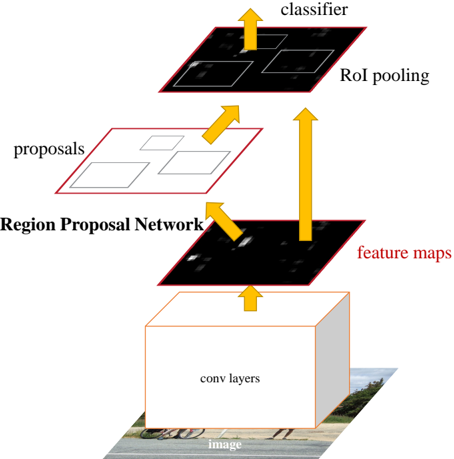
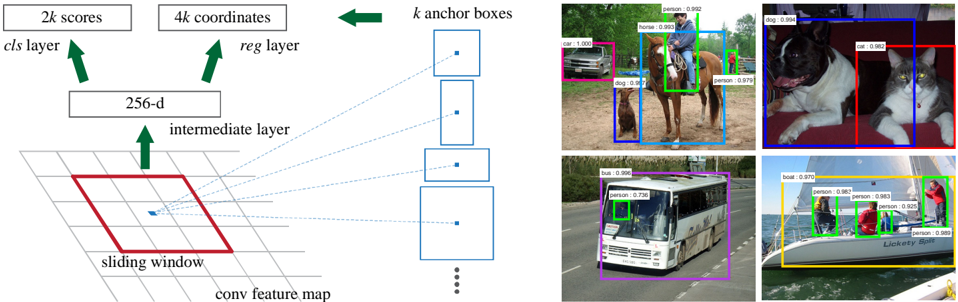
State-of-the-art object detection networks depend on region proposal algorithms to hypothesize object locations. Advances like SPPnet [1] and Fast R-CNN [2] have reduced the running time of these detection networks, exposing region proposal computation as a bottleneck. In this work, we introduce a Region Proposal Network (RPN) that shares full-image convolutional features with the detection network, thus enabling nearly cost-free region proposals. An RPN is a fully convolutional network that simultaneously predicts object bounds and objectness scores at each position. The RPN is trained end-to-end to generate high-quality region proposals, which are used by Fast R-CNN for detection. We further merge RPN and Fast R-CNN into a single network by sharing their convolutional features-using the recently popular terminology of neural networks with 'attention' mechanisms, the RPN component tells the unified network where to look. For the very deep VGG-16 model [3] , our detection system has a frame rate of 5 fps (including all steps) on a GPU, while achieving state-of-the-art object detection accuracy on PASCAL VOC 2007, 2012, and MS COCO datasets with only 300 proposals per image. In ILSVRC and COCO 2015 competitions, Faster R-CNN and RPN are the foundations of the 1st-place winning entries in several tracks. Code has been made publicly available.
Overview
CoChat Summary
TL;DR
Faster R-CNN introduces a Region Proposal Network (RPN) that shares convolutional features with Fast R-CNN, making region proposals nearly cost-free and enabling a unified object detection system. It achieves near real-time detection with state-of-the-art accuracy on PASCAL VOC and MS COCO.
Key findings
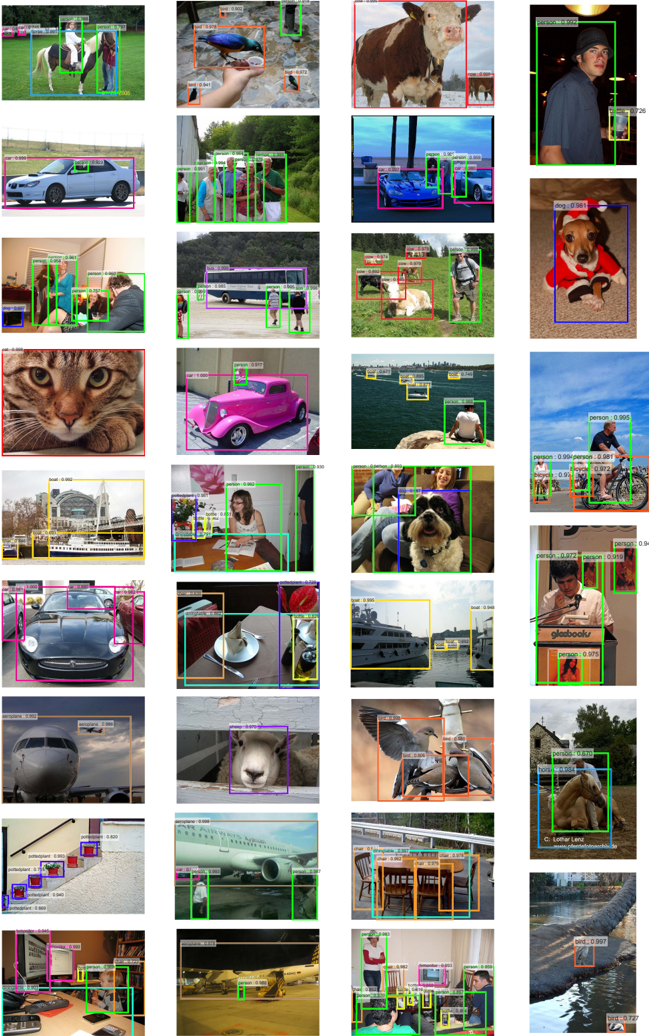
- With VGG-16 and shared features, Faster R-CNN reaches 69.9% mAP on PASCAL VOC 2007 test using 300 proposals, 73.2% with VOC07+12 training, 70.4% on VOC 2012 with 07++12, and 78.8% on VOC 2007 with COCO+07+12.
- Runtime: VGG-16 RPN + Fast R-CNN takes 198 ms total (5 fps), with RPN proposals costing 10 ms; ZF runs at 59 ms total (17 fps), versus SS + Fast R-CNN at 1830 ms (0.5 fps).
- Ablations: sharing features improves ZF mAP from 58.7% (unshared) to 59.9%; removing the reg layer drops mAP to 52.1%, and removing cls with 100 proposals drops it to 44.6%.
- On MS COCO test-dev, Faster R-CNN with VGG-16 and COCO train reaches 42.1% mAP@0.5 and 21.5% mAP@[.5,.95]; with COCO trainval it reaches 42.7% and 21.9%.
Methods
- The RPN is a fully convolutional network that slides a 3×3 window over shared conv features and predicts objectness scores and box regressions relative to anchors; default anchors use 3 scales (128², 256², 512²) and 3 aspect ratios (1:1, 1:2, 2:1), giving k = 9 anchors per position.
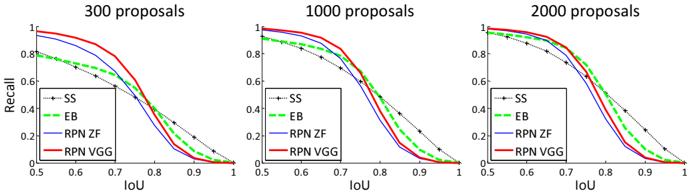
- Training uses a 4-step alternating scheme with ImageNet-pretrained ZF or VGG-16, SGD, single-scale images (shorter side s = 600), NMS at IoU 0.7, and 300 proposals at test time; evaluation is on PASCAL VOC 2007/2012 and MS COCO.
- Main metrics are detection mAP on PASCAL VOC and mAP@0.5 / mAP@[.5,.95] on MS COCO, with timing measured on a K40 GPU.
Limitations
- Stated in the paper: non-approximate joint training would require a differentiable RoI pooling/warping layer and is beyond the paper’s scope; the approximate joint training ignores gradients with respect to proposal box coordinates.
- Stated in the paper: cross-boundary anchors are ignored during training, and multi-scale feature extraction may improve accuracy but does not offer a good speed-accuracy trade-off.
- Evident from the text: the main experiments focus on PASCAL VOC and MS COCO with ZF/VGG-16 backbones, so generalization to other datasets, backbones, or detection regimes is not extensively characterized.
Model-written summary. Check it against the paper before relying on it.
Integrity signals
Registry
Cites
Statistics
Figures


Verification
Claims the paper makes
12 Valid · 5 Not valid · 8 Not checked · 83 Own results and interpretations
Every source the paper cites for this claim was checked and supports it.
In the paper
“Only by replacing VGG-16 with a 101layer residual net (ResNet-101) [18], the Faster R-CNN system increases the mAP from 41.5%/21.2% (VGG16) to 48.4%/27.2% (ResNet-101) on the COCO val set.”
What the sources say
- Supportedcites [18] [18] K. He, X. Zhang, S. Ren, and J. Sun, 'Deep residual learning for image recognition,' arXiv:1512.03385 , 2015. - source
Table 8 (p. 8) reports the exact COCO validation-set mAP values for baseline Faster R-CNN with VGG-16 and ResNet-101. Section 4.3 (p. 8) says the detection implementation was the same for both models and attributes the gain to replacing VGG-16 with ResNet-101. (LLM, conf=0.95)
plainstates a cause- Asserted: passes — The authors put it forward as true.
- Checkable: passes — It can be checked against evidence.
- Load-bearing: passes — The paper’s conclusions depend on it.
- Based: passes — The paper gives a reason why it holds.
- Supported
Every source the paper cites for this claim was checked and supports it.
In the paper
“This observation is still valid even when one increases the depth substantially to over 100 layers [18].”
What the sources say
- Supportedcites [18] [18] K. He, X. Zhang, S. Ren, and J. Sun, 'Deep residual learning for image recognition,' arXiv:1512.03385 , 2015. - source
In ImageNet Classification (p. 7), the paper reports that 101- and 152-layer ResNets outperform the 34-layer model, with no observed degradation. Its CIFAR-10 analysis (p. 7) also reports that a 110-layer ResNet converges well. These results support the stated extension to over 100 layers, although the isolated sentence does not specify what “this observation” refers to. (LLM, conf=0.87)
plain- Asserted: passes — The authors put it forward as true.
- Checkable: passes — It can be checked against evidence.
- Load-bearing: unclear — It is unclear whether the paper’s conclusions depend on it.
- Based: passes — The paper gives a reason why it holds.
- Supported
The cited sources support only part of this claim — read each source’s verdict below.
In the paper
“In ILSVRC and COCO 2015 competitions, Faster R-CNN and RPN are the basis of several 1st-place entries [18] in the tracks of ImageNet detection, ImageNet localization, COCO detection, and COCO segmentation.”
What the sources say
- Partly supportedcites [18] [18] K. He, X. Zhang, S. Ren, and J. Sun, 'Deep residual learning for image recognition,' arXiv:1512.03385 , 2015. - sourceExperimental — accuracy not yet measured
Section 4.3 (p. 8) lists first-place finishes in all four tracks, and the Object Detection Baselines (p. 10) describe a Faster R-CNN system using an RPN. The ImageNet Localization section (p. 12) also identifies its RPN-based method. But the copy attributes the entries collectively to deep residual nets; it does not establish that Faster R-CNN and RPN underpinned the COCO segmentation entry. (LLM, conf=0.86)
plainstates a cause- Asserted: passes — The authors put it forward as true.
- Checkable: passes — It can be checked against evidence.
- Load-bearing: unclear — It is unclear whether the paper’s conclusions depend on it.
- Based: passes — The paper gives a reason why it holds.
- Partly supported
The cited sources that could be checked couldn’t confirm or dispute this claim.
In the paper
“Yet when compared to efficient detection networks [2], Selective Search is an order of magnitude slower, at 2 seconds per image in a CPU implementation.”
What the sources say
- Could not verifycites [4] [4] J. R. Uijlings, K. E. van de Sande, T. Gevers, and A. W. Smeulders, 'Selective search for object recognition,' International Journal of Computer Vision (IJCV) , 2013. - sourceExperimental — accuracy not yet measured
The computational discussion in §5.3 (pp. 12–13) gives timings for complete object-recognition pipelines, not a two-second CPU runtime for Selective Search. The comparisons in §5.2.1 (p. 11) concern other object-location methods, not efficient detection networks. Searches for a two-second per-image runtime and a network comparison found neither claim in our copy. (LLM, conf=0.73)
- Not checked — no full text of the sourcecites [2] [2] R. Girshick, 'Fast R-CNN,' in IEEE International Conference on Computer Vision (ICCV) , 2015. - source
plainstates an association- Asserted: passes — The authors put it forward as true.
- Checkable: passes — It can be checked against evidence.
- Load-bearing: passes — The paper’s conclusions depend on it.
- Based: passes — The paper gives a reason why it holds.
- Could not verify
Every source the paper cites for this claim was checked and supports it.
In the paper
“We comprehensively evaluate our method on the PASCAL VOC detection benchmarks [11] where RPNs with Fast R-CNNs produce detection accuracy better than the strong baseline of Selective Search with Fast R-CNNs.”
What the sources say
- Supportedcites [11] [11] M. Everingham, L. Van Gool, C. K. I. Williams, J. Winn, and A. Zisserman, 'The PASCAL Visual Object Classes Challenge 2007 (VOC2007) Results,' 2007. - source
The citation is attached to “PASCAL VOC detection benchmarks,” not to the citing authors’ comparison of RPNs and Selective Search. Sections 5.2 and 6.2 describe the VOC detection task, its submitted methods, and its results, confirming the benchmark identification. (LLM, conf=0.92)
plainstates a cause- Asserted: passes — The authors put it forward as true.
- Checkable: passes — It can be checked against evidence.
- Load-bearing: passes — The paper’s conclusions depend on it.
- Based: passes — The paper gives a reason why it holds.
- Rests on an assumption not shown here.
- Supported
56 more claims
Create a free account to see all 108 claims and to verify the 2 references still open.
- Probably not a substantial claim. 11
- It may state two separate claims as one. 40
- The quote only partly states this claim. 1
Claims other papers make about this one
Each is checked against this paper’s own text: does it say what the citing paper says it does?
The source backs part of the claim, not all of it — or backs it for a different population, condition or comparison.
In the citing paper
“Unlike the original paper [19] that adopted stage-wise training regarding RPN, we use an improved implementation with end-to-end joint training similar to [37], which leads to higher baselines than [19].”
From Non-local Neural Networks (2018) · cites this paper as [37]
Experimental — accuracy not yet measuredThe source backs part of the claim, not all of it — or backs it for a different population, condition or comparison.
In the citing paper
“Faster RCNN is the first near-realtime deep learning detector (COCO mAP@.5=42.7%, VOC07 mAP=73.2%, 17fps with ZF-Net [48]).”
From Object Detection in 20 Years: A Survey (2023) · cites this paper as [19]
Experimental — accuracy not yet measuredThe source backs part of the claim, not all of it — or backs it for a different population, condition or comparison.
In the citing paper
“Faster RCNN is the first near-realtime deep learning detector (COCO mAP@.5=42.7%, VOC07 mAP=73.2%, 17fps with ZF-Net [48]).”
From Object Detection in 20 Years: A Survey (2023) · cites this paper as [47]
Experimental — accuracy not yet measuredThe source backs part of the claim, not all of it — or backs it for a different population, condition or comparison.
In the citing paper
“In the deep learning era, due to the increase of computing power, bootstrap was shortly discarded in object detection during 2014-2016 [16-20].”
From Object Detection in 20 Years: A Survey (2023) · cites this paper as [19]
Experimental — accuracy not yet measuredThe source backs part of the claim, not all of it — or backs it for a different population, condition or comparison.
In the citing paper
“The most commonly used idea to reduce the feature computational redundancy is to compute the feature map of the whole image only once [18, 19, 124], which have achieved tens or even hundreds of times of acceleration.”
From Object Detection in 20 Years: A Survey (2023) · cites this paper as [19]
Experimental — accuracy not yet measured
21 more claims about this paper
Create a free account to see every claim other papers make about this one.
Citations
Cites
Deep Residual Learning for Image Recognition
He, K., Zhang, X., Ren, S., & Sun, J. (2016) · 2016 IEEE Conference on Computer Vision and Pattern Recognition (CVPR) · doi:10.1109/cvpr.2016.90 · Cited by 235,474 · cited 7×
“to propose regions from data, and thus can easily benefit from deeper and more expressive features (such as the 101layer residual nets adopted in [18]).”
BackgroundInfluentialSelf-citationVery Deep Convolutional Networks for Large-Scale Image Recognition
Simonyan, K., & Zisserman, A. (2014) · arXiv · doi:10.48550/arxiv.1409.1556 · Cited by 114,148
ImageNet classification with deep convolutional neural networks
Krizhevsky, A., Sutskever, I., & Hinton, G. E. (2017) · Communications of the ACM · doi:10.1145/3065386 · Cited by 112,155 · cited 1×
“For the regression loss, we use L where R is the robust loss function (smooth L 1 ) defined in [5].”
MethodGoing deeper with convolutions
Szegedy, C., Liu, W., Jia, Y., Sermanet, P., Reed, S., Anguelov, D., Erhan, D., Vanhoucke, V., & Rabinovich, A. (2015) · 2015 IEEE Conference on Computer Vision and Pattern Recognition (CVPR) · doi:10.1109/cvpr.2015.7298594 · Cited by 48,562 · cited 1×
“1× 10(6) parameters (1536 × (4 + 1) × 800 for GoogleNet [34] in MultiBox [27]).”
Microsoft COCO: Common Objects in Context
Lin, T.-Y., Maire, M., Belongie, S., Hays, J., Perona, P., Ramanan, D., Dollár, P., & Zitnick, C. L. (2014) · Lecture Notes in Computer Science · doi:10.1007/978-3-319-10602-1_48 · Cited by 45,460 · cited 1×
“Region proposal methods typically rely on inexpensive features and economical inference schemes.”
MethodImageNet Large Scale Visual Recognition Challenge
Russakovsky, O., Deng, J., Su, H., Krause, J., Satheesh, S., Ma, S., Huang, Z., Karpathy, A., Khosla, A., Bernstein, M., et al. (2015) · International Journal of Computer Vision · doi:10.1007/s11263-015-0816-y · Cited by 39,380 · cited 1×
“, the shared convolutional layers) are initialized by pre-training a model for ImageNet classification [36], as is standard practice [5].”
MethodFully convolutional networks for semantic segmentation
Long, J., Shelhamer, E., & Darrell, T. (2015) · 2015 IEEE Conference on Computer Vision and Pattern Recognition (CVPR) · doi:10.1109/cvpr.2015.7298965 · Cited by 38,834 · cited 5×
“Our RPNs are thus a kind of fully-convolutional network (FCN) [14] and they can be trained end-to-end specifically for the task for generating detection proposals.”
BackgroundMethodInfluentialRich Feature Hierarchies for Accurate Object Detection and Semantic Segmentation
Girshick, R., Donahue, J., Darrell, T., & Malik, J. (2014) · 2014 IEEE Conference on Computer Vision and Pattern Recognition · doi:10.1109/cvpr.2014.81 · Cited by 32,684 · cited 7×
“, Selective Search [4] object detectors, RCNN [5], and Fast R-CNN [2]).”
BackgroundMethodInfluentialSelf-citationGirshick, R. (2015) · 2015 IEEE International Conference on Computer Vision (ICCV) · doi:10.1109/iccv.2015.169 · Cited by 28,105
Self-citationThe pascal visual object classes (VOC) challenge
Everingham, M., Van Gool, L., Williams, C. K. I., Winn, J., & Zisserman, A. (2010) · International Journal of Computer Vision · doi:10.1007/s11263-009-0275-4 · Cited by 19,599
Research works printed but not linked: 1
- [10] S. Ren, K. He, R. Girshick, and J. Sun, 'Faster R-CNN: Towards real-time object detection with region proposal networks,' in Neural Information Processing Systems (NIPS) , 2015. -
Cited by
Items 56,301–56,400 of 56,405
OrgaRe-YOLO: A Lightweight Deep Perception Algorithm for Organoid Recognition
Zhang, H., Wang, B., Li, B., Zheng, Y., Liu, P., & Chang, Y. (2026) · Journal of Shanghai Jiaotong University (Science) · doi:10.1007/s12204-026-2953-6
CSTAR-Det: A lightweight vision-based framework for conveyor-based cashew kernel quality assessment
Nguyen-Duc, Q.-A., Kim, T. D., & Pham, D. M. (2026) · Array · doi:10.1016/j.array.2026.101282
Rupnar, V., Gawande, S., Adsure, V., Kirtane, M., Gayake, P., & Mehta, P. (2026) · Wiley eBooks · doi:10.1002/9781394357789.ch38
ImplantX: Multi-Class Dental Implant Detection in Radiographs
Mane, V., Denny, D., Girathe, A., & Halkare, A. (2026) · International Conference on Innovation & Growth in Next-Gen Intelligent Technology & Engineering (IGNITE) · doi:10.1109/ignite69592.2026.11706078
Stream Contracts: An Auditable and Reproducible Evaluation Framework for RGB–Depth AAV Detection
Ekici, S., Uyar, M., & Üstündağ, M. (2026) · IEEE Access · doi:10.1109/access.2026.3738662
Chuang, 谈. T., Ying, 熊. X., Hao, 龙. L., Simin, 任. R., & Weihua, 骆. L. (2026) · Acta Optica Sinica · doi:10.3788/aos252092
Segmentation-guided explainable smoking detection using SAM and CNN
Sarı, H. İ., & Keser, K. (2026) · Journal of Scientific Reports-A · doi:10.59313/jsr-a.1958126
rao, N. V., Dhanraj, S., Sharmila, L., & Arunvinodh, C. (2026) · Results in Engineering · doi:10.1016/j.rineng.2026.113306
Andriyanov, N. A., & Dementiev, V. (2026) · Lecture notes in computer science · doi:10.1007/978-3-032-39382-1_27
Yang, X., Yu, 韩. H., Li, S., Minglun, 陈. C., Weidong, 赵. Z., & Zhong, 李. L. (2026) · Laser & Optoelectronics Progress · doi:10.3788/lop260804
Vision on the Warehouse Floor: Perceptive HRI for Autonomous Forklifts
Jung, M., Hempel, T., Schulz, P., & Al-Hamadi, A. K. (2026) · Robotics · doi:10.3390/robotics15100191
Wang, Z., Zhang, Y., Wang, Y., Xue, F., Yusufu, Y., Maimaiti, A., Li, Y., Zhang, J., Yang, Y., & Zhao, W. (2026) · Journal of Imaging Informatics in Medicine · doi:10.1007/s10278-026-02341-z
Uzun, S., Akhter, A. F. M. S., Ceyhan, S., Biçici, Y., Serin, Z., & Pathan, A. K. (2026) · Sakarya University Journal of Computer and Information Sciences · doi:10.35377/saucis...1711862
Yang, Q., Huizhen, 贾. J., Tonghan, 王. W., et al. (2026) · Laser & Optoelectronics Progress · doi:10.3788/lop260573
MLM-YOLO: lightweight improved YOLOv11n model for vehicle-mounted roadside garbage bin detection
Wang, R., Zhou, Z., Liu, Y., et al. (2026) · Engineering Research Express · doi:10.1088/2631-8695/aeaeae
“However, their multi-stage region proposal generation and classification-regression pipelines increase computational overhead, making them less suitable for real-time deployment on vehicle-mounted edge devices [6].”
基于改进YOLOv8的增材制造钛合金超声全聚焦C扫图像缺陷识别算法研究
Chuan, 沈. S., Gong, L., Jiayi, 李. L., et al. (2026) · Chinese Journal of Lasers · doi:10.3788/cjl251182
Baisura, S., Srinivasan, T. K., Anju Anil, J., Revathy, J., Rajesh, V., & Kumaran, V. N. S. (2026) · International Conference on Innovation & Growth in Next-Gen Intelligent Technology & Engineering (IGNITE) · doi:10.1109/ignite69592.2026.11706221
“Ren et al.’s research [13] suggests that two-stage detectors like Faster R-CNN frequently achieve higher spatial precision at a higher latency, despite YOLOv8’s high computational efficiency.”
An Improved YOLOv8-Based Method for Diagnosis of Angle Recession Using UBM Images
Wang, C., Han, L., Wang, X., et al. (2026) · Advanced Clinical Engineering · doi:10.2738/ace.2026.0008
Mayya, A. M., Alkayem, N. F., Saii, M., Ahmad, M. H., Bayat, M., Asteris, P. G., & Cao, M. (2026) · Nondestructive Testing And Evaluation · doi:10.1080/10589759.2026.2731268 · Cited by 1
Distilling adaptive scale knowledge for remote sensing object detection
Kim, S., Yoon, D., & Sung, Y.-H. (2026) · ISPRS Journal of Photogrammetry and Remote Sensing · doi:10.1016/j.isprsjprs.2026.09.033
Open-Vocabulary Object Detection in UAV Aerial Remote Sensing Images Based on YOLOE
Li, K. (2026) · International Conference on Computer Vision and Data Mining (ICCVDM) · doi:10.1109/iccvdm71812.2026.11709372
“Traditional object detection algorithms such as YOLOv8 [3], YOLOv11, and the two-stage Faster R-CNN [4], although performing well on standard datasets, are all closed-set detectors capable of recognizing only predefined fixed categories seen during training.”
InfluentialYe, W., Chu, Z., Li, L., et al. (2026) · International Conference on Computer Vision and Data Mining (ICCVDM) · doi:10.1109/iccvdm71812.2026.11709106
“…limited generalization ability (e.g., HOG [1], SVM [2]), deep learning-based object detection algorithms (e.g., R-CNN [3], SPP-Net [4], Fast R-CNN [5], Faster R-CNN [6], SSD [7], and the YOLO series [8]–[10]) have significantly improved detection accuracy and efficiency in standard environments.”
Cross-Version Evaluation of YOLO and Faster R-CNN for Traffic Sign Detection
Thomas, S., Varghese, J., & Mathew, J. (2026) · International Conference on Smart Communication and Sustainable Technologies (ICSCST) · doi:10.1109/icscst70031.2026.11709803
“Deep learning has transformed object detection, with architectures broadly categorized into single-stage detectors such as YOLO (You Only Look Once) [3] and two-stage detectors such as Faster R-CNN [4].”
Wang, Y., Zhang, S., Liu, X., Ji, Z., & Jia, W. (2026) · Computers and Electronics in Agriculture · doi:10.1016/j.compag.2026.112473
A Hybrid Transformer–CNN Network Based on DINOv3 for Lens Surface Defect Detection
Li, S.-H., & Ma, X. (2026) · 2026 7th International Conference on Computer Vision and Data Mining (ICCVDM) · doi:10.1109/iccvdm71812.2026.11709307
“With the development of deep learning, two-stage methods such as Faster R-CNN[3] achieve relatively high localization accuracy through region proposal generation and bounding-box regression, whereas one-stage detectors such as SSD[4] and YOLO[5] directly predict defect categories and locations and are more suitable fo…”
Minority-Class-Oriented Data Expansion for Faster R-CNN Detection of Cylinder-Neck Defects
Fang, H., & Hu, X. (2026) · International Conference on Mechanical, Electronics and Electrical and Automation Control (METMS) · doi:10.1109/metms70800.2026.11705959
“Faster R-CNN combines an RPN and RoI-based classifier [2] , while FPN exposes semantically rich features at several resolutions [4] .”
Zhang, S., & Wan, Y. (2026) · International Conference on Computer Vision and Data Mining (ICCVDM) · doi:10.1109/iccvdm71812.2026.11709269
“Two-stage methods like Faster R-CNN[1] and FPN[2] are accurate but too heavy for real-time use; one-stage YOLO-series detectors[3-5] are faster, and YOLOv8, with its anchor-free design and C2f module, offers a good accuracy–speed trade-off and serves as the industrial baseline.”
Adaptive calibration and spatio-temporal filtering for robust highway wrong-way driving detection
Liu, D., Xiaomei, Y. U. A. N., Zhang, Z., Zhang, L., Wang, H., & Liu, Y. M. (2026) · Frontiers in Future Transportation · doi:10.3389/ffutr.2026.1935771
Fabric Defect Detection Based on YOLOv8 with Color Constancy Preprocessing for Variable Illumination
Wang, H., & Li, Y. (2026) · International Conference on Computer Vision and Data Mining (ICCVDM) · doi:10.1109/iccvdm71812.2026.11709395
“Table I lists the quantitative comparison results with main-stream detection models [5], [10]–[12], [21]. two-stage detectors such as Fast R-CNN [21] and Faster R-CNN [22] have high accuracy but low speed, which cannot meet real-time production requirements.”
Dong, R., Wei, X., Zheng, D., Liu, Y., Tong, Y., Li, W., Shen, W., & Fu, X. (2026) · Artificial Intelligence in Agriculture · doi:10.1016/j.aiia.2026.09.007
Lei, Z. (2026) · International Conference on Computer Vision and Data Mining (ICCVDM) · doi:10.1109/iccvdm71812.2026.11709382
“Mask R-CNN [4] is a representative two-stage instance segmentation method that adds a parallel mask head to Faster R-CNN [8], enabling joint prediction of object detection and pixel-level segmentation.”
Nie, X., Wang, X., Wei, Q., et al. (2026) · International Conference on Computer Vision and Data Mining (ICCVDM) · doi:10.1109/iccvdm71812.2026.11709094
Korkmaz, D., & Açıkgöz, H. (2026) · Applied Soft Computing · doi:10.1016/j.asoc.2026.116573
Single-photon lidar observation process modeling and physics-driven virtual data generation
Tian, R., Wang, C., Li, Y., et al. (2026) · AVS Quantum Science · doi:10.1116/5.0353479
FSCR-Net: Fourier Series-Based Contour Refinement for Rotated Object Detection
Wang, Y., Jing, D., Zhang, J., & Yang, B. (2026) · Symmetry · doi:10.3390/sym18101582
Algorithms for Visual Recognition and Localization of Pallets in Complex Industrial Settings
Dong, Q., Zhu, S., Qi, X., et al. (2026) · doi:10.1109/eircs70783.2026.11706500
“Furthermore, existing research generally lacks the ability to infer visual blind spots by incorporating process-specific prior information, making it difficult to meet the practical requirements for blind-spot-free packing [6] .”
Wang, S., 严付桃, Fan, Z., et al. (2026) · Research Square · doi:10.21203/rs.3.rs-10664527/v1
Xie, Y., Gao, D., Hu, X., et al. (2026) · Biomedical Signal Processing and Control · doi:10.1016/j.bspc.2026.111476
Niu, K., Liu, C., Fan, Y., & Kuang, C. (2026) · Journal of Pipeline Science and Engineering · doi:10.1016/j.jpse.2026.100612
Fuzzing the Boundary between Models and Code in Hybrid AI-Enabled Systems
Gao, X., Feng, Y., Lu, Y., Liu, Z., Chen, Z., & Xu, B. (2026) · Proceedings of the ACM on software engineering. · doi:10.1145/3832205
“Both configurations utilize the Faster R-CNN [53] architecture for their respective perception models, ensuring a consistent structural baseline while targeting different semantic objects.”
A cross-guided and dynamic adaptive convolutional network for ancient city wall defect detection
Zhao, S., Chen, Z., Zhang, Y., et al. (2026) · Image and Vision Computing · doi:10.1016/j.imavis.2026.106223
RGB-Derived Multi-Representation Texture Enhancement for Underwater Object Detection
Cheng, L., & Wang, X. (2026) · Journal of Marine Science and Engineering · doi:10.3390/jmse14191817
FCC-YOLOv11: A Robust Detector for Small-Target PPE in Complex Industrial Scenes
Qiu, H. (2026) · International Conference on Advanced Algorithms and Neural Networks (AANN) · doi:10.1109/aann71145.2026.11709314
“Deep learning-based detectors fall into two-stage (e.g., Faster R-CNN [8]) and one-stage approaches (e.g., SSD [9], YOLO series).”
TexQ-DETR: Lightweight Fabric Defect Detection via Query-Conditioned Knowledge Distillation
Liu, Z., Xia, Z., Xing, T., & Zhou, H. (2026) · International Conference on Advanced Algorithms and Neural Networks (AANN) · doi:10.1109/aann71145.2026.11709300
“CNN-based networks, exemplified by the YOLO series (e.g., YOLOv9 [9], YOLOv10 [10]) and Faster R-CNN variants [11], have been widely deployed on factory lines due to their high throughput and maturity in multi-scale anchor fusion.”
Automated Detection of Illegally Blue-Light Modified Cars by Using Computer Vision
Pataravesaruch, P., & Banditwattanawong, T. (2026) · International Electrical Engineering Congress (iEECON) · doi:10.1109/ieecon68065.2026.11707134
HMA-YOLO: Hypergraph-guided multi-scale feature interaction for remote sensing object detection
Zhang, Z., Qian, Y., & Bie, Q. (2026) · Digital Signal Processing · doi:10.1016/j.dsp.2026.106549
Vmamba-DETR: An Object Detection Network Based on Vision Transformer and Visual State Space Model
Ni, Y., Wang, Y.-L., Fei, M., & Du, D. (2026) · Asian Control Conference (ASCC) · doi:10.1109/ascc70886.2026.11702455
Subashini, S., Kavipriya, D. P., Pandian, R., Ravi, T., Sugadev, M., & Jesina, B. (2026) · International Conference on Innovations in Engineering and Technology (ICIET) · doi:10.1109/iciet70550.2026.11712619
“Traditional approaches to human detection depended on hand-crafted features and classical classifiers, notably Haar-like features with boosted cascades [7] and Histogram of Oriented Gradients (HOG) [16], which worked well in controlled environments but poorly in complex real-world ones.”
Comparative Evaluation of YOLO-Based Object Detection Models for Military Vehicle Surveillance
Kumar, N., Singh, V., Kaewprapha, P., et al. (2026) · International Electrical Engineering Congress (iEECON) · doi:10.1109/ieecon68065.2026.11706985
“Although region-based detection architectures deliver strong detection accuracy, they typically incur high computational cost and slower inference, which restricts their suitability for time-critical military surveillance applications that demand rapid decision-making [5].”
Artificial Intelligence in Quality Control of Welded Joints
Bošnjaković, M., & Katinić, M. (2026) · Technologies · doi:10.3390/technologies14100627
Liu, S., Shi, Y., Xie, Y., & Shi, N. (2026) · Expert Systems · doi:10.1111/exsy.70425
Adaptive Reconstruction and Deformable Attention for UAV Small-Object Detection
Alam, M. M., Tanha, K. J., Golam, M., Rahman, S. S. B., Tuli, E. A., & Jun, T. (2026) · International Conference on Mobile, Military, Maritime IT Convergence (ICMIC) · doi:10.1109/icmic70587.2026.11708585
“Tiny object detection in UAV imagery is a persistent challenge in computer vision, with applications spanning aerial surveillance, traffic monitoring, and autonomous systems [1].”
From Streets to Skills: An AI-Powered Citizen Reporting System for Homeless Rehabilitation
Vimalraj, R., Rishini Dharan, T., Patturose, J. G. B., et al. (2026) · International Conference on Innovations in Engineering and Technology (ICIET) · doi:10.1109/iciet70550.2026.11712625
“The findings are not new since the existence of deep learning-based object detectors that can be run in sophisticated urban settings has been reported before [6] – [8].”
InfluentialA Lightweight Perception-Enhanced Network for Pavement Distress Detection on Edge Devices
Nie, K.-Q., Xie, S.-J., Wang, M.-Y., et al. (2026) · Pattern Recognition Letters · doi:10.1016/j.patrec.2026.10.001
A Coordinated Feature Learning Framework for Oriented SAR Ship Detection
王, 锦., Guo, Q., Li, D., Meng, L., & He, J. (2026) · Remote Sensing · doi:10.3390/rs18193386
Nasraoui, A., & Hajaiej, Z. (2026) · Engineering Technology & Applied Science Research · doi:10.48084/etasr.20543
“The first module is a deep fully CNN known as the Region Proposal Network (RPN), which is responsible for generating high-quality region proposals [8, 16-18] that are expected to contain objects.”
EDA-DETR: An efficient dynamic scale-aware transformer for small object detection in UAV imagery
Zhang, M., Li, J., Yan, Y., Jiang, W., Liu, Z., & Liu, T. (2026) · Neurocomputing · doi:10.1016/j.neucom.2026.135292
Tatar, G., Bayar, S., & Çiçek, İ. (2026) · Integration · doi:10.1016/j.vlsi.2026.102899
Small Object Detection in Aerial Thermal Images Using the Hybrid ViT-CapNet Algorithm
Ashwini, B., & Muthupandi, G. (2026) · Engineering Technology & Applied Science Research · doi:10.48084/etasr.12839
Chen, Z., Bao, Y., Liu, Y., Li, Z., Zhang, D., Xiao, M., Guo, Y., & 罗金雀 (2026) · Frontiers in Medicine · doi:10.3389/fmed.2026.1934762
EF-YOLO: An efficient framework for UAV-based detection of workers’ abnormal behavior
Liu, J., Zhou, J., & Long, W. (2026) · Signal Processing Image Communication · doi:10.1016/j.image.2026.117724
A Two-Stage Algorithm for Smoking Detection in Industrial Work Environments
Gao, S., Huang, G., Liu, M., et al. (2026) · Procedia CIRP · doi:10.1016/j.procir.2026.02.175
Mou, W., Wang, Y., Liu, C., et al. (2026) · Sensors · doi:10.3390/s26196282
“The selected baselines include the high-precision two-stage detector Faster R-CNN [54], as well as several representative lightweight one-stage detectors: FemtoDet [55], MobileNetV3-SSD [27,35], EfficientDet [56], and YOLOX-tiny [57].”
A Multimodal Deep Learning Framework for Freshness Detection and Grading in Fruits and Vegetables
Hemalatha, S., & Banu, W. A. (2026) · Algorithms for intelligent systems · doi:10.1007/978-3-032-25627-0_5
Скаліш, Р. Д., & Protsyk, Y. (2026) · Науковий вісник НЛТУ України · doi:10.36930/40360412
Visual Plant Imagery and Property Valuation: A Descriptive Analysis
Chang, Y., Fong, N. M., Ye, N., et al. (2026) · Marketing Science · doi:10.1287/mksc.2025.0145
Dong, F., Gui, B., Zhang, C., Wang, W., Zhou, F., & Jiang, M. (2026) · Research Square · doi:10.21203/rs.3.rs-11008280/v1
A Frequency-Guided Representation algorithm for small object detection for UAVs
Xiao, F., Xu, Z., Zhang, H., Zhu, X., Gao, Z., & Tao, C. (2026) · Displays · doi:10.1016/j.displa.2026.103707
Research on an Insulator Defect Detection Algorithm Based on an Improved YOLOv11n Approach
Li, Y., Wang, H., Liu, J., et al. (2026) · Applied Sciences · doi:10.3390/app16199804
Reverse Procedure for Lost Track Recovery in Multi-Object Tracking
Hiek, L., Valy, D., & Nou, S. (2026) · Journal of Intelligent Media Computing · doi:10.47836/jimc.1.1.09
Bai, D., Jing, Z., & Jing, D. (2026) · Algorithms · doi:10.3390/a19100850
A focusing distribution pyramid and task-aligned network for lightweight tunnel crack detection
Wang, J., Zhang, Y., Fan, X., Qi, Y., & Nie, W. (2026) · Engineering Applications of Artificial Intelligence · doi:10.1016/j.engappai.2026.116417
Bouček, T., Pešek, O., Pavelka, K., Matoušková, E., Rakhymberdina, M. Y., Assylkhanova, Z. A., & Pavelka, K. (2026) · Geomatics · doi:10.3390/geomatics6050114
E-YOLOv11-RGBD perception-to-action framework for multicrop greenhouse robotic harvesting
Pereira, F. A. D. S., Vieira, P., Freitas, L., Machado, J., Silva, A. R., & Lopes, A. M. (2026) · Smart Agricultural Technology · doi:10.1016/j.atech.2026.102609
Tian, J., Zhang, X., Gao, F., Yang, J., & Zhou, C. (2026) · Frontiers in Plant Science · doi:10.3389/fpls.2026.1929998
Spatio-Temporal Video Filtering Based on Adaptive Kalman Filter and Hungarian Algorithm
Dubrovina, A. (2026) · International Russian Automation Conference (RusAutoCon) · doi:10.1109/rusautocon69876.2026.11707354
“The proposed method uses adaptive noise covariance estimation based on a sliding innovation window [22].”
Deep Learning-Based Blood Cell Detection and Antigen-Antibody Driven Blood Group Classification
Raj, A. T., Praveen.J, & Abirami, S. (2026) · IEEE World Conference on Applied Intelligence and Computing (AIC) · doi:10.1109/aic70896.2026.11717418
“Feng et al. [6] also enhanced the detection performance using a multi-strategy active learning framework, which greatly decreased the amount of annotation while keeping their detection accuracy high.”
Automated Copra Quality Detection and Oil Yield Estimation Using YOLOv8
Shetty, S. B., Palanna, D. A., Shetty, M. P., et al. (2026) · IEEE World Conference on Applied Intelligence and Computing (AIC) · doi:10.1109/aic70896.2026.11716974
“Region-based detection models such as Faster R-CNN [14] have demonstrated strong performance in object recognition and localization tasks, while U-Net [15] has shown the effectiveness of deep neural networks for image segmentation and feature extraction.”
Computer Vision-Based Fire and Explosion Risk Assessment Using Adaptive Dynamic Fault Tree Analysis
Tamil Selvan, V. S., Vignesh., P., K, V. V., et al. (2026) · doi:10.1109/icscsa69367.2026.11708126
“Faster R-CNN detects objects effectively, DeepSORT can perform multi-object tracking reliably, and Grad-CAM improves the model's explainability [1] – [12].”
HSF-DETR for Brain Tumor Detection in Magnetic Resonance Imaging
Jiao, L., & Guo, J. (2026) · International Conference on Computer Science and Blockchain (CCSB) · doi:10.1109/ccsb71176.2026.11716484
“Faster R-CNN [3] , DETR [4] , RT-DETR [5] , and YOLO-based detectors have been used in natural or medical images [2] .”
Alfitra, D., Rahman, A., Mufti, A., et al. (2026) · doi:10.1109/aims71270.2026.11712743
“Detector architectures are broadly divided into two-stage frameworks such as Faster R-CNN, which offer strong localization at higher computational costs [11], and one-stage frameworks such as RetinaNet and YOLO family, which balance detection performance with fast inference [12-15].”
Leonen, J. T., General, M. K. L. P. C., Bagara, M. G., Cansino, J. S., Mendoza, M. L. S., & Quendangan, E. B. (2026) · IEEE World Conference on Applied Intelligence and Computing (AIC) · doi:10.1109/aic70896.2026.11717350
“YOLO proposed a single-stage, real-time object detection formulation [9] and then Faster R-CNN introduced the idea of two-stage region proposal [10].”
Paul, P. M., Devarajulu, V. S., Cheena, K., et al. (2026) · doi:10.1109/icscsa69367.2026.11708353
Ma, P., Gao, R., Li, Q., Wang, R., Yu, Q., Wang, Z., Zhou, H., & Liu, Y. (2026) · Computers and Electronics in Agriculture · doi:10.1016/j.compag.2026.112416
Wang, L., Lyu, J., Pan, J., Luo, J., & Bian, L. (2026) · Agronomy · doi:10.3390/agronomy16191963
Menyhárt, T., Hajdú, A., & Lakatos, R. (2026) · IEEE Conference on Information Technology and Data Science (CITDS) · doi:10.1109/citds70571.2026.11706824
“Toaddress this limitation, we investigate the internal behavior of quantized CNNs across multiple architectures, including YOLO [11], [12], EfficientNet [13], DenseNet [14], and Faster R-CNN [9].”
Zhang, Y., Zhang, J., & Liu, M. (2026) · Proceedings - IEEE International Conference on Robotics and Automation/Proceedings · doi:10.1109/icra57385.2026.11696652
“Closed-set detectors [15], [16] have enabled many 3D semantic mapping systems [25], [27]–[29], offering strong performance in terms of speed and accuracy.”
Wang, K., Zhang, H., Yang, T., Shen, P., & Zhao, Y. (2026) · Frontiers in Mechanical Engineering · doi:10.3389/fmech.2026.1983450
Detection and Targeted Pesticide Application for Tea Diseases Based on YOLOv12 and 3D Vision
Mei, Z., Li, Y., Ye, B., et al. (2026) · Agriculture · doi:10.3390/agriculture16192160
HGRNet: Hierarchical Gradient Reconstruction Network for Underwater Object DetectionPreprint
Zhou, L., Xiong, Z., Li, H., et al. (2026) · SSRN Electronic Journal · doi:10.2139/ssrn.7578375
Mavroudi, L., Savva, A. D., Kyrkou, C., & Theocharides, T. (2026) · IEEE International Conference on Omni-layer Intelligent Systems (COINS) · doi:10.1109/coins69995.2026.11715615
“Despite strong benchmark accuracy, models such as YOLOv8 [5], Faster R-CNN [6], and RetinaNet [7] remain vulnerable to physical adversarial patches that persist across viewpoint, lighting, and distance changes [8], [9].”
Chen, C.-H., Chen, B.-J., & Shen, Y. (2026) · International Conference on Robotics and Automation Sciences (ICRAS) · doi:10.1109/icras70064.2026.11717892
“Early approaches such as R-CNN, Fast R-CNN, and Faster R-CNN adopt multi-stage pipelines to achieve high detection accuracy, but suffer from high computational complexity and latency, making them unsuitable for real-time edge applications [1] – [3].”
SCF-YOLO: scale-sequence context fusion YOLO for dense small pest detection
Qi, F., Qiu, Q., Tang, Z., Zou, H., & Zou, Z. (2026) · Journal of Real-Time Image Processing · doi:10.1007/s11554-026-01994-x
“Two-stage detectors, represented by Faster R-CNN [19] and Cascade R-CNN [20], first generate candidate regions and then refine their classi-fication and localization.”
Ma, W., Liu, L., Wang, B., et al. (2026) · Computers & Electrical Engineering · doi:10.1016/j.compeleceng.2026.111592
Wu, Z.-Y., Chien, C.-H., & Liu, C. (2026) · Research Square · doi:10.21203/rs.3.rs-10718006/v1
Madhusudhan, S., Kumar, A., Meghana, M., D, M. H., & Saka, M. V. (2026) · International Conference on Natural Language Processing and Computer Vision (ICNPCV) · doi:10.1109/icnpcv69434.2026.11708941
Cognitively Aligned Dual-Task Interaction for Small Object Perception in Highway Surveillance
Liu, D., Gong, Y., Zhang, Z., et al. (2026) · IEEE International Conference on Omni-layer Intelligent Systems (COINS) · doi:10.1109/coins69995.2026.11715588
“In modern object detection systems, the core pipeline relies on semantic classification and spatial localization [2].”
GER-DETR: efficient steel surface defect detection via lightweight RT-DETR optimization
Liu, X., & Liang, Z. (2026) · Journal of Real-Time Image Processing · doi:10.1007/s11554-026-01987-w
Meng, Q., Cai, C., Yan, H., Li, T., Zhang, M., & Yuan, H. (2026) · Smart Agricultural Technology · doi:10.1016/j.atech.2026.102620
Chen, Z., Chen, L., Gong, J., Li, H., Ma, B., Keshun, Y., Li, P., & Yang, J. (2026) · Advanced Engineering Informatics · doi:10.1016/j.aei.2026.105337
Metadata
- Authors
- Ren, S., He, K., Girshick, R., & Sun, J.
- Affiliations
- University of Science and Technology of China (CN)
- Visual Computing Group, Microsoft Research, Beijing, China
- Meta (United States) (US)
- ORCID
- Venue
- IEEE Transactions on Pattern Analysis and Machine Intelligence
- Published
- 2017-06-01
- Volume
- 39
- Issue
- 6
- Pages
- 1137-1149
- ISSN
- 0162-8828 (ISSN-L)
- 2160-9292
- 1939-3539
- OpenAlex
- W639708223
- Cited by
- 73,472
- References
- 60
- Citations by year
- 2026: 5632 · 2025: 9233 · 2024: 9699 · 2023: 9795 · 2022: 9251 · 2021: 9857 · 2020: 7617 · 2019: 6376 · 2018: 3729 · 2017: 1740
- FWCI
- 2215.09
- Type
- journal article
- Language
- en
- Open access
- green
- arxiv.org
- Licence
- Locations
- IEEE Transactions on Pattern Analysis and Machine Intelligence (publishedVersion)
- PubMed (publishedVersion)
- arXiv (Cornell University) (submittedVersion)
- arXiv (Cornell University)
- neural information processing systems
- Funders
- Microsoft Research
- Topics
- Physical Sciences › Computer Science › Computer Vision and Pattern Recognition › Advanced Neural Network Applications
- Physical Sciences › Computer Science › Computer Vision and Pattern Recognition › Visual Attention and Saliency Detection
- Physical Sciences › Computer Science › Computer Vision and Pattern Recognition › Advanced Image and Video Retrieval Techniques
- Keywords
- Faster R-CNN, region proposal network, real-time object detection, Fast R-CNN, bounding box regression, VGG16, attention mechanism, end-to-end learning, Pascal VOC, MS COCO
About these checks
Registry, retraction, Cites and statistics results are computed, not judged, with one exception: a printed reference that no index lists is read once by a model before it counts as a citation error. Claims are extracted by a model and kept only when their quote appears verbatim in the text; each cited source is then checked, with a model’s help, for whether it says what the claim relies on. Those verdicts can be wrong — read the claim’s quote and the cited source before relying on one.
The claim verdicts this report counts are experimental: their accuracy is not yet measured.
A language model drew the claims from the paper on 2026-10-10, under version 3 of the claim definition (model deepseek-v4.1-flash, prompt extract-v3).
A second model labelled each claim on 2026-10-10 (model jev-1.13-20260917, definition revision gold-guideline-v0.2).
Cited sources are checked with a language model’s help (gpt-6-sol).
Statistics and arithmetic are recomputed, not judged.
Confidence bands are shown only for fields calibrated on our annotated test set. None is calibrated yet, so no band is shown.
What counts as a claim ›How we measure confidence ›How we check this ›
Are you an author, or do you see a problem with this page? Request a review
Data sources
Bibliographic data: Semantic Scholar, OpenAlex, Crossref.
Contains information from the Semantic Scholar Academic Graph Datasets, made available under the ODC Attribution License (ODC-BY 1.0).
Semantic Scholar’s data is described in: Kinney, R., et al. (2023). The Semantic Scholar Open Data Platform. arXiv:2301.10140.
