

The DOI matches its Crossref record; 88 of the 88 references it cites were found in a registry or an index.
Impact of senescence-associated secretory phenotype and its potential as a therapeutic target for senescence-associated diseases
Open accessAbstract
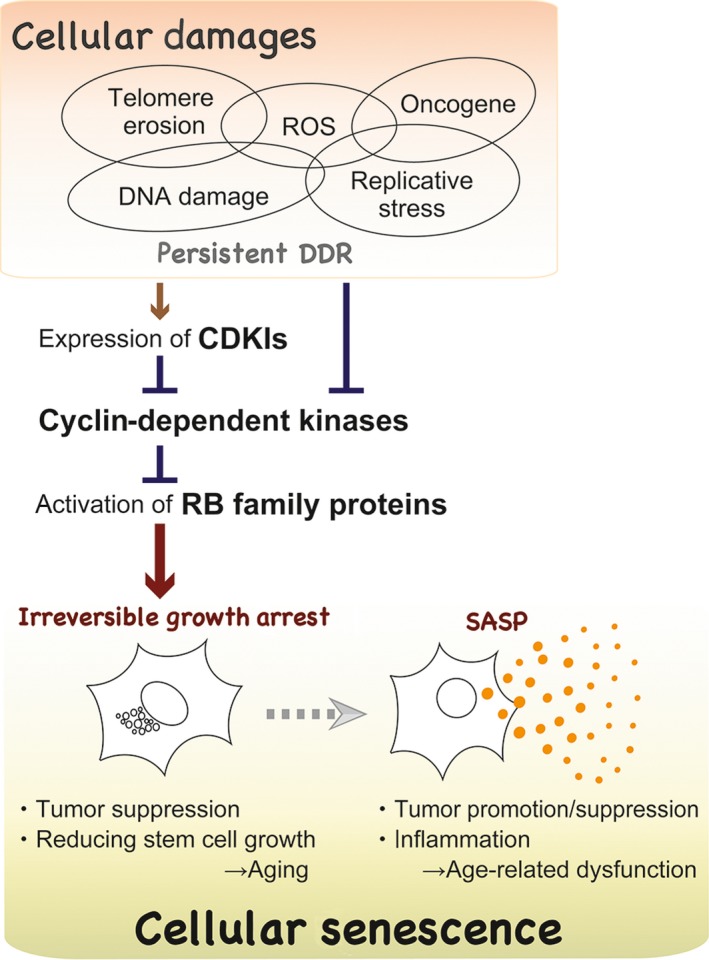
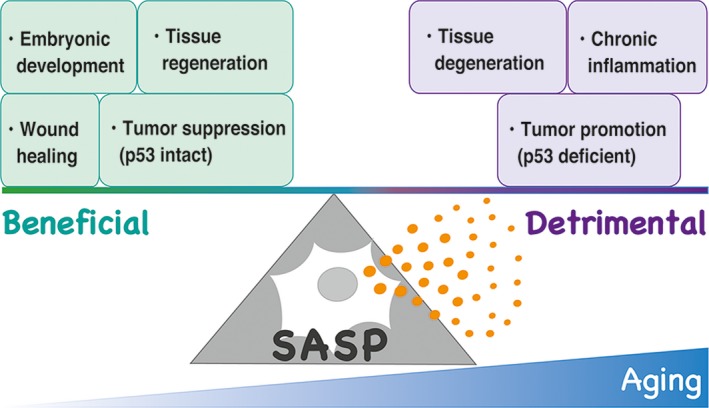
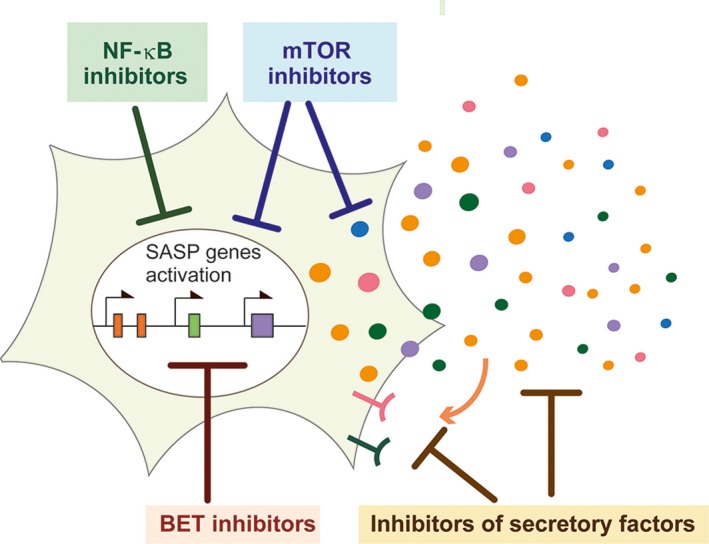
"Cellular senescence" is a state in which cells undergo irreversible cell cycle arrest in response to a variety of cellular stresses. Once cells senesce, they are strongly resistant to any mitogens, including oncogenic stimuli. Therefore, cellular senescence has been assumed to be a potent anticancer mechanism. Although irreversible cell-cycle arrest is traditionally considered the major characteristic of senescent cells, recent studies have revealed some additional functions. Most noteworthy is the increased secretion of various secretory proteins, such as inflammatory cytokines, chemokines, growth factors, and MMPs, into the surrounding extracellular fluid. These newly recognized senescent phenotypes, termed senescence-associated secretory phenotypes (SASPs), reportedly contribute to tumor suppression, wound healing, embryonic development, and even tumorigenesis promotion. Thus, SASPs appear to be beneficial or deleterious, depending on the biological context. As senescent cells are known to accumulate during the aging process in vivo, it is quite possible that their accumulation in aged tissues promotes age-associated functional decline and various diseases, including cancers, at least to some extent. Here, we focus on and discuss the functional and regulatory network of SASPs toward opening up new possibilities for controlling aging and aging-associated diseases.
Overview
The claims and statistics of this paper haven’t been checked yet.
Run the check — free, no account needed. It reads the open-access text and checks the sources it cites.
Integrity signals
Registry
Cites
Statistics
Figures
Verification
Claims the paper makes
The claims and statistics of this paper haven’t been checked yet.
Run the check — free, no account needed. It reads the open-access text and checks the sources it cites.
Claims other papers make about this one
Each is checked against this paper’s own text: does it say what the citing paper says it does?
In the citing paper
“Senescent cells accumulate with age in the dermis and epidermis, which can be accelerated by various harmful factors, such as DNA-damaging agents (eg, x-rays, ultraviolet radiation, and cigarette smoke) and mitochondrial dysfunction.56”
From The costs and benefits of senotherapeutics for human health (2022) · cites this paper as [56]
Self-check
Percentages, sums and reported differences re-computed from the paper’s own numbers.
The self-check needs the paper’s full text.
Citations
Cites
1 retracted
Kaur, A., Webster, M. R., Marchbank, K., Behera, R., Ndoye, A., Kugel, C. H., Dang, V. M., Appleton, J., O’Connell, M. P., Cheng, P., et al. (2016) · Nature · doi:10.1038/nature17392 · Cited by 398
RetractedThe serial cultivation of human diploid cell strains
Hayflick, L., & Moorhead, P. S. (1961) · Experimental Cell Research · doi:10.1016/0014-4827(61)90192-6 · Cited by 8,508
A biomarker that identifies senescent human cells in culture and in aging skin in vivo.
Dimri, G. P., Lee, X., Basile, G., Acosta, M., Scott, G., Roskelley, C., Medrano, E. E., Linskens, M., Rubelj, I., & Pereira-Smith, O. (1995) · Proceedings of the National Academy of Sciences · doi:10.1073/pnas.92.20.9363 · Cited by 7,477
The limited in vitro lifetime of human diploid cell strains
Hayflick, L. (1965) · Experimental Cell Research · doi:10.1016/0014-4827(65)90211-9 · Cited by 5,876
Oncogenic ras provokes premature cell senescence associated with accumulation of p53 and p16INK4a
Serrano, M., Lin, A. W., McCurrach, M. E., Beach, D., & Lowe, S. W. (1997) · Cell · doi:10.1016/s0092-8674(00)81902-9 · Cited by 5,218
Cellular senescence: when bad things happen to good cells
Campisi, J., & d'Adda di Fagagna, F. (2007) · Nature Reviews Molecular Cell Biology · doi:10.1038/nrm2233 · Cited by 4,441
Myofibroblasts and mechano-regulation of connective tissue remodelling
Tomasek, J. J., Gabbiani, G., Hinz, B., Chaponnier, C., & Brown, R. A. (2002) · Nature Reviews Molecular Cell Biology · doi:10.1038/nrm809 · Cited by 4,290
Selective inhibition of BET bromodomains
Filippakopoulos, P., Qi, J., Picaud, S., Shen, Y., Smith, W. B., Fedorov, O., Morse, E. M., Keates, T., Hickman, T. T., Felletar, I., et al. (2010) · Nature · doi:10.1038/nature09504 · Cited by 4,262
Rapamycin fed late in life extends lifespan in genetically heterogeneous mice
Harrison, D. E., Strong, R., Sharp, Z. D., Nelson, J. F., Astle, C. M., Flurkey, K., Nadon, N. L., Wilkinson, J. E., Frenkel, K., Carter, C. S., et al. (2009) · Nature · doi:10.1038/nature08221 · Cited by 3,766
Clearance of p16Ink4a-positive senescent cells delays ageing-associated disorders
Baker, D. J., Wijshake, T., Tchkonia, T., LeBrasseur, N. K., Childs, B. G., van de Sluis, B., Kirkland, J. L., & van Deursen, J. M. (2011) · Nature · doi:10.1038/nature10600 · Cited by 3,670
Chimeric Antigen Receptor–Modified T Cells for Acute Lymphoid Leukemia
Grupp, S. A., Kalos, M., Barrett, D., Aplenc, R., Porter, D. L., Rheingold, S. R., Teachey, D. T., Chew, A., Hauck, B., Wright, J. F., et al. (2013) · New England Journal of Medicine · doi:10.1056/nejmoa1215134 · Cited by 3,509
Naturally occurring p16Ink4a-positive cells shorten healthy lifespan
Baker, D. J., Childs, B. G., Durik, M., Wijers, M. E., Sieben, C. J., Zhong, J., A. Saltness, R., Jeganathan, K. B., Verzosa, G. C., Pezeshki, A., et al. (2016) · Nature · doi:10.1038/nature16932 · Cited by 2,876
The Achilles' heel of senescent cells: from transcriptome to senolytic drugs
Zhu, Y., Tchkonia, T., Pirtskhalava, T., Gower, A. C., Ding, H., Giorgadze, N., Palmer, A. K., Ikeno, Y., Hubbard, G. B., Lenburg, M., et al. (2015) · Aging Cell · doi:10.1111/acel.12344 · Cited by 2,584
Senescence and tumour clearance is triggered by p53 restoration in murine liver carcinomas
Xue, W., Zender, L., Miething, C., Dickins, R. A., Hernando, E., Krizhanovsky, V., Cordon-Cardo, C., & Lowe, S. W. (2007) · Nature · doi:10.1038/nature05529 · Cited by 2,473
Senescent cells, tumor suppression, and organismal aging: good citizens, bad neighbors
Campisi, J. (2005) · Cell · doi:10.1016/j.cell.2005.02.003 · Cited by 2,379
Cellular senescence in aging and age-related disease: from mechanisms to therapy
Childs, B. G., Durik, M., Baker, D. J., & van Deursen, J. M. (2015) · Nature Medicine · doi:10.1038/nm.4000 · Cited by 2,363
Rb-mediated heterochromatin formation and silencing of E2F target genes during cellular senescence
Narita, M., Nuñez, S., Heard, E., Narita, M., Lin, A. W., Hearn, S. A., Spector, D. L., Hannon, G. J., & Lowe, S. W. (2003) · Cell · doi:10.1016/s0092-8674(03)00401-x · Cited by 2,278
Persistent DNA damage signalling triggers senescence-associated inflammatory cytokine secretion
Rodier, F., Coppé, J.-P., Patil, C. K., Hoeijmakers, W. A. M., Muñoz, D. P., Raza, S. R., Freund, A., Campeau, E., Davalos, A. R., & Campisi, J. (2009) · Nature Cell Biology · doi:10.1038/ncb1909 · Cited by 2,232
Obesity-induced gut microbial metabolite promotes liver cancer through senescence secretome
Yoshimoto, S., Loo, T. M., Atarashi, K., Kanda, H., Sato, S., Oyadomari, S., Iwakura, Y., Oshima, K., Morita, H., Hattori, M., et al. (2013) · Nature · doi:10.1038/nature12347 · Cited by 2,219
Self-citationOncogene-Induced Senescence Relayed by an Interleukin-Dependent Inflammatory Network
Kuilman, T., Michaloglou, C., Vredeveld, L. C. W., Douma, S., van Doorn, R., Desmet, C. J., Aarden, L. A., Mooi, W. J., & Peeper, D. S. (2008) · Cell · doi:10.1016/j.cell.2008.03.039 · Cited by 2,086
An Essential Role for Senescent Cells in Optimal Wound Healing through Secretion of PDGF-AA
Demaria, M., Ohtani, N., Youssef, S. A., Rodier, F., Toussaint, W., Mitchell, J. R., Laberge, R.-M., Vijg, J., Van Steeg, H., Dollé, M. E. T., et al. (2014) · Developmental Cell · doi:10.1016/j.devcel.2014.11.012 · Cited by 2,045
Self-citationThe essence of senescence: Figure 1.
Kuilman, T., Michaloglou, C., Mooi, W. J., & Peeper, D. S. (2010) · Genes & Development · doi:10.1101/gad.1971610 · Cited by 2,038
Senescence of Activated Stellate Cells Limits Liver Fibrosis
Krizhanovsky, V., Yon, M., Dickins, R. A., Hearn, S., Simon, J., Miething, C., Yee, H., Zender, L., & Lowe, S. W. (2008) · Cell · doi:10.1016/j.cell.2008.09.015 · Cited by 2,027
Oncogene-induced senescence is part of the tumorigenesis barrier imposed by DNA damage checkpoints
Bartkova, J., Rezaei, N., Liontos, M., Karakaidos, P., Kletsas, D., Issaeva, N., Vassiliou, L.-V. F., Kolettas, E., Niforou, K., Zoumpourlis, V. C., et al. (2006) · Nature · doi:10.1038/nature05268 · Cited by 1,986
Clearance of senescent cells by ABT263 rejuvenates aged hematopoietic stem cells in mice
Chang, J., Wang, Y., Shao, L., Laberge, R.-M., Demaria, M., Campisi, J., Janakiraman, K., Sharpless, N. E., Ding, S., Feng, W., et al. (2016) · Nature Medicine · doi:10.1038/nm.4010 · Cited by 1,819
Chemokine signaling via the CXCR2 receptor reinforces senescence
Acosta, J. C., O'Loghlen, A., Banito, A., Guijarro, M. V., Augert, A., Raguz, S., Fumagalli, M., Da Costa, M., Brown, C., Popov, N., et al. (2008) · Cell · doi:10.1016/j.cell.2008.03.038 · Cited by 1,801
Krtolica, A., Parrinello, S., Lockett, S., Desprez, P.-Y., & Campisi, J. (2001) · Proceedings of the National Academy of Sciences · doi:10.1073/pnas.211053698 · Cited by 1,730
Senescence surveillance of pre-malignant hepatocytes limits liver cancer development
Kang, T.-W., Yevsa, T., Woller, N., Hoenicke, L., Wuestefeld, T., Dauch, D., Hohmeyer, A., Gereke, M., Rudalska, R., Potapova, A., et al. (2011) · Nature · doi:10.1038/nature10599 · Cited by 1,621
Senescence-associated β-galactosidase is lysosomal β-galactosidase.
Lee, B. Y., Han, J. A., Im, J. S., Morrone, A., Johung, K., Goodwin, E. C., Kleijer, W. J., DiMaio, D., & Hwang, E. S. (2006) · Aging Cell · doi:10.1111/j.1474-9726.2006.00199.x · Cited by 1,444
Programmed cell senescence during mammalian embryonic development
Muñoz-Espín, D., Cañamero, M., Maraver, A., Gómez-López, G., Contreras, J., Murillo-Cuesta, S., Rodríguez-Baeza, A., Varela-Nieto, I., Ruberte, J., Collado, M., et al. (2013) · Cell · doi:10.1016/j.cell.2013.10.019 · Cited by 1,428
Site-specific conjugation of a cytotoxic drug to an antibody improves the therapeutic index
Junutula, J. R., Raab, H. E., Clark, S., Bhakta, S., Leipold, D. D., Weir, S., Chen, Y., Simpson, M., Tsai, S. P., Dennis, M. S., et al. (2008) · Nature Biotechnology · doi:10.1038/nbt.1480 · Cited by 1,388
Cloning of senescent cell-derived inhibitors of DNA synthesis using an expression screen
Noda, A., Ning, Y., Venable, S. F., Pereira-Smith, O. M., & Smith, J. R. (1994) · Experimental Cell Research · doi:10.1006/excr.1994.1063 · Cited by 1,351
Cellular senescence promotes adverse effects of chemotherapy and cancer relapse
Demaria, M., O'Leary, M. N., Chang, J., Shao, L., Liu, S., Alimirah, F., Koenig, K., Le, C., Mitin, N., Deal, A. M., et al. (2017) · Cancer Discovery · doi:10.1158/2159-8290.cd-16-0241 · Cited by 1,338
Senescent intimal foam cells are deleterious at all stages of atherosclerosis
Childs, B. G., Baker, D. J., Wijshake, T., Conover, C. A., Campisi, J., & van Deursen, J. M. (2016) · Science · doi:10.1126/science.aaf6659 · Cited by 1,195
Senescence is a developmental mechanism that contributes to embryonic growth and patterning
Storer, M., Mas, A., Robert-Moreno, A., Pecoraro, M., Ortells, M. C., Di Giacomo, V., Yosef, R., Pilpel, N., Krizhanovsky, V., Sharpe, J., et al. (2013) · Cell · doi:10.1016/j.cell.2013.10.041 · Cited by 1,186
Laberge, R.-M., Sun, Y., Orjalo, A. V., Patil, C. K., Freund, A., Zhou, L., Curran, S. C., Davalos, A. R., Wilson-Edell, K. A., Liu, S., et al. (2015) · Nature Cell Biology · doi:10.1038/ncb3195 · Cited by 1,160
Senescence in tumours: evidence from mice and humans
Collado, M., & Serrano, M. (2010) · Nature Reviews Cancer · doi:10.1038/nrc2772 · Cited by 1,124
Cellular Senescence in Aging Primates
Herbig, U., Ferreira, M., Condel, L., Carey, D., & Sedivy, J. M. (2006) · Science · doi:10.1126/science.1122446 · Cited by 1,101
Autophagy mediates the mitotic senescence transition
Young, A. R. J., Narita, M., Ferreira, M., Kirschner, K., Sadaie, M., Darot, J. F. J., Tavaré, S., Arakawa, S., Shimizu, S., Watt, F. M., et al. (2009) · Genes & Development · doi:10.1101/gad.519709 · Cited by 1,078
Telomere end-replication problem and cell aging
Levy, M. Z., Allsopp, R. C., Futcher, A. B., Greider, C. W., & Harley, C. B. (1992) · Journal of Molecular Biology · doi:10.1016/0022-2836(92)90096-3 · Cited by 1,069
Chien, Y., Scuoppo, C., Wang, X., Fang, X., Balgley, B., Bolden, J. E., Premsrirut, P., Luo, W., Chicas, A., Lee, C. S., et al. (2011) · Genes & Development · doi:10.1101/gad.17276711 · Cited by 1,046
Freund, A., Patil, C. K., & Campisi, J. (2011) · The EMBO Journal · doi:10.1038/emboj.2011.69 · Cited by 1,039
Directed elimination of senescent cells by inhibition of BCL-W and BCL-XL
Yosef, R., Pilpel, N., Tokarsky-Amiel, R., Biran, A., Ovadya, Y., Cohen, S., Vadai, E., Dassa, L., Shahar, E., Condiotti, R., et al. (2016) · Nature Communications · doi:10.1038/ncomms11190 · Cited by 1,032
Jun, J.-I., & Lau, L. F. (2010) · Nature Cell Biology · doi:10.1038/ncb2070 · Cited by 998
The DNA damage response induces inflammation and senescence by inhibiting autophagy of GATA4.
Kang, C., Xu, Q., Martin, T. D., Li, M. Z., Demaria, M., Aron, L., Lu, T., Yankner, B. A., Campisi, J., & Elledge, S. J. (2015) · Science · doi:10.1126/science.aaa5612 · Cited by 982
Tissue repair and the dynamics of the extracellular matrix
Midwood, K. S., Williams, L. V., & Schwarzbauer, J. E. (2004) · The International Journal of Biochemistry & Cell Biology · doi:10.1016/j.biocel.2003.12.003 · Cited by 919
Immunoregulatory functions of mTOR inhibition
Thomson, A. W., Turnquist, H. R., & Raimondi, G. (2009) · Nature reviews. Immunology · doi:10.1038/nri2546 · Cited by 873
Bracken, A. P., Kleine-Kohlbrecher, D., Dietrich, N., Pasini, D., Gargiulo, G., Beekman, C., Theilgaard-Mönch, K., Minucci, S., Porse, B. T., Marine, J.-C., et al. (2007) · Genes & Development · doi:10.1101/gad.415507 · Cited by 850
mTOR regulates MAPKAPK2 translation to control the senescence-associated secretory phenotype
Herranz, N., Gallage, S., Mellone, M., Wuestefeld, T., Klotz, S., Hanley, C. J., Raguz, S., Acosta, J. C., Innes, A. J., Banito, A., et al. (2015) · Nature Cell Biology · doi:10.1038/ncb3225 · Cited by 788
Non-Cell-Autonomous Tumor Suppression by p53
Lujambio, A., Akkari, L., Simon, J., Grace, D., Tschaharganeh, D. F., Bolden, J. E., Zhao, Z., Thapar, V., Joyce, J. A., Krizhanovsky, V., et al. (2013) · Cell · doi:10.1016/j.cell.2013.03.020 · Cited by 766
Regulation of p16 CDKN2 Expression and Its Implications for Cell Immortalization and Senescence
Hara, E., Smith, R., Parry, D., Tahara, H., Stone, S., & Peters, G. (1996) · Molecular and Cellular Biology · doi:10.1128/mcb.16.3.859 · Cited by 733
Self-citationSpatial Coupling of mTOR and Autophagy Augments Secretory Phenotypes
Narita, M., Young, A. R. J., Arakawa, S., Samarajiwa, S. A., Nakashima, T., Yoshida, S., Hong, S., Berry, L. S., Reichelt, S., Ferreira, M., et al. (2011) · Science · doi:10.1126/science.1205407 · Cited by 594
Rudin, C. M., Hann, C. L., Garon, E. B., de Oliveira, M. R., Bonomi, P., Camidge, D. R., Chu, Q. S.-C., Giaccone, G., Khaira, D. K., Ramalingam, S. S., et al. (2012) · Clinical Cancer Research · doi:10.1158/1078-0432.ccr-11-3090 · Cited by 576
Takahashi, A., Ohtani, N., Yamakoshi, K., Iida, S.-I., Tahara, H., Nakayama, K., Nakayama, K. I., Ide, T., Saya, H., & Hara, E. (2006) · Nature Cell Biology · doi:10.1038/ncb1491 · Cited by 528
Self-citationCoppé, J.-P., Rodier, F., Patil, C. K., Freund, A., Desprez, P.-Y., & Campisi, J. (2011) · Journal of Biological Chemistry · doi:10.1074/jbc.m111.257071 · Cited by 506
Stromal senescence establishes an immunosuppressive microenvironment that drives tumorigenesis
Ruhland, M. K., Loza, A. J., Capietto, A.-H., Luo, X., Knolhoff, B. L., Flanagan, K. C., Belt, B. A., Alspach, E., Leahy, K., Luo, J., et al. (2016) · Nature Communications · doi:10.1038/ncomms11762 · Cited by 496
p53-dependent release of Alarmin HMGB1 is a central mediator of senescent phenotypes
Davalos, A. R., Kawahara, M., Malhotra, G. K., Schaum, N., Huang, J., Ved, U., Beausejour, C. M., Coppe, J.-P., Rodier, F., & Campisi, J. (2013) · Journal of Cell Biology · doi:10.1083/jcb.201206006 · Cited by 439
Wander, S. A., Hennessy, B. T., & Slingerland, J. M. (2011) · Journal of Clinical Investigation · doi:10.1172/jci44145 · Cited by 427
BRD4 Connects Enhancer Remodeling to Senescence Immune Surveillance
Tasdemir, N., Banito, A., Roe, J.-S., Alonso-Curbelo, D., Camiolo, M., Tschaharganeh, D. F., Huang, C.-H., Aksoy, O., Bolden, J. E., Chen, C.-C., et al. (2016) · Cancer Discovery · doi:10.1158/2159-8290.cd-16-0217 · Cited by 415
Senescence-associated inflammatory responses: aging and cancer perspectives
Lasry, A., & Ben-Neriah, Y. (2015) · Trends in Immunology · doi:10.1016/j.it.2015.02.009 · Cited by 408
Extension of the Life-Span of Human Endothelial Cells by an Interleukin-1αAntisense Oligomer
Maier, J. A. M., Voulalas, P. J., Roeder, D., & Maciag, T. (1990) · Science · doi:10.1126/science.2218499 · Cited by 400
Interplay between oncogene-induced DNA damage response and heterochromatin in senescence and cancer
Di Micco, R., Sulli, G., Dobreva, M., Liontos, M., Botrugno, O. A., Gargiulo, G., dal Zuffo, R., Matti, V., d'Ario, G., Montani, E., et al. (2011) · Nature Cell Biology · doi:10.1038/ncb2170 · Cited by 382
Hall, B. M., Balan, V., Gleiberman, A. S., Strom, E., Krasnov, P., Virtuoso, L. P., Rydkina, E., Vujcic, S., Balan, K., Gitlin, I., et al. (2016) · Aging · doi:10.18632/aging.100991 · Cited by 357
Healing and Hurting: Molecular Mechanisms, Functions, and Pathologies of Cellular Senescence
Adams, P. D. (2009) · Molecular Cell · doi:10.1016/j.molcel.2009.09.021 · Cited by 326
Coppé, J.-P., Patil, C. K., Rodier, F., Sun, Y., Muñoz, D. P., Goldstein, J., Nelson, P. S., Desprez, P.-Y., & Campisi, J. (2008) · PLoS Biology · doi:10.1371/journal.pbio.0060301 · Cited by 302
Interleukin-1 function and role in rheumatic disease
Schett, G. A., Dayer, J., & Manger, B. (2015) · Nature Reviews Rheumatology · doi:10.1038/nrrheum.2016.166 · Cited by 292
Kosar, M., Bartkova, J., Hubackova, S., Hodny, Z., Lukas, J., & Bartek, J. (2011) · Cell Cycle · doi:10.4161/cc.10.3.14707 · Cited by 283
The p16INK4a-RB pathway : molecular link between cellular senescence and tumor suppression
Ohtani, N., Yamakoshi, K., Takahashi, A., & Hara, E. (2004) · The Journal of Medical Investigation · doi:10.2152/jmi.51.146 · Cited by 276
Self-citationWest, M. D., Pereira‐Smith, O. M., & Smith, J. R. (1989) · Experimental Cell Research · doi:10.1016/0014-4827(89)90372-8 · Cited by 247
A Senescence-Inflammatory Switch from Cancer-Inhibitory to Cancer-Promoting Mechanism
Pribluda, A., Elyada, E., Wiener, Z., Hamza, H., Goldstein, R. E., Biton, M., Burstain, I., Morgenstern, Y., Brachya, G., Billauer, H., et al. (2013) · Cancer Cell · doi:10.1016/j.ccr.2013.06.005 · Cited by 239
McConnell, B. B., Gregory, F. J., Stott, F. J., Hara, E., & Peters, G. (1999) · Molecular and Cellular Biology · doi:10.1128/mcb.19.3.1981 · Cited by 238
Self-citationChen, H., Ruiz, P. D., McKimpson, W. M., Novikov, L., Kitsis, R. N., & Gamble, M. J. (2015) · Molecular Cell · doi:10.1016/j.molcel.2015.07.011 · Cited by 205
Takahashi, A., Imai, Y., Yamakoshi, K., Kuninaka, S., Ohtani, N., Yoshimoto, S., Hori, S., Tachibana, M., Anderton, E., Takeuchi, T., et al. (2012) · Molecular Cell · doi:10.1016/j.molcel.2011.10.018 · Cited by 205
Self-citationIL-6 inhibitors for treatment of rheumatoid arthritis: past, present, and future
Kim, G. W., Lee, N. R., Pi, R. H., Lim, Y. S., Lee, Y., Lee, J. M., Jeong, H. S., & Chung, S. H. (2015) · Archives of Pharmacal Research · doi:10.1007/s12272-015-0569-8 · Cited by 202
Necessary and Sufficient Role for a Mitosis Skip in Senescence Induction
Johmura, Y., Shimada, M., Misaki, T., Naiki-Ito, A., Miyoshi, H., Motoyama, N., Ohtani, N., Hara, E., Nakamura, M., Morita, A., et al. (2014) · Molecular Cell · doi:10.1016/j.molcel.2014.05.003 · Cited by 182
Self-citationHMGB2 orchestrates the chromatin landscape of senescence-associated secretory phenotype gene loci
Aird, K. M., Iwasaki, O., Kossenkov, A. V., Tanizawa, H., Fatkhutdinov, N., Bitler, B. G., Le, L., Alicea, G., Yang, T.-L., Johnson, F. B., et al. (2016) · Journal of Cell Biology · doi:10.1083/jcb.201608026 · Cited by 175
Elimination of p19ARF-expressing cells enhances pulmonary function in mice
Hashimoto, M., Asai, A., Kawagishi, H., Mikawa, R., Iwashita, Y., Kanayama, K., Sugimoto, K., Sato, T., Maruyama, M., & Sugimoto, M. (2016) · JCI Insight · doi:10.1172/jci.insight.87732 · Cited by 162
MLL1 is essential for the senescence-associated secretory phenotype
Capell, B. C., Drake, A. M., Zhu, J., Shah, P. P., Dou, Z., Dorsey, J., Simola, D. F., Donahue, G., Sammons, M., Rai, T. S., et al. (2016) · Genes & Development · doi:10.1101/gad.271882.115 · Cited by 156
Sharpless, N. E., & DePinho, R. A. (2005) · Nature · doi:10.1038/436636a · Cited by 149
Stromal-Initiated Changes in the Bone Promote Metastatic Niche Development
Luo, X., Fu, Y., Loza, A. J., Murali, B., Leahy, K. M., Ruhland, M. K., Gang, M., Su, X., Zamani, A., Shi, Y., et al. (2016) · Cell Reports · doi:10.1016/j.celrep.2015.12.016 · Cited by 141
HSC Aging and Senescent Immune Remodeling
Denkinger, M. D., Leins, H., Schirmbeck, R., Florian, M. C., & Geiger, H. (2015) · Trends in Immunology · doi:10.1016/j.it.2015.10.008 · Cited by 107
Prattichizzo, F., Giuliani, A., Recchioni, R., Bonafè, M., Marcheselli, F., Carolis, S. D., Campanati, A., Giuliodori, K., Rippo, M. R., Brugè, F., et al. (2016) · Oncotarget · doi:10.18632/oncotarget.7858 · Cited by 96
Crosstalk between the Rb pathway and AKT signaling forms a quiescence-senescence switch.
Imai, Y., Takahashi, A., Hanyu, A., Hori, S., Sato, S., Naka, K., Hirao, A., Ohtani, N., & Hara, E. (2014) · Cell Reports · doi:10.1016/j.celrep.2014.03.006 · Cited by 84
Self-citationMun, G. I., & Boo, Y. C. (2010) · American Journal of Physiology-Heart and Circulatory Physiology · doi:10.1152/ajpheart.00835.2009 · Cited by 60
Hashimoto, J., Garnero, P., van der Heijde, D. M. F. M., Miyasaka, N., Yamamoto, K., Kawai, S., Takeuchi, T., Yoshikawa, H., & Nishimoto, N. (2010) · Modern Rheumatology · doi:10.1007/s10165-010-0325-3 · Cited by 59
Hashimoto, J., Garnero, P., van der Heijde, D. M. F. M., Miyasaka, N., Yamamoto, K., Kawai, S., Takeuchi, T., Yoshikawa, H., & Nishimoto, N. (2011) · Modern Rheumatology · doi:10.3109/s10165-010-0325-3 · Cited by 43
Tahara, H., Kamada, K., Sato, E. F., Tsuyama, N., Kim, J.-K., Hara, E., Oda, K., & Ide, T. (1995) · PubMed · Cited by 37
Self-citationAge-related changes in collagenase expression in cultured embryonic and fetal human skin fibroblasts
Bauer, E. A., Kronberger, A., Stricklin, G. P., Smith, L. T., & Holbrook, K. A. (1985) · Experimental Cell Research · doi:10.1016/0014-4827(85)90103-x · Cited by 20
Research works printed but not linked: 1
- 10.1016/j.cell.2008.06.049 · DOI · Paper page
Cited by
Sorted by citations
Cellular Senescence: Aging, Cancer, and Injury
Calcinotto, A., Kohli, J., Zagato, E., Pellegrini, L., Demaria, M., & Alimonti, A. (2019) · Physiological Reviews · doi:10.1152/physrev.00020.2018 · Cited by 1,270
“They can influence neighboring proliferating cells and the recruitment and activation of immune cells in aging tissues and tumors (92, 339), as is detailed in sect.”
BackgroundAge and Age-Related Diseases: Role of Inflammation Triggers and Cytokines
Rea, I. M., Gibson, D. S., McGilligan, V., McNerlan, S. E., Alexander, H. D., & Ross, O. A. (2018) · Frontiers in Immunology · doi:10.3389/fimmu.2018.00586 · Cited by 1,267
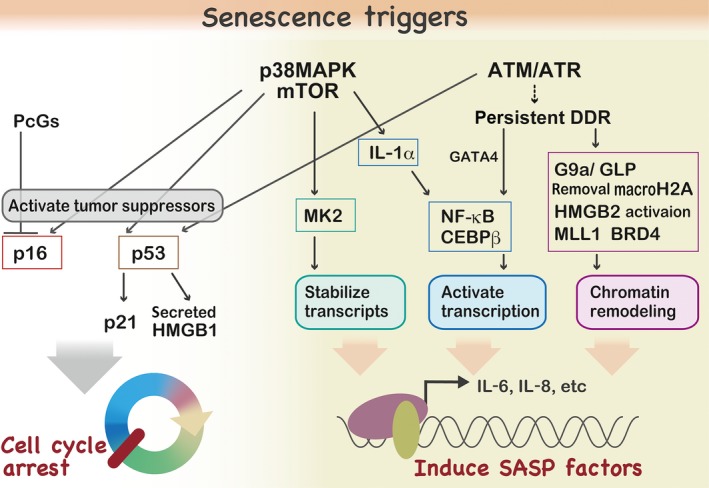
“There appears to be multi-level control of senescence and the SASP secretome, which includes the tumor suppressor pathways involved in the cell cycle arrest and the NF-κB and persistent damage response (DAMP) pathway, involved in triggering transcription of the SASP-related factors (115).”
BackgroundExploiting senescence for the treatment of cancer
Wang, L., Lankhorst, L., & Bernards, R. (2022) · Nature Reviews Cancer · doi:10.1038/s41568-022-00450-9 · Cited by 867
Unmasking senescence: context-dependent effects of SASP in cancer
Faget, D. V., Ren, Q., & Stewart, S. A. (2019) · Nature Reviews Cancer · doi:10.1038/s41568-019-0156-2 · Cited by 863
Skeletal Muscle as Potential Central Link between Sarcopenia and Immune Senescence
Nelke, C., Dziewas, R., Minnerup, J., Meuth, S. G., & Ruck, T. (2019) · eBioMedicine · doi:10.1016/j.ebiom.2019.10.034 · Cited by 437
Metadata
- Authors
- Watanabe, S., Kawamoto, S., Ohtani, N., & Hara, E.
- Affiliations
- Research Institute for Microbial Diseases, The University of Osaka (JP)
- Tokyo University of Science (JP)
- Japanese Foundation For Cancer Research (JP)
- Corresponding author
- Watanabe, Sugiko
- Venue
- Cancer Science
- Publisher
- Wiley
- Published
- 2017-04
- Volume
- 108
- Issue
- 4
- Pages
- 563-569
- ISSN
- 1347-9032 (ISSN-L)
- 1349-7006
- PMC
- PMC5406532
- OpenAlex
- W2587299332
- Cited by
- 321
- References
- 88
- Citations by year
- 2026: 22 · 2025: 27 · 2024: 29 · 2023: 39 · 2022: 33 · 2021: 41 · 2020: 47 · 2019: 47 · 2018: 33 · 2017: 3
- FWCI
- 4.36
- Type
- journal article
- Language
- en
- Open access
- gold
- doi.org
- Licence
- Locations
- Cancer Science (publishedVersion, cc-by-nc-nd)
- Europe PMC (PubMed Central) (publishedVersion, cc-by-nc-nd)
- PubMed Central (publishedVersion, cc-by-nc-nd)
- PubMed (publishedVersion)
- Funders
- Astellas Foundation for Research on Metabolic Disorders
- Naito Foundation
- Japan Agency for Medical Research and Development
- Topics
- Life Sciences › Biochemistry, Genetics and Molecular Biology › Cell Biology › Telomeres, Telomerase, and Senescence
- Life Sciences › Biochemistry, Genetics and Molecular Biology › Aging › Genetics, Aging, and Longevity in Model Organisms
- Health Sciences › Medicine › Geriatrics and Gerontology › Sirtuins and Resveratrol in Medicine
- Keywords
- senescence-associated secretory phenotype, cellular senescence, aging, senolytics, secreted proteins, inflammatory cytokines, chemokines, matrix metalloproteinases, tumor suppression, carcinogenesis, cell cycle arrest, therapeutic target
- MeSH terms
- Aging, Animals, Cell Transformation, Neoplastic, Disease, Humans, Neoplasms, Phenotype, Cellular Senescence, Secretory Pathway, Cell Cycle Checkpoints
About these checks
Registry, retraction, Cites and statistics results are computed, not judged, with one exception: a printed reference that no index lists is read once by a model before it counts as a citation error. Claims are extracted by a model and kept only when their quote appears verbatim in the text; each cited source is then checked, with a model’s help, for whether it says what the claim relies on. Those verdicts can be wrong — read the claim’s quote and the cited source before relying on one.
Statistics and arithmetic are recomputed, not judged.
Confidence bands are shown only for fields calibrated on our annotated test set. None is calibrated yet, so no band is shown.
What counts as a claim ›How we measure confidence ›How we check this ›
Are you an author, or do you see a problem with this page? Request a review
