

The DOI matches its Crossref record; 88 of the 88 references it cites were found in a registry or an index.
Impact of senescence-associated secretory phenotype and its potential as a therapeutic target for senescence-associated diseases
Open accessAbstract
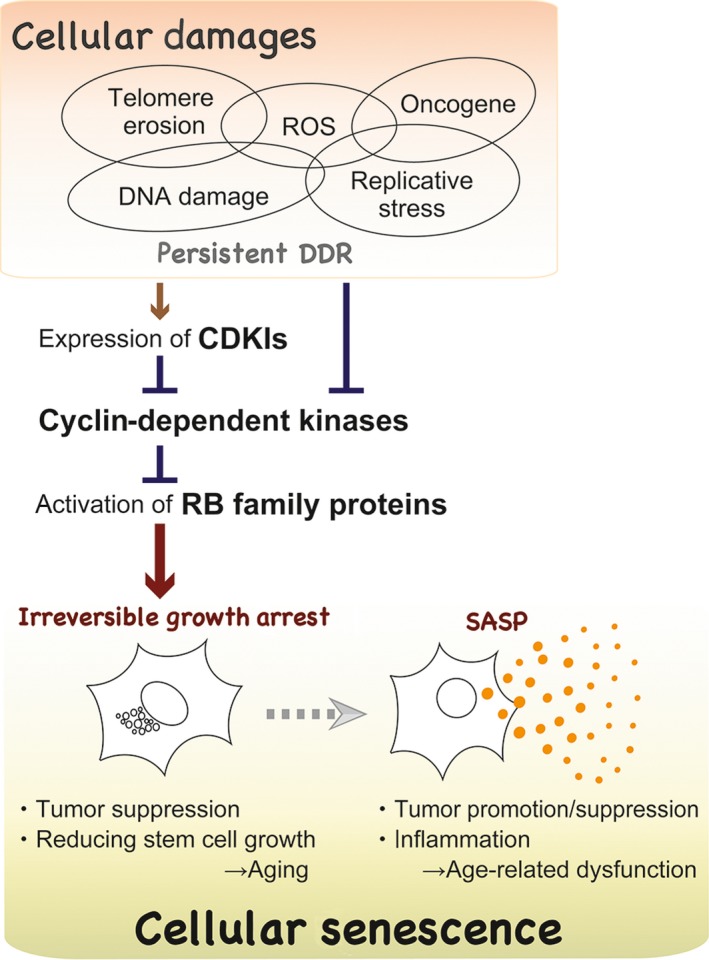
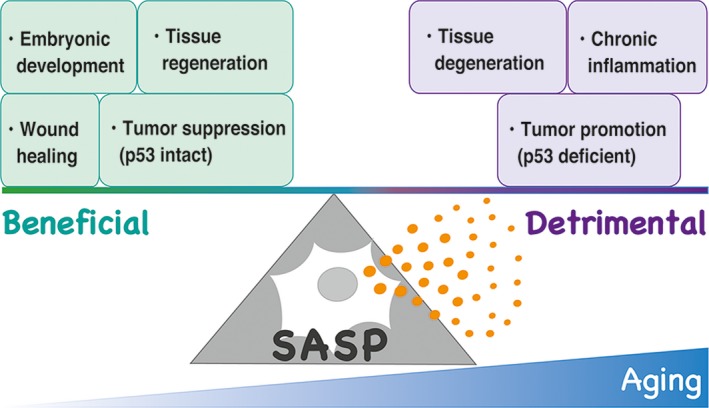
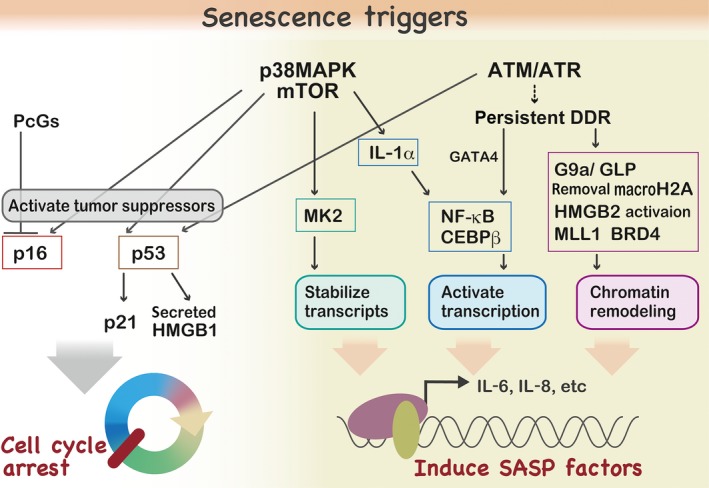
"Cellular senescence" is a state in which cells undergo irreversible cell cycle arrest in response to a variety of cellular stresses. Once cells senesce, they are strongly resistant to any mitogens, including oncogenic stimuli. Therefore, cellular senescence has been assumed to be a potent anticancer mechanism. Although irreversible cell-cycle arrest is traditionally considered the major characteristic of senescent cells, recent studies have revealed some additional functions. Most noteworthy is the increased secretion of various secretory proteins, such as inflammatory cytokines, chemokines, growth factors, and MMPs, into the surrounding extracellular fluid. These newly recognized senescent phenotypes, termed senescence-associated secretory phenotypes (SASPs), reportedly contribute to tumor suppression, wound healing, embryonic development, and even tumorigenesis promotion. Thus, SASPs appear to be beneficial or deleterious, depending on the biological context. As senescent cells are known to accumulate during the aging process in vivo, it is quite possible that their accumulation in aged tissues promotes age-associated functional decline and various diseases, including cancers, at least to some extent. Here, we focus on and discuss the functional and regulatory network of SASPs toward opening up new possibilities for controlling aging and aging-associated diseases.
Overview
The claims and statistics of this paper haven’t been checked yet.
Run the check — free, no account needed. It reads the open-access text and checks the sources it cites.
Integrity signals
Registry
Cites
Statistics
Figures
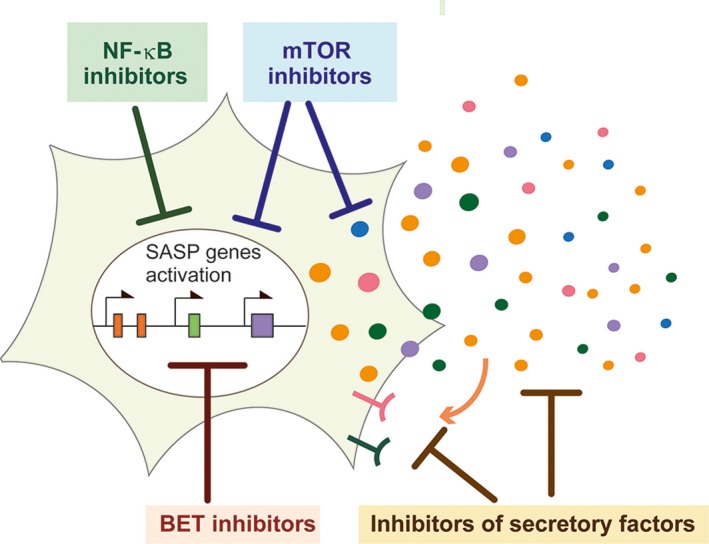
Verification
Claims the paper makes
The claims and statistics of this paper haven’t been checked yet.
Run the check — free, no account needed. It reads the open-access text and checks the sources it cites.
Claims other papers make about this one
Each is checked against this paper’s own text: does it say what the citing paper says it does?
In the citing paper
“Senescent cells accumulate with age in the dermis and epidermis, which can be accelerated by various harmful factors, such as DNA-damaging agents (eg, x-rays, ultraviolet radiation, and cigarette smoke) and mitochondrial dysfunction.56”
From The costs and benefits of senotherapeutics for human health (2022) · cites this paper as [56]
Self-check
Percentages, sums and reported differences re-computed from the paper’s own numbers.
The self-check needs the paper’s full text.
Citations
Cites
1 retracted
Kaur, A., Webster, M. R., Marchbank, K., Behera, R., Ndoye, A., Kugel, C. H., Dang, V. M., Appleton, J., O’Connell, M. P., Cheng, P., et al. (2016) · Nature · doi:10.1038/nature17392 · Cited by 398
RetractedThe serial cultivation of human diploid cell strains
Hayflick, L., & Moorhead, P. S. (1961) · Experimental Cell Research · doi:10.1016/0014-4827(61)90192-6 · Cited by 8,508
A biomarker that identifies senescent human cells in culture and in aging skin in vivo.
Dimri, G. P., Lee, X., Basile, G., Acosta, M., Scott, G., Roskelley, C., Medrano, E. E., Linskens, M., Rubelj, I., & Pereira-Smith, O. (1995) · Proceedings of the National Academy of Sciences · doi:10.1073/pnas.92.20.9363 · Cited by 7,477
The limited in vitro lifetime of human diploid cell strains
Hayflick, L. (1965) · Experimental Cell Research · doi:10.1016/0014-4827(65)90211-9 · Cited by 5,876
Oncogenic ras provokes premature cell senescence associated with accumulation of p53 and p16INK4a
Serrano, M., Lin, A. W., McCurrach, M. E., Beach, D., & Lowe, S. W. (1997) · Cell · doi:10.1016/s0092-8674(00)81902-9 · Cited by 5,218
Cellular senescence: when bad things happen to good cells
Campisi, J., & d'Adda di Fagagna, F. (2007) · Nature Reviews Molecular Cell Biology · doi:10.1038/nrm2233 · Cited by 4,441
Myofibroblasts and mechano-regulation of connective tissue remodelling
Tomasek, J. J., Gabbiani, G., Hinz, B., Chaponnier, C., & Brown, R. A. (2002) · Nature Reviews Molecular Cell Biology · doi:10.1038/nrm809 · Cited by 4,290
Selective inhibition of BET bromodomains
Filippakopoulos, P., Qi, J., Picaud, S., Shen, Y., Smith, W. B., Fedorov, O., Morse, E. M., Keates, T., Hickman, T. T., Felletar, I., et al. (2010) · Nature · doi:10.1038/nature09504 · Cited by 4,262
Rapamycin fed late in life extends lifespan in genetically heterogeneous mice
Harrison, D. E., Strong, R., Sharp, Z. D., Nelson, J. F., Astle, C. M., Flurkey, K., Nadon, N. L., Wilkinson, J. E., Frenkel, K., Carter, C. S., et al. (2009) · Nature · doi:10.1038/nature08221 · Cited by 3,766
Clearance of p16Ink4a-positive senescent cells delays ageing-associated disorders
Baker, D. J., Wijshake, T., Tchkonia, T., LeBrasseur, N. K., Childs, B. G., van de Sluis, B., Kirkland, J. L., & van Deursen, J. M. (2011) · Nature · doi:10.1038/nature10600 · Cited by 3,670
Research works printed but not linked: 1
- 10.1016/j.cell.2008.06.049 · DOI · Paper page
Cited by
Sorted by citations
Cellular Senescence: Aging, Cancer, and Injury
Calcinotto, A., Kohli, J., Zagato, E., Pellegrini, L., Demaria, M., & Alimonti, A. (2019) · Physiological Reviews · doi:10.1152/physrev.00020.2018 · Cited by 1,270
“They can influence neighboring proliferating cells and the recruitment and activation of immune cells in aging tissues and tumors (92, 339), as is detailed in sect.”
BackgroundAge and Age-Related Diseases: Role of Inflammation Triggers and Cytokines
Rea, I. M., Gibson, D. S., McGilligan, V., McNerlan, S. E., Alexander, H. D., & Ross, O. A. (2018) · Frontiers in Immunology · doi:10.3389/fimmu.2018.00586 · Cited by 1,267
“There appears to be multi-level control of senescence and the SASP secretome, which includes the tumor suppressor pathways involved in the cell cycle arrest and the NF-κB and persistent damage response (DAMP) pathway, involved in triggering transcription of the SASP-related factors (115).”
BackgroundExploiting senescence for the treatment of cancer
Wang, L., Lankhorst, L., & Bernards, R. (2022) · Nature Reviews Cancer · doi:10.1038/s41568-022-00450-9 · Cited by 867
Unmasking senescence: context-dependent effects of SASP in cancer
Faget, D. V., Ren, Q., & Stewart, S. A. (2019) · Nature Reviews Cancer · doi:10.1038/s41568-019-0156-2 · Cited by 863
Skeletal Muscle as Potential Central Link between Sarcopenia and Immune Senescence
Nelke, C., Dziewas, R., Minnerup, J., Meuth, S. G., & Ruck, T. (2019) · eBioMedicine · doi:10.1016/j.ebiom.2019.10.034 · Cited by 437
TGF-β Signaling in Cellular Senescence and Aging-Related Pathology
Tominaga, K., & Suzuki, H. I. (2019) · International Journal of Molecular Sciences · doi:10.3390/ijms20205002 · Cited by 393
“The SASP appears to participate in age-related pathological processes [15].”
BackgroundResurrection of endogenous retroviruses during aging reinforces senescence
Liu, X., Liu, Z., Wu, Z., Ren, J., Fan, Y., Sun, L., Cao, G., Niu, Y., Zhang, B., Ji, Q., et al. (2023) · Cell · doi:10.1016/j.cell.2022.12.017 · Cited by 390
Targeted Elimination of Senescent Beta Cells Prevents Type 1 Diabetes
Thompson, P. J., Shah, A., Ntranos, V., Van Gool, F., Atkinson, M., & Bhushan, A. (2019) · Cell Metabolism · doi:10.1016/j.cmet.2019.01.021 · Cited by 353
Hallmarks of senescence and aging
Dodig, S., Čepelak, I., & Pavić, I. (2019) · Biochemia Medica · doi:10.11613/bm.2019.030501 · Cited by 373
“kinase inhibitor 2A, multiple tumour suppressor 1), p53, p21, p15 (p15INK4b, protein kinase; cyclin-dependent protein serine/threonine kinase inhibitor, multiple tumour suppressor), p27 (cyclin-dependent kinases regulator), ADP-ribosylation factor (ARF), hypophosphorylated retinoblastoma protein (7,11).”
BackgroundSenescence mechanisms and targets in the heart
Chen, M. S., Lee, R. T., & Garbern, J. C. (2021) · Cardiovascular Research · doi:10.1093/cvr/cvab161 · Cited by 353
Aging Atlas: a multi-omics database for aging biology
Liu, G., Bào, Y., Qu, J. T., Zhang, W., Zhāng, T., Kang, W., Yang, F., Ji, Q., Jiang, X., Ma, Y., et al. (2020) · Nucleic Acids Research · doi:10.1093/nar/gkaa894 · Cited by 333
Mechanisms of melanocyte death in vitiligo
Chen, J., Li, S., & Li, C. (2020) · Medicinal Research Reviews · doi:10.1002/med.21754 · Cited by 326
“After that, the cell might be orchestrated into cellular senescence featuring irreversible cell proliferation arrest.(42,43) The process is governed by a strong cell cycle checkpoint mechanism wherein activation of p53, p16, and p21 are indispensable,(44) and extensive melanocyte cell‐cycle arrest might accentuate the…”
BackgroundOhtani, N. (2022) · Inflammation and Regeneration · doi:10.1186/s41232-022-00197-8 · Cited by 329
Self-citationCellular Senescence in Neurodegenerative Diseases
Martínez‐Cué, C., & Rueda, N. (2020) · Frontiers in Cellular Neuroscience · doi:10.3389/fncel.2020.00016 · Cited by 299
“While, chronic senescence, induced by prolonged exposure to stress (Salama et al., 2014; van Deursen, 2014; Childs et al., 2015; Velarde and Menon, 2016; Watanabe et al., 2017; Ogrodnik et al., 2019), produces cellular and tissue alterations.”
BackgroundRoles of extracellular vesicles in the aging microenvironment and age‐related diseases
Yin, Y., Chen, H., Wang, Y., Zhang, L., & Wang, X. (2021) · Journal of Extracellular Vesicles · doi:10.1002/jev2.12154 · Cited by 205
Oncogene-induced senescence: a double edged sword in cancer
Liu, X., Ding, J., & Meng, L. (2018) · Acta Pharmacologica Sinica · doi:10.1038/aps.2017.198 · Cited by 204
Chung, L., Maestas, D. R., Lebid, A., Mageau, A., Rosson, G. D., Wu, X., Wolf, M. T., Tam, A. J., Vanderzee, I., Wang, X., et al. (2020) · Science Translational Medicine · doi:10.1126/scitranslmed.aax3799 · Cited by 175
“The SASP includes many immunological cytokines that are associated with specific immune phenotypes (20).”
BackgroundMesenchymal Stem Cell Senescence and Rejuvenation: Current Status and Challenges
Xueke, Z., Hong, Y., Zhang, H., & Li, X. (2020) · Frontiers in Cell and Developmental Biology · doi:10.3389/fcell.2020.00364 · Cited by 170
“The senescent features of MSCs include enlarged and more granular morphology, and a deficient capacity for proliferation (Haynesworth, 1997) and differentiation, and secretion of a variety molecules, referred to as a “senescence-associated secretory phenotype (SASP)” (Watanabe, 2017).”
BackgroundSenescence and senotherapeutics: a new field in cancer therapy
Myrianthopoulos, V., Evangelou, K., Vasileiou, P. V. S., Cooks, T., Vassilakopoulos, T. P., Pangalis, G. A., Kouloukoussa, M., Kittas, C., Georgakilas, A. G., & Gorgoulis, V. G. (2019) · Pharmacology & Therapeutics · doi:10.1016/j.pharmthera.2018.08.006 · Cited by 160
Notch Signaling Mediates Secondary Senescence
Teo, Y. V., Rattanavirotkul, N., Olova, N., Salzano, A., Quintanilla, A., Tarrats, N., Kiourtis, C., Müller, M., Green, A. R., Adams, P. D., et al. (2019) · Cell Reports · doi:10.1016/j.celrep.2019.03.104 · Cited by 149
“SASP has been implicated in cancer initiation (Watanabe et al., 2017) by creating an inflammatory pro-tumorigenic microenvironment.”
BackgroundCellular rejuvenation: molecular mechanisms and potential therapeutic interventions for diseases
Ji, S., Xiong, M., Chen, H., Liu, Y., Zhou, L., Hong, Y., Wang, M., Wang, C., Fu, X., & Sun, X. (2023) · Signal Transduction and Targeted Therapy · doi:10.1038/s41392-023-01343-5 · Cited by 172
“Meanwhile, SASP can contribute to angiogenesis to facilitate tumor development and an EMT in neighboring cancer cells and induce ECM degradation further resulting in the migration and metastasis of cancer cells.(454) To overcome this obstacle, a sequential therapy regimen consisting of TIS followed by a second compoun…”
MethodSpatial transcriptomic landscape unveils immunoglobin-associated senescence as a hallmark of aging
Ma, S., Ji, Z., Zhang, B., Geng, L., Cai, Y., Nie, C., Li, J., Zuo, Y., Sun, Y., Xu, G., et al. (2024) · Cell · doi:10.1016/j.cell.2024.10.019 · Cited by 162
Lee, K. S., Lin, S., Copland, D. A., Dick, A. D., & Liu, J. (2021) · Journal of Neuroinflammation · doi:10.1186/s12974-021-02088-0 · Cited by 150
Cellular senescence in musculoskeletal homeostasis, diseases, and regeneration
Wan, M., Gray-Gaillard, E. F., & Elisseeff, J. H. (2021) · Bone Research · doi:10.1038/s41413-021-00164-y · Cited by 155
Dissecting Aging and Senescence—Current Concepts and Open Lessons
Schmeer, C. W., Kretz, A., Wengerodt, D., Stojiljkovic, M. R., & Witte, O. W. (2019) · Cells · doi:10.3390/cells8111446 · Cited by 156
“The SASP acts as a tumor suppressor [82], however, it is also connected to tumor induction by generating a pro-inflammatory tumor-favoring microenvironment [83].”
BackgroundOxylipin-PPARγ-initiated adipocyte senescence propagates secondary senescence in the bone marrow
Liu, X., Gu, Y., Kumar, S., Amin, S., Guo, Q., Wang, J., Fang, C.-L., Cao, X., & Wan, M. (2023) · Cell Metabolism · doi:10.1016/j.cmet.2023.03.005 · Cited by 137
Mechanisms of NLRP3 priming in inflammaging and age related diseases
Gritsenko, A., Green, J., Brough, D., & López‐Castejón, G. (2020) · Cytokine & Growth Factor Reviews · doi:10.1016/j.cytogfr.2020.08.003 · Cited by 146
“Stopping cell division after a certain number of cycles plays an important role in preventing malignant transformation [47].”
BackgroundThe costs and benefits of senotherapeutics for human health
Raffaele, M., & Vinciguerra, M. (2022) · The Lancet Healthy Longevity · doi:10.1016/s2666-7568(21)00300-7 · Cited by 140
Flavonoids in Skin Senescence Prevention and Treatment
Domaszewska-Szostek, A., Puzianowska‐Kuźnicka, M., & Kuryłowicz, A. (2021) · International Journal of Molecular Sciences · doi:10.3390/ijms22136814 · Cited by 142
“This accumulation can be induced and accelerated by various cellular perturbations, including DNA damage and mitochondrial dysfunction [17].”
BackgroundCellular Interactions in the Tumor Microenvironment: The Role of Secretome
da Cunha, B. R., Domingos, C., Stefanini, A. C. B., Henrique, T., Polachini, G. M., Castelo‐Branco, P., & Tajara, E. H. (2019) · Journal of Cancer · doi:10.7150/jca.21780 · Cited by 133
“This mechanism is a response to stress, which blocks cell proliferation and is often associated with expression of the tumor suppressor protein p16INK4a and accompanied by a secretory phenotype (senescence-associated secretory phenotype - SASP) with stress-type–dependent profile [62-64].”
BackgroundEmerging roles of and therapeutic strategies targeting BRD4 in cancer
White, M. E., Fenger, J. M., & Carson, W. E. (2019) · Cellular Immunology · doi:10.1016/j.cellimm.2019.02.001 · Cited by 124
The roles of osteocytes in alveolar bone destruction in periodontitis
Huang, X., Xie, M., Xie, Y., Feng, M., Lu, X., Li, X., & Chen, L. (2020) · Journal of Translational Medicine · doi:10.1186/s12967-020-02664-7 · Cited by 122
“SASP, which is comprised of a variety of secretory proteins, including inflammatory cytokines, chemokines, extracellular matrix remodeling factors, and growth factors, is an important characteristic of senescent cells and has benefits, such as tumor suppression [84], but typically, it promotes chronic inflammation and…”
BackgroundPolyphenols as Caloric-Restriction Mimetics and Autophagy Inducers in Aging Research
Yessenkyzy, A., Saliev, T. M., Zhanaliyeva, M., Masoud, A., Umbayev, B. A., Sergazy, S., Кривых, Е. А., Gulyayev, A., & Nurgozhin, T. S. (2020) · Nutrients · doi:10.3390/nu12051344 · Cited by 119
Osteoclasts protect bone blood vessels against senescence through the angiogenin/plexin-B2 axis
Liu, X., Chai, Y., Liu, G., Su, W., Guo, Q., Lv, X., Gao, P., Yu, B., Ferbeyre, G., Cao, X., et al. (2021) · Nature Communications · doi:10.1038/s41467-021-22131-1 · Cited by 116
Functional Role of Taurine in Aging and Cardiovascular Health: An Updated Overview
Santulli, G., Kansakar, U., Varzideh, F., Mone, P., Jankauskas, S. S., & Lombardi, A. (2023) · Nutrients · doi:10.3390/nu15194236 · Cited by 123
“Senescent cells are characterized by the cell cycle arrest, decreased susceptibility to apoptosis, and release of a particular set of cytokines, known as senescence-associated secretory phenotype (SASP) [176–178].”
BackgroundSenescent cells and macrophages: key players for regeneration?
Elder, S. S., & Emmerson, E. (2020) · Open Biology · doi:10.1098/rsob.200309 · Cited by 114
“To date the SASP is known to have important roles in embryonic development, wound healing and tumour growth, indicating that the SASP has more complex physiological roles than we currently understand (reviewed in [81,82]).”
BackgroundDestabilizing heterochromatin by APOE mediates senescence
Zhao, H., Ji, Q., Wu, Z., Wang, S., Ren, J., Yan, K., Wang, Z., Hu, J., Chu, Q., Hu, H., et al. (2022) · Nature Aging · doi:10.1038/s43587-022-00186-z · Cited by 104
Impact of Klebsiella pneumoniae in lower gastrointestinal tract diseases
Kaur, C. P., Vadivelu, J., & Chandramathi, S. (2018) · Journal of Digestive Diseases · doi:10.1111/1751-2980.12595 · Cited by 90
Biomarkers of Physical Frailty and Sarcopenia: Coming up to the Place?
Picca, A., Calvani, R., Cesari, M., Landi, F., Bernabei, R., Coelho‐Júnior, H. J., & Marzetti, E. (2020) · International Journal of Molecular Sciences · doi:10.3390/ijms21165635 · Cited by 104
Generation and Release of Mitochondrial-Derived Vesicles in Health, Aging and Disease
Picca, A., Guerra, F., Calvani, R., Coelho‐Júnior, H. J., Bossola, M., Landi, F., Bernabei, R., Bucci, C., & Marzetti, E. (2020) · Journal of Clinical Medicine · doi:10.3390/jcm9051440 · Cited by 100
The Histone Code of Senescence
Paluvai, H., Giorgio, E. D., & Brancolini, C. (2020) · Cells · doi:10.3390/cells9020466 · Cited by 97
“Moreover, SASP loci are localized in newly formed super-enhancers that require the binding of BRD4 to promote their transcription [105,106].”
BackgroundLim, S., An, S. B., Jung, M., Joshi, H. P., Kumar, H., Kim, C., Song, S. Y., Lee, J., Kang, M., Han, I., et al. (2021) · Advanced Healthcare Materials · doi:10.1002/adhm.202101483 · Cited by 95
Senescence-Associated Metabolomic Phenotype in Primary and iPSC-Derived Mesenchymal Stromal Cells
Fernández‐Rebollo, E., Franzen, J., Goetzke, R., Hollmann, J., Ostrowska, A., Oliverio, M., Sieben, T., Rath, B., Kornfeld, J., & Wagner, W. (2020) · Stem Cell Reports · doi:10.1016/j.stemcr.2019.12.012 · Cited by 94
“The SASP was meanwhile observed across multiple cell types, and there is evidence that this secretory function of senescent cells has an impact on wound healing, embryonic development, and tumorigenesis (Watanabe et al., 2017).”
Aging and Senescence of Dental Pulp and Hard Tissues of the Tooth
Maeda, H. (2020) · Frontiers in Cell and Developmental Biology · doi:10.3389/fcell.2020.605996 · Cited by 89
ZKSCAN3 counteracts cellular senescence by stabilizing heterochromatin
Hu, H., Ji, Q., Song, M., Ren, J., Liu, Z., Wang, Z., Liu, X., Yan, K., Hu, J., Jing, Y., et al. (2020) · Nucleic Acids Research · doi:10.1093/nar/gkaa425 · Cited by 89
“In addition, ZKSCAN3-deficiency activated senescence-associated secretory phenotype (SASP) and upregulated the expression of senescence markers in hMSCs (Figure 1L and M) (74).”
BackgroundmTOR Activity and Autophagy in Senescent Cells, a Complex Partnership
Cayo, Á., Segovia, R., Venturini, W., Moore‐Carrasco, R., Valenzuela, C. A., & Brown, N. E. (2021) · International Journal of Molecular Sciences · doi:10.3390/ijms22158149 · Cited by 96
“Of note, due to the trophic and pro-inflammatory actions of many SASP components [11], senescent cells arising in tissues can promote an inflammatory microenvironment that, in the long run, could facilitate tumorigenesis [45,46].”
BackgroundNon-cell autonomous effects of the senescence-associated secretory phenotype in cancer therapy.
Saleh, T., Tyutynuk-Massey, L., Cudjoe, E. K., Idowu, M. O., Landry, J. W., & Gewirtz, D. A. (2018) · Frontiers in Oncology · doi:10.3389/fonc.2018.00164 · Cited by 85
“For example, tocilizumab (IL-6 receptor antibody) and anakinra (IL-1 receptor antagonist) are used as immunomodulating therapy in the treatment of inflammatory diseases and can be readily investigated as regulators of the SASP in combination with conventional cancer treatment (50).”
BackgroundInfluentialAlqahtani, S., Alqahtani, T., Venkatesan, K., Sivadasan, D., Ahmed, R., Sirag, N., Elfadil, H., Mohamed, H. A., A, H., Ahmed, R. E., et al. (2025) · Cells · doi:10.3390/cells14080608 · Cited by 98
Wang, S., Wang, X., Cheng, Y., Ouyang, W., Sang, X., Liu, J., Su, Y., Liu, Y., Li, C., Yang, L., et al. (2019) · Oxidative Medicine and Cellular Longevity · doi:10.1155/2019/3632169 · Cited by 83
“ABT-737 BCL-W, BCL-Xl MEFs, IMR-90 cells, HUVECs [27, 28, 53]”
BackgroundInfluentialThe immunomodulatory effects of endocrine therapy in breast cancer
Huang, H., Zhou, J., Chen, H., Li, J., Zhang, C., Jiang, X., & Ni, C. (2021) · Journal of Experimental & Clinical Cancer Research · doi:10.1186/s13046-020-01788-4 · Cited by 87
“to promote the recruitment of immune cells, including T cells and macrophages [130, 131].”
BackgroundPreininger, M. K., & Kaufer, D. (2022) · International Journal of Molecular Sciences · doi:10.3390/ijms23116217 · Cited by 87
Khanh, V. C., Zulkifli, A. F., Tokunaga, C., Yamashita, T., Hiramatsu, Y., & Ohneda, O. (2018) · Biochemical and Biophysical Research Communications · doi:10.1016/j.bbrc.2018.04.136 · Cited by 81
Borrelli, C., Ricci, B., Vulpis, E., Fionda, C., Ricciardi, M. R., Petrucci, M. T., Masuelli, L., Peri, A., Cippitelli, M., Zingoni, A., et al. (2018) · Cancer Immunology Research · doi:10.1158/2326-6066.cir-17-0604 · Cited by 83
“Discussion Senescent cells show numerous changes in gene expression, leading to an increased expression of many proteins that can promote or repress tumor progression (33,34).”
BackgroundCardiomyocytes Cellular Phenotypes After Myocardial Infarction
Lodrini, A. M., & Goumans, M. (2021) · Frontiers in Cardiovascular Medicine · doi:10.3389/fcvm.2021.750510 · Cited by 87
“Furthermore, many senescent cells acquire a senescenceassociated secretory phenotype (SASP) that mediates non-cell autonomous effects of senescence, contributing to inflammation, and promoting tissue remodelling and repair or apoptosis (53).”
BackgroundLi, X., & Ma, L. (2023) · Ageing Research Reviews · doi:10.1016/j.arr.2023.102175 · Cited by 83
Natural Polyphenols Targeting Senescence: A Novel Prevention and Therapy Strategy for Cancer
Bian, Y., Wei, J., Zhao, C., & Li, G. (2020) · International Journal of Molecular Sciences · doi:10.3390/ijms21020684 · Cited by 81
“CXCR2: C-X-C motif chemokine receptor 2; DDR: DNA damage response; ROS: reactive oxygen species; DLC1: deleted in liver cancer1; SASP: senescence-associated secretory phenotype; Pokemon: POK erythroid myeloid ontogenic factor; SIRT1: silent information regulator 1; Rictor: rapamycin-insensitive companion of mammalian…”
BackgroundInfluentialGlomerular endothelial cell senescence drives age‐related kidney disease through PAI‐1
Cohen, C., Le Goff, O., Soysouvanh, F., Vasseur, F., Tanou, M., Nguyen, C., Amrouche, L., Le Guen, J., Saltel‐Fulero, O., Meunier, T., et al. (2021) · EMBO Molecular Medicine · doi:10.15252/emmm.202114146 · Cited by 79
“SASP includes pro-inflammatory cytokines, growth factors, proteases, and extracellular matrix components (Kuilman et al, 2008; Salama et al, 2014; Watanabe et al, 2017).”
BackgroundCellular Senescence in Lung Fibrosis
Hernández‐González, F., Faner, R., Rojas, M. M., Agustí, A. G. N., Serrano, M., & Sellarés, J. (2021) · International Journal of Molecular Sciences · doi:10.3390/ijms22137012 · Cited by 79
“Alterations in the secretome of senescent cells with a chronic increment of production of several inflammatory secretory proteins, including plasminogen activator inhibitor-1 (PAI-1), matrix remodelling proteins (MMPs), growth factors such as TGFβ1, as well as other initial inflammatory stimuli, including IL-6, IL-8 a…”
BackgroundThe twilight of the immune system: The impact of immunosenescence in aging
Feehan, J., Tripodi, N., & Apostolopoulos, V. (2021) · Maturitas · doi:10.1016/j.maturitas.2021.02.006 · Cited by 77
Khavinson, V., Linkova, N. S., Dyatlova, A., Кантемирова, Р. К., & Kozlov, K. L. (2022) · Cells · doi:10.3390/cells12010106 · Cited by 80
Senescent cells as promising targets to tackle age-related diseases
Prašnikar, E., Borišek, J., & Perdih, A. (2020) · Ageing Research Reviews · doi:10.1016/j.arr.2020.101251 · Cited by 78
Oxidative Stress-Driven Cellular Senescence: Mechanistic Crosstalk and Therapeutic Horizons
Stojanović, B., Jovanovic, I., Stojanovic, M. D., Stojanović, B., Kovačević, V., Radosavljević, I., Jovanović, D., Kovačević, M. M., Zornić, N., Arsić, A. A., et al. (2025) · Antioxidants · doi:10.3390/antiox14080987 · Cited by 89
“While suppressing chronic SASP is desirable, indiscriminate inhibition may interfere with its beneficial roles in wound healing and tumor surveillance [235].”
Acklin, S., Zhang, M., Du, W., Zhao, X., Plotkin, M. D., Chang, J., Campisi, J., Zhou, D., & Xia, F. (2020) · Scientific Reports · doi:10.1038/s41598-020-71042-6 · Cited by 78
Senescence in polyploid giant cancer cells: A road that leads to chemoresistance
Bharadwaj, D., & Mandal, M. (2020) · Cytokine & Growth Factor Reviews · doi:10.1016/j.cytogfr.2019.11.002 · Cited by 64
Malavolta, M., Giacconi, R., Brunetti, D., Provinciali, M., & Maggi, F. (2020) · Cells · doi:10.3390/cells9040909 · Cited by 72
“Drugs targeting IL-6 have been included among the potential strategies to inhibit the deleterious consequences of the senescence-associated secretory phenotype (SASP), the secretome produced by senescent cells [31,32].”
BackgroundTherapeutic Potential of Senolytics in Cardiovascular Disease
Dookun, E., Passos, J. F., Arthur, H. M., & Richardson, G. D. (2022) · Cardiovascular Drugs and Therapy · doi:10.1007/s10557-020-07075-w · Cited by 69
Senescence Induced by BMI1 Inhibition Is a Therapeutic Vulnerability in H3K27M-Mutant DIPG
Balakrishnan, I., Danis, E. P., Pierce, A. M., Madhavan, K. P. C., Wang, D., Dahl, N. A., Sanford, B. L., Birks, D. K., Davidson, N., Metselaar, D. S., et al. (2020) · Cell Reports · doi:10.1016/j.celrep.2020.108286 · Cited by 75
“We also found that BMI1 inhibition showed a moderate increase in the release of several SASP factors (interleukin [IL]-6, IL-8, VEGF [Vascular Endothelial Growth Factor], and CXCLs [Chemokine C-X-C motif Ligands]) in both PTC028-treated cells and BMI1 knockdown cells (Figures 6E– 6G).”
BackgroundInfluentialStigger, F. S., Zago Marcolino, M. A., Portela, K. M., & Plentz, R. D. M. (2019) · The Journals of Gerontology: Series A · doi:10.1093/gerona/gly173 · Cited by 68
Lee, J., Park, B., Park, J.-H., Lim, S., Kwon, S. P., Hwang, J., Kim, H., Park, H., & Kim, B. (2021) · Acta Biomaterialia · doi:10.1016/j.actbio.2021.08.028 · Cited by 66
Khalil, R., Diab‐Assaf, M., & Lemaître, J.-M. (2023) · Cells · doi:10.3390/cells12060915 · Cited by 68
“1, which is a tumor suppressor histone variation, from SASP chromatin, resulting in SASP gene derepression and induction [98].”
BackgroundInfluentialRelationships Between Ion Channels, Mitochondrial Functions and Inflammation in Human Aging
Strickland, M., Yacoubi‐Loueslati, B., Bouhaouala‐Zahar, B., Pender, S. L. F., & Larbi, A. (2019) · Frontiers in Physiology · doi:10.3389/fphys.2019.00158 · Cited by 64
Organ reserve, excess metabolic capacity, and aging
Atamna, H., Tenore, A., Lui, F., & Dhahbi, J. M. (2018) · Biogerontology · doi:10.1007/s10522-018-9746-8 · Cited by 72
“Second, they adopt Senescence-Associated Secretory Phenotype (SASP), refers to the secretion of inflammatory cytokines, growth factors, and proteases from senescent cells (Watanabe et al. 2017).”
BackgroundMbara, K. C., Devnarain, N., & Owira, P. M. O. (2022) · Pharmaceutical Medicine · doi:10.1007/s40290-022-00444-w · Cited by 47
“In contrast to senescence and cell‐cycle arrest, SASP is independent of the ectopic expression of senescence factors such as p16Ink4a and p21Waf1/Cip1, suggesting that there are other signalling pathways in their induction [18, 19].”
BackgroundThe Jekyll and Hyde of Cellular Senescence in Cancer
Demirci, D., Dayanc, B., Mazi, F. A., & Şentürk, Ş. (2021) · Cells · doi:10.3390/cells10020208 · Cited by 62
Tetraploidy in cancer and its possible link to aging
Tanaka, K., Goto, H., Nishimura, Y., Kasahara, K., Mizoguchi, A., & Inagaki, M. (2018) · Cancer Science · doi:10.1111/cas.13717 · Cited by 58
“In this regard, purging of senescent cells, termed senolysis, or inhibition of SASP induction, have now emerged as novel strategies for cancer treatment.(85) These approaches also show promise for suppressing aging‐related disorders(66) but, again, we have to bear in mind that senescence and SASP also have beneficial…”
BackgroundDong, Y., Chen, H., Gao, J., Liu, Y., Li, J., & Wang, J. (2019) · Frontiers in Pharmacology · doi:10.3389/fphar.2019.00515 · Cited by 56
“Cell senescence is the irreversible state in which cells undergo cycle arrest responding to various factors (Watanabe et al., 2017).”
BackgroundProbiotic bacteria as modulators of cellular senescence: emerging concepts and opportunities
Sharma, R., & Padwad, Y. S. (2019) · Gut Microbes · doi:10.1080/19490976.2019.1697148 · Cited by 56
“It is also pertinent to note here that senescent cells are not only characterized by the loss of proliferative capacity but also show several unique-associated features such as high metabolic activity,(22) activation of nutrient-sensing pathways such as mammalian target of rapamycin (mTOR),(23) and the development of…”
BackgroundG Protein-Coupled Receptor Systems and Their Role in Cellular Senescence
Santos‐Otte, P., Leysen, H., van Gastel, J., Hendrickx, J. O., Martin, B., & Maudsley, S. R. (2019) · Computational and Structural Biotechnology Journal · doi:10.1016/j.csbj.2019.08.005 · Cited by 53
“These deleterious insults include DNA damage, mitochondrial dysfunction, activation of certain oncogenes and inflammatory responses [58,59], all of which are classically associated with the pathological aging process [48].”
BackgroundEl‐Far, A. H., Darwish, N. H. E., & Mousa, S. A. (2020) · Integrative Cancer Therapies · doi:10.1177/1534735419901160 · Cited by 57
Ohtani, N. (2019) · The Journal of Biochemistry · doi:10.1093/jb/mvz055 · Cited by 55
Self-citationAdem, Y., Galderisi, U., & Alessio, N. (2023) · Frontiers in Bioengineering and Biotechnology · doi:10.3389/fbioe.2023.1148761 · Cited by 55
Current Trends in Anti-Aging Strategies
Rosén, R., & Yarmush, M. L. (2023) · Annual Review of Biomedical Engineering · doi:10.1146/annurev-bioeng-120122-123054 · Cited by 56
Liu, P., Tang, Q., Chen, M., Chen, W., Lu, Y., Liu, Z., & He, Z. (2020) · Frontiers in Oncology · doi:10.3389/fonc.2020.589908 · Cited by 50
Lazzarini, E., Lodrini, A. M., Arici, M., Bolis, S., Vagni, S., Panella, S., Rendon-Angel, A., Saibene, M., Metallo, A., Torre, T., et al. (2022) · Theranostics · doi:10.7150/thno.70884 · Cited by 51
“Cardiomyocytes (CMs) enduring exogenous cellular insult may develop a stress-induced premature senescence (SIPS) phenotype, which recapitulates many cellular and molecular features as those undergoing natural aging process [10, 11].”
InfluentialNagesh, P. K. B., Chowdhury, P., Hatami, E., Kumari, S., Kashyap, V. K., Tripathi, M. K., Wagh, S., Meibohm, B., Chauhan, S. C., Jaggi, M., et al. (2019) · ACS Applied Materials & Interfaces · doi:10.1021/acsami.9b14738 · Cited by 48
Astrocyte senescence contributes to cognitive decline
Csípő, T., Lipécz, Á., Ashpole, N. M., Balasubramanian, P., & Tarantini, S. (2019) · GeroScience · doi:10.1007/s11357-019-00140-9 · Cited by 50
Resolution of inflammation and mood disorders
Chistyakov, D. V., Astakhova, A. A., & Sergeeva, M. G. (2018) · Experimental and Molecular Pathology · doi:10.1016/j.yexmp.2018.08.002 · Cited by 48
Chanda, F., Lin, K.-X., Chaurembo, A. I., Huang, J.-Y., Zhang, H., Deng, W., Xu, Y.-J., Li, Y., Fu, L.-D., Cui, H., et al. (2024) · The Science of The Total Environment · doi:10.1016/j.scitotenv.2024.176255 · Cited by 49
Elimination of p19ARF‐expressing cells protects against pulmonary emphysema in mice
Mikawa, R., Suzuki, Y., Baskoro, H., Kanayama, K., Sugimoto, K., Sato, T., & Sugimoto, M. (2018) · Aging Cell · doi:10.1111/acel.12827 · Cited by 44
“SASP appears to elicit deleterious effects in several disease models (He & Sharpless, 2017; Watanabe et al., 2017), and its inhibition was shown to be sufficient for preventing senescence‐induced bone loss (Farr et al.”
BackgroundA tale of the good and bad: Cell senescence in bone homeostasis and disease
Liu, X., & Wan, M. (2019) · International review of cytology · doi:10.1016/bs.ircmb.2019.03.005 · Cited by 45
Liu, D., Richardson, G. D., Benli, F. M., Park, C., de Souza, J. V. B., Bronowska, A. K., & Spyridopoulos, I. (2020) · Clinical Science · doi:10.1042/cs20191213 · Cited by 47
The Senolytic Drug Fisetin Attenuates Bone Degeneration in the Zmpste24−/− Progeria Mouse Model
Hambright, W. S., Mu, X., Gao, X., Guo, P., Kawakami, Y., Mitchell, J., Mullen, M., Nelson, A.-L., Bahney, C., Nishimura, H., et al. (2023) · Journal of Osteoporosis · doi:10.1155/2023/5572754 · Cited by 44
The role of vitamin D on redox regulation and cellular senescence
Sosa-Díaz, E., Cruz, E. Y. H., & Pedraza‐Chaverrí, J. (2022) · Free Radical Biology and Medicine · doi:10.1016/j.freeradbiomed.2022.10.003 · Cited by 43
Functional genomics of inflamm-aging and immunosenescence
Lu, R. J., Wang, E. K., & Benayoun, B. A. (2021) · Briefings in Functional Genomics · doi:10.1093/bfgp/elab009 · Cited by 43
“Importantly, a decreased ability to clear senescent cells through efferocytosis could also indirectly drive increased inflammation due to an increasing burden of cells producing SASP factors [52,53].”
BackgroundLife and death of microglia: Mechanisms governing microglial states and fates
Matsudaira, T., & Prinz, M. (2022) · Immunology Letters · doi:10.1016/j.imlet.2022.04.001 · Cited by 47
Möller, P., Wils, R. S., Jensen, D. M., Andersen, M. H. G., & Roursgaard, M. (2018) · Critical Reviews in Toxicology · doi:10.1080/10408444.2018.1538201 · Cited by 42
“There is accumulating experimental evidence that show senescent cells secrete proteins such as inflammatory cytokines, chemokines and extracellular matrix remodeling factors (Watanabe et al. 2017).”
BackgroundDifferent sensitivities of senescent breast cancer cells to immune cell‐mediated cytotoxicity
Inao, T., Kotani, H., Iida, Y., Kartika, I. D., Okimoto, T., Tanino, R., Shiba, E., & Harada, M. (2019) · Cancer Science · doi:10.1111/cas.14116 · Cited by 41
Picca, A., Calvani, R., Coelho‐Júnior, H. J., Landi, F., Bernabei, R., & Marzetti, E. (2020) · Cells · doi:10.3390/cells9030598 · Cited by 41
Converging Paths of Pulmonary Arterial Hypertension and Cellular Senescence
van der Feen, D. E., Berger, R. M. F., & Bartelds, B. (2019) · American Journal of Respiratory Cell and Molecular Biology · doi:10.1165/rcmb.2018-0329tr · Cited by 38
Oridonin inhibits SASP by blocking p38 and NF-κB pathways in senescent cells
Yasuda, S., Horinaka, M., Iizumi, Y., Goi, W., Sukeno, M., & Sakai, T. (2021) · Biochemical and Biophysical Research Communications · doi:10.1016/j.bbrc.2021.12.098 · Cited by 39
Metadata
- Authors
- Watanabe, S., Kawamoto, S., Ohtani, N., & Hara, E.
- Affiliations
- Research Institute for Microbial Diseases, The University of Osaka (JP)
- Tokyo University of Science (JP)
- Japanese Foundation For Cancer Research (JP)
- Corresponding author
- Watanabe, Sugiko
- Venue
- Cancer Science
- Publisher
- Wiley
- Published
- 2017-04
- Volume
- 108
- Issue
- 4
- Pages
- 563-569
- ISSN
- 1347-9032 (ISSN-L)
- 1349-7006
- PMC
- PMC5406532
- OpenAlex
- W2587299332
- Cited by
- 321
- References
- 88
- Citations by year
- 2026: 22 · 2025: 27 · 2024: 29 · 2023: 39 · 2022: 33 · 2021: 41 · 2020: 47 · 2019: 47 · 2018: 33 · 2017: 3
- FWCI
- 4.36
- Type
- journal article
- Language
- en
- Open access
- gold
- doi.org
- Licence
- Locations
- Cancer Science (publishedVersion, cc-by-nc-nd)
- Europe PMC (PubMed Central) (publishedVersion, cc-by-nc-nd)
- PubMed Central (publishedVersion, cc-by-nc-nd)
- PubMed (publishedVersion)
- Funders
- Astellas Foundation for Research on Metabolic Disorders
- Naito Foundation
- Japan Agency for Medical Research and Development
- Topics
- Life Sciences › Biochemistry, Genetics and Molecular Biology › Cell Biology › Telomeres, Telomerase, and Senescence
- Life Sciences › Biochemistry, Genetics and Molecular Biology › Aging › Genetics, Aging, and Longevity in Model Organisms
- Health Sciences › Medicine › Geriatrics and Gerontology › Sirtuins and Resveratrol in Medicine
- Keywords
- senescence-associated secretory phenotype, cellular senescence, aging, senolytics, secreted proteins, inflammatory cytokines, chemokines, matrix metalloproteinases, tumor suppression, carcinogenesis, cell cycle arrest, therapeutic target
- MeSH terms
- Aging, Animals, Cell Transformation, Neoplastic, Disease, Humans, Neoplasms, Phenotype, Cellular Senescence, Secretory Pathway, Cell Cycle Checkpoints
About these checks
Registry, retraction, Cites and statistics results are computed, not judged, with one exception: a printed reference that no index lists is read once by a model before it counts as a citation error. Claims are extracted by a model and kept only when their quote appears verbatim in the text; each cited source is then checked, with a model’s help, for whether it says what the claim relies on. Those verdicts can be wrong — read the claim’s quote and the cited source before relying on one.
Statistics and arithmetic are recomputed, not judged.
Confidence bands are shown only for fields calibrated on our annotated test set. None is calibrated yet, so no band is shown.
What counts as a claim ›How we measure confidence ›How we check this ›
Are you an author, or do you see a problem with this page? Request a review
