

The DOI matches its Crossref record; 22 of the 22 references it cites were found in a registry or an index.
Insulin adherence behaviours and barriers in the multinational Global Attitudes of Patients and Physicians in Insulin Therapy study
Open accessAbstract
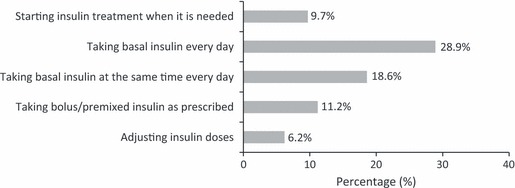
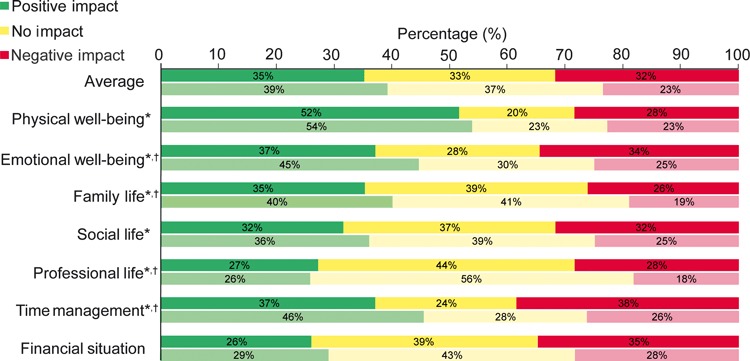
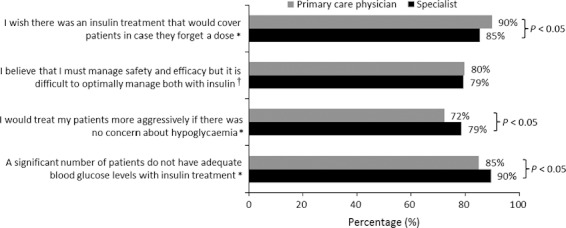
AIMS: To examine patient and physician beliefs regarding insulin therapy and the degree to which patients adhere to their insulin regimens. METHODS: Internet survey of 1250 physicians (600 specialists, 650 primary care physicians) who treat patients with diabetes and telephone survey of 1530 insulin-treated patients (180 with Type 1 diabetes, 1350 with Type 2 diabetes) in China, France, Japan, Germany, Spain, Turkey, the UK or the USA. RESULTS: One third (33.2%) of patients reported insulin omission/non-adherence at least 1 day in the last month, with an average of 3.3 days. Three quarters (72.5%) of physicians report that their typical patient does not take their insulin as prescribed, with a mean of 4.3 days per month of basal insulin omission/non-adherence and 5.7 days per month of prandial insulin omission/non-adherence. Patients and providers indicated the same five most common reasons for insulin omission/non-adherence: too busy; travelling; skipped meals; stress/emotional problems; public embarrassment. Physicians reported low patient success at initiating insulin in a timely fashion and adjusting insulin doses. Most physicians report that many insulin-treated patients do not have adequate glucose control (87.6%) and that they would treat more aggressively if not for concern about hypoglycaemia (75.5%). Although a majority of patients (and physicians) regard insulin treatment as restrictive, more patients see insulin treatment as having positive than negative impacts on their lives. CONCLUSIONS: Glucose control is inadequate among insulin-treated patients, in part attributable to insulin omission/non-adherence and lack of dose adjustment. There is a need for insulin regimens that are less restrictive and burdensome with lower risk of hypoglycaemia.
Overview
The claims and statistics of this paper haven’t been checked yet.
Run the check — free, no account needed. It reads the open-access text and checks the sources it cites.
Integrity signals
Registry
Cites
Statistics
Figures
Verification
Claims the paper makes
The claims and statistics of this paper haven’t been checked yet.
Run the check — free, no account needed. It reads the open-access text and checks the sources it cites.
Claims other papers make about this one
Each is checked against this paper’s own text: does it say what the citing paper says it does?
The source backs part of the claim, not all of it — or backs it for a different population, condition or comparison.
In the citing paper
“As injection therapy is used by more than 80% of people with insulin-requiring diabetes, there is a clear need for intuitive, integrated systems to help multiple daily injection (MDI) patients interpret CGM data into actionable management steps to reduce the burden of demanding self-care directives and support telemedicine (3, 6, 10-13).”
From Observed Glycemic and Psychosocial Benefits in the Prospective Bigfoot Unity Real World Study: A 6-Month Analysis (2025) · cites this paper as [3]
Experimental — accuracy not yet measuredThe source backs part of the claim, not all of it — or backs it for a different population, condition or comparison.
In the citing paper
“For people with insulin-requiring diabetes, dosing instructions may be complex and confusing (3-6).”
From Observed Glycemic and Psychosocial Benefits in the Prospective Bigfoot Unity Real World Study: A 6-Month Analysis (2025) · cites this paper as [3]
Experimental — accuracy not yet measuredThe source backs part of the claim, not all of it — or backs it for a different population, condition or comparison.
In the citing paper
“As injection therapy is used by more than 80% of people with insulin-requiring diabetes, there is a clear need for intuitive, integrated systems to help multiple daily injection (MDI) patients interpret CGM data into actionable management steps to reduce the burden of demanding self-care directives and support telemedicine (3, 6, 10-13).”
From Observed Glycemic and Psychosocial Benefits in the Prospective Bigfoot Unity Real World Study: A 6-Month Analysis (2025) · cites this paper as [3]
Experimental — accuracy not yet measuredThe source backs part of the claim, not all of it — or backs it for a different population, condition or comparison.
In the citing paper
“Similar to all insulin analogues, the risk of hypoglycaemia is a major safety concern, and is considered a key obstacle in regulating blood glucose levels by both patients and physicians [10, 57].”
From A Review of the Pharmacological Properties of Insulin Degludec and Their Clinical Relevance (2014) · cites this paper as [10]
Experimental — accuracy not yet measured
Self-check
Percentages, sums and reported differences re-computed from the paper’s own numbers.
The self-check needs the paper’s full text.
Citations
Cites
Nathan, D. M., Buse, J. B., Davidson, M. B., Ferrannini, E., Holman, R. R., Sherwin, R., & Zinman, B. (2009) · Diabetes Care · doi:10.2337/dc08-9025 · Cited by 3,834
A systematic review of adherence with medications for diabetes
Cramer, J. A. (2004) · Diabetes Care · doi:10.2337/diacare.27.5.1218 · Cited by 1,203
Peyrot, M., Rubin, R. R., Lauritzen, T., Snoek, F. J., Matthews, D. R., & Skovlund, S. E. (2005) · Diabetic Medicine · doi:10.1111/j.1464-5491.2005.01644.x · Cited by 931
Self-citationResistance to Insulin Therapy Among Patients and Providers
Peyrot, M. F., Rubin, R. R., Lauritzen, T., Skovlund, S. E., Snoek, F. J., Matthews, D. R., Landgraf, R., Kleinebreil, L., & Panel, O. B. O. T. I. D. A. (2005) · Diabetes Care · doi:10.2337/diacare.28.11.2673 · Cited by 784
Self-citationMorris, A. D., Boyle, D. I., McMahon, A. D., Greene, S. A., MacDonald, T. M., & Newton, R. W. (1997) · The Lancet · doi:10.1016/s0140-6736(97)06234-x · Cited by 507
Correlates of Insulin Injection Omission
Peyrot, M., Rubin, R. R., Kruger, D. F., & Travis, L. B. (2010) · Diabetes Care · doi:10.2337/dc09-1348 · Cited by 407
Self-citationAdherence to pharmacologic therapy in patients with type 2 diabetes mellitus
Rubin, R. R. (2005) · The American Journal of Medicine · doi:10.1016/j.amjmed.2005.04.012 · Cited by 403
Psychological insulin resistance: patient beliefs and implications for diabetes management
Brod, M. I., Kongsø, J. H., Alolga, S. L., & Christensen, T. L. (2008) · Quality of Life Research · doi:10.1007/s11136-008-9419-1 · Cited by 238
Insulin therapy for type 2 diabetes.
Swinnen, S. G., Hoekstra, J. B., & DeVries, J. H. (2009) · Diabetes Care · doi:10.2337/dc09-s318 · Cited by 181
Nakar, S., Yitzhaki, G., Rosenberg, R., & Vinker, S. (2007) · Journal of Diabetes and its Complications · doi:10.1016/j.jdiacomp.2006.02.004 · Cited by 159
Cited by
Sorted by citations
Items 301–400 of 655
Dulaglutide and Insulin: How Can the AWARD Studies Help Guide Clinical Practice?
MacIsaac, R. J. (2020) · Diabetes Therapy · doi:10.1007/s13300-020-00863-5 · Cited by 11
Belhadj, M., Dahaoui, A., Jamoussi, H., & Farouqi, A. (2013) · Diabetes Research and Clinical Practice · doi:10.1016/s0168-8227(13)70014-7 · Cited by 11
Strain, W. D., Cos, X., & Prünte, C. F. (2017) · Diabetes Research and Clinical Practice · doi:10.1016/j.diabres.2017.01.013 · Cited by 13
Sultan, S., El-Hourani, M., Rondeau, É., & Garnier, N. B. (2018) · Patient Preference and Adherence · doi:10.2147/ppa.s177624 · Cited by 11
Aleppo, G., Parkin, C. G., Carlson, A. L., Galindo, R. J., Kruger, D. F., Levy, C. J., Umpierrez, G. E., Forlenza, G. P., & McGill, J. B. (2021) · Diabetes Technology & Therapeutics · doi:10.1089/dia.2021.0196 · Cited by 11
Kawaguchi, Y., Sawa, J., Hamai, C., Nishimura, Y., & Kumeda, Y. (2019) · Journal of Diabetes Investigation · doi:10.1111/jdi.13038 · Cited by 10
Insulin Adherence in Adolescents with Type 1 Diabetes Mellitus
Dabas, H., Sarin, J., & Madhu, S. (2023) · Indian Journal of Endocrinology and Metabolism · doi:10.4103/ijem.ijem_294_22 · Cited by 12
Zhang, S., Zhang, X., Wang, H., Fan, W., Ma, X., Song, S., & Zhang, B. (2024) · Frontiers in Endocrinology · doi:10.3389/fendo.2024.1368132 · Cited by 10
Abdulyemmah, A. D., & Majeed, H. M. (2025) · Journal of Integrative Nursing · doi:10.4103/jin.jin_29_25 · Cited by 10
Aldasouqi, S. A., Mora, S., Bhalla, G., Kakumanu, N., Corser, W. D., Abela, G. S., Dlewati, M. M., Estrada, K., Almounajed, A., Tabbaa, T., et al. (2018) · International Journal of Endocrinology · doi:10.1155/2018/1528437 · Cited by 10
Kalirai, S., Ivanova, J. I., Perez‐Nieves, M., Stephenson, J. J., Hadjiyianni, I., Grabner, M., Pollom, R. D., Geremakis, C. M., Reed, B. L., & Fisher, L. (2020) · Diabetes Metabolic Syndrome and Obesity · doi:10.2147/dmso.s237948 · Cited by 9
Colin, I. M., Alexandre, K., Bruhwyler, J., Scheen, A. J., & Verhaegen, A. A. (2020) · Diabetes Therapy · doi:10.1007/s13300-020-00866-2 · Cited by 10
OKAZAKI, K., Takahashi, N., Shingaki, T., Perez‐Nieves, M., & Stuckey, H. L. (2022) · Primary care diabetes · doi:10.1016/j.pcd.2022.02.009 · Cited by 11
Ekanayake, P. S., & Edelman, S. V. (2023) · Diabetes Obesity and Metabolism · doi:10.1111/dom.15059 · Cited by 10
Sağlam, F. S., & Bektaş, H. (2023) · Journal of Clinical Nursing · doi:10.1111/jocn.16720 · Cited by 10
Engineering synthetically modified insulin for glucose-responsive diabetes therapy
Webber, M. J., Anderson, D. G., & Langer, R. (2015) · Expert Review of Endocrinology & Metabolism · doi:10.1586/17446651.2015.1071187 · Cited by 10
Diabetes Attitude Scale: Validation in Type-2 Diabetes Patients in Multiple Centers in China
Lou, Q., Chen, Y., Guo, X., Li, Y., Chen, T., Chun, W., Shen, L., Sun, Z., Zhao, F., Dai, X., et al. (2014) · PLoS ONE · doi:10.1371/journal.pone.0096473 · Cited by 10
Hirsch, I. B., Buse, J. B., Leahy, J. L., McGill, J. B., Peters, A. L., Rodbard, H. W., Rubin, R. R., Skyler, J. S., Verderese, C. A., & Riddle, M. C. (2013) · Diabetes Obesity and Metabolism · doi:10.1111/dom.12136 · Cited by 10
Teló, G. H., de Souza, M. S., Andrade, T. S., & Schaan, B. D. (2016) · Diabetology & Metabolic Syndrome · doi:10.1186/s13098-016-0162-4 · Cited by 10
Pohlmeier, H., Berard, L., Brulle-Wohlhueter, C., Wu, J., Dahmen, R., NOWOTNY, I. K., & Klonoff, D. C. (2016) · Journal of Diabetes Science and Technology · doi:10.1177/1932296816668877 · Cited by 10
McGuigan, K., Hill, A., COATES, V. E., O’Kane, M., Thompson, D. R., Ski, C. F., & McCay, D. (2021) · Psychology Health & Medicine · doi:10.1080/13548506.2021.1894343 · Cited by 10
Mohan, V., Mukherjee, J. J., Das, A. K., Seshadri, K., & Dasgupta, A. (2021) · Endocrine and Metabolic Science · doi:10.1016/j.endmts.2021.100103 · Cited by 10
Ampudia‐Blasco, F. J., Galán, M., & Brod, M. I. (2014) · Endocrinología y Nutrición · doi:10.1016/j.endonu.2014.03.008 · Cited by 10
Patient preferences for the treatment of type 2 diabetes in Australia: a discrete choice experiment
Ahmad, A., Khan, M. U., & Aslani, P. (2022) · Journal of Diabetes & Metabolic Disorders · doi:10.1007/s40200-021-00962-5 · Cited by 8
Ingrasciotta, Y., Vitturi, G., & Trifirò, G. (2024) · Journal of Clinical Medicine · doi:10.3390/jcm13072113 · Cited by 10
Perspectives and Preferences of People with Type 2 Diabetes for the Attributes of Weekly Insulin
Gelsey, F. T., Schapiro, D., Kosa, K., Vass, C., Perez‐Nieves, M., Pierce, A., Poon, J. L., DiBenedetti, D. B., & Mansfield, C. A. (2024) · Diabetes Therapy · doi:10.1007/s13300-024-01652-0 · Cited by 10
Kawaguchi, Y., Hajika, Y., Rinka, M., Masumoto, K., Sawa, J., Hamazaki, K., & Kumeda, Y. (2024) · Journal of Diabetes Investigation · doi:10.1111/jdi.14151 · Cited by 12
Onishi, Y., Yamada, K., Zacho, J., Ekelund, J., & Iwamoto, Y. (2016) · Journal of Diabetes Investigation · doi:10.1111/jdi.12569 · Cited by 9
Hoskins, N., Tikkanen, C. K., & Pedersen‐Bjergaard, U. (2016) · Journal of Medical Economics · doi:10.1080/13696998.2016.1269774 · Cited by 9
Ateş, E. A., Set, T., Sağlam, Z. A., Tekın, N., Eray, İ. K., Yavuz, E., Şahin, M. K., Selçuk, E. B., ÇADIRCI, D., & Çubukçu, M. (2017) · Primary care diabetes · doi:10.1016/j.pcd.2017.05.003 · Cited by 9
Valencia, W. M., Florez, H. J., & Palacio, A. M. (2019) · Drugs & Aging · doi:10.1007/s40266-019-00706-4 · Cited by 9
Russel-Szymczyk, M., Valov, V., Savova, A., & Manova, M. M. (2019) · BMC Endocrine Disorders · doi:10.1186/s12902-019-0460-6 · Cited by 9
A Behavioral Perspective of Therapeutic Inertia: A Look at the Transition to Insulin Therapy
Guzman, S. (2020) · Diabetes Spectrum · doi:10.2337/ds19-0024 · Cited by 9
Lin, N.-P., Zheng, N., Purushottam, L., Zhang, Y. W., & Chou, D. H. (2022) · Frontiers in Chemistry · doi:10.3389/fchem.2022.859133 · Cited by 9
Leiter, L. A., Boras, D., & Woo, V. C. (2015) · Canadian Journal of Diabetes · doi:10.1016/j.jcjd.2015.09.085 · Cited by 9
Kadowaki, T., Jinnouchi, H., Kaku, K., Hersløv, M. L., Hyllested-Winge, J. L., & Nakamura, S. (2016) · Diabetology International · doi:10.1007/s13340-016-0284-9 · Cited by 9
Nabrdalik, K., Kwiendacz, H., Sawczyn, T., Tomasik, A. R., Kukla, M., Masierek, M., & Gumprecht, J. (2018) · International Journal of Endocrinology · doi:10.1155/2018/6536178 · Cited by 9
Yi, Y., Li, Y., Hou, A., Ge, Y., Xu, Y., Xiong, G., Yang, X., Acevedo, S., Shi, L., & Xu, H. (2018) · Diabetes Therapy · doi:10.1007/s13300-018-0409-1 · Cited by 9
Mora, P. F., SUTTON, D. R., Gore, A., Baliga, B. S., Goldfaden, R. F., NIKKEL, C. C., Sink, J. H., & ADAMS-HUET, B. A. (2020) · BMJ Open Diabetes Research & Care · doi:10.1136/bmjdrc-2020-001832 · Cited by 9
Perceptions of Insulin Treatment Among African Americans With Uncontrolled Type 2 Diabetes
Bockwoldt, D., Staffileno, B. A., Coke, L. A., & Quinn, L. T. (2014) · Journal of Transcultural Nursing · doi:10.1177/1043659614543477 · Cited by 9
Strategies for implementing effective mealtime insulin therapy in type 2 diabetes
Peyrot, M. F., Bailey, T. S., Childs, B. P., & Reach, G. (2018) · Current Medical Research and Opinion · doi:10.1080/03007995.2018.1440200 · Cited by 9
Self-citationSmith, F. N. C., Kotowska, A. M., Fiedler, B., Cerny, E., Cheung, K., Rutland, C. S., Chowdhury, F., Segal, J. I., Rawson, F. J., & Marlow, M. (2024) · Molecular Pharmaceutics · doi:10.1021/acs.molpharmaceut.4c00942 · Cited by 8
Naggar, N. E., & Kalra, S. (2016) · Advances in Therapy · doi:10.1007/s12325-016-0418-2 · Cited by 8
Yacoub, T. G. (2017) · Postgraduate Medicine · doi:10.1080/00325481.2017.1389601 · Cited by 7
Gavin, J. R., Rodbard, H. W., Battelino, T., Brosius, F. C., Ceriello, A., Cosentino, F., Giorgino, F., Green, J., Ji, L., Kellerer, M., et al. (2024) · Diabetes Research and Clinical Practice · doi:10.1016/j.diabres.2024.111666 · Cited by 11
Insulin degludec is a new ultra-long-acting insulin analogue
Dedov, I. I., & Shestakova, M. V. (2014) · Diabetes Mellitus · doi:10.14341/dm2014291-104 · Cited by 8
Acuidade visual no manejo do diabetes mellitus: preparo da dose de insulina
Carvalho, G. C. N., de Freitas, R. W. J. F., de Araújo, M. F. M., Zanetti, M. L., & Damasceno, M. M. C. (2017) · Acta Paulista de Enfermagem · doi:10.1590/1982-0194201700005 · Cited by 8
Karamat, M. A., Dar, S., Bellary, S., & Tahrani, A. A. (2018) · Diabetes Therapy · doi:10.1007/s13300-018-0400-x · Cited by 8
Dağdelen, S., Deyneli, O., Dınççağ, N., ILKOVA, H. M., SİVA, Z. O., Yetkin, İ., & Yilmaz, T. M. (2022) · Frontiers in Endocrinology · doi:10.3389/fendo.2021.663222 · Cited by 8
Shao, H., Alsaleh, A. J. O., DEX, T. A., Lew, E., & Fonseca, V. A. (2022) · Diabetes Therapy · doi:10.1007/s13300-022-01300-5 · Cited by 8
Combination therapy in type 2 diabetes mellitus: adding empagliflozin to basal insulin
Ahmann, A. (2015) · Drugs in Context · doi:10.7573/dic.212288 · Cited by 8
Yavuz, D. G., Bilen, H., Sancak, S., Garip, T., Hekimsoy, Z., Şahin, İ., Yılmaz, M., Aydin, H., Atmaca, A., Sert, M., et al. (2016) · Patient Preference and Adherence · doi:10.2147/ppa.s100626 · Cited by 8
Cohen, C. M., Thorsted, B. L., Wolden, M. L., Chodick, G., & Karasik, A. (2017) · Diabetes Therapy · doi:10.1007/s13300-017-0297-9 · Cited by 8
Escalada, J., Bonnet, F., Wu, J., Bonnemaire, M., Gupta, S., Cambron‐Mellott, M. J., Nicholls, C. J., & Müller‐Wieland, D. (2020) · Advances in Therapy · doi:10.1007/s12325-020-01436-5 · Cited by 8
Fadini, G. P., Disoteo, O., Candido, R., Bartolo, P. D., Laviola, L., & Consoli, A. (2021) · Diabetes Therapy · doi:10.1007/s13300-021-01012-2 · Cited by 8
Bonadonna, R. C., Yale, J., Brulle‐Wohlhueter, C., Boëlle‐Le Corfec, E., Choudhary, P., & Bailey, T. S. (2019) · Diabetes Obesity and Metabolism · doi:10.1111/dom.13578 · Cited by 7
Ribeiro, S. A. G., Pedrotti, M., Hespanhol, L. C., Balieiro, C. C. A., Paqualotto, E., Silva, R. R. E., Gauza, M. D. M., & de Sá, J. R. (2024) · Metabolism Open · doi:10.1016/j.metop.2024.100285 · Cited by 7
Boye, K. S., Poon, J. L., Landó, L. F., Sapin, H., Huh, R., Wang, M., WILLIAMSON, S. E., & Patel, H. (2024) · Diabetes Therapy · doi:10.1007/s13300-024-01620-8 · Cited by 7
Hayashino, Y., Tsuboi, S., Yamamoto, Y., & Ishii, H. (2024) · Diabetes Therapy · doi:10.1007/s13300-024-01664-w · Cited by 7
Wolpert, H. A., Rodbard, D., Xue, J., Johnson, J. L., & Dassau, E. (2025) · Diabetes Obesity and Metabolism · doi:10.1111/dom.16249 · Cited by 7
Brod, M. I., Basse, A., Markert, M., & Pfeiffer, K. M. (2019) · Diabetes Therapy · doi:10.1007/s13300-019-0636-0 · Cited by 7
Klotsman, M., Adin, C. A., Anderson, W. H., & Gilor, C. (2021) · Frontiers in Veterinary Science · doi:10.3389/fvets.2021.661546 · Cited by 8
Haque, M., Salequl, I., Rabiu, A. A., Haruna, S. I., Opanga, S. A., Mahmood, K. Z., Farhana, A., & Brian, G. (2021) · Journal of Applied Pharmaceutical Science · doi:10.7324/japs.2021.110720 · Cited by 7
Shabnam, S., Gillies, C., Davies, M. J., DEX, T. A., Melson, E., Khunti, K., Webb, D. R., Zaccardi, F., & Seidu, S. (2023) · Diabetes Research and Clinical Practice · doi:10.1016/j.diabres.2023.110888 · Cited by 7
The factors associated with insulin nonpersistence in persons with type 2 diabetes
Yen, F., Wei, J. C., Liu, J., Hsu, C., & Hwu, C. (2020) · Diabetes Research and Clinical Practice · doi:10.1016/j.diabres.2020.108356 · Cited by 7
Kawaguchi, Y., Miyamoto, S., Hajika, Y., Ashida, N., Masumoto, K., Sawa, J., Hamazaki, K., & Kumeda, Y. (2021) · Journal of Diabetes Investigation · doi:10.1111/jdi.13677 · Cited by 8
Cione, C., Vetter, E., Jackson, D., McCarthy, S., & Castañeda, E. (2023) · International Journal of Environmental Research and Public Health · doi:10.3390/ijerph20020975 · Cited by 7
A novel option for prandial insulin therapy: inhaled insulin
DAILEY, G. E., Ahmad, A., Polsky, S., & Shah, V. N. (2016) · Postgraduate Medicine · doi:10.1080/00325481.2016.1229555 · Cited by 7
Knowledge, attitude and practice of insulin use and its adverse effects in adult diabetic population
Nivethitha, T., Manickavasagam, S., Paramasivam, M., & Sai, G. (2017) · International Journal of Basic & Clinical Pharmacology · doi:10.18203/2319-2003.ijbcp20174783 · Cited by 7
Edelman, S. V., Ermakova, A., Xiong, Y., Sieradzan, R., & Taylor, S. (2019) · Journal of Managed Care & Specialty Pharmacy · doi:10.18553/jmcp.2019.19097 · Cited by 7
Roussel, R., d'Emden, M. C., Fisher, M., Ampudia‐Blasco, F. J., Stella, P., Bizet, F., Cali, A. M. G., & Wysham, C. H. (2018) · Diabetes, Obesity and Metabolism · doi:10.1111/dom.13071 · Cited by 6
Oliveira, M. K. D. M., Kaizer, U. A. D. O., Jannuzzi, F. F., Gallani, M. C. B. J., Alexandre, N. M. C., Cornélio, M. E., São‐João, T. M., & Rodrigues, R. C. M. (2021) · Value in Health Regional Issues · doi:10.1016/j.vhri.2021.08.007 · Cited by 6
Riveline, J., Levrat‐Guillen, F., Detournay, B., Vicaut, É., de Pouvourville, G., Emery, C., & Guerci, B. (2024) · Diabetes Technology & Therapeutics · doi:10.1089/dia.2024.0171 · Cited by 6
Sourij, H., Bracken, R. M., Carstensen, L., da Rocha, T. J. C. M., Watt, S. K., & Philis‐Tsimikas, A. (2025) · Diabetes Obesity and Metabolism · doi:10.1111/dom.16265 · Cited by 6
Yang, A., Yu, J., Cheung, J. T. K., Chan, J. C. N., & Chow, E. (2025) · Diabetes Obesity and Metabolism · doi:10.1111/dom.16386 · Cited by 9
Morales, J., & Merker, L. (2015) · Advances in Therapy · doi:10.1007/s12325-015-0208-2 · Cited by 6
Nishimura, A., Harashima, S., Fukushige, H., Wang, Y., Liu, Y., Hosoda, K., & Inagaki, N. (2017) · Diabetes Therapy · doi:10.1007/s13300-017-0238-7 · Cited by 8
Mathieu, C., Weisnagel, S. J., Stella, P., Bruhwyler, J., & Alexandre, K. (2020) · Diabetes Therapy · doi:10.1007/s13300-019-00749-1 · Cited by 6
Meade, L. T., & Battise, D. M. (2021) · Clinical Diabetes · doi:10.2337/cd20-0094 · Cited by 6
Ong, C. Y., Lee, W. C. D., Low, S. G., Low, L. L., & Vasanwala, F. F. (2022) · Singapore Medical Journal · doi:10.11622/smedj.2022006 · Cited by 7
Hacene, M. N. B., Zatla, Y. T., Saker, M., Abbou, Z., Youcef, A., Boulenouar, H., Fekir, H., Khaldi, K., Nigassa, N. B., Lounici, A., et al. (2022) · Pan African Medical Journal · doi:10.11604/pamj.2022.41.172.32972 · Cited by 7
McCrimmon, R. J., PALMER, K. D., Alsaleh, A. J. O., Lew, E., & Puttanna, A. (2022) · Diabetes Therapy · doi:10.1007/s13300-022-01267-3 · Cited by 6
Saleem, S. Z., Fareed, A., Akhtar, S. M. M., Farhat, S., Taha, A. M., & Akilimali, A. (2024) · Diabetology & Metabolic Syndrome · doi:10.1186/s13098-024-01305-z · Cited by 6
Oyer, D. S., Niemeyer, M., & Moses, A. C. (2012) · Postgraduate Medicine · doi:10.3810/pgm.2012.09.2587 · Cited by 6
IDegAsp (insulin degludec + insulin aspart) for the management of type 2 diabetes: current status
Christiansen, J. S., Home, P., & Kumar, A. (2016) · Expert Review of Endocrinology & Metabolism · doi:10.1586/17446651.2016.1145541 · Cited by 6
Teens' concerns: a national evaluation.
Boehm, K. E., Schondel, C., Marlowe, A. L., & Manke-Mitchell, L. (1999) · PubMed · Cited by 6
Luo, Y., Ni, W.-J., Ding, B., Xu, X., Ye, L., Ma, J., & Zhu, J. (2019) · Diabetes Therapy · doi:10.1007/s13300-018-0545-7 · Cited by 6
Kaplan, H., Amod, A., Zyl, F. H. V., Reddy, J., van Tonder, A., Tsymbal, E., & McMaster, A. (2019) · Journal of Endocrinology Metabolism and Diabetes of South Africa · doi:10.1080/16089677.2019.1608053 · Cited by 6
Bae, J. H., Ahn, C. H., Yang, Y., Moon, S. J., Kwak, S. H., Jung, H. S., Park, K. S., & Cho, Y. M. (2021) · Diabetes & Metabolism Journal · doi:10.4093/dmj.2020.0274 · Cited by 6
Clinical Considerations for Insulin Therapy in Older Adults with Type 1 Diabetes
Gandhi, G. Y., & Mooradian, A. D. (2021) · Drugs & Aging · doi:10.1007/s40266-021-00900-3 · Cited by 11
Kerlan, V., Gouet, D., Marre, M., & Renard, É. (2013) · Annales d Endocrinologie · doi:10.1016/j.ando.2013.04.004 · Cited by 6
Dharmalingam, M. (2014) · Therapeutic Advances in Endocrinology and Metabolism · doi:10.1177/2042018814552657 · Cited by 6
Personalized Care and the Role of Insulin as a Vehicle to Optimizing Treatments in Diabetes Care
Bieszk, N., Grabner, M., Wei, W., Barron, J. O., Quimbo, R. A., Yan, T., Biel, B., & Chu, J. W. (2017) · Journal of Managed Care & Specialty Pharmacy · doi:10.18553/jmcp.2017.23.11.1160 · Cited by 6
Counselling patients for GLP-1 analogue therapy: Comparing GLP-1 analogue with insulin counselling
Kalra, B., & Kalra, S. (2012) · North American Journal of Medical Sciences · doi:10.4103/1947-2714.104315 · Cited by 6
Shi, L. X., Li, P. F., & Hou, J. N. (2017) · Diabetes Therapy · doi:10.1007/s13300-017-0286-z · Cited by 7
Wright, E. E., Shah, V. N., Miller, E. M., Thach, A., Javadi, P., Davies, S., & Sieradzan, R. (2025) · Diabetology · doi:10.3390/diabetology6020013 · Cited by 5
Liang, W., Chow, K. M., Ni, X., Tola, Y. O., & Lo, S. H. S. (2025) · International Journal of Nursing Studies · doi:10.1016/j.ijnurstu.2025.105200 · Cited by 6
Effect of the COVID-19 pandemic on glycemic control in Brazilian patients with type 2 diabetes
Tannus, L. R. M., Zapelini, R. M., Cabizuca, C. A., Abi-Abib, R. C., Matheus, A. S. D. M., Calassara, P. C., Pozzan, R., & Cobas, R. A. (2022) · Endocrine · doi:10.1007/s12020-022-03137-1 · Cited by 5
Zainudin, A. M., Rasool, A. H. G., Yaacob, N. M., Muhamad, R., & Mohamed, W. M. I. W. (2024) · BMC Endocrine Disorders · doi:10.1186/s12902-024-01577-6 · Cited by 5
Icodec: A Novel Once-Weekly Basal Insulin for Diabetes Management
Goldman, J. D., Triplitt, C. L., & Isaacs, D. M. (2024) · Annals of Pharmacotherapy · doi:10.1177/10600280241287790 · Cited by 8
Metadata
- Authors
- Peyrot, M., Barnett, A. H., Meneghini, L. F., & Schumm‐Draeger, P. ‐.
- Affiliations
- Johns Hopkins University (US)
- Heart of England NHS Foundation Trust (GB)
- University of Miami (US)
- München Klinik Bogenhausen (DE)
- Corresponding author
- Peyrot, M.
- Venue
- Diabetic Medicine
- Publisher
- Wiley
- Published
- 2012-04-16
- Volume
- 29
- Issue
- 5
- Pages
- 682-689
- ISSN
- 0742-3071 (ISSN-L)
- 1464-5491
- PMC
- PMC3433794
- OpenAlex
- W1613501644
- Cited by
- 655
- References
- 22
- Citations by year
- 2026: 29 · 2025: 41 · 2024: 61 · 2023: 43 · 2022: 42 · 2021: 43 · 2020: 53 · 2019: 49 · 2018: 52 · 2017: 48 · 2016: 52 · 2015: 50 · 2014: 46 · 2013: 35 · 2012: 8
- FWCI
- 38.62
- Type
- journal article
- Language
- en
- Open access
- bronze
- doi.org
- Locations
- Diabetic Medicine (publishedVersion)
- Europe PMC (PubMed Central) (publishedVersion, cc-by)
- PubMed Central (publishedVersion, cc-by)
- PubMed (publishedVersion)
- University of Birmingham Research Portal (University of Birmingham) (submittedVersion)
- Topics
- Health Sciences › Medicine › Family Practice › Medication Adherence and Compliance
- Health Sciences › Medicine › Endocrinology, Diabetes and Metabolism › Diabetes Management and Education
- Health Sciences › Medicine › Endocrinology, Diabetes and Metabolism › Diabetes Management and Research
- Keywords
- insulin therapy, insulin adherence, insulin omission, barriers to adherence, patient beliefs, physician beliefs, type 1 diabetes, type 2 diabetes, glycemic control, hypoglycemia, basal insulin, prandial insulin, insulin dose adjustment
- MeSH terms
- Assessment of Medication Adherence, Blood Glucose, China, Diabetes Mellitus, Type 1, Diabetes Mellitus, Type 2, Female, France, Germany, Glycated Hemoglobin, Humans, Hypoglycemic Agents, Insulin, Japan, Male, Middle Aged, Spain, Turkey, United States, Health Behavior, Drug Monitoring, Medication Adherence
About these checks
Registry, retraction, Cites and statistics results are computed, not judged, with one exception: a printed reference that no index lists is read once by a model before it counts as a citation error. Claims are extracted by a model and kept only when their quote appears verbatim in the text; each cited source is then checked, with a model’s help, for whether it says what the claim relies on. Those verdicts can be wrong — read the claim’s quote and the cited source before relying on one.
Statistics and arithmetic are recomputed, not judged.
Confidence bands are shown only for fields calibrated on our annotated test set. None is calibrated yet, so no band is shown.
What counts as a claim ›How we measure confidence ›How we check this ›
Are you an author, or do you see a problem with this page? Request a review
