

The DOI matches its Crossref record; 22 of the 22 references it cites were found in a registry or an index.
Insulin adherence behaviours and barriers in the multinational Global Attitudes of Patients and Physicians in Insulin Therapy study
Open accessAbstract
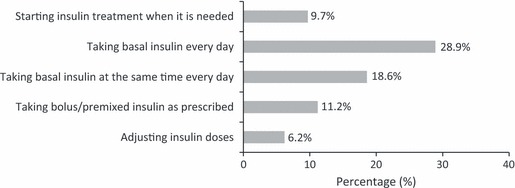
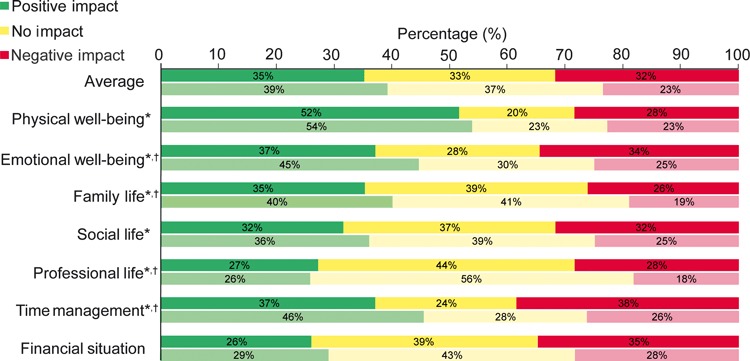
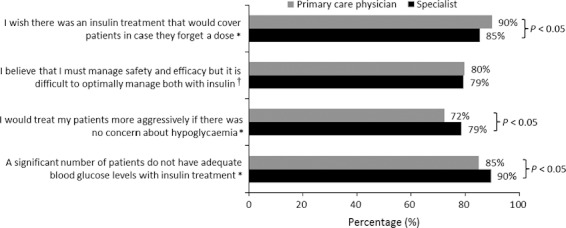
AIMS: To examine patient and physician beliefs regarding insulin therapy and the degree to which patients adhere to their insulin regimens. METHODS: Internet survey of 1250 physicians (600 specialists, 650 primary care physicians) who treat patients with diabetes and telephone survey of 1530 insulin-treated patients (180 with Type 1 diabetes, 1350 with Type 2 diabetes) in China, France, Japan, Germany, Spain, Turkey, the UK or the USA. RESULTS: One third (33.2%) of patients reported insulin omission/non-adherence at least 1 day in the last month, with an average of 3.3 days. Three quarters (72.5%) of physicians report that their typical patient does not take their insulin as prescribed, with a mean of 4.3 days per month of basal insulin omission/non-adherence and 5.7 days per month of prandial insulin omission/non-adherence. Patients and providers indicated the same five most common reasons for insulin omission/non-adherence: too busy; travelling; skipped meals; stress/emotional problems; public embarrassment. Physicians reported low patient success at initiating insulin in a timely fashion and adjusting insulin doses. Most physicians report that many insulin-treated patients do not have adequate glucose control (87.6%) and that they would treat more aggressively if not for concern about hypoglycaemia (75.5%). Although a majority of patients (and physicians) regard insulin treatment as restrictive, more patients see insulin treatment as having positive than negative impacts on their lives. CONCLUSIONS: Glucose control is inadequate among insulin-treated patients, in part attributable to insulin omission/non-adherence and lack of dose adjustment. There is a need for insulin regimens that are less restrictive and burdensome with lower risk of hypoglycaemia.
Overview
The claims and statistics of this paper haven’t been checked yet.
Run the check — free, no account needed. It reads the open-access text and checks the sources it cites.
Integrity signals
Registry
Cites
Statistics
Figures
Verification
Claims the paper makes
The claims and statistics of this paper haven’t been checked yet.
Run the check — free, no account needed. It reads the open-access text and checks the sources it cites.
Claims other papers make about this one
Each is checked against this paper’s own text: does it say what the citing paper says it does?
The source backs part of the claim, not all of it — or backs it for a different population, condition or comparison.
In the citing paper
“As injection therapy is used by more than 80% of people with insulin-requiring diabetes, there is a clear need for intuitive, integrated systems to help multiple daily injection (MDI) patients interpret CGM data into actionable management steps to reduce the burden of demanding self-care directives and support telemedicine (3, 6, 10-13).”
From Observed Glycemic and Psychosocial Benefits in the Prospective Bigfoot Unity Real World Study: A 6-Month Analysis (2025) · cites this paper as [3]
Experimental — accuracy not yet measuredThe source backs part of the claim, not all of it — or backs it for a different population, condition or comparison.
In the citing paper
“For people with insulin-requiring diabetes, dosing instructions may be complex and confusing (3-6).”
From Observed Glycemic and Psychosocial Benefits in the Prospective Bigfoot Unity Real World Study: A 6-Month Analysis (2025) · cites this paper as [3]
Experimental — accuracy not yet measuredThe source backs part of the claim, not all of it — or backs it for a different population, condition or comparison.
In the citing paper
“As injection therapy is used by more than 80% of people with insulin-requiring diabetes, there is a clear need for intuitive, integrated systems to help multiple daily injection (MDI) patients interpret CGM data into actionable management steps to reduce the burden of demanding self-care directives and support telemedicine (3, 6, 10-13).”
From Observed Glycemic and Psychosocial Benefits in the Prospective Bigfoot Unity Real World Study: A 6-Month Analysis (2025) · cites this paper as [3]
Experimental — accuracy not yet measuredThe source backs part of the claim, not all of it — or backs it for a different population, condition or comparison.
In the citing paper
“Similar to all insulin analogues, the risk of hypoglycaemia is a major safety concern, and is considered a key obstacle in regulating blood glucose levels by both patients and physicians [10, 57].”
From A Review of the Pharmacological Properties of Insulin Degludec and Their Clinical Relevance (2014) · cites this paper as [10]
Experimental — accuracy not yet measured
Self-check
Percentages, sums and reported differences re-computed from the paper’s own numbers.
The self-check needs the paper’s full text.
Citations
Cites
Nathan, D. M., Buse, J. B., Davidson, M. B., Ferrannini, E., Holman, R. R., Sherwin, R., & Zinman, B. (2009) · Diabetes Care · doi:10.2337/dc08-9025 · Cited by 3,834
A systematic review of adherence with medications for diabetes
Cramer, J. A. (2004) · Diabetes Care · doi:10.2337/diacare.27.5.1218 · Cited by 1,203
Peyrot, M., Rubin, R. R., Lauritzen, T., Snoek, F. J., Matthews, D. R., & Skovlund, S. E. (2005) · Diabetic Medicine · doi:10.1111/j.1464-5491.2005.01644.x · Cited by 931
Self-citationResistance to Insulin Therapy Among Patients and Providers
Peyrot, M. F., Rubin, R. R., Lauritzen, T., Skovlund, S. E., Snoek, F. J., Matthews, D. R., Landgraf, R., Kleinebreil, L., & Panel, O. B. O. T. I. D. A. (2005) · Diabetes Care · doi:10.2337/diacare.28.11.2673 · Cited by 784
Self-citationMorris, A. D., Boyle, D. I., McMahon, A. D., Greene, S. A., MacDonald, T. M., & Newton, R. W. (1997) · The Lancet · doi:10.1016/s0140-6736(97)06234-x · Cited by 507
Correlates of Insulin Injection Omission
Peyrot, M., Rubin, R. R., Kruger, D. F., & Travis, L. B. (2010) · Diabetes Care · doi:10.2337/dc09-1348 · Cited by 407
Self-citationAdherence to pharmacologic therapy in patients with type 2 diabetes mellitus
Rubin, R. R. (2005) · The American Journal of Medicine · doi:10.1016/j.amjmed.2005.04.012 · Cited by 403
Psychological insulin resistance: patient beliefs and implications for diabetes management
Brod, M. I., Kongsø, J. H., Alolga, S. L., & Christensen, T. L. (2008) · Quality of Life Research · doi:10.1007/s11136-008-9419-1 · Cited by 238
Insulin therapy for type 2 diabetes.
Swinnen, S. G., Hoekstra, J. B., & DeVries, J. H. (2009) · Diabetes Care · doi:10.2337/dc09-s318 · Cited by 181
Nakar, S., Yitzhaki, G., Rosenberg, R., & Vinker, S. (2007) · Journal of Diabetes and its Complications · doi:10.1016/j.jdiacomp.2006.02.004 · Cited by 159
Cited by
Sorted by citations
Items 501–600 of 655
Bellido, V., Duque, N., Newson, R. S., Artime, E., Spaepen, E., Santos, M. R., Redondo‐Antón, J., Díaz‐Cerezo, S., & Navarro, J. (2024) · Patient Preference and Adherence · doi:10.2147/ppa.s439814 · Cited by 2
Kruger, D. F., Isaacs, D. M., Hughes, L., Miller, E. M., & Bailey, T. S. (2024) · Postgraduate Medicine · doi:10.1080/00325481.2024.2331417 · Cited by 2
Mohamed, E. I. E., Mohamed, A. T. M., Ali, H. G. E., Rahman, R. M. M. A. E., & Elgazzar, S. E. (2024) · Egyptian Journal of Health Care · doi:10.21608/ejhc.2024.349244 · Cited by 2
Liu, W., Gao, Y., Zhang, R., Gong, S., Wang, X., Wang, Y., Cai, X., Zhang, X., Xie, X., Han, X., et al. (2024) · Endocrine · doi:10.1007/s12020-024-03820-5 · Cited by 3
Ghusn, W., Salameh, Y., Mosleh, K. A., Shah, M., Storm, A. C., Dayyeh, B. K. A., & Ghanem, O. M. (2024) · Surgical Innovation · doi:10.1177/15533506241273368 · Cited by 2
Kruger, D. F., MAGWIRE, M. L., & Urquhart, S. (2024) · Journal of the American Association of Nurse Practitioners · doi:10.1097/jxx.0000000000001065 · Cited by 2
Nørlev, J. T. D., Kronborg, T., Jensen, M. H., Vestergaard, P., Hejlesen, O. K., & Hangaard, S. (2024) · Journal of Diabetes Science and Technology · doi:10.1177/19322968241296828 · Cited by 4
Dose Accuracy and Reliability of a Connected Insulin Pen System
Backfish, M., Kovalchick, K., Albert, R., Rosilio, M., Chigutsa, F. B., & Liao, B. (2025) · Journal of Diabetes Science and Technology · doi:10.1177/19322968241301760 · Cited by 2
Newson, R. S., Artime, E., Bower, J. K., Spaepen, E., Liao, B., Bhattacharya, I., & Battelino, T. (2025) · Patient Preference and Adherence · doi:10.2147/ppa.s511332 · Cited by 2
Aronson, R., Mahoney, E., Saliu, D., Sze, D., Morel, D. R., Bergquist, L., & Hirsch, L. J. (2019) · Diabetes Technology & Therapeutics · doi:10.1089/dia.2019.0356 · Cited by 2
Insulin degludec – The impact of a new basal insulin on care in type 2 diabetes
Khunti, K. K., Cos, X., & Rutten, G. E. H. M. (2013) · Primary care diabetes · doi:10.1016/j.pcd.2013.09.003 · Cited by 2
Characteristics and practicalities of a new basal insulin
Stockley, S. (2014) · British Journal of Nursing · doi:10.12968/bjon.2014.23.1.16 · Cited by 2
Brod, M. I., Pfeiffer, K., Clausen, K. M., Skovgaard, R., & Kongsø, J. H. (2014) · Patient Intelligence · doi:10.2147/pi.s70914 · Cited by 2
Ampudia‐Blasco, F. J. (2012) · Journal of Diabetes Science and Technology · doi:10.1177/193229681200600620 · Cited by 2
Insulin degludec/insulin aspart is the first co-formulation of basal and prandial insulin analogues
Dedov, I. I., & Shestakova, M. V. (2014) · Diabetes Mellitus · doi:10.14341/dm20144108-119 · Cited by 2
Clinical considerations for use of insulin degludec/insulin aspart in Japanese patients
Hirose, T., Awata, T., Yamamoto, Y., & Hemmingsen, M. P. (2017) · Expert Opinion on Biological Therapy · doi:10.1080/14712598.2018.1389888 · Cited by 2
Pereira, C. A., Almeida, R., & Dores, J. M. (2020) · Endocrinology Diabetes & Metabolism · doi:10.1002/edm2.150 · Cited by 2
Lüdemann, J., Milek, K., Wilhelm, B., Segner, A., & Jaeckel, E. (2014) · MMW - Fortschritte der Medizin · doi:10.1007/s15006-014-3481-0 · Cited by 2
Insulin Glargine 300 U/mL Therapy in Children and Adolescents with Type 1 Diabetes
Maffeis, C., & Rabbone, I. (2022) · Pediatric Drugs · doi:10.1007/s40272-022-00520-3 · Cited by 2
Phytosynthesized nanomaterials for diabetes treatment
Dable-Tupas, G. (2023) · Elsevier eBooks · doi:10.1016/b978-0-12-824373-2.00004-0 · Cited by 2
Mdala, I., Nøkleby, K., Berg, T. J., Cooper, J. G., Sandberg, S., Løvaas, K. F., Claudi, T., Jenum, A. K., & Buhl, E. S. (2023) · Scandinavian Journal of Primary Health Care · doi:10.1080/02813432.2023.2296118 · Cited by 2
Ono, Y., Nishida, T., Hyllested-Winge, J. L., Seino, H., & Sasaki, T. (2016) · Diabetology International · doi:10.1007/s13340-016-0267-x · Cited by 2
Shee, A. (2019) · American Journal of Pediatrics · doi:10.11648/j.ajp.20190502.12 · Cited by 2
Saidi, S. B. (2015) · Research Explorer (The University of Manchester) · Cited by 3
Chepulis, L. M., Morison, B. J., Cassim, S., Norman, K., Keenan, R., Paul, R. G., & Lawrenson, R. A. (2020) · Research Square · doi:10.21203/rs.3.rs-86639/v1 · Cited by 2
Tillman, J. B., Beck, R. W., Polonsky, W. H., Calhoun, P., Mouse, T., Bailey, R., Jacoby, J., Nandan, R., Sheikh, F. N., & Malone, J. K. (2025) · The Journal of Clinical Endocrinology & Metabolism · doi:10.1210/clinem/dgae778 · Cited by 1
Insulin Management in Type 1 Diabetes
Crasto, W., Jarvis, J., & Davies, M. J. (2016) · Springer eBooks · doi:10.1007/978-3-319-10939-8_5 · Cited by 1
Key Features of Insulin Delivery Devices for Type 2 Diabetes: Type 2.0 Booth Survey
Sze, D., & Oliveria, T. (2019) · Clinical Diabetes · doi:10.2337/cd19-0014 · Cited by 1
Family Physician Clinical Inertia in Managing Hypoglycemia
Rebicki, C. V. M., Ryan, B. L., Ratzki‐Leewing, A. A., Tremblay, P. F., & Harris, S. B. (2022) · Primary care diabetes · doi:10.1016/j.pcd.2022.02.005 · Cited by 1
Universiti Teknologi, M. A. R. A., YAHYA, N. S., AWANG, A., Nordin, R., & Universiti Teknologi, M. A. R. A. (2023) · Journal of Sustainability Science and Management · doi:10.46754/jssm.2023.06.007 · Cited by 1
Shah, S. K., Bera, M., Bhattacharya, G. P., Samajdar, S. S., & Mukherjee, S. (2023) · Indian Journal of Endocrinology and Metabolism · doi:10.4103/ijem.ijem_57_23 · Cited by 1
Fixed ratio combinations GLP-1RA and basal insulin: literature review
Куркин, Д. В., Bakulin, D. A., Morkovin, E. I., Strygin, A. V., Gorbunova, Y. V., Волотова, Е. В., Robertus, A. I., Макаренко, И. Е., Saparova, V. B., Васильевич, Д. Р., et al. (2024) · Problems of Endocrinology · doi:10.14341/probl13312 · Cited by 2
Shao, H., Shi, L., Fonseca, V. A., Alsaleh, A. J. O., Gill, J., & Nicholls, C. J. (2024) · Diabetic Medicine · doi:10.1111/dme.15303 · Cited by 1
Li, L., Zhang, X., Zhang, T., Zeng, L., Lin, M., Li, Y., & Li, W. (2024) · Patient Preference and Adherence · doi:10.2147/ppa.s446855 · Cited by 2
Pamungkas, R. A., Usman, A. M., Chamroonsawasdi, K., & Sari, W. (2024) · Jurnal Keperawatan Soedirman · doi:10.20884/1.jks.2024.19.1.9899 · Cited by 3
Zainudin, A. M., Rasool, A. H. G., Nor, M. Z. M., Hassan, N. B., Muhamad, R., & Mohamed, W. M. I. W. (2024) · Malaysian Journal of Medical Sciences · doi:10.21315/mjms2024.31.2.9 · Cited by 1
Nelson, M. (2024) · Clinical Diabetes · doi:10.2337/cd24-0039 · Cited by 1
Fulcher, G. R., Cohen, N. D., Davies, K., dʼEmden, M. C., Glastras, S. J., Mah, P. M., McCallum, R. W., Moses, R. G., Thong, K. Y., & Roberts, A. (2024) · Internal Medicine Journal · doi:10.1111/imj.16492 · Cited by 1
Snoek, F. J., Galstyan, G. R., Khan, N., Tirosh, A., Kesavadev, J., Vargas‐Uricoechea, H., Baghous, H., Mabunay, M. A., Grulović, N., Msihid, J., et al. (2025) · Diabetes Obesity and Metabolism · doi:10.1111/dom.16415 · Cited by 1
Al‐Sofiani, M. E., Almehthel, M. S., Al‐Ozairi, E., Sadik, J., Hao, L., & Akil, Y. A. (2025) · Diabetes Therapy · doi:10.1007/s13300-025-01772-1 · Cited by 1
Chen, Y., Hu, Z., Zhang, Y., Ma, M., Lv, Q., Zhou, J., Wang, J., Shao, T., Shi, J., Zhou, Y., et al. (2025) · Diabetes Obesity and Metabolism · doi:10.1111/dom.70089 · Cited by 1
Candido, R., Buzzetti, R., Consoli, A., Irace, C., Torre, E., Trevisan, R., Fadini, G. P., T2D once-Weekly Insulin Expert Panel Group, Berra, C., Bartolo, P. D., et al. (2025) · Acta Diabetologica · doi:10.1007/s00592-025-02619-8 · Cited by 1
Hood, K. K., & Polonsky, W. H. (2026) · Diabetes Technology & Therapeutics · doi:10.1177/15209156251403584 · Cited by 1
Jayakrishnan, K., Joshi, P., Guin, A., Gayen, S., Kundu, H., & Roy, A. (2026) · BMJ Open · doi:10.1136/bmjopen-2025-111570 · Cited by 1
pH and Glucose Dual-Responsive Hybrid Polymeric Smart Insulin Carrier for Diabetes Treatment
Kim, K. O. (2026) · Polymers · doi:10.3390/polym18101209 · Cited by 1
Ji, L., Andersen, J. S., Benamar, M., Ponzani, P., Unnikrishnan, A. G., VINTHER, S. M., & Rea, R. R. (2026) · Diabetes Obesity and Metabolism · doi:10.1111/dom.70895 · Cited by 1
Efficacy without barriers to insulin therapy: lessons from the BEGIN trial programme.
Mithal, A., Kumar, A., Jain, S. M., & Kumar, H. (2014) · PubMed · Cited by 1
Gruszczyńska, E., Kwissa‐Gajewska, Z., & Kroemeke, A. (2017) · Polish Psychological Bulletin · doi:10.1515/ppb-2017-0039 · Cited by 1
Chen, J., Nair, R., Siadaty, M. S., Brown, K. E., MEAH, Y. A., Taylor, A. D., He, X., & Fan, L. (2020) · Journal of Managed Care & Specialty Pharmacy · doi:10.18553/jmcp.2020.26.7.839 · Cited by 1
Pharmacotherapy follow-up in elderly in a public outpatient clinic in Brasilia, Brazil
Mirna, P. F. O., & Novaes, M. R. C. G. (2015) · African Journal of Pharmacy and Pharmacology · doi:10.5897/ajpp2015.4399 · Cited by 1
Obeid, K. A., & Hamasaeed, A. G. (2023) · Diabetes Metabolic Syndrome and Obesity · doi:10.2147/dmso.s388750 · Cited by 1
Subba Krishna, N., Sharma, S., Lahiri, A., Sai, M., Kesri, S., Pakhare, A. P., Kokane, A. M., Joshi, R. P., & Joshi, A. (2023) · Current Diabetes Reviews · doi:10.2174/1573399819666230427094530 · Cited by 1
Stallings, D. E., & Higgins, K. J. (2023) · Journal of the American Association of Nurse Practitioners · doi:10.1097/jxx.0000000000000890 · Cited by 1
"Unmet needs" in der Therapie des Diabetes mellitus Typ 2
Aberle, J. (2023) · MMW - Fortschritte der Medizin · doi:10.1007/s15006-023-2432-z · Cited by 1
Rico, F. M. E., & Pérez-Fernández, L. (2024) · Medicina de Familia SEMERGEN · doi:10.1016/j.semerg.2024.102214 · Cited by 1
Seufert, J., Dänschel, I., Gölz, S., Haller, N., Kulzer, B., Tan, S., Schnell, O., Wiesner, T., & Kroeger, J. (2024) · Diabetologie und Stoffwechsel · doi:10.1055/a-2305-9093 · Cited by 1
Nicodemus, N. A., Ang-Golangco, N., Aquitania, G. P., Ardeña, G. J. R., Dampil, O. A., Fernando, R. E., Flor, N.-T., Kho, S., Matawaran, B., Mirasol, R. C., et al. (2024) · Journal of the ASEAN Federation of Endocrine Societies · doi:10.15605/jafes.039.02.02 · Cited by 1
Subtypes of Insulin Restriction in Diabetes Management: A Systematic Review
Beam, A. B., & Wiebe, D. J. (2025) · Current Diabetes Reports · doi:10.1007/s11892-025-01577-3 · Cited by 1
Analysis of the Incidence of Lipohypertrophy and Risk Factors in the Children with Type 1 Diabetes
Sürücü, H. A., & Aydın, M. (2018) · Turkiye Klinikleri Journal of Pediatrics · doi:10.5336/pediatr.2018-60093 · Cited by 1
Efficacy, safety and clinical use of newer basal insulins analogs
Neto, A. M., & Ferrari, M. T. M. (2018) · Endocrinology&Metabolism International Journal · doi:10.15406/emij.2018.06.00178 · Cited by 1
An assessment of physician reasons for prescribing Insulin Lispro 200 units/ml in Germany
Chen, J., Perez‐Nieves, M., de Oliveira, C. P., Spaepen, E., Osumili, B., Poon, J. L., Schloot, N. C., Lara, N., Alvarez, L. G., & Roset, M. (2020) · Postgraduate Medicine · doi:10.1080/00325481.2020.1805968 · Cited by 1
Shestakova, M. V., Surkova, E. V., Вачугова, А. А., Ipatko, I., Каzаkоvа, E. E., Karpova, I. A., Коваренко, М. А., Kolimbet, L. P., Krasilnikova, E. E., Kuzin, M. N., et al. (2021) · Diabetes Mellitus · doi:10.14341/dm12747 · Cited by 1
Kobori, T., Onishi, Y., Yoshida, Y., Tahara, T., Kikuchi, T., Kubota, T., Iwamoto, M., Hamano, S., & Kasuga, M. (2022) · Journal of Diabetes Investigation · doi:10.1111/jdi.13901 · Cited by 1
Duman, T. T., Aktaş, G., Tel, B. M. A., Bilgin, S., Kahveci, G., & Kurtkulağı, Ö. (2022) · Journal of Public Health · doi:10.1007/s10389-022-01769-1 · Cited by 1
Gomes, L. C. (2014) · Digital Library of Theses and Dissertations (Universidade de São Paulo) · doi:10.11606/t.22.2014.tde-07012015-141734 · Cited by 1
Patients' lived-experience of using insulin treatment for type 2 diabetes mellitus management
Chai, J. (2015) · Nottingham ePrints (University of Nottingham)
[Therapeutic compliance and flexibility in the use of basal insulins].
Gil, J. E. C., Litwak, L., Fuente, G. V., & Faingold, M. C. (2014) · PubMed
Ampudia‐Blasco, F. J. (2013) · Avances en Diabetología · doi:10.1016/j.avdiab.2013.10.001
Adherence to Antihypertensive Medications in Type 2 Diabetes: Prevalence and Determinants
Camp, Y. P. M. V. (2014) · Journal of Advances in Medicine and Medical Research · doi:10.9734/bjmmr/2014/10585
How often do pharmacology textbooks address medication adherence?
Farhangian, M. E., Barnes, L. E., Huang, K., & Feldman, S. R. (2015) · Journal of Dermatological Treatment · doi:10.3109/09546634.2015.1034082
Le diabète de type 2 au stade de l’insuline : Quelle place pour les inhibiteurs de la DPP-4 ?
Halimi, S., Charbonnel, B. H., Monguillon, P., & Dejager, S. (2015) · Médecine des Maladies Métaboliques · doi:10.1016/s1957-2557(15)30011-0
Insulin degludec — ein neues Basalinsulin zur Behandlung von Typ-1- und Typ-2-Diabetes
Gallwitz, B., & Haak, T. (2013) · MMW - Fortschritte der Medizin · doi:10.1007/s15006-013-2186-0
Observational research: an integral part of enhancing diabetes management in south-east Asia
Home, P. (2013) · Diabetes Research and Clinical Practice · doi:10.1016/s0168-8227(13)00159-9
Seguimento farmacoterapêutico a idosos em um ambulatório público de Brasília
de Oliveira, M. P. F. (2015) · doi:10.26512/2015.09.t.18793
Инсулин деглудек - новый аналог инсулина сверхдлительного действия
Russian Federation (2014)
Understanding the safety of the new ultra long acting basal insulin.
Ramachandran, A., Gupta, V., Kesavadev, J., & Kalra, S. (2014) · PubMed
Insulin initiation: the triage system.
Kalra, S., & Gupta, Y. (2014) · PubMed
Bantwal, G., WANGNOO, S. K., Shunmugavelu, M., Nallaperumal, S., Harsha, K., & Bhattacharyya, A. (2015) · PubMed
SEGUIMENTO FARMACOTERAPÊUTICO A IDOSOS EM UM AMBULATÓRIO
Brasília, P. D. (2015)
Atenção Farmacêutica: Adesão ao tratamento.
Filho, J. D. M. (2013)
Scheen, A. J. (2016) · Médecine des Maladies Métaboliques · doi:10.1016/s1957-2557(16)30121-3
Penfornis, A., Vatier, C., Douarin, Y.-M. L., & Bahloul, A. (2016) · Médecine des Maladies Métaboliques · doi:10.1016/s1957-2557(16)30194-8
Полторак, В. В., Кравчун, Н. А., & Gorshunska, M. (2016) · INTERNATIONAL JOURNAL OF ENDOCRINOLOGY (Ukraine) · doi:10.22141/2224-0721.8.72.2015.72337
InSUlIn InItIatIOn In type 2 DIabeteS
Wu, T., & Specialist, S. (2015)
Полторак, В. В., Кравчун, Н. А., & Gorshunska, M. (2016) · INTERNATIONAL JOURNAL OF ENDOCRINOLOGY (Ukraine) · doi:10.22141/2224-0721.7.71.2015.72588
Analiza czynników sprawczych cukrzycowej kwasicy ketonowej u osób dorosłych z cukrzycą typu 1
Kapłon, M., Balawajder, K., Niedźwiecki, P., Uruska, A. A., Araszkiewicz, A., & Zozulińska‐Ziółkiewicz, D. (2013) · Via Medica Journals
Kalra, S. (2017) · US Endocrinology · doi:10.17925/use.2017.13.01.14
Pharmacotherapy follow-up in elderly in a public outpatient clinic in Brasilia, Brazil
de Oliveira, M. P. F., & Novaes, M. R. C. G. (2015) · African Journal of Pharmacy and Pharmacology
Diabète de type2: insulinothérapie basale, enjeux actuels et besoins non satisfaits
Rodier, M., & Schuldiner, S. (2017) · doi:10.1016/b978-2-294-74646-8.00013-4
McGovern, A. P. (2018) · Surrey Research Insight Open Access (The University of Surrey)
Pogorelova, A. S. (2018) · Meditsinskiy sovet = Medical Council · doi:10.21518/2079-701x-2018-12-118-126
Risk Indicators of Non-severe Hypoglycemia in Type 2 Diabetes: An Analysis of Real World Data
Au, N. H. (2018) · Scholarship@Western (Western University)
Efficacy and Safety of Iglarlixi in Hispanics and Non-Hispanic Whites with Type 2 Diabetes
Mora, P. F., Chao, J., Saremi, A., DEX, T. A., Roberts, M., & Umpierrez, G. E. (2019) · Endocrine Practice · doi:10.4158/ep-2018-0615
Khalfa, S., Abrouk, S., Serouti, A., & Osmani, K. (2019) · Médecine des Maladies Métaboliques · doi:10.1016/s1957-2557(19)30227-5
Мисникова, И. В. (2020) · Effective Pharmacotherapy · doi:10.33978/2307-3586-2020-16-2-18-22
Хусанходжаева, М. З., Rakhimova, G., & Mullabaeva, G. (2020)
Technological devices in treatment of diabetes mellitus
Kıraç, C. O., & İpekçi, S. H. (2021) · Journal of Bionic Memory · doi:10.53545/jbm.2021175574
¿Por qué no insulinizamos cuando es necesario?
Simarro, F. L. (2021) · doi:10.52102/insulina/art-1 · Cited by 1
Cuándo y cómo iniciar la insulinización
Loiola, P. E. (2021) · doi:10.52102/insulina/art-2
Metadata
- Authors
- Peyrot, M., Barnett, A. H., Meneghini, L. F., & Schumm‐Draeger, P. ‐.
- Affiliations
- Johns Hopkins University (US)
- Heart of England NHS Foundation Trust (GB)
- University of Miami (US)
- München Klinik Bogenhausen (DE)
- Corresponding author
- Peyrot, M.
- Venue
- Diabetic Medicine
- Publisher
- Wiley
- Published
- 2012-04-16
- Volume
- 29
- Issue
- 5
- Pages
- 682-689
- ISSN
- 0742-3071 (ISSN-L)
- 1464-5491
- PMC
- PMC3433794
- OpenAlex
- W1613501644
- Cited by
- 655
- References
- 22
- Citations by year
- 2026: 29 · 2025: 41 · 2024: 61 · 2023: 43 · 2022: 42 · 2021: 43 · 2020: 53 · 2019: 49 · 2018: 52 · 2017: 48 · 2016: 52 · 2015: 50 · 2014: 46 · 2013: 35 · 2012: 8
- FWCI
- 38.62
- Type
- journal article
- Language
- en
- Open access
- bronze
- doi.org
- Locations
- Diabetic Medicine (publishedVersion)
- Europe PMC (PubMed Central) (publishedVersion, cc-by)
- PubMed Central (publishedVersion, cc-by)
- PubMed (publishedVersion)
- University of Birmingham Research Portal (University of Birmingham) (submittedVersion)
- Topics
- Health Sciences › Medicine › Family Practice › Medication Adherence and Compliance
- Health Sciences › Medicine › Endocrinology, Diabetes and Metabolism › Diabetes Management and Education
- Health Sciences › Medicine › Endocrinology, Diabetes and Metabolism › Diabetes Management and Research
- Keywords
- insulin therapy, insulin adherence, insulin omission, barriers to adherence, patient beliefs, physician beliefs, type 1 diabetes, type 2 diabetes, glycemic control, hypoglycemia, basal insulin, prandial insulin, insulin dose adjustment
- MeSH terms
- Assessment of Medication Adherence, Blood Glucose, China, Diabetes Mellitus, Type 1, Diabetes Mellitus, Type 2, Female, France, Germany, Glycated Hemoglobin, Humans, Hypoglycemic Agents, Insulin, Japan, Male, Middle Aged, Spain, Turkey, United States, Health Behavior, Drug Monitoring, Medication Adherence
About these checks
Registry, retraction, Cites and statistics results are computed, not judged, with one exception: a printed reference that no index lists is read once by a model before it counts as a citation error. Claims are extracted by a model and kept only when their quote appears verbatim in the text; each cited source is then checked, with a model’s help, for whether it says what the claim relies on. Those verdicts can be wrong — read the claim’s quote and the cited source before relying on one.
Statistics and arithmetic are recomputed, not judged.
Confidence bands are shown only for fields calibrated on our annotated test set. None is calibrated yet, so no band is shown.
What counts as a claim ›How we measure confidence ›How we check this ›
Are you an author, or do you see a problem with this page? Request a review
